Arrowtown
Arrowtown, New Zealand
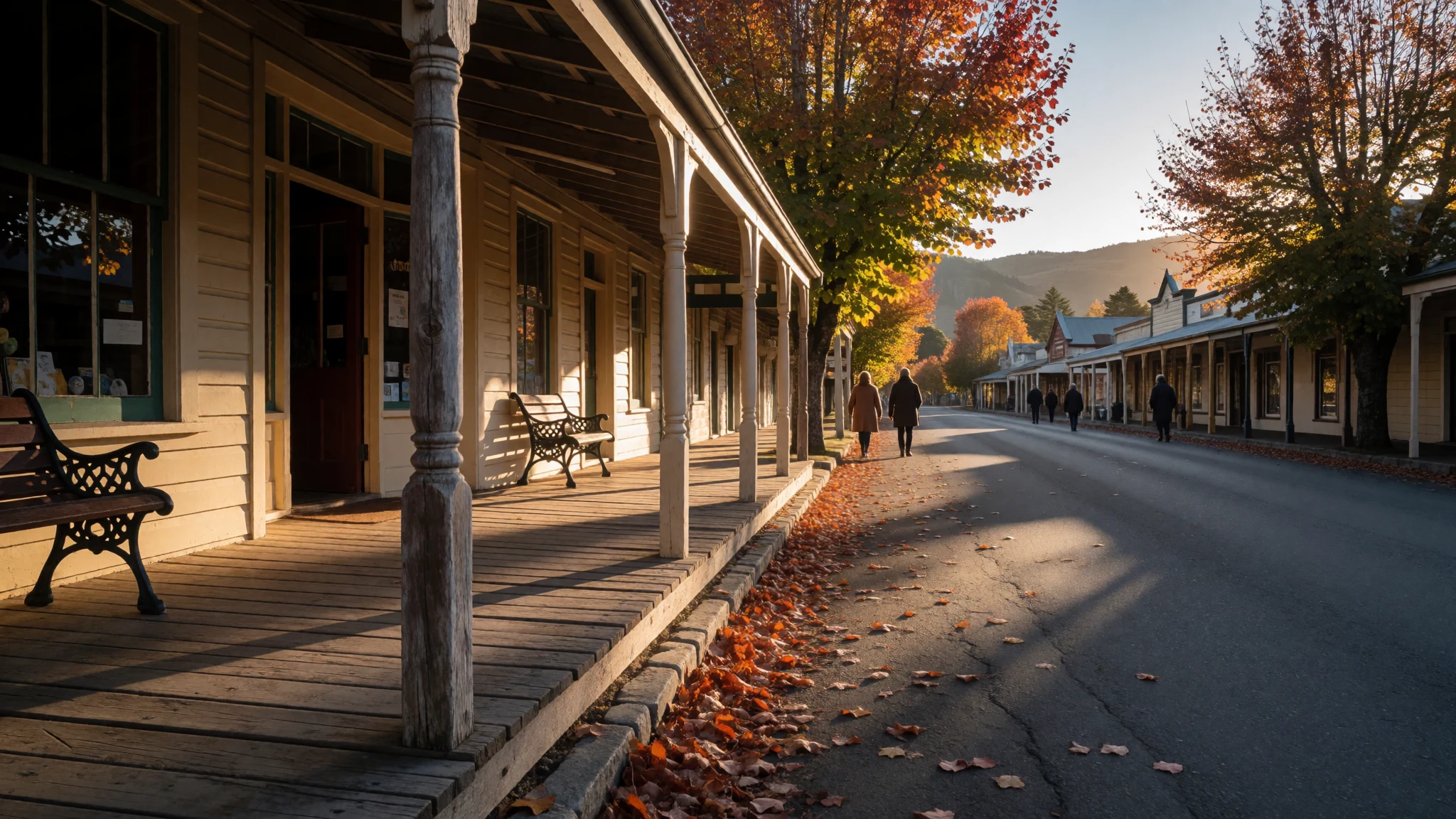
Arrowtown is a preserved gold-rush village beside the Arrow River, an easy and quieter step away from Queenstown, best in autumn.
The place
Arrowtown (Māori: Kā-muriwai) is a former gold-mining settlement in the Wakatipu Basin of Otago, on New Zealand's South Island, with a population of 3030. It sits beside the Arrow River (Haehaenui), a short drive east of Queenstown, and most visitors arrive from there. The appeal is the preserved core. Miners' cottages, timber shopfronts and streets lined with mature trees still follow the pattern of the gold-rush years, and the main street, Buckingham Street, looks like a film set that happens to be real. Shops, cafés and galleries now occupy many of the old buildings, so the heritage is lived in rather than fenced off. Honest expectations help. Midday in high season brings coach parties and day-trippers, and the main street can feel crowded. Early mornings and evenings are calmer, and staying overnight is the simplest way to see the town at its quietest. Accommodation leans towards boutique places: bed and breakfasts, historic cottages, rooms above an old pub and a scattering of motels, rather than large chain properties. Beyond the street, the river, the walking tracks and the old diggings give the place a wider setting. Arrowtown also works as a base for the region, including skiing in winter, for travellers who want somewhere smaller and slower than Queenstown. Four distinct seasons shape a visit: autumn colour is the famous draw, winters are cold, and summers are mild rather than hot.
Its story
The town of Arrowtown owes its existence to a discovery made in August 1862, when Jack Tewa, nicknamed Maori Jack, struck gold along the Arrow River. Within a short time about 800 miners had gathered, and a settlement of canvas and rough timber took shape. It was first called Fox's, after William Fox, who claimed to have struck gold there before anyone else, but the name Arrowtown soon replaced it. Order was slow to arrive. Only a dozen or so police were responsible for thousands of men across the district, and lawlessness was a real problem until a police camp and a warden's office gave the authorities a base. The first buildings were temporary, with calico walls, and as the gold kept coming and the population held steady, sturdier structures took their place. Several pubs were trading by 1863, among them Fox's own Golden Age. Chinese miners arrived from the 1870s and were made to live in huts on the banks of Bush Creek, apart from the main settlement. At its peak the population climbed past 7,000, and Arrowtown became the centre of a wider municipality that included Macetown, Skippers Canyon and Bullendale, all now ghost towns. The settlement became a borough in 1867, and Samuel Goldston was elected its first mayor in the following decade. The wooden streets that survive today are what remains of that crowded, rough and ambitious period.
What to see
- Lakes District Museum — Buckingham Street, central Arrowtown
Lakes District Museum doubles as the town's information centre, so it makes a sensible first stop. Its displays cover the gold rush and the wider district's history, and gold pans can be hired or bought at the museum if you fancy a go in the river. Check the official site for opening times.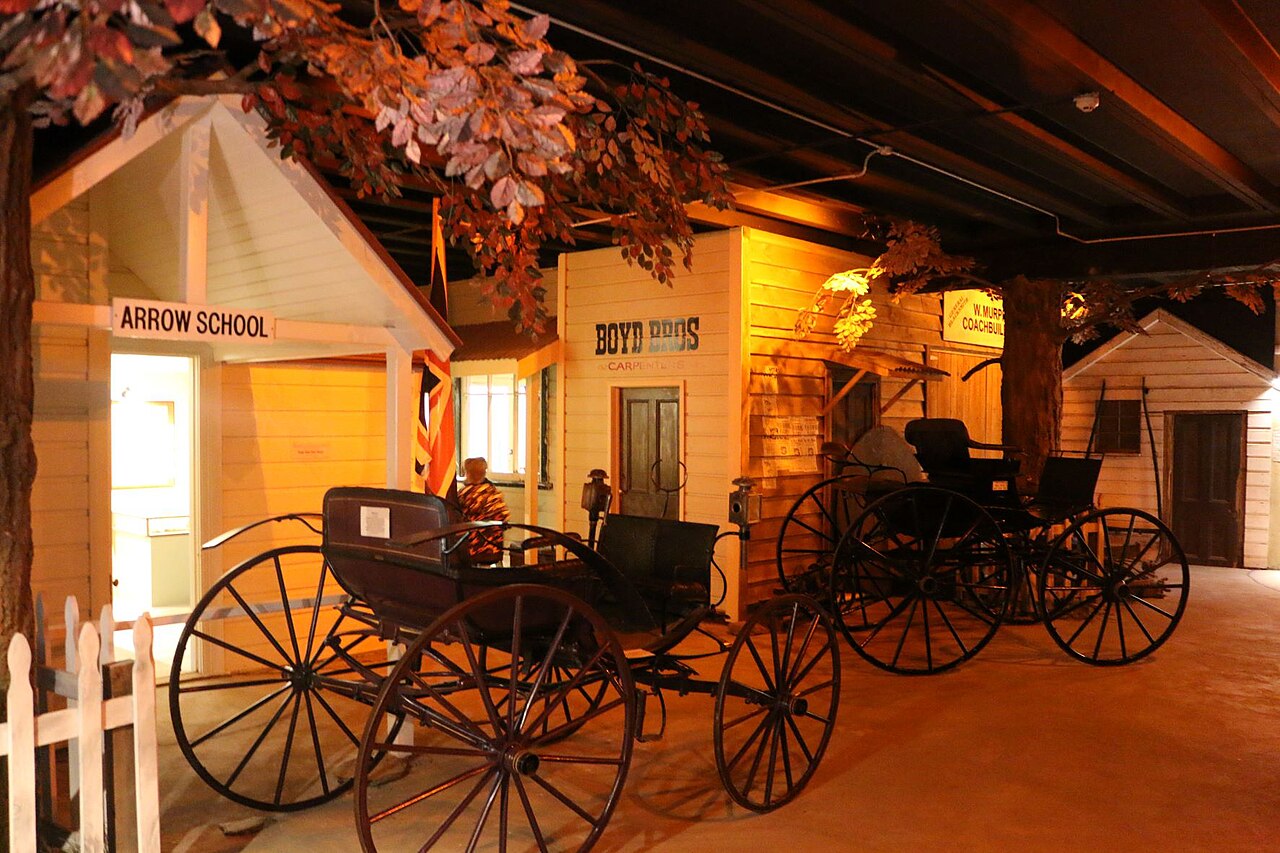
- Arrowtown Chinese Settlement — Western edge of town, beside Bush Creek
Arrowtown Chinese Settlement is a cluster of small gold-miners' huts from the 1880s, a short walk from the western end of Buckingham Street. Information boards explain each hut and make plain how modest daily life was for the Chinese miners, who were kept apart from the main town.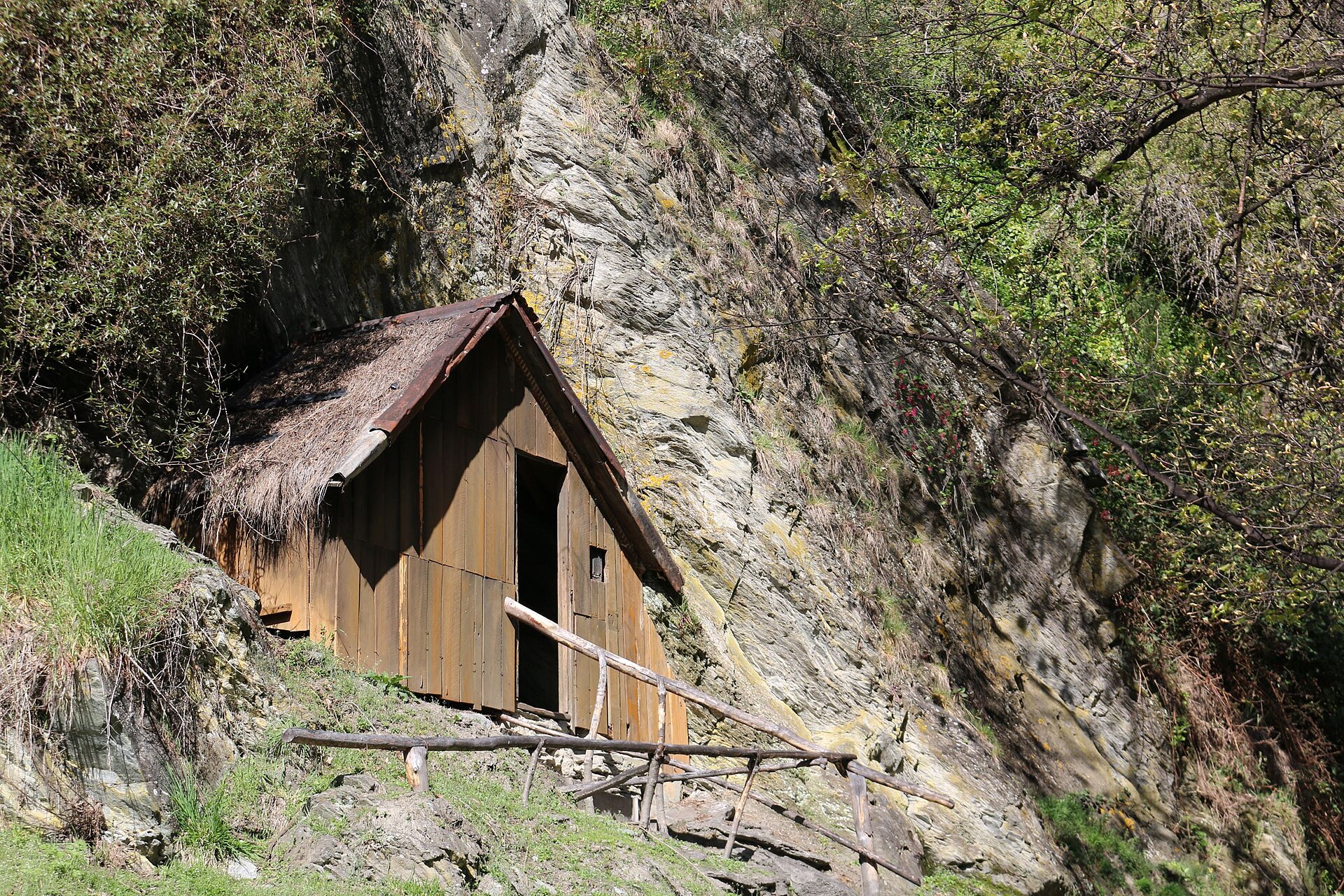
- Buckingham Street Historic Area — Central Arrowtown
Buckingham Street is the town's heritage spine, lined with timber-fronted shops, an old pharmacy and general store, and trees that turn gold and red in autumn. Walk it slowly from end to end, then loop back along a side lane. Late afternoon, once the coach parties leave, is calmer.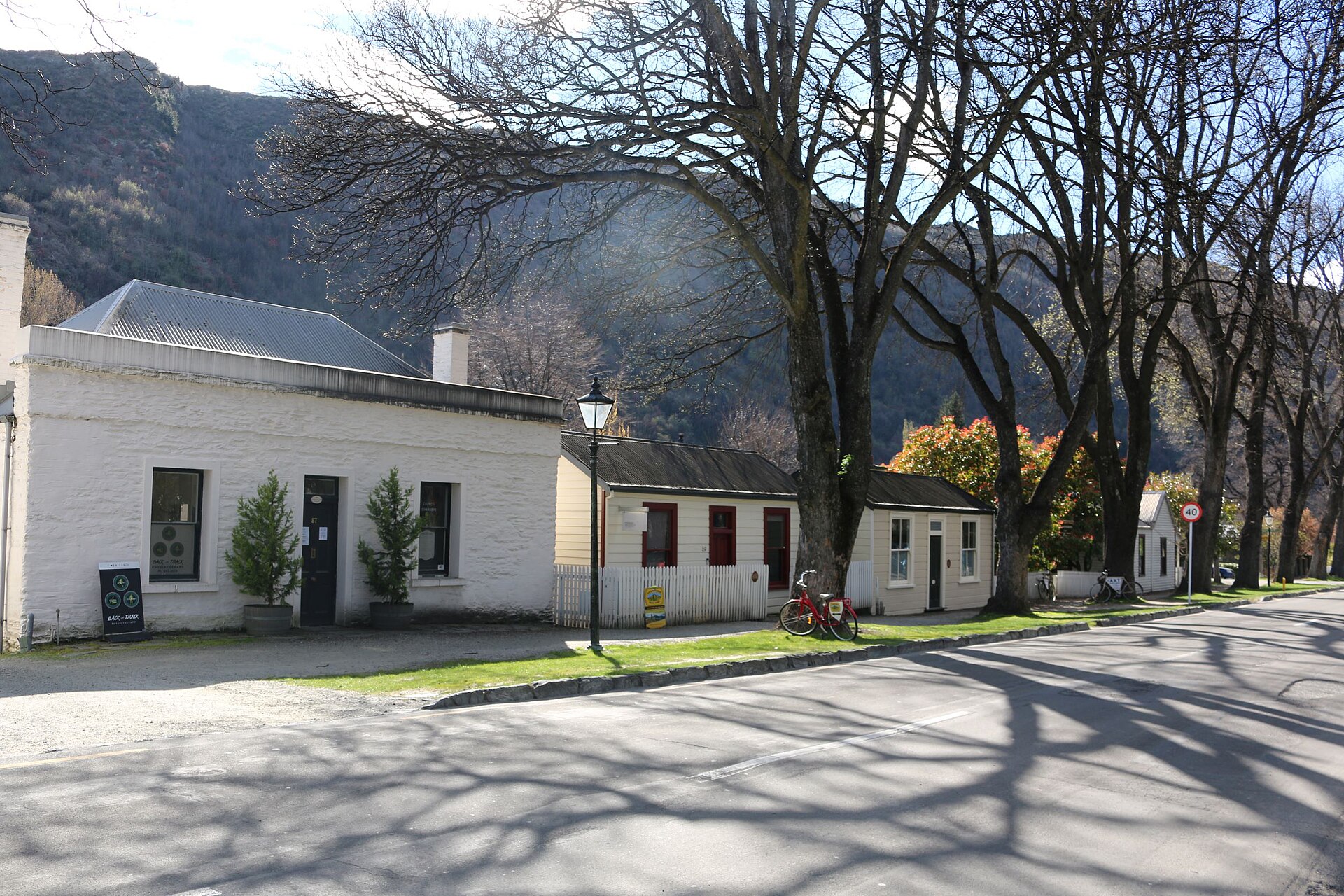
- St Paul's Anglican Church — Just off Buckingham Street
St Paul's Anglican Church is a wooden church built in 1871, small and plain, a few minutes' walk from the main street. It makes a quiet counterpoint to the shops, and a reminder of the settled community that grew once the miners began putting down roots. Be considerate if a service is under way. - Macetown and the Arrow River tracks — Arrow River valley, beyond the town
Macetown is a former mining village whose scattered remains lie up the valley. The route involves many river crossings and is done by mountain bike, trail bike or four-wheel drive, so choose conditions and gear carefully. Walking tracks such as Tobin's Track and Sawpit Gully start much closer to town.
Culture
Arrowtown's culture blends gold-rush memory with Māori tradition and a busy community calendar. The town carries two names, Arrowtown and Kā-muriwai, and its river is Haehaenui in Māori, a reminder that the land had stories long before the miners came. The Chinese miners' huts keep another strand of the past in public view. The best-known event is the autumn festival each April, a street celebration with a parade, gold-panning championships, live music, vintage cars and market stalls selling New Zealand-made goods. Local touches include a miners' band playing from an old red truck and a can-can by the Buckingham Belles. Matariki, the Māori new year, brings a different mood. Arrowtown Lights fills Buckingham Street for an evening of projections and visual storytelling, opened by a mihi (welcome) and a karakia (prayer), with songs from a waiata group and kapa haka performed by local students. An astrophysicist talks about the Otago night sky, and fire pits and food stalls give people room to linger and share stories. Day to day the town is relaxed, outdoorsy and proud of its heritage, and residents are used to visitors. At Matariki and other community gatherings, stay quiet during the mihi and karakia, and ask permission before photographing performers or other people.
What to wear
Arrowtown has no single costume, but two traditions of dress show up in its story. Māori kākahu, cloaks woven from harakeke (flax) fibre and sometimes decorated with feathers, appear at ceremonies and welcomes, including Matariki events. The gold-rush look, built on wool, moleskin and oilskin against a hard climate, is revived each April at the autumn festival, where parade-goers and the Buckingham Belles dance troupe wear period costume. Everyday clothing now is practical and outdoorsy: fleeces, merino layers, waterproof jackets, trail shoes and sunhats, with ski wear on show in winter and neat casual clothes for dinner in the main street. Nobody expects formal dress. A visitor should dress for four distinct seasons and for weather that can change within a day. Pack layers, a waterproof shell and a warm hat for cooler months, and sun protection for the brighter, milder summer. Sturdy shoes matter more than style, since the river tracks, the old diggings and the Macetown route are gravelly and uneven, and some involve wet crossings. Nothing special is required at St Paul's Anglican Church or the Chinese Settlement beyond ordinary respectful clothing, and at Matariki gatherings smart casual with a warm coat is the sensible choice.
What to eat
- Gourmet pies — The bakery on Buckingham Street
Arrowtown's pies have a name beyond the town. Look for the bakery on Buckingham Street, where gourmet fillings sit alongside other baked goods. Eat one on a bench by the street, warm, before walking to the river. - Italian pizza and pasta — Family restaurants just off Buckingham Street
Arrowtown has a family-friendly Italian restaurant just off the main street, run by the same group behind a fine-dining neighbour. It suits tired children after a day of walking, and groups sharing several plates. - Boutique chocolate and coffee — Buckingham Street chocolate café
A small chocolate maker on the main street also runs a café, so coffee and sweet treats come together. It is a sensible wet-weather stop between the museum and the shops, and a handy place to buy small gifts. - Craft beer — Taprooms on the main street
A taproom on Buckingham Street pours a wide choice of beers, which makes it easy for a group with different tastes to agree. It suits a cool evening after a day on the tracks. - Pub meal in a historic pub — The old country pub in the town centre
A country pub established in 1866 still stands in the town centre, with rooms for overnight guests. Settle in for a hearty pub meal and a drink, and take in the age of the building.
Plan it
Best time. March–May for autumn colour and the April festival; January–February for the warmest, driest walking days (February is the driest month, December the wettest). July is the coolest month and suits skiing nearby.
How long. 1–2
Getting there. Fly to Queenstown Airport, then take a local bus to Arrowtown or drive; roads run via Arthurs Point, Lake Hayes or Shotover Gorge. Check the operator's timetable and fares before you travel.
Budget. mid
Tips
- Visit early in the morning or late in the afternoon to avoid the day-trip crowds on Buckingham Street
- Book accommodation well ahead for the April autumn festival and school holidays
- Pack layers, since the town has four distinct seasons and weather can turn quickly
- Carry water and check river and track conditions before heading up the Macetown route
- Check the official site, https://www.arrowtown.com/, for events and opening times
Etiquette
- Treat the Chinese Settlement huts as a historic site: stay on the paths and do not climb on or remove anything
- Ask before photographing people at festivals and cultural events
- Keep noise down on the residential streets in the evening
Nearby
Sources
- Wikidata Q703016 (CC0)
- Wikipedia: Arrowtown (rev 1385724202) (CC BY-SA 4.0)
- Wikivoyage: Arrowtown (rev 5433569) (CC BY-SA 4.0)
- Bgabel, Historische Apotheke, Arrowtown (Wikimedia Commons) (CC BY 3.0)
- Bgabel, Buckingham Street Arrowtown (Wikimedia Commons) (CC BY-SA 2.0)
- Anke Lüdtke, Arrowtown Pharmacy (Wikimedia Commons) (CC BY 3.0)
- Vera & Jean-Christophe, Autumn in Arrowtown (Wikimedia Commons) (CC BY-SA 2.5)
- Wildman NZ, Arrowtown Chinese goldminers huts (Wikimedia Commons) (CC BY-SA 4.0)
- Wildman NZ, Arrowtown Lakes District Museum (Wikimedia Commons) (CC BY-SA 4.0)
- Wildman NZ, Arrowtown Masonic Lodge (Wikimedia Commons) (CC BY-SA 4.0)
- Wildman NZ, Buckingham Street Historic Area Arrowtown (Wikimedia Commons) (CC BY-SA 4.0)


