Aoraki / Mount Cook
Aoraki / Mount Cook, New Zealand
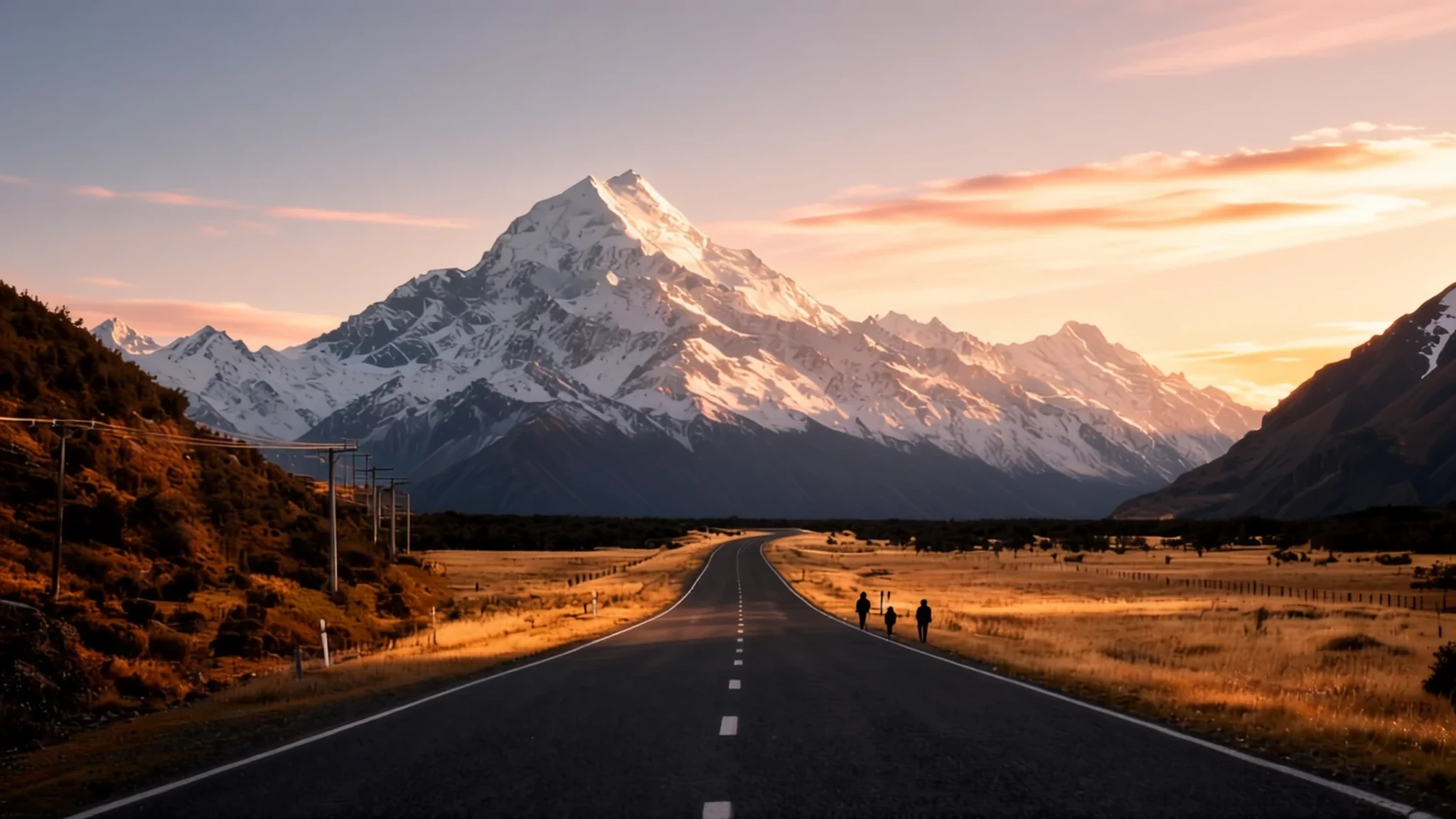
Go for the highest peak in New Zealand, the glaciers at its foot and some of the country's best walking, with the weather a major gamble for walkers and crevasses, falling ice and avalanches a further danger for climbers.
The place
Rising to 3,724 metres, Aoraki / Mount Cook is the highest peak in the Southern Alps, the mountain chain that stretches the full length of New Zealand's South Island. It is less a single spike than a massif with three summits lined up from south to north, and the highest of them is the one most people mean when they say the name. The peak sits where the Mount Cook Range meets the main divide, so ice hems it in on several sides. The Tasman Glacier lies to the east and the Hooker Glacier to the south-west, and the valleys that carry them give the two easiest views of the mountain.
Most visitors come for the view and then stay for the walks. Mount Cook Village, the settlement at the foot of the range, is a small tourist centre built around the park's visitor facilities, with a few hotels, cafés and the start of several tracks. It is quiet in the early morning and busy from mid-morning, when coach parties arrive from the lakes. Cloud gathers quickly over the summit, so the best light usually comes in the first hour of the day.
The national park was established in 1953. It takes in many peaks that rise above the snowline and a large number of named glaciers that spill from the high ice, so the landscape changes sharply within a short walk.
Its story
The mountain carries two names, and both appear on maps, signs and the park's own literature. Aoraki is the Māori name, used alongside the European one, which most visitors know as Mount Cook. Printing both is now a common courtesy.
For much of its history the peak has been a test for climbers rather than a casual sight. Its height and exposed ridges drew mountaineers to the Southern Alps, and the settlement at its foot grew up to serve them. The village became a base camp in the same way: people came to climb, and everything else followed from that.
Tourism changed the mountain's role. Most people now never leave the valley floor. They walk to a lookout, watch the summit from a hotel window or see it from above on a scenic flight. The creation of the national park in 1953 gave the landscape formal protection, and it has since become a place many New Zealanders know well.
The glaciers carry their own story. The Tasman and Hooker glaciers move, melt and leave behind rubble and lakes, so the valleys look different from one season to the next. Anyone who returns after a few years tends to notice the change.
The mountain also has a reputation as a place where weather rules. Walkers and climbers alike learn that a clear morning can turn grey by afternoon. Much of the mountain's history is a history of patience, planning and turning back when the sky closes in.
What to see
- Hooker Valley Track
The Hooker Valley Track is the walk most people take, and it ends at a lookout about ten kilometres from the summit. The route follows the valley floor, crosses a couple of swing bridges over a glacial river and brings walkers close to the moraine lake at the Hooker Glacier's end. The view from the lookout takes in the whole mountainside, which is why it appears on so many postcards.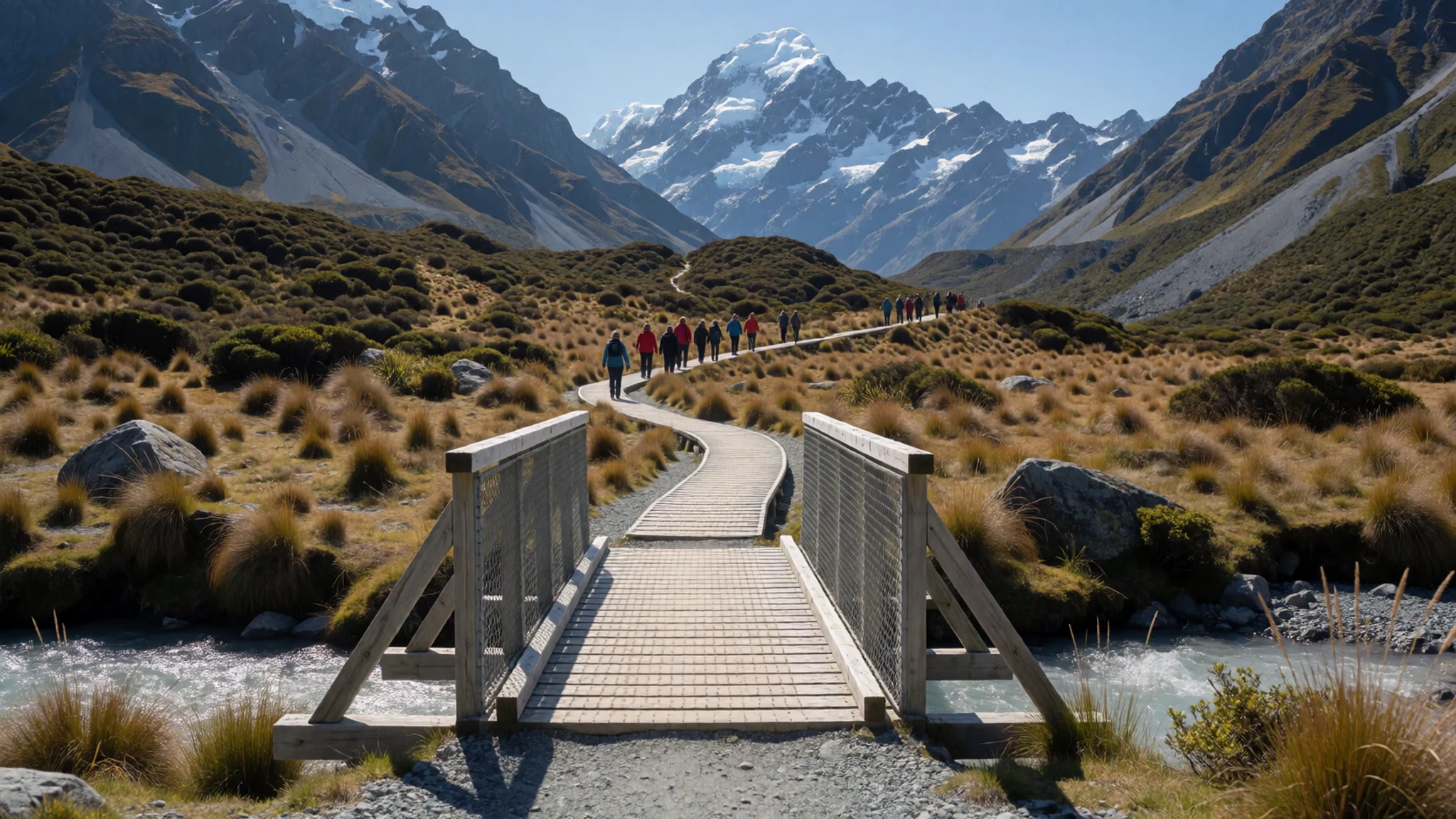
- Tasman Glacier and its lake
The Tasman Glacier lies east of the peak, and the lake at its front holds pale, milky water full of floating ice. Boat tours run on the lake, and the view of the summit from the water shows how much ice sits above the valley. Check the operator's site for current timetables and prices, as they change with the season and the weather.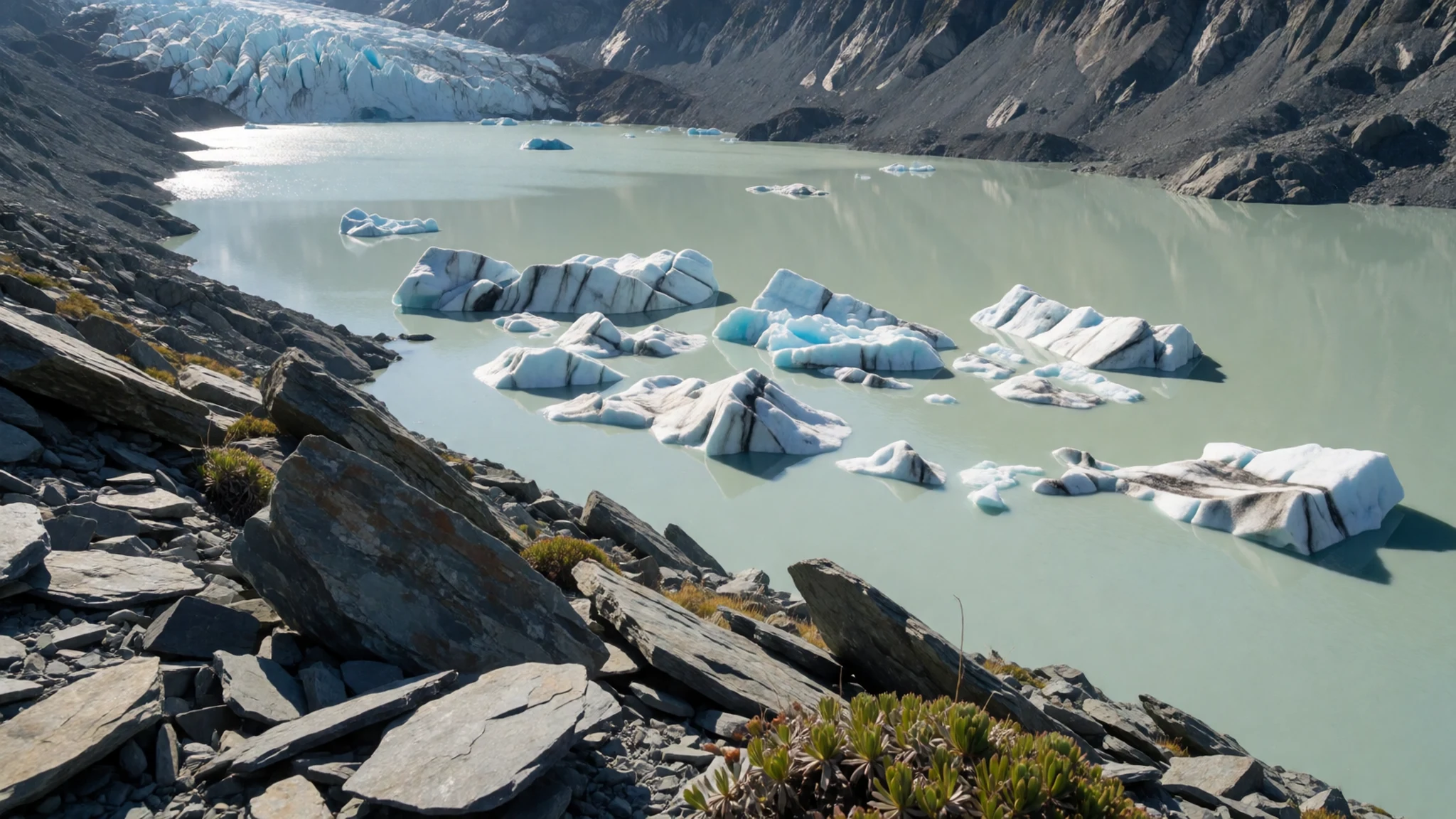
- Lake Pukaki shoreline
The road along the western shore of Lake Pukaki gives the classic view: the jagged summit rising across turquoise water, seen from a distance. The colour of the lake shifts with the light and the glacial flour carried in by the rivers. Lay-bys let drivers stop safely, so use them rather than the shoulder of the road.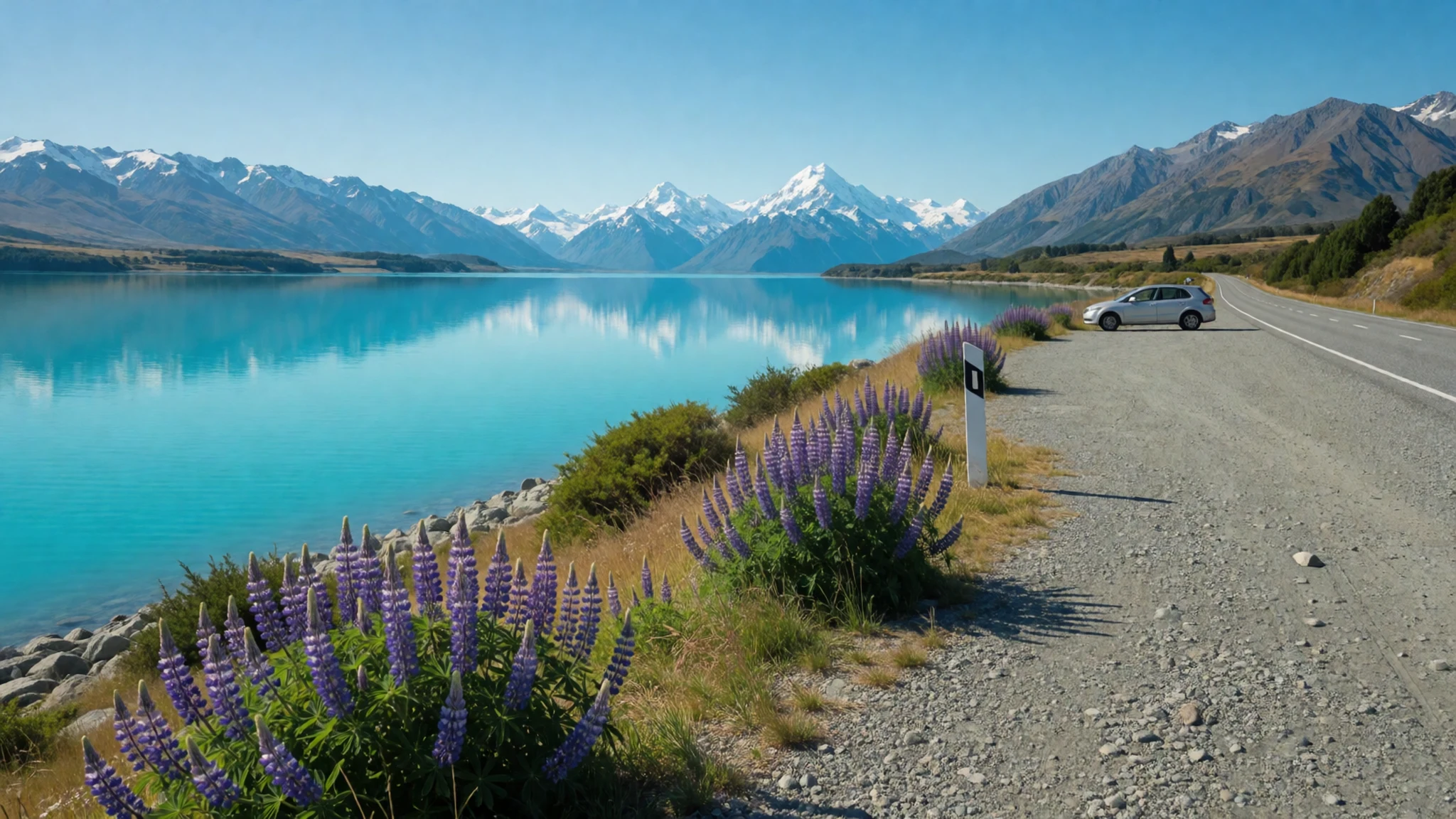
- Mount Cook Village
The village is the base for walks, flights and the park's visitor services. Accommodation is limited, so book early in the busy months and check the official site for current rates and opening hours. Hotel restaurants and a café serve the village, but a packed lunch is the sensible choice for a long day on the trail.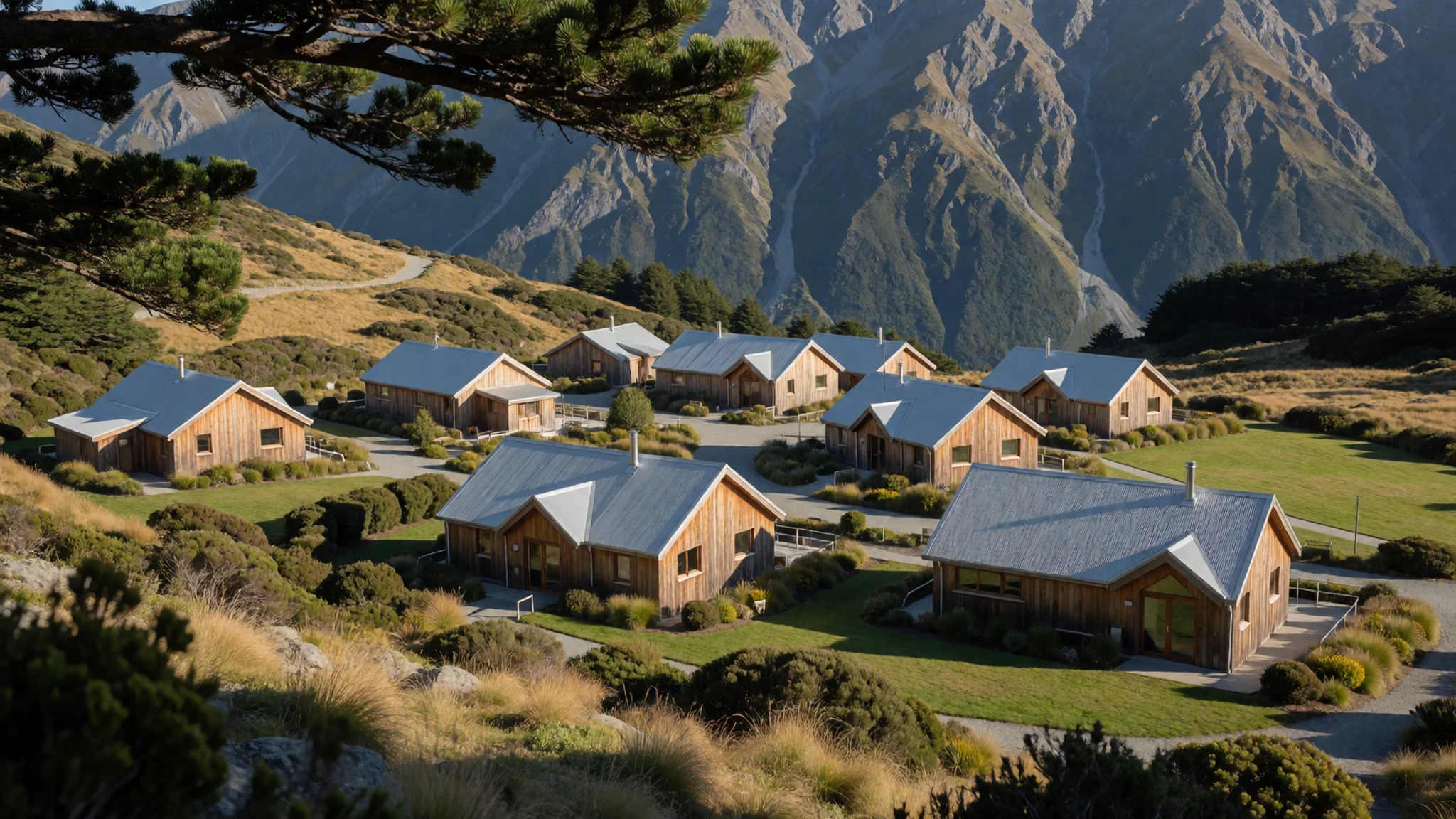
- Scenic helicopter flights
Scenic helicopter flights give the fullest picture of the range, with the summit and the glaciers laid out below. Several operators run them from the village and the wider region. Prices and weather cancellations vary, so check each operator's site before planning the day around a flight.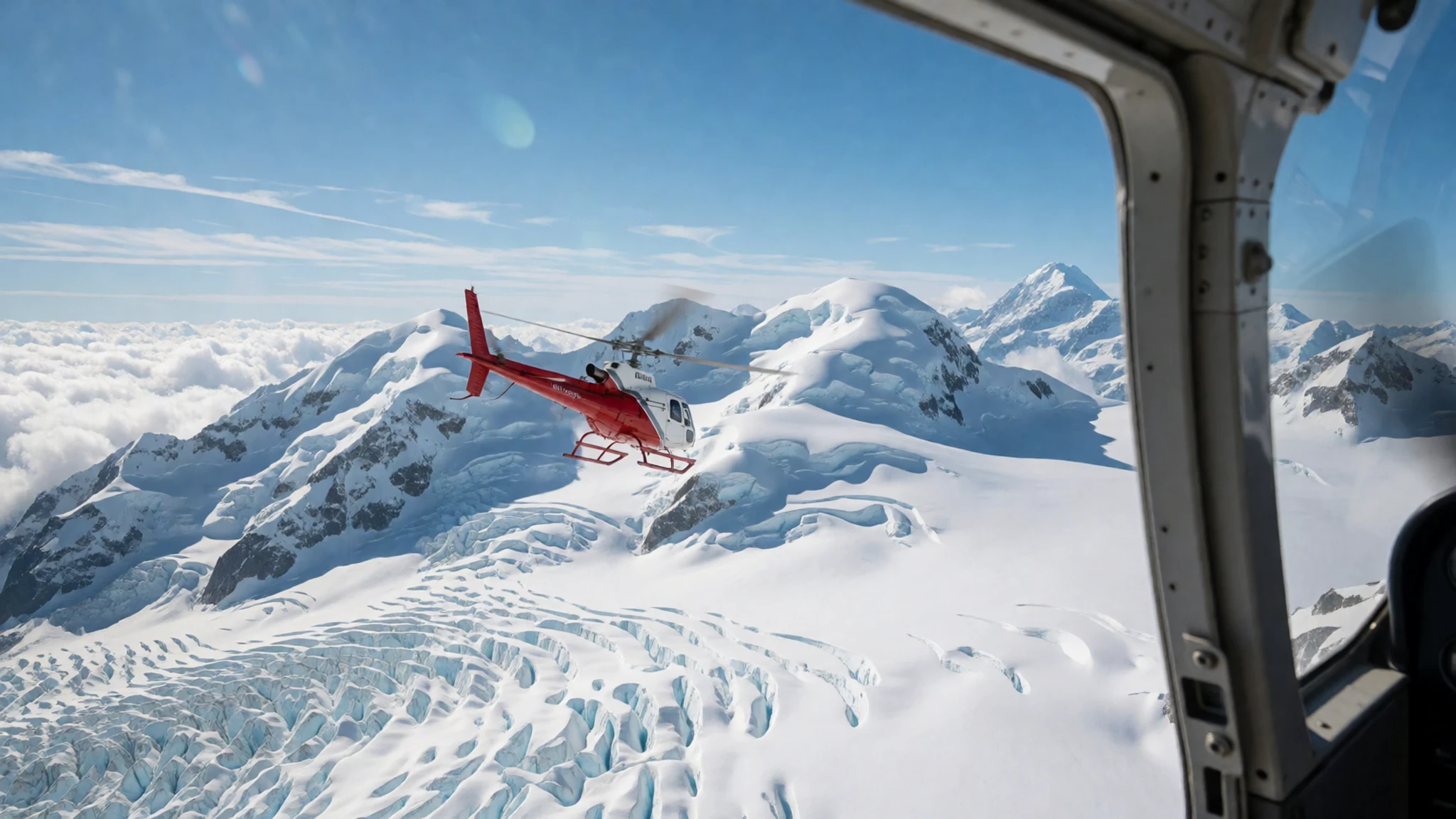
Culture
Aoraki is a name with weight for Māori, and the mountain is part of the landscape that many iwi of the region hold in regard, so it is worth reading the interpretive panels at the park's visitor facilities rather than treating the peak as scenery alone. Mount Cook Village is a working community as well as a holiday base, with staff who live and work there through the season, so keep noise down in the evening and leave the car park for those who need it. Trails in the park are maintained by the Department of Conservation and are often shared with climbers and guided parties, so give way on narrow sections and stay on marked routes near the glaciers, where crevasses and falling ice are real hazards. Photograph the mountain freely, but ask before photographing people at the village and in the hotel dining rooms. Always leave the trail as you found it, and never walk onto a glacier without a guide.
What to wear
Traditional Māori dress in this region includes the kākahu, a cloak woven from flax and often finished with feathers or dog skin trim, worn for ceremony and carefully kept in families. Textiles like these mark status and occasion, and the weaving is taught through generations. In everyday life people in the Mount Cook area dress for the weather rather than for a look: fleece and softshell layers, waterproof jackets, walking trousers and sturdy boots are the common uniform on the trail, while café and village wear is relaxed. Visitors should pack warm layers even in summer, because the temperature drops quickly once the sun leaves the valley and the wind picks up on the glacier flats. A windproof jacket, a warm hat, gloves and good sunglasses or a hat for sun protection matter at this altitude. Footwear with grip suits the rough moraine and wet rock on the Hooker and Tasman routes, and trainers are fine only for the short, flat walks.
What to eat
- Farm-gate produce — roadside stalls on the plains between the mountains and the coast
Roadside stalls on the Canterbury plains sell fruit, vegetables and honey, often from small growers. The produce is not usually cheaper than what the city supermarkets sell, but the unusual and seasonal items tend to be grown in quantities too small for the mass market. Go for the things you cannot buy in a supermarket rather than expecting a bargain.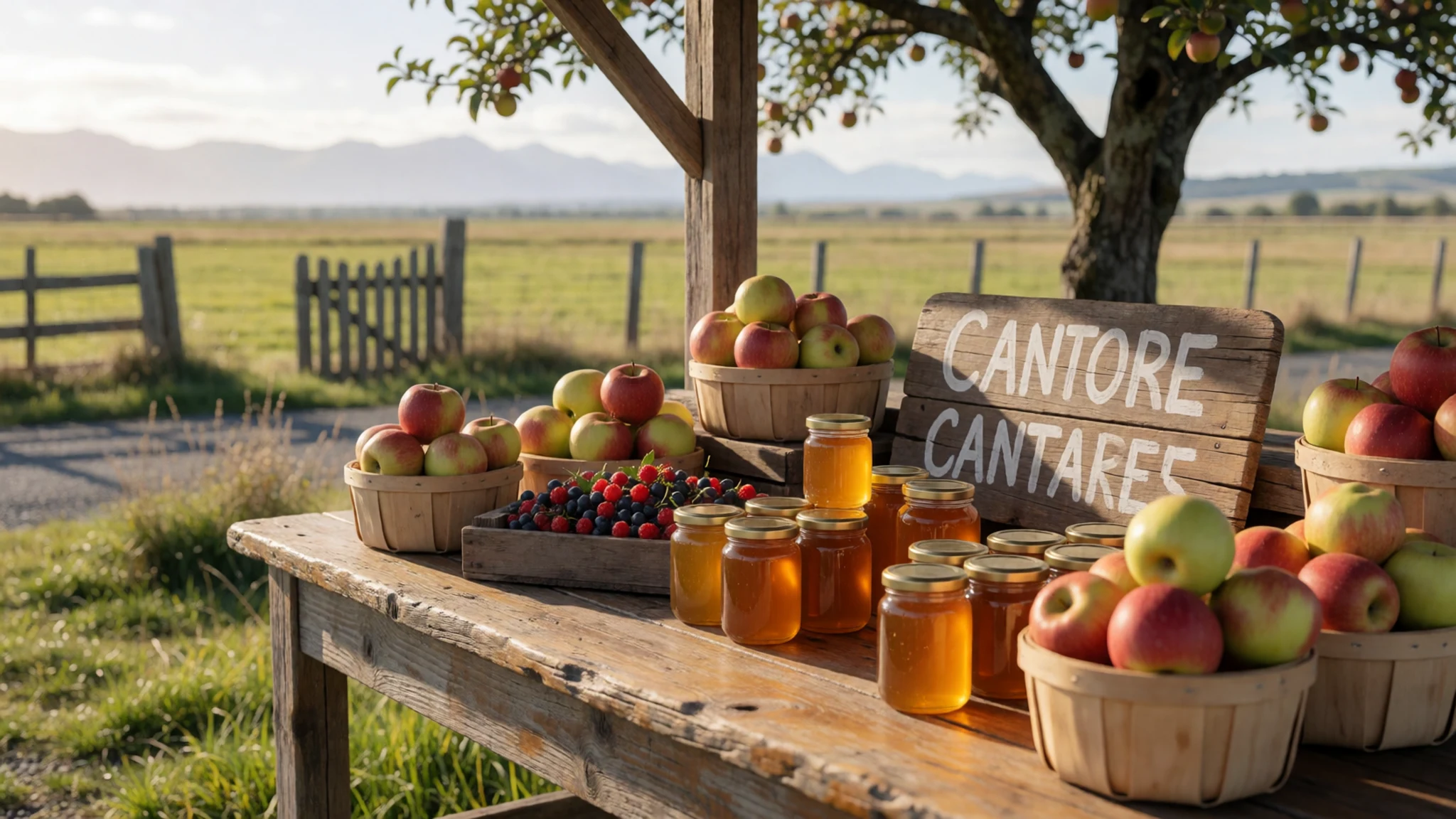
- Canterbury lamb — pub kitchens and restaurants in the Mackenzie Country towns
Lamb is the regional dish that most visitors eat at least once. It is roasted with local vegetables or served as chops with mint sauce, and the flavour is mild and clean. Menus in the village and the towns of the Mackenzie Country usually carry it, and many kitchens source from nearby farms.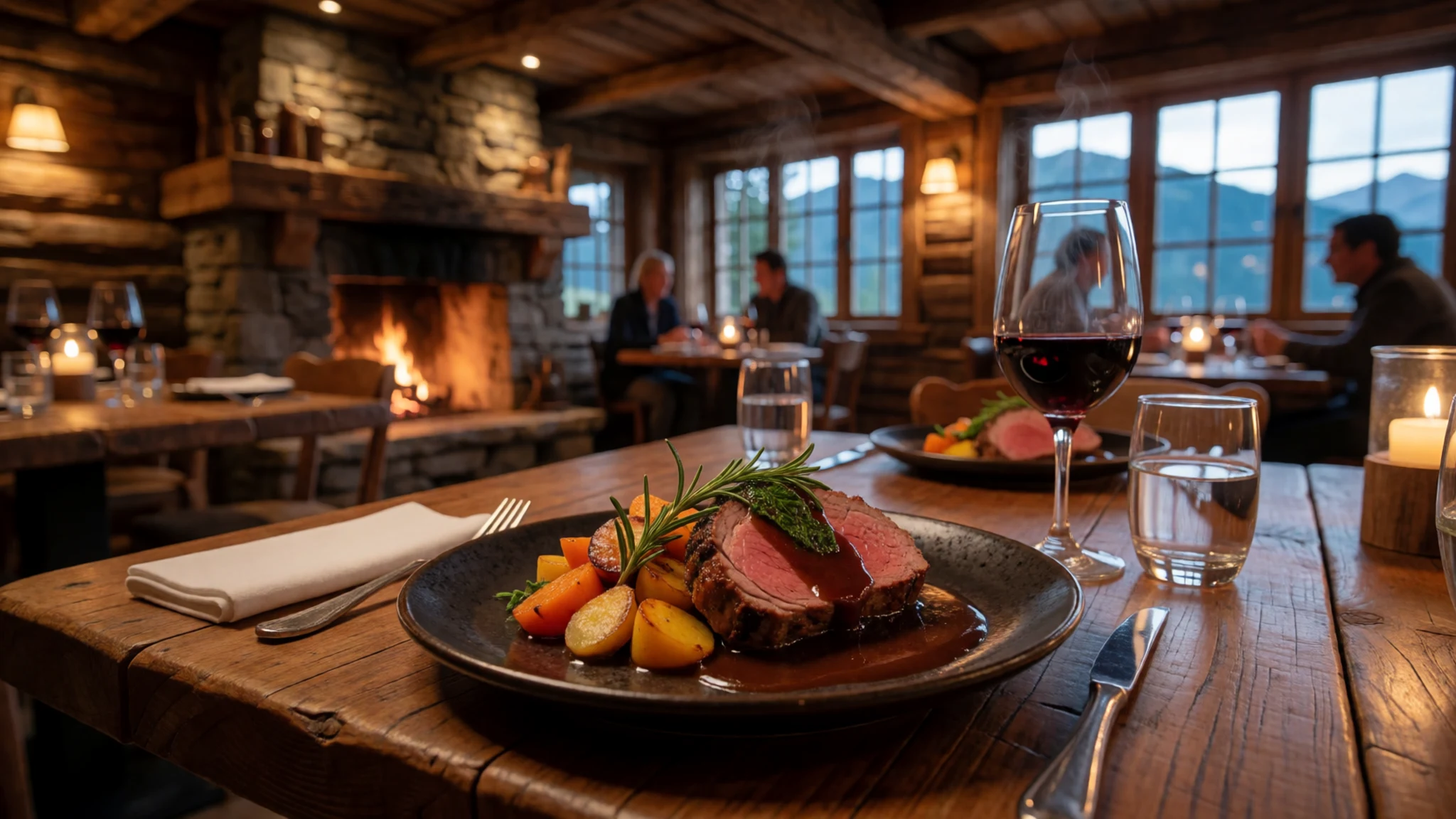
- Local wine — small vineyards and cellar doors around the region
A few small wine-making specialists use the distinct climate and soils of the Canterbury region to make wines in limited runs. The best way to taste them is at a cellar door, where staff can explain the vineyard and the style. Tastings are often free or low cost, though tasting fees vary, so check before you go. - Hokey pokey ice cream — dairies and ice-cream shops in the towns along the route
Hokey pokey is a vanilla ice cream with crunchy pieces of honeycomb toffee through it, and it is one of the best-loved flavours in the country. It is sold by dairies and ice-cream shops in the towns along the route, and it makes a good reward after a cold walk. It is worth eating on the spot while it is cold. - Whitebait fritters — seaside cafés and pubs on the Canterbury coast
Whitebait fritters are small fish mixed into a light batter and fried into patties, usually served with bread and lemon. They are a seasonal treat tied to the river catch, so availability depends on the time of year. Look for them at a seaside café or a pub that serves local seafood rather than at fast-food counters.
Plan it
Best time. January and February are the warmest months, with the mildest days, though December is the wettest and cloud can sit on the peak for days. October to November and March to April are quieter, with cooler air and fewer coaches, and they suit the Hooker walk well.
How long. 3–4
Getting there. Christchurch International Airport, then a long drive south-west through the Canterbury plains and the Mackenzie Country to the village. Timaru Richard Pearse Airport is closer for some routes and is served from Wellington, so check which airport best suits your flights.
Budget. mid
Tips
- Book accommodation at the village early, as beds are limited
- Start the Hooker Valley walk early to beat the coaches and the afternoon cloud
- Carry cash for small farm stalls and roadside honesty boxes
- Pack warm layers and sun protection even on a mild day
- Check the official park and weather information before every walk
Etiquette
- Stay on marked tracks and keep well back from glacier edges
- Give way to climbers and guided parties on narrow sections
- Keep noise low in the village after dark
Nearby
Sources
- Wikidata Q5059 (CC0)
- Wikipedia: Aoraki / Mount Cook (CC BY-SA 4.0)
- Wikivoyage: Canterbury (New Zealand) (CC BY-SA 4.0)
- Photo: 00 0985 Mount Cook - New Zealand Alps (W. Bulach) (CC BY-SA 4.0)
- Photo: Mt Cook LC0247 (Jörg Hempel) (CC BY-SA 3.0 de)
- Photo: Aoraki Mount Cook view from helicopter (David Wipf) (CC BY 2.5)
- Photo: Mtcook1600x1200 (Dynabee) (CC BY 3.0)
- Photo: Mtcook.nz.750pix (Landsat, Adrian Pingstone) (Public domain)
- Photo: Aoraki from Hooker Glacier Lake (Atanamir) (CC BY-SA 4.0)
- Photo: MountCook-P1140884a (Xpda) (CC BY-SA 4.0)
- Photo: On Mt. Cook, New Zealand. 1977 (John Hill) (CC BY-SA 4.0)


