Cathedral Cove
Cathedral Cove, New Zealand
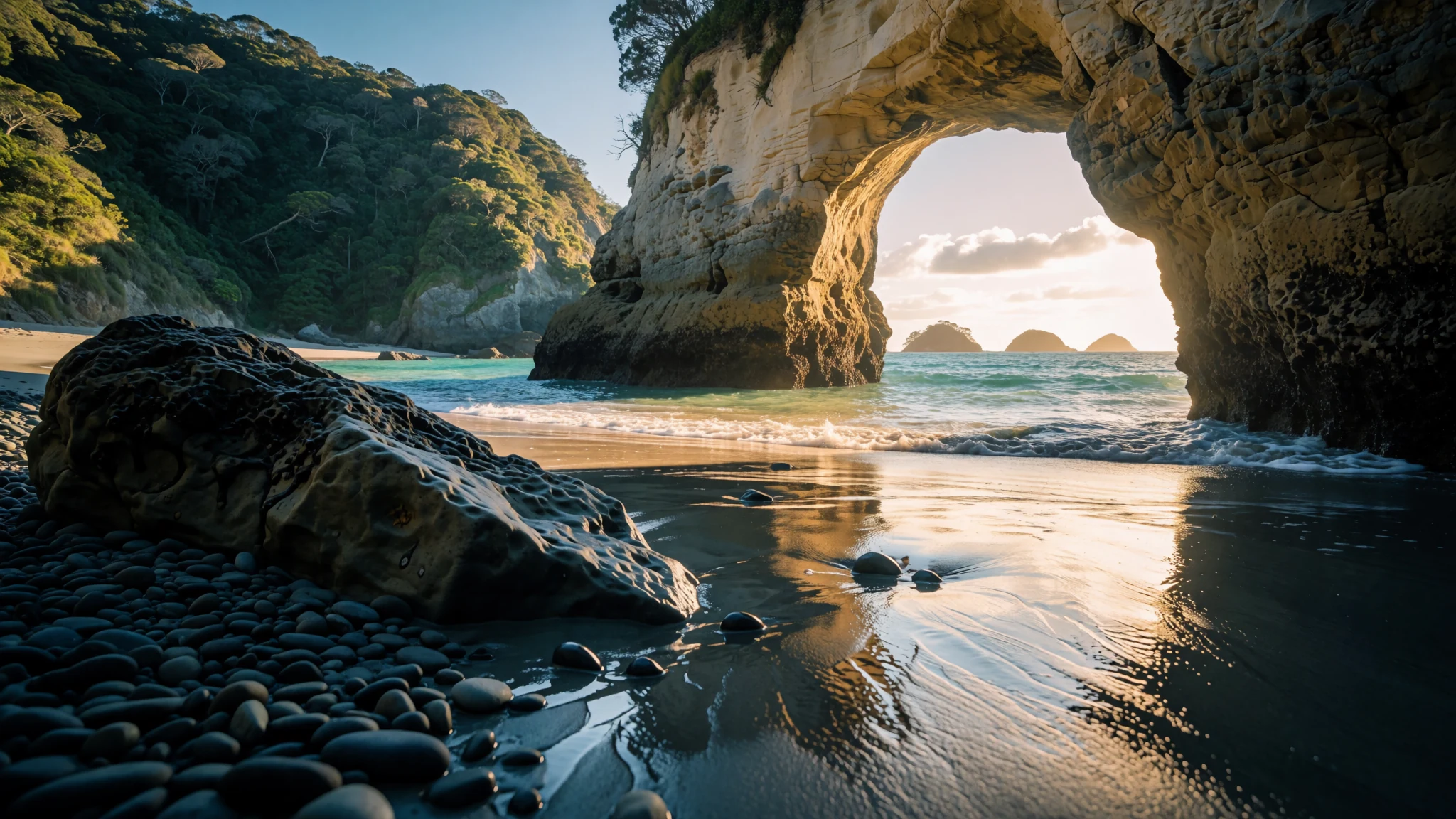
Come for a rock arch over a sandy cove on the Coromandel coast, and go early to enjoy it before the crowds arrive.
The place
Cathedral Cove sits on the Coromandel Peninsula in the Waikato Region of New Zealand's North Island, in the southern part of Mercury Bay. Its Māori name is Te Whanganui-A-Hei, and the marine reserve that protects the water around it covers 840 hectares (2,100 acres). The reserve follows the mainland shore from a headland in the north-west down to the northern end of Hahei Beach, then reaches out to a chain of offshore islets and rocks, including Motukorure, Waikaranga and Okorotere, and the top of Mahurangi Island, which many people call Goat Island.
The draw is a natural archway of rock that frames the beach, with clear water on one side and steep, bush-covered slopes on the other. A recreation reserve on land keeps the cove and its neighbouring beaches open to walkers. Hahei Beach, a short way along the coast, is where most visitors start from.
Because of the arch and the beaches around it, the area draws large numbers: around 150,000 people come each year. Sand fills early in summer and the car park can feel full by midday, so the same stretch of coast feels very different at dawn than in the afternoon. The ground above the cove is also unstable, and parts of the land tracks are sometimes closed, so the signs on the day matter more than any guidebook.
The water is the main reward. Snorkelling along the rocks and paddling out to the arch are best on calm mornings, and the marine reserve protects the fish and rock life you may see. Bring water, sun cream and a plan for the climb back up.
Its story
The recent story of Cathedral Cove is mostly a story about weather and ground. Cyclone Gabrielle damaged the walkway down to the cove, and it was closed afterwards. The Department of Conservation later said it was "not confident" the track would reopen, because the stability of the ground in the area had been badly damaged. Visitors who still wanted to see the arch were offered an alternative viewpoint, and the cove could be seen from boats on the water.
That arrangement changed how people came. Some visitors took a boat instead of walking, while others reached the lookout and found the view was not the same as the one from the sand. The Mautohe Cathedral Cove Track has since reopened, so walkers can again go down to the beach. However, the link from Hahei Beach to the Grange Road entrance remains closed because the land is unstable, so the route you can take depends on where you start.
The bigger question now is access and money. A scheme has been proposed that would charge foreign visitors an entry fee at four of New Zealand's natural attractions, and Cathedral Cove is one of them. The income would be used to invest in those natural sites. The scheme was still a proposal when this was written, so check the current position before you travel rather than relying on older reports.
For visitors, the lesson is simple. The cove is open, but the route down has been rebuilt around the ground rather than around convenience, and the rules can change with the weather. Plan a flexible day, check the latest Department of Conservation updates, and treat the track as something you are allowed to use rather than something you are owed.
What to see
- Cathedral Cove
The cove itself is the reason most people come. Walk down to the sand, look up at the rock arch from below, and then decide whether to swim or snorkel along the rocks on a calm day. Arrive early, because by midday the beach is busy and the shade is limited.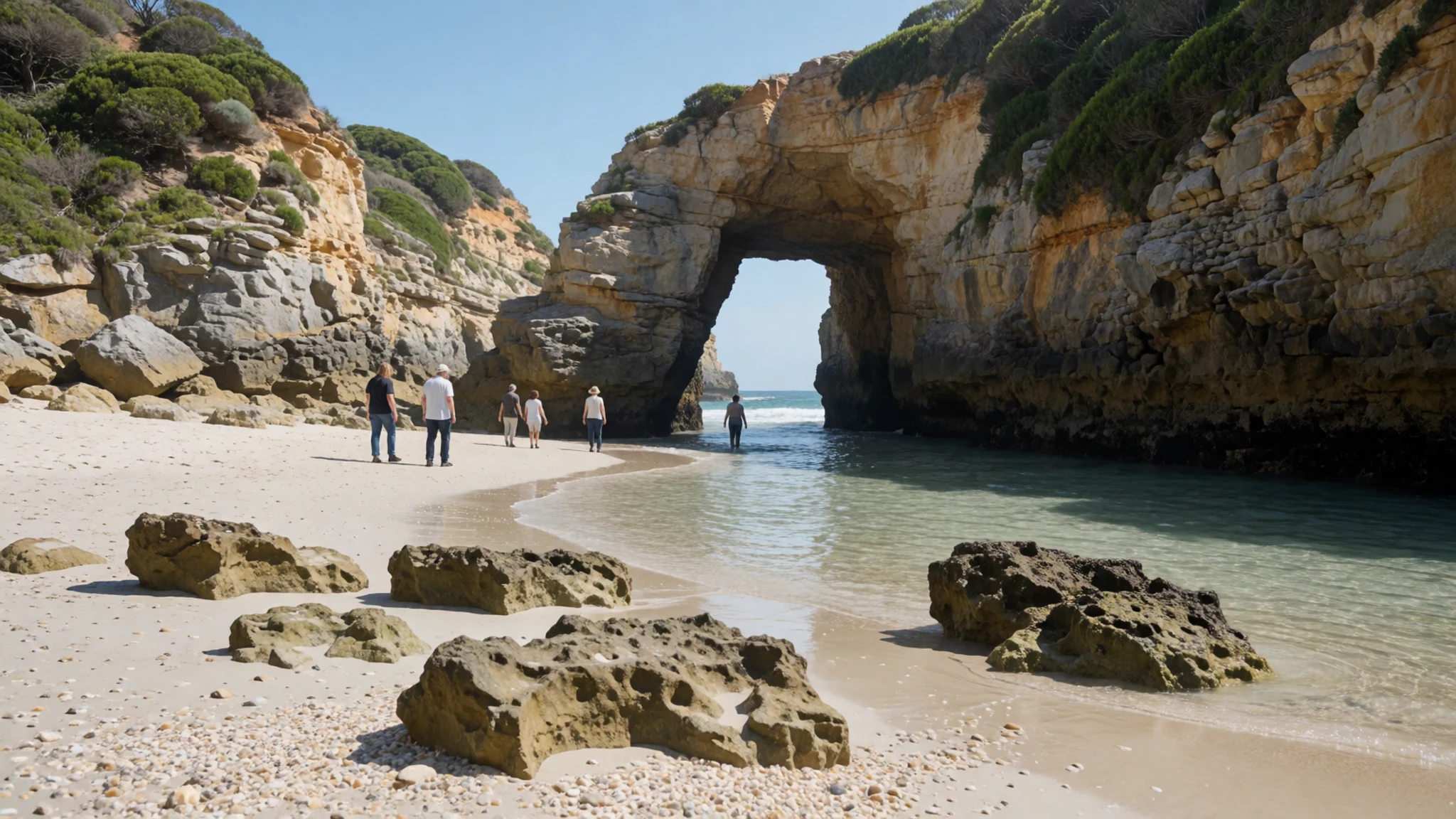
- Hahei Beach — Hahei, south-eastern edge of the reserve
Hahei Beach runs along the south-eastern edge of the marine reserve, and it is where most visitors base themselves. It is a longer, more ordinary beach than the cove, with shops, cafés and parking. From here you can walk along the coast, but check the latest notices first, because the route from Hahei to the Grange Road entrance is closed due to unstable land.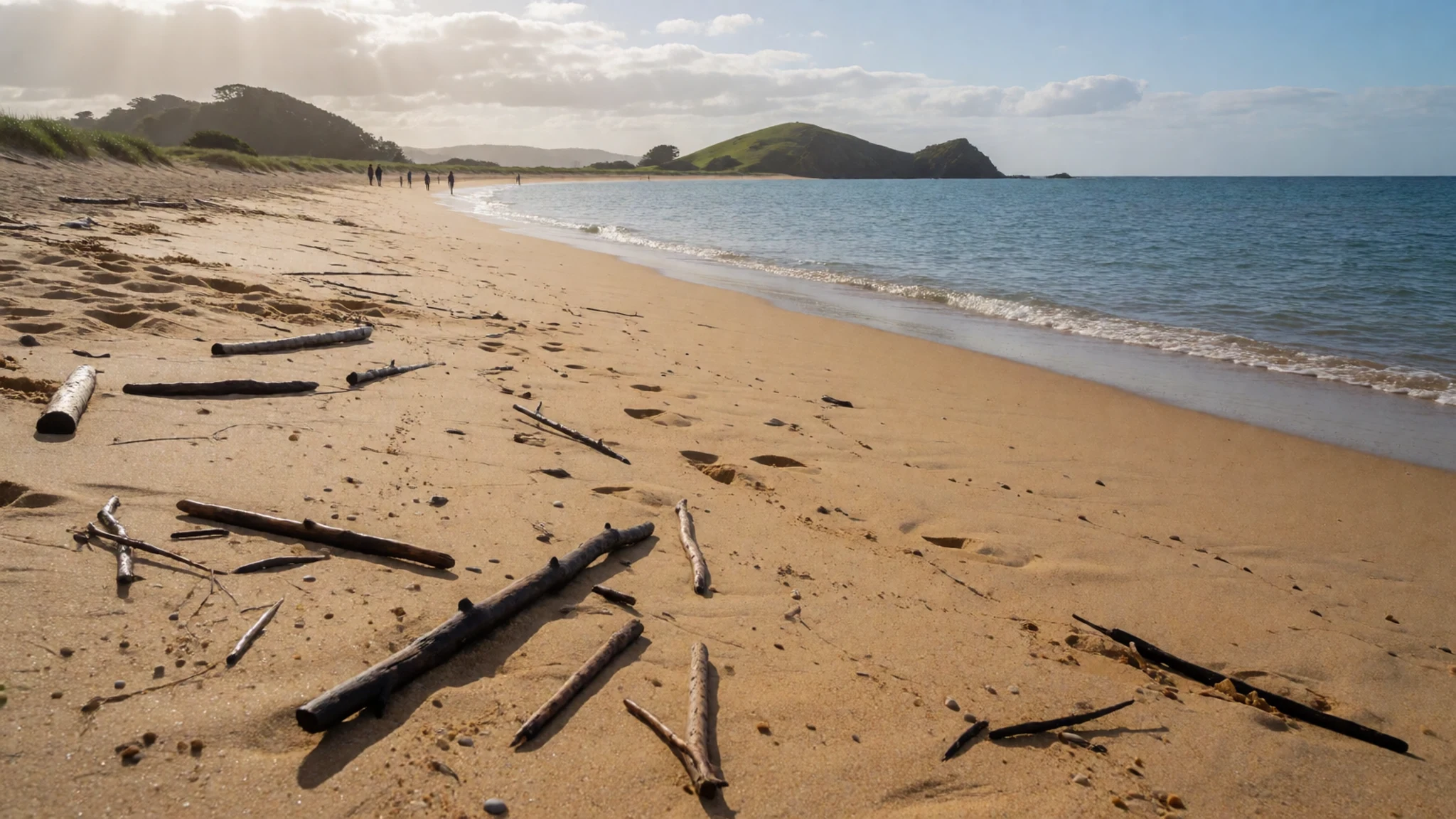
- Ruakuri Cave, Waitomo — Waitomo, inland in the Waikato
Ruakuri Cave starts with a spiral descent from ground level, through a large drum-shaped entrance and along a walkway into the underground cave. It makes a very different day from the beach: cool and damp underground, so bring a layer and sensible shoes. Tours run to set times, so check the official site before you go.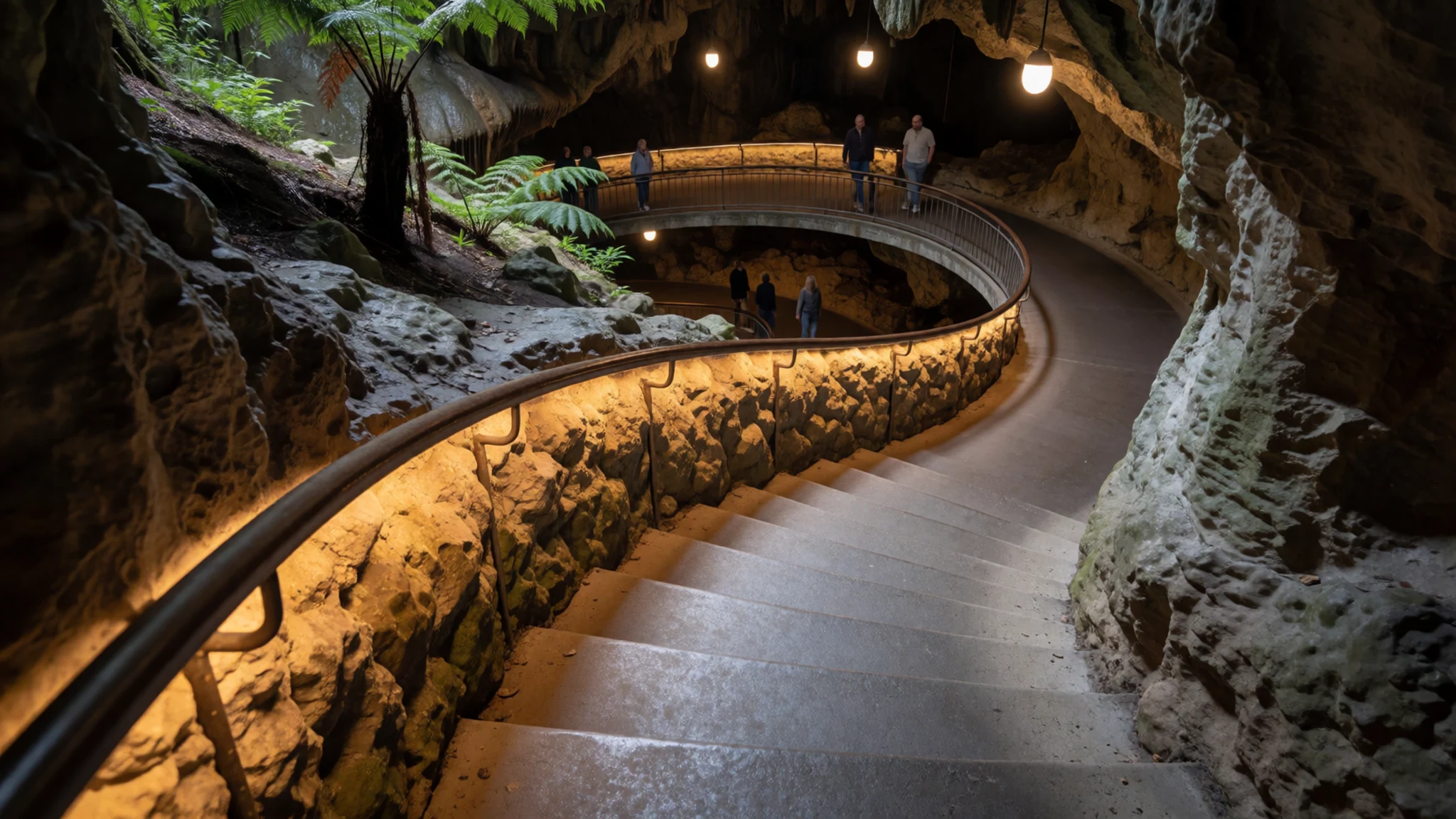
- Hobbiton Movie Set — Near Matamata, Waikato
Hobbiton Movie Set tours operate in the countryside near Matamata, in the triangle between Matamata, Cambridge and Tirau. It is a film set turned visitor attraction, and it is popular at busy times of year. Book ahead, and check the official site for current tour times and prices rather than relying on older guides.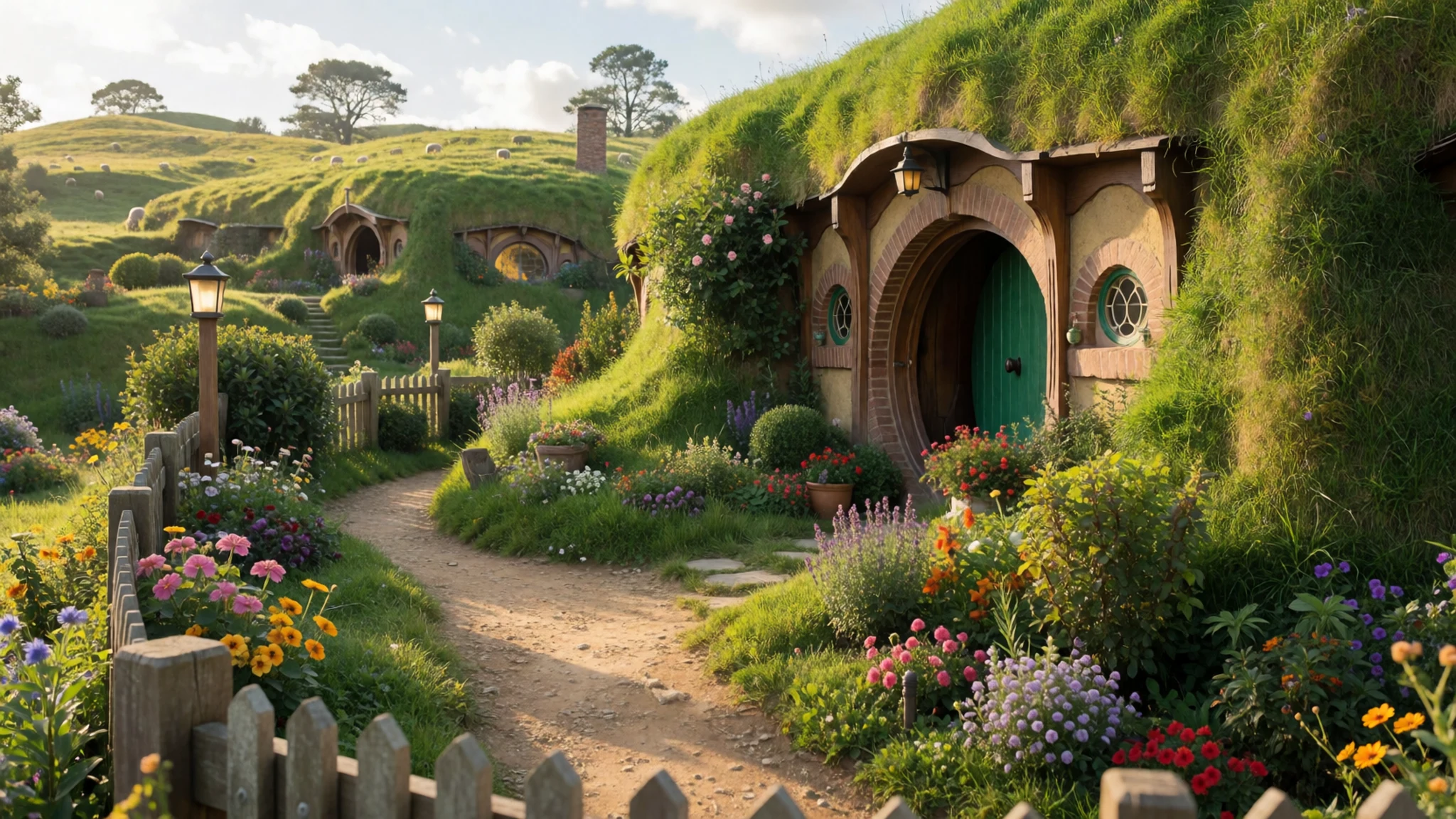
- Giant dog and sheep — Roadside near Matamata
Near Matamata, a giant dog and sheep made from corrugated metal stand as roadside sculptures. They are playful and make a good photo stop on the drive between the coast and the inland sights. Pull over only where there is space to stop safely, and keep clear of the traffic.
Culture
Cathedral Cove has a Māori name, Te Whanganui-A-Hei, and the marine reserve around it is part of how the coast is looked after today. Using that name alongside the English one is a small, sensible courtesy, and it helps to know that the land and sea here carry meaning beyond their scenery. Conservation is the everyday culture of the place: the reserve, the closed tracks and the signs at the car park all reflect a shared decision to protect a fragile coast. Visitors are expected to respect that. Listen to what the staff and signs say about the ground, and follow closures even when the path looks clear. Life on the peninsula is shaped by farming, tourism and the sea, so people are used to visitors arriving in numbers and expect them to behave well. Keep noise down in the bays, which are shared with local families and people on the water. Leave shells, stones and anything living where you find them, because the reserve exists to keep them there.
What to wear
The traditional dress of this region is the Māori kākahu, a cloak woven from harakeke (New Zealand flax), often decorated with feathers or other trims. Cloaks were worn to mark status and to honour important occasions, and they are still made and worn at ceremonies and gatherings today. A korowai, a cloak with black tassels, is one of the best-known forms. Weaving is slow and skilled, which is why these garments are treasured.
Day to day, people on the Coromandel dress for the outdoors and the weather: fleece, merino layers, waterproof jackets, shorts and sandals on warm days. Locals wear sun-smart clothing as a matter of course, with hats and sunglasses common on the beach and on the walk.
For a visit, dress in layers, because the weather can change quickly on the coast. Bring a rain jacket, a hat and sturdy shoes for the steep, uneven ground, and sandals or water shoes for the sand and rocks. A swimsuit and a rash top help for snorkelling. If you are invited onto a marae, cover your shoulders and knees, and follow the guidance of your hosts.
What to eat
- Fish and chips — Any seaside takeaway on the Coromandel
Wrapped fish and chips from a seaside takeaway on the peninsula are a classic lunch. Ask what fish is fresh that day, since the catch changes with the season. Eat it sitting on a bench by the water, but keep the paper in your hand, because the gulls will watch you closely.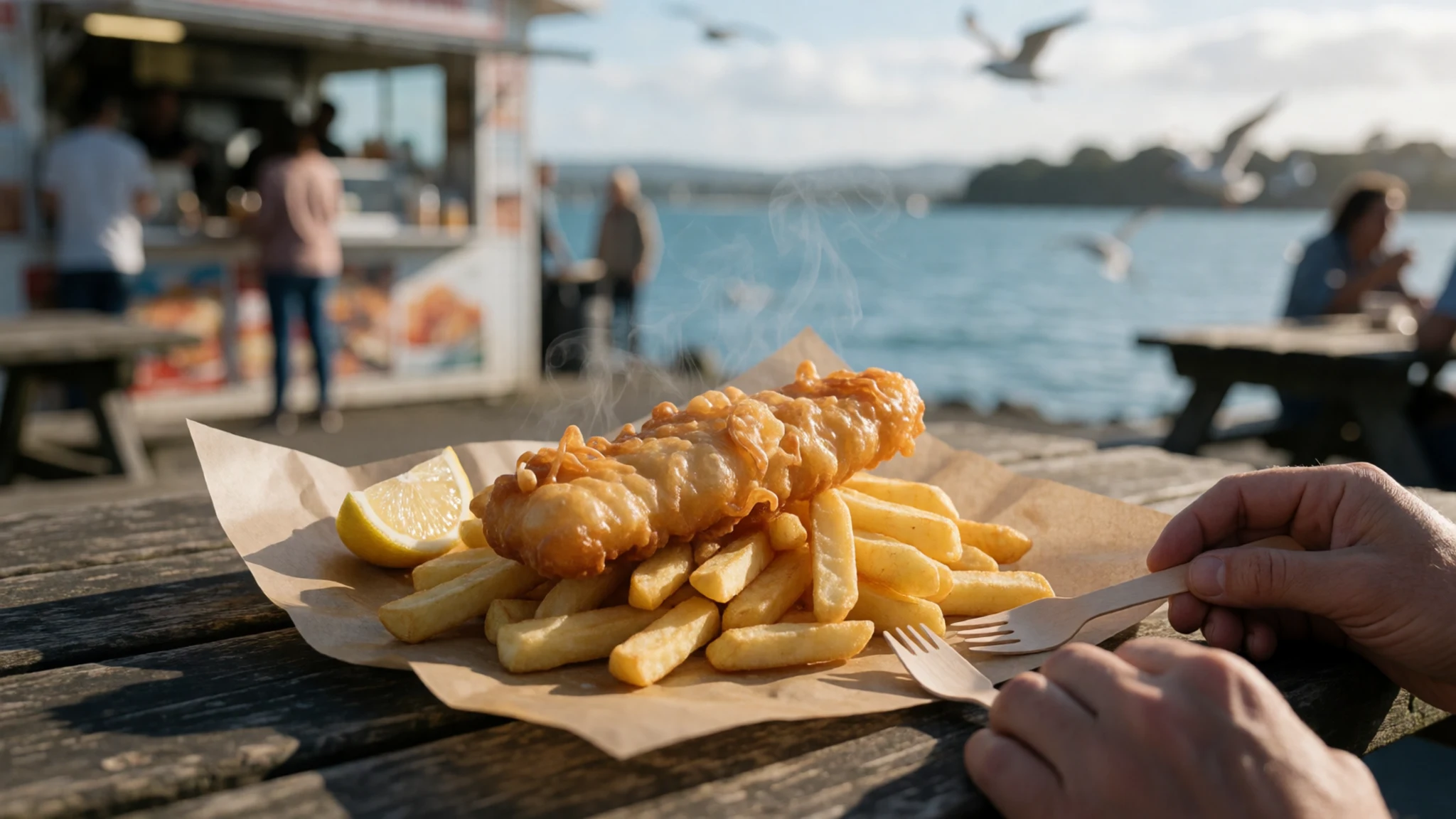
- Green-lipped mussels — Seafood counters and cafés in the towns around Mercury Bay
Green-lipped mussels from the Coromandel coast are sold steamed, in fritters or in chowder at seafood counters and harbourside cafés. They are a local speciality and a good way to taste the sea around Mercury Bay. Eat them when they are freshly cooked and served hot.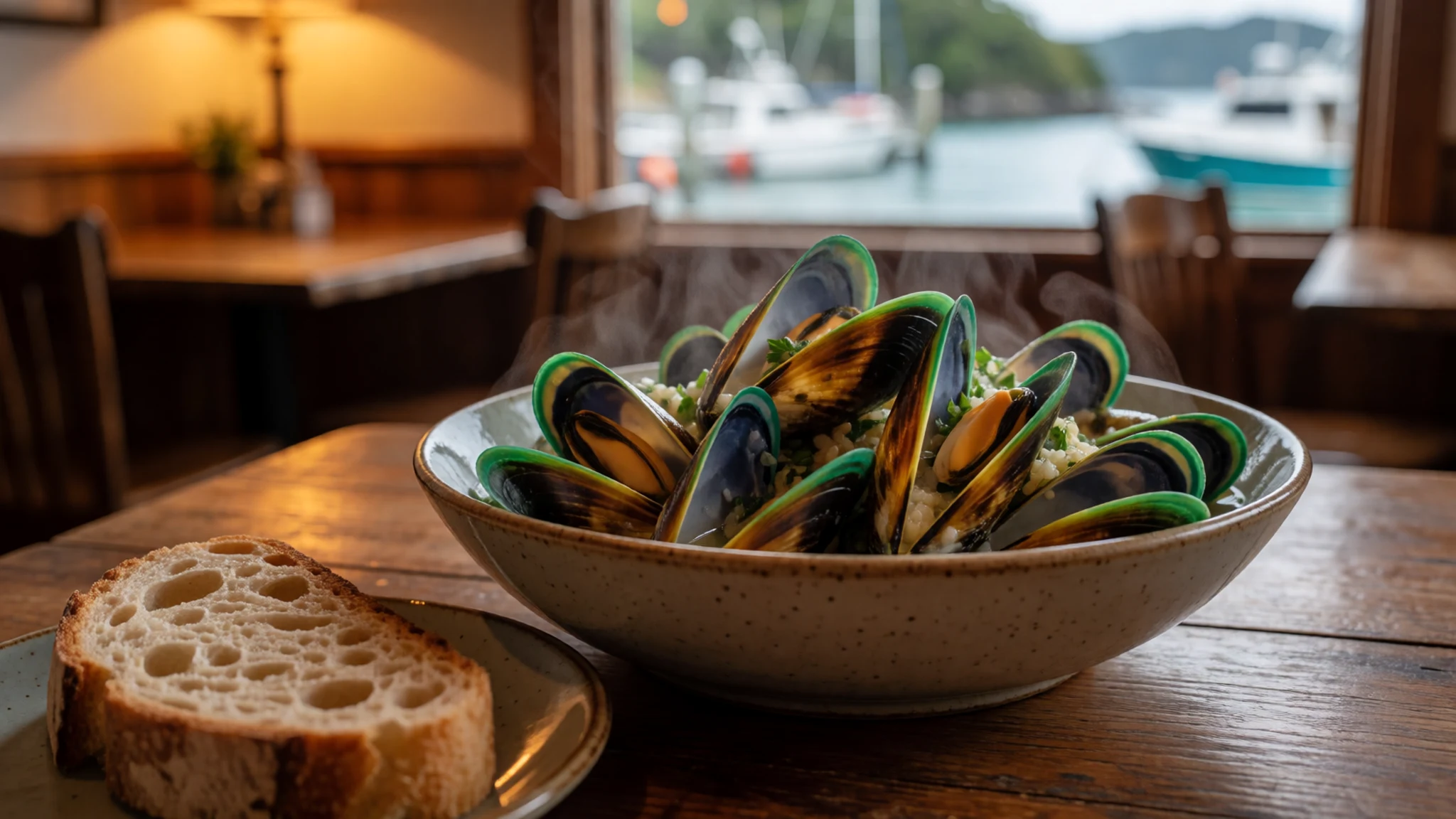
- Hokey pokey ice cream — Corner shops and beach kiosks near Hahei
Hokey pokey is vanilla ice cream with crunchy toffee pieces, a New Zealand favourite. It is sold at corner shops, ice cream parlours and beach kiosks. On a warm afternoon after the walk down, a cone is the right reward, and it is sweet enough to share. - Flat white and a bakery pie — Local cafés and bakeries in Hahei and the wider peninsula
A flat white from a café near the bay, with a savoury pie from a local bakery, is the everyday breakfast or snack of the region. Mince and cheese, or steak, are the classic fillings. Bakeries can sell out on summer mornings, so go early. - Waikato dairy — Farm-gate shops and local markets in the Waikato
Dairying is the main farming industry in the Waikato, so the milk, butter and cheese you find here are often produced close by. Farm-gate shops and local markets sell them, and they make a good picnic addition. Buy them chilled and keep them cool in the car on the drive back.
Plan it
Best time. December to March is the warmest and busiest season, with the best swimming weather, though it is also the most crowded. October, November and April are often calmer and still mild. June to August is cool and wetter, but the cove is quiet and the light is good for photographs.
How long. 1–2
Getting there. Fly into Auckland Airport, then take a long, scenic drive out onto the Coromandel Peninsula to Hahei. Allow most of a day for the journey, and check for road works before you set off.
Budget. mid
Tips
- Check Department of Conservation updates for track and closure notices before you go
- Arrive early for parking and a quieter beach
- Carry water, sun cream and a hat, since there is little shade
- Check tide times before walking on the sand and rocks
- Carry a little cash for small takeaways and kiosks
Etiquette
- Keep to marked tracks and stay off unstable slopes
- Leave shells, rocks and marine life where you find them
- Do not feed the gulls
Nearby
Sources
- Wikidata Q32155309 (CC0)
- Wikipedia: Cathedral Cove (rev 1362948093) (CC BY-SA 4.0)
- Wikivoyage: Waikato (rev 5259464) (CC BY-SA 4.0)
- Cathedral Cove 06, Krzysztof Golik (CC BY-SA 4.0)
