Akaroa
Akaroa, New Zealand
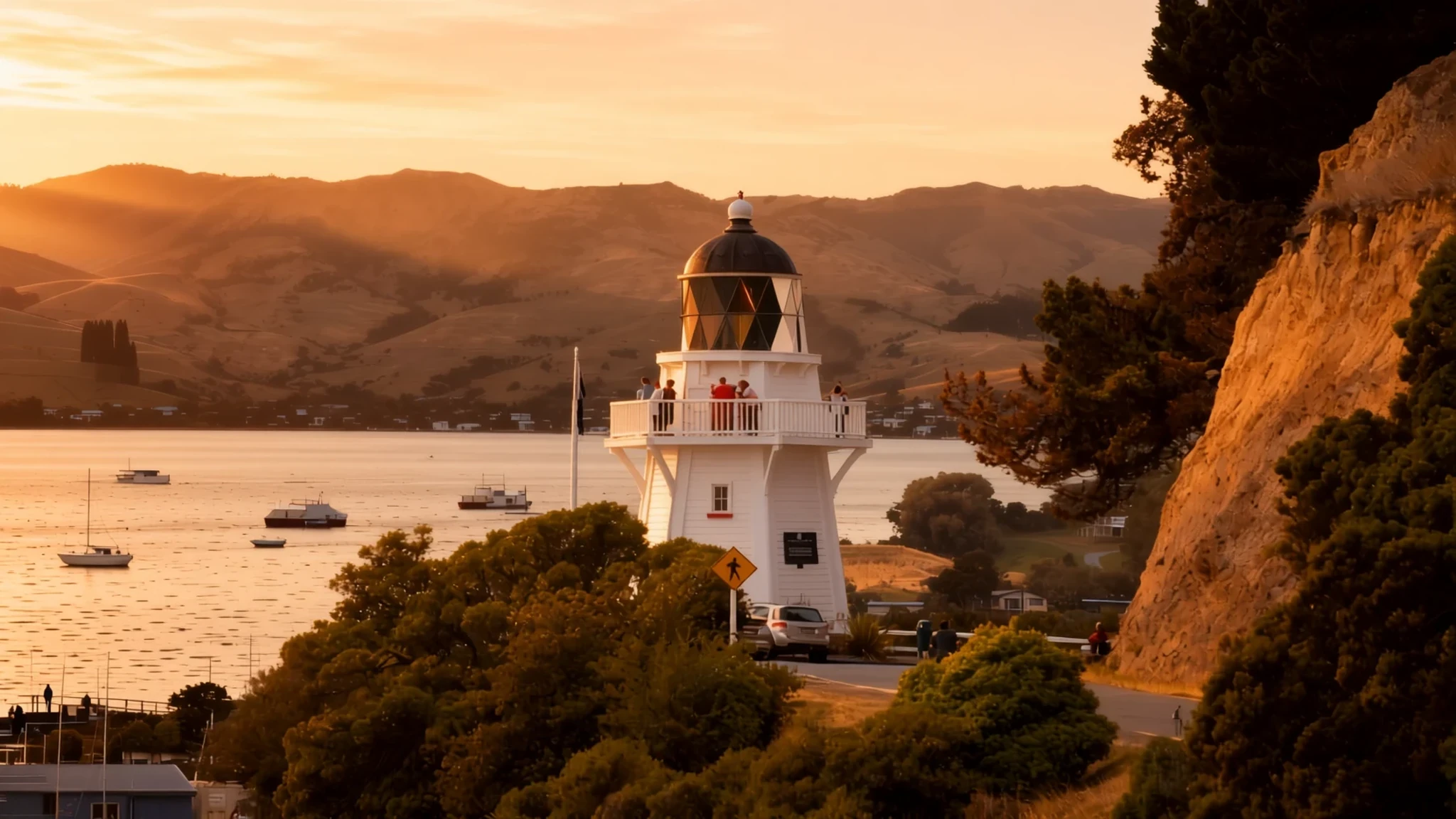
A small harbour town on Banks Peninsula, close to Christchurch, where a French colonising plan left its street names behind.
The place
Akaroa is a small town set inside a long harbour on Banks Peninsula, on the South Island of New Zealand. The harbour takes its name from Kāi Tahu Māori, meaning "Long Harbour", and the town sits in a wide bay on its eastern side. The land around it is the worn remnant of an old volcano, so the hills rise steeply from the water and the views on the approach road are dramatic. Christchurch is the nearest big city, and the drive over the peninsula takes around an hour and a half. Many people treat Akaroa as a day trip or a single night rather than a base for the whole region.
The town is compact. You can walk the main streets in a morning, and the waterfront is the focus, with the old wharf, cafés and the harbour cruise boats. Much of the centre is built in older wood and stone, and the street names carry the French origins of the settlement. Akaroa is quiet for much of the year. Summer brings the most visitors, and since cruise ships began calling in larger numbers, the town can feel crowded on certain days, especially around the main wharf. Going early or late in the day is calmer.
The harbour is home to Hector's dolphins, a small and rare species, and boat tours are the main way to see them. The surrounding hills and bays offer walks that are far quieter than the town itself, and the harbour edges reward anyone willing to sit still and watch the water.
Its story
Akaroa's history begins with the Kāi Tahu people, whose settlements lined this coast long before any European ship arrived. A dark chapter came in 1830 at Takapūneke, a settlement just east of the present town. A British captain, John Stewart, of the brig Elizabeth, helped the North Island chief Te Rauparaha attack the place. Most of the people there were killed, and survivors were taken away. No court in New Zealand at the time could try Stewart, and the episode was one of several lawless acts by Europeans that led to the appointment of a British Resident, James Busby, in 1832.
That same year Te Rauparaha, fresh from a long siege at Kaiapoi, also took the pā on Ōnawe Peninsula at the head of the harbour, leaving the area thinly populated.
The first Europeans who stayed used the harbour as a whaling base. Akaroa is now one of the few former whaling bases in New Zealand that is still a working town rather than a ruin.
The French connection followed. In the late 1830s France was looking for Pacific colonies and eyed the South Island. In 1838 a whaler, Jean François Langlois, drew up a deed in which a group of Kāi Tahu chiefs appeared to sell the greater Banks Peninsula, each adding a moko or cross as their mark. He returned to France, raised money from wealthy businessmen and formed a company to bring settlers. When the settlers arrived, British authorities, who had by then claimed all of New Zealand, ruled that no valid sale had taken place, relying on English law and Māori oral evidence. The colony stayed small, and its French character survives mainly in street names and a few buildings.
What to see
- Akaroa Museum — Town centre
Akaroa Museum is in the old heart of the town, housed in several heritage buildings: the Langlois-Eteveneaux cottage, the Customs House and the Court House. It reopened after repairs that followed the 2011 Canterbury earthquakes. Check the official site for current opening times before you go. The displays focus on the French settlers and the wider history of the town. Allow an hour or so, and treat the small cottage as the highlight.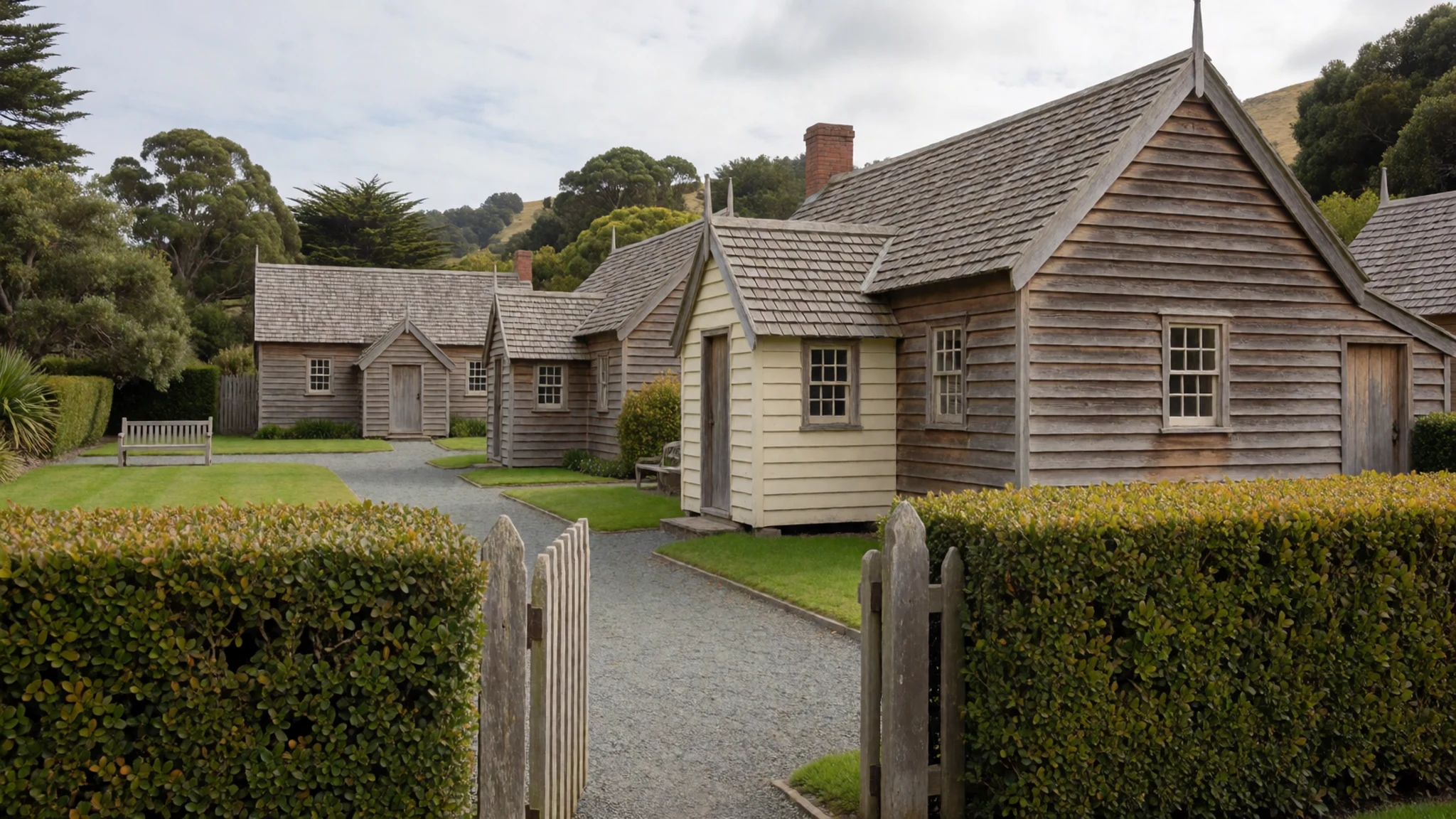
- The Gaiety Hall — Main street
The Gaiety Hall stands on the main street with a front in Italianate and Classical style. Those details are usually carved in stone, but here the whole façade is wood, which makes it an unusual sight. It was built by the Oddfellows Lodge. Stand across the road to see the full frontage and the painted timber detail. It is a short look rather than a full visit, so pair it with a stroll along the street.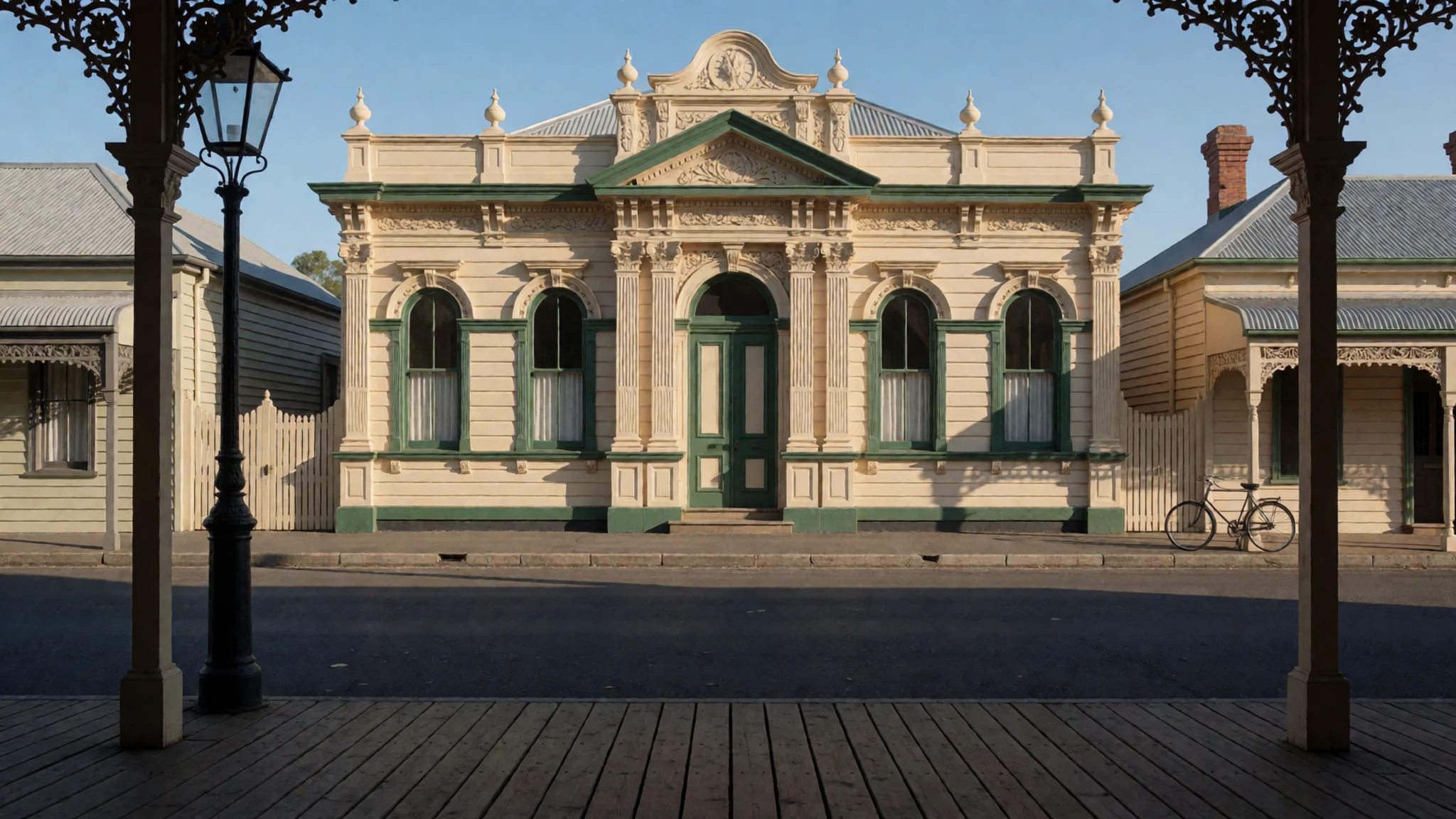
- The Giant's House — Hillside above the town
The Giant's House is a historic hillside home that an artist transformed into a whimsical garden of sculptures and colourful tiles. Expect odd details around every corner. It sits a steep walk above the town, and the views over the harbour are the reward for the climb. It is a private property with a public garden, so keep to the paths, stay quiet and respect the neighbours.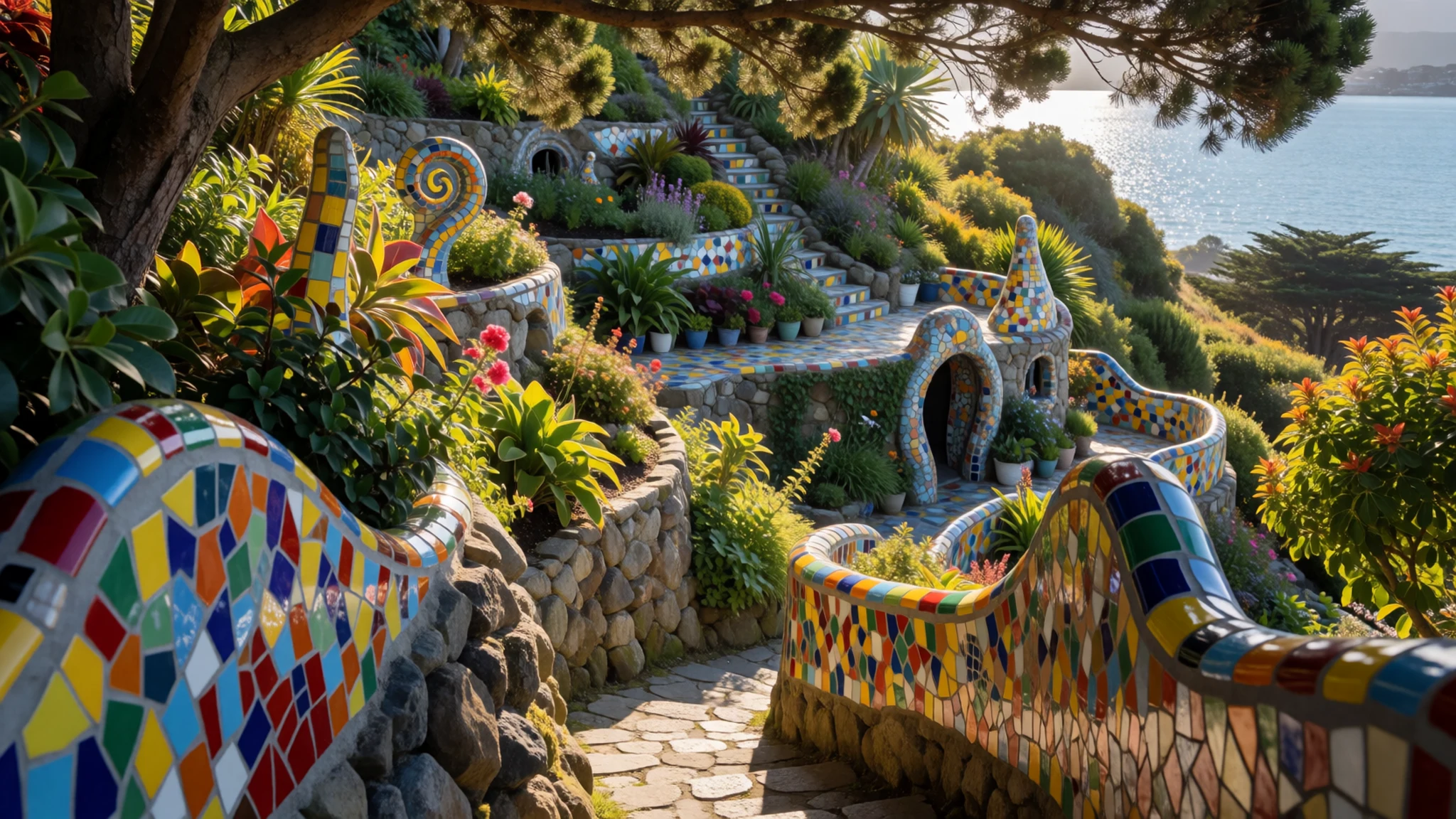
- Akaroa Head — Harbour mouth
Akaroa Head sits at the mouth of the harbour, a clifftop area with dramatic coastal views. It is one of the few places where you can see Hector's dolphins from land at no cost, so bring binoculars and a little patience. Seabirds wheel over the water, and distant seals sometimes appear on the rocks. Go in calm weather if you can, as the wind up there can be strong, and keep well back from the cliff edges.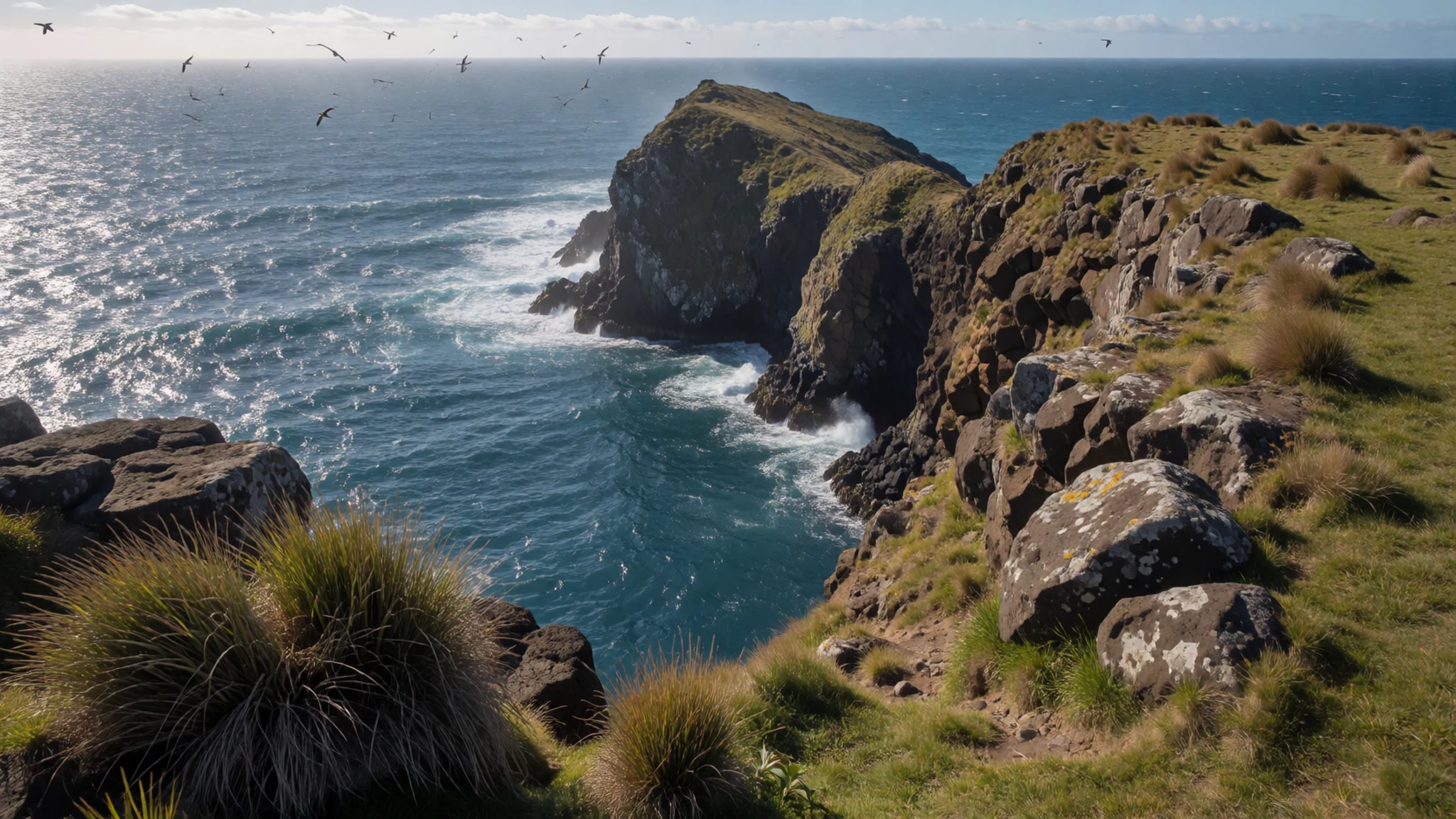
- Pohatu Marine Reserve — Flea Bay, south of the harbour
Pohatu Marine Reserve centres on Flea Bay, a protected stretch of coast set aside to safeguard its marine life. Reach it by taking Onuku Road, then Lighthouse Road, then Flea Bay Road, on narrow hill roads. Rock pools and the shore are the draw, but the rule is simple: look, do not take. Leave shells, rocks and creatures where you found them, and check the tide before you walk out.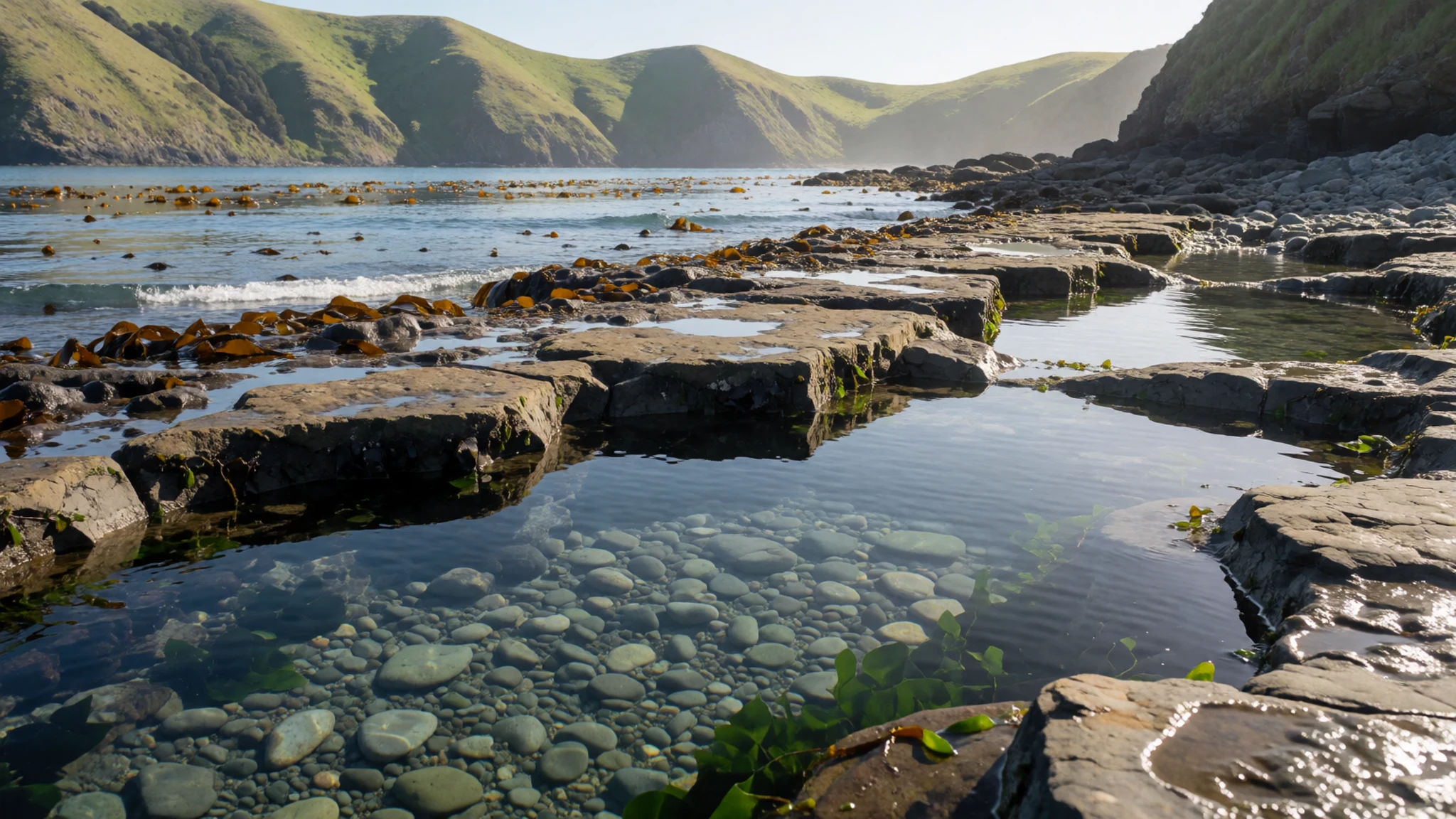
Culture
Akaroa has several layers of identity: Kāi Tahu Māori, whose name for the harbour it carries; a French heritage visible in its street names; and an English-speaking settler town built around the harbour trade. Kāi Tahu is the iwi of this coast, and Onuku Marae sits a short way south of the town. Marae are living communities rather than museums, and visits are normally by invitation or through a guided tour arranged in advance. People gather there for ceremony and daily life, so do not turn up unannounced.
The town itself is relaxed. New Zealanders tend to be friendly and understated, and a chat with a bakery owner or a boat skipper is ordinary. Many visitors arrive by cruise ship for a few hours, and the shuttles from the wharf can be busy. Allow extra time and queue patiently. Tipping is not expected in restaurants, though it is welcome for excellent service. On the water, operators keep a set distance from dolphins and seals, and you should follow their instructions even when an animal comes close to the boat.
The French names on the street signs are a historical reminder rather than a cue for French phrases, although a simple merci at the bakery will always be appreciated. Ask before photographing people, and never step onto the marae without an invitation.
What to wear
In Akaroa, traditional dress belongs to Kāi Tahu and wider Māori culture, and it is worn for ceremony rather than daily life. The most important garment is the kākahu, a cloak woven from harakeke, New Zealand flax, and sometimes decorated with feathers or dyed fibres. Weaving is a skilled craft handed down through families, and cloaks are treasured heirlooms. The settlers brought European clothes, and the French and English styles of the nineteenth century shaped the town's older photographs more than any local garment does.
What people wear now is practical. Locals dress for wind and changeable weather, with fleece jackets, waterproof shells, jeans and sturdy shoes or gumboots. Smart clothes appear at church services and formal events, and the town is rarely dressy.
For a visit, dress in warm layers, because the wind off the water can be cold even on a bright day. Bring a waterproof jacket and a hat, and use strong sun protection, since UV is high in this part of the world. Wear sturdy shoes for the hill tracks and the Banks Peninsula Track, and leave flip-flops for the beach. For a marae visit, cover shoulders and knees and dress modestly.
What to eat
- Seafood chowder in a bread bowl — The town's French bakery and patisserie
A creamy seafood chowder served inside a bread bowl is the town's signature lunch. The bread is baked on site, so the bowl is as good as the soup. Eat it on a bench near the harbour, where the gulls will take an interest. Expect a generous portion, and ask whether the chowder is ready if the queue is long.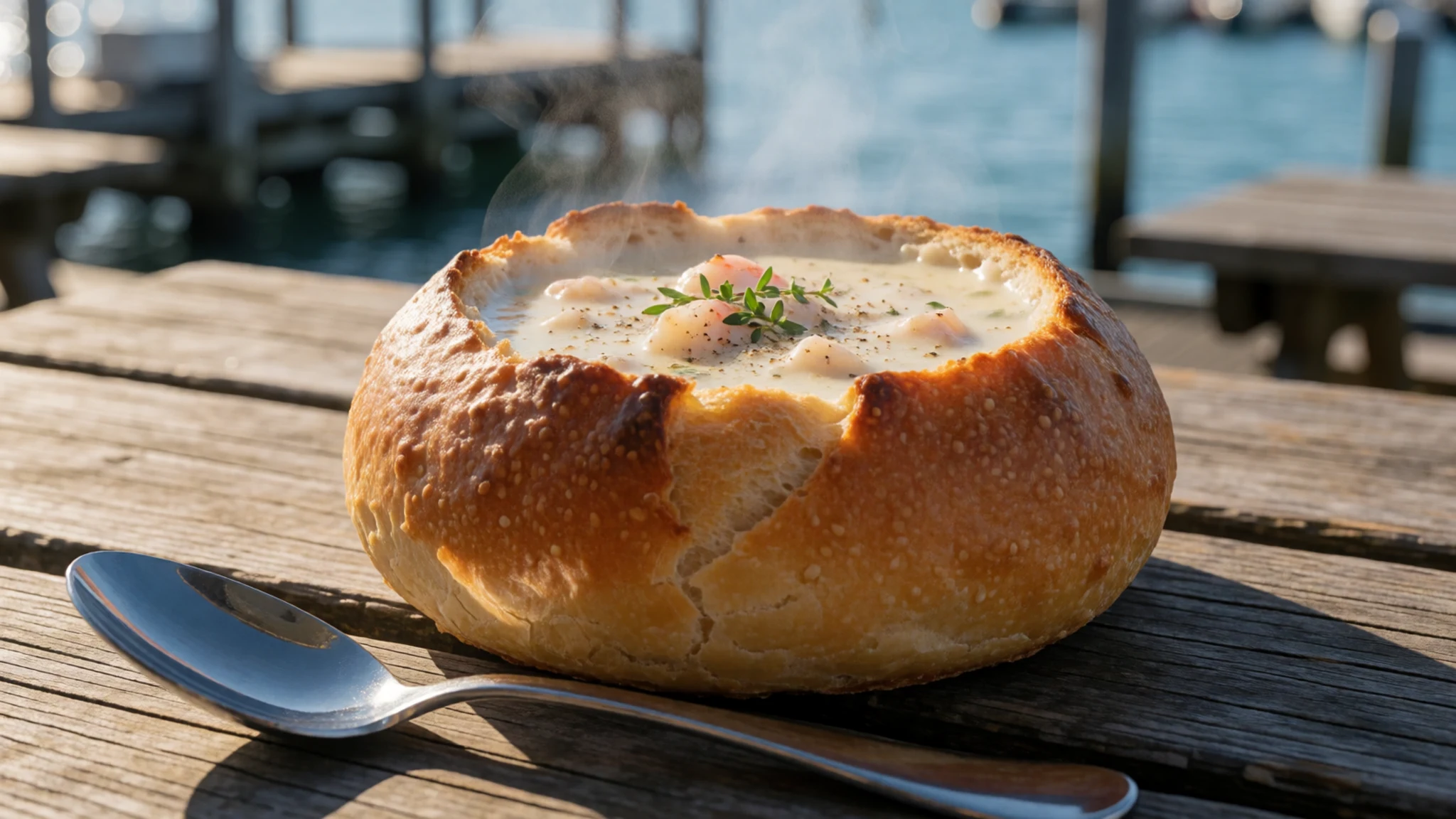
- French pastries and bread — Bakeries and cafés on the main street
Tarts, pastries and crusty loaves in the French tradition sit alongside good coffee in the town's bakeries. They make a satisfying breakfast before a boat trip or a walk. Buy a few to take out for a picnic, since benches on the waterfront are a pleasant place to eat them.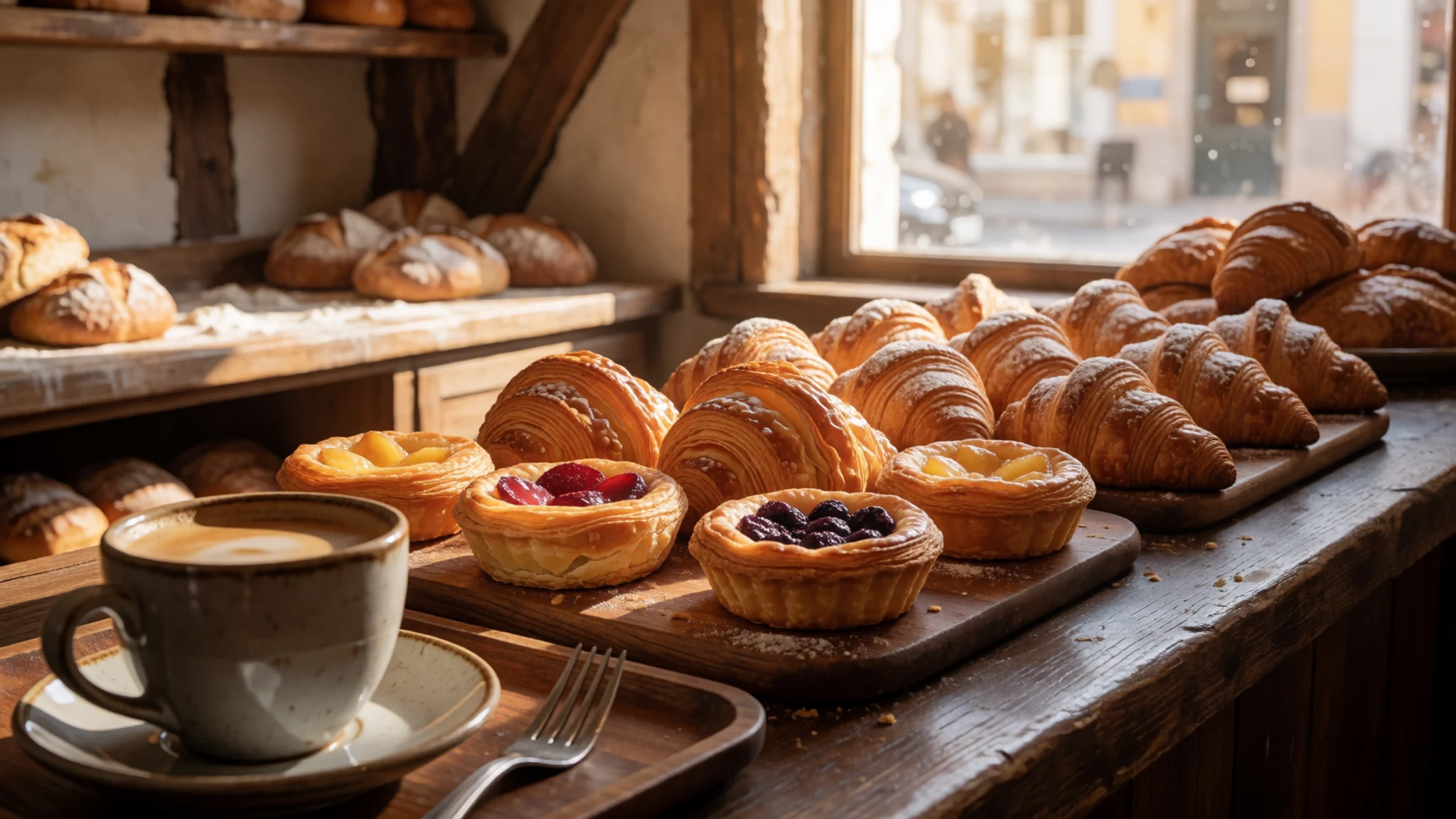
- Harbour seafood — Waterfront restaurants facing the harbour
Fish and shellfish cooked simply are the natural choice near the water. Ask what is landed or fresh that day, because menus change with the weather and the catch. Expect to pay a premium for a sea view, and sit outdoors on a sunny afternoon to make the most of the harbour. - Large salads from the bakery — The bakery counter or a café near the wharf
The bakery keeps a broad salad selection, which suits a light lunch after a long walk. Choose a few options and eat them with bread on the foreshore or at a picnic table near the wharf. It is a sensible option for anyone who wants something fresh rather than heavy. - A harbour-view bar meal — The waterfront restaurant and bar
A relaxed meal in the restaurant and bar overlooking the harbour is part of the town's appeal. The atmosphere is easygoing, and the views carry much of the value. It is not the cheapest meal in town, but for an evening drink as the light falls over the water it is a pleasant way to end the day.
Plan it
Best time. December to February suits the walks and boat trips best, with the longest days and the most settled weather, but it is also the busiest season because of holidaymakers and cruise ships. Autumn and spring are calmer and often less windy. Winter is cold and wet, and some tours run less often.
How long. 2–3
Getting there. Christchurch Airport is the nearest main gateway. From there, drive about an hour and a half over the peninsula on the State Highway, or take a daily shuttle bus from Canterbury Museum on Rolleston Avenue. Cruise ship passengers arrive by tender at the main wharf.
Budget. mid
Tips
- Book bus seats and boat cruises ahead in summer, when cruise days fill the town
- Check bus timetables carefully, because departure times change with the season
- Go early or late on cruise days, when the main streets and wharf are busiest
- Carry some cash for small shops, though cards are widely accepted
- Carry water and sun protection, and expect wind on the peninsula roads
Etiquette
- Keep your distance from Hector's dolphins and seals, and follow the boat operator's instructions
- Ask before photographing people, especially at the marae
- Do not enter Onuku Marae without an invitation or a guided visit
Nearby
Sources
- Wikidata Q416098 (CC0)
- Wikipedia: Akaroa (rev 1379760335) (CC BY-SA 4.0)
- Wikivoyage: Akaroa (rev 5348031) (CC BY-SA 4.0)
- Photo: The township of Akaroa (01-akaroa-new-zealand.jpg), Jonathan Keelty (CC BY 2.5)
- Photo: Akaroa (02-akaroadec032024-01.jpg), Hagai Agmon-Snir (CC BY-SA 4.0)
- Photo: Akaroa street sign (03-akaroafrnames.jpg), Egghead06 (CC BY 3.0)
- Photo: Aerial Akaroa Lighthouse (04-20250216-dji-0903.jpg), Thomas Berwing (CC BY-SA 4.0)
- Photo: Eglise à Onuku (05-onuku-eglise-1.jpg), Remi Jouan (CC BY-SA 4.0)
- Photo: Church of Saint Patrick (06-church-of-saint-patrick-1864-akaroa.jpg), Jocelyn Kinghorn (CC BY-SA 2.0)
- Photo: Saint Peter's Anglican Church (07-saint-peter-s-anglican-church-1864.jpg), Jocelyn Kinghorn (CC BY-SA 2.0)
- Photo: Trinity Church (08-trinity-church-akaroa-01.jpg), Jocelyn Kinghorn (CC BY-SA 2.0)


