Virachey
Virachey, Cambodia
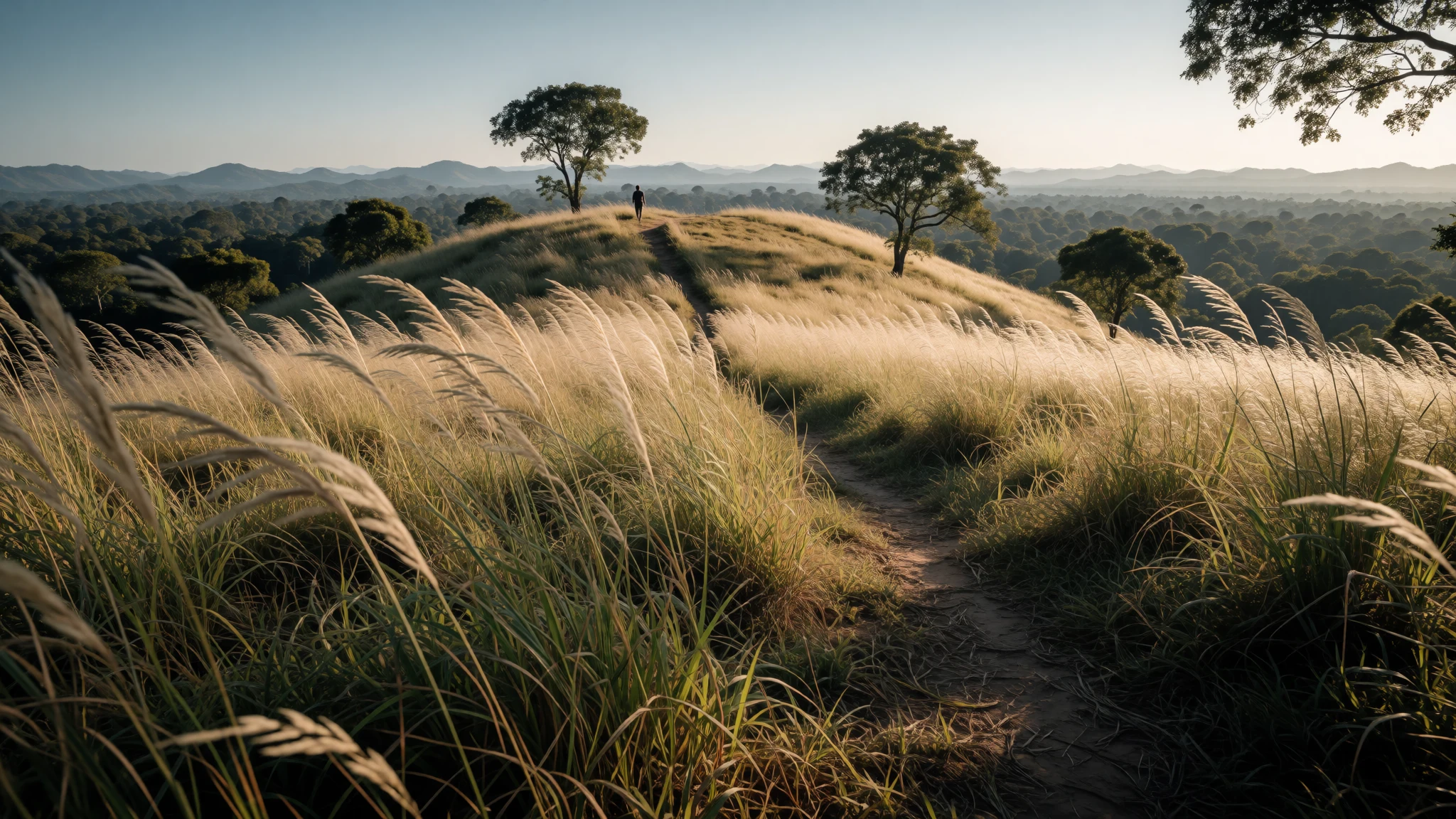
Virachey is Cambodia's remote north-eastern wilderness, where a week-long trek ends on open grassland above jungle and the borders of Laos and Vietnam.
The place
Virachey National Park lies in the far north-east of Cambodia, straddling Ratanakiri and Stung Treng provinces and backing onto the borders with Laos and Vietnam. It was founded in 1993 and is managed by the Ministry of Environment. The park carries ASEAN Heritage Park status, a regional conservation label that only one other Cambodian park shares. Very few visitors ever see it, and those who do tend to come away talking about scale rather than any single viewpoint. The ground is mostly high: dense semi-evergreen forest on the lower slopes gives way to cooler montane forest, with stretches of upland savannah, bamboo thickets and the odd patch of drier mixed woodland. Rivers cut through it and drain south towards the Sesan. Wildlife is varied. Gibbons call from the canopy, hornbills cross the valleys, and sun bears, elephants and clouded leopards are all recorded here, though trekkers rarely glimpse them. Whether tigers survive is simply not known. Nobody should expect a safari. This is a place of leeches, mud, hammocks and long walking days, and it feels closer to true wilderness than most protected areas in the region. There are no lodges or huts inside the boundary, and the rainy summer months make movement slow and wet. Illegal logging and poaching are persistent pressures, and ordinary visitors on legitimate treks are one of the few sources of income that give local people a reason to protect the forest.
Its story
Virachey National Park took its present shape through borders and politics as much as ecology. Under French colonial administration, the mountain mass here, which had belonged to Laos, was reassigned: Stung Treng became part of Cambodia, and the high ridgeline was fixed as the line between the two countries, continuing east towards Vietnam. That decision explains why a Cambodian park now looks out across a frontier. The park itself was established in 1993, while Cambodia was rebuilding its institutions and setting land aside for conservation. A World Bank-backed protection programme later ran for several years, paying for rangers and patrols, but the bank withdrew and the money went with it. Rangers afterwards reported that patrols had effectively stopped, which left logging and hunting largely unchecked. Today the most talked-about worry is a proposed road, reportedly Chinese-funded, that would cut across the south-western corner. No plans have been officially announced, but the rumour alone shows how fragile the protection is. Along the southern edge, the Sesan River flows past Brao and Kreung villages whose people have lived with this forest far longer than the park has existed. Their fields, sacred groves and livelihoods overlap with the park boundary, so conservation here is never only about animals; it is also about who may use the land, and who is paid to look after it.
What to see
- Veal Thom Grasslands — Upland interior of the park, near the Laos border
Phnom Veal Thom is the reward at the end of the long trek: an open upland of grass and scattered trees above the forest canopy. From the viewpoints the land falls away to jungle in every direction, with the mountainous borderlands of Laos and Vietnam on the horizon. Expect cold mornings, mist and a real sense of remoteness.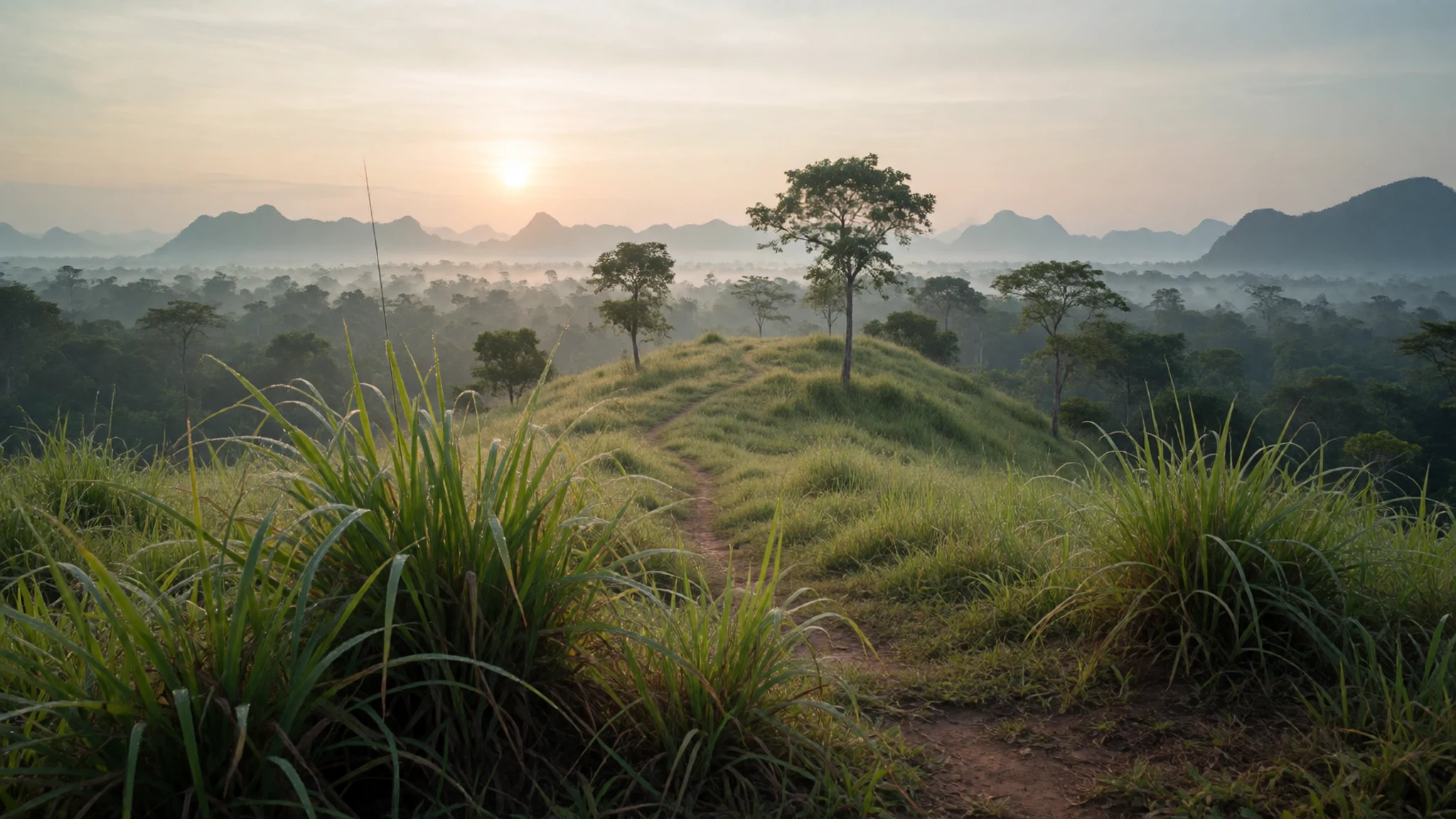
- Sesan River and Brao villages — Southern edge of the park, along the Sesan River
South of the high ground, the Sesan River edges Brao and Kreung villages and their farmland. Visits are best arranged through the park office or a licensed guide, so the community benefits and expectations are clear. Go as a guest rather than a spectator, and ask before taking any photograph of people.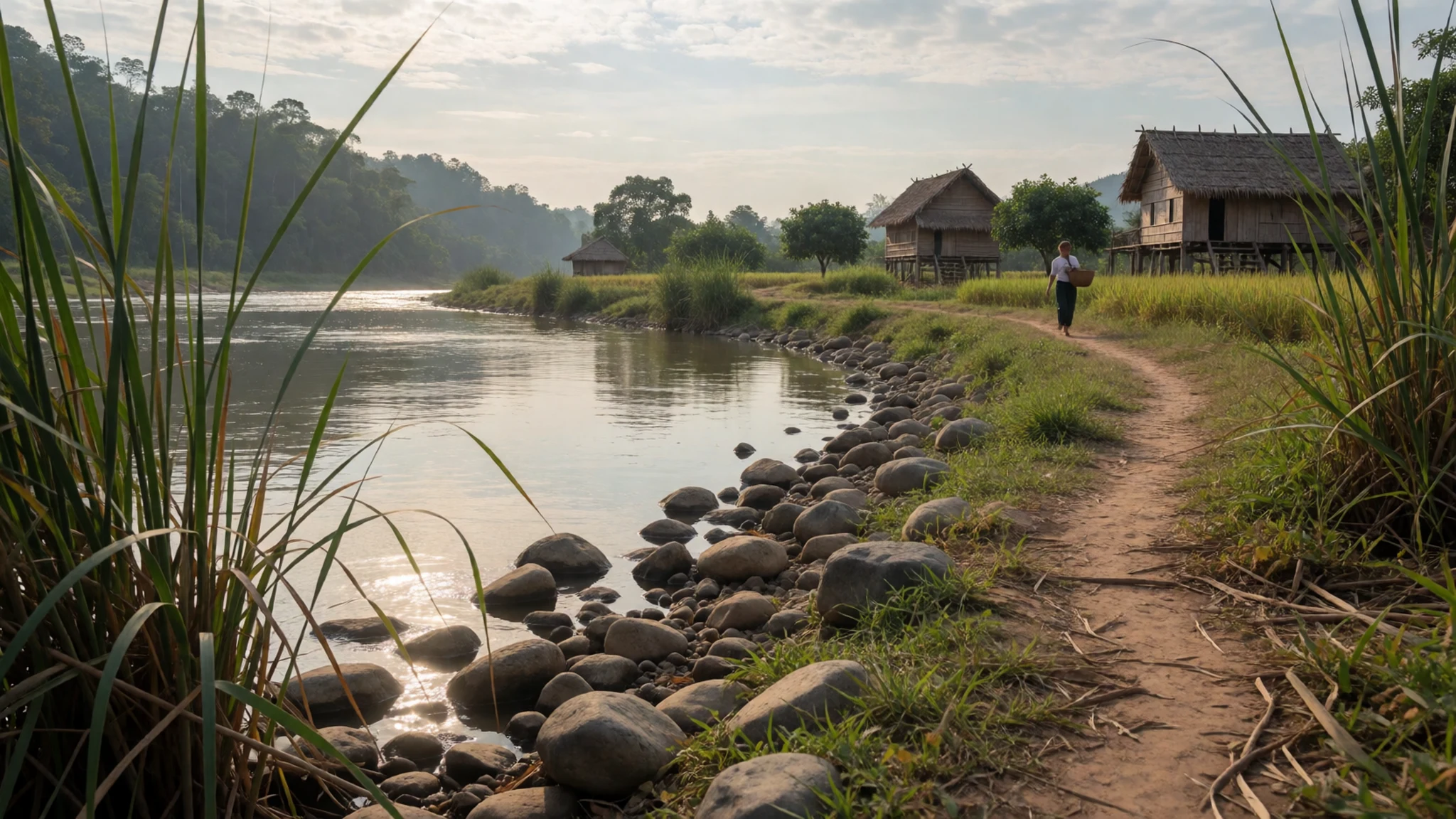
- The multi-day trek — From Ban Lung into the park interior
The classic way into Virachey is a trek of about a week, sometimes compared with a small-scale Annapurna circuit. Days mean forest tracks, river crossings and steep climbs; nights mean hammocks strung by the guides. It is tiring, wet in the rainy months and not technically difficult, but it needs decent fitness and patience.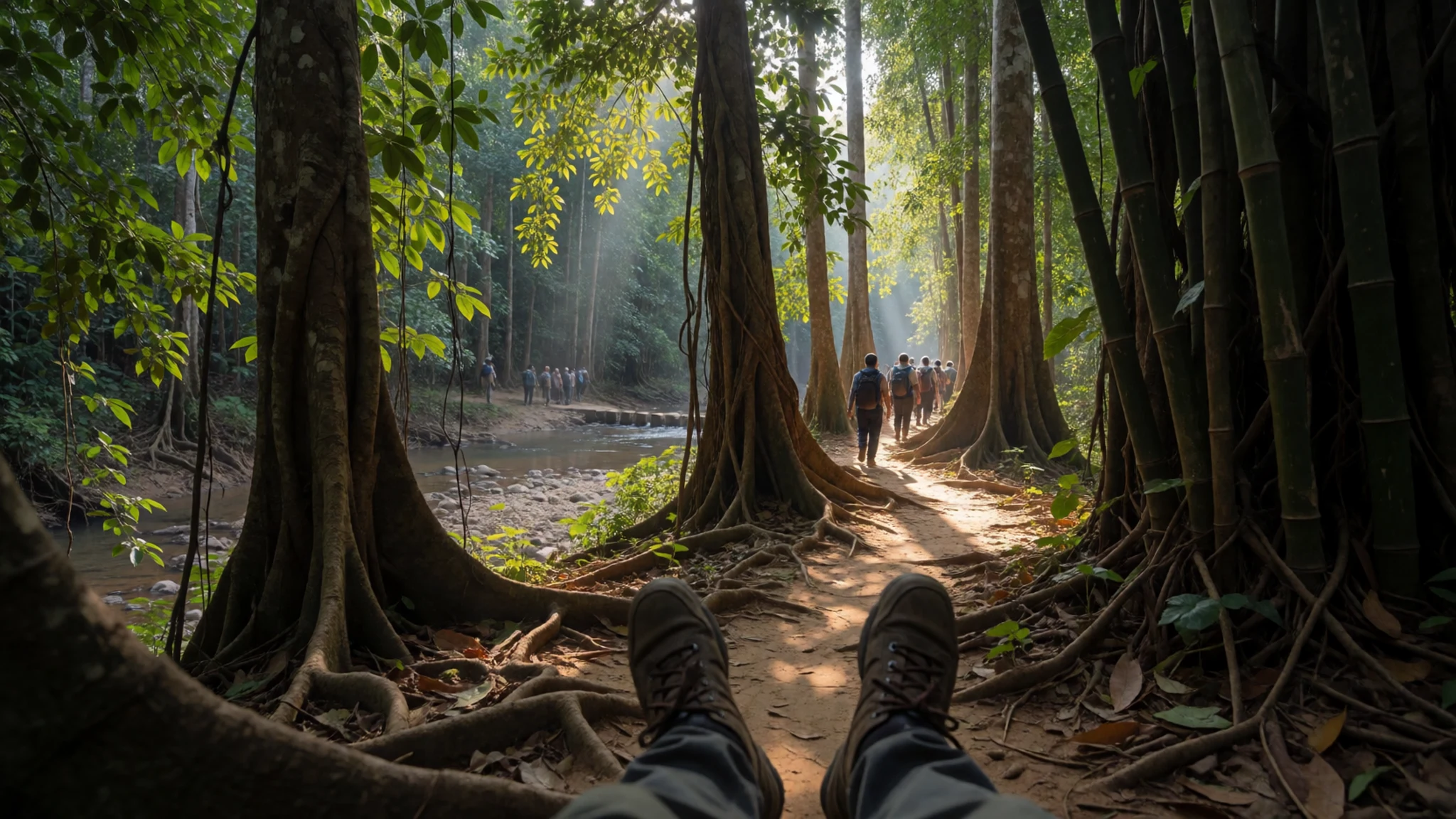
- Park office, Ban Lung — Eastern side of Ban Lung, Ratanakiri
Every trek begins at the national park office on the eastern edge of Ban Lung, the provincial town of Ratanakiri, where guides and registration are sorted. Most travellers spend a couple of nights in town first, to register and to buy camping supplies, since the park has no shops, huts or lodges of its own.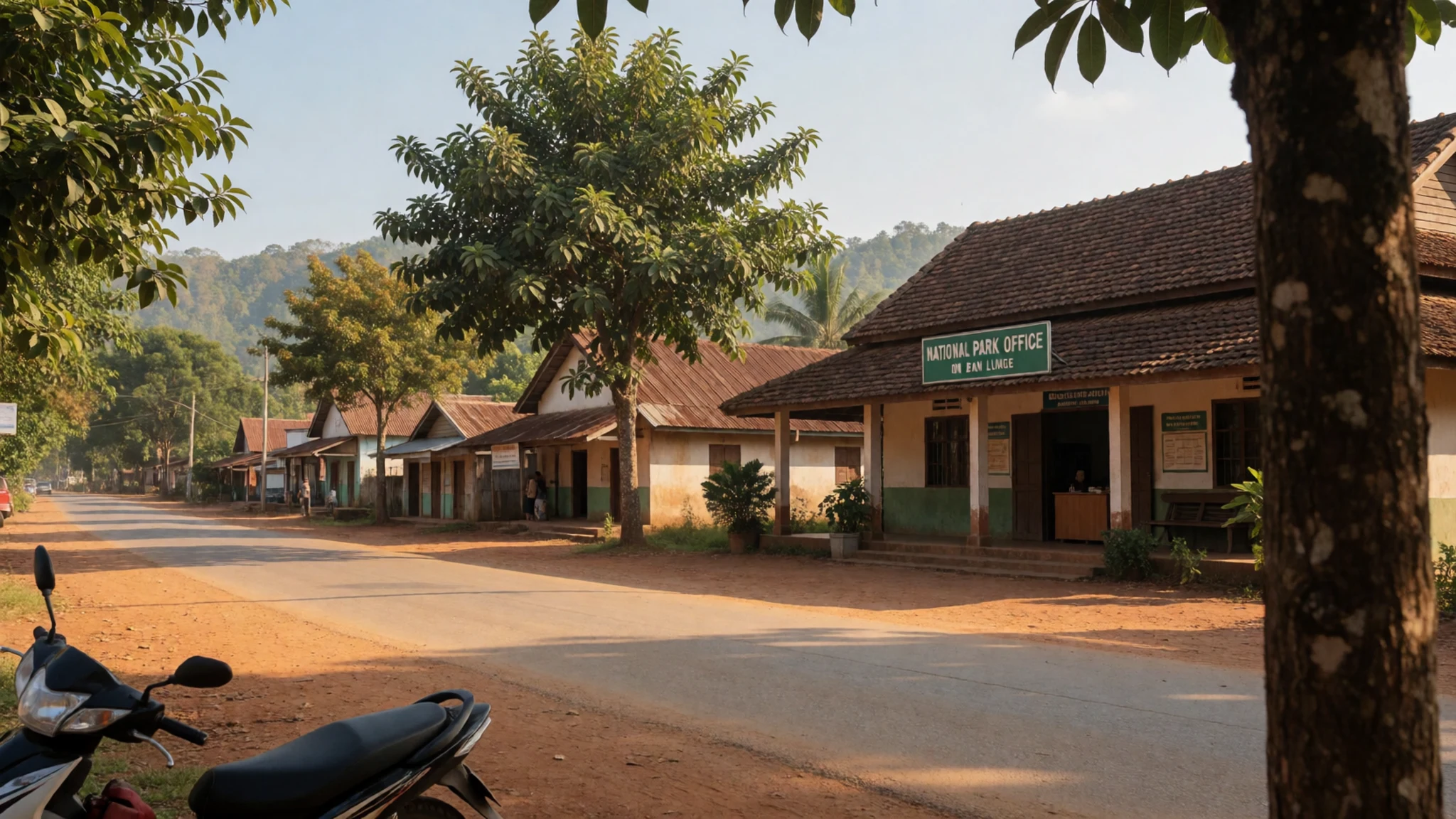
- Yeak Leom Lake — Just outside Ban Lung, Ratanakiri
Yeak Leom Lake, a round volcanic crater lake just outside Ban Lung, is where many trekkers spend the day before setting out. The clear water is good for a swim, and the shaded shore is a gentle way to adjust to the heat. Treat it as a warm-up for the park rather than a substitute.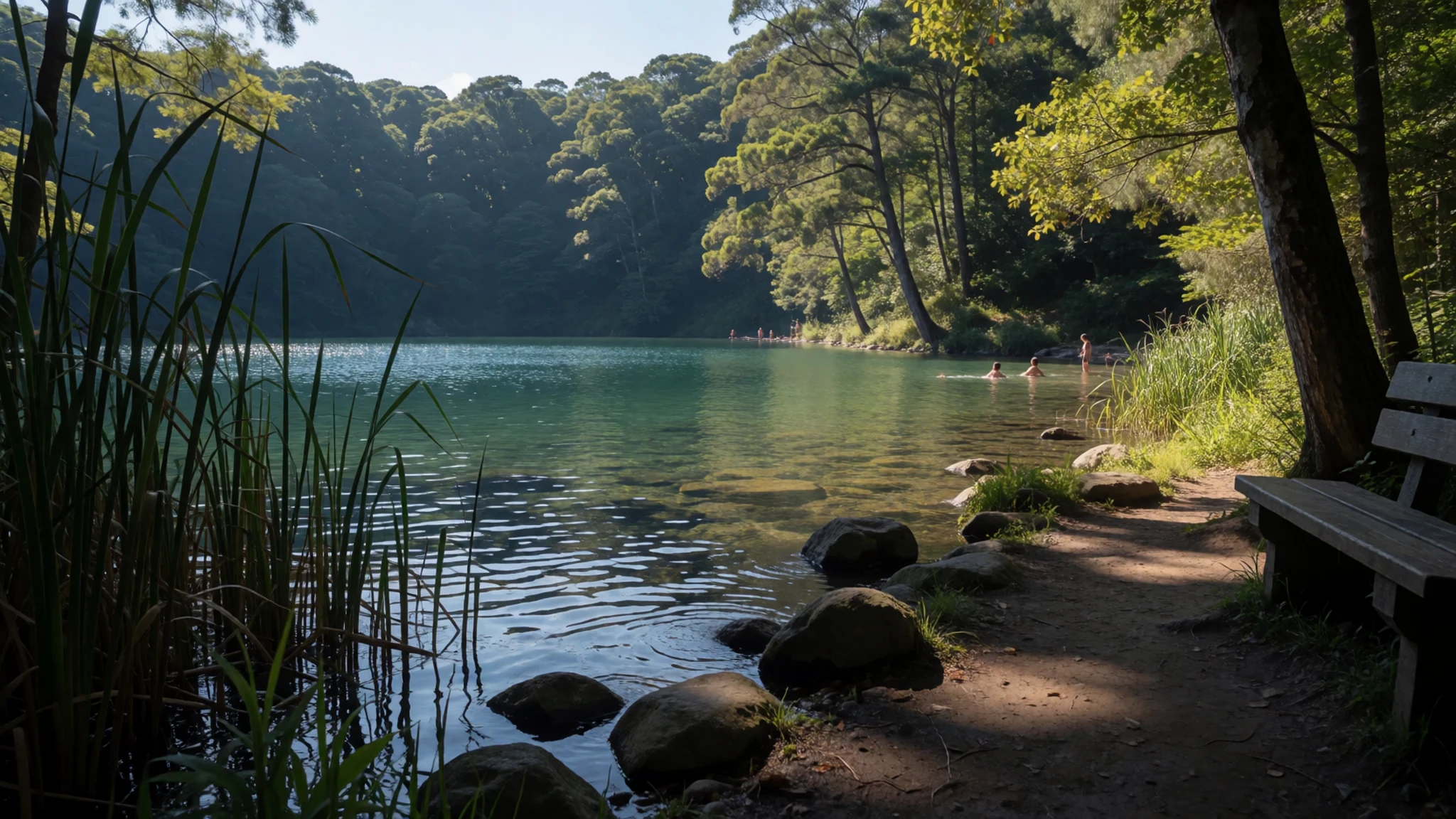
Culture
Virachey National Park sits in a part of Cambodia where Khmer culture is only one thread. Ratanakiri and Stung Treng are home to several highland peoples, among them the Brao and Kreung, who have their own languages, farming systems and ritual traditions. Many communities have long ties to particular hills, streams and forest patches, and some of those places carry spiritual meaning that is not obvious to an outsider. Guides from the area are often the best bridge, explaining what is open to visitors and what is not. Village life follows the farming calendar, so timing matters: a community busy with harvest or a funeral may not welcome guests. Buddhism is the main religion of the wider country, and monks and temples are part of daily life in Ban Lung and other towns, while animist beliefs remain important in many highland villages. Modern pressures are real. Land sales, logging and outside investment have changed Ratanakiri quickly, and local people hold strong views about whether tourism benefits them or bypasses them. Hiring local guides, buying supplies in town and asking before entering or photographing anything are small ways to show respect. Before photographing anyone in a village, or stepping into a house or a patch of sacred forest, ask your guide to request permission first and accept a refusal without argument.
What to wear
Virachey National Park has no dress code of its own, but the clothing of the communities around it is worth understanding. Traditional dress among highland groups such as the Brao and Kreung is built on hand-woven cotton, often dyed dark with indigo or other natural colours and finished with patterned bands and beadwork. Wrapped skirts for women and woven cloths for men are worn mainly at festivals and ceremonies, and details differ from village to village, so ask rather than assume. Across Cambodia, the checked cotton krama scarf is the everyday all-rounder, used against sun and sweat and for carrying things. Day to day, people in Ban Lung and nearby villages mostly wear T-shirts, long trousers or wraparound skirts, rubber sandals and caps, chosen for heat and farm work rather than show. A visitor should dress for the trail first: a light long-sleeved quick-dry shirt, long trousers, leech socks, and sturdy shoes with good grip for mud and river crossings. In the cool, dry months, add a warm layer, because highland nights and mornings can be cold. In the rainy season, pack a proper rain jacket. In villages and at temples, keep shoulders and knees covered. Swimwear is fine at Yeak Leom Lake, though people generally cover up again afterwards.
What to eat
- Jungle camp rice and stir-fry — Cooked at camp by your guides during the trek
On the trail, guides cook over open fires: rice with stir-fried vegetables, eggs, tinned fish or local meat, seasoned with garlic, chilli and fish sauce. Trekkers often say it tastes better than expected after a day of walking. Mention any dietary needs to the operator before leaving Ban Lung.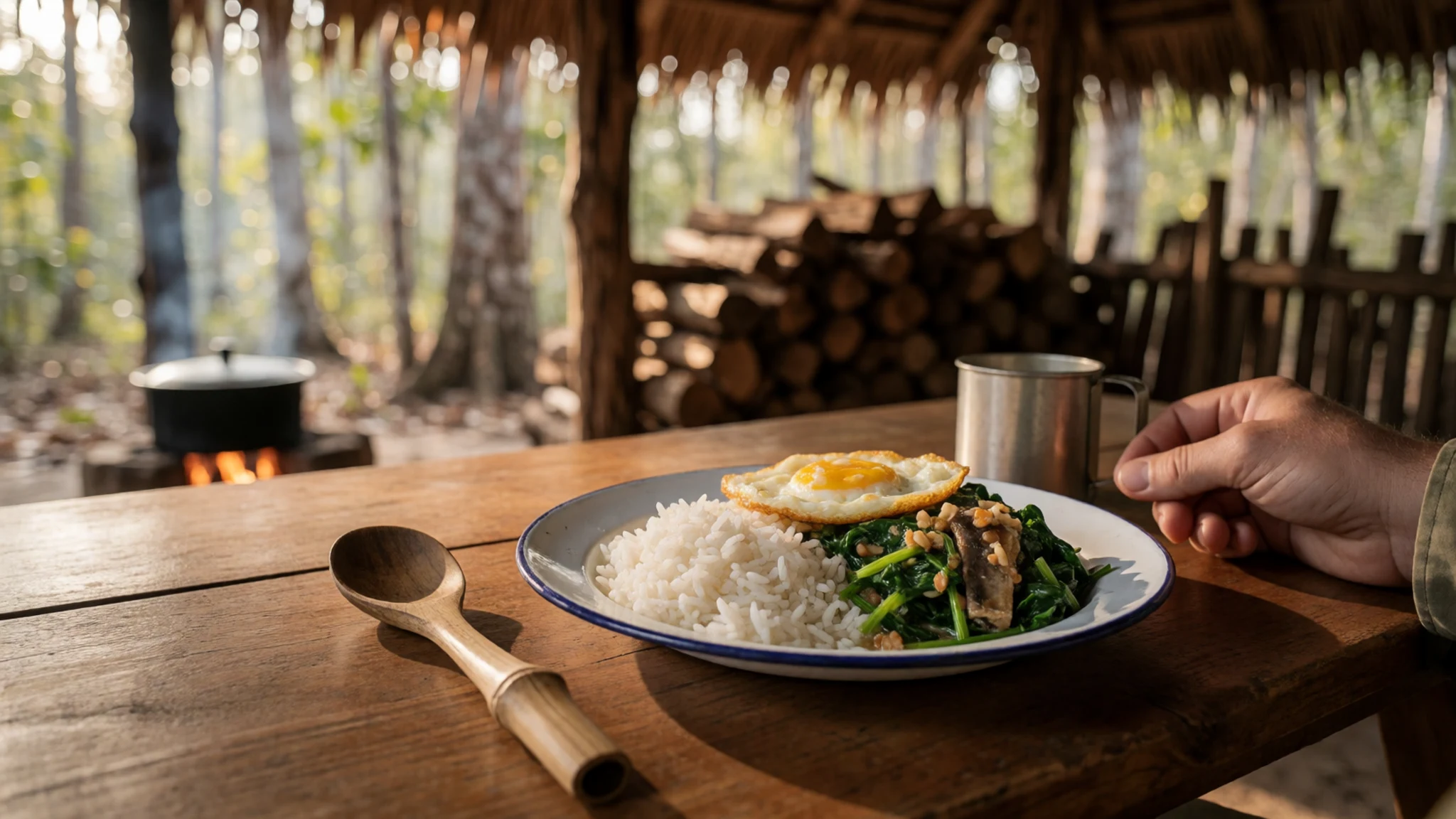
- Grilled skewers and rice — Evening street stalls near the central market in Ban Lung
In Ban Lung, evening stalls grill skewers of pork, chicken or beef over charcoal and serve them with plain rice, pickled vegetables and a chilli dip. It is a simple, filling dinner before or after a trek, and best eaten while the meat is still hot.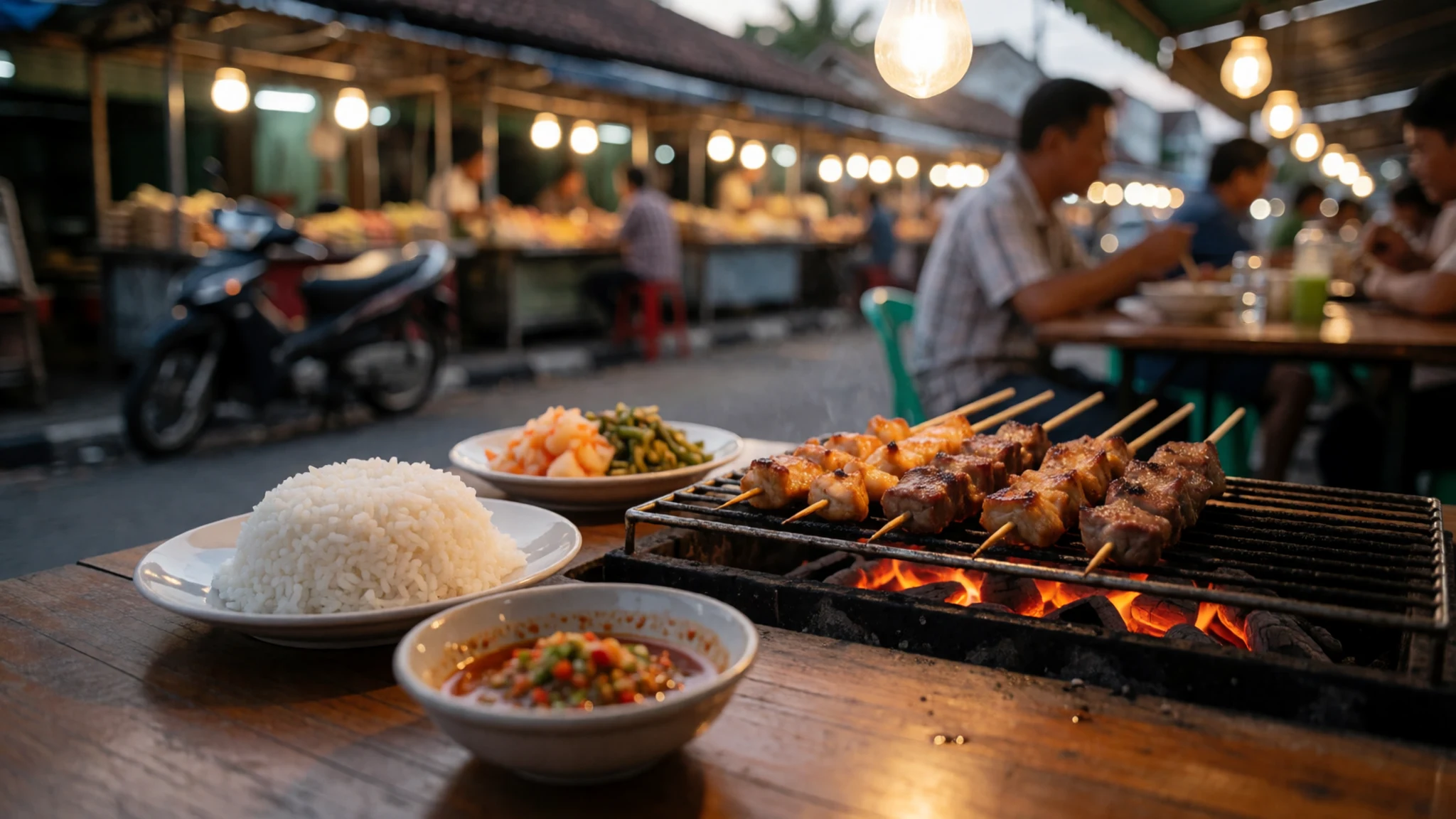
- Pizza and salad — Cafés around the main crossroads in Ban Lung
Ban Lung has a few traveller-oriented cafés serving pizza, fresh salads and Western-style breakfasts. They are handy for a lighter meal before a trek, or a treat afterwards. Expect simple menus, and slower service when several groups arrive together. - Sticky rice in bamboo — Roadside sellers and the town market in Ban Lung
Sticky rice cooked inside a length of bamboo, sometimes sweetened with coconut and beans, is a common snack in the Cambodian countryside. It has a smoky, slightly sweet flavour and travels well in a daypack for the first day of a trek. - Fresh fruit and iced coffee — Morning stalls at the central market in Ban Lung
Seasonal fruit such as mango, pineapple or watermelon, plus strong iced coffee with condensed milk, makes an easy start to a hot day in Ban Lung. Fruit peeled in front of you at a busy stall is usually the safer choice for sensitive stomachs.
Plan it
Best time. December to March, when the forest is cool and dry, which is the recommended window for trekking. The summer months are very rainy, muddy and full of leeches, and tracks become slow going.
How long. 5–7
Getting there. All treks start from Ban Lung, the main town of Ratanakiri, which is reached by road on long bus or minibus journeys from Phnom Penh and the Mekong towns; check current transport options before you travel. Registration is at the park office on the eastern side of town. For the park's official information, see http://viracheyecotourism.blogspot.com/.
Budget. mid
Tips
- Register at the park office in Ban Lung and arrange a guide before any trek; there is no accommodation inside the park, and park entry includes a hammock for the nights.
- Plan a couple of nights in Ban Lung first, to arrive rested, register, swim at Yeak Leom Lake and buy camping supplies.
- Carry enough cash for supplies and guides, as Ban Lung is a small town and you cannot buy anything once you are on the trail.
- Bring leech socks, water treatment or a filter, and a dry bag for your phone and spare clothes, especially outside the cool, dry months.
- Bring your own alcohol and snacks if you want them, because you must request or carry them for the jungle.
Etiquette
- Ask your guide before photographing people, houses or ceremonies in Brao and Kreung villages.
- Follow your guide's instructions about where to walk, camp and light fires, and carry all rubbish out.
- Dress modestly in villages and towns, with shoulders and knees covered.
Nearby
Sources
- Wikidata Q2235932 (CC0)
- Wikipedia: Virachey National Park (rev 1366309650) (CC BY-SA 4.0)
- Wikivoyage: Virachey National Park (rev 4749715) (CC BY-SA 4.0)
- Photo: Veal Thom Grasslands, Mangoholic2, via Wikimedia Commons (Public domain)
- Photo: Virachey Park Banner, Mangoholic2, via Wikimedia Commons (Public domain)


Wildlife
- Elephant (animal)
The Asian elephant is the largest land animal in Asia, a grey giant with a long trunk, wrinkled skin and big ears. It is clever too, and can show feelings such as grief. Elephants are recorded in Virachey, but trekkers rarely glimpse them, so patience matters. Every sighting is a rare treat. Walk with a guide, keep well back, stay quiet, and never feed them.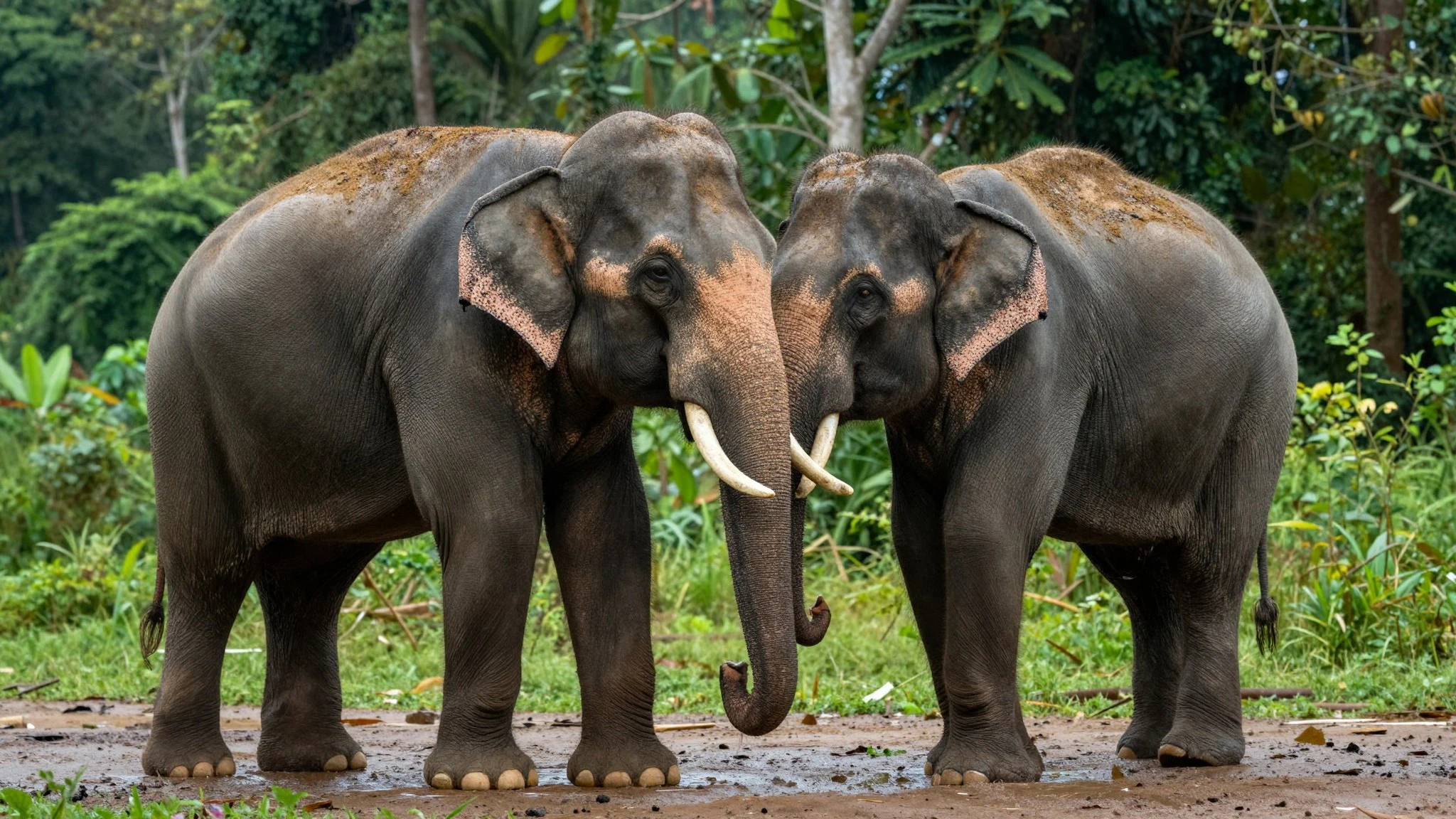
- Clouded leopard (animal)
The clouded leopard is a wild cat wearing a coat of cloud-shaped blotches, and it uses its long tail to balance in the trees. It is recorded in Virachey, though trekkers rarely glimpse it, so any sighting is a gift. Be patient, and be content simply to know it lives in these forests. Go with a guide, keep your distance, stay silent, and never offer food.
- Hornbill (bird)
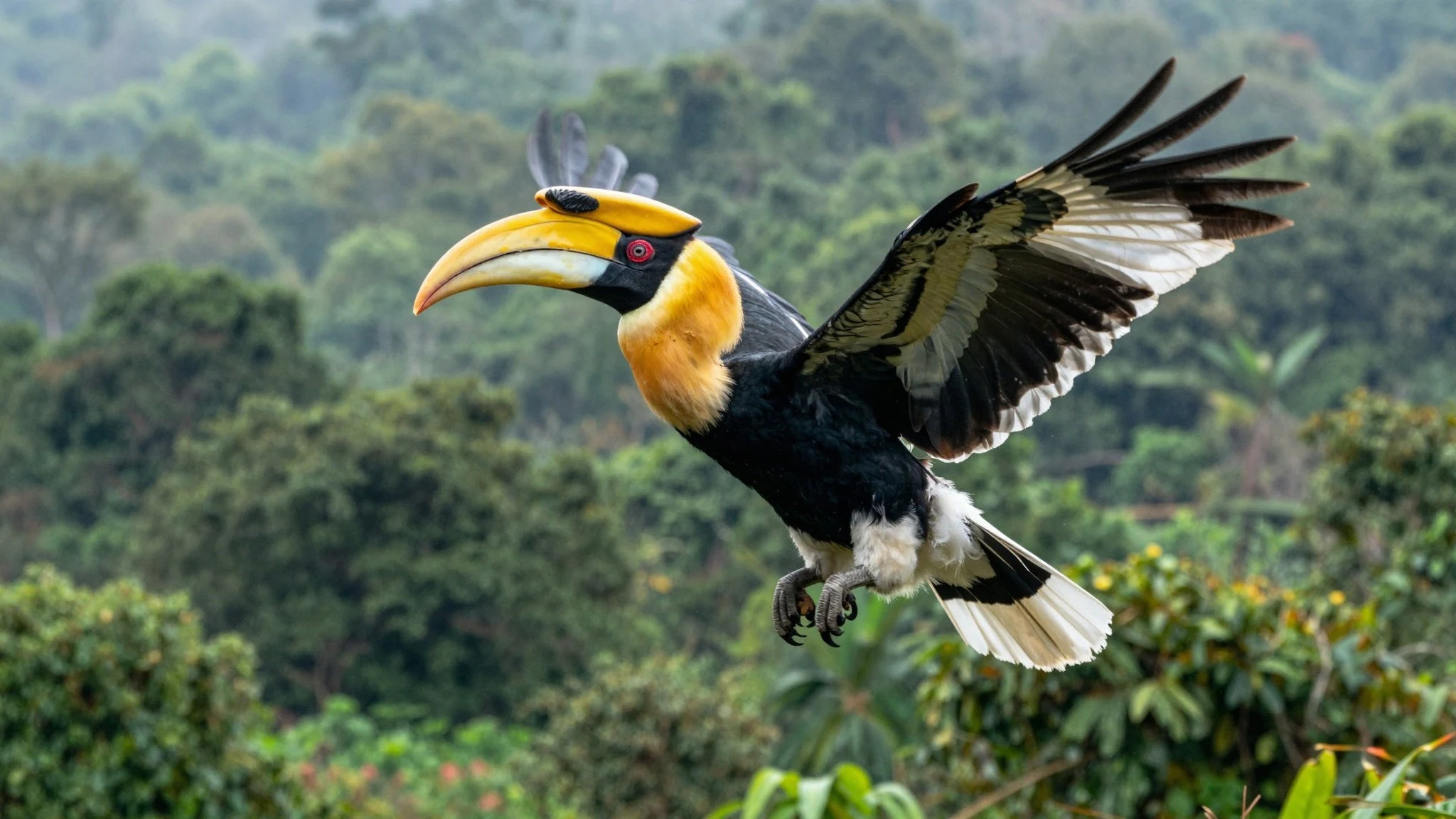
The great hornbill is a big, colourful bird that mostly eats fruit, though it will also take small animals. In Virachey, hornbills are seen crossing the valleys, a sight worth looking up for. Because the bird is listed as Vulnerable, give it room. Watch from a distance with a guide, keep voices low and movements slow, and never feed it. It is one of the larger hornbills.