Vikramashila
Vikramashila, India
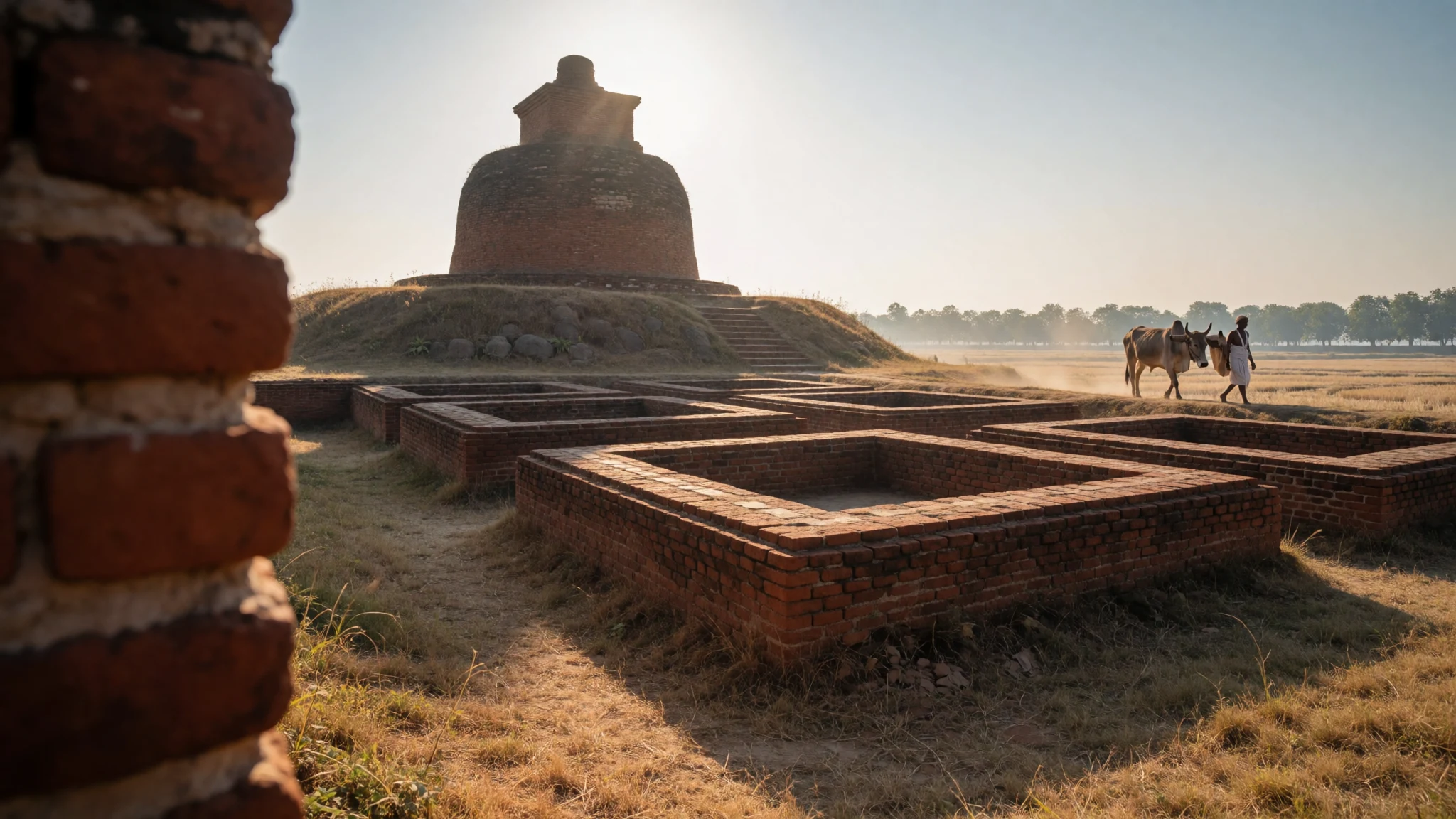
Vikramashila is the quiet brick ruin of a great Buddhist university in Bihar, for travellers who like history to be felt rather than staged.
The place
Vikramashila (Vikramaśīla) was a Buddhist monastic university in what is now Bihar, eastern India. Its remains lie near Antichak village, close to Kahalgaon in Bhagalpur district, on flat farmland not far from the Ganges plain. The setting is rural and unhurried: fields, village lanes, and a ruined complex of brick that rewards slow walking more than ticking off sights.
In its day it ranked alongside Nalanda and Odantapuri as one of the three leading Buddhist mahaviharas, or great monasteries, of India. Sources describe a community of over a hundred teachers and roughly a thousand students. Scholars trained here were invited abroad to teach, and two of the best known, Atisa and Ratnakarashanti, carried its learning beyond India.
Today the site is modest in scale and light on facilities. Expect a ruined monastery plan, a small archaeological museum holding sculpture and carved fragments from the excavations, and very few other visitors. Wikidata lists it as a university, a mahavihara and an archaeological site, which is a fair summary of what stands there now.
The name of the state itself, Bihar, comes from the Sanskrit vihara, meaning monastery, a reminder of how many such institutions once clustered across this region. Vikramashila is best approached as a place to imagine: bring some background reading, a hat and patience, and the bare brick starts to carry meaning. Facilities nearby are basic, so most people visit as a day trip from a larger town such as Bhagalpur.
Its story
Vikramashila was founded by the Pala king Dharmapala at some point between the late eighth and early ninth centuries; Wikidata gives about 800. The tradition is that he created it because scholarship at Nalanda was thought to have slipped, and he wanted a new centre with a stricter standard.
It did not stand alone. Tibetan sources name five great Pala-era monasteries: Vikramashila, Nalanda, Somapura, Odantapura and Jagaddala. They worked almost as a network under royal oversight, and prominent scholars moved from one seat to another, taking posts as they were invited. Vikramashila was regarded as the premier institution of its era.
The university prospered for around four centuries. Then, about 1193, forces led by Bakhtiyar Khilji destroyed it, along with other major Buddhist centres of eastern India. The monks scattered, the libraries were lost, and the site slipped out of memory until archaeologists identified and excavated it centuries later.
One odd fact shapes how we know the place: Vikramashila is described mostly through Tibetan writing, especially the history by Taranatha, a Tibetan monk-historian of the sixteenth and seventeenth centuries. Much of its story therefore comes from distant memory, preserved in Tibet after India had forgotten it. That is also why Tibetan Buddhists still revere names linked to it, among them Atisa, who left to teach in Tibet and became a founding figure of one of its schools. The ruins in Bihar are the physical half of a story whose written half survives in the Himalaya.
What to see
- The monastery ruins — Antichak, Kahalgaon, Bhagalpur district
The central excavated complex at Antichak is the reason to come. Low brick walls trace the plan of the monastery, with cells, courtyards and a large central structure. It is best seen slowly, early or late in the day, when the light is soft and the fields around are quiet.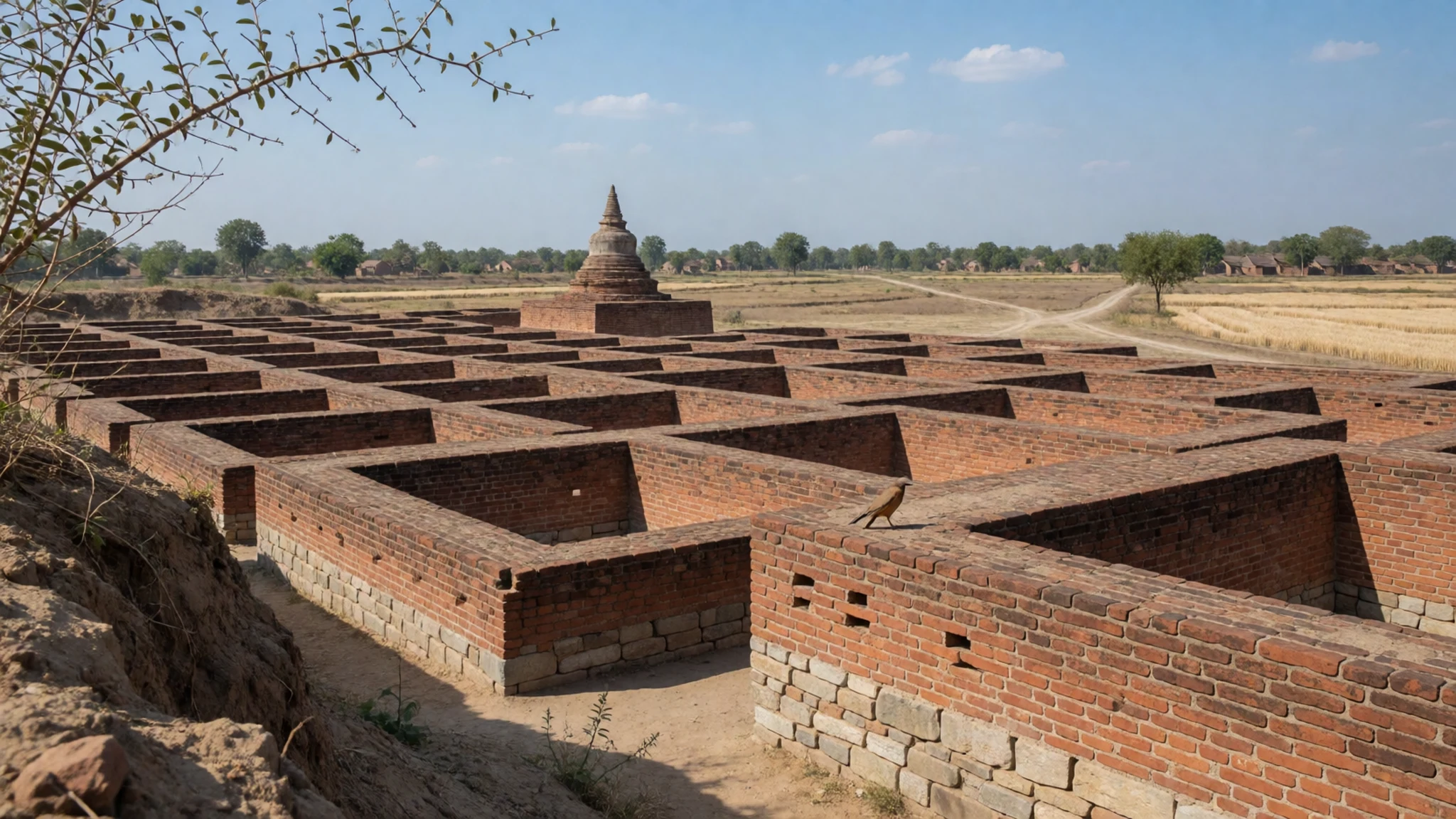
- Archaeological museum — Antichak, beside the ruins
A small museum beside the site keeps sculpture, terracotta and carved fragments recovered from the excavations. It helps turn bare brick into something human, showing the deities and decorative work that once dressed the walls. Check the Archaeological Survey of India's site for current opening arrangements.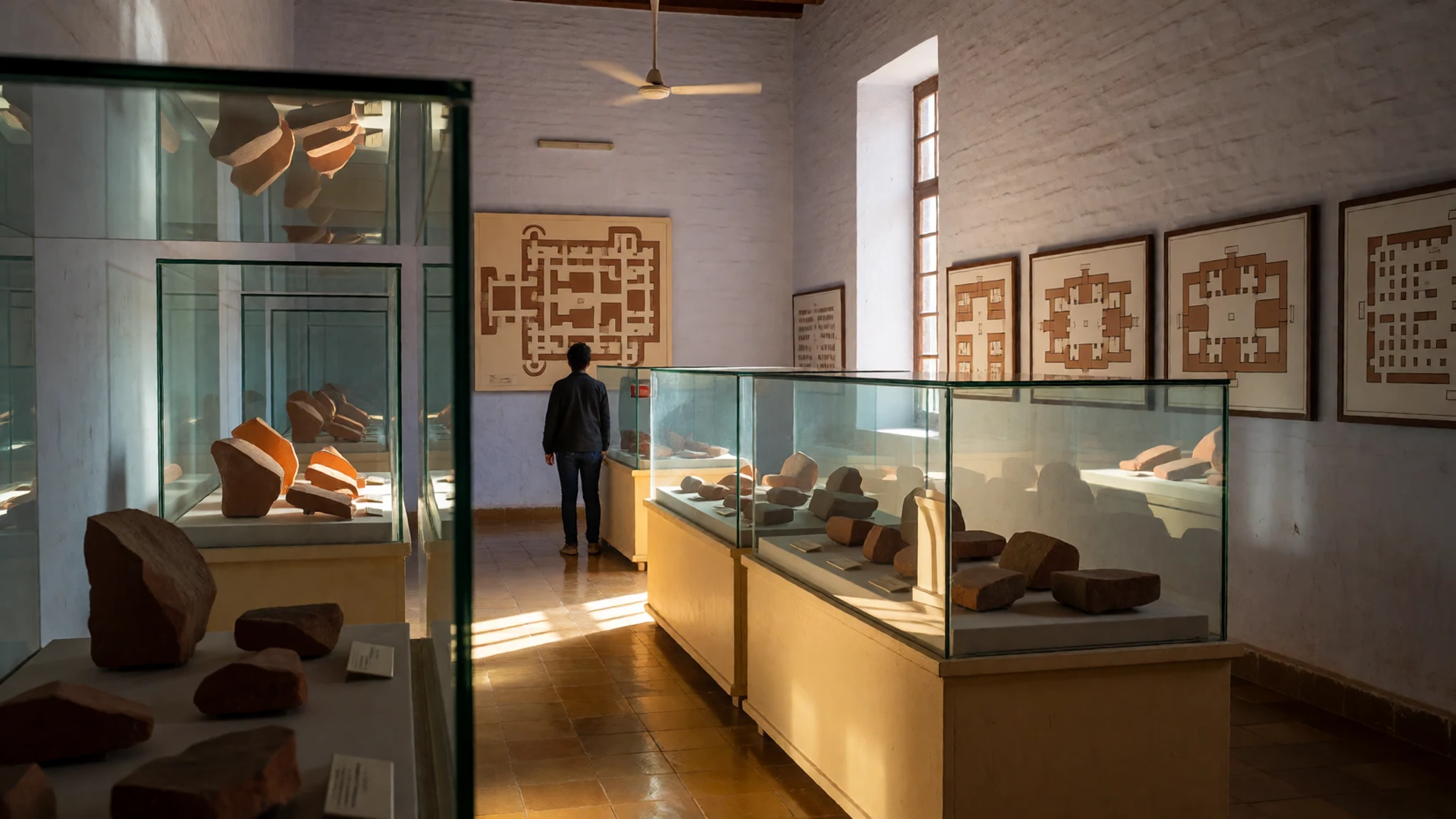
- Wall carvings and terracotta panels — Within the excavated complex
Look closely at the brickwork for carved and moulded panels showing various deities. They are small, weathered and easy to miss, yet they are the clearest sign that this was a living religious place and not only a teaching hall. Take time, and a camera with a good close focus.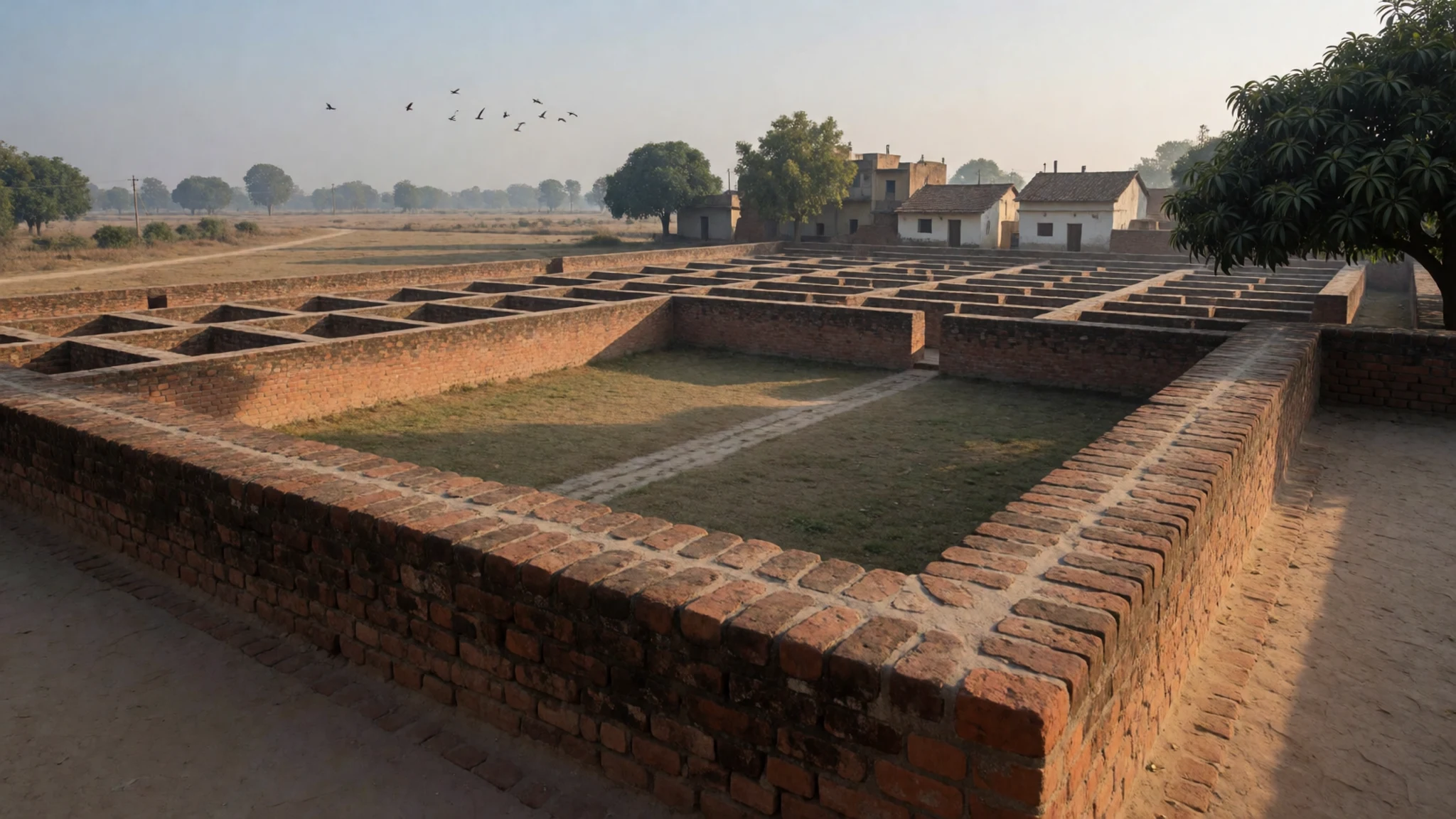
- Antichak village lanes — Antichak village
The village around the site is part of the visit. A short walk shows farming life in this part of Bihar: fields, livestock, brick houses and tea stalls. Greet people politely, keep noise down, and a few conversations may add local stories about the ruins that no signboard offers.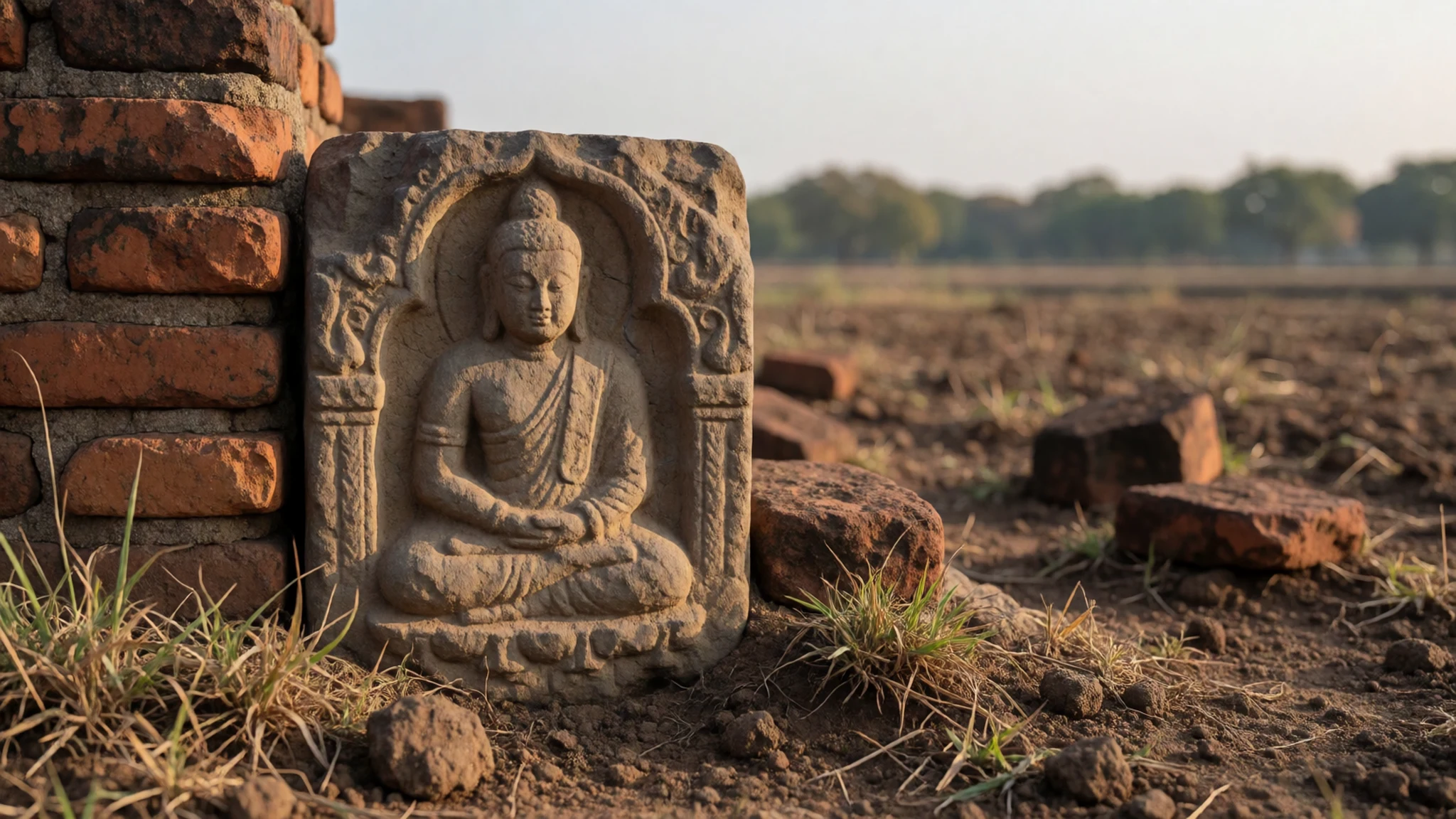
- Bari Dargah, Bihar Sharif — Bihar Sharif, Nalanda district
A longer excursion for those exploring Bihar's other layers, Bihar Sharif in Nalanda district has hilltop dargahs and old tombs that are still places of pilgrimage. It sits a long way from Vikramashila, so treat it as part of a wider Bihar trip rather than a same-day addition.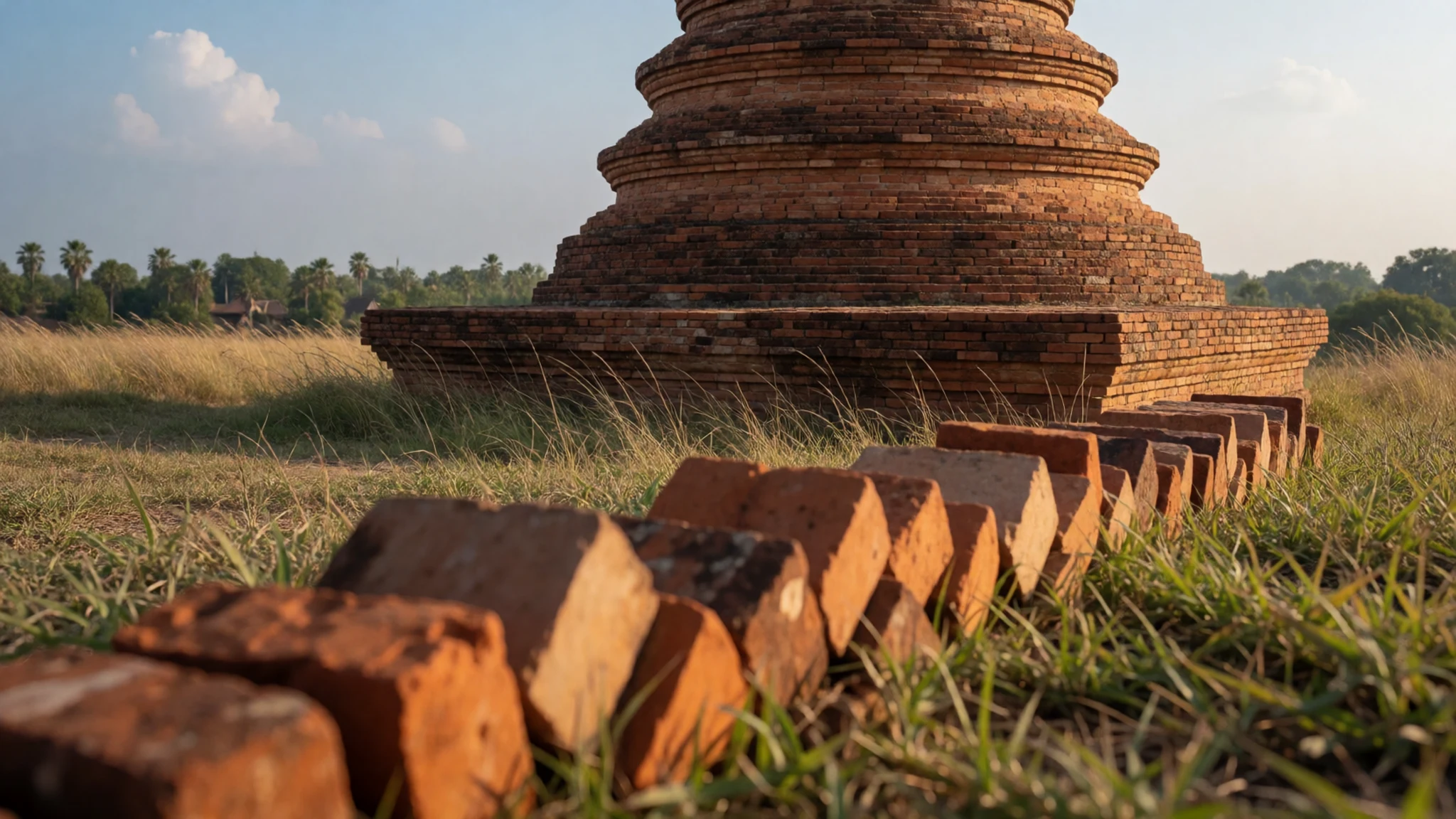
Culture
Vikramashila sits in a part of Bihar where daily life is rural, close-knit and courteous. A greeting of namaste or pranam is welcomed, and calm, sincere conversation goes down better than anything showy. Elders are treated with particular respect, and visitors who give them space and a polite word are noticed.
The site itself is a Buddhist ruin rather than a working temple, but the region holds some of the most important sacred places in Buddhism, Hinduism and Jainism, including Bodh Gaya and Rajgir. Many people who come here are pilgrims or students of Buddhist history, and the mood is reflective. The legacy is also living: the scholars trained at Vikramashila helped shape Tibetan Buddhism, and Tibetan visitors sometimes come to honour names such as Atisa.
Village life surrounds the ruins. Fields, animals and family compounds are close by, and people value visitors who are mindful of them. Photography is usually fine at the ruins, but rules differ near shrines and around people, so asking first is good manners.
Bihar's name comes from vihara, the monastery, and that heritage is a point of local pride, even where the physical remains are modest. Showing genuine curiosity about the history usually opens conversations.
In the village and at the ruins, dress modestly, keep your voice low, and ask before photographing people or their homes.
What to wear
Vikramashila's own period of glory is long past, so there is no single costume tied to the ruins, but the region has deep textile traditions. Bhagalpur, the nearest large town, is long associated with silk weaving, and Bihar's rural women wear saris, often cotton, while many men wear dhoti or kurta with pyjama, especially at festivals and weddings. Traditional wear is most visible at religious occasions and family celebrations.
In everyday life now, most people dress practically for heat and farm work. Men commonly wear shirts and trousers or a lungi at home, and women wear saris or salwar kameez, often with a dupatta. Younger people in towns wear jeans and T-shirts, though in villages more covered clothing is the norm.
For a visitor, the main considerations are heat, sun and modesty. Light, loose cotton clothing that covers shoulders and knees suits both the climate and local expectations, and a scarf or dupatta is handy for sun and for any shrine you pass. A wide-brimmed hat and sunglasses help, because the ruins have little shade. Wear sturdy closed shoes or sandals with grip, since the brick can be uneven, dusty, and slippery after rain. Shoes come off at temples, so slip-ons are convenient. In winter mornings can be cool, so carry a light layer.
What to eat
- Litti chokha — Roadside stalls and eateries in Bhagalpur and Kahalgaon
Baked wheat balls filled with spiced roasted gram flour, onions, chillies and coriander, served with chokha, a spicy mash of potato or aubergine. It is Bihar's signature plate, found at roadside stalls and simple eateries in any town on the way.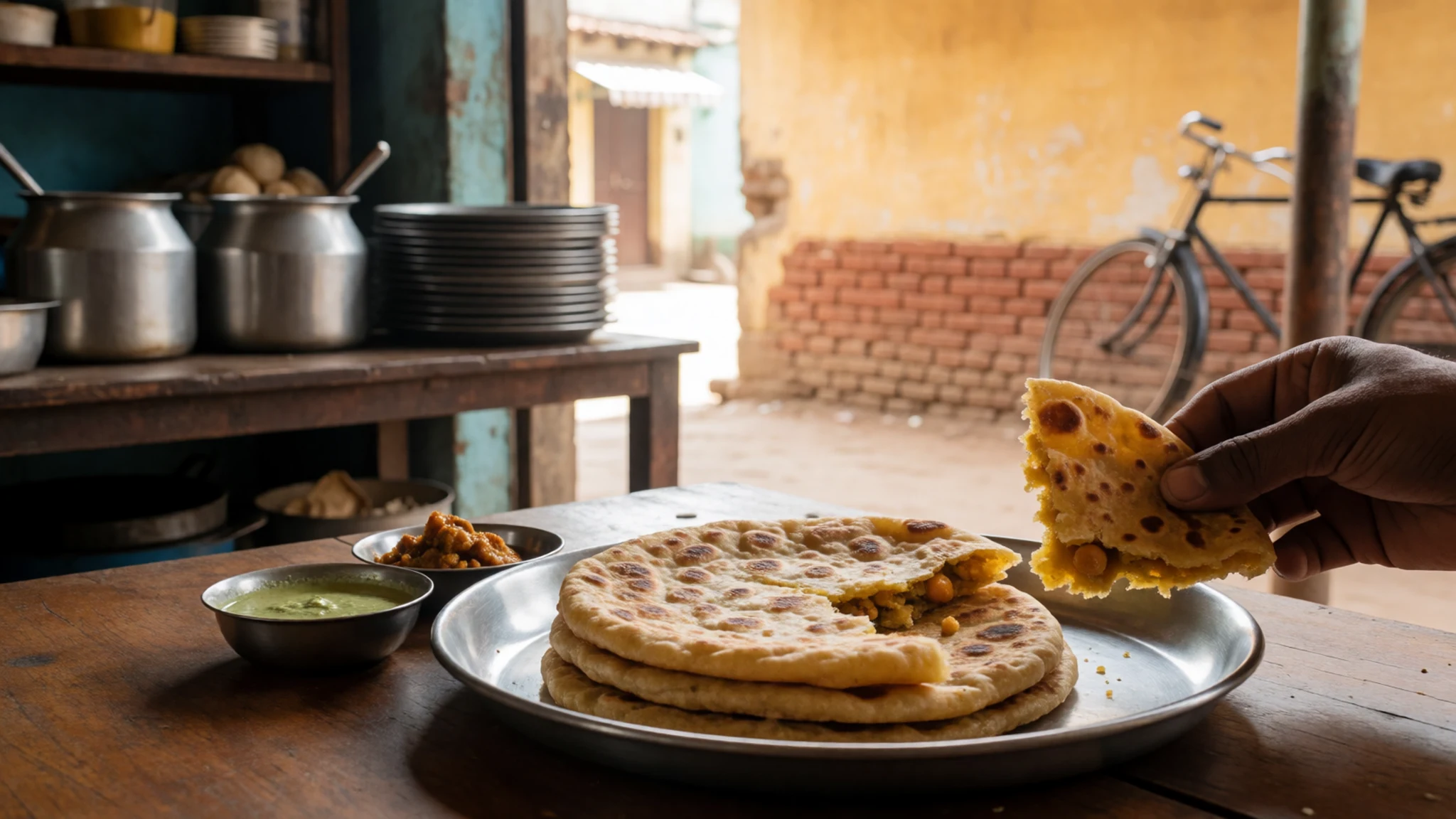
- Sattu paratha — Breakfast stalls and family-run eateries in towns nearby
A flatbread stuffed with roasted chickpea flour, seasoned with spices and often eaten with pickle, curd or chokha. It is filling, inexpensive and good fuel before a morning of walking round the ruins.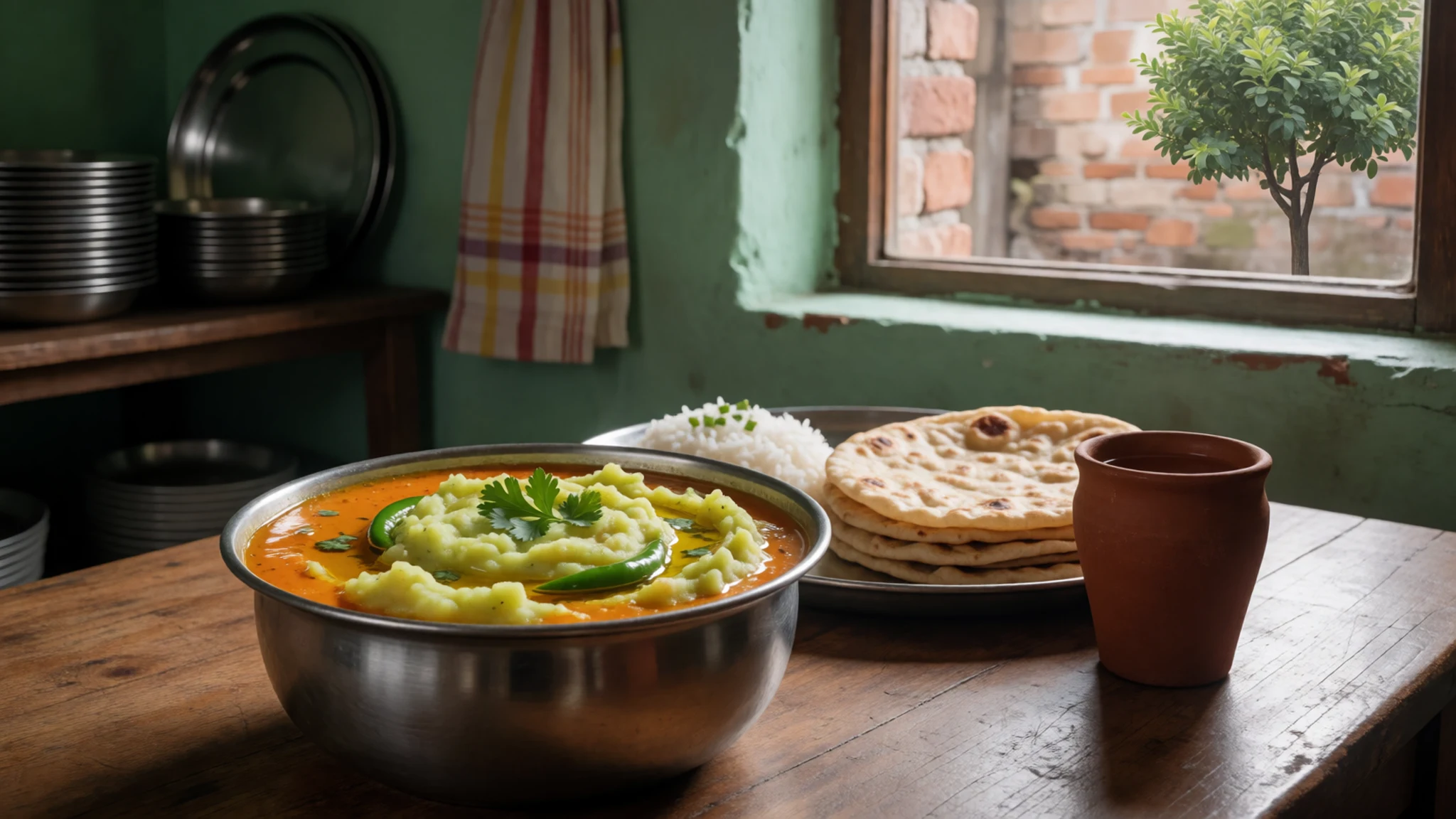
- Dahi chura — Sweet shops and home kitchens across Bihar
Flattened rice served with fresh curd and sugar or jaggery, sometimes with a touch of cardamom. It is cooling in the heat and is a traditional food around festivals, especially in winter, when it is often eaten as a light meal. - Dhuska — Street stalls and tea stops in town markets
A deep-fried, salted fritter made from a rice-based batter, crisp outside and soft within. It is usually eaten hot, often with ghugni, a spiced gram curry cooked in mustard oil. A good snack to try at a roadside stall. - Kadhi bari — Simple local eateries and family kitchens
Soft fried dumplings of gram flour simmered in a tangy yoghurt and besan gravy. It is comforting, mildly sour and usually eaten over plain rice, making it a common, home-style lunch in this region of Bihar.
Plan it
Best time. November to February or early March, when days are warm to mild and walking round open ruins is comfortable. April to June is very hot, and the monsoon from about July brings humidity and muddy fields.
How long. 1
Getting there. Patna has the widest flight and rail links in Bihar, with trains from Delhi, Kolkata, Mumbai and Varanasi. From there continue by train or road towards Bhagalpur, then by road to Antichak near Kahalgaon. Roads in Bihar can be poor and busy, so a local driver is wiser than driving yourself.
Budget. low
Tips
- Make it a day trip from Bhagalpur, and start early to avoid the heat
- Carry water, sun protection and cash, since facilities nearby are basic
- Check the Archaeological Survey of India website for current museum and site arrangements before you go
- Read about Vikramashila beforehand, as signage is limited
Etiquette
- Greet people with namaste and ask before photographing anyone
- Dress modestly and keep noise low in the village
- Do not climb or sit on the ancient brick walls
Nearby
Sources
- Wikidata Q1634624 (CC0)
- Wikipedia: Vikramashila (CC BY-SA 4.0)
- Wikivoyage: Bihar (CC BY-SA 4.0)
- Vikramshila-7.jpg, Unknown author (CC BY 2.5)
- Vikramshila 2012-08-10 17.14.08, Prataparya (CC BY 3.0)
- Stupa icon Thailand, chikiyo (CC0 1.0)
- Atisha thangka (Public domain)
- Mahasiddha Naropa (CC BY 3.0)
- Archaeological museum, Vikramshila, Anuragkashyap15 (CC BY-SA 4.0)
- Vikramshila 2012-08-10 17.48.36, Prataparya (CC BY 3.0)
- Vikramshila wall carvings, Tonandada (Public domain)


