Hampi
Hampi, India
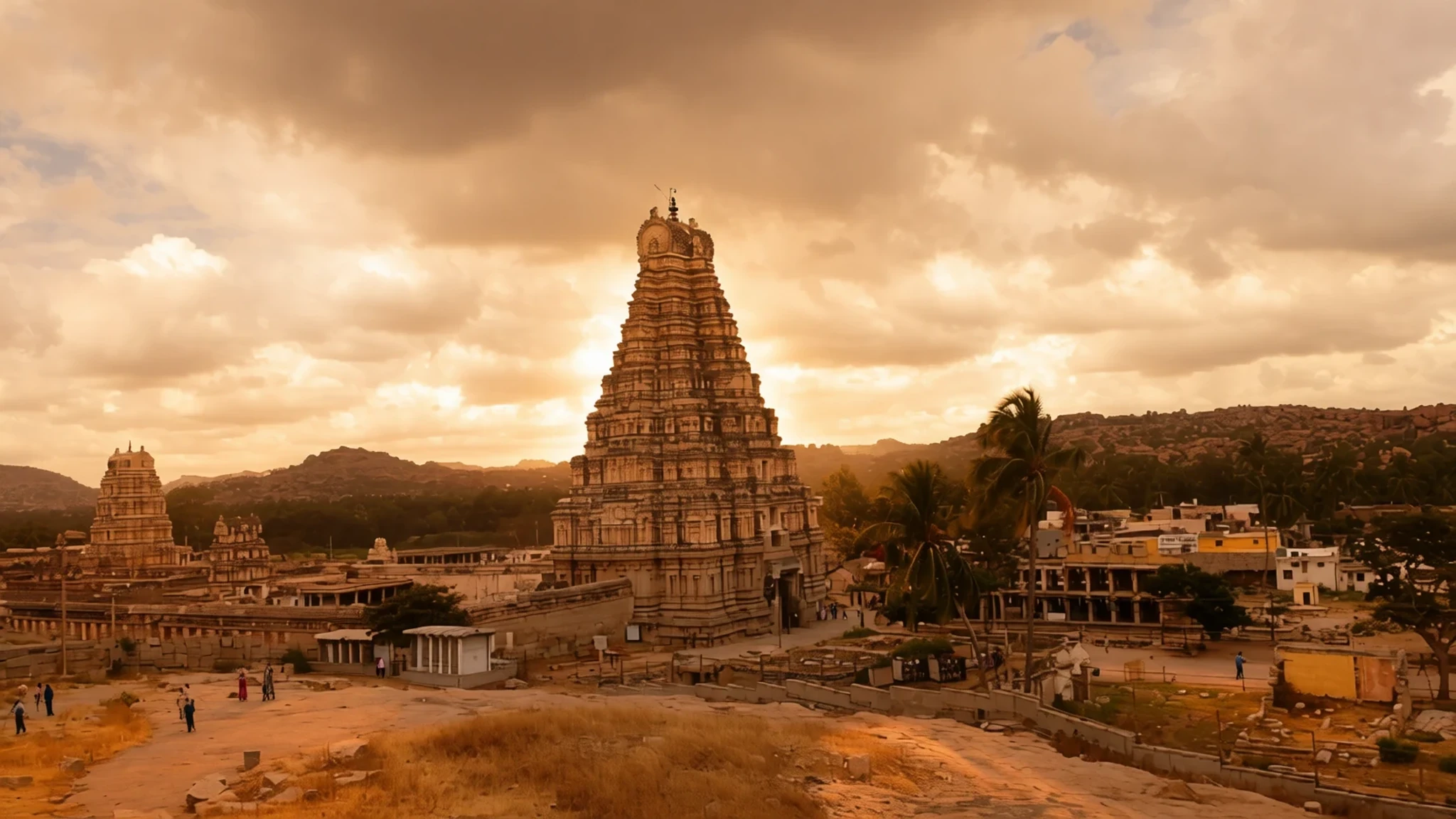
Hampi offers a vast landscape of ruined temples, royal enclosures, and massive granite boulders by the Tungabhadra River in Karnataka.
The place
Hampi sits within an ancient landscape defined by the Tungabhadra River and a sea of eroded granite boulders that stretch across the dry terrain of east-central Karnataka. This settlement serves as a protected archaeological zone and a living religious centre where daily rituals continue alongside centuries-old ruins. Visitors walking through the terrain encounter pillared halls, stone shrines, and forgotten gateways scattered across agricultural fields and rocky ridges. The scale of the old settlement becomes apparent when climbing the surrounding heights, revealing a horizon of ruined towers and stone platforms that stretch further than the eye can easily measure. Unlike sterile museum enclosures, this landscape is shared with local farmers, wandering pilgrims, and troops of monkeys that inhabit the rocky outcrops. The climate is intensely hot during the dry months, requiring travellers to seek shade among the stone structures during midday hours. The river cuts through the northern edge of the ruins, providing a green corridor of paddy fields that contrasts sharply with the arid boulder-strewn hillsides. Small hamlets and guesthouses cluster near the riverbanks, catering to those who spend several days exploring the vast ruins. Evening light turns the granite hills into warm amber hues, drawing visitors to the high rocky viewpoints to watch the sunset over the ruined landscape. Preservation efforts protect the scattered remains, ensuring that the remnants of the past remain accessible for those who wander through the dusty pathways.
Its story
Hampi preserves the remains of the powerful capital that governed a vast southern dominion from 1336 until its sudden downfall in the sixteenth century. Long before the imperial court established its headquarters here, Hindu texts and epics knew this sacred ground by the Tungabhadra River as a holy destination associated with divine figures. Under imperial rule, the settlement transformed into a fortified metropolis filled with wealthy markets, elaborate temples, and extensive water systems that channelled the river across the dry plains. Chronicles left by foreign visitors from distant lands recorded that the capital rivalled the greatest urban centres of the era in sheer scale, commercial wealth, and architectural ambition. Merchants brought horses from Arabia and silk from overseas to trade in the bustling open-air bazaars that stretched out before the primary shrines. This golden era ended abruptly when regional sultanates united against the capital, leading to the catastrophic defeat at the Battle of Talikota and the subsequent abandonment of the grand city. Palaces were put to the torch, markets emptied, and the royal families fled southward, leaving the monumental structures to the elements and encroaching vegetation. For centuries, the jungle and the boulder fields reclaimed the avenues and halls, preserving the skeletal framework of the empire beneath layers of silence. Today, archaeological work uncovers more of the ancient streetscapes, shedding light on the daily life and grand ceremonies of a court that once commanded the entire southern peninsula.
What to see
- Virupaksha Temple — Hampi Bazaar
Hampi features the active Virupaksha Temple, which has served as a continuous place of worship for centuries. Visitors enter through a soaring gateway tower to find inner courtyards, shrines, and resident temple elephants, while remembering to leave footwear outside the main gates as required by local custom.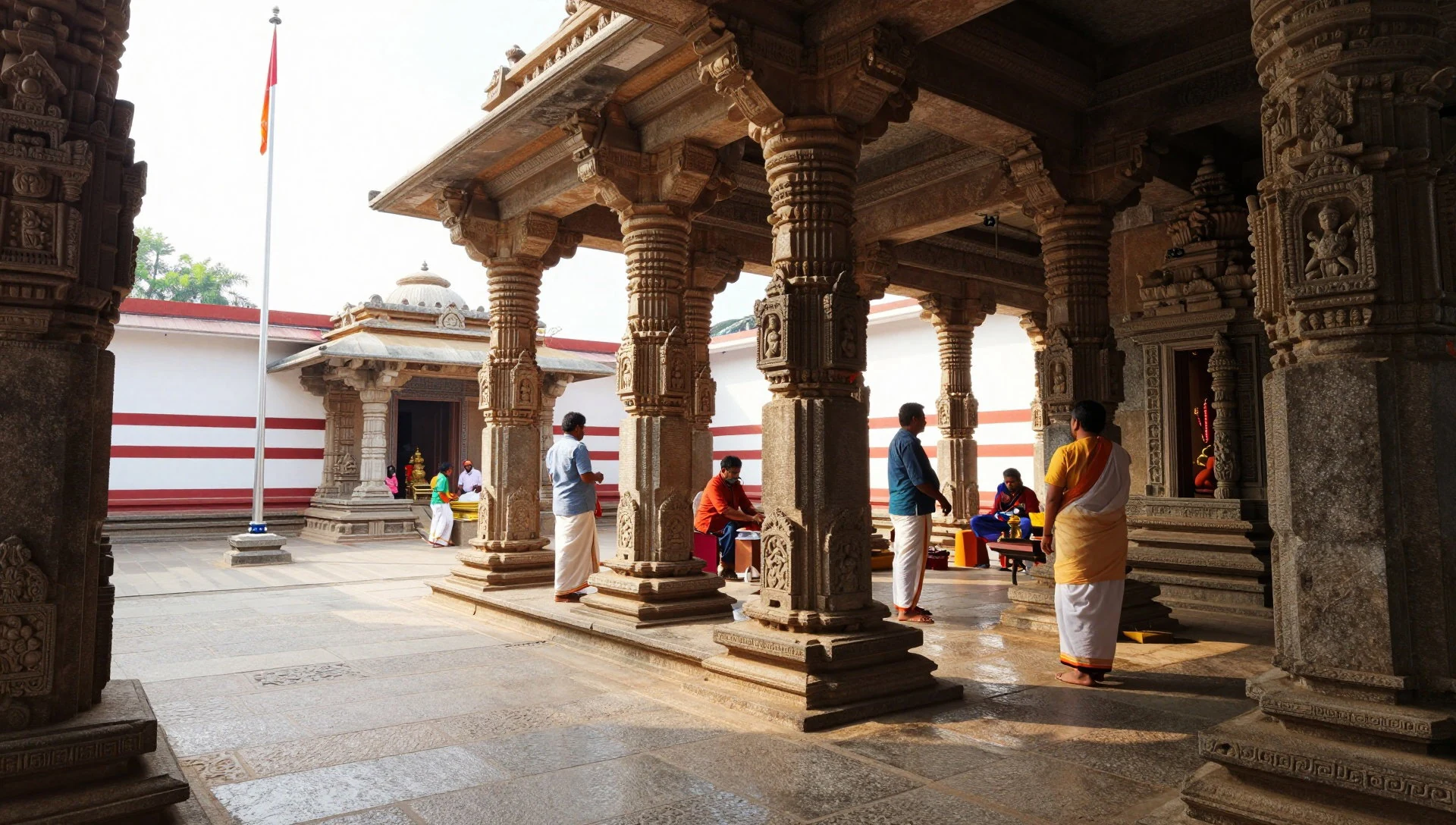
- Vithala Temple Complex — Near the river edge
Hampi contains the renowned Vithala Temple, dedicated to an avatar of Vishnu. This complex showcases exceptional stone craftsmanship, featuring the famous stone chariot and remarkable musical pillars that produce resonant tones when gently tapped by curious visitors exploring the expansive courtyards.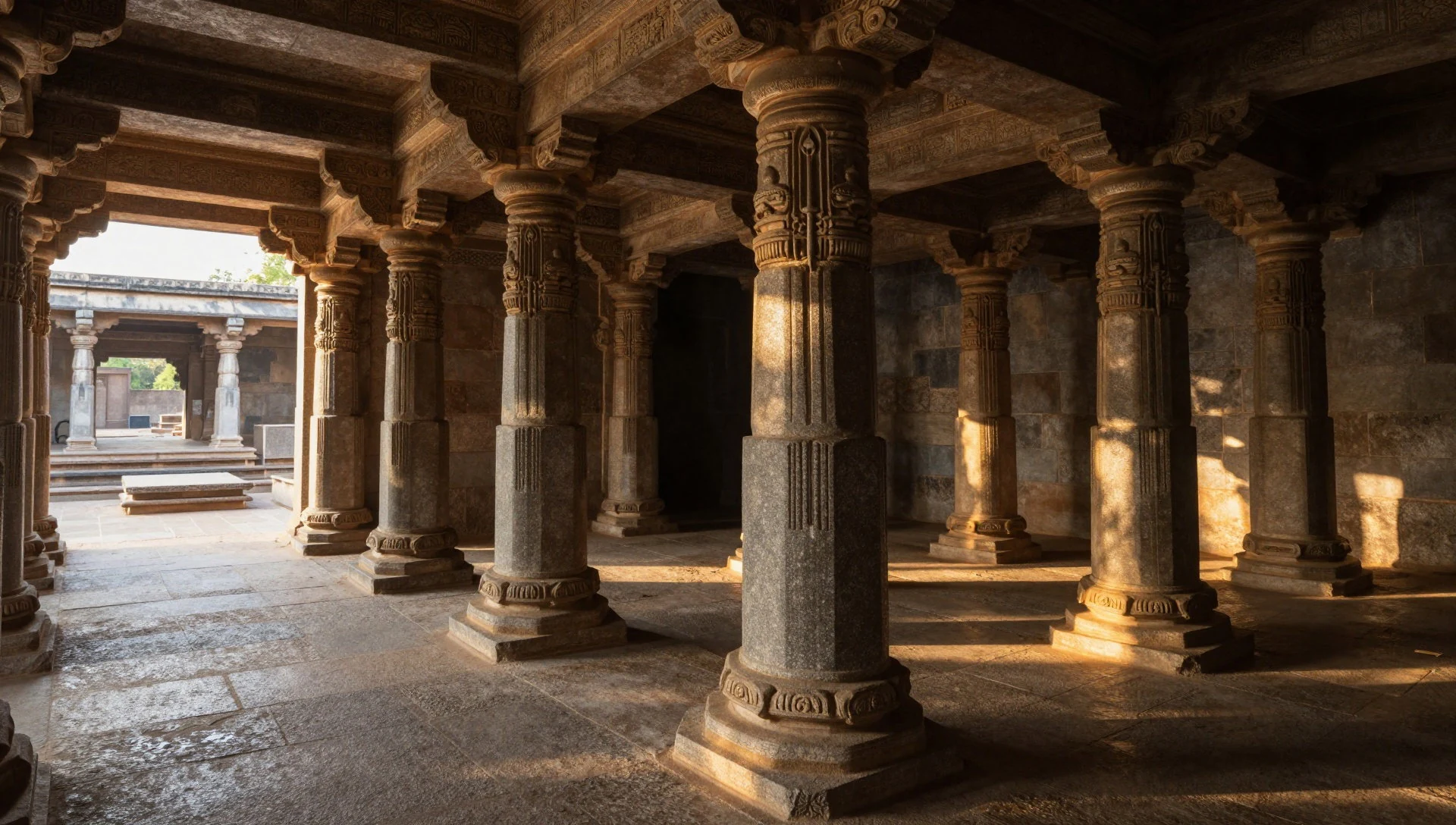
- Zanana Enclosure and Elephant Stables — Royal centre zone
Hampi protects the secluded Zanana Enclosure, which houses the ornate Lotus Mahal with its symmetrical arched pavilion. Nearby stands the long line of vaulted stone chambers known as the Elephant Stables, designed to house the royal animals belonging to the imperial rulers.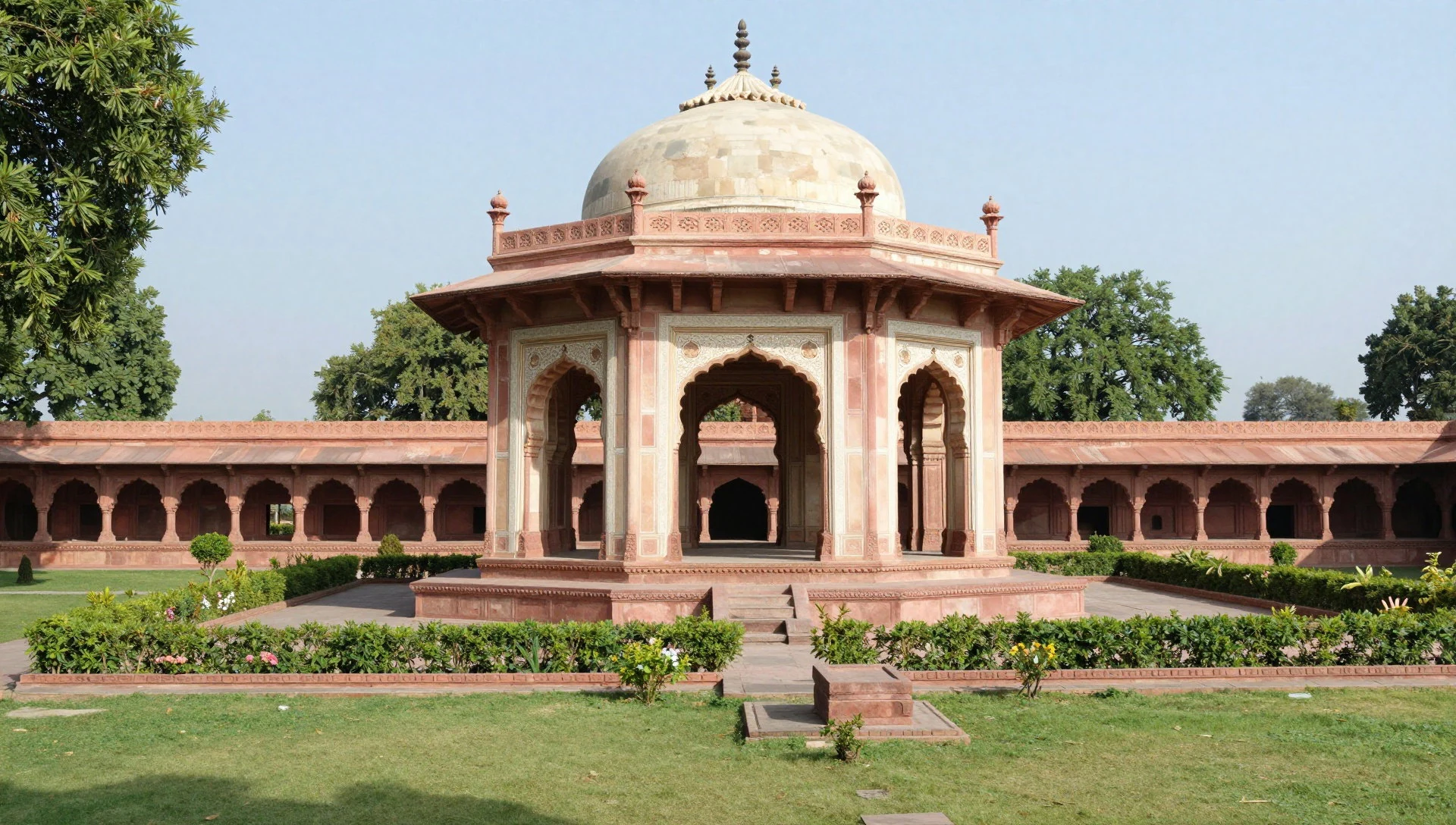
- Matanga Hill — Central ridge
Hampi provides sweeping panoramic views from the rocky summit of Matanga Hill, situated near the centre of the ruins. Travellers make the early morning or late afternoon climb up the stone steps to watch the sun rise or set over the boulder-strewn landscape.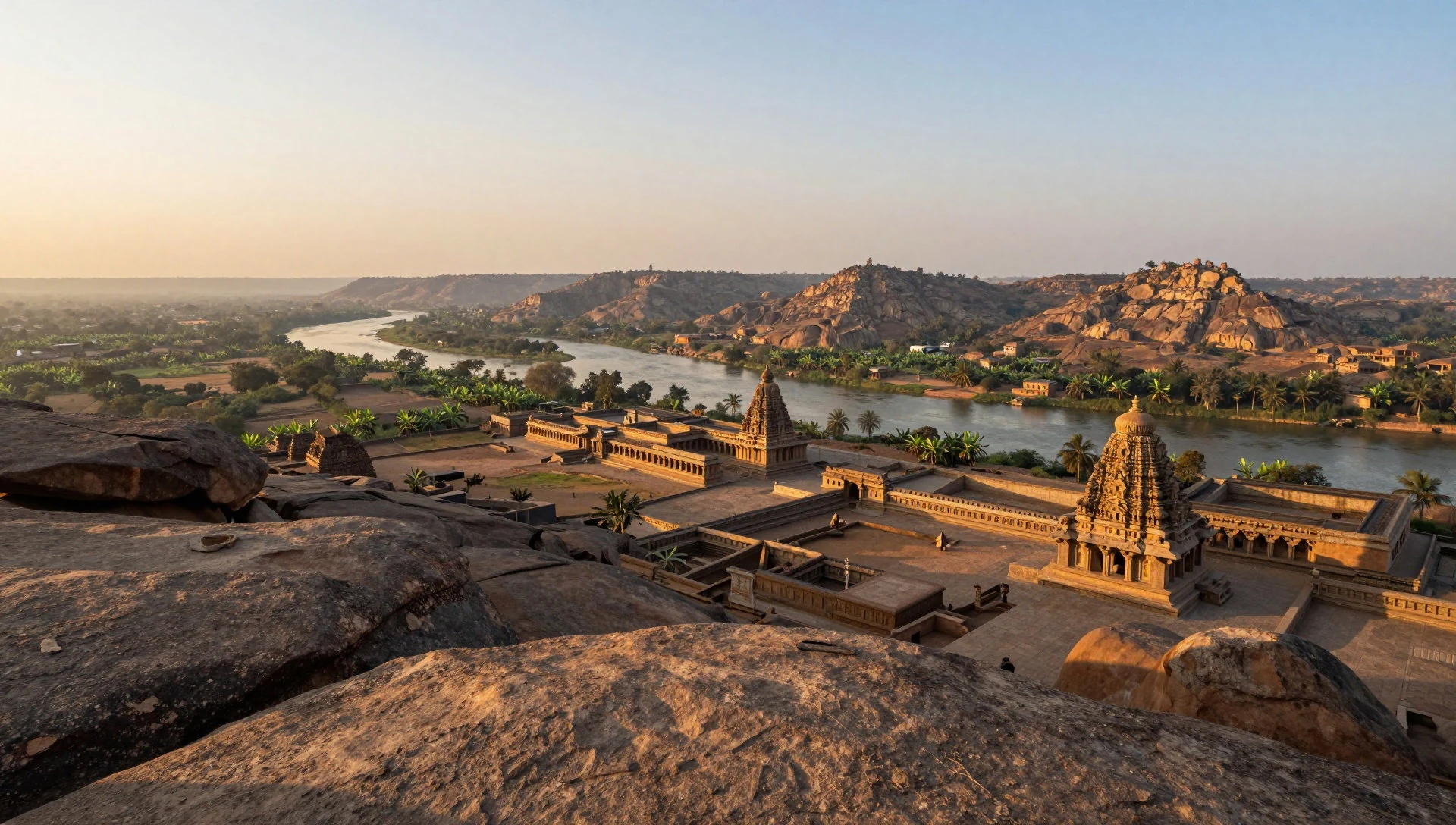
- Hemakuta Hill Temples — Above Hampi village
Hampi features the cluster of early shrines scattered across the rocky slopes of Hemakuta Hill. These stone temples offer quiet courtyards, distinct pyramidal roofs, and exceptional elevated vantages looking down toward the towering gopuram of the main sanctuary below.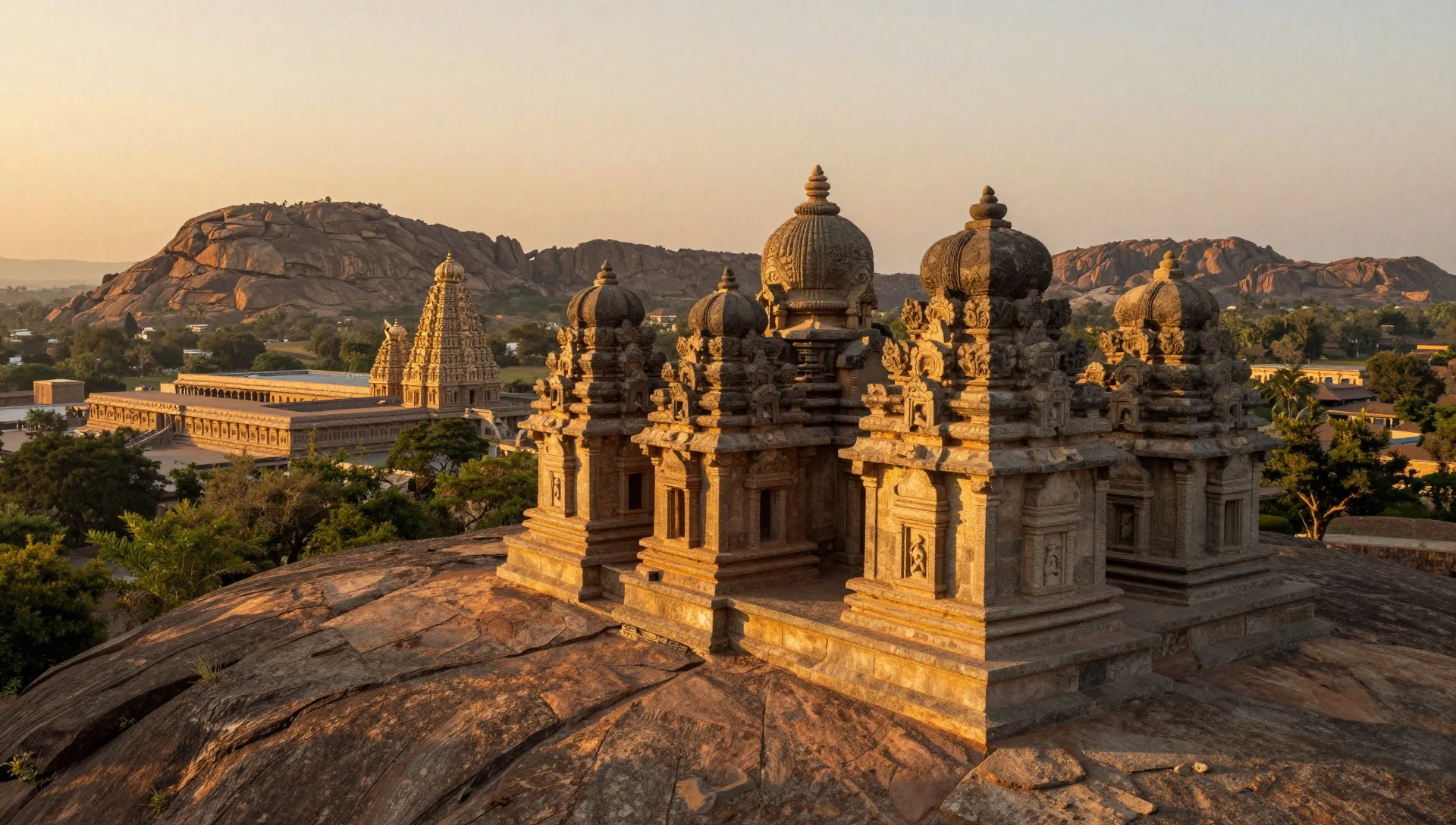
Culture
Hampi carries a deeply spiritual atmosphere shaped by its ancient religious heritage, active pilgrimage routes, and ongoing rituals at the central shrines. Local residents maintain traditional rural customs alongside the steady flow of travellers from around the globe who come to explore the monuments. Communities here are accustomed to visitors, yet they retain a quiet dignity rooted in the sacred identity of the terrain. Traditional festivals bring vibrant processions and music to the dusty avenues, particularly during annual celebrations when temple chariots are pulled through the old bazaar streets by enthusiastic devotees. Travellers are expected to treat the archaeological zones and active shrines with equal reverence, recognizing that these stones are not merely tourist attractions but monuments of living faith. Respectful interactions, modest attire, and an appreciation for local traditions ensure positive exchanges with residents and temple authorities alike. Please cover your shoulders and knees when visiting any religious site or ruined temple across Hampi.
What to wear
Hampi residents typically wear traditional regional attire suited to the warm climate of Karnataka, with men often wearing cotton shirts and dhotis or trousers, while women drape brightly coloured sarees or traditional salwar kameez crafted from breathable cotton fabrics. Modern daily wear in the town mixes traditional styles with casual western garments, especially among the younger generation and local workers interacting with travellers. Visitors exploring Hampi need clothing that offers protection from the intense sun while respecting local cultural norms regarding modesty, particularly when entering sacred spaces. Loose-fitting cotton trousers, long skirts, and shirts that cover the shoulders are ideal choices for navigating the dusty archaeological sites. Sturdy walking shoes or sandals with good grip are essential for climbing the uneven stone steps of Hemakuta and Matanga hills, while a wide-brimmed hat and sunglasses provide necessary defence against the glaring midday sun.
What to eat
- South Indian Thali — Local eateries in Hampi Bazaar
Hampi restaurants serve hearty vegetarian thalis featuring rice, lentil dal, various vegetable curries, and freshly made flatbreads served on banana leaves.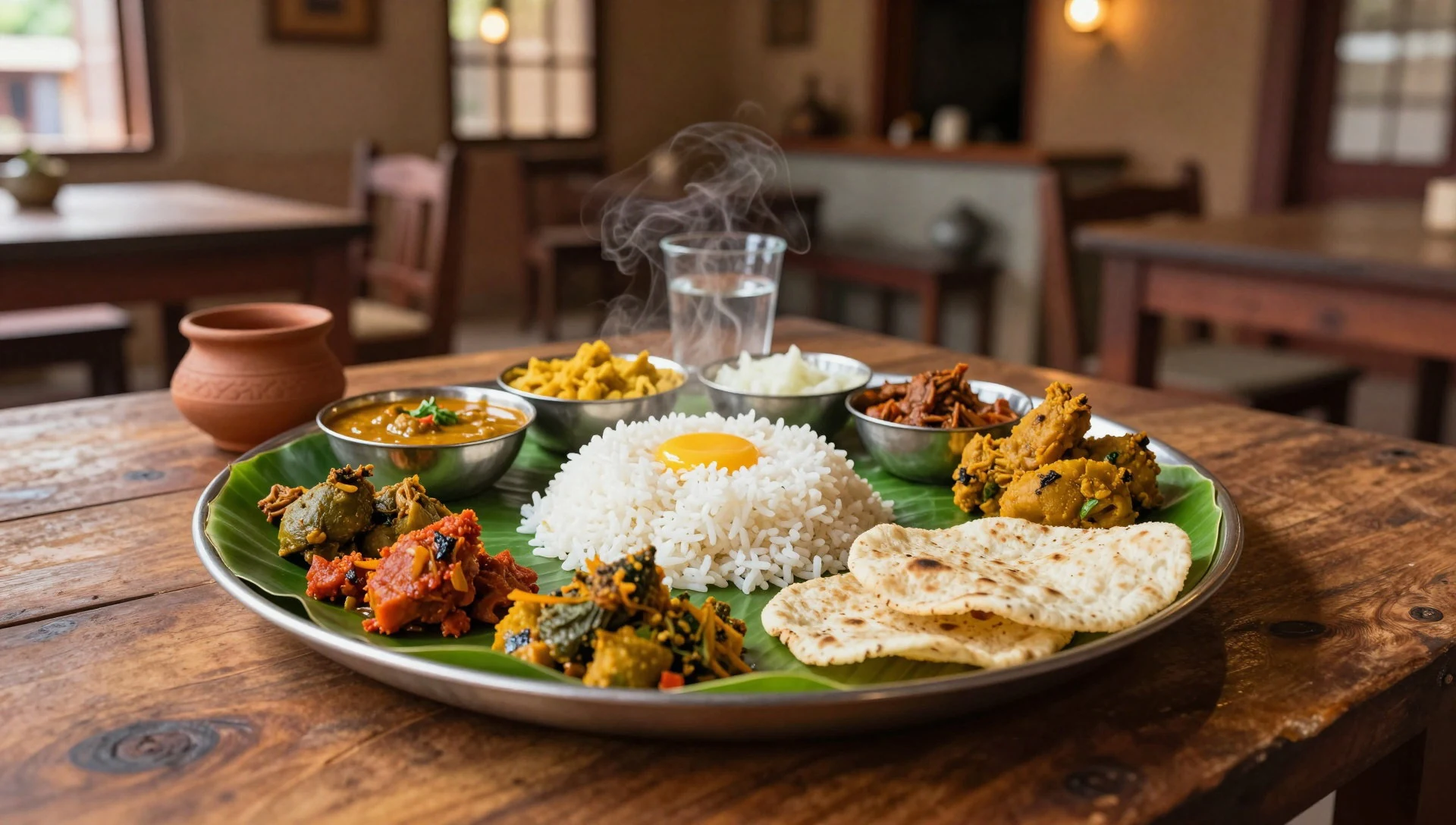
- Nargis Kofta — Chillout Restaurant
Hampi backpacker cafes offer savoury Nargis Kofta dishes prepared with spiced vegetable or meat cylinders, often served alongside rich tomato gravies.
- Hello to the Queen — Durga Roof Top
Hampi rooftop establishments serve the popular 'Hello to the Queen' dessert, combining layers of biscuit, ice cream, chocolate, and fresh fruit. - Vegetarian Buffets — Mayura Bhuvaneshwari
Hampi visitors find comforting vegetarian buffet lunches featuring regional Karnataka specialities and homely lentil dishes at modest local prices.
Plan it
Best time. October to March offers the most comfortable weather for exploring the ruins, while summer months from April onwards bring intense, dry heat.
How long. 2–3
Getting there. Take an overnight train to Hosapete Junction, then complete the final leg to Hampi by auto-rickshaw or local bus.
Budget. low
Tips
- Start exploring at sunrise to avoid the intense midday heat among the open ruins.
- Carry sufficient cash, as automated teller machines are unreliable or scarce in the immediate village.
- Keep a firm grip on belongings and food items to deter opportunistic local monkeys.
- Wear sturdy footwear with good grip for climbing steep and uneven stone steps.
Etiquette
- Remove footwear before entering any active temple sanctuary or sacred area.
- Do not sit, climb, or lean against ancient stone carvings and fragile monument walls.
- Refrain from consuming alcohol or drugs anywhere within the sacred heritage zone.
Nearby
Sources
- Wikidata Q26732 (CC0)
- Wikipedia (rev 1380353571) (CC BY-SA 4.0)
- Wikivoyage (rev 5372353) (CC BY-SA 4.0)
- Photo photos/01-hampi-india-granite-boulders-of-matanga-hill.jpg (CC BY 4.0)
- Photo photos/02-wide-angle-of-galigopuram-of-virupaksha-temple-hampi-04-crop.jpg (CC BY-SA 4.0)
- Photo photos/03-flat-elevation-of-lotus-mahal-hampi-closeup.jpg (CC BY-SA 4.0)
- Photo photos/04-hampi-vittala-temple-entrance-gopuram.jpg (CC BY-SA 4.0)
- Photo photos/08-virupaksha-temple-as-seen-from-the-hemakuta-hill-001.jpg (CC BY-SA 4.0)


