Vardzia
Vardzia, Georgia
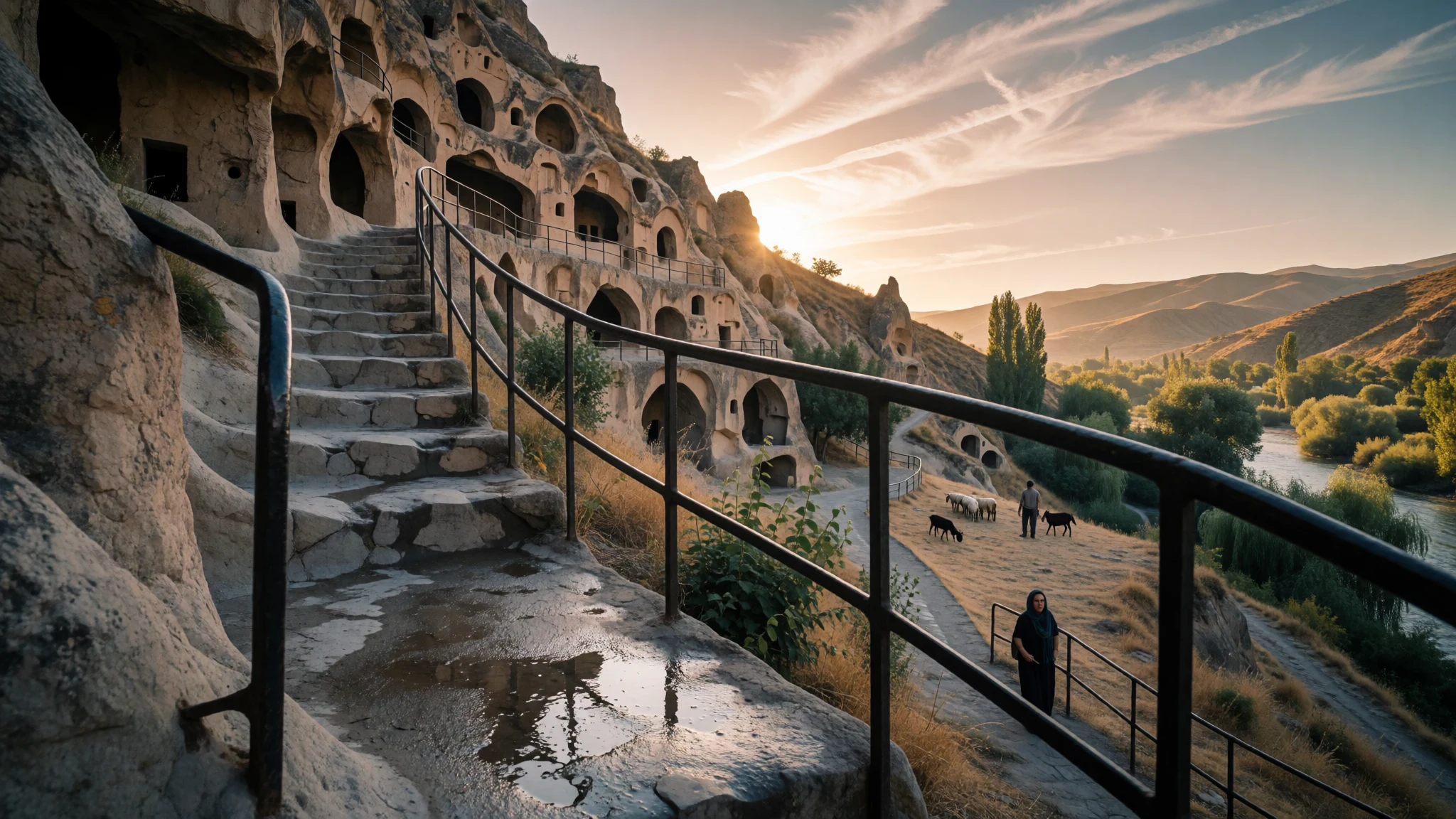
Vardzia is a medieval cave monastery carved into a cliff above the Kura valley, where rock-cut corridors lead to a painted royal church.
The place
Vardzia is a cave monastery in southern Georgia, cut into the slopes of Erusheti Mountain on the left bank of the Kura River, at about 1,300 metres above sea level. The district town of Aspindza is some distance down the valley, and most visitors base themselves in Akhaltsikhe or Borjomi and come out for the day. Vardzia was dug out rather than built. Along about five hundred metres of cliff, the rock is hollowed into as many as nineteen storeys of tunnels, stairways, cells, storerooms and chapels. From the river road the face looks like a honeycomb, and the scale only becomes clear on the stairs, where passages narrow and the drop to the valley opens at nearly every turn. Below the cliff, beside the river, a small service area has shops, eateries and parking; the ticket office is a climb up some steps from there. The site is run as the Vardzia Historical–Architectural Museum-Reserve, a state heritage reserve that also takes in the nearby Khertvisi area. It was never only a retreat. Water supply, defences and an irrigation network made it a community able to feed and protect itself, and its monks produced literary and artistic work. The Church of the Dormition, with wall paintings from the 1180s, is the centre of the visit. Visiting is physical. Steps are steep and worn, platforms are sandy and some tunnels are tight and dim, so a full circuit at an easy pace takes two to three hours. Midday in summer is hot on the exposed rock; spring and autumn are gentler.
Its story
Vardzia took shape in the second half of the twelfth century, during a period of growth and strength for the Georgian kingdom. Giorgi III chose the cliff and had the first cells cut. After his death his daughter Tamar, who married in 1186, pushed the work much further: the Church of the Dormition was carved and painted, then came more homes, fortifications and channels to bring water to the rock, a phase that ran until the Battle of Basian around 1203.
Chronicles link the place to Tamar's campaigns. Her victory at Basian is celebrated in hymns to the Virgin of Vardzia, and some historians believe she was buried here, though that remains a belief rather than a proven fact.
A popular tale explains the name: the young Tamar strayed while out with her uncle, and her call of 'I am here, uncle' is said to echo in 'Vardzia'. It is folk etymology, charming but not evidence.
The cliff had earlier occupants. Excavations in the Soviet period found Bronze Age settlement in the area, and cave towns such as Uplistsikhe along the Kura are far older than Vardzia, so living in rock was a familiar idea in the valley long before the monastery.
A serious earthquake in 1283 damaged the complex and part of it was rebuilt. Chronicles say Vardzia escaped the Mongol raids of the 1290s. After the Ottoman takeover in the sixteenth century the monastery was largely abandoned, and the caves are now looked after as a heritage reserve.
What to see
- The cave complex — Vardzia, left bank of the Kura
The main cliff face is the reason for the journey. Stairways and tunnels connect cells, storerooms and chapels across the rock, with sandy platforms between levels. Closed shoes with good grip matter more than anything else you pack. A comfortable circuit takes two to three hours, longer if you stop to look out over the Kura valley.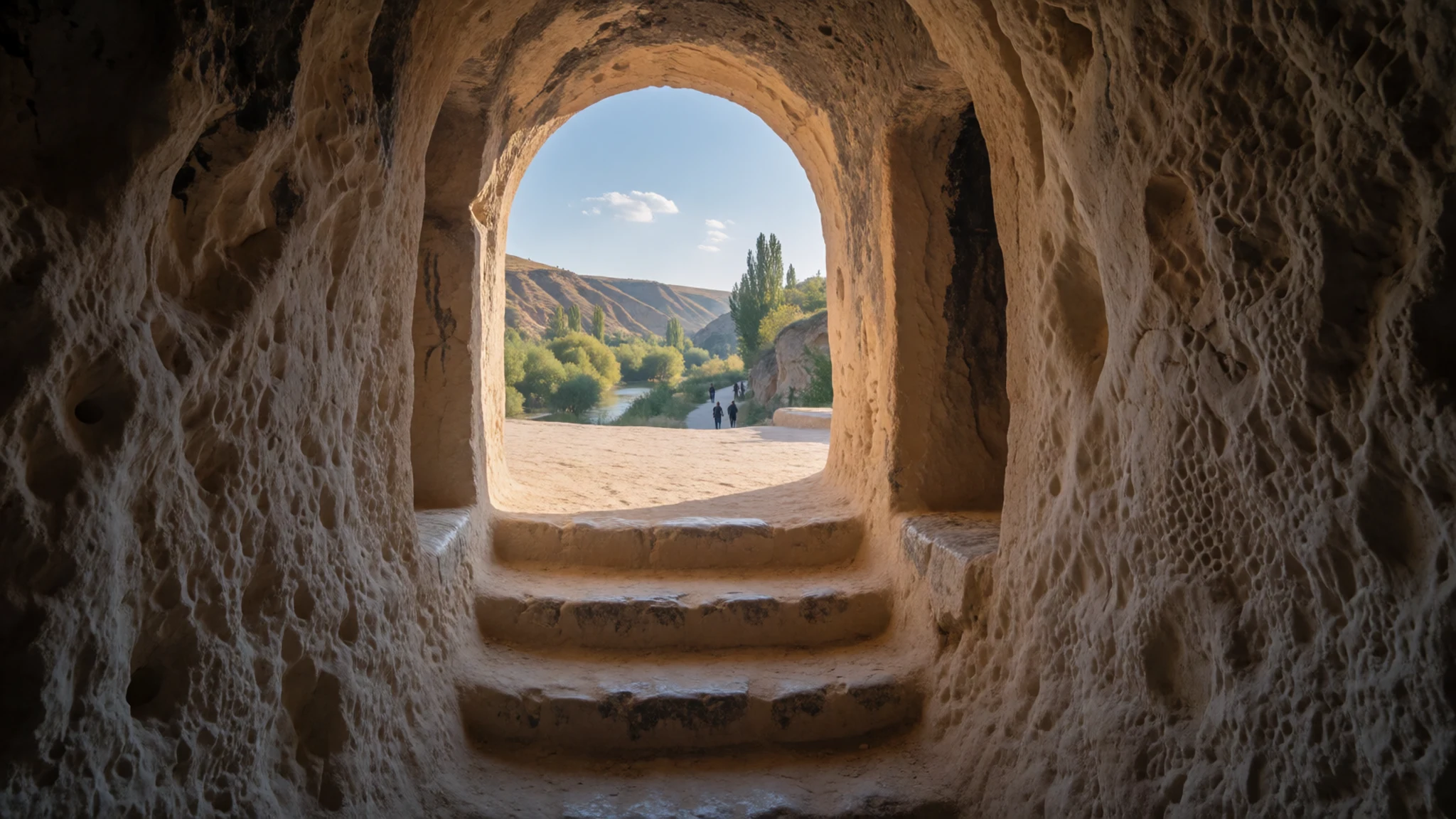
- Church of the Dormition — Within the cave complex
The Church of the Dormition was carved in the 1180s and is the painted heart of Vardzia. Its murals include portraits of Giorgi III and of his daughter Tamar, made in her reign. Light inside is low, so a minute for the eyes to adjust helps, and flash photography is best avoided.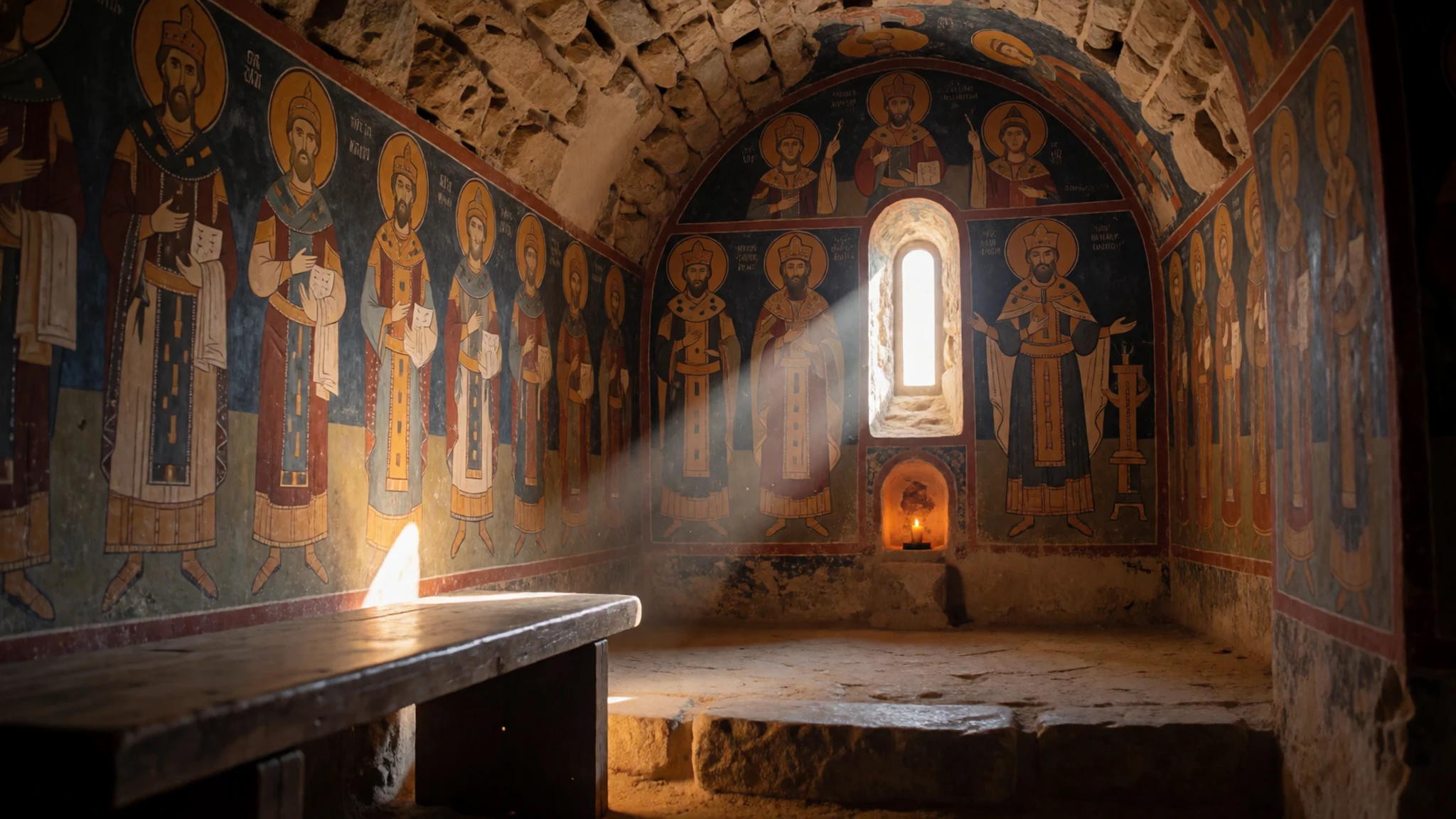
- Upper Vardzia and the nuns' monastery — Up the valley from Vardzia
Upper Vardzia lies a short distance west of the main cliff, with a church restored in the 1970s and returned to use in 1997 by a community of nuns. It is a living religious house, so dress modestly and keep voices low as in any working convent.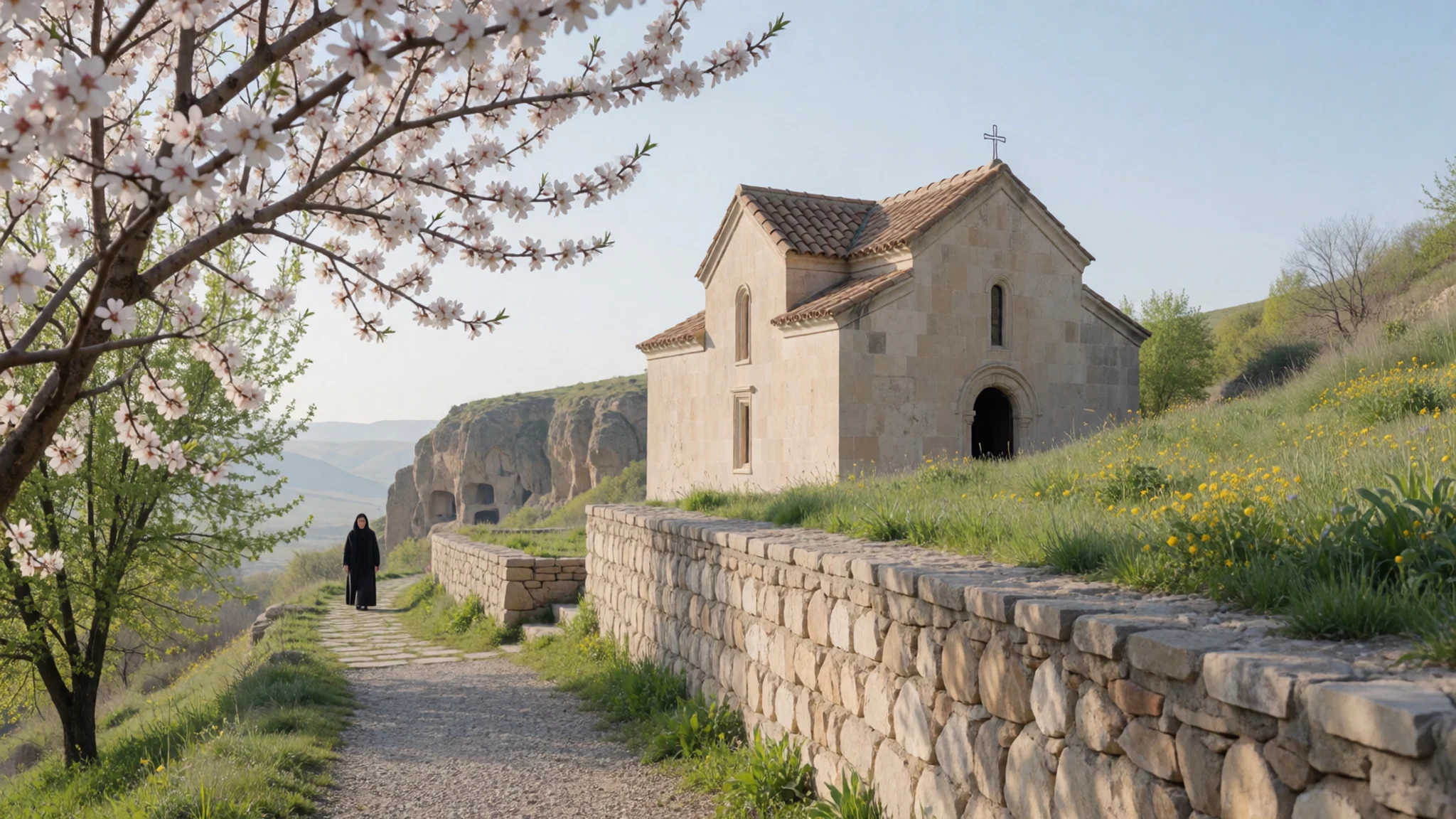
- Vanis Kvabebi — East of Vardzia, Kura valley
Vanis Kvabebi is a second cave monastery a short drive east along the valley. Its six churches and several hundred caves, spread over many floors, served as shelter, store, tomb and market. It makes a good comparison with Vardzia, showing the same rock-cut way of life in a different setting.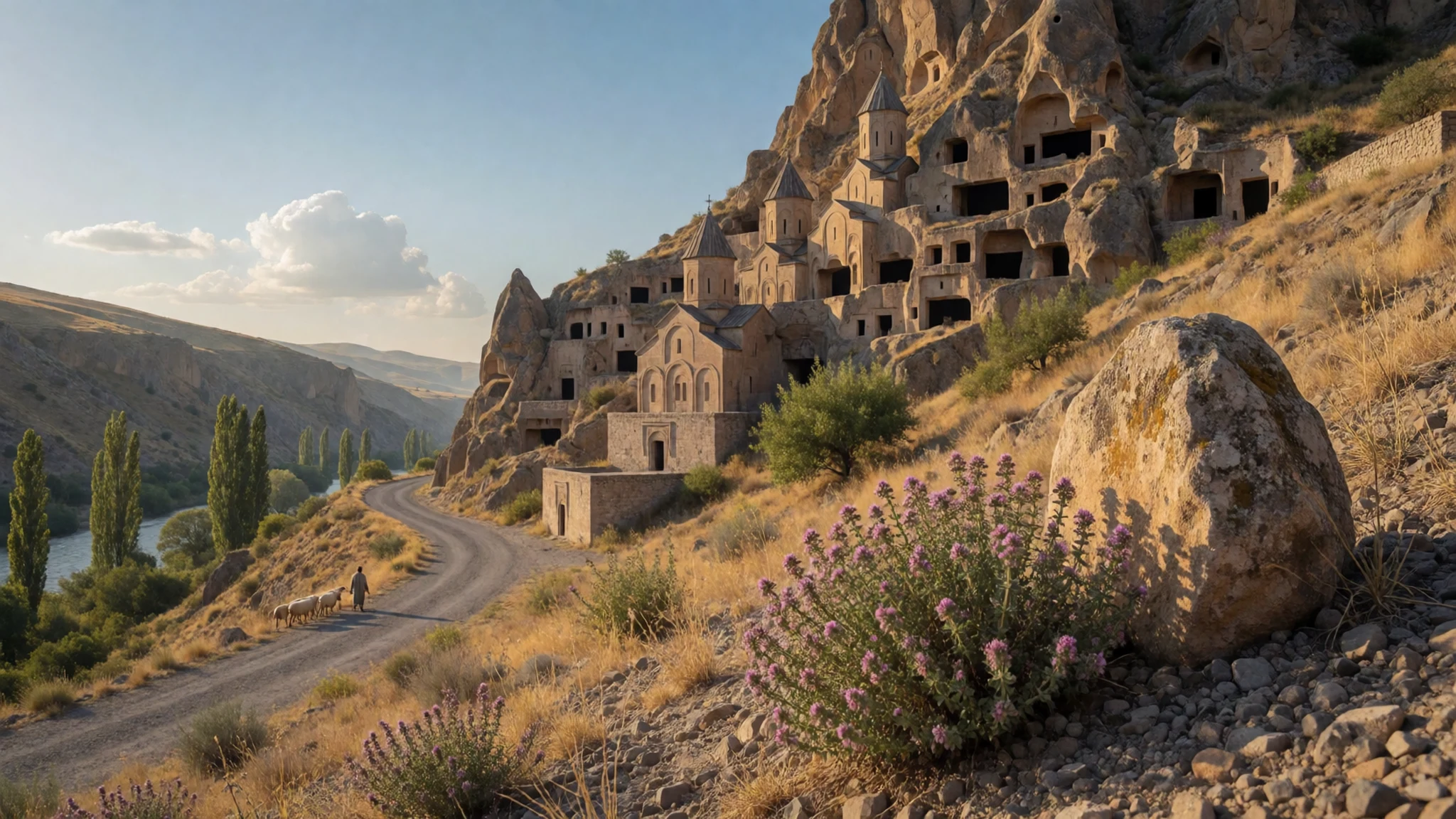
- Khertvisi Castle — Khertvisi village
Khertvisi Castle stands above the village where the Paravani meets the Mtkvari (Kura), north of Vardzia. It once guarded a road linking the Byzantine world with the Caucasus. Shared minibuses between Akhaltsikhe and Armenia pass through the village, so it suits a stop on the way in or out.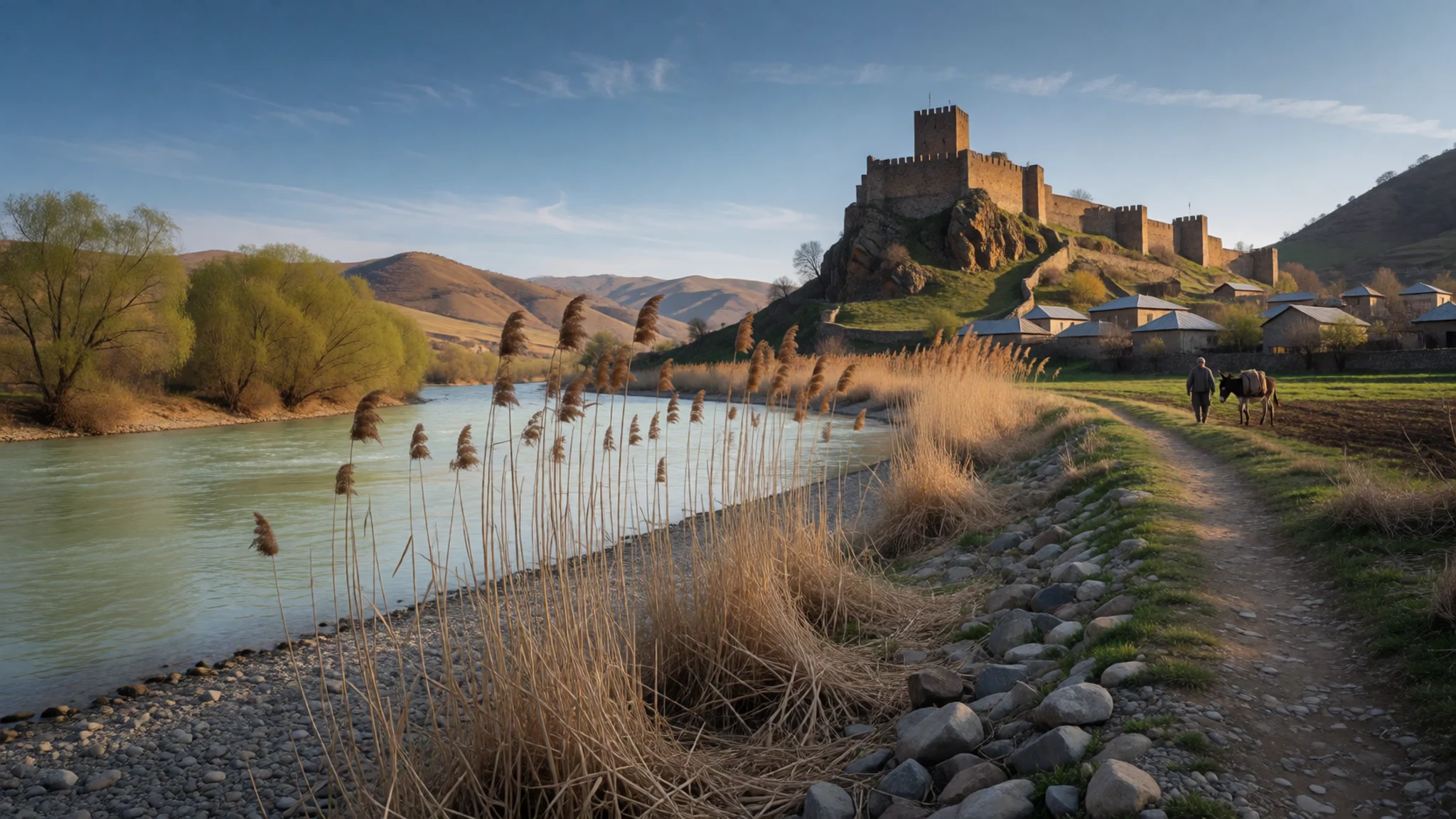
- The hot pool — Near Vardzia
A local operator has built a covered swimming pool near Vardzia fed by warm sulphur-scented water. It is a simple shed rather than a spa resort, and welcome after a day on the stairs, especially in winter. Check on the spot whether it is open.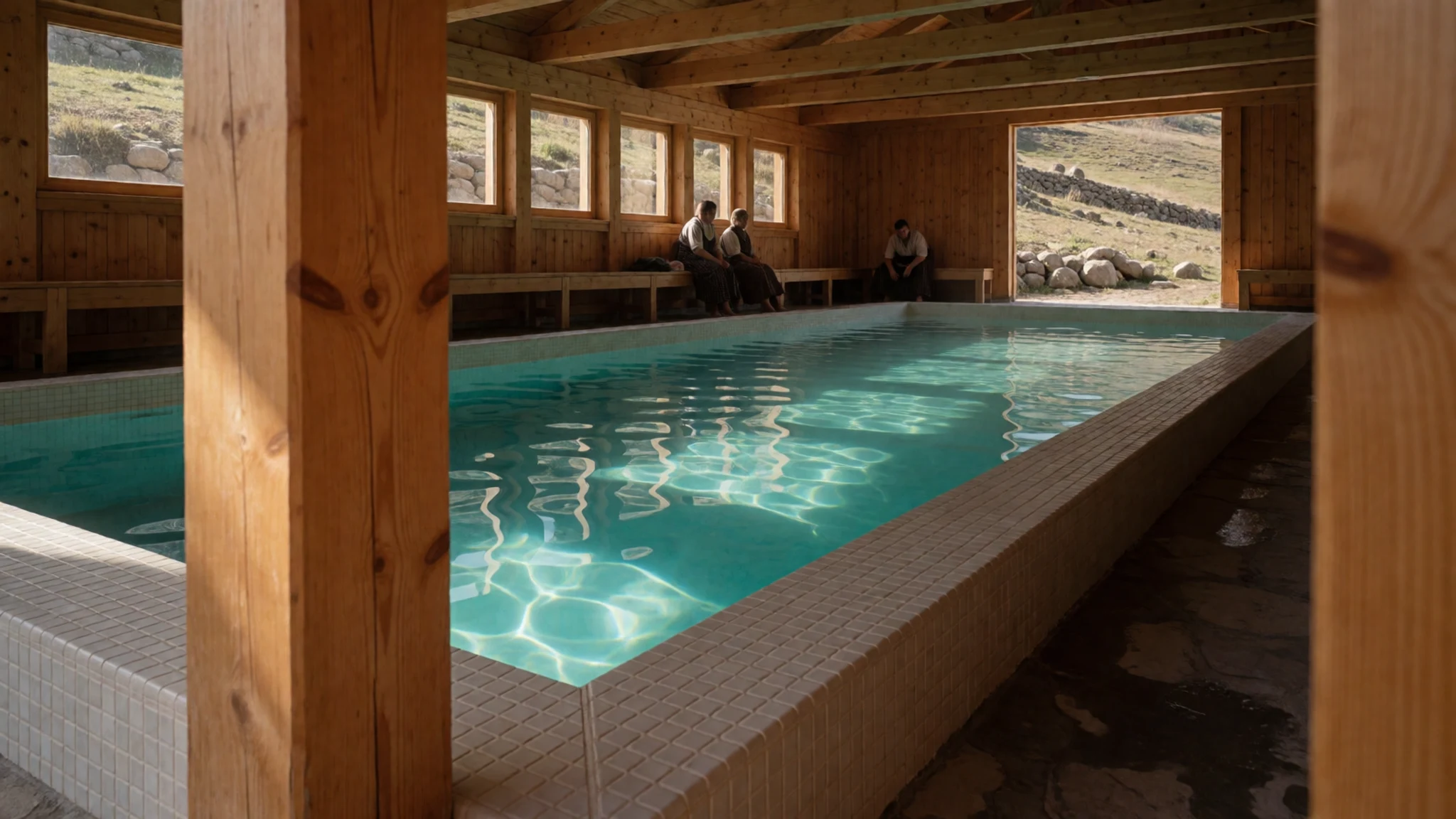
Culture
Vardzia is a medieval monastery first and a visitor site second, and the Georgian Orthodox habits that shaped it have not disappeared. The Church of the Dormition carries a dedication to the Virgin, and chronicles speak of an icon of the Virgin of Vardzia and of hymns composed in her honour. Queen Tamar, remembered in Georgia as the ruler of a golden age, appears in the church's paintings and in the story behind the site's name, and her era still carries weight in how Georgians speak of the medieval kingdom. The monastery was also a place of writing and art, a scholarly side that is easy to forget among the stairs and sandy ledges. Religious life is not only history here. Upper Vardzia, a short way from the main cliff, was returned to use by a community of nuns in 1997, and they live and pray there. Georgian hospitality shapes the valley around the monastery. Guesthouses and family homestays are common in the valley, and an evening with a host often stretches into a long, generous meal. Visitors arrive as pilgrims, day-trippers and independent travellers, so the mood on the stairs shifts between prayerful and cheerful, and both are normal. Inside the Church of the Dormition and at Upper Vardzia, cover shoulders and knees, speak quietly, and ask before photographing any of the nuns.
What to wear
Vardzia sits in a rural, upland corner of Georgia, so everyday clothing there is practical first and decorative second. Traditional Georgian dress is now mostly kept for weddings, festivals, folk-dance performances and church celebrations. For men, the classic garment is the chokha, a long fitted woollen coat with rows of cartridge pockets across the chest, worn with a sheepskin hat and sometimes a heavy felted cloak against mountain weather. Women's formal dress is a long, fitted gown, often in rich fabric such as velvet or brocade, with a fine veil or headpiece. Everyday wear around Vardzia is plain: jeans, jackets, fleeces and sturdy shoes for farm and village work, with smarter clothes saved for church on feast days. Older women in villages often wear a headscarf, and the nuns of Upper Vardzia wear black monastic dress. A visitor should dress for rock and weather. Closed shoes with good grip are the priority, since the steps are steep, worn and sandy, and smooth soles or open sandals are a poor idea. Layers suit the altitude: mornings and evenings can be cold, the sun on the cliff is strong at midday, and a light waterproof is sensible in spring and autumn. For the church and Upper Vardzia, carry a scarf or light shawl, and wear trousers or a long skirt with sleeves that cover the shoulders.
What to eat
- Khachapuri — Cafés in the service area below the cliff, or any bakery in Akhaltsikhe
Cheese-filled Georgian bread, baked fresh and eaten hot, often torn and shared. Shapes vary by region, so ask what the kitchen makes. It is a filling stop before or after the cliff stairs, and a dependable vegetarian choice.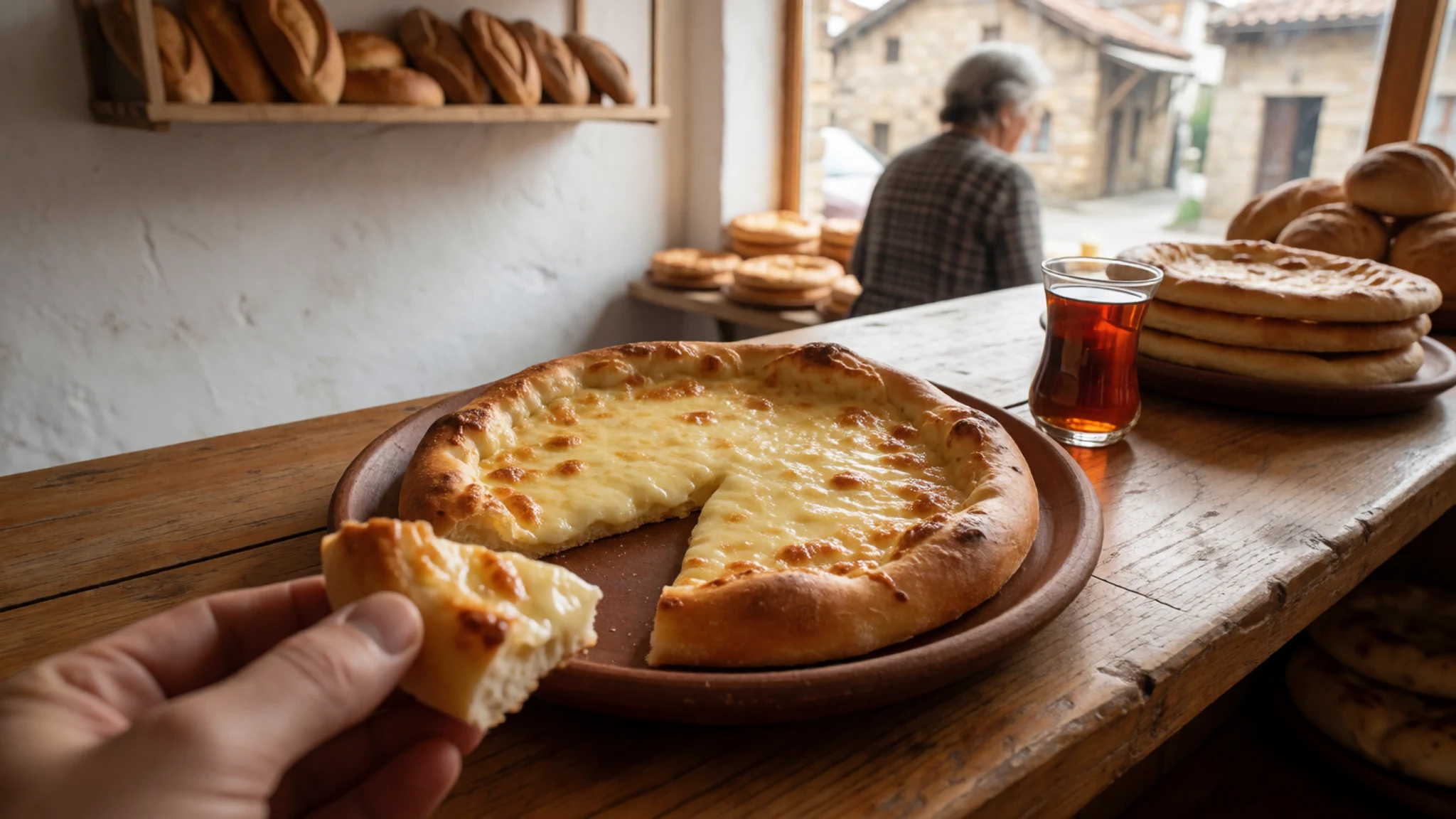
- Khinkali — Restaurants across the river from the cave monastery, and guesthouse dinners
Twisted dumplings of spiced meat and broth, eaten by hand: hold the knot, bite a small hole, drink the broth, then eat the rest and leave the knot on the plate. Cheese and mushroom versions are common.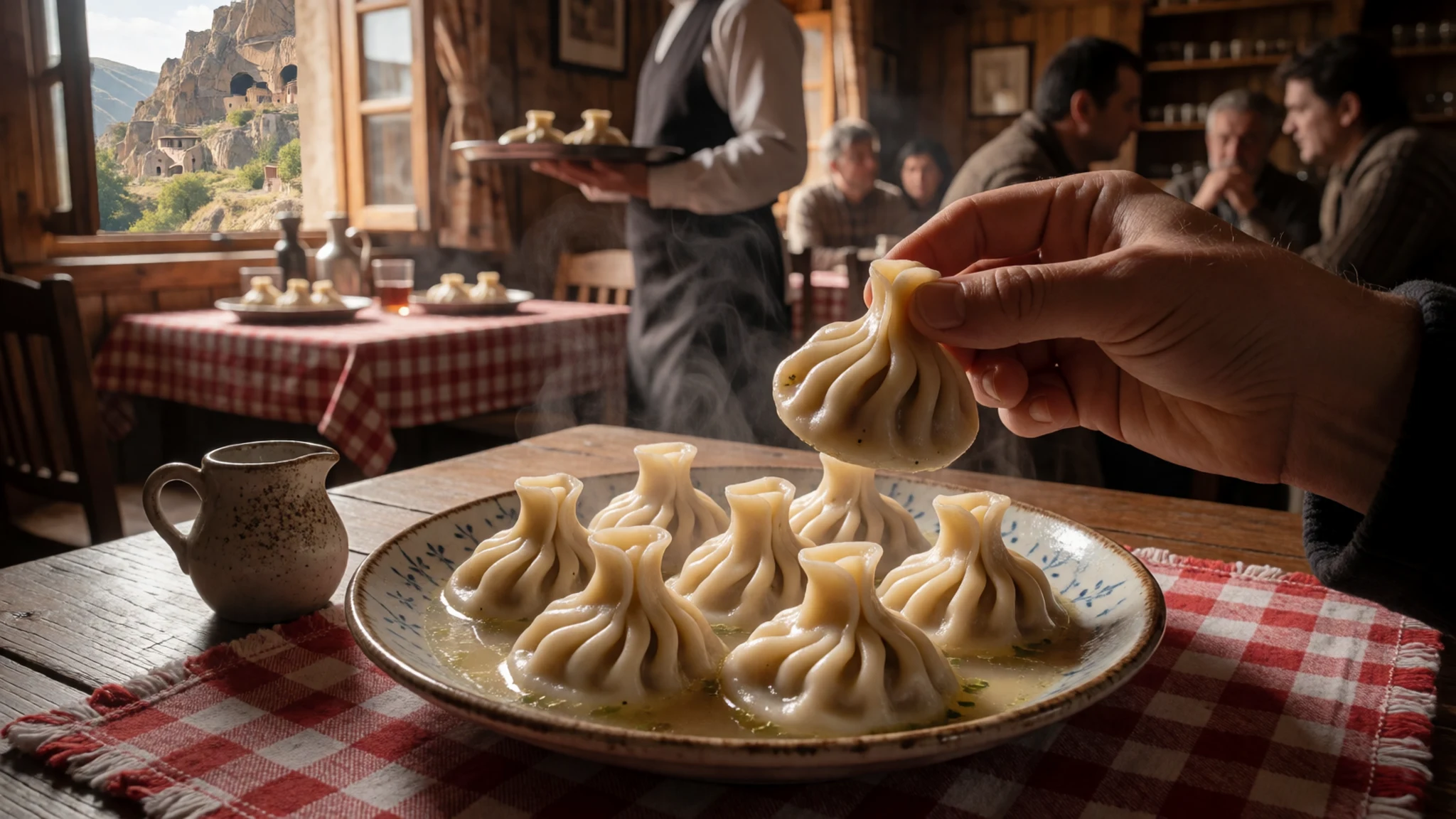
- Mtsvadi — Valley guesthouse dinners and grill restaurants near the river
Skewered pieces of pork or lamb grilled over wood embers, served with sliced onion, tomato sauce and bread. It is the usual centrepiece when a host lights the grill, so guesthouse dinners often feature it. - Lobio — Cafés and guesthouse tables in the valley and in Akhaltsikhe
Slow-cooked kidney beans with onion, garlic and coriander, usually served in a clay pot beside cornbread and pickles. It is hearty and meat-free, which suits a cold day spent climbing the rock stairs. - Shotis puri with fresh cheese — Bakeries in Akhaltsikhe and village kitchens along the valley
Boat-shaped loaves baked against the wall of a clay oven, eaten warm with fresh cheese. It is simple, filling and travels well, so it makes a sensible picnic for a morning on the cliff, if bought early from a bakery.
Plan it
Best time. May, June, September and October, when days are warm and the steps are comfortable to climb. July and August are hot on the exposed rock, and winter is cold at about 1,300 metres, though the paths are quiet and the hot pool is welcome.
How long. 1–2
Getting there. Fly into Tbilisi (or Kutaisi), then travel by road to Akhaltsikhe or Borjomi, the usual bases. From Akhaltsikhe a shared minibus (marshrutka) takes about an hour and a half to Vardzia, and a private taxi is quicker. Services are limited and times change, so check locally before planning a same-day return. From Armenia, minibuses from Gyumri towards Akhaltsikhe pass through Khertvisi, which leaves a short onward ride to Vardzia.
Budget. low
Tips
- Stay in Akhaltsikhe, Borjomi or a valley guesthouse so you are not tied to the limited minibus times.
- Wear closed shoes with good grip and allow two to three hours for the whole complex.
- Start early on summer days, as the cliff offers little shade by midday.
- Carry some cash and water, since the service area below the cliff is small, and check opening hours and ticket details locally before you go.
- Bring a warm layer even in summer, as Vardzia lies at about 1,300 metres.
Etiquette
- Cover shoulders and knees in the churches and at Upper Vardzia.
- Keep your voice low and ask before photographing nuns or worshippers.
- Stay on the marked paths and do not touch or lean on the painted walls.
Nearby
Sources
- Wikidata Q691813 (CC0)
- Wikipedia: Vardzia (rev 1375737909) (CC BY-SA 4.0)
- Wikivoyage: Vardzia (rev 5237985) (CC BY-SA 4.0)
- Photo: View of the cave city of Vardzia, Georgia (Doron) (CC BY 3.0)
- Photo: Vardzia (Alexkom000) (CC BY 4.0)
- Photo: Queen Tamar of Georgia, fresco at Vardzia (13th century painter) (Public domain)
- Photo: Vardzia Cave Monastery, Georgia (Bernard Gagnon) (CC BY 4.0)
- Photo: Church of the Dormition in the Vardzia Cave Monastery (Bernard Gagnon) (CC BY 4.0)
- Photo: Church of the Dormition in Vardzia Cave Monastery (Bernard Gagnon) (CC BY 4.0)
- Photo: Vardzia panorama (Kotasik) (CC BY 3.0)
- Photo: Höhlenstadt Wardsia (Jacques Paysan) (CC BY-SA 2.0)


