Ananuri
Ananuri, Georgia
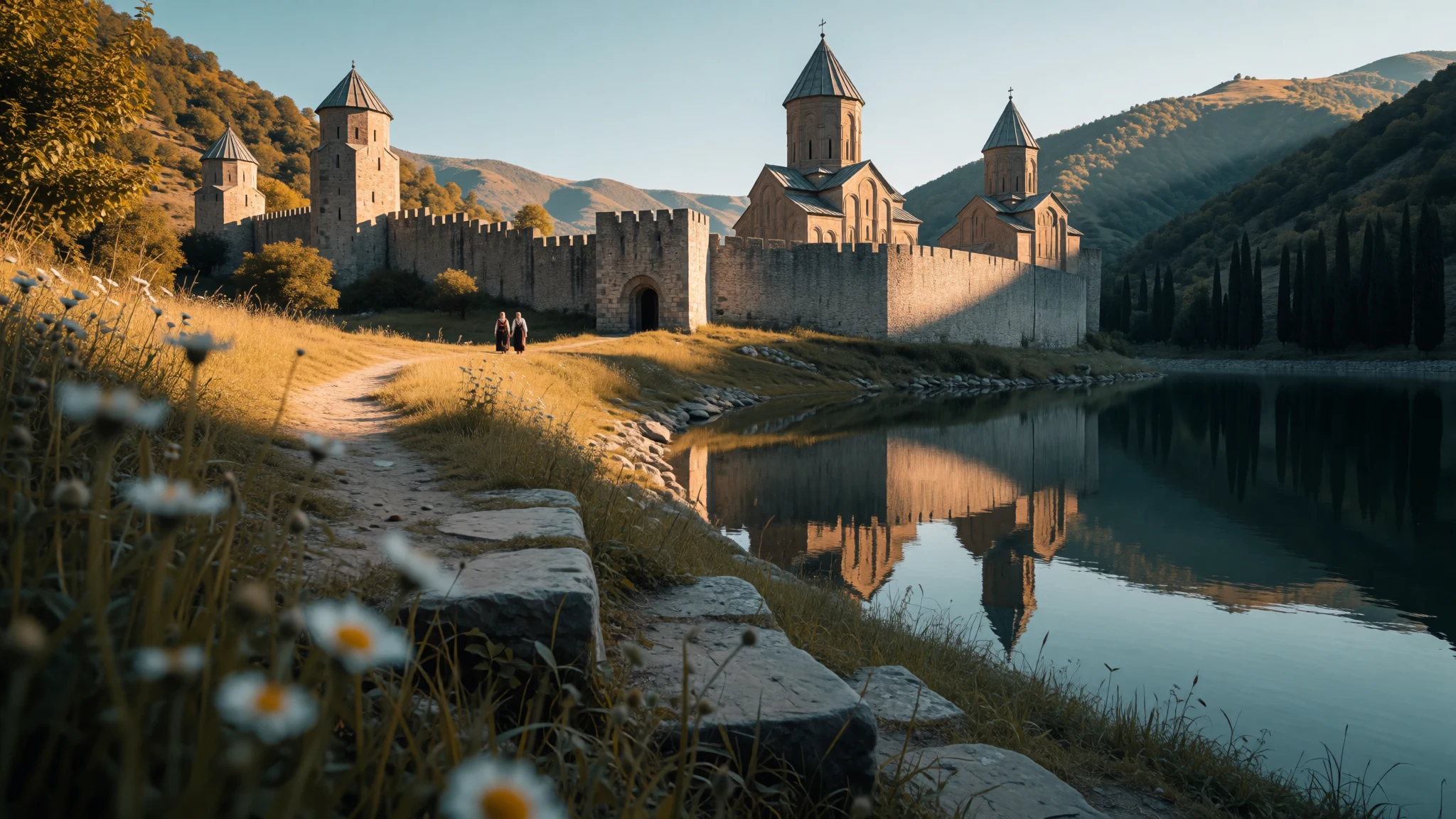
Ananuri is a fortified complex of towers and carved churches on a reservoir shore, beside the road north from Tbilisi into the Caucasus.
The place
Ananuri is a fortified ensemble of walls, towers and churches on the Aragvi River in Dusheti Municipality, Georgia, about 72 km from Tbilisi. Wikidata classes it as both a castle and a monastery, and that fits. It was a noble stronghold and a place of worship at once, with the churches set inside the defensive circuit rather than apart from it. The facts date its founding to around 1600, though the walls and buildings were altered over a long period. Today the river in front of the fortress is held back as a reservoir. That gives Ananuri its postcard setting: grey stone towers above a long sheet of green-blue water, with steep wooded hills behind. The interior is compact, a courtyard, the churches, a tall tower and stretches of wall that can be walked. The steps are worn and uneven and there are few barriers, so it rewards slow, careful walking. Most visitors come as a day trip from the capital, often as the first halt on the road toward the high Caucasus. Minibuses and tour coaches arrive from late morning, and the courtyard gets crowded. Georgia has its own language and alphabet and a long record of holding on to its identity against larger empires, and its countryside is studded with towered fortifications and monasteries. Ananuri is one of the easiest of them to fit into a day. A visit takes an hour or two, longer for photographers or anyone who wants to climb.
Its story
Ananuri was the seat of the eristavis, the dukes of Aragvi, a feudal family that governed this valley from the 13th century. A castle on a route into the mountains was bound to see fighting, and this one saw plenty. The worst episode came in 1739. A force from the neighbouring duchy of Ksani, under Shanshe, attacked, set the fortress alight and killed the Aragvi clan. The new rulers did not hold on for long. Four years later local peasants rose against them, killed the usurpers and asked King Teimuraz II to rule them directly. Trouble came back in 1746, when Teimuraz needed help from Erekle II of Kakheti to put down another peasant uprising. The fortress remained in military use until the beginning of the 19th century. In 2007 the complex was added to Georgia's tentative list for UNESCO World Heritage status, a preliminary step rather than an inscription.
A local legend explains the name. During a siege the defenders held out because a hidden passage led down to the water and kept them supplied. The attackers seized a woman called Ana, from Nuri, and tried to force the secret out of her. She chose death over betrayal, and the castle was named after her: Ana of Nuri, Ananuri. It is a story told with feeling, and it is best taken as legend rather than record.
What to see
- Church of the Assumption of the Virgin Mary — Inside the fortress courtyard
The larger church stands in the middle of the enclosure and is the reason most people come. Its stone walls are heavily carved, and the interior is dark and still after the bright courtyard. Allow time to stand quietly inside and look at the surviving painted surfaces.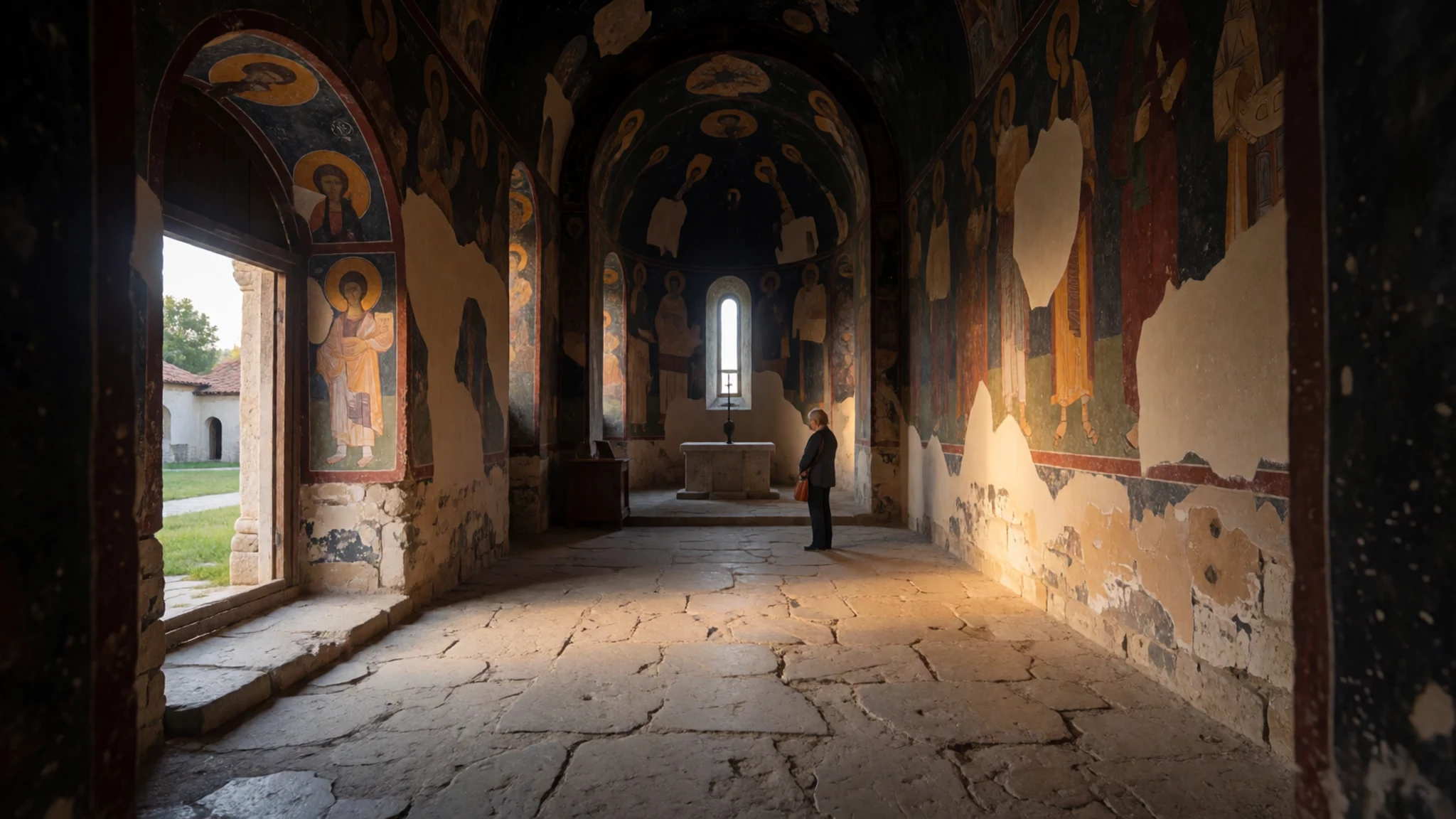
- Carved façade and inscriptions — Church exterior
The outer walls of the church carry carved crosses, vine motifs and lines of inscription. The vine is a Georgian national symbol, so the decoration is easy to read once you know it. Morning side light brings out the relief best; midday glare flattens it.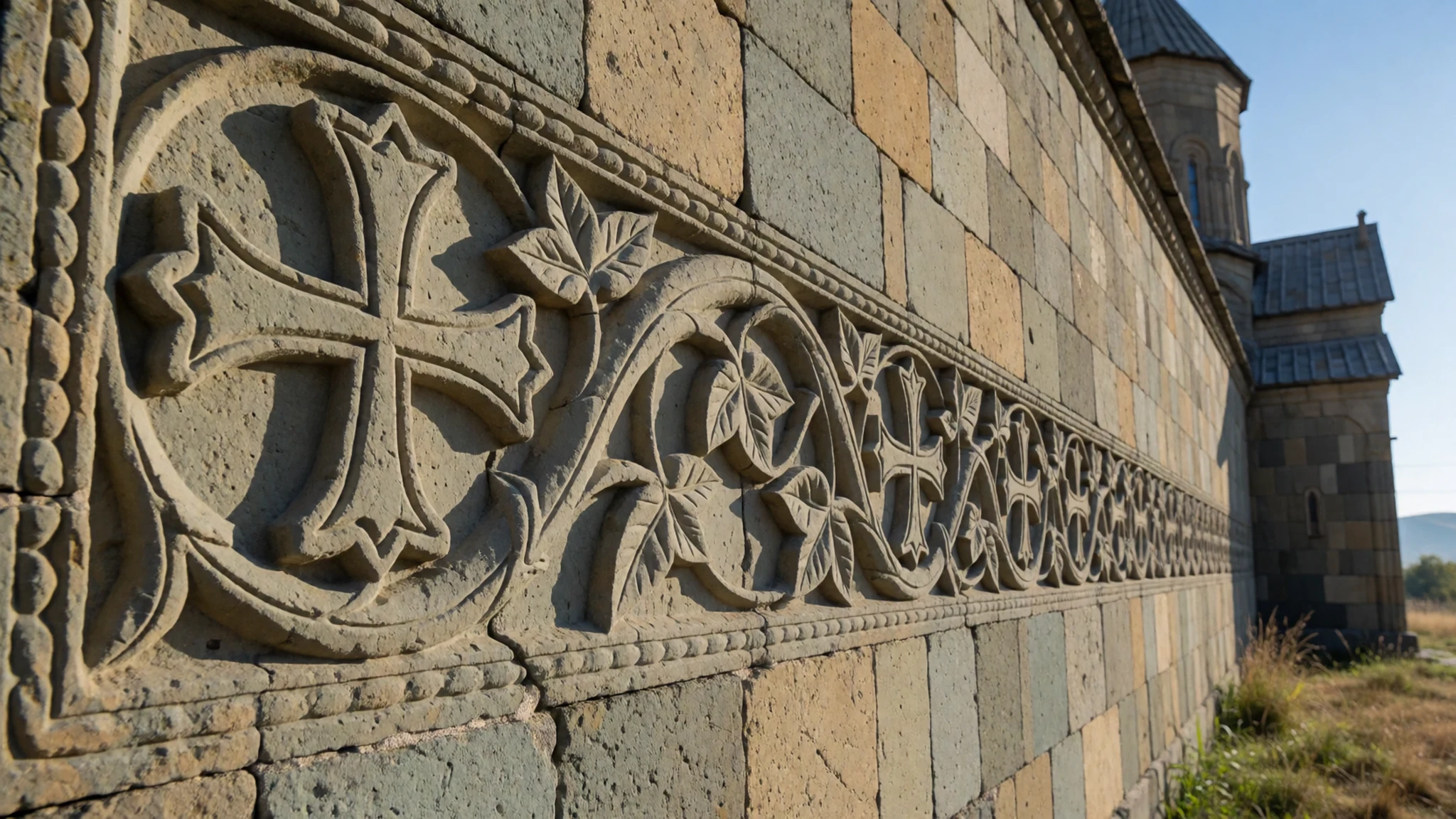
- Walls and watchtowers — Perimeter of the fortress
The defensive circuit is the best-preserved part of the complex. Sections of wall can be walked, and a stone tower can be climbed by narrow internal steps. The climb is short but steep and uneven, and the views over the water and valley make it worthwhile.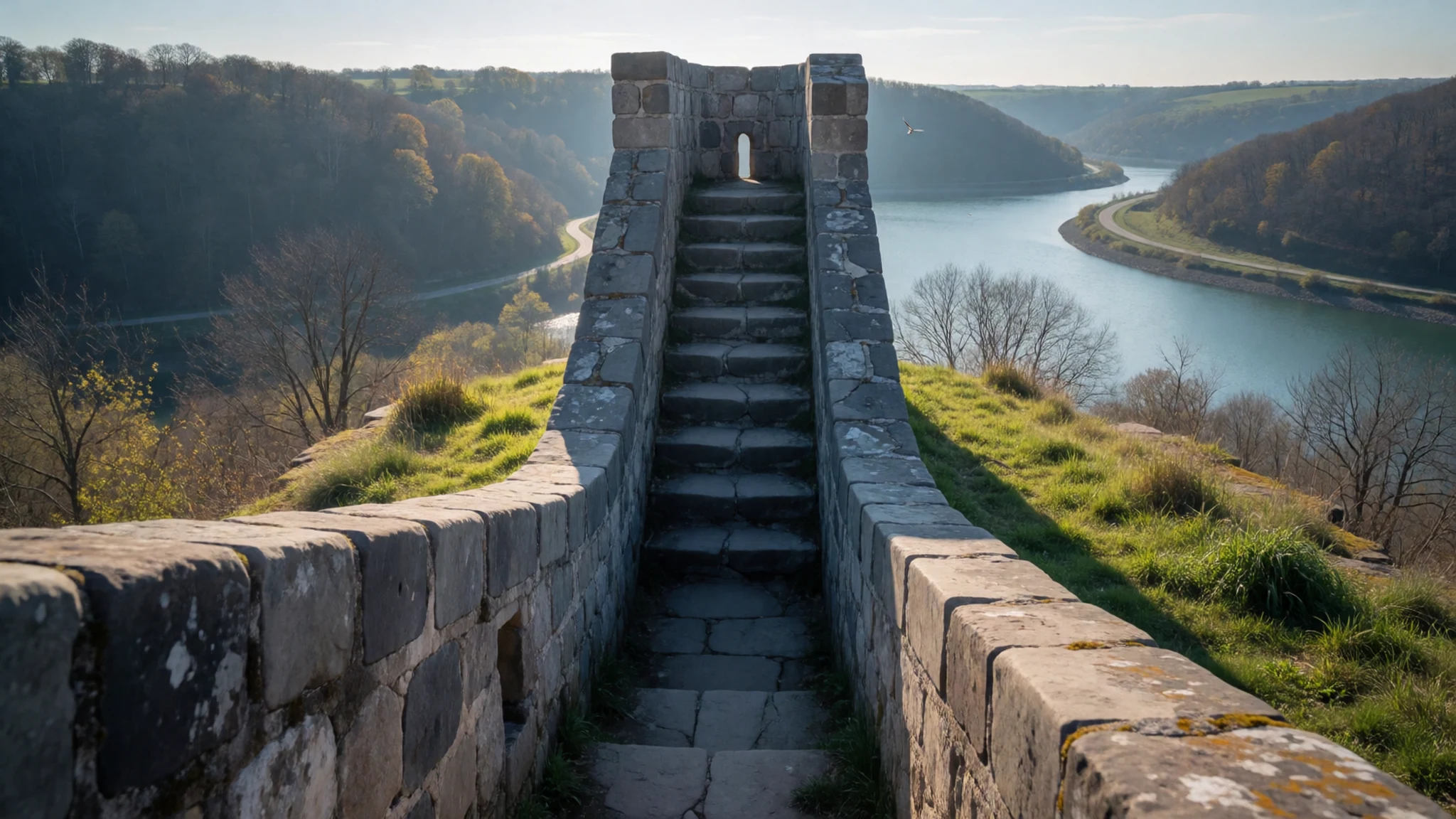
- The reservoir viewpoint — Shore below the fortress
Outside the gate, the path along the shore gives the classic view of the whole ensemble reflected in still water. It is also the quietest spot when tour groups are inside. Early morning and late afternoon give the softest light and the fewest people.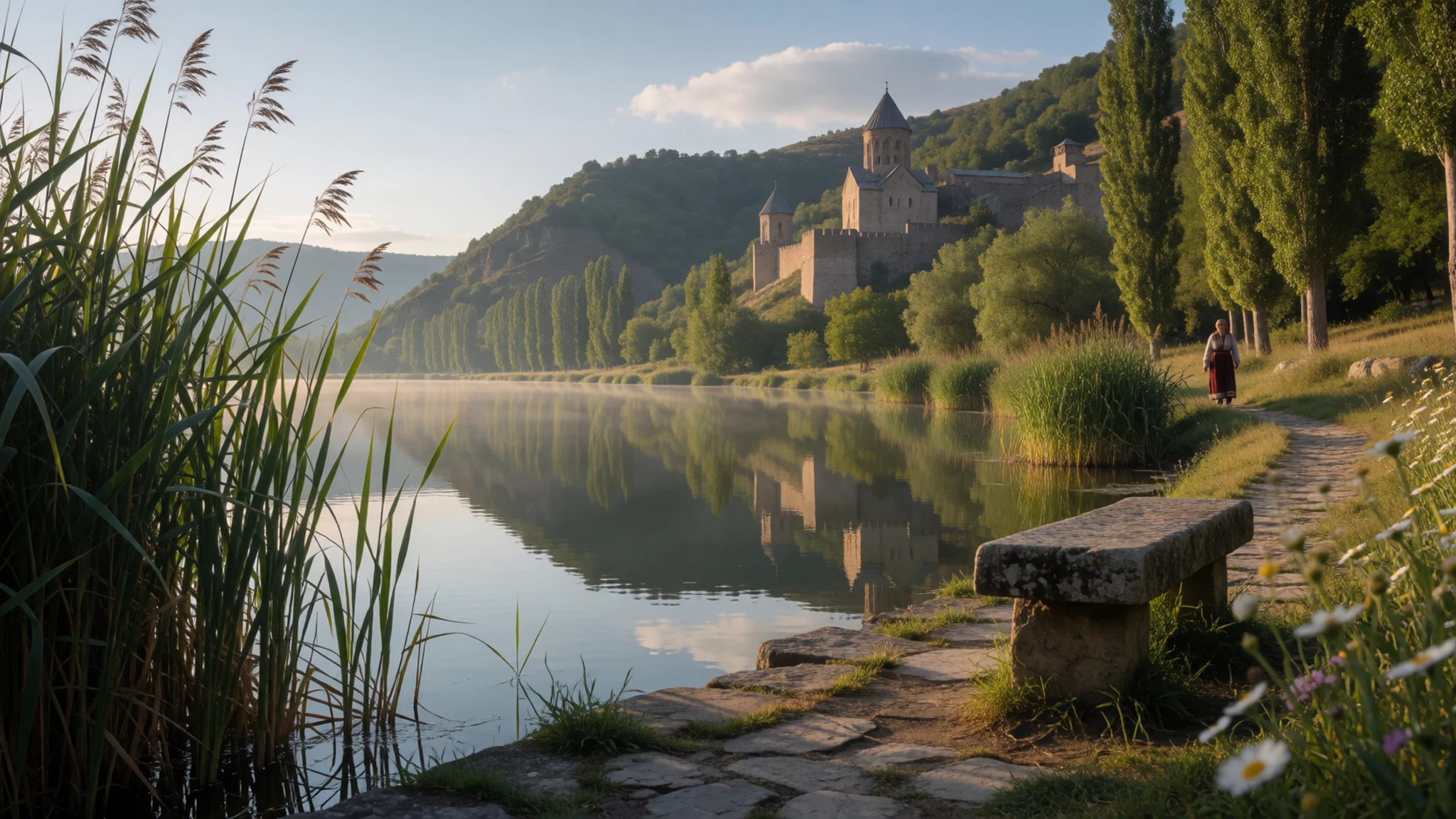
- The second look from the road — Road beside the complex
Stopping at the roadside pull-ins before or after the fortress shows how the walls follow the slope above the Aragvi. This view explains why the site was chosen: it controls the valley route toward the mountains. Take care of passing traffic when stepping out.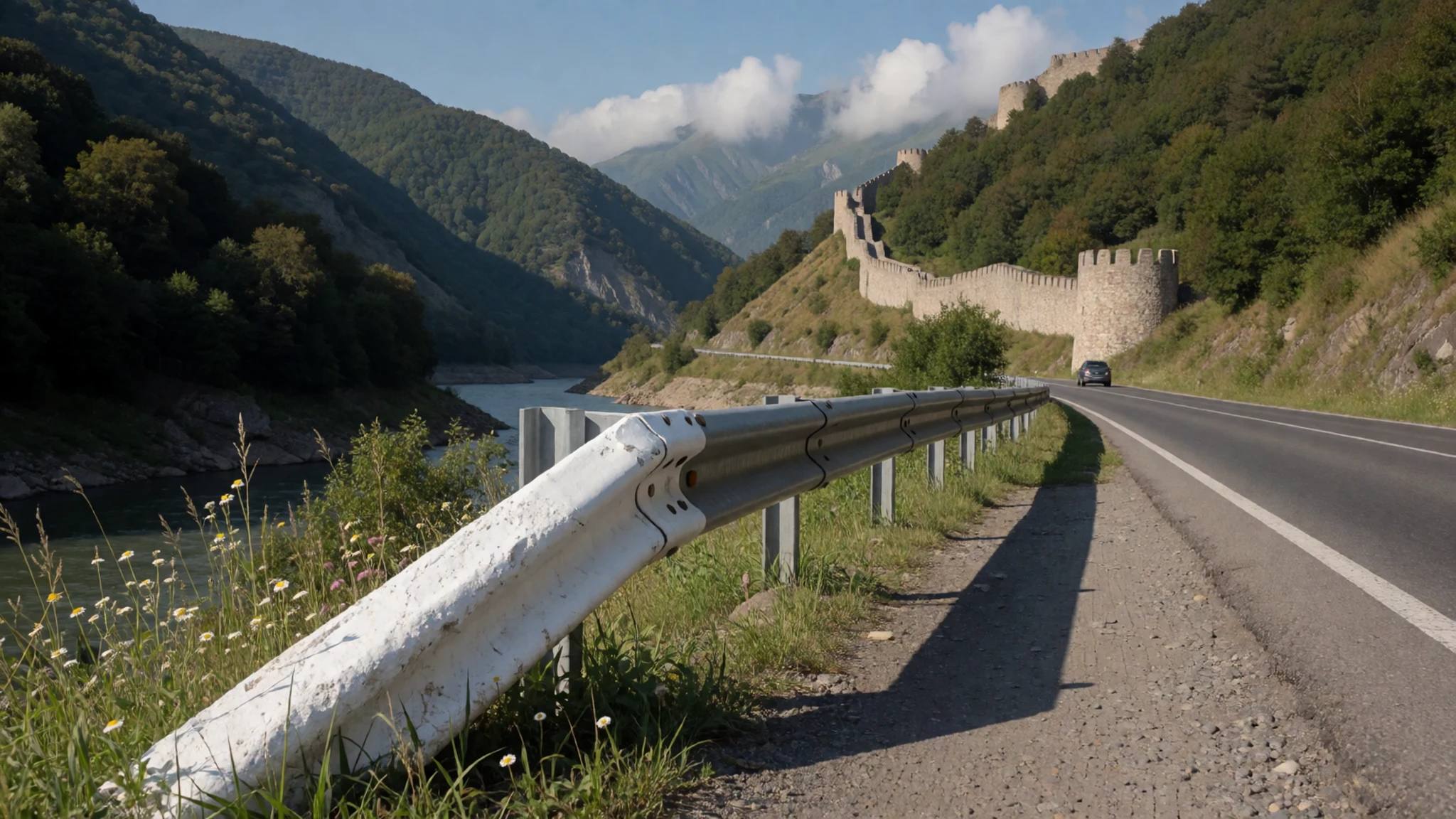
Culture
Ananuri sits in a country where hospitality is a point of pride. Georgians are generally warm hosts, and if someone invites a visitor to eat, they will often pay, so arguing over the bill can embarrass them. A traditional feast, the supra, is a long table of more food than a group can finish, with a toastmaster and a string of toasts in wine or brandy. Conversation is direct. People raise their voices, use emphatic gestures and ask personal questions as a way of getting to know someone, so what sounds like a quarrel is often friendly debate. Manners are broadly European but lean traditional, and men are expected to show courtesy to women. The churches at Ananuri are still places of worship in a country with a deep Christian heritage, and the vine, carved on the walls and woven through Georgian art, reflects a much older farming and wine tradition. Wine is part of everyday hospitality, though nobody should feel pressed to drink more than they want. Respect the churches as living sacred spaces rather than only as monuments. Cover your shoulders and knees before entering the churches at Ananuri, keep your voice low inside, and ask before photographing anyone who is praying.
What to wear
Ananuri belongs to a region where traditional dress is still worn on festival days and at folk performances. The best-known male garment is the chokha, a long wool coat that is fitted at the waist, with sewn pockets across the chest that once held gun cartridges. It is worn with boots, a belt and often a dagger as part of ceremonial dress. Women's traditional dress is a long, fitted gown, often in rich fabric and sometimes in velvet, with a delicate head covering. These outfits appear at weddings, dance shows and national celebrations rather than on ordinary days. Everyday clothing in Georgian towns is much like that in southern Europe: jeans, jackets, trainers, and smart clothes for evenings out. In villages, older people may dress more conservatively, and women often wear long skirts and cardigans, with scarves in churches. For visitors, the weather matters most. The Aragvi valley is mountainous, and summer can be as harsh as winter, so bring sun protection and layers, plus a waterproof for rain. Wear sturdy shoes with good grip, because the stone paths and steps are uneven and slippery after rain. For the churches, bring something to cover your shoulders and knees, and a light scarf for women, who are often asked to cover their heads.
What to eat
- Khinkali — Family-run eateries and roadside stops on the road north from Tbilisi
Twisted dumplings filled with spiced meat and broth, eaten by hand. Hold one by the knot, bite a small hole, drink the juice, then eat the rest. The knot is traditionally left on the plate.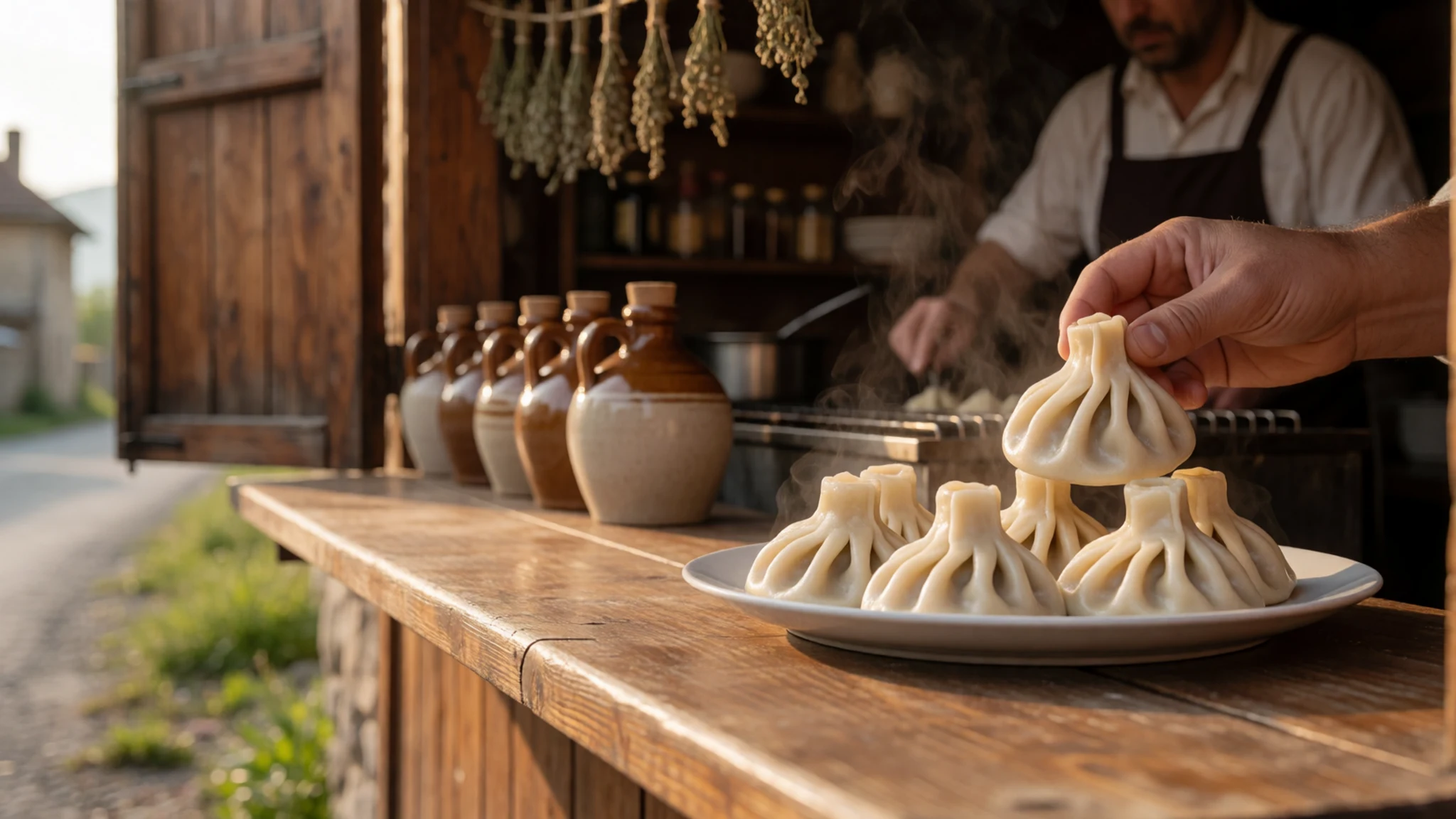
- Khachapuri — Bakeries and cafés in Tbilisi and the small towns on the way to the fortress
Georgian cheese bread, made in several regional shapes. Some are round and flat, others boat-shaped with an egg on top. It is filling, salty and usually shared, so one is plenty between two.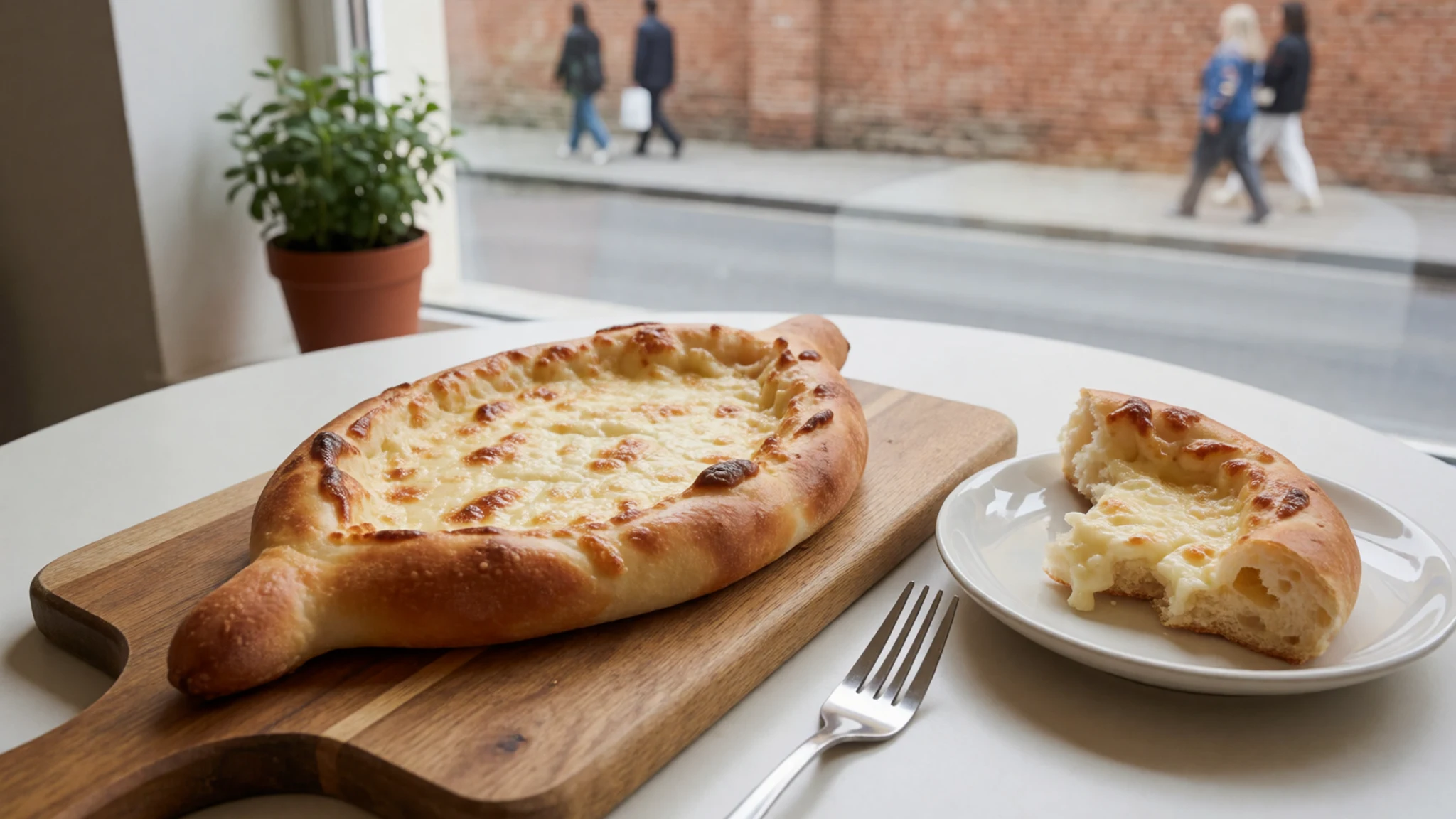
- Mtsvadi — Open-air grills at roadside restaurants in the valley
Skewered pieces of meat grilled over a wood fire and served with raw onion, herbs and a tart sauce. The seasoning is simple and the smoke does the work. It goes well with bread and a glass of local wine. - Badrijani nigvzit — Any restaurant serving a full Georgian spread, including the cantine-style cafés
Fried aubergine slices rolled around a paste of walnuts, garlic and herbs, often topped with pomegranate seeds. It is served cold as a starter and is a good option for vegetarians. - Lobio — Cantine-style cafés and village restaurants near the fortress
A stew of kidney beans cooked with onion, garlic, coriander and spices, usually served in a clay pot with cornbread. It is hearty, inexpensive and vegetarian, and a good lunch before or after the fortress.
Plan it
Best time. March and November, when highs of about 25–27°C make walking the walls comfortable and the light on the water is good. Summer can be hot and busy, and winter can be severe in the mountains, so check conditions on the road north if travelling then.
How long. 1
Getting there. Fly to Tbilisi, then continue by road for about 72 km. Minibuses and shared taxis run north along the mountain road and can stop at the fortress, or a driver can be hired for the day. Check current services locally before you go.
Budget. low
Tips
- Go early in the morning or late in the afternoon to avoid the tour coaches that arrive around midday
- Wear shoes with grip, as the stone steps and tower stairs are worn and slippery after rain
- Check the entry rules for your passport before booking; UK citizens can visit visa free for a year
- Combine Ananuri with a longer day on the mountain road, but check road conditions in winter
- Carry some cash for roadside eateries and small stalls, as card use can be patchy outside the capital
Etiquette
- Cover shoulders and knees in the churches, and keep your voice low inside
- Ask before photographing worshippers or priests
- If invited to a meal or toast, accept graciously and avoid arguing over the bill
Nearby
Sources
- Wikidata Q2600596 (CC0)
- Wikipedia — Ananuri (rev 1369084622) (CC BY-SA 4.0)
- Wikivoyage — Georgia (country) (rev 5425828) (CC BY-SA 4.0)
- Ananuri Fortress, Georgia — Bernard Gagnon (CC BY 4.0)
- Georgian fortress Ananuri — Vadim Tolbatov (CC BY 3.0)
- Cultural heritage monument photo — 三猎 (CC BY-SA 4.0)
- Church of the Assumption of the Virgin Mary, Ananuri — Bernard Gagnon (CC BY 4.0)
- Ananuri Fortress 06 — Bernard Gagnon (CC BY 4.0)
- Ananuri Fortress 04 — Bernard Gagnon (CC BY 4.0)
- Inscriptions — Colchide (CC BY 3.0)
- Ananuri Castle Complex — lumoplank (CC0 1.0)


