Bodbe Monastery
Bodbe Monastery, Georgia
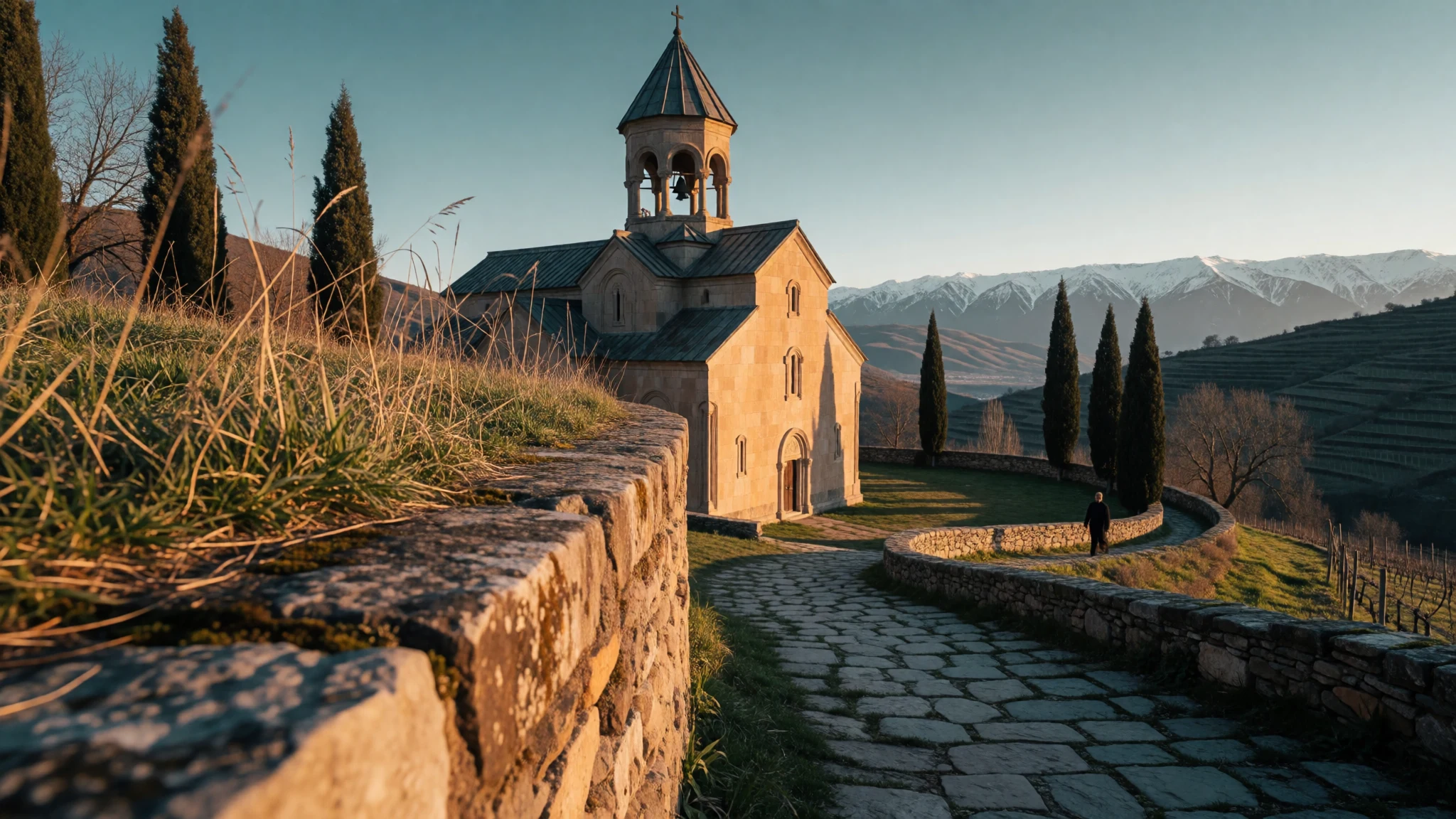
Bodbe Monastery is a working convent above Sighnaghi where pilgrims come to St Nino's shrine, with vineyards and mountains spread below.
The place
Bodbe Monastery stands on a hillside about 2 km from Sighnaghi, a small hill town in Kakheti, eastern Georgia. It is a Georgian Orthodox complex and the seat of the Bishops of Bodbe, and today it runs as a convent. That shapes the atmosphere: services set the rhythm of the day, nuns tend the gardens, and visitors fit around them. Wikidata dates the foundation to about 801, though most of what stands now comes from rebuilding, especially in the 17th century. The site lies at 722 metres above sea level, high enough to be a little cooler than the Alazani plain below, and the terraces at the edge of the grounds look over vineyards and, on clear days, the long line of mountains beyond. At the heart of the complex are the church and the chapel holding the relics of St Nino, the woman Georgians credit with bringing them Christianity. Around them are a bell tower, courtyards and tree-lined paths, and a lower path leads to a spring where pilgrims collect water and pray. Most arrivals are Georgian families and pilgrim groups, along with tour minibuses from Tbilisi and Sighnaghi, so mid-morning in summer and church feast days can feel busy. Early or late in the day the place is much quieter. Kakheti is a major wine region, and Bodbe pairs naturally with a day among cellars and villages, since faith and wine here grow from the same landscape.
Its story
Bodbe Monastery grows out of the story of St Nino. In Georgian tradition she arrived as a Christian evangelist and, once the Georgians had embraced Christianity, she retired into Kakheti's Bodbe gorge and died there in the fourth century. King Mirian III is said to have ordered a small monastery built over her grave, and that burial place is why the site matters. Its standing grew over the centuries, and the kings of Kakheti chose it for their coronations. Disaster came in 1615, when troops of Shah Abbas I of Persia pillaged it. King Teimuraz I of Kakheti then restored it, and monastic life revived with a theological school, a store of religious books and a circle of scribes and writers. After Russia annexed Georgia in 1801 the monastery kept its place for a time, and murals were added when it was repaired in 1823. In 1837 the Russian Orthodox exarchate abolished the convent and turned it into a parish church, and decay followed. Restoration began in the 1860s, with a chanting school, and in 1889 Tsar Alexander III ordered a nunnery to be opened; the sisters taught needlework and painting. The Soviet government closed Bodbe in 1924 and used it as a hospital. Nuns returned in 1991, and restoration ran through the 1990s and resumed in 2003. That pattern of prominence, damage and revival explains why the complex is a layered mix of periods rather than one clean building.
What to see
- Church of St Nino and her shrine — Bodbe Monastery, near Sighnaghi
The main church at Bodbe Monastery holds the chapel with St Nino's relics, which is why pilgrims come. Inside, the mood is quiet and devotional, with candles, icons and painted walls from different periods. People queue patiently to approach the shrine, and services can close parts of the building, so allow time and follow what others do.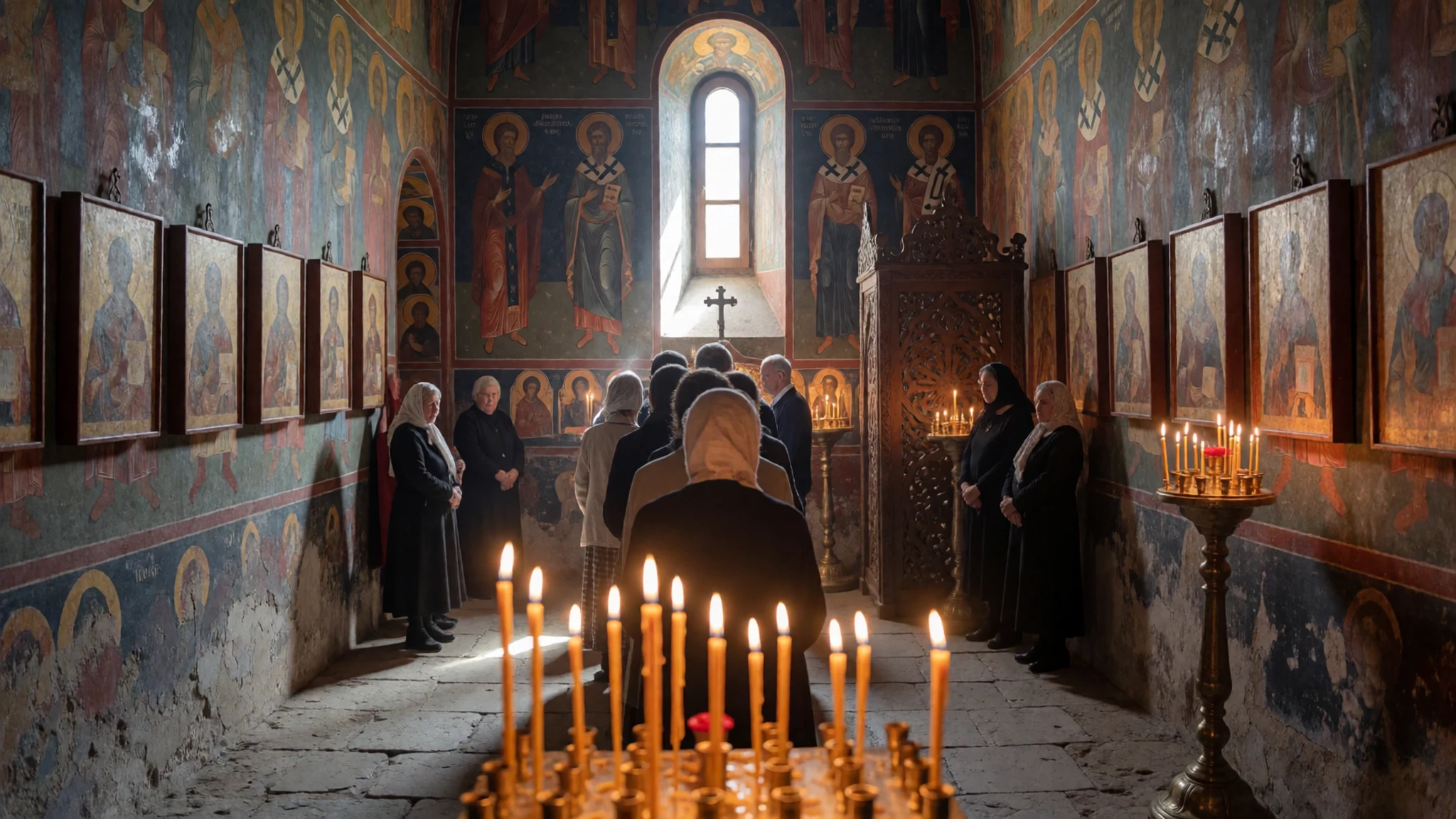
- Bell tower and spring — Bodbe grounds, below the main church
The bell tower rises among the trees at Bodbe Monastery, and a path runs downhill from the main buildings to a spring where pilgrims fill bottles and pray. The walk back up is steep enough to notice, especially in summer heat, so wear proper shoes and carry water. The slope also gives good views back to the walls.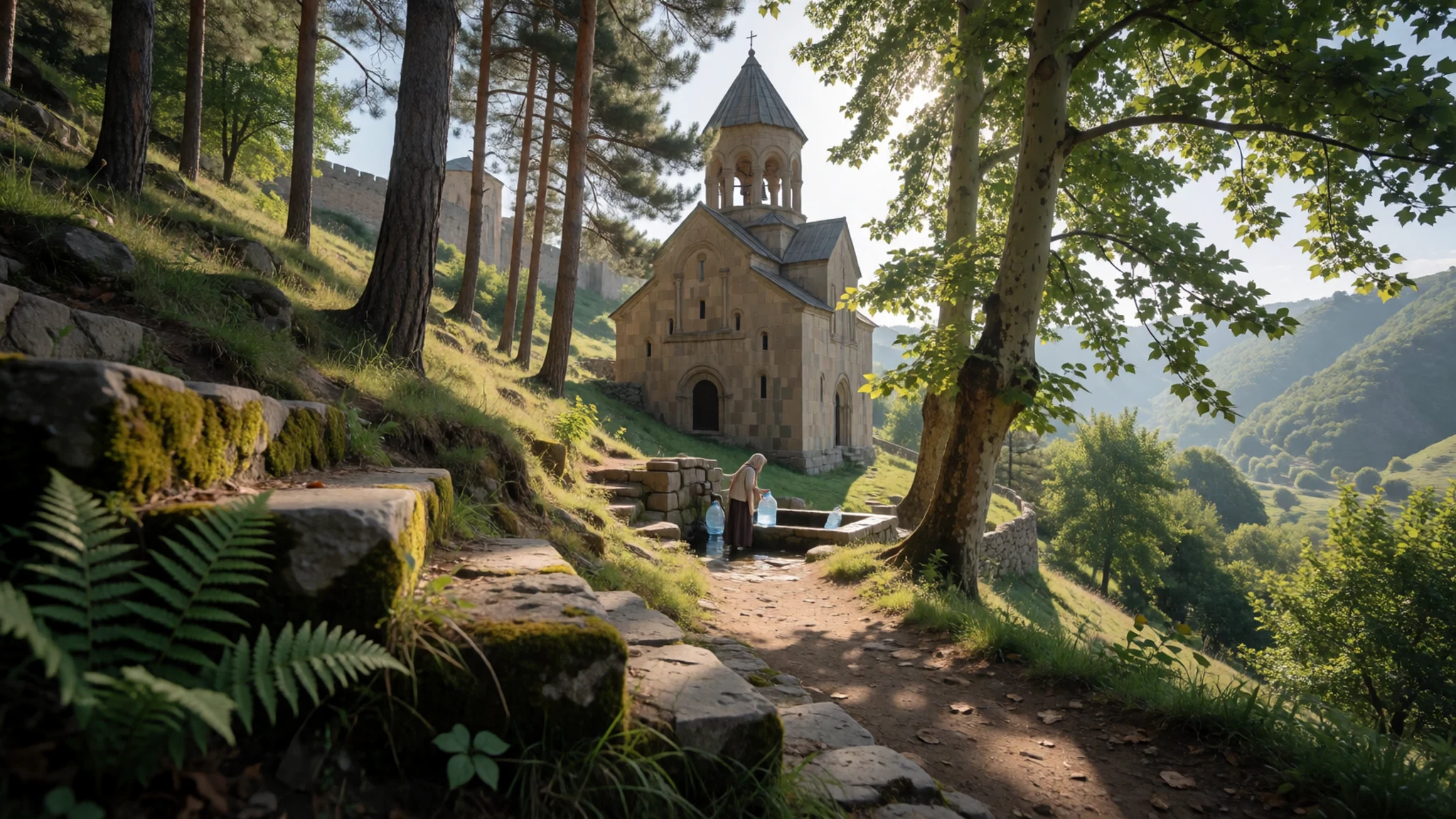
- Alaverdi Monastery — Alazani valley, Kakheti
Alaverdi is a cathedral complex in the Alazani valley, built in the 11th century on the order of King Kwirike III of Kakheti. The tall stone church dominates the surrounding fields and is still used for worship. It suits a half-day trip combined with a winery visit in the valley.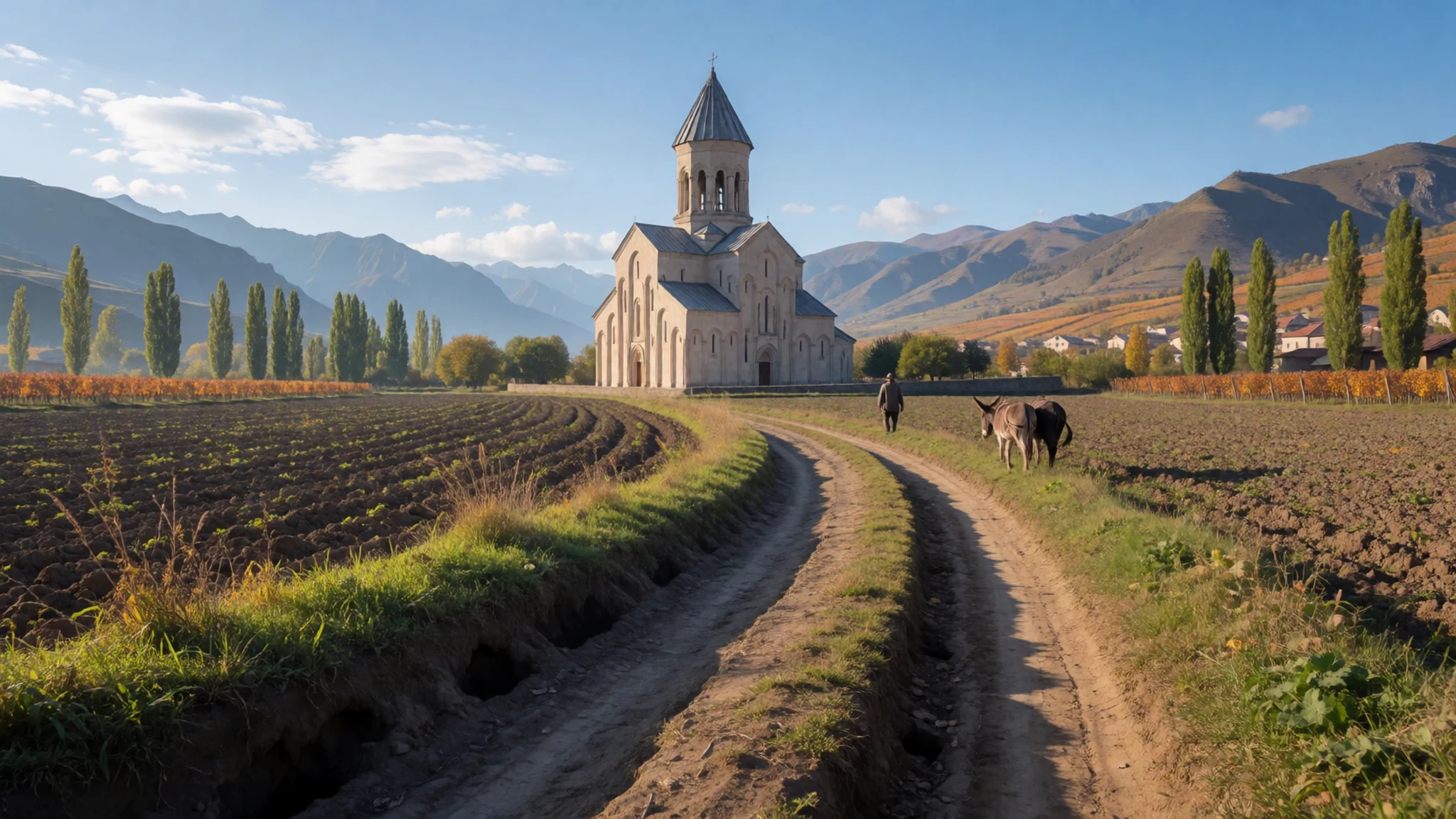
- Gremi Cathedral — Kakheti, north-west of Sighnaghi
Gremi is a fortified church complex on a large rock in front of the mountains, raised in 1565 by King Levan. The setting makes it feel closer to a small castle than a parish church, and the short climb rewards with wide views over the valley. It fits best into a longer Kakheti day.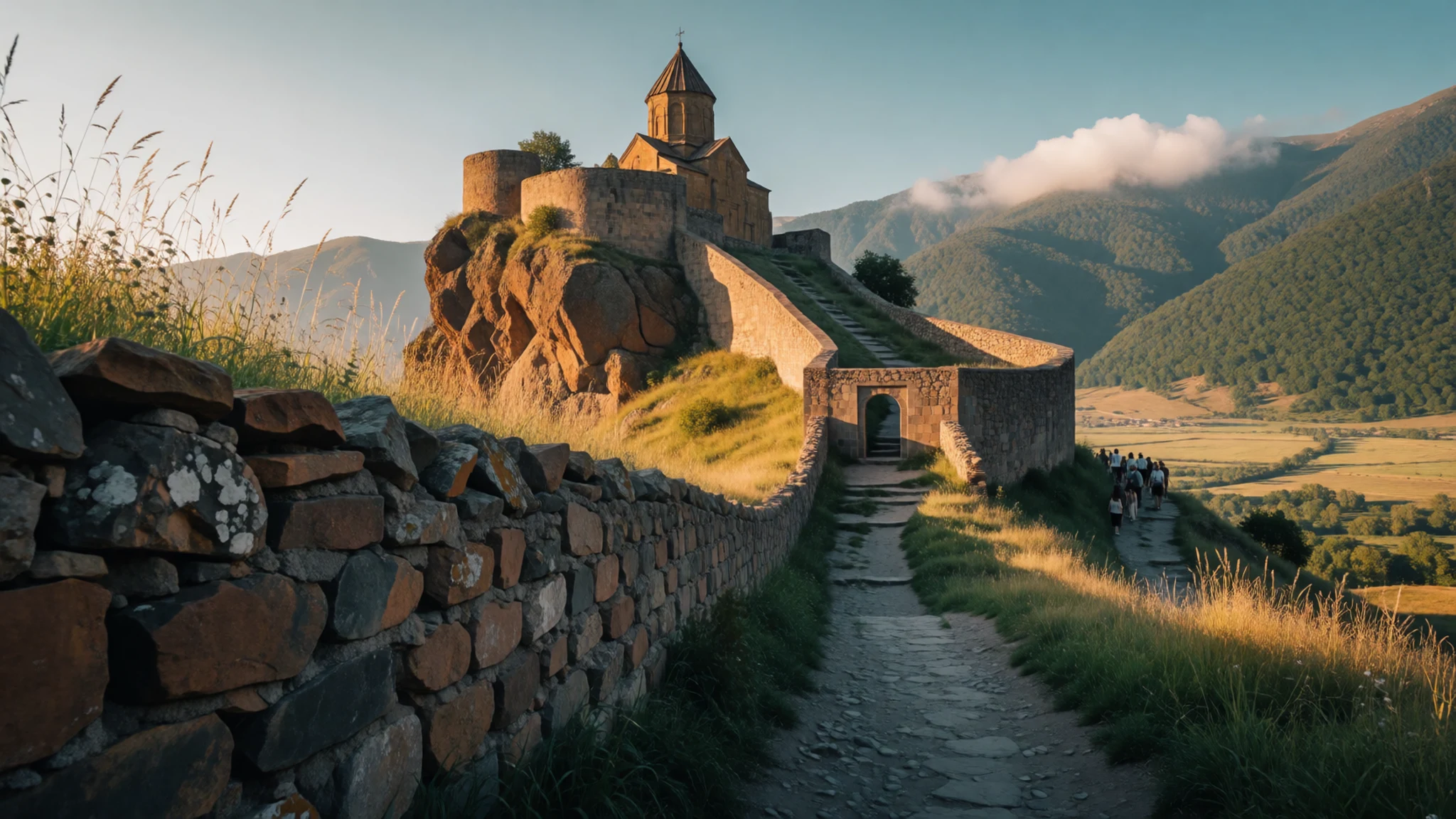
- Ikalto Monastery — Kakheti, Alazani valley
Ikalto dates to the later 6th century, when Zenon Iqaltoeli, a revered early Christian teacher, set up a centre of learning here. It now serves as a monastery, and Zenon is buried inside. The grounds recall its days as an academy and make a calm stop between larger sights.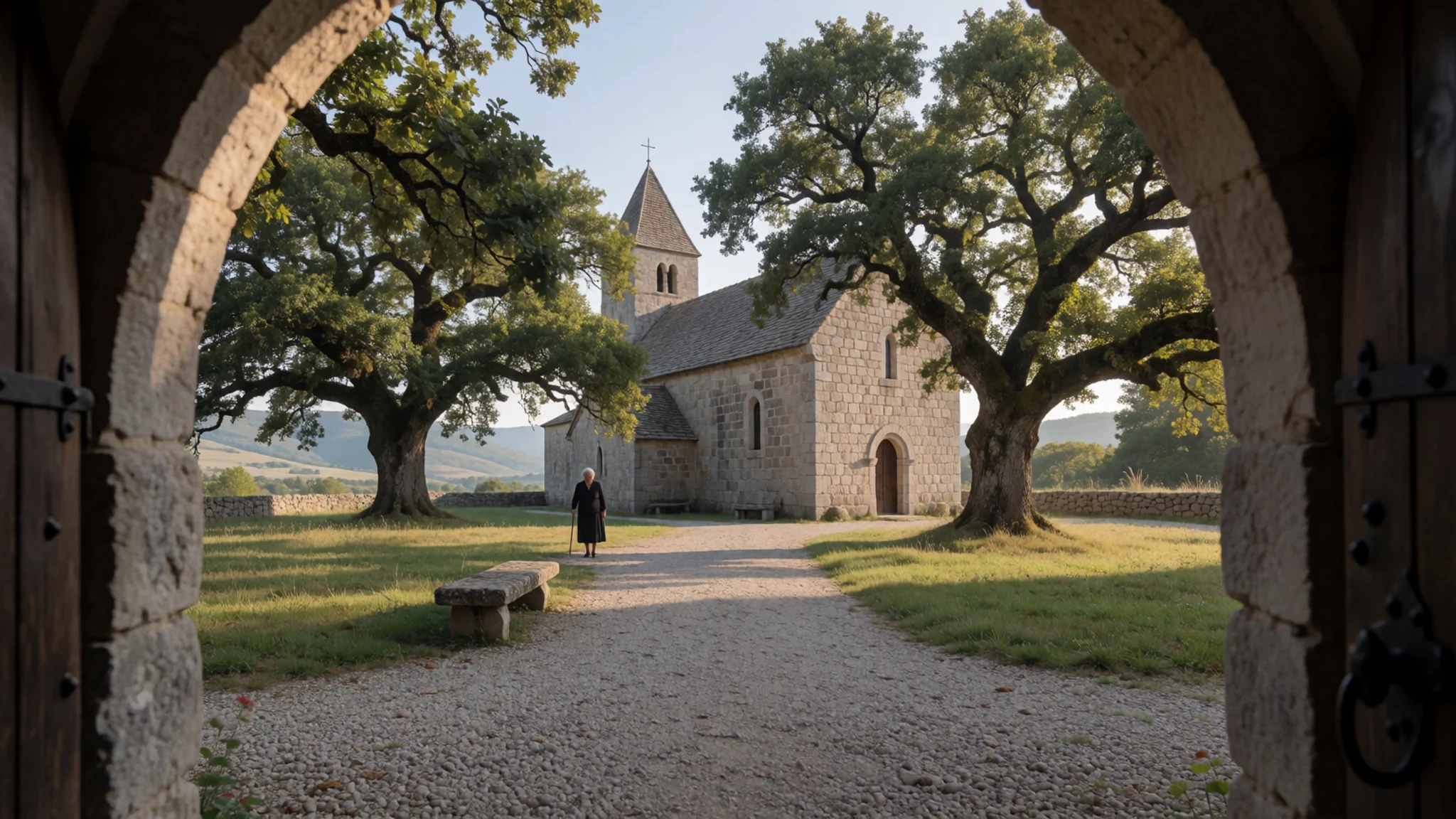
- David Gareja Monastery — Kakheti steppe, near the Azerbaijan border
David Gareja is a cave monastery from the 6th century, cut into a dry rocky hillside right beside the Azerbaijan border, with frescoes in the caves. The steppe has almost no shade, shops or wells, so carry plenty of water and sun protection, and watch for snakes. It is a long day trip, so start early.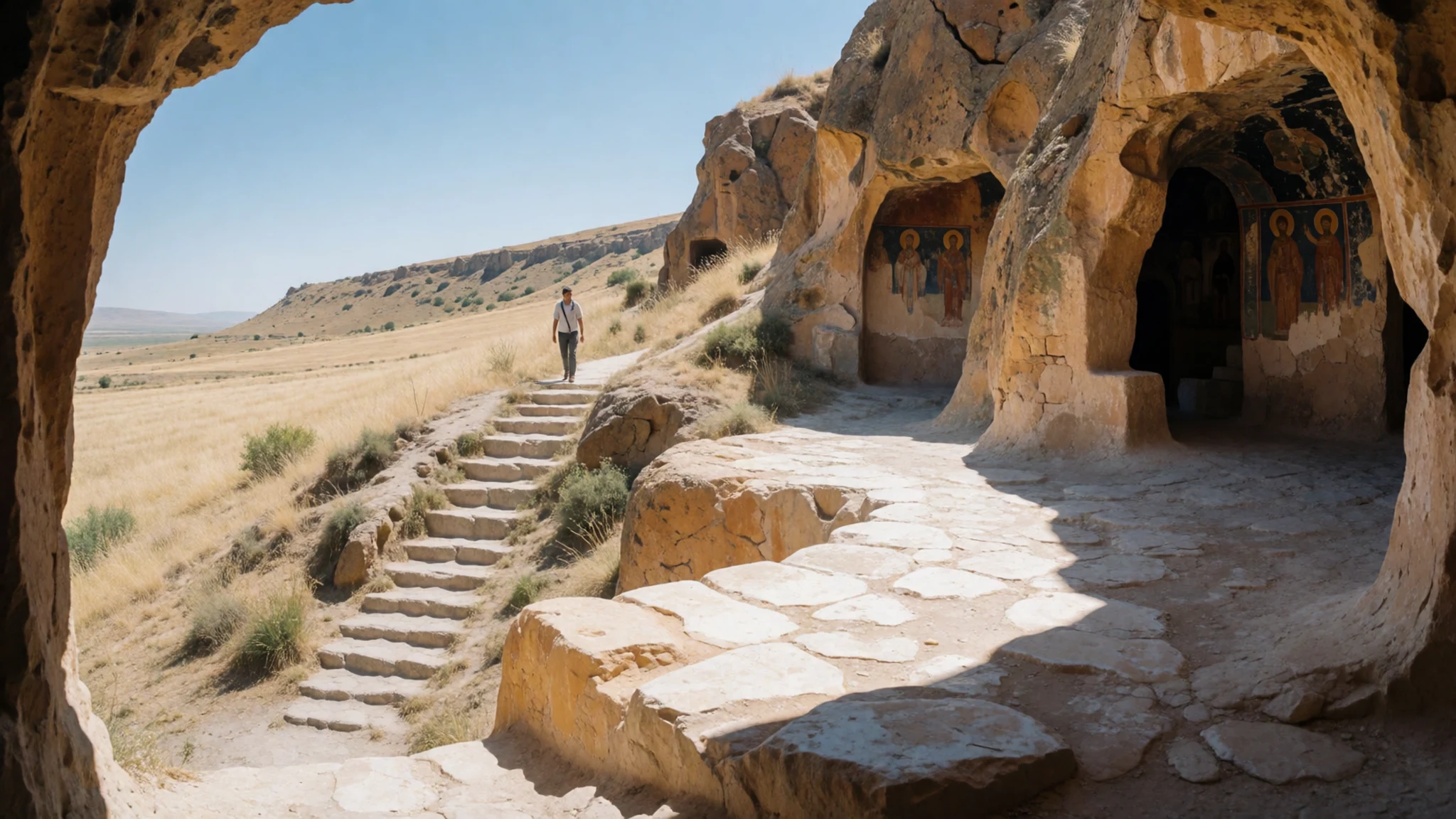
Culture
Bodbe Monastery sits where Georgian faith and Georgian identity meet. Christianity is central to how many Georgians tell their own history, and St Nino, the woman credited with converting the country, is honoured throughout the Georgian Orthodox Church. Tradition holds that she carried a cross of vine twigs bound with her hair, and the vine cross remains an emblem of the Georgian Church, a fitting link for a region famous for wine. At Bodbe, pilgrims light candles, kiss icons, cross themselves facing the altar and collect water from the spring, often in quiet family groups. The convent's nuns live a contemplative life, and the community has a long tradition of practical crafts, including a school of needlework and painting once run here. Feast days linked to St Nino bring larger crowds and singing, and Georgian liturgical chant is worth hearing if a service is under way. For visitors, the right register is that of a working place of worship rather than a monument: low voices, patient queues and no loud talk on the paths. Women should cover their heads and shoulders and wear a skirt below the knee before entering the church, and nobody should photograph worshippers or nuns without asking first.
What to wear
Bodbe Monastery is a place where clothing matters, so it helps to know both the Georgian wardrobe and the dress code. Traditional Georgian dress centres on the chokha, a long wool coat for men with cartridge holders sewn across the chest, worn with a nabadi felt cloak, soft boots and a felt or sheepskin cap. Women's dress historically meant a long fitted gown, often in silk or velvet with embroidery, topped with a light veil. These outfits now appear mostly at weddings, folk dance and choir performances, and national celebrations. Day to day, people in Sighnaghi wear ordinary modern clothes: jeans, shirts and jackets, with sensible shoes for the hill streets. At the convent the nuns wear plain dark habits with head coverings, and Georgian women visiting the church usually tie a scarf over their hair. Visitors should dress for a church as well as for the weather. Shoulders and knees should be covered for everyone, men should skip shorts, and women should bring a scarf and a long skirt, since some churches turn away trousers; check at the gate. Footwear should cope with cobbles, steps and the steep path to the spring. Add a sun hat in summer, layers and a rain jacket in spring and autumn, and a warm coat in winter.
What to eat
- Khinkali — Family eateries in Sighnaghi and along the Kakheti highway
Twisted dumplings filled with spiced meat and broth, eaten by hand: hold the knot, bite a small hole, drink the juices, then leave the knot on the plate. Order them at a family-run eatery in Sighnaghi or along the Kakheti highway.
- Mtsvadi — Grill houses and garden eateries around Sighnaghi
Chunks of pork or lamb skewered and grilled over embers, often vine cuttings in wine country, served with onions, pickles and bread. It is the standard order at a roadside grill or garden eatery, and it goes well with a glass of local red.
- Khashlama — Village eateries across Kakheti
Boiled meat, usually beef or lamb, cooked slowly with little more than salt and herbs. It is a plain, hearty Kakhetian dish, best after a morning of walking, and often comes with fresh herbs, tomatoes and bread on the side. - Shotis puri with cheese — Neighbourhood bakeries in Sighnaghi
A long, boat-shaped Georgian bread baked against the wall of a round clay oven, eaten warm with salty local cheese. Bakeries sell it straight from the oven, which makes it a simple breakfast before the climb to the monastery. - Kvevri wine — Family cellars and wineries across Kakheti
Wine fermented in buried clay vessels, a method tied to Kakheti and to the region's claim to be the cradle of wine. White grapes give amber, tannic wines. Taste it at family cellars and wineries in the valley, and ask ahead about tastings. - Churchkhela — Market stalls and roadside stands in Kakheti
Walnuts or hazelnuts strung on a thread, dipped repeatedly in thickened grape juice and dried into a chewy, candle-shaped sweet. It travels well, so it makes a useful snack for the road and an easy gift to take home.
Plan it
Best time. May–June and September–October. Spring and early autumn are mild for walking the hillside and nearby valleys, and autumn is grape-harvest season in Kakheti. July and August can be hot, and in winter snow can make the Gombori Pass road slow.
How long. 1–2
Getting there. Fly to Tbilisi, then take a bus or minibus towards Sighnaghi; several run each day, so check times locally. Bodbe Monastery is about 2 km from Sighnaghi town, reached by taxi or on foot along the road. Drivers should use the Gurjaani route (highways 5 and 42) in snow rather than the Gombori Pass.
Budget. low
Tips
- Go early or late in the day to avoid tour groups, especially in summer and on feast days
- Carry a headscarf and a long skirt or lightweight trousers so entry is never a problem
- Bring water and sturdy shoes for the steep path down to the spring
- Keep some cash for candles, small purchases and village stalls
- Check the official site, https://sighnaghitravel.com/sighnaghi/cultural-monuments/bodbe-monastery, for current visiting details
Etiquette
- Cover your shoulders and knees, and women should cover their heads, before entering the church
- Keep your voice low and do not photograph worshippers or nuns without asking
- Wait your turn at the shrine and follow the lead of pilgrims around you
Nearby
Sources
- Wikidata Q642366 (CC0)
- Wikipedia: Bodbe Monastery (rev 1367764896) (CC BY-SA 4.0)
- Wikivoyage: Kakheti (rev 5384285) (CC BY-SA 4.0)
- Bodbe Monastery near Sighnaghi, Georgia — Kober (Public domain)
- Bodbe Monastery, Sighnaghi — Supanut Arunoprayote (CC BY 4.0)
- Monastery of St. Nino at Bodbe 2025 — Pagarizantali (CC0 1.0)
- Pilgrimage in Bodbe Monastery, Georgia — Kober (Public domain)
- Bell tower attached to springs — rugbyxm (CC BY 2.5)
- Bodbe (1) — Peter (CC BY-SA 2.0)
- Bodbe - Signaghi — Roberto Strauss (CC BY-SA 2.0)
- Bodbe monastery 4-27-07 — khalampre (CC BY-SA 2.0)


