Gelati Monastery
Gelati Monastery, Georgia
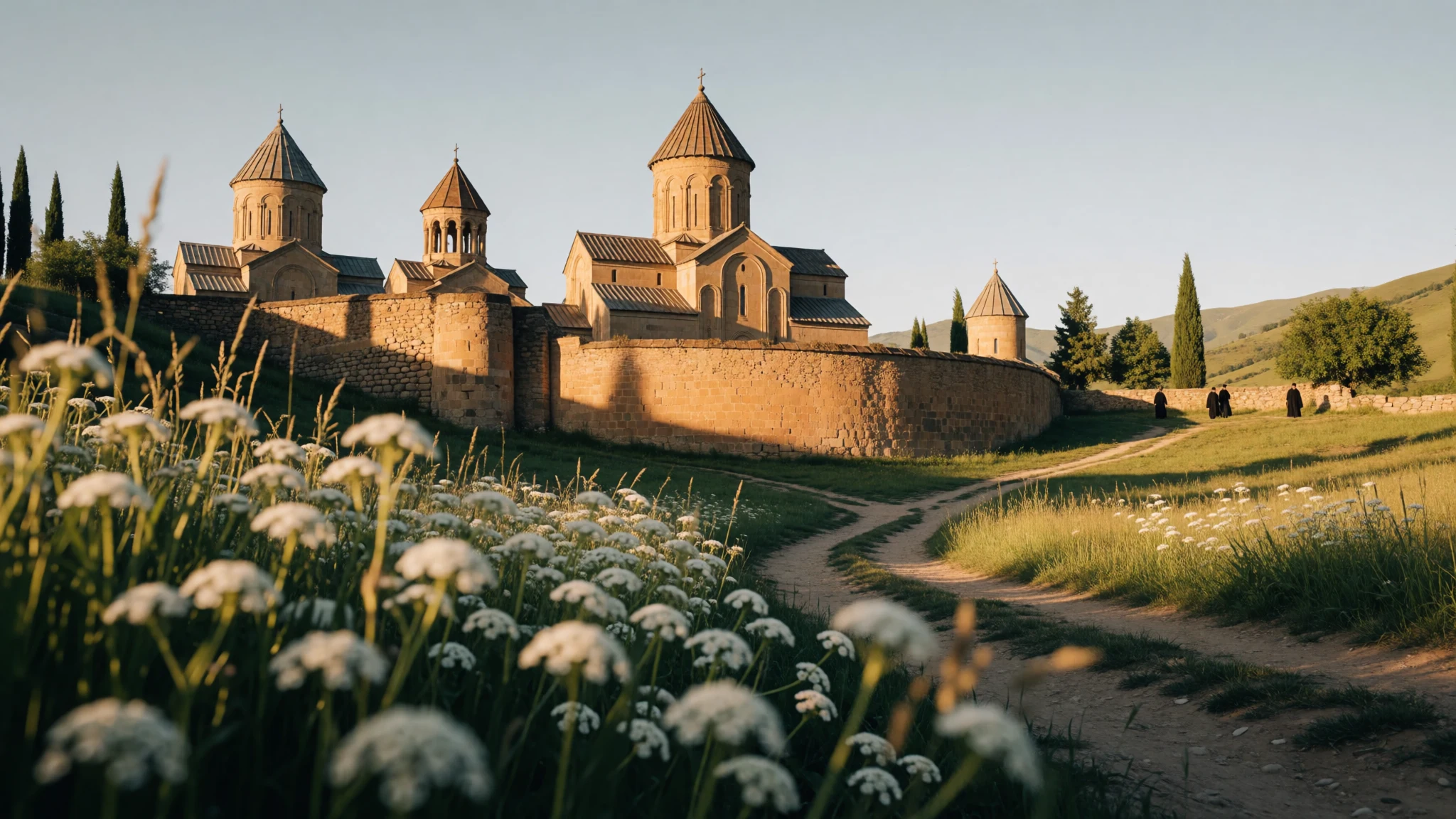
Gelati Monastery is where Georgia’s medieval faith and learning feel tangible—mosaics, murals, and a UNESCO-listed setting outside Kutaisi.
The place
Gelati Monastery (გელათის მონასტერი) sits near Kutaisi in western Georgia’s Imereti region, on the kind of hillside approach where the air changes and the noise drops. The complex is essentially two things at once: a working Orthodox spiritual site and a monument to medieval Georgian culture. The buildings and interiors carry rich visual language—mosaics and painted scenes that draw the eye from bright gold-tones to quieter details along the walls.
What makes Gelati feel different from many “big name” monasteries is the sense of purpose behind the place. It was founded in 1106 as a monastic and educational centre, so the church spaces and chapels aren’t just designed for worship; they also reflect the scholarly ambitions of the period. In practical terms, that means the visit isn’t only about one church façade or one postcard angle. You can wander through the different spaces, look closely at the decoration, and keep noticing how art and architecture work together to tell a story.
Crowds are usually manageable compared with the most famous Georgian highlights, but weekends and sunny afternoons can still bring tour groups. Go in the cooler months—spring or autumn for comfortable strolling—and plan time for slow looking: the mosaics and mural surfaces reward patience more than speed.
Its story
Gelati Monastery was established in 1106 under King David IV of Georgia, who shaped the complex as both a religious centre and a place for learning. That combination is the thread running through how Gelati is described in historical accounts: monasteries were already important in Orthodox life, but Gelati also aimed to gather minds—teachers, thinkers, and scholars—within a spiritual setting. It’s a rare monastery where you can sense an “academy” alongside the church.
The main church inside Gelati is dedicated to the Virgin Mary, and the interior decoration reflects the medieval devotion that filled these walls. Visitors often come for the imagery—mosaics in the sanctuary area and murals distributed through the church spaces—because the work looks cared for and deliberately placed. Standing back from a mosaic, it’s easier to understand why it’s such a defining feature of Gelati’s reputation.
Gelati also holds historic connections beyond architecture. The monastery is linked with King David IV’s burial, so even the moments of stillness feel anchored to a particular ruler and era. Smaller chapels within the complex add variety, making the visit feel layered rather than repetitive. Over centuries, the place has remained a symbol of the Georgian Golden Age—religious art, learning, and royal patronage in one hillside compound—so the story of Gelati is less “single event” and more an ongoing cultural footprint.
What to see
- Church of the Blessed Virgin
Gelati’s main church is the centre of the monastery visit, with interior decoration designed for close viewing. Focus on the sanctuary area and the painted walls—this is where the monastery’s medieval identity comes through most clearly. Take a steady rhythm: step back for the overall composition, then move in to read the figures.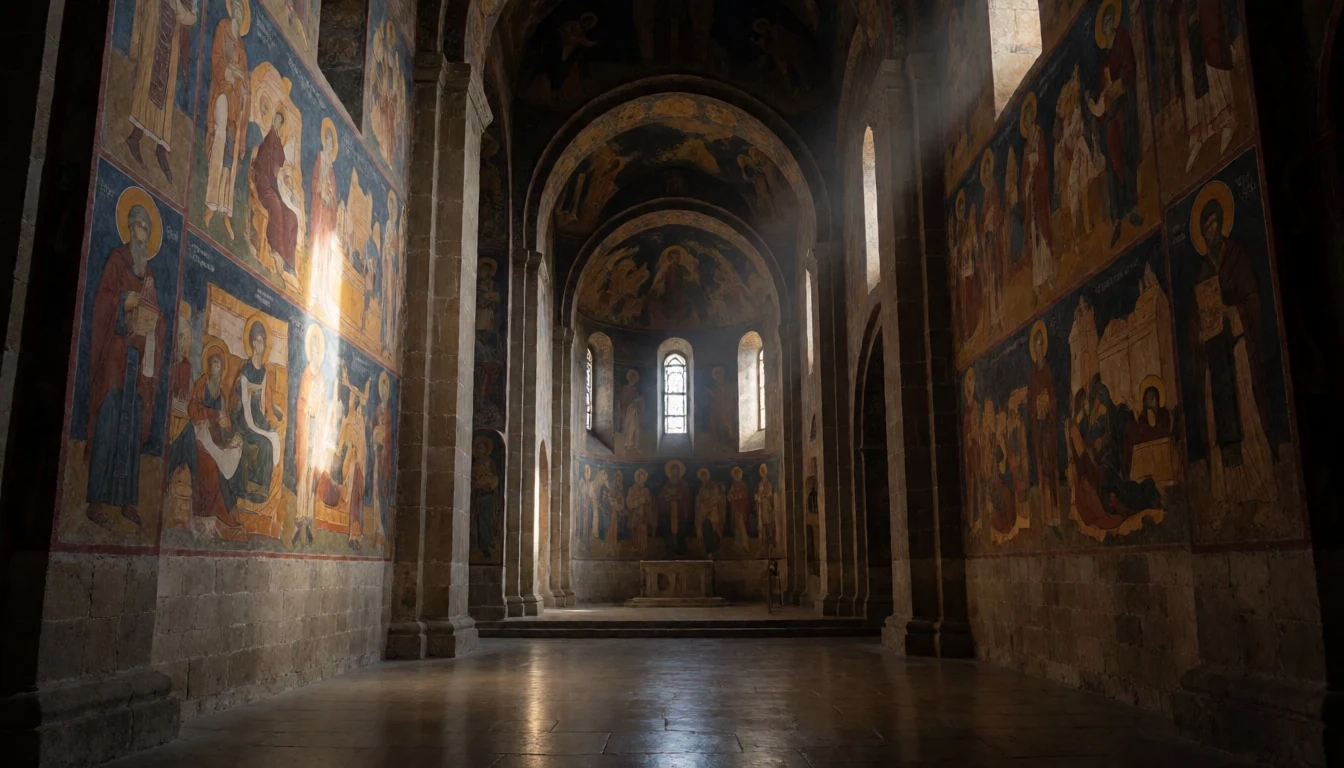
- Sanctuary apse mosaics & murals
The sanctuary contains mosaics from the medieval period alongside murals that preserve older and later layers of decoration. Even when lighting is a bit uneven, the surfaces catch the eye—goldy tones, vivid figures, and structured scenes that feel planned rather than accidental.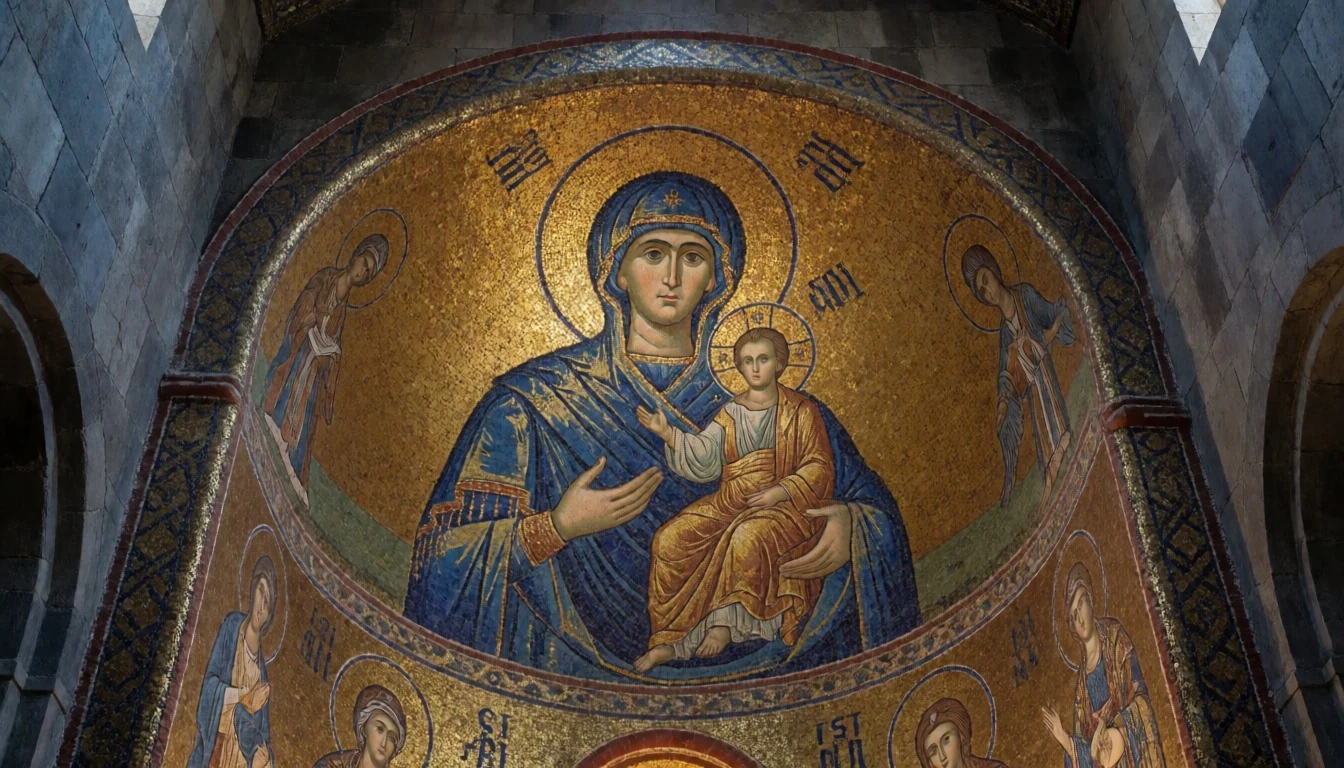
- Interior frescoes
Gelati’s murals spread the storytelling across the church interior, so visitors can keep discovering new panels as they reposition. Frescoes look best when you slow down: give yourself time to notice how figures are framed by architectural lines and how the paint survives in different patches.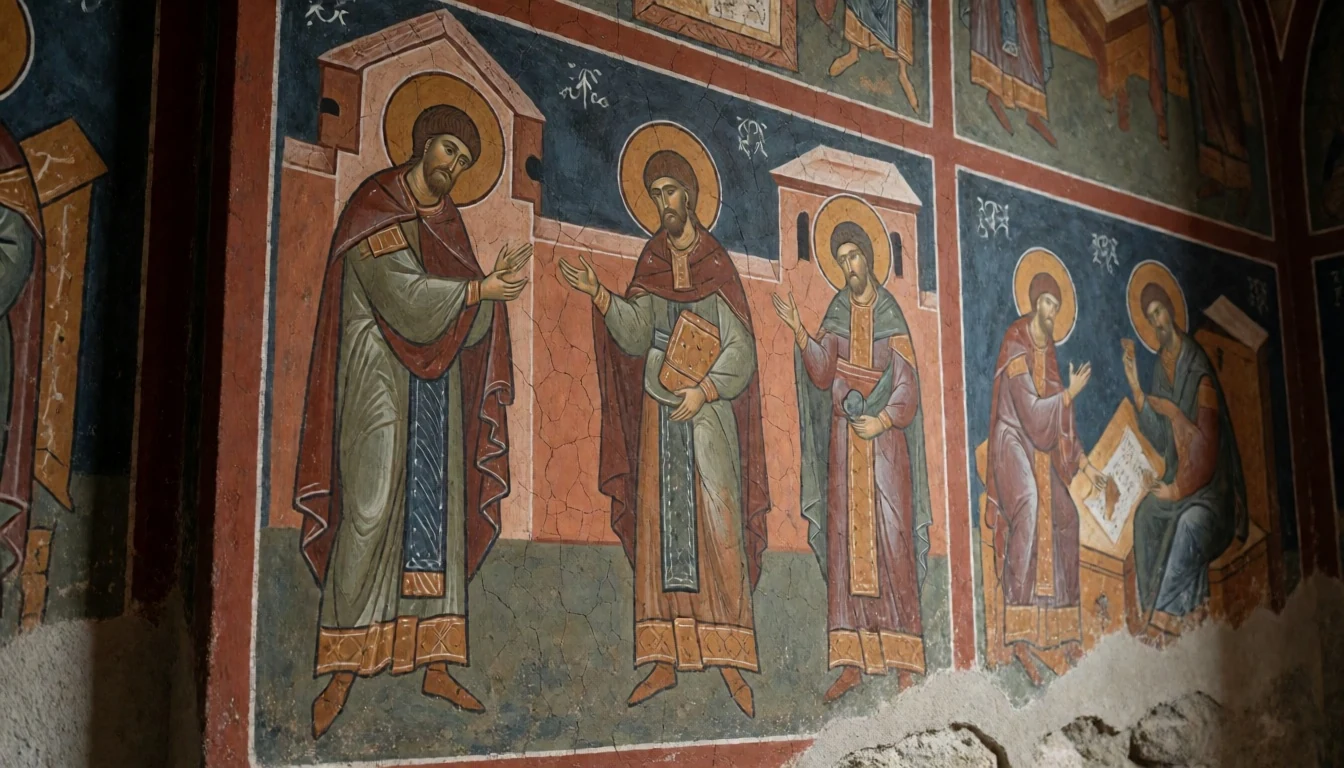
- Mosaic-focused viewpoints
If you’re chasing the best “reading” of the art, don’t stay locked in one spot. Walk around the main areas to catch different angles of the sanctuary and church walls. It’s a straightforward trick that turns the same interior into a new experience every few minutes.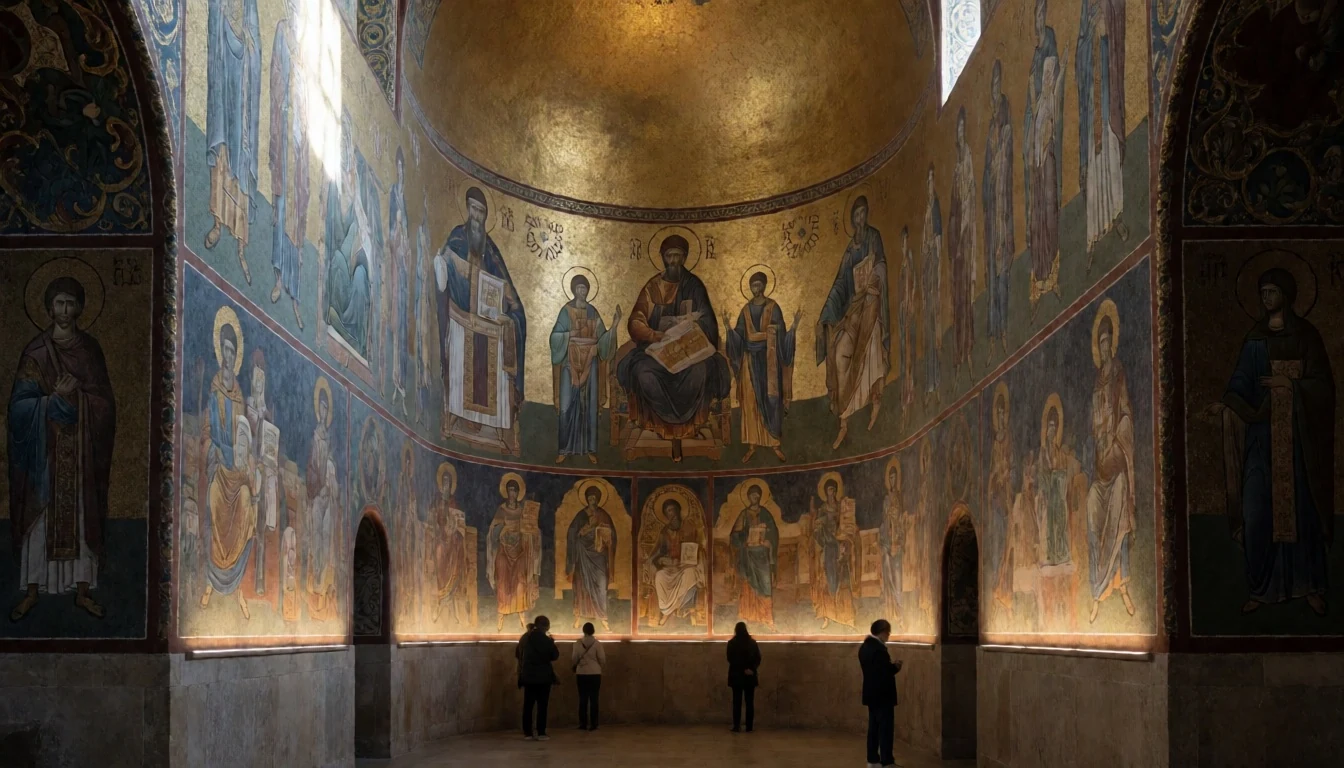
Culture
Gelati Monastery is a UNESCO World Heritage site and, more importantly, an Orthodox religious place. That combination changes the vibe: even when visitors are wandering with cameras, the space still expects quiet, respect and a slower pace. Dress tends to be fairly modest inside the church spaces—think shoulders covered and clothing that doesn’t look like it’s headed to the beach.
Photography can be a little unpredictable in monasteries, depending on whether services are happening and how full the area is with guided groups. When the interior feels crowded, it’s better to wait rather than squeeze past people who are already trying to see and pray. If a guide is speaking, let the moment play out—monasteries aren’t museums with a single “look here” script.
The art itself invites careful looking, so avoid blocking doorways or standing in passages where others need to pass. Remember that these mosaics and murals are not just heritage objects; they are part of an active sacred environment where visitors share space with worshippers.
Visitor etiquette: keep your voice low, cover shoulders in the church areas, and avoid photographing people in prayer.
What to wear
In Georgia, visitors usually dress more conservatively for church interiors than for city sightseeing, and Gelati Monastery is no exception. Traditional dress in Imereti and wider Georgia historically includes elements like long, embroidered garments and distinctive fabric patterns, but most visitors today won’t be wearing it. What matters for a visitor is comfort plus modesty.
For what people actually wear now, expect everyday coats, jeans, trainers and light layers—especially in spring and autumn when the weather is unsettled. In church areas, modest clothing tends to be the norm: clothing that covers shoulders and reaches below the knee helps everyone feel comfortable.
For visiting Gelati, bring footwear with grip. The approach and internal paths can be uneven, and it’s easy to spend longer standing still than planned when you’re studying mosaics and murals. A light scarf is useful for shoulder coverage if the weather turns cool. In warmer months, breathable layers work best; in cooler months, the key is still coverage rather than heavy bulky clothing.
Bottom line: dress for a religious site and for hillside walking—modest, comfortable, and with shoes you can trust on uneven ground.
What to eat
- Georgian tea & small bites — Tea House Foe-Foe, near Kutaisi
A simple way to recharge near Kutaisi is a tea house stop for speciality teas alongside light Georgian or European-style dishes. It’s easy to do between monastery viewpoints without committing to a long sit-down meal.
- Khinkali-focused Georgian meals — El Paso, Kutaisi
Khinkali is a signature Georgian comfort food, typically served hot with a filling that’s best eaten slowly and carefully. Several Kutaisi spots specialise in this style, so Gelati-day plans often pair well with a late lunch or early dinner.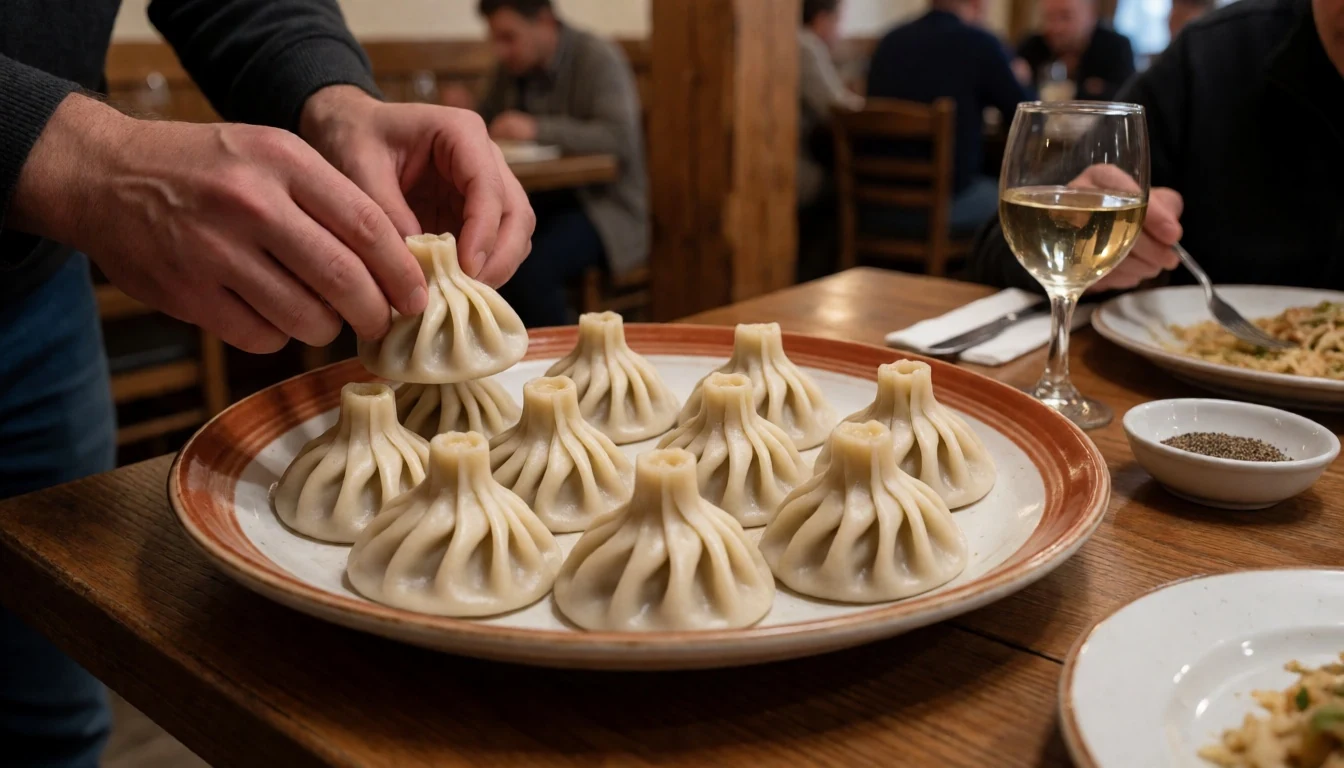
- Kebabery lunch with beer or soft drinks — Bikentia's Kebabery, Kutaisi
For an uncomplicated meal, look for a kebabery concept where one main meal pairs with beer or a soft drink. The idea is fast, filling and straightforward—good if the monastery visit runs longer than expected. - Spiced shawarma — best shwarma, Kutaisi
If you want something portable and a bit more casual, shawarma is a reliable option, often served spicy and eaten on the go. It suits sightseeing days when appetite is there but time is short. - Georgian restaurant breakfast or dinner — Fleur, Kutaisi
For a more proper sit-down meal, choose a Georgian restaurant that serves across the day. It’s a nice way to slow down after walking—especially if staff speak English and can help navigate dishes.
Plan it
Best time. March–April for comfortable spring strolling and October–November for easier walking; summer heat can be tiring, and rainy spells are less fun for mosaics-and-mud days.
How long. 2–3
Getting there. Fly into Kutaisi (then use the airport-to-Kutaisi shuttle or local marshrutka options). From Kutaisi, reach Gelati by local transport or a pre-arranged ride; the last leg is short but can take time depending on where you start in the city.
Budget. mid
Tips
- Aim for a morning visit to enjoy calmer lighting and fewer tour-group queues
- Build in time to look from multiple angles inside the main church areas
- Keep a scarf or light layer for church entry even on warm days
- Carry some cash for small purchases around Kutaisi, then top up before heading out
- Check service times with staff or a local guide if you want to avoid the busiest moments inside
Etiquette
- Dress modestly for church interiors and keep shoulders covered
- Move aside when people are praying or trying to see the decoration
- Ask before photographing people, especially if there’s a service happening
Nearby
Sources
- Wikidata Q679979 (CC0)
- Wikipedia (Gelati Monastery) (CC BY-SA 4.0)
- Wikivoyage (Kutaisi) (CC BY-SA 4.0)
- Photo photos/01-gelati-monastery-1.jpg (CC BY 3.0)
- Photo photos/02-sanctuary-apse-mosaics-12th-century-and-murals-16th-century-.jpg (CC BY 2.5)
- Photo photos/04-gelati-fresco-04.jpg (Public domain)
- Photo photos/06-gelati-monastery-cathedral-of-the-virgin-35923031712.jpg (CC BY 2.5)


