Batumi
Batumi, Georgia
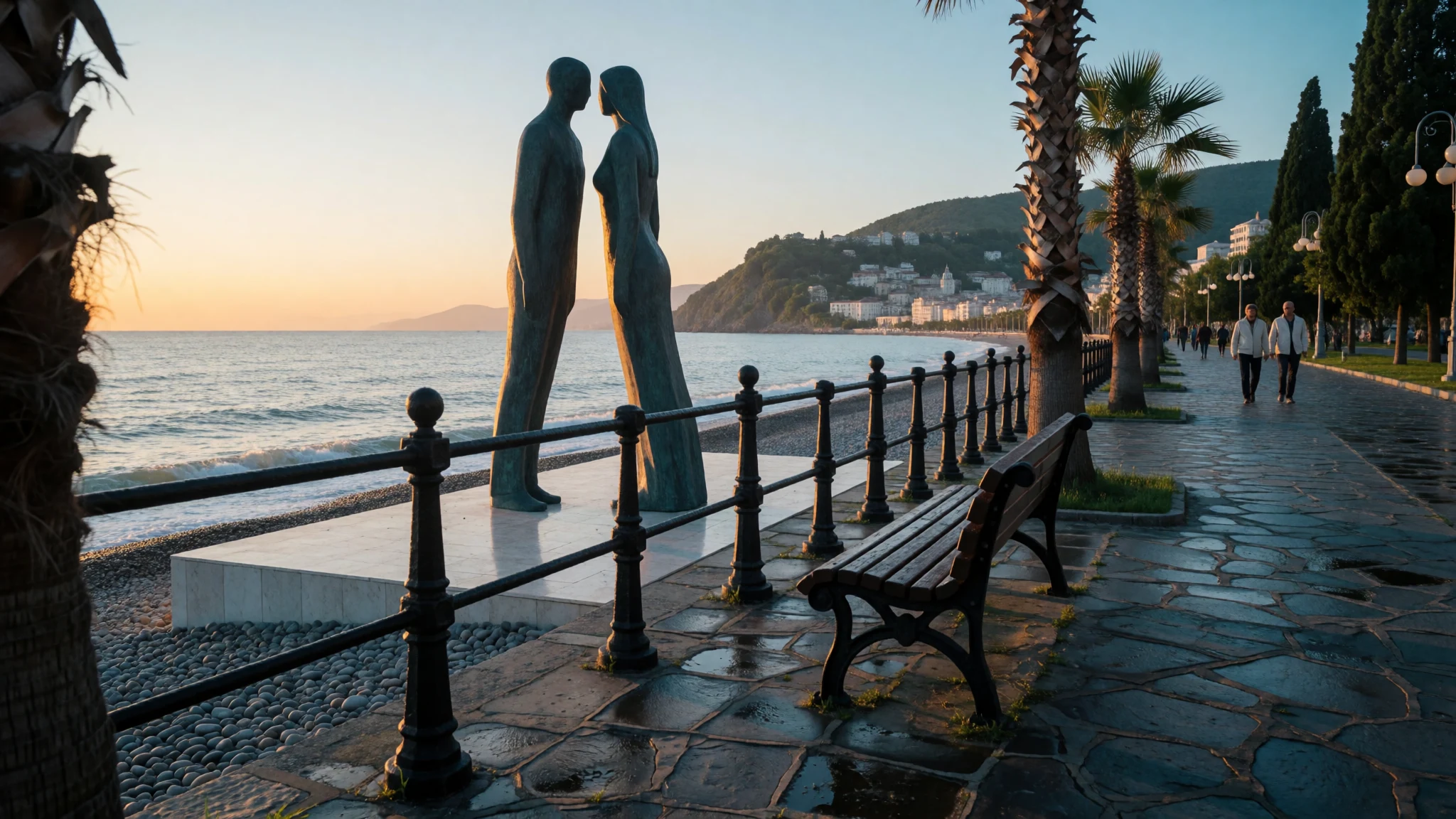
Batumi is a subtropical Black Sea port where old-town streets, glass towers, a palm-lined seafront and Georgian feasting sit within a short walk.
The place
Batumi is Georgia's second city and the capital of the Autonomous Republic of Adjara, strung along the Black Sea coast in the far south-west of the country. The Turkish border lies about 20 kilometres to the south, and the Caucasus foothills rise directly behind the town, giving it a green, steamy backdrop. The population is about 236,000, and the seafront sits only 3 metres above sea level.
The climate is humid subtropical. Moist air off the sea meets the hills and falls as rain, which makes Batumi the wettest city in Georgia and in the whole Caucasus region, with showers likely in most months. The annual average temperature is about 14 °C, and January, the coldest month, averages about 7 °C, so winters are damp and mild rather than harsh.
The economy rests on tourism and gambling, which has earned the nickname 'the Las Vegas of the Black Sea', alongside a working seaport, shipbuilding, food processing and light manufacturing. Since 2010 high-rise towers have multiplied along the coast, some playful and some merely tall, while nineteenth-century buildings in the Old Town have been restored.
The result is a city of layers: a long seafront promenade facing the sea, a compact old centre of cafés and churches, and a newer band of glass behind. Summer brings crowds of holidaymakers from across the region, with noise, queues and busy nights. Out of season Batumi is quieter, cheaper and often grey. It joined the UNESCO Global Network of Learning Cities in 2022.
Its story
Batumi stands on the site of a Greek colonial settlement in Colchis, known as Bathus or Bathys, a name that means 'deep harbour'. That natural anchorage explains much of what followed. The Romans fortified the port in Hadrian's reign, then turned their attention to Petra, a new fortress from Justinian's time, and the older harbour faded. Arab forces held the area only briefly. The coast belonged to the kingdom of Lazica until 780, when it passed to the Kingdom of Abkhazia through a dynastic union, and that kingdom then led the unification of the Georgian monarchy. From 1010 a viceroy, the eristavi, governed Batumi on behalf of the Georgian king.
Later centuries brought many owners. The Kingdom of Imereti held the coast from 1455, the Ottoman Empire took it in 1703 and ruled until 1878, and then the Russian Empire absorbed the port. A short British administration followed the First World War, from 1918 to 1920, before the Democratic Republic of Georgia and then, from 1921, the Soviet Union, with Adjara as an autonomous republic inside Soviet Georgia. After 1991 Adjara was effectively independent while still formally part of Georgia, until 2004, when Tbilisi's authority was restored. Each ruler left something: the harbour, churches of several faiths, a clock tower, and a layered memory that now sits behind the glass towers.
What to see
- Ali and Nino sculpture — Seafront, near the Ferris wheel
In Batumi, Tamara Kvesitadze's two standing figures on the seashore, installed in 2010, illustrate the novel Ali and Nino. Each day they glide toward each other and part again, a nod to the lovers, an Azerbaijani Muslim and a Georgian princess, separated by war. It stands near the Ferris wheel, so expect crowds at sunset; early morning is calmer.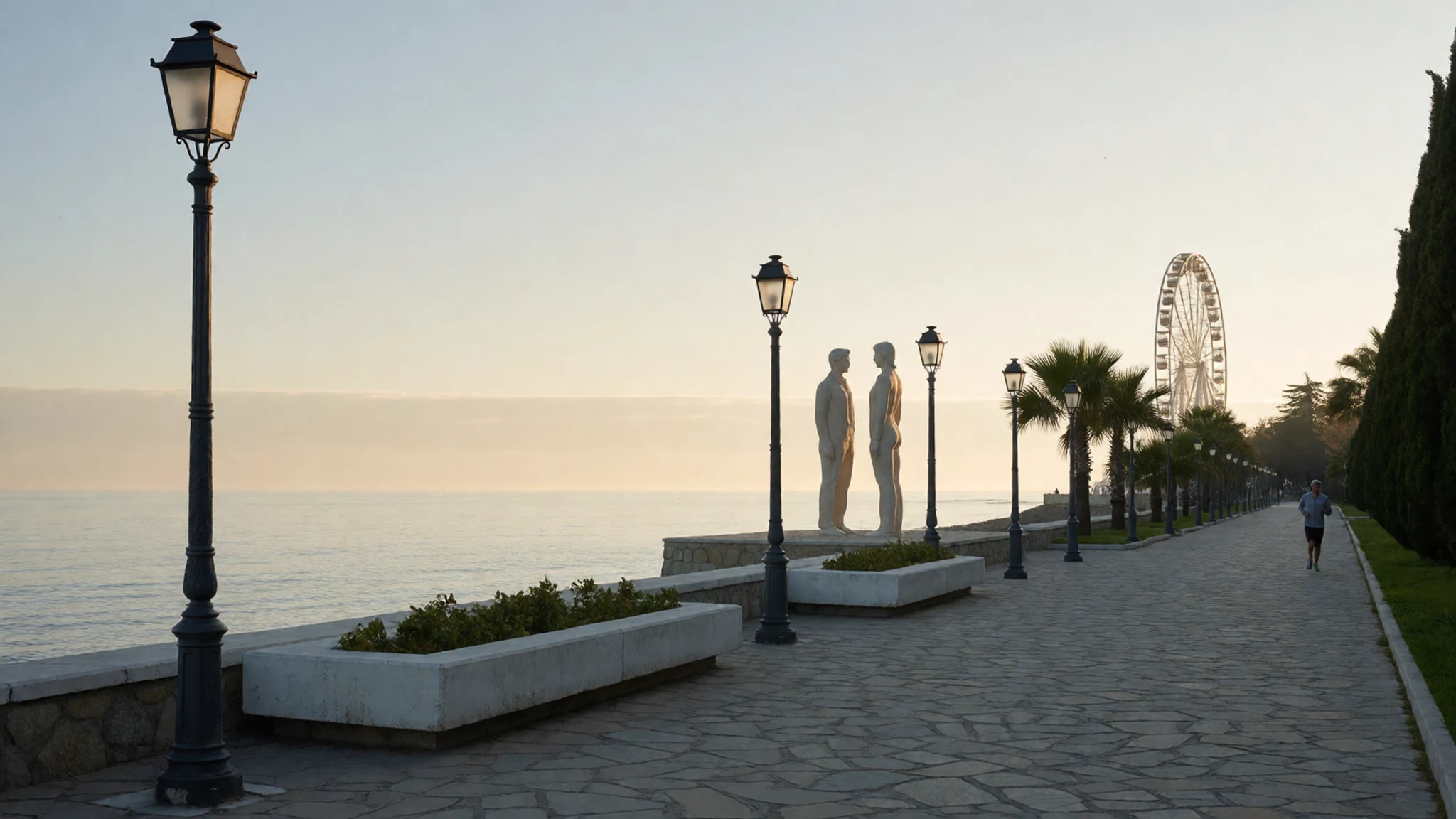
- Armenian Cathedral of Christ the Savior — Old Town
A large church with a bell tower, built in the late nineteenth century in the heart of the Old Town and set diagonally to the street grid, which makes it easy to spot. Batumi's other faiths are also represented in the city: a Georgian Orthodox cathedral, a Catholic church, an old mosque and a synagogue.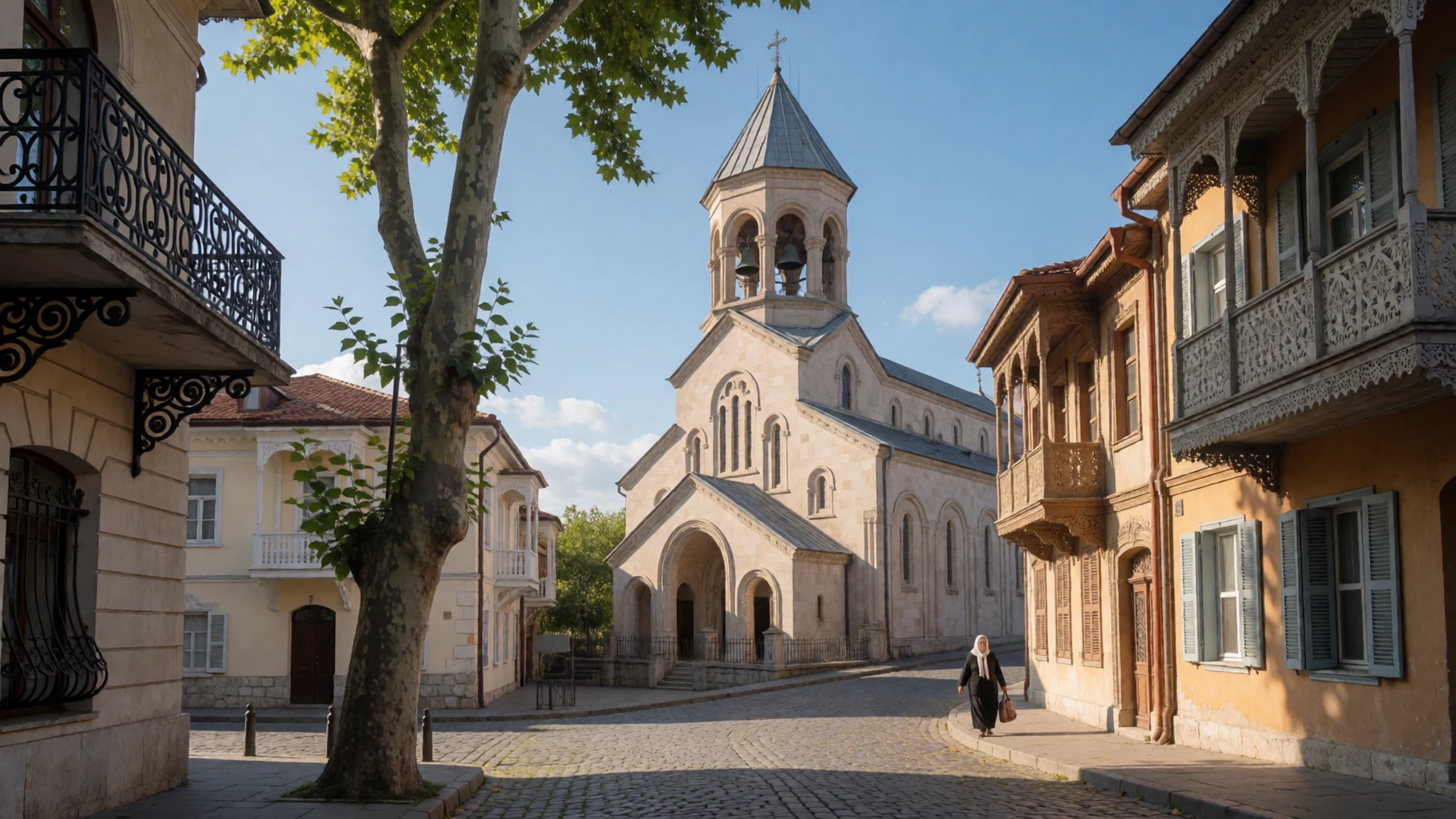
- Batumi Botanical Garden — Cliff north of the city
Batumi Botanical Garden occupies a high cliff above the Black Sea, north of the centre, and is greener and cooler than the city below. It is a quiet place for a long walk, and the view back over the bay and skyline is a good vantage for photographs. Allow half a day, and check the opening arrangements before travelling.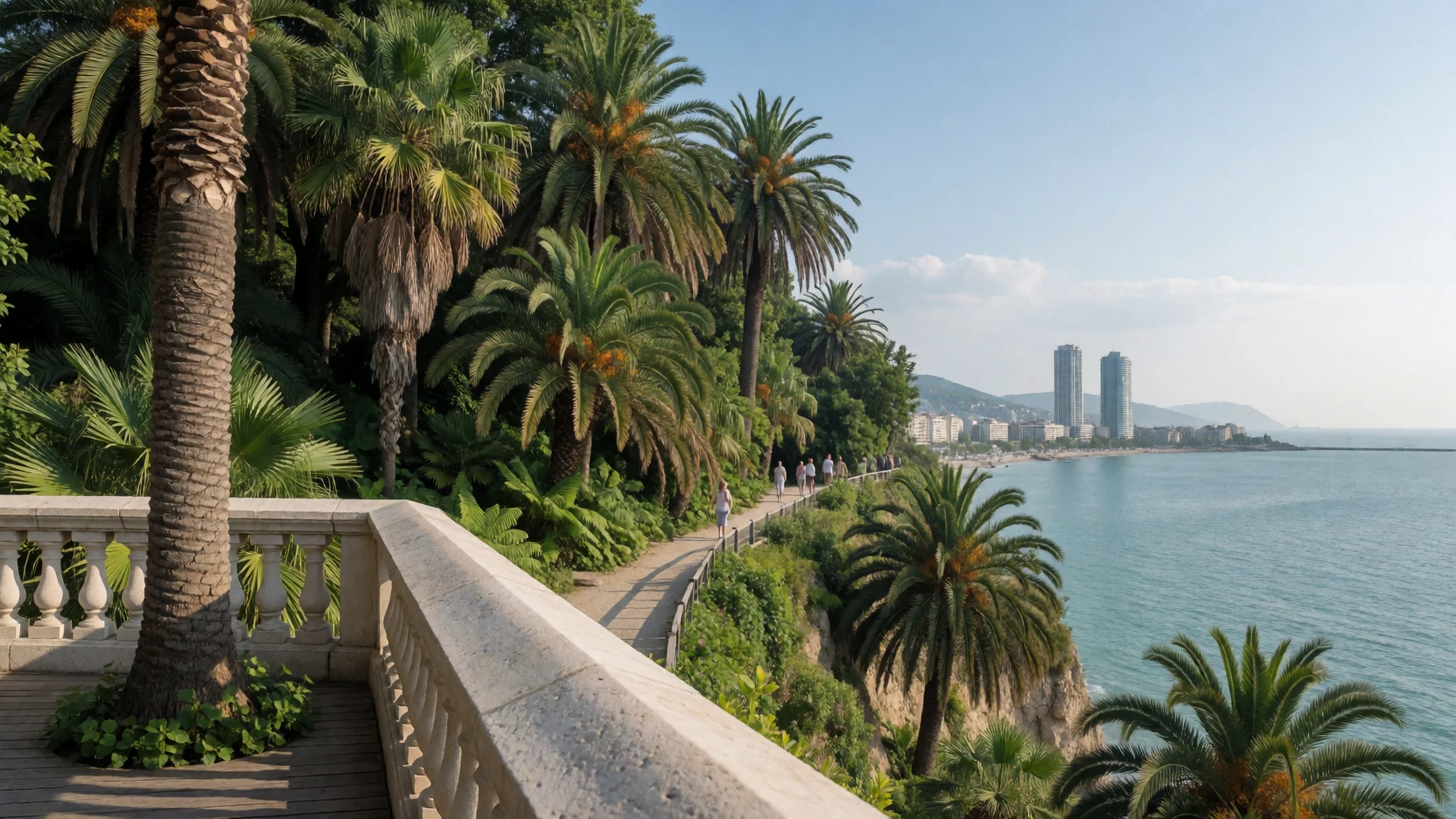
- Archaeological Museum — Central Batumi
Batumi's Archaeological Museum is small, but visitors report it is better than its size suggests, with helpful staff and information in Georgian, Russian and English. It is a useful way to connect the Greek colony of Bathys, the Roman port and later rulers to the modern seafront. It is indoors, so it suits a wet day.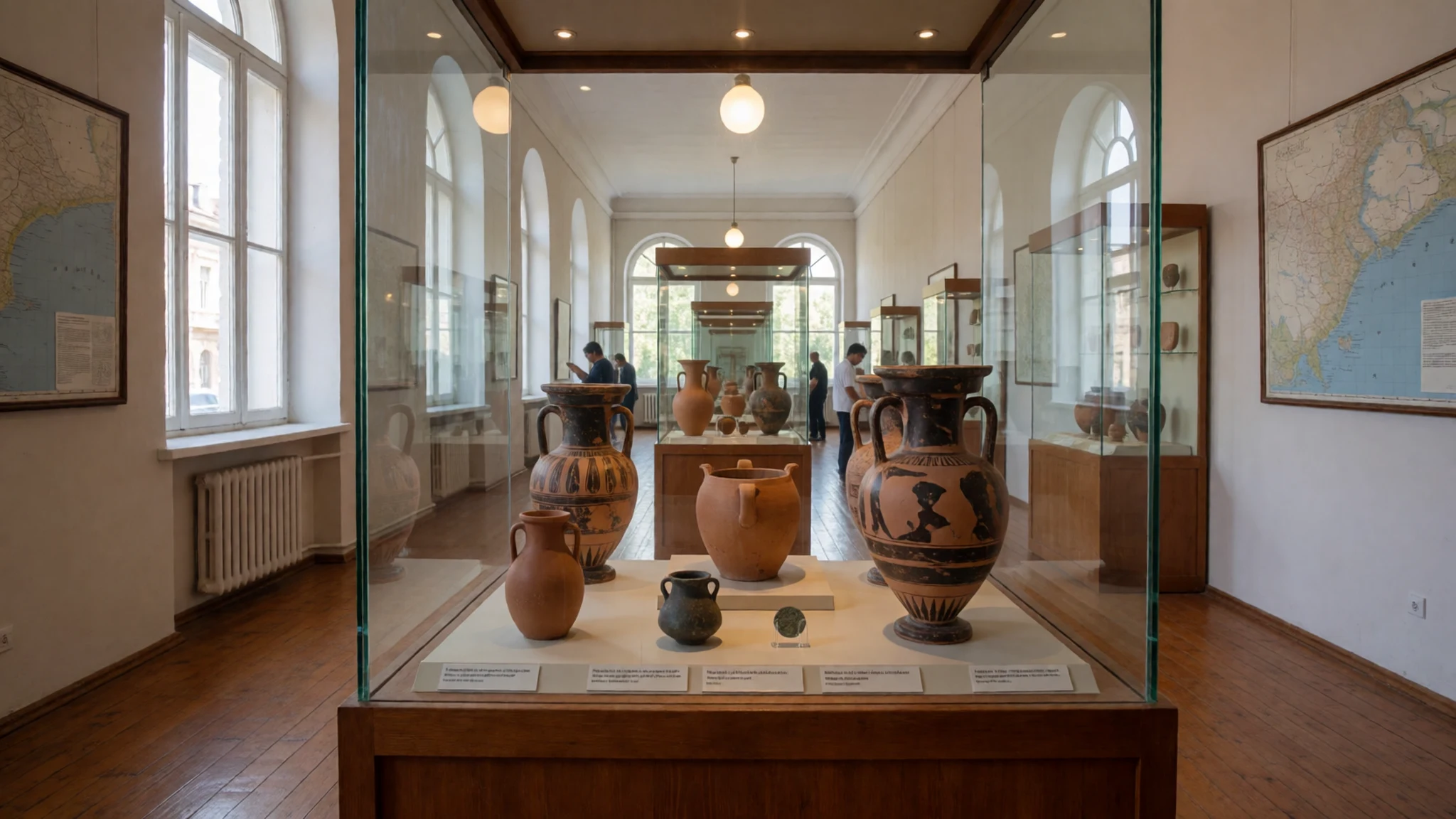
- Medea statue — Central Batumi
The Medea statue in Batumi shows the Colchian princess holding the Golden Fleece, a reminder that this coast was Colchis in Greek myth. It stands in the middle of the city, close to the Old Town, and makes a short photo stop rather than a destination. Pair it with a walk to the nearby churches.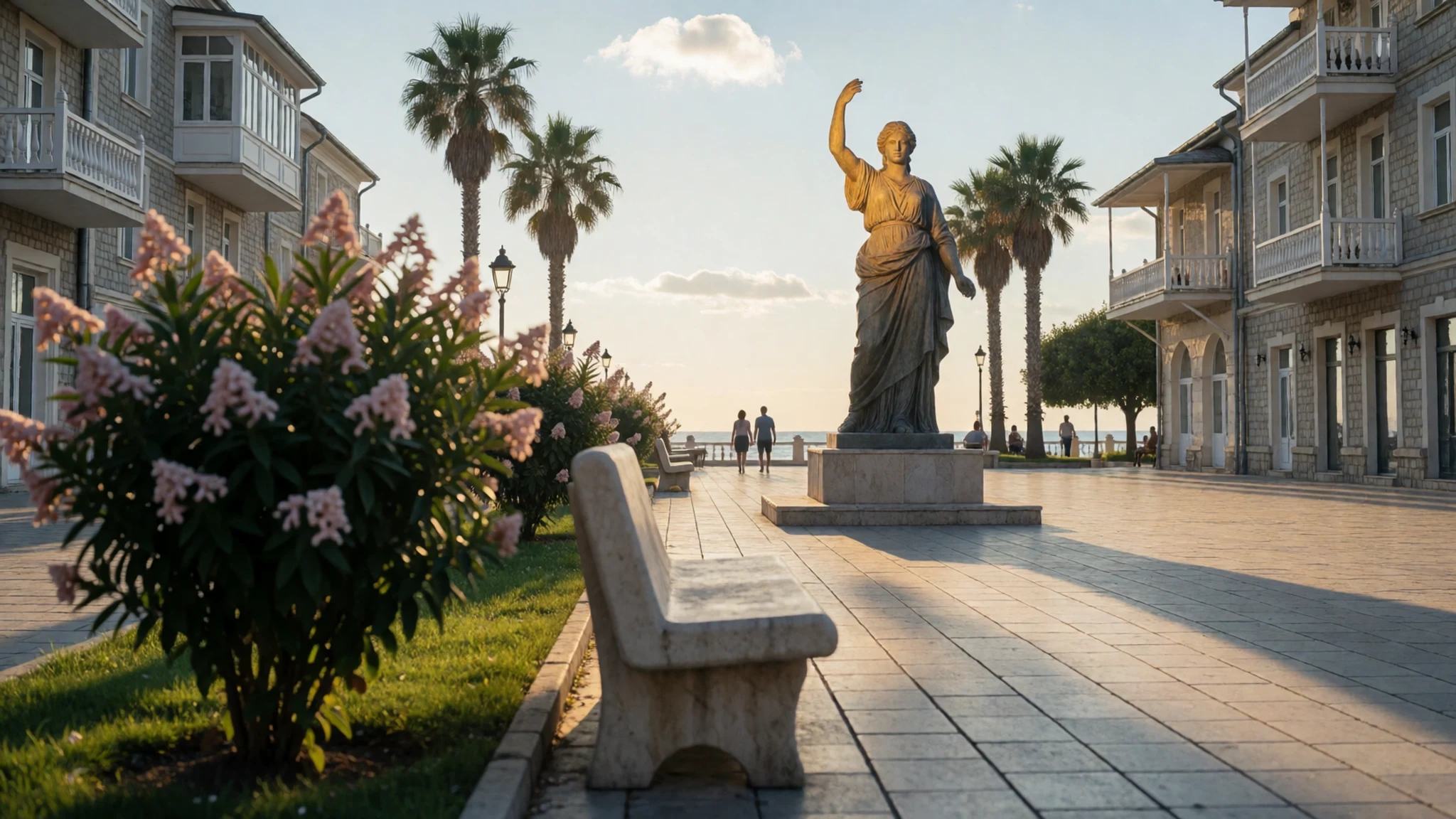
- Seafront boulevard and music fountain — Seafront promenade
Batumi's seafront boulevard is the city's main promenade, walked, cycled and jogged by locals and visitors from morning to late night. The music fountain, lit and timed to songs after dark, is a simple evening spectacle. Summer evenings are busiest; in winter the promenade is nearly empty and often damp.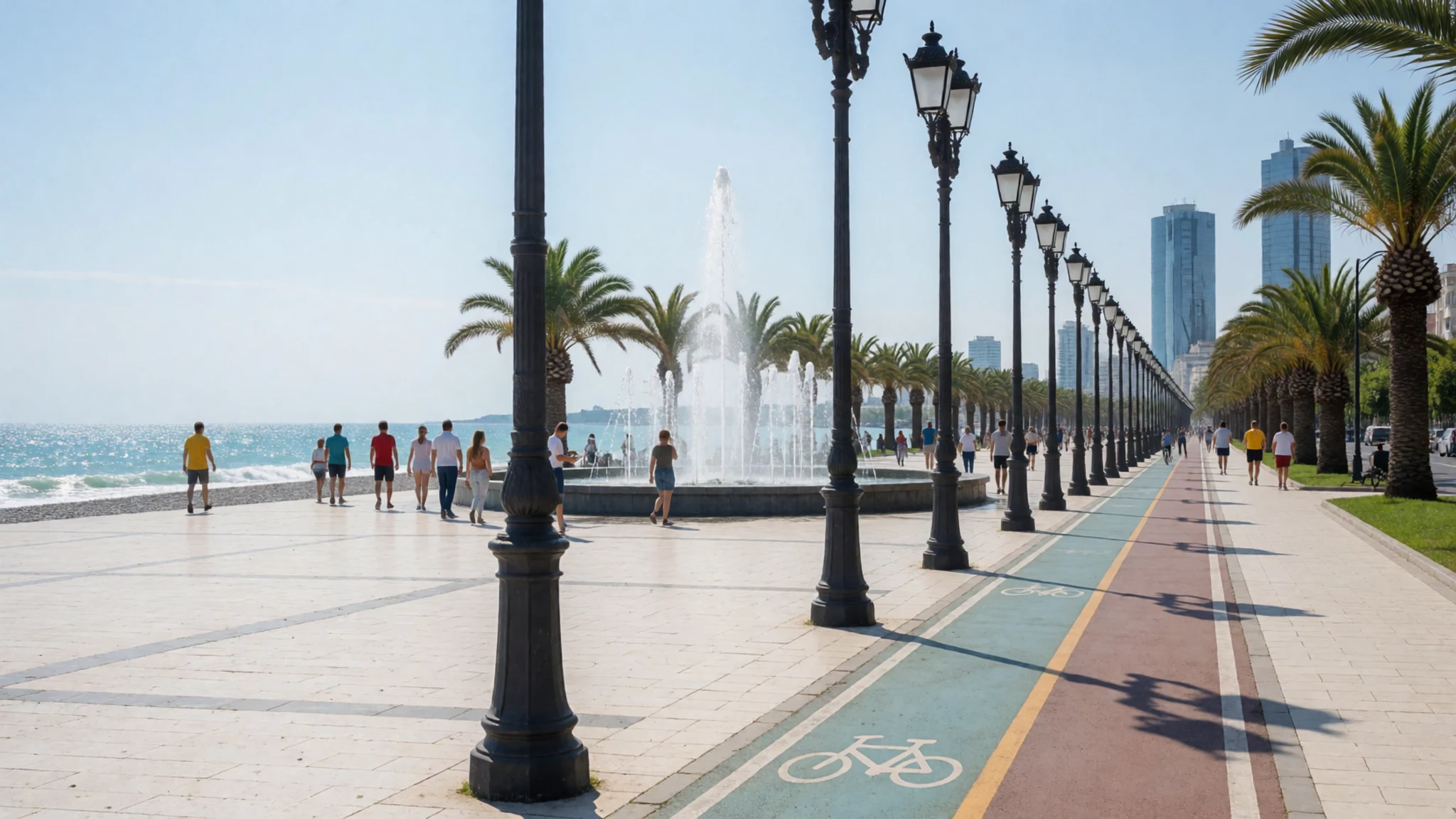
Culture
Batumi's culture is shaped by a port town's habit of mixing. Georgian Orthodox, Catholic, Armenian, Muslim and Jewish communities have all left buildings here, and the long Ottoman chapter still shows in food and in the feel of the old streets. The city has 18 museums, among them the State Art Museum of Adjara, and local life leans on sport: Batumi RC plays rugby union in Georgian national competition, and FC Dinamo Batumi plays football at the city stadium.
Literature gives the city one of its best-known images. The Ali and Nino sculpture draws on a 1937 Austrian novel about an Azerbaijani Muslim and a Georgian princess whose love is broken by the aftermath of the First World War. Locals tend to treat it as a story about the meeting of neighbouring peoples, which is how Batumi itself likes to be understood.
Hospitality is a point of pride. Meals are long, built around shared dishes, toasts and wine or beer, and turning down food repeatedly can feel abrupt to a host. After dark the seafront belongs to casinos, clubs and live music, and it is loud in high summer; the old centre and the museums keep a slower pace by day.
In Georgian Orthodox churches and the mosque, cover shoulders and knees, carry a scarf for women to cover the head where asked, remove shoes in the mosque, and ask before photographing worshippers.
What to wear
In Batumi, as across Georgia, traditional dress is best known through the chokha, a long wool coat for men with rows of cartridge pockets across the chest, worn with a belt and soft boots. Formal dress for women is a long, fitted gown with long sleeves, often in silk or velvet, worn with a headpiece or veil. Both appear mostly at folk-dance shows, weddings and festivals rather than on the street.
Day to day, people dress as in any seaside resort: shorts, sundresses and trainers in summer, smart-casual for restaurants and casinos in the evening, and padded jackets and waterproofs through the damp winter. Young locals favour international streetwear, and the seafront at night tends to be dressy rather than beachy.
For visitors, light, quick-drying cotton or linen suits the humid summers, and a compact umbrella or rain jacket is worth packing in any month, since rain is frequent. Sandals or shoes with grip help on the pebble beach and on wet promenade paving. For churches, carry a scarf and keep shoulders and knees covered; the mosque also asks for shoes to be removed. Beachwear is for the beach, not for the Old Town or its churches.
What to eat
- Adjarian khachapuri — Georgian restaurants in the Old Town
A boat-shaped bread filled with melted cheese, topped with a runny egg and butter, then stirred together and eaten with torn pieces of the crust. It is the signature dish of Adjara and rich enough to share.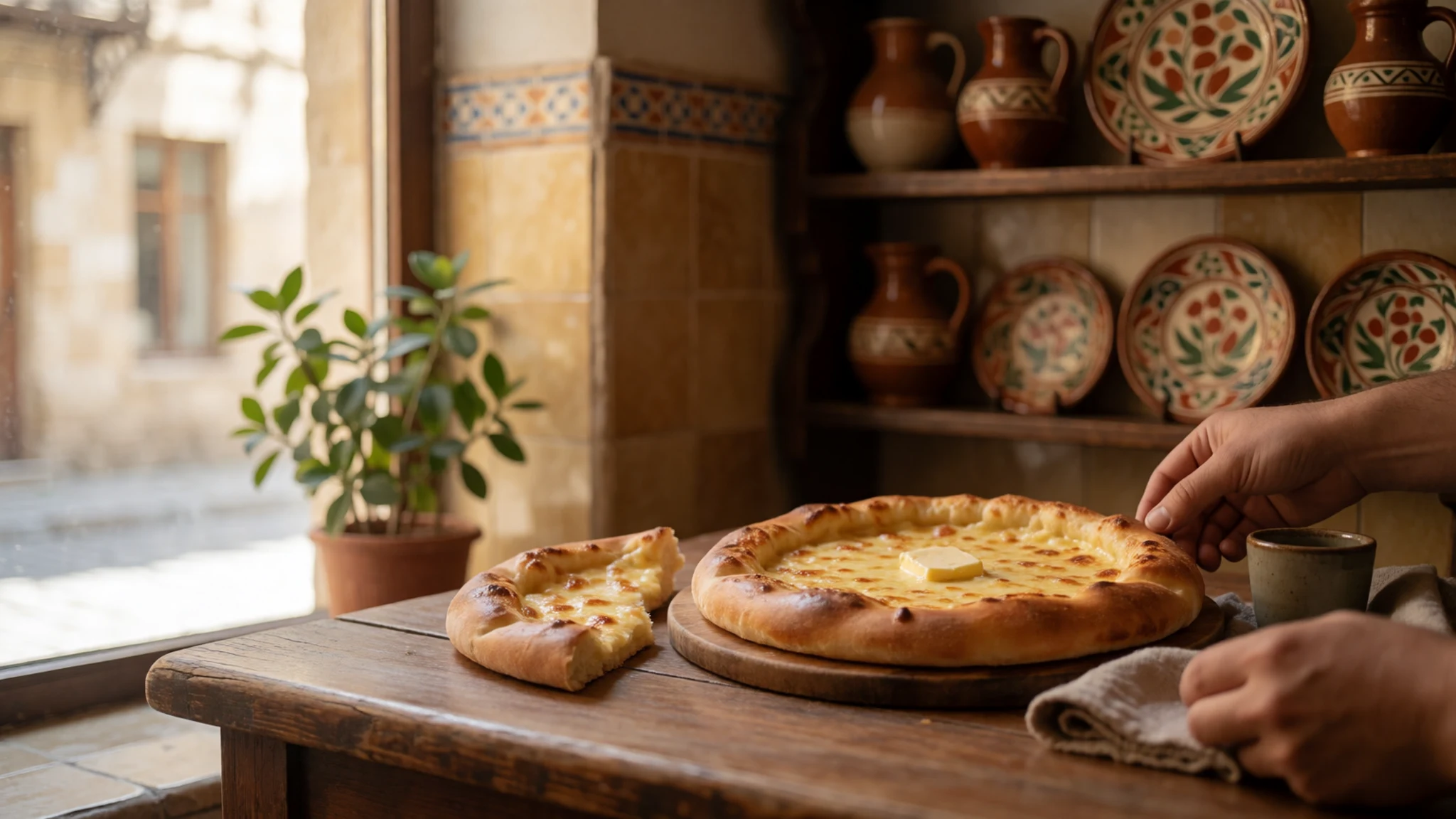
- Fresh fish — The fish market near the port
Batumi is a seaport, so fish is worth ordering, whether grilled whole at a restaurant or chosen at the fish market and taken away to cook. Ask what is local and in season, since catches vary, and agree weights before paying.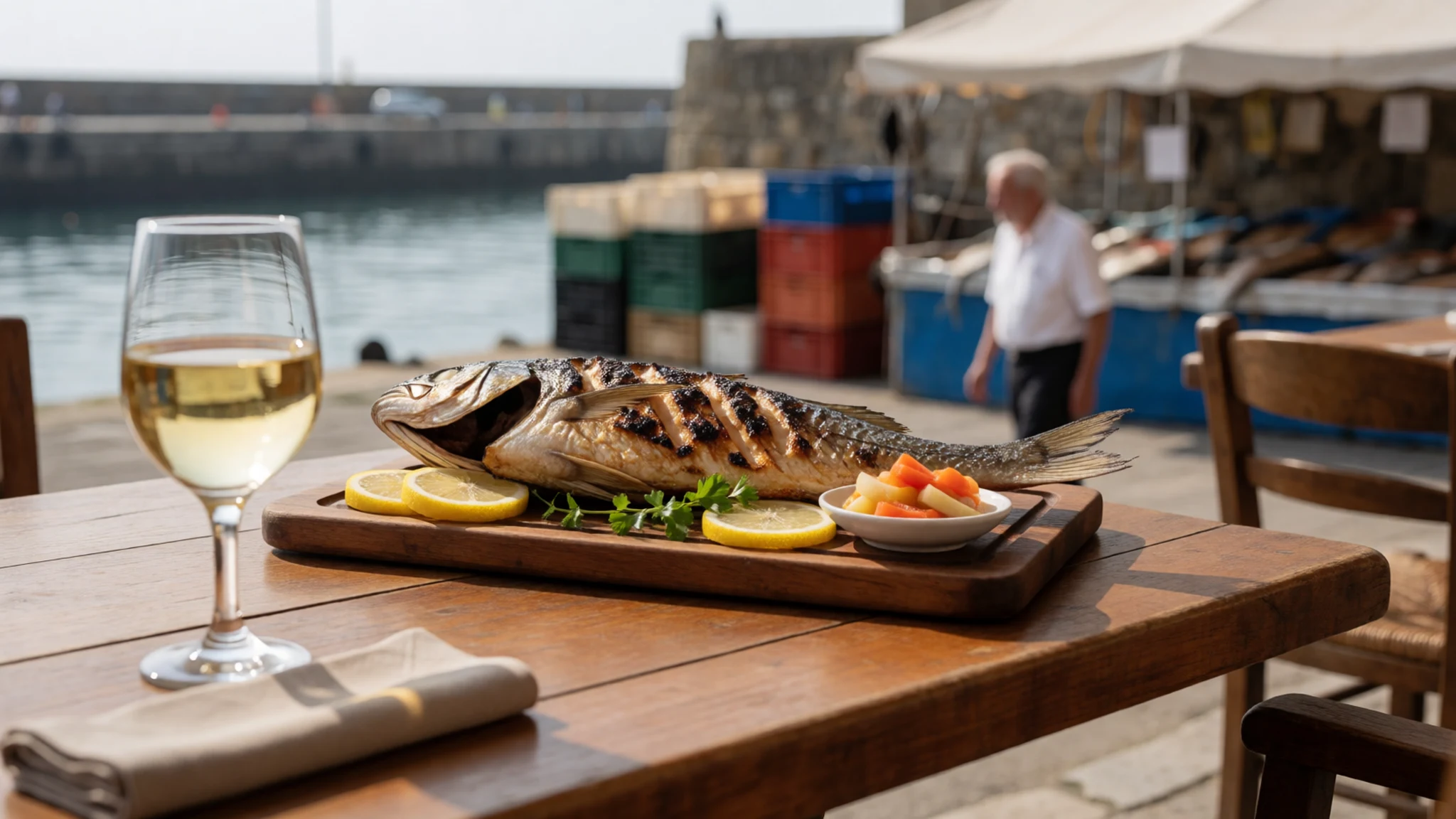
- Khinkali — Most Georgian restaurants and canteens
Twisted dumplings of spiced meat and broth, eaten by hand: hold the knot, bite a small hole, drink the juices, then eat the rest and leave the knot on the plate. Order a few at a time so they arrive hot. - Shawarma — Street counters in the centre
A quick, simple meal of sliced meat, pickles and sauce wrapped in flatbread, handy between sights and late at night after the seafront. Quality varies from stall to stall, so choose a busy counter with a steady queue and food turning fresh. - Homestyle Georgian plates with local beer — Small family-run restaurants in the centre
Slow-cooked stews, beans, pickled vegetables, cheese and herbs, served family-style in the small, atmospheric places where home cooking is the point, with local beer alongside. Order several plates to share and let the staff suggest the day's best.
Plan it
Best time. Late May–June is the most comfortable time for walking and swimming without the peak-summer crowds; July and August are the busiest and hottest stretch, and autumn is the wettest season. Rain can fall in any month, and January averages about 7 °C, so winter is damp, mild and very quiet.
How long. 2–3
Getting there. Batumi International Airport has flights from Istanbul, Tbilisi, Baku and several other cities, and the town is a short taxi ride away. Buses and marshrutkas (shared minibuses) run regularly from Tbilisi and take a long half-day; check current fares and times locally. The Turkish border is close to the south, so arriving overland from Turkey is also possible.
Budget. mid
Tips
- Book summer accommodation early, as July and August fill up.
- Carry a light rain jacket or compact umbrella in every season.
- Walk the seafront early in the morning or late in the evening to avoid heat and crowds.
- Carry some cash for markets and small cafés, though cards are common in larger places.
- Check the city's official site, batumi.gov.ge, for events and local information.
Etiquette
- Cover shoulders and knees in churches and carry a scarf; remove shoes in the mosque.
- Ask before photographing people, especially worshippers.
- Accept hospitality and toasts graciously; refusing repeatedly can seem rude.
Nearby
Sources
- Wikidata Q25475 (CC0)
- Wikipedia: Batumi (rev 1384597431) (CC BY-SA 4.0)
- Wikivoyage: Batumi (rev 5394554) (CC BY-SA 4.0)
- Photo: 1071 - Kaukasus 2014 - Georgien - Batumi, Uwe Brodrecht (CC BY-SA 2.0)
- Photo: Batumi seen from Botanical Garden, Krzysztof Ziarnek, Kenraiz (CC BY-SA 4.0)
- Photo: Skyline of Batumi, Georgia, US Naval Forces Europe-Africa/6th Fleet (Public domain)
- Photo: Batumi Boulevard colonnades, Sosotedrd (CC BY-SA 4.0)
- Photo: Ali and Nino Statues in Batumi, Vicuna R (CC BY-SA 2.0)
- Photo: Changing skyline of Batumi, jagermesh (CC BY-SA 2.0)
- Photo: Batumi at night, Irma Laghadze (CC BY-SA 2.0)
- Photo: Batum, Lev Lagorio (Public domain)


