Samtavro Monastery
Samtavro Monastery, Georgia
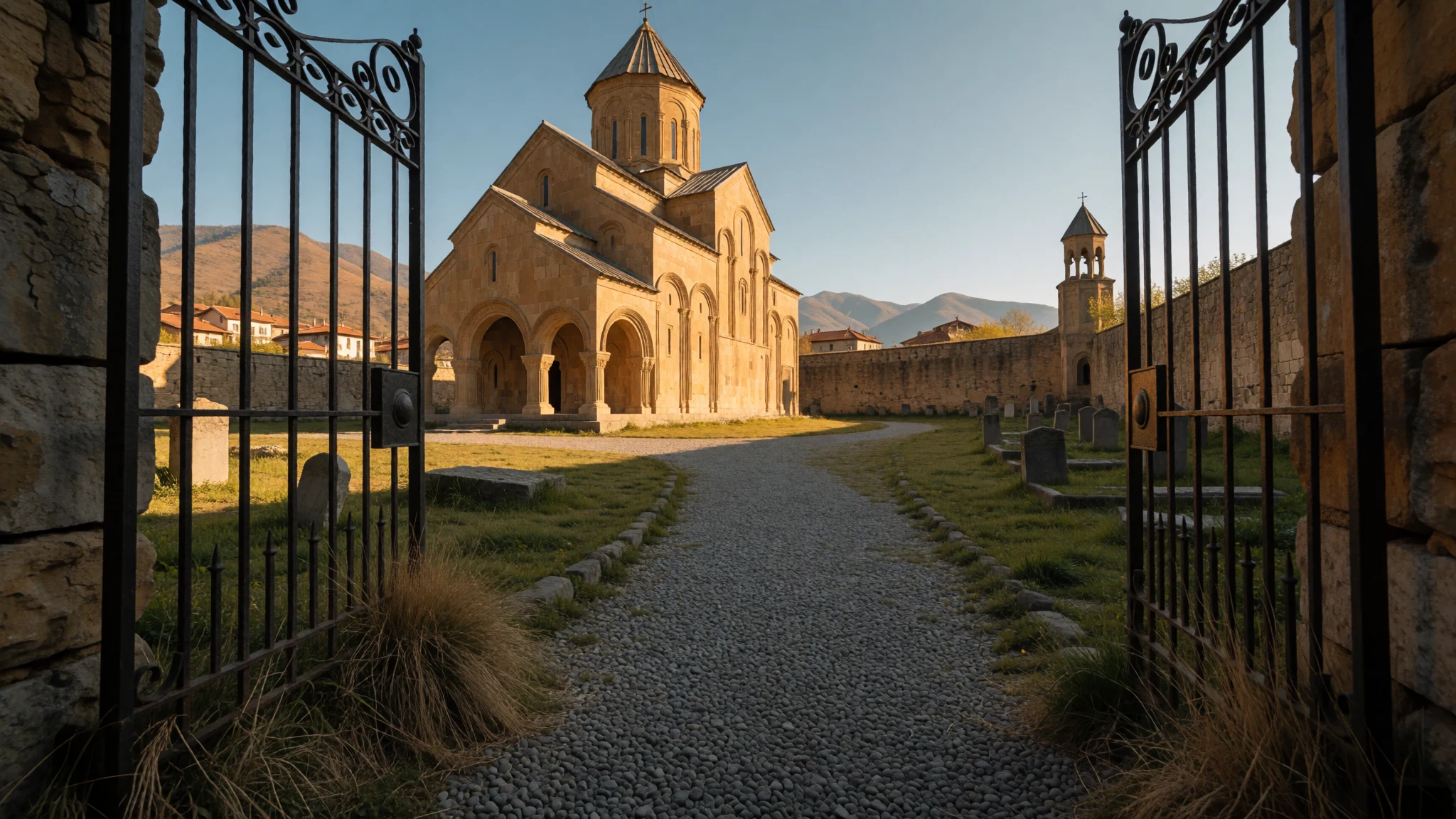
Samtavro Monastery is a working nunnery in Mtskheta where a saint's small church, royal graves and a main church in eleventh-century style sit in one quiet walled yard.
The place
Samtavro Monastery stands in the north-western part of old Mtskheta, the small town where the Mtkvari and Aragvi rivers meet, a short drive north of Tbilisi. The complex joins two institutions inside one wall: the Transfiguration Church, a cross-in-square building with the arches and carved trim typical of Georgian church architecture of the eleventh century, and a working nunnery dedicated to St Nino. A bell-tower rises over the enclosure. Mtskheta was the capital of the ancient kingdom of Iberia and is still the seat of the Georgian Orthodox Church, so the monastery sits in a town that Georgians visit as pilgrims as often as sightseers. Samtavro is the calmer neighbour. Svetitskhoveli Cathedral, a few minutes' walk to the south, collects most of the tour groups, while Samtavro is left largely to local worshippers, nuns going about their day and visitors who have thought to look beyond the main sight. The yard is where the place makes its case. Two graves draw people in: that of King Mirian III with Queen Nana, and that of the monk Gabriel, venerated as a saint. Beside the large church stands a far smaller one, linked by tradition to St Nino herself. Everything is built of pale stone and kept tidy, with flowers and trimmed paths softening the walls. A visit takes about an hour, longer if a service is under way and the chanting holds people in place. The mood is devotional rather than museum-like, and the nuns still treat the compound as home. Wikidata records the foundation as around 301, though the main church that stands today is much later.
Its story
Samtavro Monastery owes its beginnings to the conversion of Georgia to Christianity. Church tradition says that St Nino, the woman credited with bringing the faith, lived on this spot and built a small church while Mirian III ruled Iberia. Mirian and his wife Nana were later buried here. No inscriptions survive to date the earliest building, so the fourth-century story rests on later Georgian writings rather than on stone. The name comes from the Georgian word mtavari, 'ruler', and means roughly 'the ruler's place'. The large church seen today is dated by its style to the first half of the eleventh century, probably built or rebuilt soon after Svetitskhoveli, under Catholicos-Patriarch Melchizedek I and King George I. Disaster came in 1283, when an earthquake brought the dome down; it went up again at some point around the turn of the fourteenth century, about the time the altar screen was made. The enclosing wall belongs to the Late Middle Ages, and the bell-tower was added in the sixteenth century. Nothing remains of the earliest wall paintings; the frescoes inside now were done in the sixteenth and seventeenth centuries. The stone iconostasis is an eighteenth-century piece, and the markers over the royal graves were carved only in the nineteenth. The result is a complex that has been repaired and added to for close to a thousand years, each century leaving a layer. Reading it is a matter of spotting which layer is which: the eleventh-century proportions, the later paint, the stone screen and the tomb slabs that are younger than they look.
What to see
- Transfiguration Church — Samtavro compound, Mtskheta
The main church of Samtavro Monastery follows a cross-in-square plan, with the arches and carved decoration of Georgian building in the eleventh century. Its dome was rebuilt after an earthquake. Inside are a stone iconostasis and later frescoes. If a service is on, stand quietly at the back and listen to the chanting.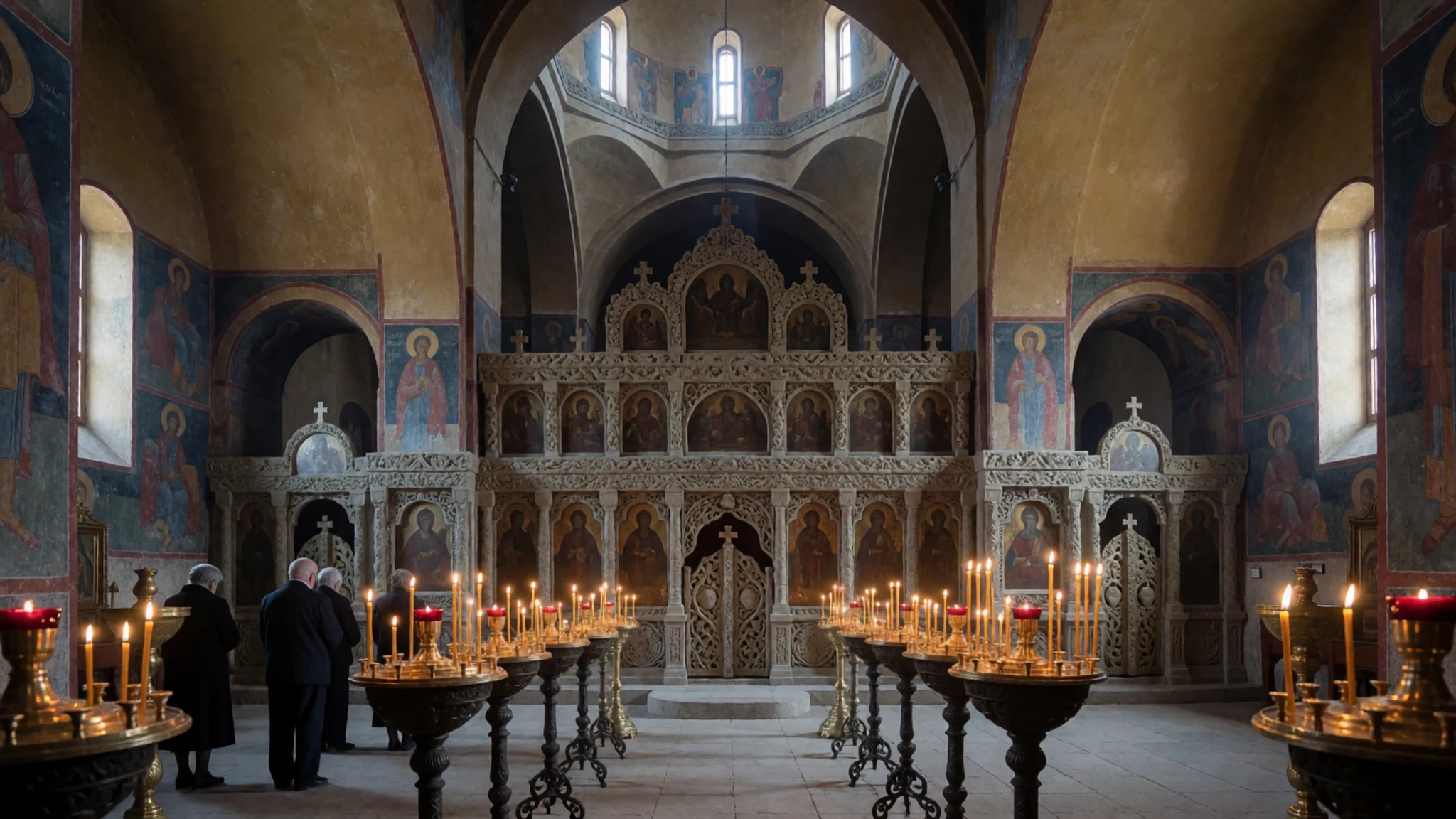
- Graves of Mirian III, Nana and St Gabriel — Monastery yard
The yard holds the tombs of the king and queen who stand at the start of Georgia's Christian story, and the grave of the monk Gabriel, venerated as a saint. Georgians come here to pray, so the spot is more a shrine than a curiosity. The royal slabs are nineteenth-century work.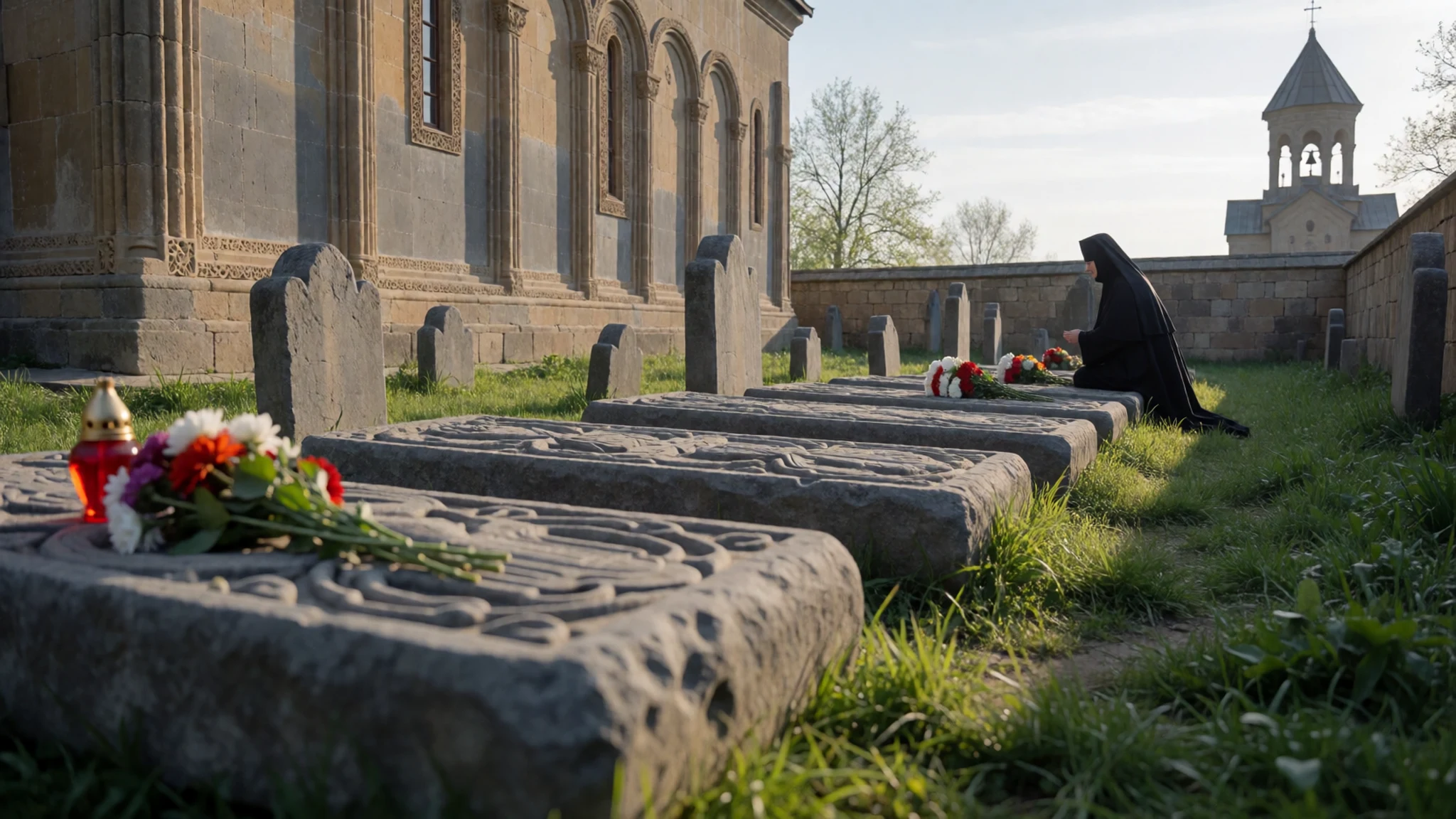
- St Nino's small church — Samtavro compound
The smaller of the two churches is tied by legend to St Nino, who is said to have lived on the site and prayed here. It is the older building in the compound, and its low, plain interior is a sharp contrast with the larger church beside it. Space inside is tight, so wait your turn.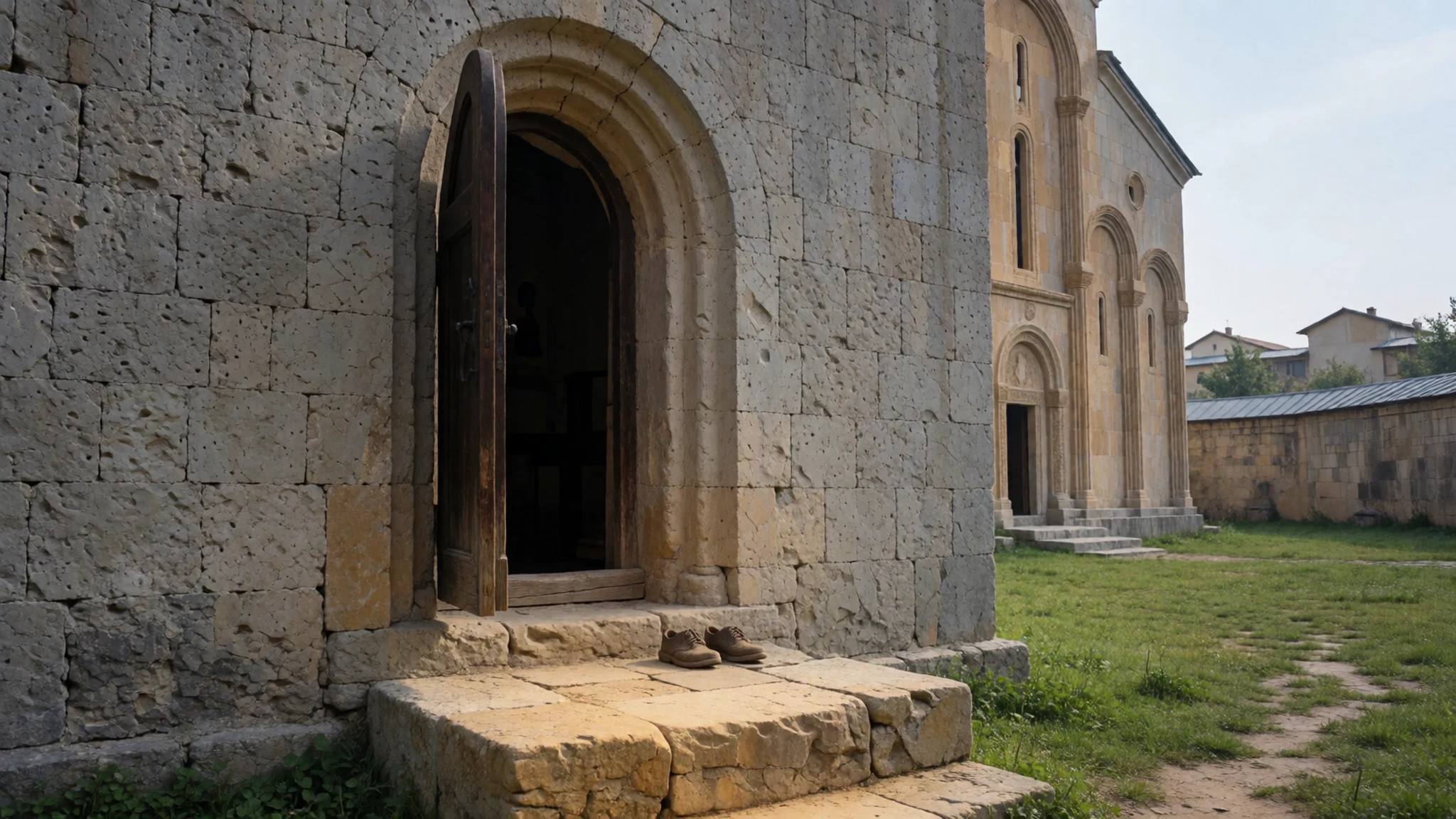
- Svetitskhoveli Cathedral — Central Mtskheta
Svetitskhoveli is a short walk from Samtavro and is one of the holiest places in Georgia. It draws far more visitors than the nunnery, so mornings are calmer. Mtskheta's city festival, with folk dances, music, crafts and religious events, gathers around it each year on 14 October.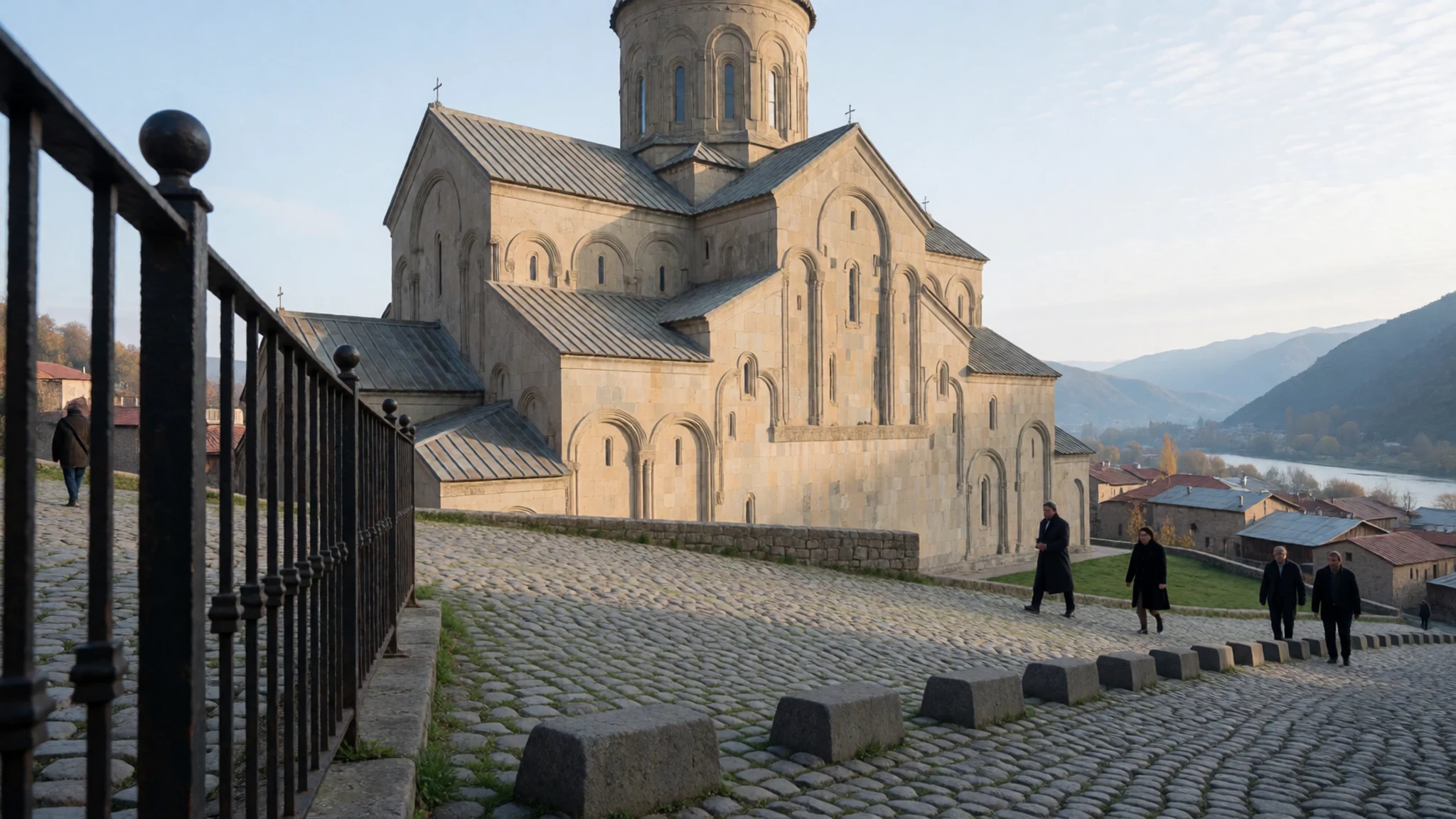
- Jvari Monastery — Hill above the river confluence
Jvari is a sixth-century monastery on a hill across the river, a key example of early Christian Georgian architecture. The reward is the view back over Mtskheta and the meeting of the two rivers. It is the natural second stop after Samtavro; getting up the hill is easiest by taxi.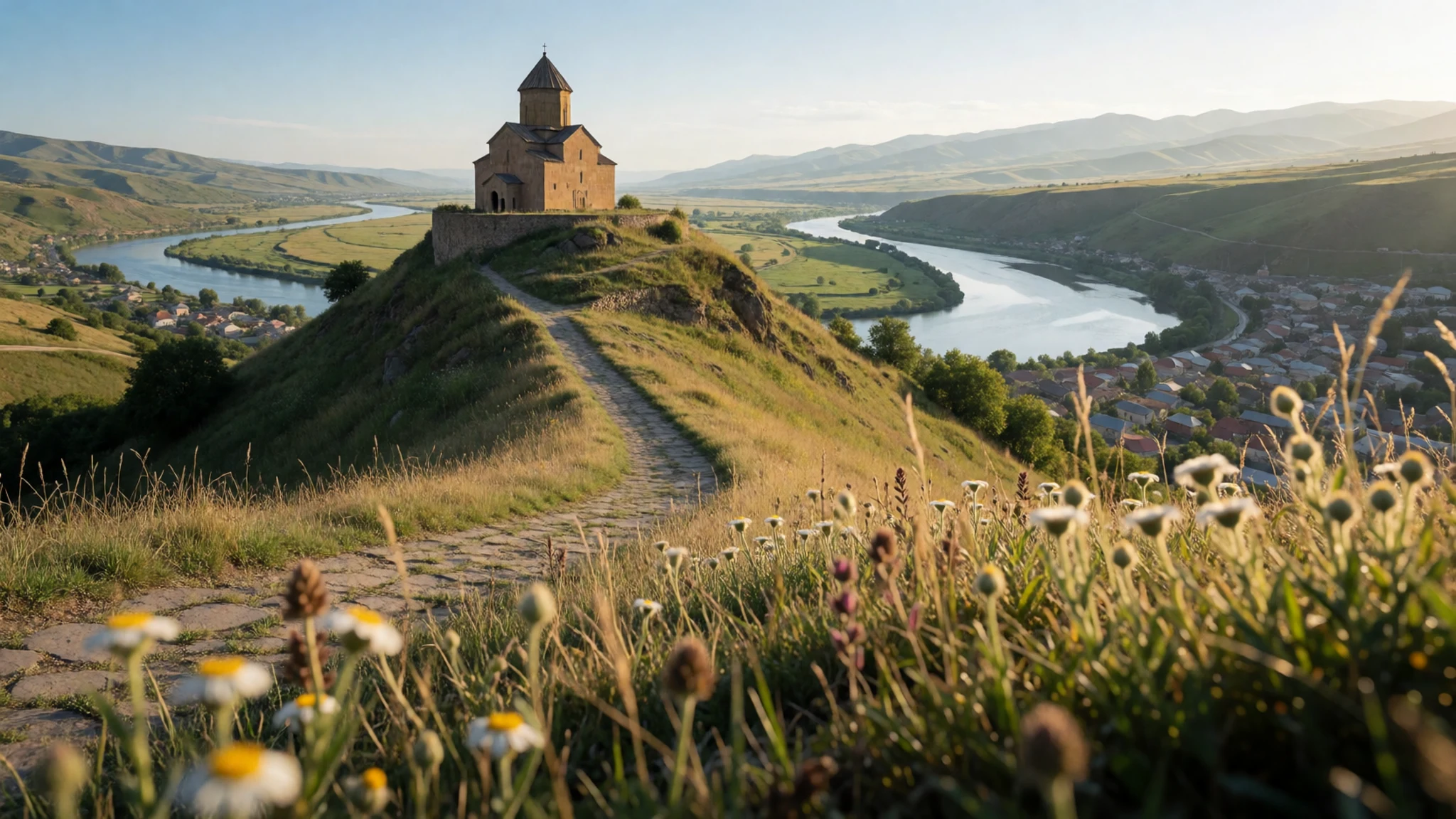
- Bebris Tsikhe — North of the old town
These fortress ruins on the edge of town are good for a scramble and a wide view over Mtskheta and the valley shaped by the Mtkvari and Aragvi. Surfaces are uneven and some edges are unprotected, so wear shoes with grip and keep children close. Go late in the day for softer light.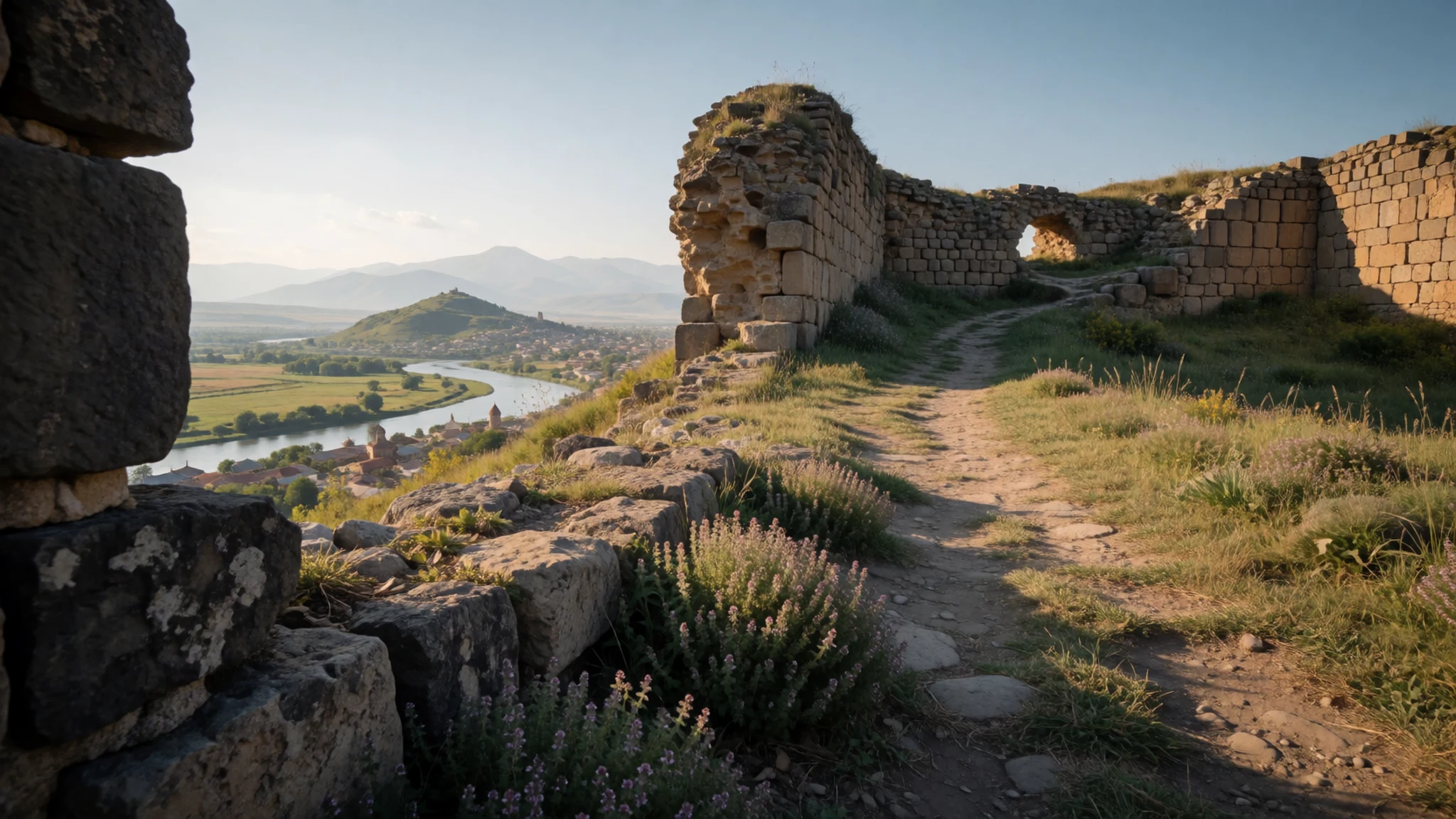
Culture
Samtavro Monastery is a living convent, and its rhythm follows the Orthodox day rather than the tourist one. Nuns tend the yard and the churches, candles are lit, icons are kissed and worshippers cross themselves as they enter. Georgia's Christian identity is bound up with St Nino, traditionally pictured with a cross of bound vine twigs, and Mtskheta is where that story is rooted. That gives the town a weight for Georgians that visitors may not feel at first, and it explains why ordinary families turn up on weekdays to pray at the tombs of King Mirian and the monk Gabriel. Church music in Georgia is traditionally sung in unaccompanied polyphony, so if chanting drifts from the church it is worth pausing for, even without understanding a word. Mtskheta also keeps a lighter calendar: the town festival on 14 October, around Svetitskhoveli, brings folk dance, crafts and religious events, and the town fills accordingly. Samtavro itself stays calm on such days. Visits work best when treated as a guest's call rather than an inspection: speak softly, let worshippers go first, and do not walk across the front of the church during prayers. Donations go in the box near the candle stand. Women should cover their heads and shoulders and wear a skirt or wrap below the knee, men should take off hats, and everyone should ask before photographing the nuns or anyone at prayer.
What to wear
Samtavro Monastery sits in a country with a strong tradition of folk dress, though little of it is worn day to day. The best-known men's garment is the chokha, a long wool coat with rows of cartridge pockets across the chest, now seen mainly at weddings, dance performances and festivals. Women's formal dress, the kartuli kaba, is a long, fitted gown, often in velvet or silk with embroidered or metallic trim, worn with a light veil. The nuns of the convent wear plain dark habits and head coverings. Away from the monastery, people in Mtskheta wear what Tbilisi wears: jeans, shirts, jackets and sensible shoes, with smarter clothes for church feast days and family occasions. Older women often keep a headscarf handy for church. Visitors should dress for the site first and the weather second. Cover shoulders and knees, and carry a scarf or light wrap that women can pull over the head at the church door; men should avoid shorts and bare shoulders. Summers are hot, so choose breathable cotton or linen that still covers the arms and legs, and bring sun protection for the open yard. Winters are cold and can be damp, so a proper coat and a warm layer matter. The yard and nearby lanes have uneven stone and cobbles, so flat shoes with grip are better than sandals or heels, especially if the plan includes the hill at Jvari.
What to eat
- Khachapuri — Bakeries and cafes along Mtskheta's main street
Georgia's cheese bread comes in several regional shapes, from a round loaf to a boat holding a baked egg. In Mtskheta it is a standard lunch order. Look for it at bakeries and family-run eateries along the main street, ideally eaten hot and shared.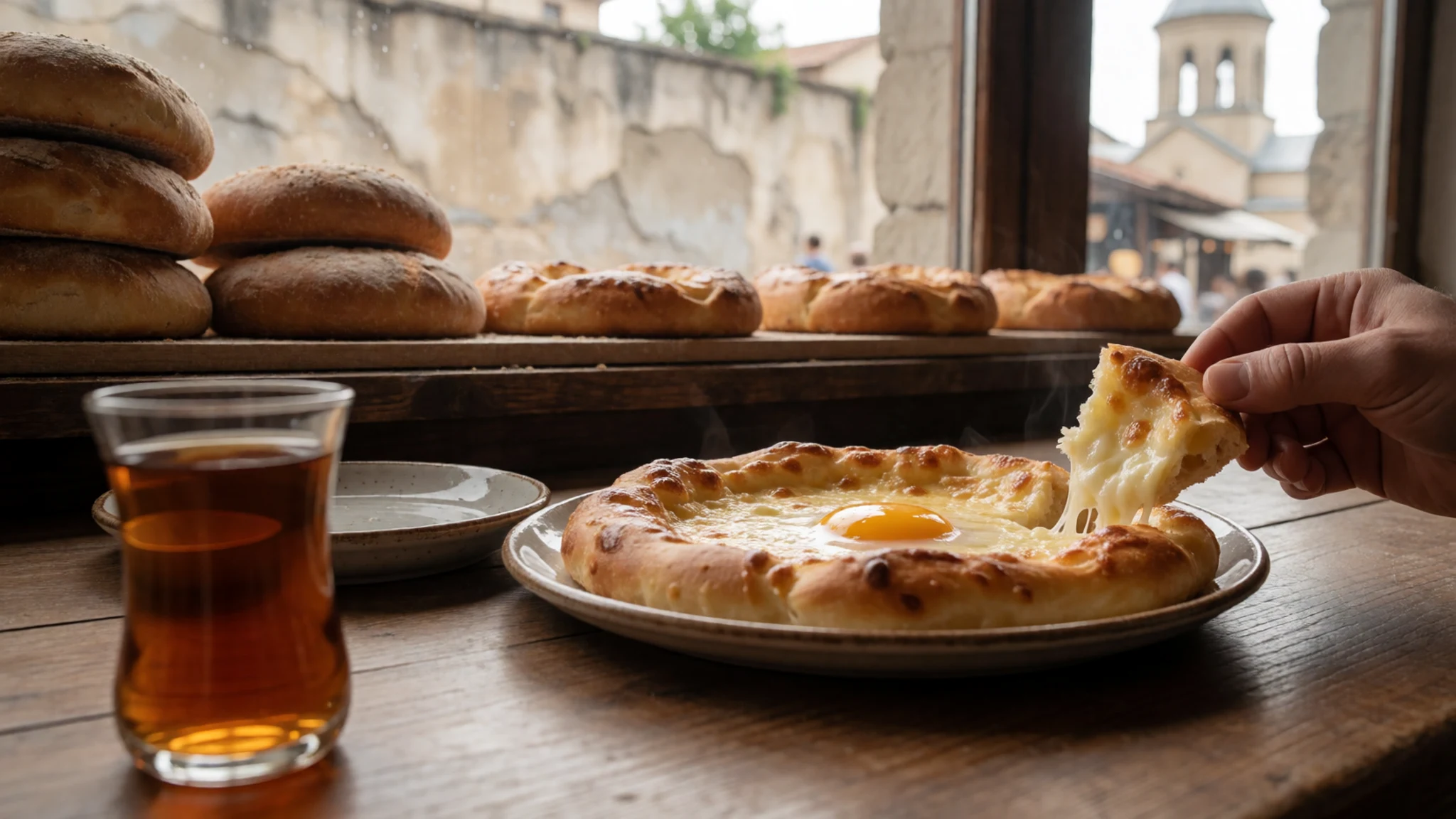
- Khinkali — Dumpling houses and traditional restaurants near the old town
These twisted dumplings hold spiced meat and broth. Hold one by the knot, bite a small hole, drink the juices, then eat the rest and leave the knot on the plate. They are ordered by the piece and suit a group meal.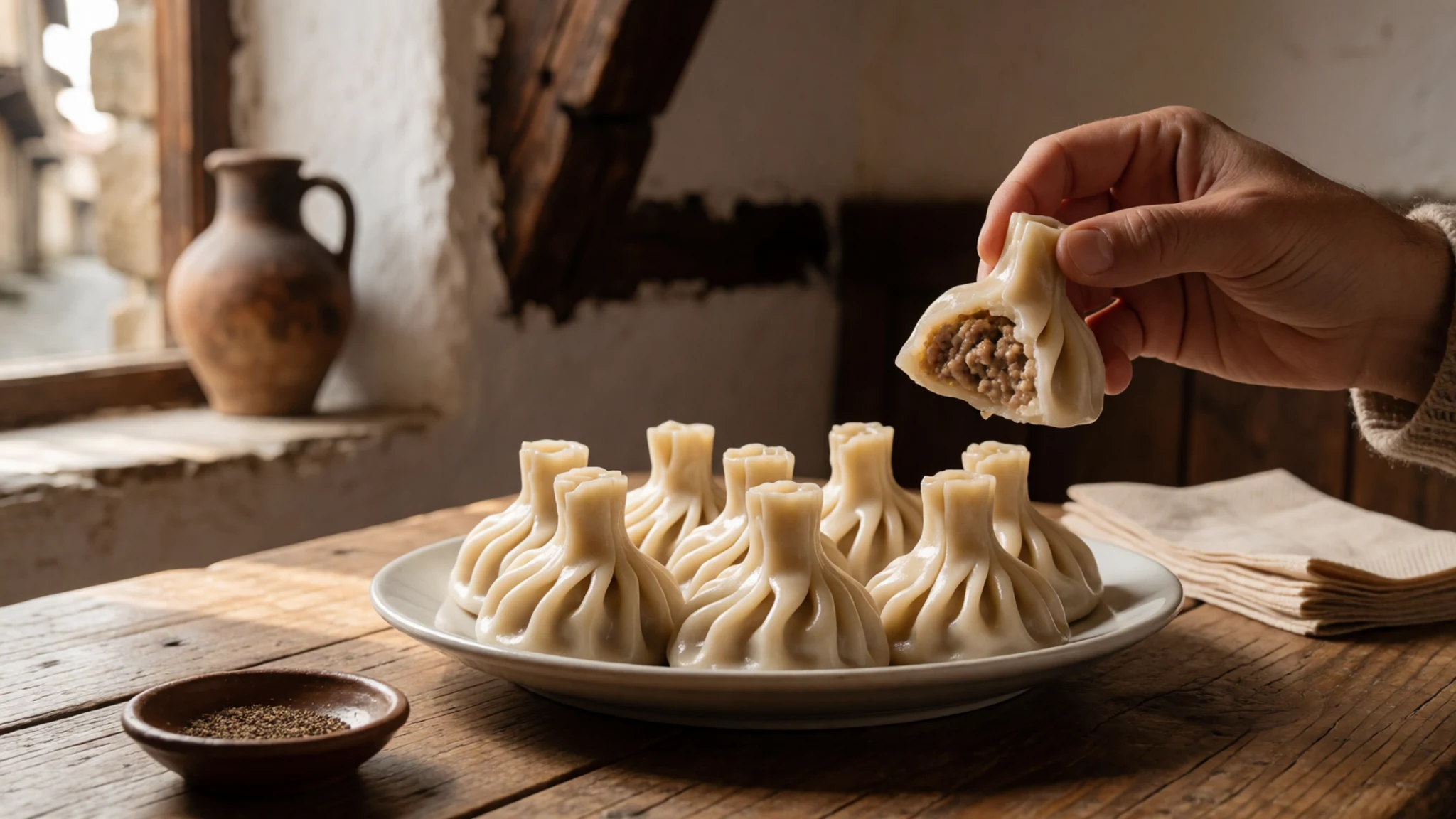
- Mtsvadi — Garden restaurants and grill houses in Mtskheta
Mtsvadi is Georgian grilled meat on skewers, usually pork or lamb, cooked over fire and served with onions, pickles and bread. It is a plain, smoky dish and suits a long table with wine. Many riverside and garden restaurants offer it. - Pkhali — Family restaurants and cafes with outdoor huts or terraces
Pkhali are cold vegetable pastes, often spinach, beetroot or aubergine, mixed with ground walnuts, garlic and herbs and topped with pomegranate seeds. They are easy for vegetarians and usually arrive as a starter. Order a mixed plate to taste several. - Churchkhela — Souvenir and snack stalls near Svetitskhoveli
Strings of walnuts or hazelnuts are dipped repeatedly in thickened grape juice, then dried into a chewy, candle-shaped sweet. They keep well, so they make a good snack for the road. Sellers set them out near the main sights.
Plan it
Best time. March and November are the most comfortable months, with highs of about 25–27°C; July and August are the hottest, with highs near 40°C and little shade in the open yard, May is the wettest, and winters are cold and can be grey. October also brings the town festival on 14 October and a balloon competition, which means more people.
How long. 1
Getting there. Fly to Tbilisi, then reach Mtskheta by marshrutka (minibus) from the Didube station area, by train on the Tbilisi–Kutaisi line, or by taxi or guided tour. The monastery is a short walk from the centre, so the last leg is on foot or a brief taxi ride.
Budget. low
Tips
- Go early on a weekday for the quietest yard and softest light
- Combine Samtavro with Svetitskhoveli and Jvari in one day, and check opening times locally or with the church
- Carry some cash for marshrutkas, candles and small purchases
- Fix a return taxi number before leaving Tbilisi, as evening transport thins out
- Marshrutkas run fewer services on Sundays, so allow extra time
Etiquette
- Cover shoulders and knees and carry a scarf for the church door
- Ask before photographing nuns or people at prayer
- Keep voices low and give way to worshippers
Nearby
Sources
- Wikidata Q2038190 (CC0)
- Wikipedia: Samtavro Monastery (rev 1360333994) (CC BY-SA 4.0)
- Wikivoyage: Mtskheta (rev 5243922) (CC BY-SA 4.0)
- Photo: Samtavro church in Mtskheta, Georgia — Martijn Munneke (CC BY 2.5)
- Photo: Monk takes care on tombs near the church — Stefano Bolognini (uploader Giorgi Balakhadze) (CC BY-SA 2.0)
- Photo: Tombs of King Mirian and Queen Nana — Caroline Carson (CC BY 2.5)
- Photo: Samtavro Monastery 11 — Interfase (CC BY-SA 4.0)
- Photo: Sant Nino church, Mtskheta — Jaba1977 (CC BY-SA 4.0)
- Photo: 2016 Mccheta, Klasztor Samtawro (01) — Marcin Konsek (CC BY-SA 4.0)
- Photo: 2016 Mccheta, Klasztor Samtawro (02) — Marcin Konsek (CC BY-SA 4.0)
- Photo: 2016 Mccheta, Klasztor Samtawro (03) — Marcin Konsek (CC BY-SA 4.0)


