Rabati Castle
Rabati Castle, Georgia
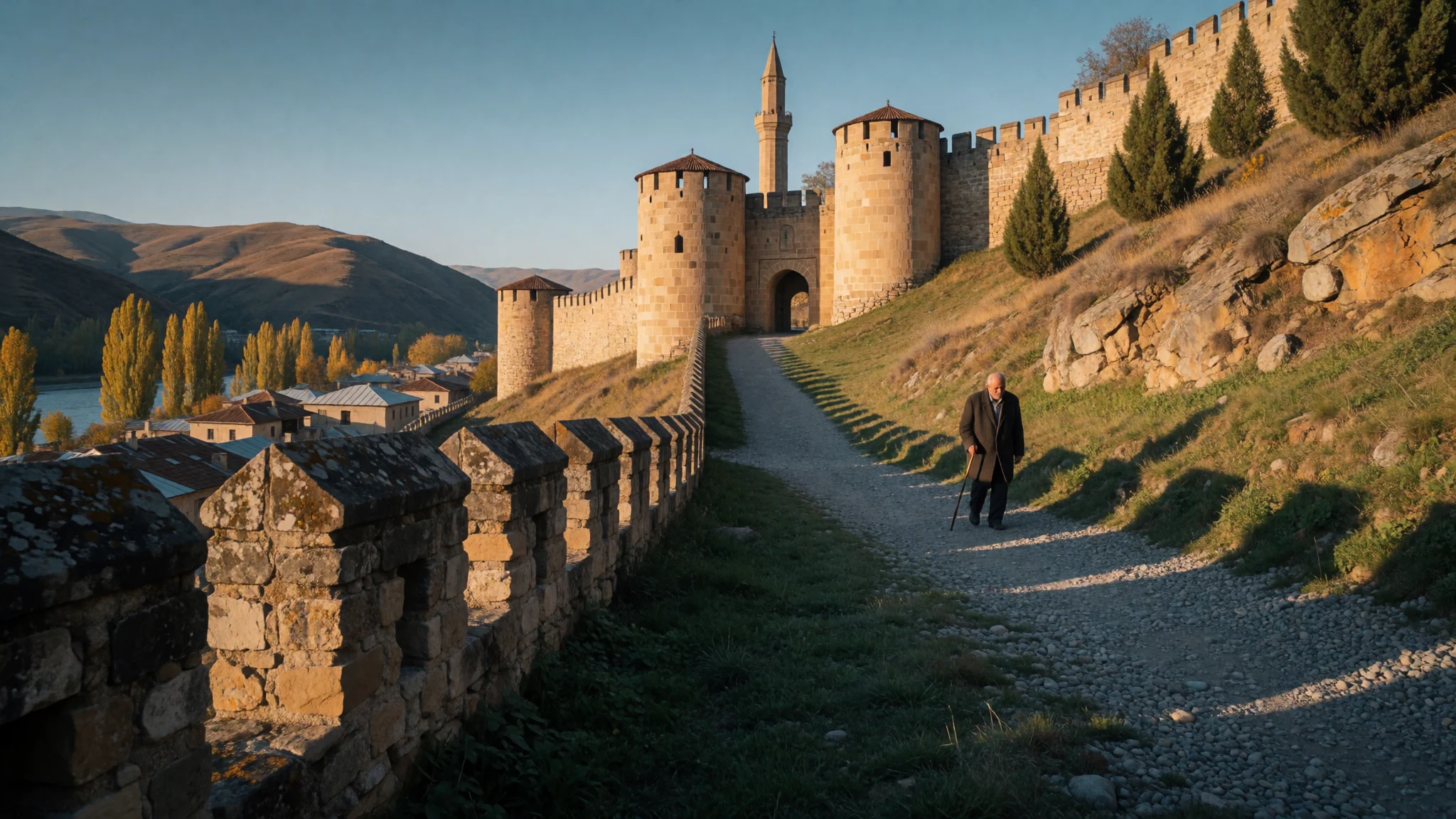
Rabati Castle is a restored hilltop fortress in southern Georgia where Georgian, Ottoman and Armenian history sit within one set of walls.
The place
Rabati Castle stands in Akhaltsikhe, a town in southern Georgia, on high ground about 1,000 m above sea level. Walls and towers enclose a mosque, a church, a small museum, some lodging and neat gardens, so the compound reads almost as a miniature town. It is a main draw of the Samtskhe-Javakheti region, and most visitors pair it with the cave monastery of Vardzia, a short journey away.
Much of what stands today is the product of a recent restoration. The stonework is clean, the paths are tidy and the gardens are well kept. Anyone who prefers ruins left rough may find it polished, but the layers are easy to read: a Georgian fortress, an Ottoman quarter with a mosque, and later additions from the Russian period. The old castle was built around the year 900, and the site has been rebuilt many times since.
The town below is modest. A river valley runs through it, and a handful of old churches, Turkish baths and a renovated railway station are scattered across it. Small family guesthouses cluster on the approach to the castle gate, though many shut for winter. The population is mixed, with Georgians and a large Armenian community, and conversation in the market can switch between languages mid-sentence.
Crowds are light for most of the year, with busier spells on summer weekends and when school groups arrive. Evenings suit the castle well, when the walls turn warm and the day-trippers have gone.
Its story
Rabati Castle began life as Lomsia, a fortress that the Georgian chronicles link to a nobleman named Guaram Mampali, son of a king of Tao. Around the end of the twelfth century it grew into a proper town, renamed Akhaltsikhe, meaning 'new fortress', and gained a ring of defences: high walls, guarded gates and watchtowers.
From the thirteenth century the town served as the capital of Samtskhe, ruled by the Jaqeli family, whose principality was largely self-governing within the wider Georgian world. In 1393 the armies of Tamerlane attacked the town. The fortress held, and Akhaltsikhe carried on as a regional centre despite the Turko-Mongol invasions of the period.
The Ottomans took the town in 1576, and a treaty in 1590 confirmed their hold on the whole of Samtskhe. They left a strong mark. The mosque, the baths and much of the old town date to their rule, and a large part of the population converted to Islam, although an Orthodox church kept functioning, as a Georgian metropolitan noted in the late eighteenth century.
Russia began to look at Akhaltsikhe after signing the Treaty of Georgievsk with the Kingdom of Kartli. An attempt on the fortress in 1810 failed. Prince Paskevich stormed it successfully in 1828, and the Treaty of Adrianople in 1829 handed the territory over to Russia.
A large programme of rebuilding and renovation, carried out in recent years, aimed to attract more visitors to the region. It has divided opinion: the castle is far more complete than before, but some of what visitors see is reconstruction rather than original fabric.
What to see
- Rabati Castle compound — Akhaltsikhe, castle hill
The main reason to come. Walls, towers and open ramparts give wide views over the town and valley, and enclose a mosque, a church, a local-history museum, lodging and gardens. Much of it is rebuilt, so read it as a recreation. Allow a couple of hours, and check ticket rules on arrival, as foreign visitors may pay differently from locals.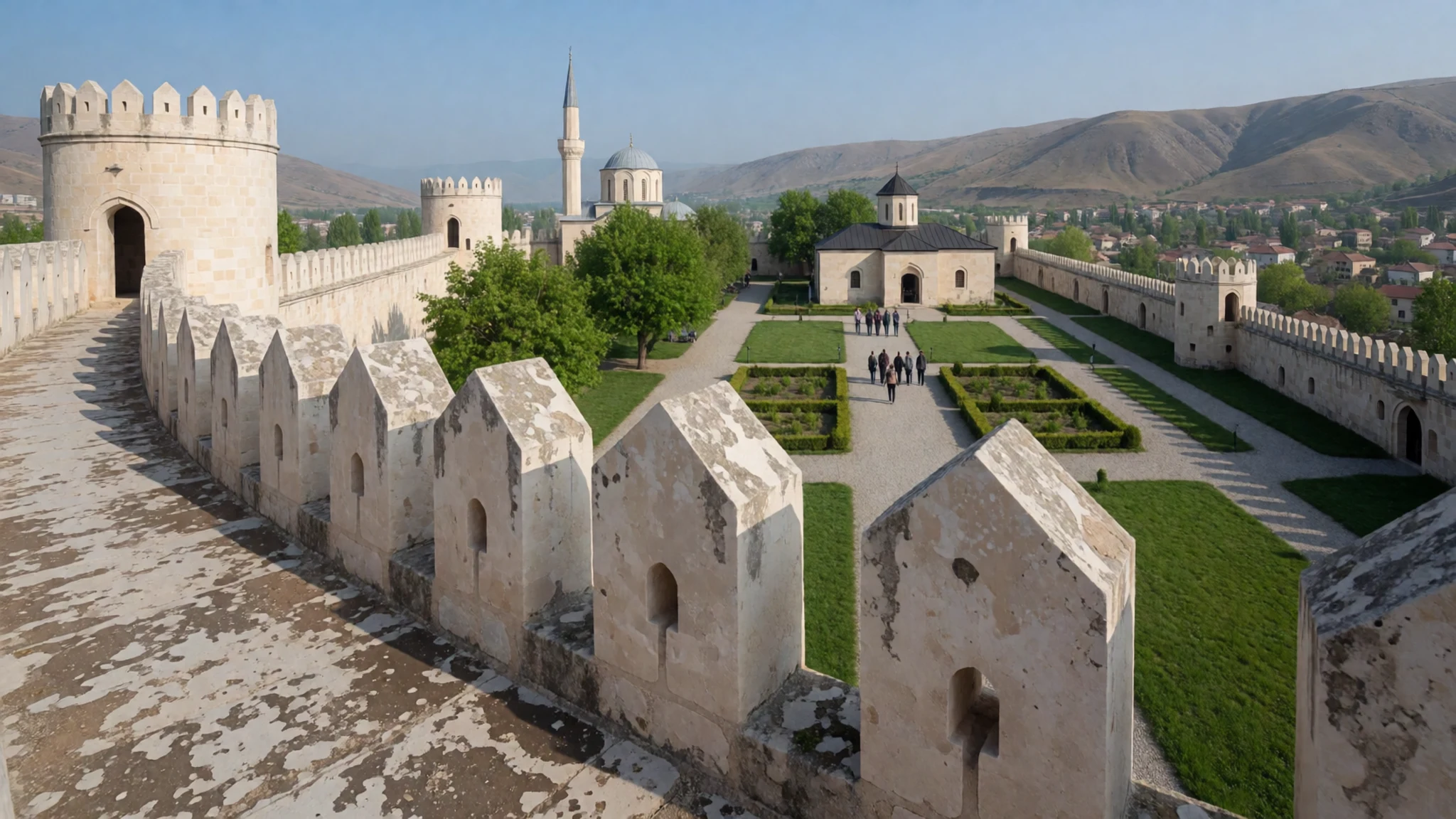
- Mosque and museum inside the walls — Inside Rabati Castle
The mosque with its minaret is the clearest sign of the Ottoman centuries, when this was a frontier town of a different empire. The museum nearby covers the history of Samtskhe-Javakheti through displays of local objects and documents. Both reward a slow visit, especially on a quiet weekday morning.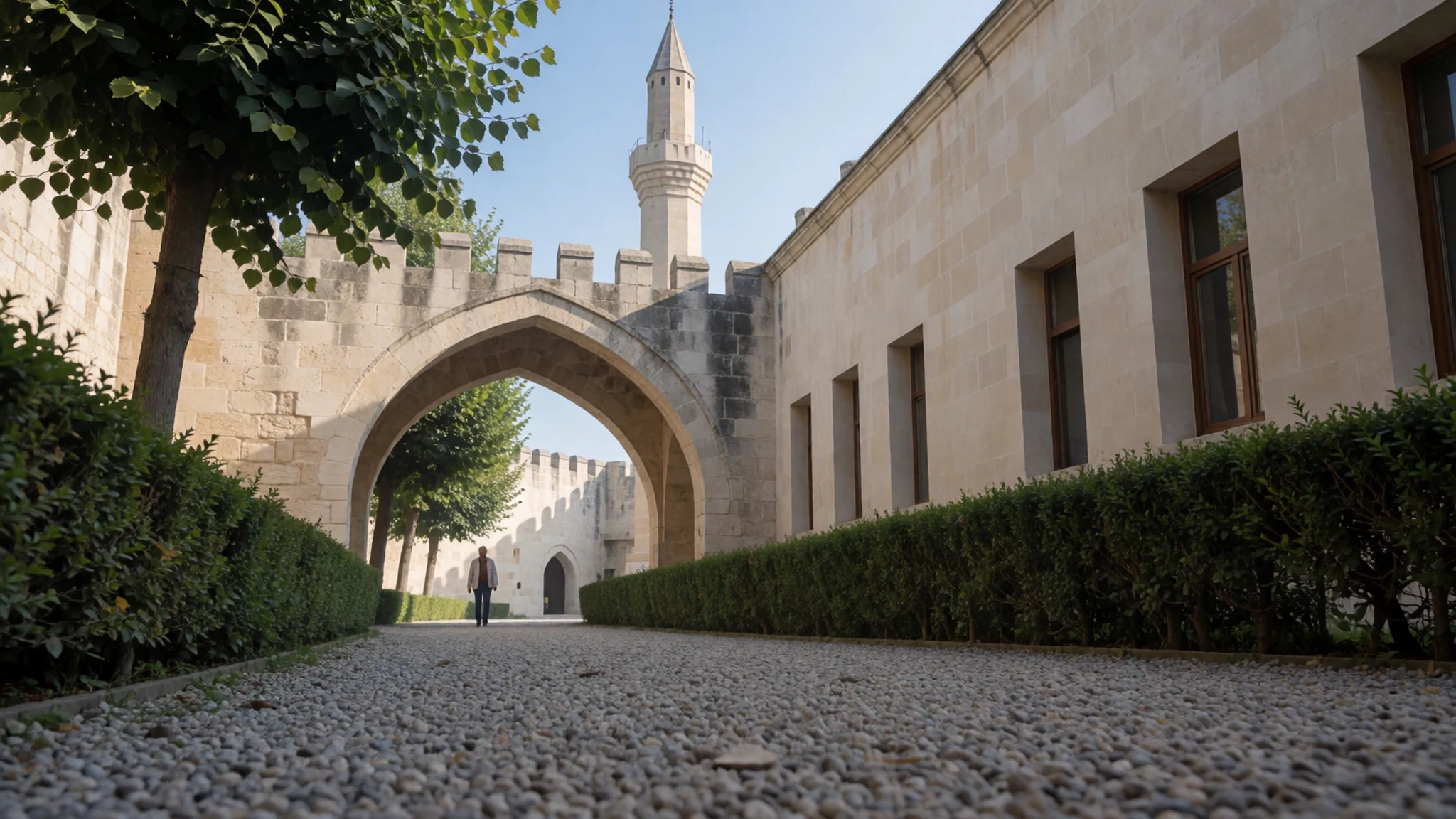
- Amaghleba Church — Eastern Akhaltsikhe
A church on the eastern side of Akhaltsikhe, reachable by a short taxi ride or a walk from the castle. It is worth a stop for anyone curious about how Orthodox worship carried on through the Ottoman period. Doors can be closed outside service times, so ask locally before making a special trip.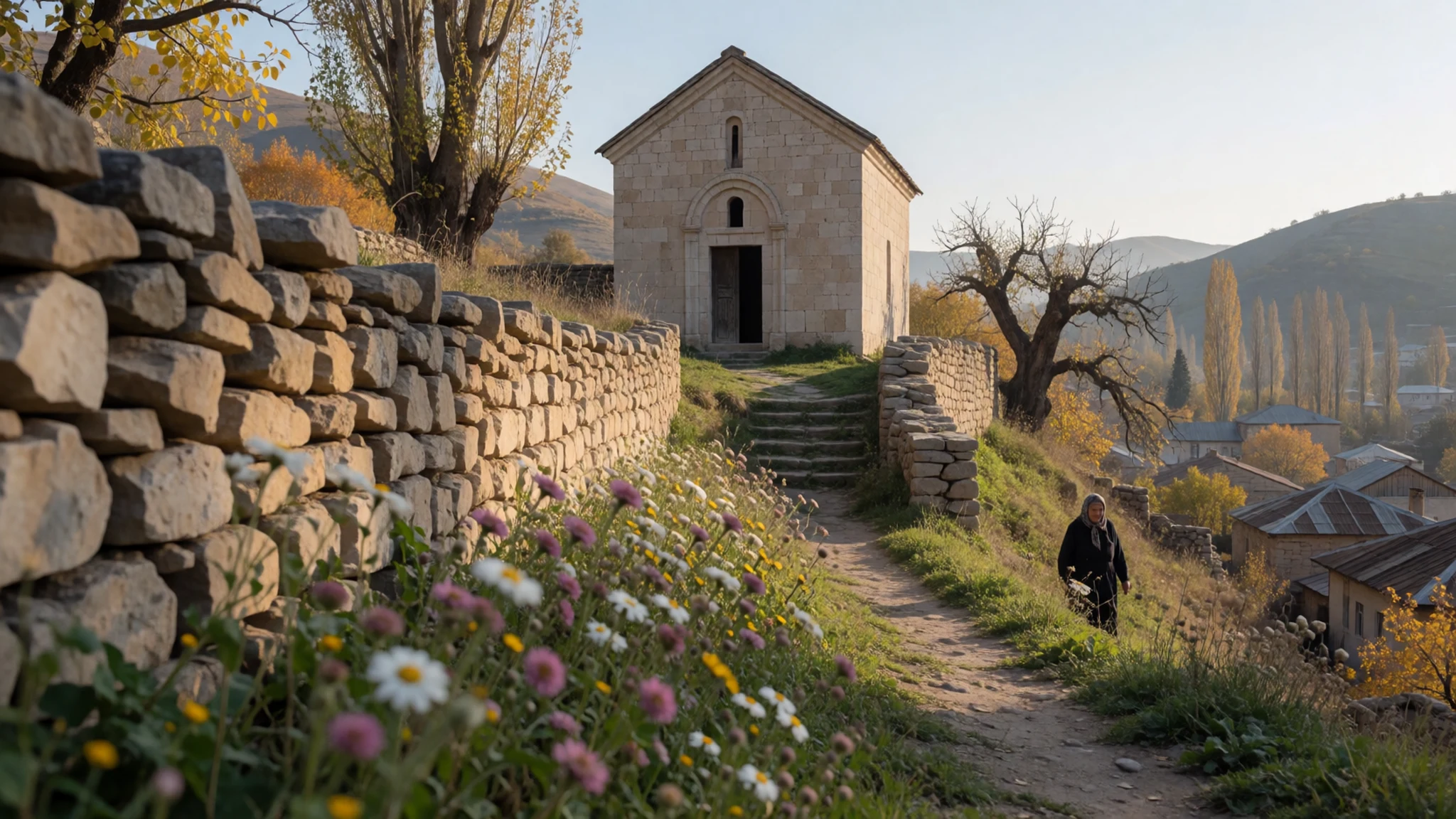
- Old railway station — Central Akhaltsikhe
A former station that has been renovated and now holds a lodging inside it. Even without staying, it is a pleasant short detour to see how old civic buildings in the town are being put back into use, and it sits comfortably within a walk from the castle gate.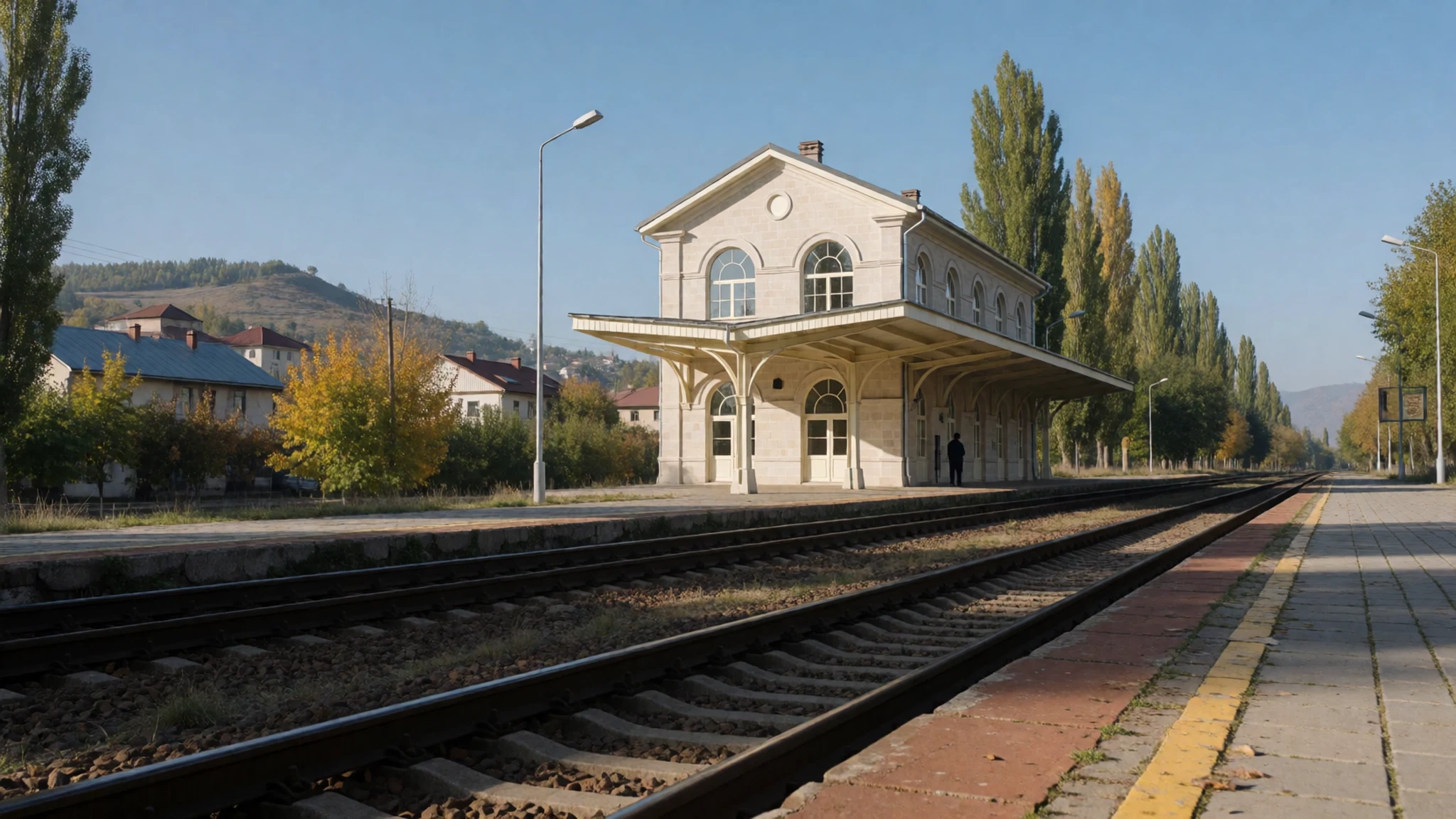
- Old Turkish baths — Western Akhaltsikhe
Dating to the eighteenth century, these baths are a reminder that Ottoman bathing culture shaped everyday life here. They are best seen as an architectural stop rather than a place to spend hours. A thermal spring also lies on the western side of town, if a soak appeals.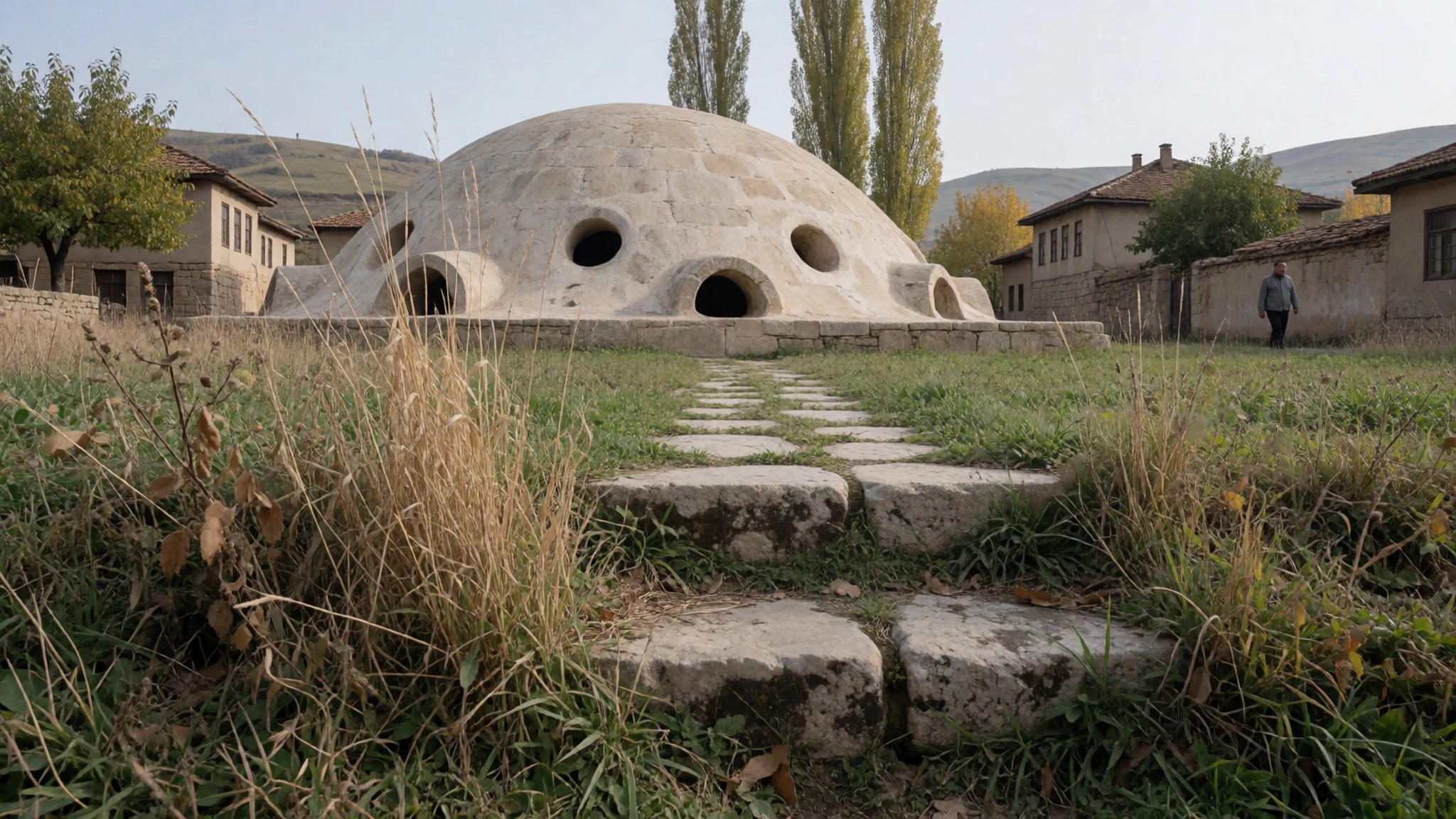
- Sapara Monastery — Outside Akhaltsikhe, towards the hills
A hillside monastery a short drive from town, founded in the tenth century. Its main church, dedicated to St Sabas, was built in the thirteenth century. The setting among wooded slopes is quiet, and the walk between buildings is gentle. Arrange transport in advance, as buses to the site are infrequent.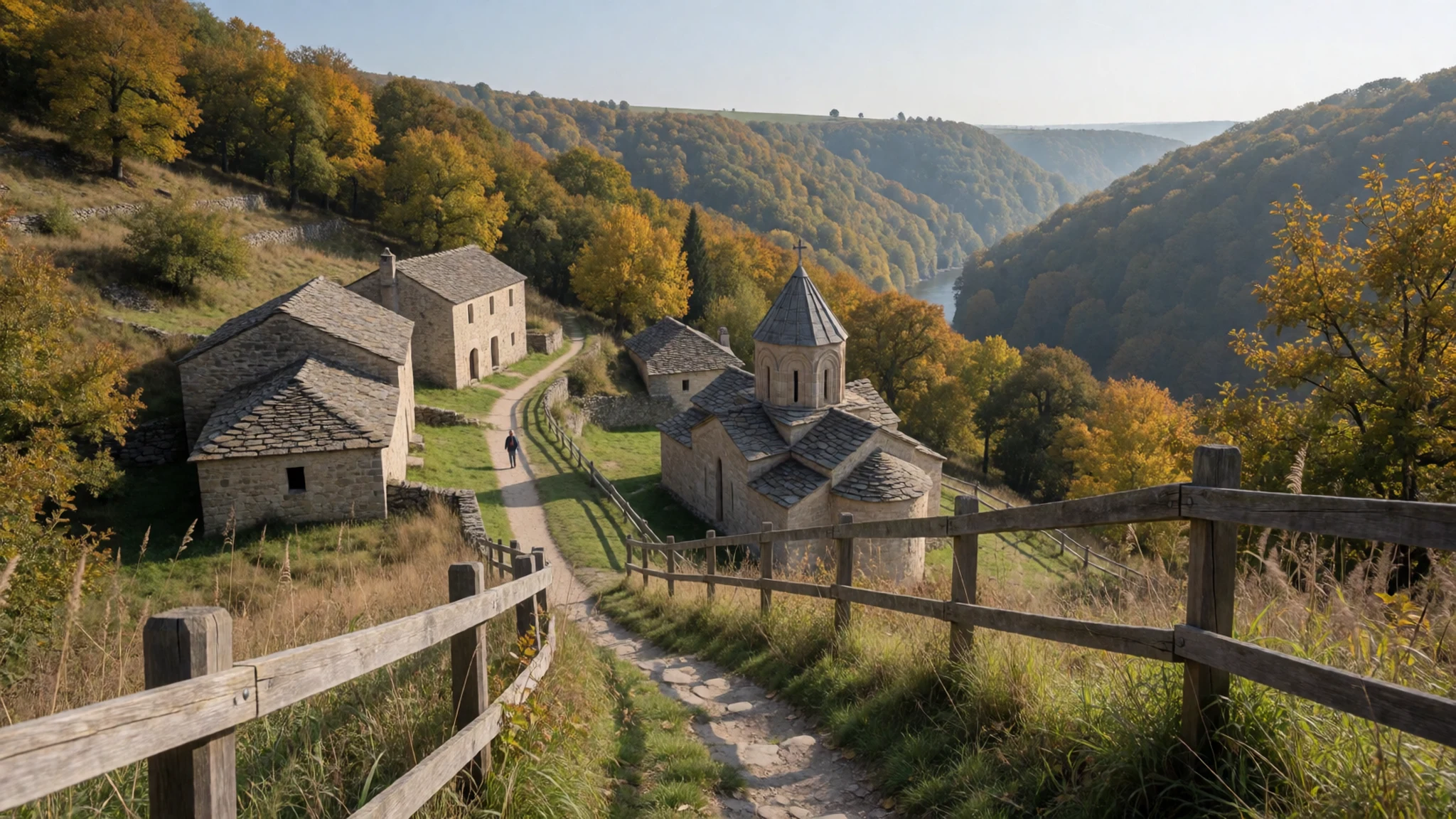
Culture
Rabati Castle sits in one of the more mixed corners of Georgia. Akhaltsikhe has a Georgian majority and a large Armenian community, and the castle itself holds a mosque and a church within the same walls. That is a fair summary of the region's past, in which Orthodox Christianity, Islam and several languages overlapped under different rulers. Locals are generally relaxed about visitors, though conversations about language and identity can be sensitive, so listening first is wise.
Georgian hospitality is real rather than a slogan. A guesthouse host may offer homemade wine, cheese and bread before asking anything about your plans, and refusing every offer can feel awkward. A formal feast, called a supra, has a toastmaster who leads a sequence of toasts, and it is polite to wait for each toast before drinking. Visitors invited to a family table should bring a small gift, such as sweets or fruit.
Religion remains part of daily life. Churches are active places of worship, with candles, icons and people crossing themselves at the door, so quiet voices and slow movement are expected. The Ottoman period left Muslim heritage that is now treated mainly as history, and the mosque in the castle is approached as a museum space.
Cover your shoulders and knees before entering any church, and take your shoes off before stepping into the mosque.
What to wear
The best-known traditional Georgian dress is the chokha, a long wool coat for men, worn with a belt, soft boots and often a felt or sheepskin hat. Rows of cartridge pockets across the chest are the signature detail. Women's costume traditionally featured long fitted gowns in silk or velvet, sometimes with embroidery and a veil or light headcovering. Wool, felt and silk were the usual materials, with heavier cloth for mountain winters. These outfits now appear mainly at festivals, weddings, folk dance performances and in museums.
Everyday dress in Akhaltsikhe is simple and modern: jeans, shirts, jackets and practical shoes, with older residents often favouring darker, more formal clothing for church. Younger people in the town follow broadly European fashion, and there is little that marks the Armenian and Georgian communities apart on the street.
For a visit, dress for the weather and the terrain. Summers are warm, but the town sits at altitude, so evenings cool quickly, and winter can be properly cold. Bring layers and a light rain jacket. The castle has cobbles, steps and slopes, so walking shoes with grip are better than sandals. For churches and monasteries, women should carry a scarf for the head, and both men and women should cover shoulders and knees. Shorts are best saved for the lodging.
What to eat
- Khachapuri — Any bakery or family-run eatery near the castle gate
Georgia's cheese-filled bread comes in several regional forms, and in Akhaltsikhe it is usually a round or boat-shaped loaf with melted cheese. It is filling, salty and best eaten hot, torn by hand and shared.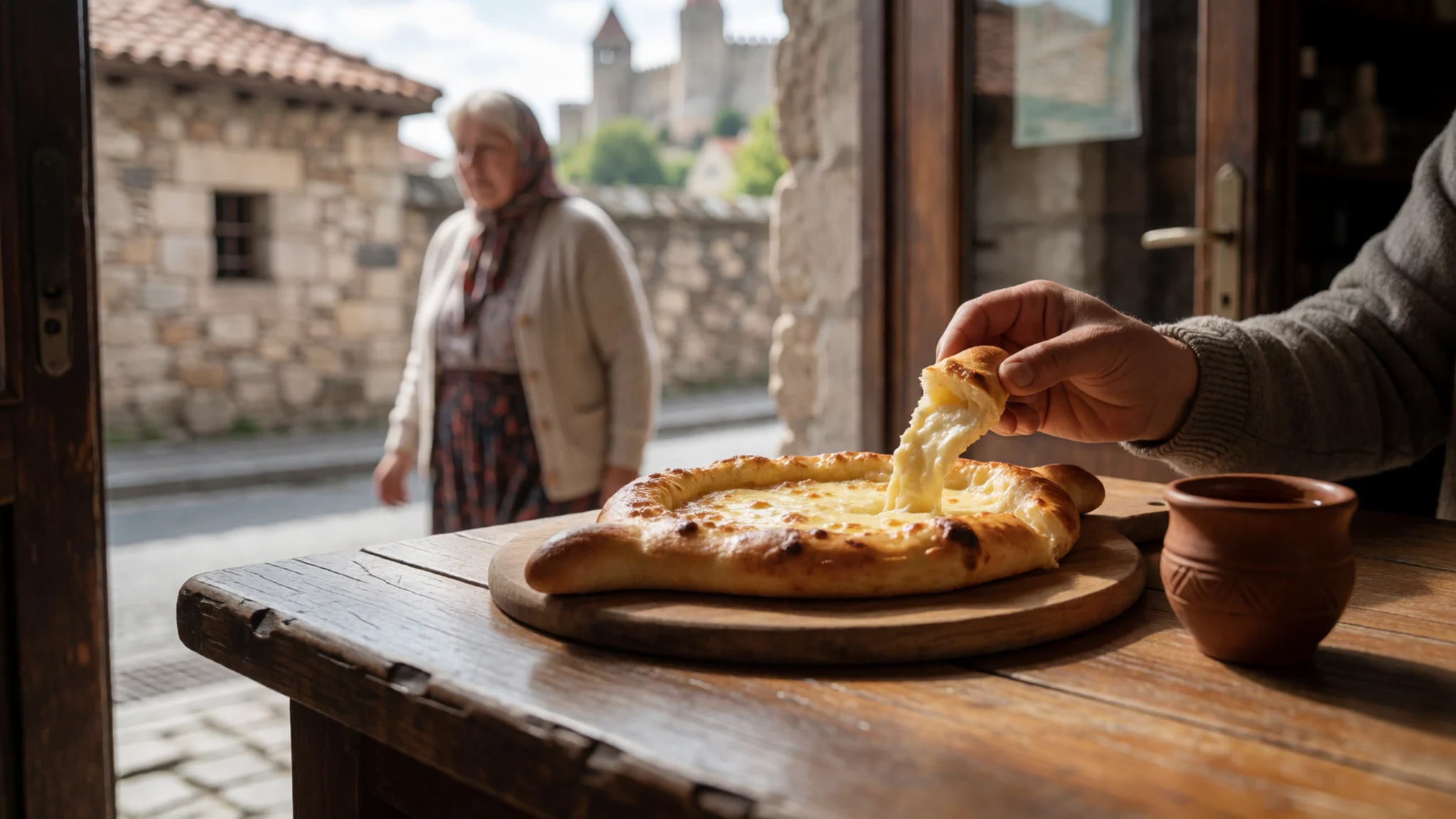
- Khinkali — Small restaurants in the town centre
Large twisted dumplings filled with spiced meat and broth. The usual method is to hold the knot, bite a small hole, sip the juices, then eat the rest. The knotted top is traditionally left on the plate.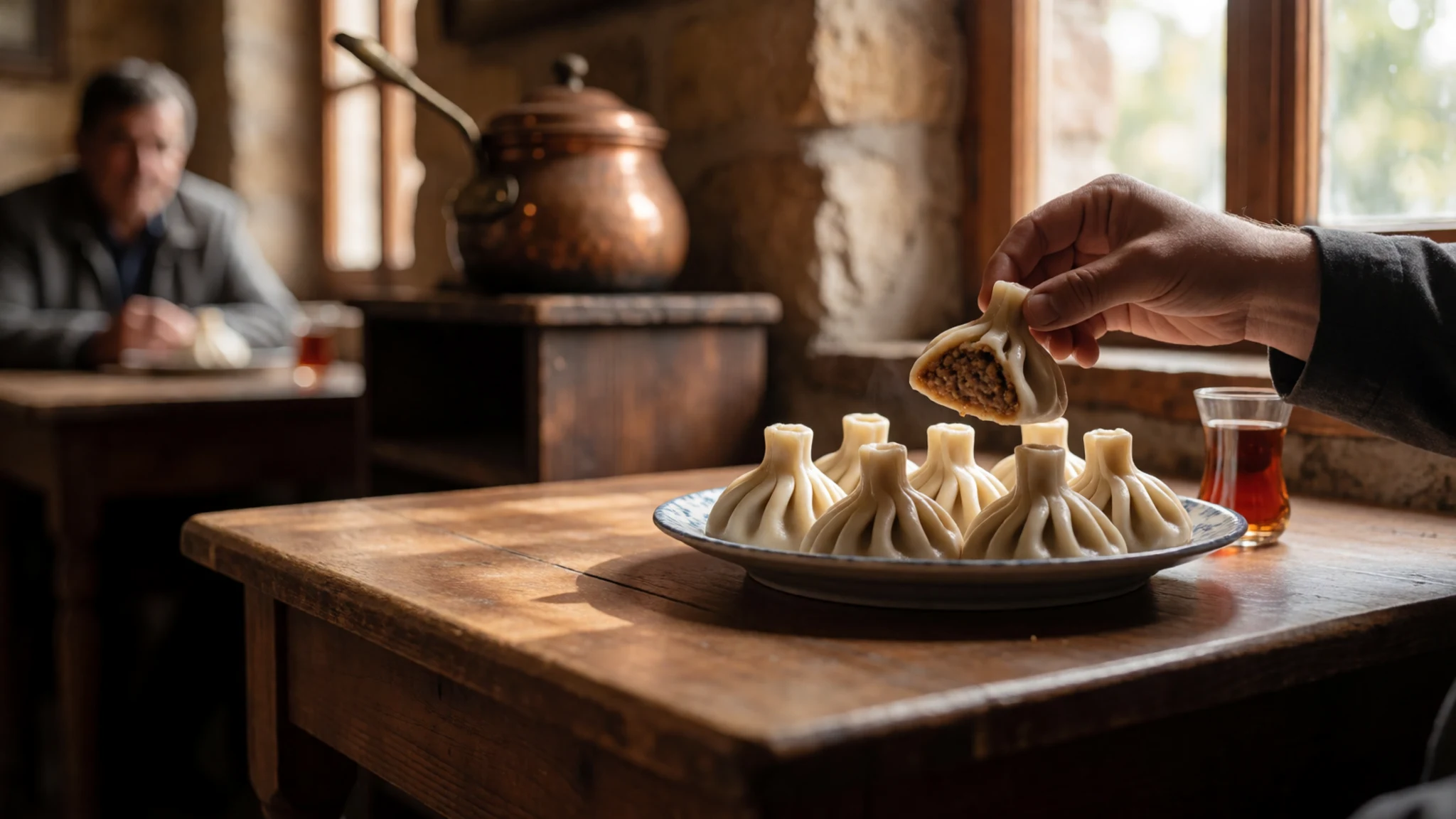
- Mtsvadi — Grill houses and roadside eateries
Skewered pork or lamb grilled over wood or charcoal, served with raw onion, pickles and bread. It is simple, smoky and common at roadside stops and family tables, especially in summer. - Lobiani — Bakeries and market stalls
A baked bread filled with mashed beans, seasoned with onion and spices. It works as a cheap, filling snack for the road and a good vegetarian option in a menu otherwise heavy on meat and cheese. - Churchkhela — Market stalls and roadside sellers
A string of walnuts dipped repeatedly in thickened grape juice until it sets into a chewy, sweet candle-shaped bar. It travels well and makes a practical gift to take back home.
Plan it
Best time. May–June and September–October bring mild days, but evenings often turn cold, and in May and October they regularly drop below freezing, with clear views from the ramparts. July and August are warm and busier, while winter is cold and many small guesthouses close.
How long. 1–2
Getting there. Fly into Tbilisi or Kutaisi, then continue by road. Shared minibuses (marshrutkas) run from Tbilisi's Didube bus station and from Kutaisi, Borjomi and Gori, usually in the morning or through the day. The last leg is a short walk or taxi ride to the castle gate. Check current times locally, as they change.
Budget. low
Tips
- Visit early or in the evening for softer light and fewer groups
- Book guesthouses ahead in summer, as many shut in winter
- Carry some cash for small shops, buses and market stalls
- Pair the castle with Vardzia by taxi or minibus, and start early
- Bring layers, as the town is at altitude and evenings cool quickly
Etiquette
- Dress modestly for churches and monasteries
- Take shoes off before entering the mosque
- Ask before photographing people, especially at markets and in church
Nearby
Sources
- Wikidata Q16534749 (CC0)
- Wikipedia: Akhaltsikhe Castle (rev 1364530559) (CC BY-SA 4.0)
- Wikivoyage: Akhaltsikhe (rev 5136361) (CC BY-SA 4.0)
- Photo: Akhalcikhe, old city general view (I kynitsky) (CC BY-SA 4.0)
- Photo: Rabati, Akhaltsikhe Fortress Museum (Kober) (CC BY 3.0)
- Photo: Rabati Castle in Akhaltsikhe, view from the city (Aleksey Mukhranov) (CC BY 3.0)
- Photo: Rabati Castle in Akhaltsikhe (Zurabgiorgadze) (CC BY-SA 4.0)
- Photo: Abano 3 (Goichev) (CC BY-SA 4.0)
- Photo: Abano 4 (Goichev) (CC BY-SA 4.0)
- Photo: Achalciche Rabat entrance 2019 (Karelj) (CC BY-SA 1.0)
- Photo: Achalciche Rabat interior 2019 (Karelj) (CC BY-SA 1.0)


