Sokhumi
Sokhumi, Georgia
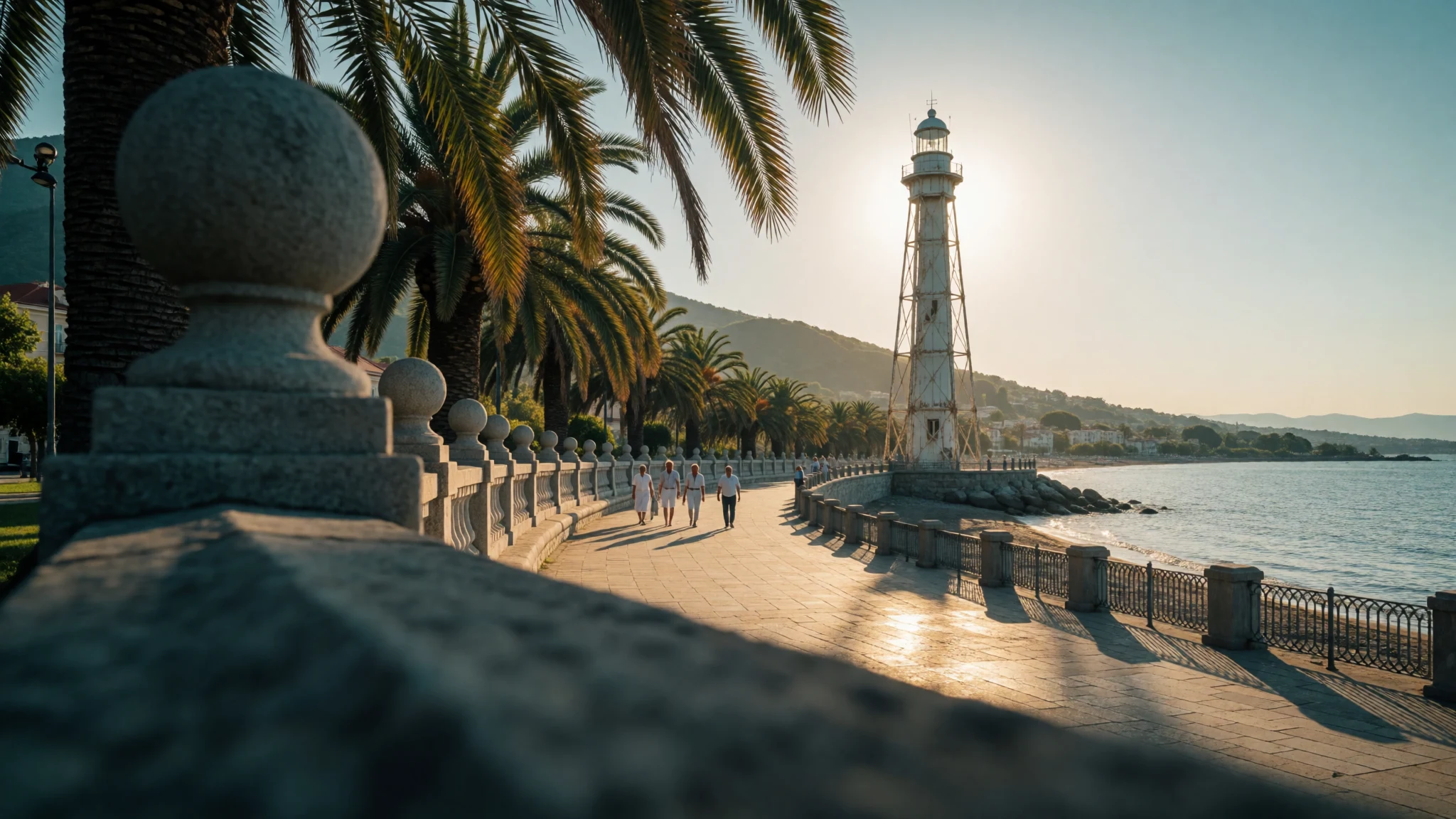
Sokhumi is a faded Black Sea resort with palm-lined seafront, Greek and medieval ruins, and a contested status that shapes every trip.
The place
Sokhumi sits on a wide bay on the eastern shore of the Black Sea, with green Caucasus foothills behind it and an open horizon in front. The city lies about 20 metres above sea level, and everything in it leans towards the water: a long seafront promenade, a working port, a railway line and an airport. Just over 65,000 people live here. Its status is contested, and a visitor should understand that before planning anything. Most countries, Georgia among them, treat Sokhumi as the capital of the Autonomous Republic of Abkhazia, part of Georgia. In practice, Abkhaz authorities have governed it since the war that followed the Soviet collapse, and Abkhazia calls it its own capital. Which rules apply to a trip depends on the route taken in.
The setting explains why the city became a resort in Soviet times. The climate is humid subtropical, mild enough for palms, magnolias and citrus to grow along the streets, and the coast was lined with sanatoriums and mineral-water spas for workers sent to recover. Much of that world is still visible, though faded. Some buildings are cracked or abandoned, others freshly painted, and the pace is slow. In summer the seafront fills with families, mostly from Russia, eating ice cream and drinking beer by the railings. Out of season the city is quiet, damp and rather melancholy, and cafés close early. It suits travellers who like places that feel lived-in rather than polished, and who can cope with patchy services, little English and some paperwork.
Its story
Sokhumi's recorded history begins with Greek colonists from Miletus, who built a trading town called Dioscurias on this bay, replacing an older settlement used by Colchian tribes. Legend credited the founding to the twin heroes Castor and Pollux, the Dioscuri, while another tale gave the honour to their charioteers. Ships brought salt and goods from across the Greek world and carried away timber, linen and hemp. The port also dealt in enslaved people, and its bazaars were remarked on for the number of languages heard in them. The sea slowly swallowed part of the old town, yet it stayed prosperous enough to side with Mithridates of Pontus and to support him until the end of his struggle against Rome.
Later centuries brought a string of rulers. The town was called Tskhumi under the Kingdom of Abkhazia and then the Kingdom of Georgia, was fought over by local princes, and passed to the Ottomans, who held it, with disputes, until the Russian Empire took it in 1810. After the upheavals of the Russian Civil War it was briefly part of the Democratic Republic of Georgia before the Bolsheviks arrived. In Soviet times it served first as capital of an Abkhaz republic and then of an autonomous republic inside Soviet Georgia, and it became a favourite holiday coast. The most recent chapter, the war after the Soviet collapse, still shapes daily life and politics.
What to see
- Seafront promenade — Along the bay, west of the government buildings
Sokhumi's promenade runs for about 4 km along the bay and works as the city's living room. In summer locals and holidaymakers stroll, talk and sit at café tables, and the quay is a pleasant spot for watching the light change. Evening is best, once the heat eases and a sea breeze arrives.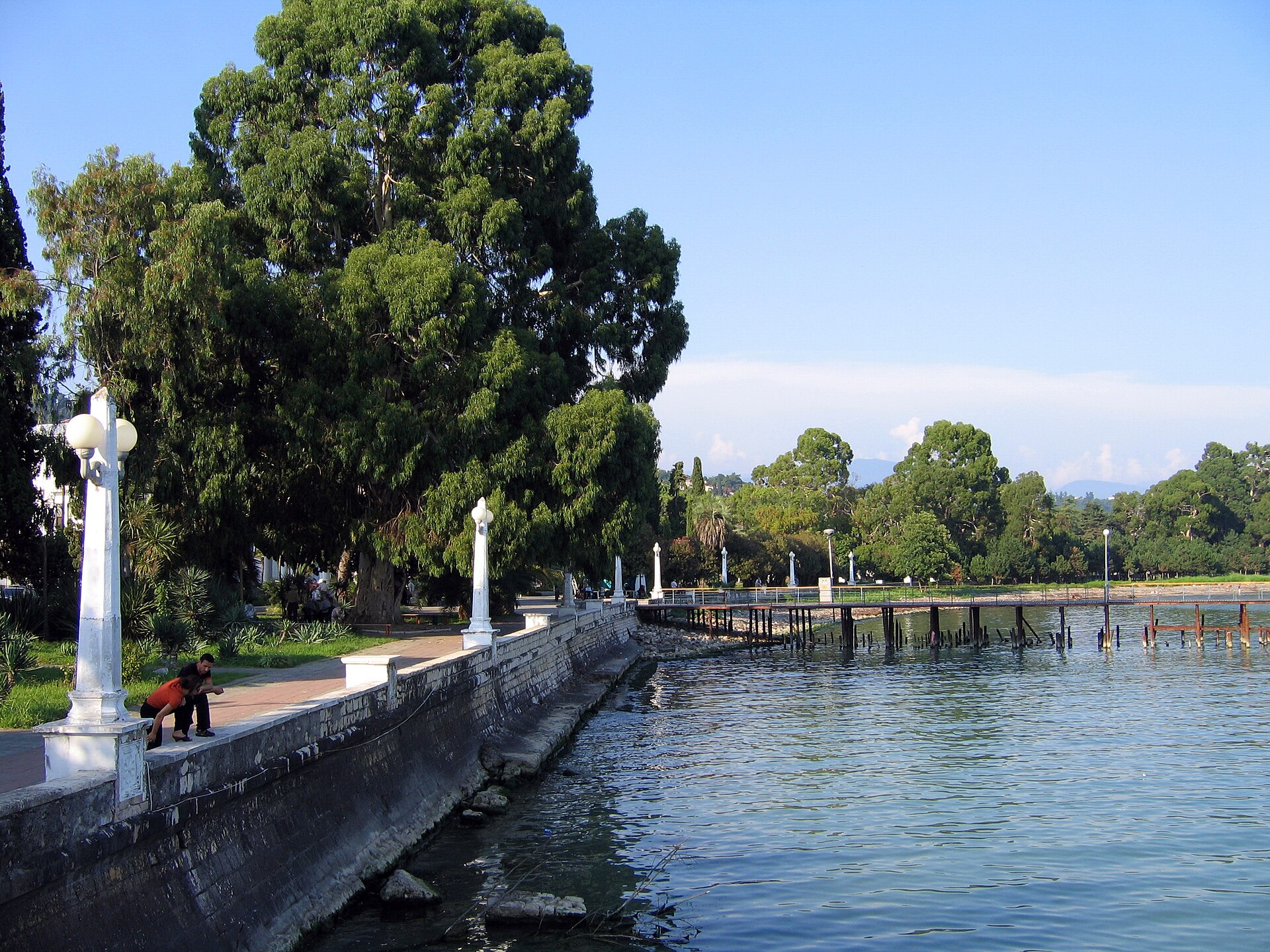
- Beslet bridge — Besletka river, north-east edge of the city
This arched stone bridge over the Besletka river dates from the 12th century and is linked with Queen Tamar of Georgia. It is a modest structure, best seen as a short trip out of the centre, and a good reminder that Sokhumi's past reaches well beyond the seafront.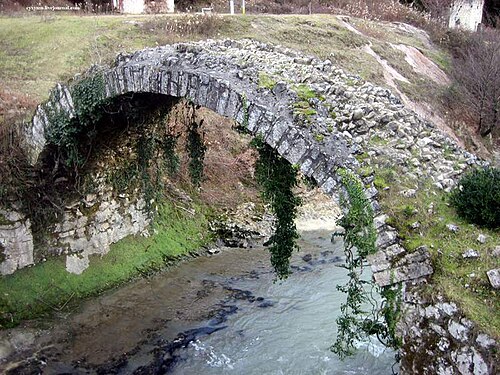
- Botanical Garden — Central Sokhumi
Founded in 1840 to bring new plants into the Caucasus, the Botanical Garden is a shaded refuge from summer heat. Palms, exotic trees and old paths make it a slow, pleasant walk, though upkeep varies, so expect a charming rather than manicured garden.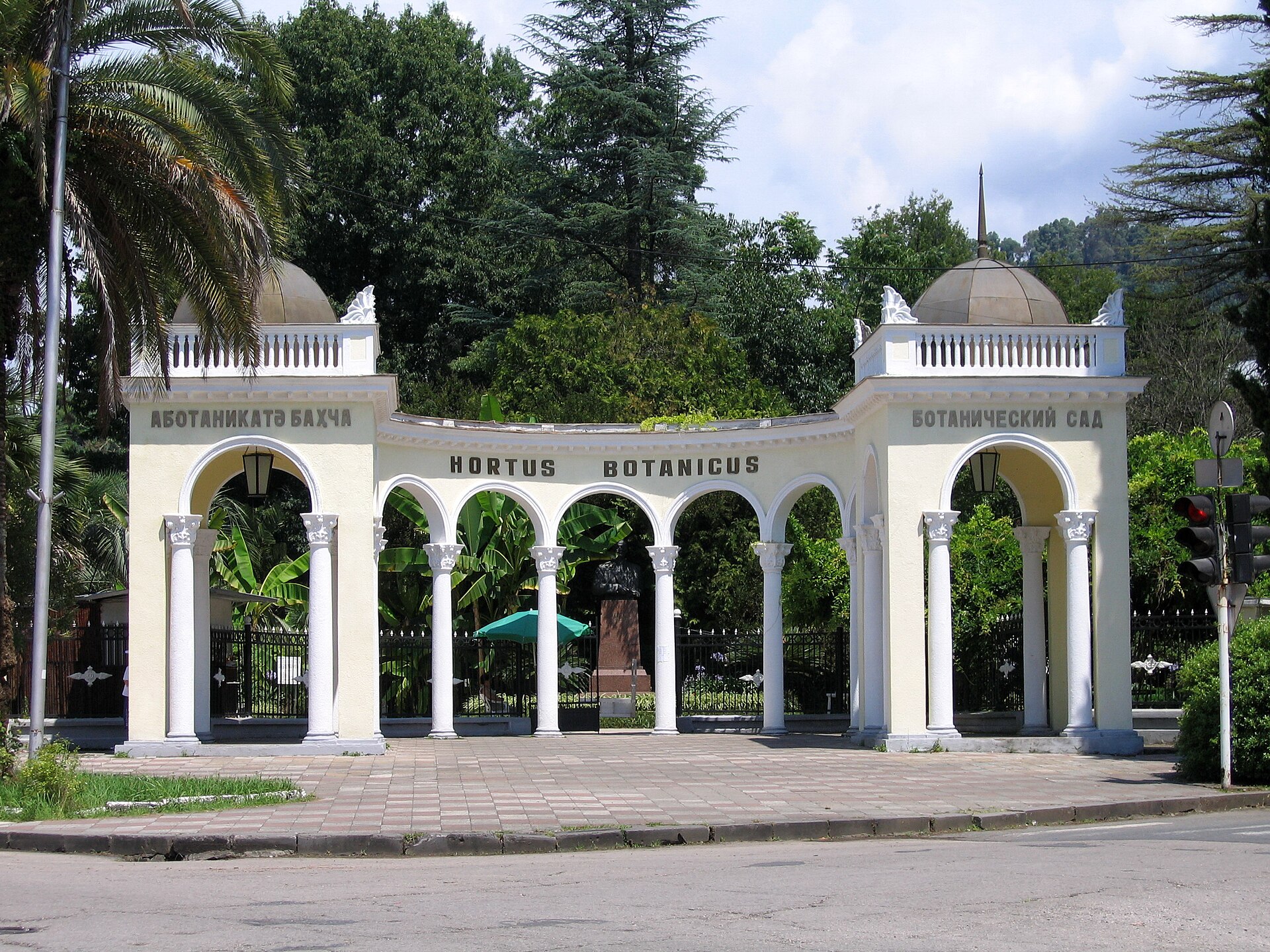
- Sukhum fortress site — Near the old harbour, central Sokhumi
A fortress has stood here since Roman times, and the Ottomans rebuilt it in the early 18th century. It later served as a prison and was largely destroyed in the Soviet years, so little remains. The site still shows how the bay was defended and rewards a short, imaginative visit. - Sokhumi lighthouse — Western end of the bay
The lighthouse stands 37 m tall. It was made in France and shipped here in 1861, which is an unlikely journey for a Black Sea port. It is easy to include on a long seafront walk and gives a clear view back across the bay towards the town. - Castle of Bagrat III — Hill above the Besletka valley
This ruined castle goes back to the Kingdom of Abkhazia and is named after King Bagrat III. Only fragments survive, scattered over a green slope, but the ground gives a feel for the medieval kingdom. Sturdy shoes help, as paths are uneven and signs are scarce.
Culture
Sokhumi's cultural life is quietly active. Theatres stage classical and modern performances from September to June, and several galleries and museums show Abkhaz and historical visual art. Abkhaz and Russian are both widely heard, and printed dictionaries between them in shop windows hint at how closely the languages sit together. Hospitality matters here as it does across the Caucasus: meals are long, hosts press food on guests, and toasts with wine can turn a simple lunch into an afternoon.
The city carries the marks of its history openly. Roman walls, medieval castle remains, a Genoese fort and an Ottoman fortress all sit within the town's story, alongside Soviet-era sanatoriums and public buildings. The war that followed the Soviet collapse remains close to many families' lives, and displacement and loss are part of local memory. Conversations about who the city belongs to can be sensitive, and many residents hold firm views. Visitors who listen more than they argue tend to be met warmly. The Botanical Garden, founded in 1840, reflects an older, calmer tradition of learning that survives despite everything. Evening promenading, coffee-house conversation and card or backgammon games are everyday habits, and they are often the best way to meet people.
Ask before photographing people, avoid pointing a camera at military or border-related sites, and keep opinions on the city's political status to yourself unless a host raises it first.
What to wear
Traditional Abkhaz dress is best known for the men's chokha, a long wool coat with a row of cartridge pockets across the chest, worn with a sheepskin papakha hat, soft leather boots and sometimes a heavy felt cloak called a burka. Women's festive dress is a long, fitted gown, often with silver belt fittings, embroidered trim and a head covering. These outfits appear at weddings, folk dance performances and national celebrations rather than on the street.
Day to day, people in Sokhumi dress simply. Summer brings shorts, sundresses, flip-flops and a great deal of beachwear on the promenade, much of it in the style of Russian holidaymakers. In cooler, damp months residents wear jackets, jeans and sturdy shoes, and older people often keep to smarter, more formal clothes for outings. Men in suits and women in dresses are still common at theatres and official occasions.
For visitors, light cotton or linen is the sensible choice from late spring to early autumn, when the air is humid, with a rain jacket and closed shoes for the wetter months. Swimwear belongs on the beach, so cover up with a shirt or wrap in town. Shoulders and knees should be covered for churches and monastery visits, and women may want a scarf to hand. Wear comfortable shoes for broken pavements, hillside ruins and pebbly beaches; water shoes help in the sea.
What to eat
- Abysta — Home-style cafés away from the seafront
A soft porridge of cornmeal, often stirred with cheese, served beside meat, beans or vegetables. It is the everyday Abkhaz staple, plain and filling, and it works well as a comfort dish after a long day on foot or in damp weather. - Ajika — Local markets and family-run food stalls
A hot, deep red paste of chilli, garlic, herbs and spices, used as a dip or spread on bread, meat and cheese. Buy a small jar at a market if tolerance for heat is limited; it varies from mild to fierce. - Grilled Black Sea fish — Seafront restaurants and garden eateries in the centre
Fresh fish grilled simply with salt, lemon and herbs, usually served whole with bread and salad. Menus may be in Russian only, so point or ask what came in that morning. It suits a long lunch beside the water. - Falafel and kibbeh — The Syrian-Abkhazian café in central Sokhumi
A small café in the centre serves Levantine dishes cooked by an owner with Syrian roots, including falafel, kibbeh, harissa and homemade yogurt. It makes a pleasant change from local fare and shows how varied the city's food scene has become. - Fresh bread and local cheese — Neighbourhood bakeries and the central market
Warm flatbreads and loaves from town bakeries pair well with the region's fresh, salty cheeses, tomatoes and herbs. Together they make a cheap, easy picnic for the promenade or the botanical garden, especially on a hot afternoon.
Plan it
Best time. May–June and September–October, when the humid subtropical climate is warm rather than sticky and the sea is pleasant. July and August are hot, humid and busy with holidaymakers. Winters are mild but damp, and many cafés and services are quieter.
How long. 2–3
Getting there. Entry rules are the main question. Most visitors arrive from the Russian side: a local train links Sochi with Sokhumi in about 5 hours, and a direct sleeper runs from Moscow in two nights. A travel permit from Abkhazia's foreign ministry is normally exchanged for a visa in Sokhumi. Entry from Russia can complicate later travel in Georgia proper, so check current advice from the UK FCDO or India's MEA, and the city website (https://abkhazia.gov.ge/cities/sokhumi), before booking.
Budget. low
Tips
- Sort out the entry permit and visa requirements well before travelling, and check current government travel advice for your nationality
- Book accommodation ahead for July and August, when Russian holidaymakers fill the coast
- Carry cash, as cards may not be accepted everywhere, and bring enough for the whole stay
- Drink bottled or filtered water, and carry sun protection and a rain jacket depending on season
- Walk the promenade in the early evening, when it is cooler and livelier
Etiquette
- Ask before photographing people, and avoid photographing military sites or border areas
- Cover shoulders and knees when entering churches and monasteries
- Be careful when discussing the city's political status, and let local hosts lead the conversation
Nearby
Sources
- Wikidata Q40811 (CC0)
- Wikipedia: Sukhumi (rev 1382724747) (CC BY-SA 4.0)
- Wikivoyage: Sukhumi (rev 5319880) (CC BY-SA 4.0)
- Photo: Sokhumi Collage (CC BY-SA 4.0)
- Photo: Botanical garden, Sukhum (CC BY 3.0)
- Photo: On quay, Sukhum (CC BY 3.0)
- Photo: Suhumi by Prokudin-Gorskii (Public domain)
- Photo: Beslet bridge (CC BY-SA 2.5)
- Photo: Railway station, Sukhum (CC BY 3.0)
- Photo: Сухум (CC BY-SA 4.0)
- Photo: Russian-Abkhazian dictionaries, Sukhumi (CC BY-SA 4.0)


