Valdés Peninsula
Valdés Peninsula, Argentina
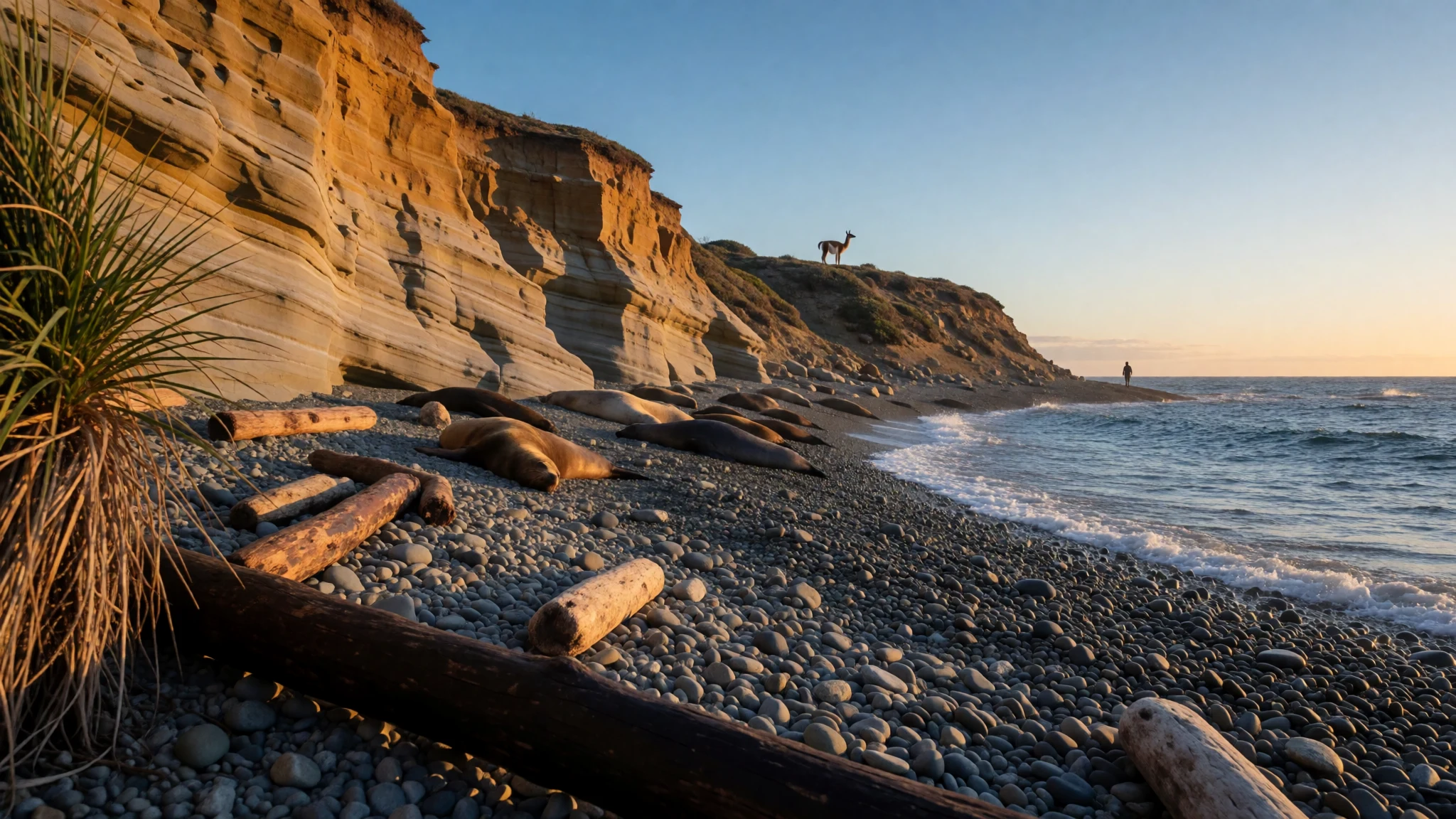
Valdés Peninsula offers whales in sheltered gulfs, sea lions and elephant seals on gravel beaches, and guanacos on windy Patagonian steppe, all in a single trip.
The place
Valdés Peninsula pushes out into the south Atlantic from the coast of Chubut province, in Argentine Patagonia, and hangs onto the mainland by a narrow isthmus. It covers about 3,625 sq km, which is why a visit here is mostly about driving: sights are spread far apart along gravel tracks and quiet tarmac. The land is low, dry and windy, with a recorded elevation of 69 metres, scrubby steppe and a scatter of salt lakes. The biggest sits about 40 metres below sea level, a dip once taken for the lowest ground on the continent. Sheep estancias occupy much of the interior, and the whole peninsula is privately owned, which is why access is organised rather than free-roaming. Puerto Pirámides is the only settlement, a tiny seaside village laid out like a letter T, with a small market, a few shops, eateries and places to sleep. The larger town of Puerto Madryn, on the mainland, is the usual gateway for tours, car hire and buses. What draws people is the wildlife. The sheltered gulfs on the peninsula's flanks, Golfo Nuevo and Golfo San José, are calmer and warmer than the open sea, so southern right whales come to mate and calve there between May and December. Along the shore live sea lions, elephant seals and fur seals, while the dry interior holds guanacos, rheas and maras. Birdwatchers have recorded at least 181 species. UNESCO lists the peninsula as a World Heritage Site for its fauna and geology.
Its story
Valdés Peninsula's story is mostly one of animals choosing a place and people slowly learning to share it. Long before any tour boat, whales were using the gulfs on either side of the peninsula as a nursery, drawn by water that is calmer and warmer than the open ocean. Sheep farming later claimed the dry interior, and the estancias that remain are a legacy of that era; they are also why the land sits in private hands rather than under a single park authority. Over time the wildlife became the real asset. Southern right whales, sea lions and elephant seals brought naturalists, then visitors, and Puerto Pirámides, once a very small outpost, grew quickly into a village with a working seafront, eateries and boat launches, though it is still tiny by any measure. The World Heritage listing recognised the peninsula's fauna and geology and gave its protection international weight. Orcas add a dramatic chapter. Off the open coast they have learnt to rush onto the shore to seize sea lion pups and young elephant seals, a behaviour that visitors travel far hoping to witness and that rarely obliges. Today the story is about balance: guided access, limited camping and rules that keep people from crowding the animals. The peninsula remains a working landscape of wind, wool and wildlife, with the whales' season still setting the rhythm of the year.
What to see
- Puerto Pirámides — Golfo Nuevo shore, west side of the peninsula
Puerto Pirámides is the peninsula's only village and the main base for whale-watching boats on the sheltered Golfo Nuevo side. It has two streets, a small market, an ATM and a handful of eateries. Sea lions can be seen along the coast a short drive away, best from December to March. - Punta Norte — Northern tip of the peninsula
Punta Norte is the northern tip, where sea lions and elephant seals crowd the gravel beach below the cliffs. It is also the place where orcas sometimes charge onto the shore to hunt pups. Seeing that takes real luck, so go for the colonies and treat an orca as a bonus. - Punta Delgada — South-eastern corner of the peninsula
Punta Delgada is a cliff coast with a sea lion colony and a lighthouse. Access to the cliff and the shore below is only on commercial tours, so independent visitors cannot wander down alone. The lighthouse site also has a self-service eatery, handy given how remote this south-eastern corner feels. - Caleta Valdés — Atlantic coast, east side of the peninsula
Caleta Valdés is a long, narrow inlet sheltered behind a gravel spit on the Atlantic side. Elephant seals haul out on its beaches, and penguins can also be seen in the area. Allow time for the slow gravel road, and keep a respectful distance from the animals. - Salinas — Interior steppe, on the road to Punta Delgada
The salt flats lie along the interior route towards Punta Delgada, and a stop here is worthwhile for the sheer emptiness. The white crust glares in sun, the wind carries the smell of brine, and guanacos and maras often graze at the margins. Bring sunglasses and a windproof layer. - Isla de los Pájaros — Southern Golfo San José, north-west side
Isla de los Pájaros, or Bird Island, is a small piece of land lying just offshore in the southern part of Golfo San José. It is a protected nesting site, so it is watched from a distance rather than visited. Binoculars help, and the peninsula's cape petrels and other seabirds are the draw.
Culture
Valdés Peninsula sits in Chubut, a province whose culture blends sheep-farming estancia life, Spanish-speaking Argentine habits and the legacy of Welsh settlers further along the coast, and the peninsula itself feels more ranch than resort. Daily life revolves around the weather, the wool and, increasingly, the whales. Guides here are often naturalists or boat operators who grew up near the animals, and they tend to speak about them with a mix of pride and caution. Mate, the bitter herbal infusion passed around in a shared gourd, is the social glue; offering a sip is a gesture of friendship, and it is common to see people with thermoses on the beach in Puerto Pirámides. Asado, slow-grilled meat over embers, marks weekends and gatherings, and even the remote lighthouse eatery follows that tradition. Evenings in the village are quiet, with a few bars and a modest social life shaped by the tourist calendar, which swells in whale season and thins out in winter. Because the whole peninsula is private land, conservation depends on cooperation between owners, operators and authorities, and visitors are part of that agreement rather than outside it. Rules on distance from animals and on staying within designated areas are not bureaucracy but the price of access. When the wind drops and the gulf goes still, the loudest sound is often a whale's breath. Keep to marked tracks and designated campgrounds, stay well back from seals, sea lions and penguins, and never approach or feed any wildlife.
What to wear
Traditional dress around Valdés Peninsula is the working wardrobe of the Patagonian gaucho and estancia hand: bombachas de campo, loose pleated cotton or twill trousers; a wool or felt boina beret; a woven faja sash at the waist; and a poncho or wool cape against the wind. Wool, from the region's sheep, is the defining textile, and the Mapuche and Tehuelche peoples of Patagonia have long woven and sewn warm garments from wool and hides. Gaucho dress appears at rural festivals and on estancia visits, less so in daily village life. What people actually wear now is practical: fleeces, windproof jackets, jeans or walking trousers, sturdy boots and woolly hats, with guides in branded waterproofs on the boats. Puerto Pirámides is relaxed; shorts and sandals show up on warm beach afternoons, but evenings turn cool fast. Visitors should dress in layers, with a windproof outer shell and a waterproof for boat trips, because the wind is relentless and the sea spray cold. Bring a sun hat, sunglasses and strong sunscreen, since the open steppe offers no shade. Closed, grippy shoes suit gravel paths and cliff viewpoints. There are no religious sites with dress codes on the peninsula, so comfort and warmth decide.
What to eat
- Asado — Self-service eatery at the Punta Delgada lighthouse, and parrillas in Puerto Madryn
Slow-grilled beef and lamb cooked over embers, served with salad and bread. Even the remote lighthouse at Punta Delgada has a self-service eatery known for it, a welcome surprise in such a distant corner of the peninsula. - Pescado del día — Seafood eateries along the waterfront street in Puerto Pirámides
Fish of the day, usually grilled or baked and served simply with lemon and potatoes. Seafood is a regional strength, and several eateries in the village work from the daily catch, so the menu changes with what the boats bring in. - Cordero patagónico — Estancia dining rooms and parrillas in Puerto Madryn
Patagonian lamb, roasted until tender, often over an open fire. Sheep are raised on the peninsula's estancias and across the steppe, so lamb is the natural main course for a hungry traveller after a day in the wind. - Empanadas — Bakeries and takeaway counters in Puerto Madryn and Puerto Pirámides
Baked or fried pastries filled with minced beef, ham and cheese, or sometimes fish. They travel well in a daypack and make a good lunch for the long drives between viewpoints. - Mate with alfajores — Cafés and bakeries in Puerto Madryn, or shared on the beach at Puerto Pirámides
Mate is the bitter herbal infusion drunk from a shared gourd, usually paired with alfajores, soft biscuit sandwiches filled with dulce de leche. It is the standard pause on windy days and a friendly way into conversation.
Plan it
Best time. September to November is a good window: whales are in the gulfs (roughly June to December), the weather is mild but windy, and crowds are lighter than in summer. December to March suits the sea lion colonies. The peninsula is dry and exposed all year, and in the low season some eateries close, so call ahead.
How long. 2–3
Getting there. Puerto Madryn is the gateway town. Fly to the nearest regional airport at Trelew or Puerto Madryn and continue by road. From Puerto Madryn, join a tour, rent a car (sharing the cost with other travellers is common) or take a bus to Puerto Pirámides. Buses only reach the village, so a tour or car is needed to see the rest.
Budget. mid
Tips
- Book ahead in summer and at weekends, as the peninsula is popular and rooms fill
- Take a tour or hire a car; relying on the bus alone leaves you stuck in Puerto Pirámides and missing most of the peninsula
- The road between the penguin area and Punta Norte has loose gravel, so drive slowly and ask the tourist information office for current conditions
- Carry cash and fill the tank before leaving the mainland; check the official site (http://www.peninsulavaldes.org.ar) for current entry arrangements
- In the low season call ahead to confirm that eateries and places to sleep are open
Etiquette
- Stay on marked tracks and do not explore or camp outside designated areas, as the land is privately owned
- Keep your distance from wildlife and never feed or chase animals
- Follow your boat operator's instructions when whales are close
Nearby
Sources
- Wikidata Q213237 (CC0)
- Wikipedia: Valdés Peninsula (rev 1366157252) (CC BY-SA 4.0)
- Wikivoyage: Valdes Peninsula (rev 5293510) (CC BY-SA 4.0)
- Fotografia ballena Franca Austral — Leonardo Lanza (Public domain)
- ballena en Argentina — Matiassto (CC BY-SA 4.0)
- Magellan penguins, Valdes Peninsula — Eberhardt TRAVEL (CC BY 3.0)
- Chubut-PeninsulaValdes-Armadillo-TatuCarreta-P2230729b.jpg — Unknown author (CC BY 3.0)
- Wild Guanako at Peninsula Valdes — Eberhardt TRAVEL (CC BY 3.0)
- Valdes Peninsula, Patagonia — Reinhard Jahn (CC BY-SA 2.0 de)
- Orcas in Punta Norte Valdes Peninsula — Ecohotel (CC BY 3.0)
- Psora crenata (Taylor) Reinke — nastassja, Mushroom Observer (CC BY 3.0)


Wildlife
- Southern right whale (animal)
The southern right whale is a giant whale with a smooth, broad back, no fin, and pale rough patches on its head. Look for it in Golfo Nuevo and Golfo San José, the calm, warm gulfs on the peninsula's sides, where whales arrive to mate and have their calves from May through December. Watch with a guide, keep a respectful distance, stay quiet so mothers and calves are left in peace, and never try to touch or feed them. Once hunted almost to extinction, they are now protected.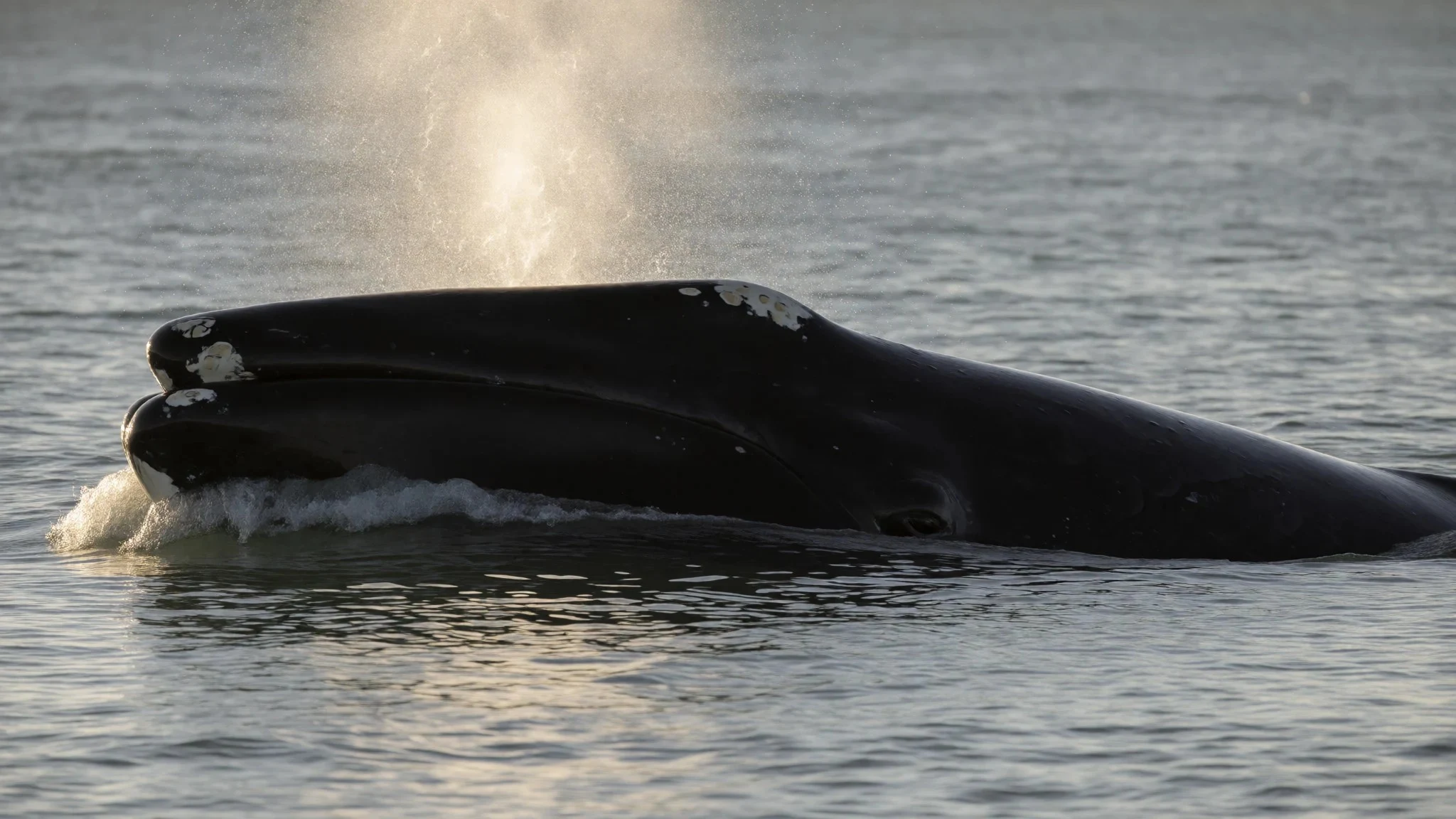
- Guanaco (animal)
The guanaco is a wild member of the camel family and a close relative of the llama. On the peninsula, look for it in the dry interior, alongside rheas and maras. Ask your guide for the best time of day. Keep well back, move slowly and speak softly so the animals stay calm, and never offer them food. Binoculars let you enjoy them from afar.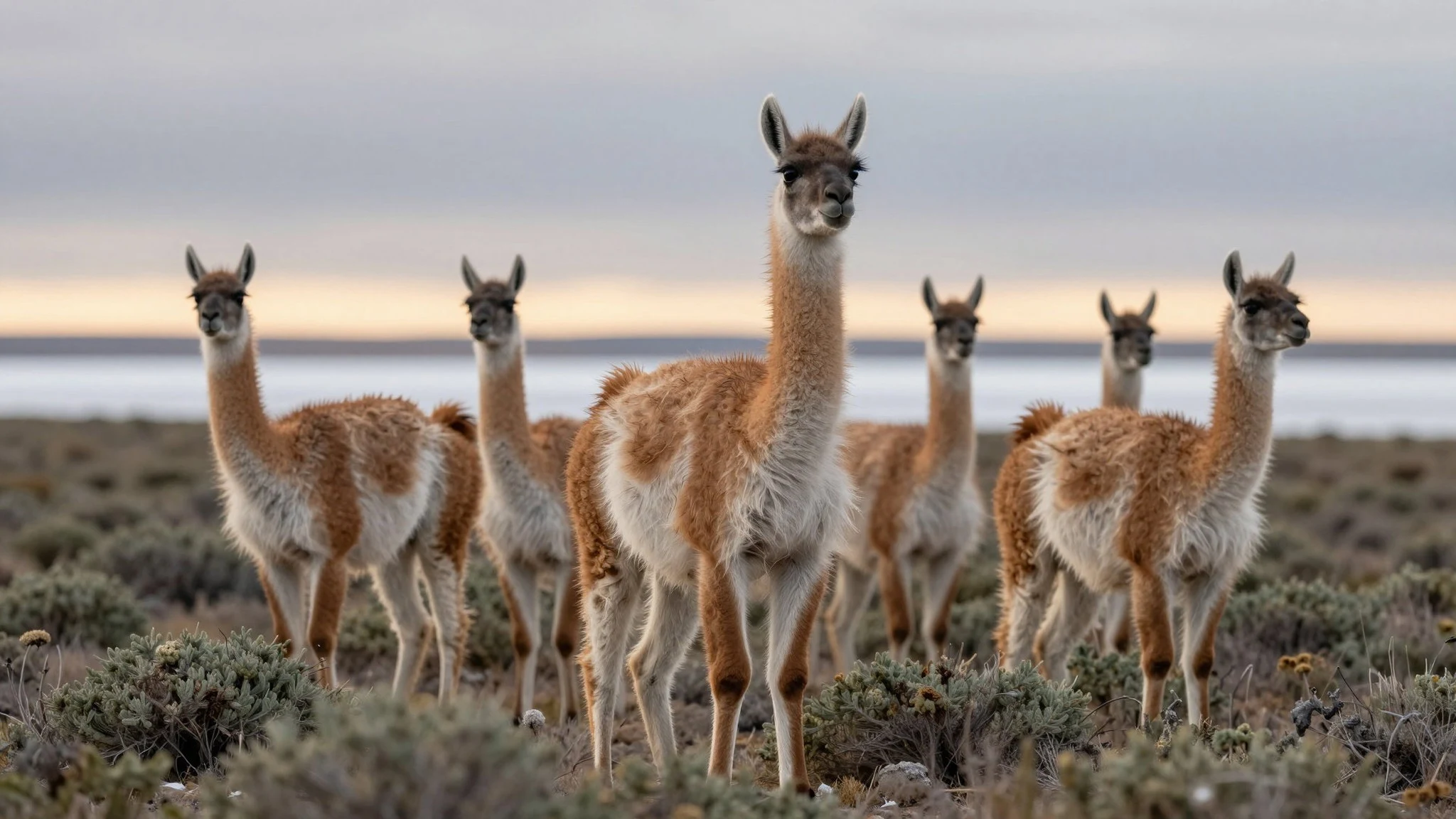
- Cape petrel (bird)
The cape petrel is a seabird so plentiful across the Southern Ocean that it is easy to feel it is everywhere. On the peninsula it is among the seabirds that draw visitors, and binoculars make the watching much better. Keep a respectful distance so the birds stay relaxed, speak softly, and let a local guide show you good places to look. Never feed them; wild seabirds should find their own food.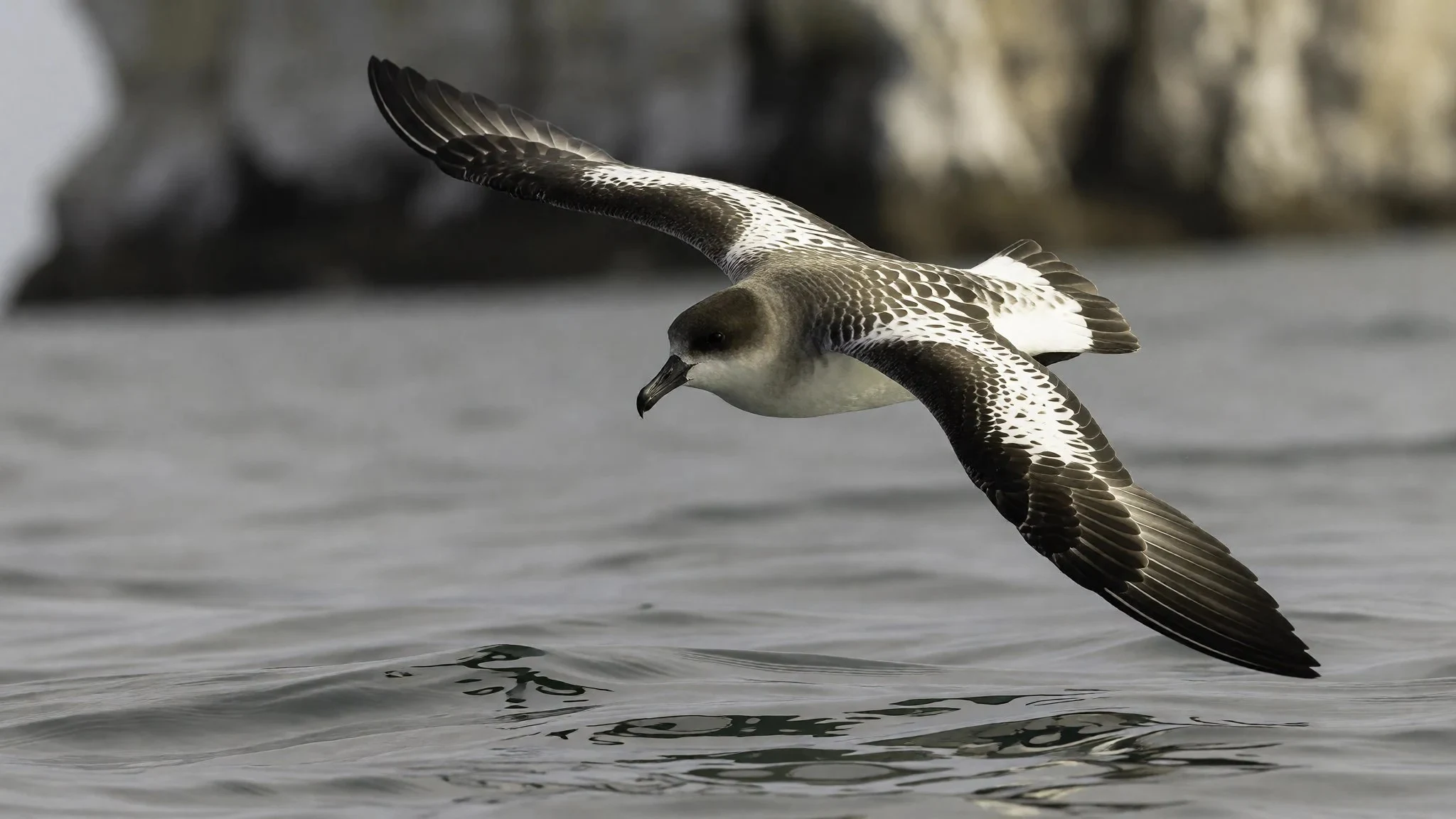
- Magellanic penguin (bird)
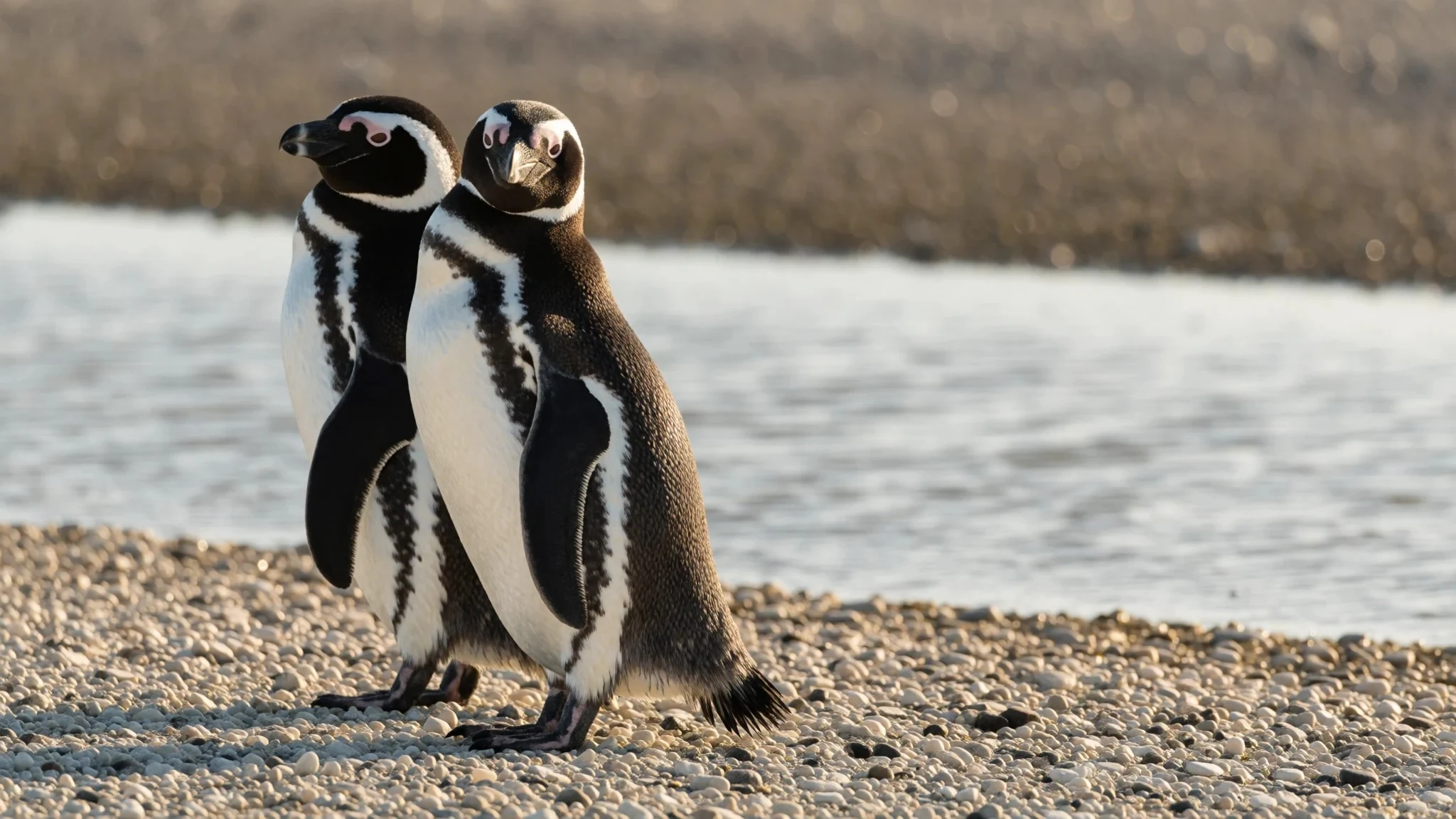
The Magellanic penguin is a banded penguin that breeds along Patagonia's coast, and it is named for the explorer Magellan, who spotted it long ago. Penguins can be seen around the peninsula, so ask your guide where and when to look. Magellanic penguins are the most numerous of their banded kin, yet each deserves gentle, unhurried watching. Stay at a calm distance, keep voices low, and never feed them.