Cueva de las Manos
Cueva de las Manos, Argentina
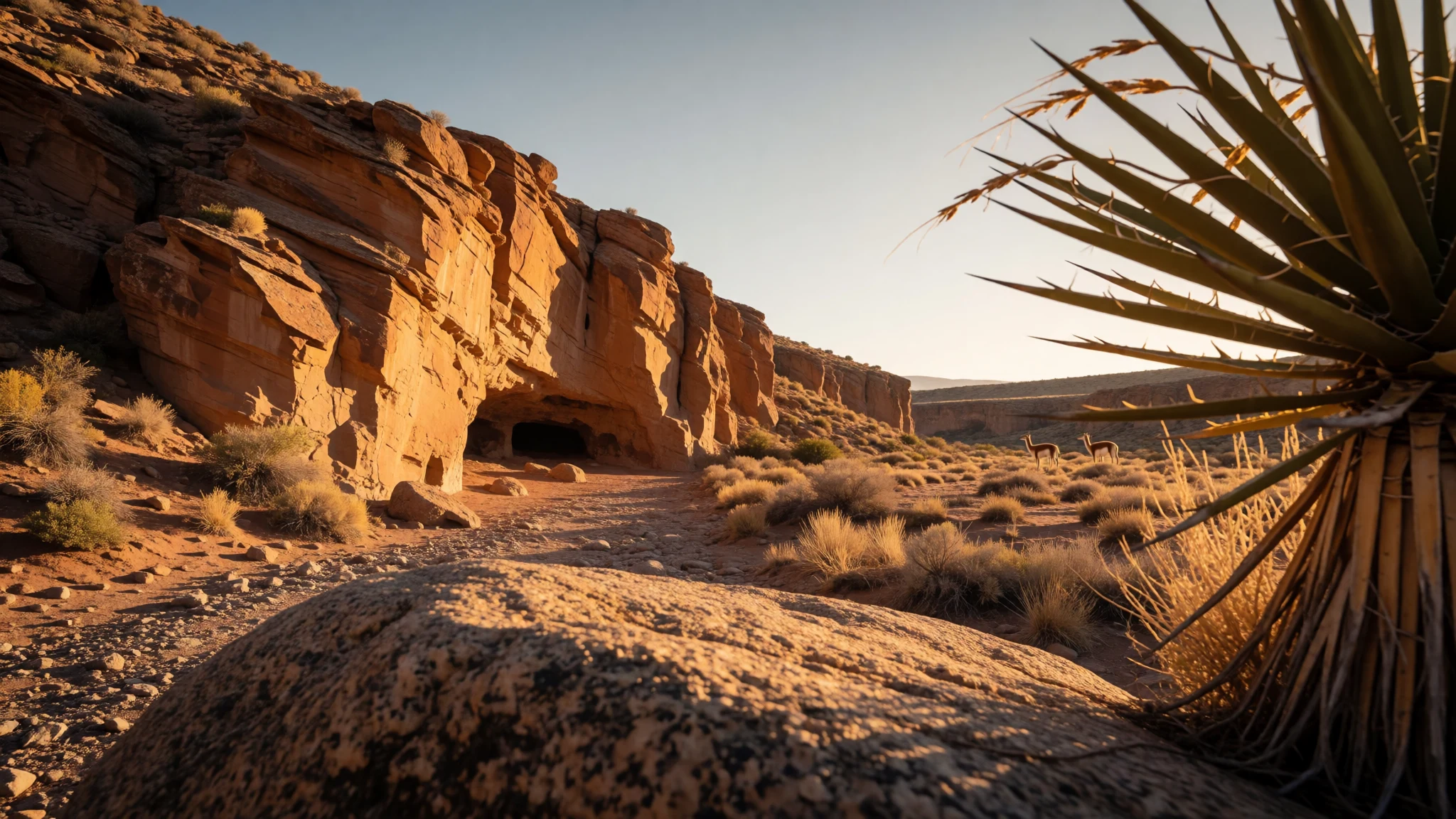
Cueva de las Manos turns a remote Patagonian canyon into a time capsule of hand stencils and ancient hunting scenes.
The place
Cueva de las Manos is a cave and wider rock-art complex in Santa Cruz Province, Argentina, tucked into the Pinturas River Canyon in a very isolated corner of Patagonia. The place is named for the hundreds of hand stencils: outlines made by spraying pigment around the hand on rock walls, arranged in multiple collages that look like they were built up over long stretches of time.
This is not a single moment frozen in one generation. The rock art is linked to several phases, with paintings created across thousands of years, from the early Archaic period into much later times. Even before paying attention to individual images, the layout tells a story—dense patches of hands and symbols sitting beside scenes that show people and animals together.
The setting is part of the experience. The cave sits near a stepped cliff and today the canyon feels windswept and stark. Strong light matters: the colours can look more or less vivid depending on the angle of the sun, so midday conditions can be disappointing for first impressions. In practice, most visitors come by arrangement from the nearby town area of Perito Moreno, with the last leg involving gravel roads and a plan for food, water, fuel and offline navigation.
It’s a place for patient looking: you’ll often feel the day’s remoteness before you see the detail, and then, once inside the rock-art zones, time becomes about noticing hands, hunting motifs, and the way different pigment tones were layered.
Its story
Cueva de las Manos matters because it captures how life in Patagonia shaped art over time. When the site was occupied, local river systems drained differently than today, and water availability helped support herds of guanacos. That connection between animals, seasonal conditions and where people could hunt is reflected in the imagery, where hunting themes and animal forms sit alongside human figures.
As climate and landscapes shifted, the rivers’ drainage patterns changed, and water levels dropped progressively. Less water meant fewer predictable resources, and over time the cave complex was abandoned. Archaeological finds in the broader area—alongside remains of guanaco, puma, fox, birds and other animals—underline that hunting-gathering was the foundation of day-to-day survival.
In this region, stone tools and hunting strategies were adapted to the terrain. The local topography could funnel movement, making it possible to hunt guanacos using collective methods recorded not just in tool finds but also in the way scenes are composed. The rock art also includes depictions of technologies such as projectile and throwing-related equipment, giving a visual “map” of what people knew and practised.
The research story is equally long. Long-term archaeological work began in the mid-20th century with survey and excavations in and around the complex, helping build a picture of how the canyon’s changing ecology and people’s routines influenced both when the site was used and what was painted. The result is a layered record: hands first, then scenes, symbols and variations that show continuity—then fading—against the backdrop of a changing landscape.
What to see
- Hand stencil collages — Cueva de las Manos (main rock-art area)
Cueva de las Manos lives up to its name with hundreds of hand stencils, built into layered wall collages. The outlines appear in different tones and groupings, so you can scan from a broad wall pattern down to the individual “spray” edge detail.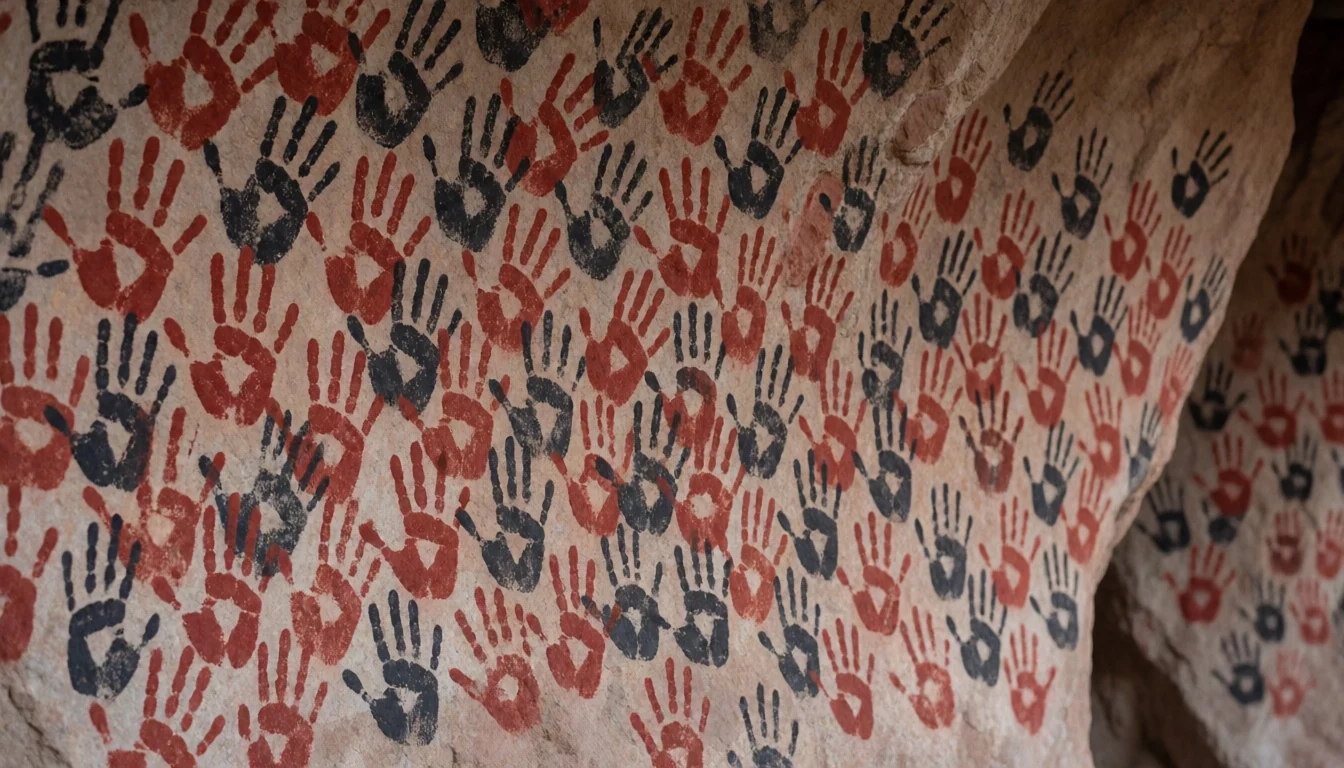
- Group A hunting scenes — Rock-art zone, divided into Groups A–C and the B1 sub-style
Group A focuses on hunting scenes: people and guanacos appear together, with animals shown larger than human figures. Humans are painted in several poses, letting the art read as movement and coordination rather than isolated portraits.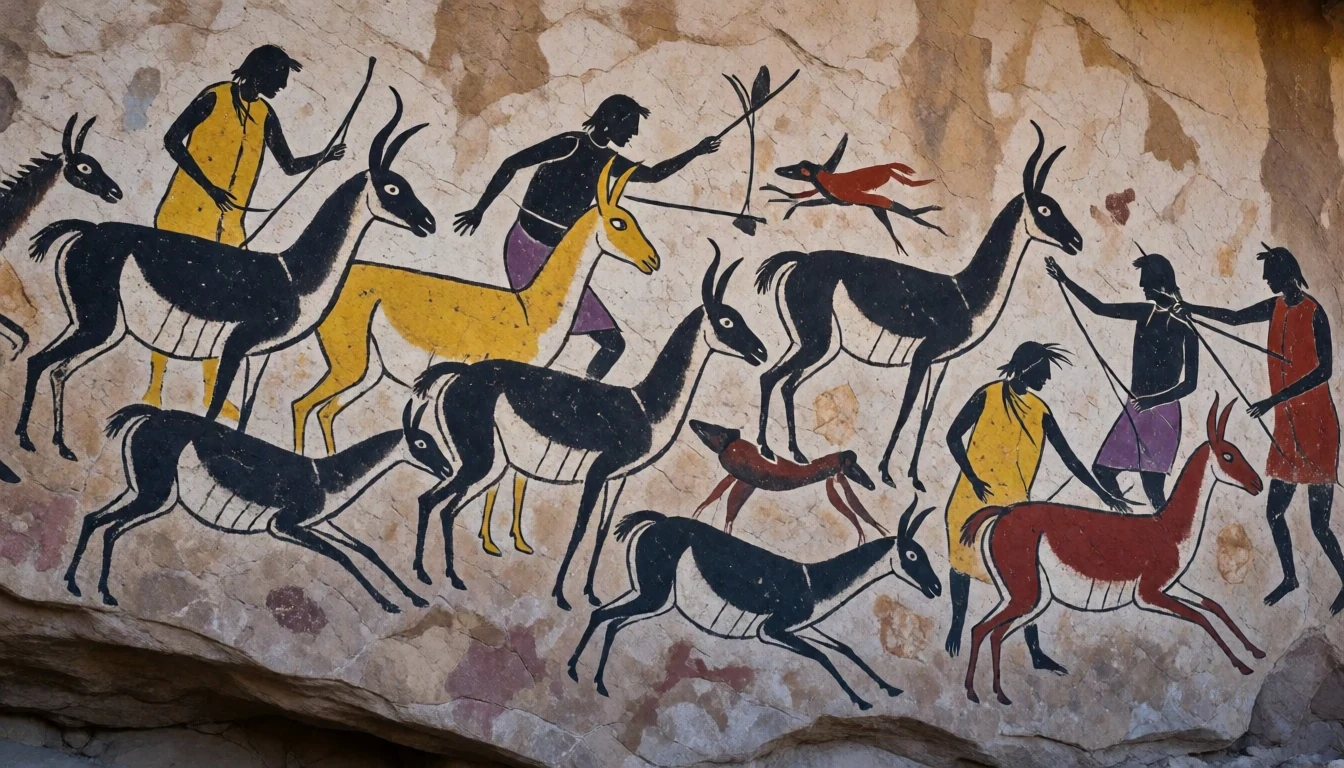
- Group B figures and symbols — Rock-art zone, divided into Groups A–C and the B1 sub-style
Group B is heavier on static human figures with small heads, plus guanaco representations and many hand prints. It also leans into abstract motifs—circles, spirals, dot-like rows, serpentine lines and angular forms—painted in dark tones and purples.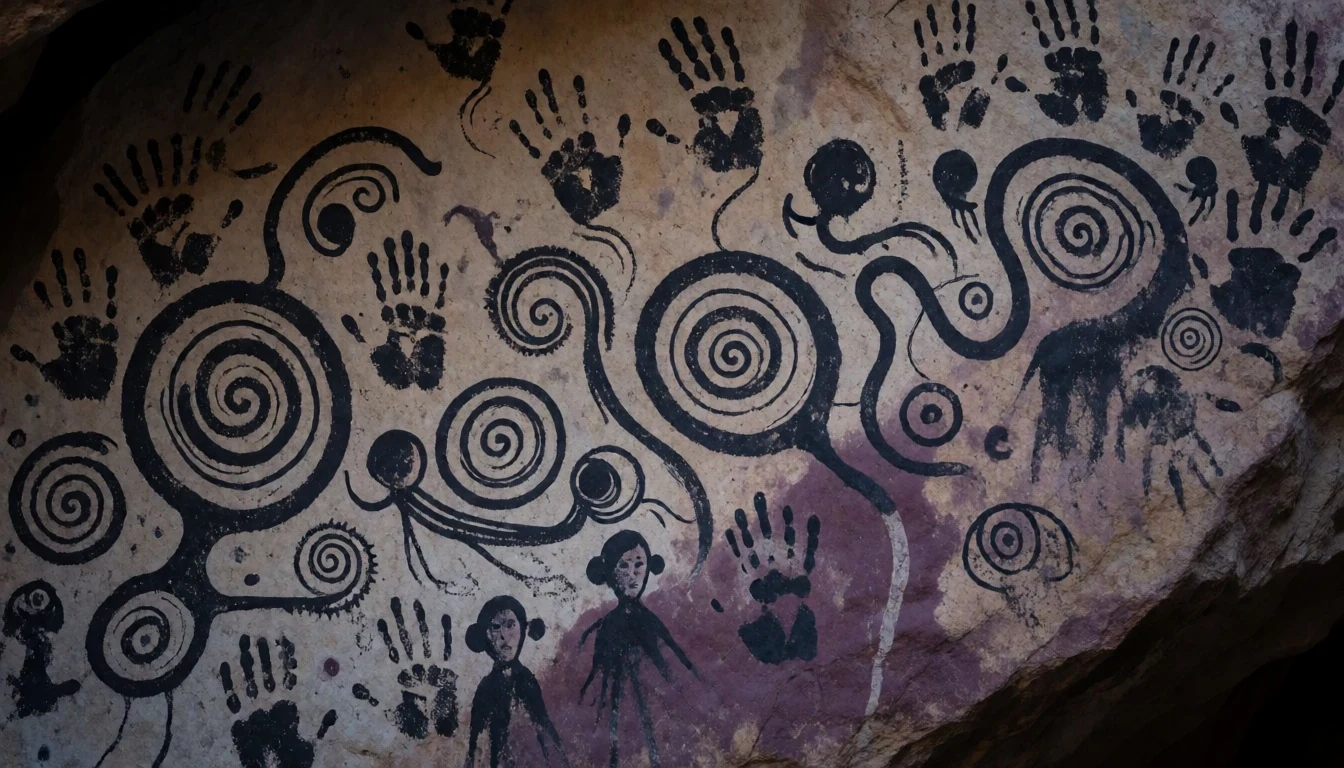
- Group C negative hand outlines — Rock-art zone, divided into Groups A–C and the B1 sub-style
Group C includes negative-form hand depictions, where the hand outline is made by painting around it rather than over it. Larger human figures also appear here, and the palette shifts towards reds, so the group feels visually “hotter” than the darker panels.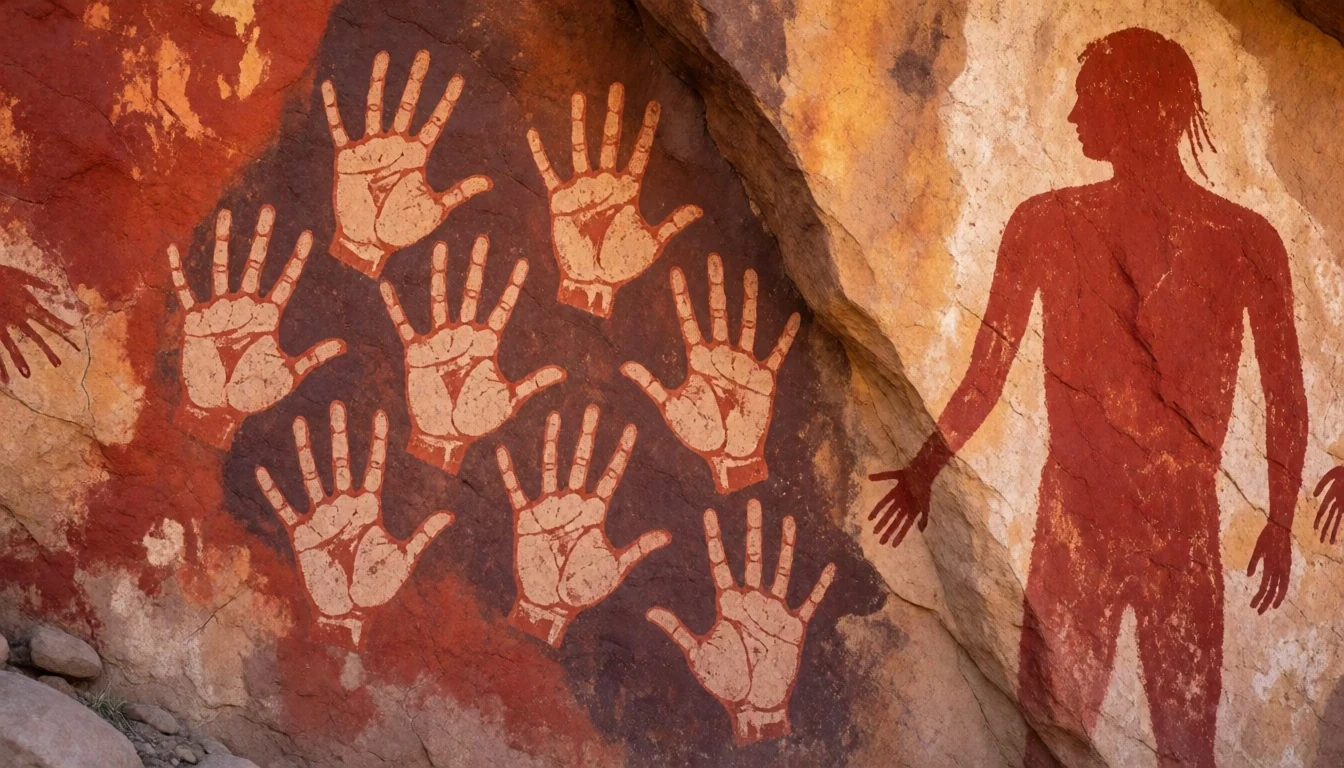
- Río Pinturas canyon approach (light conditions matter) — Río Pinturas Canyon approach
The viewing experience in Río Pinturas depends a lot on sun angle. In summer, going around late morning can mean the earliest painted areas sit in bright light and become hard to read. Earlier or later daylight often makes the pigment edges easier to distinguish.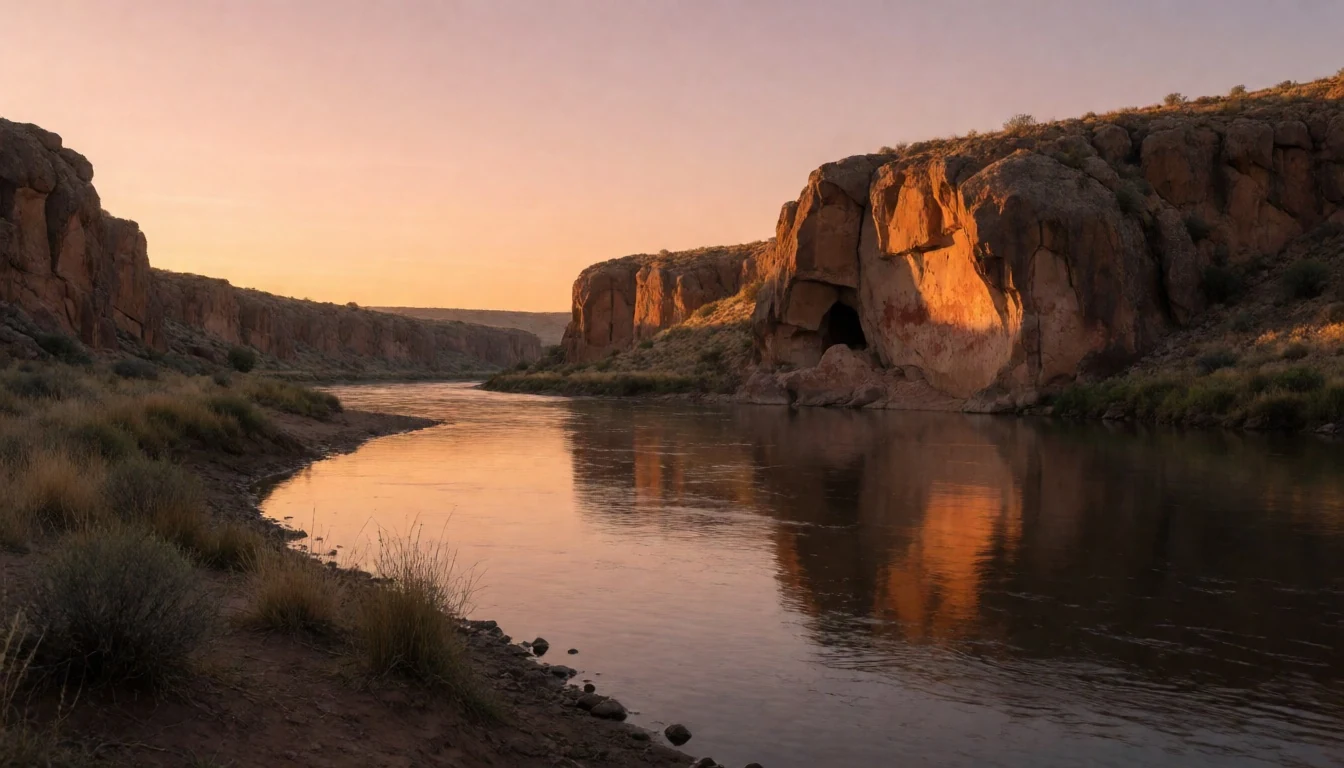
Culture
Cueva de las Manos is a working rock-art site in a remote Patagonian canyon, so visiting is as much about planning and respect as it is about photography and looking. There are no easy, walk-up crowds here in the way people expect from big urban landmarks; the number of visitors is usually limited by how arrangements work and by access routes. That said, the canyon can feel exposed—wind and intense sun can arrive quickly, and the light changes how stencils and coloured panels appear.
The cultural heart of the visit is the artwork itself: hands, hunting scenes, animal forms and abstract symbols grouped into distinct panel sets. Keep attention on what’s on the walls rather than treating it like a backdrop for long photo sessions. Move carefully on any approach paths, stay within marked areas, and avoid lingering in ways that block others who have come to see the same wall sections.
Finally, the site’s remoteness means visitor behaviour is part of keeping the experience sustainable: have what’s needed, keep noise low, and remember that communication can be limited once you leave the more connected town areas. Etiquette helps everyone enjoy the art in the best light and with the calm it deserves.
What to wear
At Cueva de las Manos the practical dress code is Patagonia: wind, sudden temperature swings and strong sun. Traditional textiles aren’t part of the visitor experience here, but modest, weather-ready clothing is essential because access routes can be gravel and the canyon is exposed.
What people typically wear now is outdoor gear—windproof jackets, layers you can peel off when the sun hits, long trousers, and sturdy footwear for uneven ground. Many visitors pack a hat and sunglasses, then add warmer layers if the breeze turns sharp.
For visitors, wear layers (a base layer plus a warm mid-layer), a wind-resistant outer shell, and shoes with grip suitable for gravel. Bring sun protection for bright conditions and a scarf or light gloves if the wind is up. If you plan any short walks around the canyon approach, avoid sandals—rocky footing and wind make them a bad idea. In case you’re visiting in summer heat, breathable fabrics help, but they still need to sit over the kind of base that won’t leave skin exposed to constant glare on pale stone and sand.
What to eat
- Coffee and tea at the information point — Portal Cueva de las Manos information centre
At Cueva de las Manos, the information centre at the Portal Cueva de las Manos serves coffee and tea, usually with a simple set-up rather than a full meal service.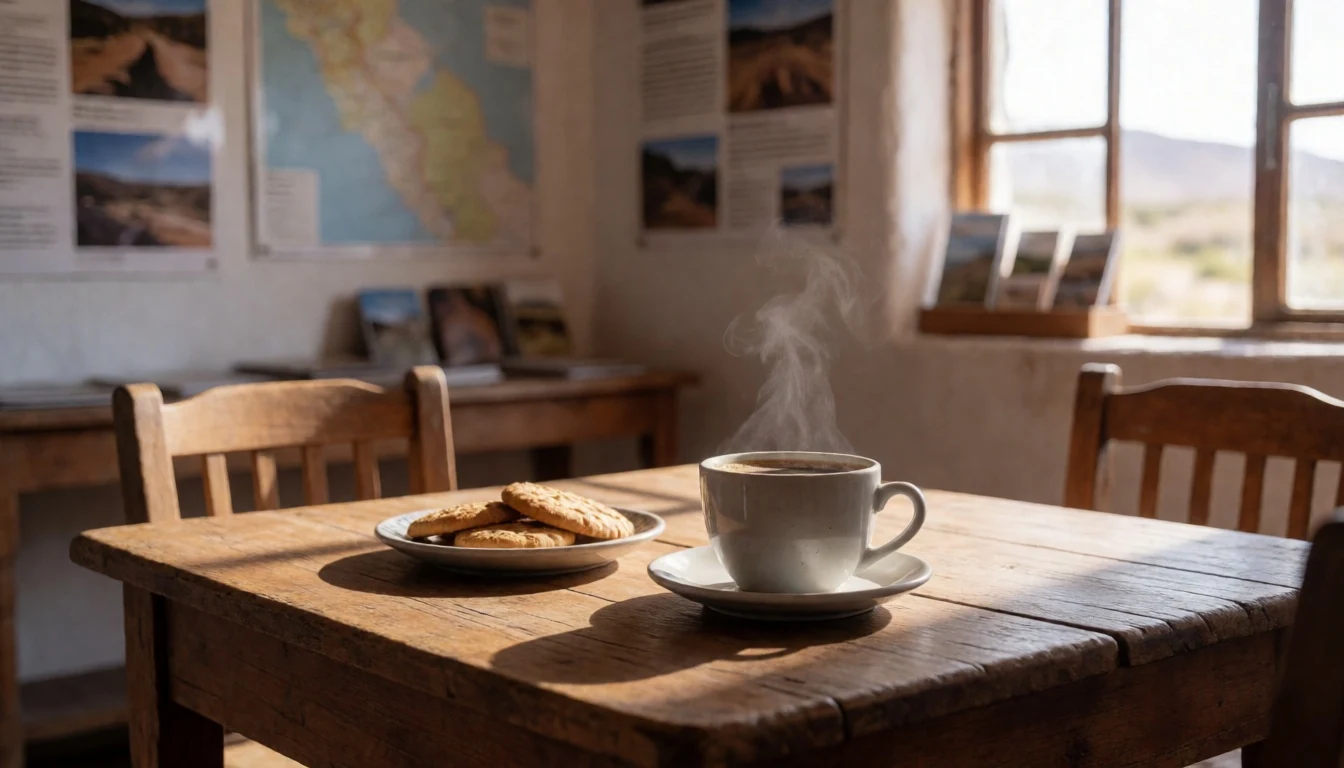
- Simple sandwiches — Portal Cueva de las Manos information centre
Cueva de las Manos doesn’t have public bars or a proper sit-down food scene at the archaeological site. A small selection of simple sandwiches is available at the Portal information centre.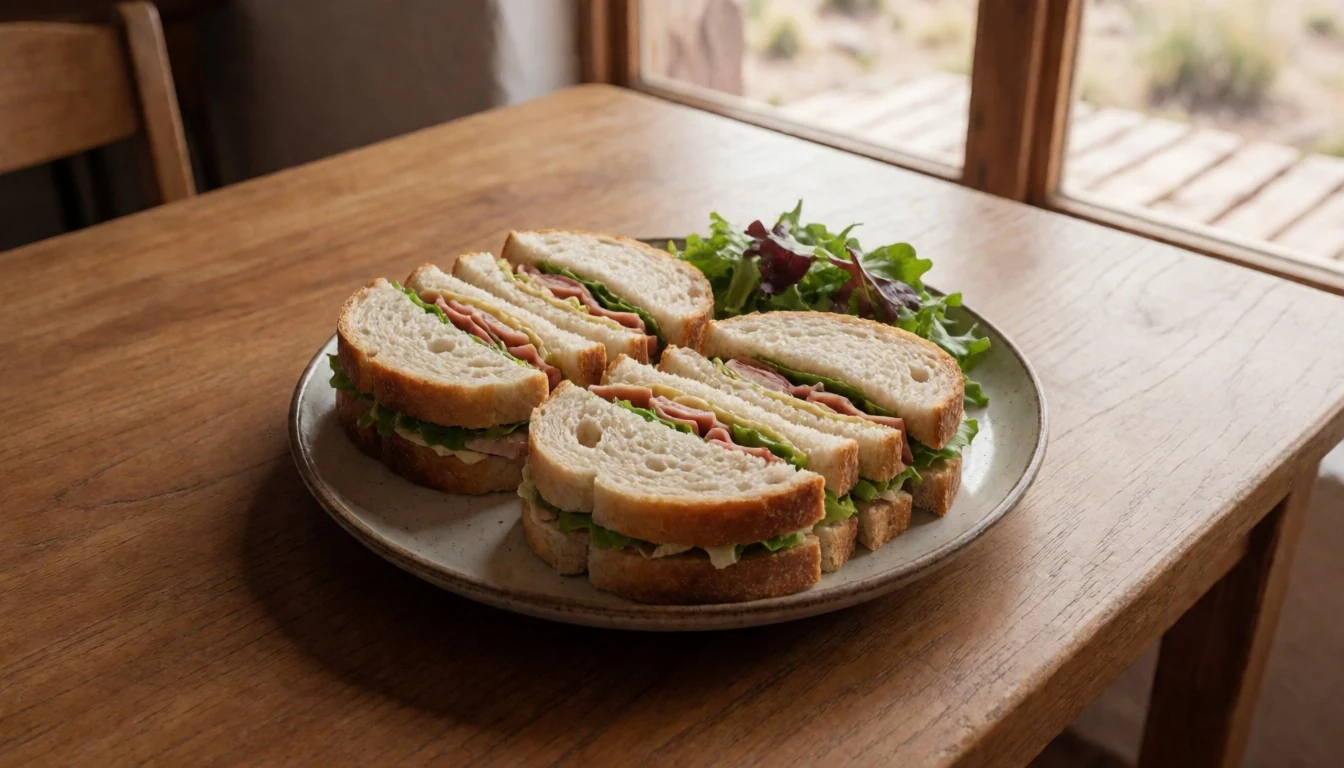
- Mate and hot water — La Señalada country store
At La Señalada, there’s a country-store style stop with drinks and hot water for mate, useful if your break runs long on a windy day. - Limited regional products — La Señalada country store
La Señalada also carries a limited selection of regional products, useful for topping up snacks for a longer drive or canyon approach day. Don’t assume late-day availability. - Picnic supplies from town before the detour — Perito Moreno town (before heading out)
Perito Moreno has a few restaurants and is the practical place to stock up before entering the remote area. For many travellers, that means buying groceries or picnic food in town and carrying it into the canyon.
Plan it
Best time. The warmest, driest-feeling months here tend to be September through November, with the highest average highs and relatively lower rainfall; January and February are warmer but also among the wettest, while June through August are the coldest and can bring harder weather for travel.
How long. 3–4
Getting there. Most visits are arranged via Perito Moreno. From there, the approach to the Cueva de las Manos area is reached via gravel roads off Ruta 40, and the final legs often need a planned transfer rather than relying on public transport.
Budget. mid
Tips
- Plan the visit around daylight so the painted panels are easier to see; midday in summer can wash out detail.
- Fill up with fuel and buy supplies in Perito Moreno before entering the remote area.
- Carry an offline map and tell someone your route and timing, since mobile reception can be limited.
- Expect gravel roads that can deteriorate after rain or snow; if conditions are poor, check local guidance and consider a vehicle suitable for rough surfaces.
- Bring enough drinking water for the journey and any planned walking, and don’t assume wash water is safe to drink.
Etiquette
- Stay within the designated viewing areas and don’t step where routes look informal.
- Keep noise down so others can concentrate on the artwork.
- Be careful near the road—guanacos and other animals may cross, especially on quiet stretches.
Nearby
Sources
- Wikidata Q223385 (CC0)
- Wikipedia (rev 1383657020) (CC BY-SA 4.0)
- Wikivoyage (rev 5323279) (CC BY-SA 4.0)
- Photo photos/01-santacruz-cuevamanos-p2210651b.jpg (CC BY-SA 2.5)
- Photo photos/02-santacruz-cuevamanos-p2210079b.jpg (CC BY-SA 2.5)
- Photo photos/03-cueva-de-las-manos.jpg (CC BY-SA 4.0)
- Photo photos/04-fm-monte-leon-3.jpg (CC BY-SA 4.0)
- Photo photos/05-santacruz-cuevamanos-p2210063b.jpg (CC BY 3.0)
- Photo photos/06-marianoc-img-8565-copy.jpg (CC BY 3.0)
- Photo photos/07-s-mbolos-y-animales.jpg (CC BY-SA 4.0)
- Photo photos/08-pinturas-rupestres-simbolos.jpg (CC BY-SA 4.0)


