El Palmar National Park
El Palmar National Park, Argentina
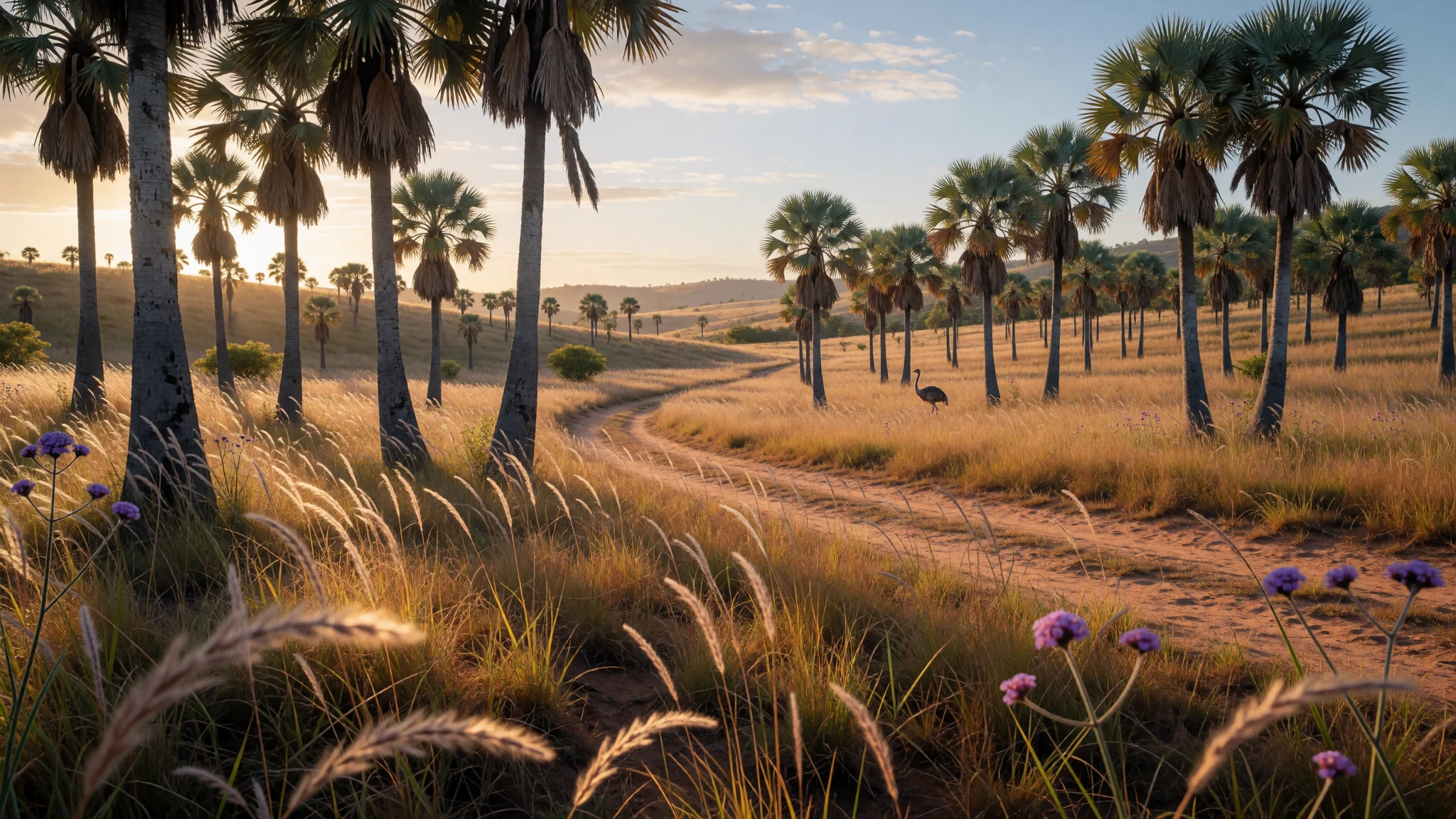
El Palmar National Park is a calm, flat stretch of palm savanna beside the Uruguay River, good for slow days with capybaras, rheas and birds.
The place
El Palmar National Park sits in the centre-east of Entre Ríos province in Argentina, on low ground only 36 m above sea level. It lies roughly midway between the river towns of Colón and Concordia, about 54 km from one and 60 km from the other, with the Uruguay River along its eastern side. The park was created in 1966 to protect stands of yatay palm (Butia yatay), a tree characteristic of the Mesopotamia, the name Argentines give to the land between the Paraná and Uruguay rivers. The setting is temperate-humid savanna: open grassland dotted with palms, small woods, and denser forest along the watercourses. Several streams cross the park and run east to the Uruguay. The palms are the reason for the park, but the animals are what keep people longer. Capybaras graze near the water, viscachas sit at their burrow mouths towards dusk, foxes trot along the tracks, and ñandús (rheas) stride through the grass. Woodpeckers work the palm trunks. At about 85 km², the park is small enough to get to know in a couple of days, and flat enough that the palms read as a pattern across the horizon rather than a wall. Since 1990 three zones have been closed completely to human activity, farming and hunting, so visitor routes stay in the remaining area. Light matters here: early and late sun turns the palm crowns gold, while midday is flat and hot. This is a gentle park rather than a dramatic one, and its reward is space, birdsong and animals that do not hurry away.
Its story
The story of El Palmar National Park is partly the story of a tree. The yatay palm belongs to the grassy plains of the Argentine Mesopotamia, a region that has long been worked for cattle, crops and timber. As farmland and pasture spread, palm stands became fragments of what they had been. In 1966 an area around the Uruguay River was set aside as a national park so that a representative piece of that palm landscape would survive. That makes El Palmar a different kind of Argentine park from the famous ones built around glaciers, peaks or waterfalls. Nothing here is monumental. The case for protecting it rests on a quiet ecosystem: old palms of different ages, grassland, small woods, and streams cutting toward the river. In 1990, another key step was taken when three specific zones were fully shielded against farming, hunting, and any other human interference. Those zones work as a reserve inside a reserve, giving wildlife places where nobody walks. For visitors the history shows in small ways. Palm trunks stand singly or in loose groves instead of in planted rows, and the animals are relaxed enough to be watched at a distance, which suggests decades of being left alone. The park also shows how conservation can be modest: no summit, no spectacle, just a landscape kept intact long enough to be seen as valuable.
What to see
- The yatay palm groves — Central park, along the main tracks
The palm groves are the point of El Palmar National Park. Tall, slender trunks rise from open grass, and the best time to see them is the first hour after sunrise, when low light picks out the crowns and the air is still cool. Walk slowly and look for woodpeckers on the trunks.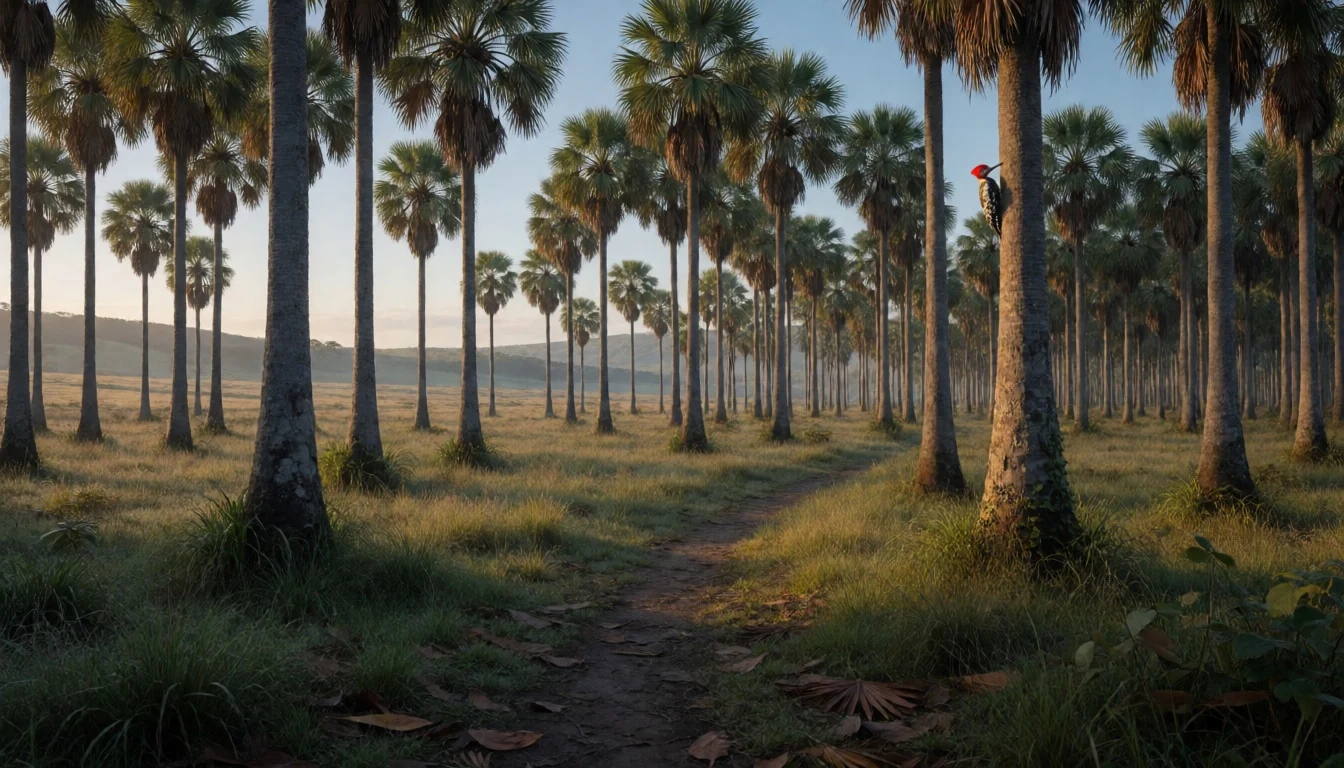
- The Uruguay River shore — Eastern edge of the park
The Uruguay River forms the park's eastern limit, and its banks give a change from grassland to shade and water. Families gather here on warm days, and the late afternoon is a pleasant time to sit and watch the light fade. Check locally which access points and swimming areas are open.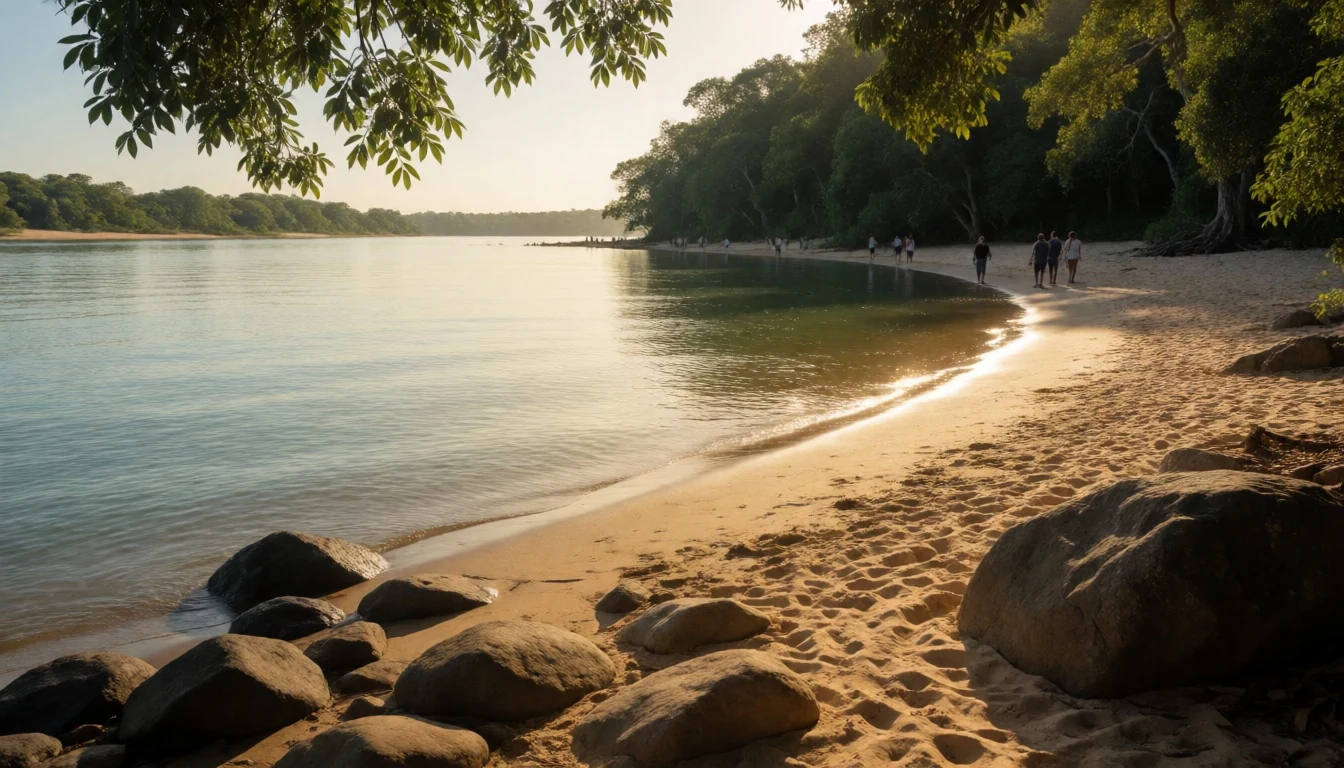
- The park entrance near Ubajay — Western approach, Entre Ríos
The gate near Ubajay is where most visits begin, and it is worth pausing to read the information boards and ask rangers which tracks and zones are open. They can also say where animals have been seen recently. The website in the Plan section lists current visitor details.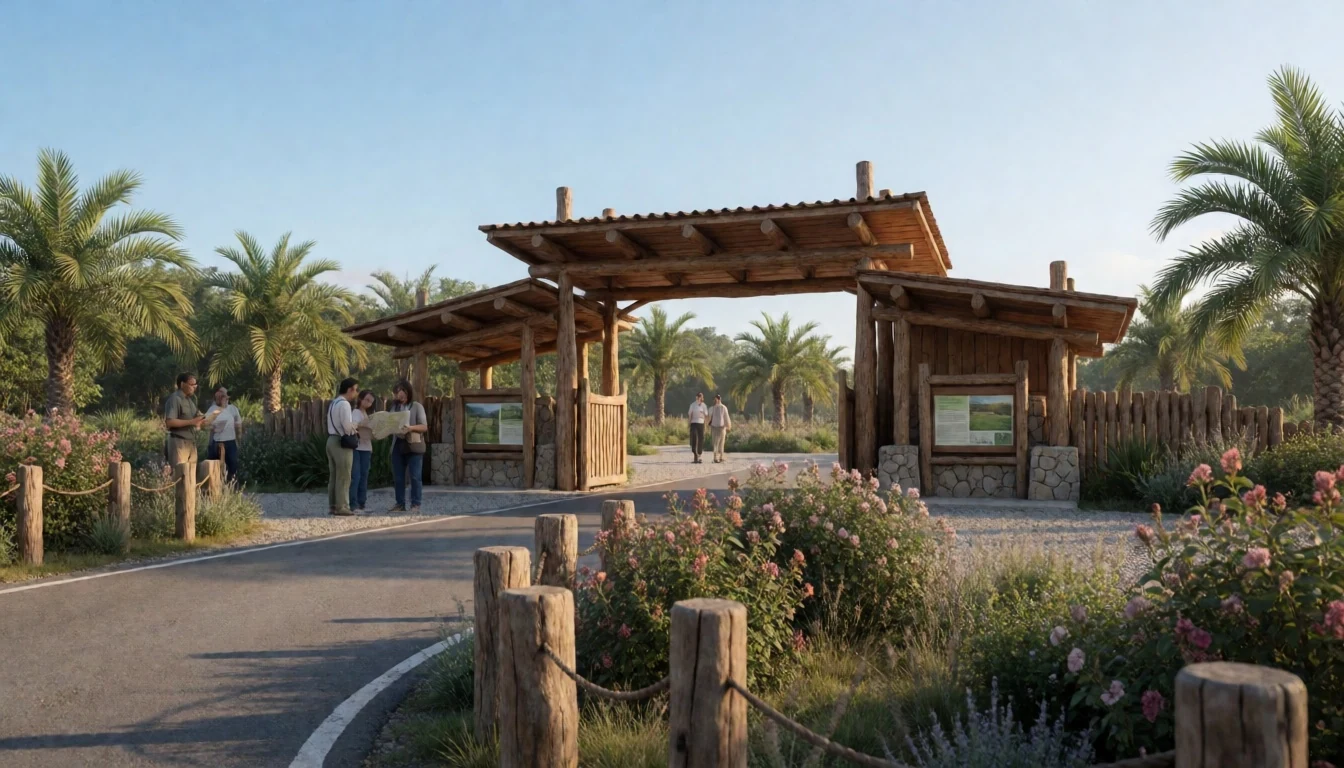
- Wildlife watching on the grassland — Open areas and track edges
Capybaras, viscachas, foxes and rheas all live in the open country, and patience works better than pursuit. Sit near water at dawn or dusk, keep voices low and bring binoculars. The crab-eating fox, often seen trotting along tracks, is a common reward for quiet watchers.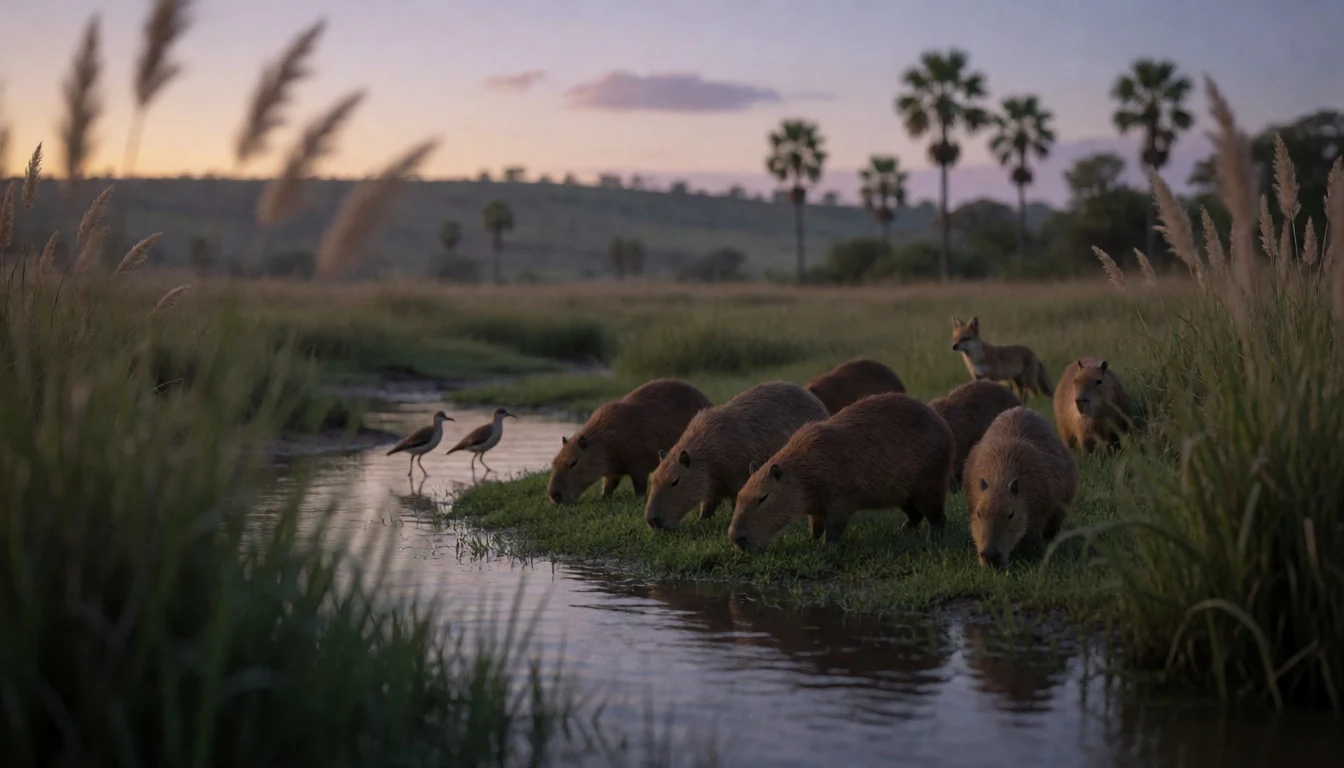
- Streams and gallery forest — Stream corridors running east
The streams that run east toward the Uruguay carry strips of denser forest through the grassland. They are cooler and shadier than the palm plains, and good for birds. Steps and boardwalks may be present at crossings, so wear shoes with grip, especially after rain when the banks turn soft.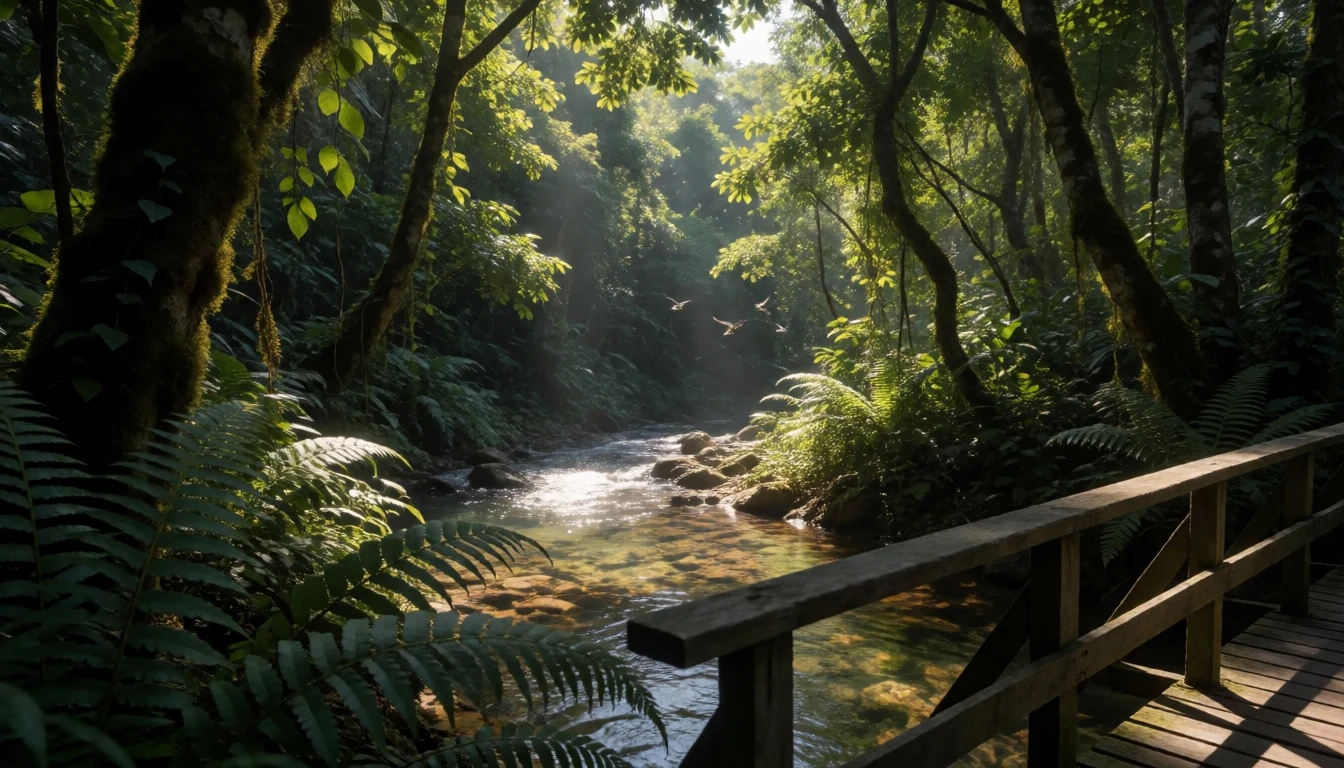
Culture
El Palmar National Park belongs to the Litoral, the river country of north-eastern Argentina, where life follows the Uruguay and Paraná rivers at an unhurried pace. People from Colón and Concordia treat the park as a day out. Families arrive with a thermos of hot water and a gourd for mate, the bitter herbal infusion passed around a circle, and settle under the palms for hours. Mate has its own manners. One person, the cebador, pours for everyone in turn, and you hand the gourd back only after drinking it all. Saying "gracias" tells the cebador you have had enough; otherwise you will be refilled. Cattle country shapes the wider culture as well. Gaucho traditions of horsemanship, grilled meat and folk music still appear at rural festivals across Entre Ríos. The park itself carries a conservation ethic rather than ruins or monuments. It exists because a landscape was judged worth keeping, and much of the rangers' work is about protecting the palms and animals. Spanish is the language of nearly every exchange, so a few words of greeting go a long way. Mornings and late afternoons are social times, while the heat of midday is quiet. Keep to marked paths, never feed or approach the capybaras and foxes, and carry every scrap of rubbish out with you.
What to wear
Around El Palmar National Park, the traditional dress is that of the gaucho, the mounted cattle worker of the Argentine plains. It includes bombachas de campo, loose cotton or twill trousers gathered at the ankle, a wide belt or faja, a beret called a boina, and a wool poncho for cold mornings. Leather boots or soft alpargatas on the feet. This clothing is worn mostly by rural workers and for festivals, parades and folk events in Entre Ríos. Day to day, people in Colón and Concordia dress simply for the heat: cotton shirts, shorts or light trousers, football shirts, sandals and caps. Many carry a mate gourd and thermos under the arm, and that is as much an Argentine fashion statement as any garment. Visitors should dress for sun, insects and grass. Choose light, breathable long sleeves and trousers in neutral colours, a wide-brimmed hat, sunscreen and closed shoes or light boots with grip for dusty and muddy tracks. Pack a thin rain layer, as showers can arrive fast, and insect repellent for dawn and dusk near water. Swimwear is fine at riverside spots, but cover up when walking into a town. There are no religious sites inside the park, so formal modesty rules are relaxed.
What to eat
- Asado — Parrillas (grill restaurants) in Colón and Concordia
Asado is beef cooked slowly over embers, served in thick cuts with salad and bread. It is the usual weekend meal in Argentina and often a social event as much as a dinner. Order a mixed grill to share if you want to sample several cuts.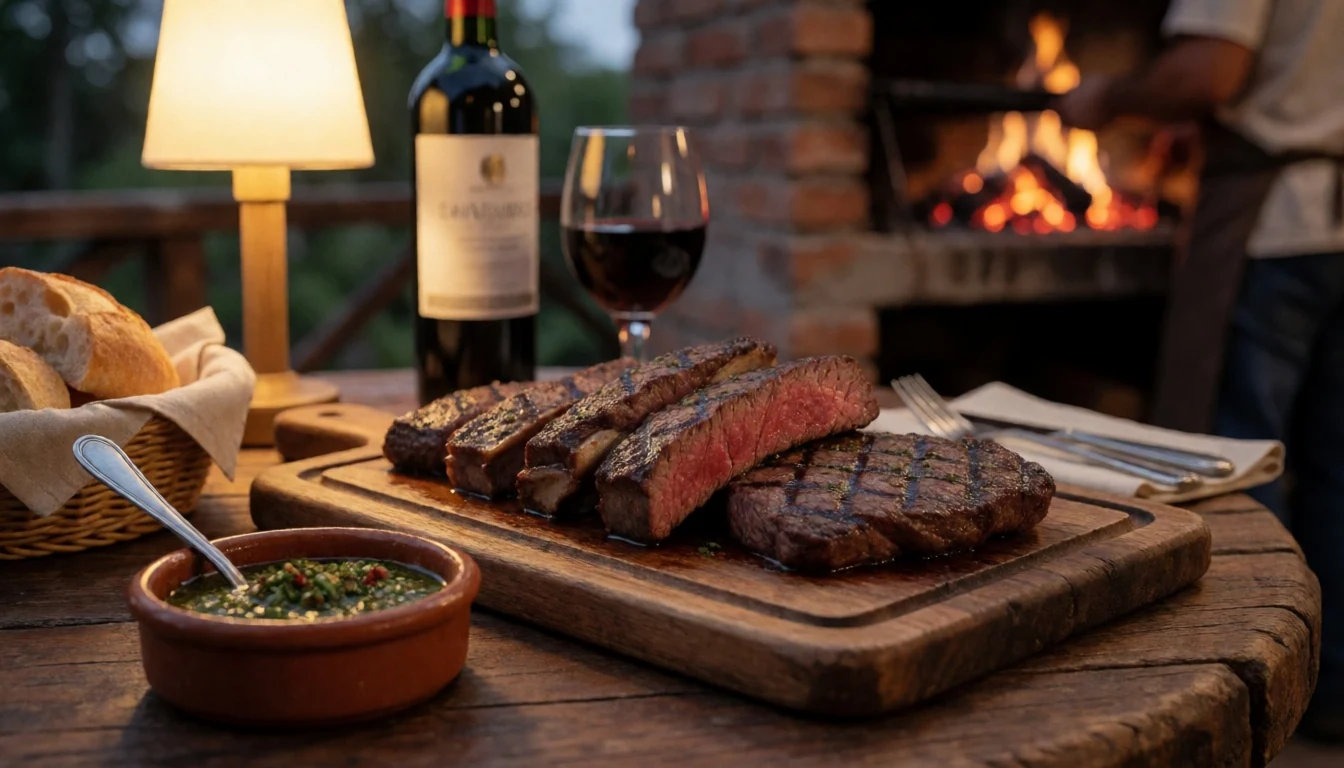
- River fish a la parrilla — Riverside eateries near the Uruguay River
Fish from the Uruguay, such as surubí or boga, is commonly grilled whole or in steaks and served with lemon and potatoes. Ask what was caught locally. Fish dishes are a good alternative to meat and taste especially good after a day outdoors.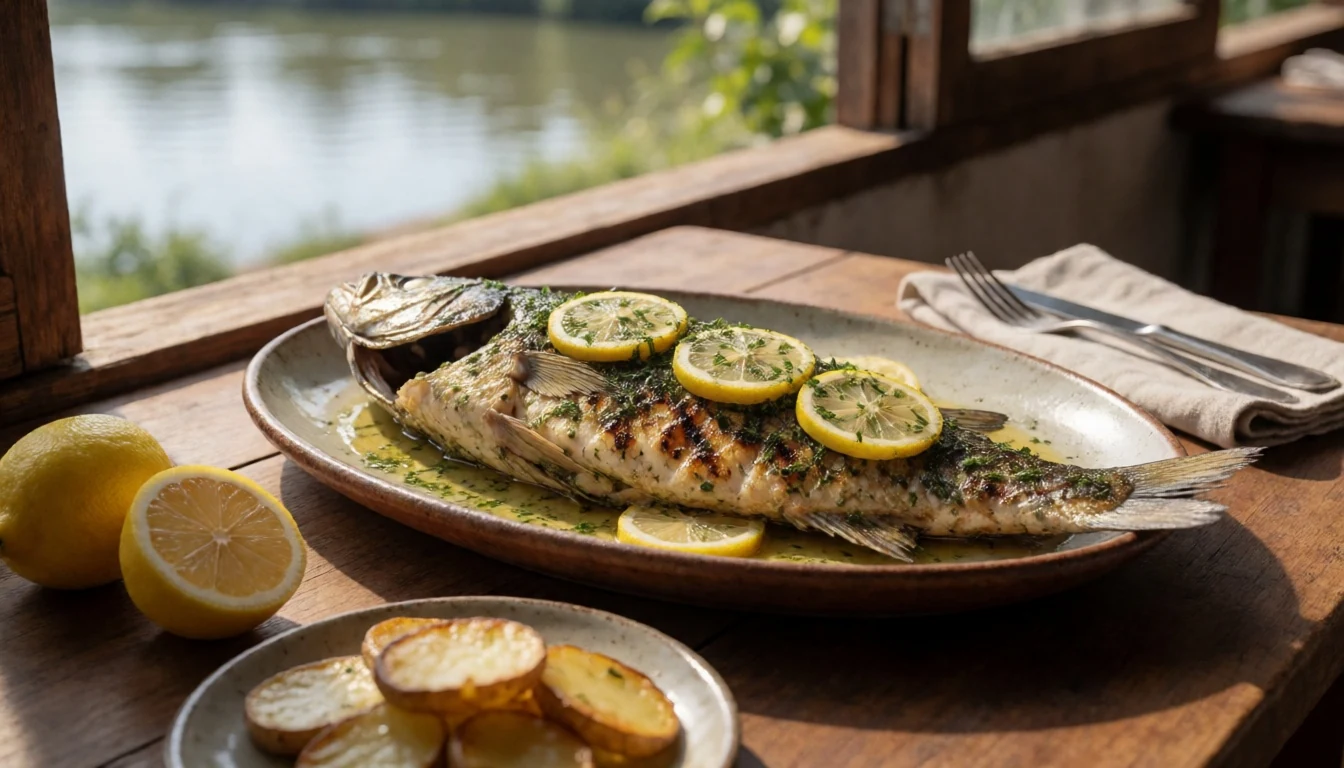
- Empanadas — Bakeries and small takeaway shops in park-side towns
These baked or fried pastries come filled with beef, ham and cheese, chicken or vegetables. They are easy to buy by the half-dozen and carry in a bag for a picnic under the palms. Fillings and shapes vary by cook, so ask what each marking means. - Mate with facturas — Panaderías and cafés in Colón and Concordia
Facturas are sweet pastries, sold by the unit or dozen, that Argentines eat with mate or coffee in the morning and late afternoon. Look for medialunas (small croissants) and pastries filled with dulce de leche or quince paste. - Alfajores — Kiosks, bakeries and local shops
An alfajor is two soft biscuits sandwiched with dulce de leche, sometimes coated in chocolate or dusted with coconut. They are sold everywhere in Argentina and travel well, so pack one or two in a bag for energy during an afternoon of walking.
Plan it
Best time. June–August, when days are cooler and walking is most comfortable though nights can fall below freezing; December and January are the hottest months, and February and April the wettest, with insects near water.
How long. 1–2
Getting there. Fly to Buenos Aires or to the airport at Concordia if available, then continue by road to Colón or Concordia, the two towns either side of the park. A bus or car covers the last leg to the entrance near Ubajay on the main highway between them; check the official site for visitor details.
Budget. mid
Tips
- Check the official website (http://www.colonentrerios.com.ar/elpalmar/index.html) for current access, fees and rules before travelling
- Go at dawn or late afternoon, when animals are active and the heat is lower
- Bring water, sun protection and insect repellent, since shade is patchy on the grassland
- Carry cash and a card, as services near the park can be limited
- Hire or bring a car if possible, because distances inside the park are easier covered with wheels
Etiquette
- Keep to marked paths and respect the fully protected zones that are closed to visitors
- Do not feed or touch wildlife, and keep a respectful distance from capybaras
- Take all rubbish out and avoid open fires except in designated areas
Nearby
Sources
- Wikidata Q828918 (CC0)
- Wikipedia: El Palmar National Park (rev 1362724923) (CC BY-SA 4.0)
- Wikivoyage: El Palmar National Park (rev 5023594) (CC BY-SA 4.0)
- Photo: El-palmar.JPG (CC BY-SA 2.5)
- Photo: Parque Nacional El Palmar.jpg (CC BY-SA 2.0)
- Photo: Aprender (Entre Ríos) - Parque Nacional El Palmar (20), Consejo General de Educación (CC BY-SA 4.0)
- Photo: Argentina - Entre Ríos - Parque Nacional El Palmar (entrada), Leandro Kibisz (CC BY-SA 4.0)
- Photo: PN El Palmar 2017 (2), Adriel anv00 (CC BY-SA 4.0)
- Photo: El río desde el Parque Nacional El Palmar, Mariano Melgar (CC BY 3.0)
- Photo: Aprender (Entre Ríos) - Parque Nacional El Palmar (5), Consejo General de Educación (CC BY-SA 4.0)
- Photo: Cerdocyon thous, Parque Nacional El Palmar, Ezequiel Racker (CC BY 4.0)


