Ischigualasto Provincial Park
Ischigualasto Provincial Park, Argentina
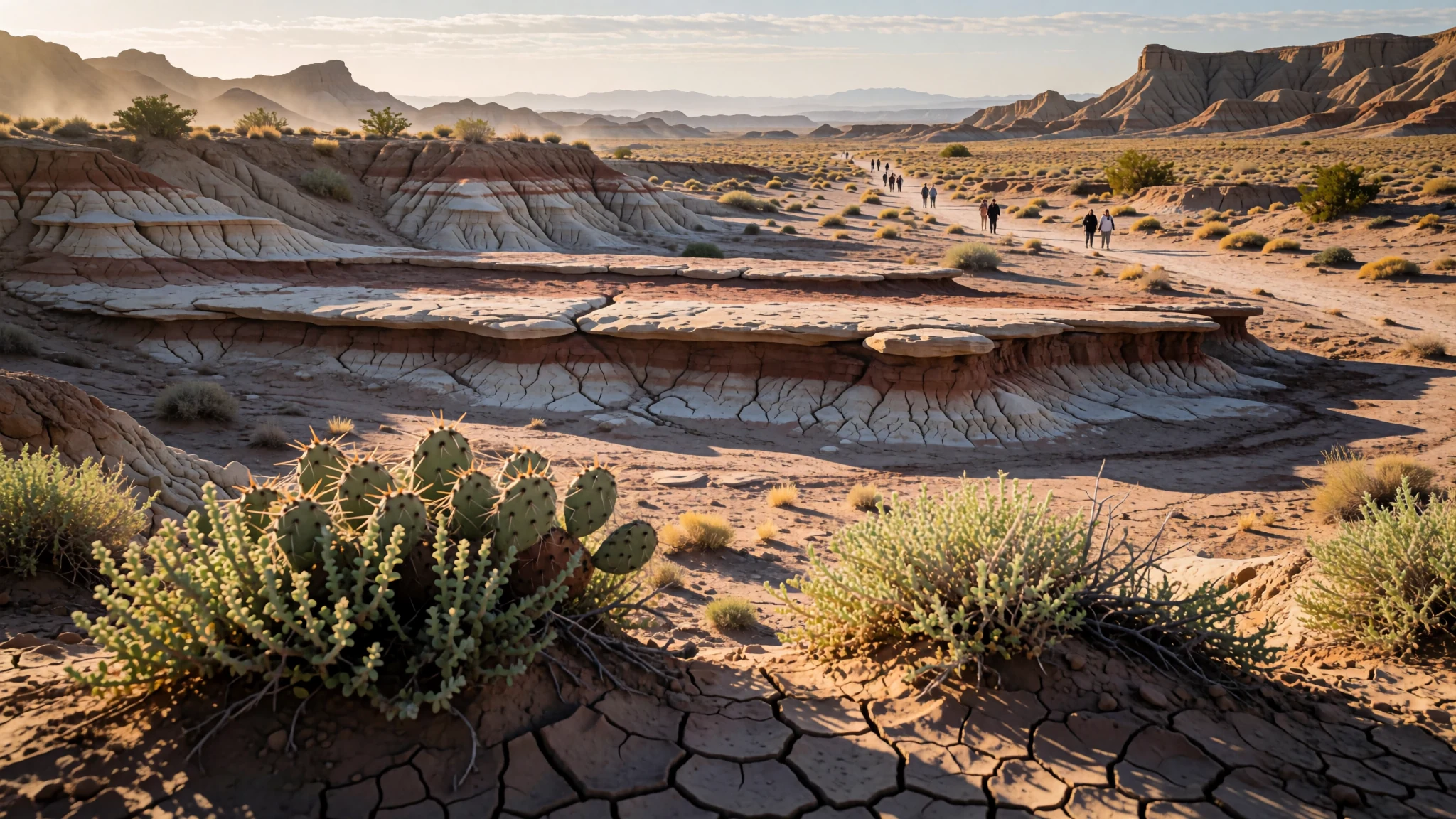
Ischigualasto, the Valley of the Moon, is a sculpted desert of ancient rock in San Juan province, worth a guided loop on a cool day.
The place
Ischigualasto Provincial Park lies in the north-east of San Juan province in north-western Argentina, on the western edge of the Central Sierras. Most of it falls within Valle Fértil department, and it stands at about 1,291 m above sea level. Its neighbour to the north, Talampaya National Park in La Rioja province, sits on the same rock, and the two are known together as the Ischigualasto Formation. Pressure from the Andes lifted these layers and left them lying almost flat, so the banks and cliffs show the stacked history of the ground in clear bands of colour. The result is a landscape of eroded pale and reddish rock, carved by wind and the occasional downpour into shapes that many visitors compare to another planet, which is where the Valley of the Moon name comes from. Vegetation is sparse, mostly low scrub, cacti and a few hardy trees covering only a fraction of the ground. The climate is harsh. Rain falls mostly in summer, nights in winter can be bitterly cold, and summer days bring intense dry heat. A steady wind usually builds after midday, and the strong zonda can arrive with little warning. The park exists mainly for its geology and fossils rather than for comfort: there is little shade, the surface crumbles underfoot, and the only facilities are a small kiosco at the entrance. Most visits are a single guided circuit that fits comfortably into one morning or afternoon.
Its story
The name is usually traced to Cacán, an extinct language once spoken by people the Spanish called Diaguita, and it is often glossed as something like 'place where the moon comes to rest'. A rival reading takes it from Diaguita roots and gives the sense of 'dead land', while some scholars point instead to Huarpe origins. Whatever the etymology, the valley reached the outside world first through its bones. Palaeontologists described the first fossils here in 1930, and a more detailed survey in 1941 turned up seventy species of fossil plants. In 1943 a motoring club publication gave the area the name Valle de la Luna, and the name stuck in popular use. That same year Ángel Cabrera of the University of La Plata named Exaeretodon, the first cynodont recovered from these beds, working from specimens sent to him by a geologist who had been searching for coal for a mining firm. Study then moved slowly until 1958, when the Harvard palaeontologist Alfred Sherwood Romer found several rich fossil layers and called them extraordinary. Those finds turned a dusty badland into a reference point for the Triassic. The rocks record a world of early dinosaurs and their relatives, of reptiles and mammal-like animals, laid down in river and floodplain sediments long before the continents took their present shape. Scientific work continues today alongside tourism, with fossils protected and excavations left to specialists.
What to see
- El Gusano (The Worm) — Main guided circuit, Valle Fértil side of the park
Rock formations along the main circuit that look like a worm, with a long, segmented body rising from the valley floor. It is one of the first stops on most guided tours and a good place to understand how uneven erosion can shape soft layers into strange forms. Keep to the marked path, as the edges crumble easily and the footing can be loose.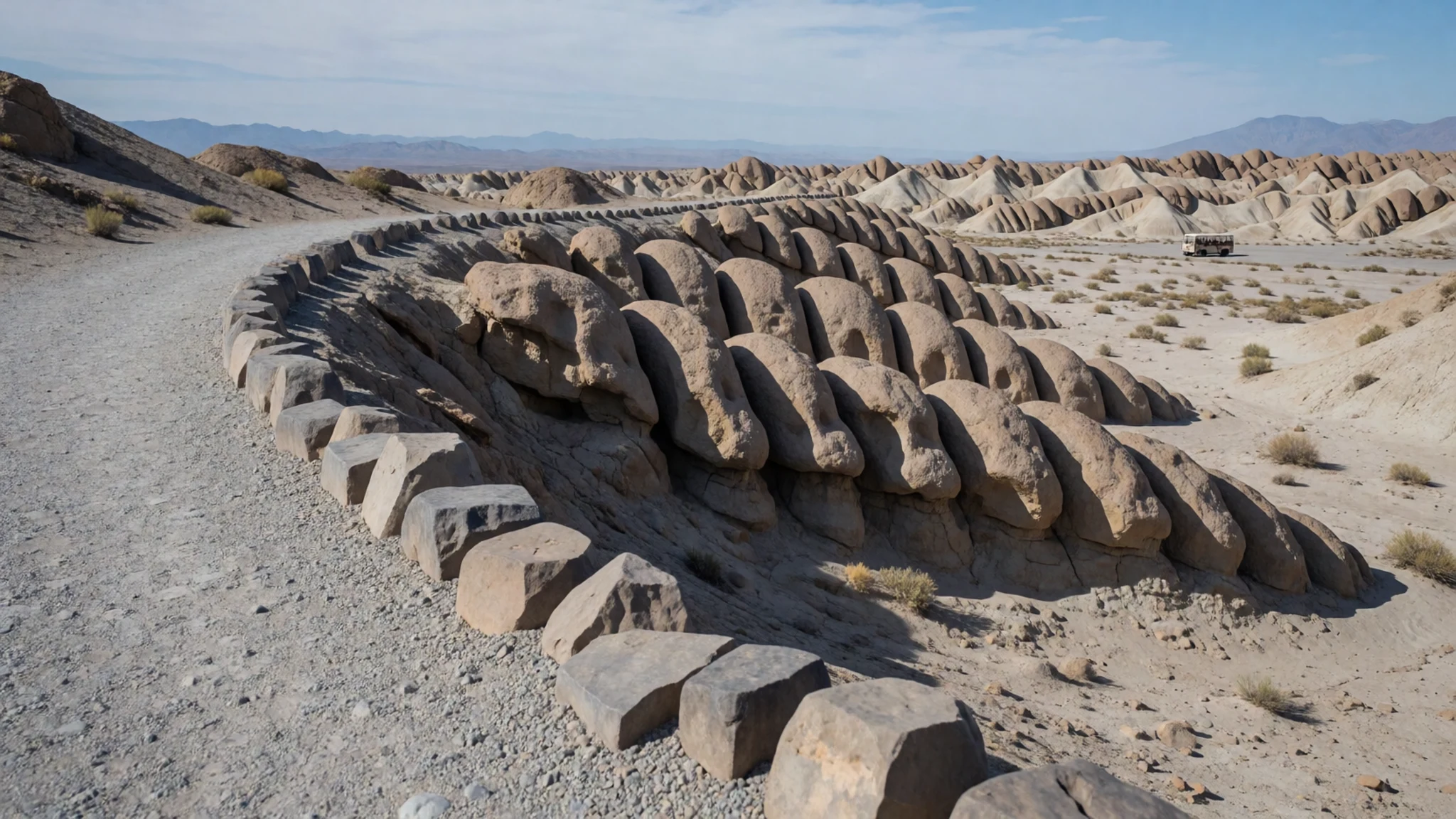
- Valle Pintado (Painted Valley) — Central part of the main circuit
A stretch of the park where the colour bands in the rock make the geological timeline easy to read. Lighter and darker strata mark different phases of the Triassic, and guides usually explain which layers hold the fossil finds. Late in the day the low sun brings out the reds and ochres most strongly.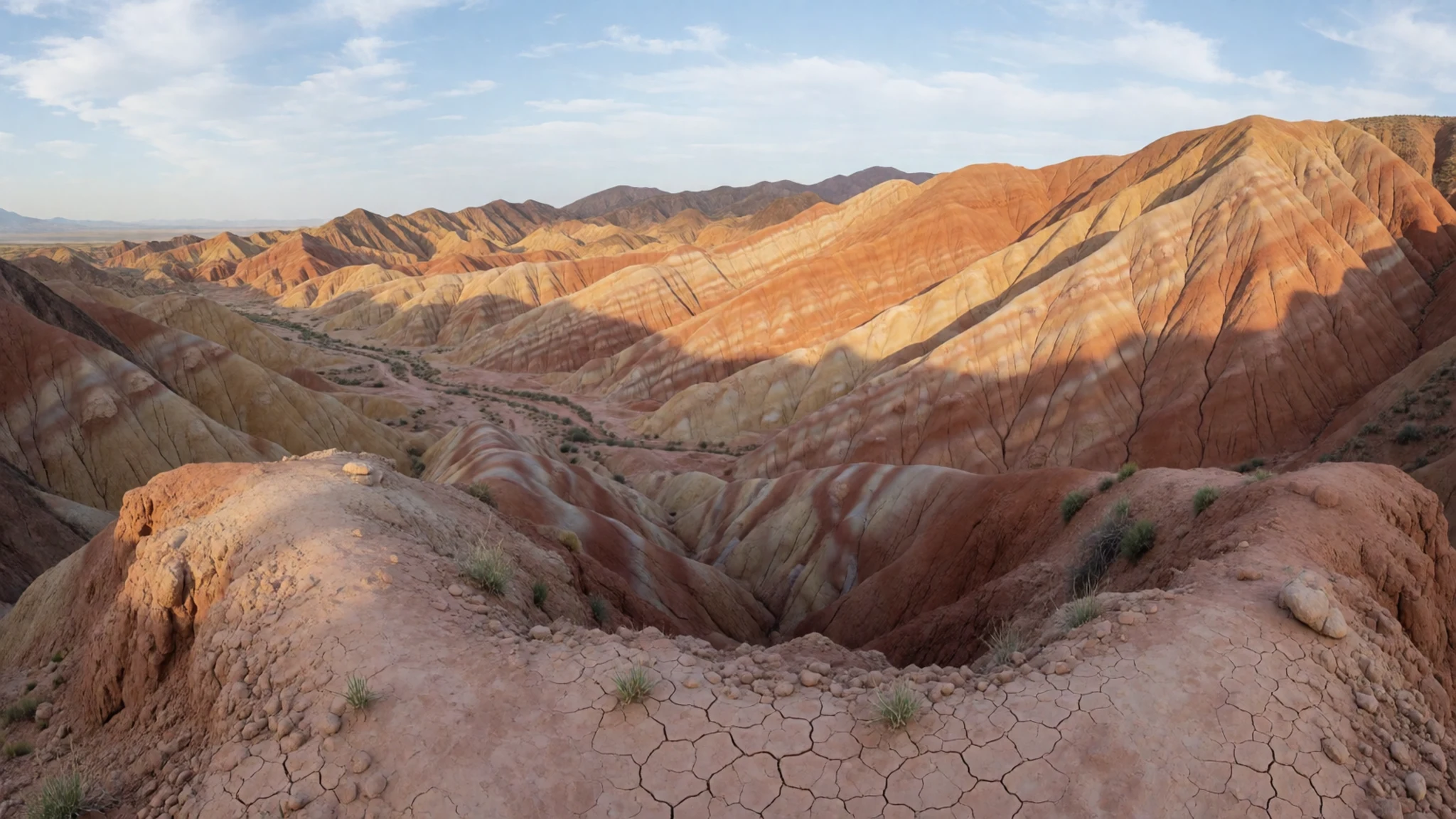
- Cancha de Bochas (Bowling Green) — Main guided circuit, near the middle of the route
Rounded stone balls scattered across a flat area, formed when rock fragments were rolled and cemented together in an ancient river. Their smooth, almost manufactured look makes this one of the most photographed spots, so expect to share it with other groups. Leave the stones where they lie, as removing rock from the park is not permitted.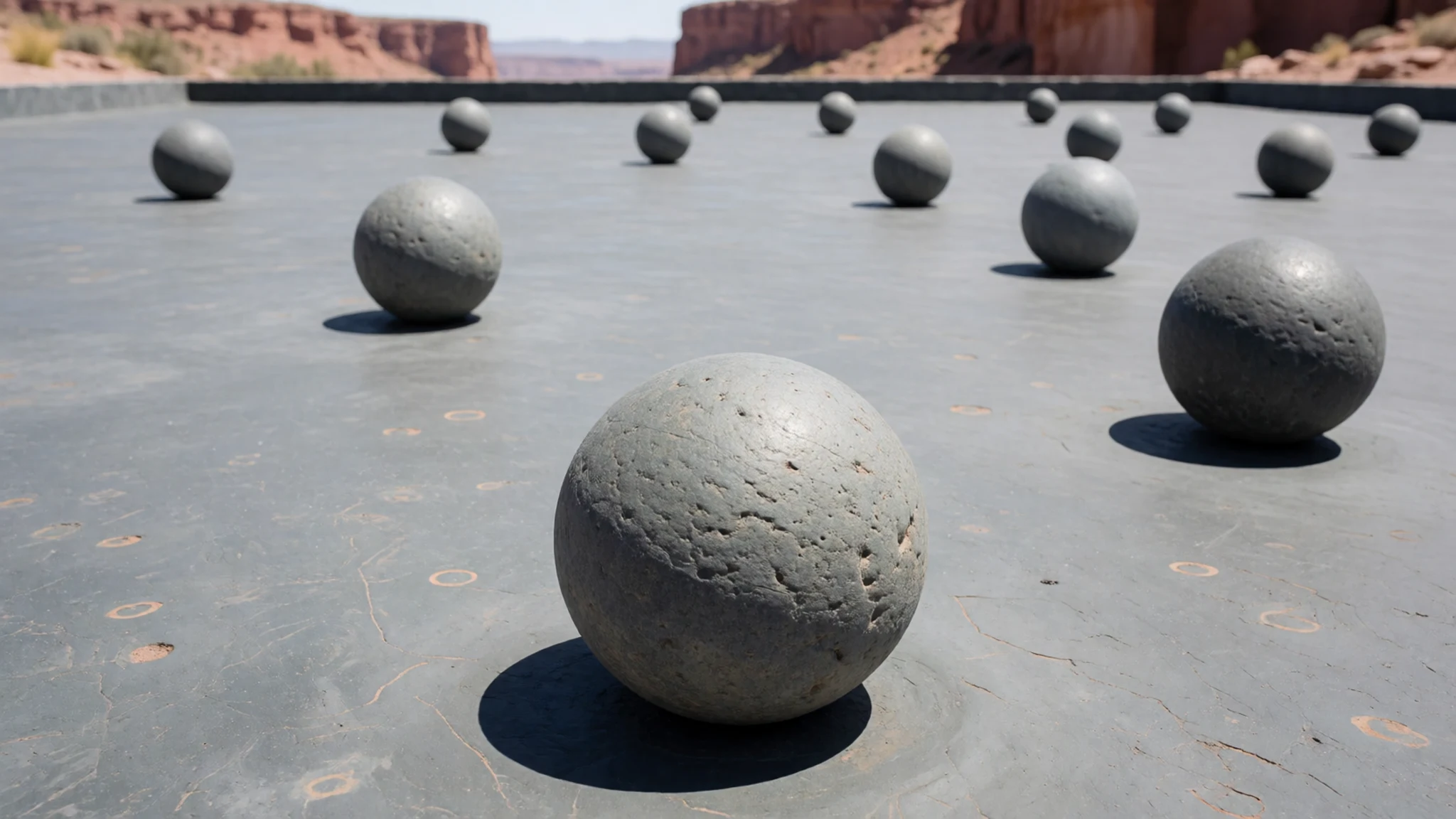
- El Submarino (The Submarine) — Main guided circuit, the western sector
A long rock formation that, seen from one particular angle, looks like the hull and conning tower of a submarine. Guides often stop here to point out the viewing angle, and it is a short, easy photo stop. Shade is scarce, so this is a good place to drink water and rest before the next section.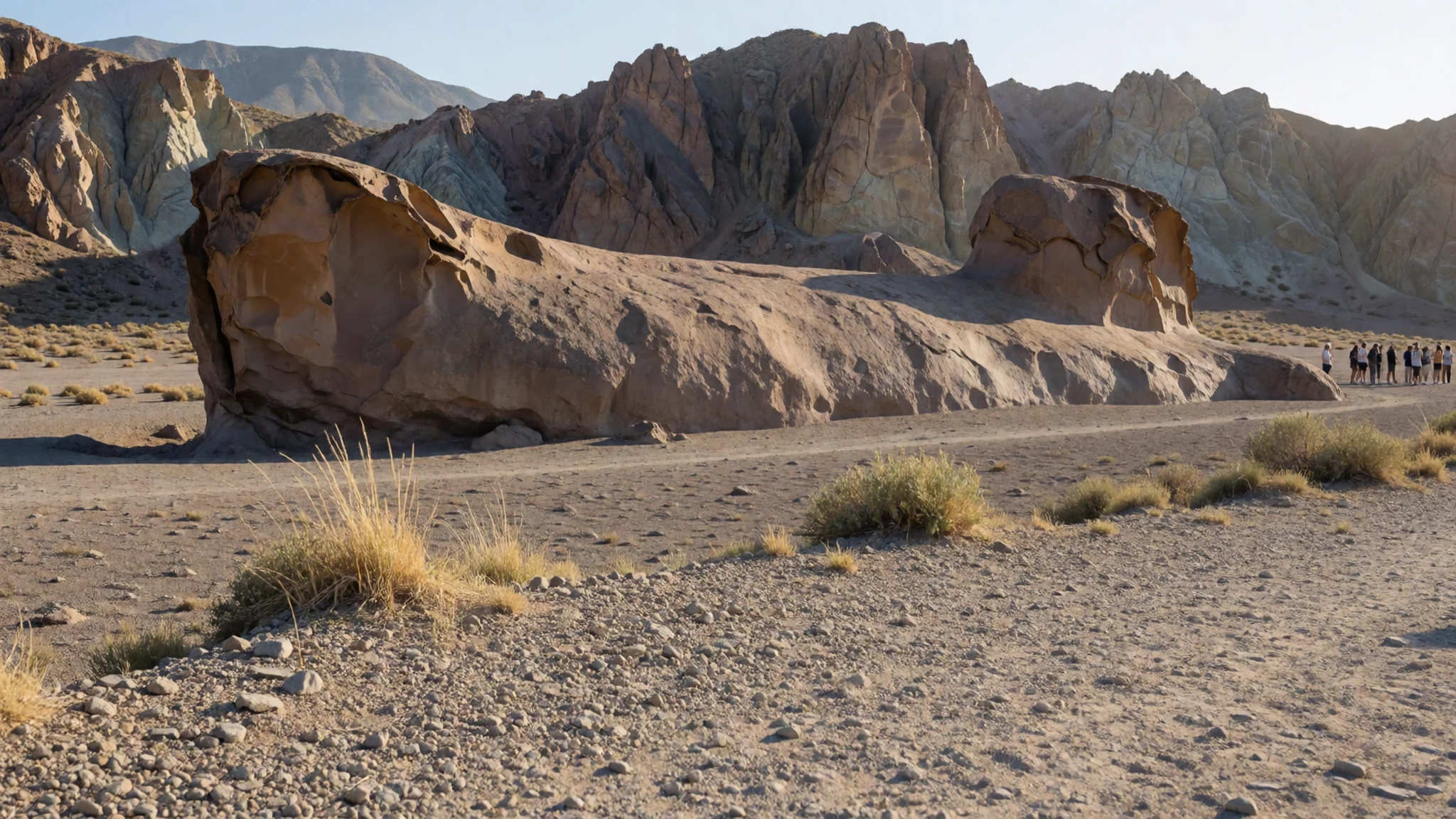
- El Hongo (The Mushroom) — Main guided circuit, the most visited stops
A single column of rock topped by a wider cap, giving the impression of a mushroom growing out of the desert floor. It is the icon many visitors come looking for, and it appears on a great many postcards from the park. Wind and rain have worn the stem thinner over time, so keep your distance from the base.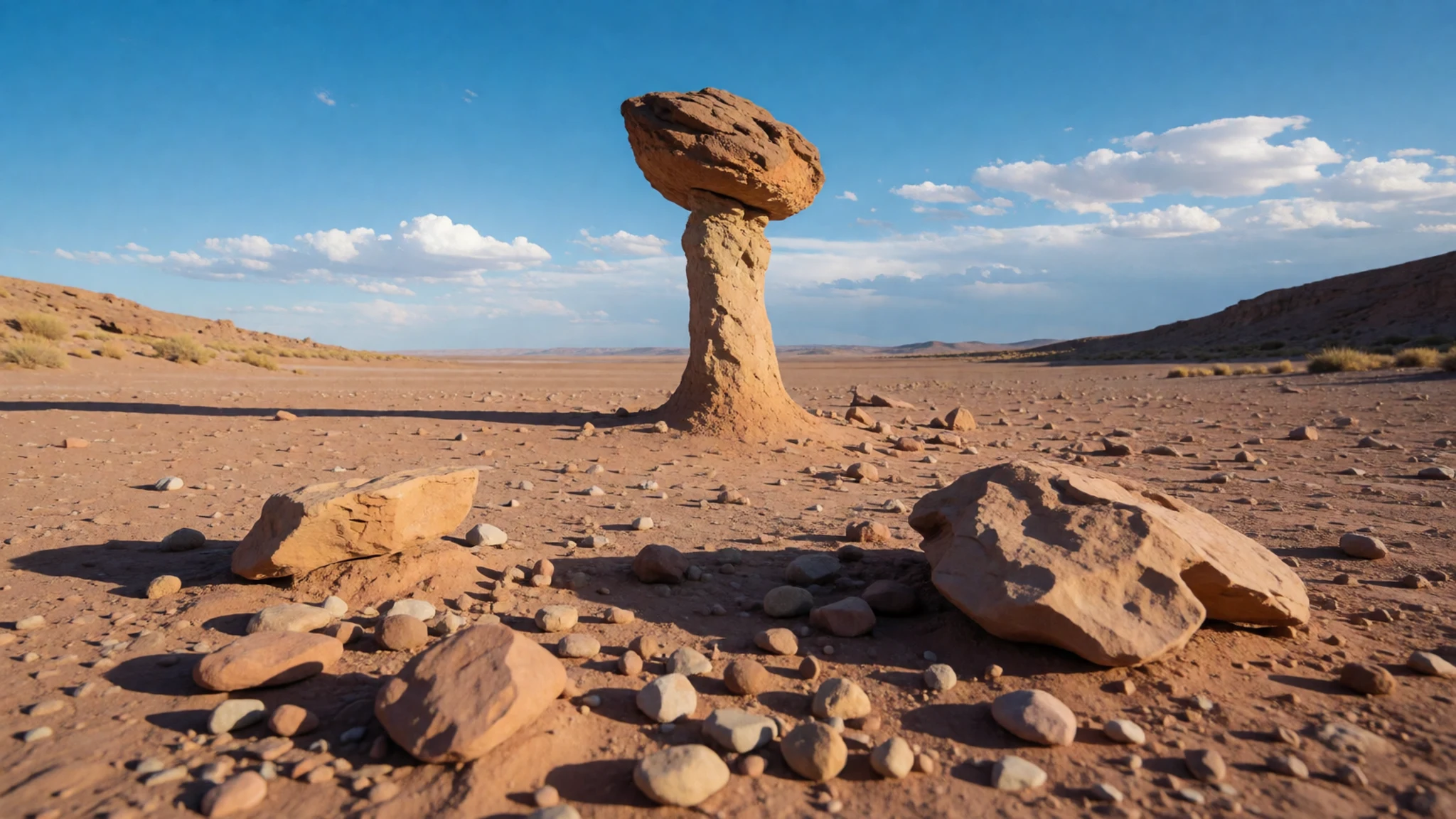
Culture
Life in the nearby towns of Valle Fértil and the wider San Juan region runs on a steady, unhurried rhythm shaped by the heat and the wind. Families gather for long lunches, and the midday pause, when shops and eateries slow down, is still widely observed. Visitors meet guides who are often local residents with deep knowledge of the terrain and the fossil history, so asking questions is welcome and tips are customary for good service. Gaucho traditions remain part of the region's identity, and you will notice them in the music, the horse culture and the way people talk about the land. The park itself is a protected natural area, and the rules are enforced: stay on the marked route, do not climb the formations, do not collect stones or fragments, and keep noise low so that other visitors and the wildlife can enjoy the silence. Please leave every fragment of rock exactly where you found it.
What to wear
Ischigualasto sits in a region where traditional dress grew out of cattle work on the open plains. Gaucho clothing of the Argentine interior includes bombachas, loose trousers gathered at the ankle, worn with a leather belt and a wool poncho, often woven in undyed or dark wool. Boinas, the soft berets, and leather boots with a pointed toe were everyday wear for rural men, and the silver buckles and knife sheaths of the belt are still prized. Hand-loomed textiles in wool and cotton, with bold geometric patterns, come from the Andean north and are sold in markets across the region. Today people in Valle Fértil and San Juan city dress much as people do in other Argentine towns: jeans, cardigans and sneakers, with a gaucho-style hat or scarf for festivals and rural fairs. Visitors should dress for the terrain rather than for style. Pack a wide-brimmed hat, sunglasses and long, loose sleeves for sun protection, and bring a warm layer, since desert nights can be cold and the afternoon wind is strong. Choose closed shoes with good grip, because the crumbly rock and loose gravel make sandals a poor choice. Light, breathable fabrics in pale colours help in the heat.
What to eat
- Empanadas — Eateries and bakeries in Valle Fértil and San Juan city
Small pastries, baked or fried, filled with beef cut by knife, onion, egg and olive. In Valle Fértil and San Juan city, eateries serve them through the day, so grab a few before a long walk or a drive back. They travel well in a paper bag, which makes them a sensible picnic choice.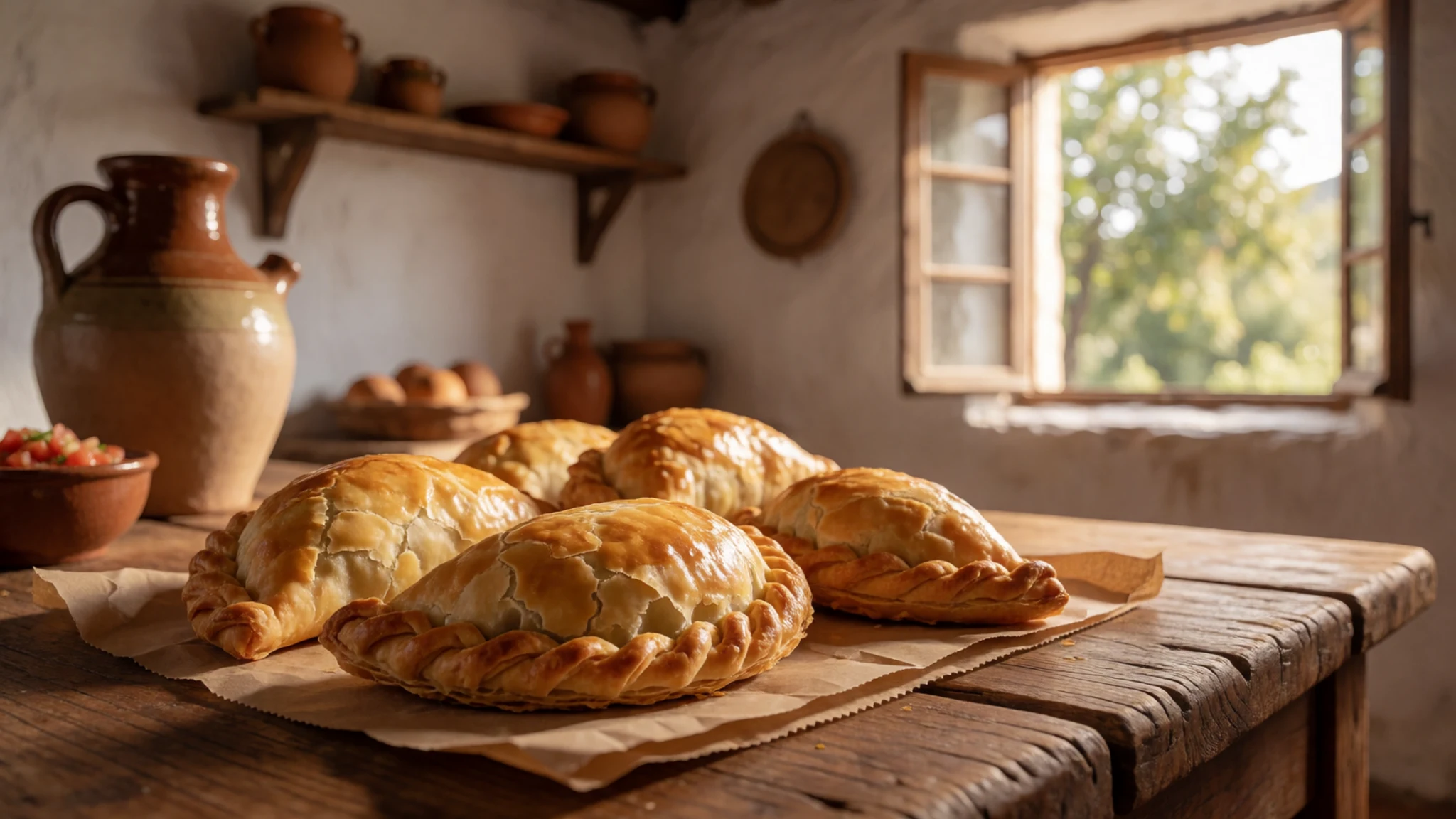
- Humitas — Morning food stalls and market counters in San Juan city
A mash of fresh corn, seasoned and steamed in its husk until soft, sweet or savoury depending on the cook. This dish comes from the Andean north and is a comforting lunch in the cooler months. Look for it at the morning stalls and food counters where local families shop.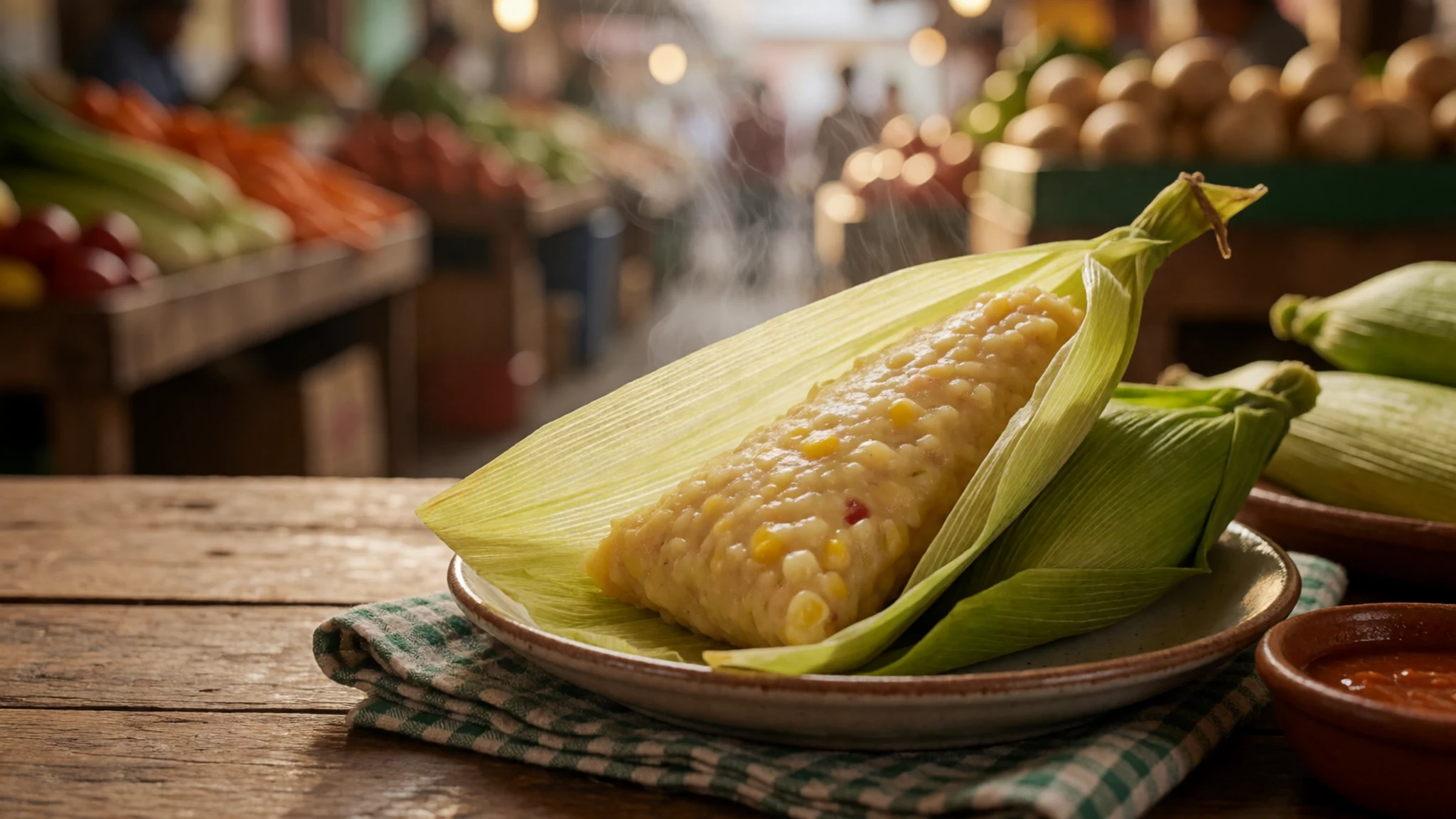
- Carbonada — Family-style eateries in Valle Fértil
A thick stew of beef, pumpkin, sweetcorn and rice, sometimes with fruit added for sweetness. It is a family dish, cooked slowly and served hot, and it is a welcome meal after a dusty afternoon. Ask at a local eatery in Valle Fértil whether it is on the menu that day. - San Juan Syrah — Restaurants in Valle Fértil and San Juan city, and winery tasting rooms in the province
Red wine from the vineyards of San Juan province, where the sunny, dry climate suits full-bodied grapes. A glass with dinner after a hot day in the park is a pleasant ritual. Bodegas in the wider province often run tastings, and many restaurants list local bottles.
Plan it
Best time. April to May and September to October bring cooler, drier days, with milder mornings and less glare. Summer is the rainy season and also the hottest, so visits then are demanding, and winter nights can be very cold.
How long. 2–3
Getting there. Valle Fértil is about 45 minutes away by car or bus, and San Juan city is around 4 hours away. Fly or take a long-distance bus to San Juan city, then continue by road to the park; the last leg is usually by car or an organised excursion from Valle Fértil.
Budget. mid
Tips
- Stay in a hostel in Valle Fértil, because there are no hostels or campsites inside the park
- Carry at least 1.5 litres of water and more in summer, since the dry heat is intense
- Book a guided tour or an organised excursion from Valle Fértil, which is the simplest way to see the main sights
- Go in the morning or late afternoon to avoid the midday heat and the strongest wind
- Bring cash for small purchases, as the kiosco and small eateries may not take cards
Etiquette
- Stay on marked paths and do not climb the rock formations
- Leave rocks and fossil fragments where you find them
- Keep noise low so other visitors can enjoy the quiet landscape
Nearby
Sources
- Wikidata Q639503 (CC0)
- Wikipedia, Ischigualasto Provincial Park (rev 1375895496) (CC BY-SA 4.0)
- Wikivoyage, Ischigualasto Provincial Park (rev 5368894) (CC BY-SA 4.0)
- Photo 01-ischigualasto01.jpg, user:idobi (CC BY 3.0)
- Photo 02-las-coloradas.jpg, Matysilv (CC BY 3.0)
- Photo 03-p1010357-1.jpg, Elgordodavid (Public domain)
- Photo 04-ischigualasto02.jpg, user:idobi (CC BY 3.0)
- Photo 05-a-valle-de-la-luna-el-hongo-san-juan-argentina.jpg, M.Bustos (CC BY-SA 1.0)
- Photo 06-ischigualasto-nt.jpg, Nobu Tamura (CC BY-SA 4.0)
- Photo 07-ischigualasto-fossil.jpg, Murgatroyd49 (CC BY 4.0)
- Photo 08-176592w980.jpg, Anaca79 (CC BY-SA 4.0)


