Tundavala Gap
Tundavala Gap, Angola
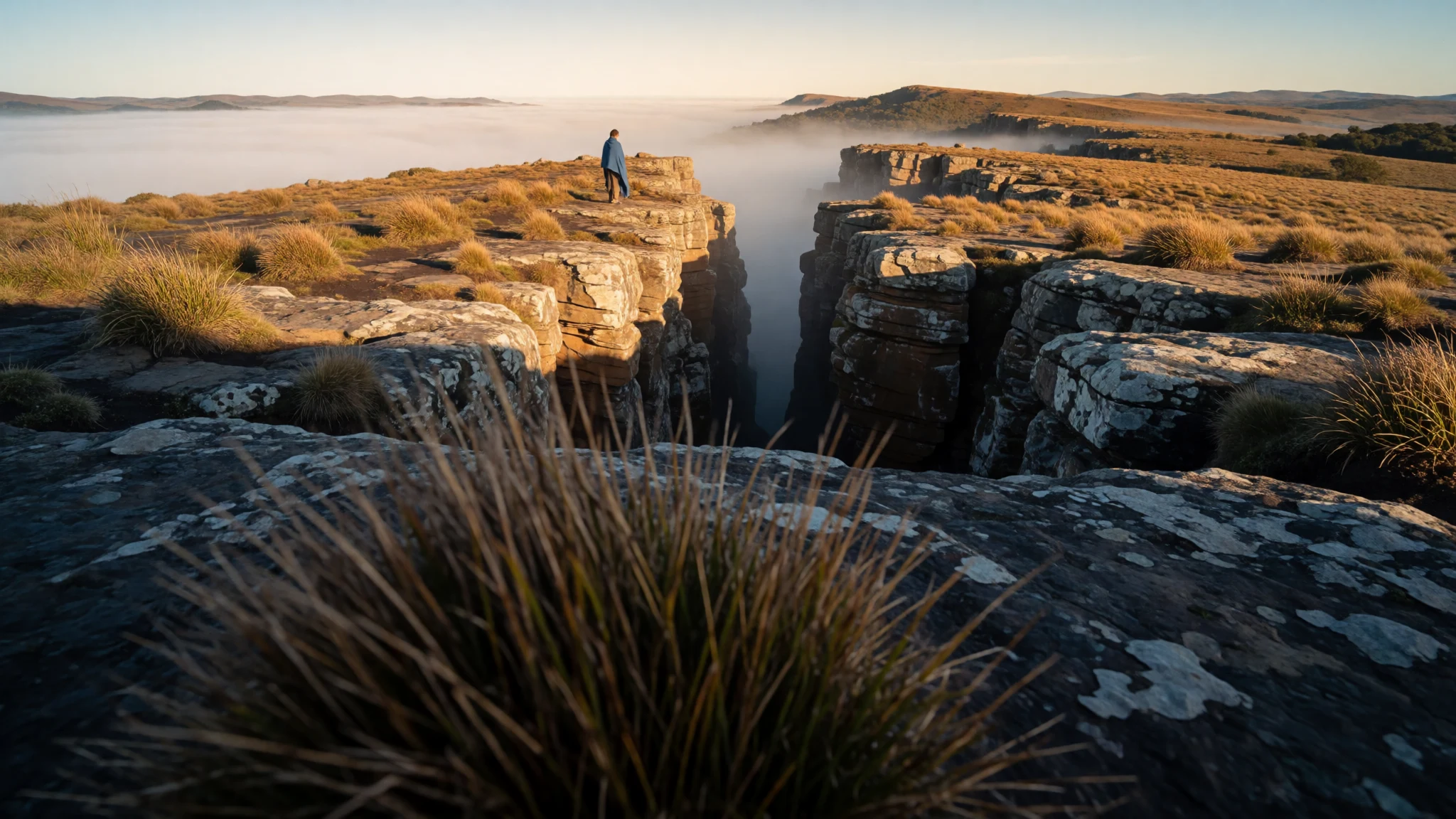
Tundavala Gap is a cliff-edge cleft above the Angolan escarpment, where highland air drops away toward the Namib plain.
The place
Tundavala Gap is a cleft in the rim of the Serra da Leba, where Angola's highland plateau breaks and falls toward the coastal desert. It stands in Huíla province, on the same shelf of mountain country as Lubango, very hot by day and mild only at night and early morning, yet the view faces away from the city, out over a sudden drop to a pale plain running toward the Namib. Behind the parking area the land is open grass, rock, and low scrub, often windy, more high pasture than tropical forest. In front, the cliff simply ends. The gap is the notch in that wall. The view runs through it onto country that is lower, drier, and far wider than the shelf underfoot. Morning is the hour that suits the place. Mist collects in the lowlands and turns the plain into a white sea, while the escarpment stays clear; ridges rise out of the cloud and the rock of the cleft reads dark against it. Later the mist thins, colours harden to grey, ochre, and dust-yellow, and the distance to the desert becomes obvious. On clear days a far haze suggests the coast. The practical site is small. A road from Lubango ends in a parking area, and a short walk reaches the edge. There is no long trail and little shelter. The stone underfoot is broken and uneven, and the fall is immediate, so the pleasure of the place sits beside ordinary caution. Herds and highland weather belong here as much as visitors. Birds ride the updraft along the face. The climates meet without a gentle slope between them: green plateau on one side, arid country below. That meeting is the character of Tundavala Gap, a city-edge lookout that behaves like a boundary.
Its story
Tundavala Gap is a natural interruption in the Great Escarpment, the long wall that divides southern Africa's high interior from the coastal lowlands. In this stretch the wall is the Serra da Leba. Nobody quarried the cleft into a monument; the cliff is simply broken, and from the break the plateau looks out on desert country it does not resemble. The highland around the rim is Nyaneka-Humbe country, home to Mwila communities among others. Long before a car park, these were grazing lands: cattle, seasonal pasture, and villages set back from the edge, where the days are very hot and only the nights and early mornings are mild. Portuguese rule later planted a provincial city on the same plateau. Lubango, called Sá da Bandeira in the colonial period, grew here because the highlands would take farms, churches, and an administration. The gap became the outer edge of that settler landscape. The lasting work of those years is the Serra da Leba road, a chain of switchbacks cut down the escarpment to join the plateau to Namibe, the port once known as Moçâmedes. The drive still tells the geography in sequence: green country, then rock, then desert. Independence and the civil war that followed took the viewpoint off any traveller's map. The rim and the road remained; the habit of visiting did not. When Lubango's weekends filled out again, residents reclaimed Tundavala Gap as a sunrise stop and a short drive to the horizon. The place now holds all of those layers at once — pastoral boundary, colonial lookout, engineered descent nearby, and a city that treats the cliff as its own skyline. It is the long argument between highland life and the dry country below, still visible from the same notch.
What to see
- Tundavala Gap — Serra da Leba rim, Huíla
Tundavala Gap is the notch itself, a break in the escarpment wall a short walk from the parking area. The cleft frames the drop from the Huíla plateau to the pale plain. Footing is rough and the edge is abrupt, so the point is to stand back and let the rock do the framing. Morning mist often fills the country underneath while the rim stays bright.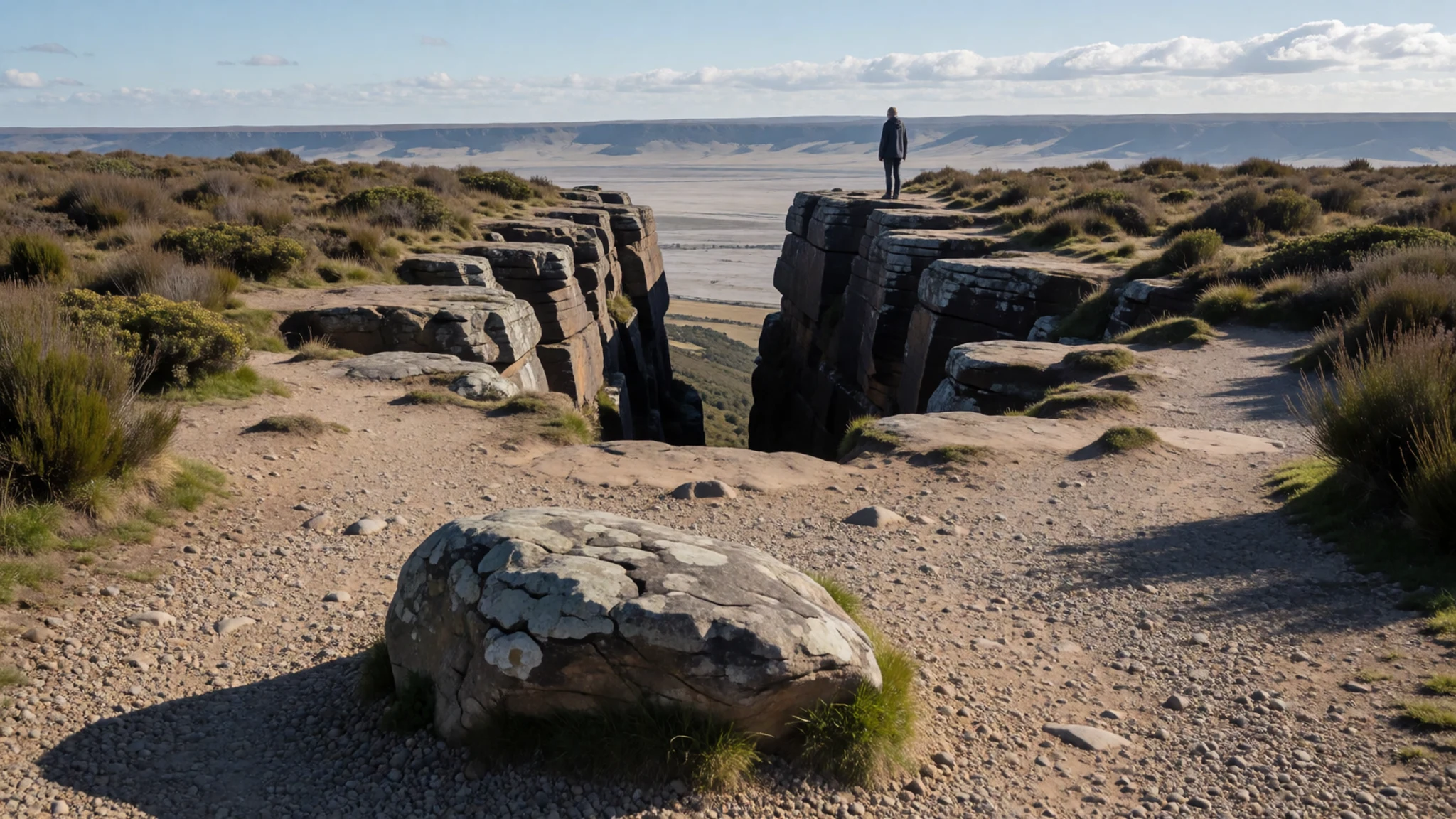
- The rim panorama — Tundavala rim, above Lubango
The panorama from Tundavala Gap is the wide version of the cleft view: highland scrub behind, then the broken lip, then the plain running west toward the Namib. Cloud often sits in the low country like water, with higher ridges standing clear of it. The light changes quickly up here, and a hazy hour and a hard bright one show different plains.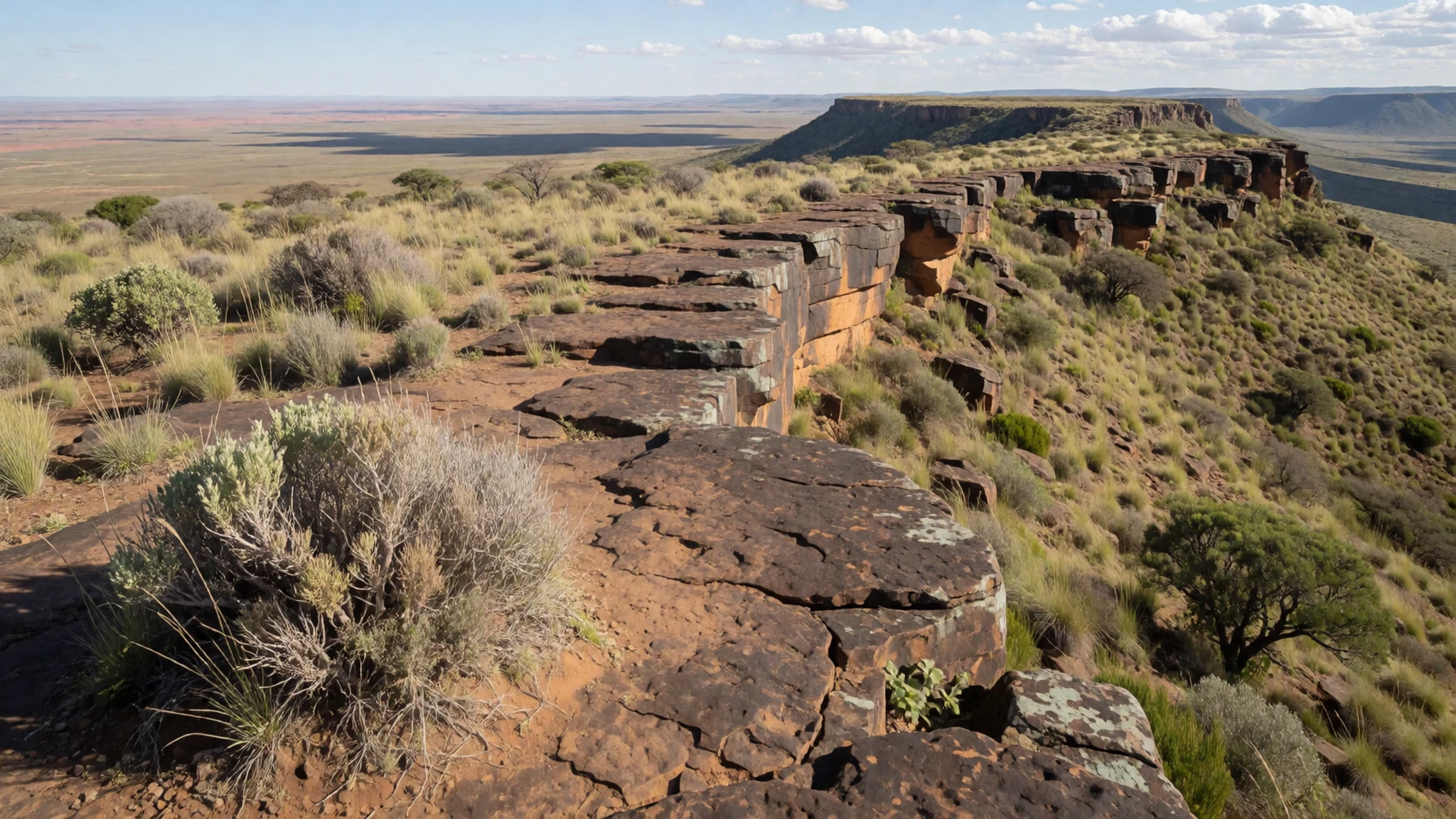
- Sunrise on the rim — Tundavala Gap viewpoint
Sunrise at Tundavala Gap is the hour locals favour, when the plain below still holds mist and the rim catches the first colour. The rock of the cleft comes up dark, then warm, and the desert country lightens in bands. The parking area fills with people who have driven up from Lubango in the dark. A layer is worth bringing, and the lip deserves distance.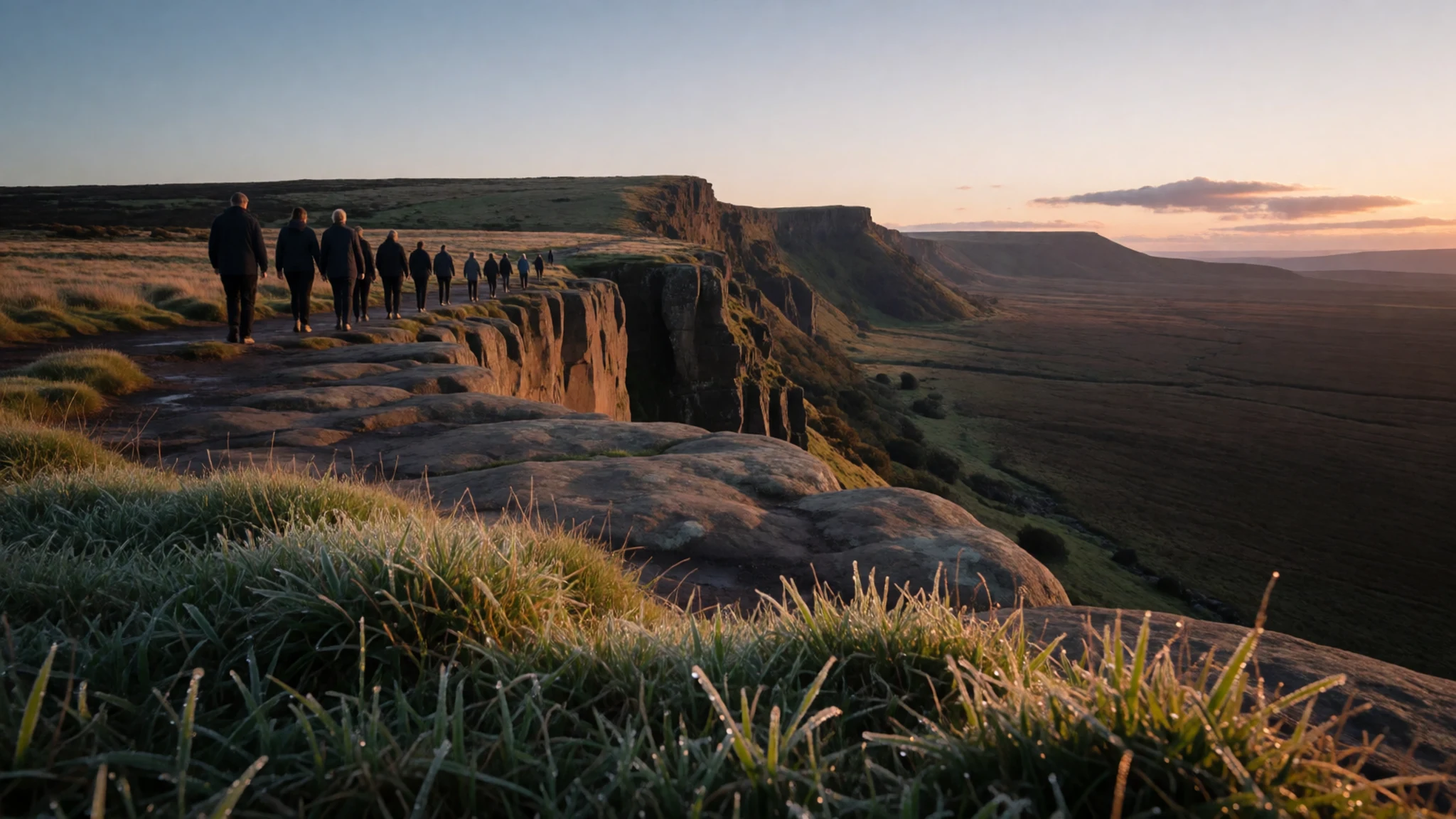
- Serra da Leba road — Escarpment road between the plateau and Namibe
The Serra da Leba road is the engineered companion to Tundavala Gap, a chain of switchbacks dropping off the Huíla plateau toward Namibe. Farms sit at the top, where the day is very hot and only night and early morning are mild, rock walls in the middle, and desert light at the bottom. The bends are steep, and the traffic is local as well as visiting, so daylight is the sensible time.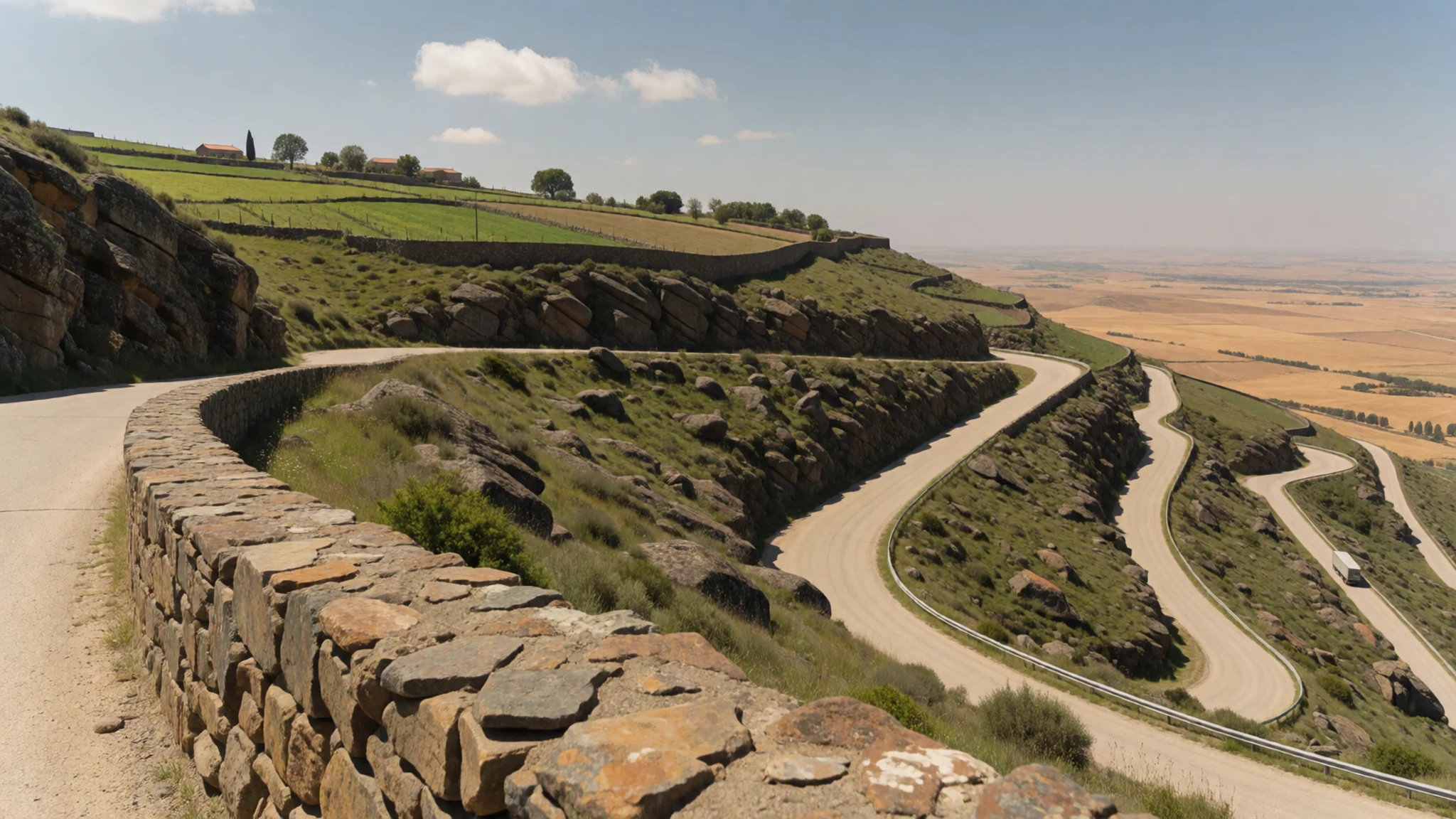
- Cristo Rei — Serra da Chela, Lubango
Cristo Rei is the statue of Christ on the heights above Lubango, and it makes a useful pair with Tundavala Gap on the same day. The monument looks back over the highland city rather than out to the desert, so each viewpoint explains a different direction of the plateau. The approach is a short climb from the city side, popular with residents in the late afternoon.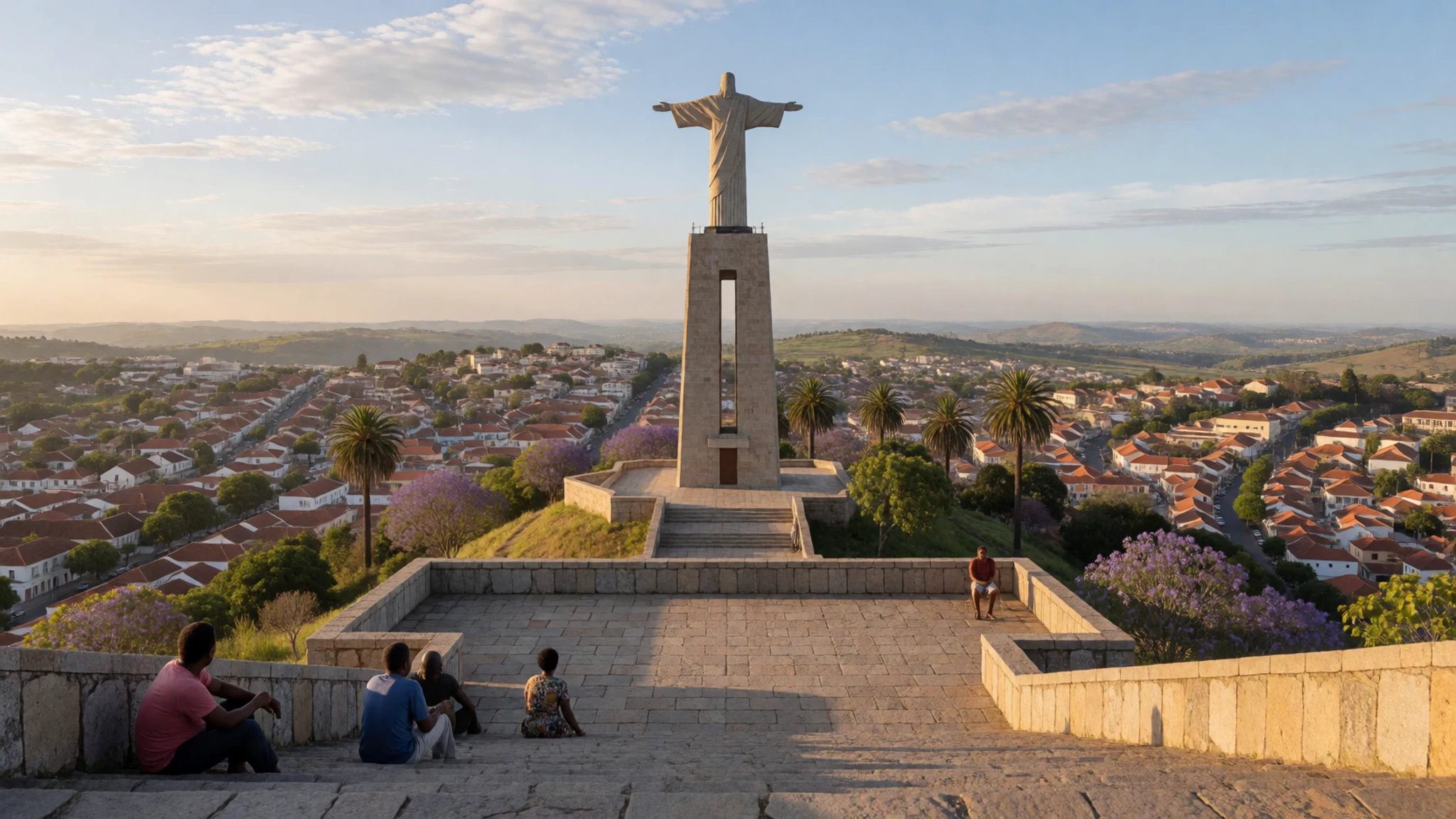
Culture
Tundavala Gap sits in the cultural landscape of the Huíla plateau, not in an empty scenic reserve. The highland is Nyaneka-Humbe country, and Mwila communities are a visible presence around Humpata, Chibia, and the rural edges of Lubango. Everyday life here is pastoral and small-town: cattle, maize fields, churches, and a provincial capital that still runs on Portuguese as well as local languages. Sunday drivers from Lubango treat the rim as shared public ground — families, couples, photographers — which means the gap is social before it is solitary. Town manners and rural manners meet on the road up. In Lubango, coffee houses, Catholic feast days, and a relaxed evening stroll sit alongside market trade. Out toward the rim, people are going to work, to pasture, or home, and a visitor's camera is the unusual object. Mwila women's dress, ochre-dressed hair, and heavy beadwork are living markers of age and status, not a show arranged for the car park. Children are sometimes encouraged by adults to pose; that is for the family to decide, not for a stranger to assume. Portuguese remains the language of signs, schools, and administration, and a greeting in it goes further than a silent lens. Ask before you photograph people at Tundavala Gap, and keep well back from the cleft if others are finding their footing.
What to wear
Tundavala Gap is not a place of costume, but the Huíla plateau around it is where Mwila women still wear a rural wardrobe of hair, beads, and dyed cloth. Hair is built into thick braids and coated with oncula, a red paste of ground stone, oil, and scent, and the style changes with age and marriage. Heavy strands of beads and metal sit across the neck and chest, with cloth or leather at the waist and further beadwork at the wrists. Men in the same communities more often wear straightforward shirts and trousers, with a cloth wrap still seen in rural work. In Lubango the street has moved on. Young people wear jeans, football shirts, trainers, and the same global mix one sees in other Angolan cities, with a jacket or jumper in the morning because the plateau is cool. Market traders layer printed cottons. Church clothes on Sunday are pressed and formal. For the gap itself, dress for wind, sun, and broken rock. Sturdy shoes with a grip matter more than style; sandals make the rim unpleasant. A light layer that can come off by midday suits the swing from cool dawn to strong sun. In town and at churches, covered shoulders and modest lengths read as ordinary respect. Bright beadwork and ochre hair belong to the people who wear them; they are not a prompt to dress up, to touch, or to arrange someone for a photograph.
What to eat
- Funge de milho — Lubango eateries and market cook-stalls
Funge de milho is the maize porridge that anchors meals on the Huíla plateau, rolled and eaten with beans, greens, or meat. Around Tundavala Gap, look for it in a simple Lubango eatery or a market cook-stall rather than at the rim. A shared bowl is the way it arrives.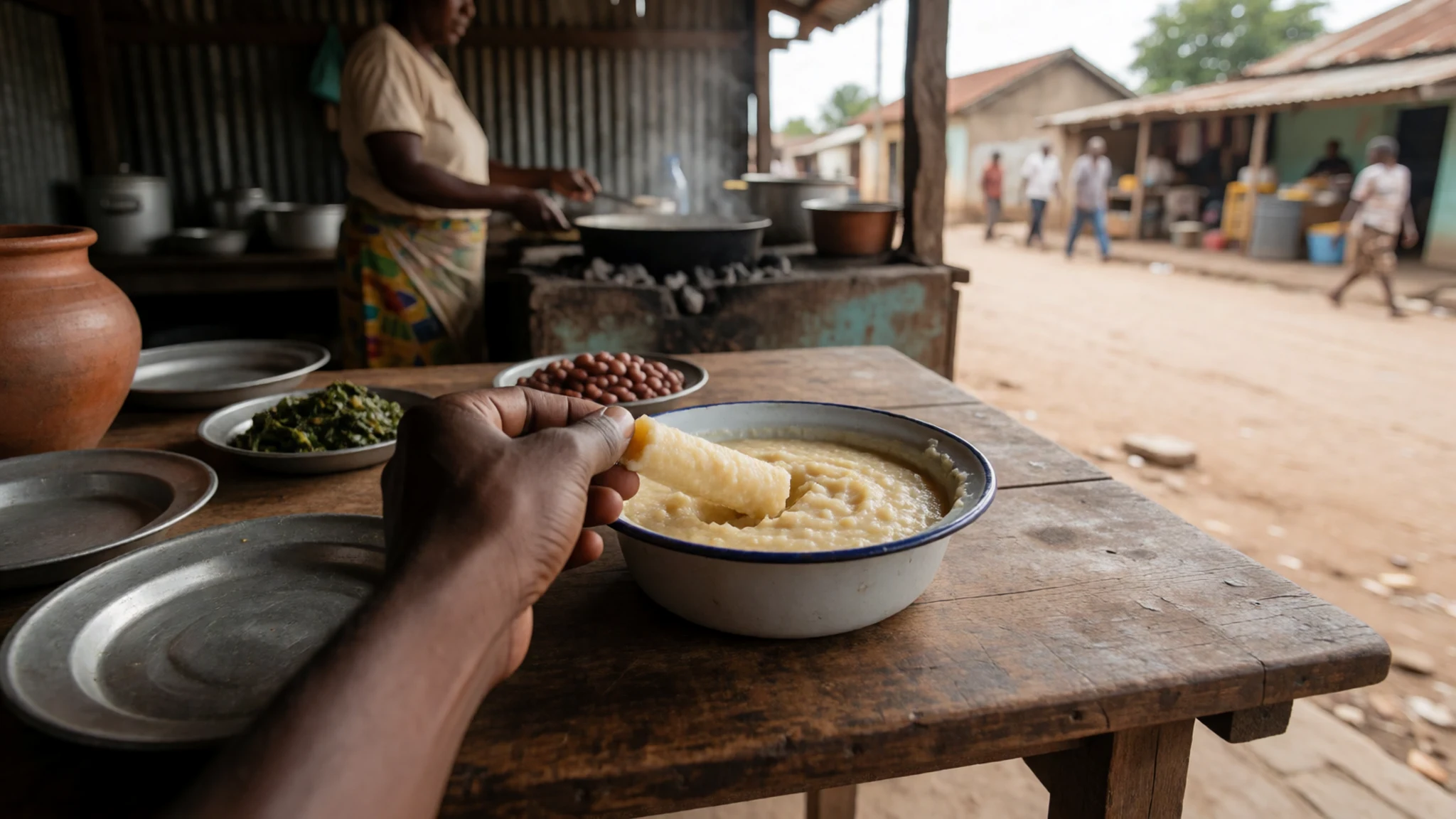
- Cabrito grelhado — Grill stalls in Lubango and roadside fires on the plateau road
Grilled goat is a common highland pairing with a day at Tundavala Gap, seasoned and cooked over charcoal. Look for grill stalls in Lubango and roadside fires on the drive back from the plateau. It comes with funge or bread, at the pace of a fire rather than a menu.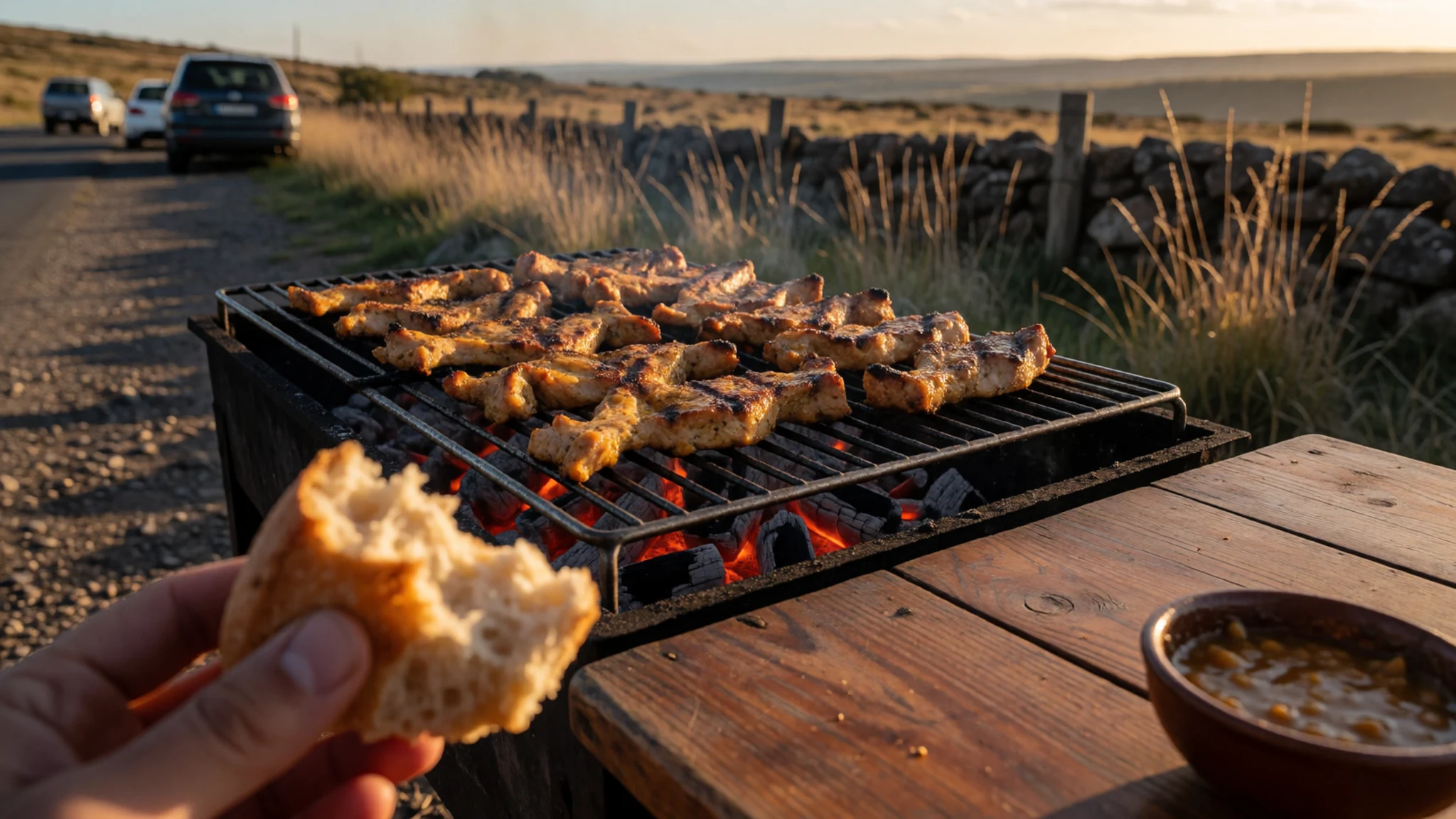
- Muamba de galinha — Local eateries in Lubango
Muamba de galinha is chicken in palm oil, okra, and spices, easy to find in Lubango eateries when visiting Tundavala Gap. The sauce is rich, and funge is the usual partner. Choose a local eatery that smells of palm oil rather than a pastry counter. - Frango piri-piri — Grill spots in Lubango
Charcoal chicken with piri-piri is a Portuguese inheritance still ordinary in Lubango on a Tundavala Gap day. Grill spots in the city serve it, and the heat varies, so a mild sauce is a fair request. Bread sits beside it when funge feels like too much. - Fresh highland cheese — Bakeries and markets in Lubango
The Huíla highlands keep a dairy habit, and fresh cheese with bread is a practical breakfast before Tundavala Gap. Bakeries and markets in Lubango sell it, sometimes with local butter. It is mild, and it travels in a car up to the rim.
Plan it
Best time. Visit Tundavala Gap in June and July, the most comfortable months, dry and mildest at night, though the days stay very hot; November is the hottest and March the wettest, and morning mist on the plain lifts instead of thickening into rain cloud. The rainy season can hide the desert country entirely. Within any day, early light shows more of the plain.
How long. 2–3
Getting there. Fly into Lubango and continue by road; Tundavala Gap is a short drive from the city. Travellers heading for the coast can carry on down the Serra da Leba road toward Namibe.
Budget. high
Tips
- Set out from Lubango in the dark if you want mist in the plain below Tundavala Gap.
- Eat, fuel, and buy water in the city; the rim has almost no services.
- Wear shoes with grip, and carry a layer you can take off later.
- Keep cash, because cards are patchy outside larger businesses in Lubango.
- Drive the Serra da Leba bends in daylight and leave time for local traffic.
Etiquette
- Ask before you photograph people, especially in Mwila dress.
- Stay well back from the cleft; the edge is rough and barely fenced.
- Carry your litter away; the viewpoint cannot absorb it.
Nearby
Sources
- Wikidata (CC0)
- Wikipedia (CC BY-SA 4.0)
- Wikivoyage (CC BY-SA 4.0)