Quissama National Park
Quissama National Park, Angola
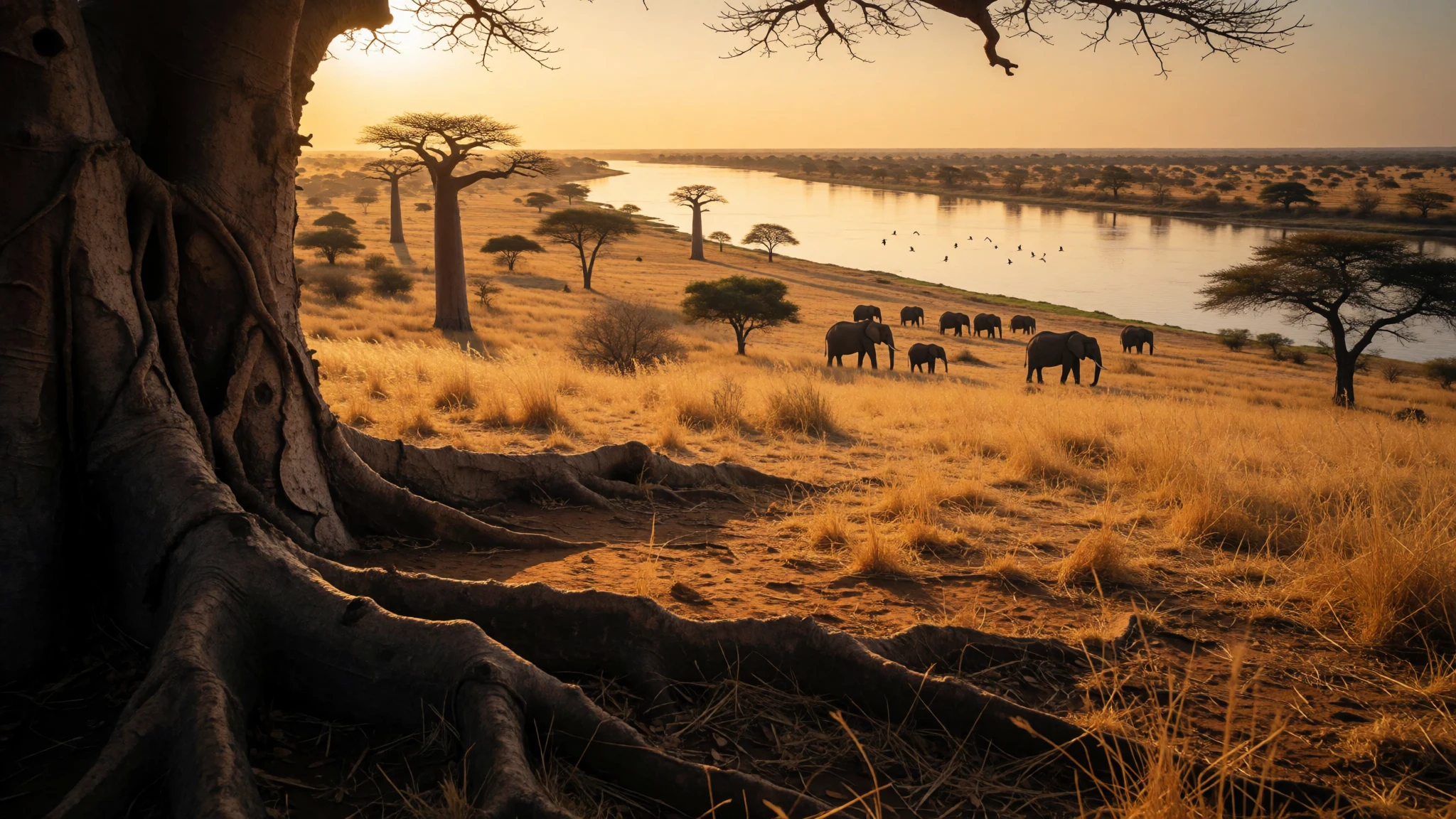
Quissama National Park is Angola's coastal reserve of river, Atlantic shore and savannah, slowly refilling with animals after the war.
The place
Quissama National Park (Quiçama in Portuguese; also Kissama, Kisama or Quicama) sits in northwestern Angola, within reach of the capital yet large enough to feel like another country. The park was founded in 1957 and remains a working national park on a coast where war once emptied the bush of almost all its large animals. Luanda lies about 70 km away. The western edge meets the Atlantic along 120 km of shore, so the same protected area holds salt air, river water and dry grass. The Cuanza River, often written Kwanza, draws the northern line; the Longa River draws the southern one. Inside those lines the ground is mostly open savannah running to the riverbanks, the kind of habitat shown in photographs of the Kwanza margin: a broad channel, a strip of trees, then grass. The mapped extent is about 12,000 km², or 3 million acres, which is why a day here is a matter of driving as much as of watching. Other Angolan parks were left in ruins by the civil war; Quissama is the one that has been pulled back into use, with animals brought in from elsewhere and a slow return of game viewing. Tourism in Angola is still young, and the park asks for planning: a vehicle, a guide, and patience with roads and heat.
Its story
The land inside today's Quissama National Park was set aside for game in 1938, while Portugal still administered Angola as an overseas province. The national-park proclamation came in January 1957. For a time the bush held elephants and the giant sable antelope in numbers that made the reserve feel full. Then the Angolan Civil War ran for 25 years, and poaching during those years took the large animals down to almost nothing. The landscape stayed; the herds did not. In 2001 the Kissama Foundation, bringing together Angolans and South Africans, started Operation Noah's Ark. Elephants and other animals were moved from parks in Botswana and South Africa that had more animals than the land could carry, and released into Quissama. They settled, and the operation gave the park a reason to believe restoration was possible rather than merely hoped for. From 2005 the protected area and its surroundings have been treated as a Lion Conservation Unit, a sign that predators, not only the transplanted elephants, belong in the plan. In 2025 UNESCO designated the park a biosphere reserve, which sets Quissama in a wider frame of conservation and local life without turning it into a city attraction. The honest story is a break and a repair: a reserve made a park in 1957, emptied by war, then restocked by animals brought across the border.
What to see
- Cuanza River — Northern boundary of the park
The Cuanza River, also called the Kwanza, forms the northern limit of Quissama National Park. Habitat photographs show a wide channel, a thin belt of trees and savannah against the bank — riverside ground, not a town quay. The water is the line between the reserve and the country toward Luanda. Animal tracks follow this margin, so the river is both boundary and scenery.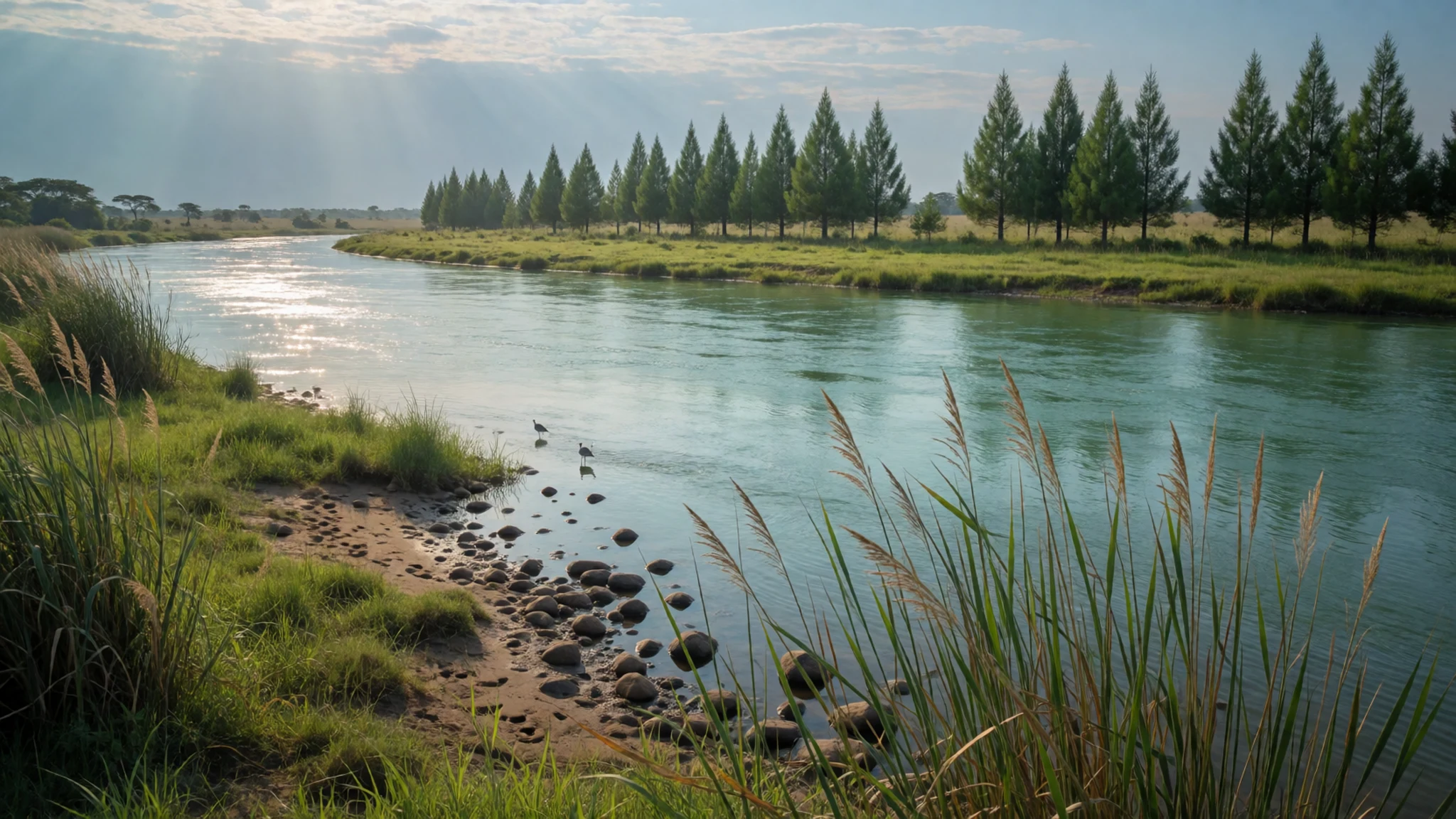
- Atlantic shoreline — Western coast of the park
The Atlantic shoreline is the western border of Quissama National Park, a long coast rather than one resort beach. For 120 km the park meets open ocean, so a day here can hold salt wind and sand as well as grass. Access is by track with a guide, and the shore is wilder than the island beaches nearer Luanda. Swimming makes sense only where someone local trusts the water.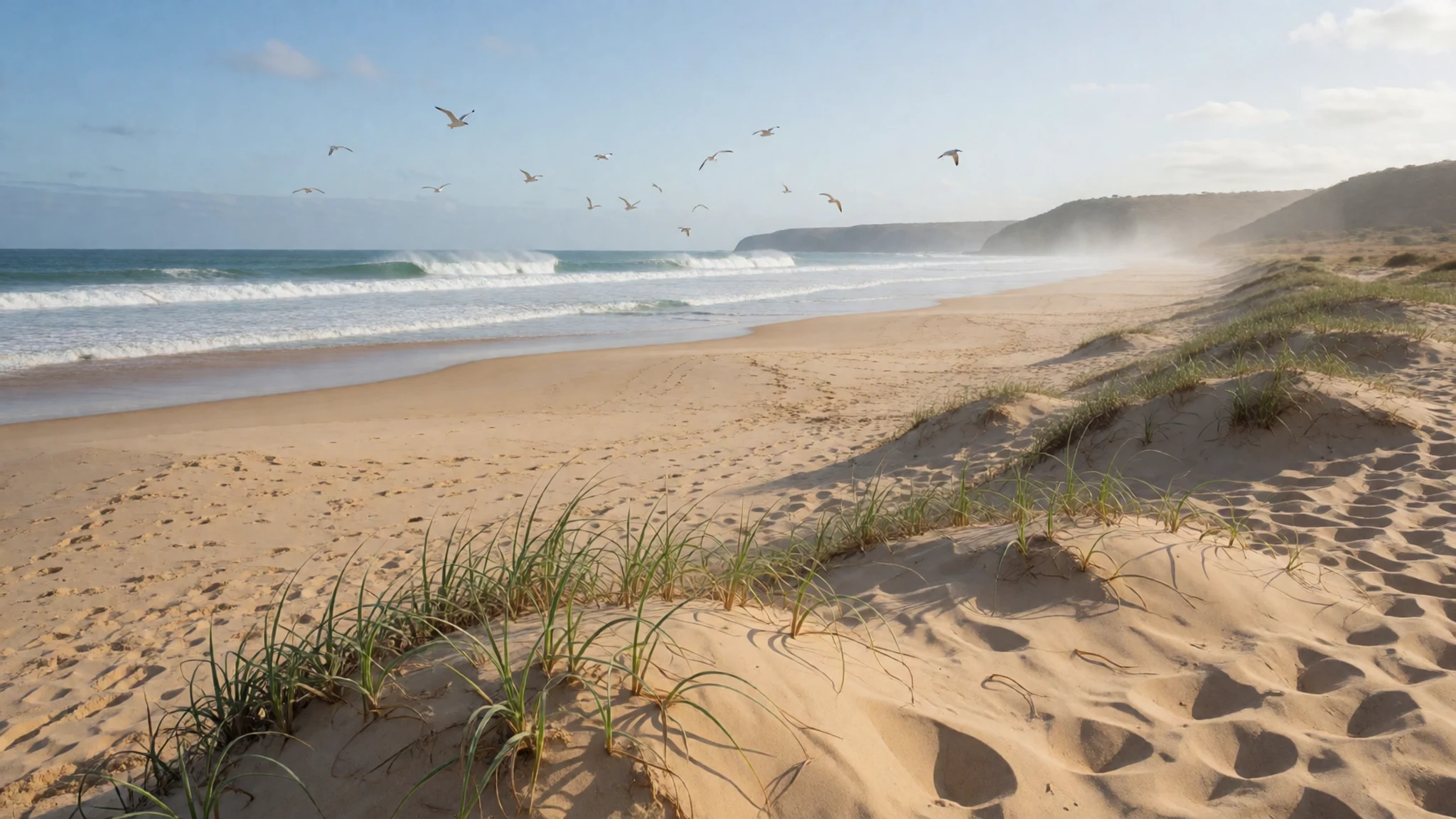
- Longa River — Southern boundary of the park
The Longa River closes Quissama National Park on the south, a quieter border that fewer trips reach. With the Cuanza to the north and the Atlantic to the west, it completes an outline measured in driving time rather than a short stroll. Travel notes attach no famous viewpoint to the name. Knowing it is practical: it marks where the protected area gives way to ordinary countryside.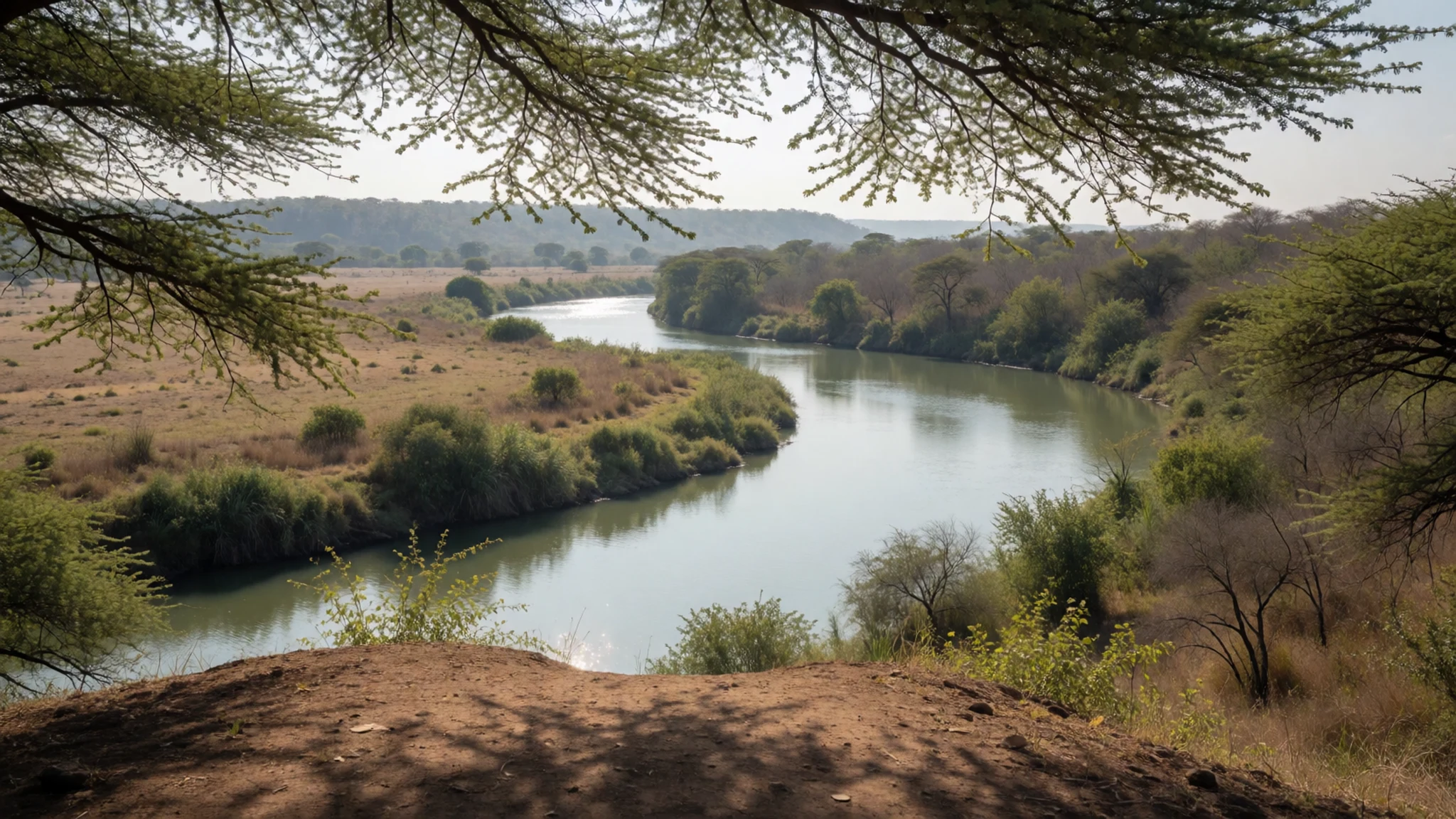
- Kwanza riverside savannah — Kwanza river margins
Open savannah along the Kwanza is what Quissama National Park shows the eye: grass, scattered trees and river in one frame. Habitat photographs made during research on an Angolan rain frog record that pattern as a working picture rather than a poster. Large animals are sparse after the war, so the pleasure is often the grass and the light. A guide should say which tracks are fit to drive.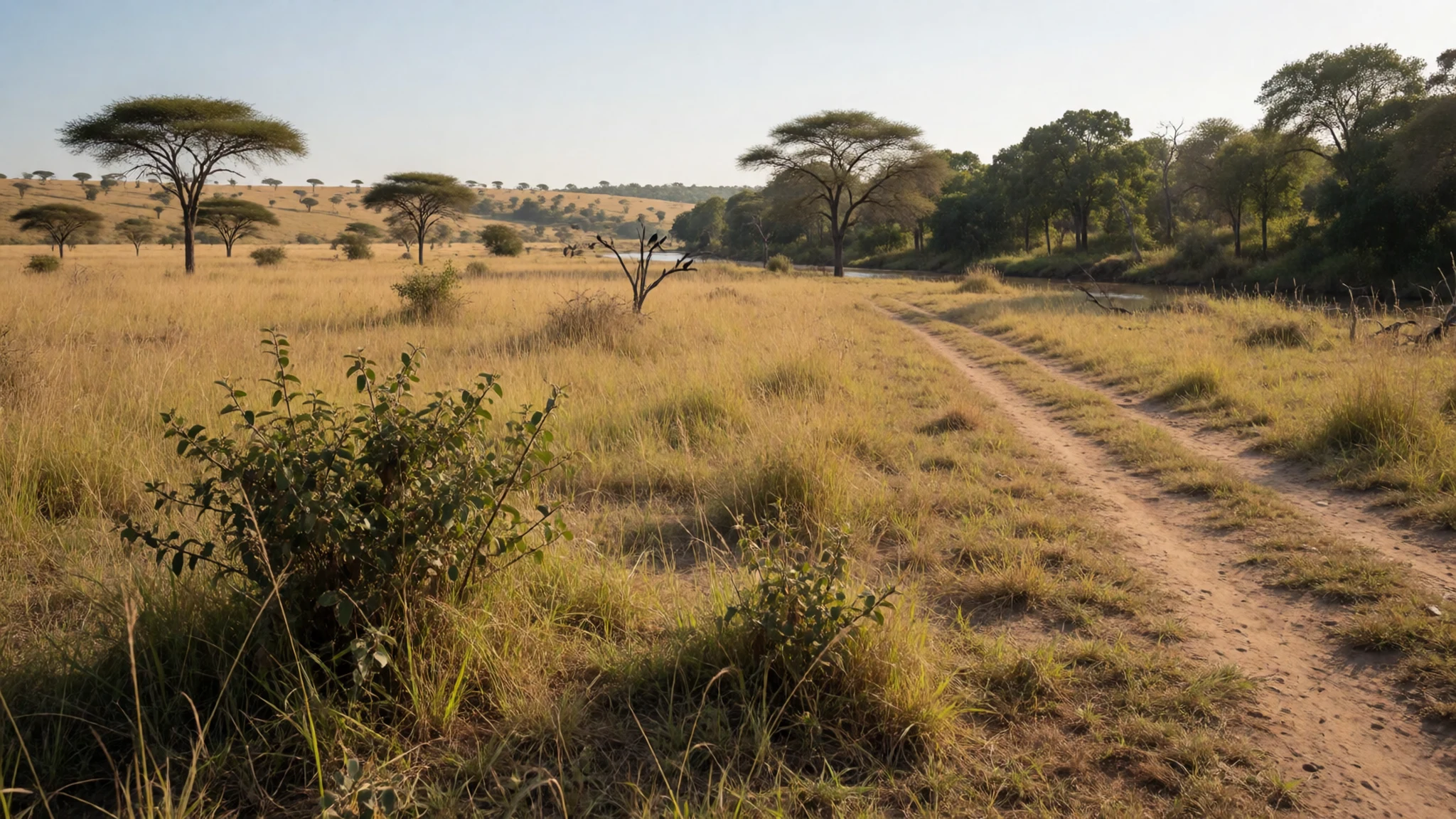
- Restored game country — Interior of the park
Quissama National Park's animals are a restoration story as much as a wildlife spectacle. Elephants were brought from Botswana and South Africa in 2001 under Operation Noah's Ark, after poaching in the civil war had nearly cleared the large game. They adapted, and the park has used that success as a base for a wider recovery. Since 2005 the area has also been treated as a Lion Conservation Unit.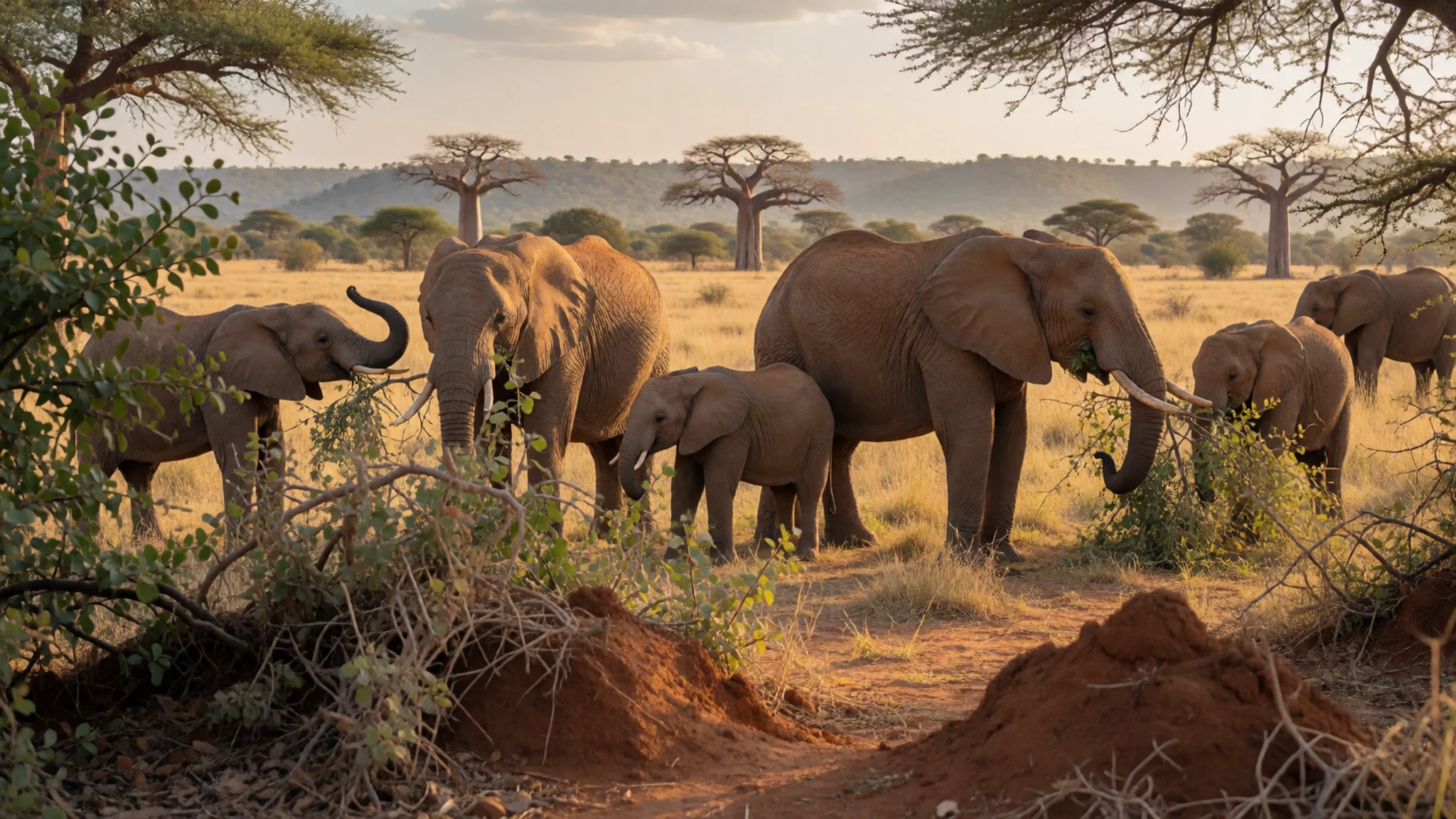
- Mussulo — Luanda coast
Mussulo is not inside Quissama National Park. It is the Luanda island people add to a Kissama plan: sand, water that is cleaner than the city front, and boats for simple water sports. It wants its own day, before or after the park, because the park's Atlantic edge is wilder and slower to reach. Mussulo is the easy swim. A known boat operator matters, and valuables should stay modest.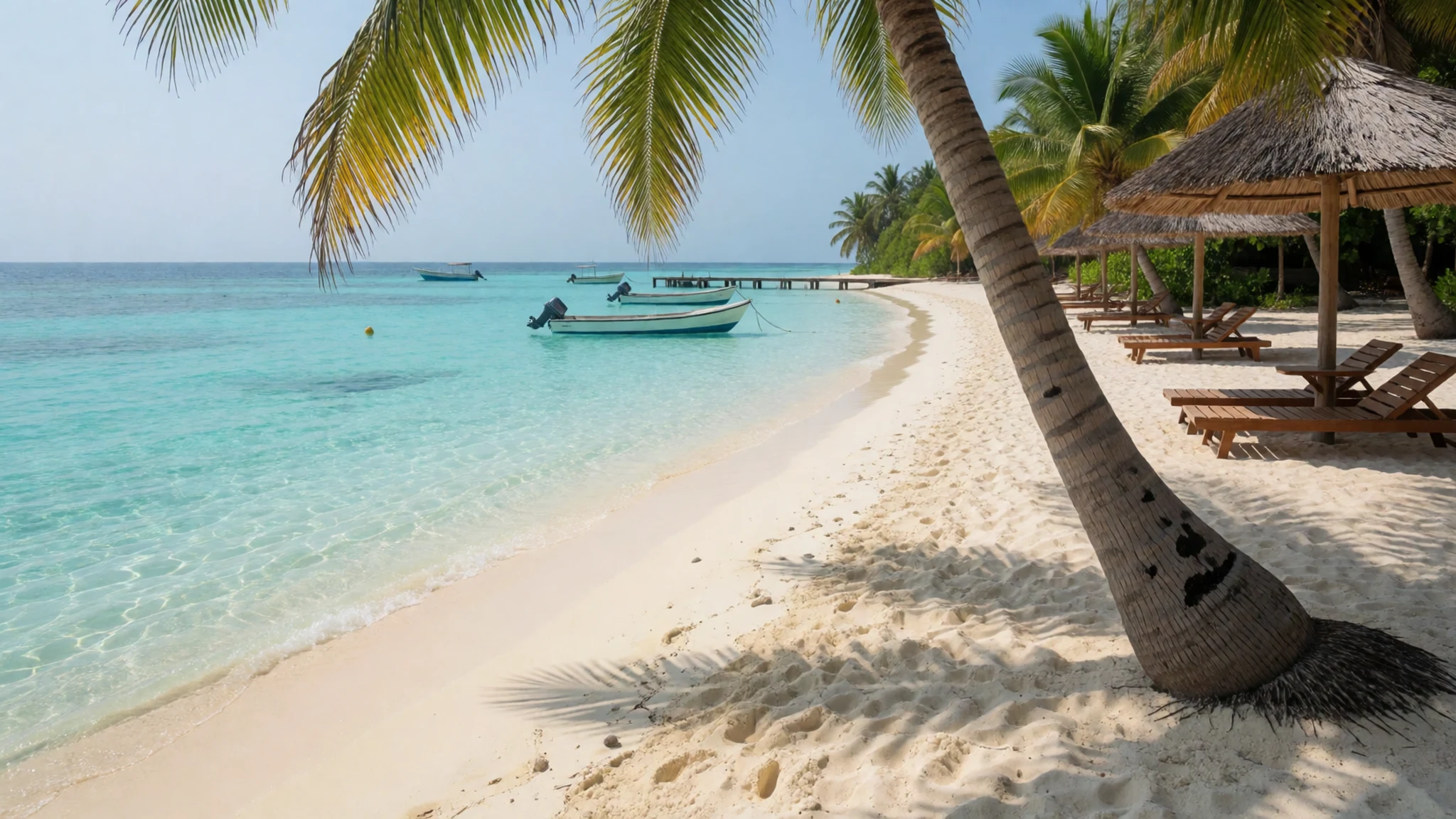
Culture
Quissama National Park sits inside a country whose social habits were shaped by patience, music and a long war that people rarely narrate to strangers. Angolans often carry that history without offering it as an explanation for daily difficulty, and a visitor who brings the war up as small talk can sound clumsy. Around the park, as in Luanda, sound matters: kuduro, kizomba, semba and tarrachinha, the last of them slower and more intimate, turn up at gatherings, and almost any occasion can become a party. Because few foreign travellers pass through, curiosity can look like staring; it is interest, not a threat. Age orders the room. Elders and people in authority are greeted first, invited through a doorway first, and given a seat on a crowded bus. In a home the oldest person begins the meal, and cutting across someone who is speaking is taken as a real insult, not a minor slip. Hospitality is a duty: failing to welcome a guest properly is itself rude, so the welcome can feel formal and generous at once. In rural country near the park, the soba — a local chief whose authority is backed by government — should be greeted before a group wanders the area. At Quissama, greet the soba before you range into nearby villages, and let the oldest person speak and eat first.
What to wear
Quissama National Park has no costume of its own, so clothing here follows Angolan habit: ceremony on one side, city clothes on the other, and bush practicality once the tarmac ends. For formal occasions people still bring out patterned cottons, especially the bold geometric wax-print known as samakaka, along with wrappers, tailored dresses and headwraps for women and embroidered shirts or a neat suit for men. Those cloths are for weddings, church, national days and receiving a guest, not for walking a game track. Day to day, Luanda and the towns that feed the park wear what any warm coastal city wears now: jeans, trainers, football shirts, simple dresses, office shirts in air-conditioned buildings, and plenty of colour on a night out when the music starts. Inside the park the useful layer is different. Visitors should choose light, breathable cotton that can take dust, a hat and sunscreen for open savannah, and closed shoes or light boots rather than sandals once they leave the vehicle, because grass, thorns and uneven tracks are the ground underfoot. Swimwear belongs on the Atlantic beaches, not in a village or when greeting a soba. Shoulders and knees covered read as respect in rural company; bright ceremony cloth is welcome at a celebration and unnecessary on a game drive.
What to eat
- Boat lobster — Fishermen's landings on the coast near Luanda
Lobster taken straight from a fisherman's boat is a coastal meal worth eating near Quissama National Park or on the Luanda shore. Seafood here is at its best when little time passes after the catch. Choose a busy landing or a simple beach eatery and drink bottled water only.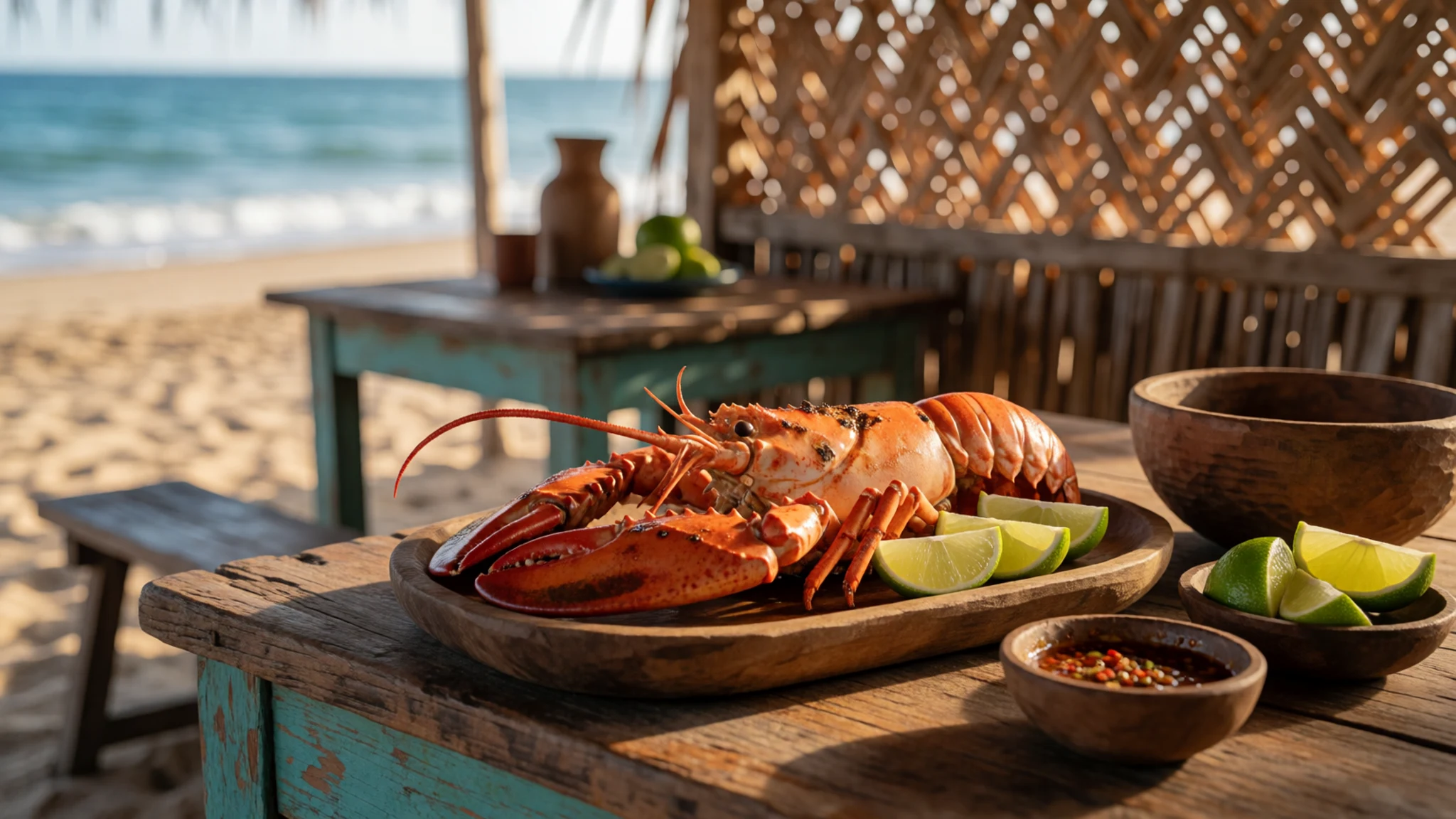
- Funge with spicy stew — Simple eateries in Luanda
Funge, a firm cassava porridge, is the starch under many meals eaten in Luanda before a Quissama National Park day. Spicy fish or chicken stew comes with it: cassava, fish and heat, the Angolan plate. Order it at a simple eatery and favour a busy kitchen, because hygiene is uneven.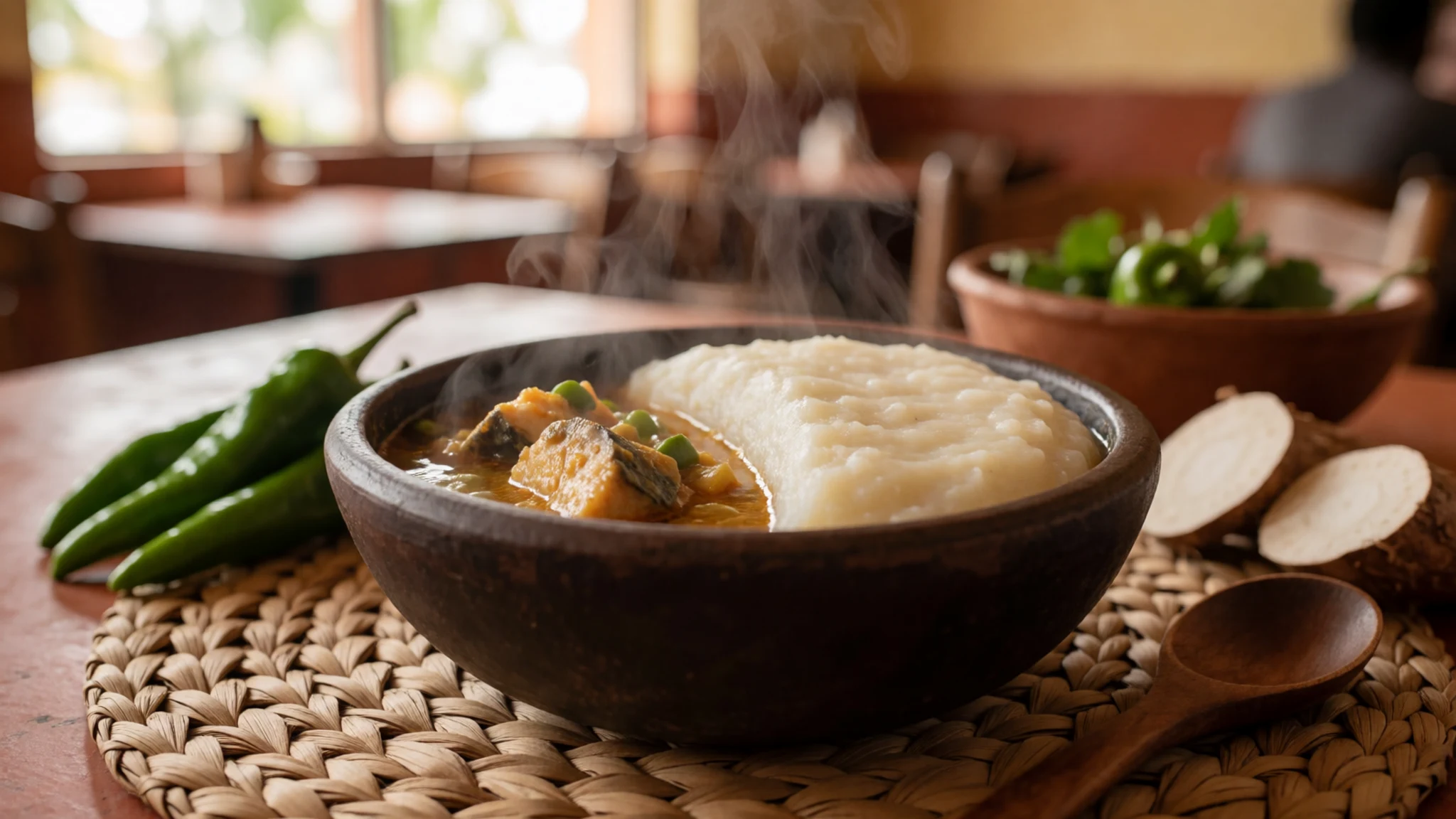
- Grilled fish — Beach eateries on Ilha de Luanda
Grilled fish is the sensible order at beach eateries on Ilha de Luanda when a Quissama National Park trip is based in the capital. Those rooms run from plain to very dear, and they improved after peace returned in 2002. Choose a busy room and drink bottled water. - Tropical fruit — Markets in Luanda
Tropical fruit in Luanda markets is a pleasure on the way to Quissama National Park. Small growers keep methods that leave the flavour loud: mango, pineapple and papaya, not the pale shipped kind. Buy from a morning stall and peel it only after a wash in bottled water. - Muamba de galinha — Family-style eateries in Luanda
Muamba de galinha, chicken in palm oil with okra or similar greens, is the stew to know when nights in Luanda bookend days in Quissama National Park. It is heavier than grilled fish and closer to a home pot than to a beach menu. Simple eateries serve it.
Plan it
Best time. Quissama National Park is kinder in the cooler, drier months, when grass sits lower and tracks are less soft, which suits game viewing and the Atlantic edge. Wetter months bring heavier roads, thicker cover and sticky heat along this coast.
How long. 2–3
Getting there. Quissama National Park is reached from Luanda, about 70 km away by road. Fly into the capital's international airport, then continue by arranged vehicle with a guide; the last leg is a drive south toward the Cuanza and the park boundary.
Budget. high
Tips
- Arrange a guide who knows which tracks are open and which ground is cleared.
- Carry a certified copy of your passport; identification is compulsory everywhere in Angola.
- Stay out of any ground marked by red-and-white HALO Trust posts or by red stones.
- Drink bottled water only, whether you are in the park or back in Luanda.
- Ask the eatery about cards and foreign cash before you order.
Etiquette
- Greet the oldest person first, at a home, in a queue or in a village.
- Do not interrupt someone who is speaking.
- Greet the soba before you spend time in rural communities near the park.
- Keep swimwear to the beach and cover shoulders and knees in villages.
Nearby
Sources
- Wikidata Q3179197 (CC0)
- Wikipedia (rev 1362899719) (CC BY-SA 4.0)
- Wikivoyage (rev 5393510) (CC BY-SA 4.0)
- Habitat (10.3897-zookeys.979.56863) Figure 7 (CC BY 4.0)
- Kwanza River and bordering savannah (CC BY 4.0)

