Luanda
Luanda, Angola
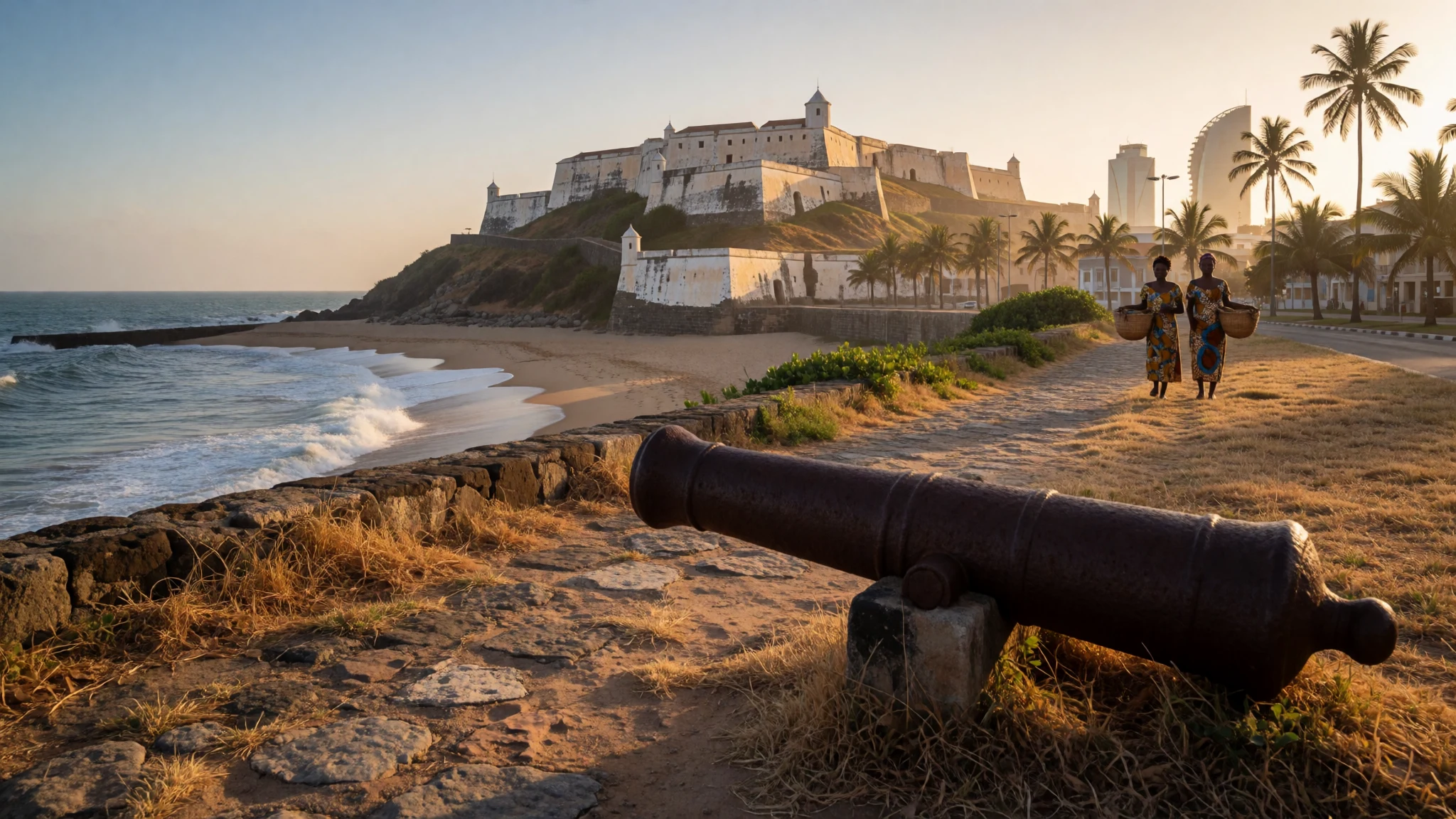
Luanda is a working Atlantic capital where Portuguese fortresses, slavery-trade memory, jazz and fast rebuilding sit within a short drive of each other.
The place
Luanda sits on Angola's northern Atlantic coast, a port city only about six metres above sea level, where the country's government, docks, banks and universities are packed together. The city proper has about 2.5 million people, and the wider metropolitan area is far larger, passing 8.8 million by 2024, roughly a third of the whole country. Among capitals where Portuguese is spoken, none has more inhabitants. The old centre curves around a bay. A broad seafront avenue called the Marginal runs along it, and a sandy spit, the Ilha de Luanda, shelters the water on the seaward side. Restaurants, clubs and the smarter evening life gather along those two strips. Behind them, colonial-era buildings, glass towers and cranes share the same skyline, because large parts of the centre have been rebuilt in this century. Further out, informal neighbourhoods known as musseques hold a big share of the population, many of them swollen by families who fled fighting in the countryside during the civil war. Luanda is also the hub of the national airline and the main gateway for oil, diamond and construction business, which shapes who is on the streets and what the city is set up to do. Visitors are few next to the working population, so the place feels lived-in rather than staged for tourists. Heat, traffic and a high cost of living are the honest trade-offs for seeing it.
Its story
Luanda was founded by the Portuguese explorer Paulo Dias de Novais in the late sixteenth century and named São Paulo da Assunção de Loanda. He arrived with settler families and a large force of soldiers, and most of the early community lived inside the fort. During the seventeenth century the Portuguese added further coastal defences, among them the Fortaleza de São Miguel, which survives in the soundest condition of the three. For about eight years in the 1640s the Dutch held the town and called it Fort Aardenburgh, until Portugal took it back. The harbour's main business was people. For close to three centuries Luanda was the principal departure point for enslaved Africans shipped to Brazil, and vessels sailing from Brazil dominated its traffic. Local merchants and warriors took part in the trade and profited from it, which is a part of the story that museums in the city do not soften. Portuguese rule ended with independence and then a long civil war. When that war began in 1975, most of the Portuguese residents left, mainly for Portugal, while people displaced from the interior poured into the capital. The roads, water and housing could not absorb them, and the musseques spread. Reconstruction in the twenty-first century has changed the centre and the waterfront, though the contrast between rebuilt streets and crowded outer districts is still plain.
What to see
- Fortaleza de São Miguel — Central Luanda, above the bay
This hilltop fortress overlooks the bay and was the administrative heart of the early colony, a self-contained town for its garrison. It was also a holding place for people about to be shipped across the Atlantic. Part of it now houses the national military history museum. Go in the morning, before the heat builds.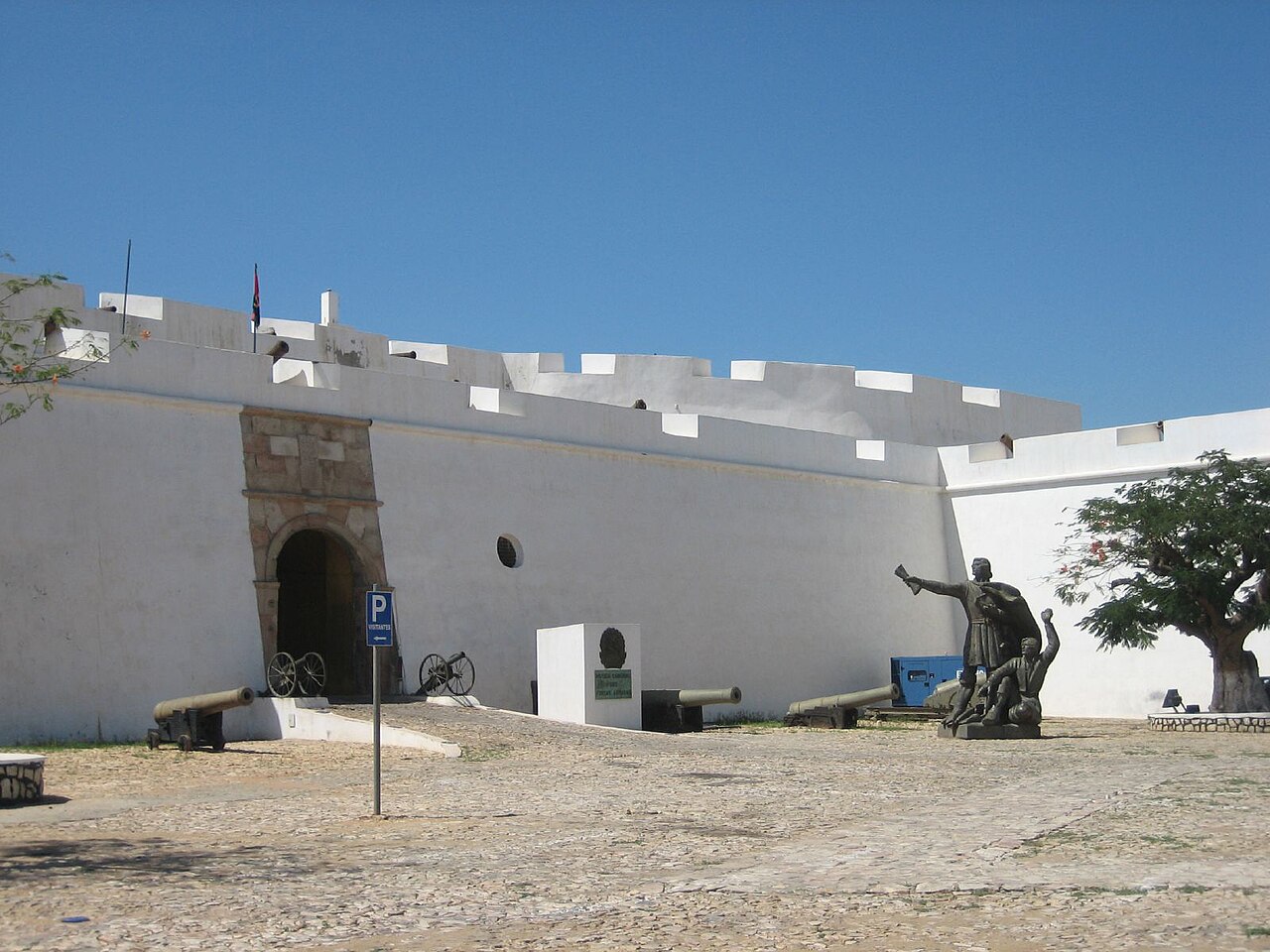
- Fortaleza de São Pedro da Barra — Northern shoreline, outside the centre
A seventeenth-century fortress built to guard the coast from raiders, later put to several other uses. It sits away from the busiest part of town, on the northern shore, so it rewards a short taxi ride. The setting is quieter than the central sights, and the sea views are the main draw. - Museum of Money — Central Luanda
A compact museum tracing how Angolans have paid for things over time, from systems that did not use coins or notes through the zimbo shell currency to the modern kwanza. It is a quick, unusual way into economic history and pairs easily with a walk through the central streets nearby. - National Museum of Slavery — Coast south of the city
The museum stands on ground where captives were held before being sent to the Americas, and its chapel, the Capa de Casa Grande, is where they were baptised before departure. It lies well south of the centre, so allow travel time. It is sobering, and it is the most direct account of why the port mattered. - National Museum of Natural History — Central Luanda
A museum of Angolan wildlife, with thousands of specimens of fish, birds, crustaceans and insects. It suits a hot afternoon when the fortresses feel too exposed, and it gives useful context for the national parks beyond the capital that most visitors never reach.
Culture
Luanda is where Angola's politics, money and media meet, so it is also where much of the country's cultural life is staged. Portuguese is the everyday language of business and the street, mixed with Kimbundu and other Angolan languages heard in markets and family homes. Music is the city's loudest export: semba, kizomba and kuduro all have roots or strong followings here, and sound systems spill out of taxis and bars at most hours. The Luanda International Jazz Festival has run since 2009 and draws musicians from across Africa and beyond. Private foundations, including the Sindika Dokolo Foundation, support contemporary art. Sport is a community glue as well. The Clube Náutico da Ilha de Luanda was founded in 1924 as a sports club under a different name, and it had to drop that name in 1979 when clubs with colonial associations were told to rename themselves. The episode shows how the independence era is still written into the city's institutions. Family and church matter greatly, and Sunday mornings are noticeably quieter on the Marginal. Greetings are valued, so a handshake and a few words before any request go a long way. Public life is also more security-conscious than in many capitals, and officials can be sensitive about cameras. Ask permission before photographing people, and do not photograph government buildings, police or military sites.
What to wear
Traditional dress in Luanda centres on the pano, a length of printed cotton cloth wrapped as a skirt, often with a matching top and a head wrap. Wax-print fabrics in strong colours are the usual choice, and older women in particular wear them at markets, church and family ceremonies. Many families keep a set of matching cloth for weddings and funerals. In everyday life, the city leans smart. Office workers in the centre wear tailored shirts, suits and neat dresses despite the heat, and younger Luandans mix sportswear, trainers, football shirts and sharply cut clothes, often with African prints worked into modern shapes. Evenings on the Marginal and the Ilha call for a step up, with people dressing to be seen. A visitor should plan for a hot, humid climate on the coast: light cotton or linen, a hat, sunglasses and sunscreen. Closed, comfortable shoes are better than flip-flops, since pavements are uneven and often broken. Shoulders and knees should be covered for churches and for visits to official offices, and swimwear belongs on the beach or by a pool. Dressing neatly rather than flashily is also sensible, as it draws less attention on busy streets. A thin rain jacket is useful in the wetter months.
What to eat
- Muamba de galinha — Local eateries in central Luanda
Chicken stewed in palm oil with okra, garlic and often a little chilli, regarded as a national dish. The sauce is rich and slightly smoky, and it is usually served with rice, beans or funge. Look for it in family-run eateries in the centre. - Funge — Neighbourhood restaurants and market food stalls
A firm, smooth porridge made from cassava or maize flour, eaten in place of bread or rice. It has little flavour of its own and exists to carry sauces, so tear off a piece and use it to scoop up stew. It appears at nearly every local meal. - Calulu — Traditional Angolan restaurants
A slow-cooked dish of dried or smoked fish, sometimes meat, with leafy greens, tomato, okra and palm oil. It is salty, deep in flavour and best taken with funge or rice. It tends to be made in quantity, so it suits sharing at a family-style table. - Mufete — Seafront restaurants along the Marginal and on the Ilha de Luanda
Grilled fish served with beans in palm oil, boiled cassava, sweet potato and fried plantain, usually with a sharp onion and tomato relish. It is a fitting lunch beside the sea, when the fish has been caught that morning. - Panela de barro — Sit-down restaurants in the centre and on the Marginal
A stew cooked and served in a clay pot, typically seafood or meat with tomato, onions and herbs. The pot keeps the dish hot at the table and gives a soft, earthy depth. It is a sit-down meal, better shared among a few people.
Plan it
Best time. June to September, when the coast is cooler and drier and the humidity eases. The rest of the year is hot and sticky, with the heaviest rain generally falling in the warmer months of the year.
How long. 2–3
Getting there. Fly into Luanda's international airport, which has connections via Lisbon, Johannesburg, Addis Ababa, Dubai, Istanbul and other hubs, and is the base of TAAG Angola Airlines. For the last leg, arrange a transfer with your accommodation in advance rather than relying on whatever taxi is nearest.
Budget. high
Tips
- Check entry and visa rules with the official Angolan authorities well before you travel
- Allow generous time for traffic; a short distance can take a long while at rush hour
- Carry some cash as well as a card, as card use is patchy outside larger venues
- Drink bottled or filtered water and use sun protection, especially on the waterfront
- Do museums and fortresses in the morning, and leave evenings for the Marginal and the Ilha
Etiquette
- Greet people before asking a question or making a request
- Ask before photographing people, and avoid photographing police, military or government buildings
- Dress neatly and cover shoulders and knees in churches
Nearby
Sources
- Wikidata Q3897 (CC0)
- Wikipedia — Luanda (rev 1384856699) (CC BY-SA 4.0)
- Wikivoyage — Luanda (rev 5423105) (CC BY-SA 4.0)
- Photo: Luanda, Angola — Lars Rohwer (CC BY 3.0)
- Photo: Luanda 2025 focused (cropped) — Iamdelcioborges (CC BY 4.0)
- Photo: Monument of the Unknown Soldier in Luanda — U.S. Secretary of Defense (Public domain)
- Photo: Igreja de Nossa Senhora dos Remédios — David Stanley (CC BY 2.5)
- Photo: São Miguel Fortress entrance — Erik Cleves Kristensen (CC BY 2.5)
- Photo: Museu Nacional de Historia Militar — David Stanley (CC BY 2.5)
- Photo: Cidade de São Paulo da Assumpção de Loanda — Guilherme Paes de Menezes (Public domain)
- Photo: Luanda - Angola (6276460346) — Dilma Rousseff (CC BY-SA 2.0)


