Cangandala National Park
Cangandala National Park, Angola
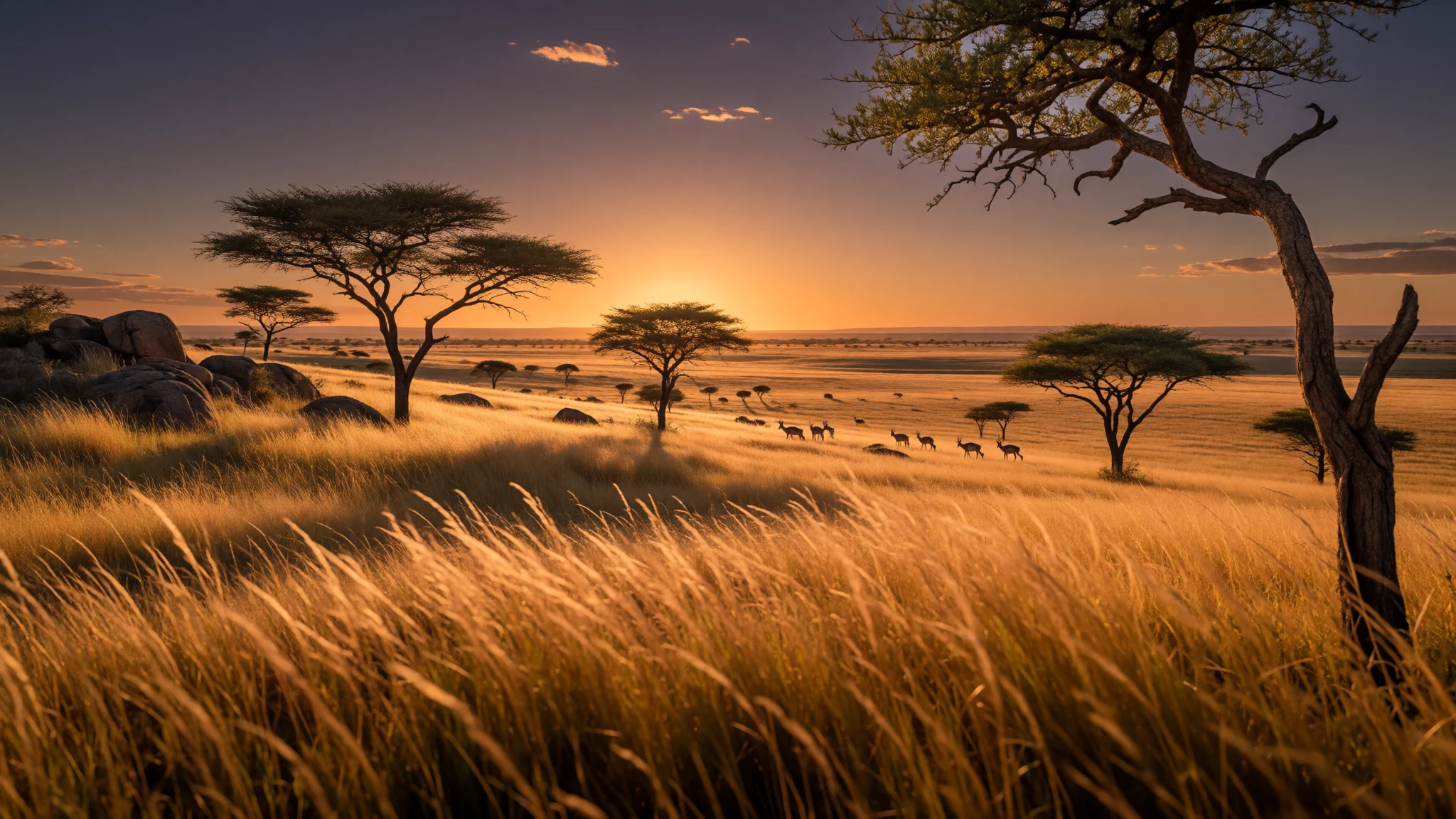
Cangandala National Park shelters the critically endangered giant sable antelope, and a visit shows conservation being rebuilt in a country still opening to travellers.
The place
Cangandala National Park sits in Malanje Province, in the north-central highlands of Angola, on a patch of savanna bounded by the Cuanza and two smaller streams that feed it, the Maúndo and the Cuije. The land is flat to gently rolling, with open grassland broken by woodland, the typical look of Angolan savanna. The climate is tropical and split into a wet season and a dry one, and that rhythm decides everything from the colour of the grass to whether tracks are passable. The park was set aside in 1970 for one animal, the giant sable antelope, and that single purpose shapes what a visit is like. This is not a park of lodges and big game drives in the style of East Africa. Angola's reserves lost much of their wildlife during years of conflict and poaching, and tourism is still young across the country. Facilities are thin, access is usually arranged through a local guide or operator, and part of the park is kept as a protected sanctuary where visitors cannot simply wander. The nearest town of any size is Malanje, the provincial capital, and the park makes sense as one stop in a wider trip through the province that takes in waterfalls and rock formations. Visitors should expect long travel days, patient arrangements and a landscape that rewards slow looking rather than ticking off species. The reward is a rare chance to see conservation at an early stage, in a country still rebuilding its protected areas.
Its story
Cangandala National Park was created in 1970 by the Angolan government with a narrow aim: to shelter the giant sable antelope, a subspecies found in Angola and now listed as critically endangered. Few parks are founded around a single animal, and the choice shows how rare the sable already was. The male is a large, dark antelope with sweeping curved horns, striking even in photographs. The decades that followed were hard. The civil war, which ran until 2002, brought poaching, disrupted habitat and left the animals' survival in serious doubt, and at times researchers feared the subspecies might already be gone. When peace came, attention turned to counting what remained and protecting it. Conservationists set up a heavily guarded sanctuary inside the park, giving the surviving animals a secure core where they could breed away from hunters. The approach is slow and unglamorous, built on patrols, monitoring and patience rather than spectacle. The wider story is Angola's own: a national park network badly damaged by conflict, now being rebuilt with outside partners and local rangers. Cangandala is one chapter of that effort, and its progress is measured in small numbers of animals rather than visitor figures. For travellers, knowing this changes the visit. The point is less about guaranteed sightings than about seeing a place where a species was given a second chance and still depends on careful management.
What to see
- The giant sable sanctuary — Cangandala National Park, Malanje Province
The protected core of Cangandala National Park shelters the giant sable antelope, the reason the park exists. Access is controlled, and visitors normally go only with rangers or an authorised guide. Sightings are never promised: the animals are shy and the tall grass hides them well. Even without one, the patrol routes show how the conservation work is done. - Cangandala rapids — Near Cangandala, Malanje Province
The Cuanza and its tributaries run past the park, and the rapids near Cangandala are the easiest scenery to photograph. Water breaks over dark rock among green bush, loudest in the wet season and calmer when the dry months expose more stone. Ask locally about safe viewpoints and keep well clear of the edges.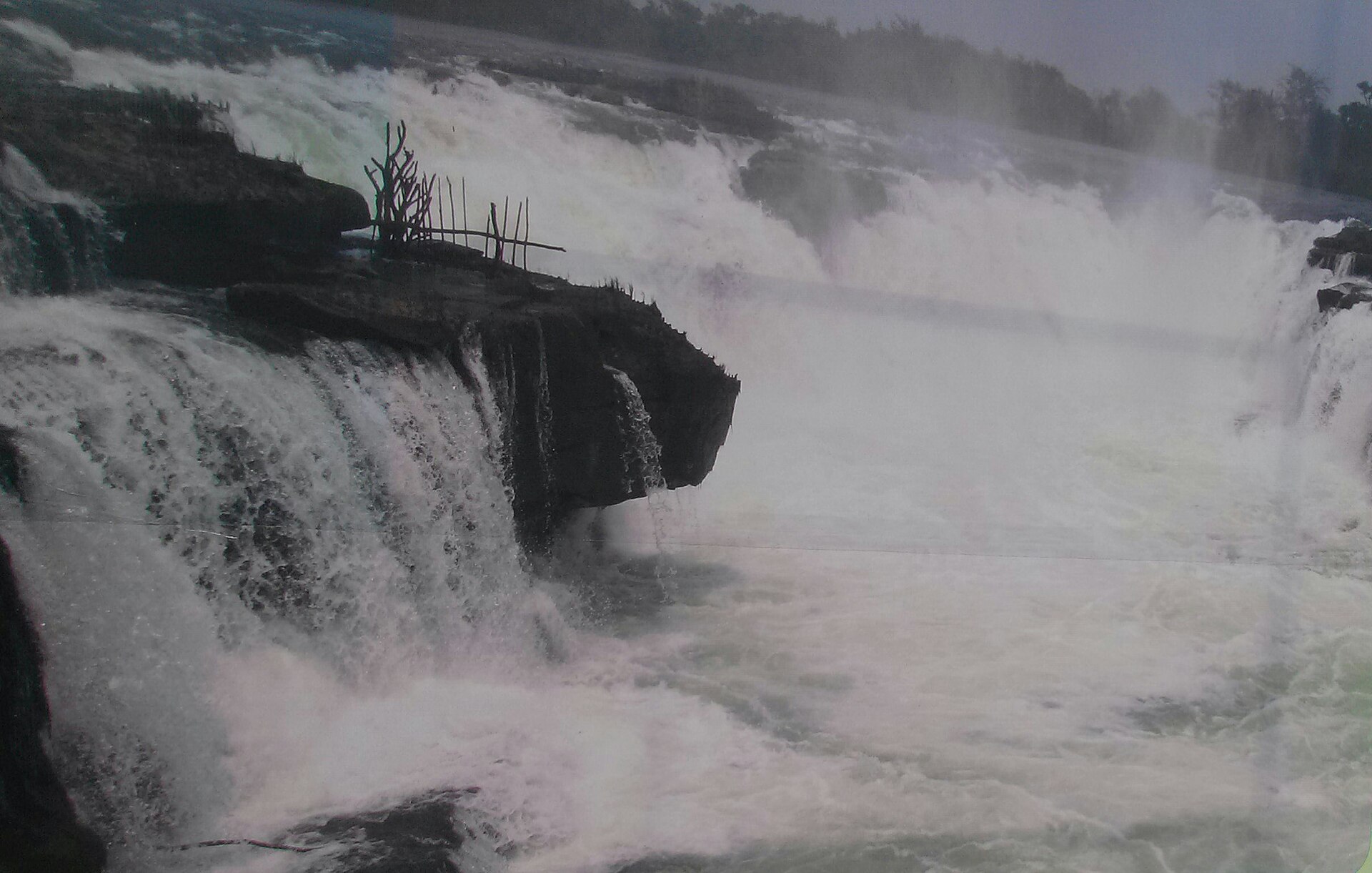
- Kalandula Falls — Malanje Province
Kalandula Falls is the usual day trip from Malanje town and a natural pairing with the park. The river drops over a broad ledge in a wide curtain of water, and the spray is heaviest after the rains. Viewpoints sit close to the lip, so mind the wet, slippery footing. - Pungo Andongo Black Stones — Malanje Province
Pungo Andongo, known as the Black Stones, is a cluster of dark rock towers rising out of flat farmland. Local stories attach to the rocks, and a guide helps with both the route and the history. The climbs are short but rocky, so sturdy shoes matter and an early start avoids the worst heat. - Malanje town — Malanje
Malanje, the provincial capital, is the practical base for reaching the park. It offers markets, supplies and the chance to arrange guides and transport before heading out. Fuel, cash and drinking water are best sorted here, since options thin out quickly on the road towards Cangandala.
Culture
Culture around Cangandala National Park is shaped by Malanje Province's rural communities and by Angola's wider habits of courtesy. Respect for elders runs deep: in a home the oldest person is greeted first, starts the meal first and is allowed through doors ahead of others. Hospitality is a point of pride, and a visitor in a rural area is likely to be welcomed warmly, sometimes with open curiosity, because tourists are still uncommon. That curiosity is rarely hostile. Conversation is unhurried, listening is valued and interrupting is considered rude. Music is everywhere, from kuduro and kizomba to semba, and almost any gathering can turn into a party. Memory of the civil war is part of daily life, though people tend to speak of the future more than the past. In villages near the park, the local soba, a chief with official standing, is customarily greeted, and that courtesy opens doors for guides and visitors alike. Conservation work depends on that goodwill, since rangers and neighbouring communities share the land and its rules. Visitors who take time over greetings and small talk will find the whole trip goes more smoothly. Greet the oldest person or the local soba first, ask before photographing anyone, and never interrupt while someone is speaking.
What to wear
Traditional dress around Cangandala National Park in Malanje Province centres on the pano, a length of printed cotton wrapped at the waist as a skirt, tied over the chest or worn as a head cloth. Wax-print cottons in bold patterns are the usual textiles, and they come out for weddings, Sunday church, funerals and festivals. Men's traditional wear is seen less often, mostly at ceremonies. Day to day, people in Malanje wear what is common across much of Africa: T-shirts, jeans, shirts, dresses, football shirts and secondhand clothing, with rubber sandals or trainers for farm work. In town and for church or official visits, people dress smartly. A visitor heading into the park should think practically. The climate is tropical and the grass is tall, so light long trousers and long-sleeved shirts in neutral greens, tans or greys protect against sun, insects and scratches. Closed, ankle-supporting shoes or boots are better than sandals on uneven ground, and a hat and sunglasses help. A light rain jacket earns its place in the wet season. Away from beaches, modest dress with shoulders and knees covered is a courteous choice in villages and when meeting a soba. Camouflage clothing is best avoided in a country with a recent military history.
What to eat
- Funge — Family-run eateries and roadside stalls in Malanje town
Funge is a smooth, firm porridge of cassava or maize flour, served as the staple beside stews and grilled fish. It is eaten by hand, rolled into small balls and used to scoop up sauce. Find it at family-run eateries and roadside stalls in Malanje town. - Muamba de galinha — Local eateries in Malanje, and home-cooked meals
Muamba de galinha is chicken stewed in palm oil with okra, garlic and chilli, a widely loved Angolan stew. The sauce is rich and orange-red, and it is usually eaten with funge or rice. Look for it at local eateries, or at a home meal if invited. - Calulu — Simple eateries near the market in Malanje
Calulu is a slow-cooked stew of dried or fresh fish, sometimes meat, with leafy vegetables, okra and palm oil, normally served with funge. The flavour is smoky and deep. Simple eateries near the main market in Malanje are the place to try it. - Grilled river fish — Roadside grills and riverside eateries
Grilled fish is a staple wherever there is water, seasoned simply and served with cassava, rice or beans. Around Malanje, river fish are common. Order it at roadside grills and riverside eateries, and ask how fresh it is before choosing. - Seasonal tropical fruit — Town market and roadside sellers
Mango, papaya, pineapple and banana are sold in season, often from small growers using traditional methods, and the flavours tend to be rich. Buy from the town market or roadside sellers, and peel the fruit yourself or wash it in bottled water.
Plan it
Best time. May to September, the dry season, when tracks are easier, the grass is lower and animals are easier to spot; the wet season brings heavy rain, muddy roads and thick vegetation, though the rapids and waterfalls run fullest then.
How long. 2–3
Getting there. Fly to Luanda, then continue to Malanje by road or by domestic flight if one is operating; check current schedules. The last leg from Malanje to the park is on rough tracks, best done with a local guide in a high-clearance vehicle.
Budget. high
Tips
- Arrange a trusted local guide or authorised operator in advance and confirm park access through official channels, since facilities are limited
- Carry a certified copy of your passport or national ID at all times, and check current visa rules for your passport before booking
- Never step past red and white HALO Trust markers or red stones; they mark mine fields
- Drink only bottled water, and carry cash in small notes, asking before assuming cards or US dollars are accepted
- Avoid travelling after dark or alone
Etiquette
- Greet the oldest person first when visiting a home or village
- Greet the local soba when travelling in rural areas
- Ask before photographing people, and follow ranger instructions around the sanctuary
Nearby
Sources
- Wikidata Q3123440 (CC0)
- Wikipedia: Cangandala National Park (CC BY-SA 4.0)
- Wikivoyage: Angola (CC BY-SA 4.0)
- Photo: Província~Malanje rapidos de cangandala, Chinsta da Glx Chily (CC BY-SA 4.0)

Wildlife
- Giant sable antelope (animal)
The giant sable antelope is a rare cousin of the common sable antelope, and it lives only in Angola's high central country, like a treasure that belongs to one nation. It is critically endangered, and Cangandala National Park was created in 1970 to help it survive. Only two places hold it, and this park is one. Ask your guide about the best moments to look, keep your distance, stay quiet, and never feed it.