Namibe Desert
Namibe Desert, Angola
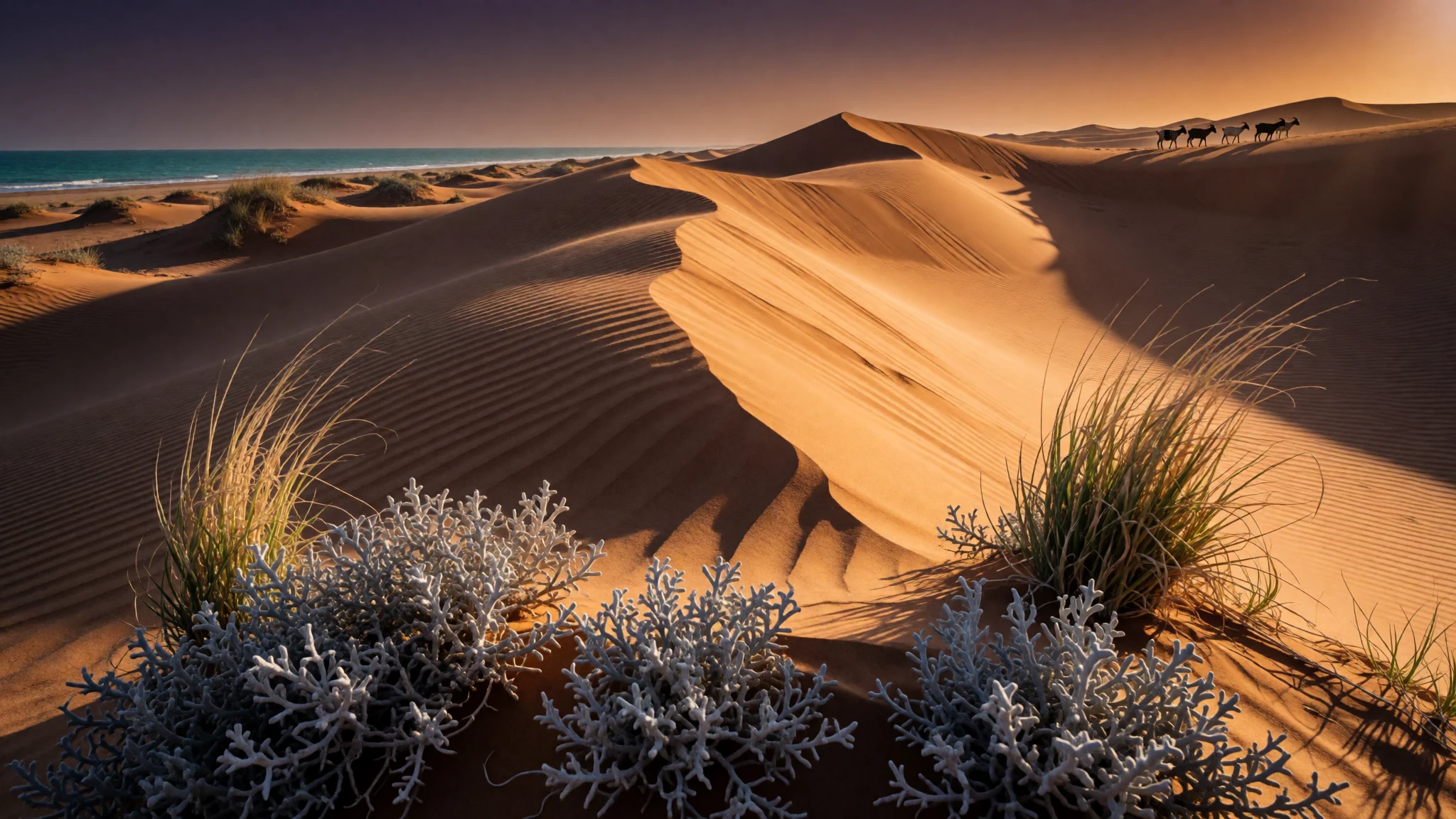
Namibe Desert is where Angola's Atlantic coast meets sand, strange ancient plants and herding communities, far from the usual tourist routes.
The place
Namibe Desert fills much of Namibe Province, the south-western corner of Angola, where the Atlantic meets dry ground. The province has 815,708 people, most of them in and around its capital, the port city of Moçâmedes. Tômbua, once called Porto Alexandre, is the second town. Beyond these two coastal settlements the land empties quickly into gravel plains, dunes and rocky ridges, and Iona National Park covers a large part of the wilderness. The desert is the northern tail of the Namib, which mostly lies across the border in Namibia, and that is where the province took its name. Life here is specialised. The welwitschia, a plant with an enormous root and strap-like leaves that sprawl across the sand, grows in this dry ground and draws botanists from far afield. Lake Arco is a freshwater oasis set in the middle of the desert, though it can dry out entirely when the rains fail. Inland and uphill, the road to Lubango climbs through hairpin bends and the scenery shifts from desert to green plateau. Herding peoples such as the Mucubal and the Himba live across this region, moving livestock between grazing areas. Visitors should expect space rather than facilities: distances are long, signs are few, and tourism is still thin compared with neighbouring Namibia. That emptiness is the appeal, and also the practical challenge.
Its story
Namibe Desert has a short written history laid over a very long geological one. The Portuguese founded the port of Moçâmedes in the mid-nineteenth century, and the area carried that name, sometimes spelt Mossâmedes, until the later twentieth century, when the province was renamed after the desert itself. Early postcards show Boer ox wagons standing in Mossamedes, a hint that settlers arrived overland as well as by ship, and that this thin coastal strip drew people from several directions. Much further back, the rocks near Bentiaba and inside Iona National Park preserve ancient sea life: sharks, turtles, swimming reptiles and long-necked dinosaurs from the closing stretch of the Cretaceous, when this coast looked nothing like the present dry shore. Those finds make the province interesting well beyond its sand. The recent past has been shaped by water as much as by its absence. Heavy floods along the Bero and Giraul rivers early this century damaged roads, harmed homes and killed people in Namibe and the neighbouring provinces of Huíla and Benguela. It is a useful reminder that desert country drains badly and can turn dangerous in a single downpour. Today the story of the province is mostly one of ports, herders and slow rebuilding, with the desert setting the pace.
What to see
- Lake Arco (Lago do Arco do Carvalhão) — Desert south of Moçâmedes
Lake Arco is a freshwater oasis in the desert south of Moçâmedes. In the dry season the water can vanish completely, leaving a pale cracked bed, so what you find depends on the year. Ask a local guide about conditions before driving out, and carry your own water.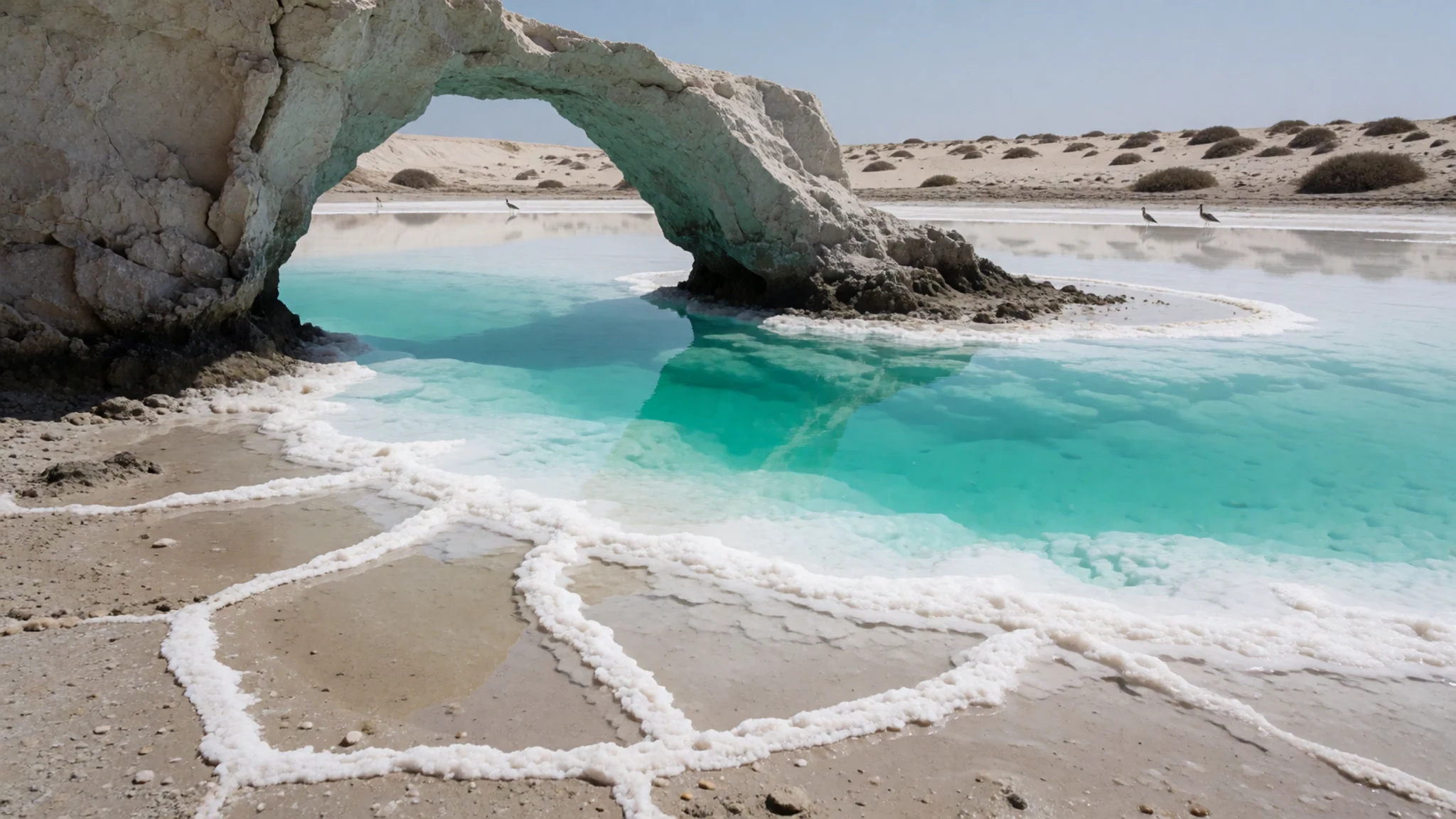
- Iona National Park — South-west Namibe Province
Iona National Park covers a large stretch of the province's desert and coast. It is remote, with few facilities, and sits close to mine-clearance areas, so it is best seen with an experienced guide and a sturdy vehicle. Himba herding families live in and around it.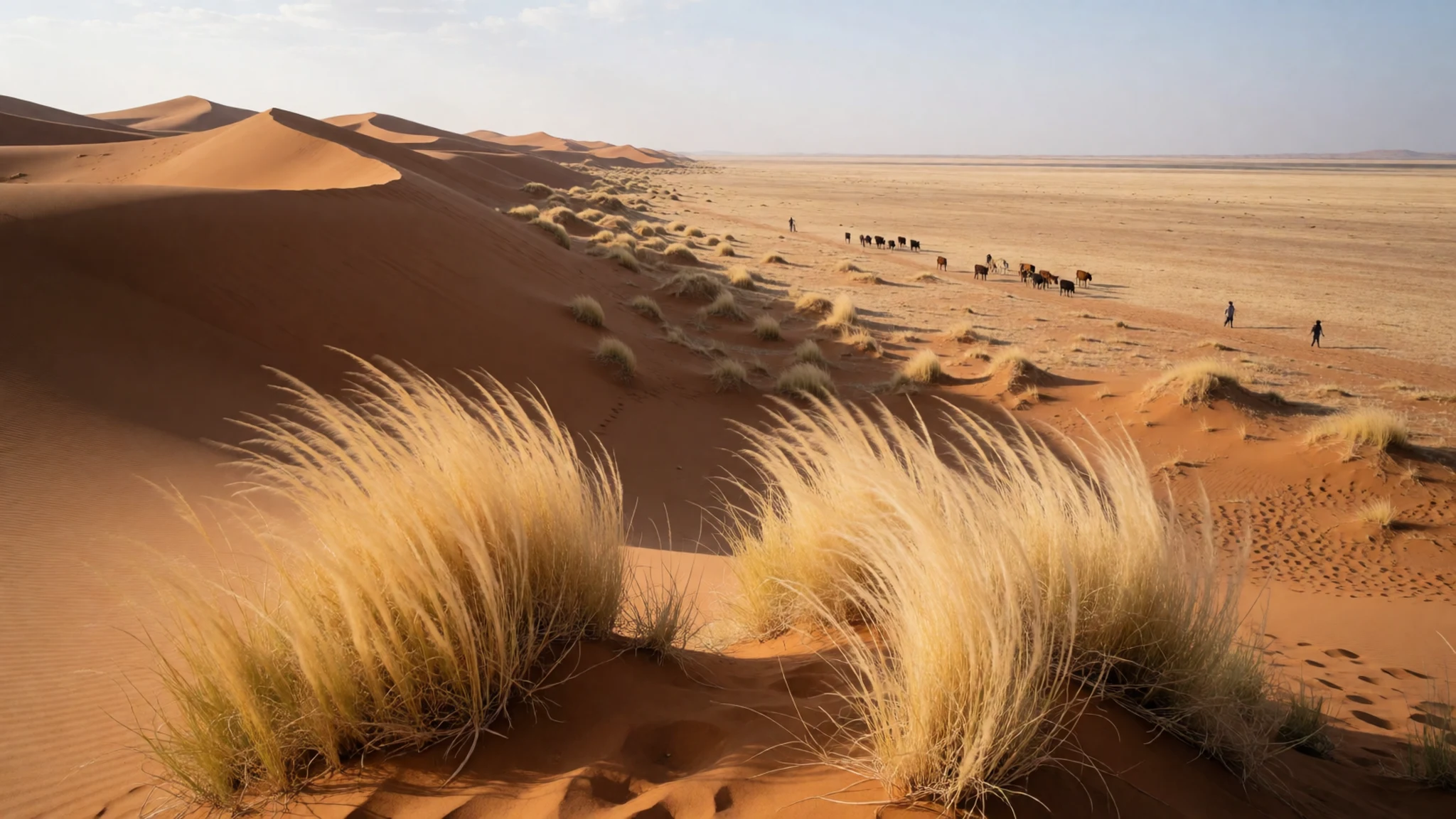
- Welwitschia plains — Desert inland from Moçâmedes
The Namib part of the province is where the rare Welwitschia mirabilis grows, a plant with a giant root and leaves that fray across the gravel. Some individuals are very old. Walk only where your guide points, as the plants are easily damaged by feet and tyres.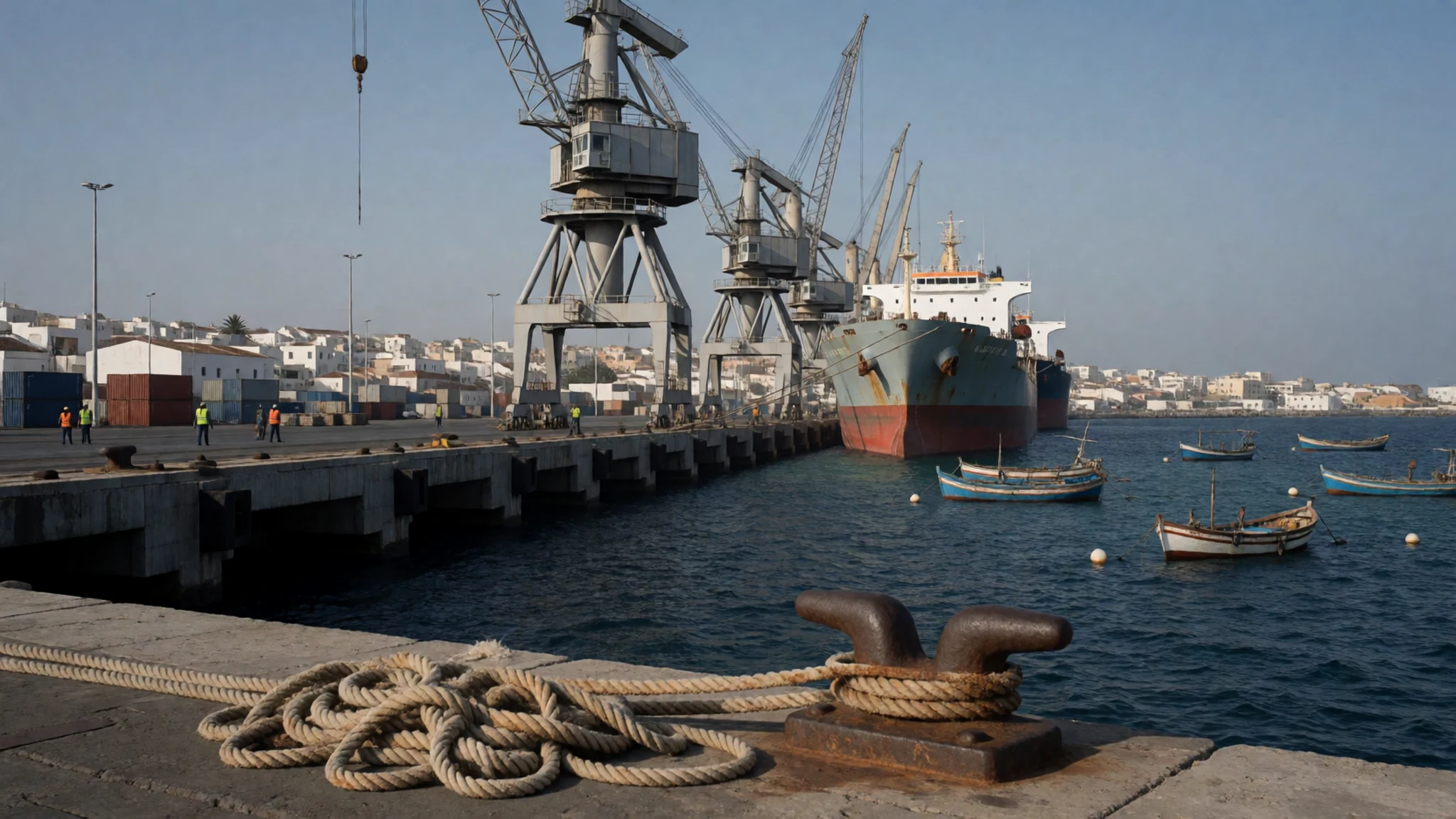
- Serra da Leba road — Escarpment between Lubango and Namibe
The Serra da Leba road links Lubango with Moçâmedes, dropping from the plateau toward the desert in tight switchbacks. Stop at a viewpoint for the sweep of the descent. The road is busy with trucks, so drive in daylight and allow plenty of time.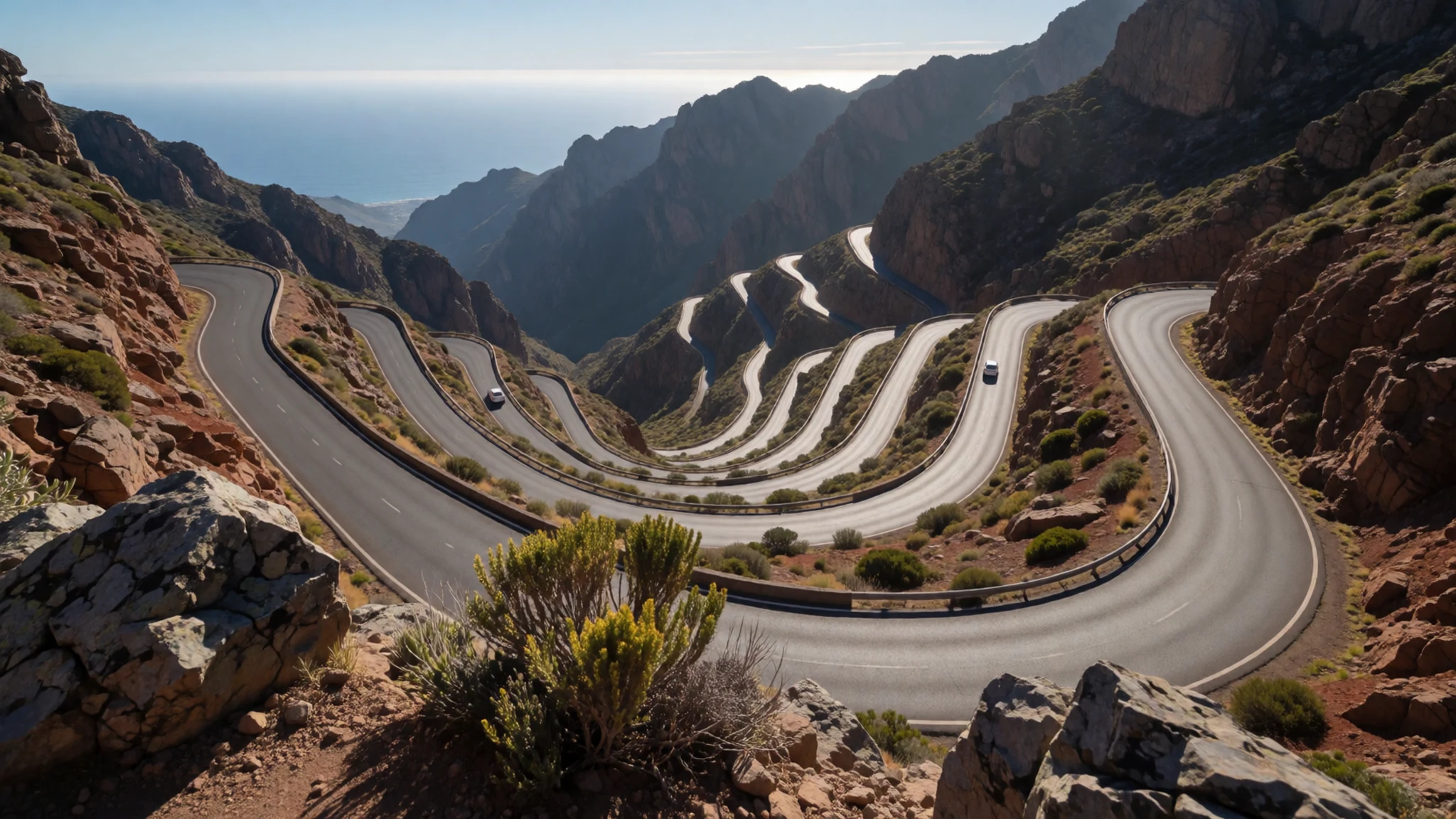
- Moçâmedes port — Moçâmedes
Moçâmedes is a working port, with fishing boats, cranes and a seafront that gives the town its character. The old streets hold colonial-era buildings in various states of repair. An evening walk by the water is an easy way to see local life before heading into the desert.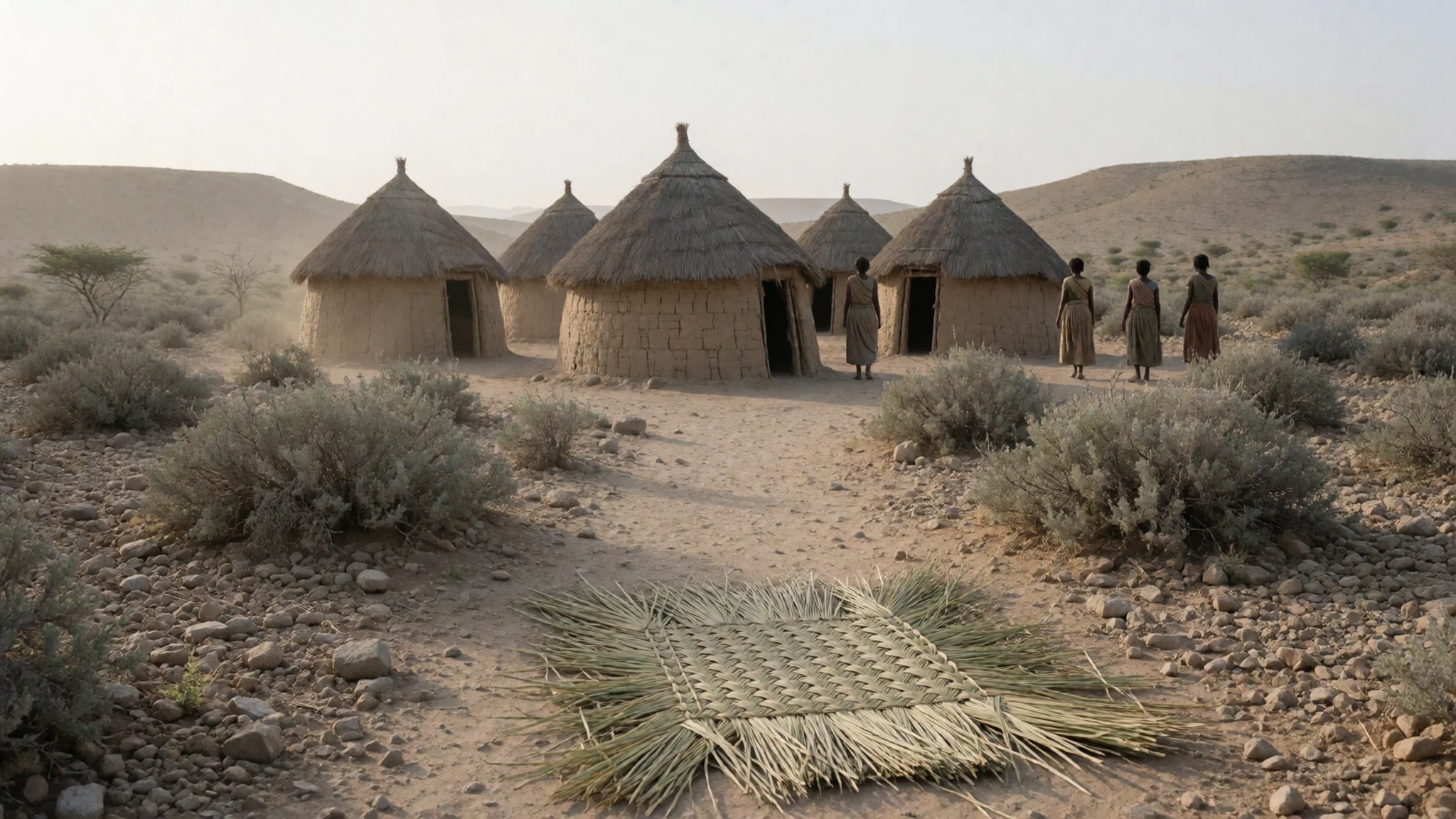
Culture
Namibe Desert sits in a part of Angola where tourists are rare, so visitors may draw curious looks. That generally signals interest, not hostility. Respect for elders runs through daily life: in a home, the oldest person is greeted first, they usually begin the meal, and younger people give way at doors and on public transport. Hospitality is taken seriously, and a good welcome is a matter of pride, so refusing food or drink without a kind word can sting. Conversation is unhurried. Angolans tend to listen closely and consider interrupting rude, so let people finish before you answer. In rural areas the local soba, a chief with government-backed authority, is worth greeting before you stay or travel through. Across the province, herding communities such as the Mucubal and the Himba keep strong customs around cattle, family and land, and they are not a display. Music is everywhere in Angola, from kuduro and kizomba to semba, and any gathering can turn into a party. Years of war left deep marks, yet people tend to speak of hardship with patience rather than blame. Carry identification at all times, as the law requires. When visiting a village, greet the soba or the oldest person first and ask permission before photographing anyone or their home.
What to wear
Namibe Desert is home to herding peoples whose dress is practical and highly distinctive. Himba women are known for otjize, a paste of ochre and butterfat rubbed on skin and braids, with leather skirts and plenty of jewellery. Mucubal communities favour wrapped cloth, leather and strands of beads. These clothes are worn daily in rural areas, not only for ceremony. In Moçâmedes and Tômbua, everyday dress is much like elsewhere in Angola: shirts, jeans, light dresses, and bright printed cloth known as pano, worn wrapped or tailored. People dress neatly for church, offices and festivals. Visitors need to think about sun, wind and rough ground. Wear light, long-sleeved cotton or linen, a wide-brimmed hat, sunglasses and sunscreen; evenings by the Atlantic can feel cool, so pack a layer. Sturdy closed shoes matter more than style on gravel, dry lake beds and rocky tracks, and they also protect against scorpions and thorns. In villages, cover shoulders and knees as a courtesy. On the beach and at the port, ordinary modest swimwear is fine, but a wrap is sensible in town. Do not photograph traditional dress without asking, and be ready to be turned down.
What to eat
- Grilled fresh fish — Seafront eateries in Moçâmedes and Tômbua
Grilled fish is the staple of the Namibe coast, caught the same day and cooked simply with salt, oil and lemon, often alongside rice or cassava. Look for it at simple seafront eateries in Moçâmedes and Tômbua, where the day's catch is displayed.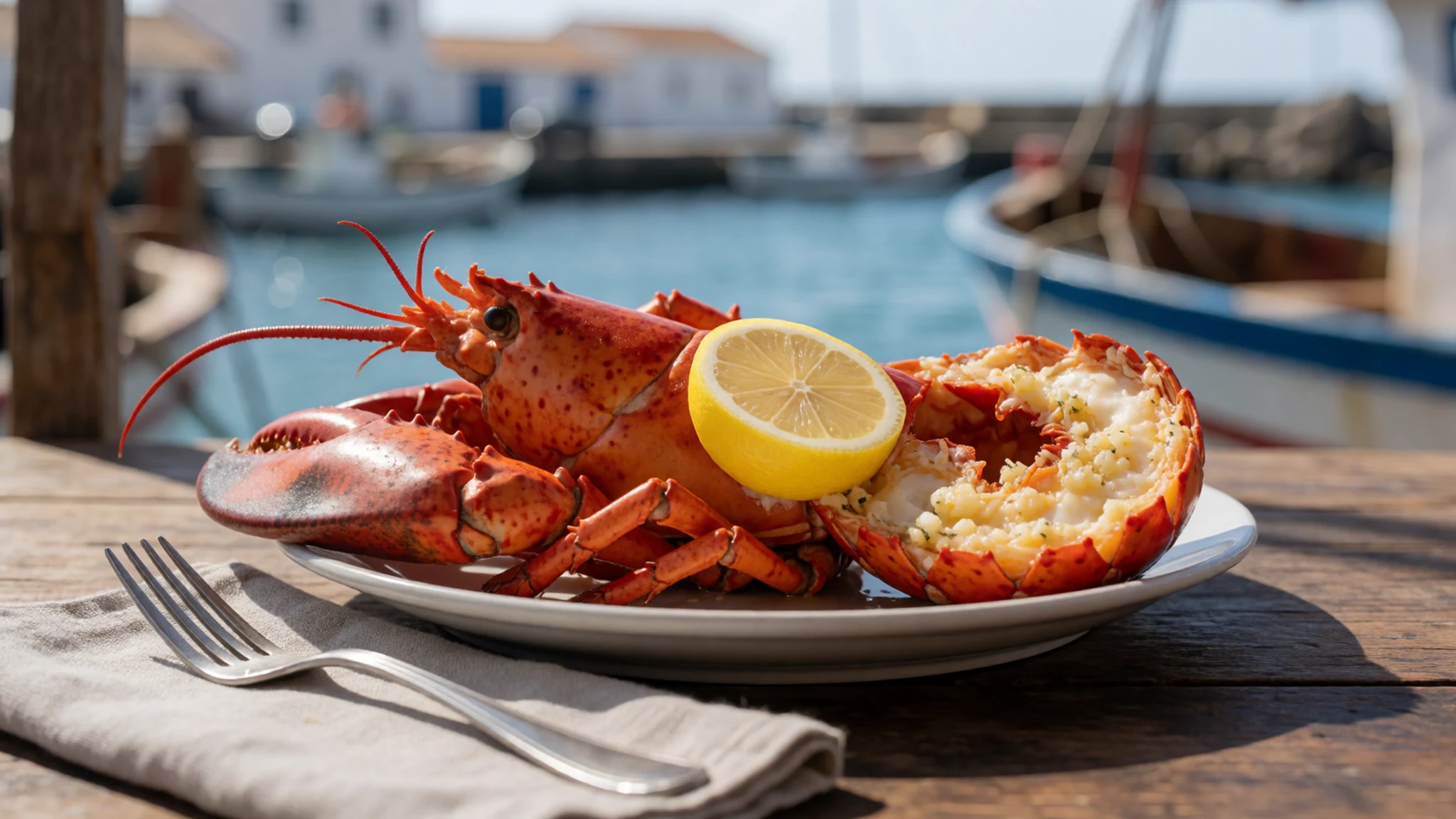
- Fresh lobster — Fishing beaches and the harbour area near Moçâmedes
Lobster bought straight from a fisherman's boat is one of the treats of the Angolan coast. It is usually grilled or boiled and eaten with oil and garlic. Ask the price before ordering, as it varies with catch and demand.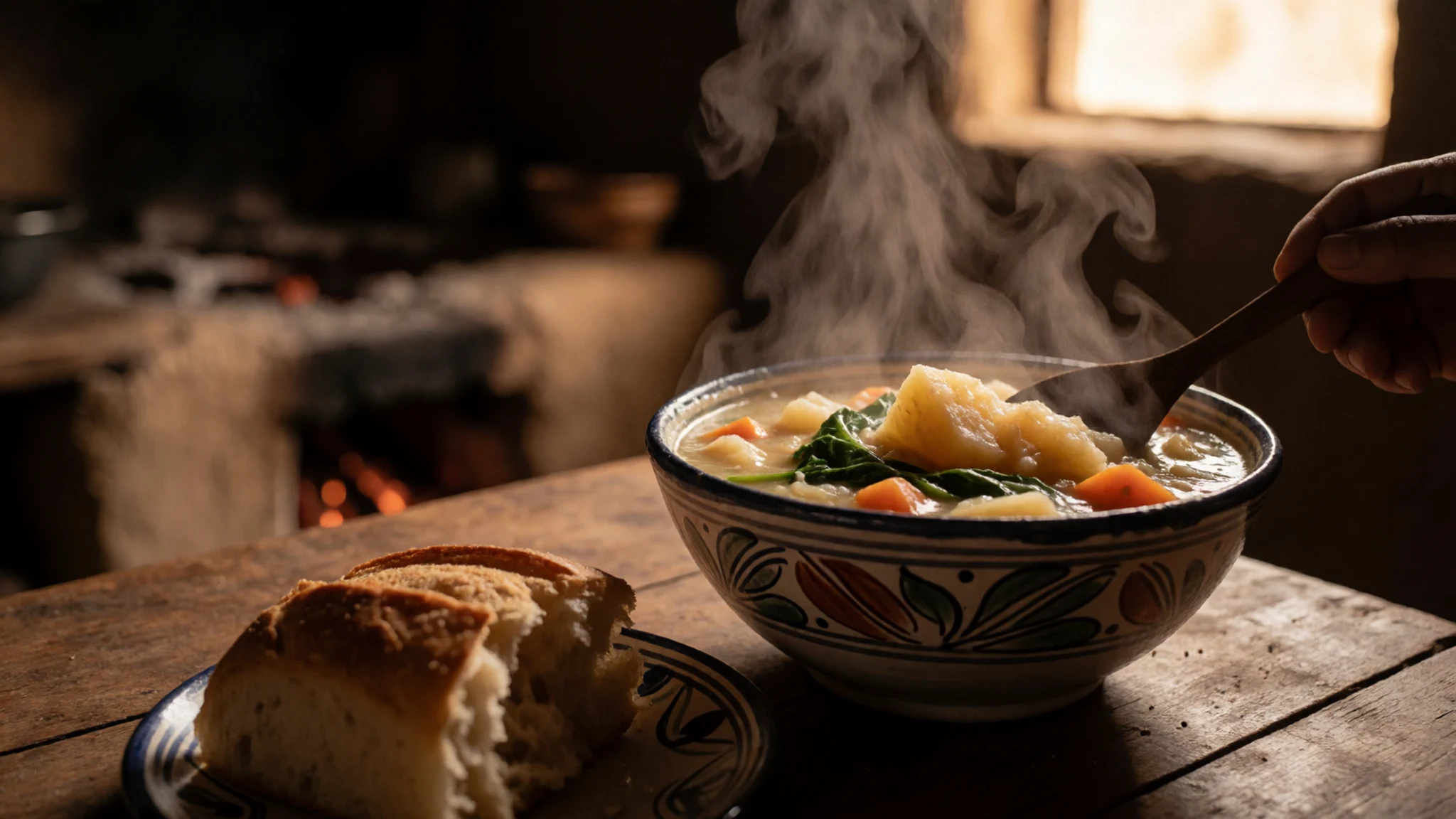
- Funge — Local family eateries and market stalls in town
Funge is a smooth, stiff porridge made from cassava or maize flour, eaten by hand or with a fork to scoop up stews and sauces. It is filling and plain by design, which makes it a good partner for spicy, oily dishes. - Calulu — Home-style restaurants and family-run eateries in Moçâmedes
Calulu is a slow-cooked stew built on fish, often dried, with leafy vegetables, tomato and palm oil. It is rich, savoury and best eaten with funge. Many cooks have their own version, so tastes vary from one kitchen to the next. - Tropical fruit — The central market in Moçâmedes
Mangoes, bananas, papaya and other tropical fruit are often grown by small producers using traditional methods, which gives them deeper flavours than many industrial fruits. Buy what is in season and wash or peel it before eating.
Plan it
Best time. June to September is the sensible window, when the desert is likely to be at its coolest and driving conditions are most reliable; check local advice, as rain can cut roads and fill dry river beds quickly.
How long. 3–4
Getting there. Fly to Luanda, then take a domestic connection to Moçâmedes if services are running, or drive down from Lubango over the Serra da Leba road. Check schedules locally as they change; for official information see http://www.namibe.gov.ao/.
Budget. mid
Tips
- Hire a trusted local guide with a suitable vehicle, especially for Iona National Park and Lake Arco
- Avoid travelling after dark or alone, and if driving in convoy use similar vehicles in case of spare-part needs
- Never step past red and white HALO Trust posts or red-stone markers, as they signal mine fields
- Carry bottled water and drink only bottled water in restaurants, and ask before ordering whether US dollars are accepted
- Carry identification at all times, as the law requires
Etiquette
- Greet elders first and let them speak first
- Greet the local soba when visiting rural communities
- Ask before photographing people, homes or livestock
Nearby
Sources
- Wikidata Q216819 (CC0)
- Wikipedia: Namibe Province (rev 1377782037) (CC BY-SA 4.0)
- Wikivoyage: Angola (rev 5393510) (CC BY-SA 4.0)
- Photo: Lago do Arco do Carvalhão, David Stanley (CC BY 2.5)
- Photo: Olive trees in Namibe province, Paulo César Santos (CC0 1.0)
- Photo: Serra da Leba road, Valmir144 (CC BY-SA 4.0)
- Photo: Commercial port of Namibe, Paulo César Santos (CC0 1.0)
- Photo: 1902 Boer ox wagon, Mossamedes (postcard) (Public domain)
- Photo: And the kids are watching, Giulia.corradini (CC BY-SA 4.0)
- Photo: Angola, Namibe desert, Haworthia, Dguendel (CC BY 4.0)
- Photo: Bébés Himba, Iona, Rempros (CC BY-SA 4.0)


