Iona National Park
Iona National Park, Angola
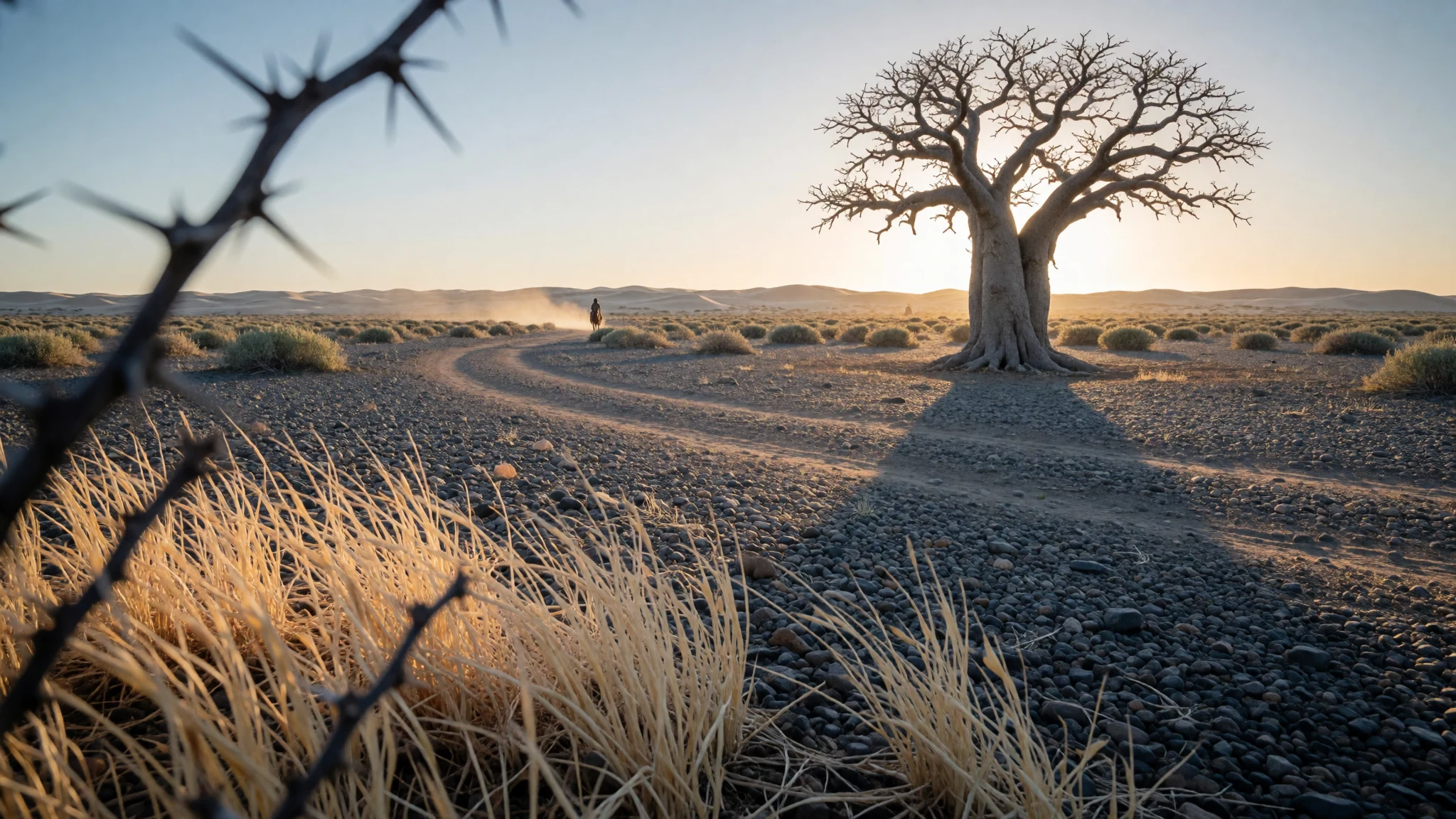
Iona National Park is a severe Namib desert of dunes, fog and gravel plains where wildlife and pastoral herds still share the tracks.
The place
Iona National Park occupies the southwestern corner of Angola, where the Namib Desert runs to the Atlantic and the country narrows towards the Cunene River and Namibia. This is open desert, not woodland: gravel plains, pale dunes, dry washes and a fog-cooled coast. The imbondeiro, Angola's national tree, stands over the scrub as a swollen grey trunk with spare branches, and each tree becomes a landmark because the horizon offers so few. Dust lies loose on the tracks. A wind lifts it. Vehicles move as a short line of colour through a very large space. Rain is scarce, so the ground stays stony and the plants stay low, built for drought and for the cold morning mist that drifts inland off the sea. That mist, known as cacimbo, wets the sand, softens the light and then gives way to a hard glare. Animals are present and rarely crowded: oryx, springbok, ostrich and Hartmann's mountain zebra use the plains and the rocky ground, while brown hyena and smaller desert life keep to the edges of the day. The Atlantic edge is abrupt. Dunes and gravel simply stop at the water, and the shore can feel colder than the interior a short drive inland. Shade is occasional, water is something to carry, and the quiet is the ordinary condition of the place, broken by wind, an engine or a herd.
Its story
Iona National Park has a history that is easy to underestimate, because the land looks untouched. The southwestern desert was declared a conservation area while Portugal still governed Angola, and the name Iona belongs to a small settlement in that same dry country. Independence was followed by a long civil war. Through those years the park was difficult to reach, hard to staff and simple to ignore. Hunting thinned the animals, posts fell quiet, and a protected area on a map became, for a time, a protected area in name. The desert did not depend on that paperwork. Herero-speaking pastoralists, Mucubal communities among them, kept moving stock across plains and dunes, using wells and the brief green that follows rain. Their routes are older than the park boundary. Conservation, when it returned, had to work with that fact rather than around it. In the years since the war, rangers, patrols and outside partners have been rebuilding a working park: a presence on the tracks, attention to poaching, and room for oryx, zebra and the strange desert plants to hold on. The work is real and still unfinished. Iona National Park is a story of a line drawn around a living pastoral landscape, of a war that left official protection hollow, and of a slow repair in a country many outsiders still picture only through its capital and its oil.
What to see
- Imbondeiro — gravel plains
The imbondeiro marks the gravel plains of Iona National Park with a swollen trunk and a few bare branches. Angola treats it as the national tree, and out here each one is a landmark on an otherwise empty horizon. Morning light turns the bark silver. Shade at the base is scarce and animals use it, so visitors look, photograph and leave the roots undisturbed.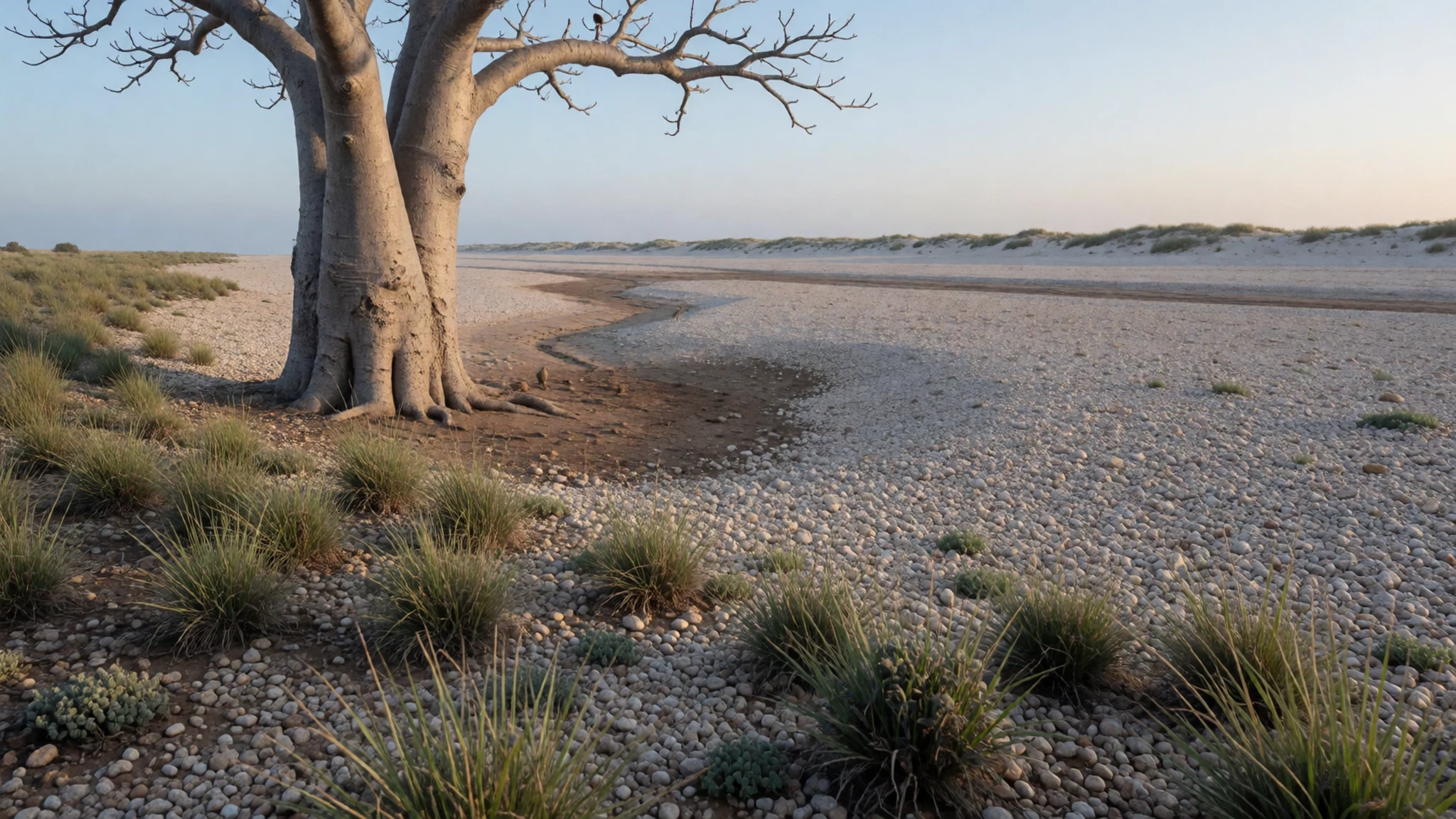
- Namib dune fields — western dune country
West of the plains, Iona National Park becomes northern Namib dune country: apricot and grey sand, sharp crests, and ripples combed by the wind. Tracks keep to the firmer corridors between dunes. A windy night can erase yesterday's tyre marks, so vehicles travel in company; one bakkie stuck in soft sand is a long delay. Late afternoon is the kinder hour, when the ridges throw shadow and the heat eases.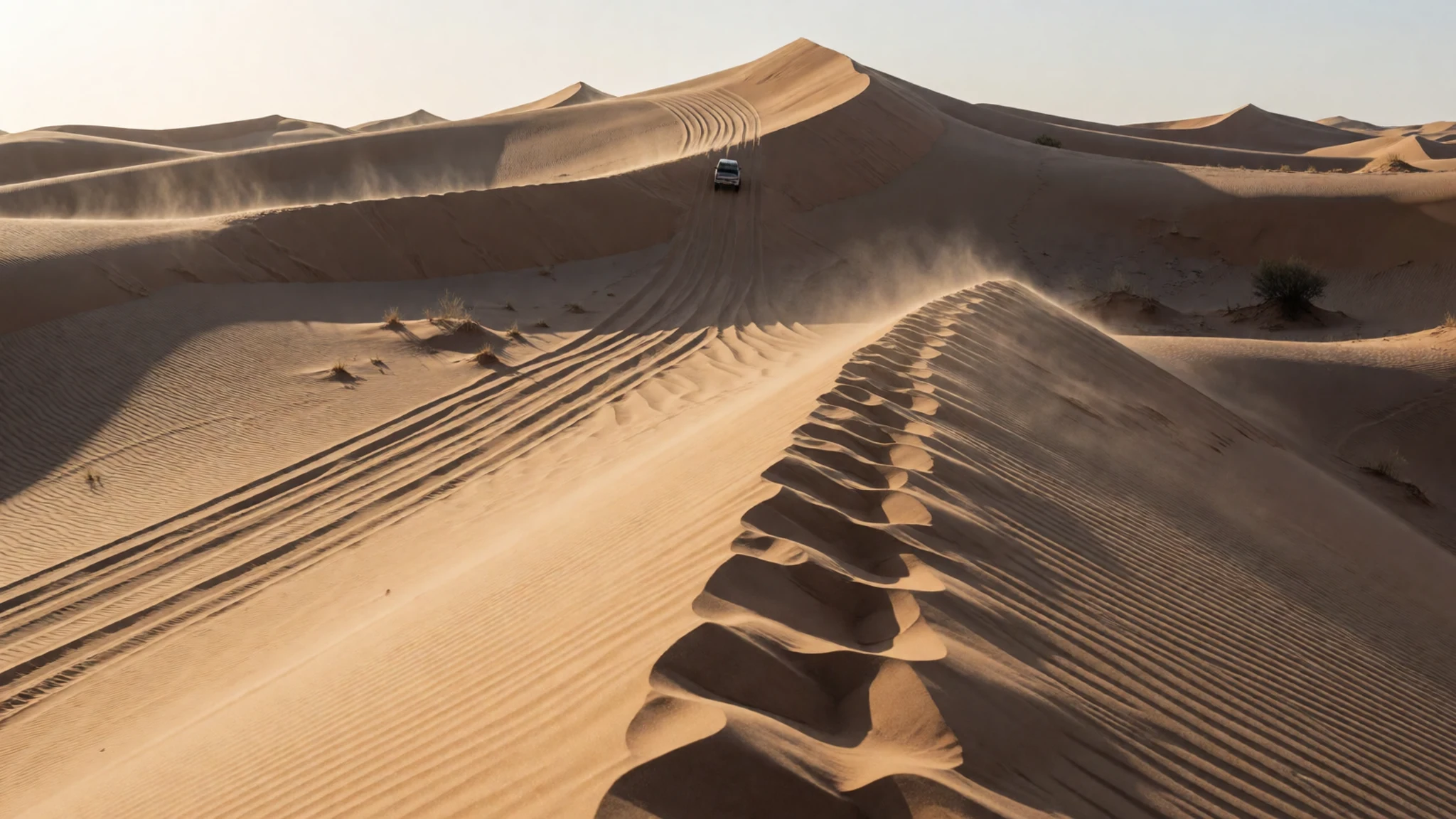
- Atlantic shore — western coastline
Iona National Park meets the Atlantic on a spare, often cold shore, desert gravel running straight to the surf. Fog lingers longer here than inland, and the light can stay milky. There is no resort front and little shelter from the wind. Jackals and seabirds use the strand more than people do. Visitors pause where dune meets water, then turn inland before soft sand and the tide complicate the track.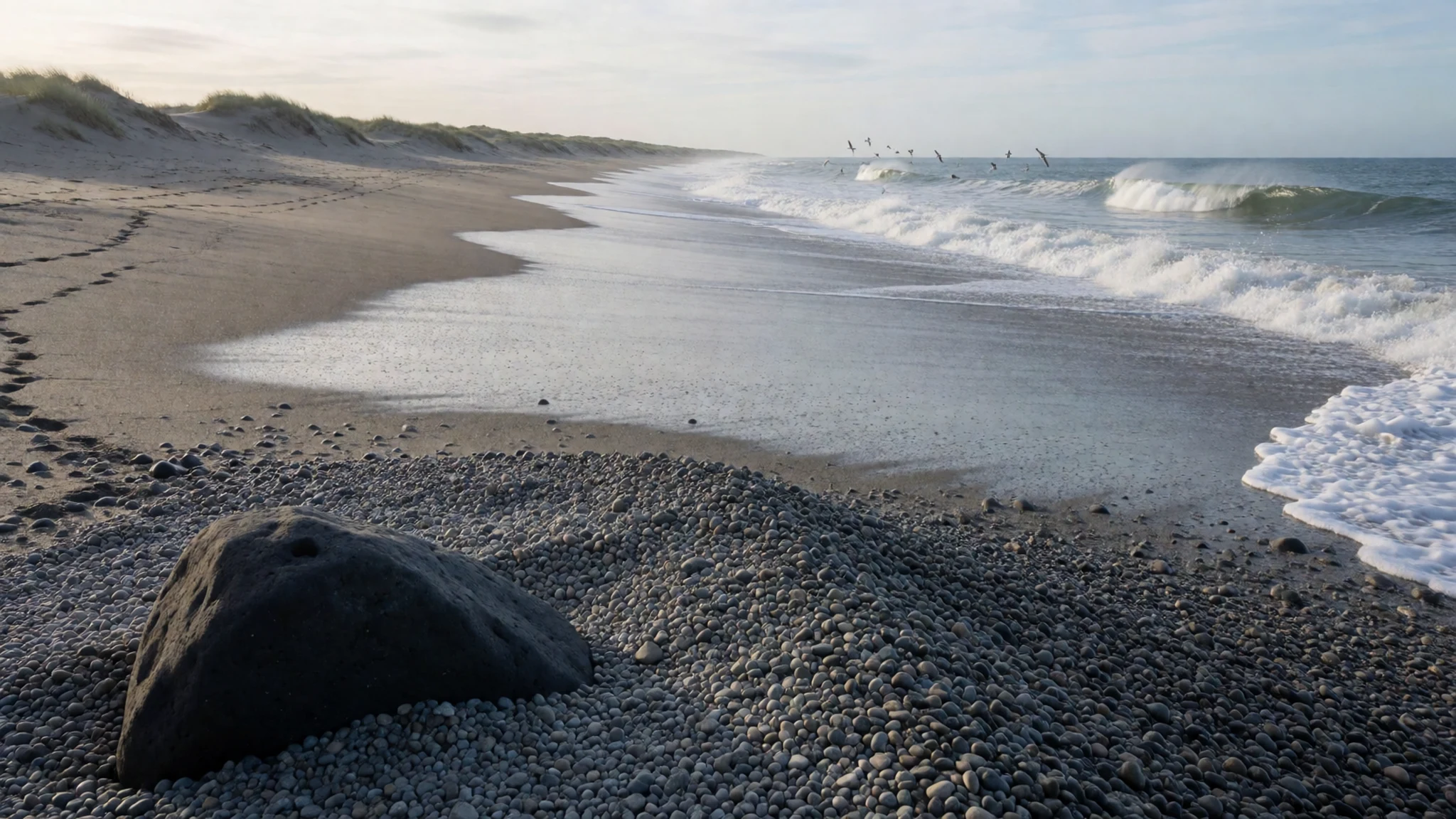
- Gravel-plain wildlife — central gravel plains
On the gravel plains of Iona National Park, oryx and springbok appear as specks of colour, ostrich hold the open, and Hartmann's mountain zebra use the stonier rises. Nothing is fenced into a loop. Sightings come from a slow drive in cooler hours with a guide who can read tracks. Brown hyena is usually a print in the morning dust. Binoculars matter more than a long lens.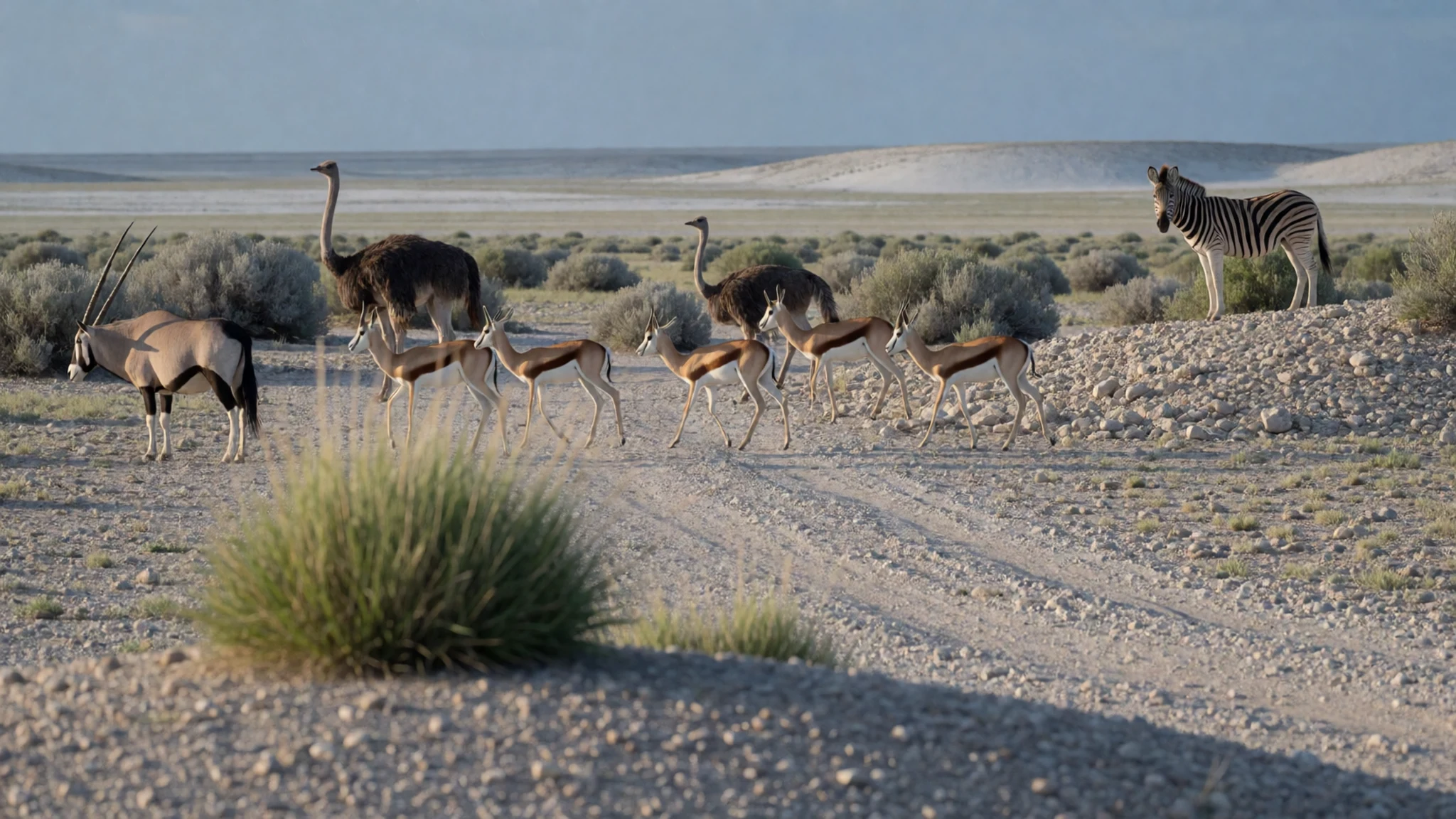
- Horsemen on the dust road — northern tracks
North of the deeper dunes, Iona National Park is a pastoral road as well as a reserve. Horsemen share the dust tracks with bakkies, and cattle move between wells and thin grazing. This is ordinary life, not a display. Drivers slow well before a herd and pass only when the riders have room. A horseman against an empty horizon makes a fine photograph; the courtesy around it matters more.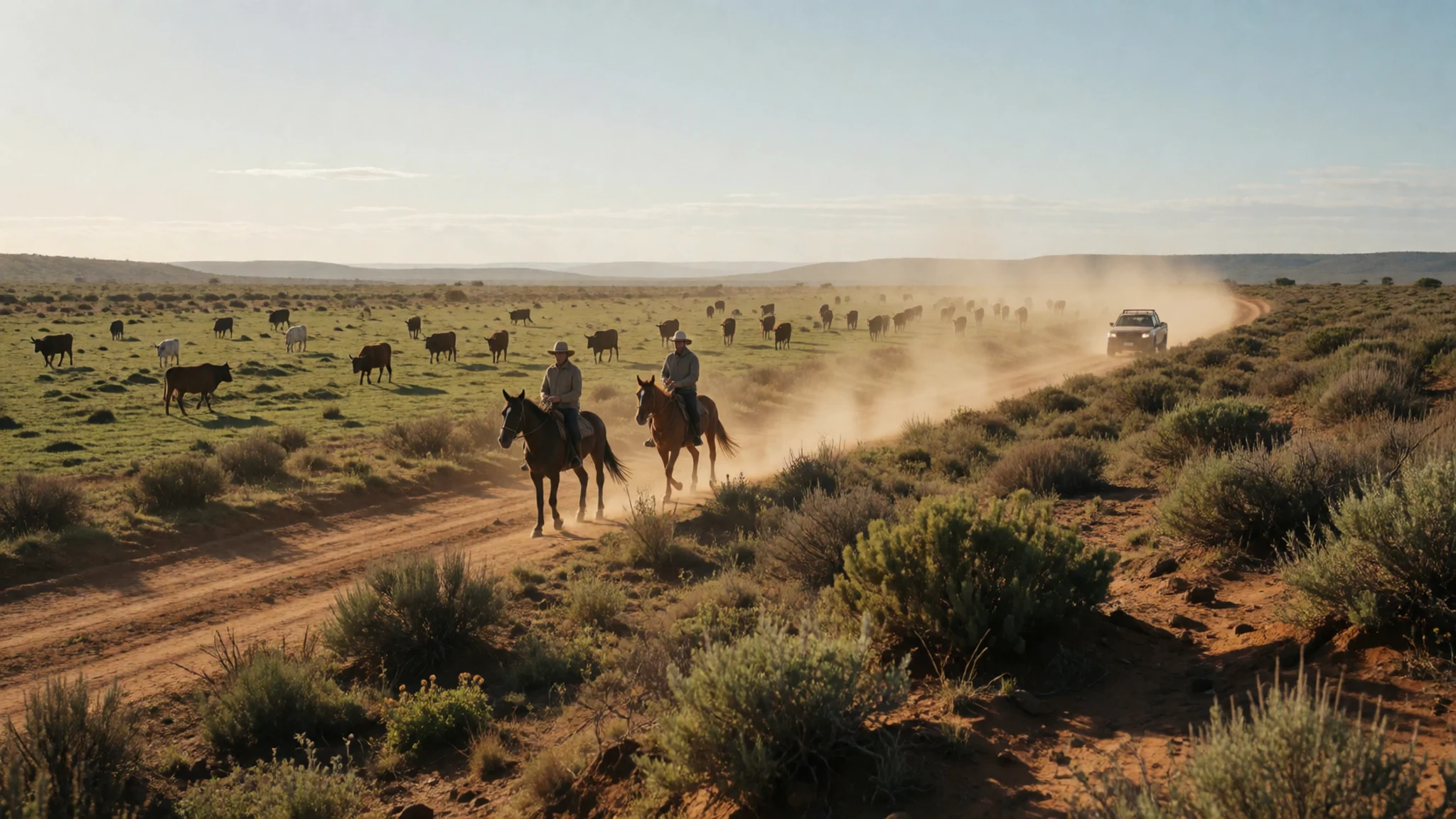
- Welwitschia plains — stony ground near the dunes
Welwitschia, a low plant whose leaves split into a ragged crown, grows on the stony ground of Iona National Park where fog off the sea supplements the rare rain. It sits flush with the gravel and is easy to drive past. Guides know the patches. Visitors leave the leaves untouched; the plant is tough and also slow, and a torn leaf is not a souvenir.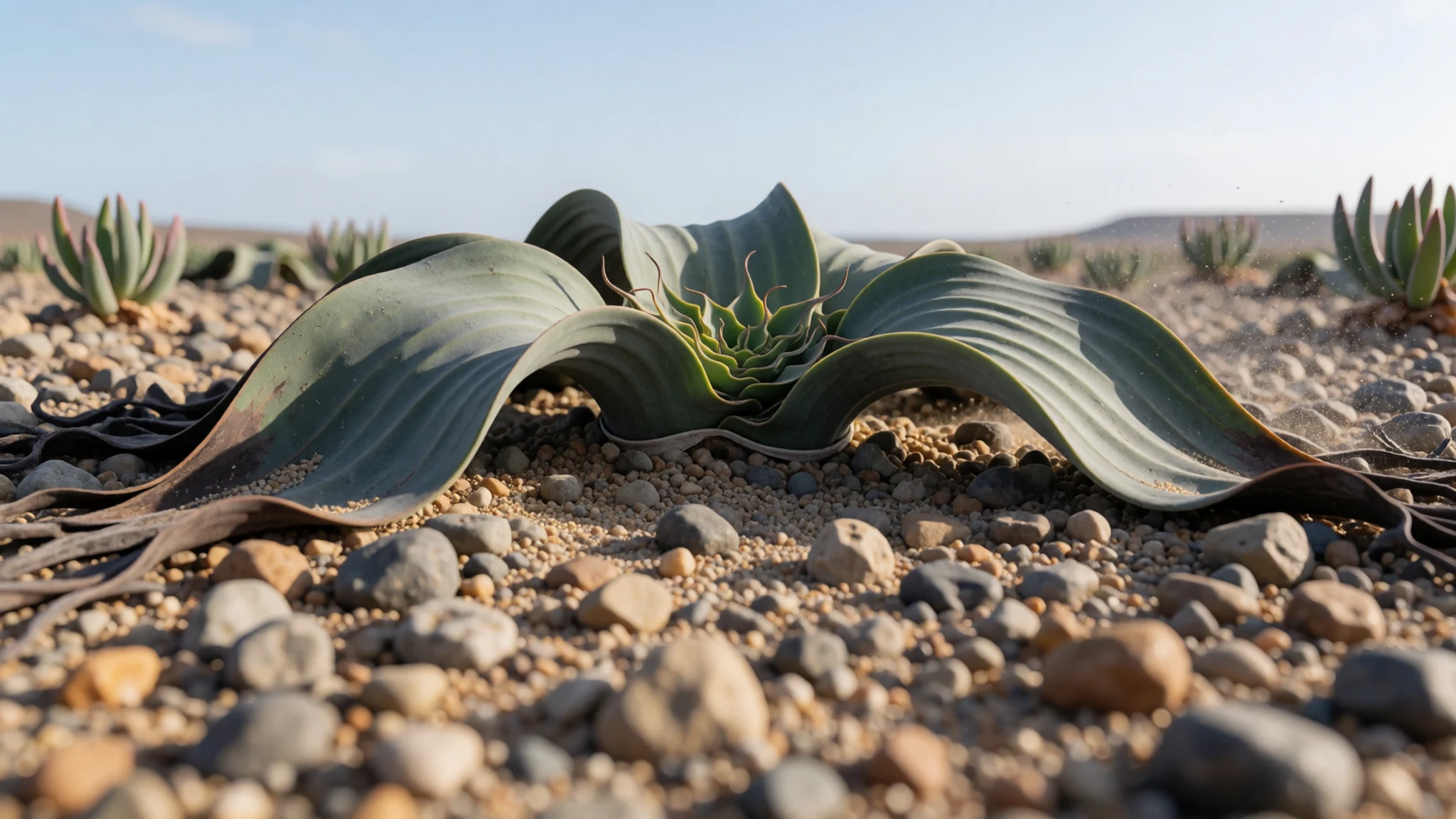
Culture
Culture of the desert edge at Iona National Park is pastoral, not urban. Herero-speaking pastoralists, Mucubal communities prominent among them, live by cattle, goats, wells and a sharp knowledge of where the ground will carry a herd after rain. Homesteads are sparse. A visitor may pass a camp, a horseman and a scatter of stock and then see no one for a long time. Portuguese remains the language of officials, permits and the towns outside the park, while speech at a homestead may be Herero or another regional language, with Portuguese as the bridge. Conservation staff and these families share the same tracks, and the relationship is practical: patrols, grazing, water, and the question of whose movement disturbs whose. Dress and adornment are useful as well as formal — leather aprons, beadwork and metal ornaments, and, among some Herero-speaking women of this borderland, a red ochre cosmetic worked into the skin and hair. There is little commerce, and a strong sense of who belongs in a given stretch of shade. Ask before you photograph people, homes or livestock, and do not enter a homestead until someone invites you in.
What to wear
In Iona National Park the traditional dress still visible on the pastoral fringe is built for sun, thorn and display. Mucubal women wear leather aprons and skirts heavy with beadwork and metal ornaments; hair may be dressed with braids, leather and ochre-tinted fat. Men of the same communities have long used leather, cloth wraps and, on the move, practical shirts with a herding stick. Textiles matter less here than skin, leather and beads, because woven cloth is not the old technology of this dry country. In the towns that supply the park, Namibe and Lubango, people dress as other Angolans do: printed cotton, jeans, football shirts, caps, and smarter outfits for church or an office. On the tracks, herders mix older leather pieces with second-hand clothes, sandals or boots, and a blanket against the cold fog of early morning. A visitor should plan for that same range. Lightweight long sleeves and trousers keep off sun, wind and thorn. A warm layer matters for foggy dawns even when noon is hot. Closed shoes or light boots are kinder than open sandals on gravel and in camp. At a homestead, modest coverage is the respectful choice, with shoulders and knees covered. Dust-coloured cotton, a brimmed hat and a scarf against blown sand will work better than a bright outfit.
What to eat
- Funje — camp kitchens and eateries in Namibe
Funje is the stiff maize or cassava porridge that anchors a meal in and around Iona National Park. Camp cooks set it under a stew of beans, goat or dried fish. Eateries in Namibe serve the same idea at midday, plain and filling, eaten with a spoon or the hand.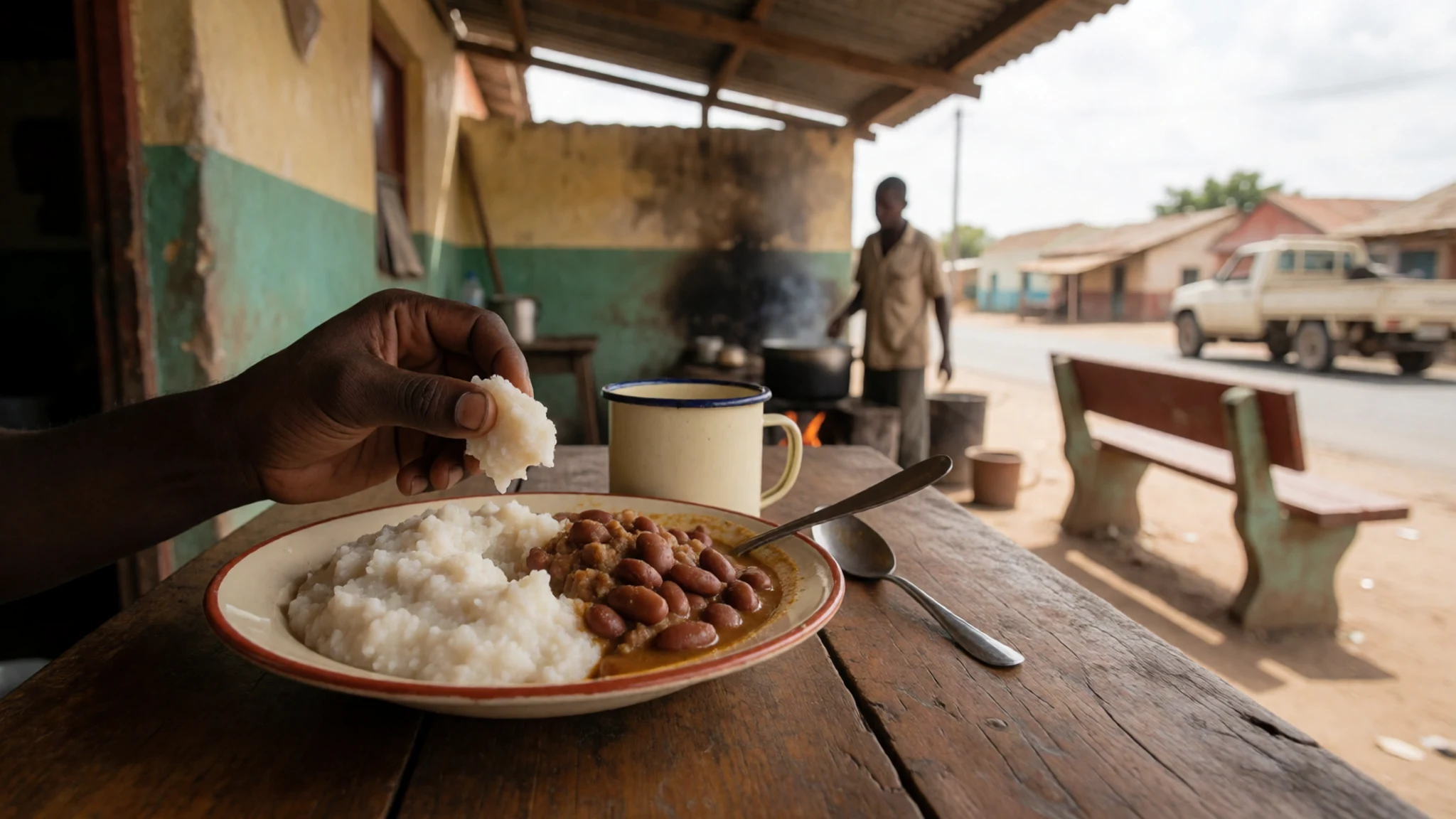
- Grilled horse mackerel — fish market and simple eateries in Namibe
Grilled fish is the coast's contribution to a journey through Iona National Park. Market stalls and simple eateries in Namibe charcoal-grill horse mackerel and other small fish, with salt and a hot sauce. Camps in the dunes see fish only when the crew has carried it in from town.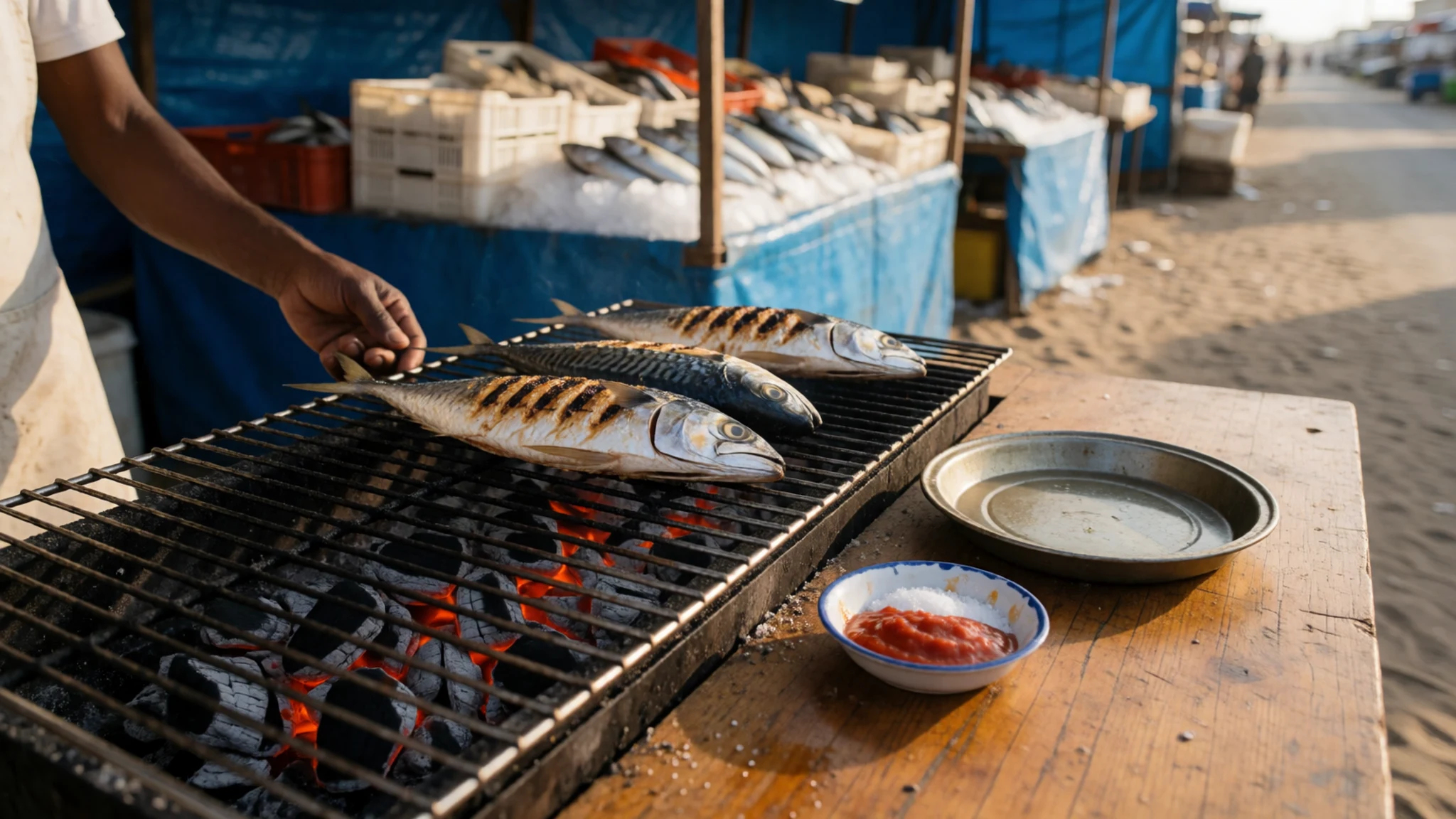
- Cabrito — camp fires and roadside stops between Lubango and Namibe
Cabrito, young goat, suits the pastoral country around Iona National Park. Crews grill it over wood or simmer it until soft, after buying from a butcher in Namibe or Lubango. Roadside stops on that approach sometimes serve it as well, more often for a special pot than for every night. - Calulu — eateries in Namibe
Calulu, a slow stew of dried fish and leaves in oil, belongs to the coast rather than the dunes of Iona National Park. Eateries in Namibe serve it. Okra, sweet potato or spinach-like greens may fill the pot, and palm oil colours the sauce. The result is deeply savoury. - Ginguba and cocada — market stalls in Namibe and Lubango
Ginguba, the peanut, is the snack of the roads towards Iona National Park. Stalls in Namibe and Lubango sell them roasted, as brittle, and beside cocada, small coconut-and-sugar sweets that cope with a hot vehicle. They are the useful sweet when the camp meal is salt, smoke and starch.
Plan it
Best time. May to October brings the cooler, drier weather, when tracks in Iona National Park are firmer and the gravel plains are easier to be out in. November to April is hotter inland, and the short rains can soften sand and delay a crossing. Fog is common on the coast in the cooler months.
How long. four to six
Getting there. Travellers fly to Namibe or, if the connection is simpler, to Lubango. The last leg into Iona National Park is a guided four-wheel-drive track south from Namibe, or a longer approach across country from Lubango. Permits and a local guide are fixed in town. No ordinary bus runs to the gate.
Budget. high
Tips
- Book a licensed operator and confirm permits before travelling.
- Carry spare drinking water; do not count on resupply inside the park.
- Start early, before the midday glare makes walking unpleasant.
- Take cash for fuel and market food in Namibe and Lubango.
- Keep to existing tracks so the dunes and plains stay uncut.
Etiquette
- Ask before photographing people, homesteads or livestock.
- Do not approach wildlife or drive at animals for a closer frame.
- Pass a herd only when the herders give you room.
Nearby
Sources
- Wikidata (CC0)
- Wikipedia (CC BY-SA 4.0)
- Wikivoyage (CC BY-SA 4.0)
Wildlife
- Springbok (animal)
The springbok is a slender, long-legged antelope with a pale face marked by a dark line from eye to mouth, and a white flap on its rump. In Iona National Park look for it on the open gravel plains, where it shows as a tiny fleck of colour far away. Bring binoculars, keep a good distance, stay quiet, and let your guide choose the viewing spot. Never feed it.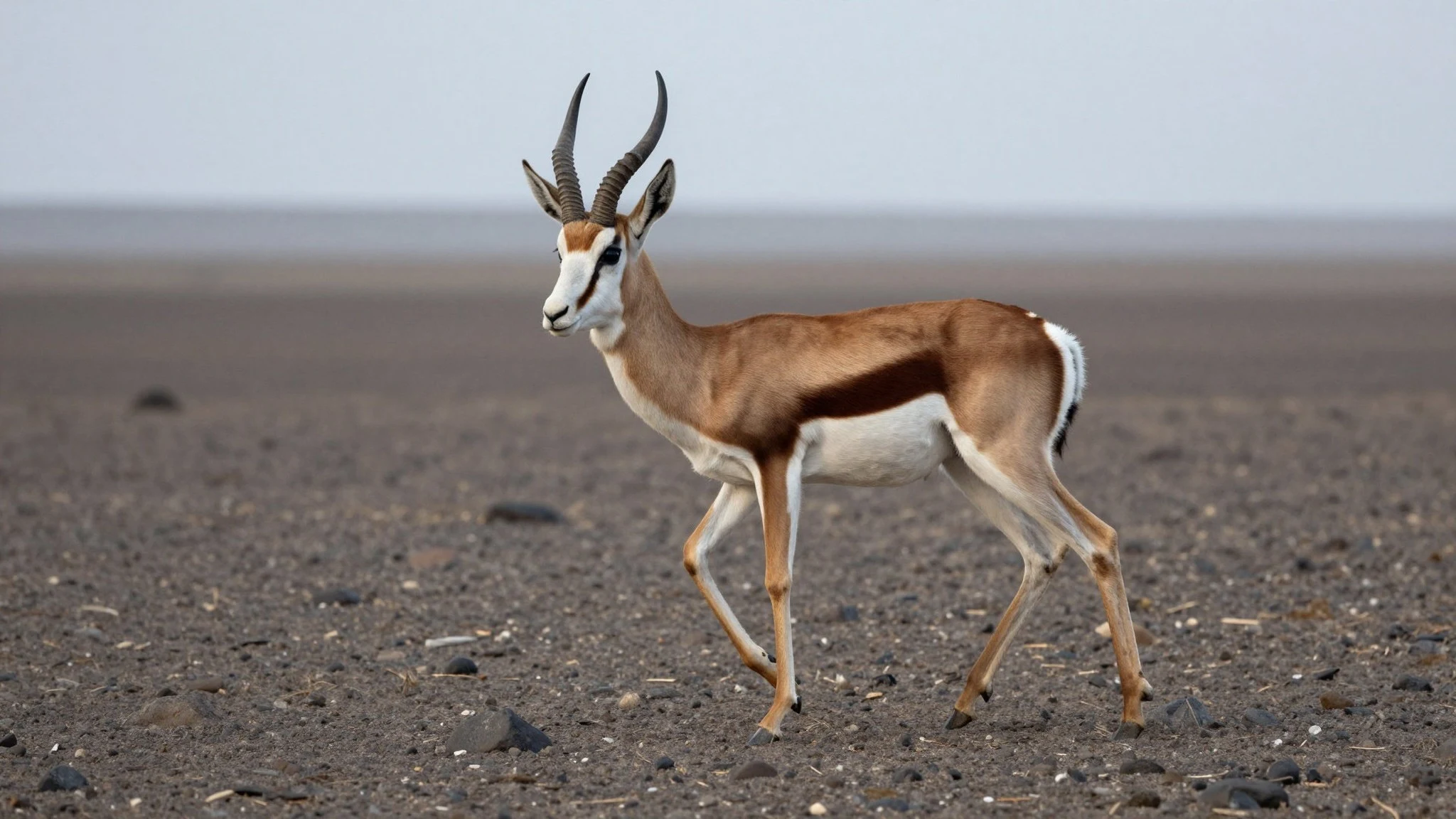
- Ostrich (bird)
The ostrich is the biggest bird in the world, yet it cannot fly. In Iona National Park it holds the open ground, so you can often spot it from afar without trying hard. Watch from a safe distance, keep your voice low, and follow your guide's advice about how close to go. Never feed it or chase it; a wild ostrich should stay wild and unbothered.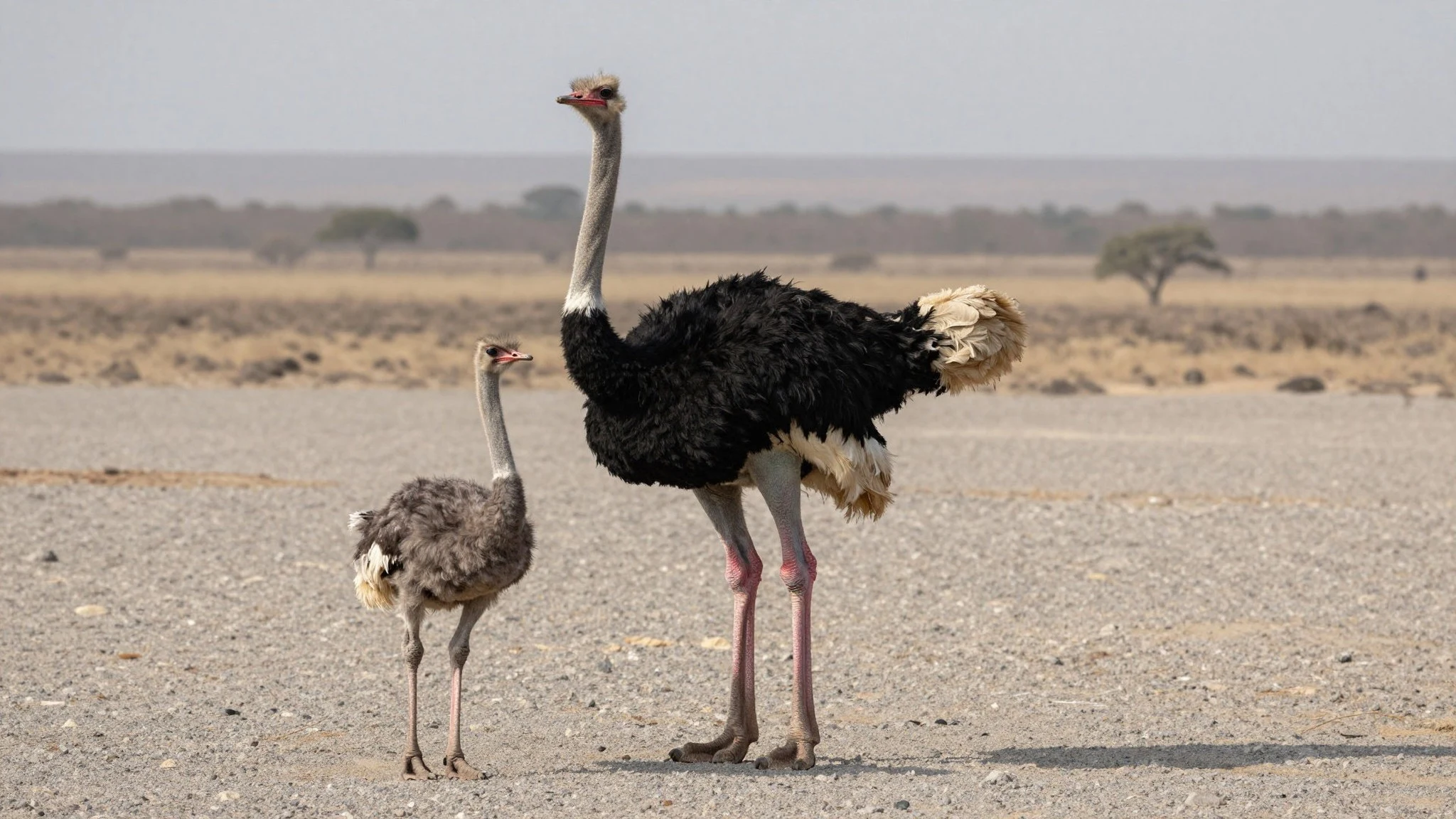
- Oryx (animal)
The gemsbok, also called the oryx, is a big antelope made for parched, empty country. In Iona National Park you may find it on the plains and the stony ground, often as a distant speck of colour on the gravel, and rarely among crowds of other animals. Watch from a respectful distance with a guide, speak softly, and let it go about its day. Never offer it food.