M'banza-Kongo
M'banza-Kongo, Angola
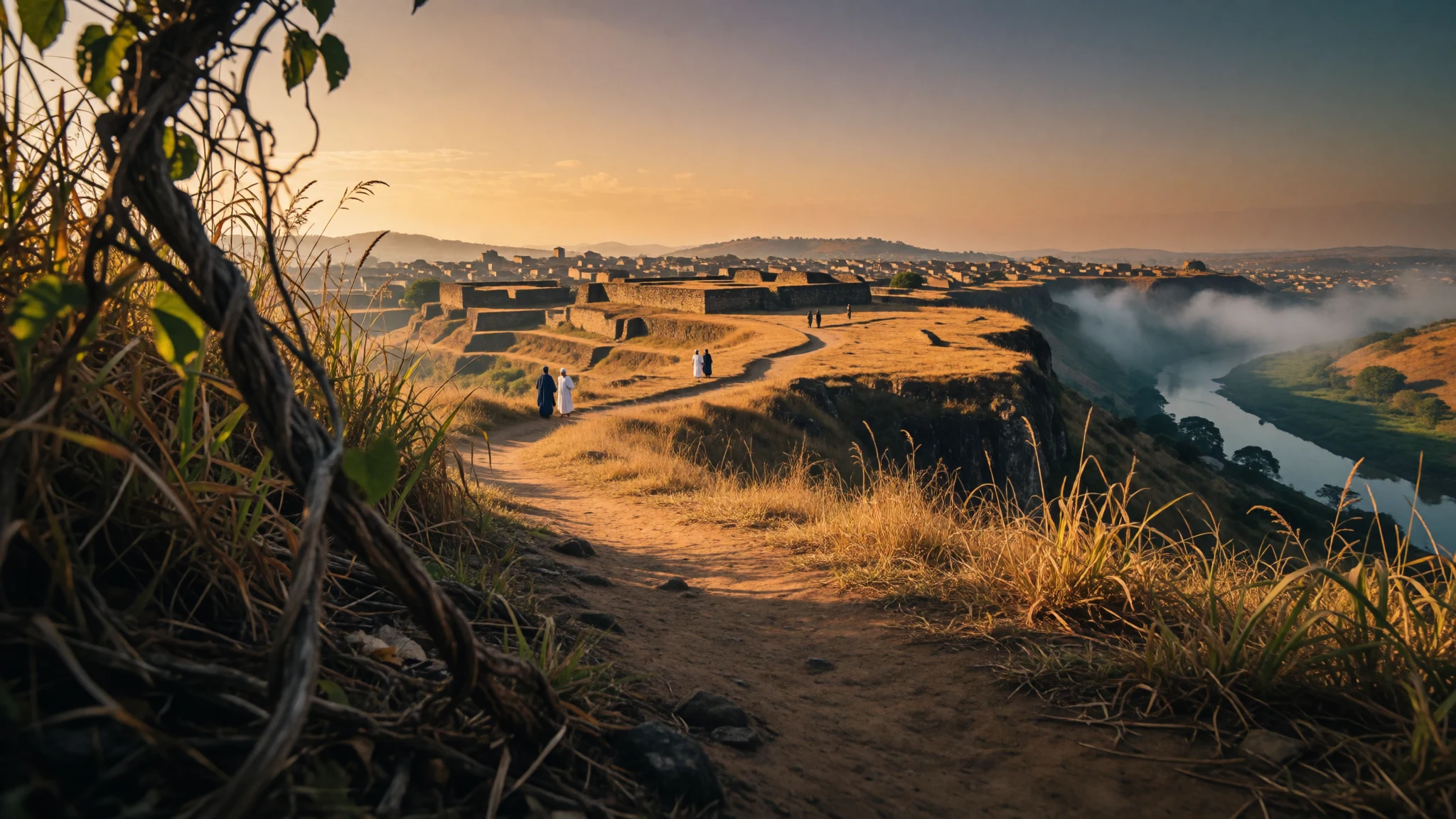
M'banza-Kongo is a rare blend of living town and deep Kongo history, set on a flat-topped mountain and recognised by UNESCO.
The place
M'banza-Kongo (also known as São Salvador in Portuguese) is Angola’s northwestern borderland city, close to the Democratic Republic of the Congo. It sits on a flat-topped mountain, with the Luezi River running through the valley to the south. That geography matters: you can feel the “step” between city viewpoints and the lower streets and edges, and the horizon tends to catch the light as clouds roll through.
As a travel destination, it’s less about big-ticket architecture and more about atmosphere—church ruins and memorials layered over Kongo-era traditions, plus museum displays that try to pull scattered history back into one place. The city’s historical claim is huge: it was the seat of the Kingdom of Kongo long before Portuguese contact, and later carried the Portuguese name. UNESCO’s attention here is on both the city itself and its cultural landscape—so it’s worth wandering beyond the single landmark.
Practical reality check: this isn’t a “drop in for the day” kind of stop. Depending on where visitors come from, transport can be slow, paperwork can be fiddly, and services may feel basic compared with more tourist-heavy countries. The climate is tropical savanna, with a wetter period that stretches from October to May and a drier spell from June to September. If rain hits while travelling or touring, it won’t just be a drizzle—roads and paths can get slippery and visibility can drop quickly, even if afternoons sometimes still work for shorter visits.
For pacing, think “history walks + short museum breaks + daylight planning”. Go with patience and a flexible schedule, and you’ll get a sense of place that feels earned rather than packaged.
Its story
M'banza-Kongo traces back to the Kingdom of Kongo, where the city (then known by different names including Nkumba a Ngudi, Mongo wa Kaila and Kongo dia Ngunga) was associated with the first manikongo, Lukeni, and key trade routes. Portuguese accounts later describe a town that was already substantial when Europeans arrived, with the Portuguese journey inland taking days from the Congo River’s mouth. Even without chasing every historical detail, it’s hard not to feel that you’re walking through a crossroads shaped by movement—people, goods, and ideas.
The Portuguese era brought new religious and political pressures. In the 1500s, Portuguese traders and Jesuit missionaries were active in and around M'banza-Kongo, and a violent attempt to change leadership followed. That period also includes conflict: a king was driven out by invading forces that sacked the city, and later the capital was reclaimed with Portuguese military support. These were not tidy “European discovery” stories; they were power struggles in a region with its own rulers and systems.
Over time, Portuguese influence left more physical marks too. Under Afonso II, the city gained stone structures like a palace and churches, shifting its physical foundation from purely ritual governance spaces to more permanent construction. Later, wars and upheavals meant many buildings were damaged, and the story of recovery is part of the visit today.
If you listen for it, the city’s identity runs through the mix: oral legend, place-names, church remnants, and museum objects. M'banza-Kongo doesn’t present itself as a single straight line from past to present; it feels like layers you have to read with your feet, and sometimes with a bit of local guidance.
What to see
- Ruins of the Cathedral of the Holy Saviour of Congo (São Salvador / nkulumbimbi) — Old city core
M'banza-Kongo’s best-known historic church site relates to early European mission-era building at São Salvador. The older cathedral has a ruin feel, while local tradition points to a later church on the spot and gives it the name nkulumbimbi.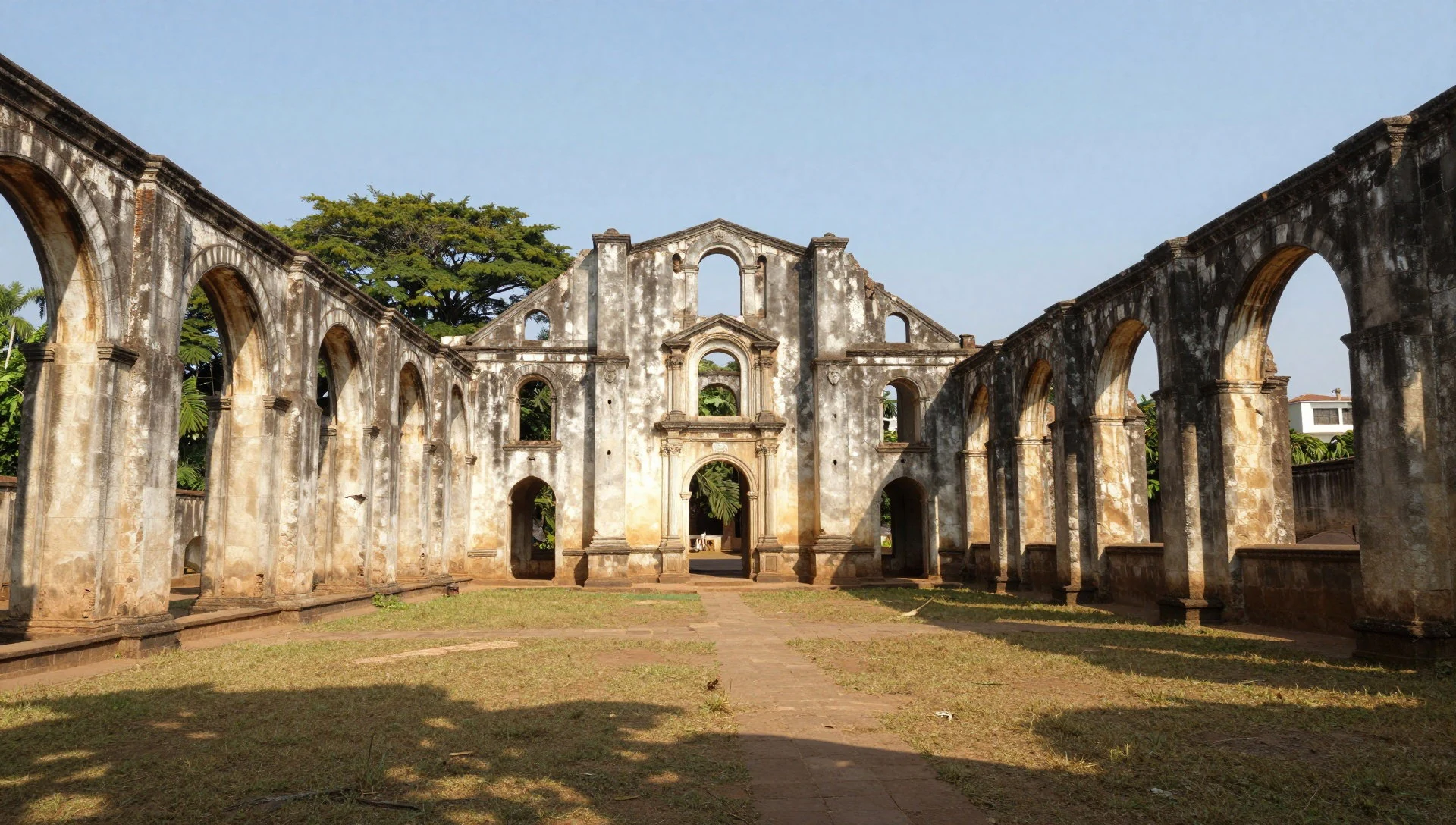
- The Jalankuwo (Manikongo’s judgement tree) — Downtown
In the downtown area, the Jalankuwo is linked to the manikongo’s judicial traditions—an outdoor “institution” that contrasts with stone-and-church history. Even if details vary by guide, seeing it as a living reference point helps connect the kingdom’s governance to the present layout.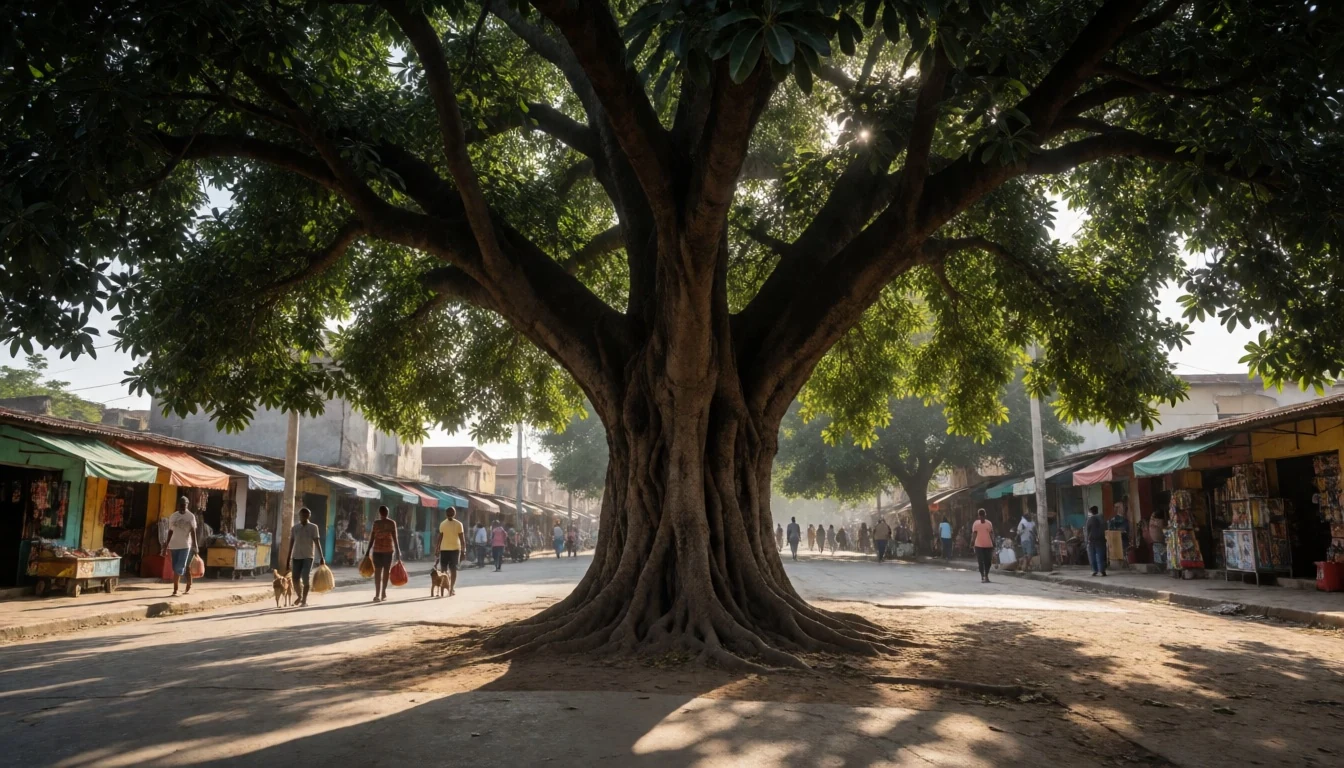
- Sunguilu washing ground and Royal Museum grounds — Royal palace precinct
Near the royal palace area, the sunguilu is a rectangular ground level structure remembered in local tradition for the washing of the king’s body before burial. Nearby, the Royal Museum anchors what survives—especially artefacts connected to the old Kingdom of Kongo.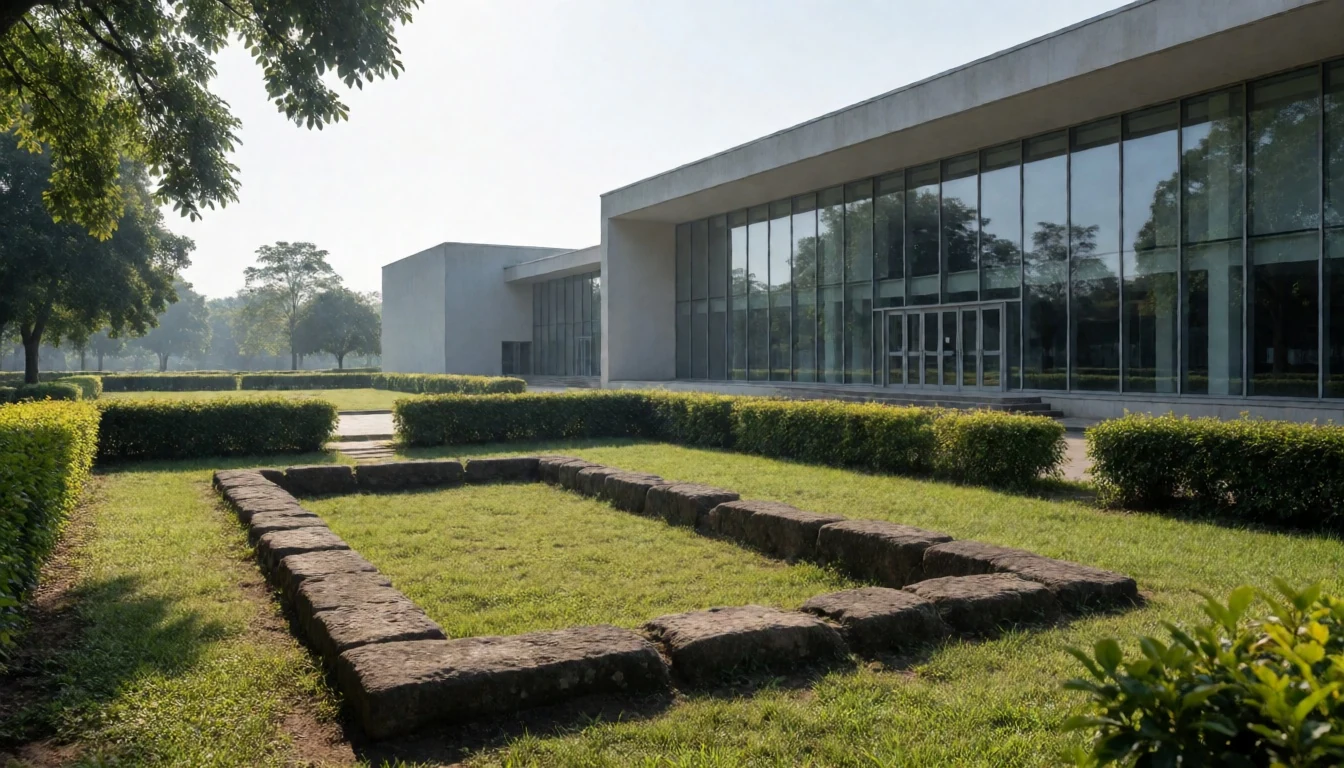
- Memorial to the mother of King Afonso I — Airport area
Close to the airport, this memorial keeps a dramatic legend in view: that King Afonso I buried his mother alive after she refused to give up an ‘idol’ worn around her neck. It’s small, but it adds an emotional layer to the otherwise archaeological feel of the visit.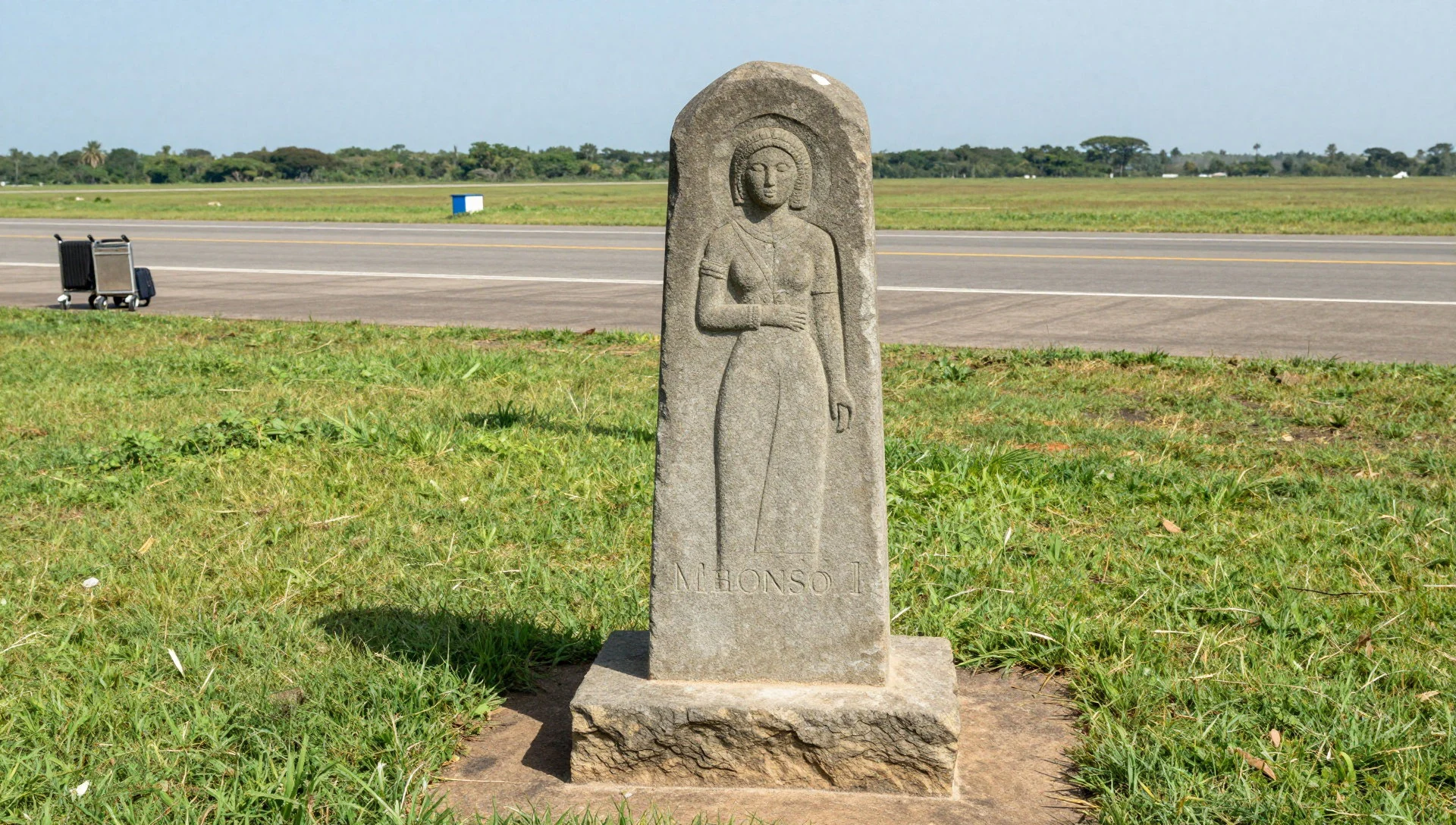
Culture
M'banza-Kongo’s culture is inseparable from its history as São Salvador and the Kingdom of Kongo’s seat, so everyday city life and visitor experiences often revolve around heritage spaces—trees tied to judgement traditions, burial-ritual places, and church remnants connected to early mission history. Even when buildings are damaged or rebuilt, the city’s UNESCO designation points to a wider “cultural landscape” idea: it’s not only monuments, but the relationship between them—where things were, how people gathered, and what stories stick to the ground.
You’ll also notice how practical care becomes part of the story. The city’s healthcare reality can be visible simply by moving through neighbourhoods, where clinics and waiting areas remind travellers that services may be stretched and that local community support matters.
Because of this blend—heritage + daily life—it’s best to approach with respectful curiosity rather than “look and leave”. Ask before photographing people, and take cues from what feels relaxed versus what feels private. Dress tends to be modest in and around religious or memorial spaces, and covering shoulders and wearing trousers or a long skirt is a sensible default.
Visitor etiquette: Ask permission before taking photos of people, and dress modestly when passing churches, memorials, and museum areas.
What to wear
In M'banza-Kongo, traditional clothing is most likely to be seen during community events, ceremonies, and informal gatherings rather than as constant streetwear. Visitors will sometimes notice styles influenced by Central African textile traditions: wrap-style garments, patterned fabrics, and coordinated head or shoulder coverings, with colours chosen more for occasion than season.
Day-to-day, many people wear practical clothes—T-shirts, shirts, long skirts or trousers—and adapt to warm, tropical conditions. During wetter months (roughly October through May), lightweight layers help, because humidity can feel heavy and sudden rain can make walking uncomfortable.
For visitors, the key is to dress for both climate and heritage respect. Choose breathable fabrics and carry something that can cover shoulders when entering church ruins or memorial areas. Comfortable walking shoes matter: uneven ground and slippery patches can happen after rain, so avoid slick soles. If visiting during the dry season (June to September), the air may feel clearer and evenings can be pleasant, but you’ll still want layers in case temperature shifts and sun exposure is strong.
What to eat
- Cassava-based staples (fufu/boiled cassava-style sides) — Local neighbourhood eatery strips
Look for cassava as a staple side in local eateries—often served as a soft, filling mash or boiled pieces alongside stews. In a town like M'banza-Kongo, it’s usually easiest to find in everyday lunch spots rather than tourist-style menus.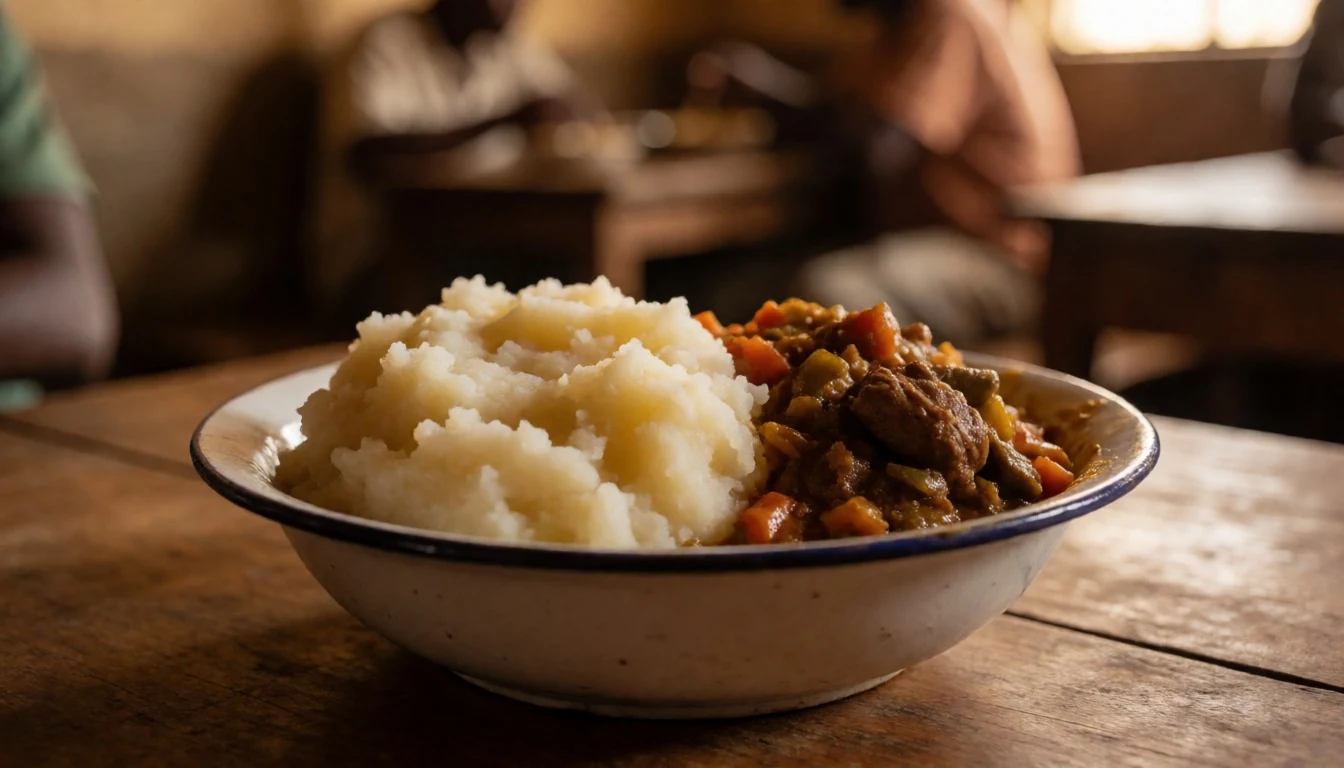
- Palm-nut or peanut stews — Markets and small restaurants
Rich, ground-nut or palm-nut flavoured sauces show up with vegetables and protein whenever there’s a prepared meal. The exact mix varies by kitchen, but the “thick sauce with starch” pattern is common, especially around main meal times.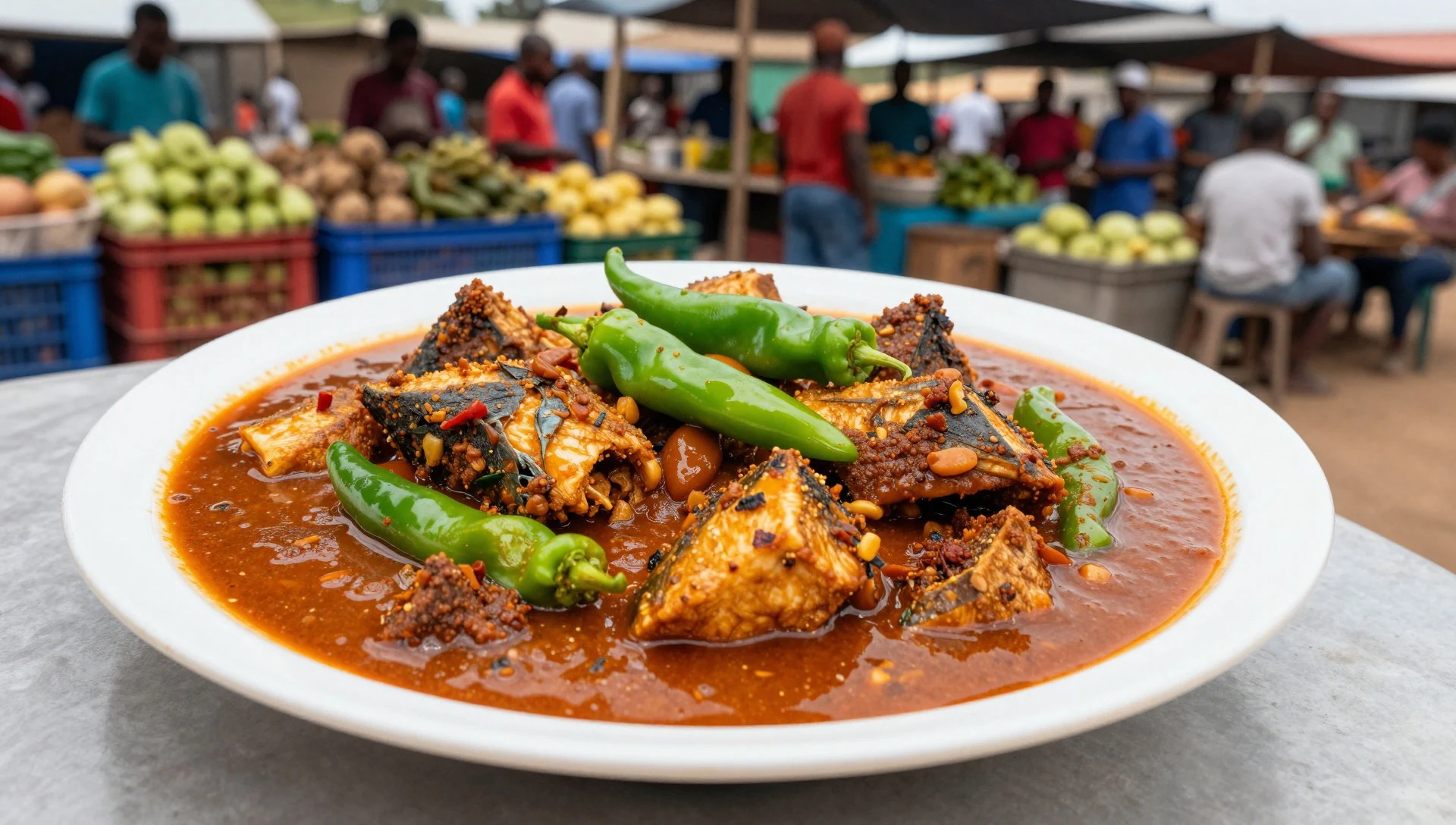
- Grilled fish or smoked river fish — Market food stalls and roadside grills
Because the city sits in a river valley area, fish often appears on menus—sometimes grilled, sometimes smoked. It’s a good option when the kitchen is busy, as it usually means the food is fresh and cooked in batches. - Matamba-style vegetable dishes (seasonal greens with sauce) — Daytime lunch counters
Seasonal greens cooked with a sauce—sometimes with beans or ground nuts—are a reliable way to eat local flavours without relying on meat every time. Ask what’s fresh; in wet months, greens can be especially varied. - Fruit juices from fresh-squeezed vendors — Morning markets and street kiosks
Fresh fruit juice is a common roadside or market drink, with flavours changing by what’s in season. Choose busy stands where fruit is replenished frequently, and stick to vendors you trust with cleanliness.
Plan it
Best time. The hottest months are November and January–February, while the coolest are around June–August; the wettest spell is November and March, with the driest months June–August. March–April and October–November can still be comfortable for walking, but expect wet conditions; June–September is generally best for clearer, drier touring, with October–May bringing a longer wet season that can make paths muddy in rain.
How long. 3–4
Getting there. For approaches from the DRC, the shorter route is via Lufu/Luvo land port, but travellers have reported difficulties with Angolese border police demanding bribes and denying entry otherwise (as of November 2023). An alternative route into Angola can be via Matadi → Noqui border point → Mepala.
Budget. mid
Tips
- Plan visits around daylight, because showers in the wet season can disrupt outdoor walking between sites
- If arriving overland, build buffer time for border and road delays—don’t schedule tight same-day connections
- Carry cash for small purchases around markets and for any informal site fees (when required); keep small notes handy
- Start earlier in the morning for outdoor heritage points to avoid the heaviest heat and cloud cover
- Bring a light rain layer even in drier months; weather can change quickly on the mountain setting
Etiquette
- Cover shoulders and dress modestly near church ruins and memorial areas
- Ask before photographing people, especially in clinics or market lanes
- Be patient if you’re invited to wait while a local task finishes—heritage sites here are lived spaces
Nearby
Sources
- Wikidata Q500189 (CC0)
- Wikipedia (M'banza-Kongo) (CC BY-SA 4.0)
- Wikivoyage (M'banza-Kongo) (CC BY-SA 4.0)
- Photo photos/01-the-bansa-or-residence-of-the-king-of-kongo-called-st-salvad.jpg (Public domain)
- Photo photos/02-angolan-woman-with-children-outside-health-clinic-5686703351.jpg (Public domain)
- Photo photos/03-bansa-or-salvador-the-chief-cit-of-ye-kingdom-of-congo-1670-.jpg (Public domain)
- Photo photos/04-desfile-provincial-do-carnaval-em-mbanza-kongo.jpg (CC BY-SA 4.0)
- Photo photos/05-health-care-for-sick-babies-5686758533.jpg (Public domain)
- Photo photos/06-la-citt-di-bansa-detta-altrimenti-s-salvatore-capitale-del-r.jpg (Public domain)
- Photo photos/07-learning-about-bed-nets-for-malaria-5687154572.jpg (Public domain)
- Photo photos/08-small-girl-getting-and-rdt-test-in-m-banza-congo-12753845605.jpg (Public domain)


