Tsogttsetsii
Tsogttsetsii, Mongolia
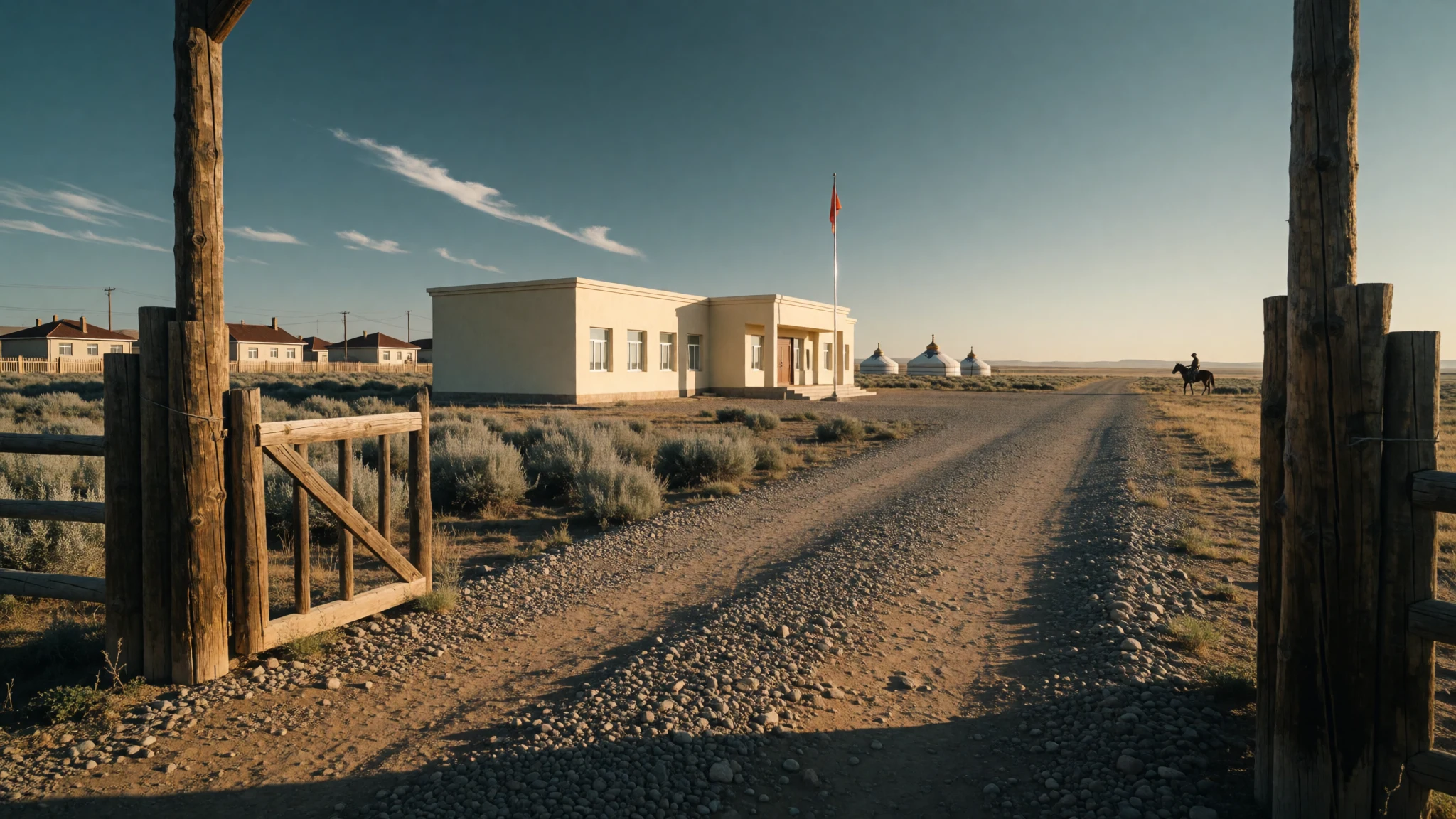
Tsogttsetsii is a small South Gobi district centre where herding life meets a coal-mining frontier, on open desert steppe far from tourist routes.
The place
Tsogttsetsii is a sum, the Mongolian word for a district, in Ömnögovi Province, on the southern edge of Mongolia. Its name is written Цогтцэций in Cyrillic and is glossed as "mighty father". The settlement at its centre is small. A population of 2,642 was recorded in 2009, so this is a village-sized place with an administration building, a school, a few low town buildings and gers, the felt-covered round tents used across the country. The reference photographs show a plain, uncluttered settlement with a great deal of sky above it.
What gives the district its modern weight lies about 15 km south-west of the centre: the Tavan Tolgoi coal mine. Mining shapes the local economy and the traffic on the tracks around it, though the settlement itself is mostly quiet.
The landscape is the Gobi. That means little rain and sparse vegetation rather than endless sand dunes, and livestock herding continues across it. Mongolia calls itself the Land of Blue Skies, and sunny days are the norm. Summers are generally hot, desert nights can turn cool, and winters in the country are bitterly cold.
It is worth being straight about what this place is. Tsogttsetsii is not a sightseeing town. It has no famous monuments and visitor services are thin. People pass through on the way to other parts of the Gobi, or come specifically to see ordinary life in a remote district, which is a fair reason to come as long as expectations stay modest and the planning is careful.
Its story
Little is written about Tsogttsetsii itself, so its story is best told through the country around it. Mongolia was the heartland of the Mongol Empire, yet the empire's rulers left surprisingly few buildings in their homeland. Genghis Khan is said to have put up just one permanent structure, a warehouse for his plunder. The capital at Karakorum, raised by his son Ögedei, still stands, though the warehouse no longer does. What survives from the deep past is scattered: stone monuments and carved drawings across the countryside, some thousands of years old, and a large body of artefacts in the National Museum in Ulaanbaatar.
After the empire gradually broke up, Tibetan Buddhist monasteries became the most visible marks of Mongolian history. The Stalinist purges then destroyed most of them, and only a few remain. The region now called Mongolia was once known as Outer Mongolia, a label from the time it was part of China, and it remained difficult to reach for outsiders until the mid-1990s, when the need for an invitation letter began to fade.
Against that long backdrop, Tsogttsetsii's recent chapter is mining. The coal at Tavan Tolgoi, south-west of the settlement, has tied this quiet herding district to national and international markets. The older pattern of life continues beside it, with families raising animals on land that offers little for farming. The district's story is therefore one of continuity and change living side by side on very dry ground.
What to see
- The district centre — Sum centre
The centre of Tsogttsetsii is compact enough to take in on foot in a short stroll. The administration building is the clearest landmark, a plain official structure that shows how a remote Gobi district organises itself. It is worth a look for context, not for architecture.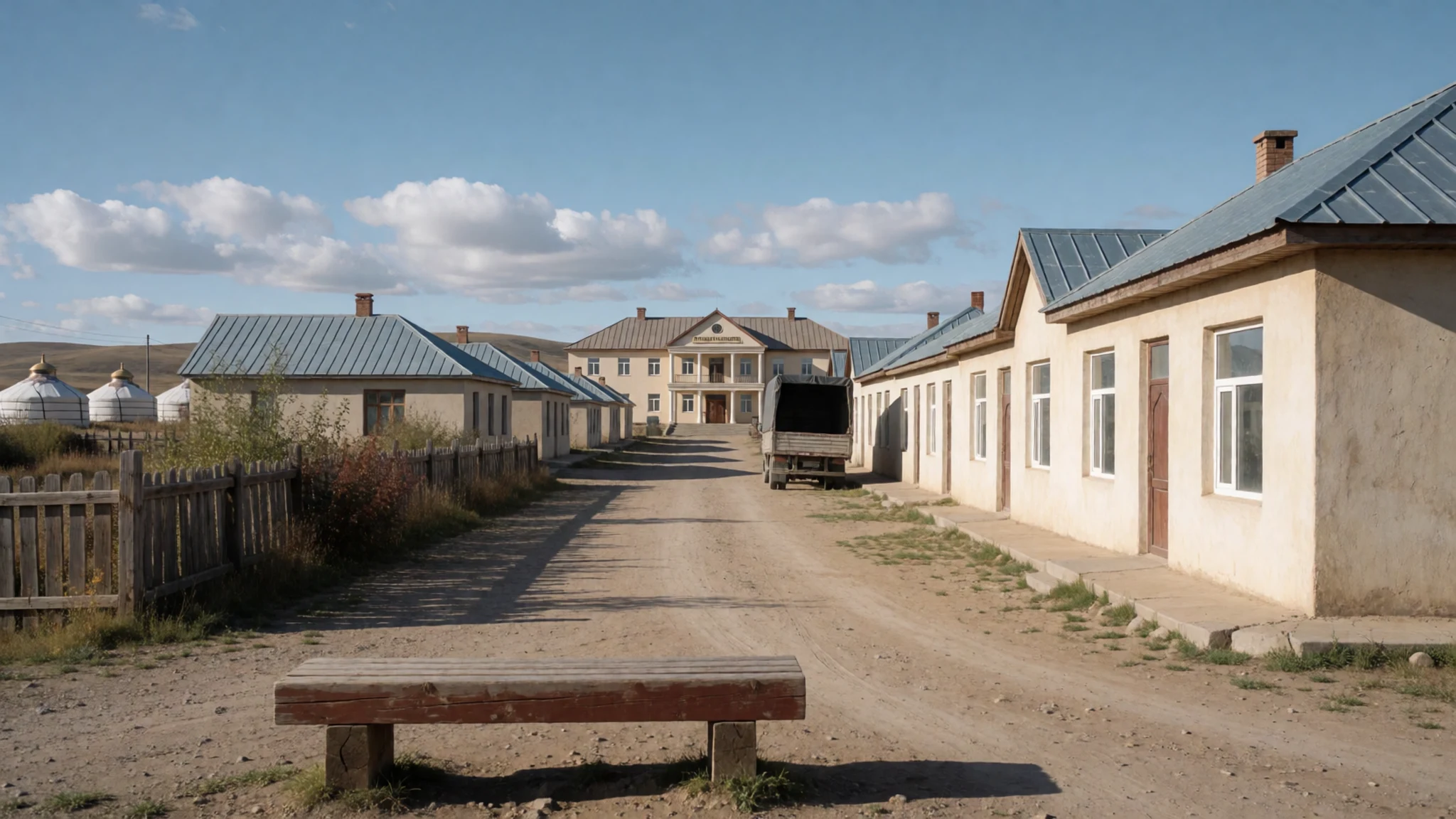
- The school — Sum centre
The village school is one of the settlement's most important buildings, since it serves a scattered herding population. Photographing the exterior from the road is reasonable, but a school is a place of work for children and staff, so keep a respectful distance and avoid pictures of pupils.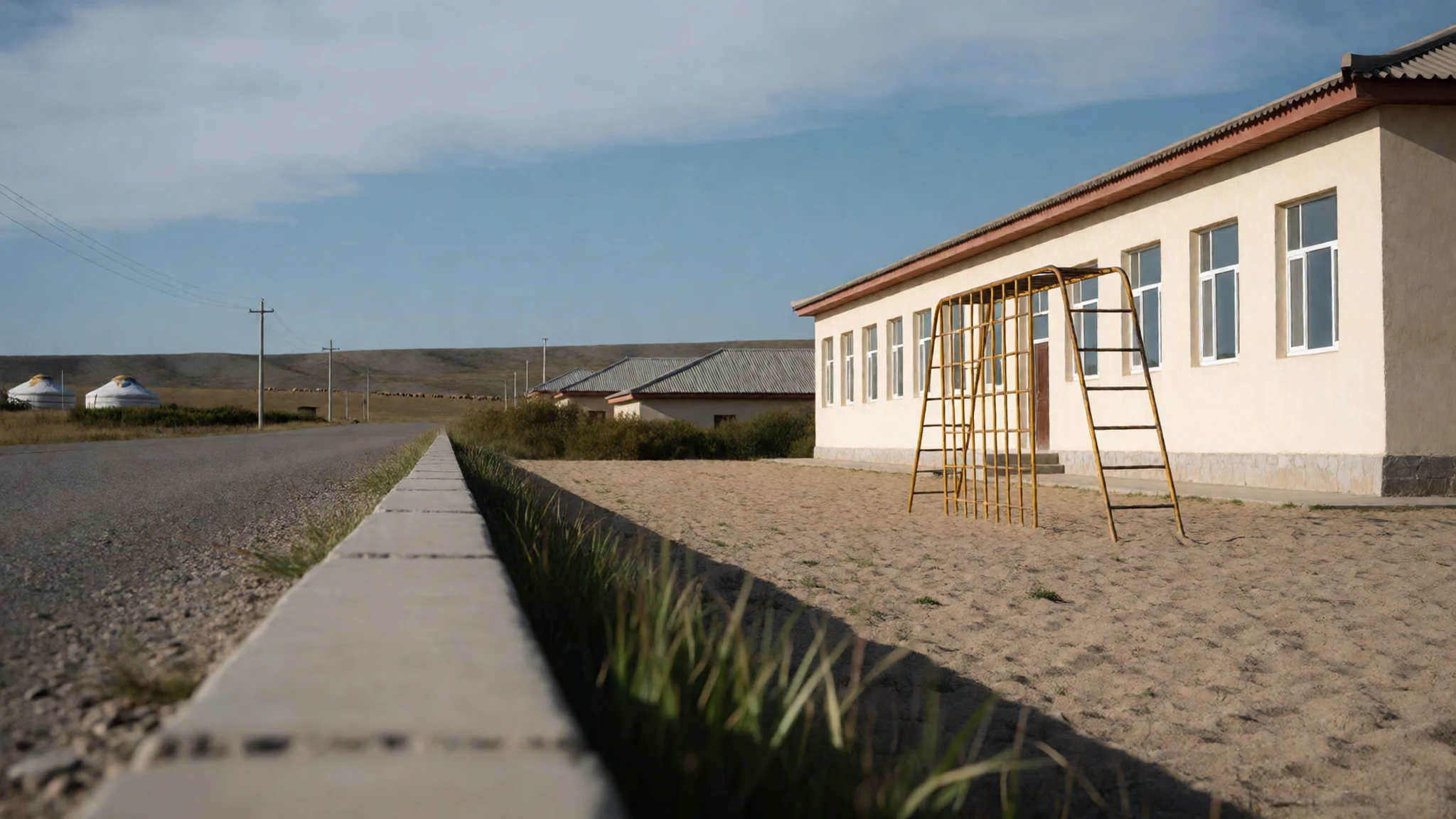
- Gers on the edge of the settlement — Settlement edge
Felt-covered gers stand at the margins of the village, and the reference photographs include one set against bare ground and open sky. Seeing how a ger is placed, with its door facing a chosen direction and a stove inside, says more about local life than any signboard. Ask before approaching a family's home.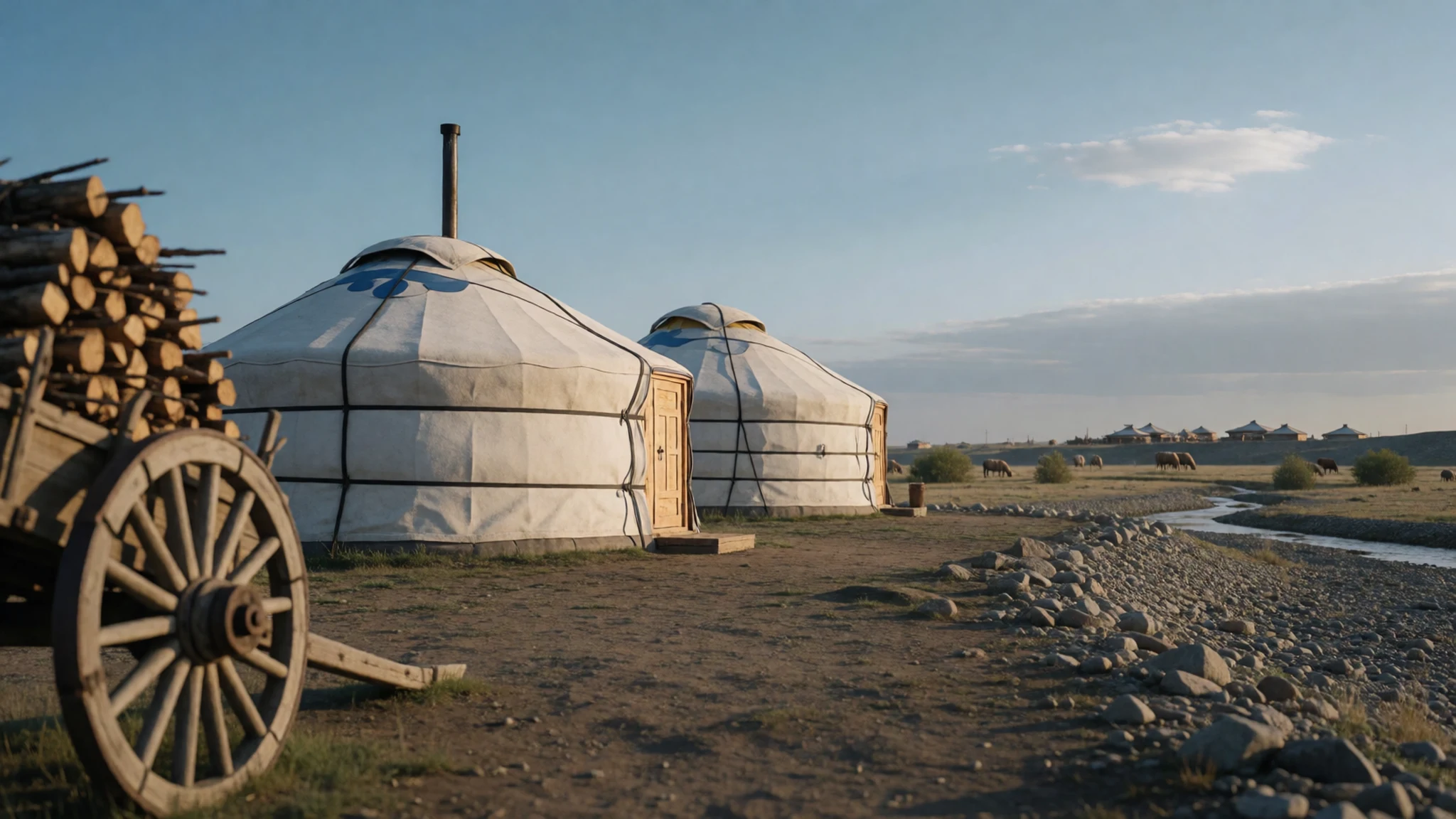
- The Gobi horizon — Around the sum centre
The best sight here is the land itself. The sum centre sits in open, dry country where the horizon is long and the light changes quickly through the day. Early morning and late afternoon give the softest colour. Carry water and keep track of your vehicle, because landmarks are few.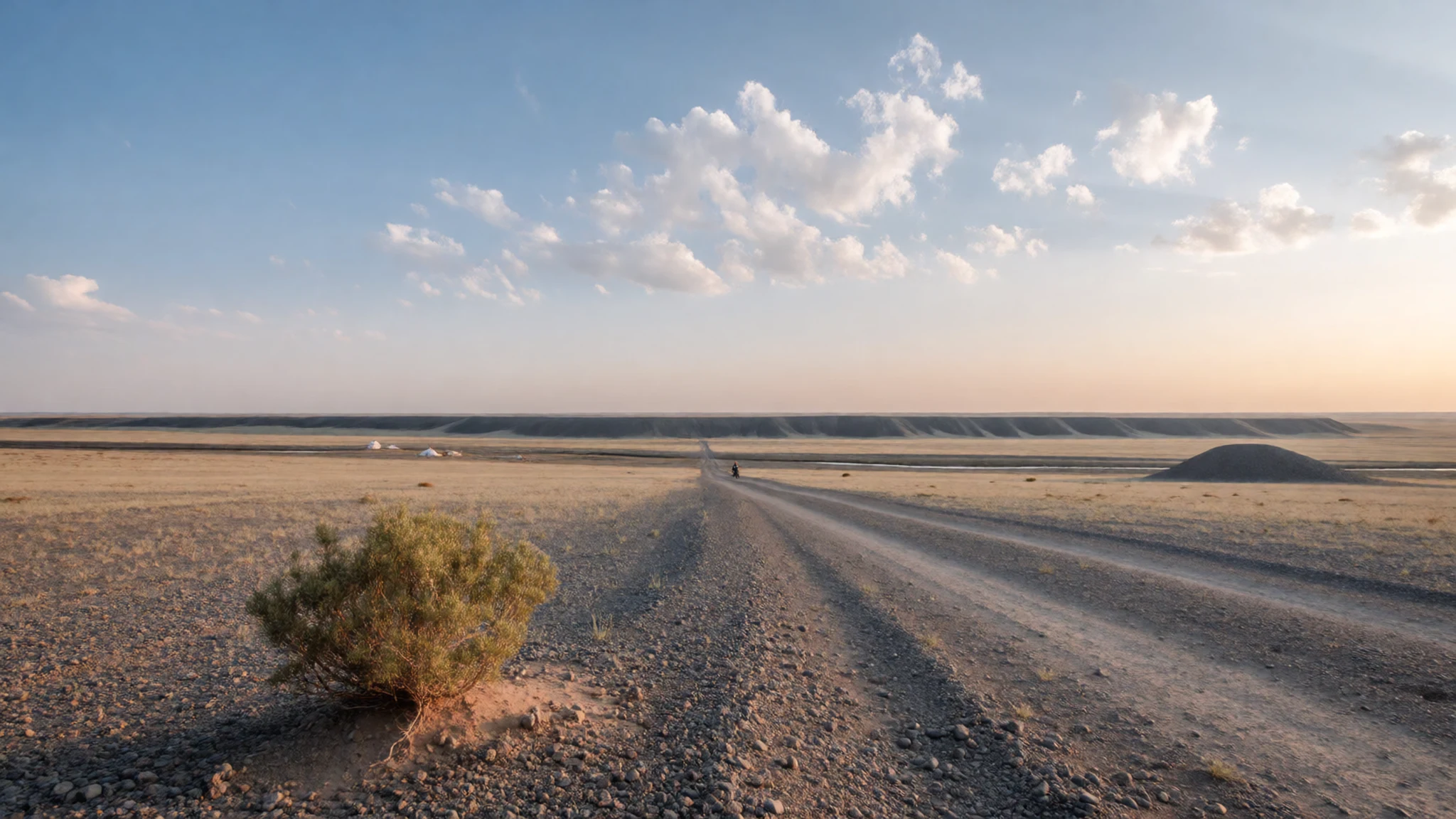
- Tavan Tolgoi, seen from a distance — South-west of the sum centre
The Tavan Tolgoi coal mine lies about 15 km south-west of the centre. It is an industrial site and not a visitor attraction, so assume there is no public access. Its presence still explains the heavy vehicles, the work camps and the local economy, and it frames the district honestly.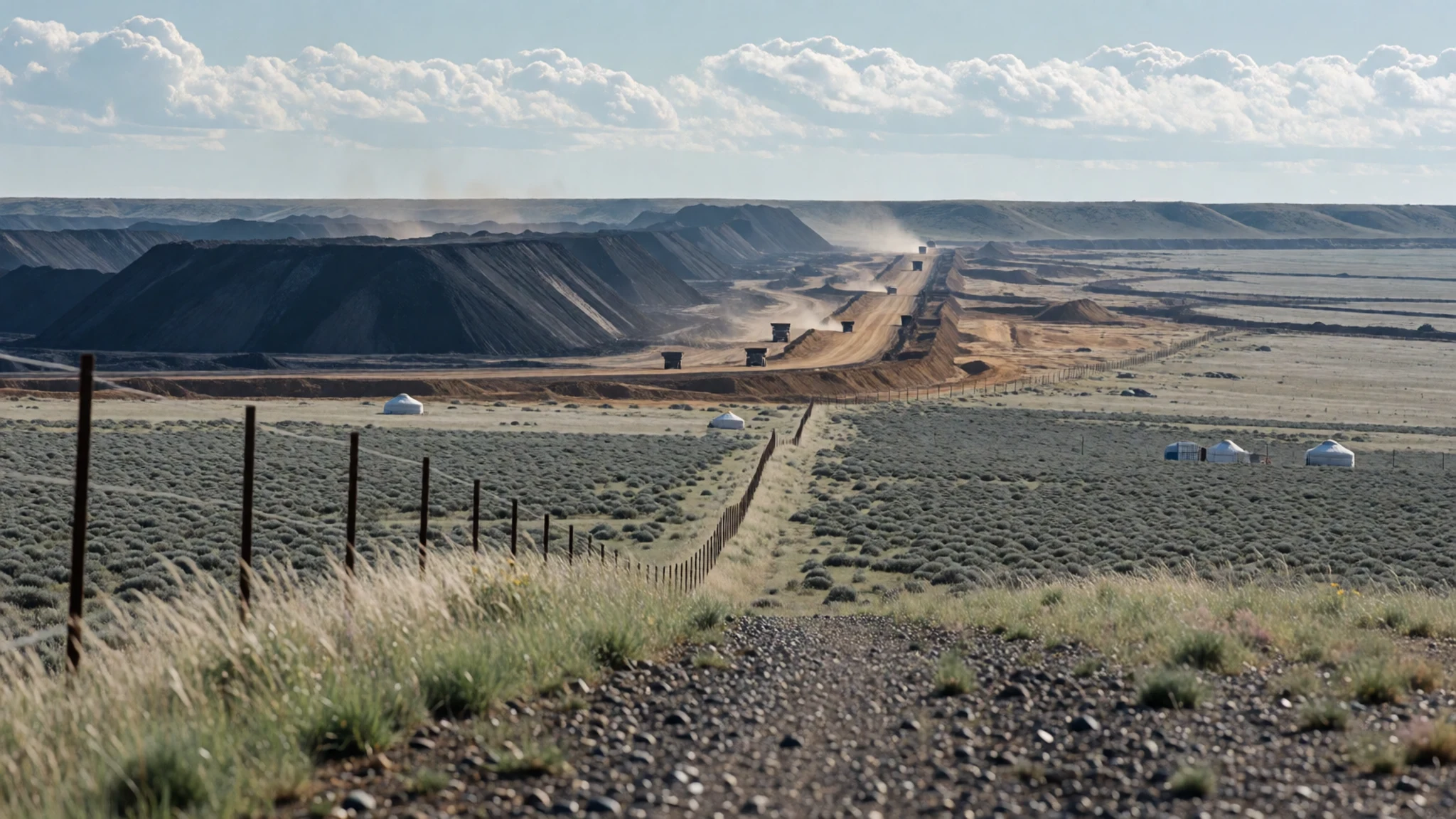
Culture
Life in Tsogttsetsii follows the wider pattern of Mongolian herding culture, in which horses, sheep and goats have long set the rhythm of the year. Hospitality is central. A guest who enters a ger will usually be offered tea or a snack, and refusing a gift is considered very rude. Even a small nibble from a plate of offerings shows good grace.
Mongolians tend to be direct. Someone may tell a visitor exactly what they think, and that is meant as honesty, not hostility. Western pleasantries do not always land the way they do at home, so it helps to watch what people do and follow it. Items are passed and received with the right hand, palm facing up, and a drink is taken the same way.
A few topics need care. Feeling towards China is strongly negative in Mongolia, rooted in disputed history and the view that China behaved as a colonial power. Many Mongolians call the Chinese province of Inner Mongolia "southern Mongolia" and regard it as Mongolian land under occupation. Avoid wearing clothing associated with China and steer conversation elsewhere.
In a place this small, visitors are noticed, and goodwill travels quickly by word of mouth. A little patience, a few words of Mongolian and a willingness to accept what is offered go a long way.
When invited into a ger, accept whatever is offered with your right hand, palm up, and take at least a small taste.
What to wear
The traditional garment of Tsogttsetsii, as across Mongolia, is the deel, a long wrap-over robe with a high collar, fastened at the side and held with a broad sash. Everyday ones are cotton or wool, while ceremonial versions use silk in strong colours. Winter deels are lined or trimmed with sheepskin. Leather riding boots with upturned toes and felt hats complete the older outfit. The deel is most often worn at festivals, family occasions and by older herders going about daily work.
What people wear now is mostly practical and modern. In the settlement, expect jeans, fleeces, work jackets and trainers, with a deel pulled on over everything for riding or herding in the cold. Workers connected to the mines wear high-visibility gear and sturdy boots. Younger people dress much as they would in any town.
For a visitor, the Gobi dictates the wardrobe. Summer days are hot and sunny, so bring a wide-brimmed hat, sunglasses, sunscreen and light long sleeves, then add a warm layer for cool desert nights. Outside the warm months, serious insulation is needed, since winters are bitterly cold. Strong closed shoes or boots suit gravel, dust and rough tracks. Dress is modest and relaxed, with no formal requirement, but covered shoulders and knees show respect in homes and community buildings. Avoid anything with Chinese imagery or slogans.
What to eat
- Boiled mutton — Herder gers and village canteens
Boiled mutton is the foundation of the Mongolian diet and the smell of it hangs around most inhabited places. Herders eat it with little more than salt. Expect it as a home-cooked meal when invited into a ger, or on the menu of a simple canteen.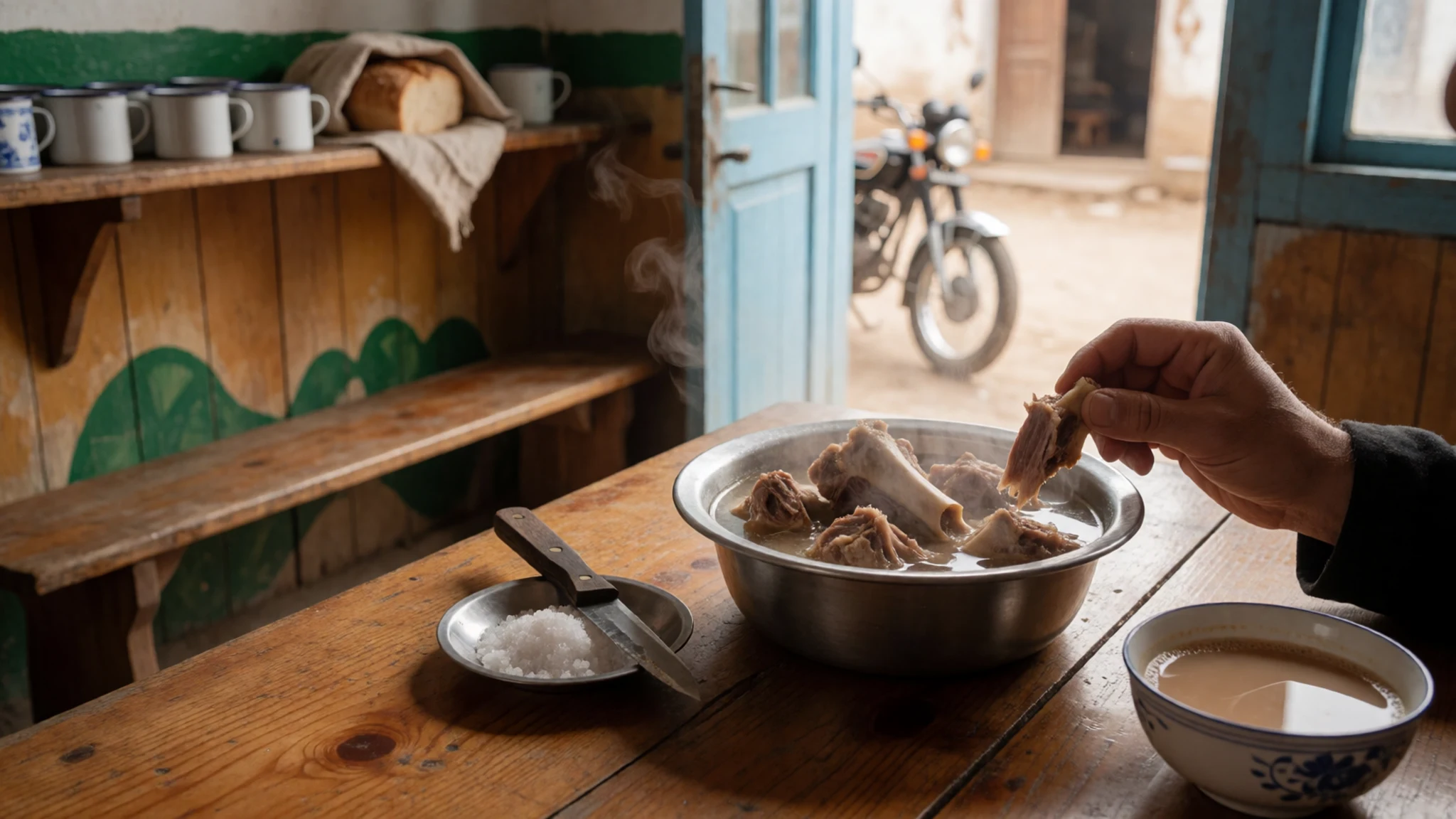
- Buuz — Village canteens and tea shops
Buuz are steamed dumplings filled with minced meat, often called the national dish. They arrive hot in a set and are eaten by hand. They are a reliable, filling choice and easy to find in simple eateries.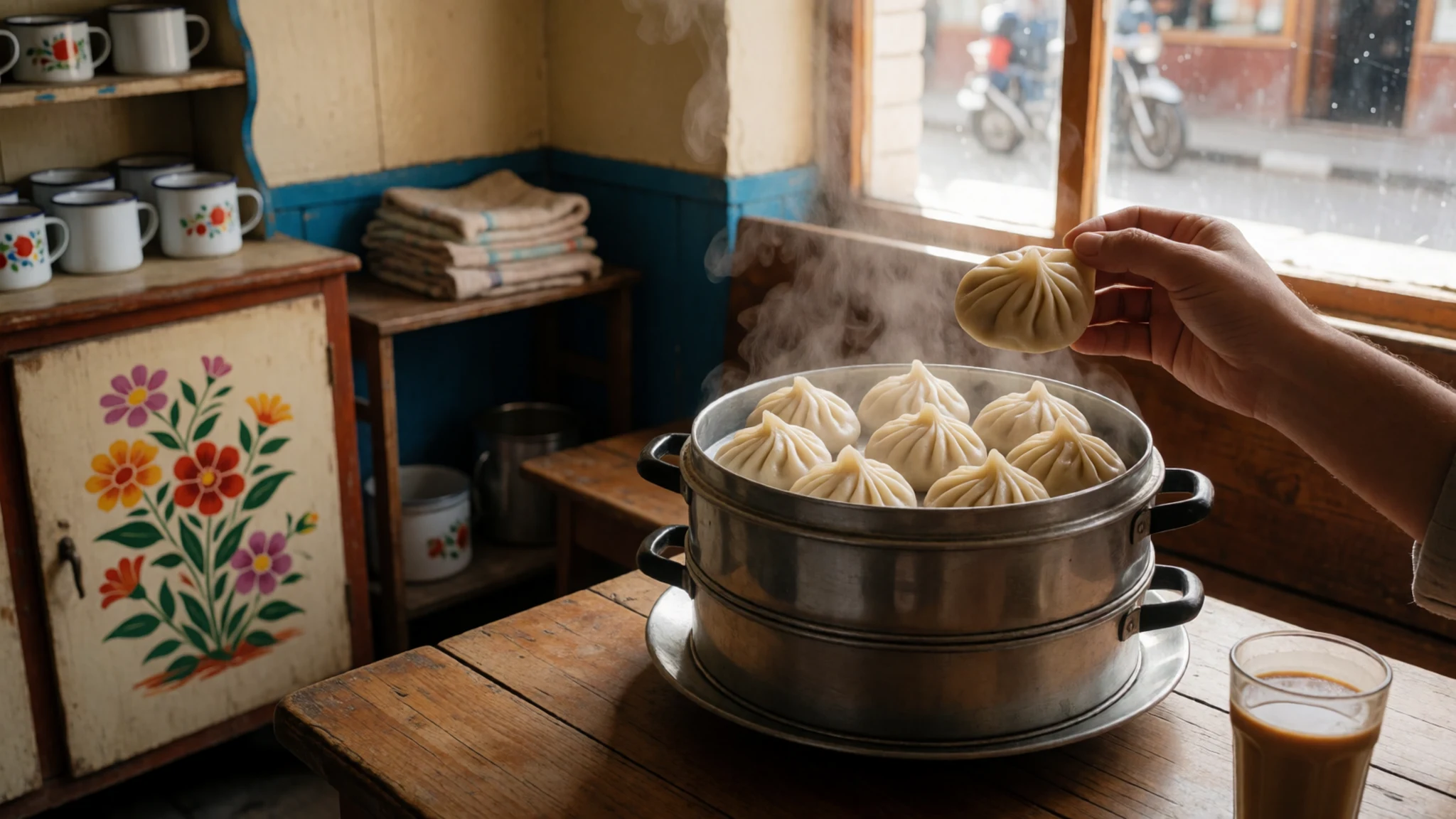
- Khuushuur — Roadside eateries and small canteens
Khuushuur is a flat, deep-fried pastry stuffed with meat and onion. It began as festive food but is now everywhere. It is greasy and satisfying, and a few will make a full meal, particularly after a cold day outdoors. - Tsuivan — Canteens and tea shops
Tsuivan consists of stir-fried noodles with meat and a small amount of vegetables, sometimes served with ketchup on the side. It is a practical, hearty dish for travellers, and a useful change from dumplings in places where the menu is short. - Byaslag — Herding households and local markets
Byaslag is a mild, fresh cheese, similar in feel to paneer. Dairy is a staple for herding families, and a plate of it may appear as part of a hospitality spread. It is gentle in flavour and a good thing to try if offered. - Öröm — Herding households
Öröm is clotted cream, thick and rich, served with bread or alongside tea. Like other dairy products it reflects how much herding families rely on their animals. A spoonful offered in a ger is a warm gesture of welcome.
Plan it
Best time. May, June and September are the sensible months. Summers in the Gobi are generally hot, so mid-summer can be punishing in the middle of the day, while winters across Mongolia are bitterly cold. Desert nights can be cool even in the warm season, so pack layers.
How long. 1–2
Getting there. Fly to Ulaanbaatar, then arrange the long onward journey south to Ömnögovi Province through a Mongolian tour operator or a hired driver. Timetables for regional flights and buses vary, so confirm all connections locally before setting off. The last stretch is likely to be on rough tracks.
Budget. mid
Tips
- Use Tsogttsetsii as a stop on a wider Gobi trip and not as a standalone destination; book transport and a guide well ahead
- Carry plenty of water, fuel, food and a charged phone, as services are limited and distances are large
- Bring cash, since cards are unlikely to be accepted in a small district centre
- Expect aggressive dogs, sometimes in packs, and keep your distance
- UK passport holders were visa-free for tourism for up to 30 days until the end of 2026; check current rules, and check visa requirements for other nationalities such as Indian citizens before travel
Etiquette
- Receive food, drink and gifts with your right hand, palm up, and do not refuse hospitality
- Ask before photographing people, homes or the school
- Avoid wearing anything associated with China and avoid raising the subject
Nearby
Sources
- Wikidata Q902868 (CC0)
- Wikipedia: Tsogttsetsii, Ömnögovi (rev 1381313963) (CC BY-SA 4.0)
- Wikivoyage: Mongolia (rev 5427090) (CC BY-SA 4.0)
- Photo: Tsogttsetsii administration building, Brücke-Osteuropa (Public domain)
- Photo: Centre of Tsogttsetsii, Brücke-Osteuropa (Public domain)
- Photo: Өмнөговийн Цогтцэций сумын байршил, MongolWiki (CC0 1.0)
- Photo: The Hero, mmpos1 (CC BY 3.0)
- Photo: School, Tsogttsetsii, Brücke-Osteuropa (Public domain)
- Photo: Centre of Tsogttsetsii (04), Brücke-Osteuropa (Public domain)
- Photo: Centre of Tsogttsetsii (05), Brücke-Osteuropa (Public domain)
- Photo: Yurt, Tsogttsetsii, Brücke-Osteuropa (Public domain)


