Tottori Sand Dunes
Tottori Sand Dunes, Japan

Tottori Sand Dunes put a wind-sculpted desert beside the Sea of Japan, close enough to a working city to pair with fresh seafood.
The place
Tottori Sand Dunes (鳥取砂丘, Tottori Sakyū) sit on the Sea of Japan coast just outside the city of Tottori, in Tottori Prefecture. The dune field is described as the largest in Japan, stretching about 14 km along the shore, although the part most visitors walk is much shorter and lies close to the water. Behind the first ridges the ground dips into hollows, and then the crest opens onto the sea, grey-green and often cold-looking, with wind-rippled sand running down to the surf. The dunes belong to the San'in Kaigan Geopark, a member of the UNESCO Global Geoparks network, so the site is treated as a lesson in how coasts are built as much as a scenic stop. It is a very open place. There is almost no shade, the sand takes on the temperature of the day, and wind drives grit into eyes and camera lenses. The big slope near the entrance is tiring because each step slides back, and the walk to the water takes longer than it looks. Even so, people of all ages manage it, and the scale of the place becomes clear when walkers shrink to specks on a far ridge. Tourism is part of the setting: camel rides, a visitor centre, and a cluster of shops and eateries stand near the entrance. The city itself is a working prefectural capital with electronics factories and an active fishing industry, so a dune visit combines easily with a seafood meal and a stroll through the old castle park.
Its story
Tottori Sand Dunes began with rock. Rivers, above all the Sendai, wore sediment from the Chūgoku Mountains and carried it down to the Sea of Japan, where currents spread it along the shore. Onshore winds then lifted the sand and piled it into ridges, a process that has gone on for about 100,000 years. The result is a landscape that looks ancient and yet is quite fragile, because it depends on a steady balance between sand supply, wind and vegetation. In the decades after the Second World War that balance was deliberately tipped. A government reforestation programme planted trees and grasses to hold the shore, and the open sand began to shrink as green spread across it. Concrete barriers were also built along the coast to slow erosion. Local authorities have since changed course and now take measures to stop the dunes from disappearing, partly because the sand draws so many visitors to the region. Clearing encroaching plants is part of that upkeep. The dunes also gained literary fame through Kobo Abe's novel The Woman in the Dunes (砂の女, Suna no Onna), published in 1964, about a man trapped in a sand-walled village where residents shovel sand every day to keep their homes from being buried. The book never names Tottori, but the film adaptation made the landscape's shifting, faintly menacing beauty familiar well beyond Japan.
What to see
- Tottori Sand Dunes — Coast north of Tottori city
The main dune field runs along the shore just outside Tottori city. Start at the entrance, climb the tall front ridge for the first view of the sea, then walk down the far side to the water. Allow time for the return climb, which is the harder half.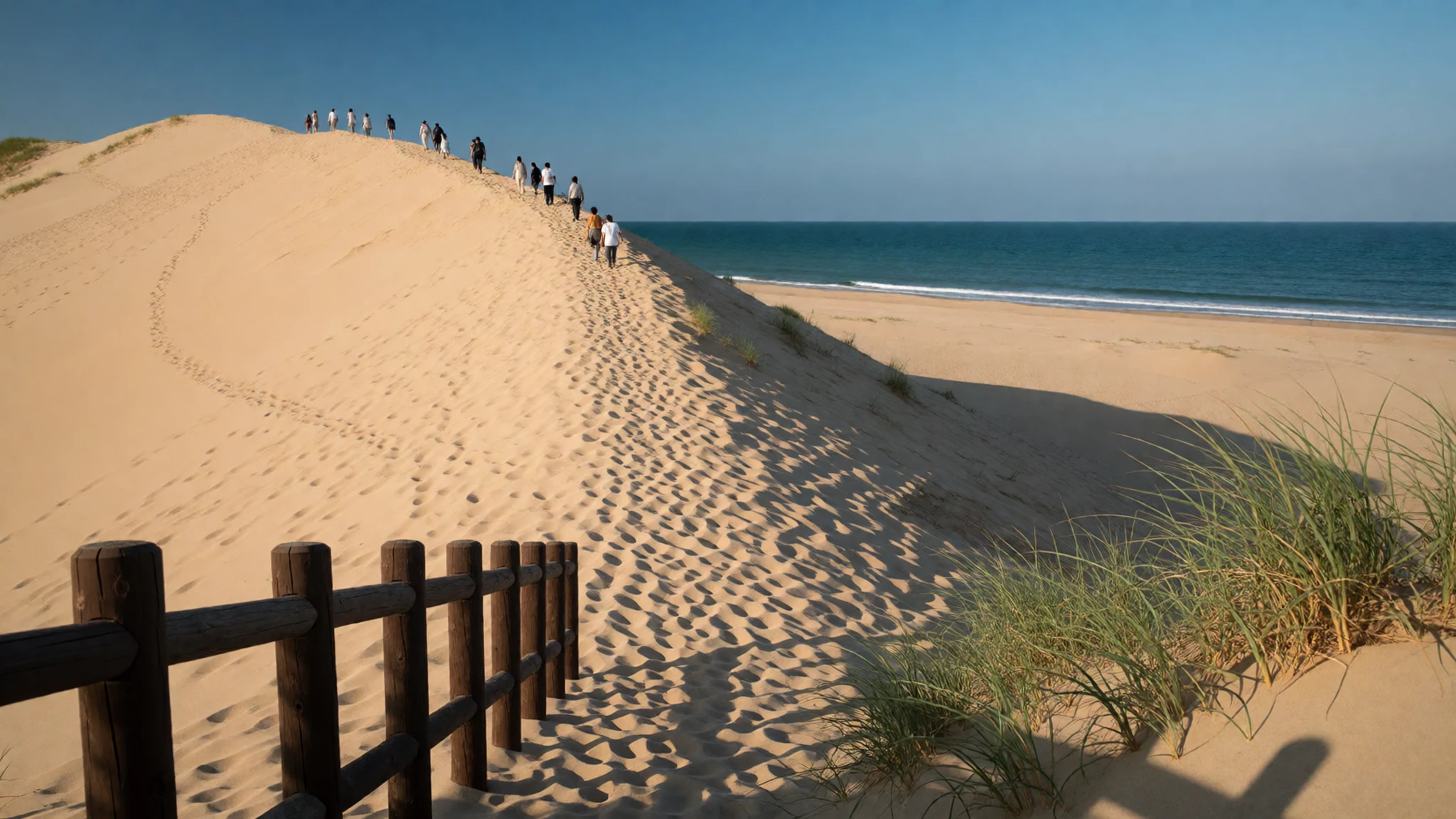
- Sand Dunes Geopark Centre — Beside the dune entrance
This visitor centre next to the dunes explains how sand, wind and river sediment built the landscape, and how the wider San'in Kaigan Geopark fits together. It suits a short, shaded break before or after the walk, especially in hot weather or on a windy day.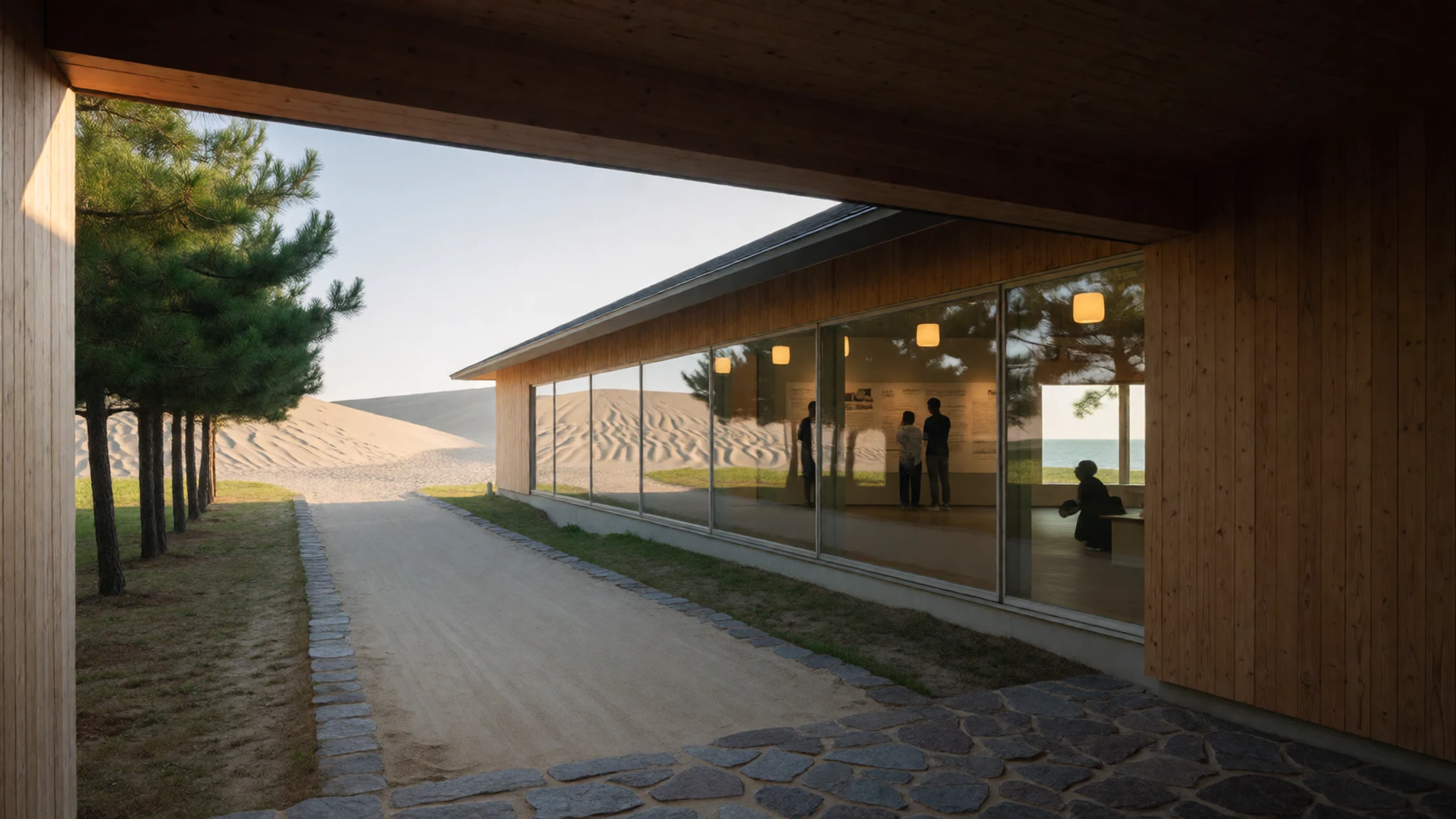
- Tottori Castle Ruins — Central Tottori
Only foundations and stone walls remain of the castle that once overlooked Tottori, after a long siege ended its life. The surrounding park is pleasant for an easy walk and is a favoured spot for cherry blossom in spring.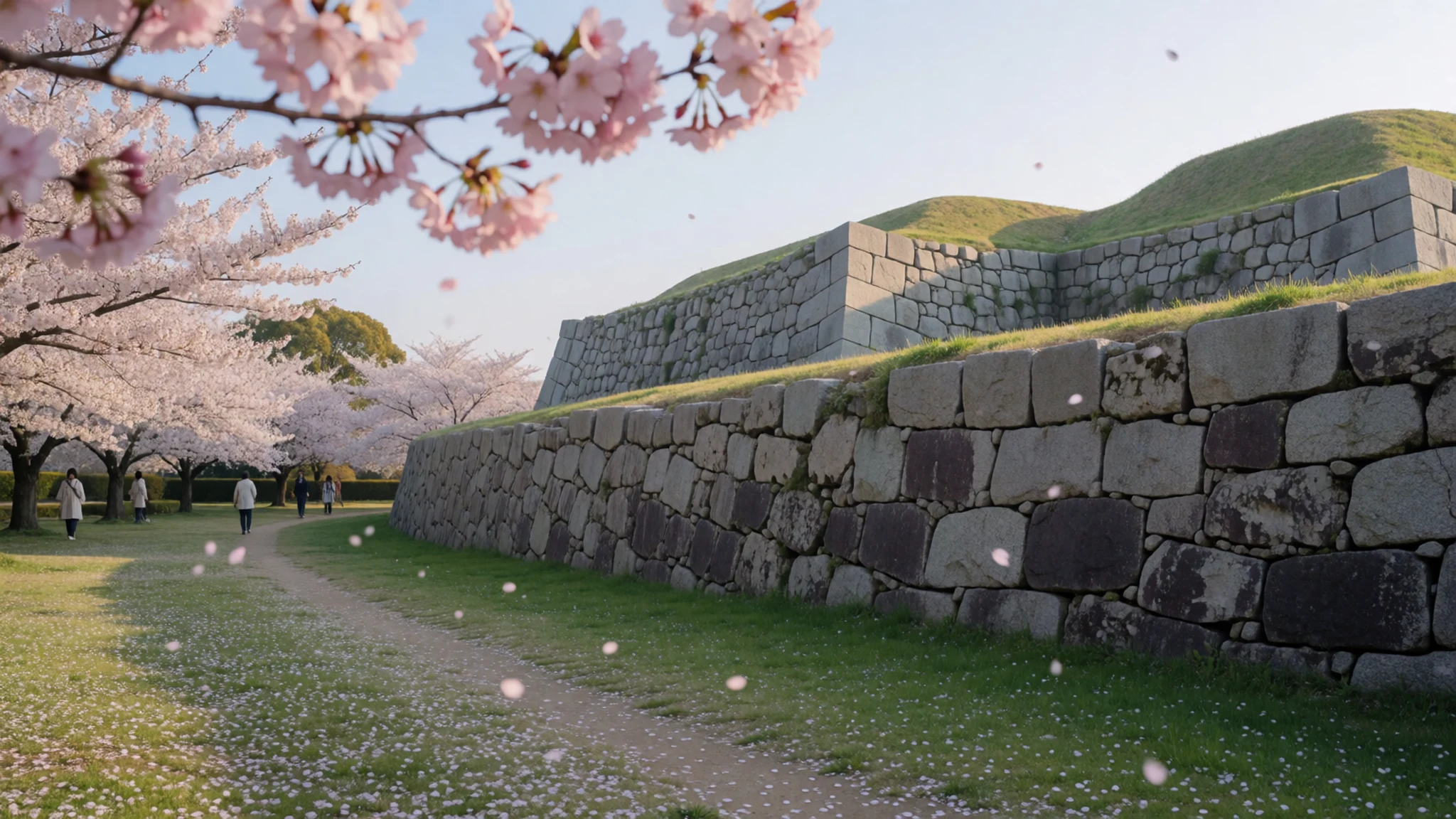
- Kannon-in — Southern Tottori
This seventeenth-century temple is a stop on the Chūgoku Kannon pilgrimage circuit. The buildings are modest, but the garden is the reason to visit. It is quiet, tidy and best enjoyed slowly, which makes a good contrast with the exposed dunes.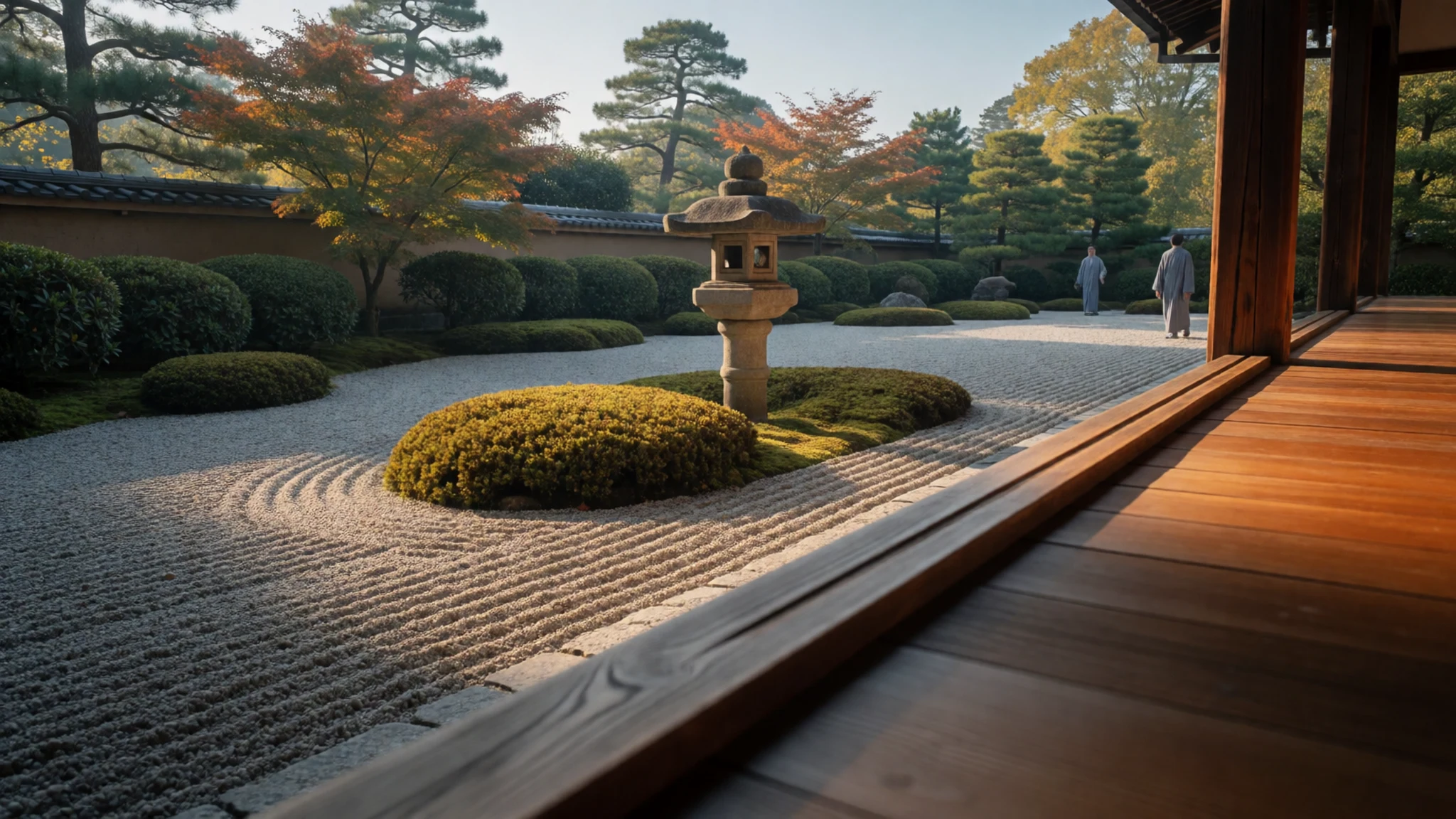
- Ochidani Shrine — Eastern Tottori
Founded by the first lord of Tottori in the mid-seventeenth century, this shrine honours the same deity as the Tōshōgū at Nikko. Its wooded setting is known locally as a place to watch fireflies on summer nights, so a late visit can be rewarding.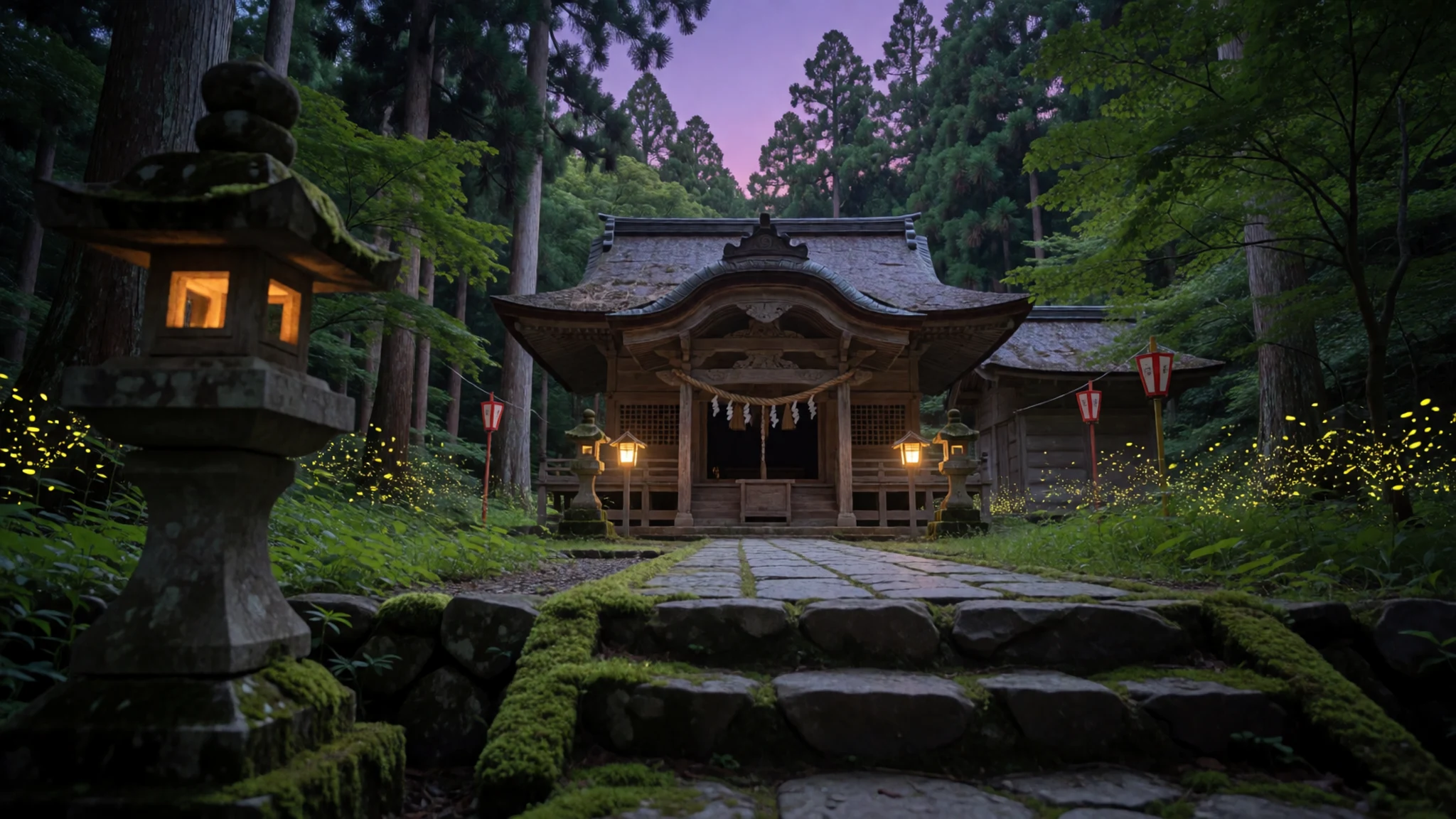
- Tottori Mingei Museum of Folkcrafts — Central Tottori
A small two-storey museum of regional craft, centred on pottery and glass, with some textiles, woodwork and bamboo pieces. The local Ushinoto ware is the highlight. It is an easy, unhurried visit that adds a human, handmade side to a trip otherwise about landscape.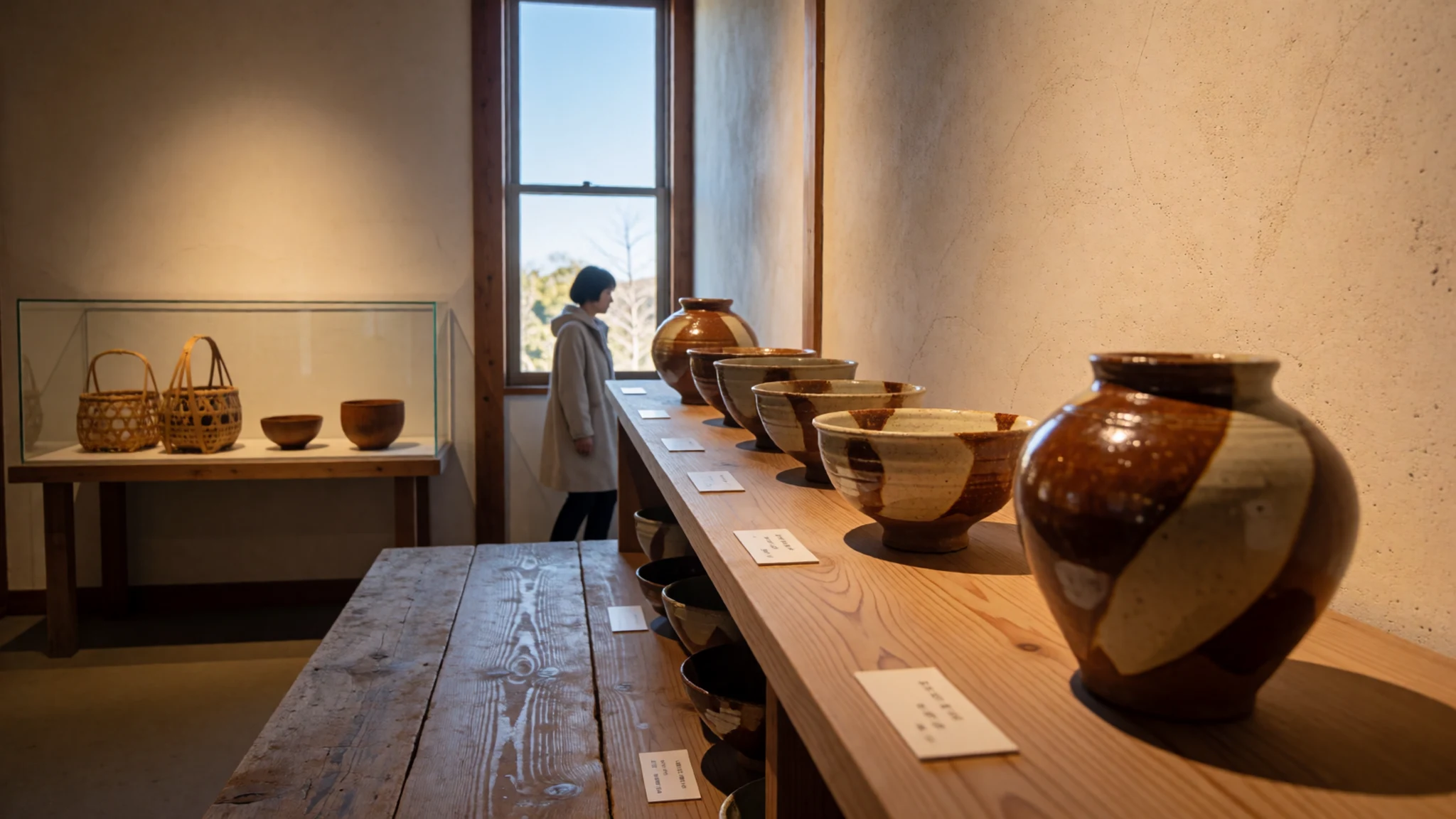
Culture
Tottori Sand Dunes sit in a part of Japan that is quieter and less visited than Kyoto or Tokyo, and the culture of the area reflects that. The prefecture lives from fishing, farming and modest industry, and its towns are known for crafts such as pottery and folk textiles rather than grand monuments. The San'in coast has a reputation for cold, grey winters and a patient, practical way of life shaped by them. The dunes themselves have become a cultural symbol through Kobo Abe's novel The Woman in the Dunes and the film made from it, and many Japanese and foreign visitors arrive with that story in mind. Locally, the dunes are also treated as a natural heritage site, part of a geopark that stresses education, conservation and the careful handling of a changing landscape. Temples and shrines in the city, such as Kannon-in and Ochidani Shrine, show the older religious layer of the area and are used for everyday worship as well as visits. Seasonal events, from cherry-blossom picnics in the castle park to summer firefly watching, follow the calendar closely and are small, local and low-key. Visitors who walk the dunes will notice people drawing patterns in the sand, flying kites and posing for photographs, and the mood is relaxed and friendly. Take your rubbish with you, stay out of fenced or replanted areas, and keep to marked paths so the dunes are not worn down.
What to wear
Tottori Sand Dunes belong to a region where traditional dress still appears at festivals, weddings and ceremonies. The kimono, usually of silk, is worn for formal occasions, while the lighter cotton yukata is the summer choice at fireworks and local festivals. The wider area is known for kasuri, a cotton cloth woven with blurred, ikat-style patterns in indigo, and Kurayoshi in the same prefecture is associated with that craft. Day to day, people in Tottori dress simply and practically: jeans or trousers, light jackets, rain shells, and warm layers through the cold, damp winter. In summer, cotton tops, sun hats and comfortable shoes are standard, and the dress code is relaxed. Visitors to the dunes should plan for sun, wind and sand. Wear a brimmed hat, sunglasses and sunscreen in warm months, and carry a windproof layer in cooler ones, as the exposed ridge feels colder than the city. Trainers or sturdy sandals both work, though many people walk barefoot on warm sand, so check the surface before doing so, since it can be hot or contain sharp debris. Trousers or knee-length shorts are more comfortable than anything loose that will catch the wind. For temples and shrines in town, no special clothing is needed, but covered shoulders, tidy socks for shoe-free interiors and quiet colours are sensible.
What to eat
- Matsuba crab — Seafood restaurants around Tottori's fishing ports, in the cold months
Tottori's winter crab, a snow crab, is the prefecture's best-known seafood and is steamed, grilled or served as a hotpot in the cold months. Look for it at seafood restaurants near the fishing ports and in the city from late autumn.
- Sushi at the fish market — Karoichi Fish Market, on the coast west of the city
The Karoichi fish market on the coast combines a large seafood hall with a handful of eateries serving fresh nigiri sets. It is a straightforward way to try local catch with a sea view. Go early, as the best selection goes first.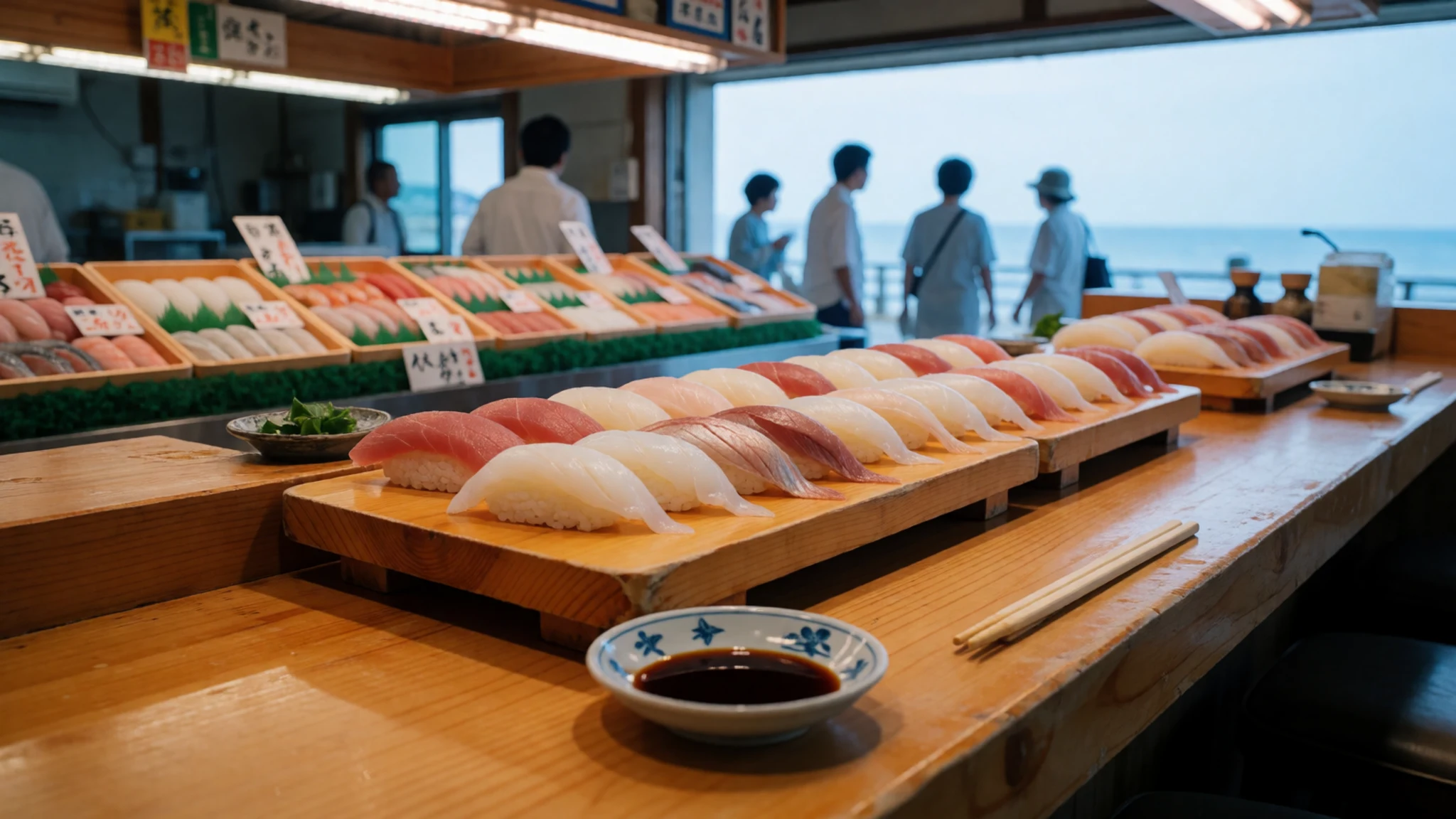
- Nijisseiki pear — Fruit shops and roadside stalls in season, and many local dessert cafés
Tottori is known for this crisp, round, pale-skinned pear, eaten fresh in late summer and early autumn. It is juicy, mildly sweet and easy to carry, so it makes a good snack for a day on the sand. - Beef bone ramen — Small ramen shops in central Tottori
Gyūkotsu ramen is a regional noodle dish made with a deep, savoury beef-bone broth, found mainly in this part of the San'in coast. It is warming after a windy dune walk and is served at small neighbourhood noodle shops. - Conveyor-belt sushi — Chain conveyor-belt sushi eateries on the edge of central Tottori
A relaxed, moderately priced option is a kaiten sushi restaurant, where plates travel past on a belt and fish is local and fresh. It suits families and anyone unsure of the menu. One chain branch sits about a quarter of an hour's walk from the station.
Plan it
Best time. Late spring (May–June) and early autumn (September–October) are mild and good for walking on open sand. July and August are hot with little shade, and winter on the Sea of Japan coast is cold, grey and windy, though it is the crab season.
How long. 1–2
Getting there. Fly to Yonago or Okayama, or use Osaka Kansai, then take a limited express train to Tottori Station. From Osaka or Kyoto the line runs through Himeji, while Okayama has the Super Inaba service. For the last leg, take a local bus from the station to the dune entrance.
Budget. mid
Tips
- Check the official visitor site (https://www.sakyu-vc.com/) for current opening details and activities
- Start early on hot days, as there is almost no shade on the dunes
- Wear shoes you can empty easily and bring water
- Carry some cash for small shops and eateries around the entrance
- Pair the dunes with a seafood meal at the coast and a short walk around the castle park
Etiquette
- Take all rubbish with you and keep out of fenced or replanted areas
- Ask before photographing other visitors, especially close up
- Respect quiet at temples and shrines, and remove shoes where indicated
Nearby
Sources
- Wikidata Q780905 (CC0)
- Wikipedia: Tottori Sand Dunes (rev 1382263834) (CC BY-SA 4.0)
- Wikivoyage: Tottori (rev 5432515) (CC BY-SA 4.0)
- Tottori Sakyu, Tottori, Japan (Hashi photo) (CC BY-SA 1.0)
- Tottori sand dunes with camel (User:Geofrog) (CC BY-SA 2.5)
- A beach adjacent to the Tottori Sand Dunes (Kennosuke Yamaguchi) (CC BY-SA 2.0)
- Couple Running, Tottori Sakyu (Free Images) (CC BY 2.5)
- Entrance of Tottori Sand Dune (friendD) (CC BY 3.0)
- Flying Kites, Tottori Sand Dunes (Toshihito Kobayashi) (CC BY-SA 2.0)
- Geo-Park Centre (Mti) (CC BY 3.0)
- Tottori Sand Dunes Oasis Square (friendD) (CC BY 3.0)


Wildlife
- Genji firefly (animal)
The Genji firefly is a living lantern, a small Japanese insect that glows in the dark. Its young grow up in water, and the adults are found around little ditches and streams. Locals know a wooded corner here as a good spot for firefly-watching after dark in summer, so a late visit can pay off. For the gentlest way to watch, ask local people for advice and enjoy the lights without disturbing them.