Togean Islands
Togean Islands, Indonesia
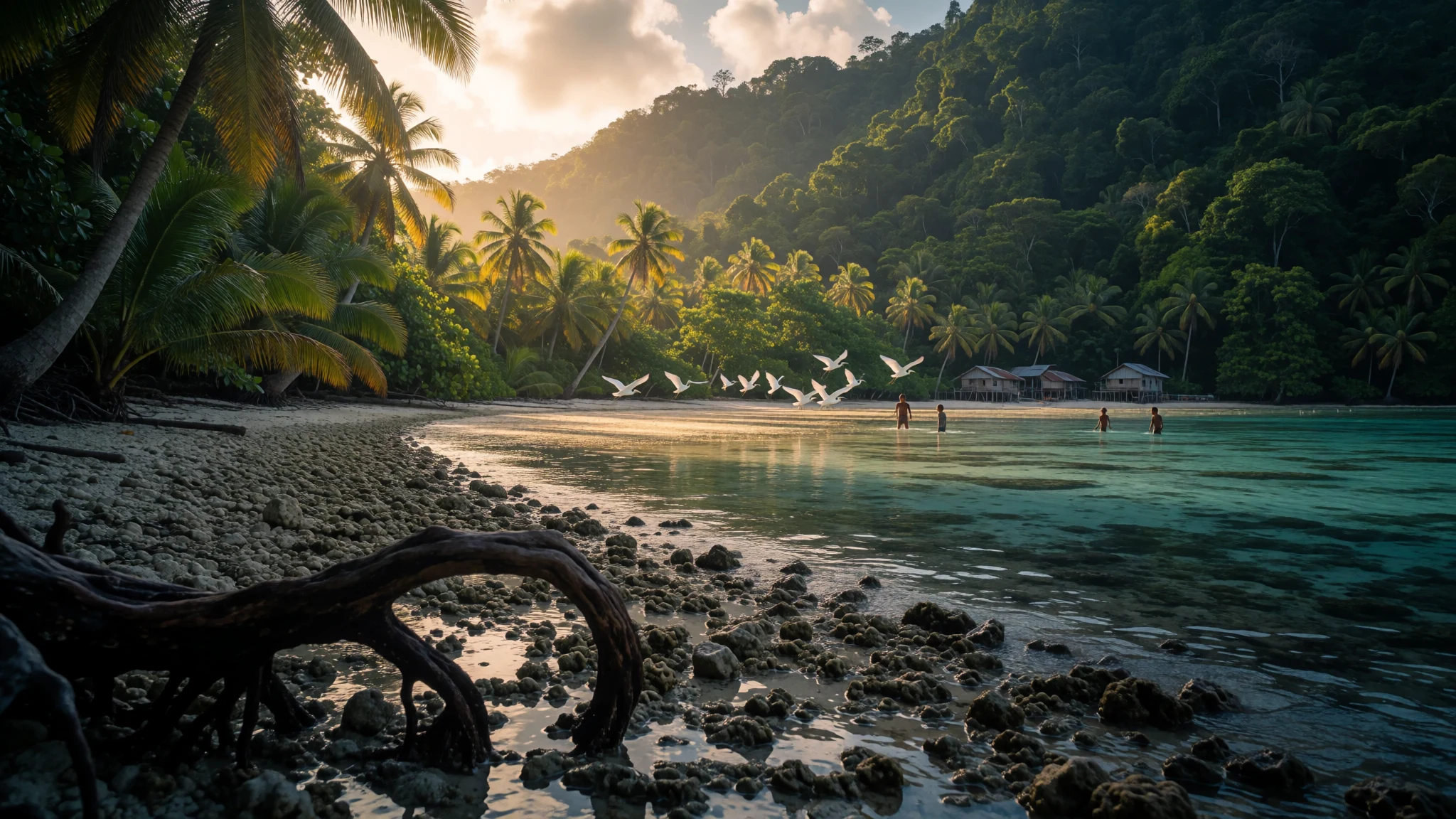
The Togean Islands pair quiet reefs, forest wildlife and sea-nomad villages with a slow, resort-based way of travelling that takes real effort to reach.
The place
The Togean Islands sit in the Gulf of Tomini, off the coast of Central Sulawesi in Indonesia, a scatter of 56 islands and many smaller islets. Batudaka, Togean, Talatako, Una-Una, Walea Bahi, Walea Kodi and Malenge are the biggest. Volcanic in origin, the islands are covered in rainforest and ringed by coral reef, and that mix of dense green land and clear shallow water shapes everything about a visit. Tens of thousands of people live here in dozens of villages, mostly small fishing communities, and one village belongs to the Bajau, long described by outsiders as sea nomads. The group lies very close to the equator, so the weather stays warm all year, with the driest months falling in the late northern summer. Both land and water hold wildlife found nowhere else. The Togian babirusa, a forest pig, and the Togian hawk-owl are endemic, as is the Togian white-eye, a small bird. Tonkean macaques move through the forest, tarsiers and cuscus turn up on night walks near Bomba, and coconut crabs live on land. Offshore, the reefs shelter hawksbill and green turtles, dugong, eagle rays, Napoleon wrasse, bumphead parrotfish and sharks. Most visitors stay at island resorts rather than in towns, so boats, meals and dive trips are arranged by the resort, evenings are quiet and the pace is slow. There are no cash machines on the islands, which means money must be brought in from the mainland.
Its story
The Togean Islands began as volcanic ground rising from the Gulf of Tomini, and that origin still shows in their steep, forested shapes and in Una-Una, an island with a volcanic history of its own. Over time reef grew around the land, and the combination of isolation and warm water produced animals found nowhere else, among them the Togian babirusa and the Togian hawk-owl. Scientists described the hawk-owl only in recent decades, and the Togian white-eye was named later still, a sign of how little surveyed the archipelago remained. People came by sea long ago. The Bajau, a fishing people known to outsiders as sea nomads, have lived on and beside these waters, and one village is still settled by them. Their life is semi-nomadic and tied closely to the reef and its fish. Tourism is recent and grew mainly through dive resorts, which draw divers to the walls and atoll near Bomba and to the waters off Una-Una. By early 2023 there were about 20 resorts across the islands. The pandemic hit this trade hard, but visits began to recover by 2023, with around 12,000 visitors projected for that year. Resorts and villagers have also started working together on practical projects, such as beach clean-ups on Buka Buka. How to earn from visitors while protecting reef and forest is now the central question for the islands.
What to see
- Bomba Atoll and the dive walls — Bomba, Togean Islands
Bomba, on the Togean Islands, is the base for the archipelago's best-regarded diving, with steep reef walls and a large atoll reef close by. Small dive centres run courses and trips throughout the year. Divers should expect sharks, turtles and big schools of reef fish, and should check kit carefully.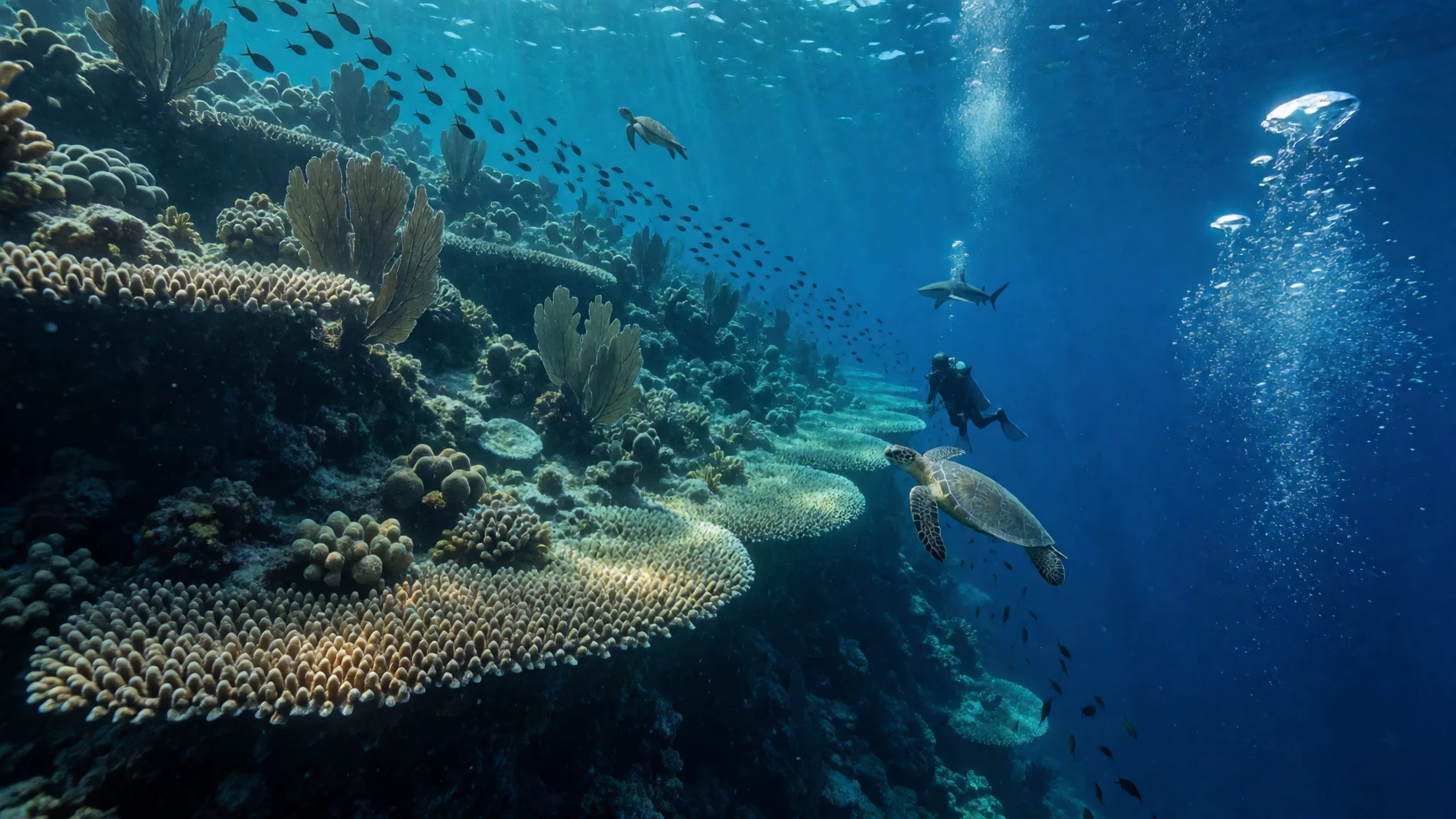
- Kadidiri snorkelling and kayaking — Kadidiri Island
Kadidiri is the easiest island for a first look at the reefs. A long jetty at one resort has good snorkelling straight off its end, and sea kayaks can be rented to paddle across to a nearby island. Reef edges are sharp, so fins, reef shoes and care matter.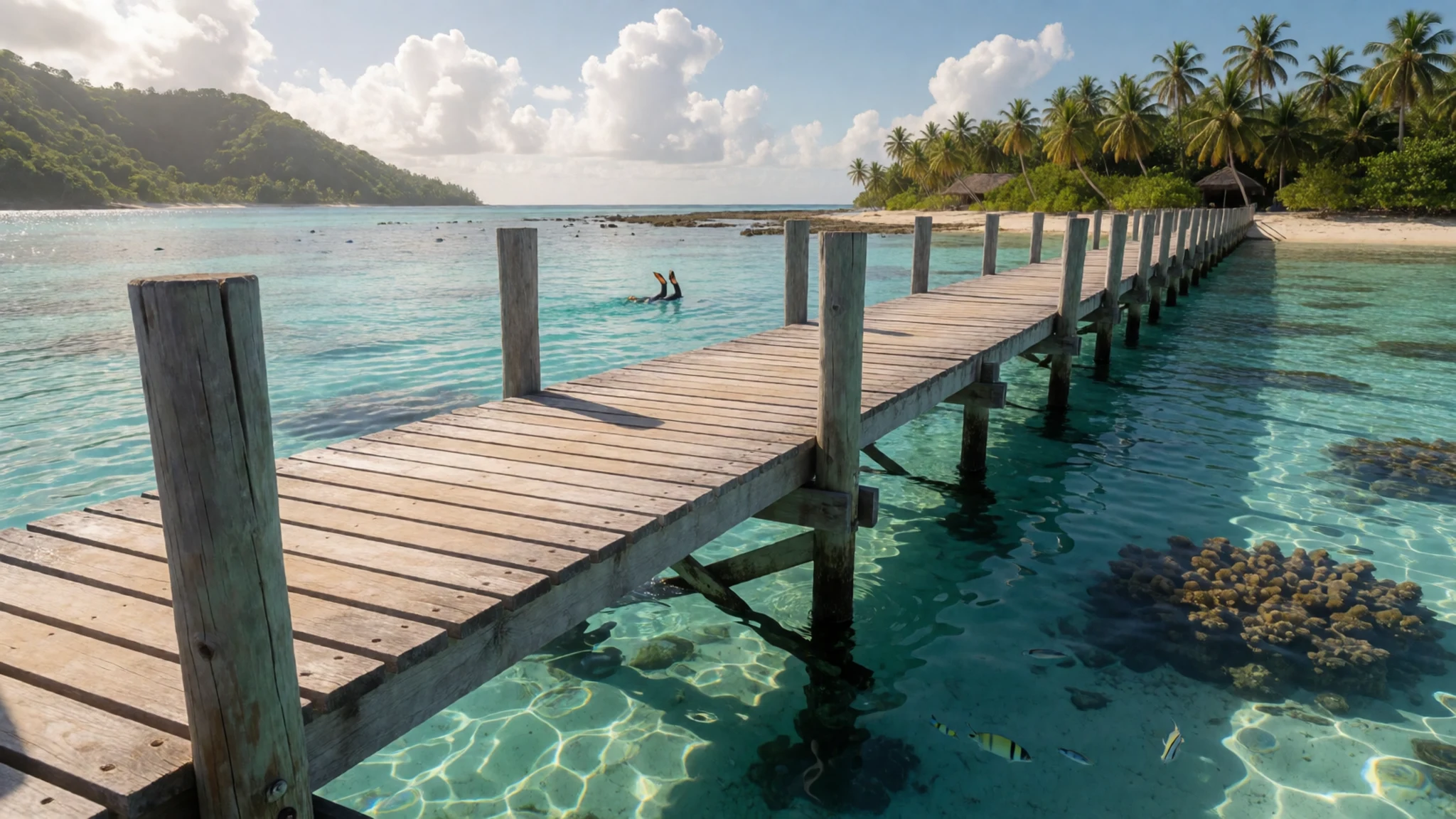
- A Bajau village visit — Bajau village, Togean Islands
Resorts across the Togean Islands run boat tours to a Bajau village, where families live over the water and fish for a living. Visits are best treated as a call on neighbours, not a photo stop. Ask the guide how to behave, and expect curious children.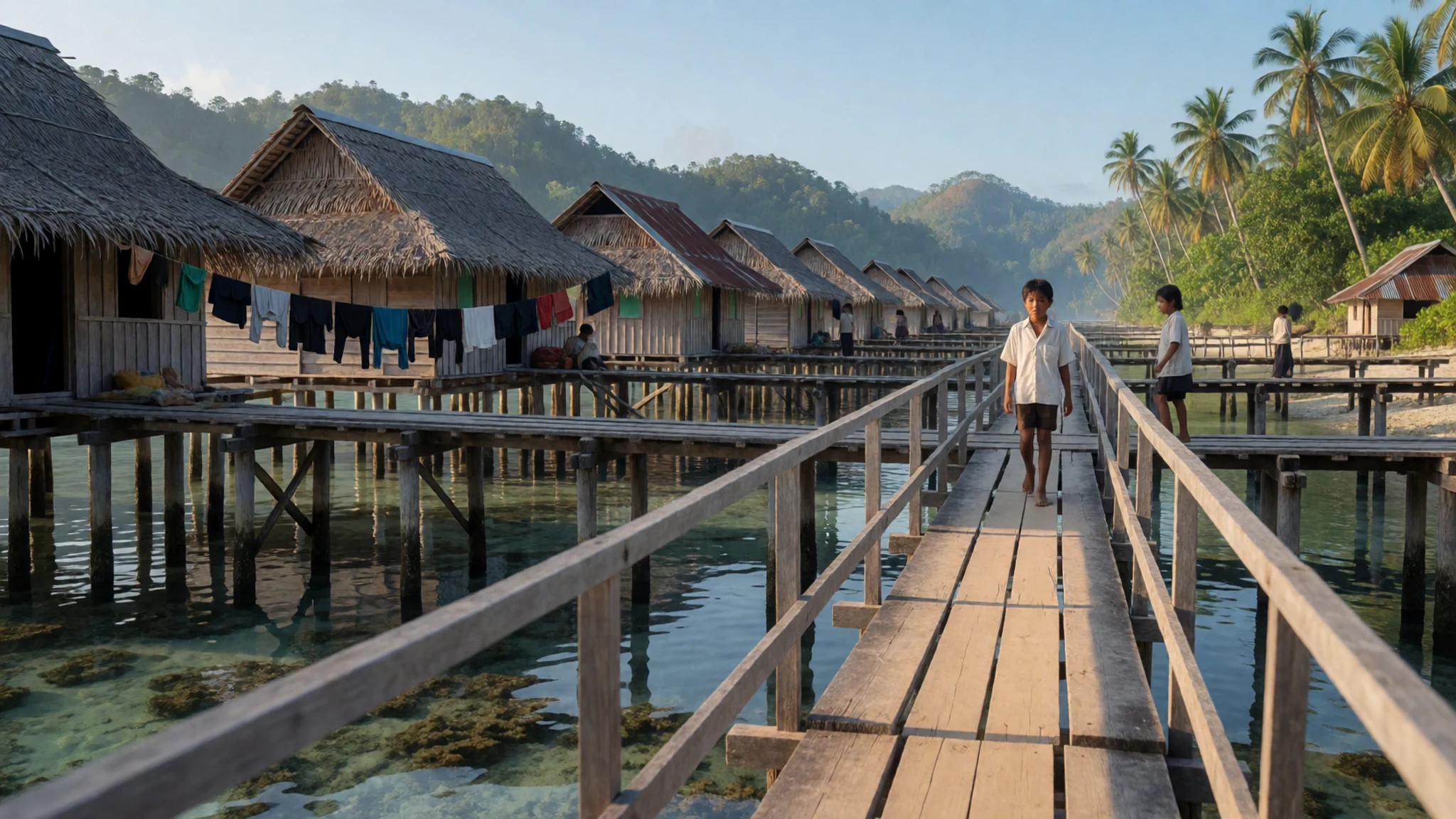
- Una-Una diving — Una-Una Island
Una-Una is a volcanic island with open water around it, and its reputation among divers rests on large schools of barracuda and jackfish, plus Napoleon wrasse. It is a longer boat trip than the central islands, so most people go as part of a resort dive package.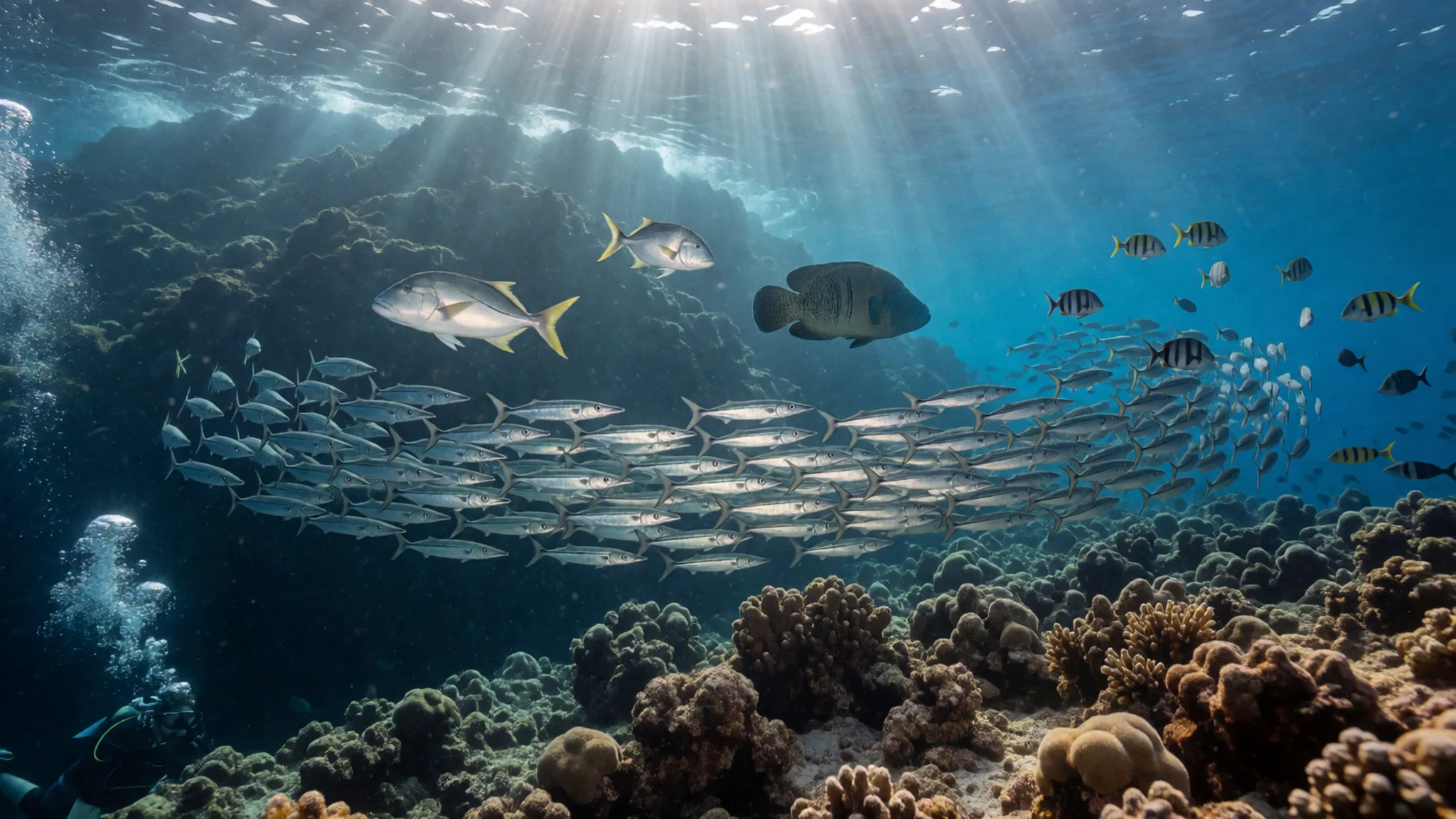
- Night walks for tarsiers and cuscus — Forest near Bomba
The forest near Bomba gives decent chances of spotting tarsiers and cuscus after dark, usually on a short guided jungle walk from a dive resort. Trails elsewhere on the islands can be easy to lose in dense growth, so a local guide is sensible.
Culture
The Togean Islands are home to a mix of settled island communities and the Bajau, a semi-nomadic fishing people whose lives revolve around the reef. For most visitors, culture here means small things: sharing a jetty with fishers unloading the morning catch, watching boats being repaired, or being taken by a resort to a Bajau village where children show off their school rooms and are keen to meet foreigners. Income for many families comes from fishing, and that is why the no-take zone near Kadidiri matters; fishing trips are kept outside it. Indonesian is the shared national language, and a few words of greeting and thanks go a long way even where local languages dominate at home. Resorts are the main link between visitors and villages, so choosing a place that employs and buys from nearby people is one of the more useful decisions a traveller makes. Electricity, phone signal and cash are limited, and plans change with weather and boat schedules; locals take this calmly, and impatience tends to look out of place. Evenings are quiet, with meals eaten together at resorts and little in the way of entertainment beyond conversation, stars and the sea. In villages, ask permission before photographing people or their homes, and respect the no-take fishing zone.
What to wear
Dress in the Togean Islands is shaped by heat, water and small communities, and the brief carries little detail on formal traditional costume here. Across Indonesia the sarong, a length of woven or printed cloth wrapped at the waist, is an everyday and ceremonial garment, and it is the most likely traditional item a visitor will see on older villagers; ask locally about any particular weaves instead of assuming. Day to day, islanders wear light cotton shirts, T-shirts, shorts or sarongs, often wet from boat work, and many Bajau fishers spend more time in the sea than out of it. Visitors should dress for a hot, humid climate close to the equator: quick-drying shirts, loose long trousers or skirts for evenings and mosquito cover, a wide-brimmed hat and strong sun protection. In villages, cover shoulders and knees as a courtesy, and keep swimwear for beaches and boats. Footwear matters more than fashion: reef shoes or fins with a firm sole protect against sharp coral, and sturdy trainers or sandals with grip suit forest trails and wet jetties. A light waterproof layer helps on open boat crossings, where spray and sudden rain are common.
What to eat
- Grilled fresh fish with rice and sambal — Resort dining rooms and village jetty eateries
Fish caught that day is the backbone of Togean meals, usually grilled or fried and served with plain rice, vegetables and a chilli sambal. Resort kitchens do it daily, and village eateries by the jetties follow the same pattern.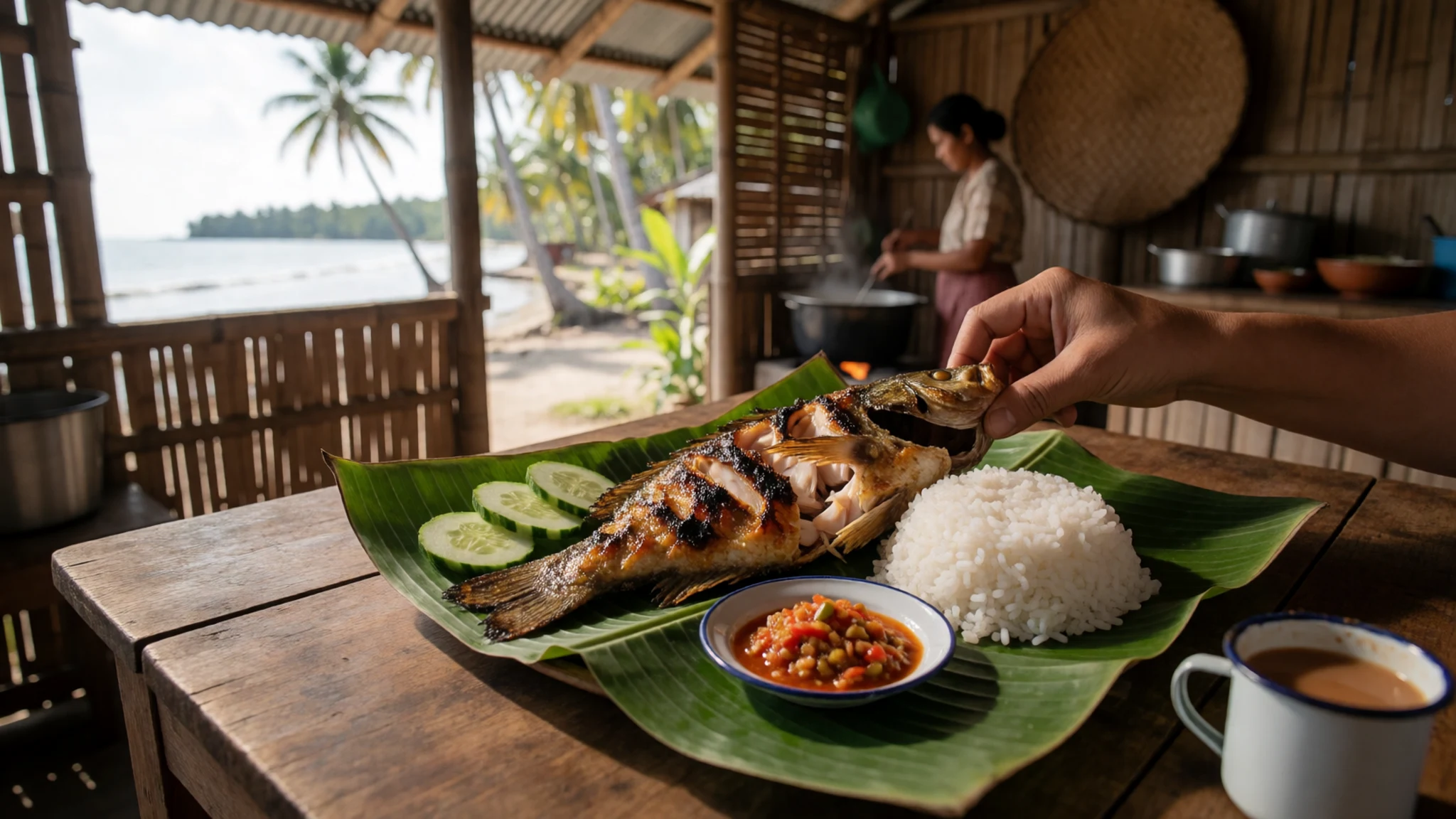
- Resort set meals — Island resorts
Resorts across the islands include meals in the room price, typically a mix of Indonesian dishes such as rice, vegetables, eggs, tofu and fish, with a few European-style plates at dive-focused places. Menus follow the boat and the catch.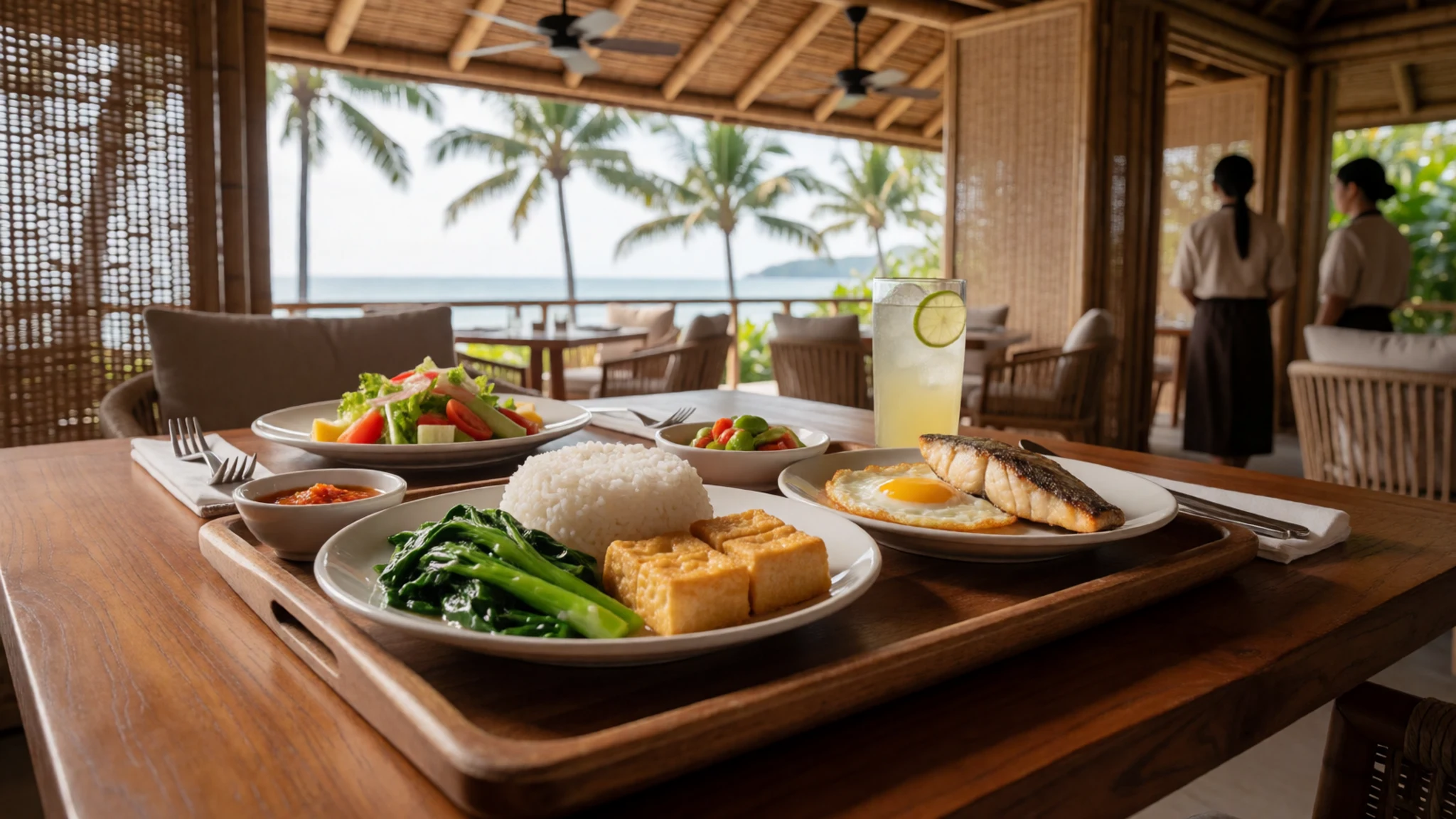
- Coconut crab — Village kitchens and some resorts, by arrangement
The coconut crab, a large land crab living in the island forests, appears in local cooking. Numbers are limited, so ask your resort whether it is sourced responsibly, or choose fish instead if there is any doubt. - Arak — Resorts, on request
Arak is a strong local spirit distilled from palm sap, offered by resorts on request. It is much stronger than beer, so sip it slowly. Beer is also sold at resorts, though it costs more than on the mainland. - Tea and coffee with fried snacks — Resort common areas and village stalls
Resorts provide boiled water, tea and coffee free of charge, and a plate of fried banana or similar snacks often turns up with them in the afternoon. It is a simple way to sit with other guests and staff.
Plan it
Best time. August to September is the drier part of the year, which suits boat crossings and diving. The islands sit very close to the equator, so it is warm in every month; rain is possible at any time, and sea conditions affect boat schedules.
How long. 5–7
Getting there. Fly to Palu, which has good connections from Jakarta and Bali, then continue to Ampana by air or road and take a boat to the islands the same or next day. Public ferries run from Ampana to Wakai, and some boats call at Bomba or Melange; resorts usually meet boats with their own transfers. A ferry also links Gorontalo and Wakai. Schedules change often with weather and breakdowns, so check locally before travelling.
Budget. mid
Tips
- Bring enough cash from Ampana, because there are no cash machines on the islands
- Allow spare days around boat connections, since schedules change with weather and breakdowns
- Pack strong insect repellent containing DEET, as mosquitoes bite day and night
- Wear reef shoes in the water, because coral can cut badly
- Book resorts ahead for the drier months, and confirm transfers directly with them
Etiquette
- Ask before photographing people or their homes
- Do not fish inside no-take zones, and do not touch or stand on coral
- Dress modestly in villages, with shoulders and knees covered
Nearby
Sources
- Wikidata Q1499683 (CC0)
- Wikipedia: Togian Islands (rev 1364338003) (CC BY-SA 4.0)
- Wikivoyage: Togian Islands (rev 5300238) (CC BY-SA 4.0)
- Photo: Togian Village (LawrieM) (Public domain)
- Photo: Location of Togian Islands, Indonesia (Telim tor) (Public domain)
- Photo: Babyrousa togeanensis (Mangkau Zulkifli) (CC BY-SA 4.0)
- Photo: Togian Ferry (LawrieM) (Public domain)
- Photo: Buka Buka Island panorama (Thomasdespin) (CC BY-SA 4.0)
- Photo: Buka Buka beach cleaning (Thomasdespin) (CC BY-SA 4.0)
- Photo: Female coconut crab in Bajo (Neisyaranifauzia) (CC BY-SA 4.0)
- Photo: Togian Island distribution map (Margaret.Hn) (CC BY-SA 4.0)


Wildlife
- Togian babirusa (animal)
The Togian babirusa is a wild forest pig, a shy cousin of the farmyard kind, and it lives nowhere else on Earth except the Togean Islands. Nothing is promised about the season or hour for seeing one, so ask your guide what your chances are. If you do glimpse it, stay well back, keep very quiet, let a local guide lead the way, and never offer it food. - Tonkean macaque (animal)
The Tonkean macaque is a monkey that lives only in central Sulawesi and the Togean Islands, so it is a true local. You may see it moving through the forest, though no particular season or hour is promised. Its home is shrinking as forest is lost, so give it plenty of room. Watch from a distance, speak softly, go with a guide, and never feed it. - Togian hawk-owl (bird)
The Togian hawk-owl is a little-known owl that science has only met in recent years, and it is found nowhere beyond a few islands of the Togean group. No season or time of day is given for seeing it, so ask your guide when and where to try. Stay quiet, keep your distance, never disturb it, and never feed it. - Togian white-eye (bird)
The Togian white-eye is a small bird, and it belongs to the Togean Islands alone, so seeing one is a real treat for any bird lover. No season or hour is known for it here, so a local guide is your best help in finding one. Watch from afar, keep still and quiet, and never feed it.