Tirumala Temple
Tirumala Temple, India
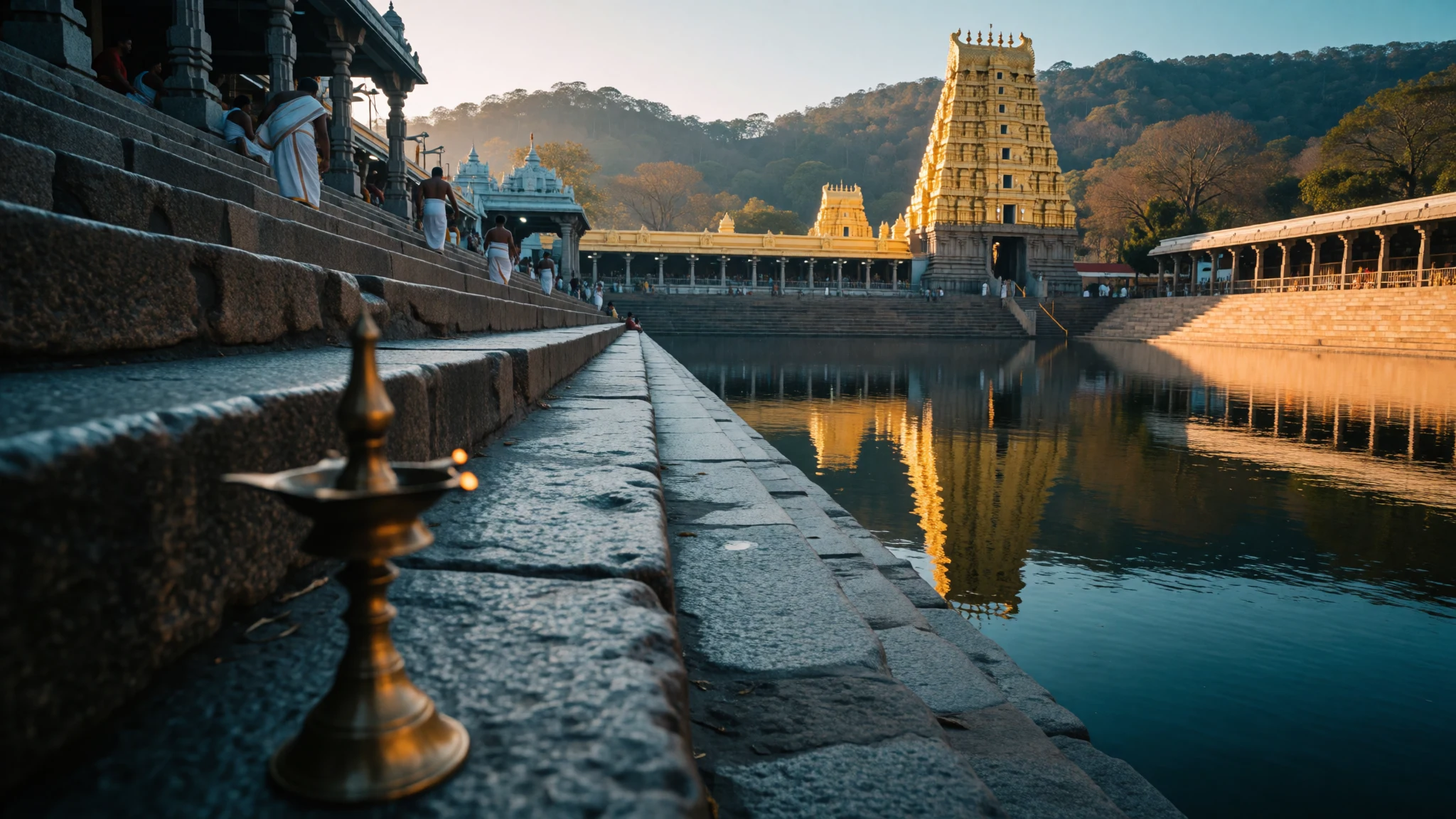
Tirumala is a working hill-top pilgrimage on a scale few places match, where devotion, queues and ritual fill every day of the year.
The place
Tirumala Temple stands in the Seshachalam range of Andhra Pradesh, in the hill town of Tirumala above Tirupati. The hills rise to about 980 metres (3,220 ft), and local tradition counts seven peaks, read as the heads of the serpent Adisesha. The shrine sits on the seventh, Venkatadri, beside a sacred bathing tank called Swami Pushkarini. That is why people also call it the Temple of Seven Hills.
The deity here is Venkateswara, worshipped as a form of Vishnu and also known as Balaji, Govinda and Srinivasa. Devotees believe he came to earth to help people through the troubles of the present age, the Kali Yuga, so the hill is sometimes called Kaliyuga Vaikuntha, an earthly version of Vishnu's heaven.
The temple is run by the Tirumala Tirupati Devasthanams, an autonomous trust answerable to the state government. It handles queues, lodging, free meals and the sale of the famous laddu offering. The town of Tirumala covers about 26.75 square kilometres, much of it forested slope, and almost everything in it exists to serve pilgrims.
Expect a place that feels more like a managed river of people than a quiet sanctuary. Visitors reach the hill by road from Tirupati or on foot along the old stepped paths, and the air is noticeably cooler than on the plain below. Few come as tourists. Most arrive with a vow, a shaved head or a family ritual, and the atmosphere of patient, cheerful endurance is part of what the place is.
Its story
Tirumala Temple has roots that stretch back to about the year 300 in the facts record, though its early history is a mix of legend and scattered inscriptions. Tradition credits the Tondaiman rulers with the original shrine. Later the Cholas, Pandyas and the Vijayanagar kings enlarged and reorganised it, adding gateways, halls and endowments that turned a hill sanctuary into a major institution.
The earliest recorded gift comes from 966 CE, when a Pallava queen named Samavai made an endowment. After that the paper trail thickens, and the temple's wealth and standing grew with royal patronage across the southern kingdoms.
The hill also appears in early Tamil literature. The epic Cilappatikaram, one of the great works of Tamil, has a Brahmin traveller describe seeing Vishnu at Srirangam and then going on to the lofty hill called Venkatam. He pictures a red-eyed lord holding a discus and a white conch, wearing flower garlands, on a crest streaming with waterfalls. The passage shows that the hill was already a destination for pilgrims from far away in the early centuries.
The legend most pilgrims carry in their heads is simpler: that Vishnu took the form of Venkateswara to give people refuge in an age of hardship. That belief explains the crowds, the vows and the sense that a visit here settles something. History gives the temple its institutions; that story gives it its pull.
What to see
- The temple and its sanctum — Tirumala hill
The main shrine on Venkatadri is the reason for the journey. Pilgrims shuffle through gateways and halls towards the inner sanctum where Venkateswara stands. Darshan, the sight of the deity, can be brief after hours of waiting. Photography is not permitted inside, so look carefully while you can.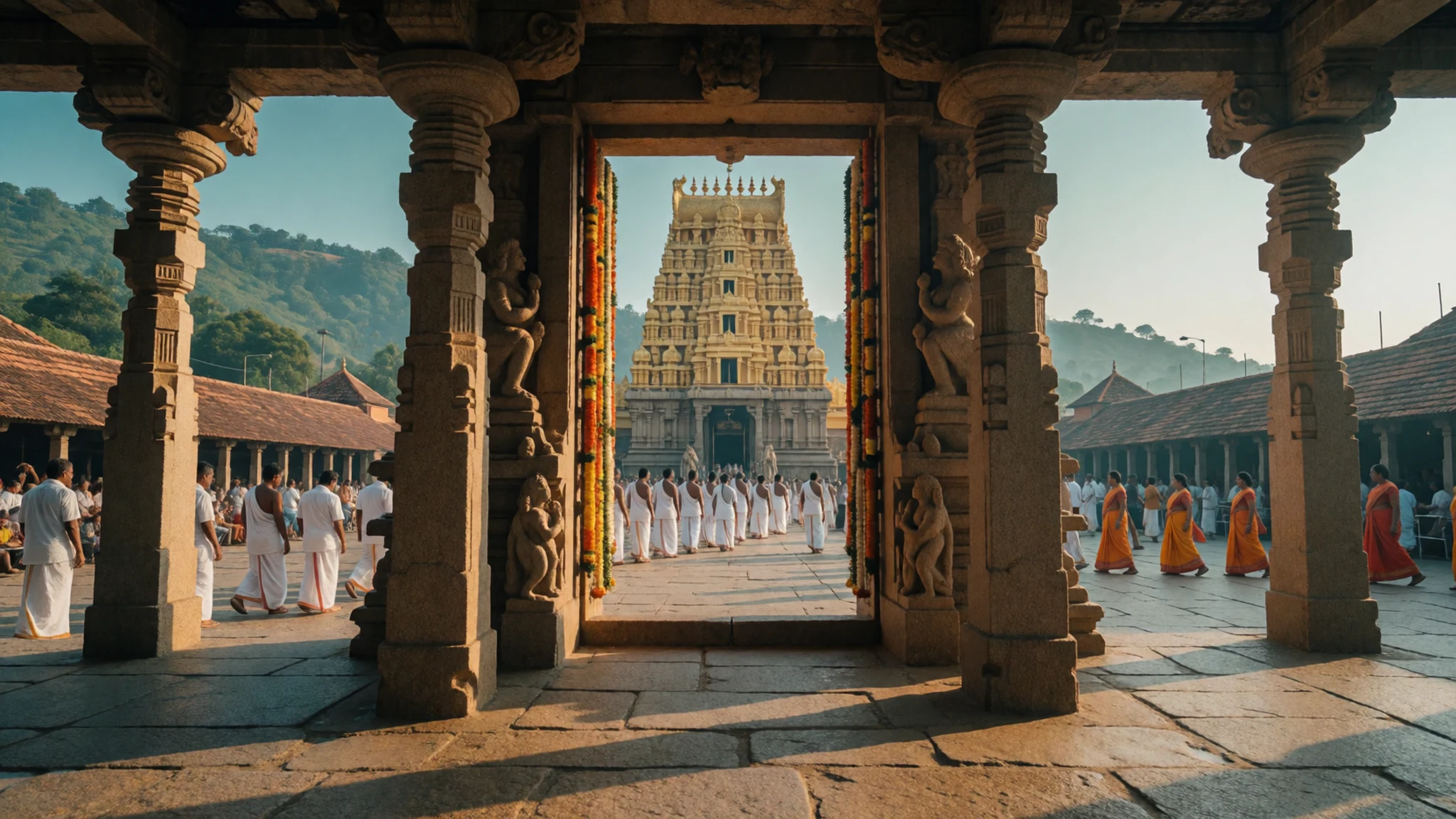
- Swami Pushkarini — Beside the temple, Tirumala
This holy water tank beside the temple is where many pilgrims bathe before darshan. The temple stands on its southern bank. It is worth a slow look from the edge, watching families perform rituals, even if you do not enter the water yourself.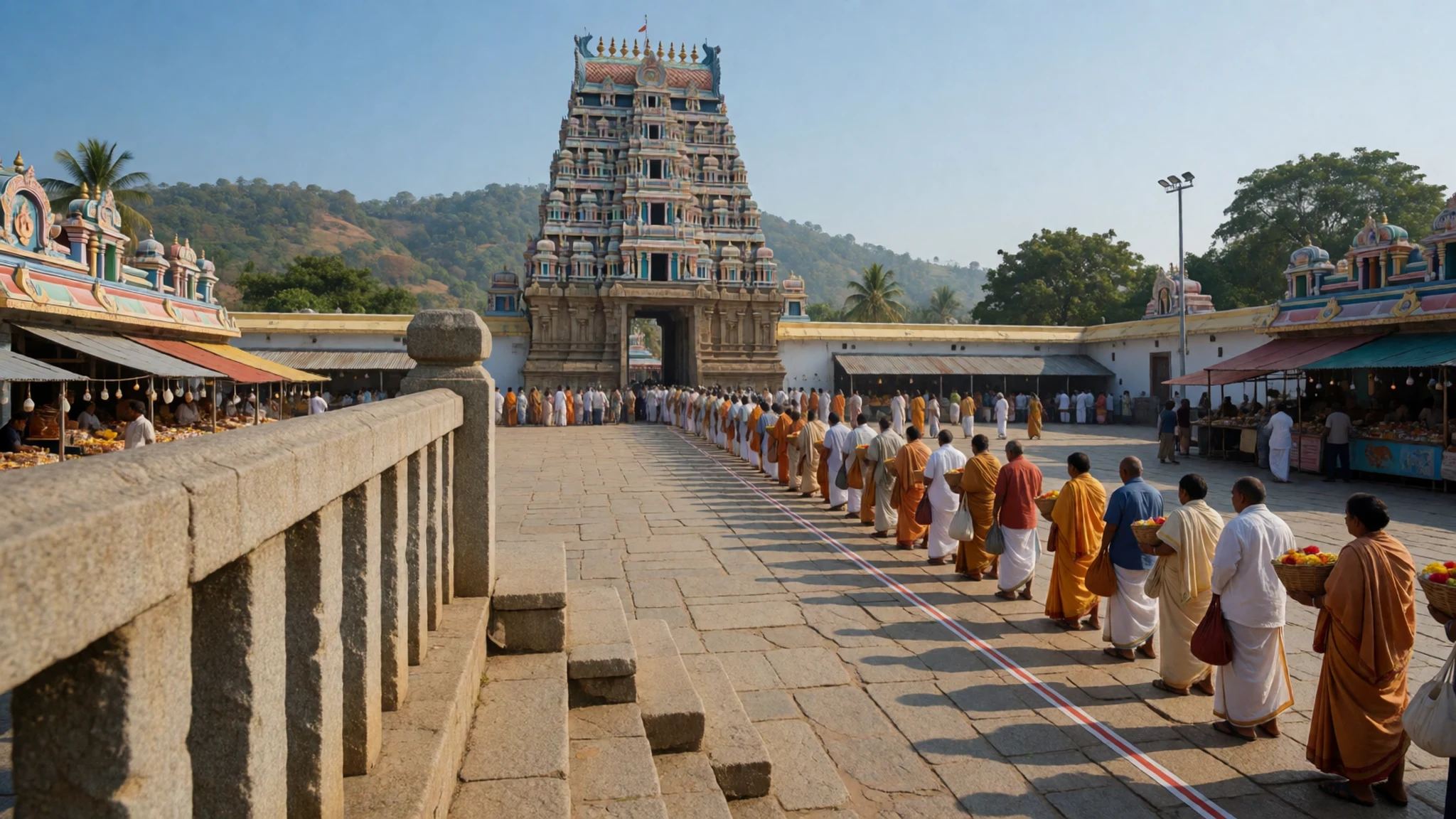
- Srivari Padalu viewpoint — Tirumala hills
A vantage point on the hill with wide views over the forested slopes and the plain beyond. It gives a sense of how high the sanctuary sits and how green the range is. Go early, when the light is soft and the crowds thinner.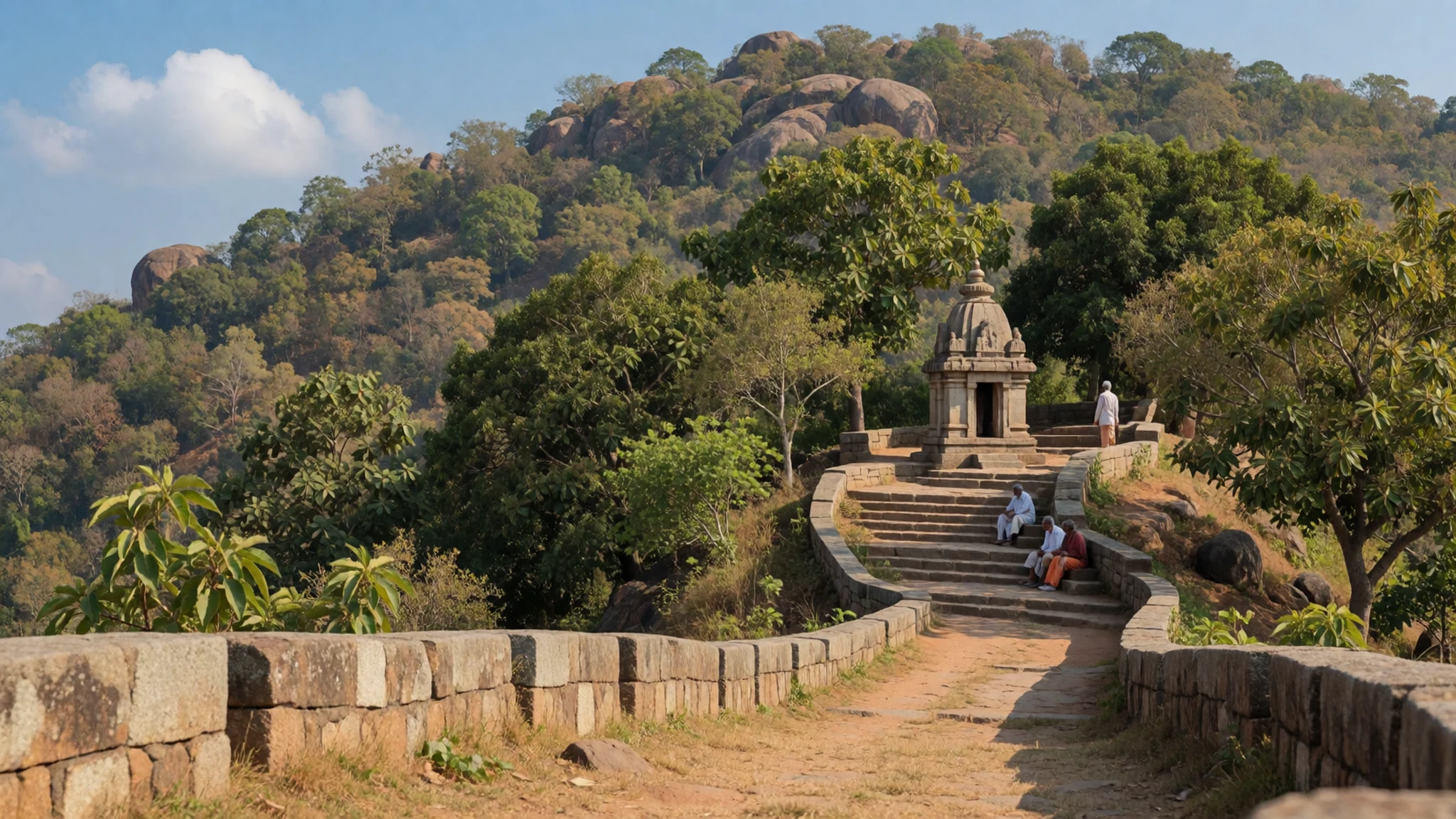
- Tirupati town — Foot of the hills
The base town below the hills, with its own temples and the bus and rail links most pilgrims use. Many travellers stay here and ride or walk up. It is busy and practical rather than pretty, but it explains how the whole pilgrim system works.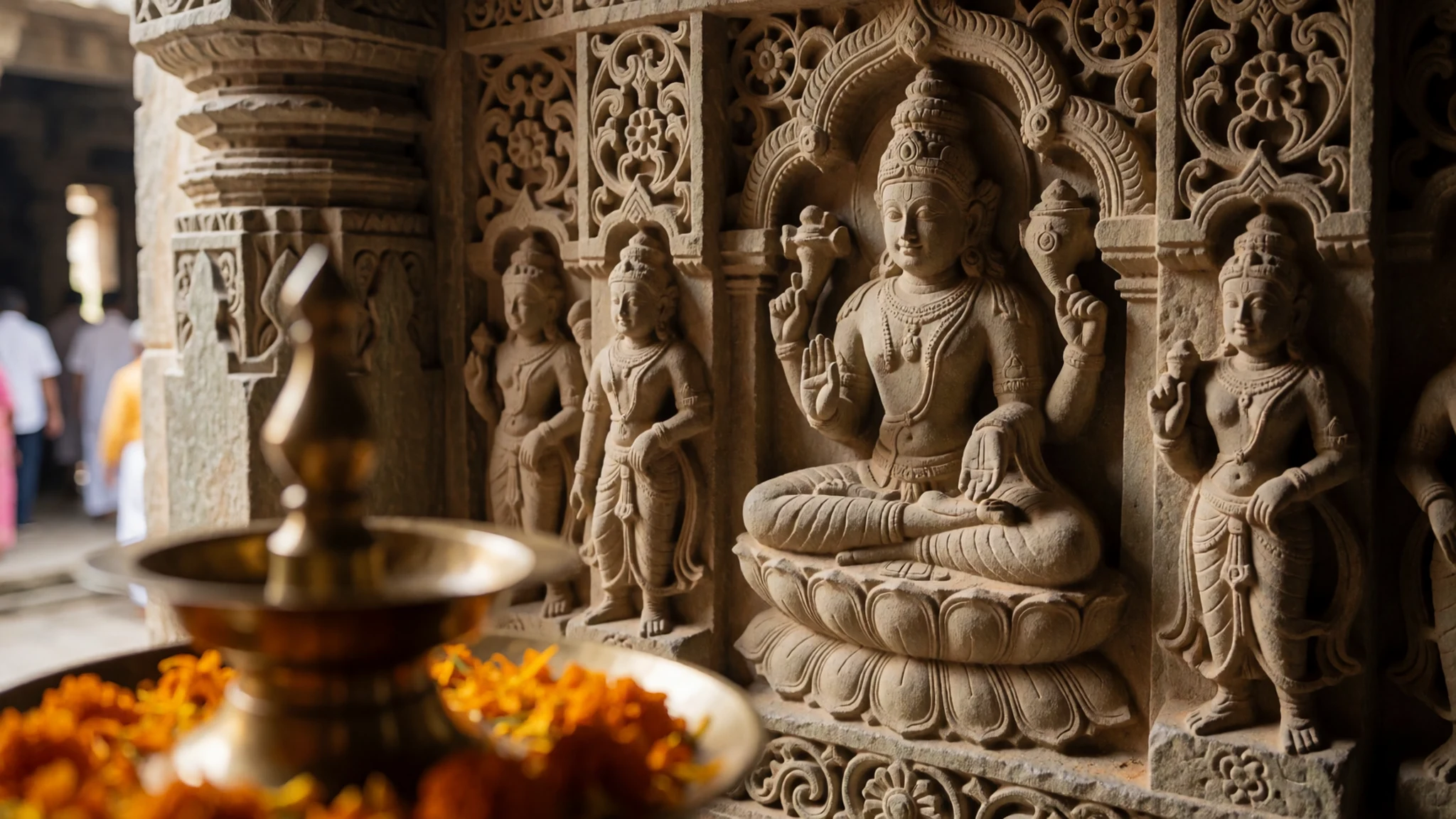
- Talakona waterfall — Chittoor district
A waterfall of about 82 metres in Nerabailu village, Chittoor district, set among dense forest with wildlife. It makes a good half-day away from the temple crowds. Go in or just after the rains, when the water is fuller, and check access locally.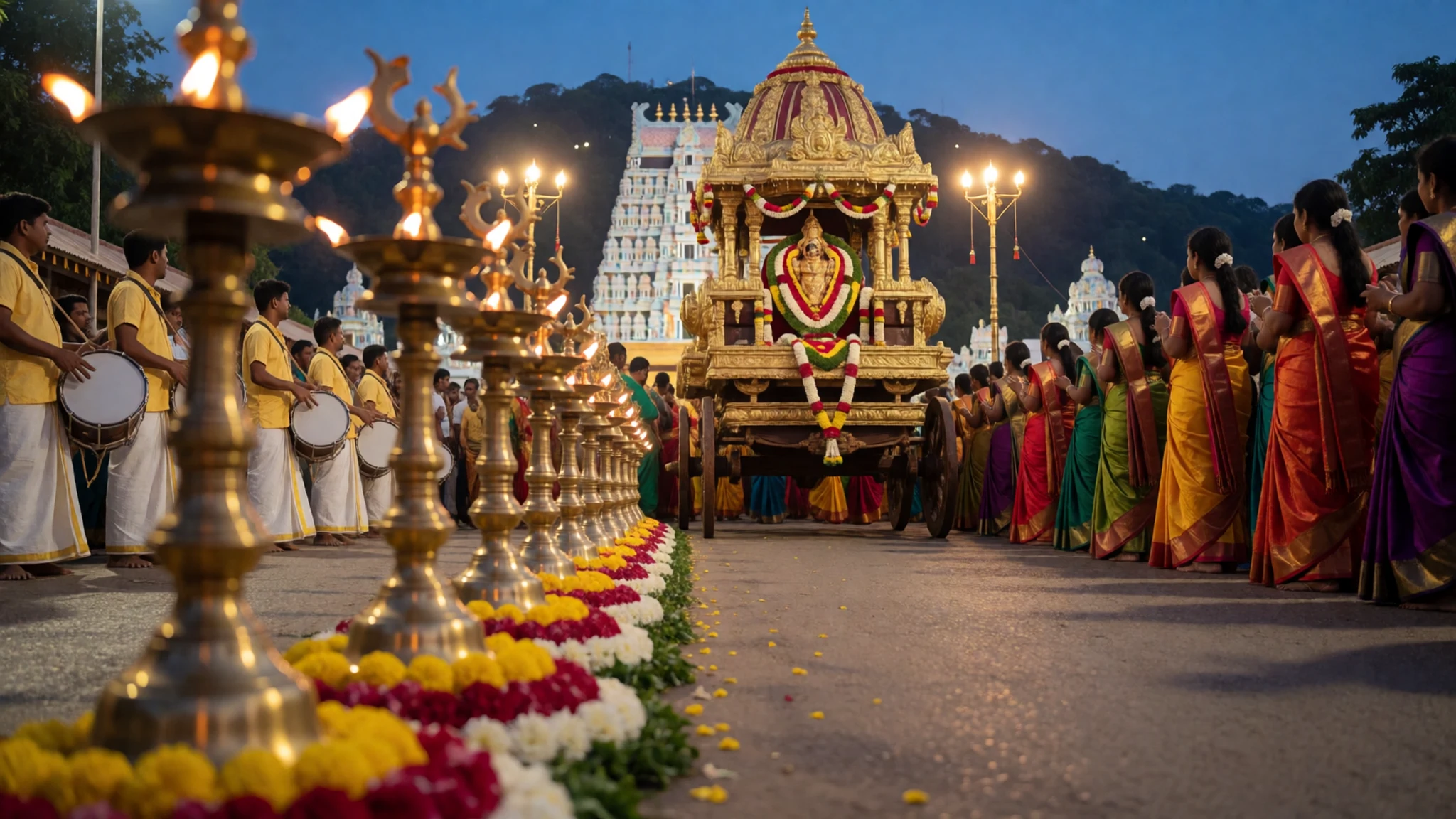
Culture
Tirumala Temple keeps a calendar so full that a local saying calls it a place where every day is a festival, with hundreds of observances across the year. Rituals begin before dawn and carry on late into the night, and the deity is woken, bathed, dressed and put to rest on a fixed routine.
The biggest day is Vaikunta Ekadasi, when a special passage around the inner sanctum is opened and as many as 150,000 devotees can come in a single day. Rathasapthami, in February, sees the processional image Malayappa carried around the temple on seven different mounts from early morning to late night. Other occasions include Rama Navami, Janmashtami, Ugadi, the Float Festival on the sacred tank and the spring festival of Vasanthotsavam in March and April.
A central custom is the offering of hair. Many pilgrims have their heads shaved as a vow, and women and men alike join the same queues. The laddu, given as prasadam after darshan, is carried home to share with family and neighbours.
The mood is devout but not solemn: chanting of the name Govinda rolls through the queue, and strangers share water and advice. Visitors of other faiths are generally welcome in the public areas, though the managing trust may ask for a declaration at the sanctum, so ask staff if unsure. Remove your shoes before the temple gateway, dress modestly, and do not take photographs or use phones in the inner areas.
What to wear
Traditional dress at Tirumala Temple follows South Indian Hindu custom. Women wear saris, often in silk woven in Andhra Pradesh and neighbouring Tamil Nadu, in rich colours with gold borders, or half-saris and salwar kameez for younger women. Men wear the dhoti, a long cotton or silk wrap, sometimes with an angavastram, a shoulder cloth. These are worn for festivals, weddings and the temple visit, and many pilgrims dress up specially.
Day to day, people on the hill wear what they would at home: cotton saris and kurtas, shirts and trousers, and simple salwar suits. Many devotees with shaved heads wear a smear of sandal paste or turmeric. Some carry a thin cloth for the head in strong sun.
For visitors, modest dress is expected. Cover shoulders and knees; a kurta with trousers or a sari or salwar suit works well for women, and a shirt with long trousers or a dhoti for men. Shorts, sleeveless tops and tight clothing are not appropriate. Choose light cotton because the climate is warm, though the hill is cooler than the plains, and evenings can feel fresh. You will walk barefoot on stone in the temple areas, which can be hot at midday, so wear shoes that slip on and off easily and bring clean socks for the walk from the queue complex if the trust permits them.
What to eat
- Tirupati laddu — Counters near the temple exit
The sweet of Tirumala, made of gram flour, sugar, ghee and dried fruit and given out as prasadam after darshan. Pilgrims carry boxes home to share. It is sold at counters near the temple exit, run by the trust.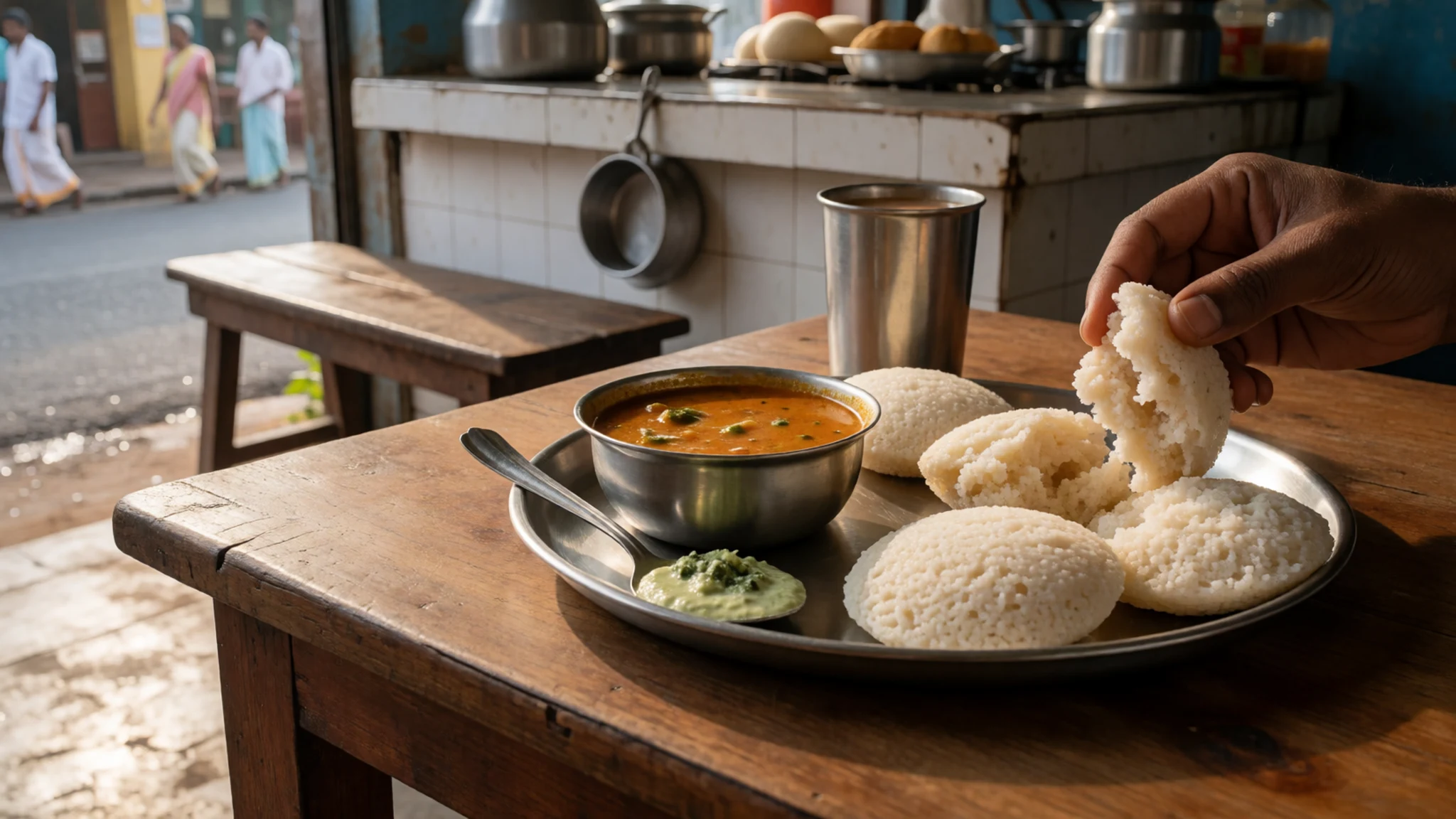
- Idli — Simple breakfast eateries in Tirupati and Tirumala
Steamed rice and lentil cakes eaten at breakfast with sambar or chutney. Many add kaarampodi, a spiced chilli powder, with oil on top. Light and filling before a long queue, they are everywhere in the morning.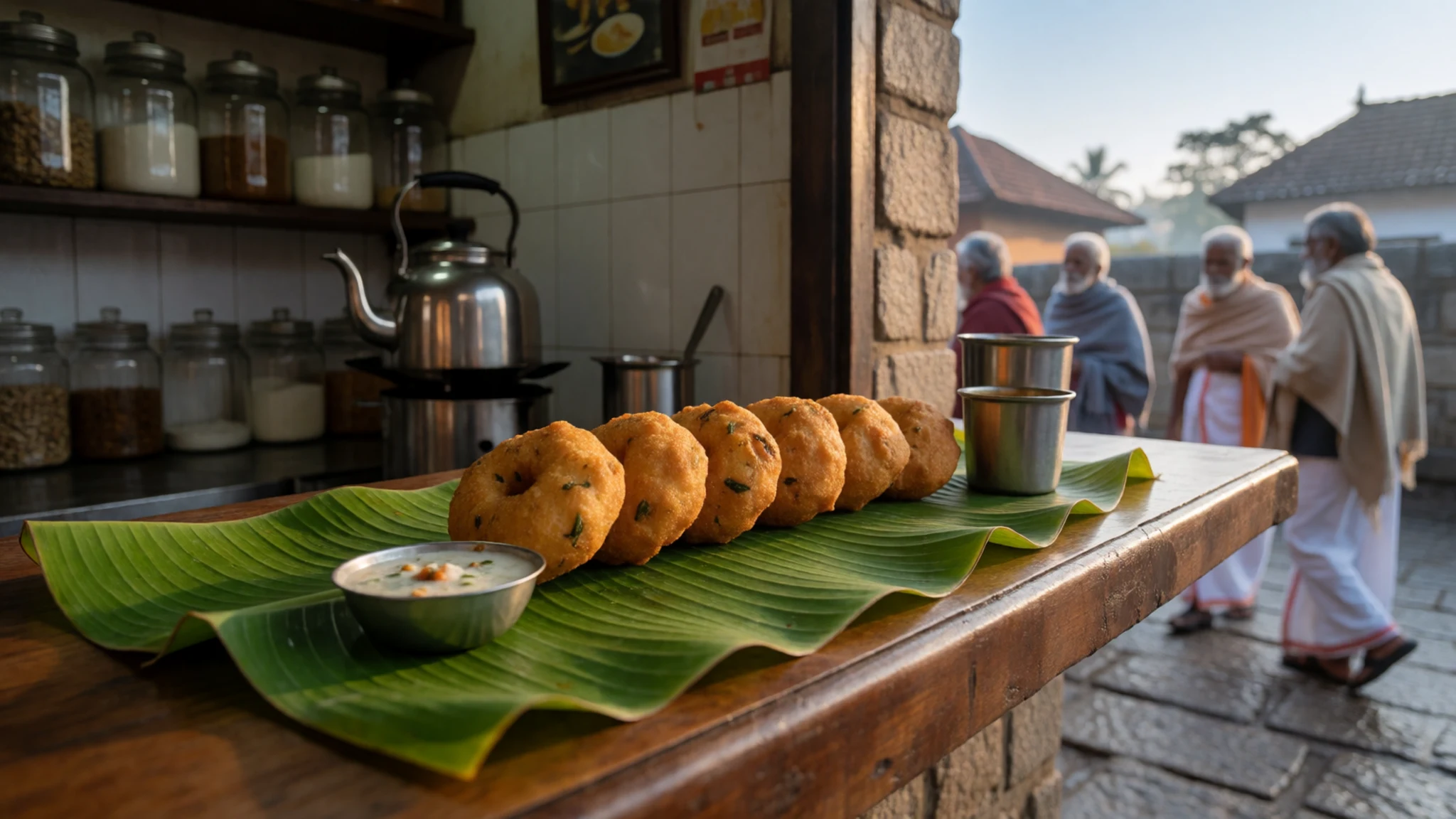
- Vada — Tiffin stalls and local eateries
A deep-fried savoury dumpling of lentil batter, crisp outside and soft inside, usually served with sambar or coconut chutney. It is a common companion to idli at breakfast and a good quick snack while waiting around. - Dosa — Tiffin eateries around the bus stand in Tirupati
A thin crisp pancake of fermented rice and lentil batter, folded around potato or served plain with chutneys and sambar. In Telugu it is sometimes called minapattu. It is a popular snack at any time of day. - Andhra rice meal — Meal restaurants in Tirupati; free meals run by the trust at the temple
Rice is the staple here, served with dal, vegetable curries, pickles and fiery chutneys. Andhra cooking is known for chilli heat, so ask for it mild if you are unsure. Temple-area meals are vegetarian.
Plan it
Best time. October to February, when the weather is cooler and the hill is pleasant; March to May is hot, and festival days bring the largest crowds at any time of year.
How long. 2
Getting there. Fly to Tirupati airport or take a train to Tirupati station (TPTY), the main railhead, then go up the hill by bus, taxi or the old stepped footpath.
Budget. low
Tips
- Check the official site, tirumala.org, for darshan booking and current rules before you travel
- Book accommodation and darshan slots well ahead, especially for weekends and festivals
- Start early, as queues build through the morning
- Carry a little cash and a water bottle, and avoid afternoon walking in extreme heat
- Keep your phone charged and emergency number 112 to hand
Etiquette
- Dress modestly and remove shoes before the temple gateway
- Do not photograph inside the inner temple areas
- Queue patiently and follow the instructions of temple staff
Nearby
Sources
- Wikidata Q9375937 (CC0)
- Wikipedia: Venkateswara Temple, Tirumala (CC BY-SA 4.0)
- Wikivoyage: Andhra Pradesh (CC BY-SA 4.0)
- A View of Tirumala Venkateswara Temple, Adityamadhav83 (CC BY 3.0)
- Tirumala 090615, Nikhilb239 (CC BY-SA 4.0)
- Vishnu, unknown author (Public domain)
- Tirumala View from srivari padalu, Phanidharvaranasi (CC BY-SA 4.0)
- Tirumala Venkateswara temple entrance, Nikhilb239 (CC BY-SA 4.0)
- Sri vari swarana radham, Phanidharvaranasi (CC BY-SA 4.0)
- Tirumala Festival, Raji.srinivas (CC BY 3.0)
- Thirumala Hanuman, Brandvenkatr (CC BY 3.0)


