Tipasa
Tipasa, Algeria
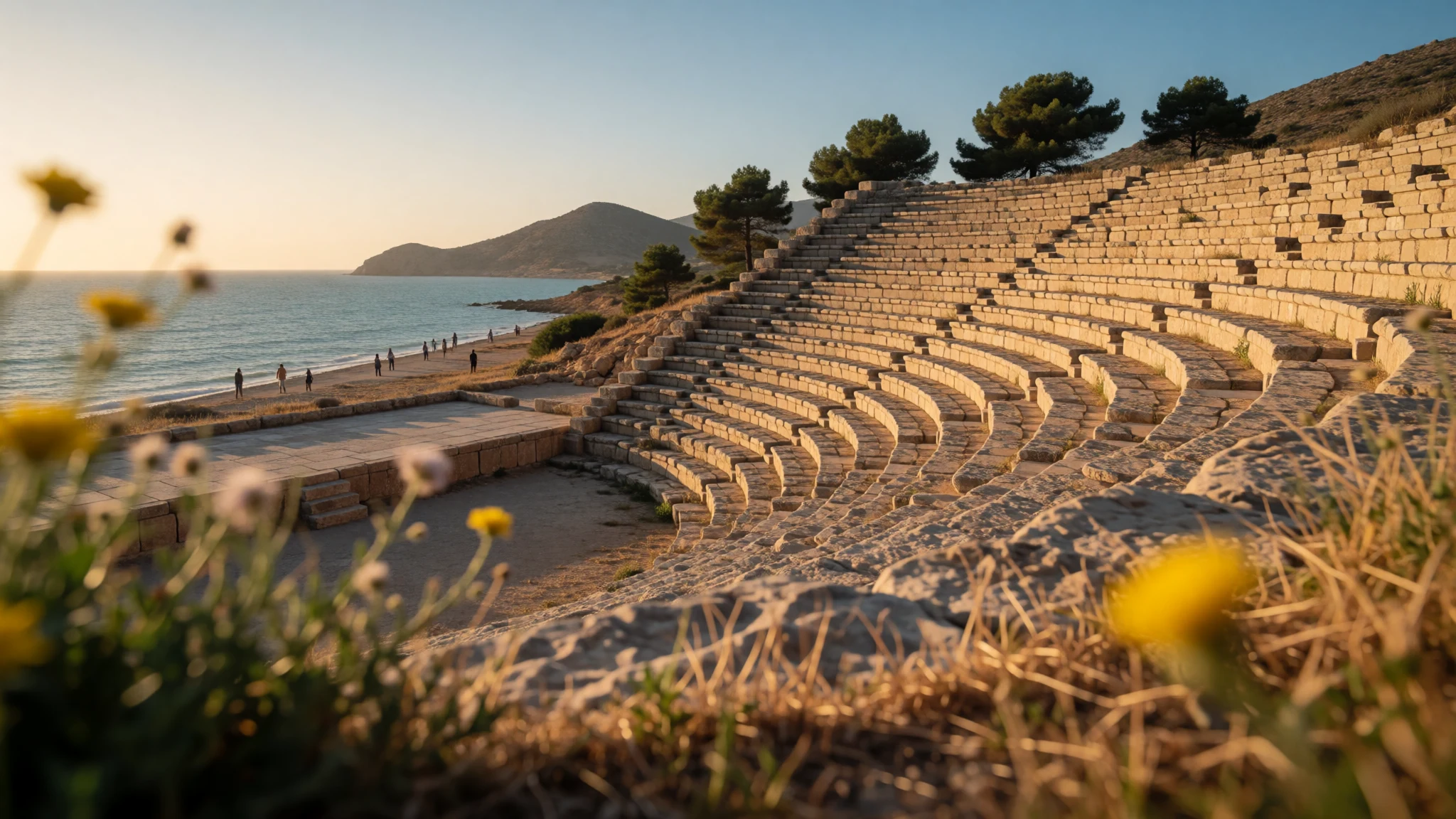
Tipasa puts Punic, Roman, Christian and Byzantine ruins on a quiet Mediterranean headland, close enough to Algiers for a day trip.
The place
Tipasa sits on the Mediterranean coast of central Algeria, a Roman colonia whose ruins now spread between pines, wild flowers and open sea. The modern town is usually spelt Tipaza, and the archaeological park lies along low headlands right beside it, so a morning among columns can end with a swim or a coffee near the harbour. The old city was laid out across three small rises facing the water, with streets, houses, a theatre, an amphitheatre and several churches spread over them. Because Punic traders, Roman builders and early Christians all used the same ground, a walk through the park moves from one era to the next within a few minutes. UNESCO has listed it as a World Heritage Site since 1982. The setting is gentler than that of many Roman sites inland: sea wind, the smell of resinous pine, fishing boats in the port below. Algiers lies to the east, which makes Tipasa an easy day out for Algerian families as well as the occasional foreign traveller, and summer weekends feel it, with crowds heading for the beaches. Foreign visitors are few, so quiet corners are easy to find, though facilities on the site are modest and shade is scarce. Rising seas and a slowly eroding shoreline are a long-term worry for the ruins, and conservation work has had to keep pace. The site was once placed on the danger list and later taken off it after repairs.
Its story
Tipasa began as a small Punic trading post on the Algerian coast, founded around 600 BCE. Its sheltered shoreline suited merchants moving goods between ports, and the settlement stayed modest until Rome took control of the region. The emperor Claudius made it a military colony, a base for the campaigns against the kingdoms of Mauretania, and the town later received the formal name Colonia Aelia Augusta Tipasensium. Under Roman rule it grew around its harbour and sat on the coastal road network, which tied it to Caesarea, the provincial capital to the east. A defensive wall enclosed the three hills and the houses, forums and public buildings built on them, guarding the town against raids by nomadic groups. Trade, rather than scholarship or art, is what made Tipasa matter in its day. Christianity reached the town early, and an epitaph from the third century shows a Christian community already settled here. Tipasa became an important Christian centre and the seat of a bishop, a status the Catholic Church still recognises through a titular see that carries its name. Later centuries added Byzantine layers, so the ruins today hold Punic, Roman, Christian and Byzantine traces side by side. Reading the site means reading that overlap: a pagan street, a church built nearby, a martyr's shrine that drew pilgrims, all within walking distance of one another.
What to see
- Cardo Maximus — Central archaeological park
The main north–south street of the Roman town still runs between worn paving, column bases and the footprints of shops and houses. Walking it gives the clearest sense of the town's plan before the ruins spread out towards the water. Go early, as there is little shade and the stone holds the heat.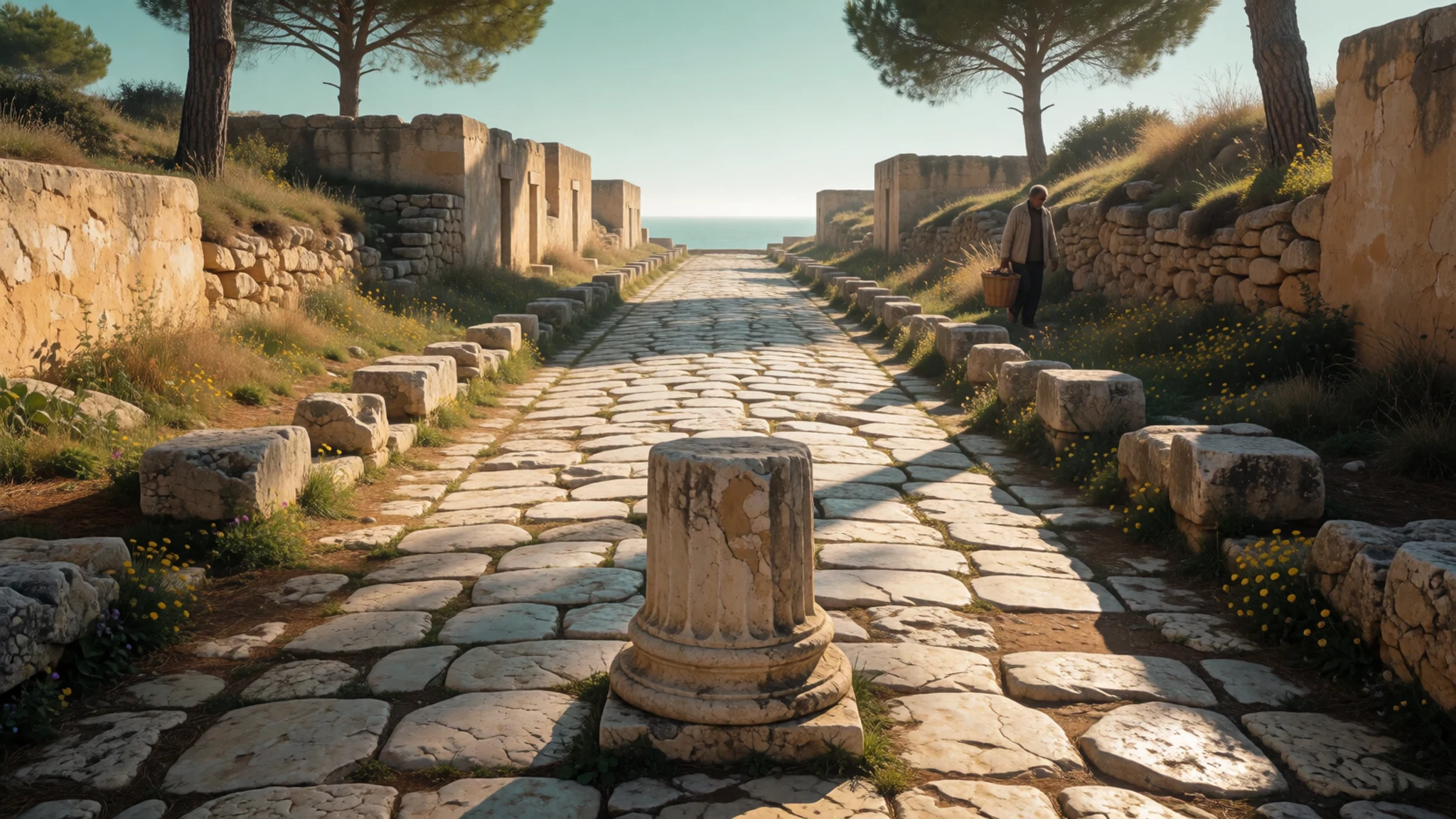
- Roman theatre — Eastern part of the site
The theatre faces the sea from a gentle slope, its curved tiers partly rebuilt and partly broken. Sitting on the stone, a visitor looks over the stage footings to open water, which explains why photographers come at the end of the day. Check locally whether the seating is open to walk on.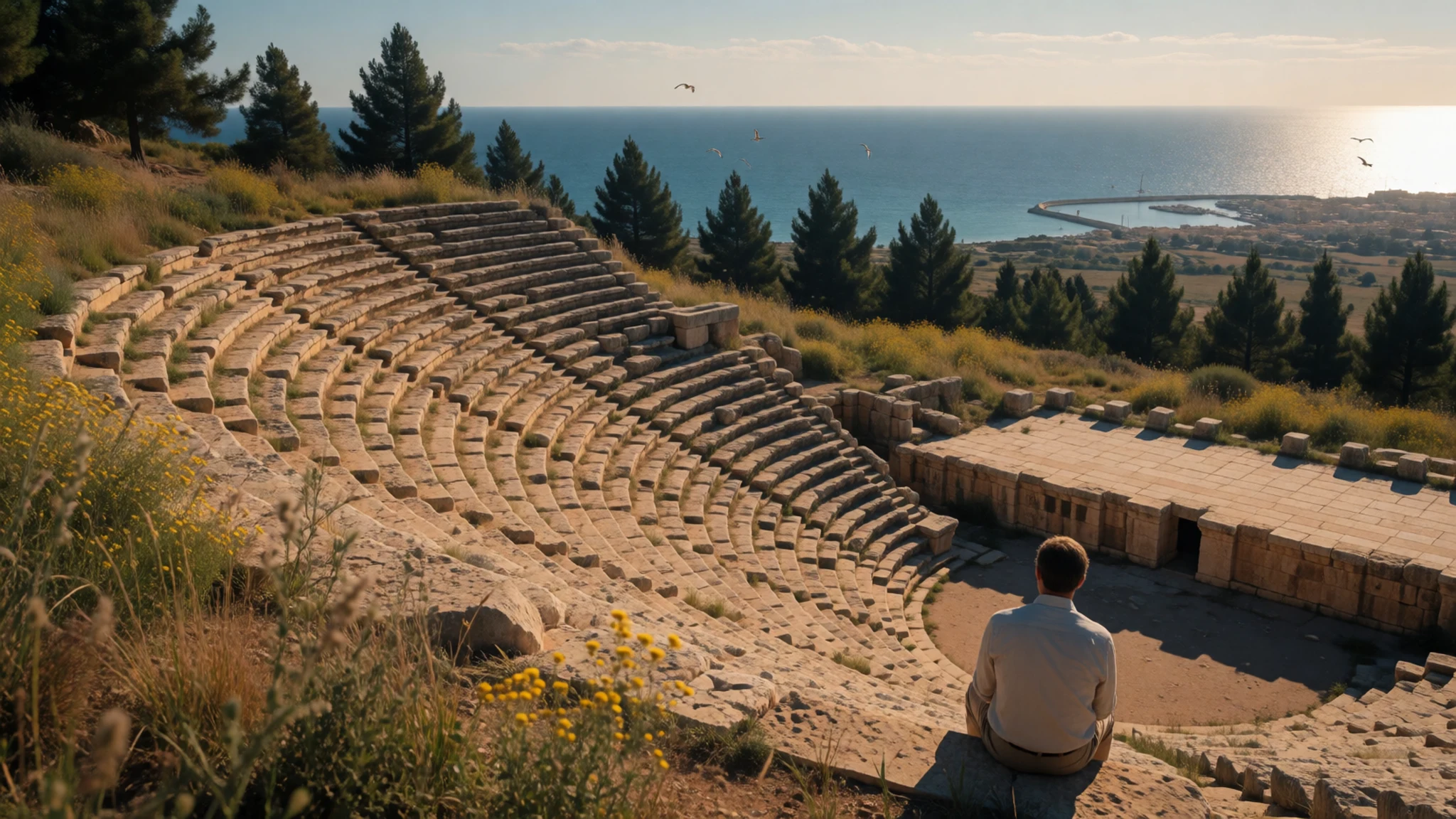
- Amphitheatre — Edge of the archaeological park
The amphitheatre lies a little apart from the main streets, set among scrub and wild flowers. Its oval bowl is more worn than the theatre, but the shape of the arena and its entrances is easy to read. It tends to be quiet, so it suits a slow stop with a bottle of water.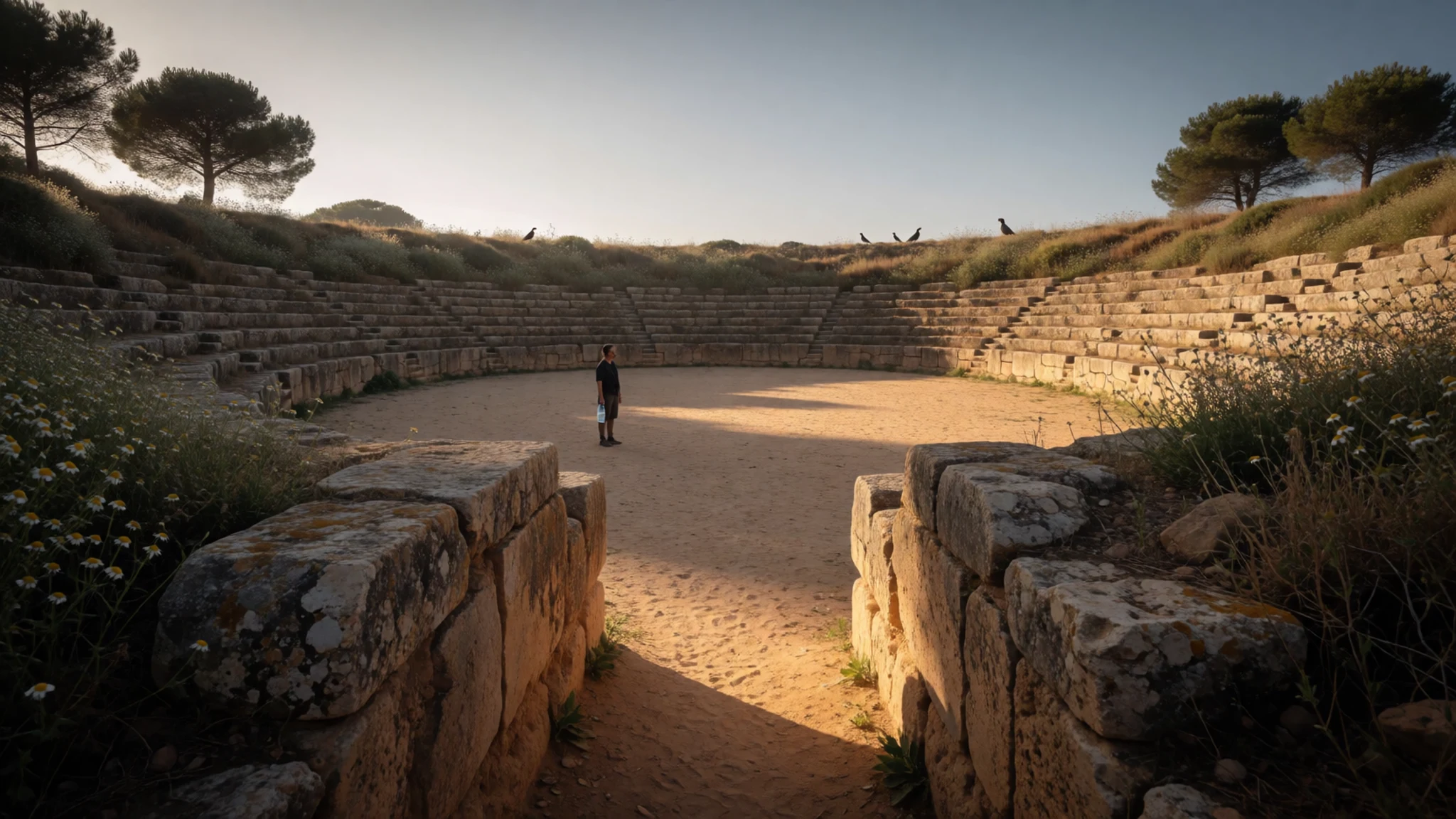
- Large Christian Basilica — Hilltop above the shore
The Large Christian Basilica shows how much of Tipasa's later life was built around worship. Foundations and column stumps mark out the naves, and the sea sits just beyond the walls. Information signs are sparse, so reading a little about early African Christianity beforehand helps the place make sense.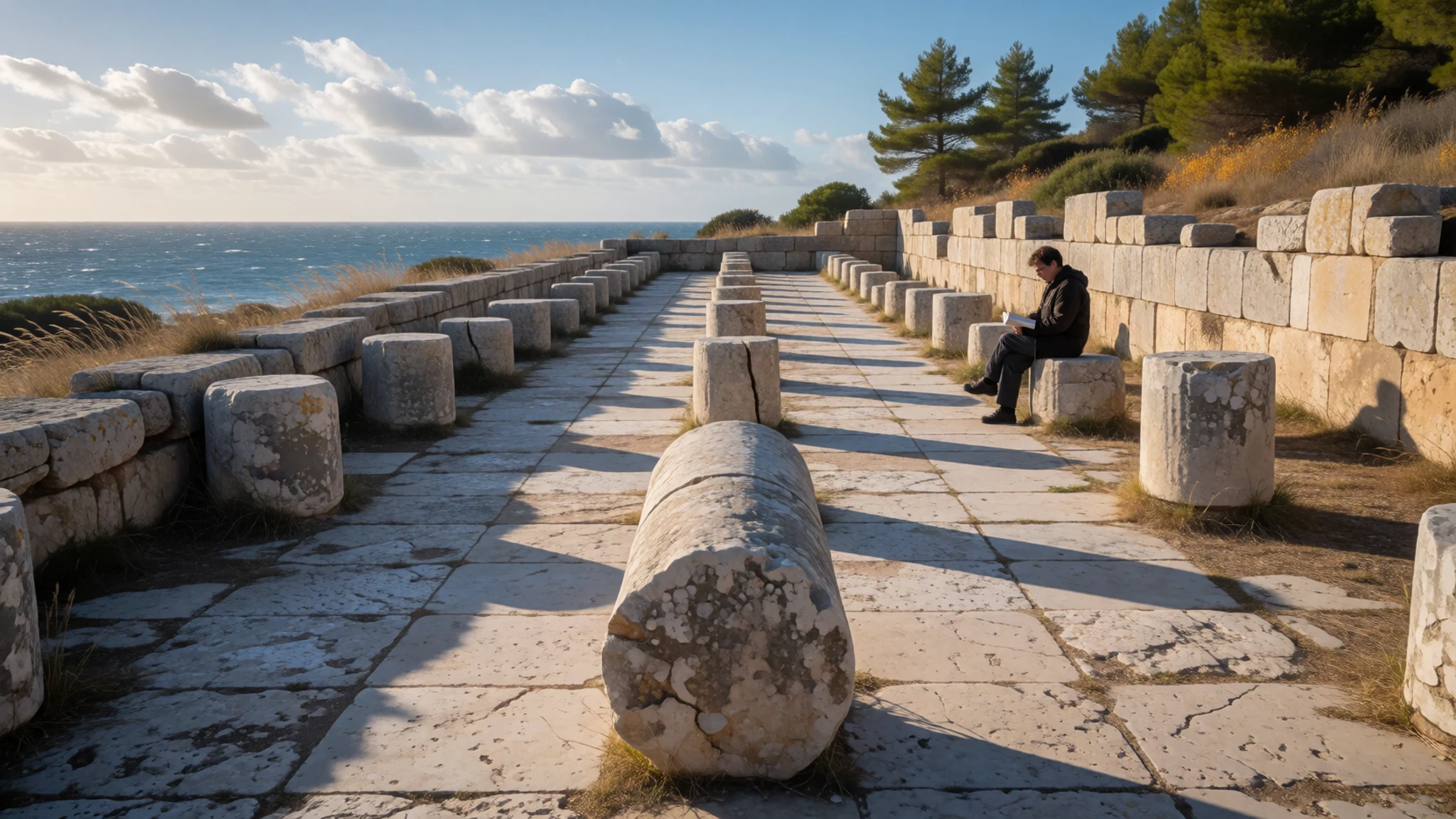
- Villa of Frescoes — Residential quarter of the park
This Roman house provides a domestic counterpoint to the public buildings elsewhere on the site. Its courtyards and rooms give a domestic counterpoint to the public buildings elsewhere on the site. Little painted plaster is left to see, so expect to read the layout rather than admire colour.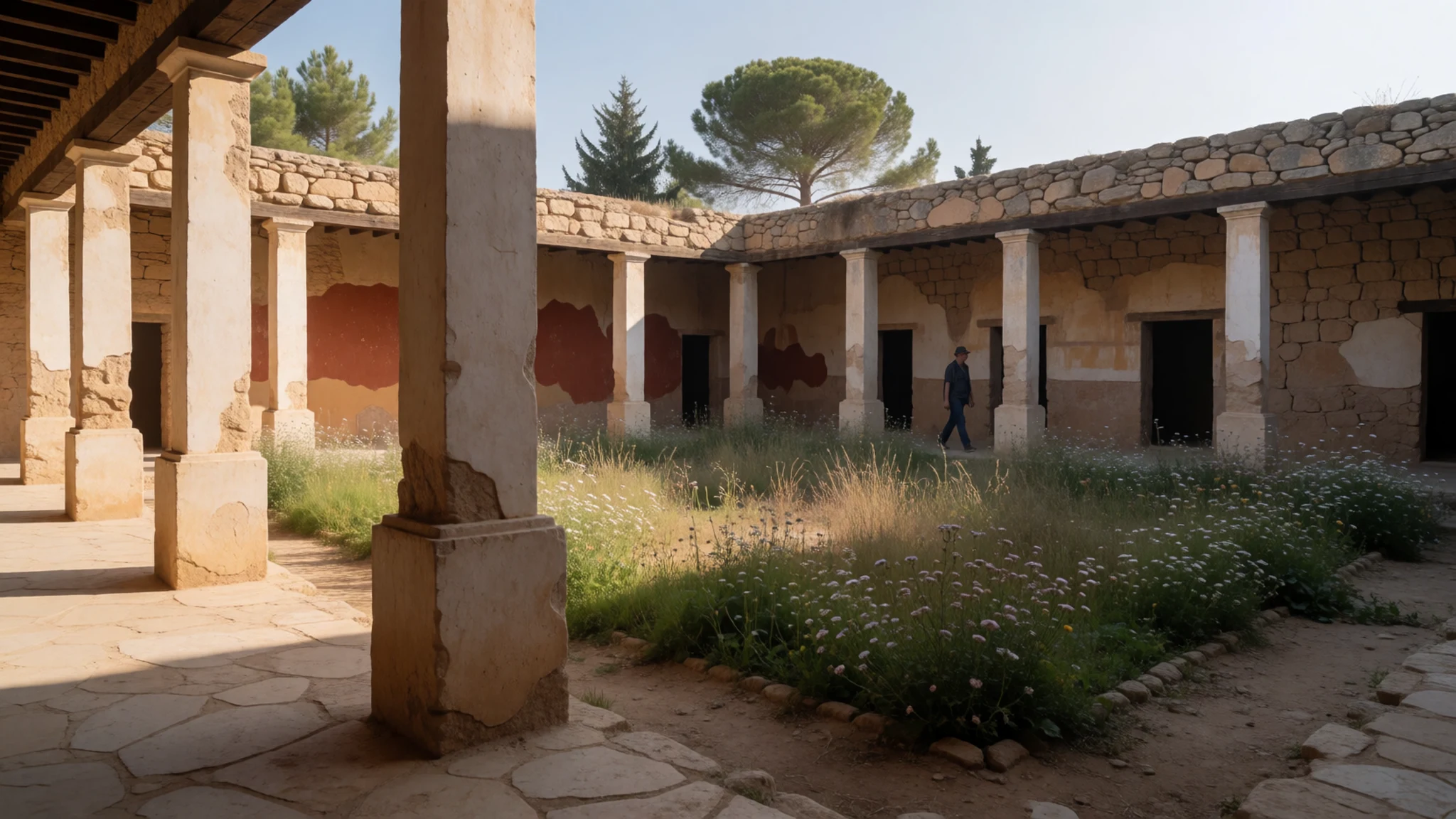
- Stele to Albert Camus — Among the ruins, near the shore
A memorial stone to the writer Albert Camus stands in the ruins, carrying words from his essay about the place. Camus knew Tipasa as a young man and wrote of its light, wild flowers and sea. Readers of his work often make this a first stop, then sit among the stones with a book.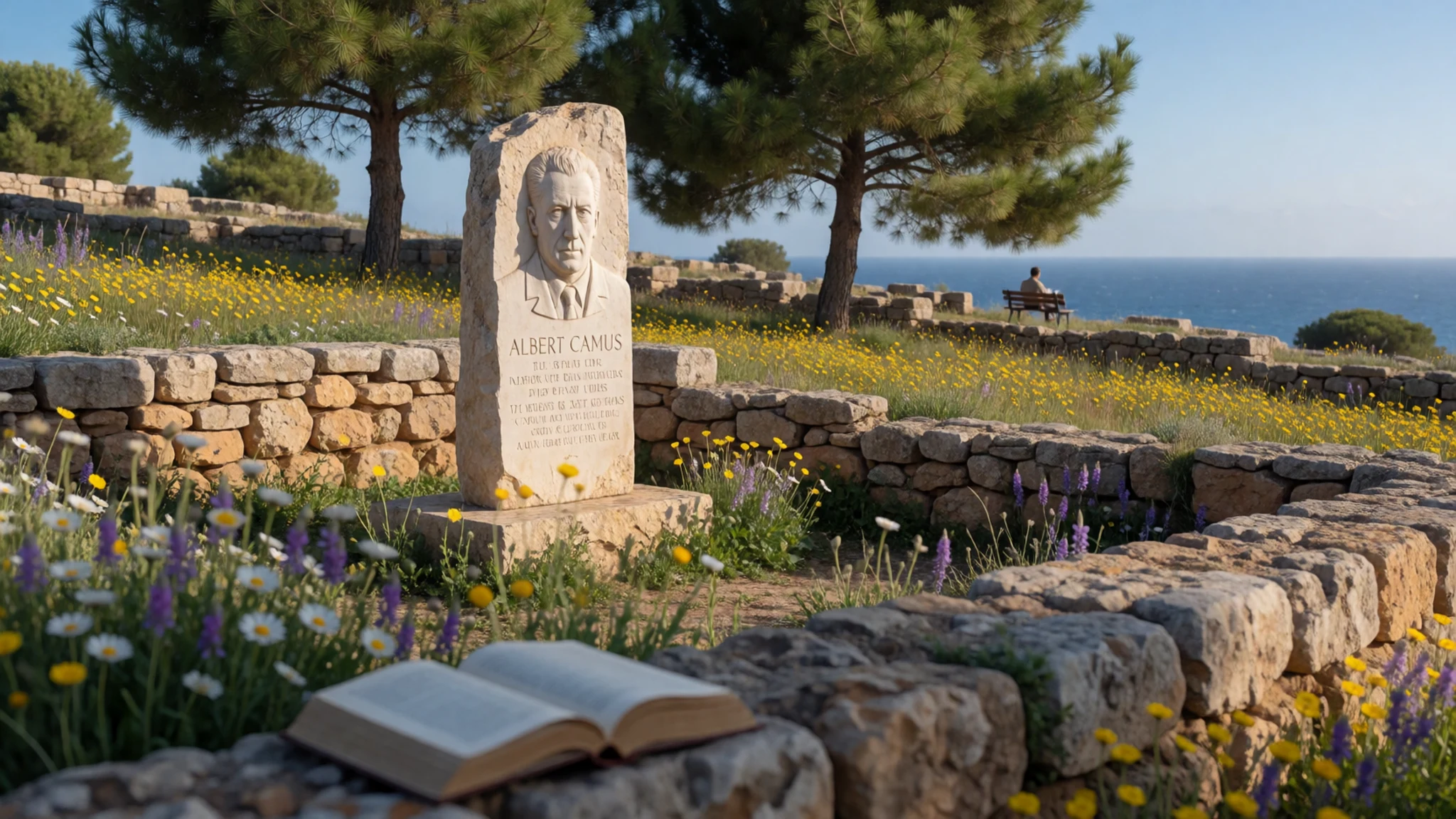
Culture
Tipasa shares the wider culture of Algeria, which draws on North African, Arab and Amazigh (Berber) traditions, with French still widely spoken alongside Arabic. Hospitality is central: a visitor who stops to talk may be offered coffee or mint tea, and refusing too firmly can sting. Honour matters a great deal in everyday relationships, so criticism is best kept private, and a request turned down bluntly can cause offence. Showing real interest in Algerian history, geography and sights tends to win warmth quickly, and the ruins are a point of local pride. The town has strong links to the literary world through Albert Camus, who wrote about its landscape, and to the long French colonial period and the struggle for independence that followed. These are subjects to approach with curiosity rather than strong opinions. On summer weekends the site and beaches fill with Algerian families, picnicking and swimming, and the mood is relaxed and sociable. Friday is the main day of congregational prayer, and some eateries and shops run to different hours then, so plan around it. Ramadan changes the rhythm of the day, with eateries quiet until sunset and then busy. At Tipasa, ask before photographing local people, especially families picnicking among the ruins, and never climb on or take fragments from the ancient stonework.
What to wear
Tipasa and the wider Algiers coast have a long tradition of ceremonial dress. The karakou is a fitted velvet jacket, richly embroidered in gold thread, worn by women at weddings and festivals. The haik, a large white or cream wrap of wool or silk, was once the standard outdoor garment for women in the region, and is now rarer. Men's traditional dress includes the burnous, a hooded wool cloak, and the gandoura, a loose tunic, often with a felt chechia cap. Day to day, most people wear modern clothes: jeans, shirts and trainers among younger people, and long skirts or trousers with a headscarf for many women, with plenty of variety by age and family. The coast is relaxed compared with the interior, and beachwear is worn at the beach only. Visitors do best with light, loose cotton or linen that covers the shoulders and knees, which keeps the sun off and avoids unwanted attention in town. A wide-brimmed hat and sunglasses matter, because the ruins offer little shade. Sturdy shoes or closed sandals with grip suit uneven, polished stone and sloping paths. A light jacket helps with sea wind in the cooler months, and a scarf is useful for women if visiting a mosque or a more conservative neighbourhood.
What to eat
- Brik — Family eateries and pastry counters in Tipaza town
Brik is a thin pastry parcel, often stuffed with egg, tuna or minced meat and fried until crisp. It turns up as a starter, especially on Ramadan evenings, and goes well with a squeeze of lemon. Look for it at bakeries and family eateries in town.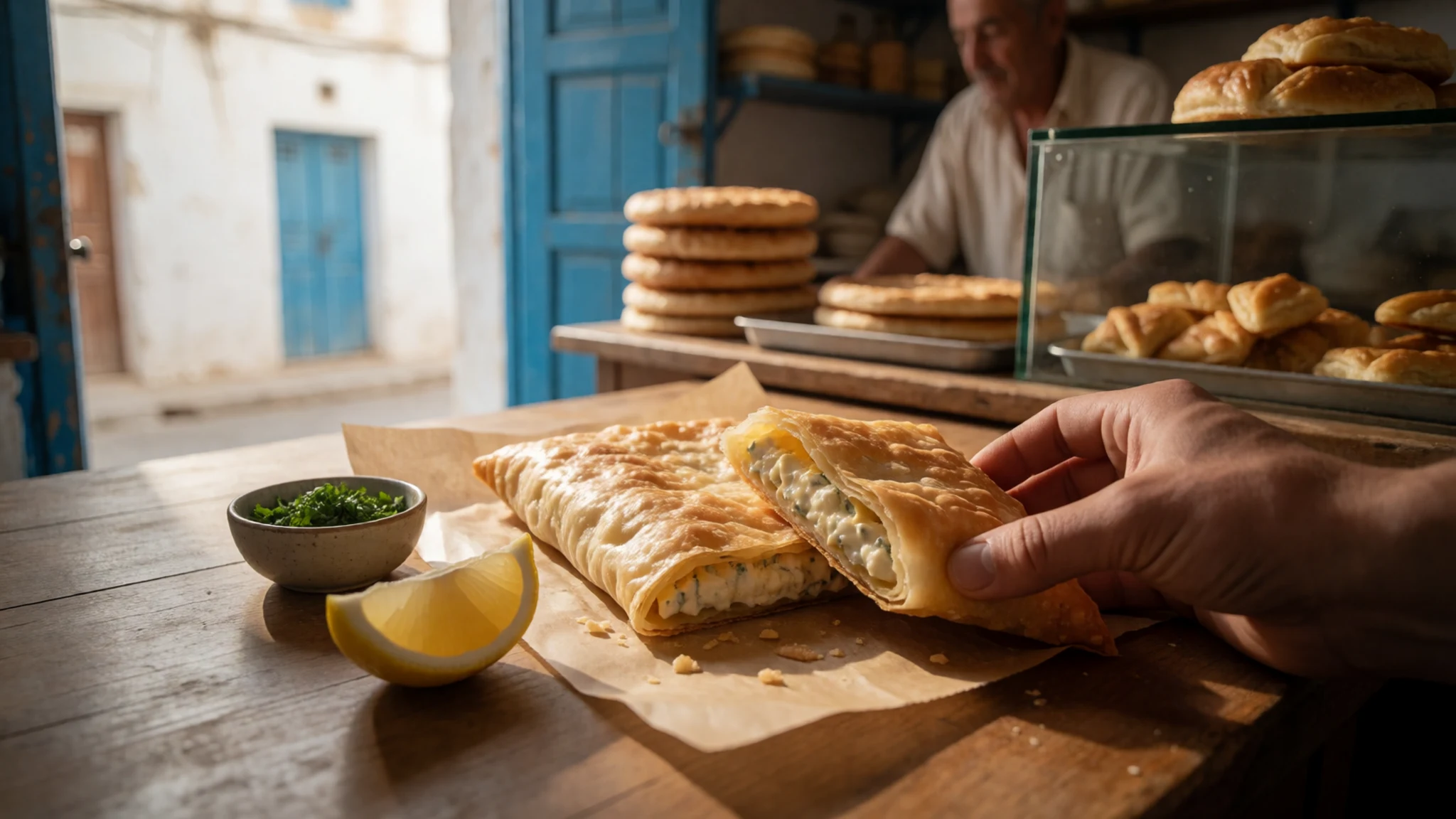
- Couscous — Family restaurants in Tipaza town, especially on Fridays
Couscous is steamed semolina served with a vegetable broth, often with lamb or chicken, potatoes, carrots, courgette and chickpeas. It is the usual Friday family meal, so some eateries serve it only then. Expect a generous shared dish, mild in heat but rich in flavour.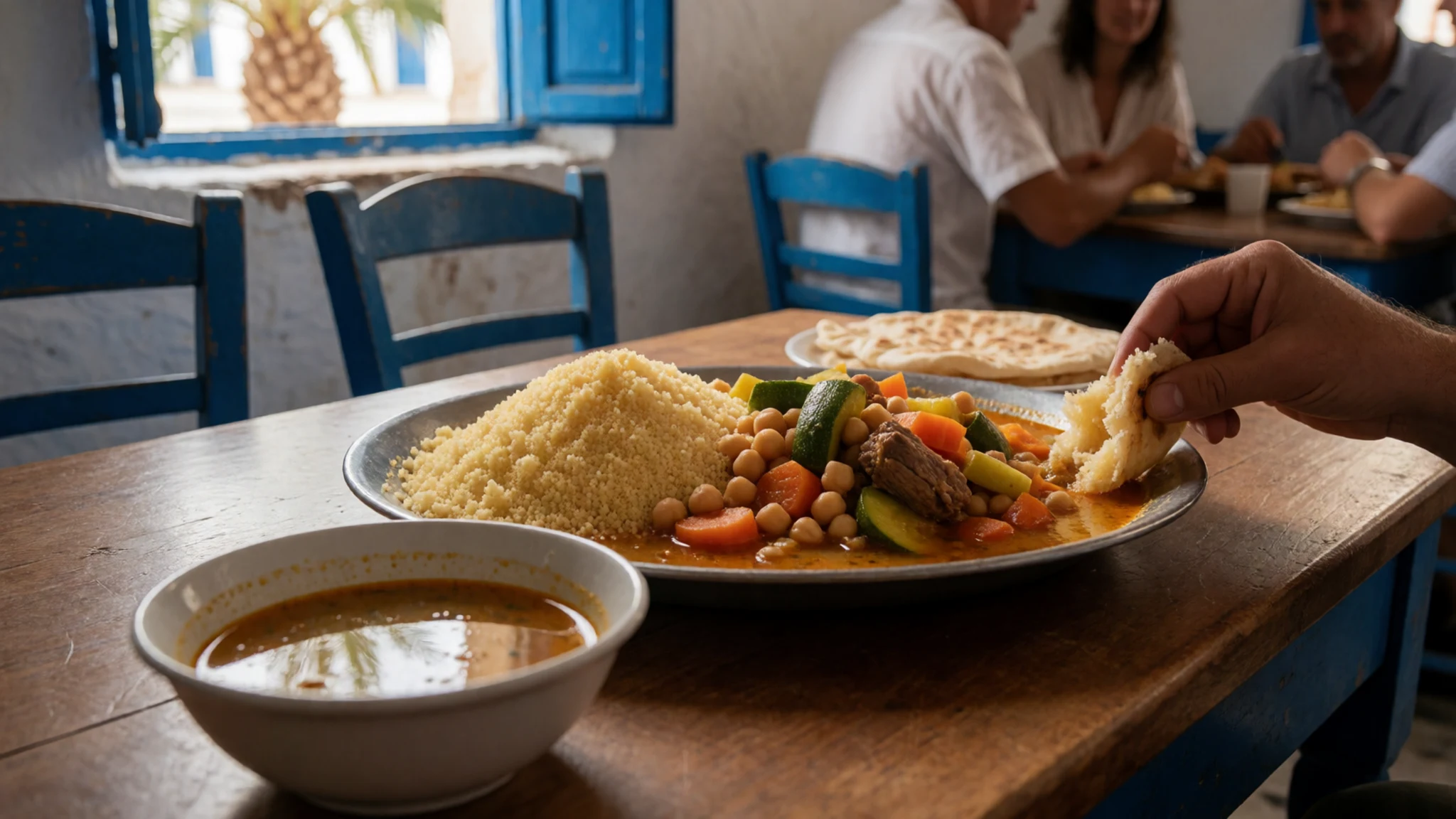
- Chorba — Everyday eateries near the town centre
Chorba is a meaty, spiced soup, usually red with tomato and thickened with small pasta or crushed wheat. It is a common opener to the evening meal and especially welcome after sunset in the cooler months. A bowl with bread also makes a light lunch. - Chakchouka — Cafés and simple eateries in town
Chakchouka is a stew of peppers, onions and tomatoes, often finished with eggs poached in the sauce. It is cheap, filling and vegetarian when made without meat, and works as breakfast or lunch. Ask for bread to scoop up the sauce. - Grilled fresh fish — Eateries around the fishing port
Fresh catches such as sea bream or sardines are grilled simply with lemon and salt. Tipaza's fishing port makes fish the natural order near the water. Prices vary by weight and by day, so ask before ordering and check what has just come in.
Plan it
Best time. April–May and October–November, when the weather is most comfortable for walking the open ruins; spring brings wild flowers and autumn has calmer light and thinner beach crowds. July and August are the hottest months and the coast is busy with Algerian families at weekends; November and December are the wettest.
How long. 1–2
Getting there. Fly to Algiers (Houari Boumediene Airport), then continue west along the coast by taxi or shared minibus to Tipaza; the road is short but traffic can slow it on summer weekends. Most visitors need a visa, so apply well ahead through an Algerian diplomatic mission.
Budget. mid
Tips
- Start the visa application early; the process involves paperwork and can take time, so do not book non-refundable travel until it is approved
- Arrive at the ruins early, before the heat and the weekend beach traffic
- Carry water, a hat and sun protection, as shade is limited
- Bring some cash in Algerian dinars, as card use is patchy outside larger towns
- Opening hours and access can change, so confirm locally on the day
Etiquette
- Ask before photographing local people, especially women and families
- Do not climb on walls or take stones from the ruins
- Dress modestly in town and keep swimwear for the beach
Nearby
Sources
- Wikidata Q3529269 (CC0)
- Wikipedia: Tipasa (rev 1377610376) (CC BY-SA 4.0)
- Wikivoyage: Algeria (rev 5423202) (CC BY-SA 4.0)
- View of Roman site of Tipasa, Algeria — Bernard Gagnon (CC BY 4.0)
- Villa of Frescoes in Tipasa, Algeria — Bernard Gagnon (CC BY 4.0)
- Stele to Albert Camus in Tipasa, Algeria — Bernard Gagnon (CC BY 4.0)
- The Cardo Maximus of Tipasa, Algeria — Bernard Gagnon (CC BY 4.0)
- Amphitheatre of Tipasa, Algeria — Bernard Gagnon (CC BY 4.0)
- Ancient Roman theatre in Tipasa, Algeria — Bernard Gagnon (CC BY 4.0)
- The Large Christian Basilica in Tipasa, Algeria — Bernard Gagnon (CC BY 4.0)
- The Martyrium in Tipasa, Algeria — Bernard Gagnon (CC BY 4.0)


