Timimoun
Timimoun, Algeria
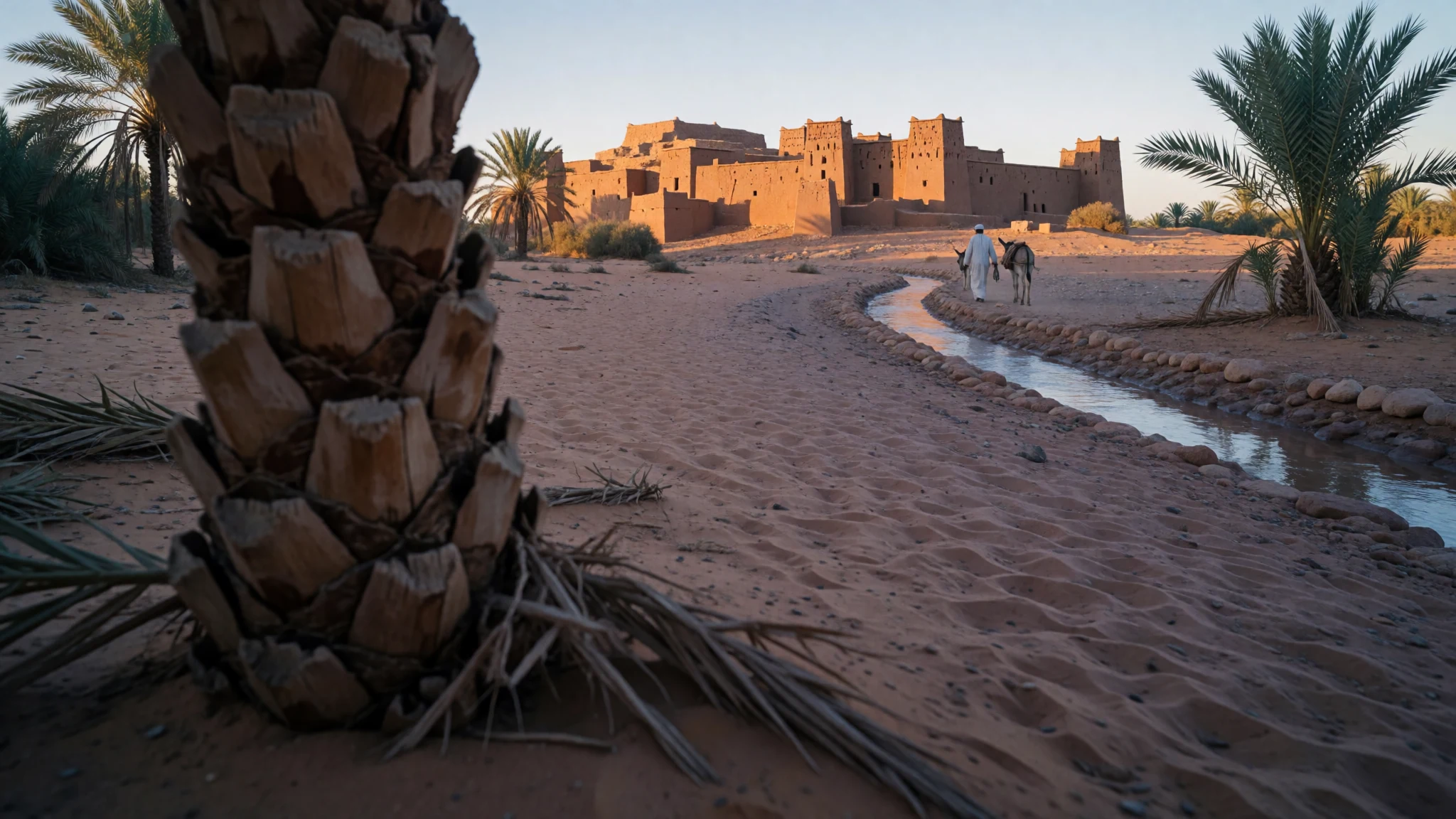
Timimoun is a red-walled Saharan oasis town where palm gardens, salt flats and old desert forts sit within easy reach of each other.
The place
Timimoun sits in the Gourara region of south-central Algeria, at an elevation of 288 metres, on the south-eastern edge of a palm oasis that feeds the town. To the north-west lies a sebkha, a flat salt lake that glitters white when dry, while the Tademaït plateau rises to the south-east. The setting is the point: green gardens below, pale salt on one side, stony upland on the other, and sand filling every gap. The commune has a population of 33,060, small by Algerian standards, and it is the capital of its district and province. Its look is distinctive. Buildings are made of local earth and washed in a red ochre that deepens to orange in late light, so even newer streets share a colour with the older ksour, the fortified villages scattered around the oasis. The climate is hot desert, with almost no rain, very hot summers and warm winters. Daily life follows the heat: shutters closed at midday, streets busy again at dusk, tea drunk slowly under palms. Timimoun is also remote. Big cities lie hours away by road, and most visitors arrive by air, so the town feels like the end of a journey rather than a stop along one. A day or two is enough for the centre; the oasis, the ksour and the salt flats are what justify staying longer.
Its story
Timimoun owes its existence to water. Across the Gourara, settlements grew wherever people could coax groundwater to the surface, and the oasis here developed as a cluster of gardens and fortified villages rather than a single planned town. Traditionally, underground channels called foggaras carried water from higher ground to the palm groves, and families shared it through a carefully measured system handed down over generations. Caravan routes crossed the Sahara through oases like this one, so Timimoun was a place to rest animals, trade dates, salt and cloth, and hear news from north and south. The desert fort at Ksar Draa is dated to around 1100 AD, which gives a sense of how long people have lived in this part of the Sahara. Later the region came under French rule, and that period left its mark on some administrative buildings and on the layout of the modern town, alongside the older earth architecture. More recently Timimoun became the capital of its own province, and its population has grown steadily to 33,060 residents. The old logic still shows. Gardens remain the heart of the place, the ksour and the sebkha mark its edges, and the red walls that now draw visitors were simply the material closest to hand: earth from the ground the town stands on.
What to see
- Ksar Draa — North of Timimoun
Ksar Draa is a desert fort north of town, dated to around 1100 AD. Its earthen walls and narrow lanes show how a defended village was built to keep heat out and water in. A local guide helps with the history. Bring a hat and water, because there is little shade between the walls and the car.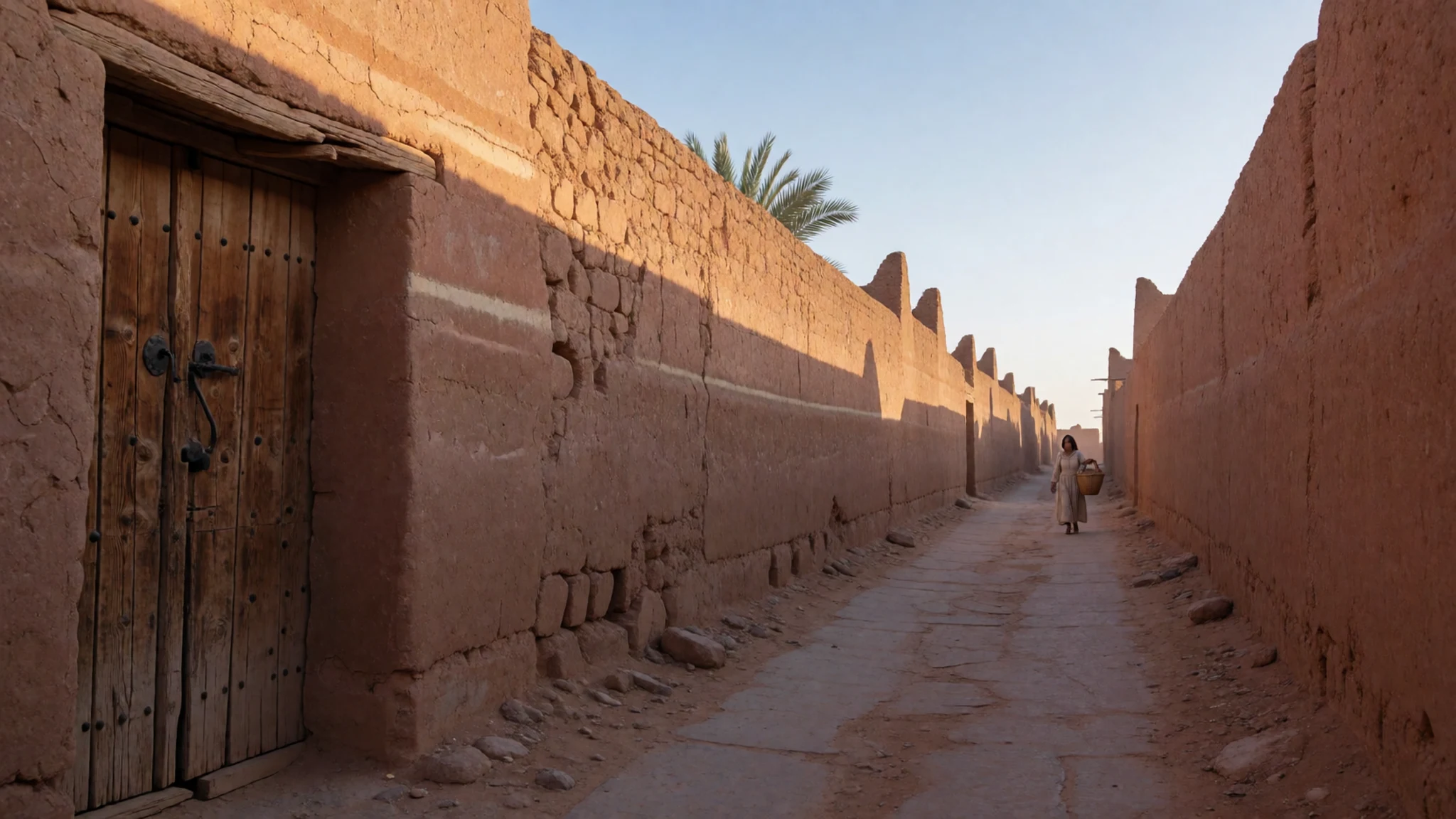
- The sebkha circuit — North-west of Timimoun
The sebkha circuit is a loop around the salt lake north-west of town, usually done in a four-wheel-drive with a driver. It takes in an old ksar with a network of caves beneath it, which villagers still use to escape the summer heat. The salt flat looks best in early morning and evening light.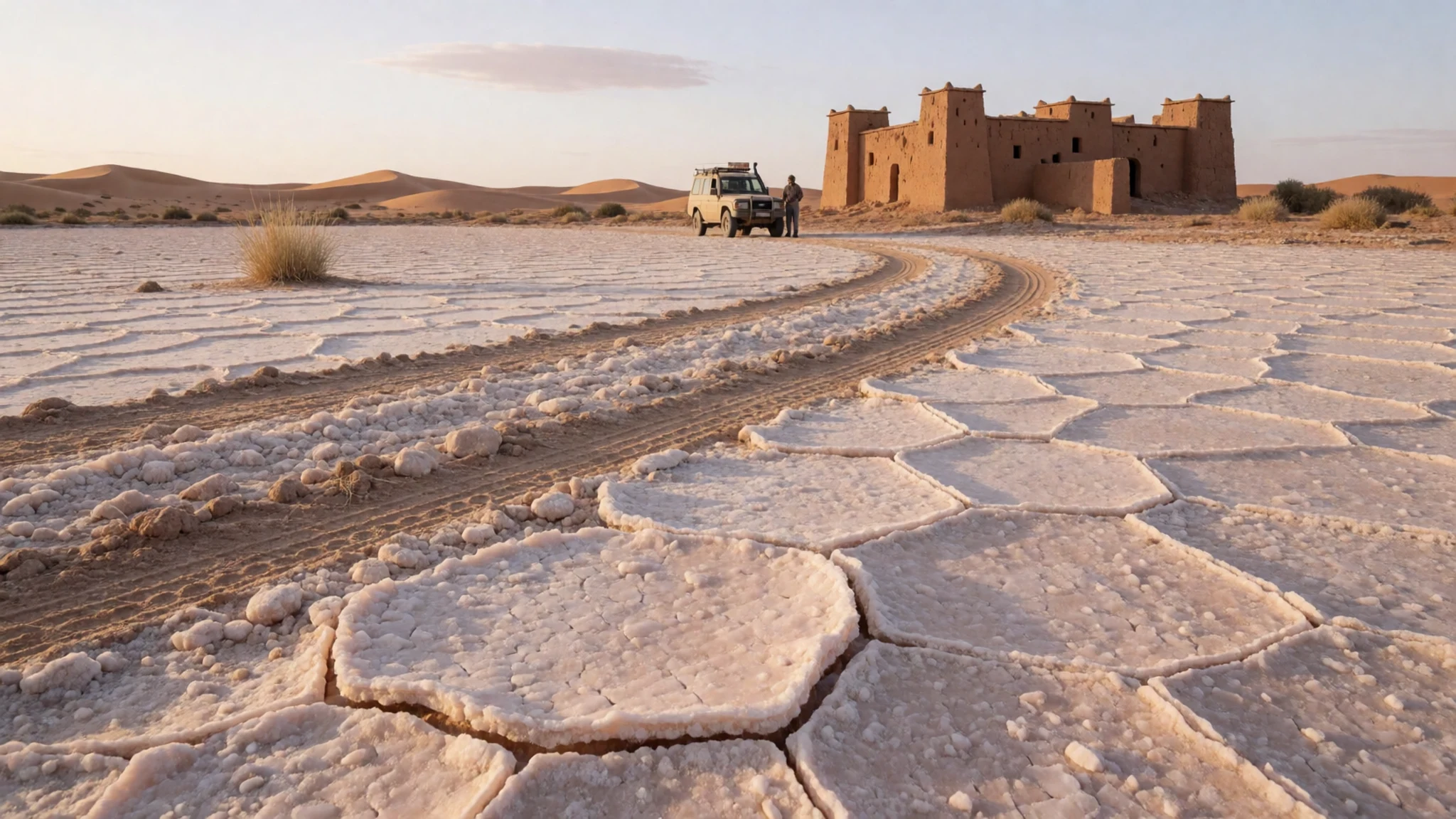
- The palm oasis — Edge of town
The oasis gardens on the edge of town are a quiet walk through palms, small vegetable plots and narrow irrigation channels. Early morning is best, before the heat builds and while farmers are at work. Paths can be sandy and unmarked, so keep the town in sight or ask a local to point the way.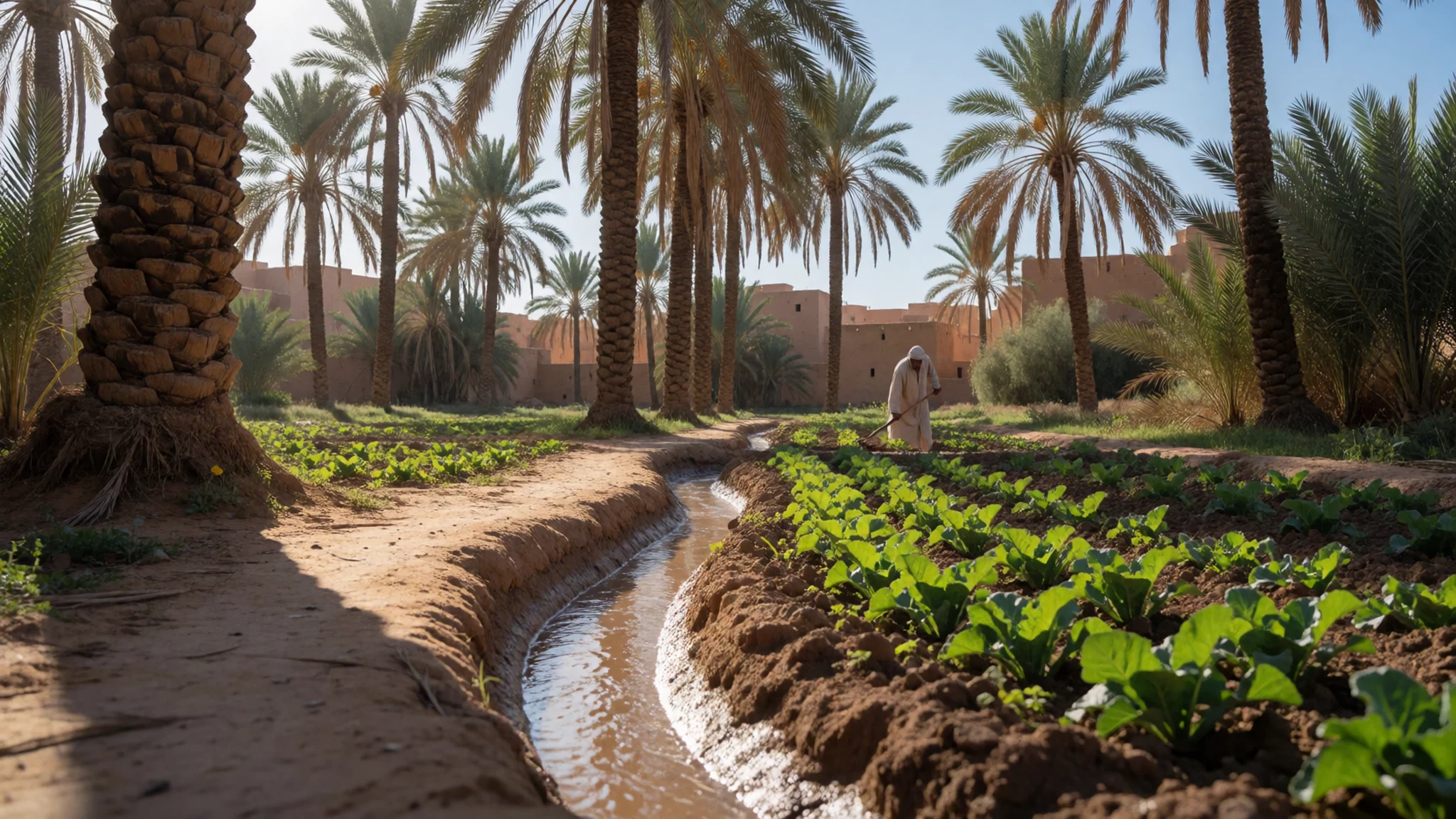
- The red ochre centre — Town centre
The centre of Timimoun rewards a slow wander for its red ochre walls and low earth buildings, whose colour shifts through the day. Late afternoon gives the richest tone. Small shops, cafés and the Air Algérie ticket office are all within a short walk, so the whole centre is easy to cover on foot.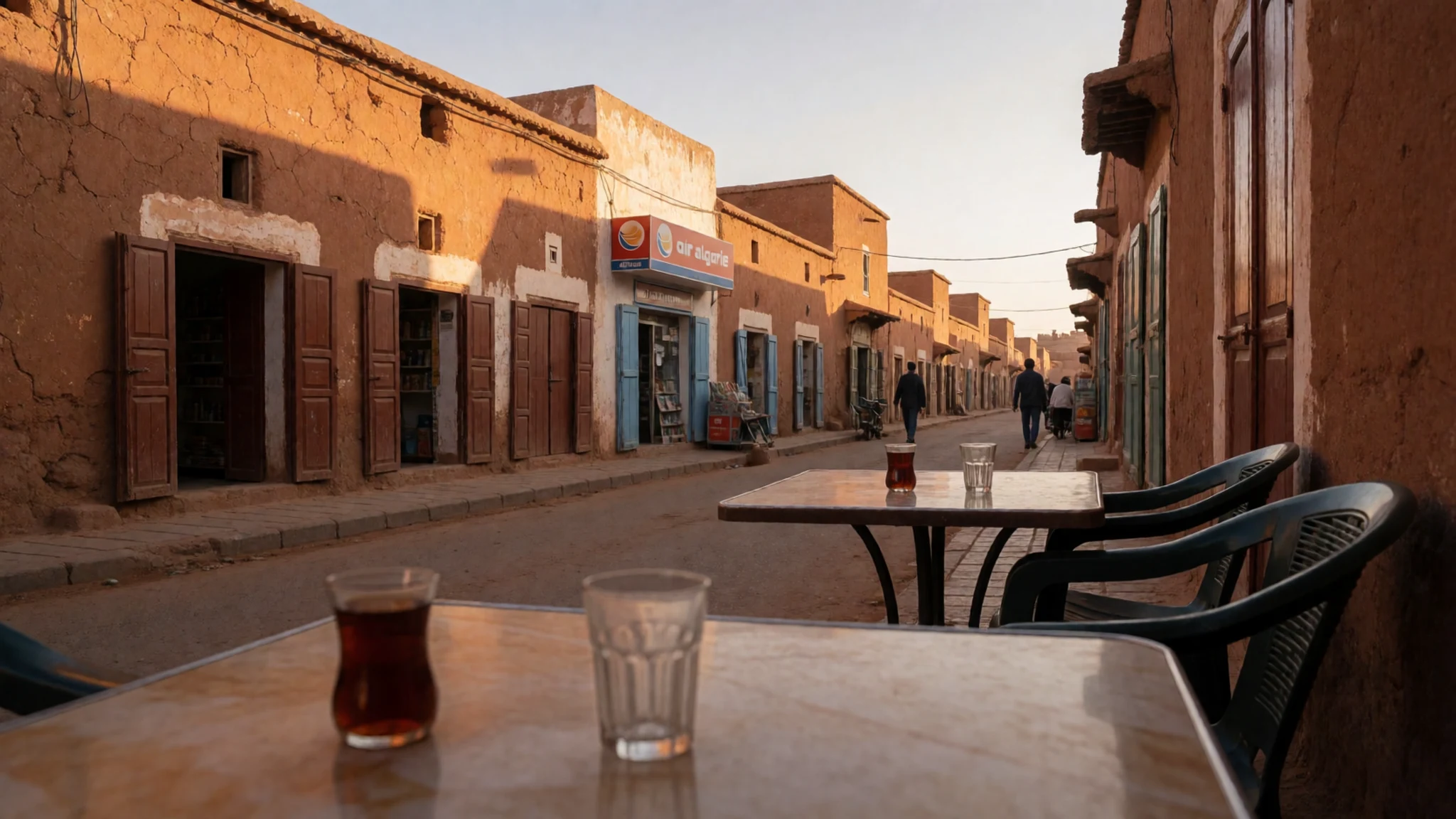
- Carpet weavers — Workshops in and around town
Carpet weaving is a craft visible around Timimoun, and some workshops let visitors watch looms at work. Ask before photographing anyone, and consider buying directly from the weaver rather than through a middleman. Wool is heavy, so think about luggage limits before falling for a large piece.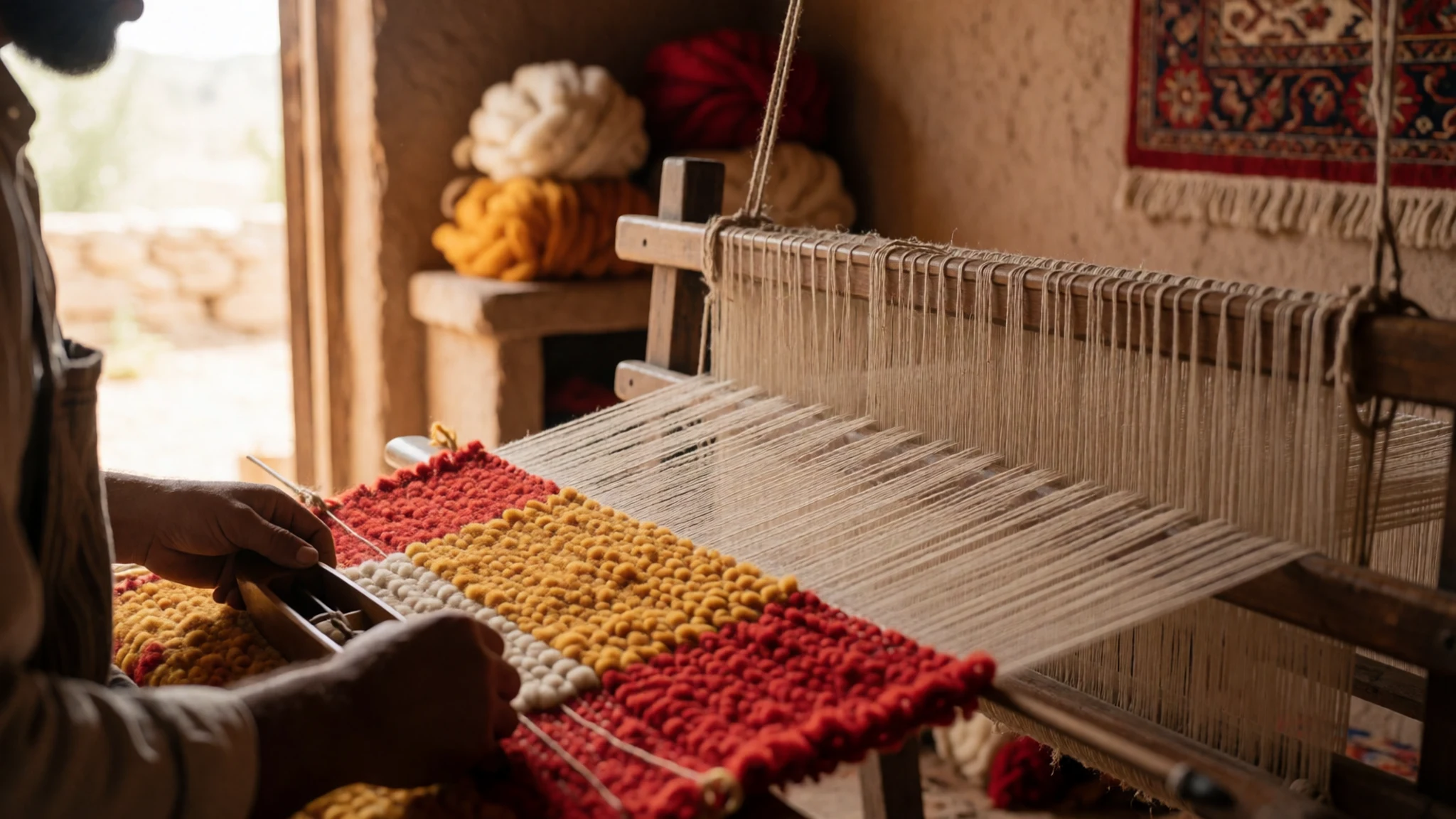
Culture
Timimoun is a conservative, mostly Muslim town where the day is shaped by prayer, heat and hospitality. Arabic is the common language, French turns up in shops and offices, and the Berber (Tamazight) heritage of the region is part of local identity, visible even in the way the town's name is written. Social life centres on the home and the tea tray. A guest may be offered several small glasses of sweet tea, and accepting at least one is polite. Greetings matter: a handshake and a few unhurried questions about health and family come before any business. The Gourara is known for communal singing and poetry performed at gatherings, and visitors are sometimes invited to listen rather than join in. Friday is quieter, with many places closed around midday prayers. During Ramadan, eating, drinking and smoking in public in daylight is discouraged, so visitors should keep to private spaces or a discreet corner. Heat also shapes manners. People rest at midday, and plans made for the hottest hours tend to slip. Patience is part of the experience here, and a slower pace is usually rewarded with better conversation. Ask before photographing anyone, especially women, and accept a refusal with a smile rather than an argument.
What to wear
Traditional dress around Timimoun is built for sun, wind and sand. Men wear the gandoura, a long loose cotton robe, often white or pale, with a turban or chèche wound round the head and face against dust. In cooler months a wool burnous cloak may go over the top. Women traditionally wear long cotton dresses with a large wrap or veil, in plain or bright colours. Wool is also woven locally into carpets and blankets, a craft still practised in the area. Everyday clothes today are mixed. Younger men often wear jeans, tracksuits and football shirts, while older men favour the gandoura. Many women wear long dresses or abayas with a headscarf, and modest cover is the norm in public. Visitors should dress for heat and for local manners at once. Light, loose cotton or linen with long sleeves and trousers or long skirts covers the skin and keeps it cooler than shorts. Women should carry a scarf for mosques and conservative settings. A wide-brimmed hat, sunglasses and a scarf for dust are essential. Wear closed shoes or sturdy sandals for sand and rocky ground, and pack a warm layer, because winter nights in the desert can be properly cold.
What to eat
- Oasis dates — The town market and stalls near the palm gardens
Dates grown in the palm gardens are the local staple and the easiest gift to take home. Varieties differ in softness and sweetness, so ask for a taste before buying. They are eaten alone, with tea, or stuffed into sweets.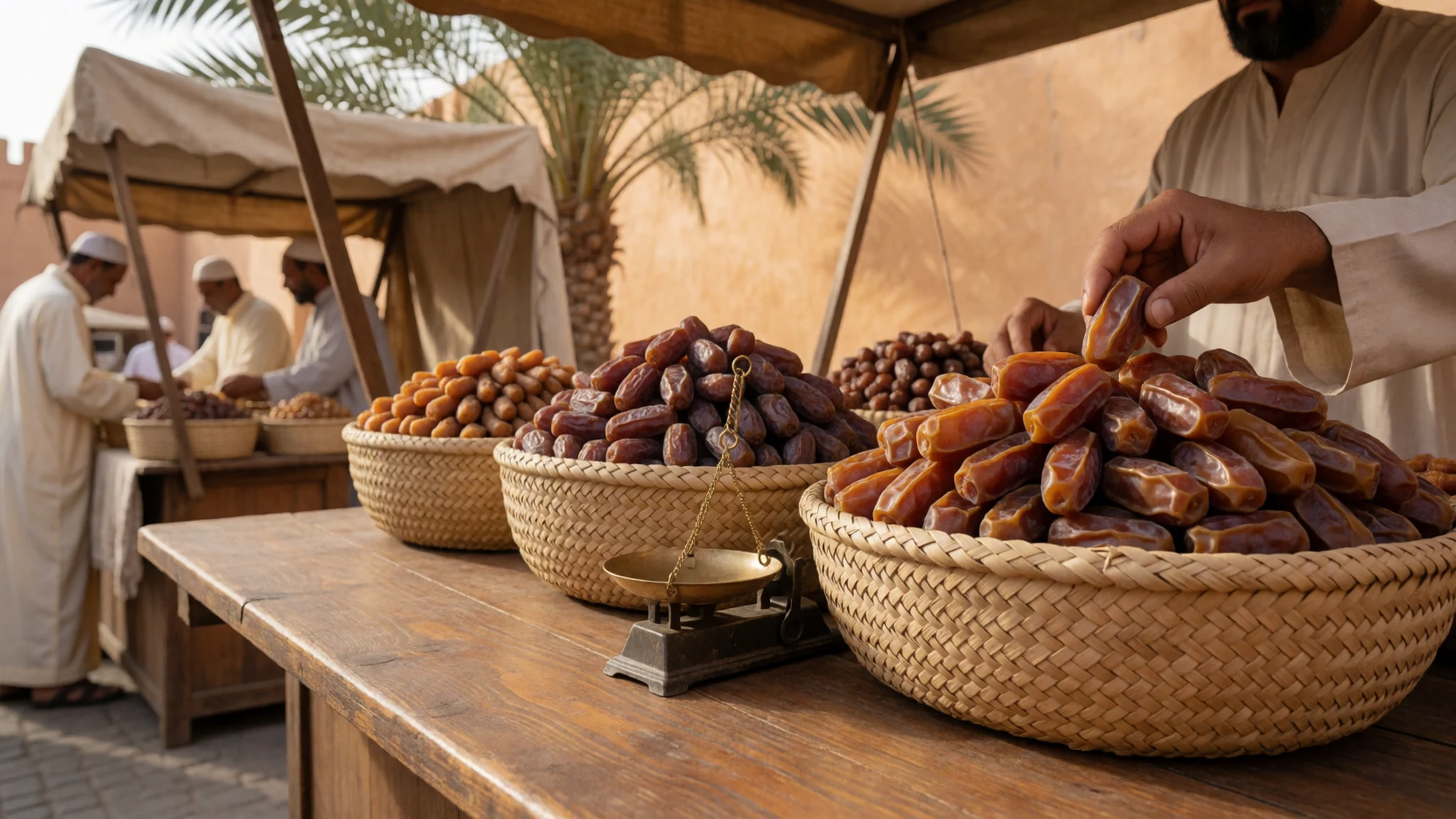
- Mint tea — Any café, or a host's home
Sweet green tea, often with mint, is poured from a height into small glasses and served in rounds. It is the opening move of any visit, and refusing every glass can seem curt. Expect it strong and very sugary.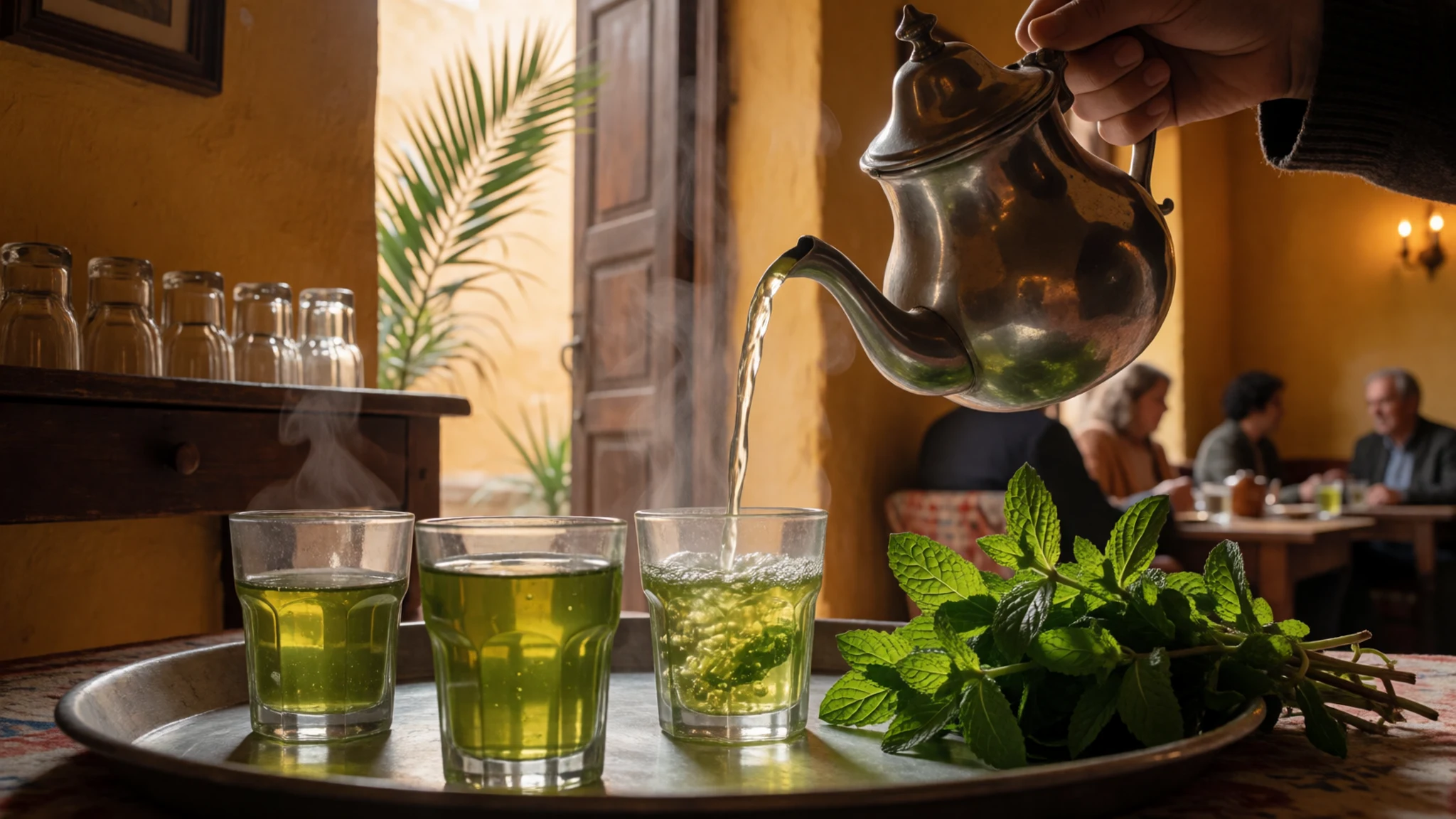
- Couscous — Family-run eateries in the centre
Steamed semolina piled with vegetables and lamb or chicken, a family meal across Algeria and a common Friday dish. In the oasis the vegetables may come from the nearby gardens. Portions are generous and meant for sharing. - Sand-baked bread — Desert camps and eateries on organised excursions
Dense flatbread baked in hot embers or sand is a traditional Saharan staple. It arrives warm, sometimes with a dusting of grit brushed off, and goes well with olive oil, stews or dates. - Chorba — Small eateries around the centre, in the evening
Chorba is a spiced tomato-based soup, usually with lamb, chickpeas or small pasta. It is a common evening starter, and especially welcome when the desert night turns chilly. Lemon and fresh herbs are often added at the table.
Plan it
Best time. November to March, when days are warm rather than punishing and nights are cool. June to August is extremely hot and best avoided.
How long. 2–3
Getting there. Timimoun has its own airport (TMX), with several Air Algérie flights a week from Algiers and one a week from Oran. Buy return tickets, because the town is far from every major city. By road, buses run from Adrar, El Golea and Ghardaïa, and the closest large city, Béchar, is a long day's drive away on limited Saharan roads.
Budget. mid
Tips
- Book flights early and buy a return, as options are few and the ticket office is in the town centre
- Carry plenty of water and drink often, even in winter
- Bring enough cash, as card use is limited in a small desert town
- Hire a local driver or guide for Ksar Draa and the sebkha circuit
- Check your government's current travel advice before booking, as conditions in the Sahara can change
Etiquette
- Ask before photographing people, especially women
- Dress modestly, with shoulders and knees covered
- Accept tea when offered, and keep alcohol and public displays of affection out of sight
Nearby
Sources
- Wikidata Q1021173 (CC0)
- Wikipedia: Timimoun (rev 1377928970) (CC BY-SA 4.0)
- Wikivoyage: Timimoun (rev 5051442) (CC BY-SA 4.0)
- Habib kaki, Entrée de Timimoun, via Wikimedia Commons (CC BY-SA 4.0)
- BRAHIM DJELLOUL Mustapha, Terrasse de l'hotel Oasis rouge de Timimoun, via Wikimedia Commons (CC BY-SA 4.0)
- Kamila ould larbi, Tisserande de Tapis 1, via Wikimedia Commons (CC BY-SA 4.0)
- Kamila ould larbi, Tisserande de Tapis 3, via Wikimedia Commons (CC BY-SA 4.0)
- Kamila ould larbi, Tisserande de Tapis 4, via Wikimedia Commons (CC BY-SA 4.0)
- Kamila ould larbi, Tisserande de Tapis, via Wikimedia Commons (CC BY-SA 4.0)
- Kamila ould larbi, Tisserande de Tapis 5, via Wikimedia Commons (CC BY-SA 4.0)
- Taguelmoust, Timimoun, l'oasis, via Wikimedia Commons (CC BY 3.0)


