Hoggar Mountains
Hoggar Mountains, Algeria
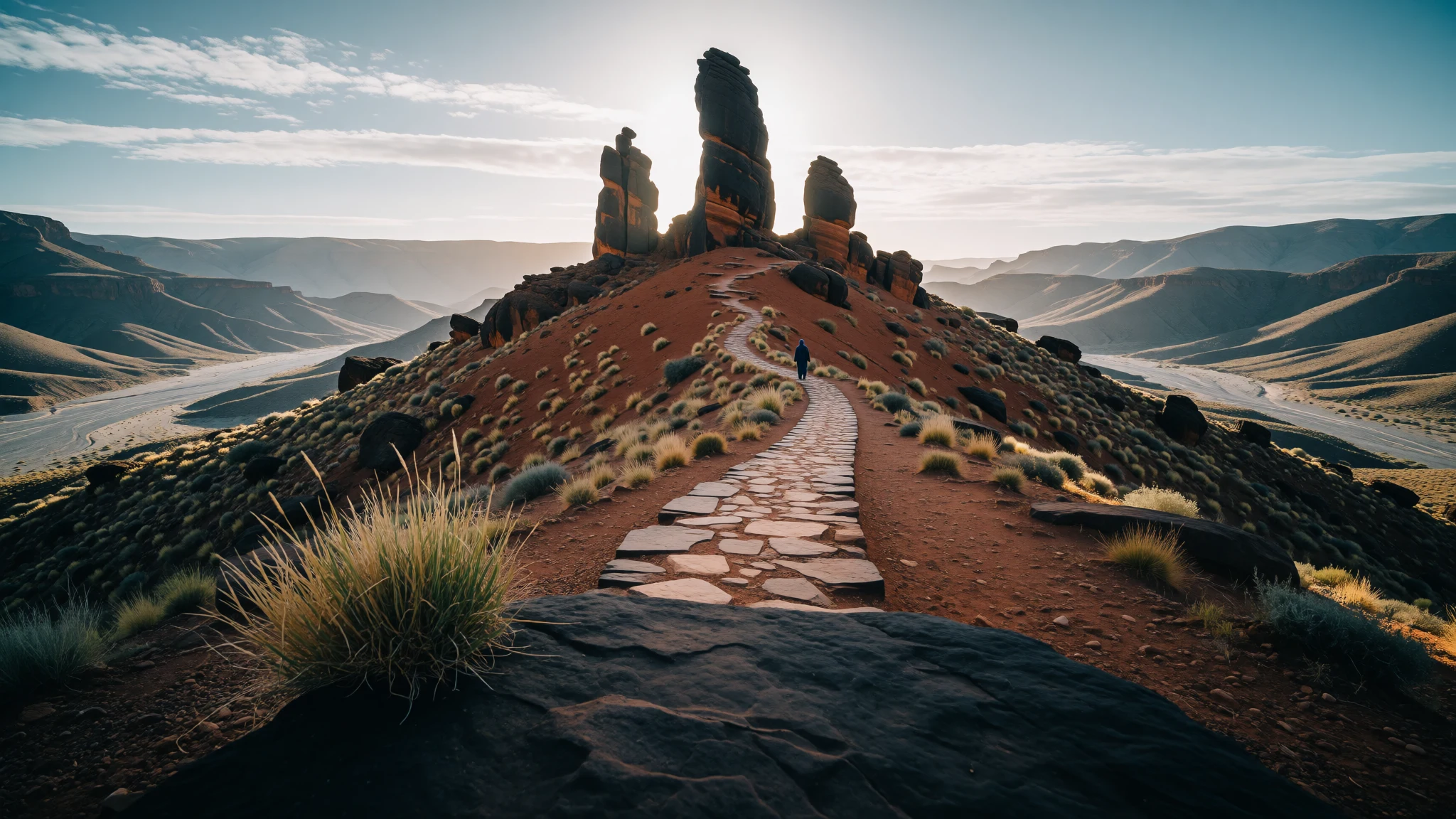
Hoggar Mountains offer silent volcanic towers, Tuareg country and a hermitage on a high plateau, deep in the Algerian Sahara.
The place
The Hoggar Mountains (Arabic Jibāl Haqqār, also spelt Ahaggar) rise from the middle of the Sahara in southern Algeria, close to the Tropic of Cancer. This is a broken highland rather than a neat ridge: black volcanic plugs, rust-coloured sandstone and pale granite stand above gravel plains and dry valleys. The highest point is Mount Tahat at 2,908 m, which is also the top of Algeria. Much of the massif is very old metamorphic rock, with younger volcanic material laid over it in places, and that mix explains the odd needles and towers that photographers chase at sunrise. The base for almost every trip is Tamanrasset, a town roughly 1,500 km south of Algiers. Distances are long and tracks are rough, so the region is explored in four-wheel-drive vehicles with a local guide rather than on a self-drive whim. Much of the area is protected as the Ahaggar Cultural Park, which carried the title of national park until 2011. Lower ground can be fierce in the heat of the day, while the heights are noticeably cooler and nights can be properly cold. Rain is rare, so colour comes from stone and sky rather than vegetation. Crowds are not the problem here. The difficulty is access: a visa, paperwork, a vehicle, fuel and a guide all need arranging in advance. Those who manage it find silence, huge horizons and a landscape closer to another planet than to a holiday postcard.
Its story
The Hoggar Mountains have been lived in for a very long time. Rock paintings in the massif date back to about 6000 BC, left by people who lived here when the Sahara was a different place. Today the highlands are the homeland of the Kel Ahaggar, a Tuareg confederation, whose camel caravans and seasonal pastures shaped how the region was used for centuries. At Abalessa, an oasis near Tamanrasset, stands the tomb attributed to Tin Hinan, remembered as the matriarch of the Tuareg. Stories about her are woven into how many Tuareg describe their own origins, so the site matters to people as well as to archaeologists. A very different figure arrived in the twentieth century. Charles de Foucauld, a French former soldier turned hermit, built a retreat on the Assekrem plateau, and a few Catholic monks still live there. Visitors of any faith, or none, are usually received with tea and simple hospitality. The region also carries a darker modern chapter: France carried out underground atomic tests in these mountains in the 1960s, and the memory remains part of local and national history. Underneath all of this lies the rock itself, mostly about two billion years old in its metamorphic core, with younger volcanic eruptions piled on top. People, prayer, paint and stone all share the same high ground, and the layers are easy to read once a guide explains what to look for.
What to see
- Assekrem plateau — East of Tamanrasset, high in the massif
The Assekrem plateau sits high in the Hoggar Mountains, reached by a long, rough drive from Tamanrasset. Visitors come for sunrise and sunset, when the volcanic spires and layered ridges turn orange and then violet. Nights are cold, so groups often sleep nearby in simple shelters and walk the final stretch before dawn.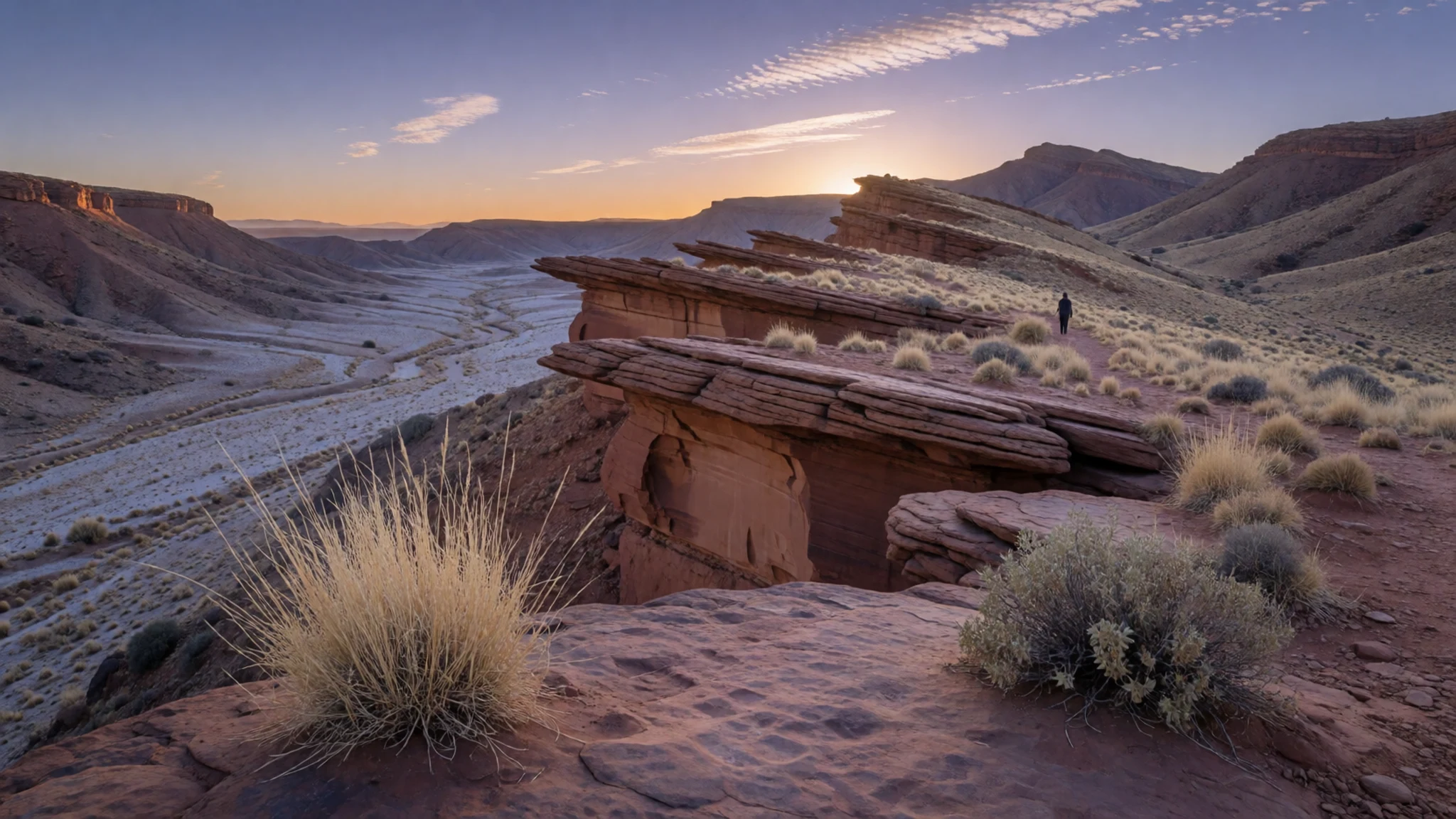
- Foucauld's hermitage — Assekrem plateau
A small stone hermitage on the Assekrem plateau was built by Charles de Foucauld and is still home to a few Catholic monks. The rooms are plain and the setting is the draw. Visitors may be offered tea. Keep voices low, ask before photographing inside, and treat it as a living religious house.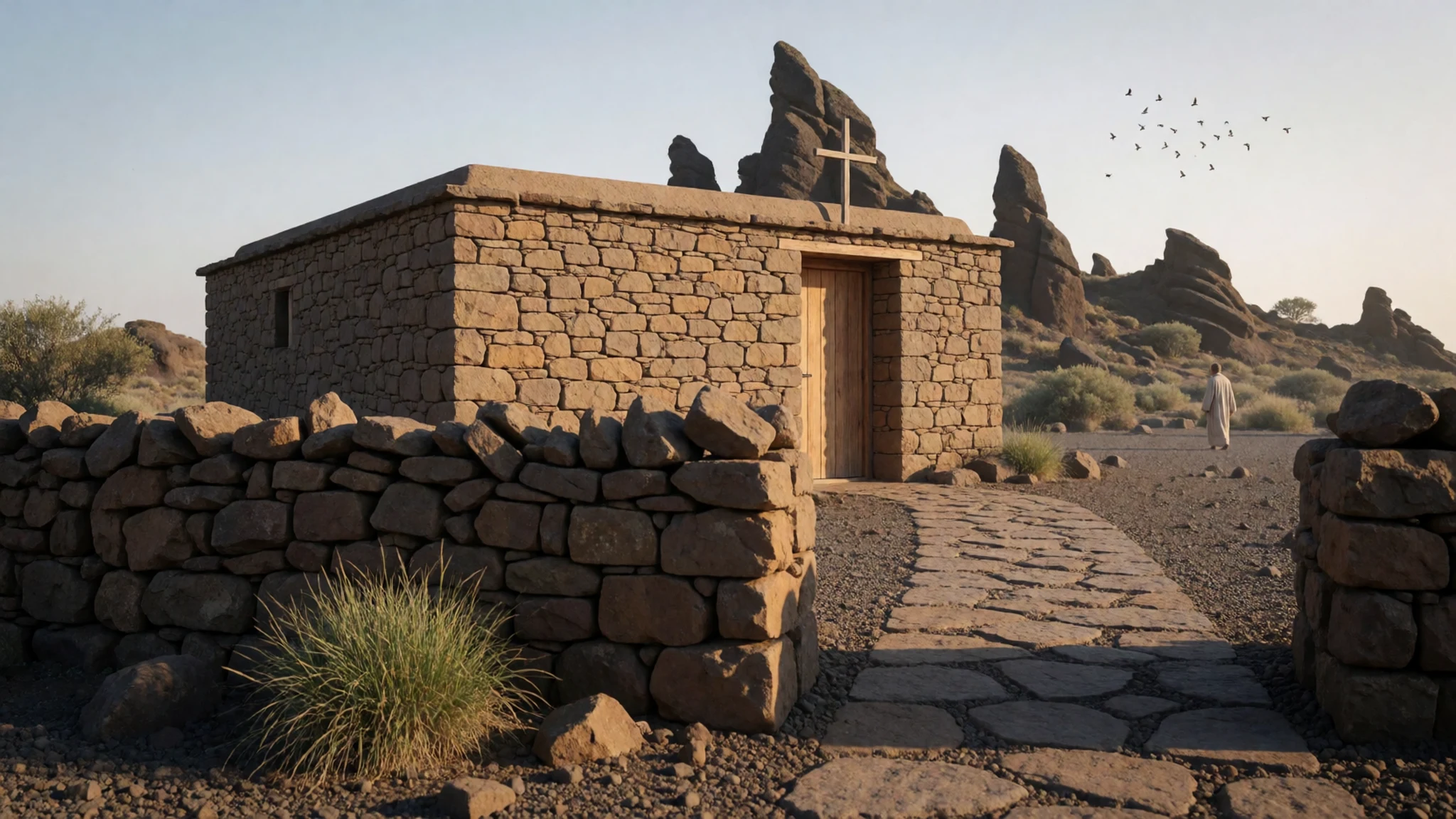
- Mount Tahat — Central Hoggar, north-east of Tamanrasset
Mount Tahat reaches 2,908 m and is the highest summit in Algeria. It is a serious expedition rather than a day walk, needing a guide, supplies and careful planning around heat, wind and cold nights. Even from a distance, its dark bulk gives a sense of the scale of the massif.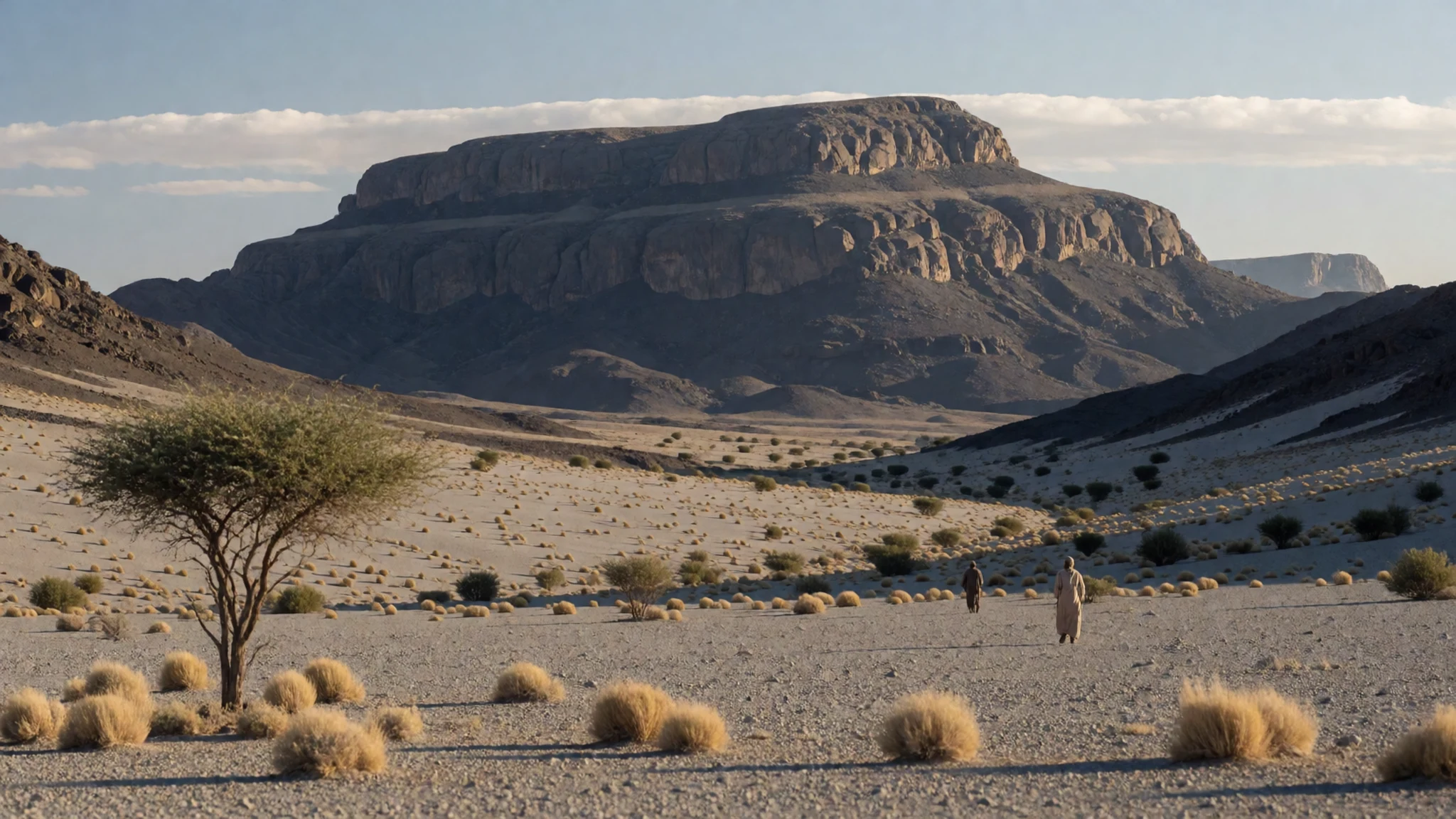
- Tomb of Tin Hinan, Abalessa — Abalessa oasis, near Tamanrasset
At Abalessa, an oasis a short drive from Tamanrasset, a monument marks the tomb of Tin Hinan, the woman many Tuareg regard as their ancestral matriarch. The site is modest in appearance but heavy with meaning. A local guide adds the stories that explain why the place matters to Tuareg identity.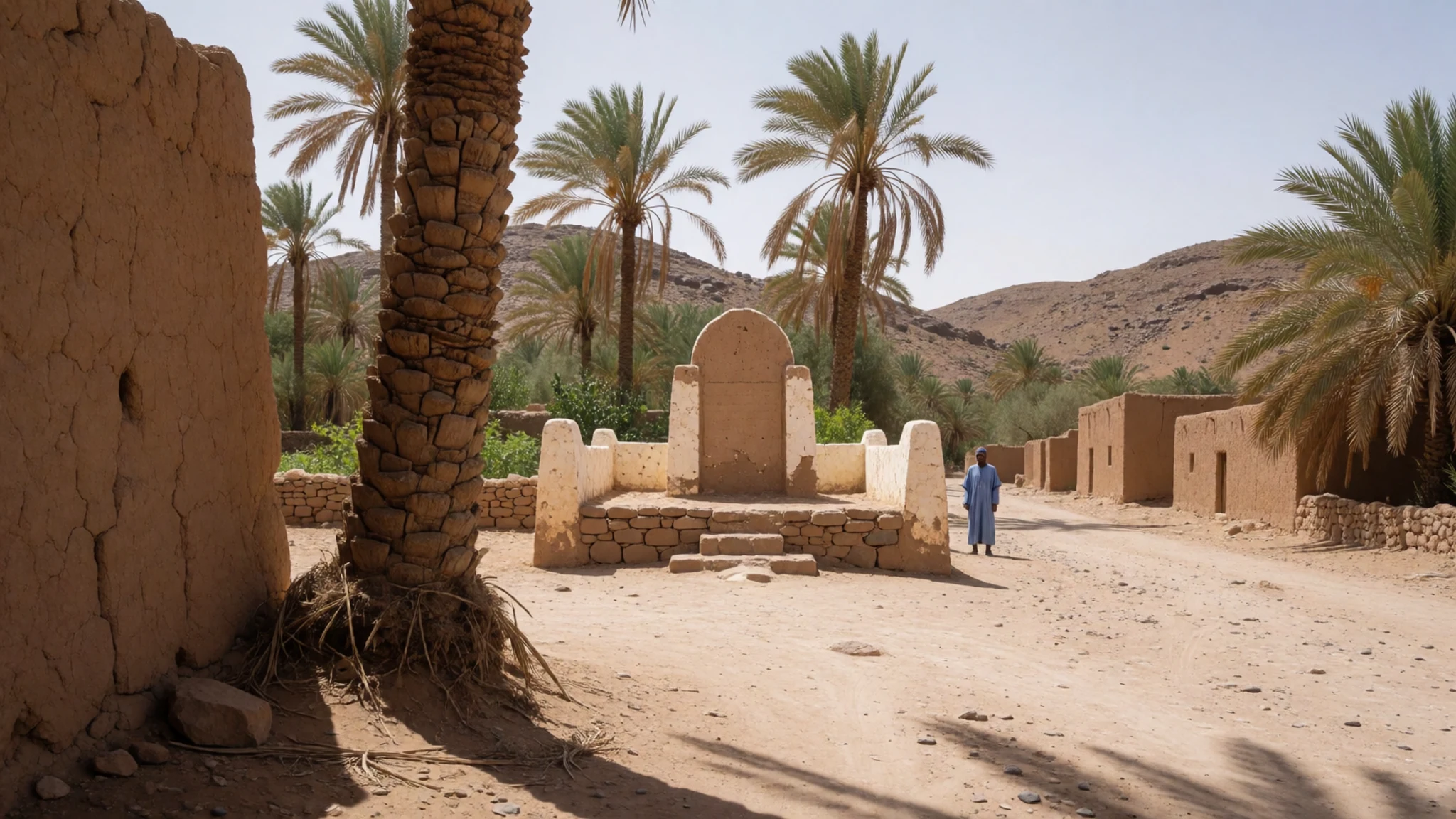
- Tamanrasset and the Ahaggar rock art — Tamanrasset and surrounding valleys
Tamanrasset is the practical gateway: a place to arrange permits, vehicles, food and guides. From here, day trips lead into valleys with ancient rock paintings, some dating to around 6000 BC. Guides know which sites are reachable and respectful to visit. Do not touch painted surfaces, because oils from skin cause damage.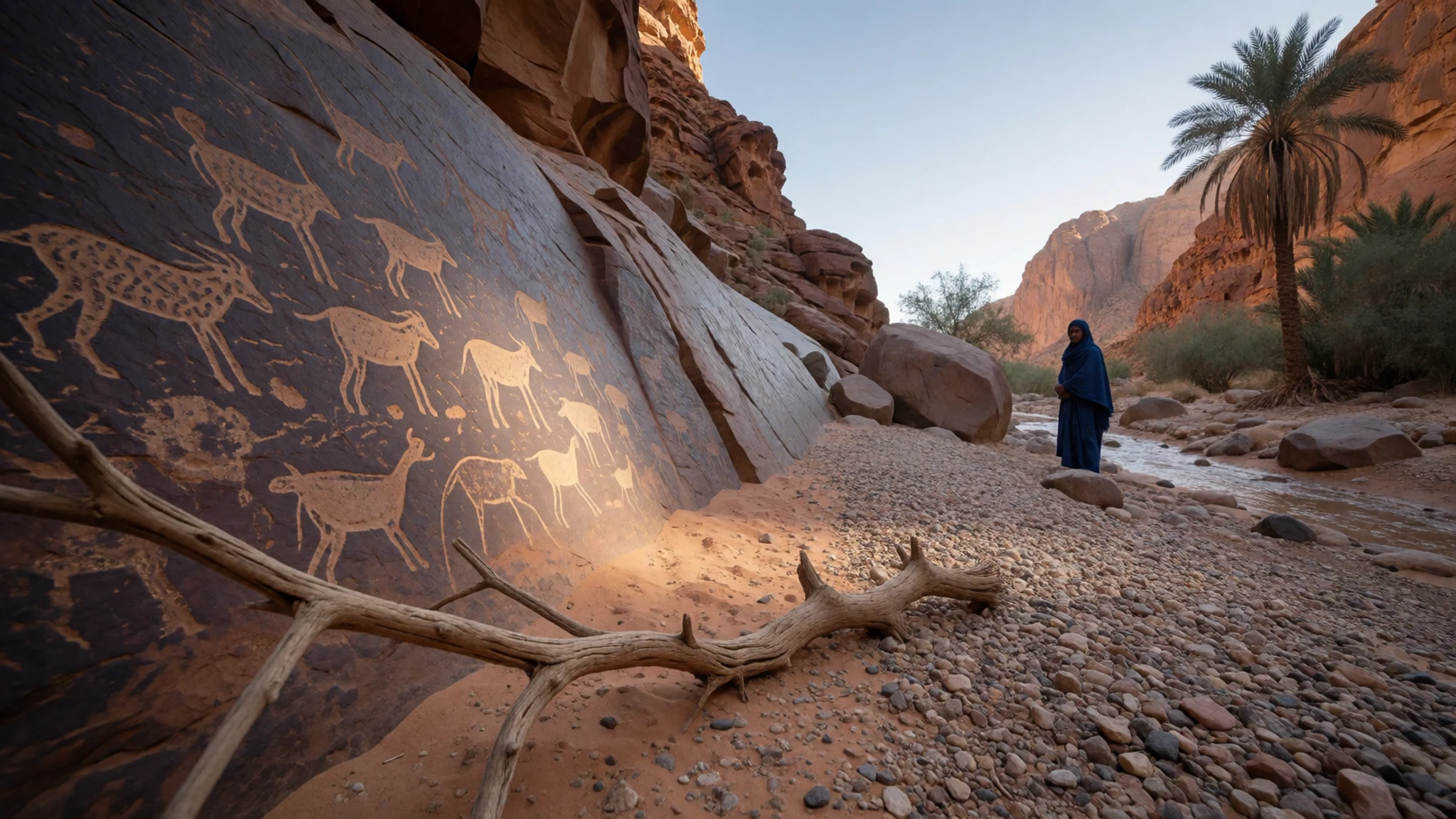
Culture
The Hoggar Mountains are Tuareg country, and the Kel Ahaggar have a distinct culture within Algeria's wider Arab and Berber mix. Hospitality is central. A guest is offered tea, usually poured in several rounds from a small pot, and accepting at least one glass is part of good manners. Honour matters across Algeria, so criticism, impatience or public embarrassment of a host, guide or driver can cause real offence even when it is meant lightly. Showing interest in local history, the landscape and the tea ritual earns warmth faster than any gift. Tuareg tradition has long placed particular value on poetry, song and the oral memory of families, and a guide may recite or explain verses at a campfire if the mood is right. Many men in the highlands wear the indigo veil as everyday dress, and women often hold considerable standing in family and property matters, which surprises some visitors. Daily life follows heat and prayer times, so mornings and evenings are the busiest hours and the middle of the day is for rest. Mobile signal is patchy away from Tamanrasset, plans change with weather and vehicle trouble, and patience is part of the trip. Ask your guide before photographing any person, camp or tent, and accept a refusal without argument.
What to wear
Traditional dress in the Hoggar Mountains is shaped by sun, sand and wind. The best-known item is the tagelmust, a long cotton cloth wound around the head and face, often dyed indigo so that the colour can rub off onto the skin, which is why Tuareg men have sometimes been called the blue men of the Sahara. It is worn by adult men in daily life and keeps off dust and glare. Over it come loose, wide-sleeved robes in cotton, often in blue, white or sand shades, and leather sandals suit rocky ground. Women wear long wrapped cloths and headscarves, together with silver jewellery, including pendants and rings, with designs that vary between families and craft workshops. Leatherwork, such as bags, cushions and tent decorations, is another strong local craft. Today, many people in Tamanrasset mix traditional pieces with ordinary shirts, trousers and trainers, and the veil or robe is common for ceremonies and in the countryside. Visitors should wear loose, long-sleeved cotton or linen in light colours, with trousers or long skirts for modesty, particularly for women. A scarf is useful for sun, dust and covering the head near religious sites. Bring sturdy closed shoes or boots for rocky paths, a sun hat and sunglasses, and a warm fleece or down layer, because nights on the plateau are cold.
What to eat
- Taguella — Tuareg camps and family meals around Tamanrasset
Taguella is a flat, dense bread of the desert nomads, traditionally baked buried in hot sand and embers. It is usually broken up and eaten with a sauce of meat and vegetables. A guided camp meal is the likeliest place to try it properly made.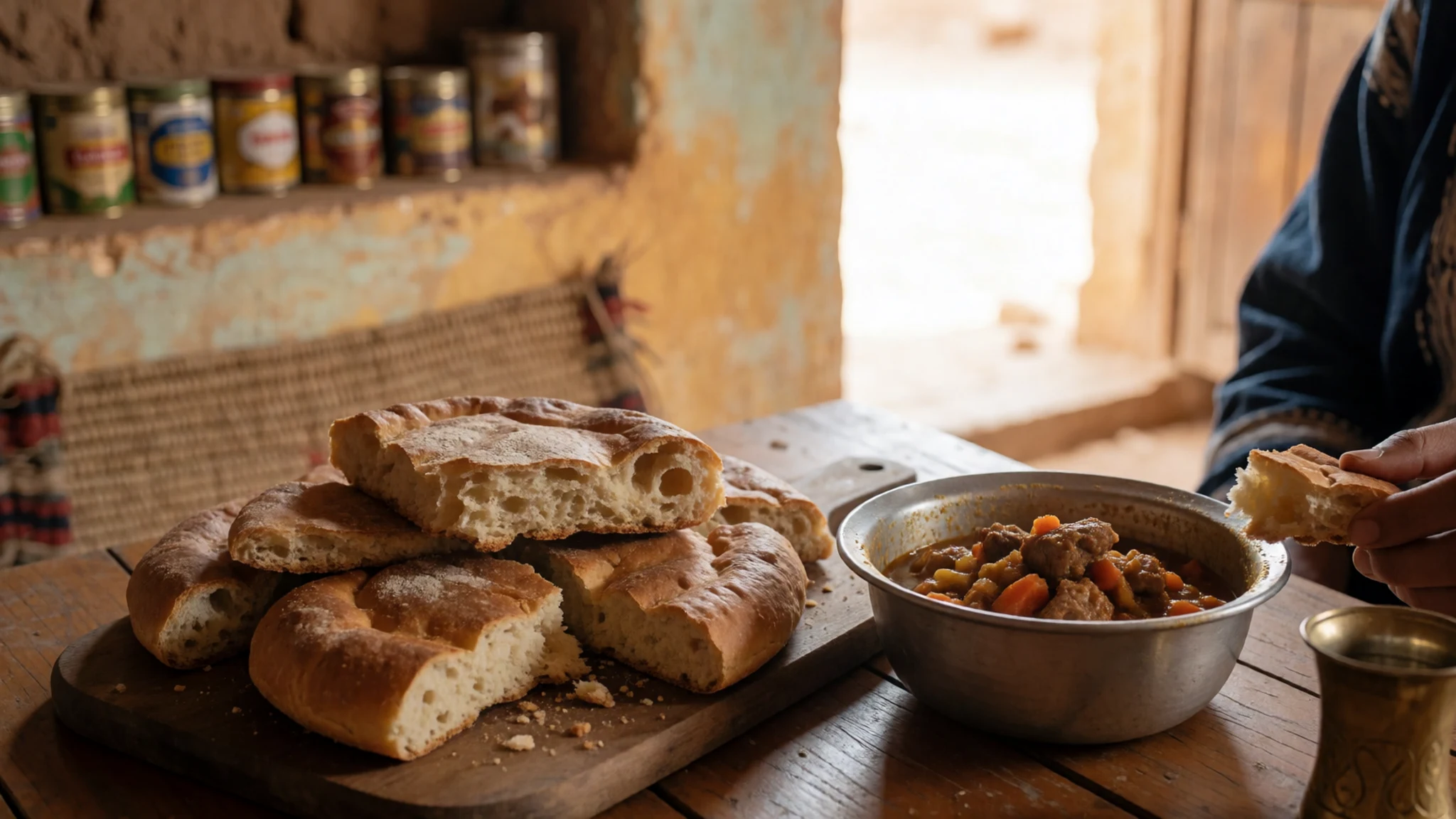
- Fettate — Local eateries in Tamanrasset
Fettate is a Saharan speciality associated with Tamanrasset, built on bread or pastry soaked in sauce and topped with meat. It is hearty, filling food for cold nights or long days. Ask at a small local eatery for the version they make.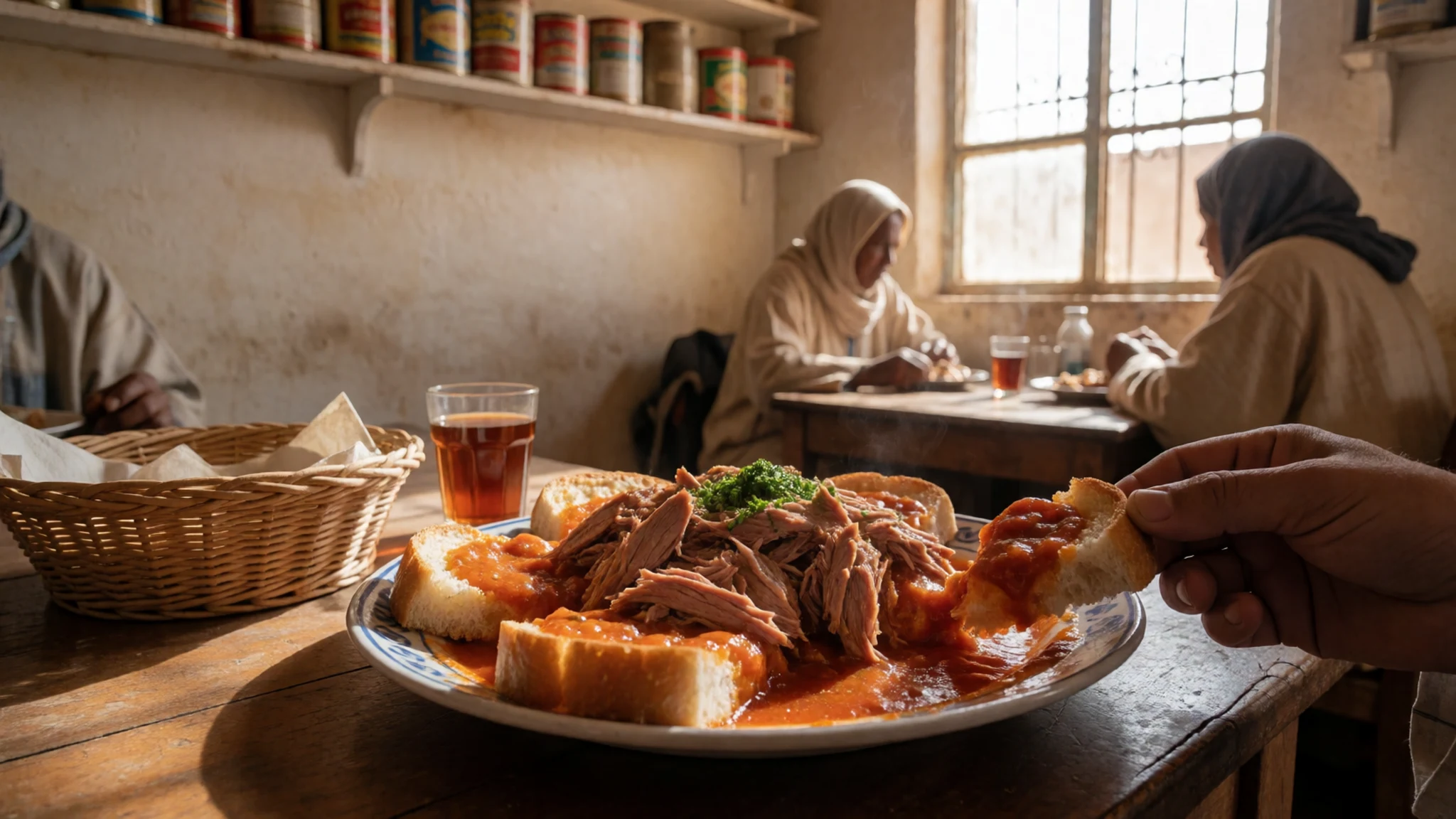
- Couscous — Family tables and simple restaurants across Algeria
Couscous is steamed semolina served under a stew of meat or vegetables such as carrot, courgette and chickpeas. It is the standard celebration meal in much of Algeria, often shared from a single large dish. Friday lunch is a common time to find it. - Chorba — Tamanrasset restaurants and home kitchens
Chorba is a spiced, meaty soup, typically served hot and often eaten to break the fast in Ramadan. It suits cool desert evenings well. Small restaurants in town usually serve it with bread, and it is a safe first choice for cautious eaters. - Brik — Bakeries, snack counters and market stalls in town
Brik is a thin, crisp pastry parcel, usually fried and filled with ingredients such as egg, tuna or minced meat. It is a quick snack and easy to eat on the move. Look for fresh ones at busy stalls and counters rather than ones sitting for hours.
Plan it
Best time. October to November and February to March, when daytime heat is more bearable and nights on the plateau are cold but manageable. Midsummer is very hot on the plains, and midwinter nights at altitude can be harsh, so pack for both extremes.
How long. 4–6
Getting there. Fly to Tamanrasset, the usual gateway, with domestic connections from Algiers; most overseas visitors need a visa arranged in advance, which can be slow. From Tamanrasset, a licensed local guide drives you into the massif and up to Assekrem in a four-wheel-drive vehicle on rough tracks.
Budget. high
Tips
- Start visa paperwork and the booking of a licensed local operator many weeks ahead
- Check your government's current travel advice for southern Algeria before committing
- Carry cash, because cards and cash machines are unreliable away from town
- Bring more drinking water than seems necessary, and a warm layer for nights on the plateau
- Leave early in the morning for long drives and sunrise views
Etiquette
- Ask before photographing people, tents or camps
- Accept tea when it is offered and do not rush the ritual
- Keep rock paintings untouched and carry your rubbish out
Nearby
Sources
- Wikidata Q26399 (CC0)
- Wikipedia: Hoggar Mountains (CC BY-SA 4.0)
- Wikivoyage: Algeria (CC BY-SA 4.0)
- Photo: Cultural park of the Ahaggar, Algeria, Bernard Gagnon (CC BY 4.0)
- Photo: Hoggar National Park, Assekrem, Tamanrasset, Mohammed Amri (CC BY-SA 4.0)
- Photo: Blank physical map of Algeria, Sting (CC BY 3.0)
- Photo: Asskrem region in Hoggar, Patrick Gruban (CC BY-SA 2.0)
- Photo: Topographic map of the Hoggar Massif, Heribertus2 (CC BY-SA 4.0)
- Photo: Algeria - Hoggar - Assekrem, Guillaume Lecoquierre (CC BY 2.5)
- Photo: Hoggar, Tamanrasset National Reserve, Aboubakrhadnine (CC BY-SA 4.0)
- Photo: The Hoggar National Park in Tamenrasset, Abderrehmann H. Dribat (CC BY-SA 4.0)


