Oran
Oran, Algeria
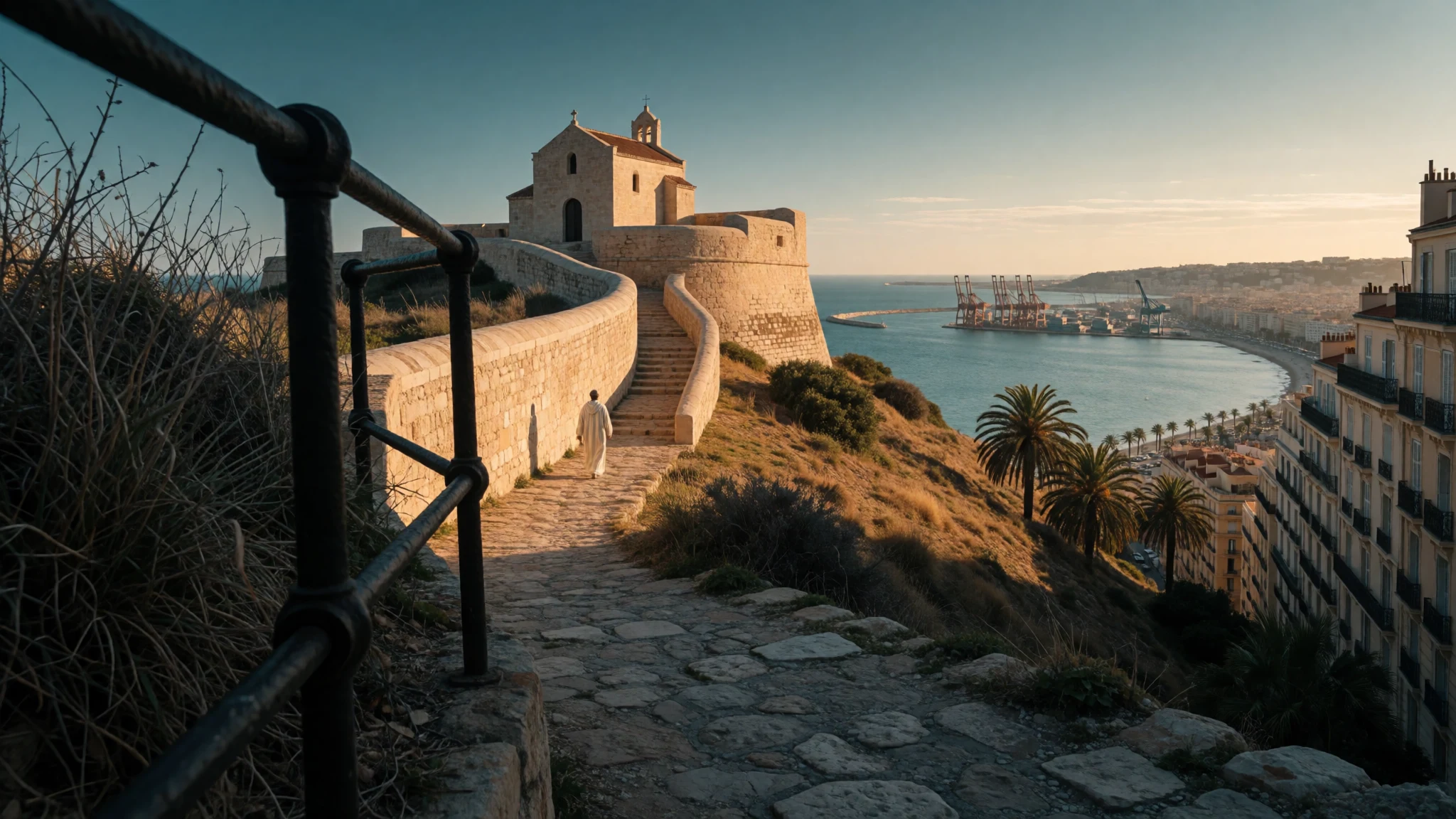
Oran is a Mediterranean port city where Spanish forts, French boulevards and Algerian music meet, on a sea front made for evening walks.
The place
Oran sits on the Mediterranean coast of north-west Algeria, about 432 km west-south-west of Algiers, in a bay closed in by hills. Around 852,000 people live in the city itself, and the wider urban area holds roughly 1.5 million, which makes it the commercial and industrial centre of the country's west. The centre stands about 101 m above sea level, and the ground climbs steeply behind the harbour, so most streets tilt either towards the water or up towards the old fort on the ridge. The climate is hot semi-arid: summers are dry and sunny, winters mild, and what rain there is falls in the cooler months. The middle of town is compact and walkable. Narrow lanes in the old quarter of Sidi El Houari give way to wide French-era boulevards, arcaded squares and apartment blocks with ironwork balconies, and the two layers sit side by side rather than apart. Mosques, a former cathedral and a Spanish fortress share one skyline. Along the shore a long promenade carries families, joggers and couples once the heat drops, and cafés fill late into the night. Oran is a working port and a business and university town first, so it feels lived-in rather than staged. Visitors are fewer than in Morocco or Tunisia, which means little queuing, but also few signs or menus in English. Some French, or a phone with a translation app, makes daily life much easier. The city is known across the Arab world for its music and its late evenings.
Its story
Oran's recorded story starts well before the present city. Phoenician traders used this coast, and burial grounds from the Punic period survive nearby at places such as Les Andalouses and Mers El Kébir. A small Roman settlement later stood in the area, then faded as Vandals, Berber kingdoms and finally Arab armies passed through. The city as it now stands was founded in the early tenth century, in 902 by one count and 903 by another, by Andalusian seafarers and local Berber groups, and trade with Muslim Spain was its first business. Under the Zayyanid rulers of Tlemcen it became a busy outlet for goods heading to the northern shore of the Mediterranean. In 1509 a Castilian force led by Cardinal Cisneros took the city, and Spain held it, with one interruption, for close to three centuries. Algerian forces retook it in 1708, Spain returned in 1732, and the bey Mohamed el-Kebir ended Spanish rule for good in 1792. The forts above the harbour, Santa Cruz among them, are Spanish work, while the Pasha mosque of 1797 belongs to the bey's period. French rule followed, bringing broad new streets, a sizeable European population and fast growth. After independence Oran kept its role as the main commercial city of western Algeria. Most of its Jewish residents left in those years, and the change is still visible in stone: the former Great Synagogue now serves as a mosque.
What to see
- Santa Cruz Fort and chapel — Hilltop above the harbour
The Spanish-built fort and its small chapel crown the ridge above the harbour, and the walk or drive up is a good way to grasp how Oran is laid out. From the terrace the bay, the port, the French-era grid and the old quarter spread below. Go early or late, when haze and heat ease.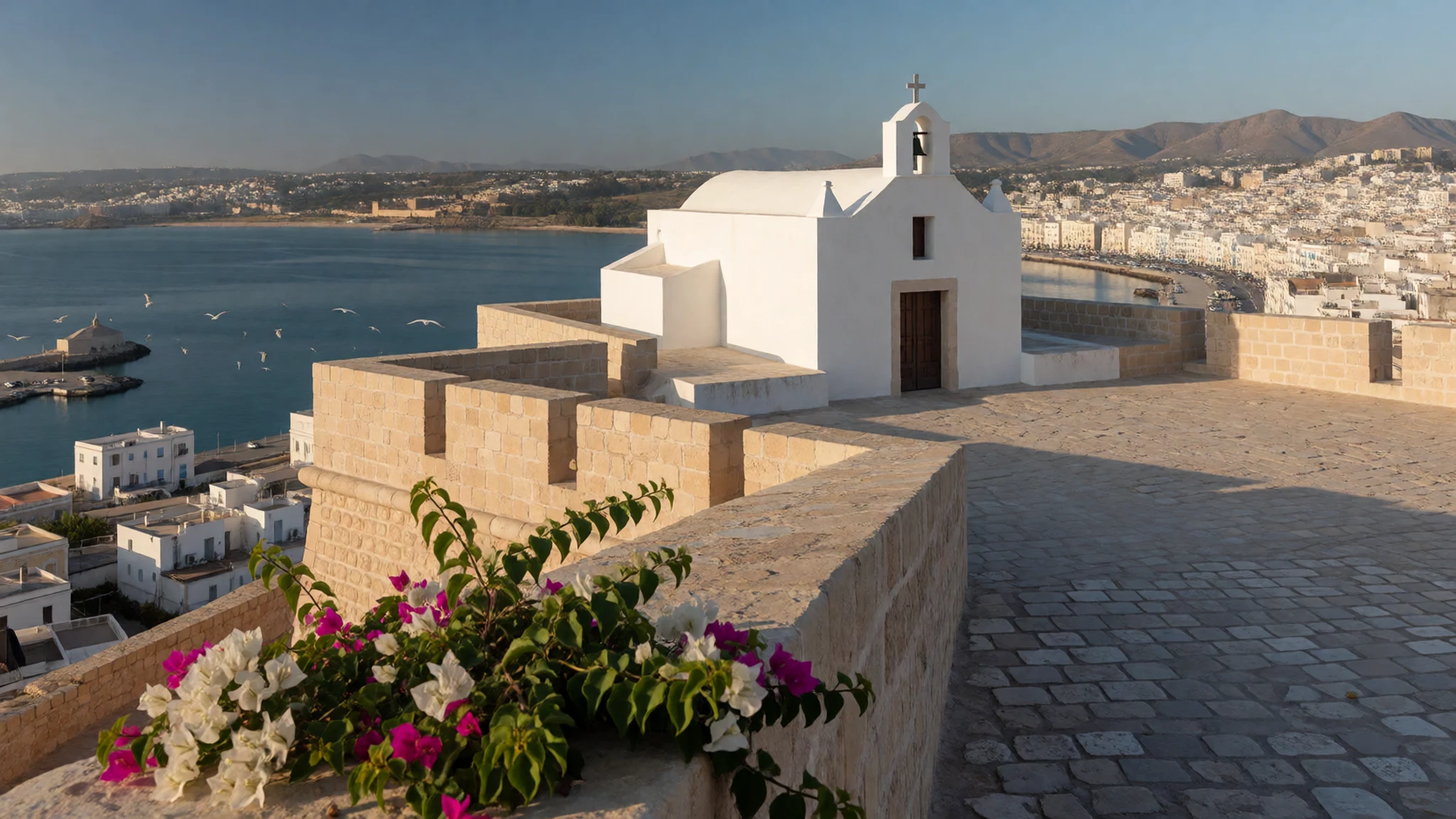
- Sidi El Houari and the Hassan Pasha Mosque — Sidi El Houari, old quarter
Sidi El Houari is the old quarter below the fort, with narrow lanes, steep steps and Spanish-era walls. The ornate Pasha mosque here dates from 1797, though it looks in need of repair. The area suits slow wandering with no fixed plan, and a local guide helps with the history.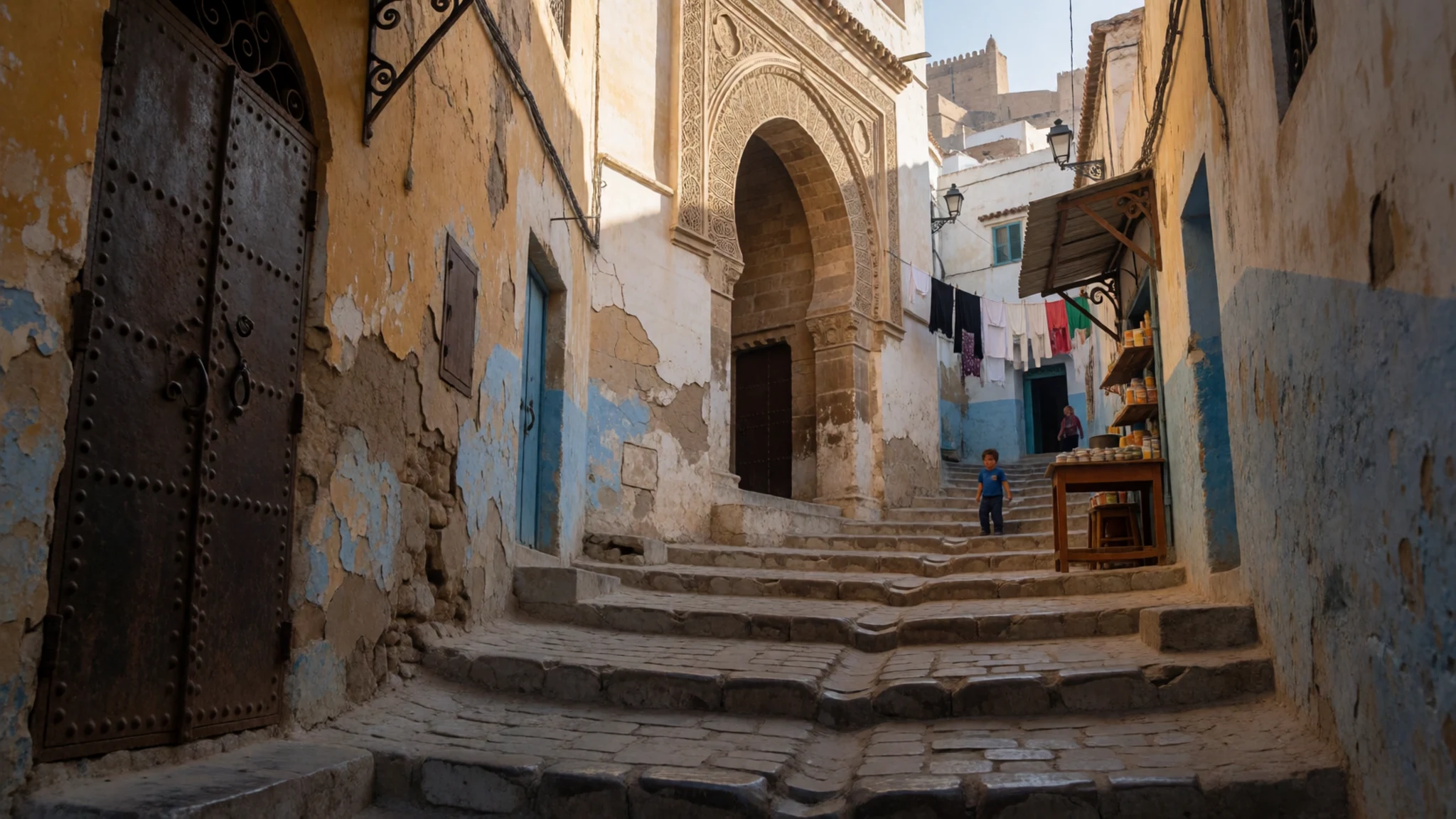
- Sacred Heart Cathedral — Central Oran
Built in 1930 as a Catholic church, this building now works as a library. Its tall, plain modern lines are a reminder of how much of central Oran grew during the French period. Opening arrangements for visitors change, so check locally before making a special trip.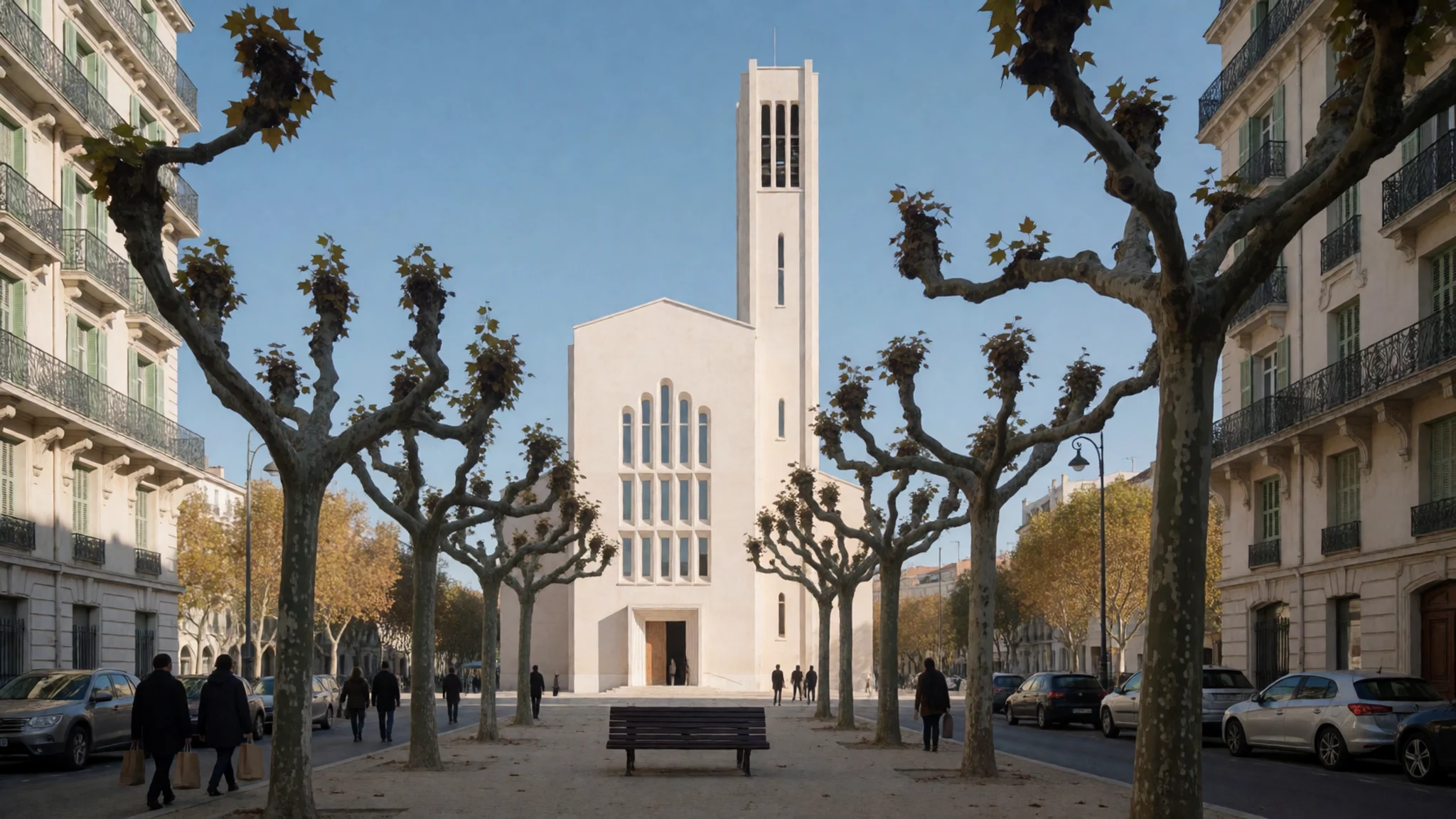
- The Corniche and sea front — Sea front, Boulevard de l'ALN
The sea-front promenade is where Oran takes its evening air. Families, students and couples stroll above the water as the light turns, with the bay on one side and the city climbing on the other. A walk here costs nothing and is pleasant in any season except the hottest afternoons.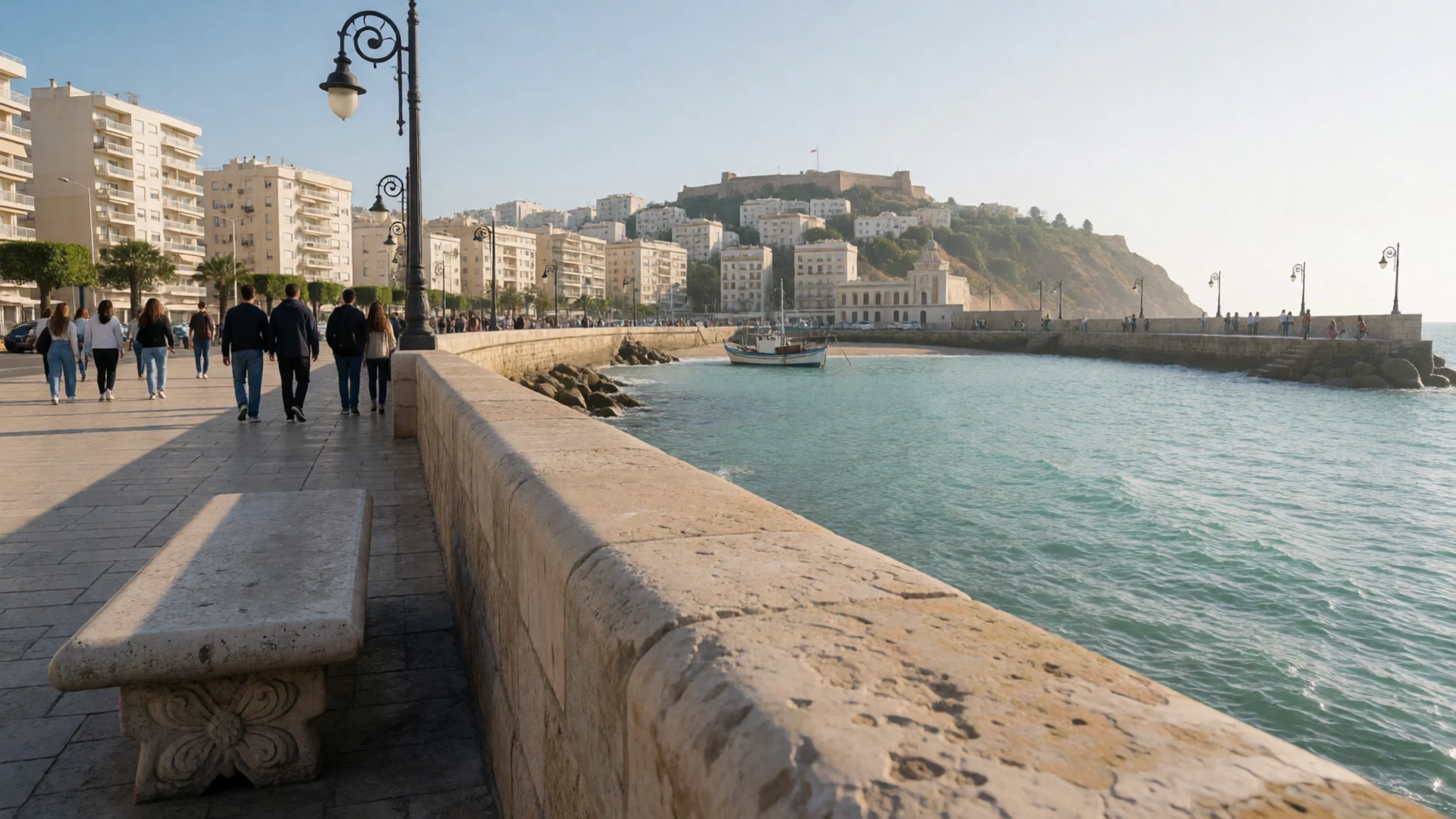
- Ahmed Zabana National Museum — Central Oran
Named after a resistance fighter from the war of independence, this museum devotes its first floor to how that struggle played out in and around Oran, including the names of local people executed. It is sober, serious and a useful counterweight to the city's holiday mood.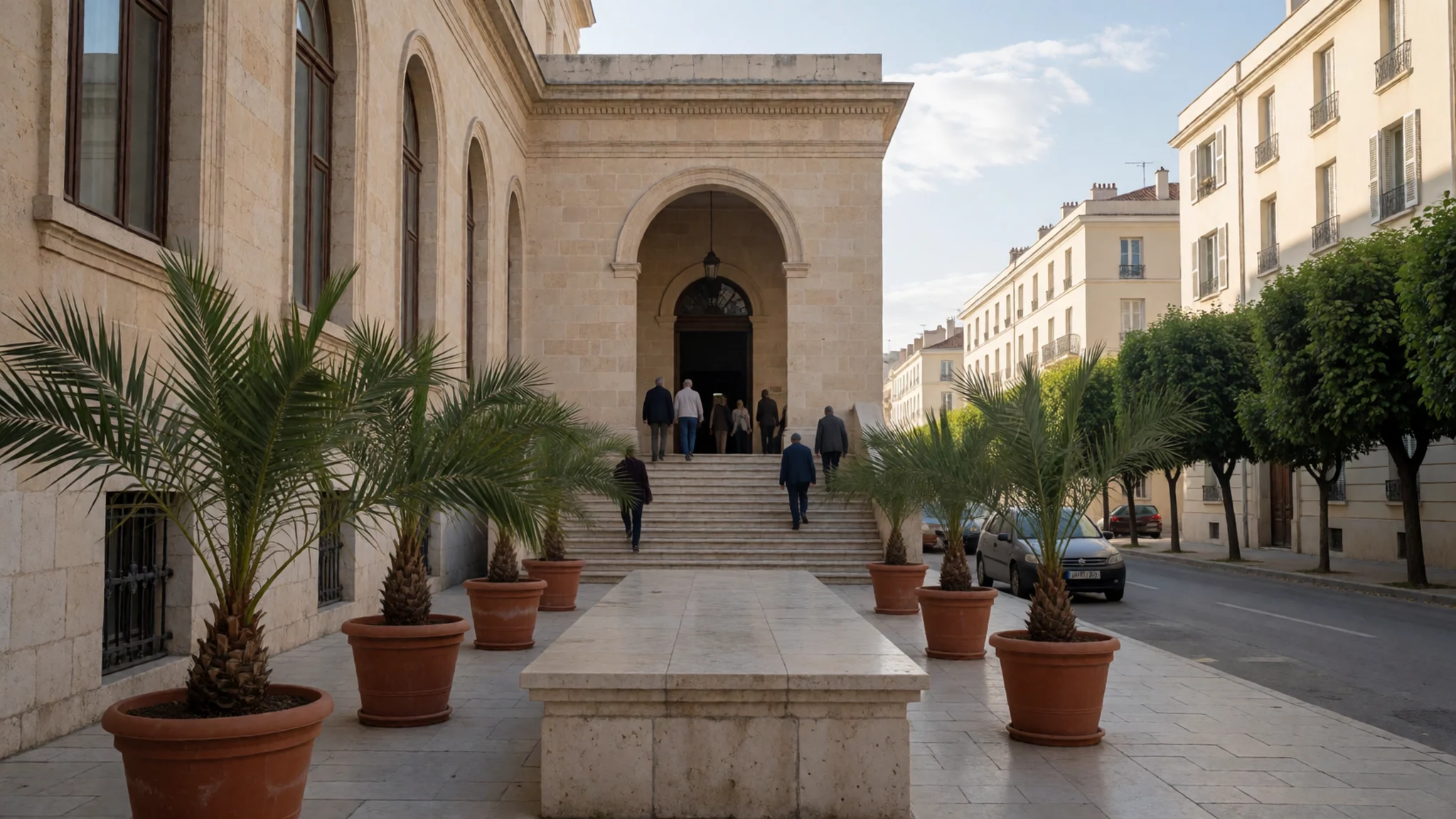
Culture
Oran is the birthplace of raï, a music that grew from shepherds' songs and took its modern shape in the 1930s under Arab and European influence. The word means opinion in Arabic, and the music has always been outspoken. Women performed prominently and the lyrics talked frankly about love and drink, which brought official pressure and, at its worst, violence against performers. Singers such as Cheb Khaled and Cheb Hasni came out of this scene and carried raï far beyond Algeria. The designer Yves Saint Laurent was also born in the city. Everyday Oran is a mix of tongues: Algerian Arabic dominates, French is heard constantly in shops and on signs, and Tamazight belongs to the wider region's heritage. Social life runs late and outdoors. Cafés, the sea front and the squares fill after dark, especially in summer, and during Ramadan the whole rhythm of the day shifts towards the evening meal. Friday is the weekly day of prayer, so many businesses close or open late. Hospitality matters a great deal, and an invitation to tea or a meal at home is common and worth accepting if it is offered. Football is a shared passion, and match days change the mood of whole neighbourhoods. Ask before photographing anyone, especially women, and cover your shoulders and knees and remove your shoes before entering any mosque that admits visitors.
What to wear
Traditional dress in Oran and western Algeria depends on the occasion and the family. For men, formal wear includes the gandoura, a loose long tunic, and the burnous, a hooded wool cloak for cold evenings. Women's celebration dress includes the embroidered velvet karakou jacket, associated with Algiers and Tlemcen, and long dresses of silk, satin or brocade worked with gold thread, worn at weddings and festivals. The white haik, a large wrap once worn outdoors, is now rare in the city. Day to day, Oran dresses like many Mediterranean cities: jeans, shirts, trainers and smart casual clothes, suits for business, and headscarves for many women. Younger people follow European and Gulf trends, and football shirts are everywhere. Visitors should plan for the heat. Light cotton or linen that covers shoulders and knees is comfortable and respectful, and it draws less attention. Women should carry a scarf for mosques, and men should avoid shorts away from the beach. Pack a light jacket for breezy winter evenings and for rain. Footwear matters more than fashion: Sidi El Houari's lanes and the climb to Santa Cruz are steep and uneven, so wear closed shoes with good grip or sturdy sandals, not flimsy flip-flops.
What to eat
- Couscous — Family restaurants in the city centre
Steamed semolina with vegetables and lamb or chicken in a light broth, the dish of Friday gatherings across the Maghreb. Oran restaurants serve many versions, with chickpeas, raisins or butter-soft onions. Order it at family restaurants in the centre at midday, when it is freshest.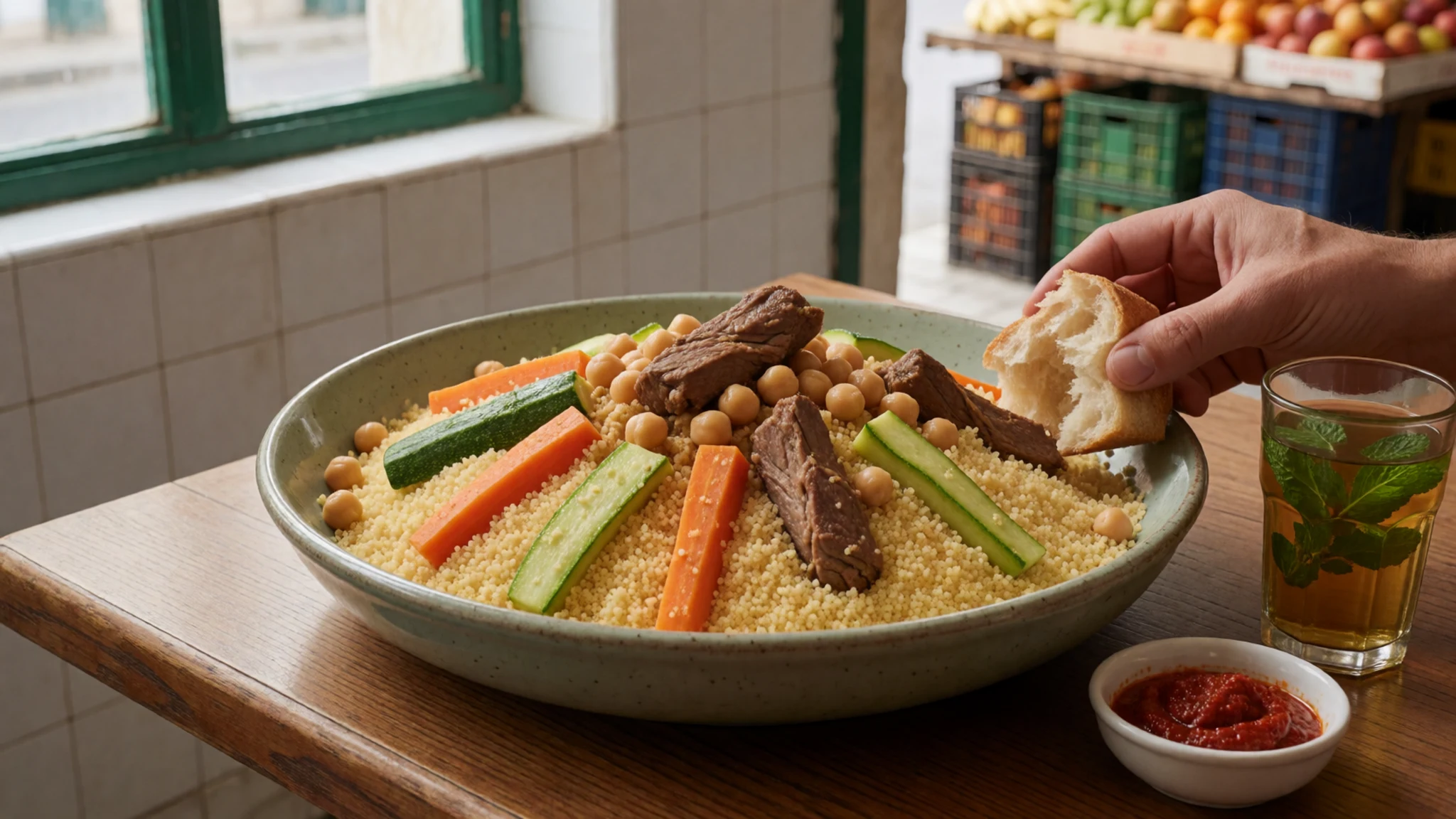
- Oranais — Bakeries and patisseries in central streets
A pastry named after the city, from the French period of Algeria. Look for it in the glass cases of bakeries and patisseries, where it sits beside other French-influenced baking. It is a sweet, fragrant mid-morning treat with coffee, best bought fresh.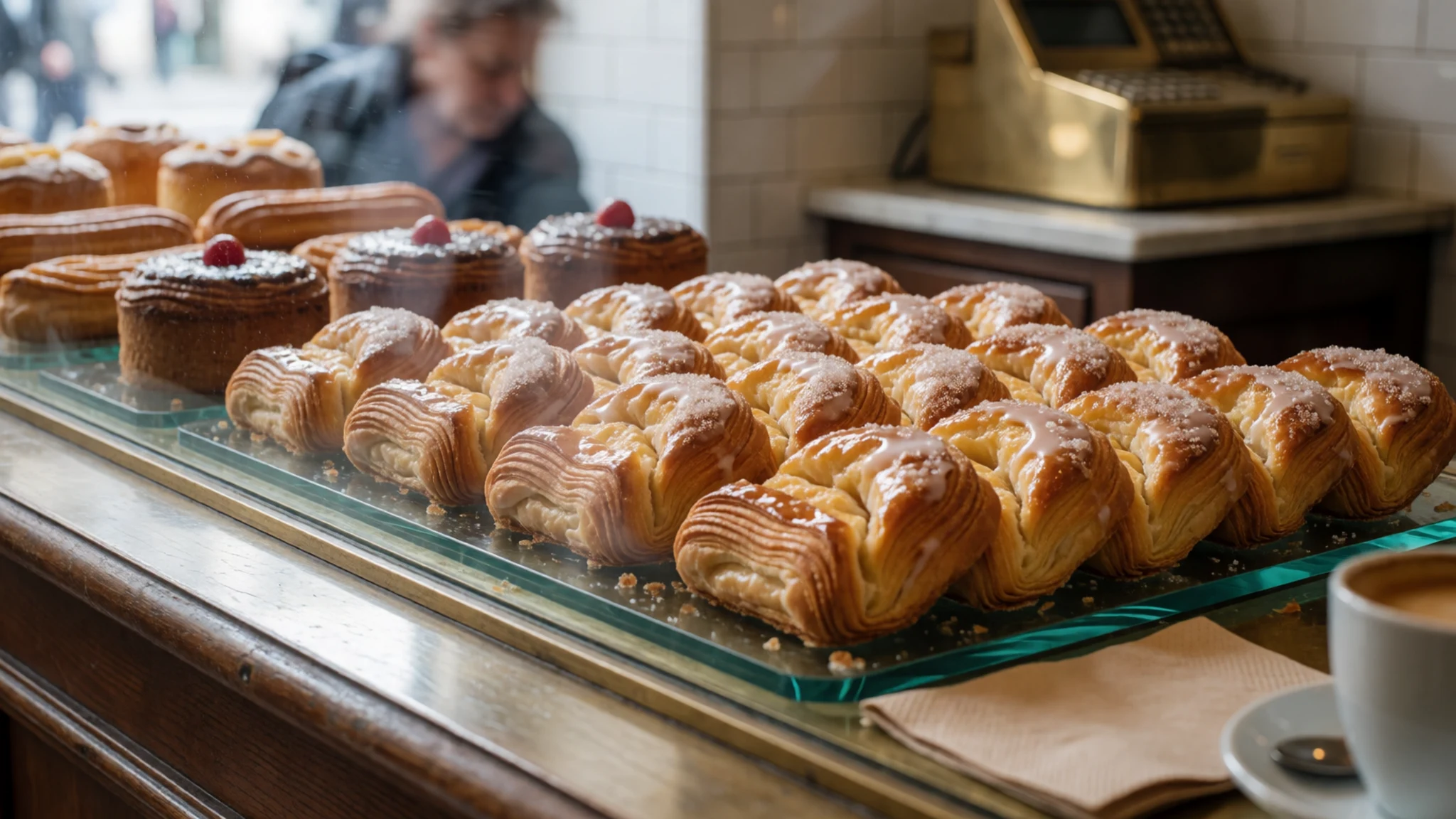
- Créponné — Ice-cream parlours and cafés near the sea front
A lemon sorbet said to have originated in Oran. Sharp, sweet and very cold, it suits the dry summer heat. Ice-cream parlours and cafés near the sea front sell it, and it makes a sensible pause on the walk back from the Corniche. - Brik and bourek — Snack counters and market stalls
Thin, crisp pastries fried and filled with meat, vegetables or cheese, often with egg or herbs. Both are common at the Ramadan evening meal, when they appear on nearly every table. Small snack counters and market stalls sell them hot, wrapped in paper. - Merguez — Grill stalls in the evening streets
Spicy lamb or beef sausages grilled over charcoal and tucked into bread, often with harissa. A quick, filling street meal after dark. Choose a stall with a busy queue and meat cooked to order, and bring some tissues. - Chakhchoukha — Traditional local restaurants
A traditional Berber dish of torn flatbread soaked in a rich, spiced meat and tomato sauce. Hearty and homely, it suits cooler months and a big appetite. Ask at traditional local restaurants, since it is more often cooked for gatherings than for tourists.
Plan it
Best time. April–June and September–November, when the sea breeze keeps the heat manageable. Oran has a hot semi-arid climate, so July and August are very hot and dry, while winter is mild and brings most of the rain.
How long. 2–3
Getting there. Fly to Oran's airport, which has direct services from Algiers, Paris, Marseille, Lyon, Madrid, Barcelona and Istanbul among others, then take a taxi into the centre. Trains run daily from Algiers and most other Algerian cities, operated by SNTF, and Oran is a main railway terminus. The land border with Morocco is closed.
Budget. mid
Tips
- Check visa and entry rules with the Algerian embassy well before booking
- Carry cash, as cards are not accepted everywhere; check what your bank allows abroad
- Climb to Santa Cruz early or late in the day to avoid the midday heat
- Learn a few words of French, which helps in shops, taxis and eateries
- Check current travel advice before you go, and for opening details use the official site, https://www.oran-dz.com/
Etiquette
- Dress modestly, covering shoulders and knees, especially away from the sea front
- Remove shoes and keep voices low at mosques that welcome visitors
- Ask permission before photographing people, and do not photograph public buildings of an official kind
Nearby
Sources
- Wikidata Q131818 (CC0)
- Wikipedia: Oran (rev 1382151778) (CC BY-SA 4.0)
- Wikivoyage: Oran (rev 5328484) (CC BY-SA 4.0)
- Photo: Ville d'Oran (Algérie), avec le golfe et le fort de Santa Cruz à l'avant-plan — Benba.d.mourad (CC BY-SA 4.0)
- Photo: Vue de la ville d'Oran depuis la chapelle de Santa Cruz — R hakka (CC BY-SA 4.0)
- Photo: Mobilart Towers/Bahia Center, Oran — Star events (CC0 1.0)
- Photo: Mosque, Oran — Amanidjilali (CC BY-SA 4.0)
- Photo: November 1st Square Oran cropped — Hefied Zoheir (CC BY 4.0)
- Photo: Sacred Heart Cathedral of Oran, Algeria — Bernard Gagnon (CC BY 4.0)
- Photo: Old Pasha mosque, Sidi El Houari, Oran — M'hamed Dadda (CC BY-SA 4.0)
- Photo: Oran Sea front, Boulevard de l'ALN — L'Algérie Pays du Soleil et de Beauté (CC0 1.0)


