Marrakech
Marrakech, Morocco
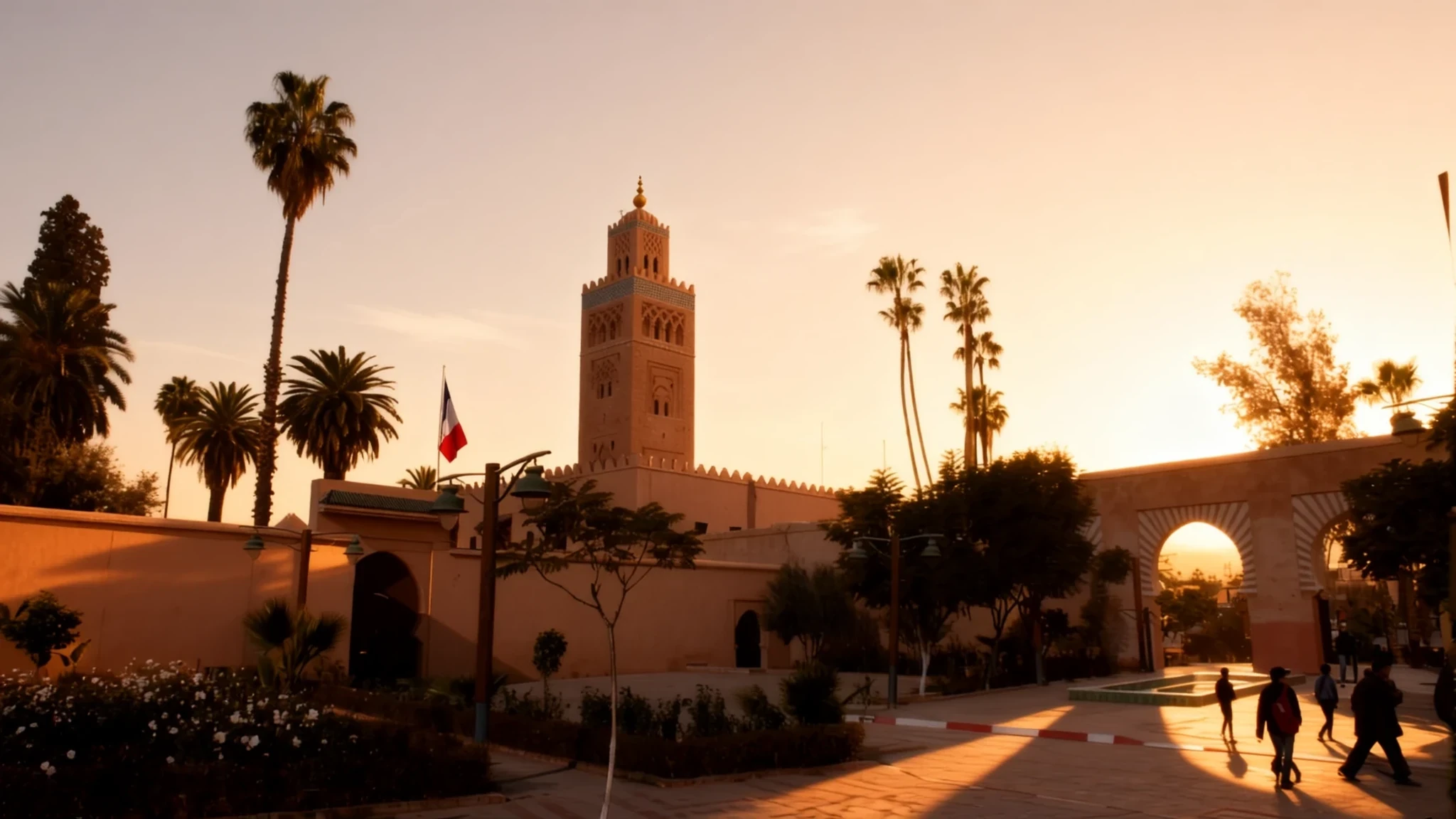
Go to Marrakech for the sensory overload of ancient medina alleys, spice pyramids, and vibrant open-air storytelling squares framed by the Atlas Mountains.
The place
Marrakech sits west of the foothills of the Atlas Mountains, serving as the bustling administrative capital of the Marrakesh-Safi region and housing a population of about one million people at an altitude of 465 metres. Founded in the eleventh century, the settlement quickly expanded into a major imperial hub of the Maghreb, renowned for its defensive ramparts forged from local red earth. This earthy reddish pigment coats nearly every old building, earning the settlement its enduring moniker as the Red City or Ochre City. At ground level, life revolves around the labyrinthine medina, a dense maze of walled alleyways packed tight with artisanal workshops, traders, and open-air courtyards. Beyond the mediaeval core, leafy residential avenues and contemporary quarters stretch outward, yet the gravitational pull remains anchored to the historic centre where trade routes historically converged from across the Sahara. Summers bring intense heat, with July and August highs near 44°C, while winter nights can turn surprisingly chilly against the mountain breeze, making December to February the most comfortable months to explore the winding lanes on foot. Travellers navigating the city encounter a continuous hum of motorbikes, donkeys, and merchants bartering in Arabic, Berber, and French, creating an atmosphere that feels entirely detached from modern European rhythms despite sitting just a short flight across the Mediterranean.
Its story
Marrakech was established around the year 1065 by the Almoravid dynasty, beginning a long and colourful chapter as an imperial capital that shaped the cultural contours of the entire region. Early rulers erected stout defensive walls and palaces, transforming a modest Saharan trading post into an influential religious and mercantile powerhouse. Successive dynasties stamped their identities onto the urban fabric, from Almohad architects who raised towering minarets to Saadian sultans who later adorned the royal quarters with imported marble, intricate zellige tiling, and carved cedarwood. For centuries, the city functioned as the political heartbeat of an empire stretching from the Atlantic coast deep into West Africa and across parts of the Iberian Peninsula. During later eras, sovereignty shifted between rival factions and regional dynasties, but the city maintained its spiritual resonance, notably revered as the resting place of seven patron saints who draw Sufi pilgrims from far and wide. The twentieth century brought the French Protectorate, altering administrative structures and introducing European-style boulevards outside the ancient ramparts while preserving the inner citadel's medieval geometry. Following national independence in the mid-twentieth century, the city transitioned into a global cultural crossroads, welcoming artists, writers, and modern travellers drawn to its preserved fortifications, sun-baked squares, and centuries-old traditions of craft, commerce, and hospitality.
What to see
- Medina — Old city centre
The historic old city quarter is enclosed entirely by massive red sandstone walls that give Marrakech its famous Ochre City nickname. Inside lies a dense, labyrinthine network of narrow alleys, bustling souks, and hidden riads that have remained largely unchanged for centuries of daily mercantile life.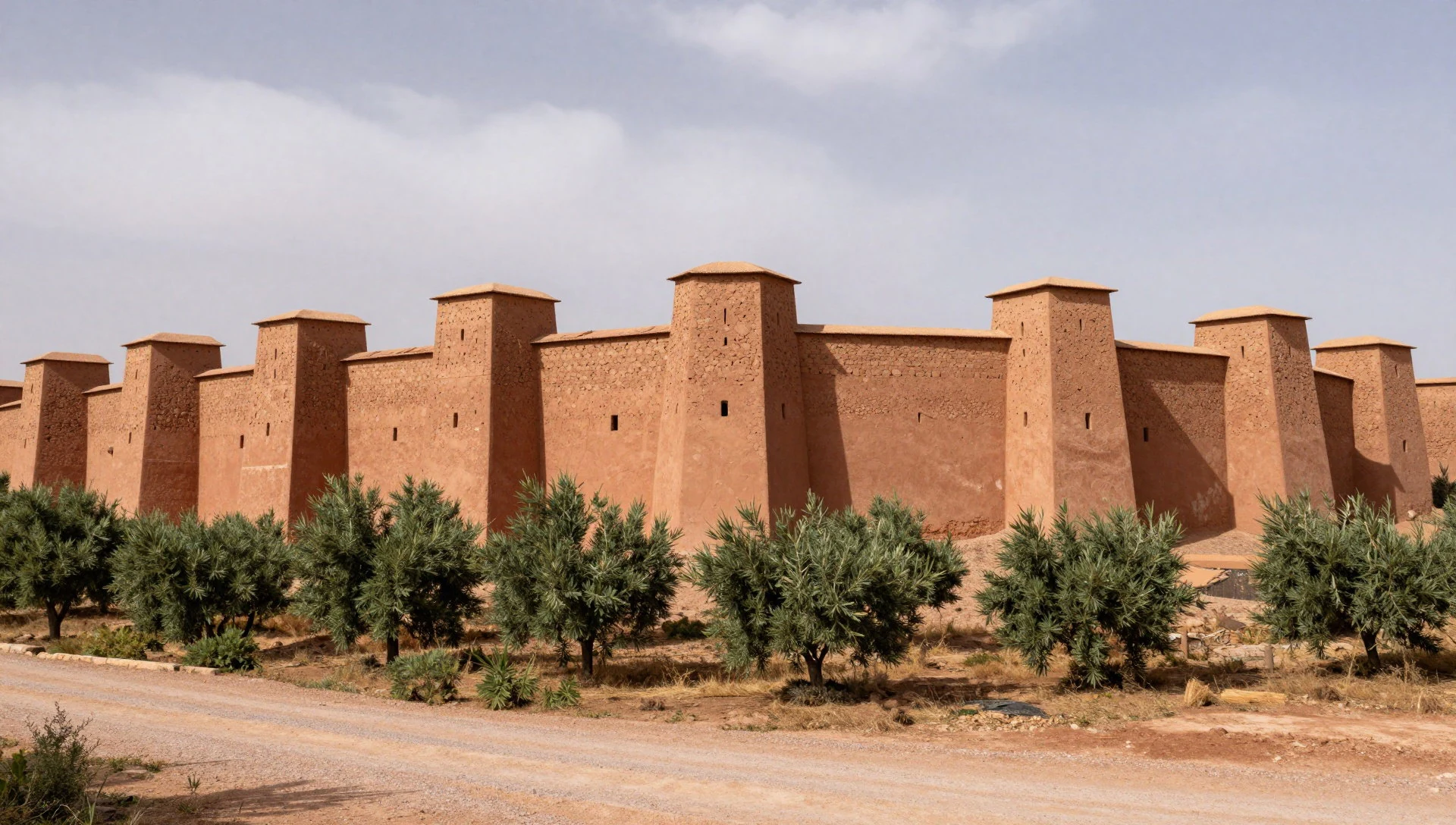
- Djemaa el-Fna — Central medina
This vast public square forms the beating heart of the medina and comes alive every evening with a rotating cast of traditional musicians, acrobats, snake charmers, and open-air food stalls serving steaming bowls of soup and grilled meats beneath clouds of fragrant wood smoke.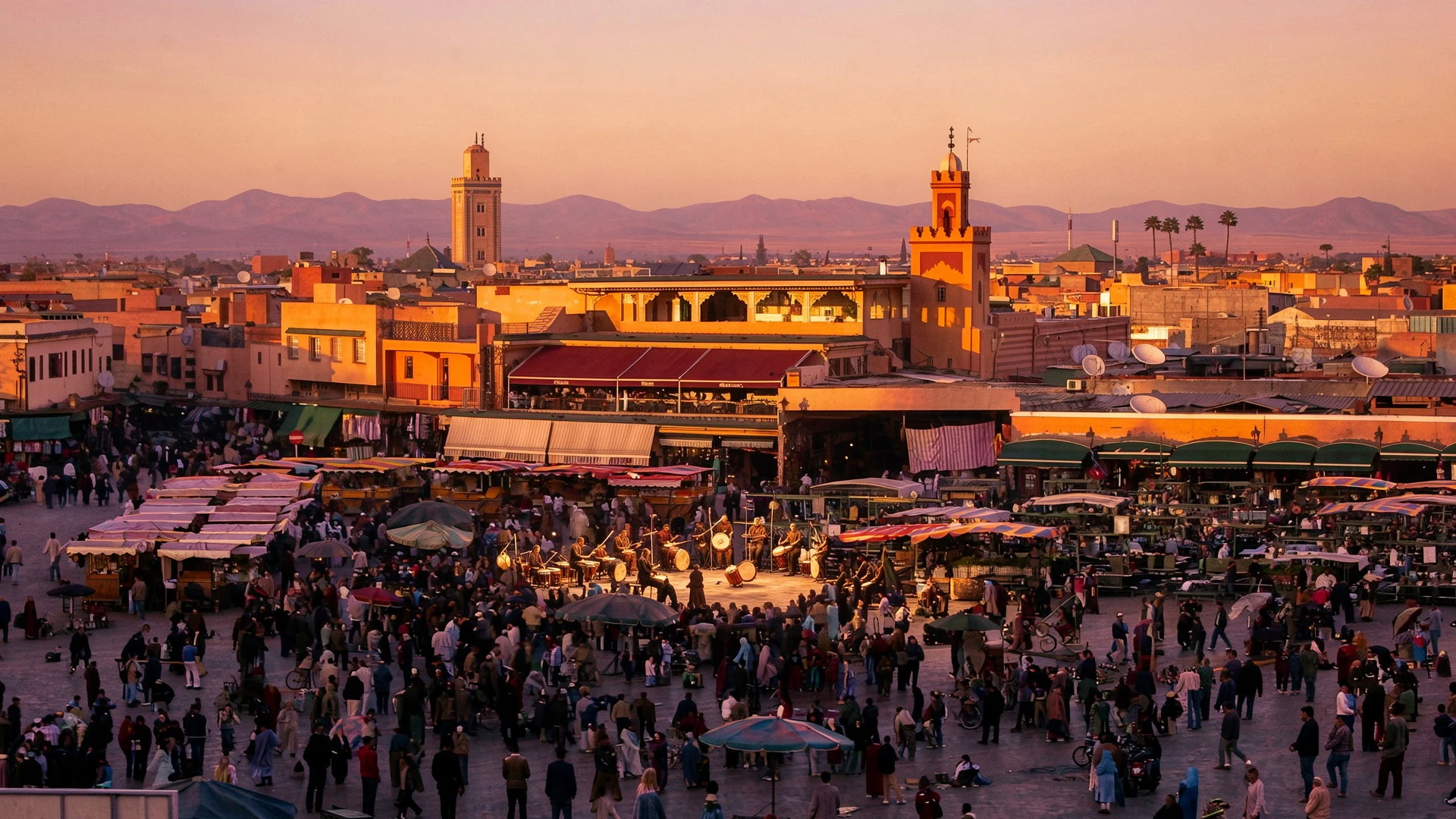
- The Souks — Adjacent to Djemaa el-Fna
Sprawling outward from the main square, these specialised open-air marketplaces are divided into distinct guilds where artisans hammer brass lanterns, spin wool carpets, dye leather hides, and carve fragrant cedarwood into intricate tables, spice boxes, and traditional sliding puzzle boxes.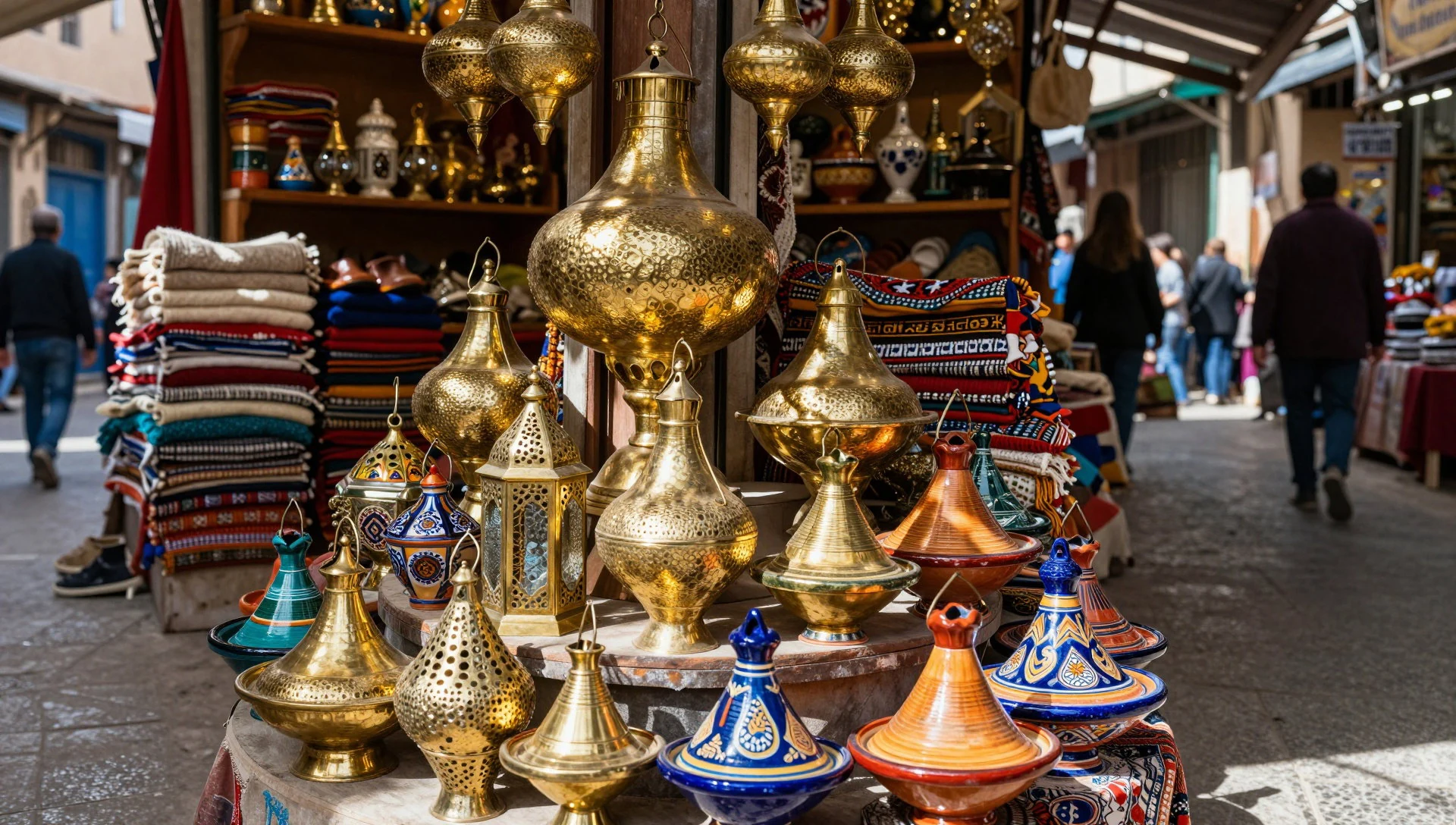
- Koutoubia Mosque — Avenue Mohammed V
Dominating the southwestern skyline, this iconic twelfth-century mosque features a majestic minaret that serves as the architectural benchmark and visual anchor for the entire city, visible from miles away across the surrounding gardens and dusty terracotta rooftops.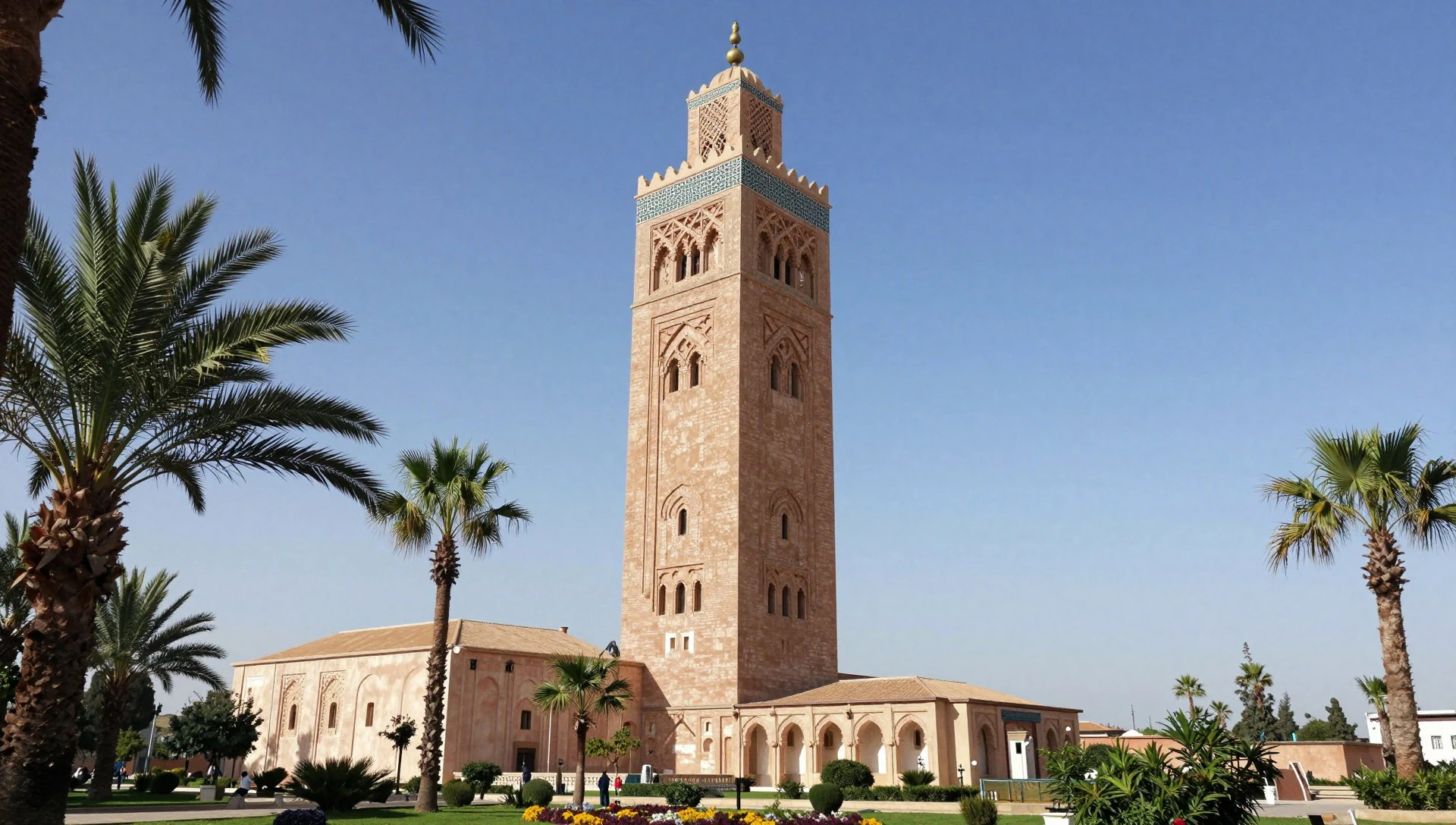
- Bahia Palace — Southern medina
Built in the late nineteenth century as a sprawling residence for grand viziers, this magnificent palace showcases the pinnacle of Moroccan decorative arts with painted wooden ceilings, stuccowork courtyards, and tranquil citrus gardens designed to offer cool respite from the afternoon heat.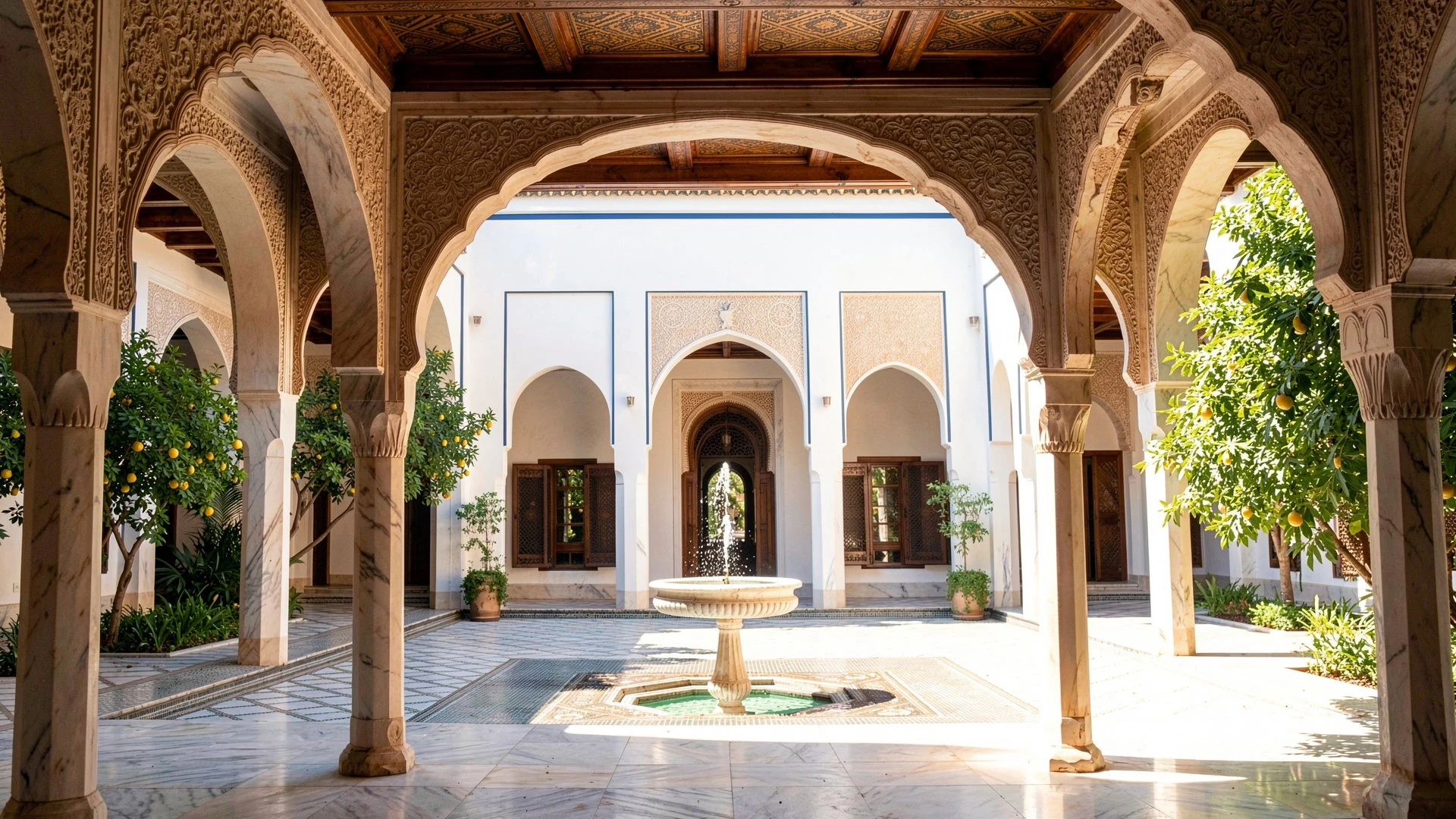
Culture
Daily life in Marrakech is deeply rooted in Islamic traditions, Berber heritage, and a strong sense of communal hospitality that defines interactions across the medina and beyond. Social bonds are traditionally honoured through extended family networks, shared meals, and the unhurried ritual of pouring sweet mint tea for guests. The city's cultural identity also finds expression in historic palaces, public museums, and vibrant artisan workshops where ancestral techniques in woodwork, pottery, metalwork, and carpet weaving are meticulously passed down through generations. Music and storytelling remain vital oral traditions, echoing nightly across public squares and communal gathering spaces much as they have done for centuries. While the city warmly welcomes international visitors, visitors should respect local customs regarding modesty and personal interactions, particularly when navigating religious sites and residential neighbourhoods. Always ask for permission before photographing local residents, and dress modestly with shoulders and knees covered when exploring outside resort areas.
What to wear
Traditional dress in Marrakech reflects a blend of practicality, climate resilience, and rich textile artistry. The iconic garment for both men and women is the djellaba, a long, loose-fitting hooded robe traditionally woven from heavy wool for winter warmth or lightweight cotton for summer breathability. Women often wear elaborately embroidered kaftans during celebrations and ceremonies, paired with babouche slippers crafted from soft leather. Contemporary street fashion in the city displays a dynamic mix of styles, where younger urban residents blend modern Western attire with traditional garments, while older generations maintain classic local dress. For visitors, dressing appropriately means striking a balance between coping with intense sunlight and respecting local modesty norms. Lightweight, loose-fitting garments made from natural fibres like linen and cotton are ideal for enduring the daytime heat while keeping shoulders and knees covered out of respect for local cultural traditions. Sturdy, closed-toe footwear is essential for navigating the uneven cobblestones, dusty alleyways, and unpaved pathways found throughout the historic medina quarters.
What to eat
- Vegetarian Couscous — Chez Chegrouni near the main square
A generous platter of steamed semolina grains piled high with seasonal root vegetables, chickpeas, and aromatic broth, offering a comforting and traditional plant-based meal found in family-run eateries around the medina.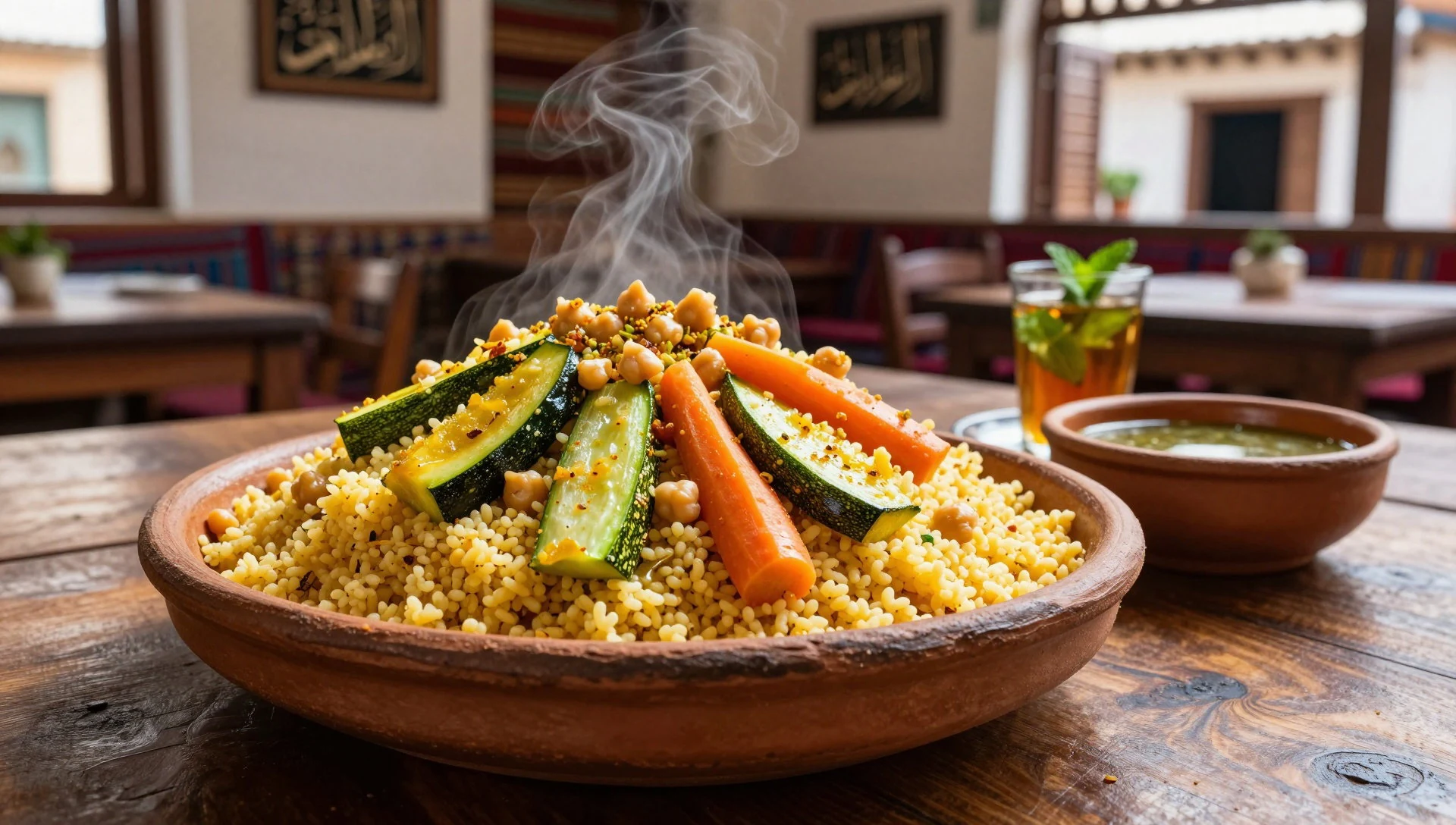
- Traditional Tajine — Chez Yassine and local neighbourhood spots
Slow-cooked stews prepared in conical earthenware pots that seal in moisture, combining tender lamb, chicken, or vegetables with preserved lemons, green olives, saffron, and ginger.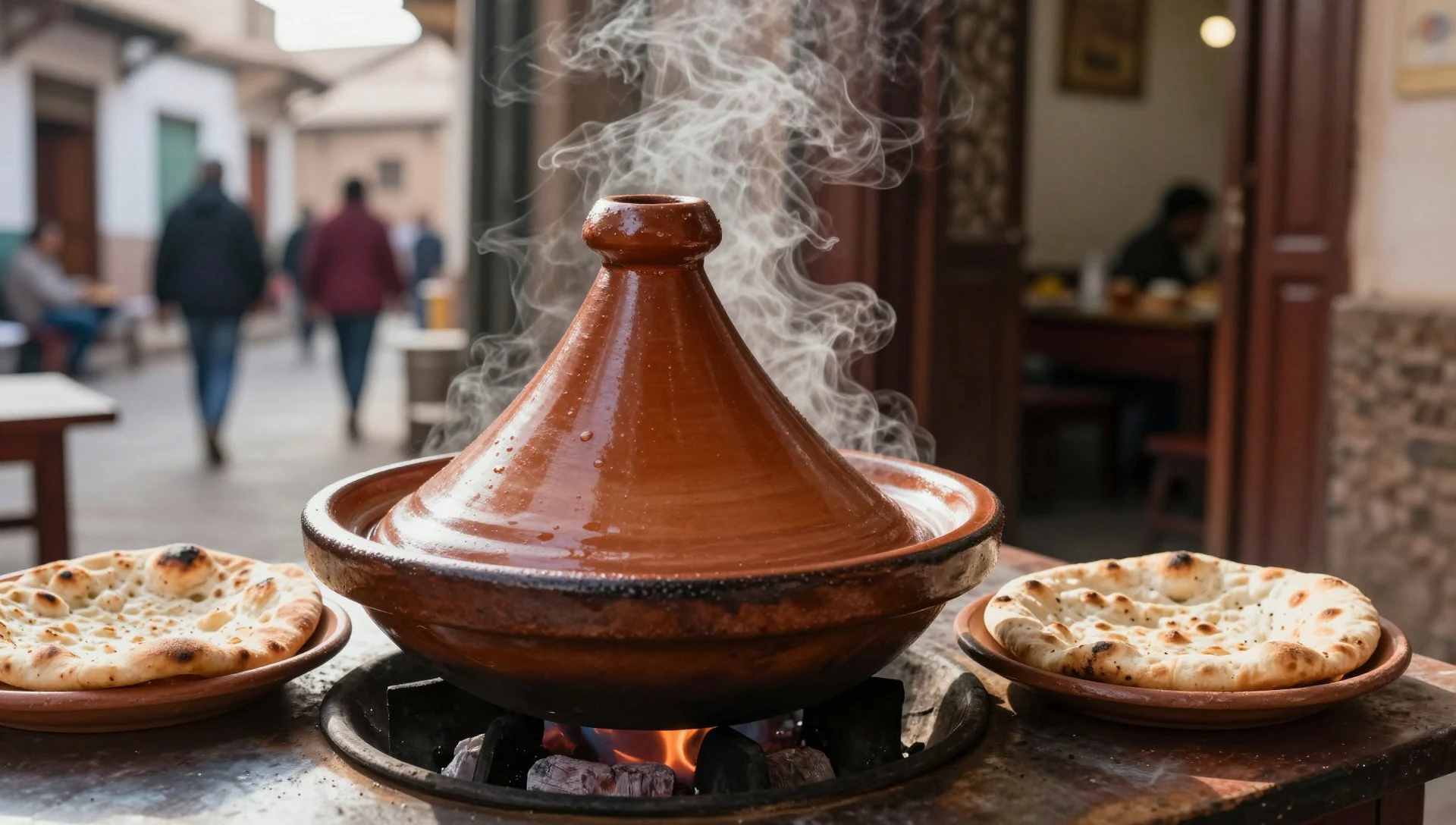
- Grilled Skewers — Djemaa el-Fna night stalls
Freshly minced lamb or spiced beef kebabs grilled over open charcoal embers on bustling street corners, served hot alongside fresh bread and spicy harissa paste. - Home-style Tagines — Chez Bismilah in the medina
Hearty, slow-cooked family recipes prepared by experienced local cooks using seasonal market produce, fragrant spices, and traditional clay vessels. - Mint Tea and Pastries — Café Babouche and rooftop terraces
Sweet green tea infused with fresh spearmint leaves, poured ceremoniously from a height to create a frothy top, accompanied by honey-drenched almond pastries.
Plan it
Best time. December to February offer the most comfortable daytime temperatures for exploring the medina on foot, avoiding the scorching heat of midsummer, though nights can be cold.
How long. 3–4
Getting there. Fly into Marrakesh Menara Airport, then take an official airport taxi or bus for the short drive into the city centre.
Budget. mid
Tips
- Wear comfortable, closed-toe shoes to handle uneven cobblestones and dusty paths.
- Carry sufficient cash, as small market vendors and street stalls rarely accept cards.
- Agree on taxi fares before setting off if the meter is not in use.
- Stay hydrated and drink bottled water throughout the day.
- Keep valuables secure in crowded market areas and around the main square.
Etiquette
- Dress modestly by keeping shoulders and knees covered in public areas.
- Always ask permission before taking photographs of local residents.
- Remove shoes when entering homes and traditional religious spaces.
Nearby
Sources
- Wikidata Q101625 (CC0)
- Wikipedia (CC BY-SA 4.0)
- Wikivoyage (CC BY-SA 4.0)
- Photo 01-djemaa-el-fna-evening.jpg (CC BY 1.0)
- Photo 04-le-jardin-des-majorelle-l3.jpg (CC BY-SA 1.0)

