Constantine
Constantine, Algeria
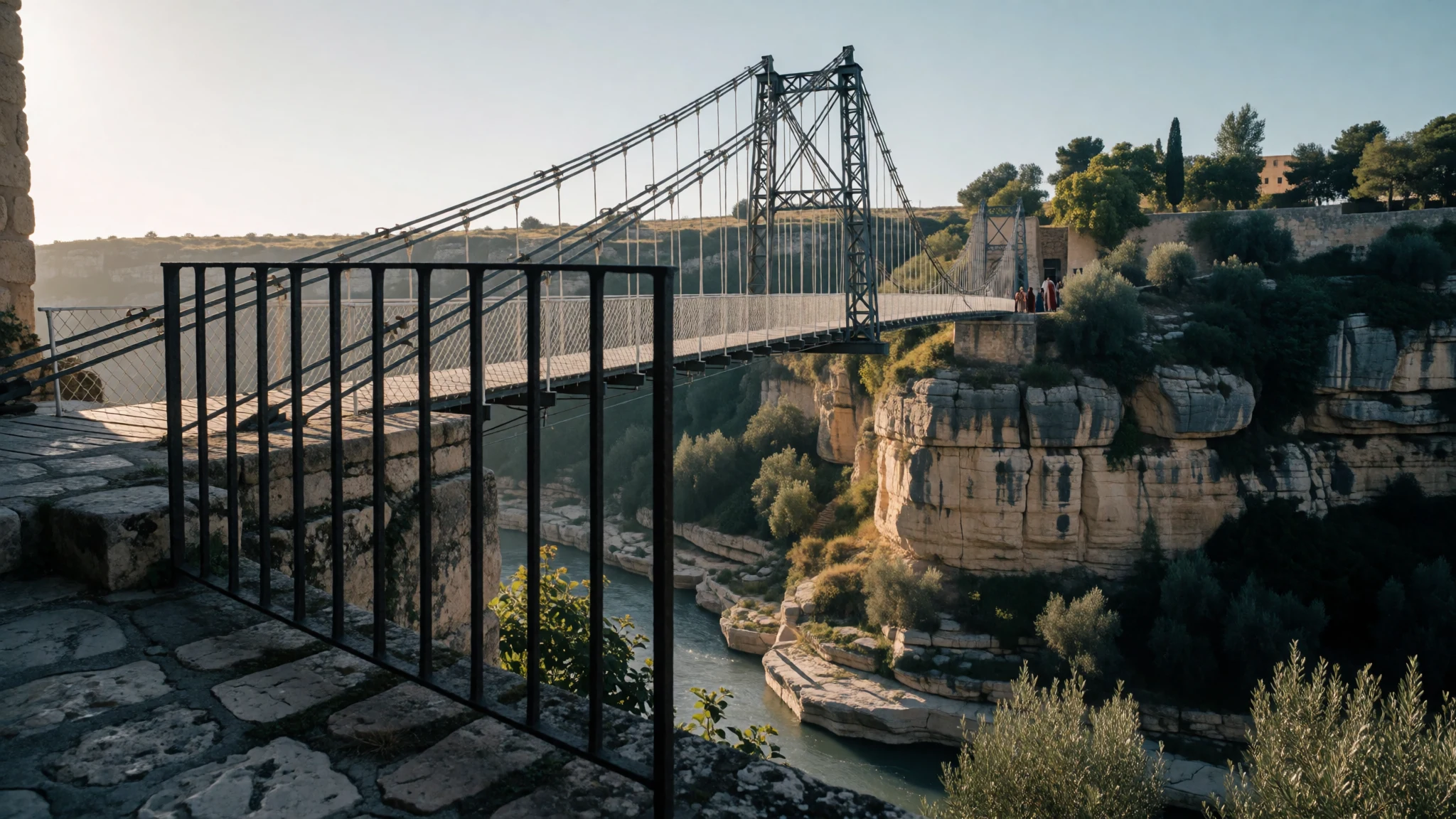
Constantine is a plateau city split by a river gorge, where Roman, Ottoman and modern bridges make every crossing a view.
The place
Constantine sits on a rocky plateau in north-eastern Algeria, 694 m above sea level and well inland from the Mediterranean, on the Rhumel River. The river has carved a deep ravine around the old town, so the city seems to hang between cliff edges and almost every journey across it involves a bridge. Seven span the gorge, which is why the city is called the City of Bridges.
With nearly half a million people in the commune, and a much larger built-up area around it, Constantine is the commercial and administrative centre for the east of the country. Its living comes mostly from the farmland around it. It is a railhead for a grain-growing region, with flour mills, textile and leather workshops and a tractor factory. The result is a working city rather than a resort, with busy shopping streets, a tram line, student crowds and traffic that climbs steeply between neighbourhoods.
The names follow the layers of history. The Romans knew the site as Cirta and later Constantina; in Arabic it is Qusantina (قسنطينة), also written Qacentina. The old quarter has narrow lanes, Ottoman-era houses and markets that are slowly changing, while newer districts spread over neighbouring hills, with the university and a very large mosque to the south. Summers are hot and winters can feel raw on the exposed plateau, which shapes when a visit works best. Tourist infrastructure is modest, so the city rewards patience and a willingness to walk uphill. In 2015 the Arab League's cultural body named it Arab Capital of Culture, and the theatre, museums and restored buildings reflect that effort.
Its story
Constantine was already a capital before Rome arrived. Under the name Cirta it was the seat of the Berber kings of Numidia, and its ruler Jugurtha made it his base in a long struggle against Rome. Roman generals later used the city as a stepping stone in that same war, and Julius Caesar granted its citizens special rights as a reward for loyalty during the civil wars.
The city was wrecked in fighting between rival Roman claimants early in the fourth century. It was rebuilt soon after and renamed in honour of Emperor Constantine the Great, which is where today's name comes from. Under Rome it exported wheat from the surrounding highlands and sat on both of the main paved roads of ancient Algeria, a useful position for trade and for armies alike.
The Vandals took it in the fifth century, and the Byzantines brought it back into their African province in the sixth. After the Arab conquest, in the eighth century, the name shifted to Qacentina and the city became part of the wider region known as Ifriqiya. Later centuries were kinder. Under the Almohads and then the Hafsids, Constantine recovered as a busy market town with commercial links to Pisa, Genoa and Venice.
In the sixteenth century the Ottomans took it from the Hafsids. For much of the period that followed, a bey appointed from the Turkish ruling class governed the province and answered to the dey in Algiers. The palace he built, with its courtyards and painted galleries, still stands above the gorge and is the best surviving physical record of that era. The French period that followed left its own mark, especially on the bridges and public buildings.
What to see
- Sidi M'Cid Bridge — North of the old town
Sidi M'Cid Bridge is a suspension bridge over the Rhumel gorge, also called Gantaret El Hibal, and it once held the world record for bridge height. Walk out to the middle for the best sense of how deep the ravine is, and for a view back toward the old town on the rock.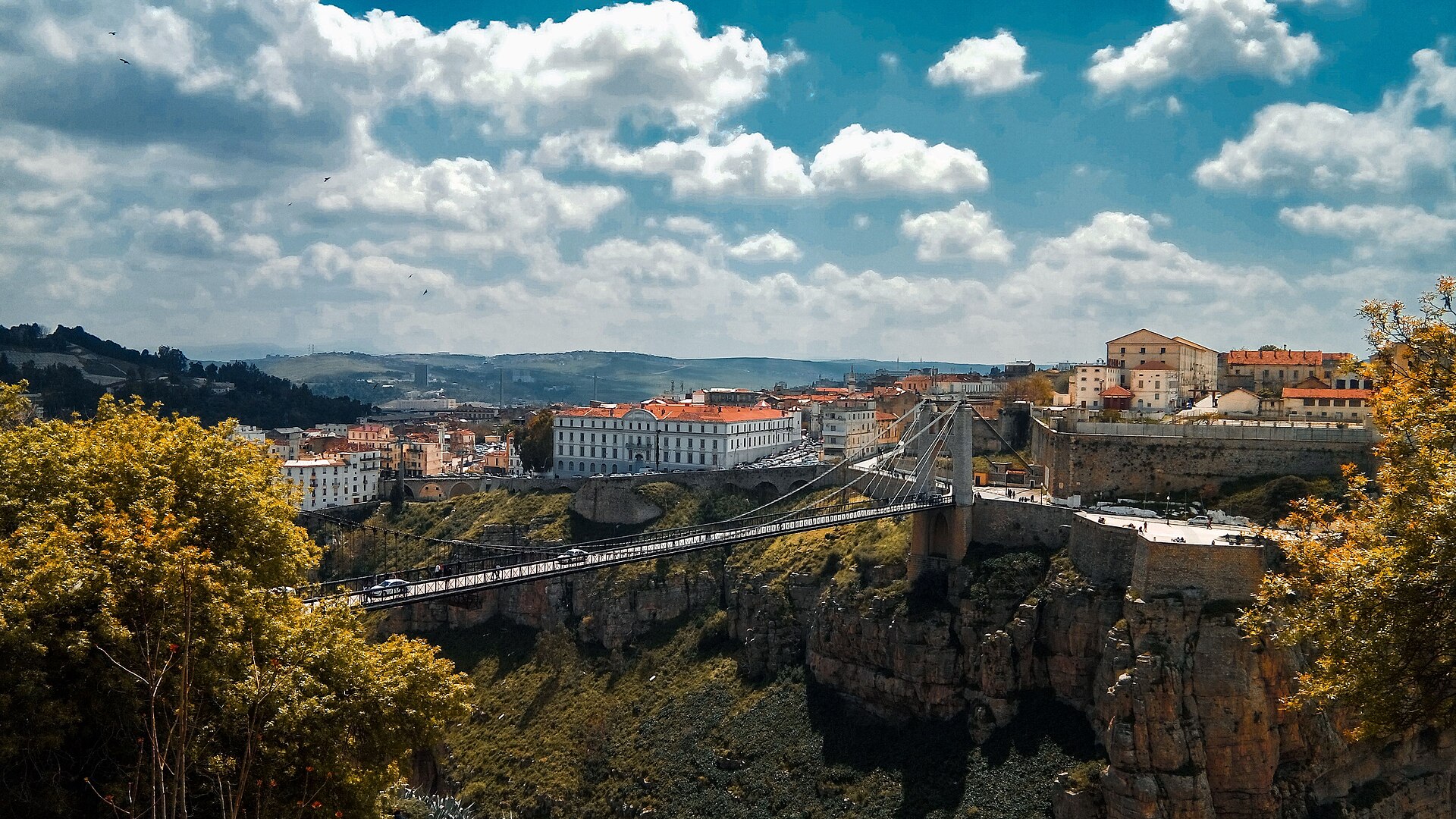
- Salah Bey Viaduct — Across the Rhumel gorge
The Salah Bey Viaduct crosses the Rhumel gorge in a long, modern sweep and is often called the eighth wonder in a city of seven bridges. It reads best from a distance or from the older bridges, where its slender deck contrasts with the cliffs and stone arches around it.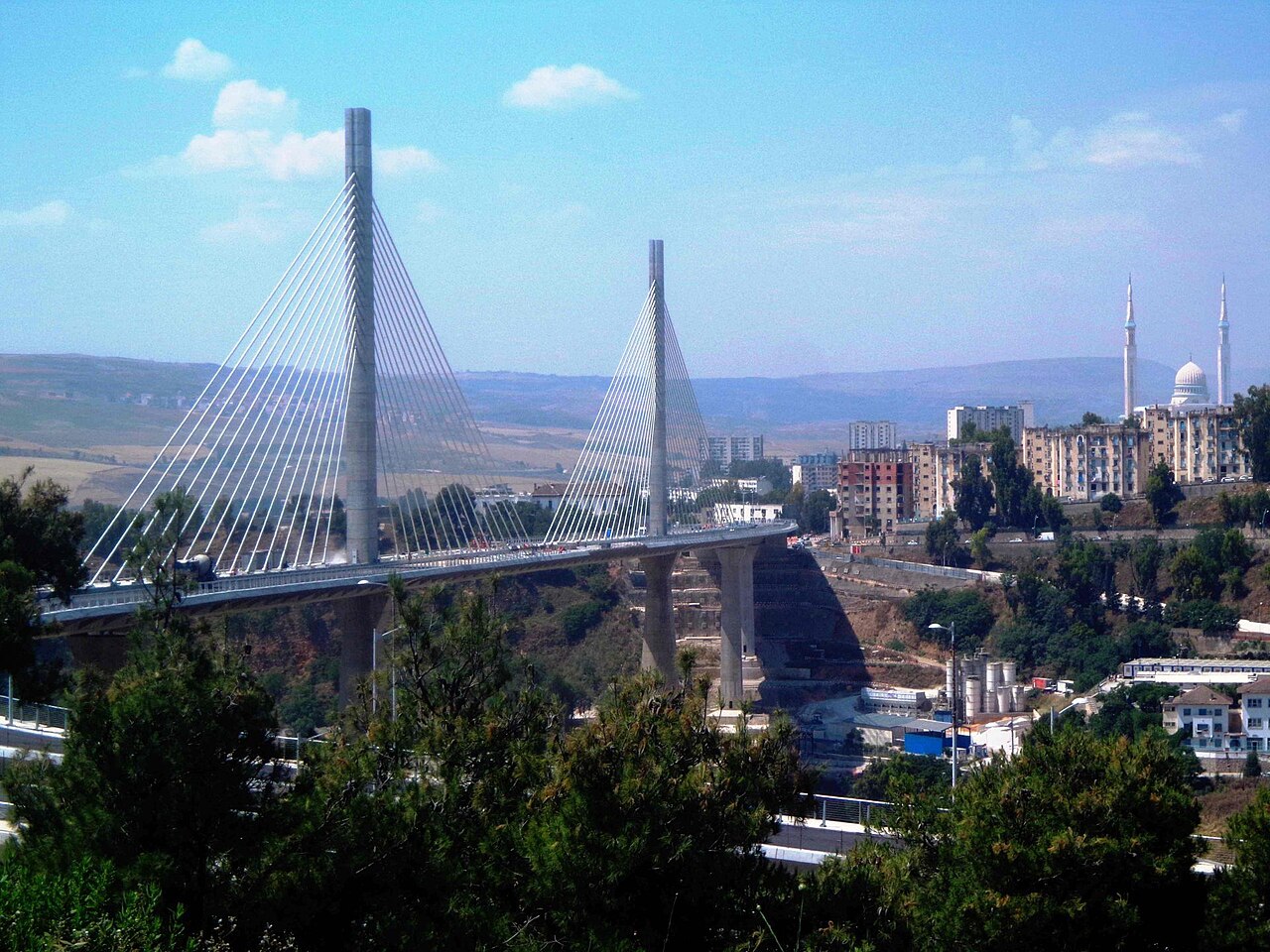
- Passerelle Slimane Mellah — Between the old town and the station
The Passerelle Slimane Mellah is a footbridge linking the old town with the train and bus station on the far side. It gives a close look at the gorge walls and the houses perched above them. It moves a little underfoot when others are crossing, which is normal, so take your time.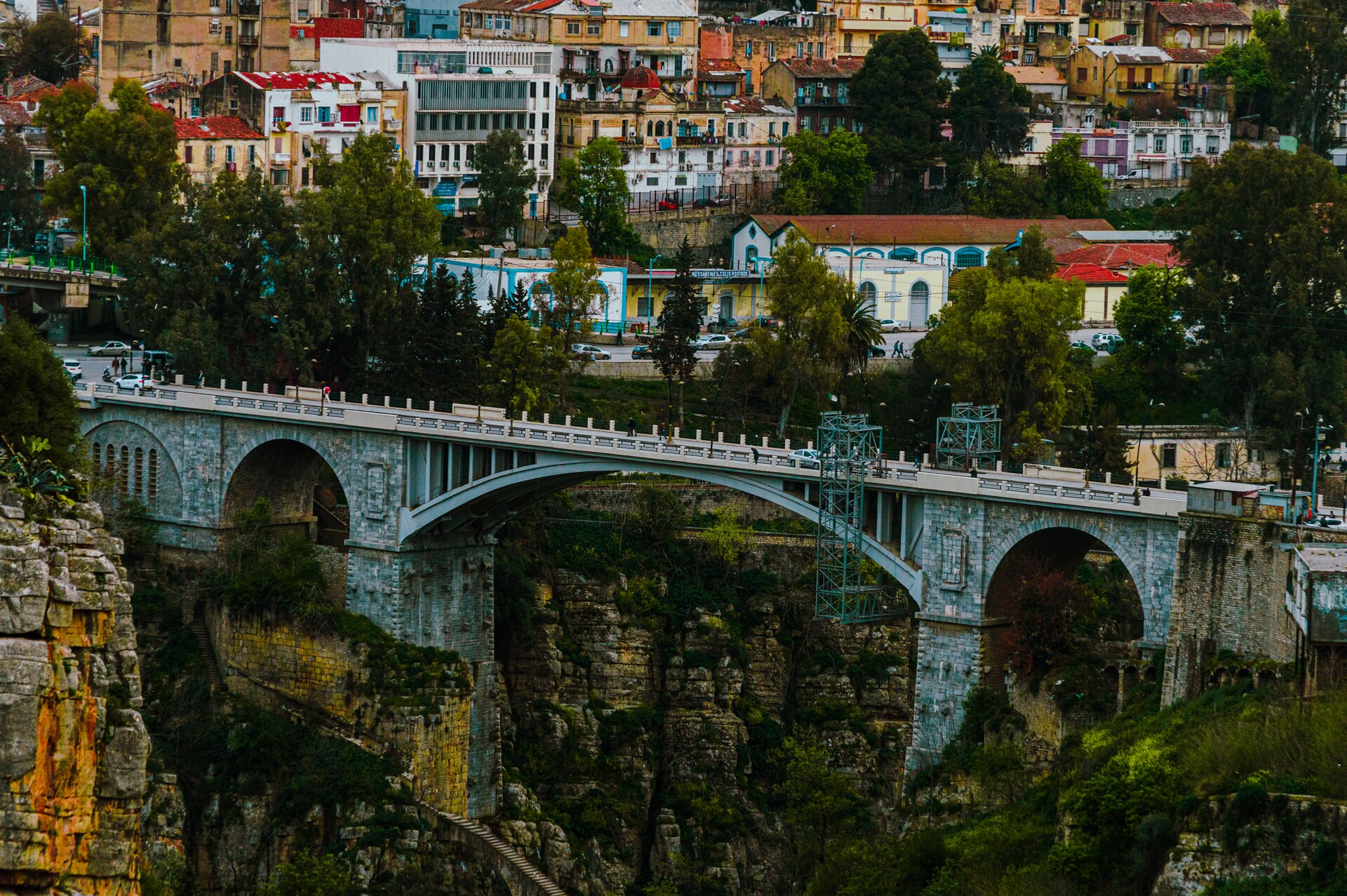
- Palace of Ahmed Bey — Old town
The Palace of Ahmed Bey was the residence of the Ottoman governor, arranged around courtyards and galleries with tiled and painted details. It is worth going with some background in mind, because the rooms explain how a provincial ruler lived and how the building later served other purposes. Check the opening arrangements locally before going.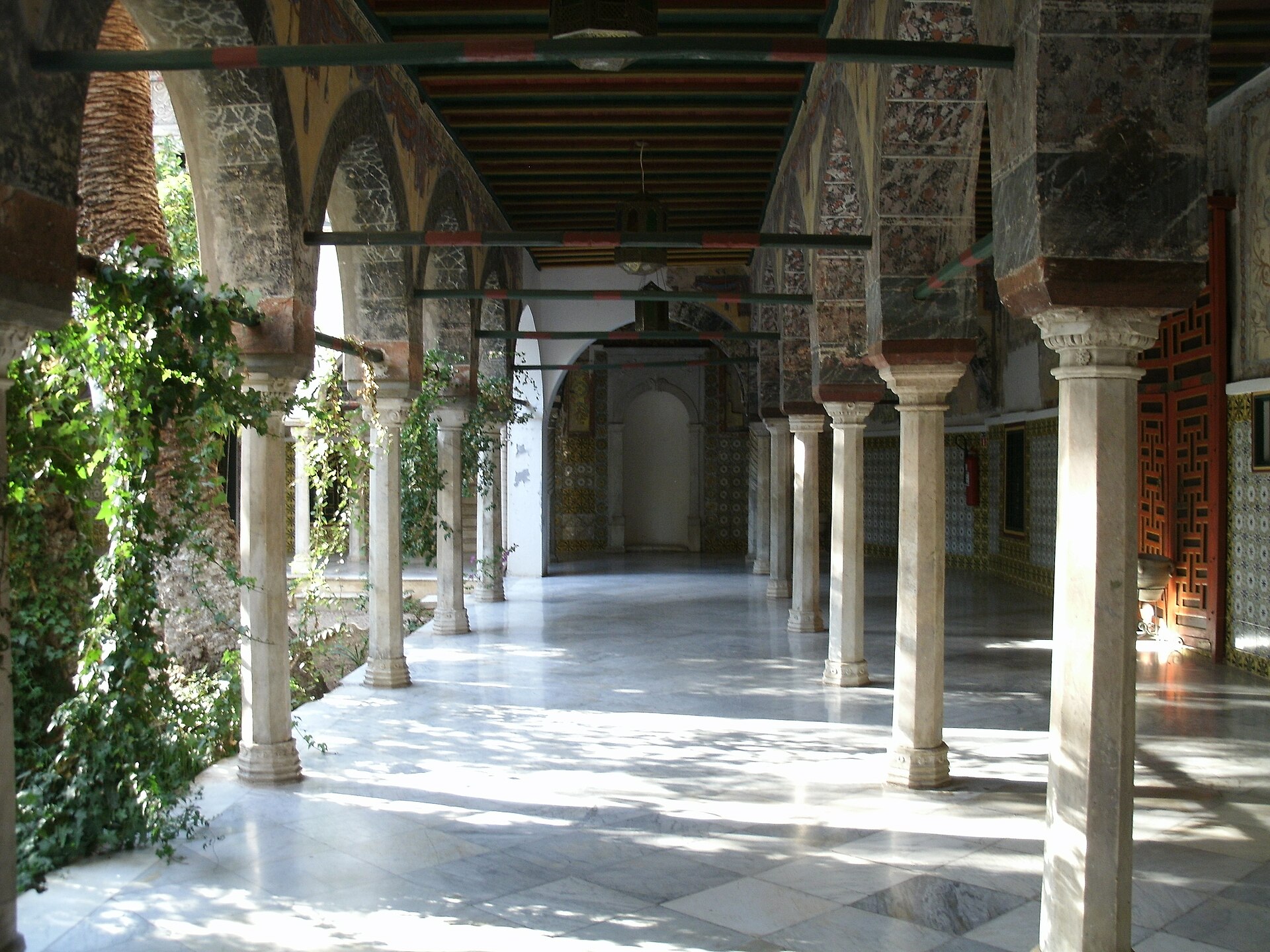
- Emir Abdelkader Mosque and University — South of the centre
The Emir Abdelkader Mosque is a very large modern complex, with a park and a university attached, on a hill south of the centre. Its domes and minarets are visible from many parts of the city. Visit outside prayer times, and ask politely before entering as a non-worshipper.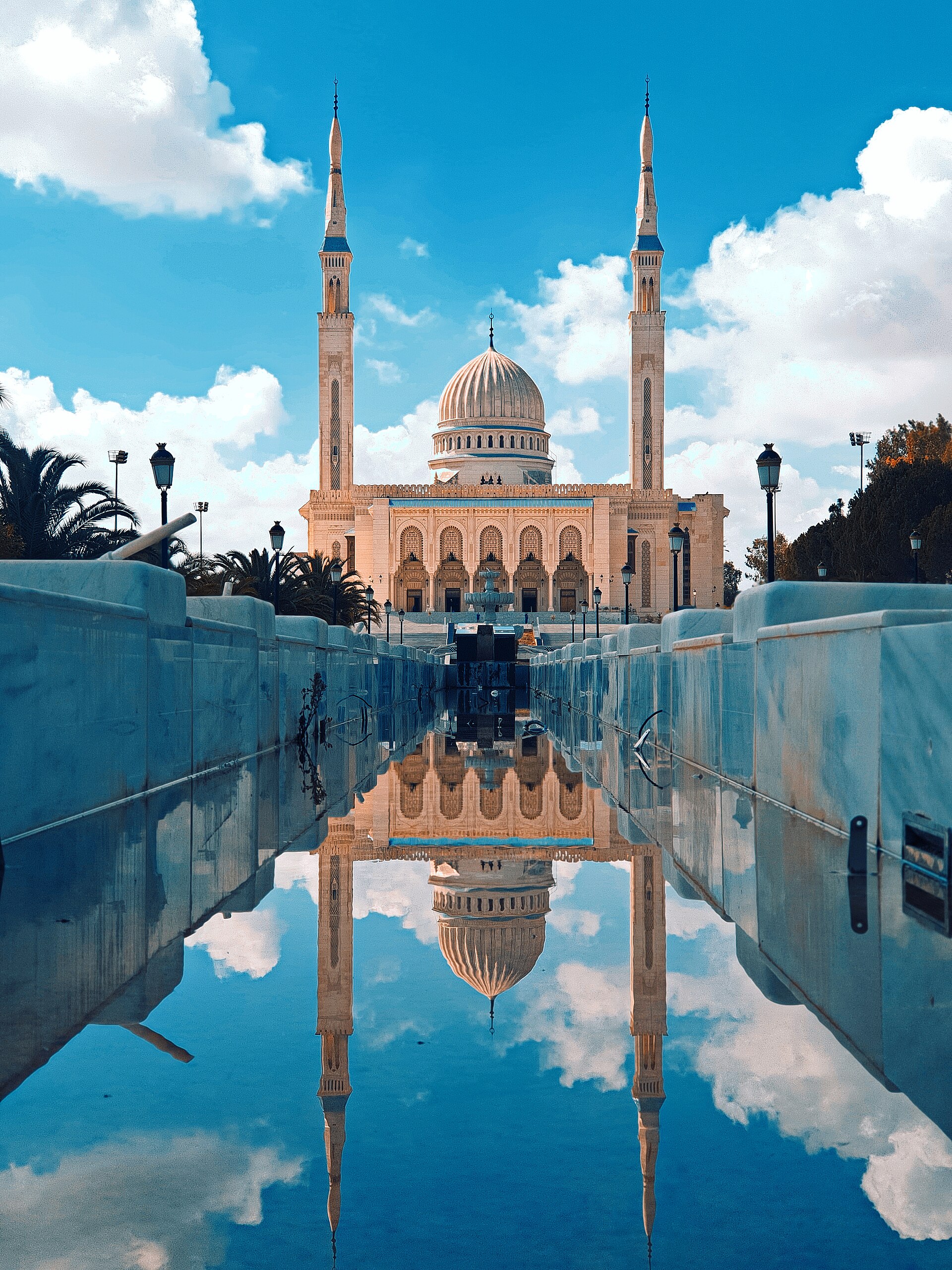
- Gustave Mercier Museum — Near the old town
The Gustave Mercier Museum shows ancient and modern art, and is a useful stop for understanding the Numidian and Roman past before heading to sites outside town. The collection is a good counterpoint to the bridge-hopping, and it is close enough to the old town to fit into a morning on foot.
Culture
Constantine is a conservative, devout and proudly intellectual city, and many of its residents see it as a centre of learning in eastern Algeria. The large university mosque and the Ben Badis Mosque reflect that tradition, and the city has long been tied to the reformist ideas of the scholar after whom the mosque is named. Daily life follows the call to prayer, and Friday is the main day of rest.
Music is a strong thread. Constantine is known for malouf, a classical Andalusian-rooted repertoire of sung poetry with lute, violin and percussion, and the city's regional theatre carries the name of Mohamed Tahar Fergani, a singer of that tradition. Concerts and festivals are the best way to hear it, and the local press and the theatre itself are the places to check what is on.
Family and hospitality matter. Tea, coffee and sweet pastries are offered quickly, and it is polite to accept at least a little. Conversation switches between Arabic, French and sometimes Tamazight, and a few greetings in Arabic or French open doors. Ramadan changes the rhythm of the whole city: restaurants may close by day, streets quieten, and evenings become lively after the fast is broken.
Be careful and respectful with cameras. Bridges and public buildings are fine subjects, but some official sites restrict photography, and people may not wish to be photographed.
When entering a mosque or photographing anyone, dress modestly, remove your shoes at the door, and ask permission before pointing a camera at a person.
What to wear
Constantine's traditional dress is best known through women's celebration clothing, especially velvet garments embroidered with gold thread, a craft associated with the city and its brides. Wool and heavier fabrics were also part of cooler-season dress on the plateau, and men traditionally wore the burnous, a hooded woollen cloak, and a long gandoura. These pieces now appear mostly at weddings, religious holidays and cultural events, and some families keep heirloom pieces for the occasion.
On an ordinary day, people dress much as they do across northern Algeria. Many men wear trousers and shirts or jackets, often with a sports or leather jacket in winter, while many women combine long skirts or trousers with a tunic or coat and a headscarf, though styles vary widely between neighbourhoods and generations. Students and younger people mix global brands with local tailoring, and French-influenced elegance is common in smarter districts.
Visitors should plan for the climate and the terrain. In summer, light cotton or linen with long sleeves and trousers or knee-length skirts is both respectful and cooler than shorts. In winter bring layers, a waterproof jacket and a warm hat, because the plateau is exposed. Shoulders and knees should be covered for mosque visits, and women should carry a light scarf to cover their hair when entering. Footwear matters most: the old town has steep, uneven stone and the bridges involve plenty of walking, so wear comfortable shoes with a good grip rather than sandals or heels.
What to eat
- Bouzelouf — Eateries in the city centre
Bouzelouf is a popular local dish of slow-cooked meat, often lamb, served with chickpeas in a tomato-based broth. It is hearty comfort food that suits cold days on the plateau, and it is easiest to find in small restaurants and eateries around the city centre. - Local pizza — Pizzerias across the city
Pizza in this part of Algeria differs from the Italian kind. Toppings often include tuna, chicken, cheese or vegetables, and it is commonly served with harissa or mayonnaise rather than ketchup. It is cheap, filling and ubiquitous, and a sensible quick lunch between sights. - Shewa grill — Street grills and snack counters
Shewa is the local word for barbecue and grilled food, meaning meat or vegetables cooked over charcoal. It can be eaten on a plate or tucked into bread as a sandwich. Follow the smoke and the queue at street-side grills in the evening for the freshest portions. - Baklawa — Cafés and pastry shops
Locals say baklawa for this pastry of thin layers of dough with nuts inside, soaked in honey or sugar syrup. It is sold in pastry shops and cafés, and works well with mint tea or coffee after a long afternoon of walking the bridges.
Plan it
Best time. April–May and September–October, when days are mild enough for walking the bridges and old town. Midsummer can be hot, and winter is cold and wet on the exposed plateau.
How long. 2–3
Getting there. Fly to Mohamed Boudiaf Airport (CZL), a short drive from the centre, with services from Paris, Marseille, Lyon, Istanbul and Tunis, among others. The train station is near the centre, and buses run from Algiers (about five hours) and Sétif. From Sétif, shared taxis and buses arrive at the western bus station, where a tram runs towards the old town.
Budget. low
Tips
- Check the official site, http://www.wilaya-constantine.dz/, and current travel advice before booking
- Carry cash for small eateries and markets, and do not assume cards are accepted
- Start walking in the morning, before the heat and traffic build, and wear shoes with a good grip
- Allow extra time for the hills: the city is steep, and taxis are useful for the climb
Etiquette
- Dress modestly, especially for mosques and in the old town
- Ask before photographing people, official buildings or bridges near security posts
- Avoid eating or drinking openly in public during daylight in Ramadan
Nearby
Sources
- Wikidata Q187346 (CC0)
- Wikipedia: Constantine, Algeria (rev 1381765535) (CC BY-SA 4.0)
- Wikivoyage: Constantine (rev 5400460) (CC BY-SA 4.0)
- Maghnia-algeria, Constantine-Algeria (CC BY-SA 4.0)
- Abdousid, Constantine bridge (CC BY-SA 4.0)
- Katib behnas, The Emir Abdelkader Mosque in Constantine (CC BY-SA 4.0)
- SAMIRBOUAYAD, Pont ascenseur constantine algérie (CC0 1.0)
- Yelles, Galerie du Palais du Bey Ahmed à Constantine (CC BY-SA 2.0)
- Abdellah zou, Constantine infrastructures - Bridges (CC BY-SA 4.0)
- Benzerari abdelmadjid, site archéologique de TIDDIS (CC BY 3.0)
- Comunicação Zagope, Viaduto Constantine (CC BY-SA 4.0)


