Tassili n'Ajjer
Tassili n'Ajjer, Algeria
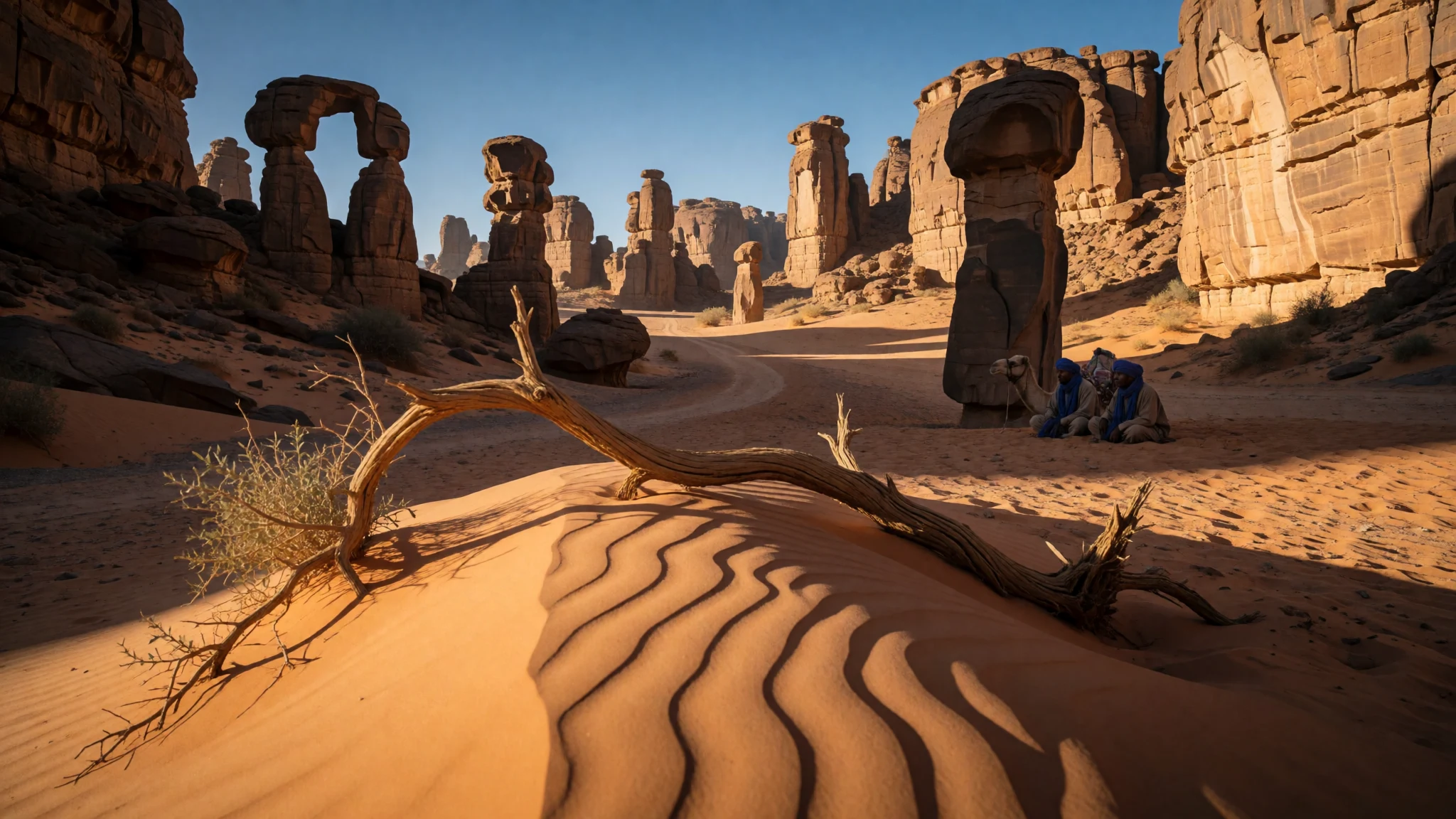
Tassili n'Ajjer trades crowds for scale: a remote Sahara plateau where prehistoric rock art meets strange sandstone landscapes.
The place
Tassili n'Ajjer is a mountain-range plateau tucked deep in Algeria’s central Sahara Desert, near the borders with Libya and Niger. It sits at about 2,158 m at its highest point (Adrar Afao), but the “feel” is more lunar than mountainous: eroded sandstone, rock formations that resemble forests, and long views across a harsh, open landscape.
What draws most visitors is the prehistoric cave and rock art. The region is known for major groupings of ancient artwork, set into the shelters and rock faces. The effect is unusual: you’re walking through geology that looks sculpted, and then you find human stories embedded in it—images surviving where shade is scarce and the air can turn dry and sharp.
Tassili n'Ajjer also works as a geography lesson. The wider plateau area stretches across south-eastern Algeria, and you’ll hear names that help orient the terrain, including Djanet on the south-eastern edge and Illizi on the northern edge. Even without maps, you can read the landscape through colour and shape: pale rock, sudden darker bands, and the way sand gathers along routes between higher ground.
This is a place for those comfortable with remoteness and planning—more “expedition” than “day trip”. Comfort varies with who you travel with and how you move. Expect big distances, strong sun, and changing conditions from morning to late afternoon.
Its story
The story of Tassili n'Ajjer starts with water—at least, with the idea of it. The name “Tassili n'Ajjer” is often described as “plateau of rivers”, and the plateau’s reputation comes from how past environments left their mark across the sandstone. Today it’s a central-Sahara world of heat, wind and distance, but the land still behaves like it once held flow: channels, hollows, and rock patterns that hint at earlier landscapes.
Geology does the storytelling here. As sandstone erodes, it can create rock forests—clusters and corridors of stone that look like formations built for imagination. Standing in one of these zones can feel disorienting, because the scale is enormous and the “ground truth” is constantly shifting underfoot: rock gives way to sand; shade disappears faster than people expect; the horizon seems to move when the light changes.
Then there’s the human thread. Prehistoric figures left paintings and carvings in shelters and on rock surfaces, turning natural walls into archives. Even if the art is visited in brief bursts—pausing, looking, walking on—the region’s mood stays with you. It’s hard to separate the art from the surrounding stone, because both are part of the same long timeline: slow weathering outside, and slow preservation of images inside.
There’s no smoothing this place into a simple itinerary. Tassili n'Ajjer is best approached with patience, respect for local guidance, and enough time to let the desert’s rhythm—quiet mornings, bright middays, cooler evenings—set the pace.
What to see
- Rock art shelters and engraved faces — Around the main plateau rock-art zones
Tassili n'Ajjer is famed for important groupings of prehistoric cave art, preserved on rock surfaces and within shelters. The best way to “see” it is slowly: pause, notice how the panels sit in the landscape, then take a step back to understand the wall’s shape and light.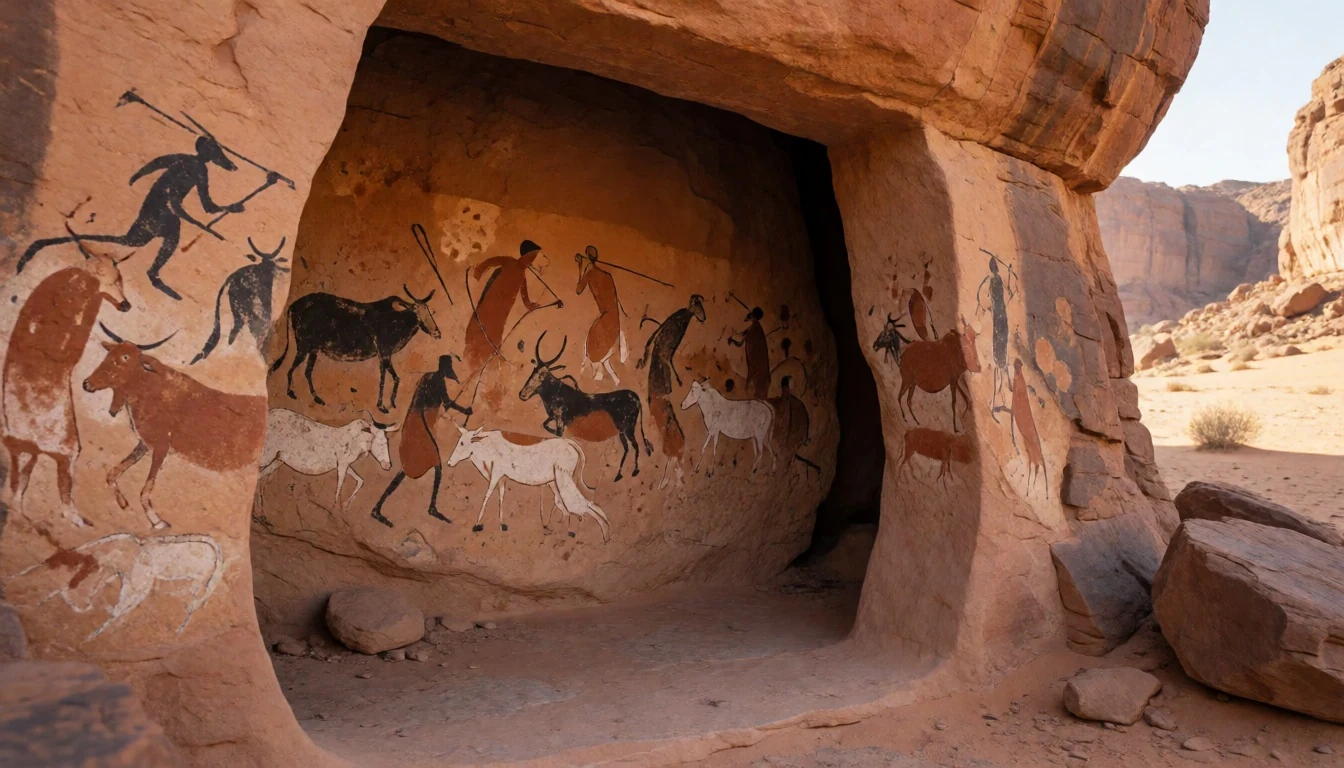
- Sandstone rock forests — Plateau formations across the massif
Tassili n'Ajjer’s sandstone erosion creates formations that read like forests—dense, strange groupings of stone that can resemble a lunar landscape. Walk between these shapes and you’ll get different “scenes” as the sky and shadows shift across the rock.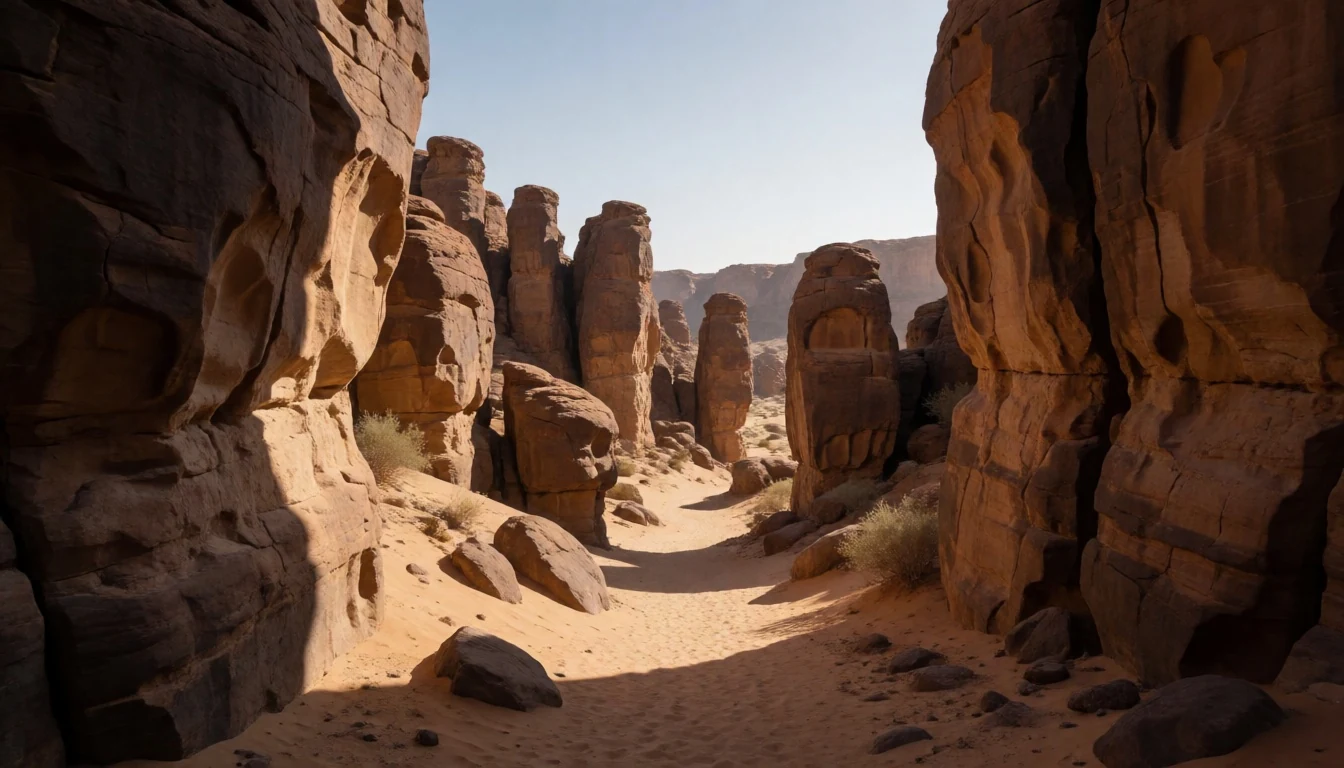
- Dunes edging the plateau — Sahara tracks around the plateau area
Tassili n'Ajjer sits in desert country where dunes can appear near routes and viewpoints, especially when you travel toward broader Sahara surroundings. The sand’s texture makes the whole place feel even more sculpted, with clear contrasts between pale rock and softer, shifting curves.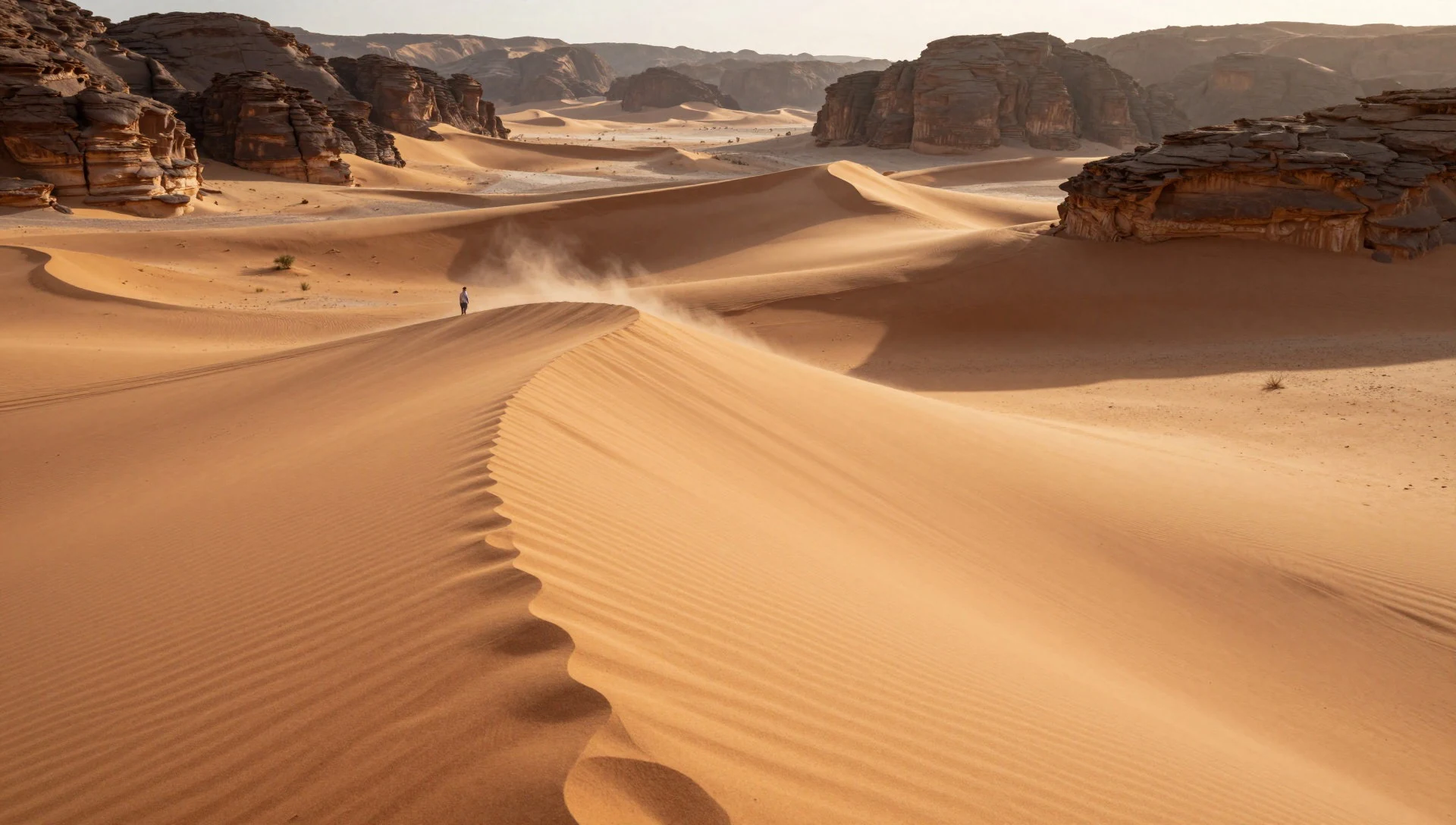
- Fadnoun Plateau viewpoints — Southern plateau viewpoints near Illizi
The Fadnoun Plateau is a useful anchor for feeling the scale: you can look out from elevated ground toward wider southern views, where sand and rock sit together. Even without a “show” in the usual sense, it’s a strong place for quiet observation and long photographic pauses.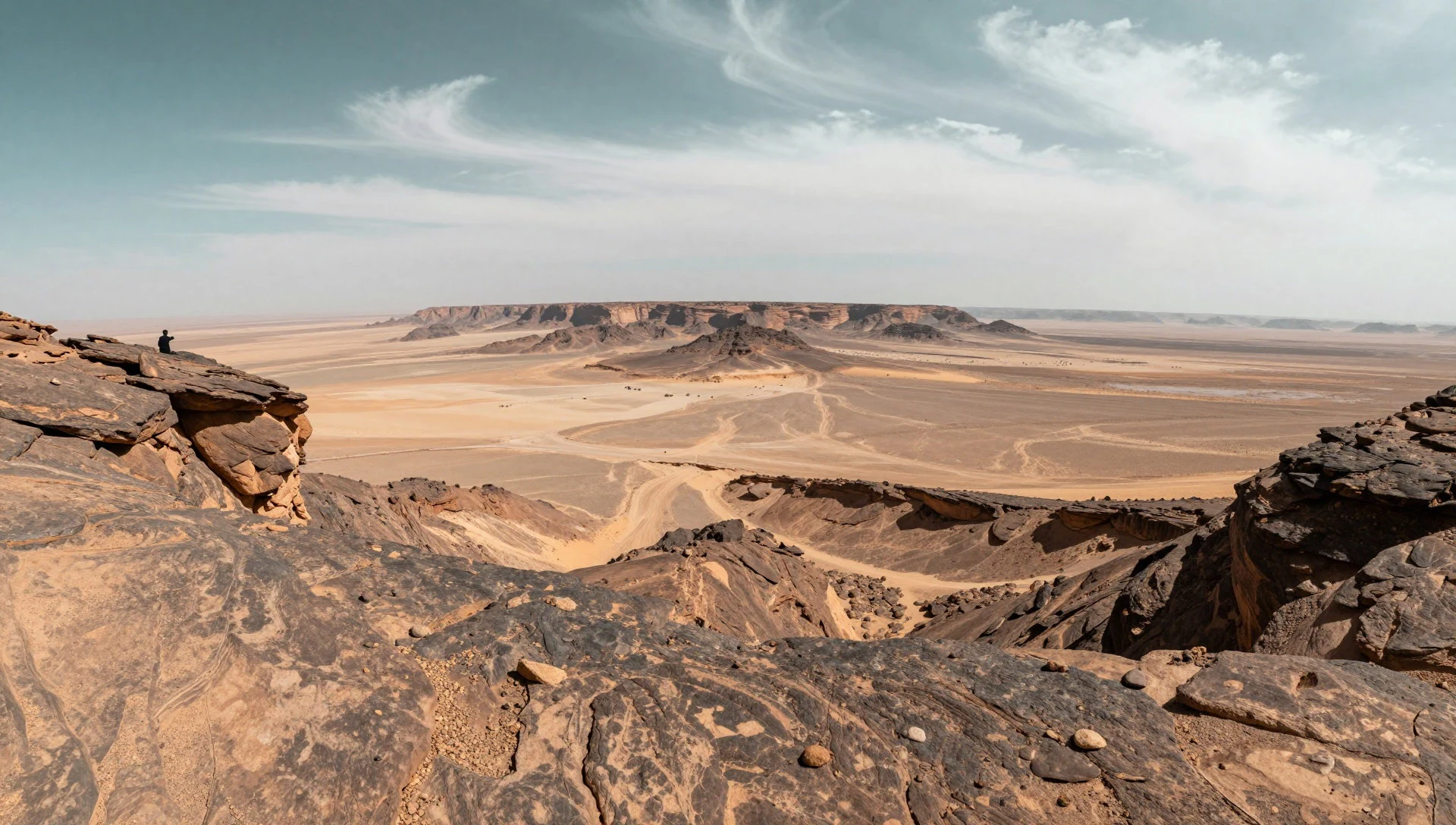
- Oueds and seasonal channels (dry beds) — Oued valleys near Djanet-side access
In Tassili n'Ajjer, you’ll often travel alongside dry riverbeds and oueds that cut through the sandstone. These lines in the landscape help connect areas and give you natural “routes” to follow. They’re also where layered rock storytelling becomes easier to read.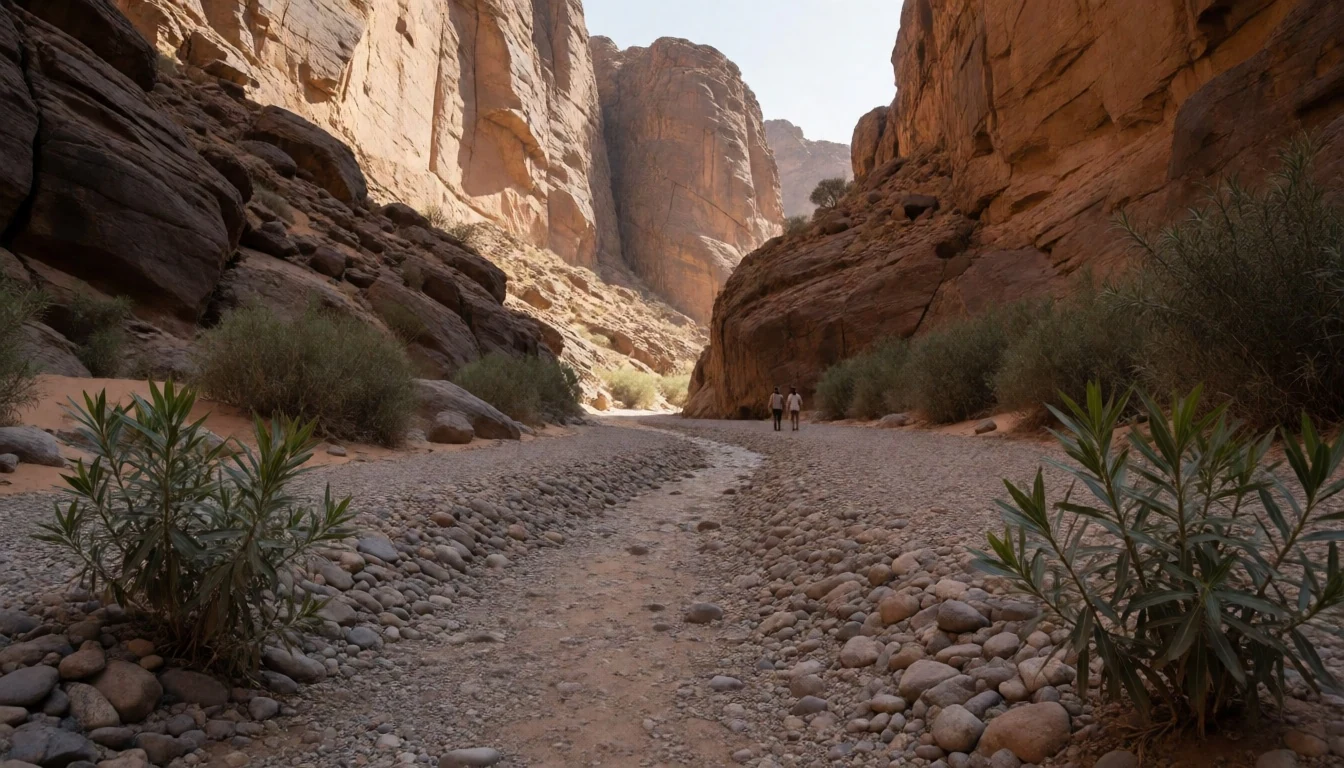
Culture
Tassili n'Ajjer sits in Algeria, and the local social rules are shaped by broader North African and Arab norms. In everyday interactions, honour matters and can influence how people respond to requests and disagreement. When someone asks for something, refusing bluntly can feel like a loss of honour, so communication tends to be handled with tact and wording.
A practical takeaway for visitors is tone. Algerians can be sensitive to sharply worded public criticism or comments that make someone “look bad”. The safest approach is to stay respectful, keep conversations calm, and show genuine interest in local history and geography—people often respond well to thoughtful curiosity about the place itself.
Respect for elders is also a clear cultural marker, so it’s worth adopting the small courtesies you’d use elsewhere in the region: let older people speak first, avoid interrupting, and keep your volume steady.
With a remote destination like Tassili n'Ajjer, these cultural habits matter even more because journeys rely on trust—who you travel with, what guidance you follow, and how you handle unexpected changes in conditions.
Visitor etiquette: dress modestly, speak politely, and don’t publicly criticise anyone or challenge local guidance in front of others.
What to wear
Tassili n'Ajjer is a desert plateau, so clothing needs to work for heat, sun and dust rather than just for “traditional” style. In the wider Algerian context, you’ll see locally worn garments such as traditional robes and head coverings, but on the move in the Sahara, many people dress mainly for practicality.
What people actually wear now varies with age, gender, and how rural the area feels that day, but you can expect a mix: light layers in daytime, and warmer clothing for evenings when conditions can feel cooler once the sun drops. Fabric matters—breathable materials help in the day’s intensity, while a scarf or head covering helps against glare and blowing sand.
For visitors, aim for modest, covering outfits that still breathe: long sleeves and long trousers or a long skirt, plus a scarf for head and neck. Closed shoes are sensible for rough ground, and a hat helps with sun. If you’re spending time near rock art or in shelters, avoid anything too loose or dangling that could snag, and keep sunglasses handy. In sacred or culturally sensitive areas, the modesty piece is the priority.
Overall: think “desert utility with modesty”—comfort for walking, protection for the sun, and enough coverage to stay respectful.
What to eat
- Brik (stuffed pastry) — Local cafés and street food stalls in Algerian towns used as route hubs
Brik is a stuffed malsouka pastry—crispy outside, filling inside—often eaten as a starter or snack. Look for it at local food stalls and cafés in regional towns near desert routes, where fast, hot bites are the norm.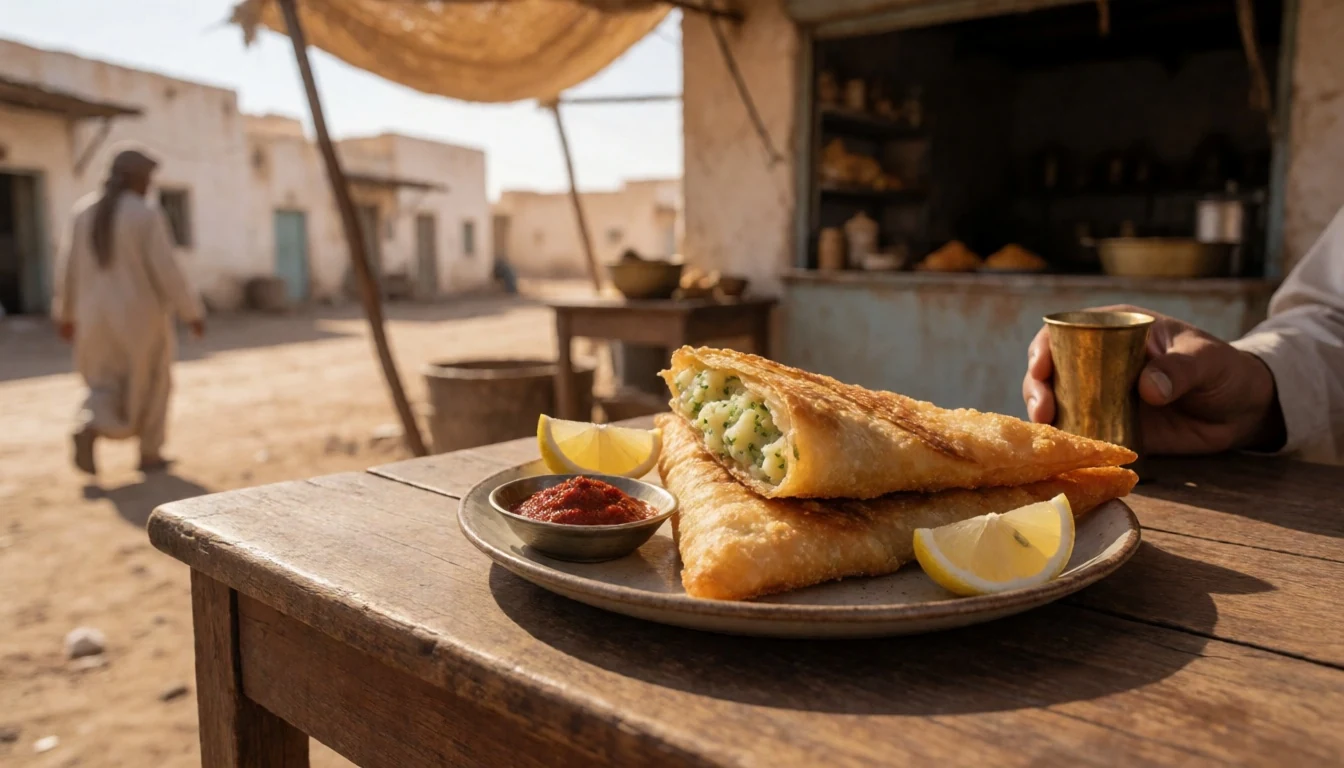
- Couscous — Family-run restaurants and everyday eateries in towns
Couscous is steamed semolina served with a sauce that commonly includes meat and vegetables such as carrots, courgette, and chick peas. It’s a common, hearty meal that suits long travel days when everyone wants something filling.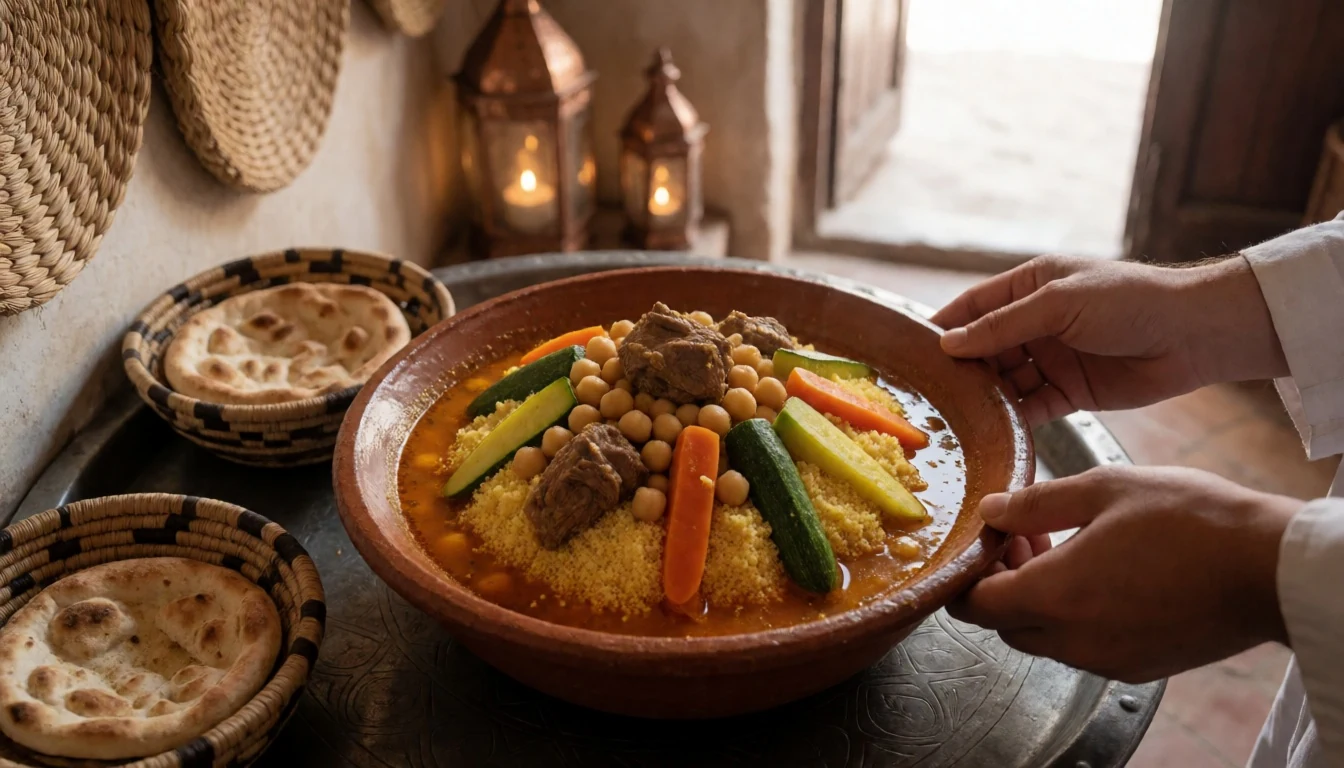
- Chorba (meaty soup) — Restaurant menus and home-style meal spots in towns
Chorba is a meaty soup, usually warming and deeply flavoured. It works well after dusty excursions because it’s comforting and can stretch a meal across the day when supplies and energy are limited. - Rechta — Cooked-from-scratch restaurants and home-style dining in nearby towns
Rechta is hand-made spaghetti, often served in clear chicken broth with potatoes and chick peas. It’s the kind of dish you’ll recognise as “slow food”, usually found where kitchens cook from scratch rather than reheating. - Mechoui (charcoal-grilled lamb) — Communal restaurants and feast-style eateries in towns
Mechoui refers to charcoal-grilled lamb, typically cooked over open heat so the flavour comes from the fire and the slow roast. When it appears, it’s a communal, celebratory meal you’ll often want to try at least once. - Tagine — Everyday restaurants serving North African staples
Tagine is a slow-cooked stew served in a covered dish that helps concentrate flavours. It’s a good choice when temperatures change through the day, because it’s both filling and easy for groups to share after travel.
Plan it
Best time. April–May and September–October are the best bets for calmer conditions; May is the wettest month and August can feel hot and dry.
How long. 3–4
Getting there. You’ll typically enter Algeria via flights into major cities, then make your way by road to the desert access areas; the last leg is usually by local transport arranged for the Tassili n'Ajjer route.
Budget. mid
Tips
- Plan around daylight: start early to avoid the harshest mid-day sun.
- Carry water and sun protection and expect long gaps between services away from towns.
- Avoid overland travel in Saharan Algeria without desert-driving experience and local knowledge.
- Use local guidance for routes and timings—conditions and access can change.
Etiquette
- Follow local guidance closely on routes and safety; ask before changing plans.
- Keep respectful, calm conversation—publicly criticising someone can affect honour and relationships.
- Dress modestly and protect from sun and dust (head scarf, long sleeves, closed shoes).
Nearby
Sources
- Wikidata Q190048 (CC0)
- Wikipedia — Tassili n'Ajjer (rev 1381094515) (CC BY-SA 4.0)
- Wikivoyage — Algeria (rev 5423202) (CC BY-SA 4.0)