Tinuy-an Falls
Tinuy-an Falls, Philippines
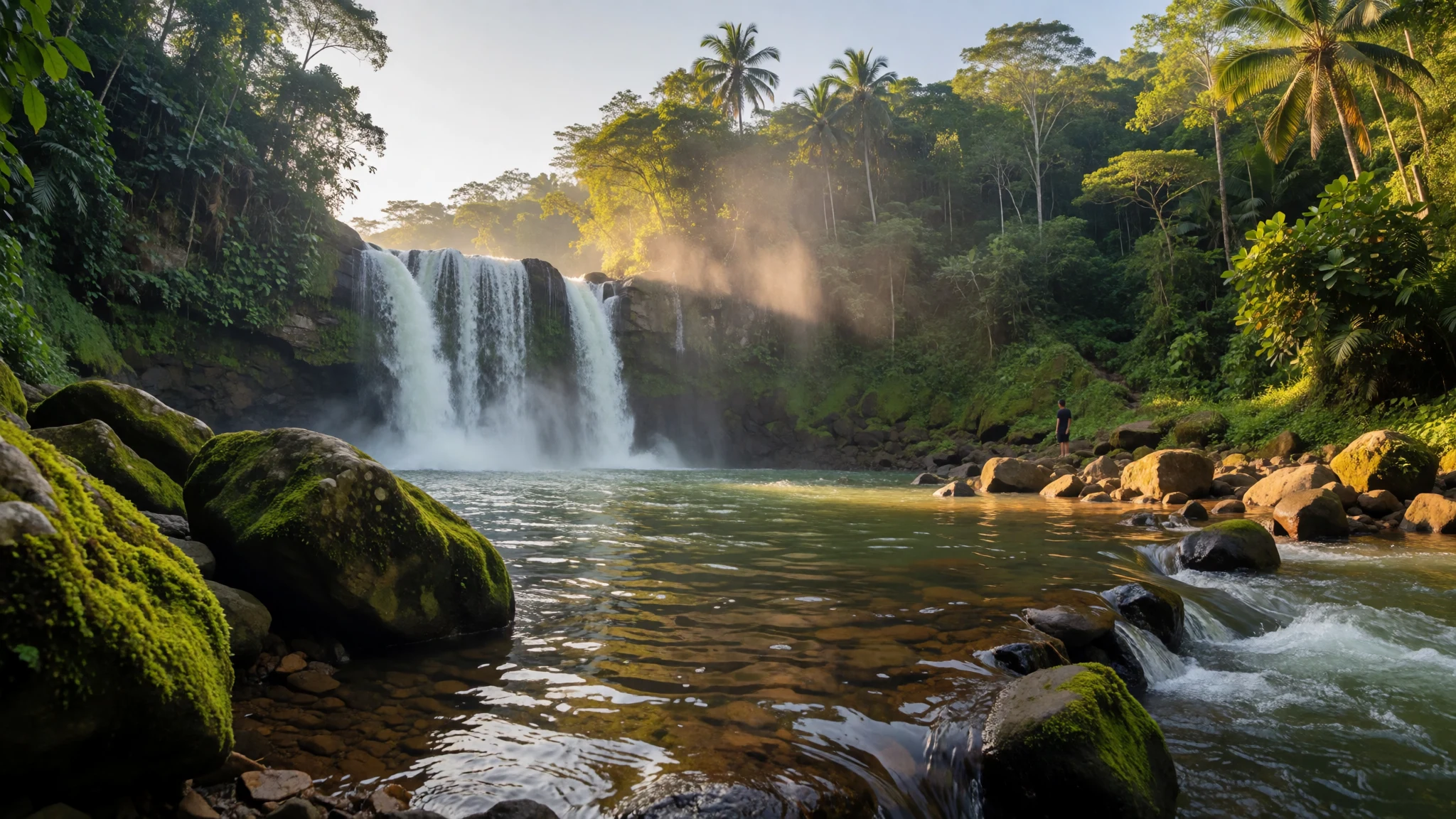
Tinuy-an Falls in Mindanao is a wide, tiered curtain of water, best met on a morning raft ride into the spray.
The place
Tinuy-an Falls sits in Barangay Burboanan, in the city of Bislig on the eastern side of Mindanao, in the province of Surigao del Sur. The water drops about 55 m across a curtain roughly 95 m wide, so the falls read as broad rather than tall. It spills down in three visible steps, with a fourth tier tucked out of sight behind the others. That shape is what people photograph: a thick white sheet framed by green forest on both sides. The falls lie well inland from Bislig's centre. The road from Mangagoy, the trading district of the city, takes about an hour, running through farmland and then forest before the last stretch to the viewing area. Mornings are the usual time to come. A rainbow is said to form in the spray between 9 a.m. and 11 a.m., when the sun climbs high enough to reach the pool. Bamboo rafts carry people close to the cascades, where the pounding water works like a rough massage on shoulders and back. The site is run jointly by Bislig's tourism office and the Manobo Tribal Council, so rules and fees come from both. Facilities are simple. After heavy rain the water turns brown and swimming or rafting may be restricted, so a few dry days beforehand give a clearer, safer cascade.
Its story
Tinuy-an Falls has a short written history, and most of what is reliably known concerns how it is looked after today. The site lies in Barangay Burboanan, and its upkeep is shared between the tourism office of Bislig and the Manobo Tribal Council. That arrangement matters. The falls sit within the home area of the Manobo community, so visitor income and decisions are meant to pass through both bodies rather than a single operator. In recent years the falls have appeared in international travel magazines and television programmes, which has brought far more visitors than a quiet corner of eastern Mindanao was used to. Bislig, which calls itself the Booming City by the Bay, has leaned on that attention. A different kind of fame arrived in 2024, when the birder Peter Kaestner spotted an Orange-tufted Spiderhunter in a heliconia thicket beside the falls. It was the 10,000th bird species of his life, a new world record, and it put Tinuy-an on the map of birdwatchers who had never heard of it. The fuller story of the falls, including how the Manobo understand the river and the land around it, is best heard on site from Manobo guides rather than read in a short account like this one. Visitors who ask politely and listen tend to learn more than any signboard offers.
What to see
- The main viewing area — Barangay Burboanan, Bislig
The main viewpoint faces the full width of the falls, where water spills across three visible tiers into a broad green pool. The curtain is about 95 m across and drops about 55 m, so a wide-angle lens helps. Morning light brings the rainbow in the spray. Paths and steps run close to the edge, and the stones near the water are slick.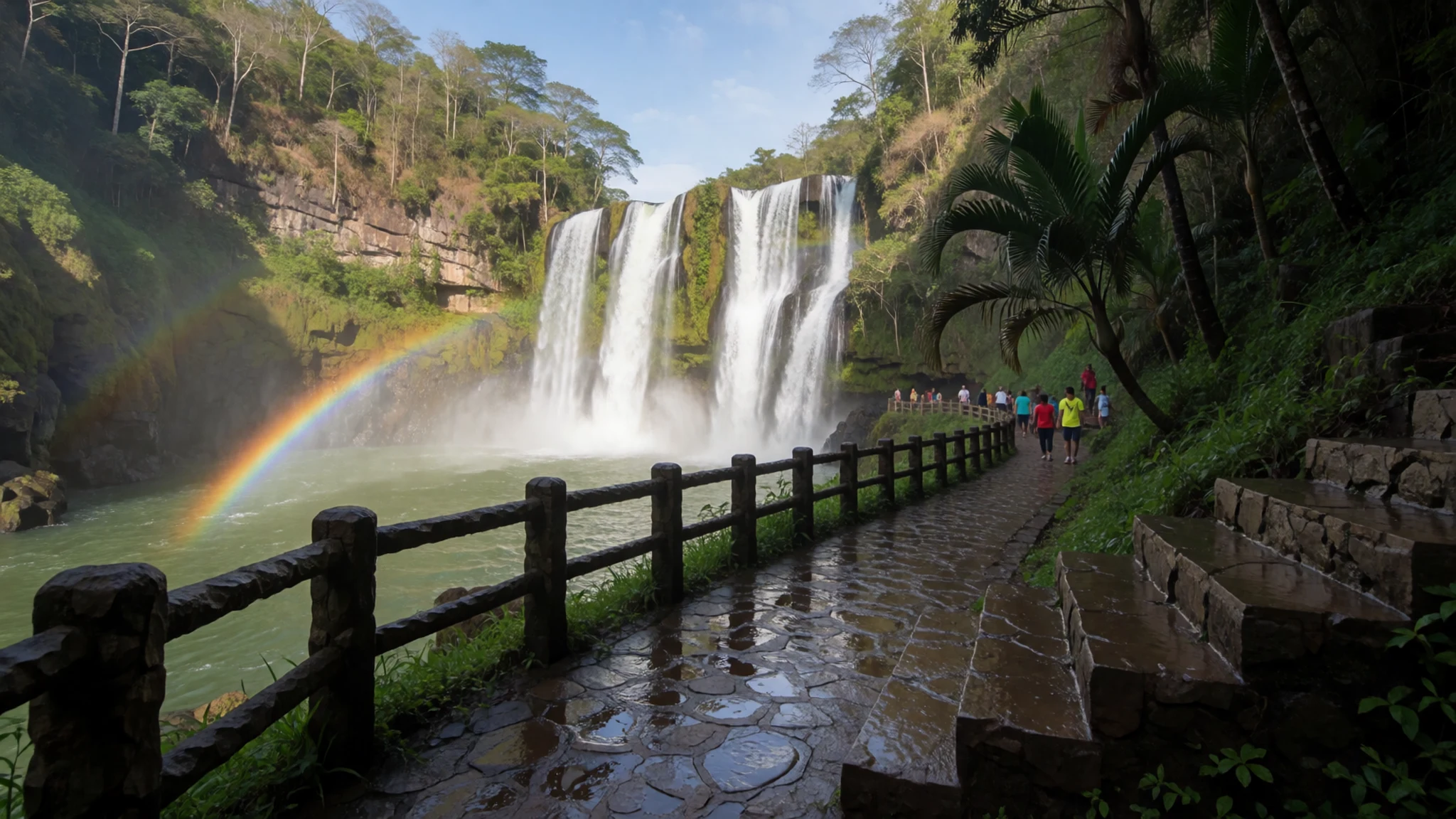
- Bamboo rafts at the base — The pool below the falls
Rafts carry visitors across the pool to the foot of the lower cascades, where the water lands hard enough to feel like a rough massage on the shoulders. Expect to get thoroughly wet, so seal phones and cameras in dry bags. Follow the operators' instructions on group size and safety gear, and skip the ride after heavy rain.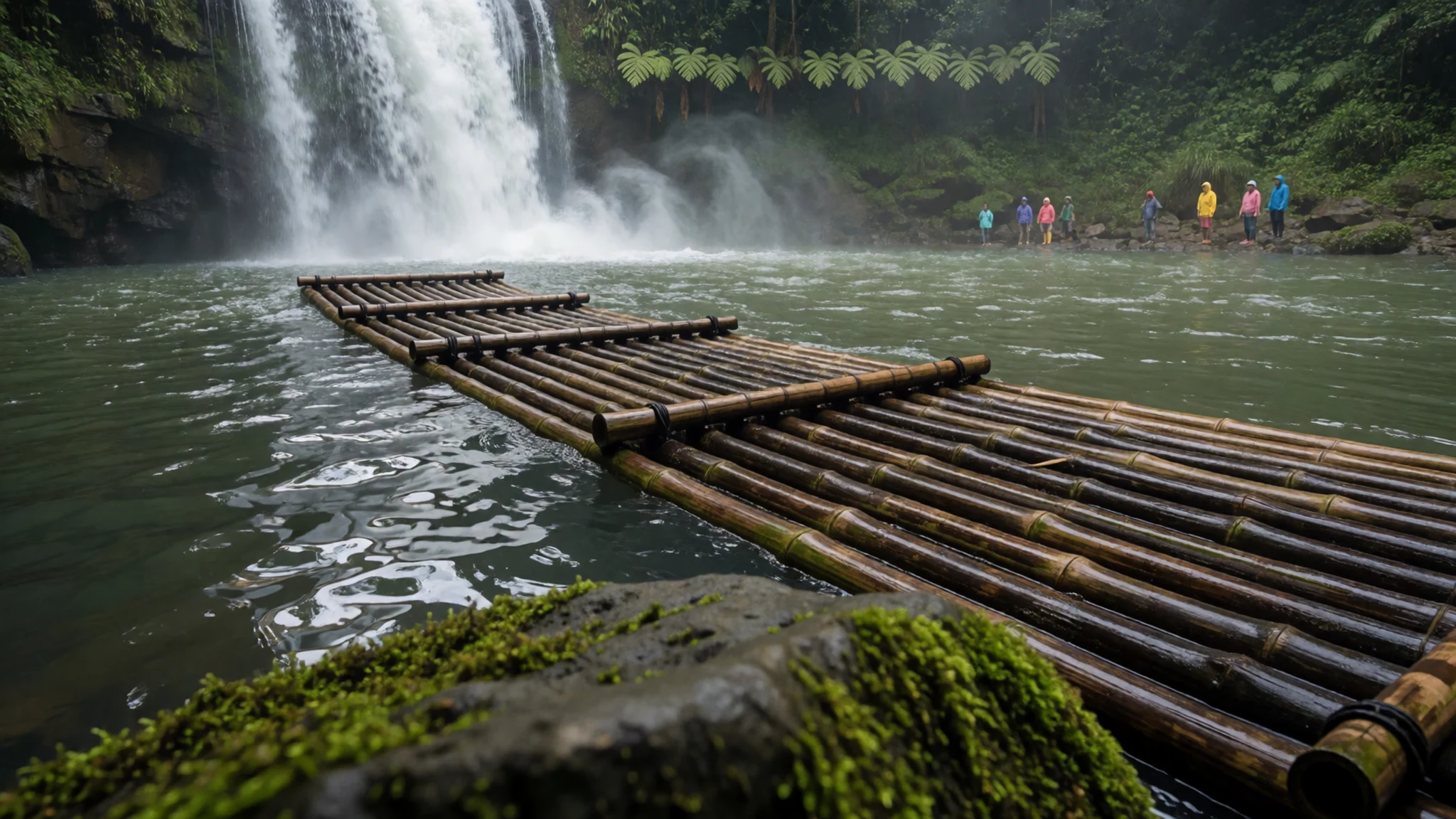
- The forest edge for birds — Around the falls
The forest edge around the falls is worth a slow walk with binoculars. In 2024 a visiting birder logged his 10,000th species, an Orange-tufted Spiderhunter, in a heliconia thicket here. Early morning, before the tour groups arrive, is when birds are most active, and patience pays off far better than speed.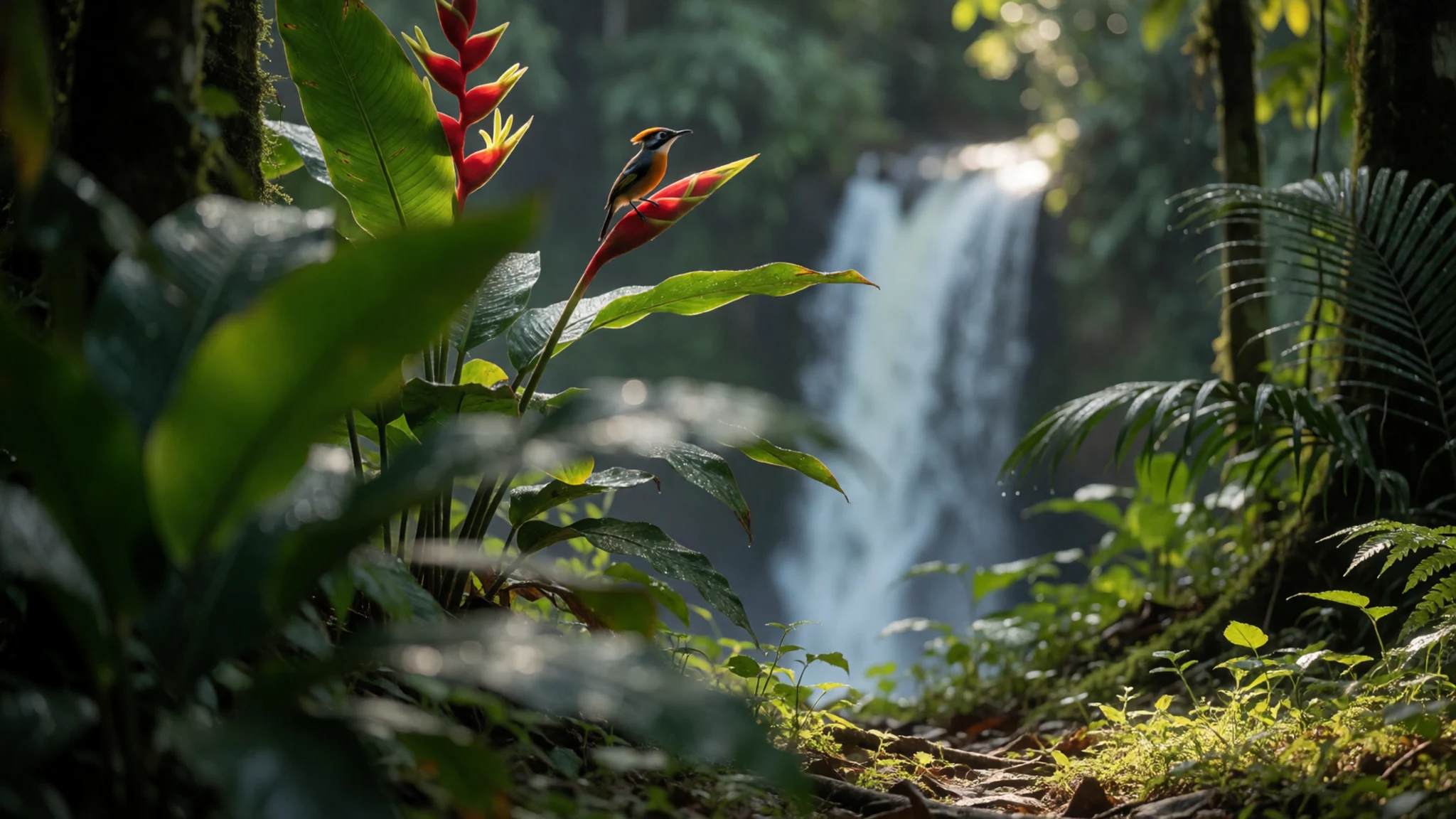
- Enchanted River Hianatuan — North of Bislig, Surigao del Sur
The Enchanted River Hianatuan is a deep spring river whose water shifts through vivid blues and holds plenty of fish. A poem called Rio Encantado helped make it known. It pairs naturally with a trip to the falls, but it lies a fair drive away, so most visitors give it a separate half day.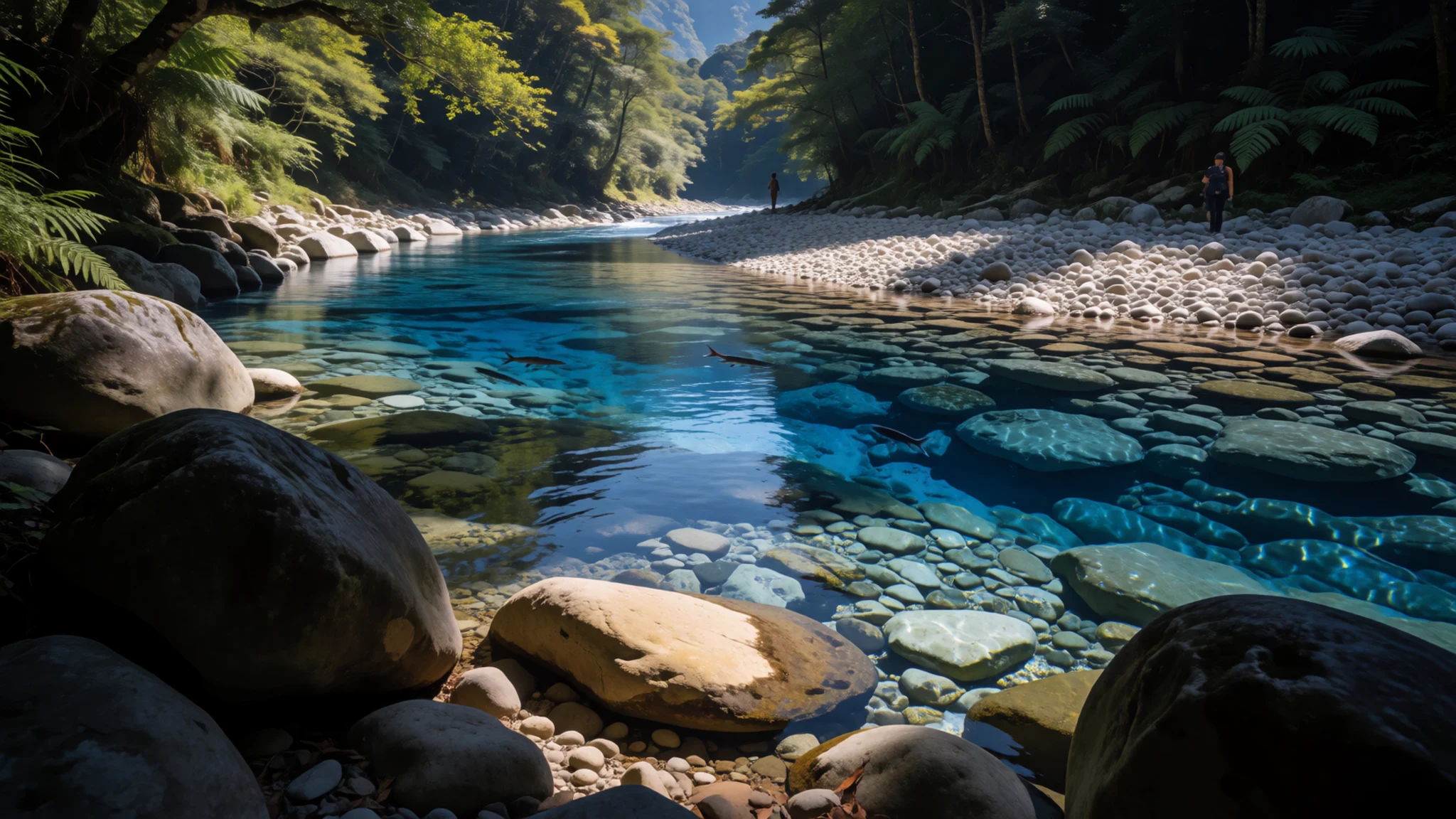
- Baywalk Bislig — Bislig city centre
Baywalk Bislig is a promenade along the water, handy for an evening stroll after a day of spray and mud. Locals use it for exercise and photographs, and the open bay makes a calm contrast with the roar of the falls. It fits well with a meal in town before heading back to a pension house.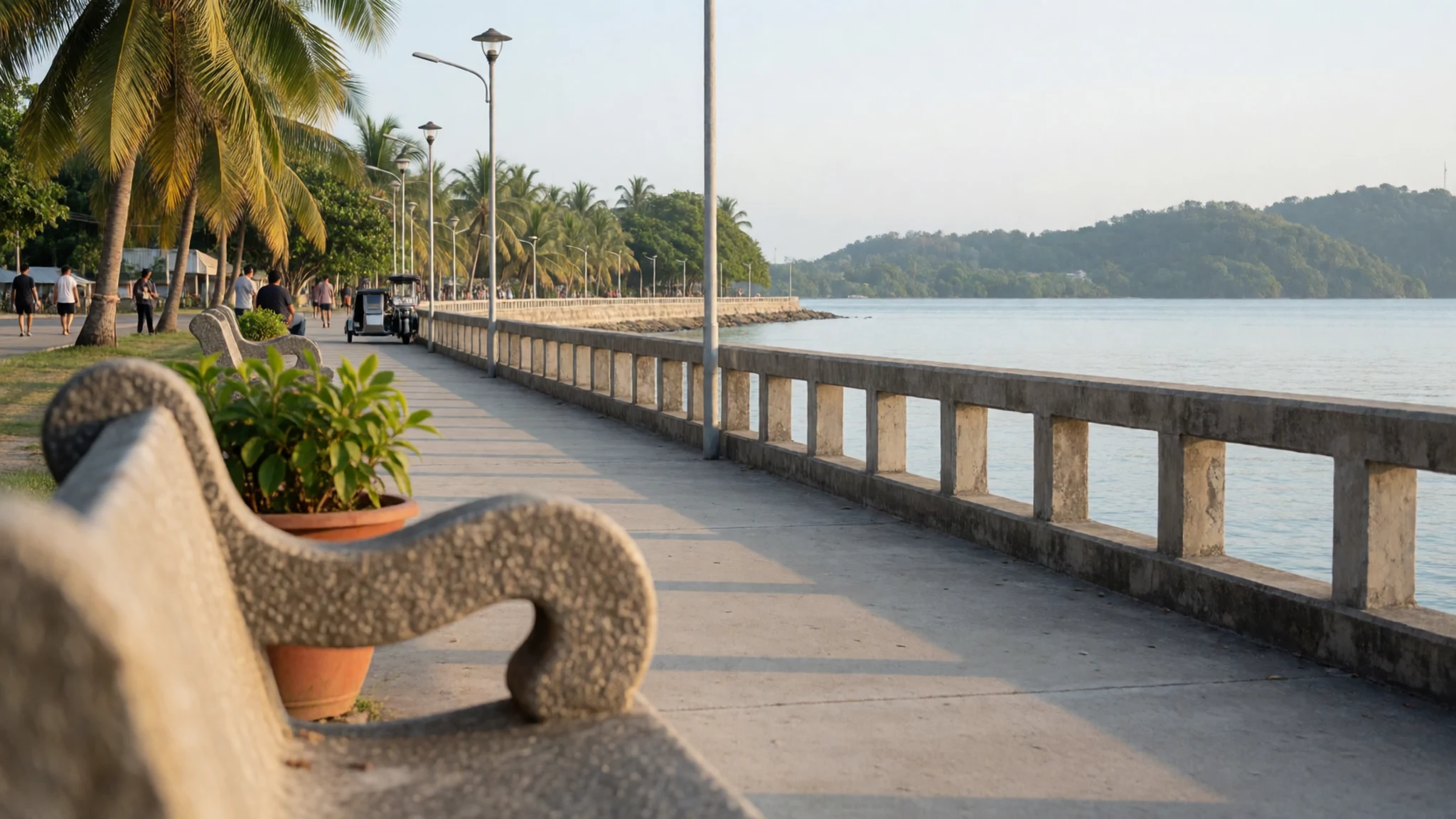
Culture
Tinuy-an Falls is a place where tourism and Indigenous stewardship meet. The Manobo Tribal Council shares management with Bislig's tourism office, so the falls are not simply a public park but part of the territory of a living community. Manobo is a broad name for several related Indigenous peoples across Mindanao, and customs differ between groups, so local guides are the best authority on what is appropriate at the water. Bislig itself is a working city rather than a resort, and the falls draw mostly Filipino families and groups from across the region. Weekends and holidays bring picnic parties and loud music near the rafting area, while weekday mornings are calmer and better for listening to the forest. Visitors are often asked where they are from, and a few minutes of friendly conversation is part of the welcome. Small purchases from stalls along the path put money straight into the local economy. Carry all rubbish back out with you, since bins near the falls fill quickly and the pool drains downstream. Ask permission before photographing Manobo people, their homes or any ceremony, and follow the guides' instructions about where to swim and where to stay out.
What to wear
Tinuy-an Falls lies in Manobo country, and Manobo communities have traditionally worked with abaca fibre, beads and bold embroidered or appliquéd cloth, with the finest pieces kept for ceremonies and community occasions. Designs and colours vary between groups, so it is better to ask a guide or maker than to assume one pattern stands for all. Day to day, people in Bislig dress for heat and rain: cotton T-shirts, shorts, light trousers, flip-flops and cheap sandals, with rash vests or old clothes for anyone heading onto the rafts. Smart clothes appear for church, school and town events rather than at the falls. For a visit, quick-dry clothing works far better than denim, which stays wet for hours. Wear water shoes or sandals with a firm strap and real grip, because the rocks and steps near the pool are slippery. Swimmers usually keep a T-shirt and shorts on rather than bare swimwear, in line with local modesty norms. Bring a light rain jacket, a hat for the walk in, a dry bag for phones and a spare set of clothes for the ride back to town, as the road can be long and the spray soaks everything.
What to eat
- Kinilaw — Seafront eateries and market stalls in Bislig
Kinilaw is raw fish cured in vinegar or citrus with onion, ginger and chilli, a Philippine coastal staple. Bislig sits on a bay, so fresh catch is easy to find. It is sharp, cold and a good counterweight to a hot, humid day at the falls.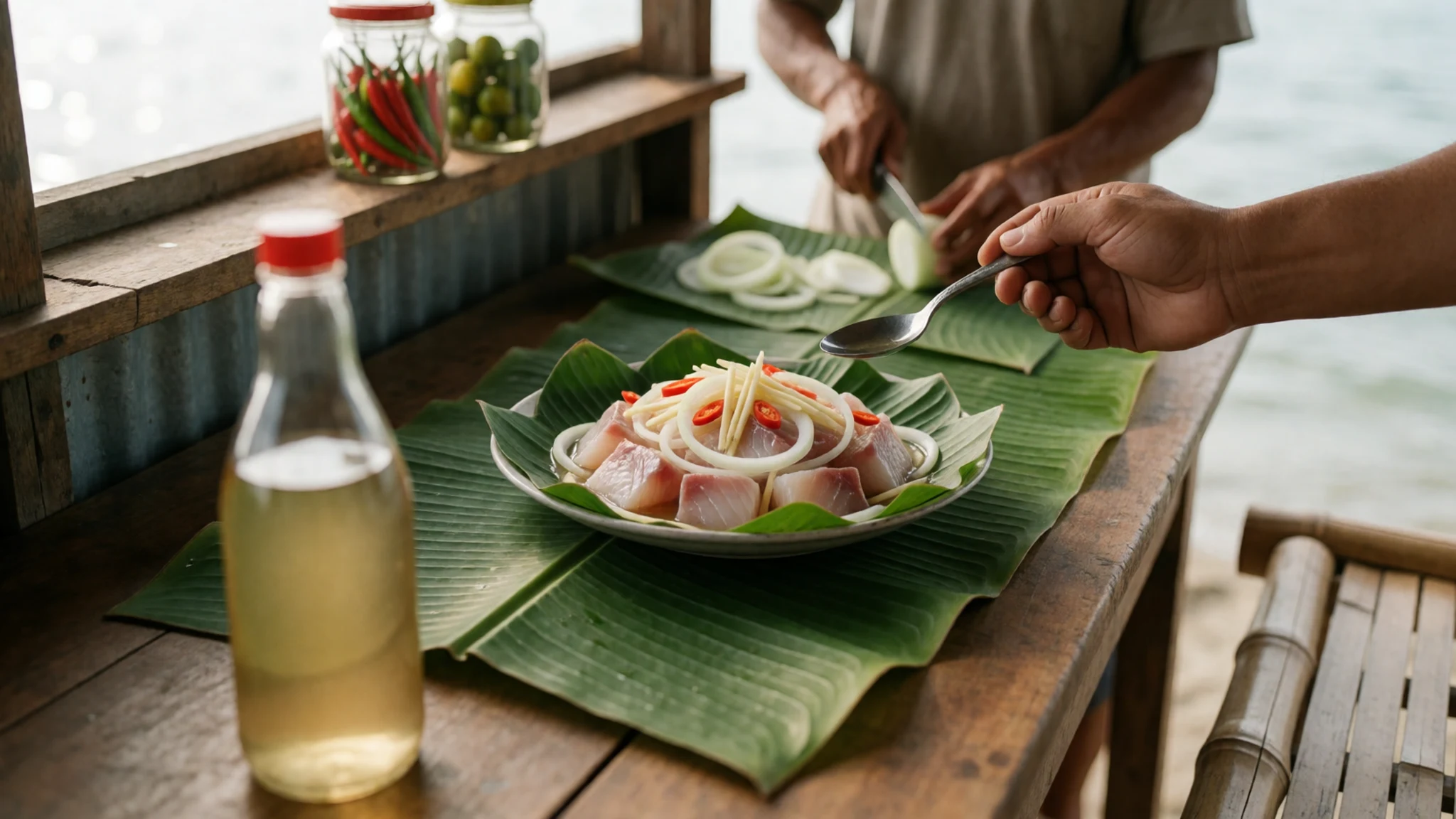
- Inihaw na isda — Grill stalls and casual eateries around town
Grilled fish, often seasoned simply with salt and calamansi, is served with steamed rice and a dipping sauce of vinegar or soy. It is a cheap, filling meal for the road back from the falls, and the grill smoke usually signals where locals eat.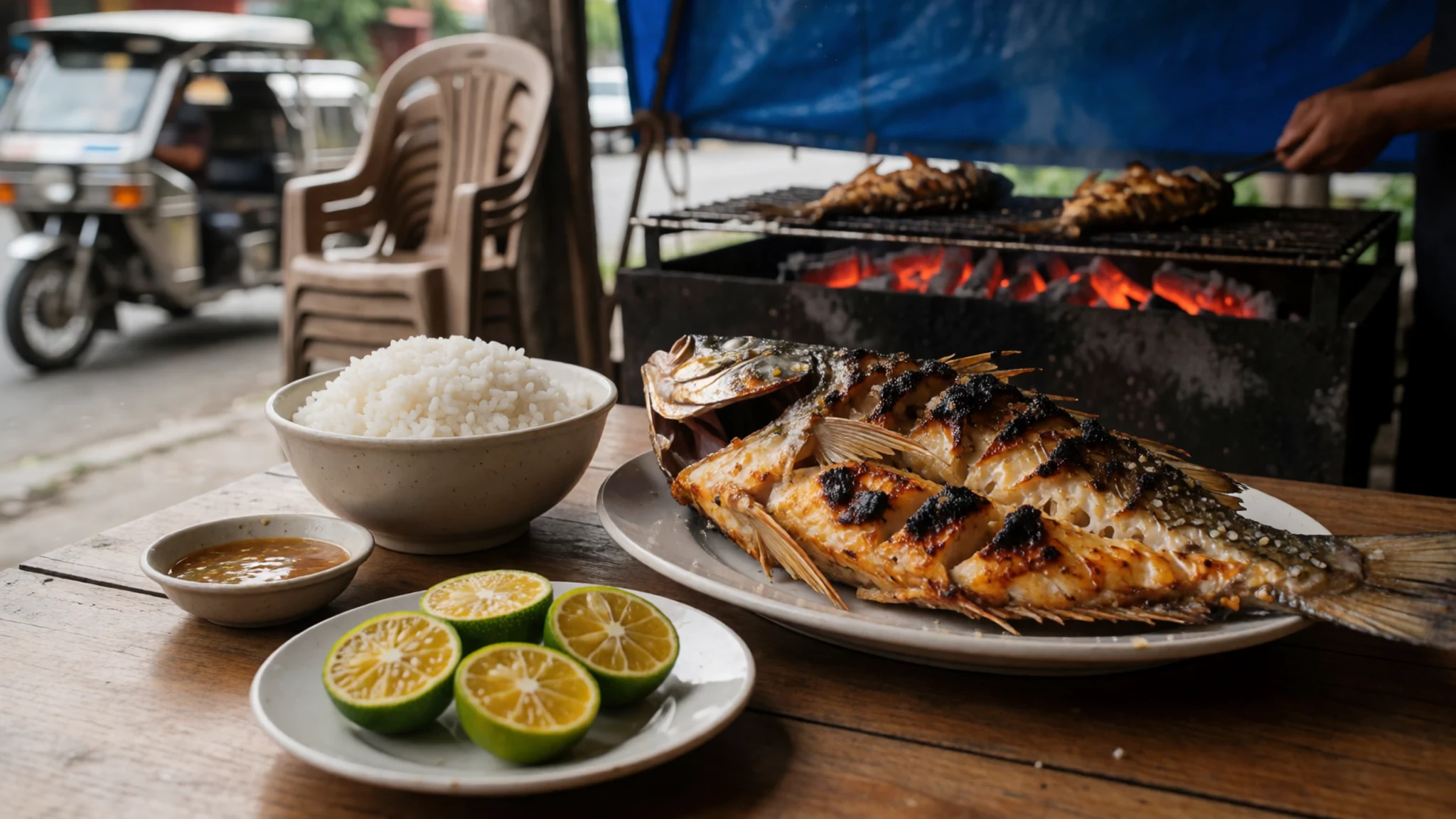
- Sinigang — Home-style eateries and food courts in Bislig
Sinigang is a sour, savoury soup of pork, fish or prawns with vegetables, soured with tamarind or another tart fruit. It suits wet weather and cool evenings, and most small eateries serve a version with rice. Ask which souring is used that day. - Pancit — Bakeries, food courts and street stalls
Pancit is a noodle dish stir-fried with vegetables and meat or seafood, found all over the Philippines in local variations. It travels well, so it is a practical packed lunch for a day at the falls. Look for it at morning stalls and small food courts. - Halo-halo — Dessert stalls and cafés near the town centre
Halo-halo is shaved ice layered with sweet beans, jelly, fruit and milk, sometimes topped with ice cream or purple yam. It is messy and sweet, and the usual reward after a hot, damp day. Small dessert counters in town make it to order.
Plan it
Best time. March to May is generally the better window, with fewer heavy downpours, though eastern Mindanao has no truly dry season and rain can arrive in any month. Mornings are best for the rainbow and for cooler walking. Check recent weather before setting out, as heavy rain can discolour the falls and close the pool.
How long. 2–3
Getting there. Fly to Davao, Butuan or Tandag, the nearest airports, then continue to Bislig by bus or minivan; Davao and Butuan are the usual gateways and the road takes most of a day. Long-distance buses from other parts of Mindanao also stop in Bislig. From Bislig, the falls are about an hour away via Mangagoy and the Poblacion–San Isidro route, by hired vehicle or tricycle.
Budget. low
Tips
- Go in the morning for the rainbow and thinner crowds, and avoid weekends and holidays if you can
- Carry cash, as small stalls and raft operators may not take cards, and check fees with the tourism office
- Bring water shoes, a dry bag and a spare set of clothes, since the spray soaks everyone
- Book a room in Bislig ahead for holiday weekends, and check road and weather conditions before the final leg
- Leave plenty of daylight for the trip back, as the road from the falls to town is long
Etiquette
- Follow the Manobo guides' and raft operators' instructions about where to swim
- Ask before photographing local people or their homes
- Carry your rubbish back out of the site
Nearby
Sources
- Wikidata Q37647 (CC0)
- Wikipedia: Tinuy-an Falls (rev 1362227609) (CC BY-SA 4.0)
- Wikivoyage: Bislig (rev 5257641) (CC BY-SA 4.0)
- Photo: Tinuy-an Waterfalls of Bislig, Bro. Jeffrey Pioquinto, SJ (CC BY 2.5)
- Photo: Tinuy-an Falls in Bislig, JjGuia (CC BY-SA 4.0)
- Photo: Tinuy-an Falls, Bislig City, Billy Palatino (CC BY-SA 4.0)
- Photo: Tinuynew, MyCommons199 (CC BY-SA 4.0)
- Photo: Tinuy-an falls 1, Michael E. Peligro (CC BY-SA 4.0)
- Photo: Tinuy-an falls 3, Michael E. Peligro (CC BY-SA 4.0)
- Photo: Tinuy-an falls 5, Michael E. Peligro (CC BY-SA 4.0)
- Photo: Tinuy-an falls 6, Michael E. Peligro (CC BY-SA 4.0)


Wildlife
- Orange-tufted spiderhunter (animal)
This little bird is a Philippine special: the orange-tufted spiderhunter, a member of the sunbird family, lives only on Mindanao and in Eastern Visayas. Experts once thought it was just a type of little spiderhunter. At Tinuy-an Falls, one was spotted in 2024 in a tangle of heliconia next to the cascade. No season or time of day is known. Watch from a respectful distance, speak softly, ask a guide to help, and never offer food. - Orange-tufted spiderhunter (bird)
This little bird is a Philippine special: the orange-tufted spiderhunter, a member of the sunbird family, lives only on Mindanao and in Eastern Visayas. Experts once thought it was just a type of little spiderhunter. At Tinuy-an Falls, one was spotted in 2024 in a tangle of heliconia next to the cascade. No season or time of day is known. Watch from a respectful distance, speak softly, ask a guide to help, and never offer food.