Tinago Falls
Tinago Falls, Philippines
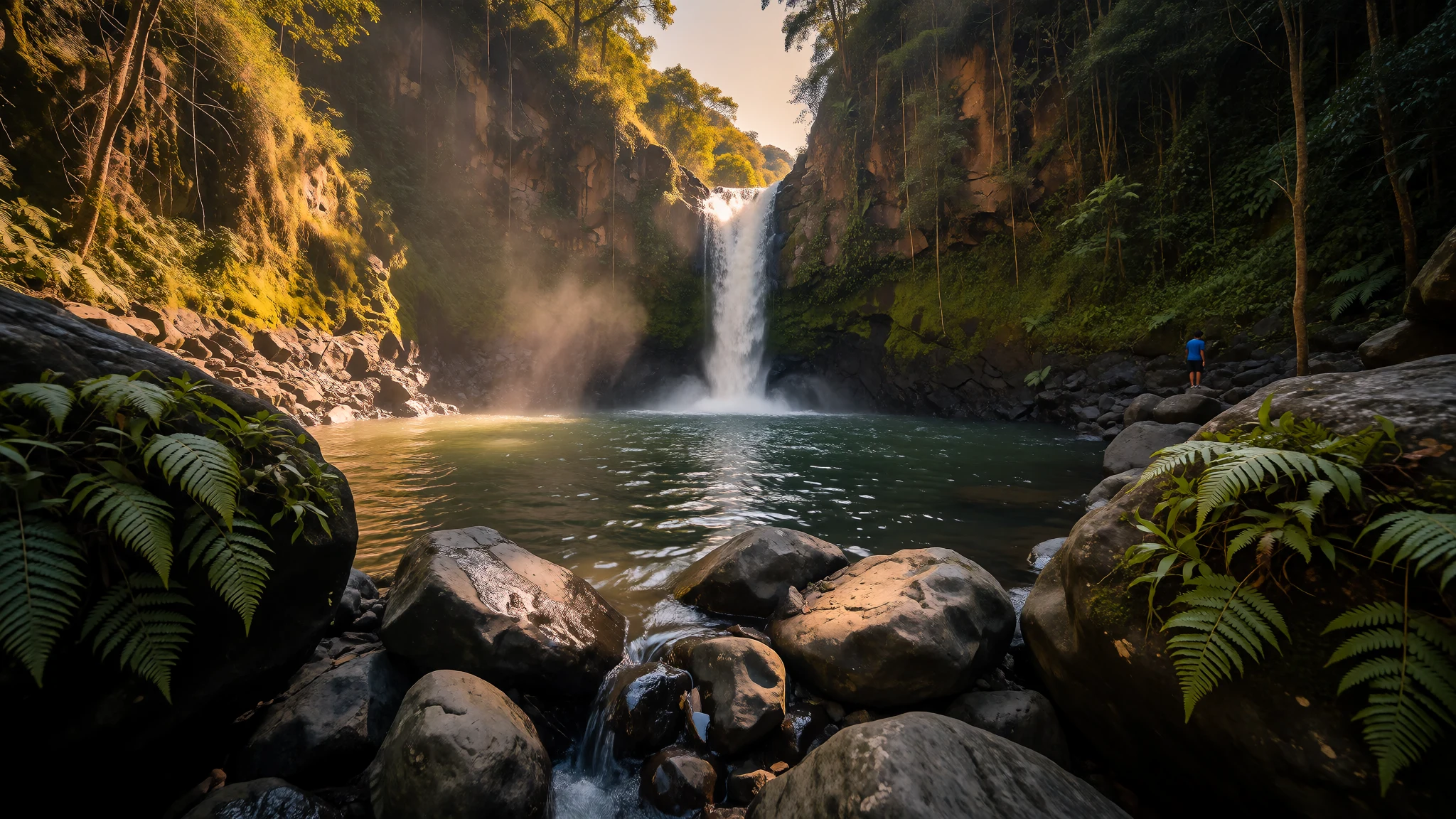
Tinago Falls drops into a hidden ravine on the Agus River, reached by a long staircase down to a cold, deep pool.
The place
Tinago Falls sits on the Agus River in the north of Mindanao, in Lanao del Norte province, at an elevation of 209 m. Wikipedia places it in the municipality of Linamon, while many photographs and visitors tie it to neighbouring Iligan City, the usual base for reaching it, so both names turn up on signs and maps. The water drops 73 m from a cliff into a ravine so deep that the falls cannot be seen from the road above. That concealment gives the place its name, since tinago is the Filipino word for hidden.
Reaching the water is part of the experience. A staircase of roughly 500 steps zigzags down through the trees, and the climb back is the honest cost of the visit: warm, damp and slow. At the bottom the falls land in a calm, deep, basin-like pool of cold water, noticeably cooler than the humid air around it. Spray hangs in the ravine, and the rock walls are green with moss and ferns. Behind the curtain of water there is a small cave where visitors can step in and listen to the noise of the fall against the stone.
Small streams branch off from the main cascade and trickle over the rocks around the pool, which makes for easy photographs and shallow places to sit. The setting feels enclosed rather than open, closer to a green amphitheatre than a viewpoint.
Tinago is one of many falls around Iligan, a city known for the number of waterfalls and springs ringing it. That makes the area a sensible base for a few days of swimming, walking and slow eating, with the falls as the anchor.
Its story
Tinago Falls takes its story from the land around it as much as from any single event. The Agus River and its tributaries have long shaped life in this part of northern Mindanao, and the name Tinago, meaning hidden, simply describes what a first-time visitor sees: nothing, until the ravine opens below.
The wider area is the homeland of the Higaonon people, the earliest known inhabitants of what is now Iligan. The city's name is often traced to a Higaonon word for fortress, though another explanation points to the way the two main rivers rise and spill with the seasons. Local people call that rhythm ilig. Rather than dreading the monsoon, many Iliganons treat it as a blessing, because the floods enrich the soil along the riverbanks. Cebuano speakers in the city like to read the name as a place where good fortune gathers.
Those same rivers later powered the city's growth. Falling water and a ready supply of it helped Iligan become the industrial centre of Mindanao, a role it still holds. The city also sits on limestone country and lies outside the typhoon belt, which has spared it much of the weather damage that hits other parts of the Philippines.
The result is an odd pairing: factories and busy streets in town, and within a short ride a ring of falls, springs and caves that locals use for weekends, picnics and swimming. Tinago is the one that asks for the most effort, and that effort is part of why it is remembered.
What to see
- The pool and the cave behind the falls — Base of the falls, Linamon / Iligan
The main attraction is the plunge pool at the foot of the 73 m cascade. The water is cold, deep and calm, and the spray makes the air feel cooler. A small cave under the falls lets visitors step close to the water and hear it rumble. Check local swimming rules before getting in.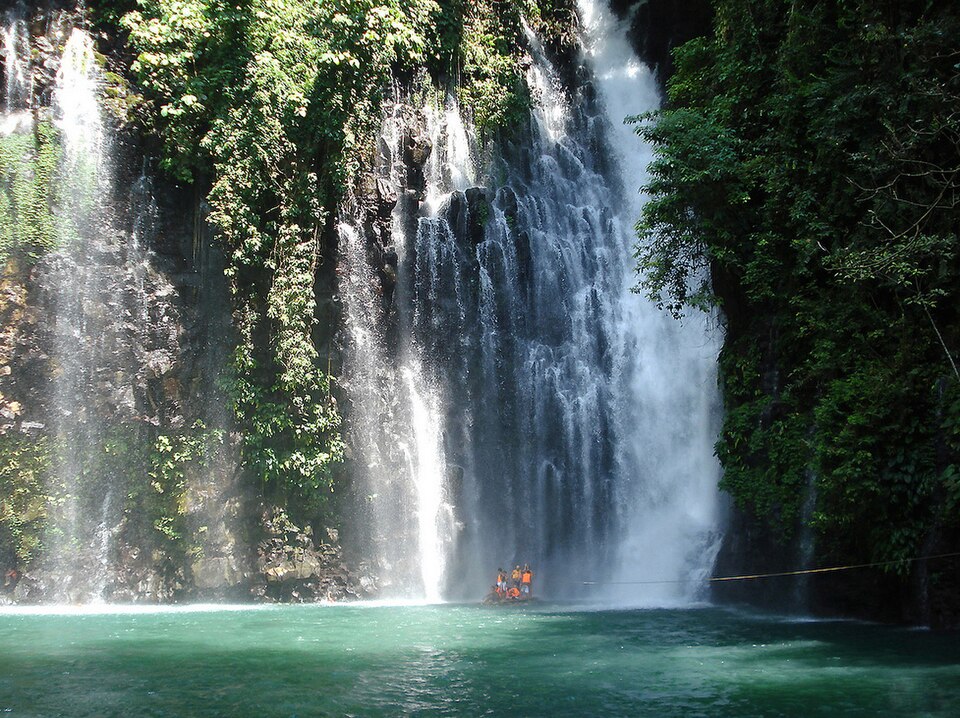
- The winding staircase — Ravine path above the falls
The route down is a zigzag staircase of about 500 steps through the ravine woods. Going down is easy and the views open gradually; coming up is the real workout. Take it slowly, pause at the landings, and wear shoes with grip because the steps stay damp.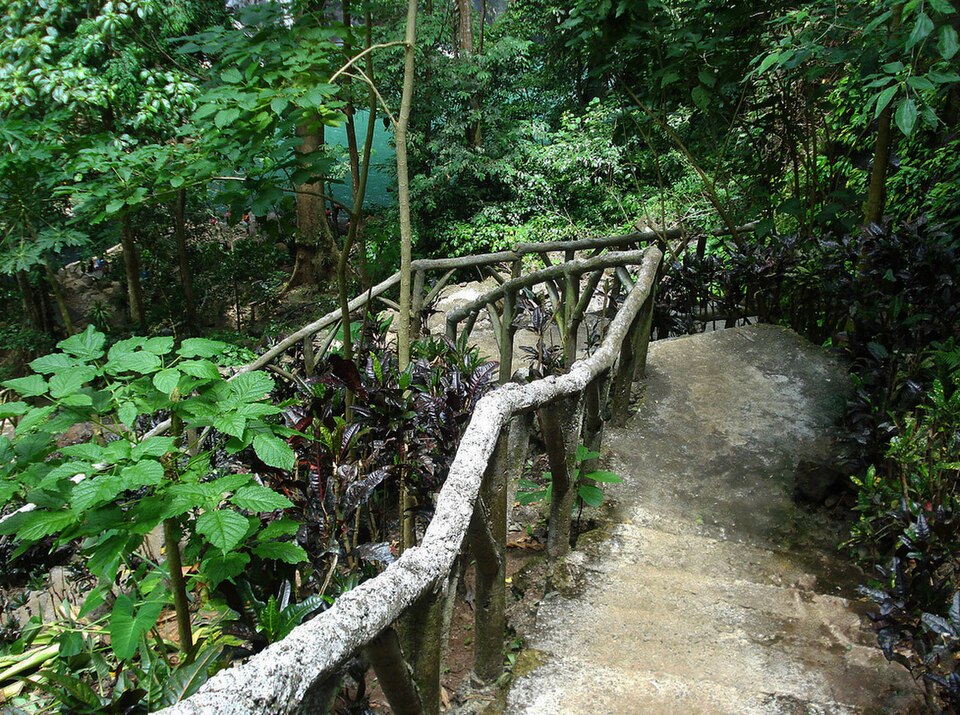
- Small streams around the pool — Edge of the plunge pool
Besides the main drop, thin streams branch off and run over the rocks near the pool. They make shallow, quieter spots for sitting with feet in the water and are good for photographs when the main basin is busy. Rocks here are slippery, so step carefully.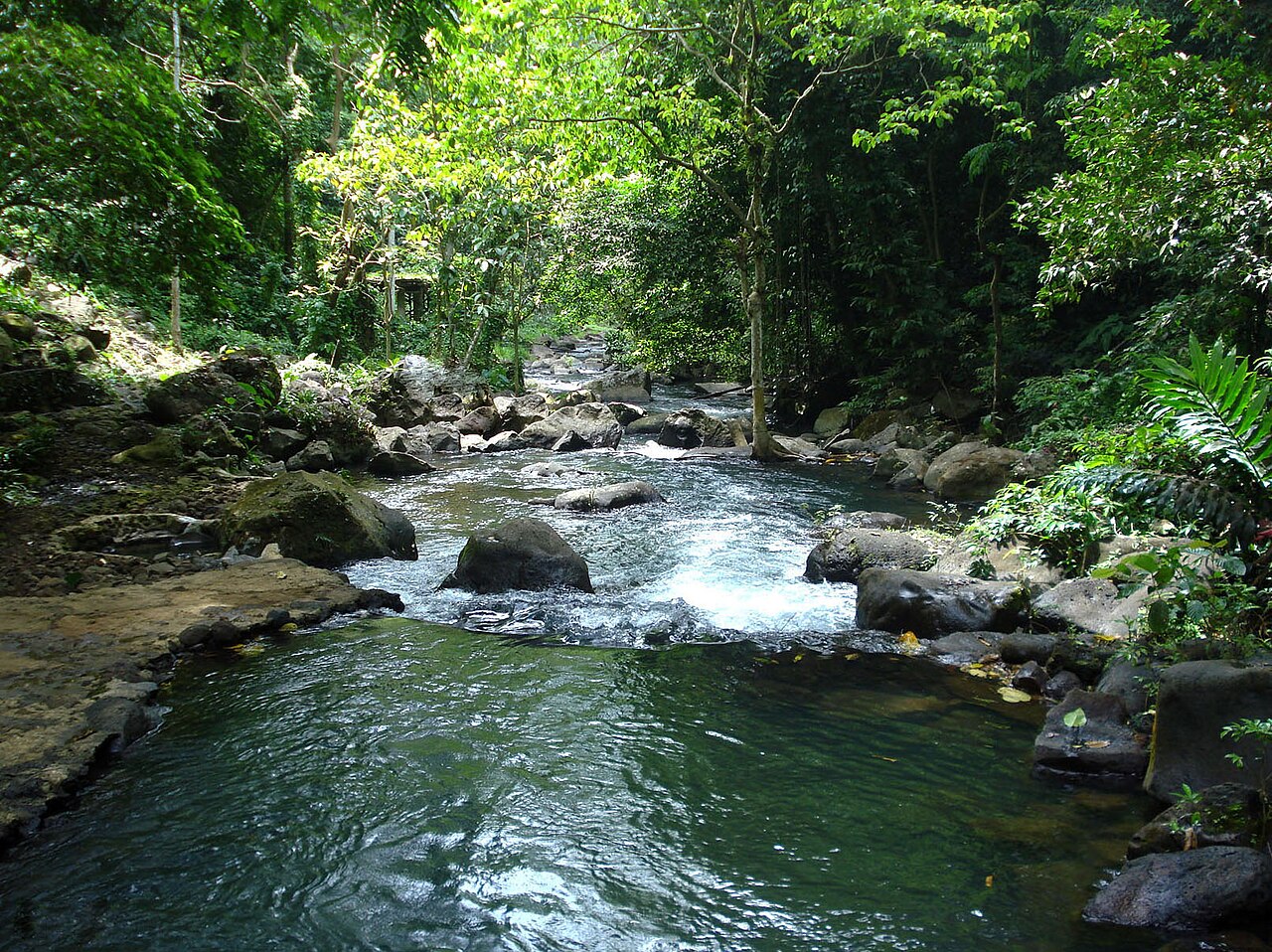
- Maria Cristina Falls — Iligan City
Another of Iligan's well-known waterfalls, close to the city centre. The City Tourism Office can arrange guides for it and other sights, or it can be visited independently. It pairs well with Tinago as a second, easier stop on the same day trip. - Macaraeg-Macapagal Ancestral House — Iligan City
A heritage house in Iligan linked to two Philippine presidents, a father and his daughter, who both lived there. It is a short stop for anyone interested in the political history of Mindanao and offers a change of pace after a day of waterfalls and swimming. - Timoga Spring Pools — Near Iligan City
Clear, cool spring water runs through a series of swimming pools, with sheds, snack stalls, cottages and roast-pig vendors nearby. It suits families and anyone wanting an easy afternoon swim without stairs. Mimbalut Falls and its lagoon are another option for a quiet, shaded paddle.
Culture
Tinago Falls lies in Lanao del Norte, where several communities share the same towns. Iligan is mostly Christian and Cebuano-speaking, with a substantial Muslim population, a smaller Tagalog presence and migrants from elsewhere in the country. The Higaonon are the indigenous people of the area, and their language is the source of the city's name.
Water is woven into local identity. The city calls itself a city of waterfalls, rivers feed its industry, and the yearly flooding of the riverbanks is traditionally welcomed as a gift to farmland. Weekends at the falls and springs are social: families bring food, groups of friends swim, and the staircase is a shared effort in the heat.
Iligan also has a name for its artists, poets, writers and cultural workers, and the city's galleries and ancestral houses reflect that. A visitor who spends an evening in town rather than rushing back to Cagayan de Oro will notice how many different food styles, languages and prayer calls share the same streets.
Manners are relaxed but considerate. Locals greet strangers readily, and a smile and a few words in Cebuano or Filipino go a long way. Dress in town leans casual but modest, especially around mosques and churches. At the falls, the ravine amplifies noise, so loud music is unwelcome. Ask before photographing other bathers and local families, and carry every scrap of rubbish back up the staircase with you.
What to wear
Tinago Falls is a swimming and walking destination, so clothing here is practical, but the surrounding region has a strong textile tradition. The malong, a tubular woven cloth worn by Maranao and other Muslim communities in Mindanao, is made in bright colours and geometric patterns and can serve as a skirt, shawl, or wrap. It appears at weddings, festivals and religious occasions. The Higaonon have their own woven cloth and beadwork, worn on ceremonial days. Both are best seen at cultural events or craft stalls rather than at the falls.
Day to day, Iligan dresses for heat and humidity: cotton T-shirts, shorts, light dresses, jeans in air-conditioned places and rubber sandals or flip-flops. Many local swimmers go in shorts and T-shirts rather than swimwear, and some women swim fully clothed. Either choice is normal at the pool.
Visitors should plan for the terrain more than the style. Wear quick-dry clothes, and bring swimwear or a rash vest, a change of clothes for the long climb back and a small waterproof bag. Footwear matters most: water shoes or sandals with a firm strap and good tread work better than loose flip-flops on the damp staircase and rocks. Carry a light rain jacket, since showers can come quickly. In town, cover shoulders and knees when visiting mosques and churches, and bring a scarf for entering a mosque.
What to eat
- Lechon — Stalls at spring-pool resorts near Iligan
Roast pig with crackling skin, sold by the portion at stalls beside the spring pools near Iligan. It is a weekend and celebration dish in the Cebuano-speaking south, usually eaten with rice and a dipping sauce. Pork is not halal, so Muslim visitors should look at other stalls. - Piaparan — Maranao eateries in Iligan
A Maranao chicken dish cooked with grated coconut and a spiced paste, giving a rich, earthy flavour. It is a good way to taste the Muslim culinary tradition of Lanao and is often served with rice at family-style eateries. - Palapa — Eateries and home-style restaurants in Iligan
A pungent Maranao relish of spring onion and spices, spooned onto rice, grilled fish or meat. It is hot and fresh, and a little goes a long way. Ask for it on the side if unsure about heat. - Grilled fish and seafood — Waterfront eateries and the public market
Whole fish grilled over charcoal and served with rice, vinegar and chilli dip. Iligan sits on a bay, so fish from the day's catch is easy to find, particularly in the evening along the waterfront and at casual eateries. - Local coffee and cakes — Cafés around the city centre
Iligan has a growing café scene, with espresso bars offering house blends, cakes and pastries as well as home-style meals. It is a pleasant way to rest after the climb back from the falls and a welcome break from the heat.
Plan it
Best time. February to April is usually the drier stretch in this part of Mindanao, which means safer stairs, calmer water and clearer pools; this is a general pattern, so check the local forecast. Heavy rain can make the staircase slippery and the pool rougher. The area sits outside the typhoon belt, but showers can come at any time.
How long. 2–3
Getting there. Fly to Laguindingan Airport (CGY), about 56 km from Iligan, with daily flights from Manila and Cebu. From there take a bus towards Iligan; the road from Cagayan de Oro to Iligan is about 88 km and roughly two hours by bus. Ferries also link Iligan to Cebu City, Manila and Ozamiz. For the last leg to the falls, ask at the City Tourism Office or your accommodation about a tricycle, jeepney or hired vehicle.
Budget. low
Tips
- Go early in the day, when the staircase is cooler and the pool is quieter; weekends and holidays draw more people.
- Carry small cash, as card payment at the falls may be limited, and ask at the entrance or the City Tourism Office about fees and swimming rules.
- Bring drinking water and wear shoes with grip, since the descent is easy and the climb back is tiring.
- Combine the falls with a second stop such as Maria Cristina Falls or Timoga Spring Pools to make a full day.
Etiquette
- Carry all rubbish back up the staircase.
- Keep music and voices low in the ravine.
- Ask before photographing other bathers and families.
Nearby
Sources
- Wikidata Q37565 (CC0)
- Wikipedia: Tinago Falls (rev 1379860017) (CC BY-SA 4.0)
- Wikivoyage: Iligan (rev 5404727) (CC BY-SA 4.0)
- Photo: Tinago Falls Iligan City 01, Paul van der Vegt (CC BY 3.0)
- Photo: The winding staircase, GinaD (CC BY 3.0)
- Photo: Tinago Falls, GinaD (CC BY 3.0)
- Photo: Small streams, GinaD (CC BY 3.0)
- Photo: The winding staircase, taken while going up, GinaD (CC BY 3.0)
- Photo: Leap. Believe. Become., HCTUB222 (CC BY-SA 4.0)
- Photo: The tinago falls found in Linamon Lanao del Norte, Jayreen (CC BY 3.0)
- Photo: Tinago Falls, Jose Nicdao (CC BY 2.5)


