Tikehau
Tikehau, France
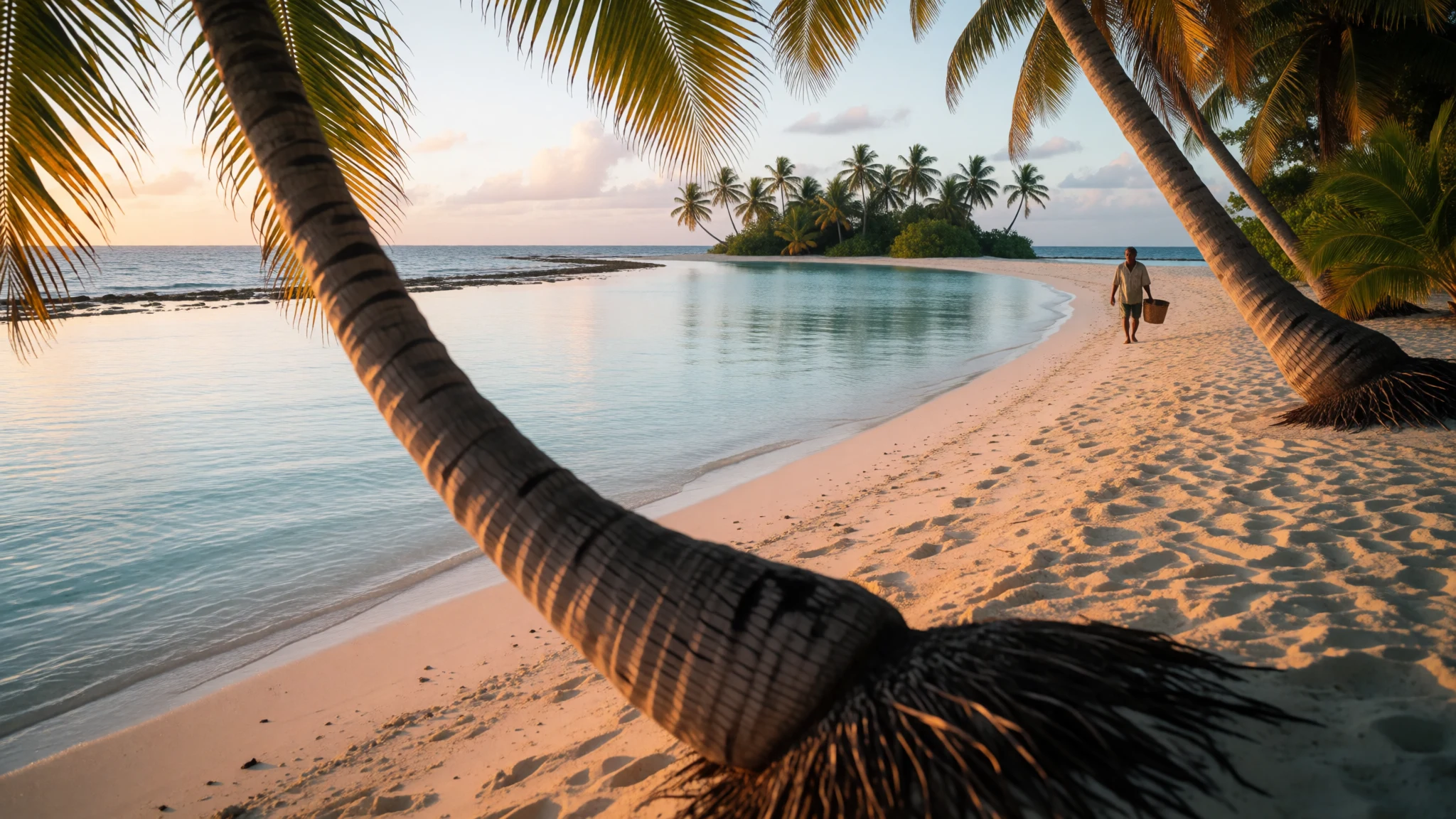
Tikehau is a low coral ring around a huge, clear lagoon, a quiet place for snorkelling, pink-tinged sand and slow days.
The place
Tikehau is a ring of coral in the Tuamotu Archipelago of French Polynesia, about 340 km north-east of Tahiti. The name is usually translated as Peaceful Landing, and the older name Porutu-kai is also recorded. Administratively the atoll belongs to the commune of Rangiroa, whose own atoll lies only 12 km to the east, with Mataiva about 35 km to the west. The geography is simple and a little strange. An almost unbroken reef encloses an oval lagoon roughly 27 km long and 19 km wide, around 461 square kilometres of shallow, sheltered water. The land is only a thin fringe on that rim: two main islands and many small islets, nearly all covered in coconut palms. The north-eastern quarter is a single long island, mostly uninhabited. Boats can enter or leave the lagoon through just one gap deep and wide enough, the Tuheiava Pass on the western side. Nothing here rises more than a few metres, so from the water the atoll is a low green line, and sea and sky do most of the work. Daily life is small in scale. People fish, tend fish farms near the pass, keep a modest pearl-farming trade and produce copra, while tourism, built around one resort and a scatter of guesthouses, brings most of the income. The village has a bakery, a couple of small shops and a bar, so supplies are limited and the pace is deliberately slow. A flight from Tahiti of under an hour makes Tikehau an easy hop, though it still feels remote once the plane has gone.
Its story
Tikehau has little written history before the nineteenth century, and Polynesian navigators knew it long before any European chart did. The first European on record to reach it was the Russian naval officer Otto von Kotzebue, who named it Krusenstern Island after the explorer Adam Johann von Krusenstern, his countryman and predecessor in Russian circumnavigation. That name never stuck locally. The American Wilkes Expedition sailed past the atoll in September 1839, one more survey ship noting a low reef on the way across the Pacific. Christianity arrived through Catholic and Protestant missionaries, and the church in the village dates its history to 1867. The twentieth century brought a different kind of arrival. In 1987 the research team of Jacques Cousteau studied the lagoon and reported an unusually rich range of fish species, a finding that has been repeated ever since in descriptions of the atoll. A 1977 airfield changed life more than any survey, because it connected the island to Tahiti and made a resort and a small tourist trade possible. Since 2018 the lagoon has also had licensed zones where seaplanes may land. Today the old economy of copra and fishing sits beside visitors, divers and a few pearl farms, and the island's story is mostly about how a community of modest size shares a very large lagoon with people who come to look at it.
What to see
- The lagoon from above — Whole atoll
Tikehau's defining sight is its shape: a pale oval of lagoon ringed by a thread of palm-covered islets. Satellite images show it clearly, but a seaplane or helicopter flight, where operators offer one, gives the same view in person. Ask locally about weather, and book ahead, as flights are few.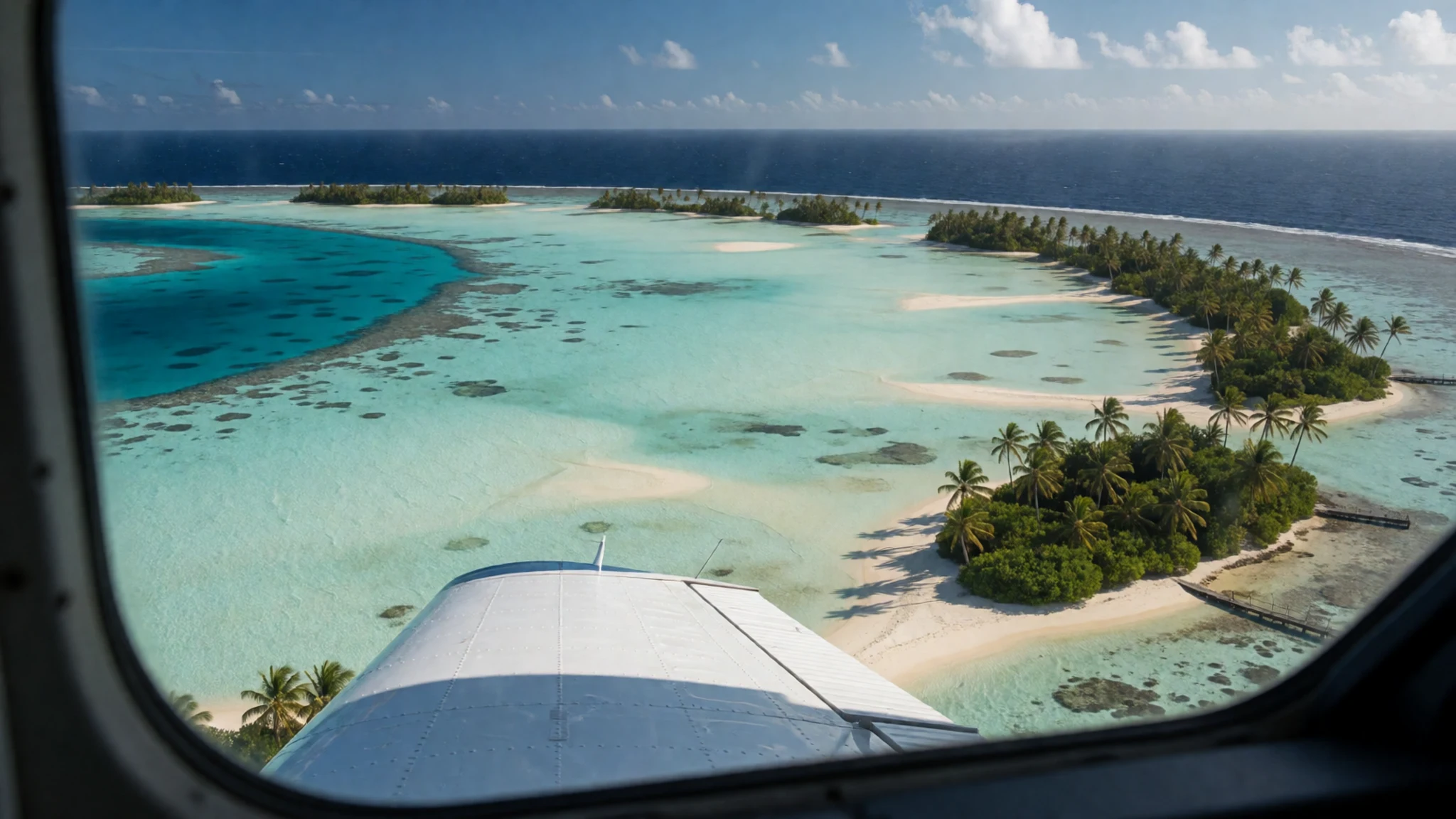
- Pink sand beaches — South-eastern shore and nearby islets
Parts of the southern shore are known for sand with a pink tint, thought to come from crushed bits of red coral mixed in with the white. The colour is strongest in some lights and nearly vanishes in others. Go early or late in the day, when the shade is softer and the beach is empty.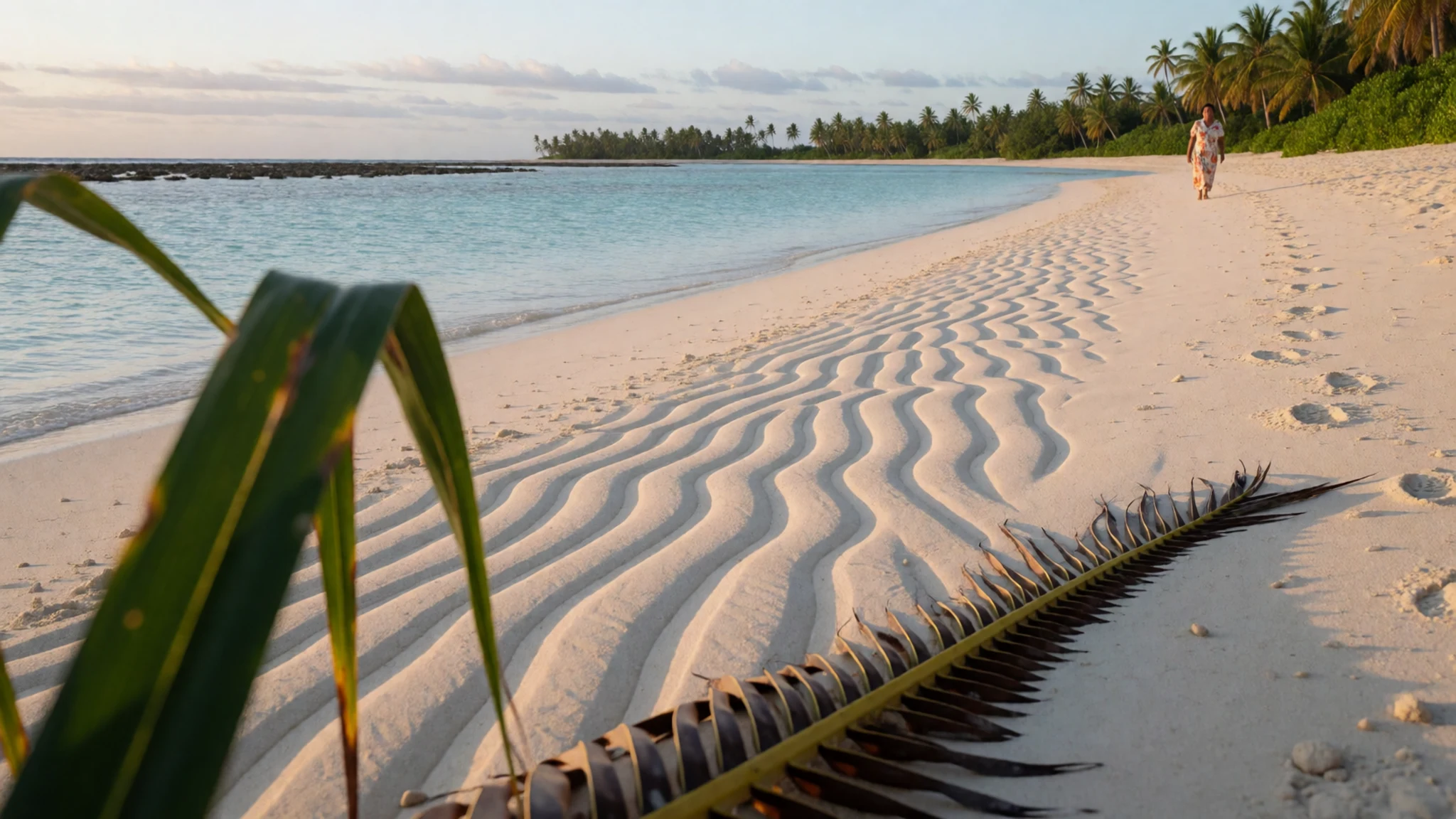
- Snorkelling and diving in the lagoon — Lagoon and Tuheiava Pass
Coral heads and tropical fish are close to shore, and snorkelling needs only a mask and a boat ride to a sheltered spot. Divers use the local centre to reach the pass and the outer reef, where currents can be strong. Choose a guide who briefs on tide timings and keeps groups small.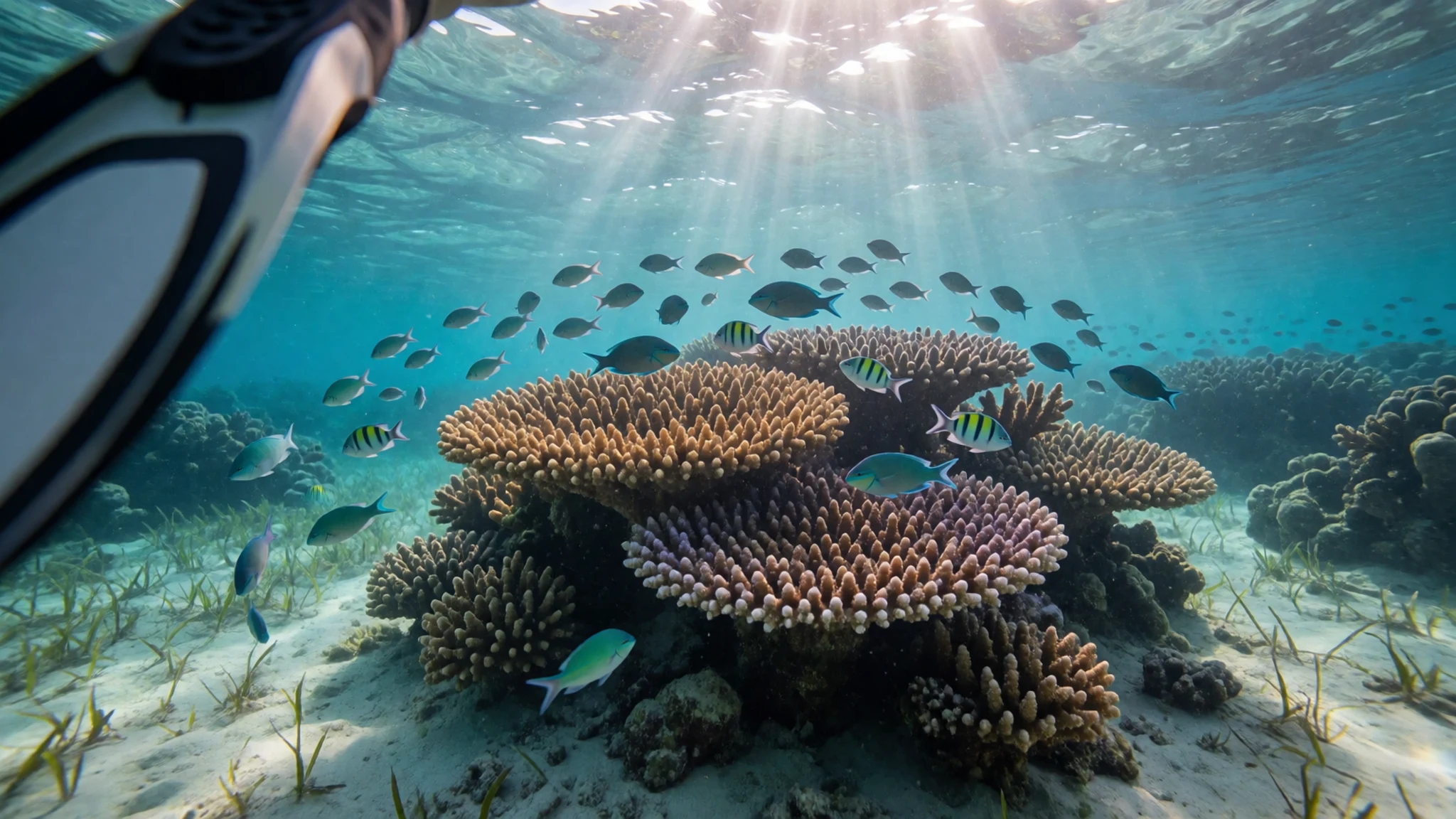
- Bird Island — Inside the lagoon
Bird Island is a small islet kept as a refuge for seabirds. Nobody lives there, though there is a solid landing dock. Visits are by boat with a local operator, usually combined with a lagoon trip. Stay on marked ground, keep distance from nests and take any rubbish away with you.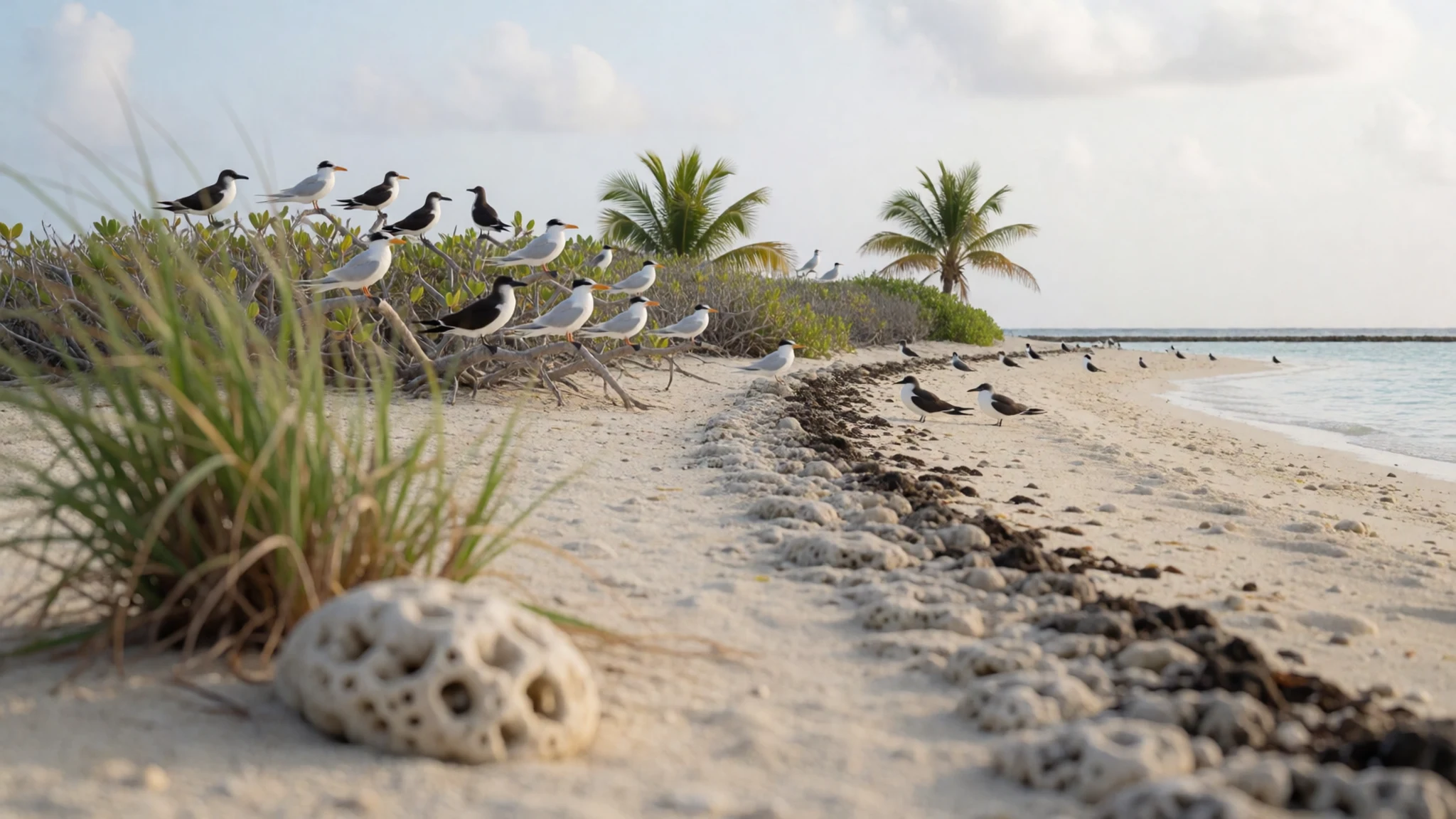
- Sunset on the western side — Western shore
With open ocean to the west and a low horizon, the atoll gives unobstructed sunsets, the sky turning orange and violet over the water. Many guesthouses face this way, and a short walk along the shore is enough. Bring a torch for the stroll back, since there are few lights.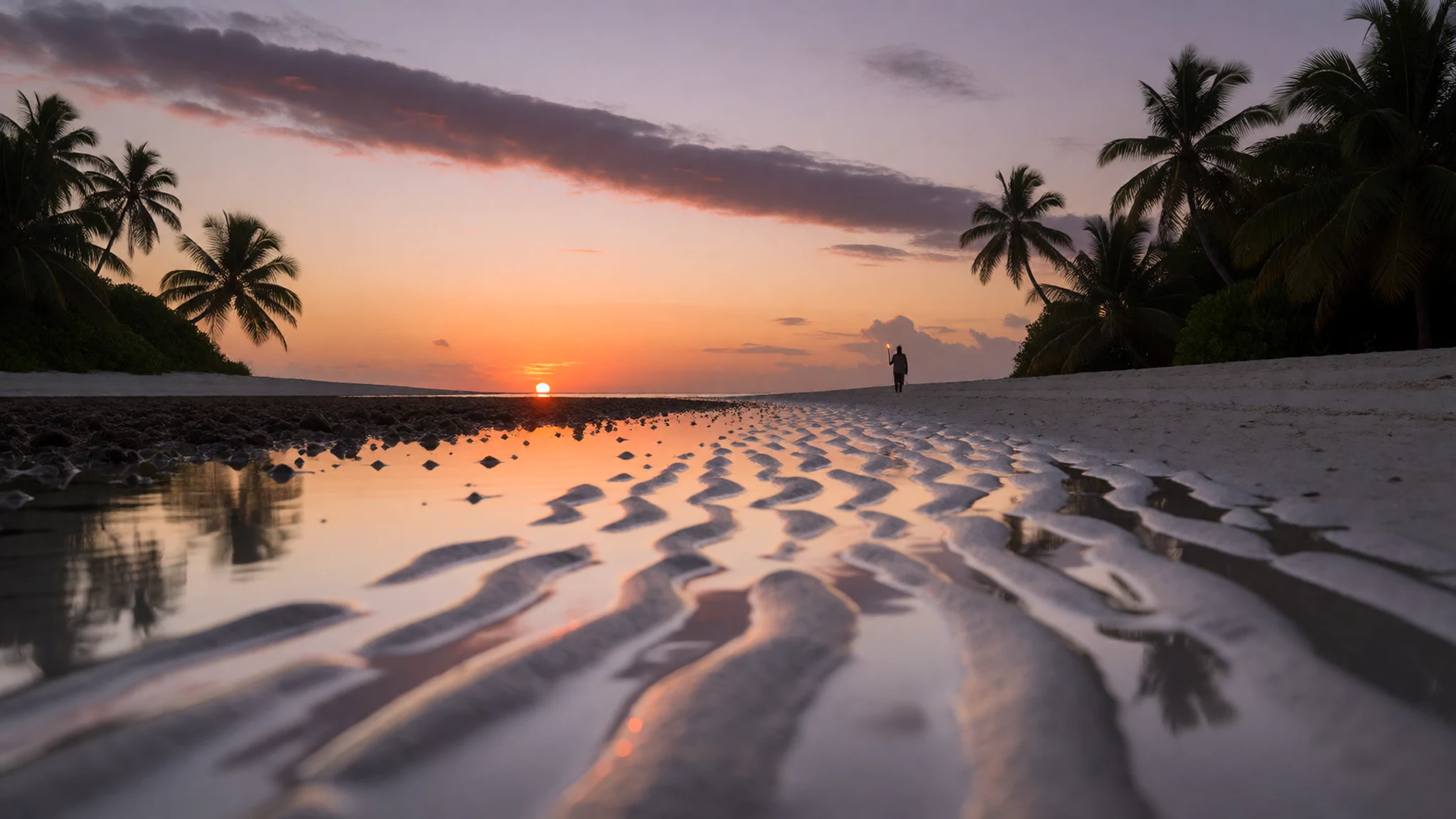
Culture
Tikehau's culture is Polynesian at its root and Christian in daily practice. As elsewhere in the Tuamotus, most people follow Christianity, a legacy of Catholic and Protestant missionaries, and church life shapes the week. The Catholic church of St Nicodemus (Église de Saint-Nicodème) has a history going back to 1867, although the present building was consecrated only in 1992. It belongs to the Archdiocese of Papeete, the main Catholic authority in the islands. On Sundays the village is quieter, and singing from services carries a long way over the flat land. Community is close, since the permanent population is small and many families are related. Work follows the sea and the coconut harvest: fishing, copra, small pearl farms, and now guesthouses and boat trips. Hospitality is real but unhurried, and meals, boat departures and shop hours rarely run to a strict clock. French is the official language, Tahitian and Tuamotuan are spoken at home, and a simple greeting in either is welcomed. Pearls are part of local identity as well as a trade, and buying one directly from a farm is a normal way to support the community. Visitors are guests on a small island where privacy matters, and most people are happy to talk but not to be treated as scenery. Ask before photographing anyone, and cover your shoulders and knees if you step into the church or walk through the village on a Sunday.
What to wear
Tikehau's traditional dress belongs to the wider Polynesian tradition. The pāreu is a rectangle of printed cotton wrapped and knotted at the waist or chest, worn by women and men. Women add flower crowns, and hats and mats are plaited from pandanus or coconut leaf, a craft common across the Tuamotus. Tīfaifai, bold appliquéd quilts, are made for home and gifts rather than worn, but their patterns often echo the flowers and leaves on clothes. Pearls and shell are used for jewellery, which suits an island with pearl farms. For ceremonies, church and festivals, people wear their best: dresses in bright prints, clean shirts, and often hats. Everyday wear is practical and hot-weather simple, meaning shorts, T-shirts, a pāreu, flip-flops or bare feet, and swimwear on boats. Visitors should pack light cotton or linen, a long-sleeved rash vest or shirt for sun on the water, a wide-brimmed hat and sunglasses. Reef shoes protect against coral and sea urchins when wading, and sandals are enough on land. Swimwear is fine on boats and beaches, but put on a shirt and shorts or a wrap for the village, shops and any church visit. A light rain jacket is worth carrying, as are a dry bag for boat trips and strong, reef-safe sunscreen.
What to eat
- Poisson cru — Guesthouse dining rooms and the resort restaurants
Raw fresh fish, usually tuna or a reef catch, marinated in lime juice and finished with coconut milk, cucumber and onion. It is the standard Polynesian lunch, and on an atoll the fish may have been caught that morning.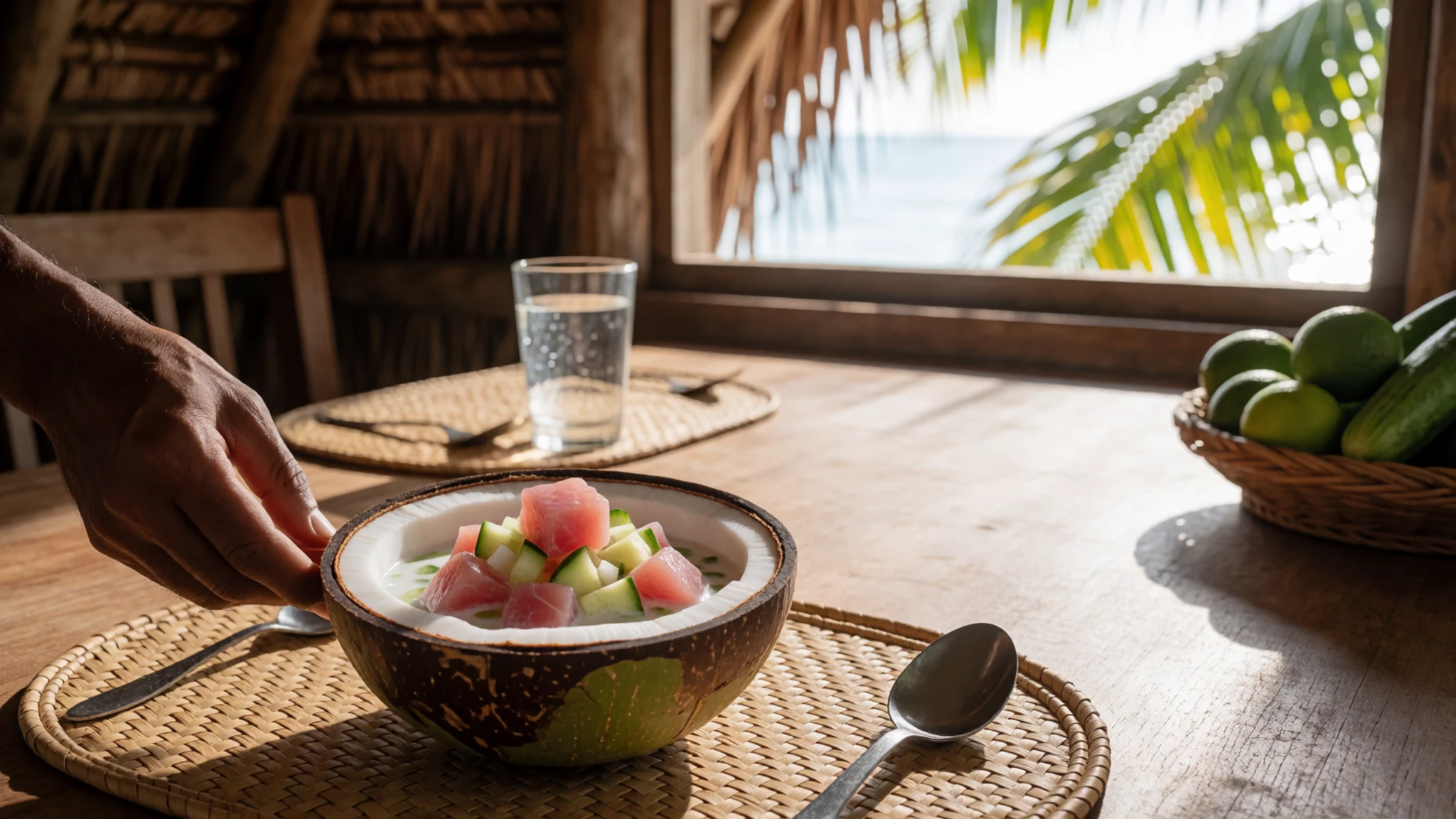
- Grilled lagoon fish — Family guesthouses and beach barbecues
Whole fish cooked over a wood or charcoal fire and served with rice or breadfruit. The species depends on the catch and the season, so ask what came in that day. Simple seasoning lets the fish carry the plate.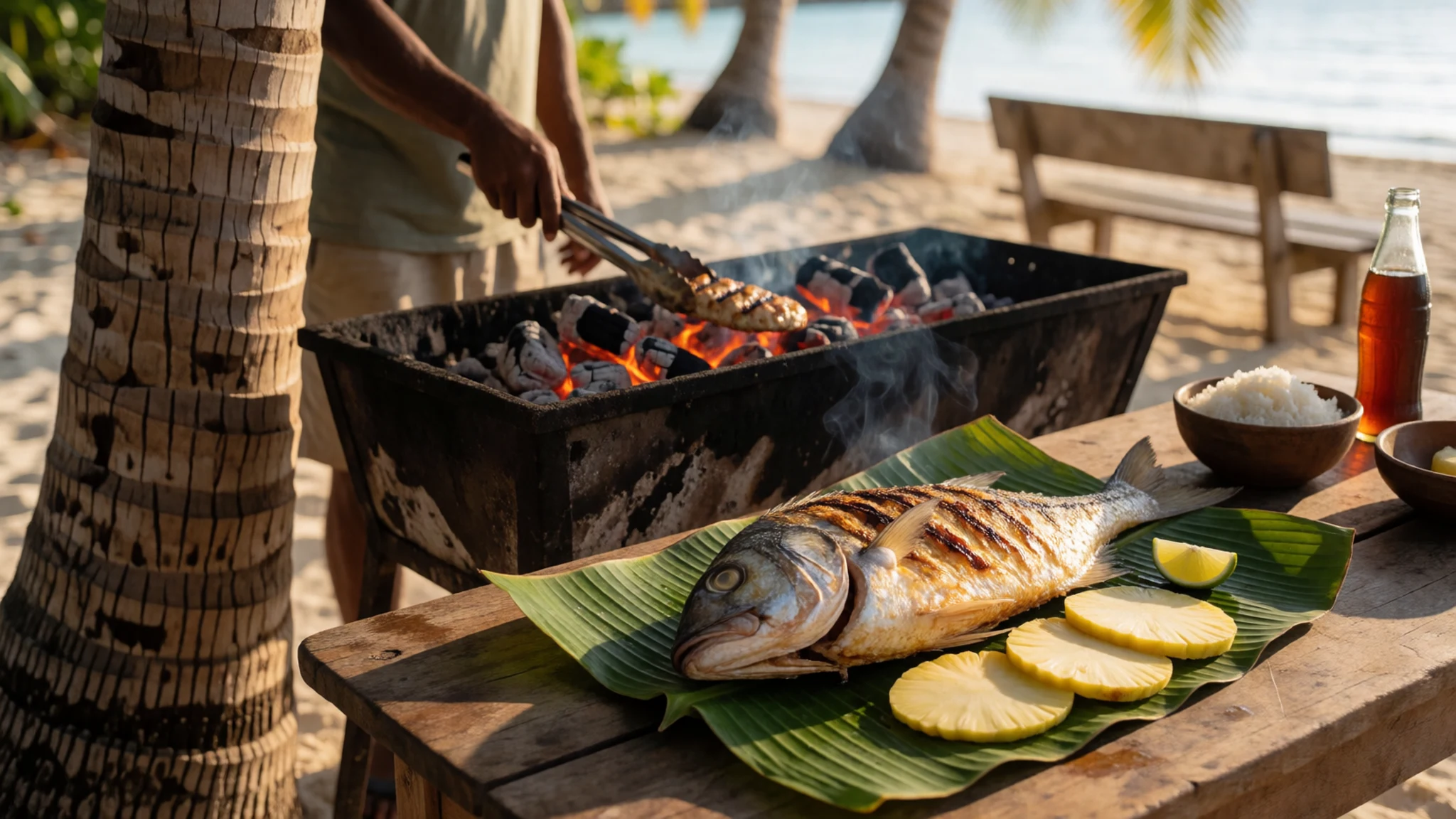
- Fafaru — Local households, by invitation
A Tuamotuan speciality of fish steeped in fermented seawater, with a strong smell that divides opinion. It is a local tradition rather than tourist food, so treat it as something to try if a host offers it. - Firi firi — Village stalls and guesthouse breakfast tables
A twisted or oval doughnut, fried and dusted with sugar, eaten at breakfast or as a snack. It is chewy, lightly sweet and best eaten warm, with coffee, on the day it is made. - Fresh baguette and coconut — The village bakery and shoreline palms
The bakery in the village sells French-style bread, still a daily staple across French Polynesia. Pair it with fresh coconut water, cut from a palm on request, for a cheap, simple picnic before a boat trip.
Plan it
Best time. May to October is usually the drier, slightly cooler part of the year in this region and the easiest for boat trips and snorkelling. November to April is hotter, more humid and wetter, with a greater chance of squalls. Check a current forecast before booking.
How long. 3–5
Getting there. Fly to Faa'a International Airport in Tahiti, then take a domestic turboprop of about 55 minutes to Tikehau Airport (TIH) at the southern tip of the atoll. Guesthouses and the resort arrange transfers by road or boat; there is no ferry connection to rely on.
Budget. high
Tips
- Book flights and accommodation well ahead, since seats on the small planes are limited
- Carry enough cash, as the village has only a few small shops and a bar
- Bring reef-safe sunscreen, a hat and a refillable bottle, and ask your host about drinking water
- Plan boat trips for mornings, when the lagoon is usually calmer
- Pack any medicines and essentials from Tahiti, as supplies on the atoll are limited
Etiquette
- Ask before photographing people, homes or pearl farms
- Do not touch or stand on coral, and keep distance from nesting birds
- Dress modestly in the village and in church, especially on Sundays
Nearby
Sources
- Wikidata Q669590 (CC0)
- Wikipedia: Tikehau (rev 1372538820) (CC BY-SA 4.0)
- Wikivoyage: Tikehau (rev 3510054) (CC BY-SA 4.0)
- NASA EO-1 image of Tikehau Atoll, NASA EO-1 Team (Public domain)
- Map Tuomotu islands, French Polynesia, Holger Behr / Pjminton (Public domain)
- Southeastern part of the Tikehau Atoll, Urs Neumeier (CC BY-SA 2.5)
- Tikehau Atoll, Landsat S-06-15_2000, Mr Minton (CC BY 2.5)
- Tikehau Atoll, EVS Precision Map, Mr Minton (CC BY 2.5)
- Map of the atoll Tikehau, Urs Neumeier (CC BY-SA 2.5)
- Tikehau Atoll labelled map, Mr Minton / NordNordWest (CC BY 2.5)
- Sunset at Tikehau, Giles Laurent (CC BY-SA 4.0)


