Three Gorges
Three Gorges, People's Republic of China
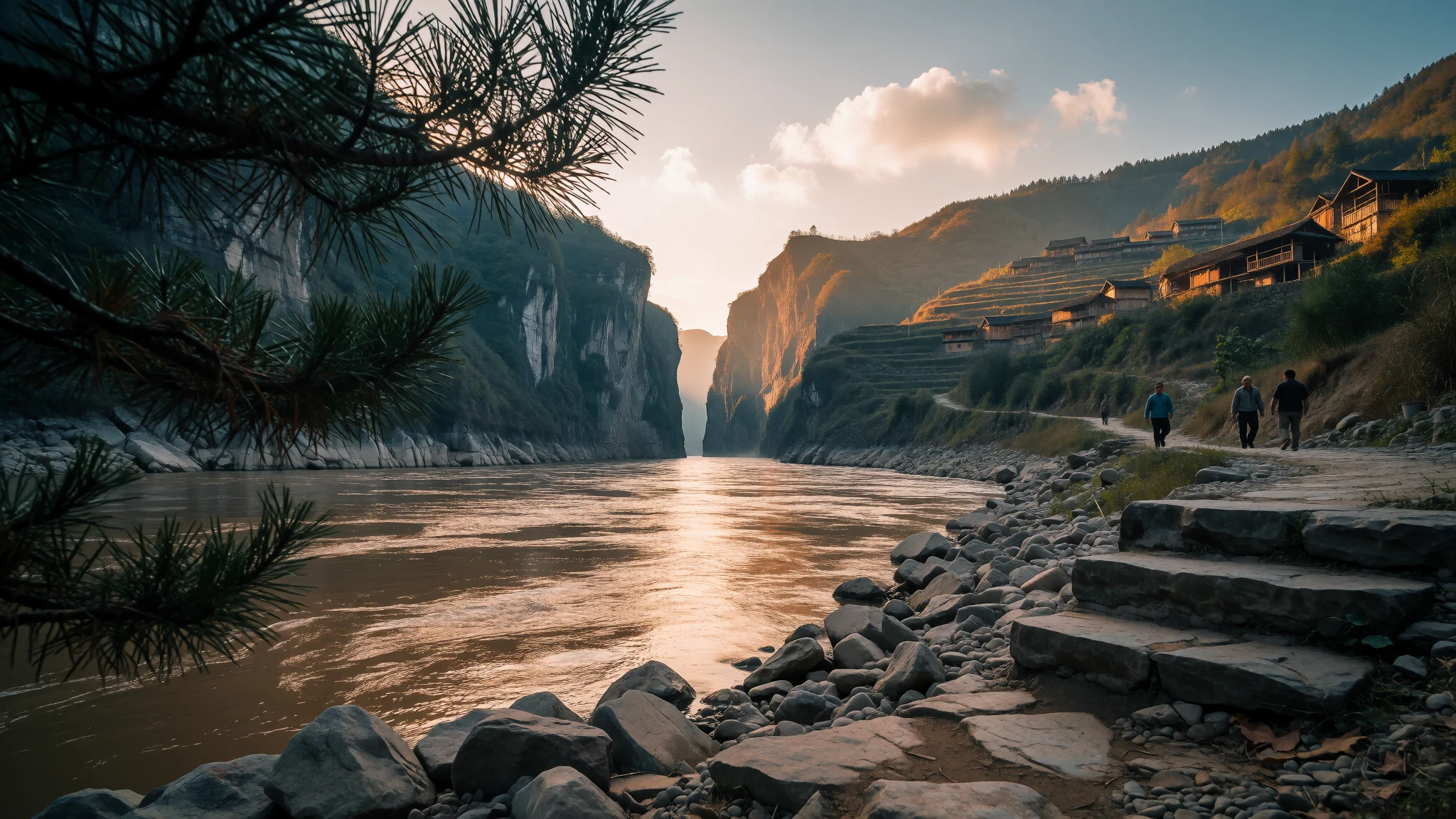
Three Gorges is three linked canyons on the Yangtze, best seen slowly from a boat deck as the cliffs appear out of the mist.
The place
The Three Gorges are three canyons linked end to end on the middle Yangtze in central China. Heading downstream from the west, the order is Qutang, Wu and Xiling. The whole stretch covers about 311 km, from Baidicheng in Chongqing to Nanjin Pass near Yichang in Hubei, passing Fengjie and Wushan counties on the Chongqing side and Badong and Zigui on the Hubei side. Qutang is the opening gate, where the river squeezes between sharp rock walls. Wu Gorge follows, with long ridges stacked in layers and cloud often sitting on them. Xiling finishes the sequence and ends where the hills let go of the river beside Yichang. Yichang is the practical base at the eastern end. The city has about 1.5 million people, with around 4 million in the wider area, and it sits roughly 30 km downstream of the dam. Little remains to show its earlier life as a gateway to the upper river and an important wartime post. Today it is mostly where cruises finish or begin and where high-speed trains arrive. The scenery is the reason to come, but this is also a working river, with cargo barges, ferries and cruise boats sharing the channel. Mist is common, so the cliffs tend to appear and vanish rather than stand in clear view. The dam has also raised the water, so the gorges look different from old photographs and travel posters.
Its story
The Three Gorges were a route long before they were a view. For centuries the Yangtze was the way into the western basin, and the narrow rock gateways at Qutang and beyond turned the river into a place where boats worked hard against the current and armies could be stopped. Baidicheng, at the western end, sits on a hill above the water and carries that history of lookouts and verse. Poets who passed through wrote about the gorges, and near Yichang a small cave known as Three Visitors Cave holds poetry engraved in its stone. Military history layers on top. Changbanpo, in the Yichang area, is tied to the Battle of Changba between the warlords Cao Cao and Liu Bei in 208 A.D., an episode familiar to anyone who knows the Three Kingdoms stories. Much later, Yichang served as an important post during the Sino-Japanese war, and old defensive walls can still be seen in the hills above the river. The largest change came with the Three Gorges Dam. Its main body was completed in 2006, and the power plant was fully operating by 2012, when the last of the main turbines in the underground hall began producing electricity. The reservoir rose behind it and altered the river, its banks and the towns along them. What visitors see now is an old travel route and a modern engineered waterway in the same frame, which is why cruise itineraries pair the cliffs with a stop at the dam.
What to see
- Qutang Gorge and Baidicheng — Baidicheng, Fengjie, Chongqing
Qutang Gorge opens the sequence at Baidicheng, where a hilltop old town looks down on the river as it squeezes into a narrow rock gateway. The walls rise sharply on both sides, which gives a good first sense of scale. Cruises heading downstream pass it early, so check the itinerary if you want it in morning light.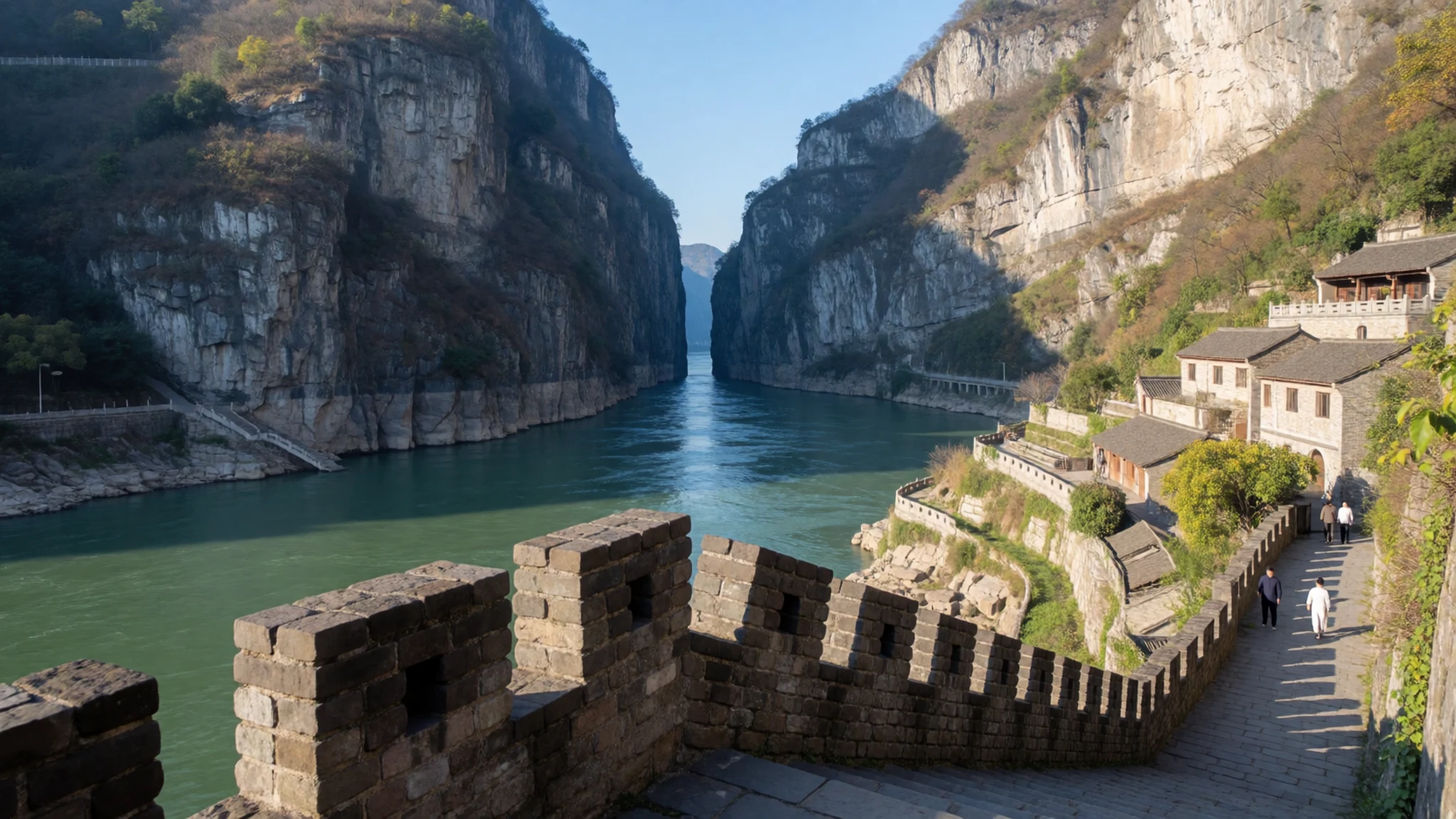
- Wu Gorge — Wushan, Chongqing
Wu Gorge lies between Qutang and Xiling, near Wushan county in Chongqing. Its long ridges stack up on either side of the channel, and mist often drapes over them, so the view changes minute by minute. It rewards patience on deck more than a quick photo stop. A light rain layer is useful, because the weather can turn while the ridges are in view.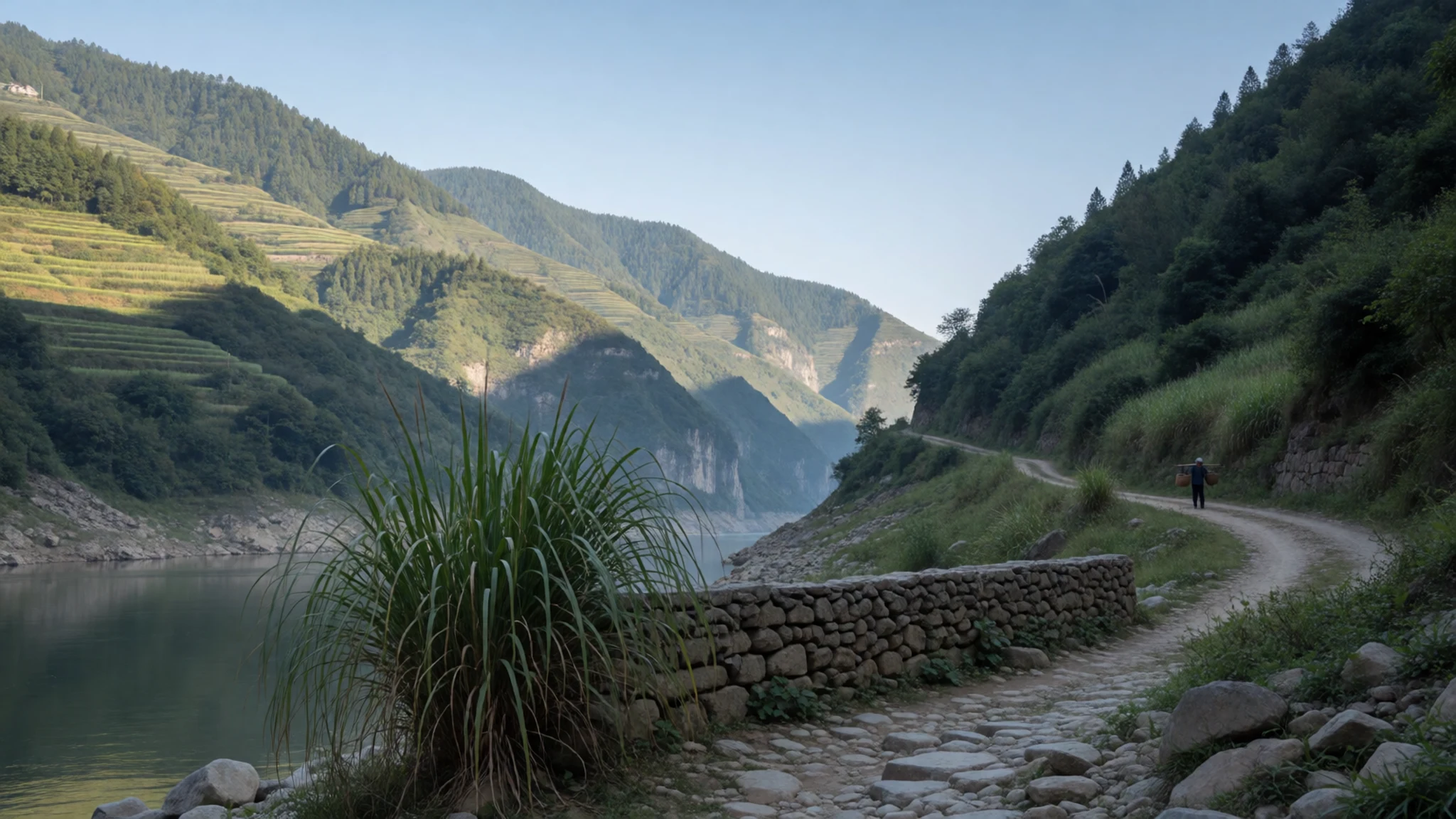
- Xiling Gorge — Yichang, Hubei
Xiling Gorge is the last of the three and ends at Nanjin Pass beside Yichang in Hubei. After the tighter rock upstream, the river here begins to relax towards the city. Most visitors see it from a boat, then continue to the dam or into Yichang for onward trains. Leave time at the end of a cruise rather than rushing a connection.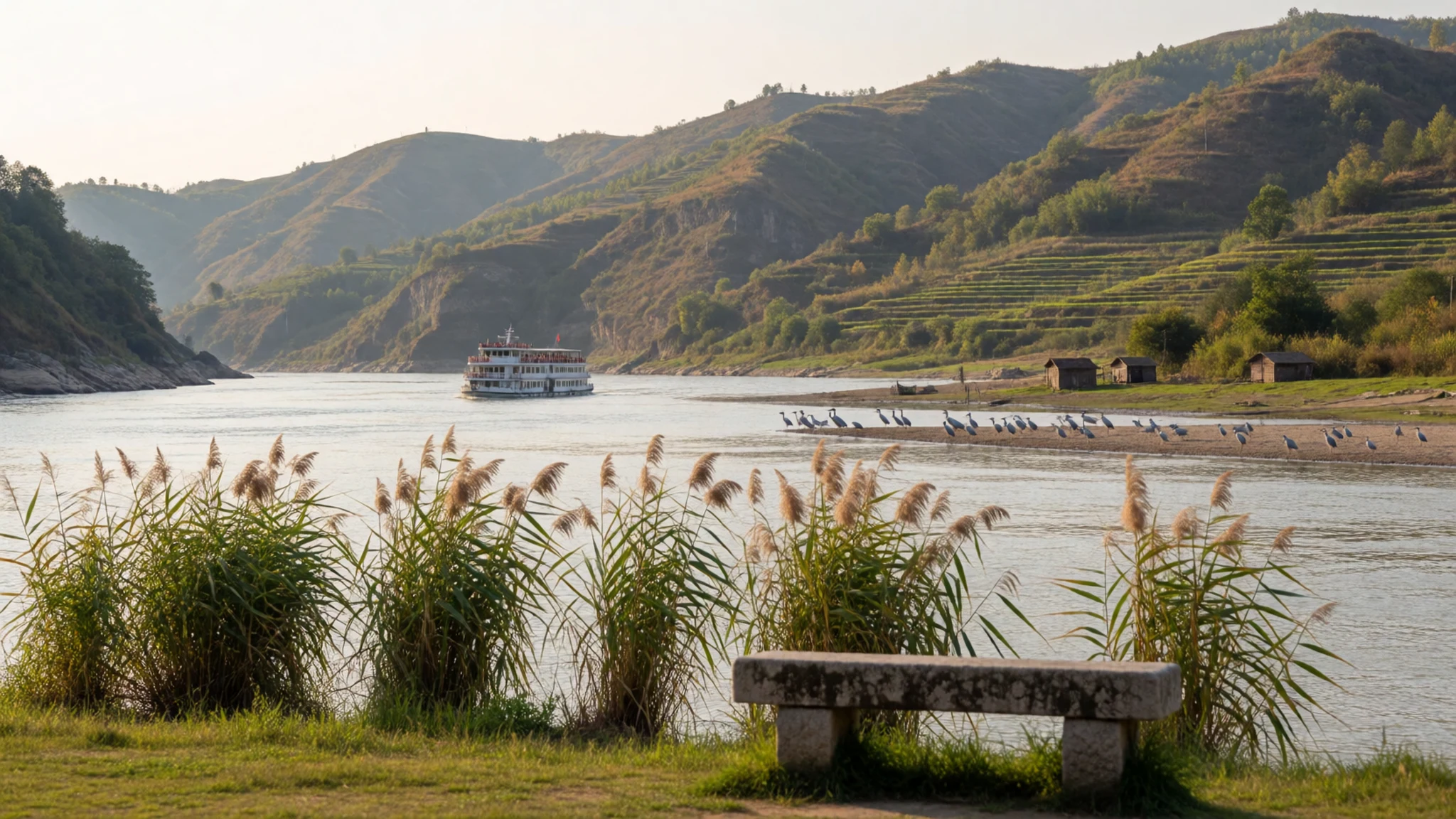
- Three Gorges Dam — Upstream of Yichang, Hubei
The Three Gorges Dam sits upstream of Yichang and is a stop on most cruises and many day trips. The dam body was completed in 2006, and the underground power plant was fully operating by 2012. Visitors mainly come for the viewing areas and the scale of the concrete wall. Expect security checks, tour groups and a fair amount of walking.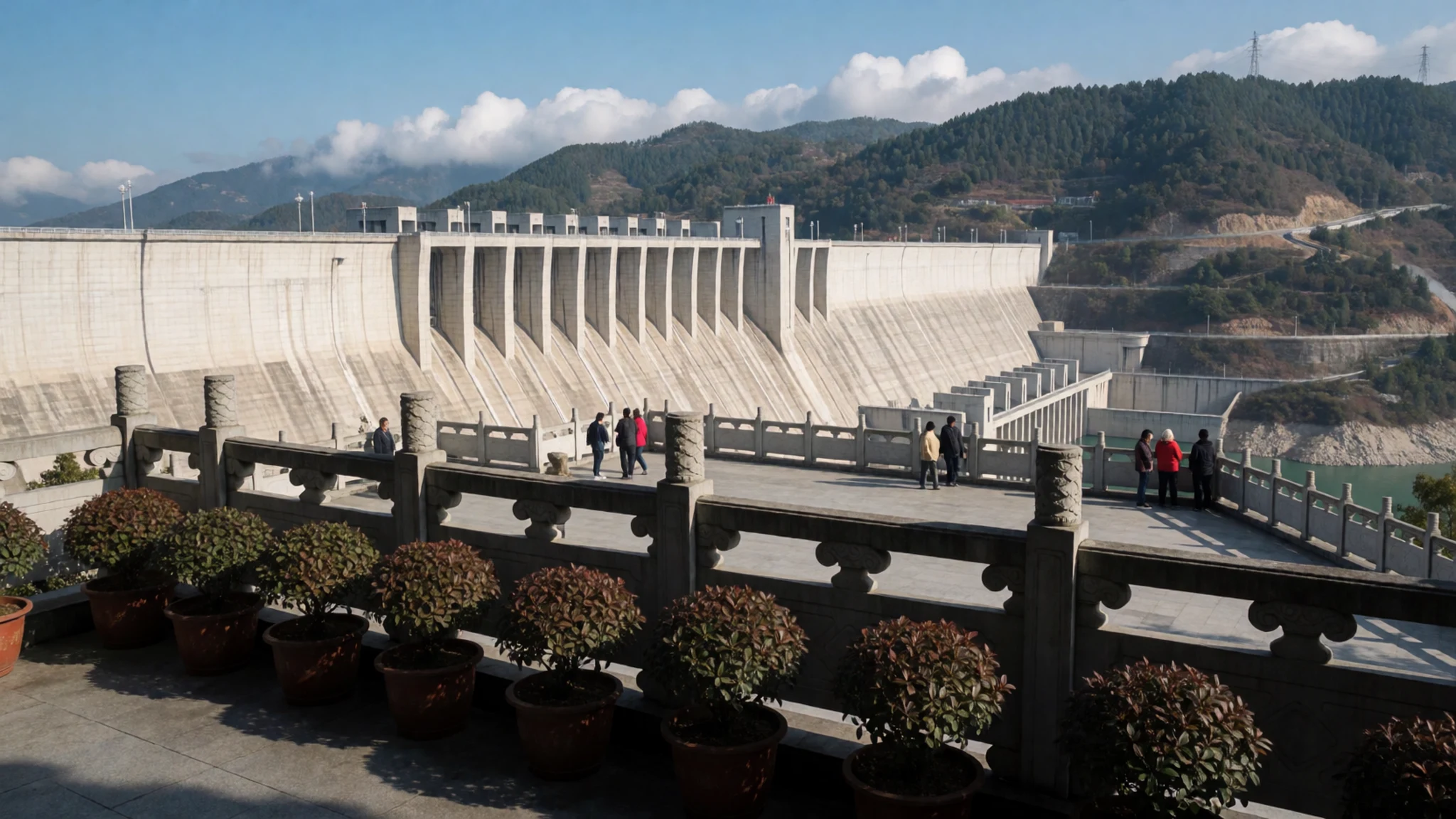
- Three Visitors Cave and Park — Yichang, Hubei
Three Visitors Cave and Park, in the hills above Yichang, is small but has a good story. Poetry is engraved in the stone of the cave, and the surrounding park looks over the Yangtze and some old defensive walls from the Sino-Japanese war. It suits a relaxed half-day, and works well as a gentler stop between boat days.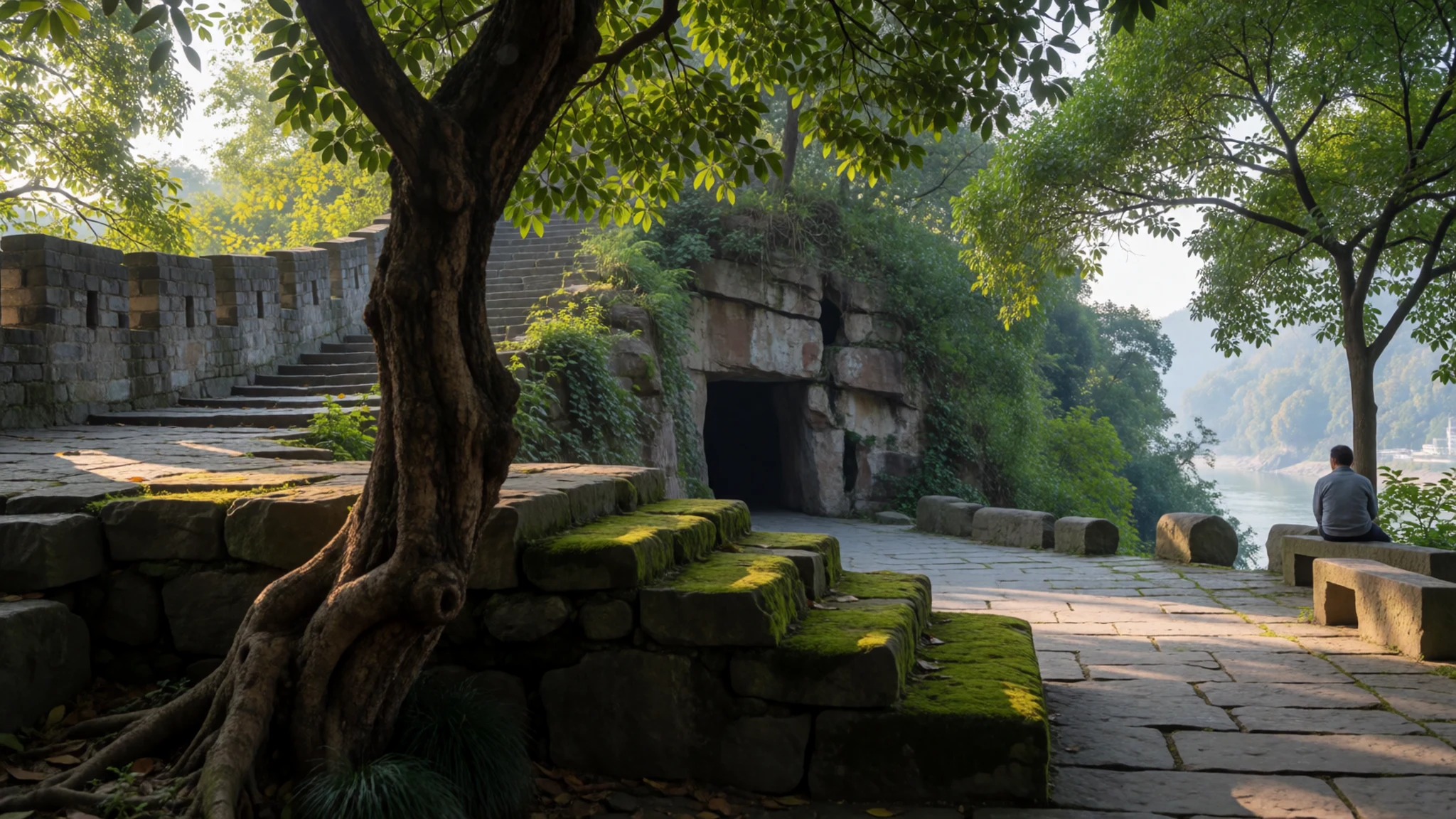
- Yuquan Temple — Outside Yichang, Hubei
Yuquan Temple is a Buddhist monastery in the hills outside Yichang, founded in the late Eastern Han period. It offers a quiet contrast with the river bustle, with courtyards, incense and monks going about daily routines. It is a working place of worship, so treat it as one rather than as a backdrop. Check opening arrangements locally before making the trip.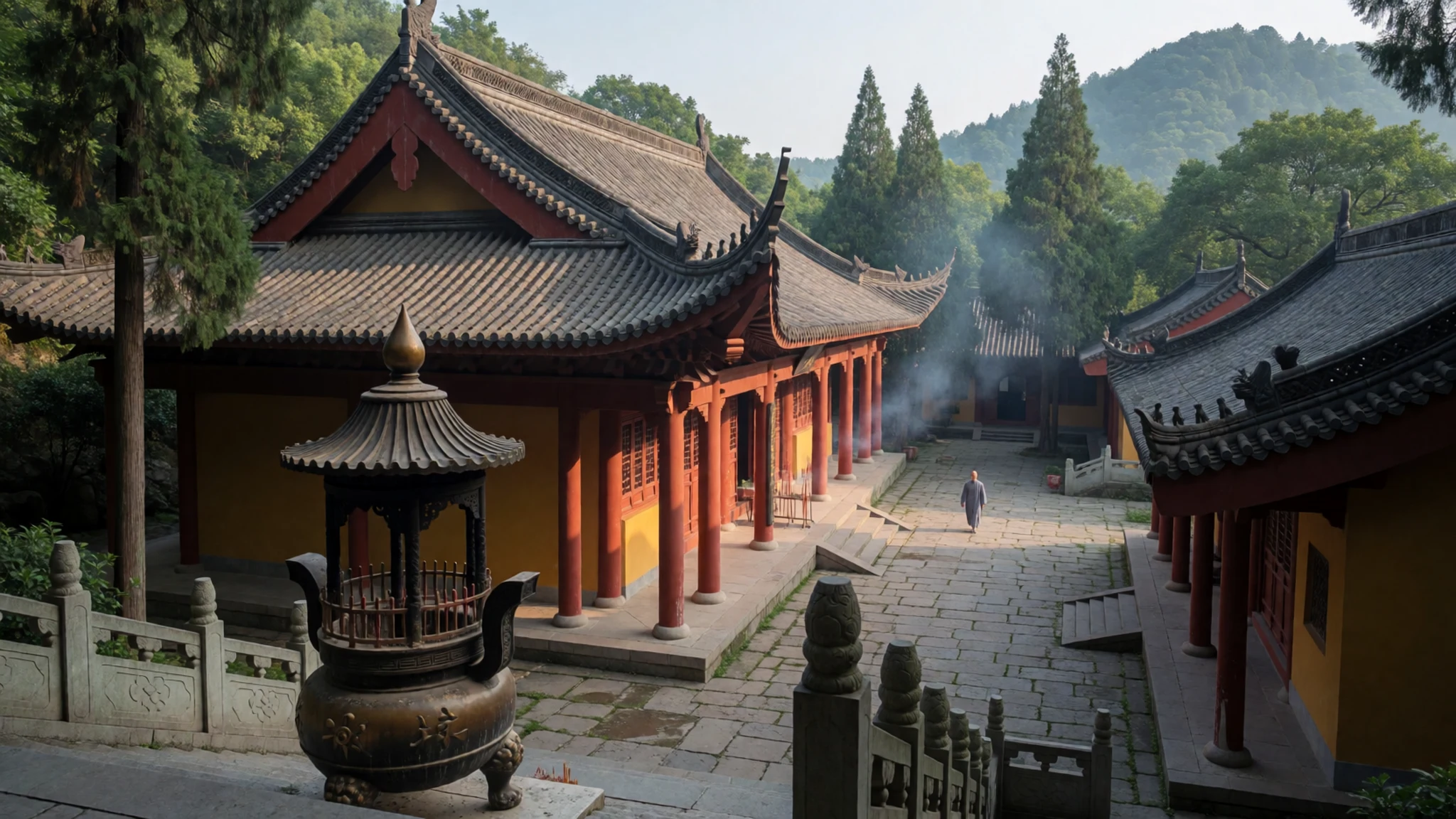
Culture
Three Gorges culture is a mix of river life, poetry and old war stories. Chongqing and Hubei both sit on the Yangtze, and for a long time the river was the main road, so boat crews, ferry towns and riverside markets shaped daily habits as much as farming did. Poets who travelled through the gorges wrote about them, and that habit of reading landscape through verse is still part of how Chinese visitors approach the place. Many people arrive knowing the Three Kingdoms tales, which is why sites such as Changbanpo, linked to the Battle of Changba, draw interest beyond local history. Buddhist practice continues at temples such as Yuquan, where incense, bowing and quiet routines go on alongside tourism. In Yichang, evening life moves to the riverfront park. Late in the afternoon and after dark, people walk, cycle, exercise, dance and play sports along the east bank while the hills across the water are lit up. The food here is spicy and sour, as in much of Hubei and Chongqing, and meals are usually shared from the middle of the table. The dam has added a modern chapter, and many Chinese visitors see it as a point of national pride, so conversations about it tend to be proud rather than critical. At Yuquan Temple and other working temples, keep your voice low, do not photograph people while they pray, and ask before taking pictures of monks.
What to wear
Three Gorges dress is best understood through the hill communities around the river, such as the Tujia in the Hubei and Chongqing uplands. Their traditional textiles include woven brocade in bold geometric patterns, made from cotton and silk threads and used for bedcovers, bags and festival clothing. Traditional outfits mostly appear at festivals, performances and tourist shows rather than in daily life. Day to day, people in Yichang and the river towns dress much as in other Chinese cities: trainers, T-shirts, light jackets and sportswear, with smarter clothes for evenings out. On the riverfront in the evening, exercise clothes are common. A visitor should plan around weather and the boat. Summers on the Yangtze are hot and humid, so pack light cotton or linen, a sun hat and sunscreen. Spring and autumn mornings on deck can be cool and damp, so bring a light jacket and a compact rain layer. Winters are cool and often misty, so layers matter. Wear flat, non-slip shoes for ship decks, wet jetties and the steps at viewing points. At temples such as Yuquan, cover your shoulders and knees. Cruise dinners are usually casual, though some ships hold a themed evening, so one tidier outfit is enough.
What to eat
- White-soup fish — Restaurants serving Yichang cooking, especially around the pedestrian street
Fish simmered until the broth turns milky white, a Yichang style that appears on local menus. Ask for the river fish of the day. The soup is mild and savoury rather than fiery, which makes a calm counterweight to the chilli served elsewhere at the table.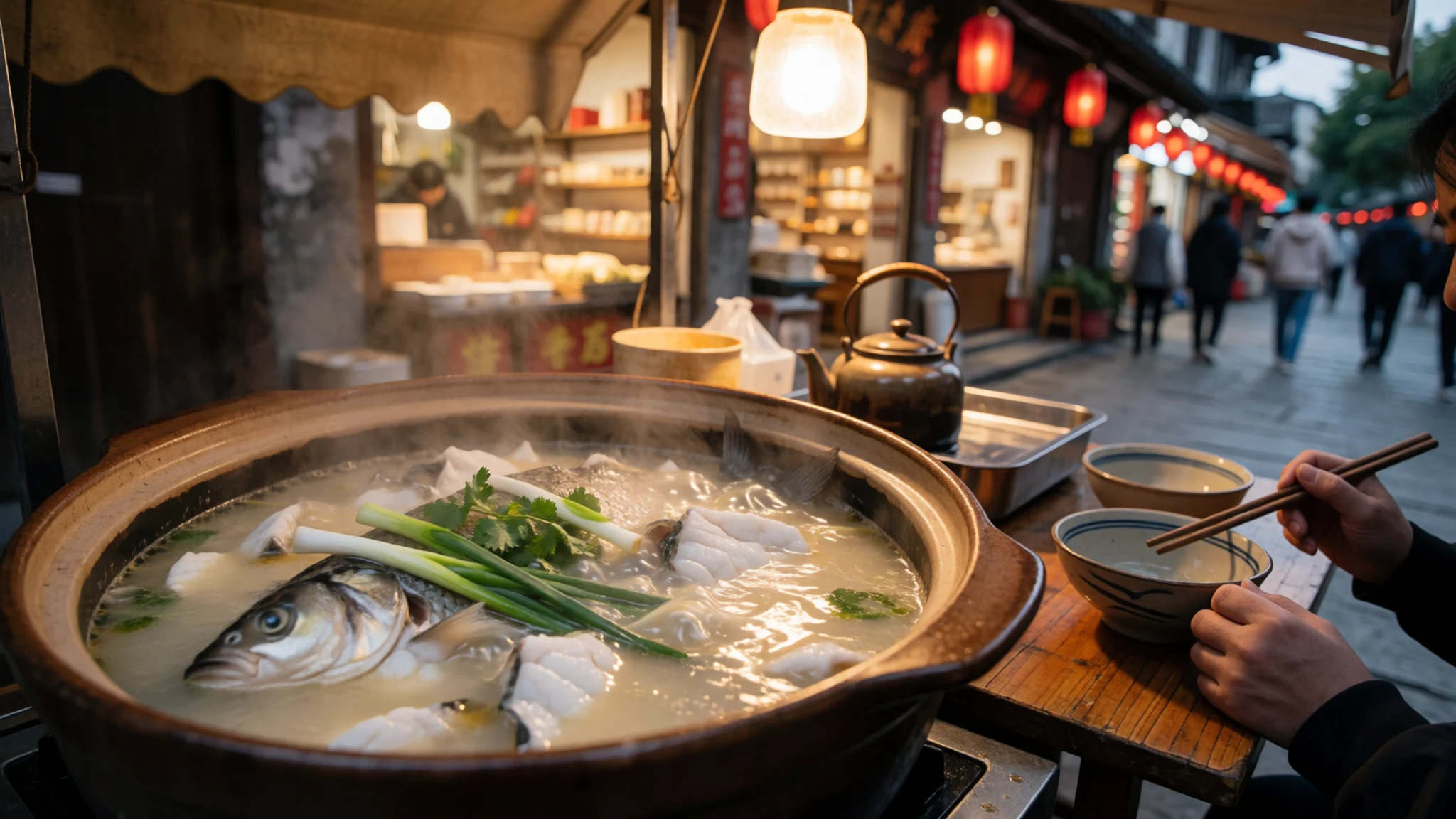
- Chopped-chilli fish head — Hubei-style restaurants in Yichang town
A fish head steamed under a blanket of chopped red chilli, a Hubei staple. It is hot, salty and sour at once, and is usually shared. If you are unsure about the heat, ask for less chilli; most kitchens will adjust it.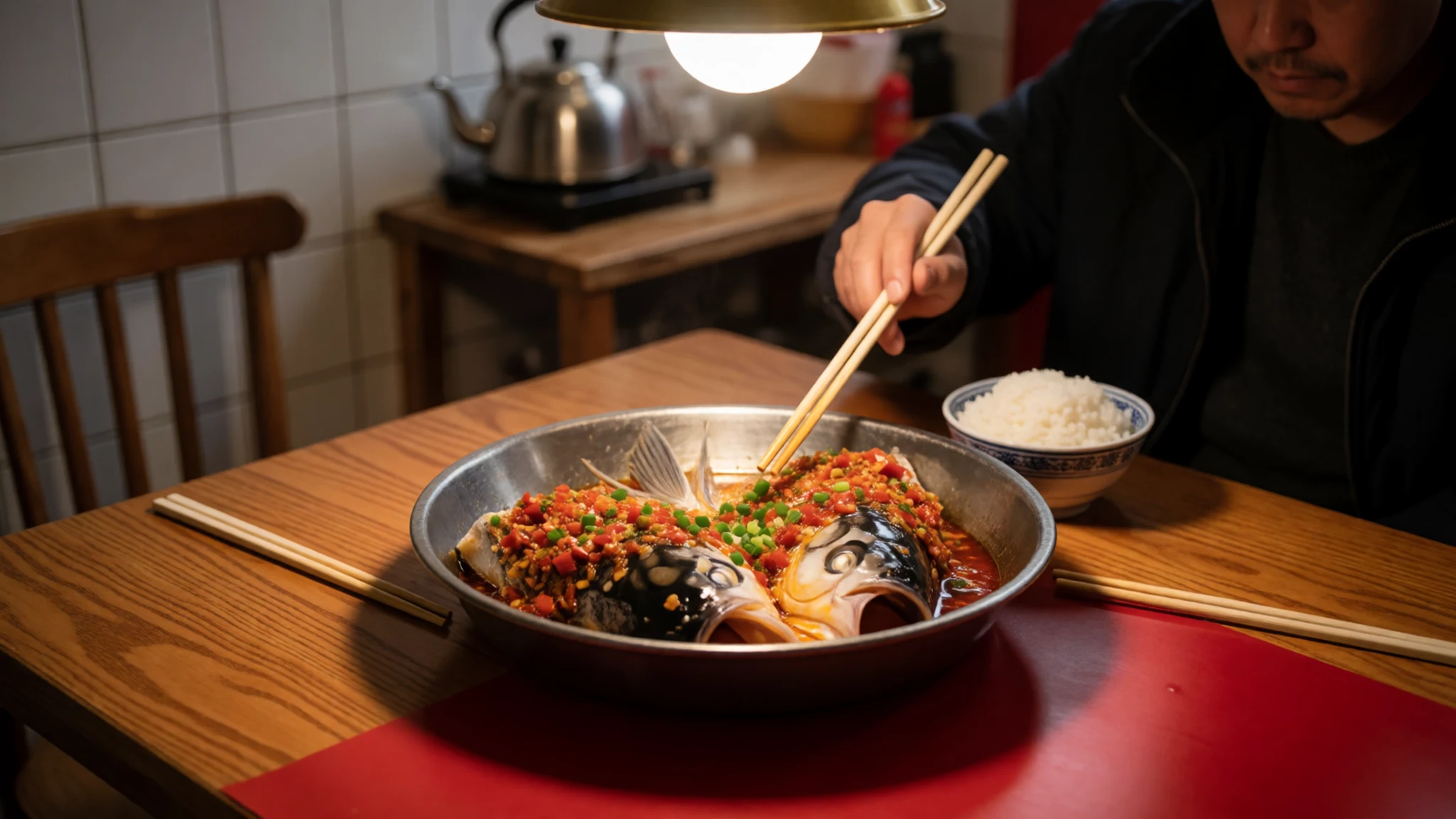
- Sour-spicy fern-root noodles — Small noodle eateries and street vendors around Yichang
Glassy noodles made from fern-root starch in a sour, hot broth, often eaten as a quick lunch. The texture is slippery and chewy. They are a good test of how much spice you can take before ordering a larger dish. - Stewed chicken soup — Family-style restaurants in Yichang
A slow-cooked chicken soup that suits a damp day on deck. The broth is usually clear and savoury rather than fiery, and arrives in a pot meant for sharing. Order it with rice and a plain vegetable dish to balance the spicier plates. - Braised goose or duck feet — Snack shops near the Yichang pedestrian street
A popular snack in Yichang, sold with flavourings from mild to hot. They are eaten for the skin and sauce rather than meat, and are an acquired taste. Try a small portion first and keep tissues handy.
Plan it
Best time. April–May and September–October, when the weather is more comfortable on deck. Summer in the Yangtze valley is hot, humid and stifling, and winter is cool and often misty, so views can be limited.
How long. 4–5
Getting there. Yichang is the usual gateway, on a main east–west high-speed rail line with frequent services from Wuhan, Chongqing, Chengdu and Shanghai. Chongqing to the west is about 4.5 hours by high-speed train. Cruises run between Yichang and Chongqing, taking three nights downstream and four nights upstream. For the dam, use local buses or a cruise shore excursion; check current routes locally.
Budget. mid
Tips
- Check what a cruise fare includes; shore excursions and most meals are usually covered, but not always every meal.
- Carry your passport for security checks at the dam and for cruise boarding.
- Bring a rain layer and sun hat; mist and sun can both arrive on the same day.
- Carry some cash and a mobile payment option, as foreign cards are not accepted everywhere.
- Allow a buffer on cruise end days before catching trains.
Etiquette
- Queue patiently at boarding points and viewing areas, even when crowds are busy.
- Ask before photographing people, especially monks and worshippers at temples.
- Share dishes from the middle of the table and try a small amount of everything.
Nearby
Sources
- Wikidata Q673287 (CC0)
- Wikipedia: Three Gorges (rev 1362438472) (CC BY-SA 4.0)
- Wikivoyage: Three Gorges (rev 5422915) (CC BY-SA 4.0)
- Qutang Gorge on Changjiang — Tan Wei Liang Byorn (CC BY 3.0)
- China edcp relief location map — Uwe Dedering (CC BY 3.0)
- Three Gorges Map — SS (CC BY 3.0)
- Xiling Gorge Qutang Gorge — Charlie fong (Public domain)
- Wu gorge — Nihongarden (CC BY-SA 4.0)
- Cruise boats on yangtze — Photnart (CC BY-SA 4.0)
- Beauty and grandeur, the Yangtze gorges, travel poster, ca. 1930 — Unknown artist for Butterfield & Swire (Public domain)
- Yichang Three Visitors Cave scenic area, 1993 — wanghongliu (CC BY 3.0)


