Tengboche Monastery
Tengboche Monastery, Nepal
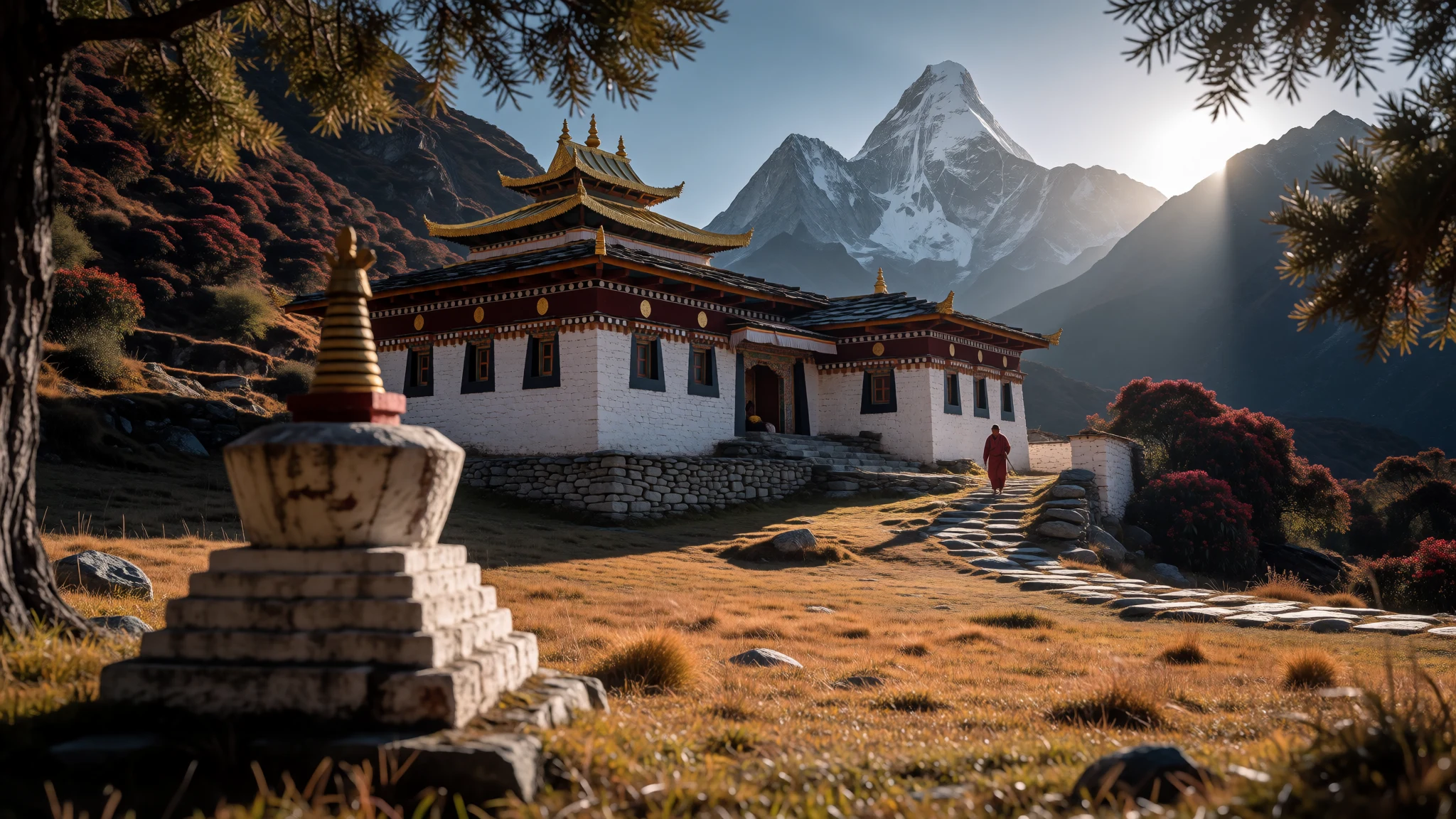
Tengboche Monastery is a working Sherpa gompa on a Khumbu ridge, with Ama Dablam and the Everest range as its backdrop.
The place
Tengboche Monastery stands on a forested spur in the Khumbu region of eastern Nepal, above the meeting point of the Dudh Kosi and Imja Khola rivers. Its other name is Dawa Choling Gompa, and it belongs to the Sherpa community and the Nyingma school of Tibetan Buddhism. At 3,867 metres the air is thin, and even the short walk from lodge to prayer hall leaves newcomers pausing for breath. The gompa lies inside Sagarmatha National Park, and the setting is the reason most trekkers stop here. Ama Dablam fills the skyline like a stage backdrop, with Thamserku and Kongde Ri nearby, and Everest can appear on a clear day if a local points out which ridge to watch. The village is tiny: a handful of lodges in the meadow in front of the monastery, one more behind it, an eco-centre, a bakery and the monastery courtyard itself. There is no road, so everyone arrives on foot, and the rhythm of the place follows the trail. Trekkers drift in during the afternoon, the cold settles at dusk, and the evening is spent in lodge dining rooms around a stove. Tengboche is a halfway marker on the Everest Base Camp route, but it is also a living religious community with monks in residence. Weather decides much of the experience, because cloud often closes in by midday and can hide the peaks until the next morning.
Its story
Tengboche Monastery was founded in 1916, but the Khumbu valley's sacred reputation is far older. Tibetan scriptures treat the valley as holy ground, and tradition credits Lama Sangwa Dorje, founder of the old monastery at Pangboche and of several hermitages, with foreseeing a monastery here after he left a footprint in a rock while meditating. The actual founding came through Ngawang Tenzin Norbu, regarded as Sangwa Dorje's fifth incarnation, who had already set up a monastery at Rongbuk on the Tibetan side of Everest. He gave his blessing to Chatang Chotar, known as Lama Gulu, to establish a monastery at Tengboche, and Rongbuk remained its mother house. Money came from three wealthy local Sherpas. The best known was Karma, a tax collector who enjoyed the backing of Nepal's Rana rulers, and Sherung Sherpas are also said to have helped with the building. Misfortune followed. An earthquake in 1934 brought the monastery down, and it was rebuilt. Then in 1989 a fire gutted it again, and volunteers and foreign funding paid for its return. The monastery seen today is therefore a reconstruction, on the same site and serving the same community. Some chortens and shrines in the surrounding villages are older than the monastery, and they help explain why this ridge was chosen in the first place.
What to see
- The monastery and prayer hall — Tengboche village, Khumbu
Tengboche Monastery's prayer hall is the heart of the village. Visitors may sit in on ceremonies, quietly and at the back. Filming or photographing inside is allowed only with special permission, so ask first and be ready to accept a no. Ask at the monastery or your lodge about ceremony times.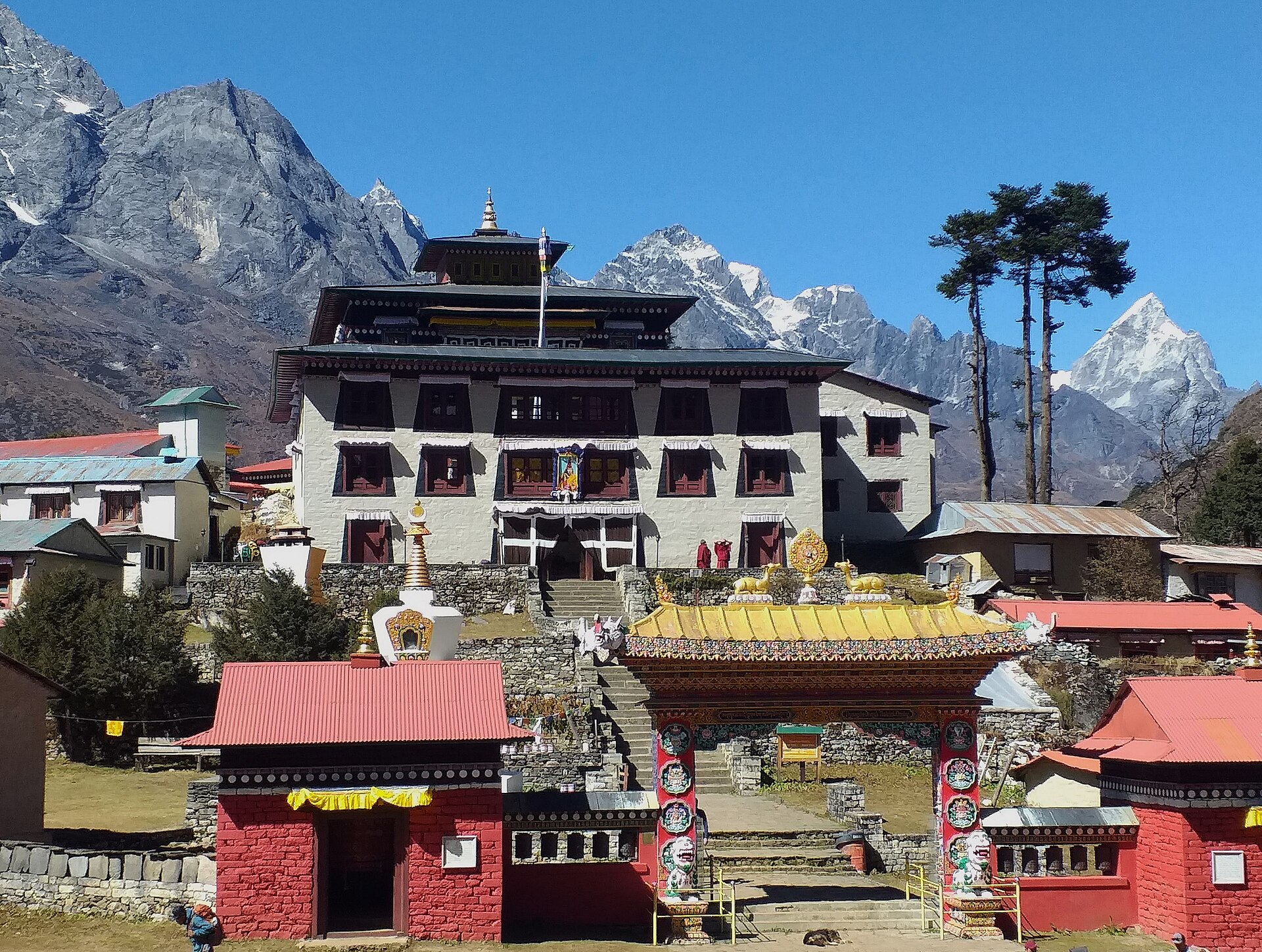
- Paintings and the sanctum deity — Inside the monastery
Inside the monastery, restored wall paintings and a deity in the main sanctum show the craft that went into rebuilding after the fire. The colours are the first thing noticed in a dim, butter-lamp-lit room. Take time to look slowly, and leave cameras in the bag unless permission has been given.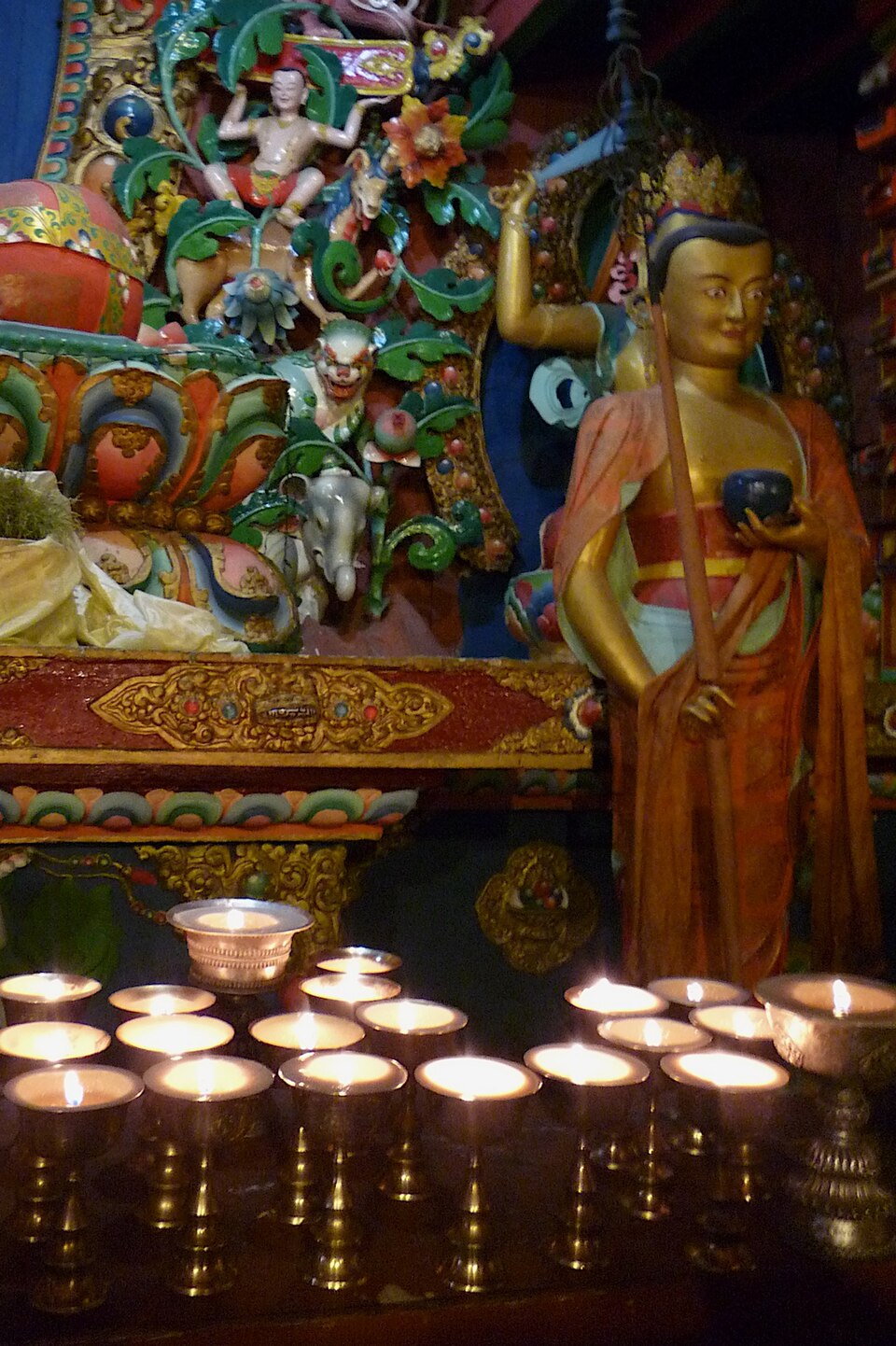
- Mountain views from the meadow — Meadow in front of the monastery
The open ground in front of Tengboche Monastery is where the view happens. Ama Dablam, Thamserku and Kongde Ri stand around the horizon, and Everest may show on a clear day. A local can point it out. Early morning usually gives the clearest sky, before cloud builds.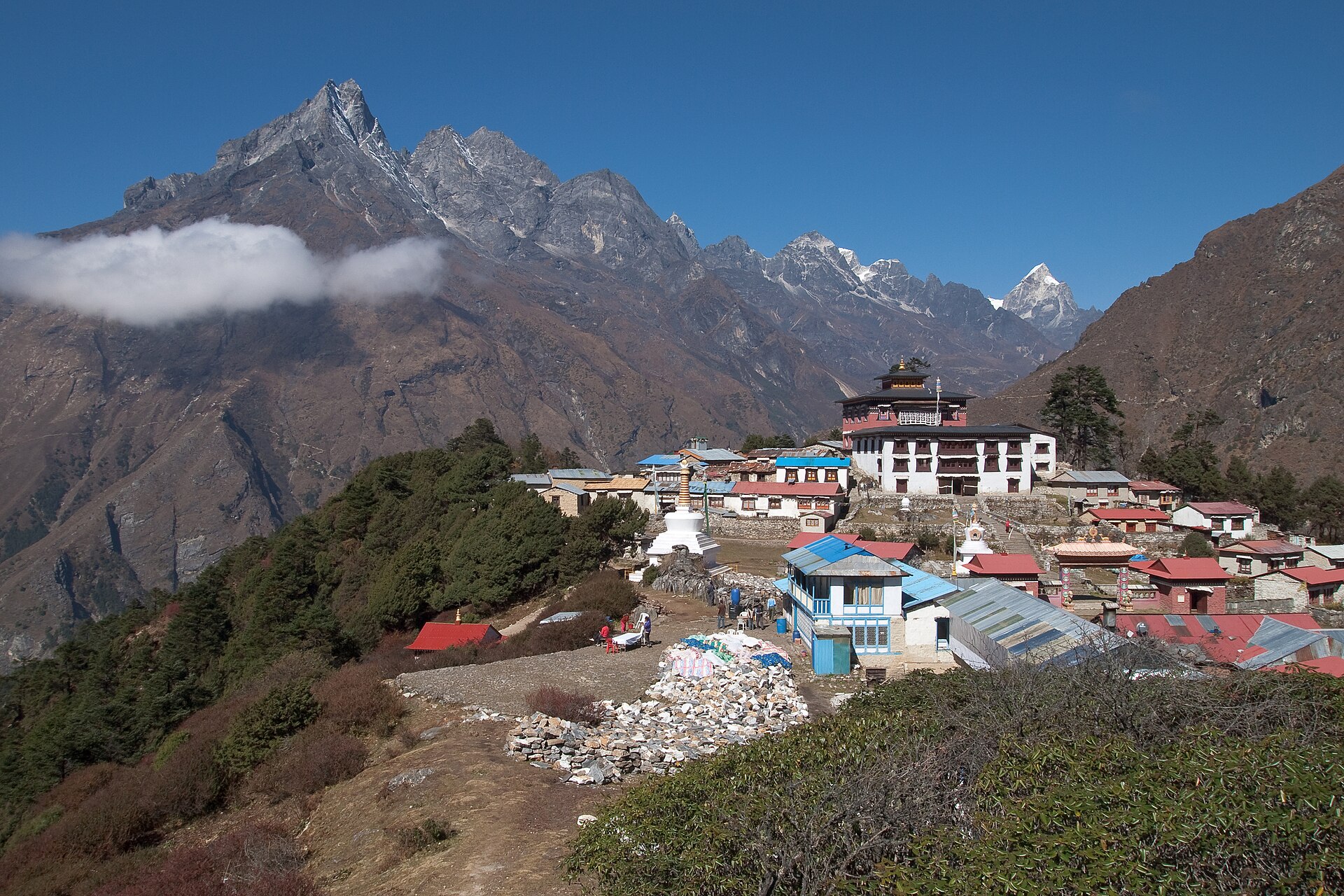
- Tengboche Eco-centre — Outside the monastery gate
Just outside the main monastery gate, the eco-centre has a permanent exhibition on Sherpa culture, a small gift shop and a little cinema that screens a film about Sherpa life and the monastery. It makes a good rainy-afternoon stop and helps explain what is seen in the prayer hall. - Mani Rimdu festival — Monastery courtyard
Every October or November, Tengboche Monastery holds Mani Rimdu, a long cycle of meditation and pujas that ends with a blessing ceremony and masked dances. It is the best reason to time a trek around the calendar. The monastery publishes dates on its website, tengboche.org, so check before booking lodges.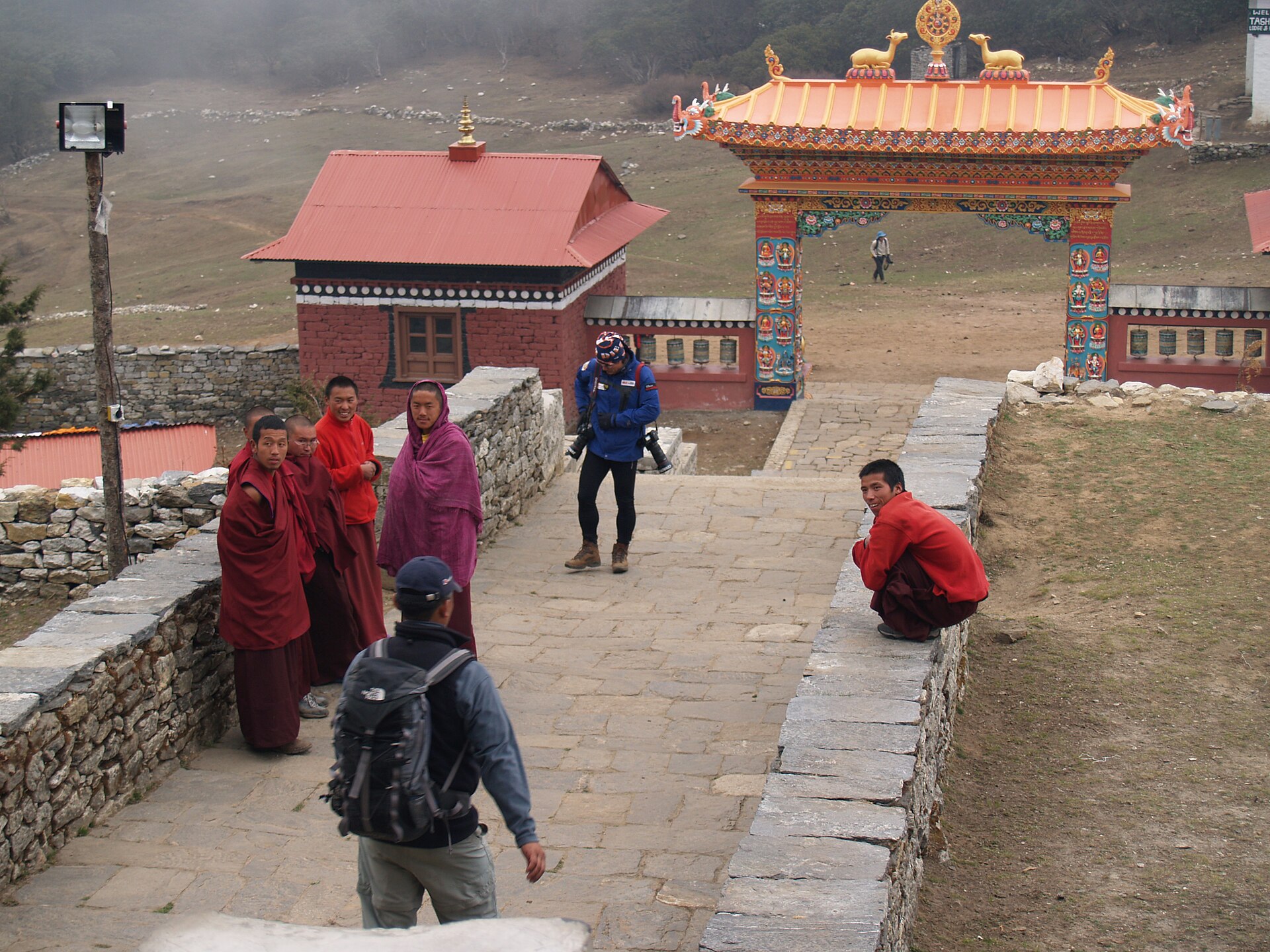
Culture
Tengboche Monastery is a working Nyingma gompa, home to a community of monks and a religious centre for Sherpa villages across the Khumbu. Sherpa Buddhism here is practical and woven into the landscape: prayer flags strung over ridges, mani walls carved with mantras beside the trail, and chortens at the edges of villages. Trekkers meet all of this along the route, but at Tengboche it gathers into the prayer hall, where the monks hold ceremonies that visitors may attend quietly. The monastery has been rebuilt after both an earthquake and a fire, and the care the community puts into its upkeep shows how much it matters to local life. The biggest event of the year is Mani Rimdu, held in October or November. It pairs days of ritual with masked dances and a public blessing, and Sherpas from the surrounding villages travel for it, so it feels as much like a family gathering as a religious occasion. The monastery's website, tengboche.org, publishes the dates, which are worth knowing before a trek is planned. Daily life is quieter: butter lamps, drums, long horns, and the low sound of chanting carrying over the meadow. Walk clockwise around chortens and mani walls, take your shoes off before entering the prayer hall, and photograph inside only if you have asked for and received permission.
What to wear
Tengboche Monastery sits in Sherpa country, and traditional Sherpa dress still appears at festivals and family occasions here. Men and women wear the chuba, a long wraparound robe of wool or heavy cotton tied at the waist with a sash. Women add a striped woven apron called a pangden, bright against dark wool, especially for celebrations such as Mani Rimdu and Losar, the Tibetan new year. Monks wear maroon and saffron robes. Day to day, people dress for cold and work: fleece, down jackets, woollen hats, trousers and sturdy boots, with the chuba kept for special days. Lodge staff and porters wear practical outdoor layers. Visitors should dress for altitude and trail rather than for the monastery: thermal layers, a warm jacket, hat, gloves and broken-in boots with good grip for stony paths. Evenings turn cold even after a bright day, and cloud can drop the temperature quickly. For the prayer hall, cover shoulders and knees, take hats off, and wear footwear that slips off easily, since shoes are left at the door. Sun protection matters at this height, so pack sunglasses and sunscreen as well as the warm clothes.
What to eat
- Dal bhat — Lodge dining rooms around the monastery
Lentil soup with rice, a vegetable curry and pickle is the standard trekker's meal. It is filling, easy to digest and often refilled on request. Order it in the lodge dining rooms in the meadow below the monastery. - Momos — Lodge kitchens in Tengboche village
Steamed or fried dumplings, filled with vegetables or meat and served with a sharp chilli sauce. They are slow to arrive when a lodge is busy, but they make a warming evening meal after a day on the trail. - Thukpa — Lodge dining rooms
A hot noodle soup with vegetables and sometimes meat, brought out steaming on cold evenings. It suits the altitude, since it is easy on the stomach and keeps hands warm. Ask the lodge kitchen what is available that day. - Potatoes — Lodge menus throughout the village
Potatoes are a staple of the Khumbu, boiled, fried or mashed, and appear on most lodge menus as a side or a main. Simple and cheap, they are good fuel for the next day's walking. - Butter tea — Lodges and Sherpa homes
Tea churned with butter and salt, a Tibetan-style drink that tastes more like soup than a cup of chai. It is an acquired taste, but locals drink it for warmth and energy in the cold and thin air. - Bakery coffee and pizza — Bakery outside the monastery gate
A small bakery just outside the monastery gate serves coffee, pizza and baked treats. The altitude is part of the appeal, and a warm cup on a cold afternoon is hard to beat. Opening times vary with the season and trekker numbers.
Plan it
Best time. October–November, when skies are usually clearest after the monsoon and the Mani Rimdu festival may fall, and March–April, when the weather is milder and rhododendrons flower lower down. June to August brings monsoon cloud and rain, and winter is very cold at this altitude.
How long. 1–2
Getting there. Fly to Tribhuvan International Airport in Kathmandu, then take a mountain flight to Lukla (flights depend on weather, so check current departure arrangements). From Lukla, walk via Phakding and Namche Bazaar. From Namche, Tengboche is a long day's walk, with a stop for lunch on the way.
Budget. mid
Tips
- Spend acclimatisation days at Namche Bazaar before going higher, and sleep low if you feel unwell
- Carry enough cash from Kathmandu or Namche, as cash machines and card payments are unreliable on the trail
- Book lodges ahead in the October–November and March–April seasons, and check Mani Rimdu dates on tengboche.org
- Get up early for mountain views, because cloud usually builds by midday
- Treat or filter water, and carry layers for the cold evenings
Etiquette
- Take off your shoes before entering the prayer hall
- Do not photograph or film inside the monastery without permission
- Walk clockwise around chortens and mani walls
Nearby
Sources
- Wikidata Q7699760 (CC0)
- Wikipedia: Tengboche Monastery (rev 1382217489) (CC BY-SA 4.0)
- Wikivoyage: Tengboche (rev 5237847) (CC BY-SA 4.0)
- Photo: Tengboche Buddhist Monastery, Nepal — Vyacheslav Argenberg (CC BY 4.0)
- Photo: Front view of the iconic Tengboche Monastery — Billjones94 (CC0 1.0)
- Photo: Tengboche Monastery 2022 — Arnav shk (CC BY-SA 4.0)
- Photo: Tengboche Monastery3 — Stephen A. Wolfe (CC BY 2.5)
- Photo: Tengboche, Mountains of Nepal — Vyacheslav Argenberg (CC BY 4.0)
- Photo: Monks outside Tengboche monastery — Steve Hicks (CC BY 2.5)
- Photo: Tengboche Monastery — Steve Hicks (CC BY 2.5)
- Photo: Tengboche Monastery4 — Stephen Wolfe (CC BY 2.5)


