Dhaulagiri
Dhaulagiri, Nepal
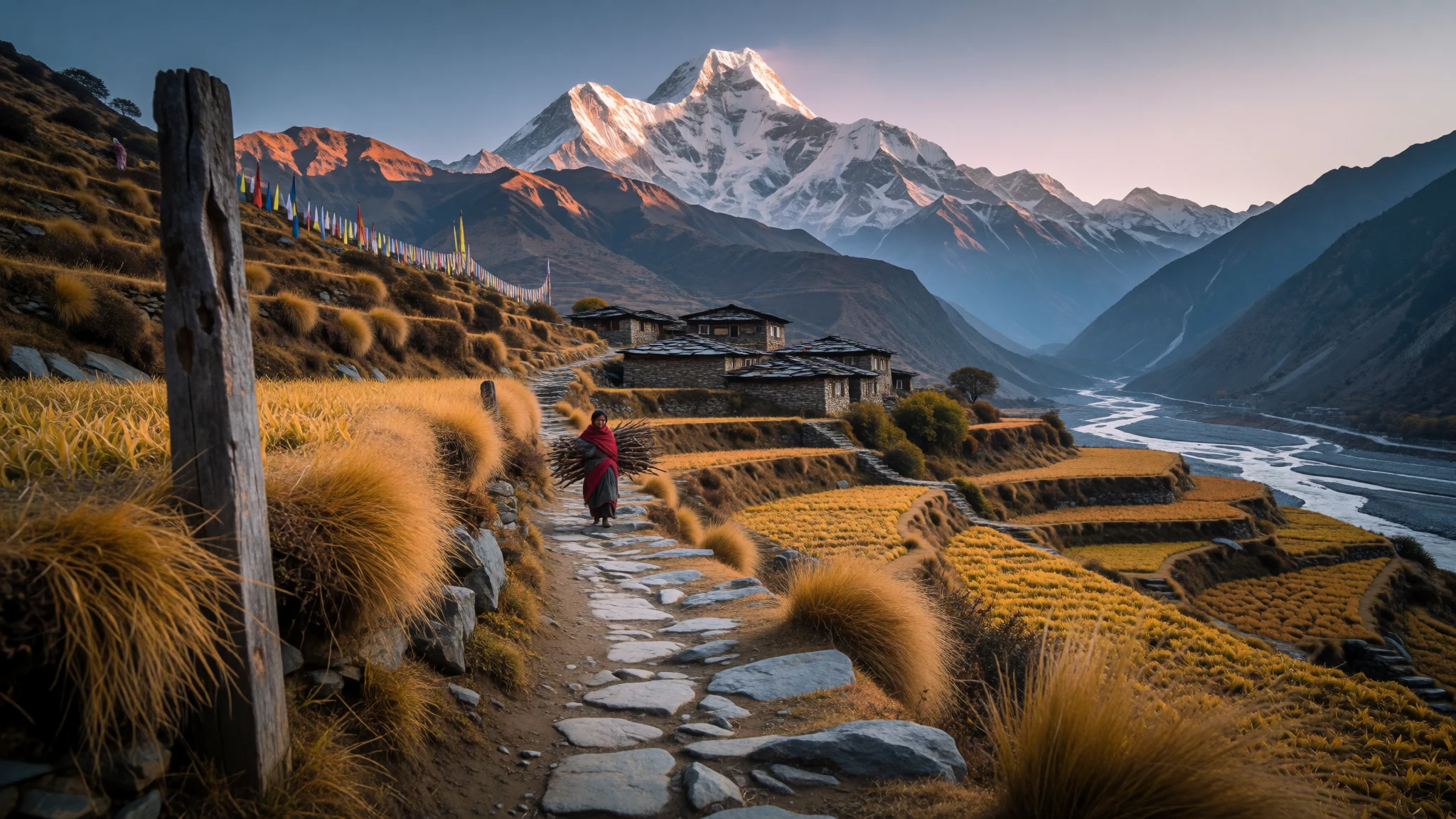
Dhaulagiri is a vast white wall in western Nepal, best met from the Poon Hill and Ghandruk trails or the dry valley beyond.
The place
Dhaulagiri rises in western Nepal to 8,167 metres, which makes it the seventh highest mountain on Earth and the tallest one lying wholly inside a single country. The main summit, Dhaulagiri I, stands at the eastern end of the range that carries its name, and it is also the high point of the Gandaki river basin. What sets it apart is how suddenly it climbs. From the Kali Gandaki valley to the south-east, the ground lifts about 7,000 metres over roughly 30 kilometres, while the south and west faces fall sheer for more than 4,000 metres. Annapurna I stands about 34 kilometres to the east, so the Kali Gandaki runs through a deep trench between two giants. Pokhara, south of the Annapurnas, is the usual base, a lakeside town that serves trekkers and climbers for both ranges and has its own pull as a place to rest. The mountain is visible from remarkably far away. Seen from the Indian side, most 8,000-metre peaks are hidden behind nearer ranges, yet on a clear day Dhaulagiri can be picked out from northern Bihar and from parts of eastern Uttar Pradesh. Clear days are the catch. Monsoon cloud and winter haze often hide it completely, so the mountain rewards patience and an early start more than a tight itinerary.
Its story
Dhaulagiri entered the written record through surveyors rather than climbers. In 1808, calculations from the plains of India placed it above every peak measured until then, and it kept that title until Kangchenjunga took it, with Everest following in 1858. Mountaineers arrived later. A French expedition led by Maurice Herzog looked it over in 1950, the same year his team climbed Annapurna, and it took another decade before a Swiss-Austrian-Nepali team reached the summit in 1960. It was the penultimate eight-thousander to be climbed and the last of those in Nepal. The first-ascent route follows the Northeast Ridge, and most later climbers have used it because the other lines are disproportionately dangerous. Parties have tried most directions, but two aspects have so far resisted attempts along their full length: the Northwest Ridge, which has been climbed to the summit only by way of the Pear buttress, and the South Face. Many alpinists regard that face as one of the great unsolved problems of the sport. Records show the mountain claims a heavier share of its climbers than the Nepal average for 8,000-metre peaks, and that gap explains its reputation as a serious, unforgiving objective. For most visitors this history is background, read while looking up at the faces from a safe valley.
What to see
- Poon Hill sunrise viewpoint — Ghorepani, Myagdi and Kaski districts
Poon Hill is a ridge-top lookout above the Ghorepani trail, climbed in the dark so walkers reach the top for first light. Dhaulagiri turns pink then gold across the valley. Expect a crowd at the summit in the main trekking seasons, and bring a warm layer for the wait.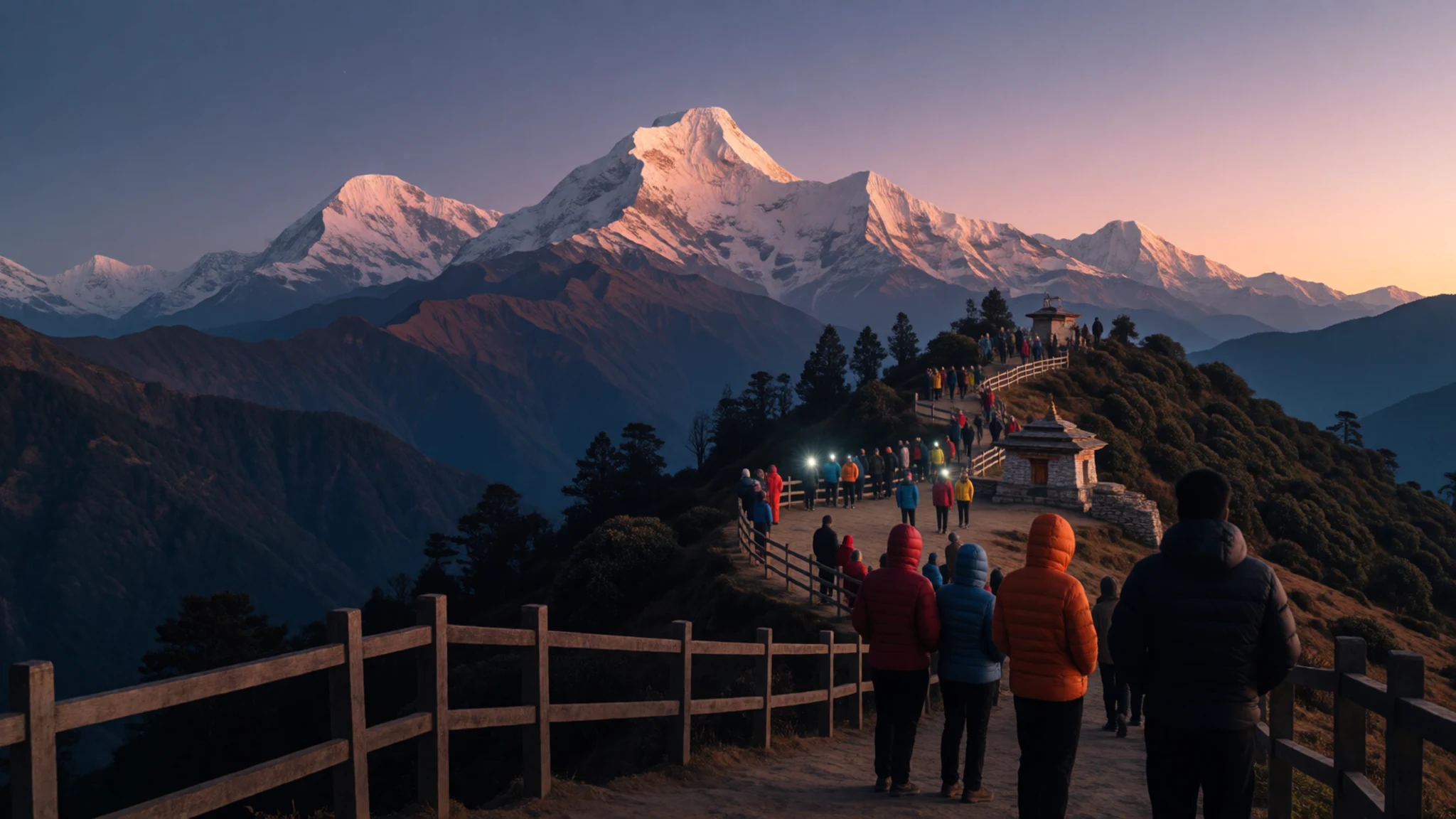
- Ghandruk village — Annapurna foothills, Kaski district
Ghandruk is a stone-built hill village of slate roofs and terraced fields, set on the Annapurna side of the valley. The views of the Himalayan chain are wide and unhurried, and the lanes make a gentle first walk. Many trekkers stay a night in a family-run lodge here.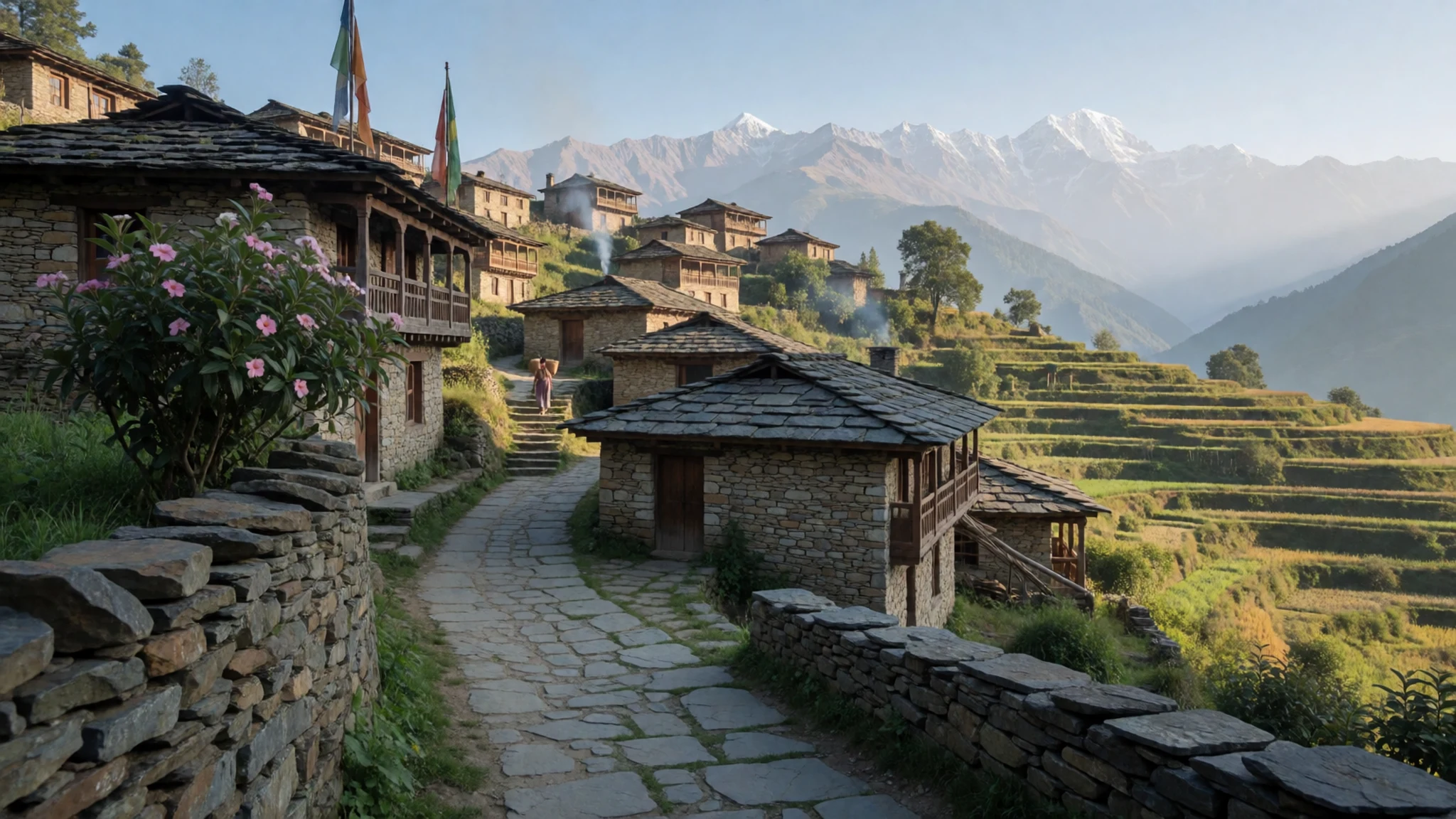
- Muktinath and the upper Kali Gandaki — Mustang district
North of the main range the landscape turns dry, brown and windswept, and Dhaulagiri looks close and enormous from the Mustang side. Muktinath, a pilgrimage site for Hindus and Buddhists, is the usual halt. The air is thin and cold, so arrive acclimatised and unhurried.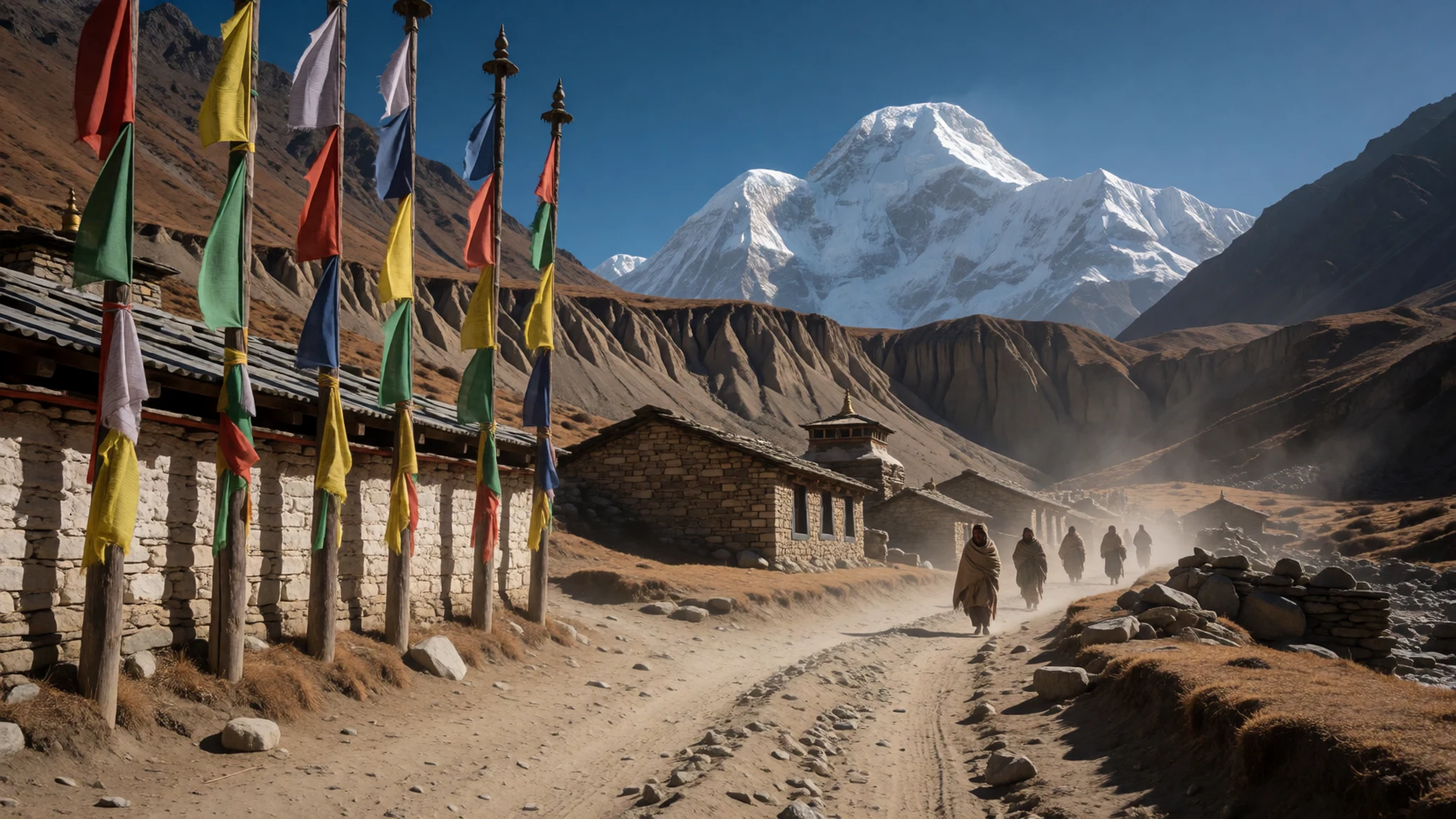
- The view from the air — Pokhara to Jomsom air corridor
Flights between Pokhara and the mountain towns give a rare overhead look at the whole range, with Dhaulagiri's ridges and glaciers laid out below the wing. Sit on the side facing the peaks and keep a camera ready. Weather can delay or cancel these flights, so leave slack in the plan.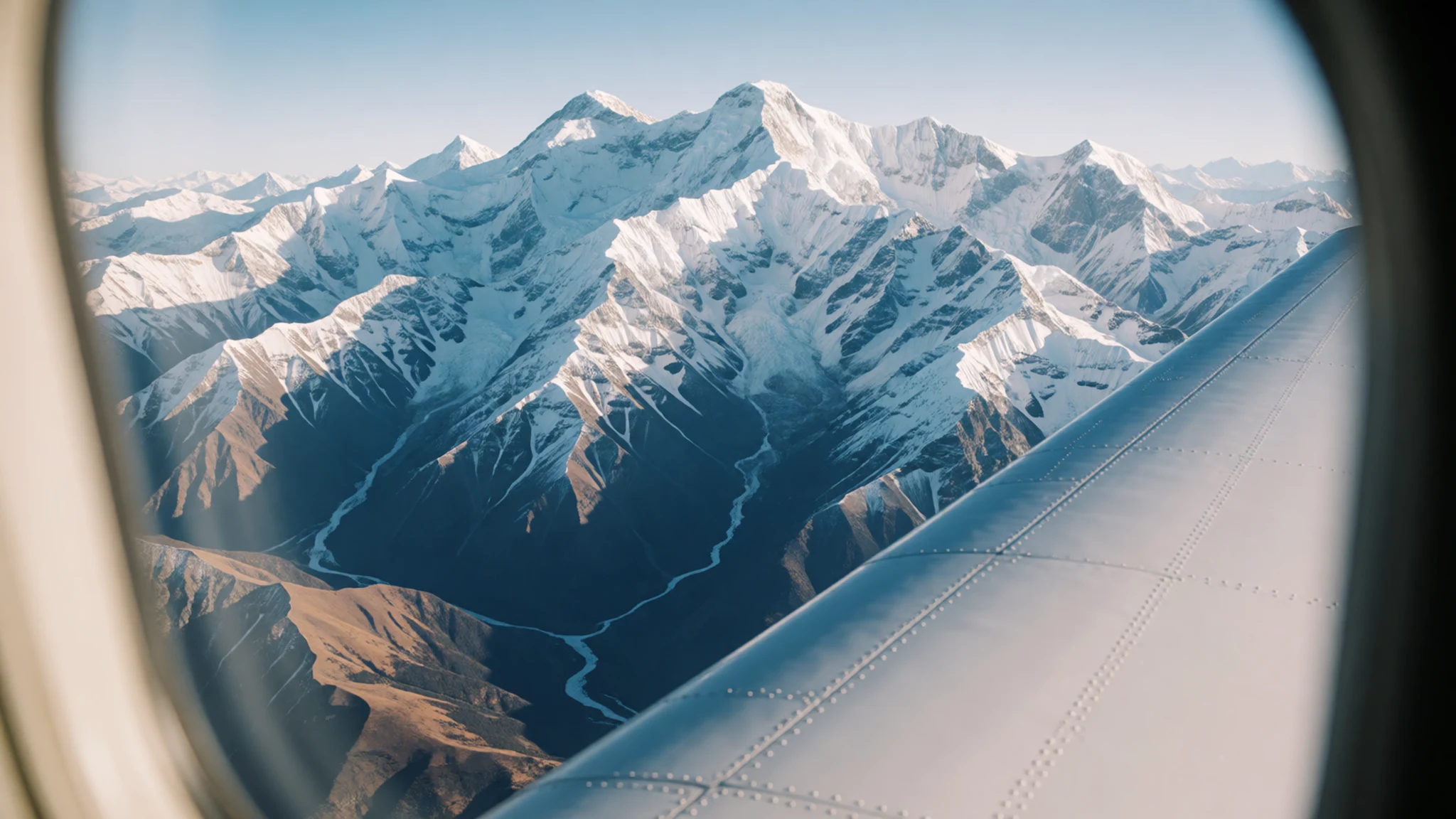
- The Northeast Ridge and central spur — Dhaulagiri massif
Climbers' photographs show the long Northeast Ridge and its central spur, the line of the first ascent. Ordinary visitors cannot go there, but a good lens and a clear morning from the valleys bring the broken ridgelines into view and explain why the mountain is so respected.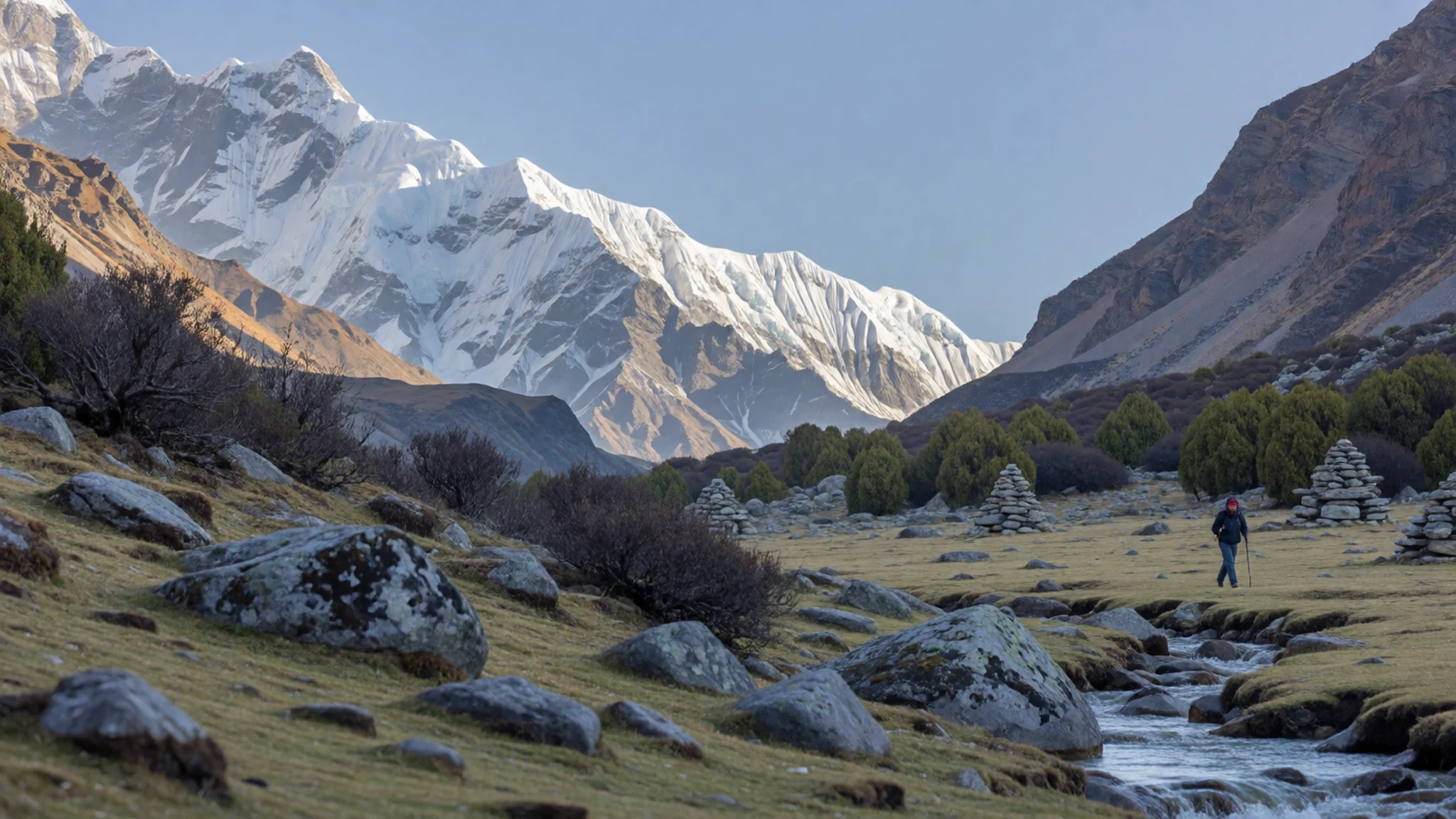
- Pokhara — Kaski district
Pokhara is the lakeside town where most journeys begin and end. It has bakeries, gear shops and cafés with mountain views on clear mornings. A day here before and after a trek is useful for permits, weather news and rest.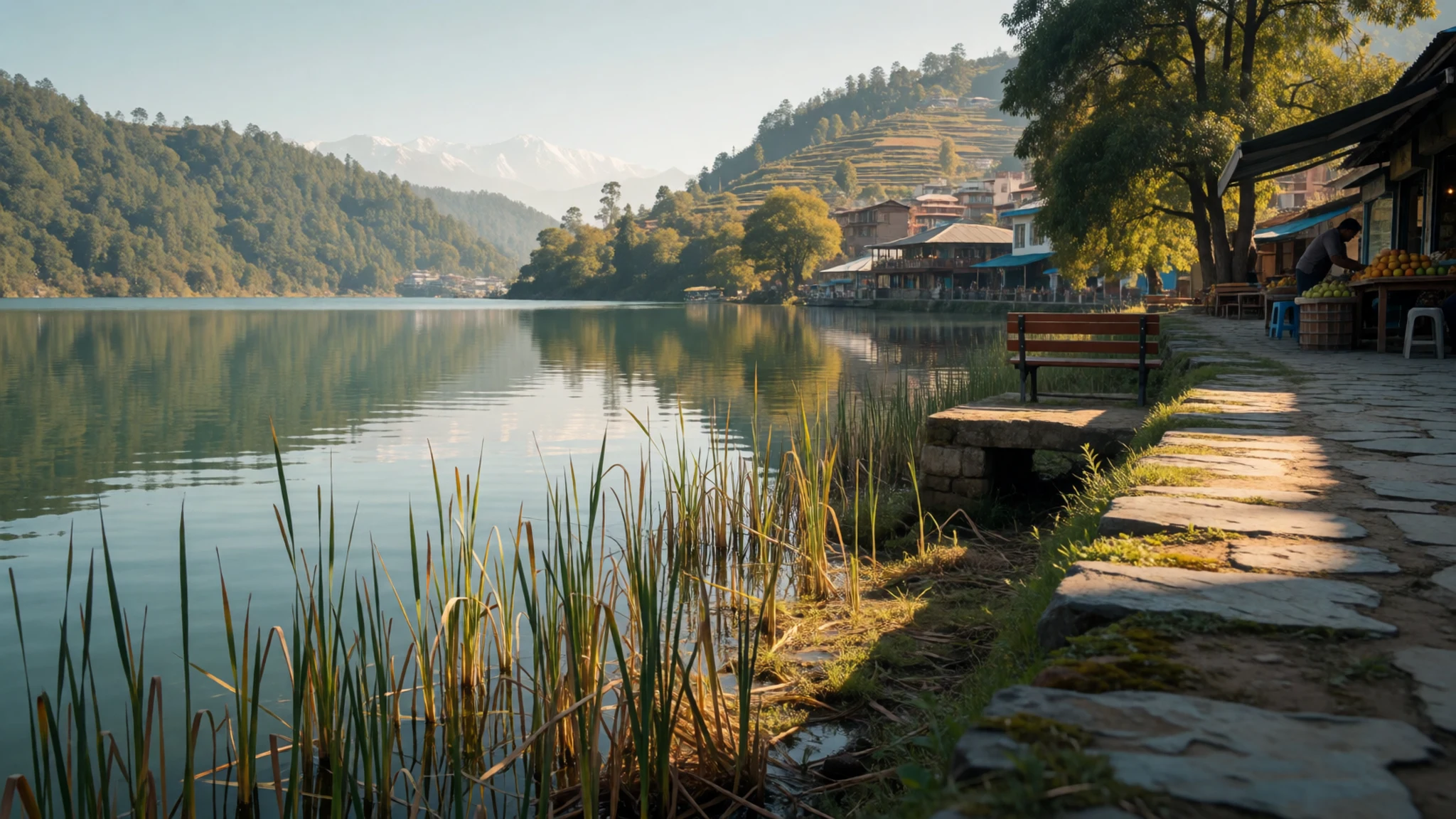
Culture
Around Dhaulagiri, daily life is shaped by hill farming, seasonal movement and the mountains themselves. Villages on the southern side are home to communities including Gurung and Magar families, and people on the northern side live in a drier, more Tibetan-influenced world of pilgrimage, trade and prayer flags. In either place, a greeting matters. Namaste, said with palms together, serves as hello and goodbye, and people notice when it is offered warmly, especially to elders, who are shown clear respect. A simple dhanyabaad, thank you, goes a long way with lodge hosts and porters. Some customs are easy to get wrong. Feet are considered unclean, so avoid pointing the soles at people or at religious images, and never step over someone sitting or lying on the ground. The left hand is seen as unclean, so hand things over, eat and touch people with the right. Shoes come off before entering a home and often before a temple or prayer room, and it is polite to wait to be shown. Mountains are sacred to many local people, which is why talk of conquering a peak sits awkwardly with some hosts. On the trail, a calm manner and a readiness to share a bench in a lodge dining room are noticed and appreciated. Etiquette line: take off your shoes before stepping into a home or shrine, and give and receive things with your right hand.
What to wear
Traditional dress in the Dhaulagiri hills depends on community and altitude. Men have long worn the daura-suruwal, a close-fitting tunic with trousers, often topped with a dhaka topi, a brimless cap woven in colourful patterned cloth. Women wear the sari or the gunyo cholo, a wrapped skirt with a blouse, and many add a patka sash and shawl. Wool, felted and woven by hand, remains important in colder villages, and pashmina-style shawls and woven blankets are common. Festival days bring out the best cloth and jewellery, especially gold and red beadwork. In daily life, most people now wear practical modern clothes: trousers or leggings, T-shirts, fleece jackets, caps and trainers or sturdy sandals, with traditional pieces kept for weddings, festivals and temple visits. Porters and guides dress for work in layers. Visitors should plan for variable weather. Lower trails can be warm by day and cold at night, and high sections drop below freezing. Bring a base layer, a fleece, a windproof and waterproof shell, a hat, gloves and sunglasses. Broken-in walking boots with ankle support are better than new ones, and trekking socks prevent blisters. Dress modestly in villages and at temples, with shoulders and knees covered, and carry a light scarf for sun, dust or a shrine visit.
What to eat
- Dal bhat tarkari — Any village lodge or roadside eatery
Spiced lentil soup poured over boiled rice with a vegetable curry, often with pickle, greens and yoghurt. It is the standard meal across Nepal, and lodge kitchens usually offer refills, which is useful on long walking days.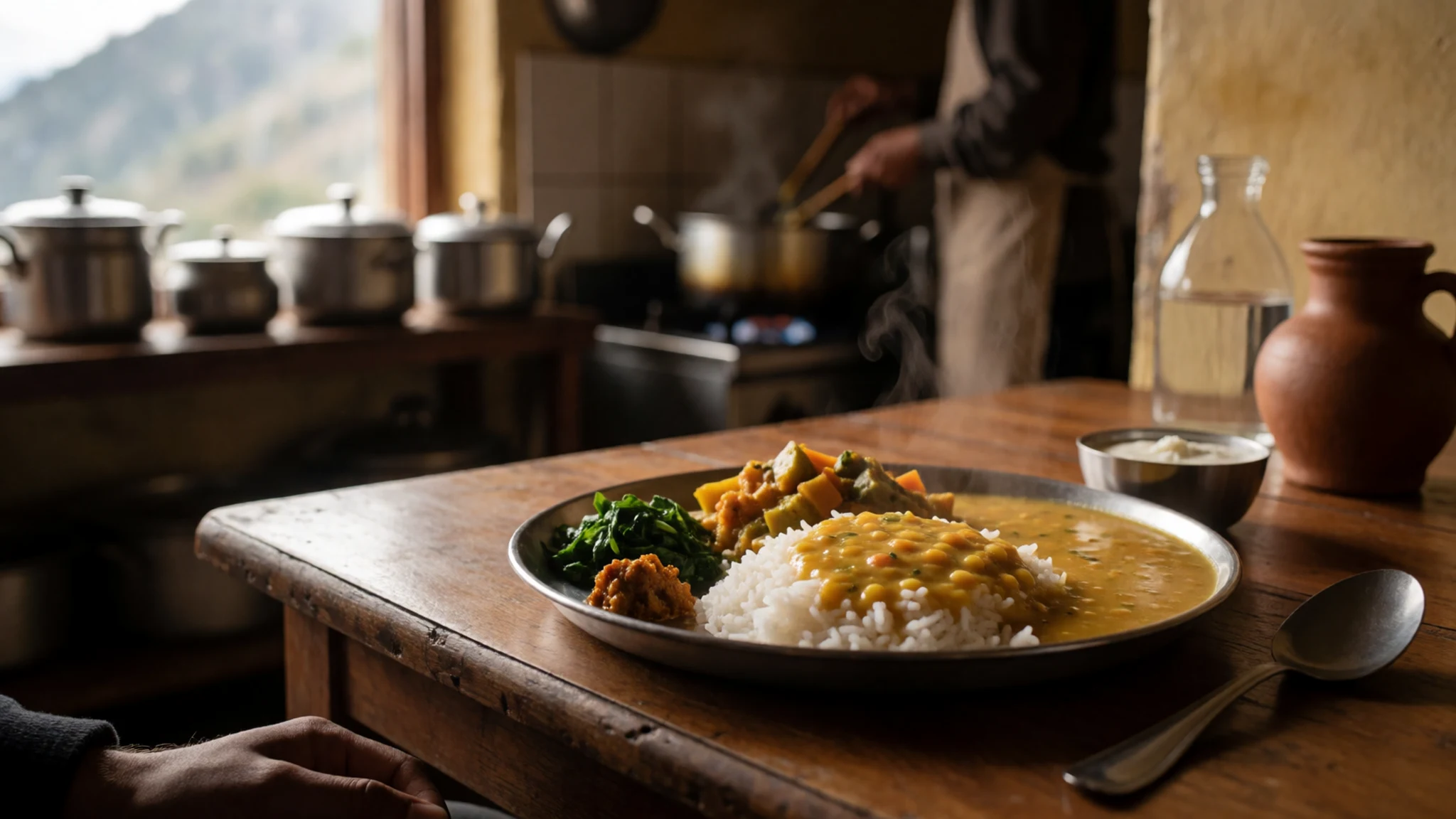
- Dhindo — Home-style eateries in the hill villages
A thick porridge of millet, buckwheat or maize flour stirred until firm, then eaten with lentils or a vegetable curry. It is a traditional hill staple, filling and warm in cold weather, and often served with a spicy chutney.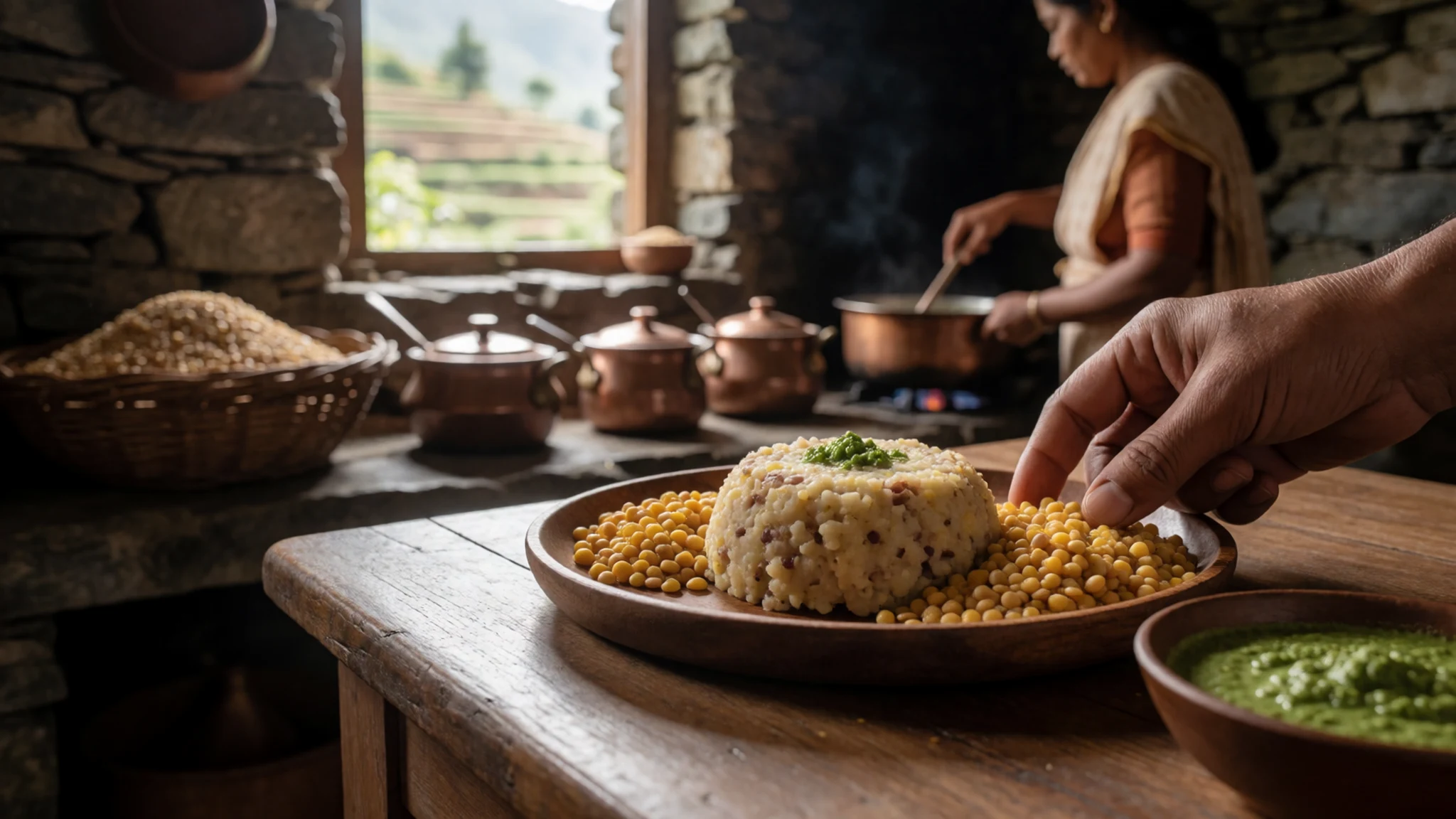
- Momo — Small eateries and tea stops in Pokhara and on the trails
Steamed or fried dumplings filled with vegetables, buffalo or chicken, served with a tomato-based chutney. They are popular at rest stops and in town, and a plate is a quick way to restore energy after a climb. - Achaar and fresh chutney — Served with meals at lodges and family kitchens
Pickles and fresh chutneys come on the side of nearly every meal. They can be sour, salty or fiercely hot, so taste a little first. Look for versions made with tomato, radish or local herbs. - Masala tea and local snacks — Tea houses along the trekking routes
Sweet, milky tea with spices is poured at every stop, and often served with fried bread or biscuits. In the colder valleys, butter tea and apple products appear too, and the drinks warm cold hands at altitude.
Plan it
Best time. April–May for warm days and rhododendron colour on the lower trails, and late October–November for the clearest skies and stable weather. June to September is monsoon, with cloud, leeches and landslides on the southern side, and winter is cold at altitude.
How long. 5–8
Getting there. Fly to Tribhuvan International Airport in Kathmandu, then take a domestic flight or a road journey to Pokhara. From Pokhara, local transport reaches trailheads for the Ghorepani and Ghandruk routes; for the Mustang side, check current flight and road options.
Budget. mid
Tips
- Check current permit and registration rules, including the E-TIMS system, before you set out, and note that solo trekking is restricted in many regions.
- Start walks early, as mountain views are usually clearest in the morning before cloud builds.
- Carry some cash in small notes, because cards and cash machines are scarce above the roadheads.
- Climb gradually and rest if you have a headache or feel unwell, as altitude affects people unpredictably.
- Use a reusable bottle with treatment tablets or a filter to reduce plastic waste.
Etiquette
- Greet people with a namaste and ask before photographing individuals or religious ceremonies.
- Walk clockwise around prayer walls and stupas, and keep to the left of mani walls where this is the local custom.
- Take your litter back to town rather than leaving it at lodges or on the trail.
Nearby
Sources
- Wikidata Q165440 (CC0)
- Wikipedia: Dhaulagiri (rev 1384033803) (CC BY-SA 4.0)
- Wikivoyage: Nepal (rev 5399421) (CC BY-SA 4.0)
- Dhaulagiri, Himalaya, Nepal — Vyacheslav Argenberg (CC BY 4.0)
- Dhaulagiri - view from aircraft — Sergey Ashmarin (CC BY 3.0)
- Sunrise on Dhaulagiri — Raphael Duprat (CC BY-SA 4.0)
- Dhaulagiri Espolón central o arista NE, 1979 — Goizarin (CC BY-SA 4.0)
- Close-up view of Dhaulagiri near Muktinath, Mustang — Saddam19 (CC BY-SA 4.0)
- A View from Ghandruk (15) — Ammit Shrestha (CC BY 3.0)
- A View from Ghandruk (33) — Ammit Shrestha (CC BY 3.0)
- A View from Ghandruk (34) — Ammit Shrestha (CC BY 3.0)


