Chitwan National Park
Chitwan National Park, Nepal
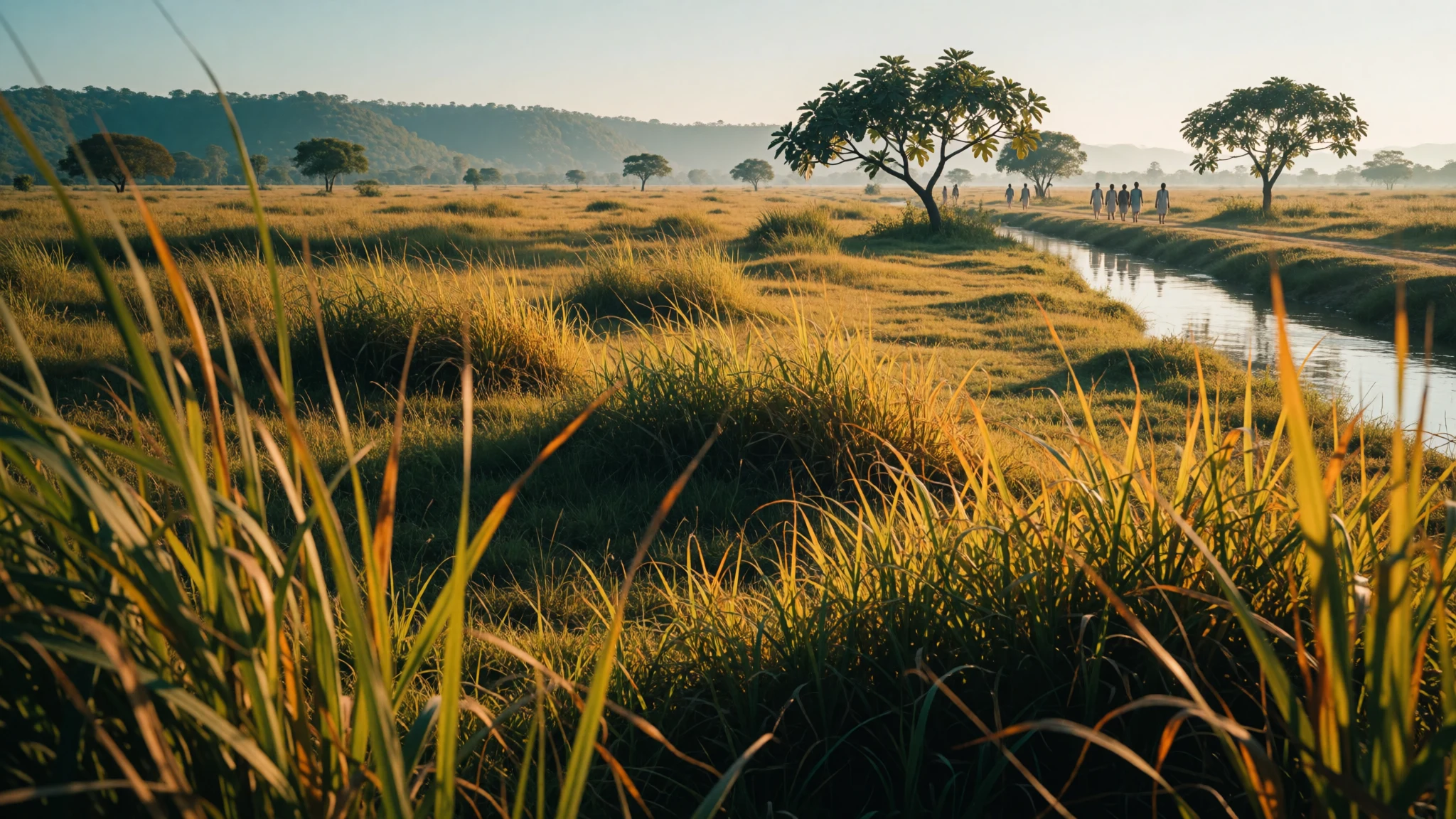
Chitwan National Park is Nepal’s big wildlife outing, where grasslands and river corridors bring elephants, rhinos and birds close.
The place
Chitwan National Park sits in Nepal’s south-central Terai, with landscapes that swing from river valleys to the forested hills. The park was established in 1973 and later received World Heritage status. What feels special here is how varied the habitat is for a place that’s still reachable for most travellers: wetlands and swampy edges, open grass, and forested stretches that hold animals at different times of day.
The park covers a large protected area and sits within the Narayani–Rapti river system, which forms natural boundaries to settlements in the north and west. It’s also part of a bigger tiger conservation unit connected with protected areas in the region, so wildlife movement isn’t boxed into a single, isolated patch of green. In practice, that means the park experience is shaped by water and vegetation: mornings can be humid and misty, boat journeys follow slow channels, and jeep routes cut through grass where you may see spoor or wildlife at a distance.
Chitwan’s climate is humid and monsoon-driven. The wettest stretch runs from May into September, with peak rain in July and August, and conditions easing in October. Outside that window, conditions are generally more comfortable for early starts and long sits. The park’s elevation ranges from low river-valley terrain up into the Sivalik Hills, so the air can feel thicker near the waterways and cooler when the land rises into forest.
Expect a day structured around timed activities (morning and afternoon are typical), guides who know where animals have been moving, and a steady reminder that wildlife viewing is weather-dependent and never a showroom guarantee.
Its story
Chitwan’s modern conservation story starts with an older rhythm: hunting camps and the royal seasons when forests and grasslands were more accessible to the ruling class. From the end of the 19th century, the area was a favoured hunting ground during the cooler months, with long trips south and camps set up for big-game shooting.
After that, Chitwan’s story turns sharply. As settlements expanded in the valley, the pressure on wildlife rose alongside poaching, and the once-spreading habitat began to shrink. Laws and protection efforts followed, including early conservation measures focused on rhinos and their habitat, and later more organised patrols and guard posts designed to reduce hunting pressure.
You can still feel the consequences in how the park is managed today: focus on habitat protection, monitoring, and the daily reality that sightings are tied to where animals choose to feed and move. Chitwan’s history also explains why wildlife viewing here is structured around controlled routes and timed activities rather than a free-for-all. The message from long experience—learned the hard way—is that wildlife needs space, protection, and time, not spectacle.
Even the way people reach the park is shaped by that management. Visitors commonly base themselves in nearby Sauraha, then do day activities into Chitwan, crossing into the park via canoe where bridges have been removed over the river near Sauraha. In other words, today’s calm boat drift and forest silence sit on top of a complicated past—one that conservation tried to rewrite, and keeps working to maintain.
What to see
- Wild wetland edges and swampy jungle — Chitwan wetlands and river corridors
Chitwan National Park’s watery margins turn the ground into a living landscape. Look from boardwalks or boat decks for movement in reeds and low branches, where reptiles and birds often surface.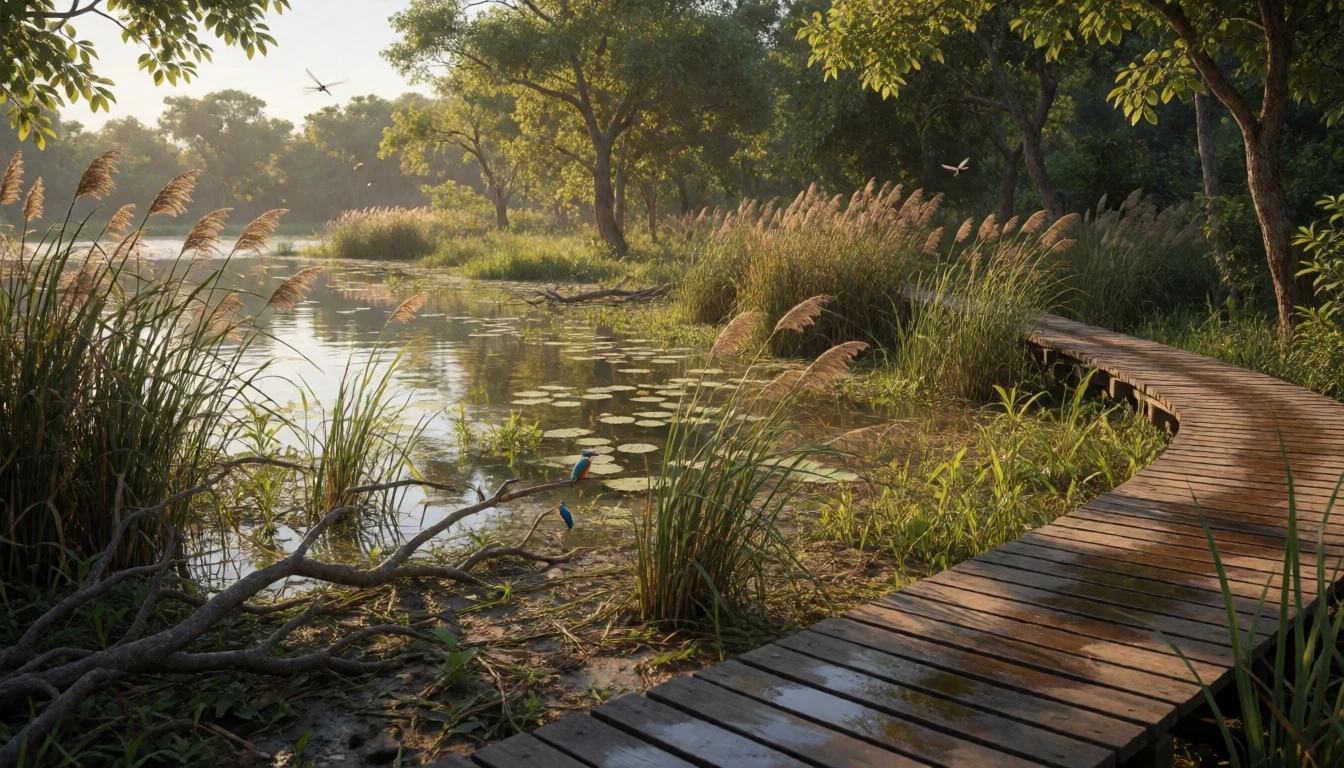
- Wild Asian elephants — Grasslands and forest clearings
In Chitwan National Park, elephants show up in grass and along quieter forest edges. Even when you don’t see them clearly, their presence is often hinted at by tracks and disturbed vegetation during morning or late-afternoon activity.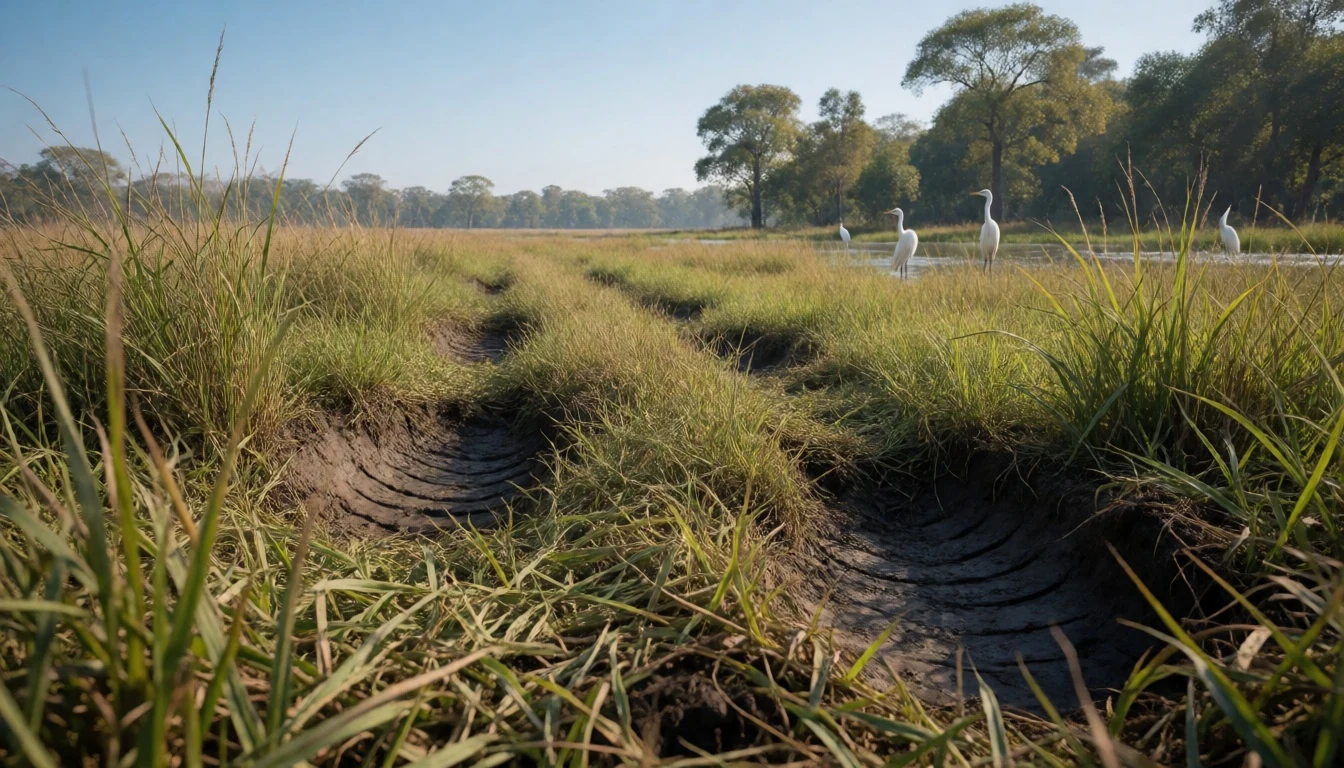
- Greater one-horned rhinoceros — River valleys and open habitat
Chitwan National Park is known for its greater one-horned rhino viewing, typically on foot or from jeeps. Rhino sightings depend on the day’s routes and conditions, so listen to your guide and keep expectations realistic.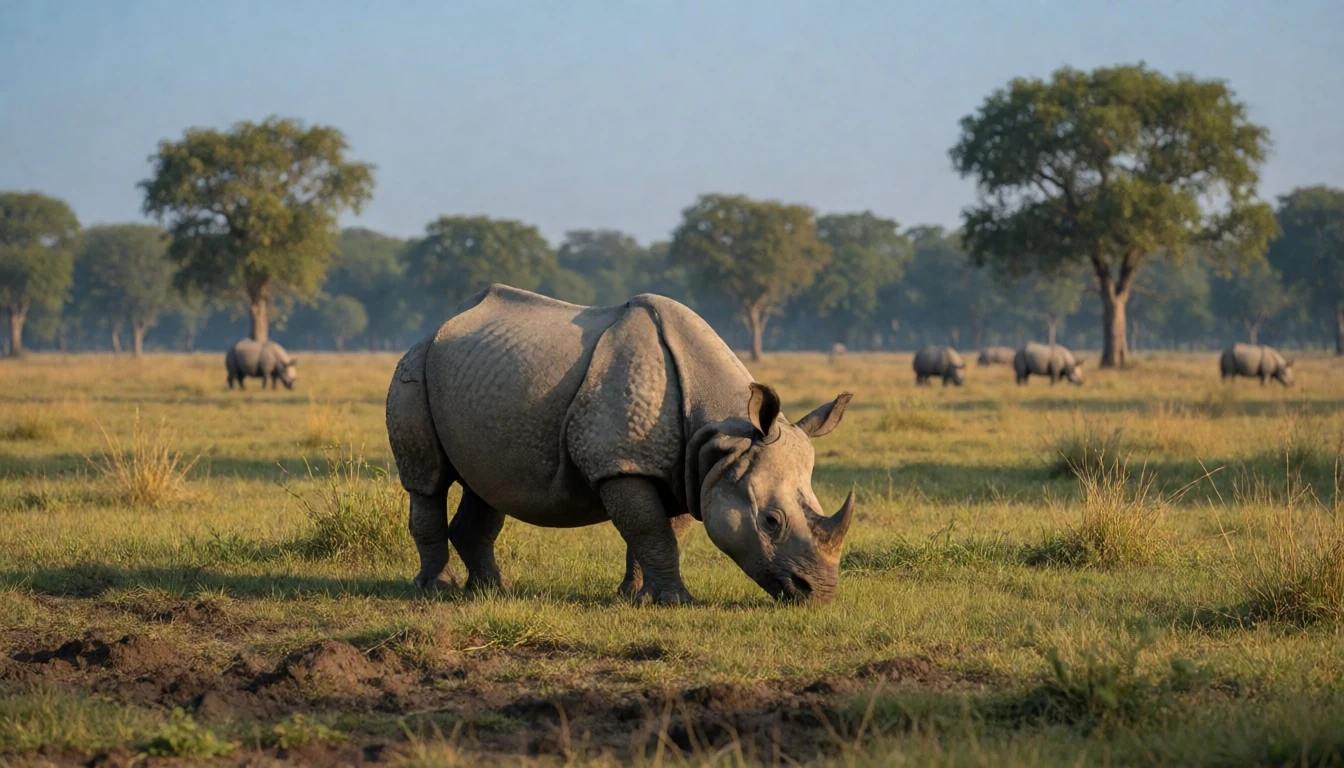
- Mugger crocodiles on waterways — Narayani–Rapti water channels near the park
On boat stretches in Chitwan National Park, watch for still silhouettes near the banks. Mugger crocodiles can be spotted close to the waterline, especially when light hits the surface and slow-moving channels narrow.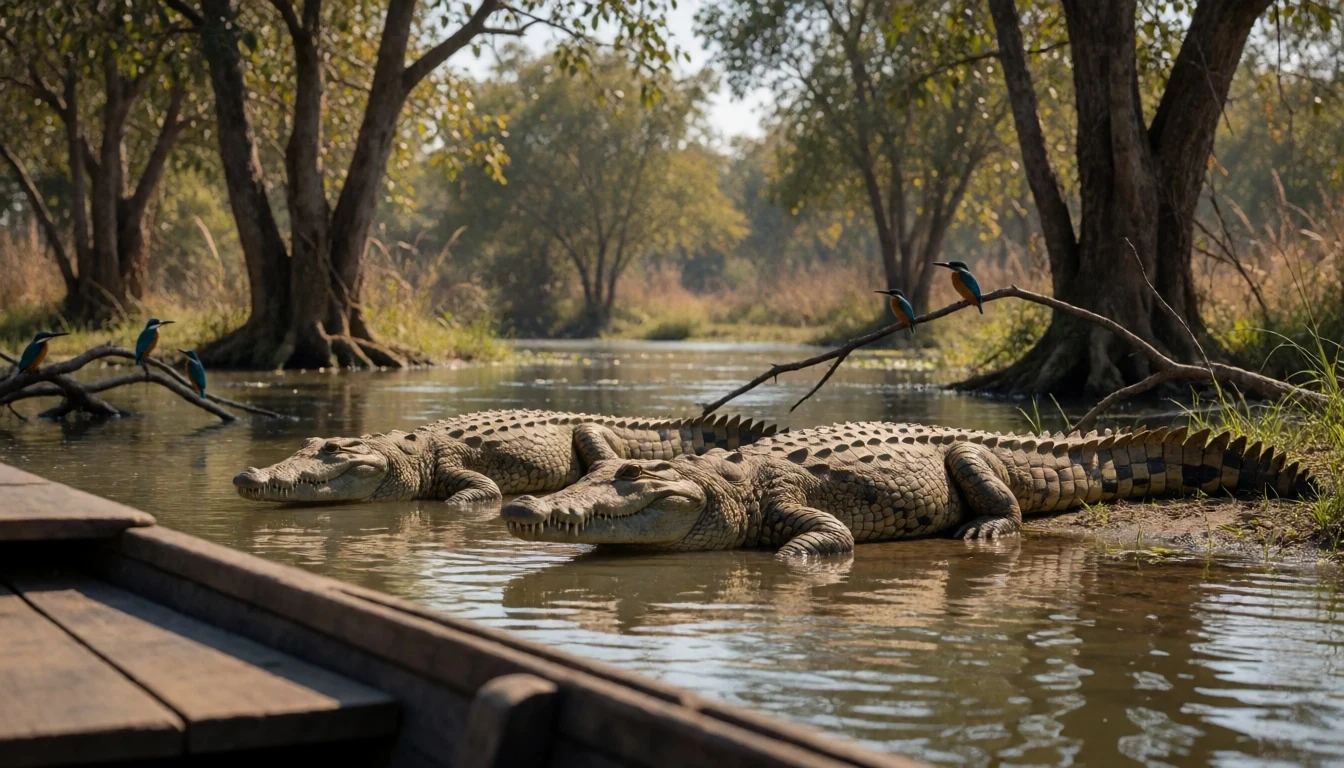
- Birding between big moments — Everywhere near water and edge habitat
Chitwan National Park is also about smaller surprises. Between longer wildlife pauses, scanning for kingfishers and bulbuls can be rewarding, and a good guide will point out what’s active during that particular weather window.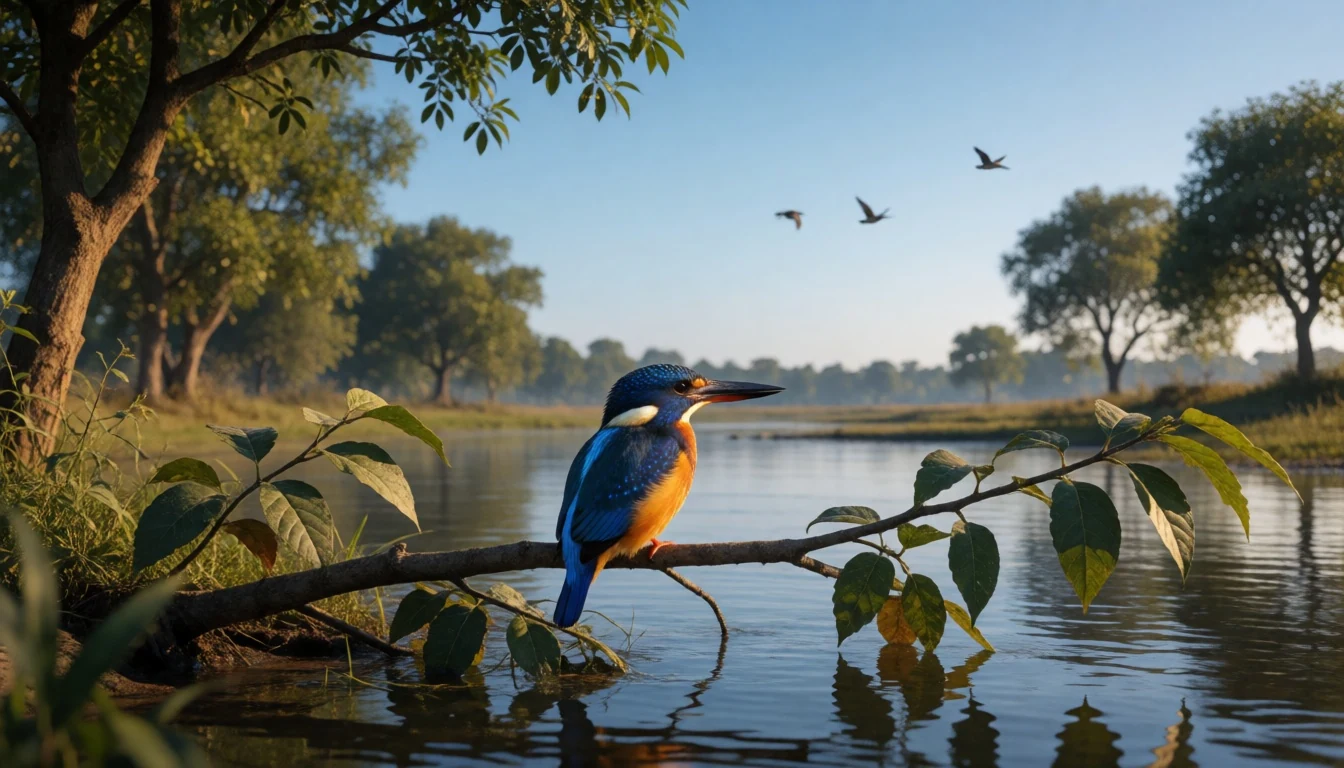
- Tiger sightings: possible, never promised — Jungle tracks reached by jeep and foot
Chitwan National Park is a tiger landscape, but sightings are not guaranteed. The best approach is patient scanning from the route your guide selects, without letting one “maybe” turn the day into stress.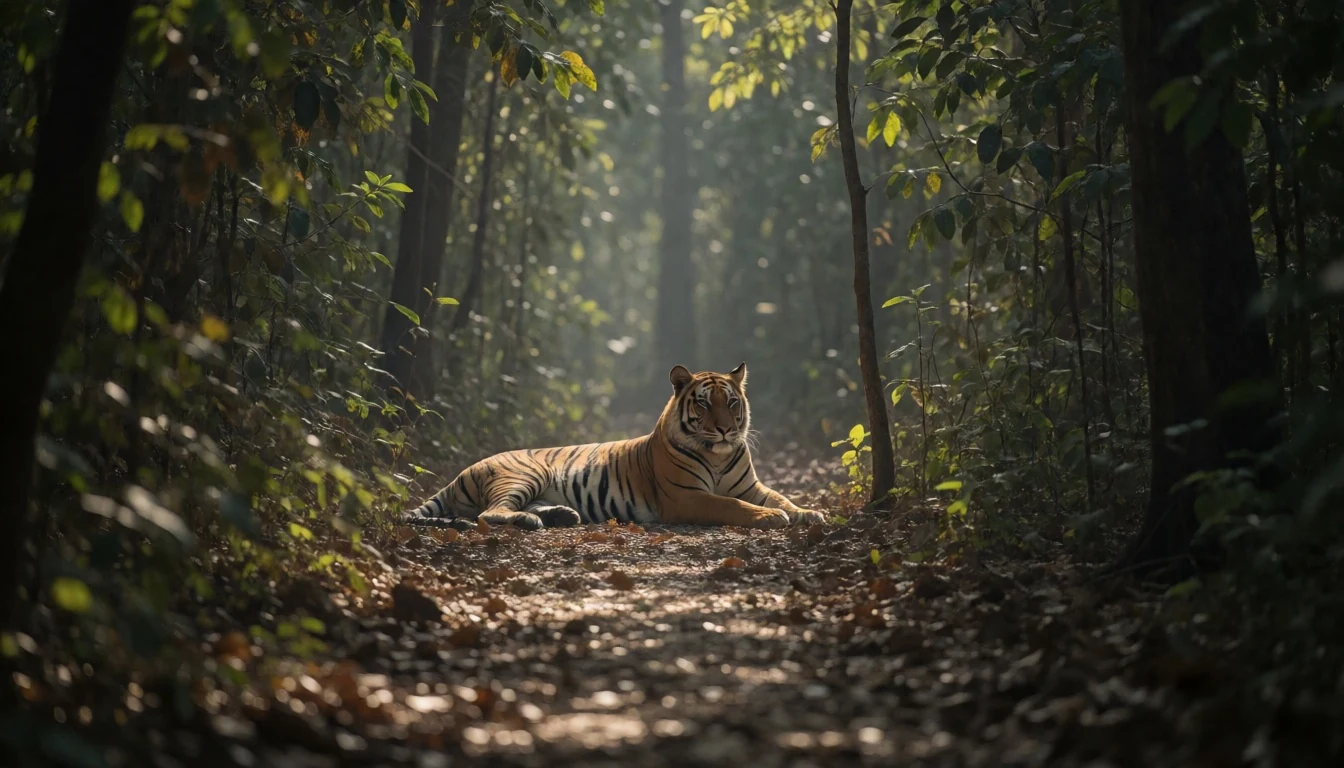
Culture
Chitwan National Park is a place where wildlife rules the schedule, so “culture” is mostly about how humans behave around animals and sacred edges. Many activities are arranged through operators in the nearby town of Sauraha, and the overall tone is practical: get ready early, follow your guide’s instructions, and keep voices low so the group doesn’t disrupt the environment.
You’ll also encounter local community life around the buffer zone and the kinds of cultural performances that tour operators sometimes include as part of a package. The rhythm and loud stick dancing are memorable, but it’s still worth arriving with a calm mindset—think of it as a community moment, not background entertainment. When temple spaces are involved (inside or at the park boundary), dress modestly and be mindful that some areas function as religious places rather than photo sets.
Finally, Chitwan has a common visitor reminder: wildlife here is not a zoo. Guides may adjust routes based on tracks, weather and where animals are likely to be, and it’s normal to have quiet stretches.
Visitor etiquette: keep voices down and follow your guide’s route instructions, especially near water and any sacred spots.
What to wear
Chitwan National Park doesn’t have a single “park outfit”, but the region’s climate and terrain do the deciding. During the wetter months, humidity can feel intense and rain can move in quickly, so breathable layers help even when it’s hot. For wildlife days, visitors generally wear long trousers and a lightweight top to protect against sun, insects and wet undergrowth.
Traditional clothing in Nepal varies by community, but in the Chitwan area you’ll most often see everyday wear rather than formal attire, with women’s dresses and men’s shirts/pants. Don’t expect special textiles on safari-style outings; instead, focus on fabrics that can handle heat and occasional showers.
For visitors: wear sturdy closed-toe shoes or sandals with good grip (muddy edges are common), and bring a cap and sunglasses for bright patches between cloud. If you plan to visit any temple or ashram-style site around the park, keep shoulders and knees covered and consider a light scarf. A small rain jacket or poncho is more useful than an umbrella when you’re on jeeps or boats.
If you’re photographing, bring lens wipes too—humidity can fog optics fast, and you’ll want to keep gear ready for sudden sightings.
What to eat
- Tharu-style local meals (as available via Sauraha eateries) — Sauraha town
Look for simple plates in Sauraha that blend lentils, vegetables and rice, often served with seasonal sides. This is usually the easiest way to eat without building a whole itinerary around restaurants.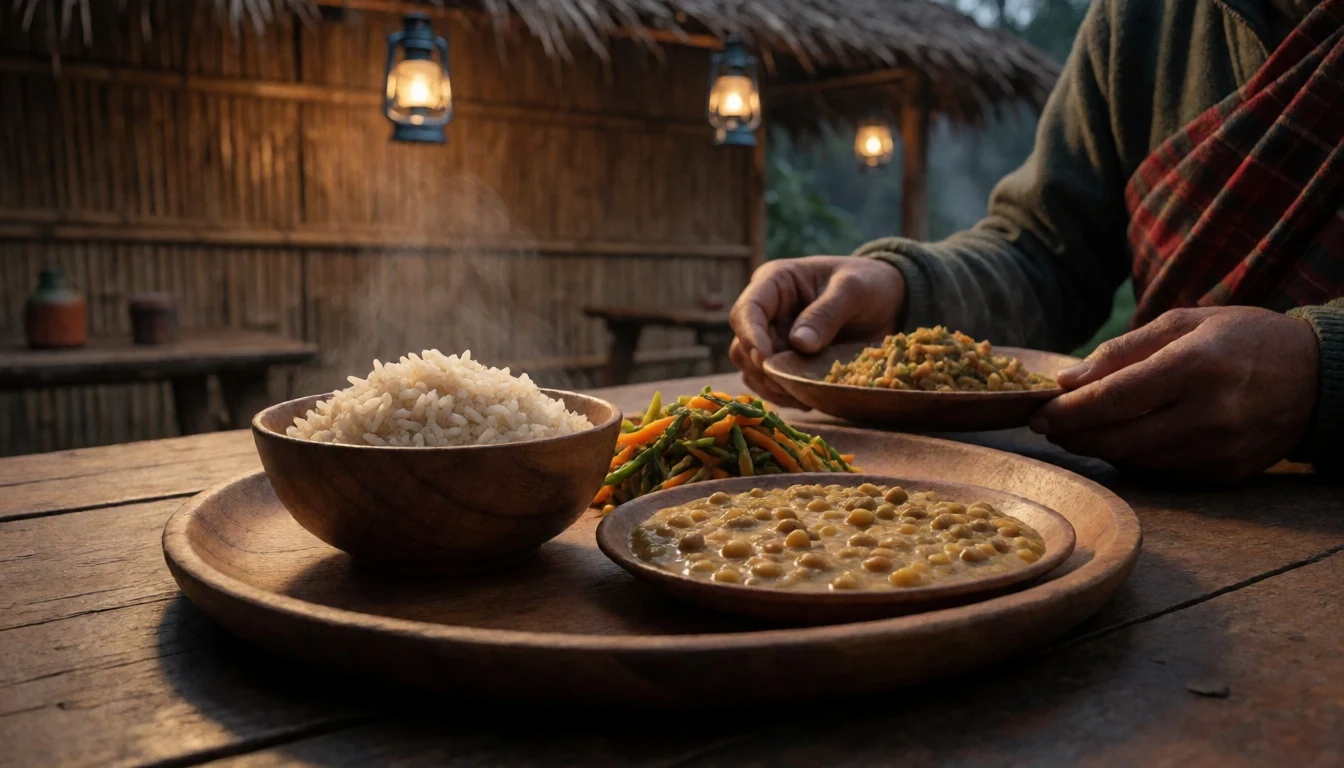
- Dal bhat — Sauraha restaurants and hotel dining
Dal bhat is the everyday comfort meal: rice with lentil curry and usually a vegetable side. In Chitwan trips, it’s commonly offered by local restaurants and hotel dining when you’re staying in Sauraha.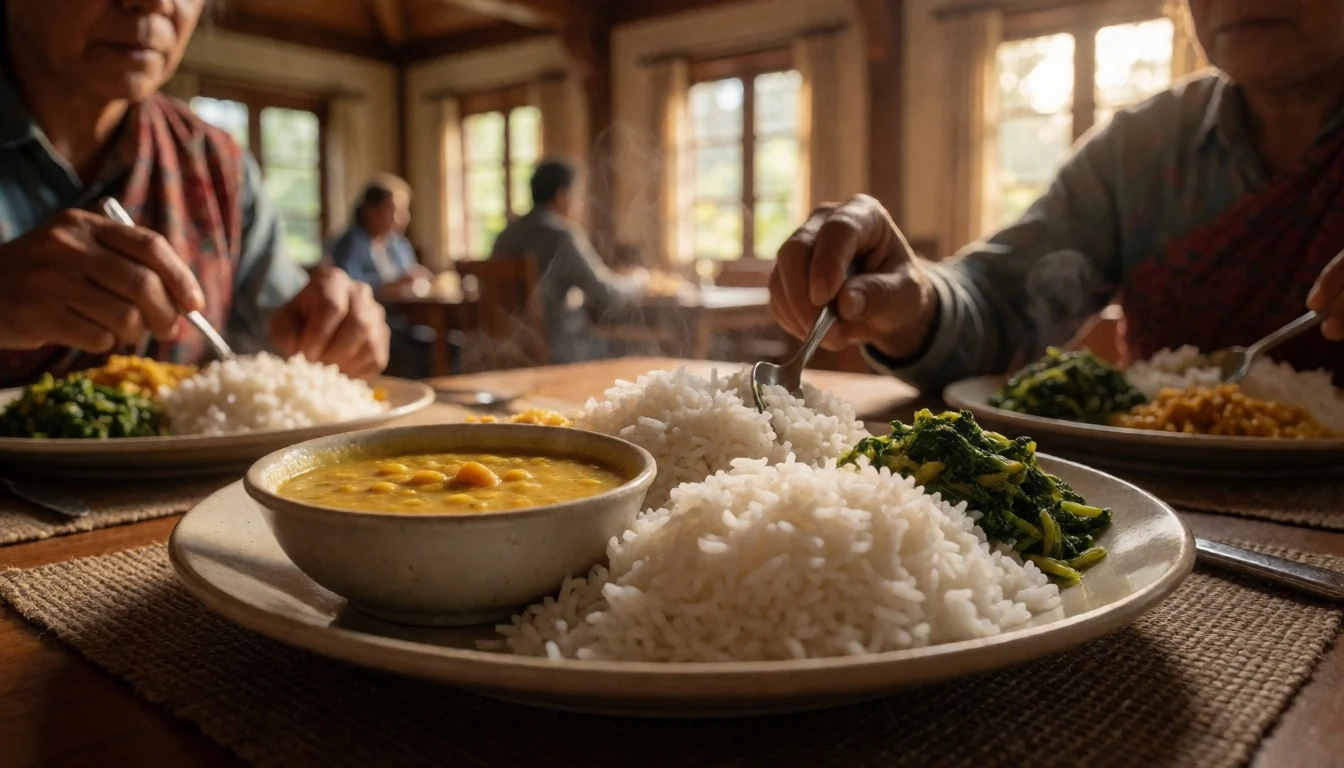
- Vegetable curries and pickles — Local eateries around Sauraha
Expect a rotating set of vegetable curries—often mild to medium-spiced—plus chutneys or pickles to cut through the richness. These show up frequently in set meals offered to safari visitors. - Fresh fruit and simple snacks — Markets and snack stalls in Sauraha
Between activities, keep things light with fruit and grab-and-go snacks. These are commonly available in town and are helpful on long travel days when appetite comes in waves rather than on schedule. - Tea and milky drinks — Cafes and roadside stops in Sauraha
Warm tea and milky hot drinks are easy to find and work well before early starts, especially when the morning air feels damp. Ask for what’s available that day rather than chasing a specific brand.
Plan it
Best time. March–April for relatively drier, warm days and comfortable conditions; late October–November for calmer, cooler weather with much less rain. May through September brings the monsoon—very high rainfall and high humidity, with the wettest months in July and August.
How long. 3–4
Getting there. Fly to Bharatpur (BHR), then continue to Sauraha by road for the last leg. Most visitors base themselves in Sauraha and do day activities into Chitwan from there.
Budget. mid
Tips
- Plan for early starts and be ready to go when your operator schedules departures from Sauraha.
- Choose a package that clearly states what’s included, since trips vary in accommodation, meals, transport and permits.
- Don’t be overly focused on one “big” animal; wildlife can be quiet and routes change with conditions.
- Bring water, sun protection and insect protection for humid mornings, especially around river and wetland areas.
- Cash can be useful for small purchases in town; cards aren’t guaranteed everywhere.
Etiquette
- Follow your guide’s instructions closely and keep voices down during wildlife viewing.
- Be sceptical of guides who promise specific sightings; wildlife here isn’t a zoo.
- Respect temple and ashram spaces by dressing modestly and behaving quietly.
Nearby
Sources
- Wikidata Q1075023 (CC0)
- Wikipedia (Chitwan National Park) (CC BY-SA 4.0)
- Wikivoyage (Chitwan National Park) (CC BY-SA 4.0)
- Photo photos/01-chitwan-swamp.jpg (CC BY-SA 4.0)
- Photo photos/02-dhurbe-wild-asian-elephant.jpg (CC BY-SA 4.0)
- Photo photos/03-greater-one-horned-rhinoceros-chitwan-national-park-2026-176.jpg (CC BY-SA 4.0)
- Photo photos/04-tiger-in-chitwan.jpg (CC BY-SA 4.0)
- Photo photos/05-common-leopard-spotted-in-chitwan-national-park.jpg (Public domain)
- Photo photos/06-stork-billed-kingfisher-at-chitwan-national-park-2.jpg (CC BY-SA 4.0)
- Photo photos/07-red-whiskered-bulbul-pycnonotus-jocosus.jpg (CC BY-SA 4.0)
- Photo photos/08-mugger-crocodile-at-chitwan-national-park.jpg (CC BY-SA 4.0)


