Bhaktapur
Bhaktapur, Nepal
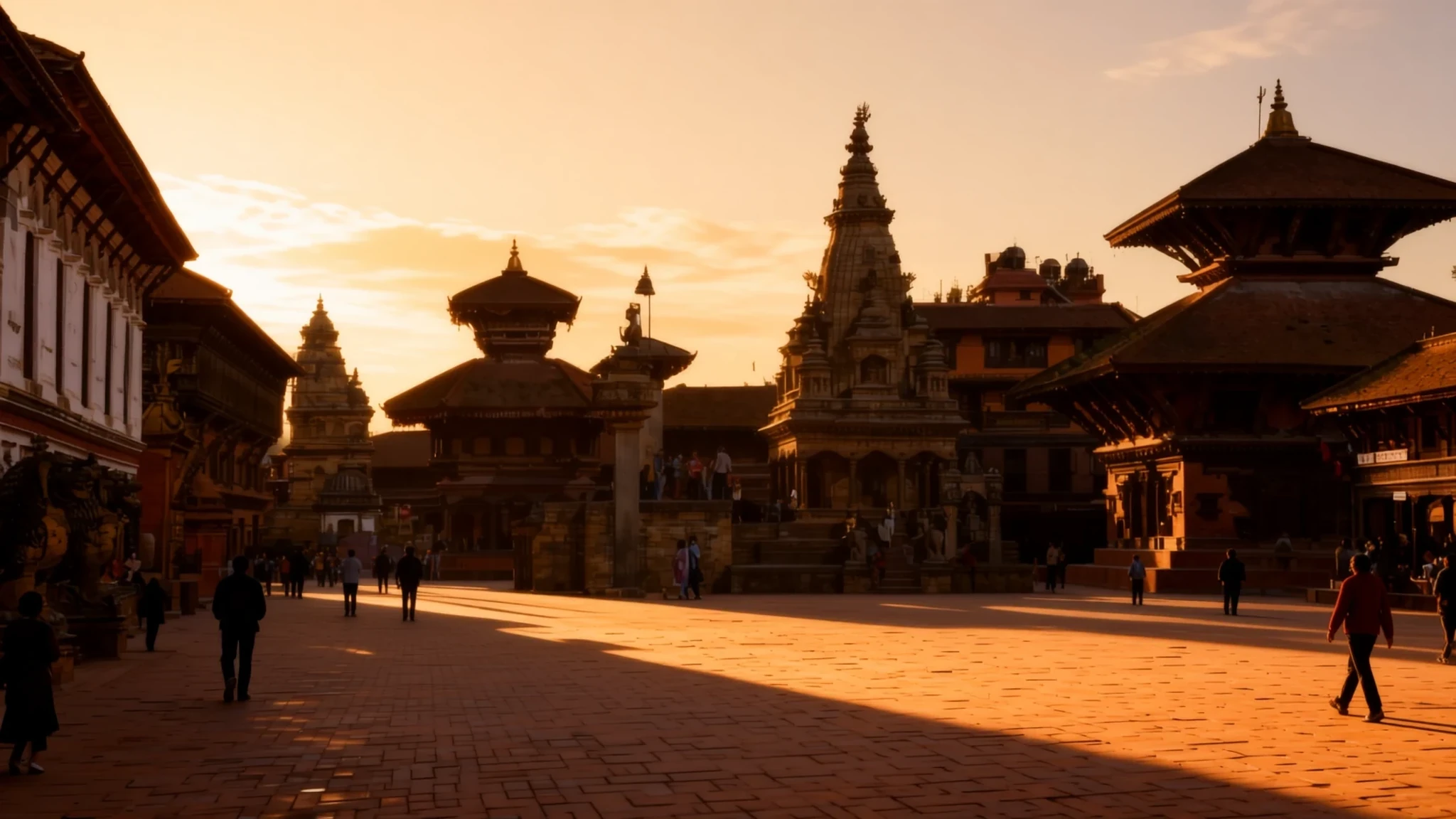
Go for an old Newar royal city of carved wood, brick temples and slow lanes, a short bus ride from Kathmandu.
The place
Bhaktapur sits at the eastern edge of the Kathmandu Valley, about 13 kilometres from Kathmandu, and is one of the valley's three main cities alongside Kathmandu and Lalitpur. Its Nepali name means City of Devotees. Locals still call it Khwopa, and older writing uses Bhadgaon. It is Nepal's smallest municipality by area and also one of its most densely populated, with roughly 82,000 people living within about 1,400 metres of sea level. The city is a major Newar settlement, and that identity shapes almost everything here: the brick and timber houses, the carved windows, the courtyards, the food and the craft workshops still working in the back streets.
The heart of the city is its Durbar Square, a cluster of royal courtyards, temples and palace buildings that drew the crowds for centuries. Most visitors arrive by bus in the morning, walk the square, and leave by mid-afternoon, so the quiet hours early and late are the best time to see it without elbows in your ribs. The lanes beyond the square are narrower and slower, with small shrines tucked into corners and families going about their day. The 2015 earthquake damaged many buildings, and restoration is visible across the square, with scaffolding and fresh timber mixing with old work. Expect dust, uneven paving and steep steps, and keep plenty of water with you.
Its story
Bhaktapur's origins are wrapped in the older story of the whole Kathmandu Valley. Local folklore describes the valley as a great lake, and geologists have long backed that picture. Toni Hagen's surveys showed that the valley once held water, formed as the Himalayan range rose from the collision of the Indian and Eurasian plates. The lake slowly cut through the limestone hills to the south, and the water drained over tens of thousands of years, leaving the flat land on which the cities now stand.
Folklore credits the draining to the Bodhisattva Manjushri, who is said to have cut a gorge with his sword so he could reach the Buddha Swayambhu, believed to have been living in the lake. A shrine marks his traditional resting place, and pilgrims from the city still make the journey to it each year in late winter, before the spring festival of Shree Panchami.
The documented history is more recent. Chronicles place the city's founding in the 12th century, and the city has been settled since the earlier Licchavi period, though much of that early history is poorly recorded. Bhaktapur was the royal seat for much of the Malla period, a stretch many historians regard as its golden age. Its wealth came partly from its place on the trade route between India and Tibet. When the valley split into rival kingdoms, Bhaktapur kept its power and prestige. Its sense of identity still rests on that medieval period.
What to see
- Bhaktapur Durbar Square — Old city centre, the main square
The square is the reason most people come. It was the seat of royalty until 1769, and its palace buildings now include the National Art Gallery. Give yourself a couple of hours to walk the courtyards slowly, looking up at carved struts, painted beams and the big bell that once called people to assemblies. Early morning light is kind to the brickwork, and the square is busiest from late morning onward.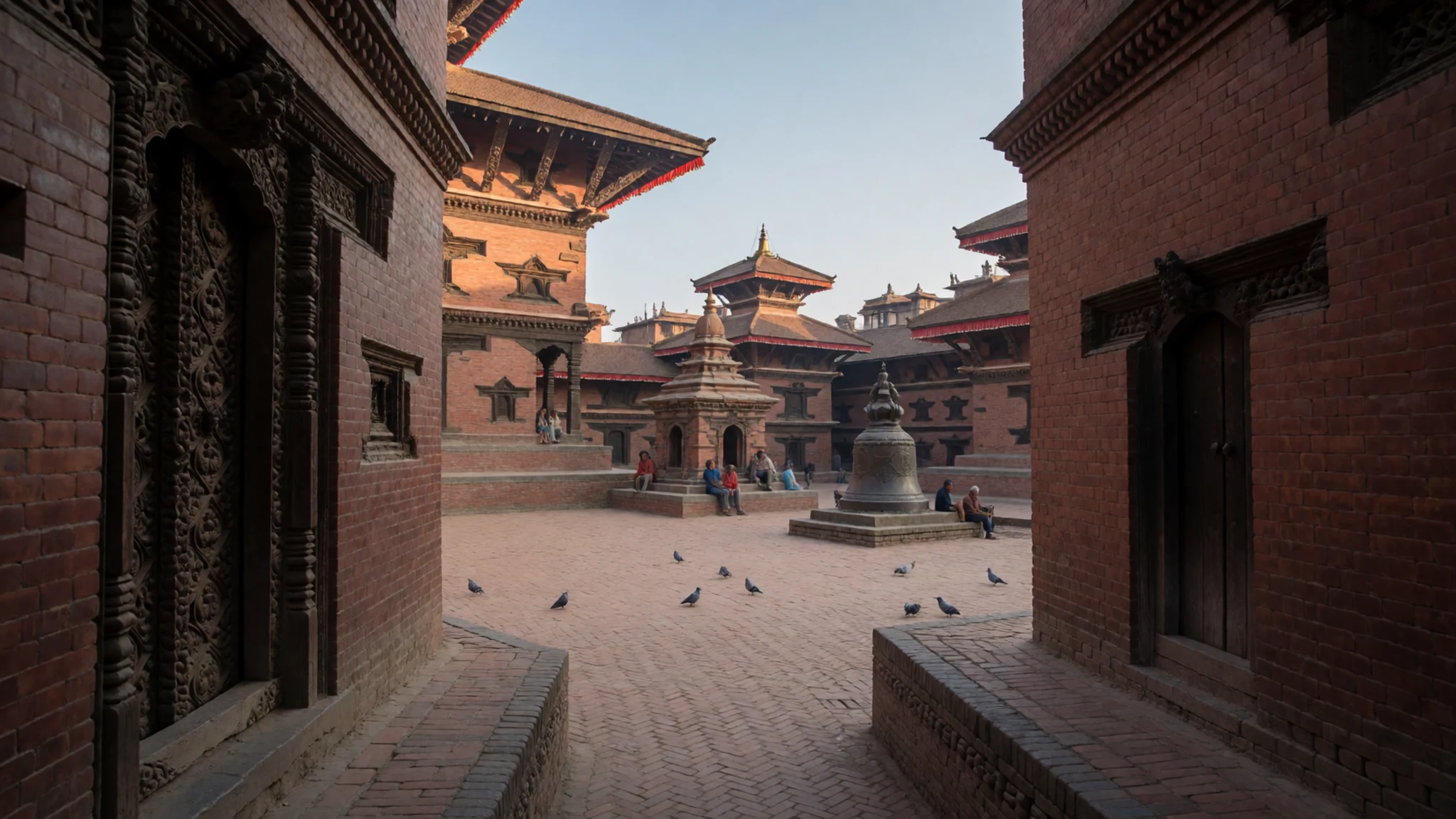
- Golden Gate and the Taleju Temple complex — Inside Durbar Square, the eastern palace side
The Golden Gate, dating from 1756, is the ornate doorway into the Taleju Temple complex. Its gilded metalwork and carved frame make it the square's most photographed point. Beyond it, a sequence of courtyards and a royal bathing pond show how the palace was once arranged for ceremony and private life. Dress modestly and remove shoes where the steps change level.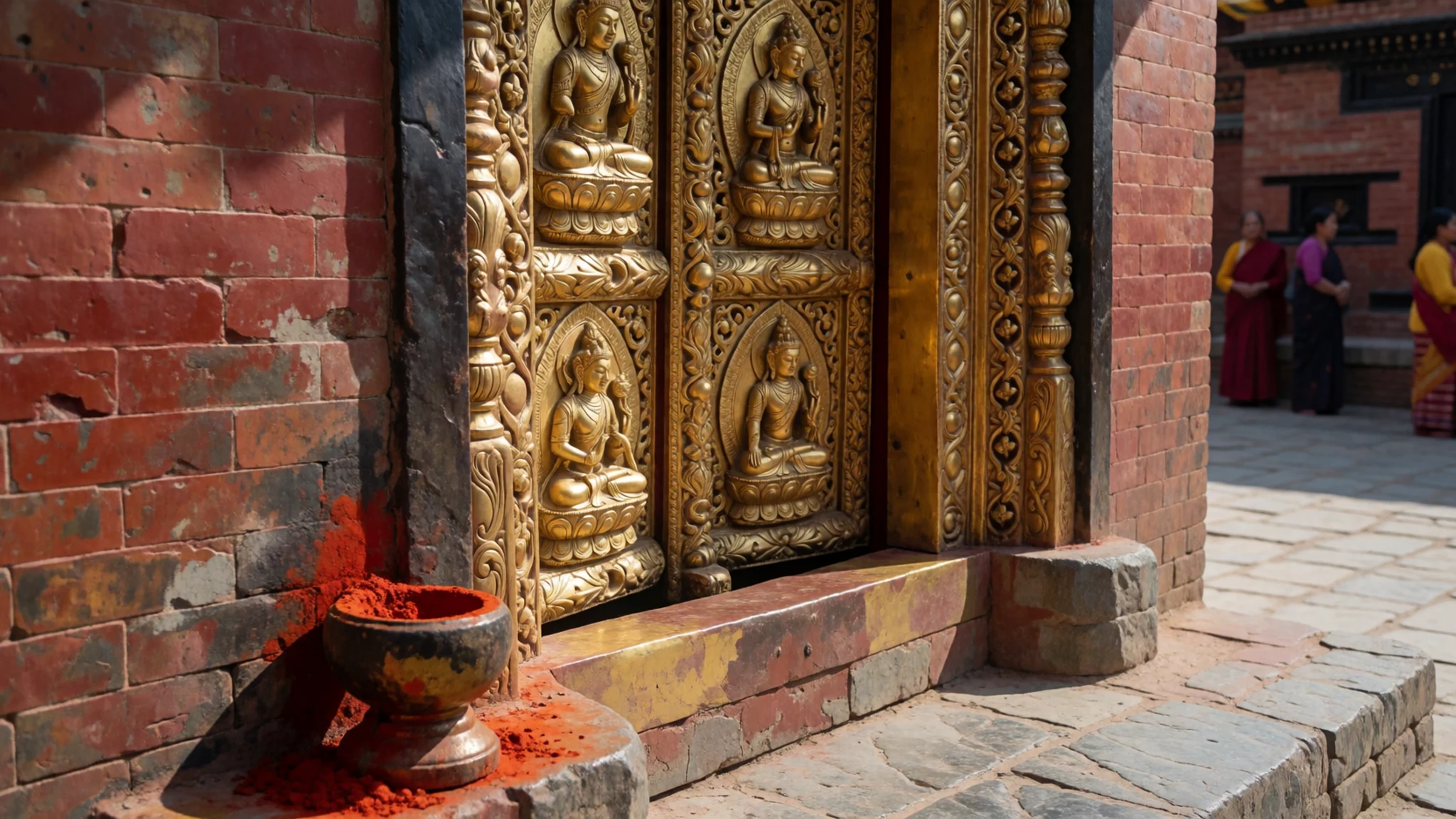
- Nyatpola and Bhairav temples — Old town, a short walk from the square
Nyatpola is a tall, multi-tiered pagoda, and the Bhairav temple beside it is a fierce guardian shrine. Together they are often cited as the clearest example of Bhaktapur's architecture and artistic skill. Stand back from the stepped base to take in the proportions, and go up to the platform for a closer look at the carved figures before the midday crowds arrive.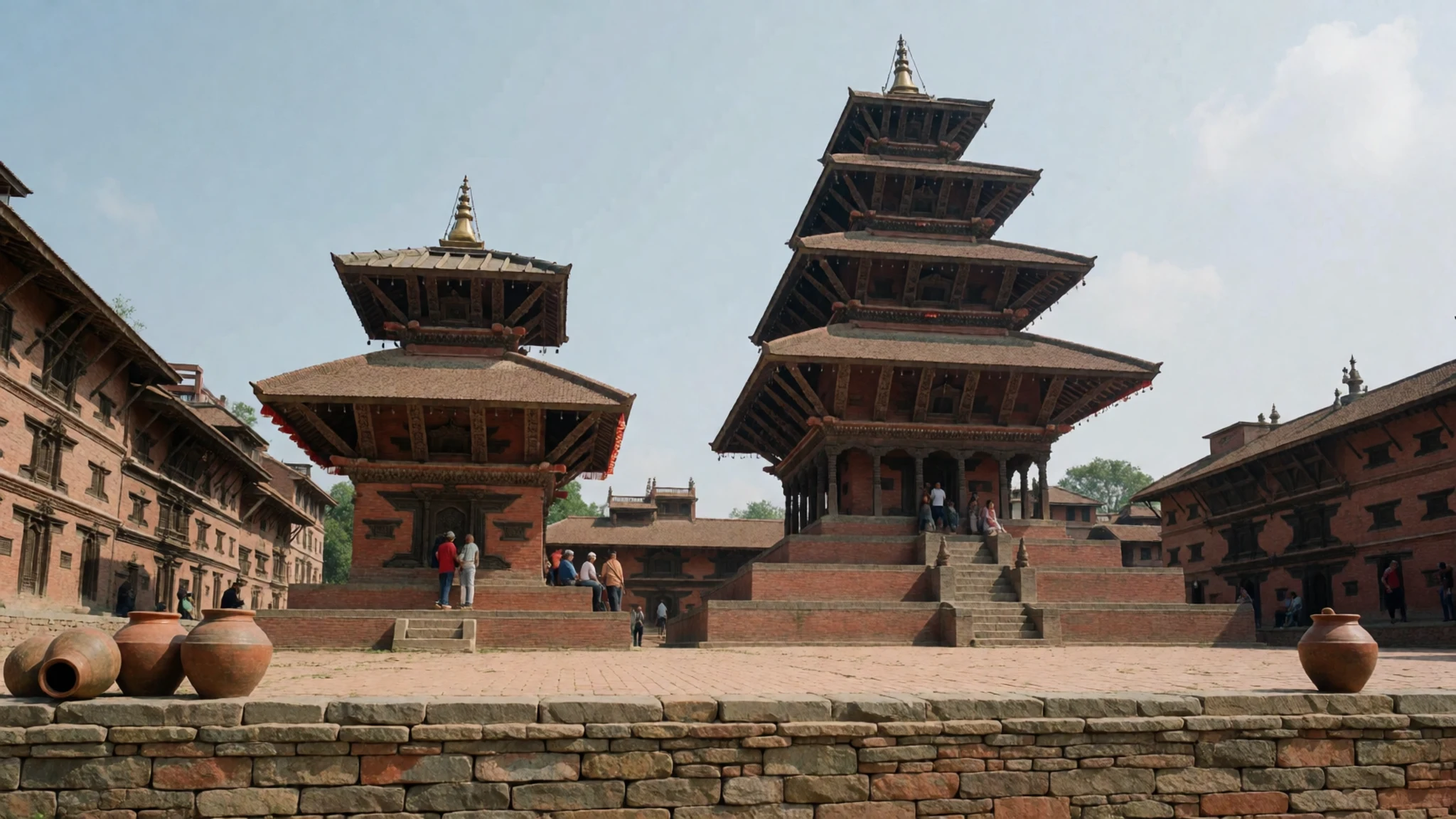
- Changu Narayan — Hilltop north-west of Bhaktapur
Changu Narayan is a temple on a ridge above the valley floor, outside the city centre. It is considered the oldest temple in the Kathmandu Valley and sits on the heritage list. The walk up and the view back over the valley make it worth a half day. Go early for clear air and quieter paths, and plan the return trip before the afternoon.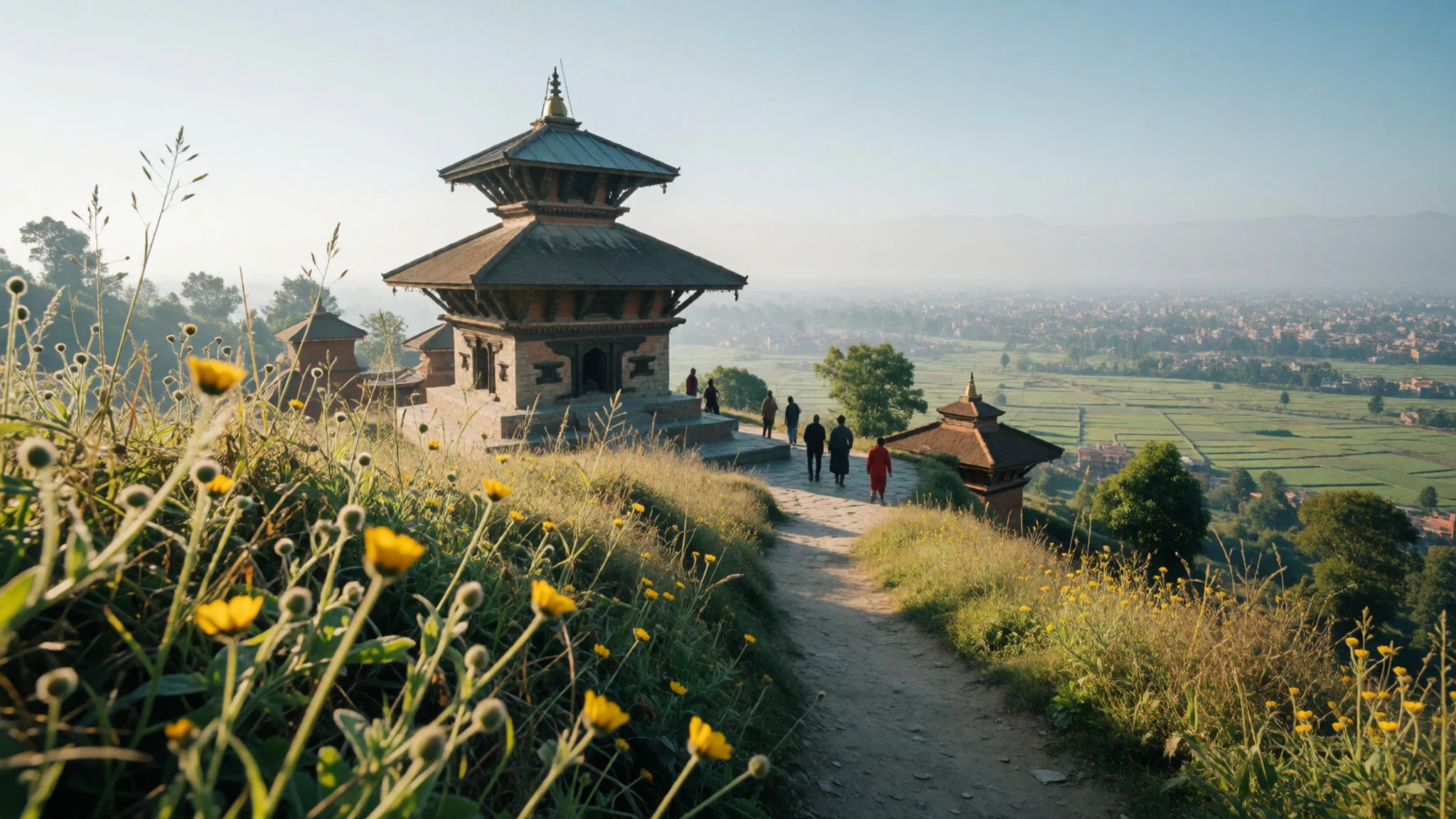
- Dattatreya Square and Tachapal Tole — South-west of the main square, in the older residential lanes
This quieter square, also called Tachapal Tole, is a good place to see daily life away from the tourist routes. Its temples and surrounding houses show the Newar style up close, with wooden windows and tiered roofs. Sit on a step for a while, watch the shopkeepers, and avoid photographing people at prayer without asking first.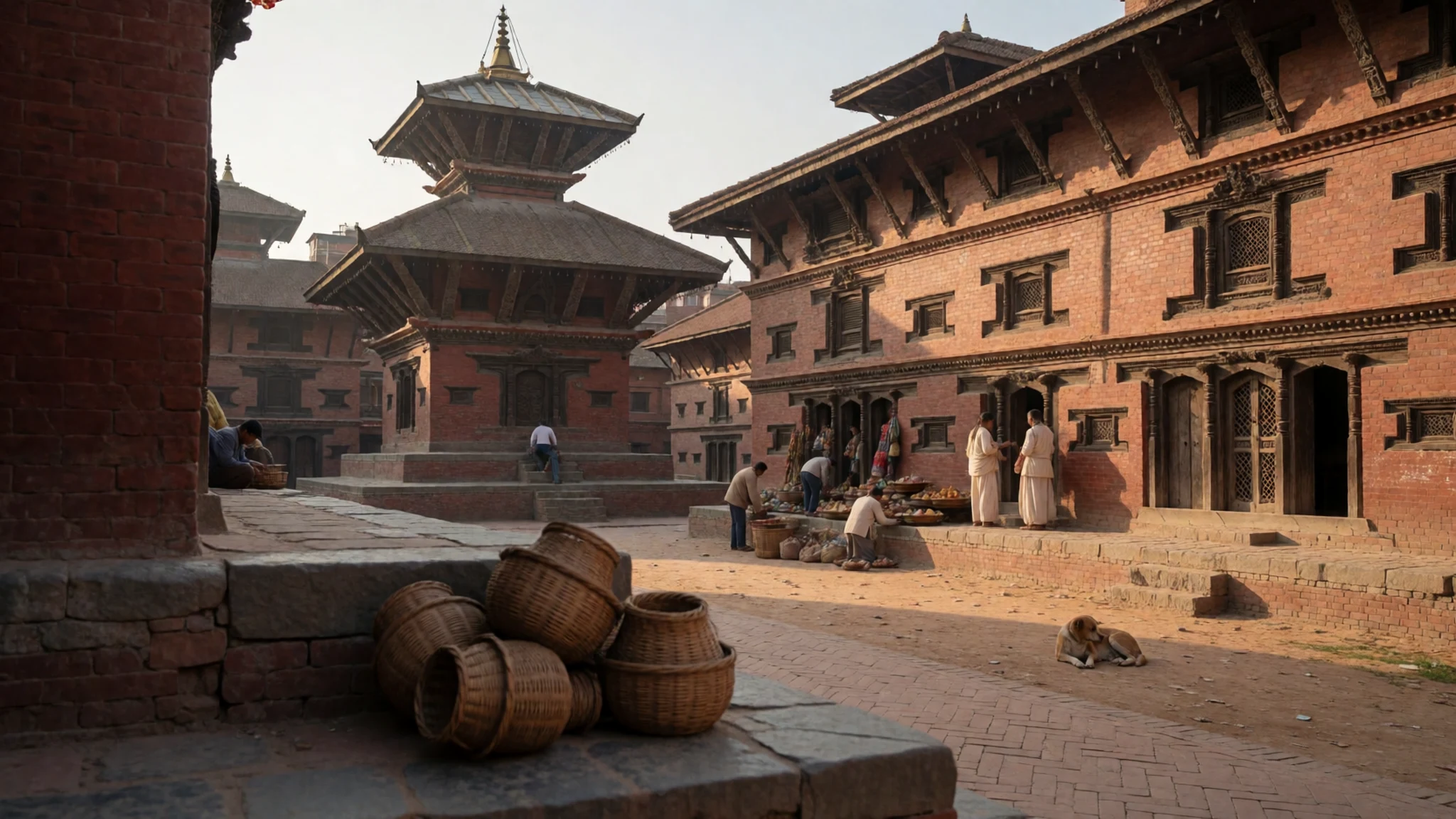
Culture
Bhaktapur's identity is Newar, and its arts grew out of religious life. Most of the art surviving in the city dates from the Malla period, when a caste of skilled artisans made temple sculpture, painting and woodwork, often without signing their names. Woodcarving is one of the valley's defining crafts, and you will see it on struts, window frames, doors and temple roofs throughout the old town. A few artists are known by name. One painter who decorated the murals of the Palace of Fifty Windows signed his work, though the signature has since worn away, and only his address is still legible. Many of those murals were damaged during the twentieth century, when parts of the palace were used as offices. Religious life is still central. Temples are working shrines, not just monuments, and worshippers come to them daily with flowers, lamps and offerings. Take your shoes off before entering any temple building or shrine that others have left theirs at, and ask before photographing people at worship.
What to wear
Traditional Newar dress in Bhaktapur is most often seen at festivals, weddings and rituals rather than in everyday life. Women traditionally wear a long wrap skirt with a blouse and a shawl, with bright borders and gold or red elements for ceremony. Men may wear a cotton daura suruwal, a long shirt over loose trousers, with a topi cap. Cotton and wool are the everyday fabrics, and handwoven borders and embroidered trim mark occasions. Most people now wear jeans, kurtas, salwar kameez and western clothes, with traditional dress saved for festival days and family events. Shop fronts are full of ready-made clothing, and the tailors and textile sellers in the old town still take orders. For visitors, the sensible choice is clothing that covers shoulders and knees, especially in temple areas and when you sit down in a courtyard. Lightweight layers work well for the valley's warm days and cooler mornings. Wear shoes that come off easily, since you will be taking them off often, and choose a pair with decent grip for uneven stone, steep steps and dusty brick paths.
What to eat
- Bara-wa — Small stalls and the lanes around the old town centre
Bara-wa is the simplest snack in the old town and the one women sellers in the lanes have built their stalls around. It is a pan-fried rice and lentil patty, a bit like a thick uttapam, topped with an omelette and a light chickpea curry. It is filling, cheap and best eaten hot from the pan on a cold morning.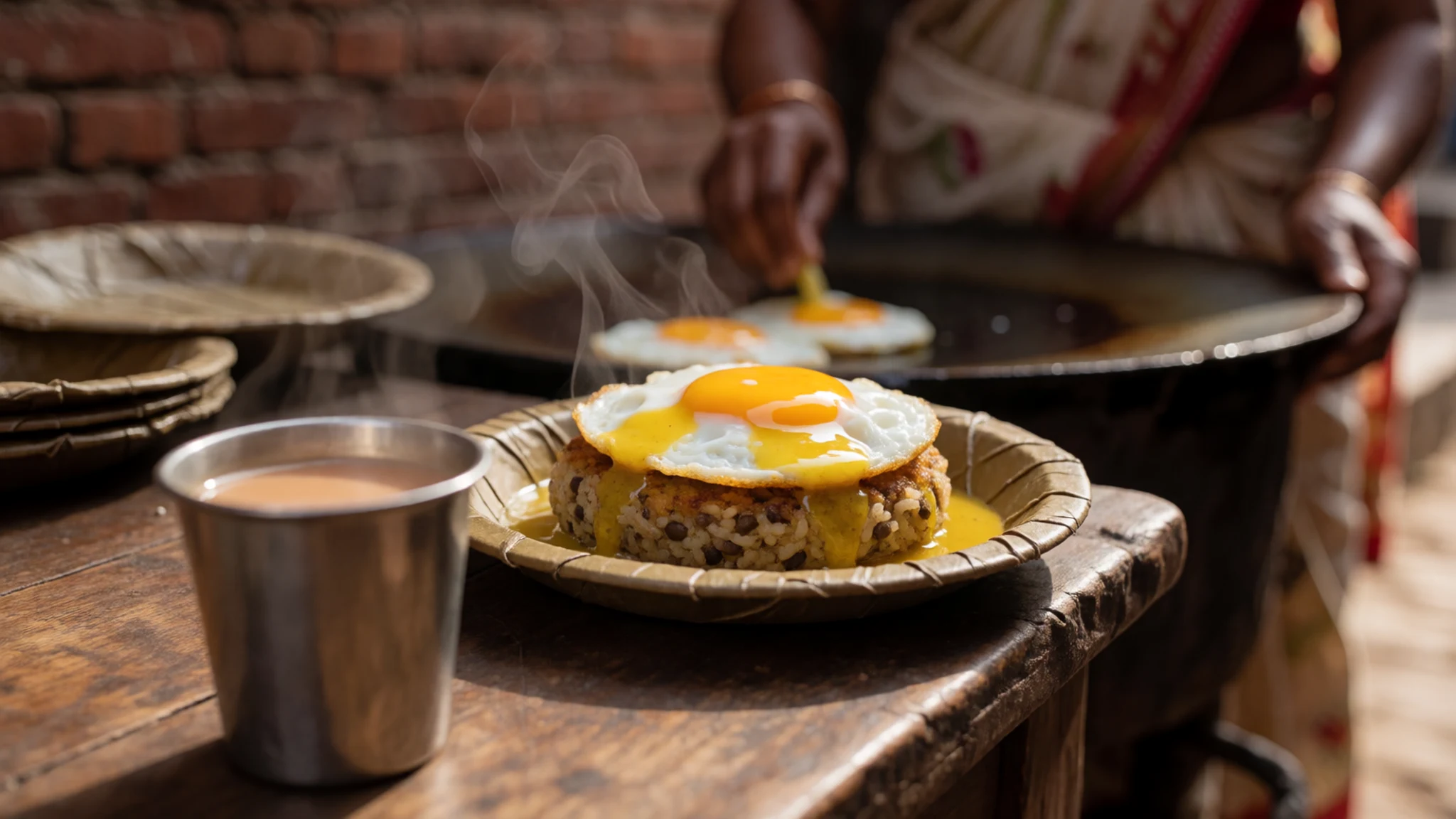
- Newari set meal — A local Newari eatery in the back streets, away from the square
A local Newari eatery serves a set of traditional dishes, often with beaten rice, spiced vegetables, pickles and meat or lentils. Go in the early afternoon, when the kitchen is settled and dishes are fresh. Order what the cook recommends, and ask which dishes are spicy before you start.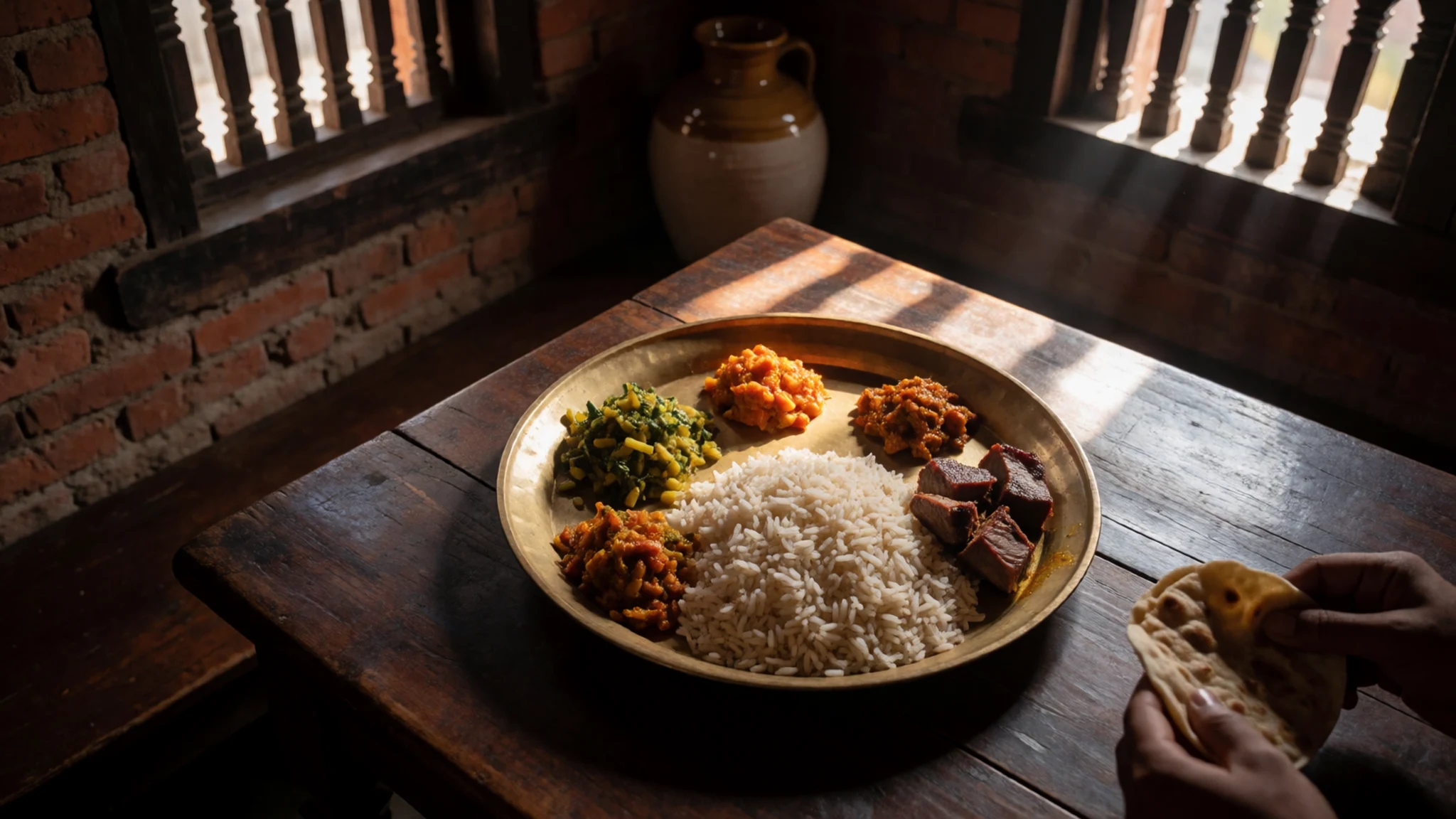
- Korean-style café food — Cafés on the lanes near Durbar Square
Some cafés on the tourist lanes serve mostly Korean food, using vegetables grown in local gardens, which makes them a good change of pace. Expect bowls, rice dishes and fresh salads. The café terraces are a pleasant place to rest between temples and watch the square from above. - Guest house restaurant dishes — Family-run guest house restaurants near the square
Many family-run guest house restaurants serve Nepali and Western dishes, with breakfast sets for early starts. Their menus are aimed at visitors, so you can ask for a mild version of a usually spicy dish. The food is simple and reliable, and the owners are often happy to talk about the town.
Plan it
Best time. Autumn is the most comfortable season, with clear skies and little rain in October and November, while March and April are already hot, with highs near 35°C by April. The monsoon brings heavy rain and slippery stone from June to September, and the valley can feel hot and humid before it breaks.
How long. 1–2
Getting there. Bhaktapur is about 13 kilometres from Kathmandu. Minibuses, larger buses and micro buses run from Kathmandu and take roughly 40 to 60 minutes, dropping you just outside the city. Walk in from the stop. A taxi from central Kathmandu is quicker but costs more, so agree the fare first.
Budget. low
Tips
- Arrive before late morning to see the square before the day-trip crowds
- Buy your entry ticket at the gate and ask about a multi-day note if you plan to stay longer
- Carry small change for buses, tea and small shrines, and check card acceptance before ordering
- Wear shoes you can remove quickly, and carry water for the steep steps
- Check the official website for current ticket prices and opening arrangements before you go
Etiquette
- Remove your shoes before entering temples and shrines, and follow the lead of people already inside
- Ask before photographing people at prayer or sitting in shrine courtyards
- Dress modestly in temple areas, covering shoulders and knees
Nearby
Sources
- Wikidata Q843138 (CC0)
- Wikipedia: Bhaktapur (rev 1379216960) (CC BY-SA 4.0)
- Wikivoyage: Bhaktapur (rev 5395067) (CC BY-SA 4.0)
- Photo: Early morning view of Bhaktapur Durbar Square, Bikrampratapsingh (CC BY-SA 4.0)
- Photo: Nyatpola & Bhairav Temple, Saroj Pandey (CC BY 3.0)
- Photo: Stone inscription at Bhaktapur from Licchavi Dynasty, Nyeta (CC BY-SA 4.0)
- Photo: Medieval Gate of Bhaktapur in 1921, unknown author (Public domain)
- Photo: Bhaktapur 37172727277272, Nyeta (CC BY-SA 4.0)
- Photo: Bhatgaon Aerial View in 1962 AD, Jim Fisher (CC BY-SA 4.0)
- Photo: Bhaktapur Durbar Square under construction after 2015 earthquake, Pritush.m (CC BY-SA 4.0)
- Photo: Bhaktapur-Pujari Math-02-Pfauenfenster-2007-gje, Gerd Eichmann (CC BY-SA 4.0)


