Bardia
Bardia, Nepal
Bardia is western Nepal's tiger forest: quiet sal woodland, grassland and river channels, with far fewer visitors than the better-known parks.
The place
Bardia, officially Bardiya National Park (बर्दिया राष्ट्रिय निकुञ्ज), lies in the flat Terai belt of western Nepal, close to the Indian border. It covers 968 sq km of tall grassland, river channels and moist deciduous woodland, and it has been protected since 1988. The Karnali River runs along its western side and splits into branches, one of which, the Geruwa, marks the line where villages begin. The Babai River cuts through the interior, and to the north the low crest of the Siwalik Hills closes the view. A public highway between Nepalgunj and Surkhet skirts the southern edge, so the park is not sealed off from everyday traffic, and animals roam beyond the boundary line. Next door is Banke National Park, and the two are managed together as one tiger landscape. Wildlife is the draw: tigers, leopards, wild elephants, Indian rhinoceros, gharials in the Karnali, river dolphins and hornbills in the canopy. Sightings are never guaranteed, and a quiet walk through the forest, reading tracks and listening for bird and deer alarm calls, is a fair way to set expectations. The seasons shape everything. October to March is the best stretch, with clear, mild days. April to June turns fierce, with temperatures up to 42°C, and the rains from July to September flood tracks and slow all travel. Facilities are modest: a scatter of resorts, family homestays and guesthouses around Thakurdwara, the village at the main gate, and a tea-shop high street rather than a tourist strip.
Its story
Bardia's present shape is the result of a long run of political changes rather than one founding moment. In 1815 the Sugauli Treaty handed this stretch of lowland to the East India Company, and it spent decades as part of British India. It returned to Nepal in 1860, a reward for Nepali support in putting down the uprising of 1857. People in the region still call the area Naya Muluk, 'new country', a reminder that its place in Nepal is younger than the hills behind it. Protection came in steps. In 1969 part of the forest was reserved as a royal hunting ground. In 1976 it was gazetted as the Royal Karnali Wildlife Reserve, and in 1982 it became the Royal Bardia Wildlife Reserve. In 1984 the reserve was stretched to take in the Babai valley, and in 1988 the whole area was declared a national park. The Babai valley's story has a harder edge. About 1500 people who farmed there were resettled elsewhere. With the fields abandoned, grass and trees grew back on their own, and the valley is now prime habitat for wildlife. That is a conservation success, but it came at the cost of homes and livelihoods, and how villages and the park share the land still runs through local life. Anyone walking the quiet tracks of the valley is walking through former farmland.
What to see
- Thakurdwara main gate — Thakurdwara, Bardiya District
The main entrance to Bardia is at Thakurdwara, a small village where most visits begin. Guides, permits and walking routes are arranged around here, and the road from the gate passes tea shops, guesthouses and schools. Arrive early, ask lodge staff about current rules, and treat the gate as a meeting point rather than a sight in itself.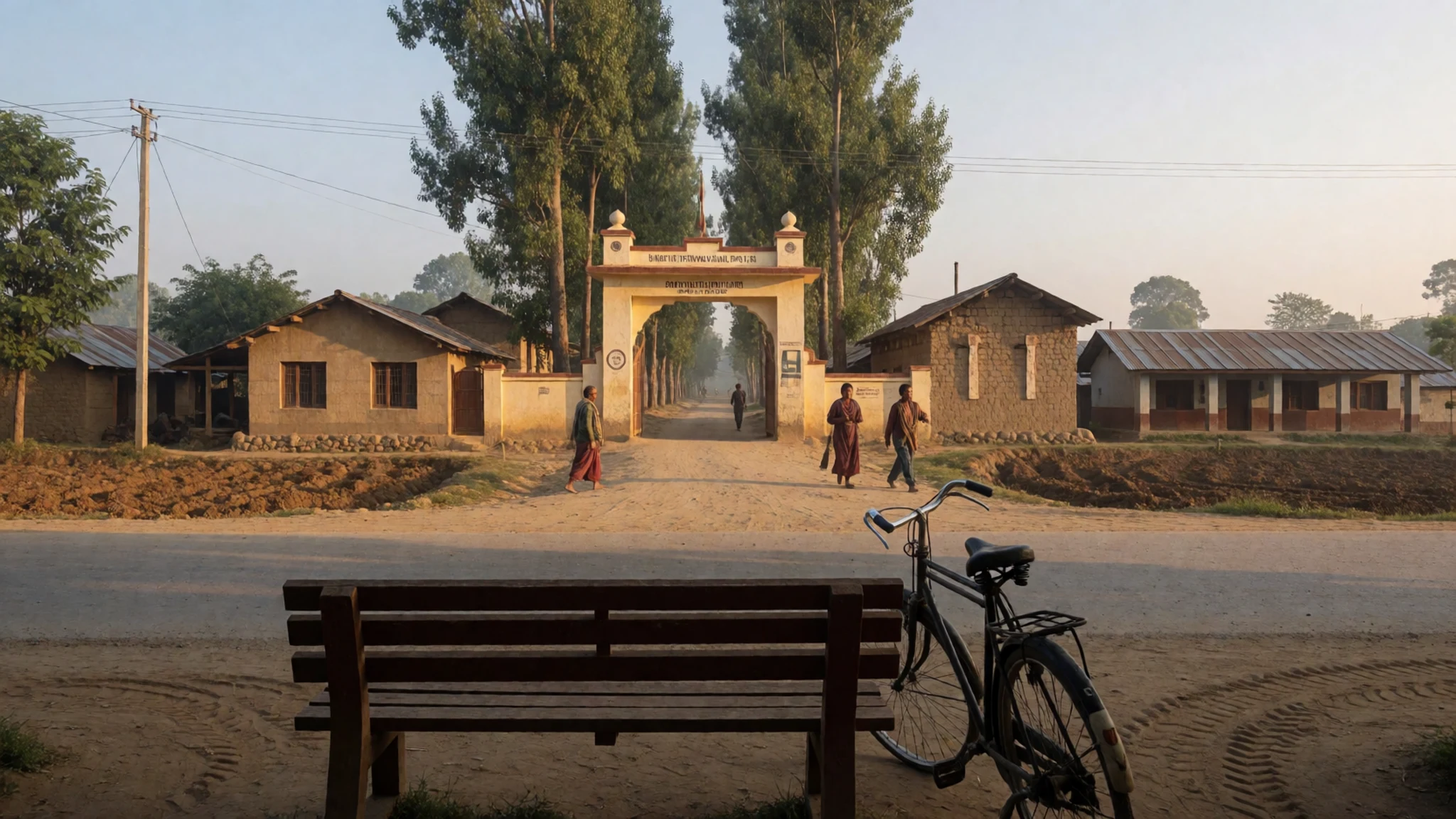
- Karnali River and its gharials — Karnali River, western edge of the park
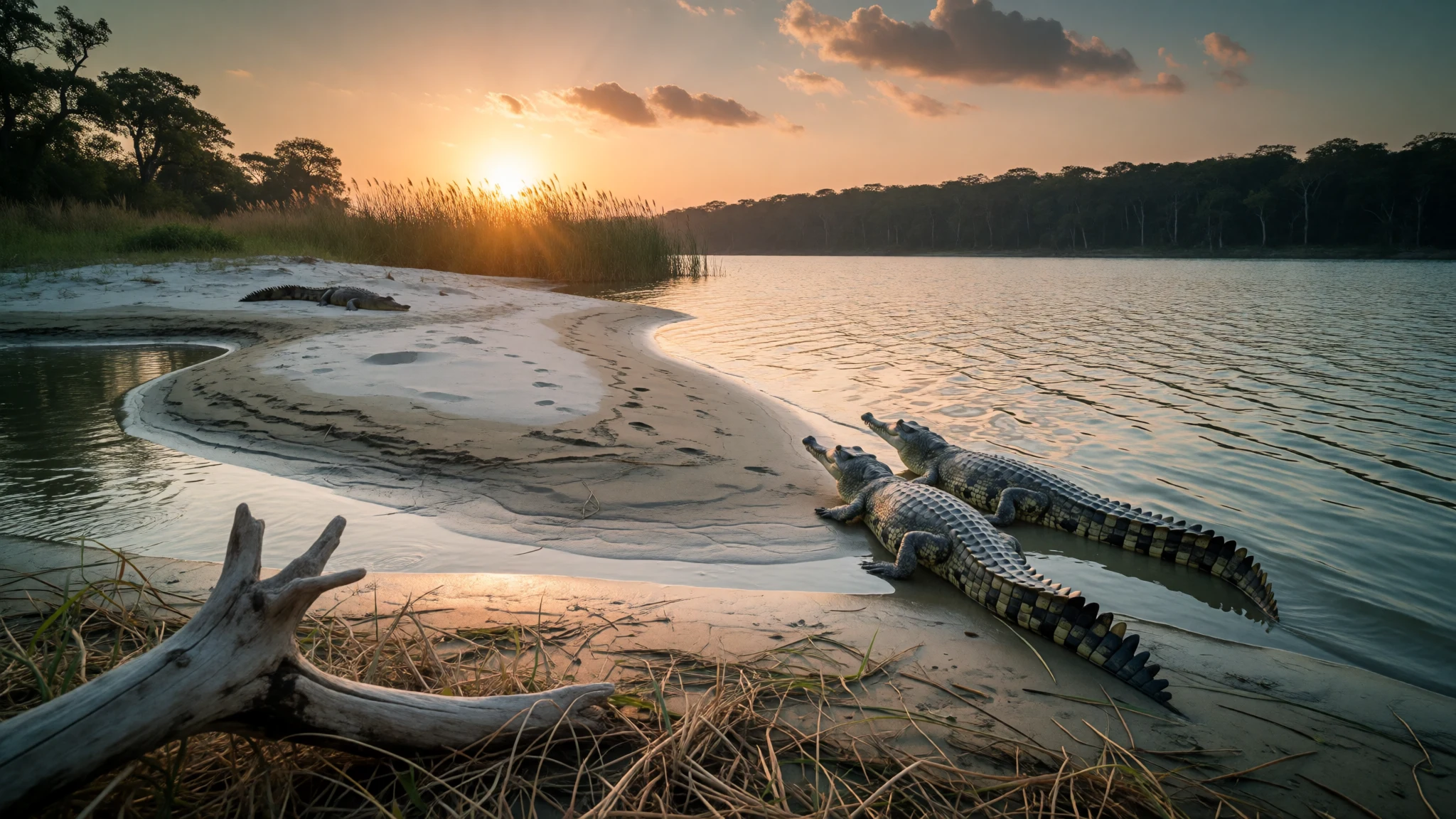
The Karnali River forms the park's western side, and its sandbanks are a common place to look for gharials, the long-snouted, fish-eating crocodilians. Mugger crocodiles share the water. River dolphins live here too, though they surface briefly and are easy to miss. Boat or bank-side outings depend on water levels and season, so ask locally.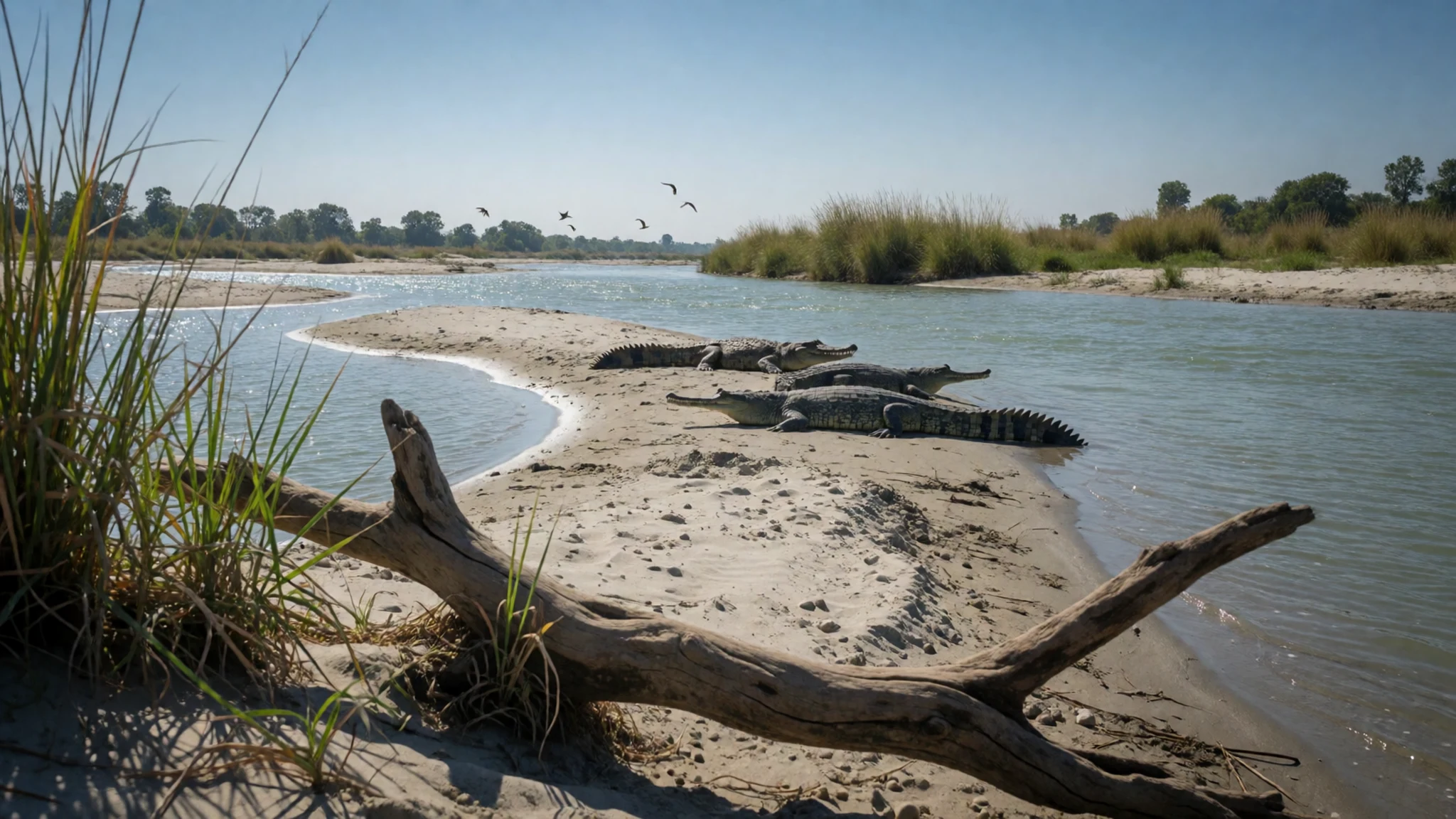
- Tiger country — Forest and grassland across the park
Bardia is known for its tigers, and with neighbouring Banke it forms a single tiger conservation unit. Sightings are rare and mostly come by luck: fresh pugmarks on a sandy track, alarm calls from deer, a still hour near a waterhole. Go for the whole forest, and treat a tiger as a bonus rather than a promise.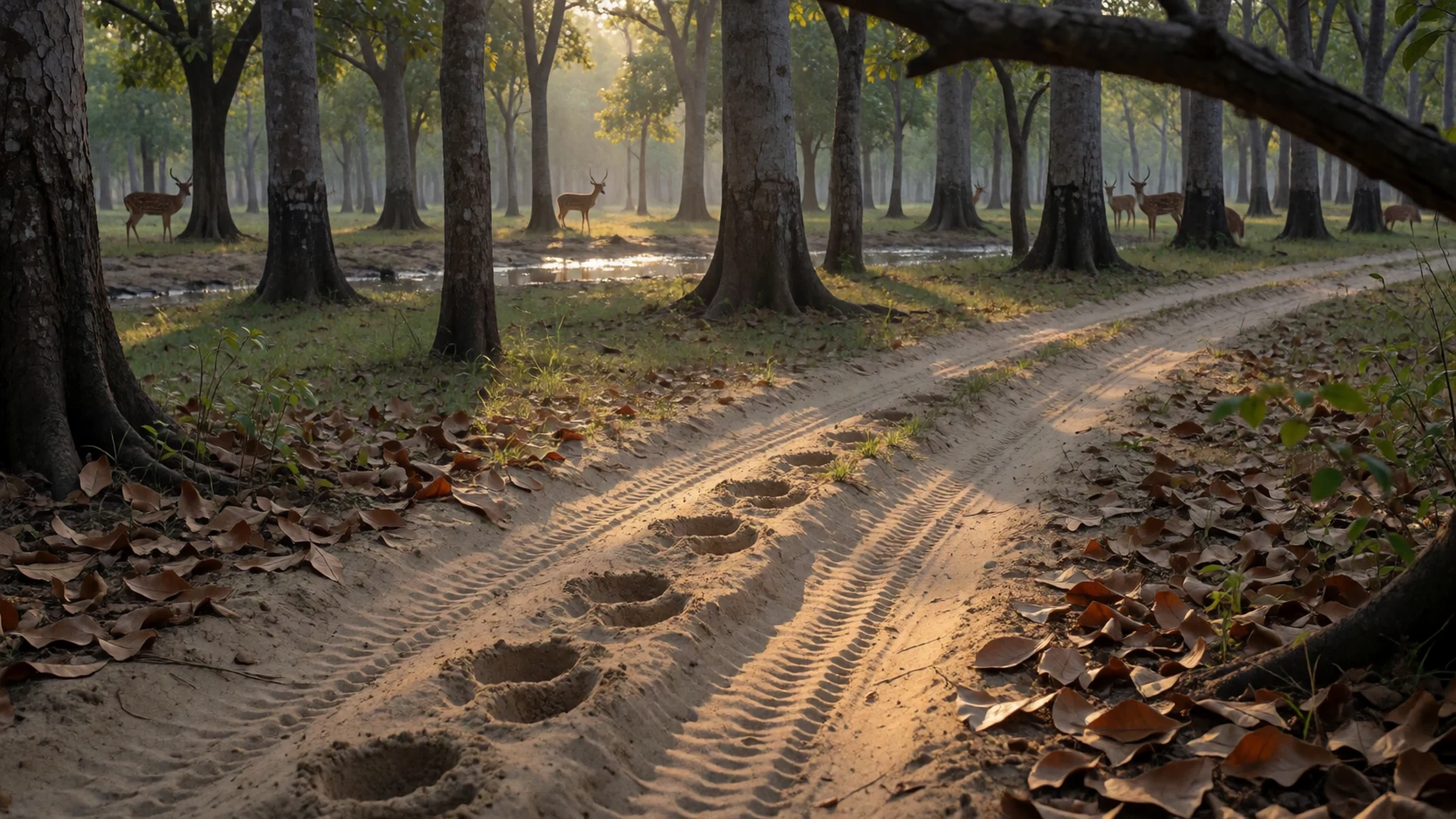
- Rhinoceros in the grassland — Grassland and riverbanks
Indian rhinoceros live in Bardia's grassland and riverside, and are often seen standing in water or half-hidden in tall grass during the cooler months. They look placid but are unpredictable at close range, so walks stay with a trained guide, keep a good distance and follow instructions about where to stand.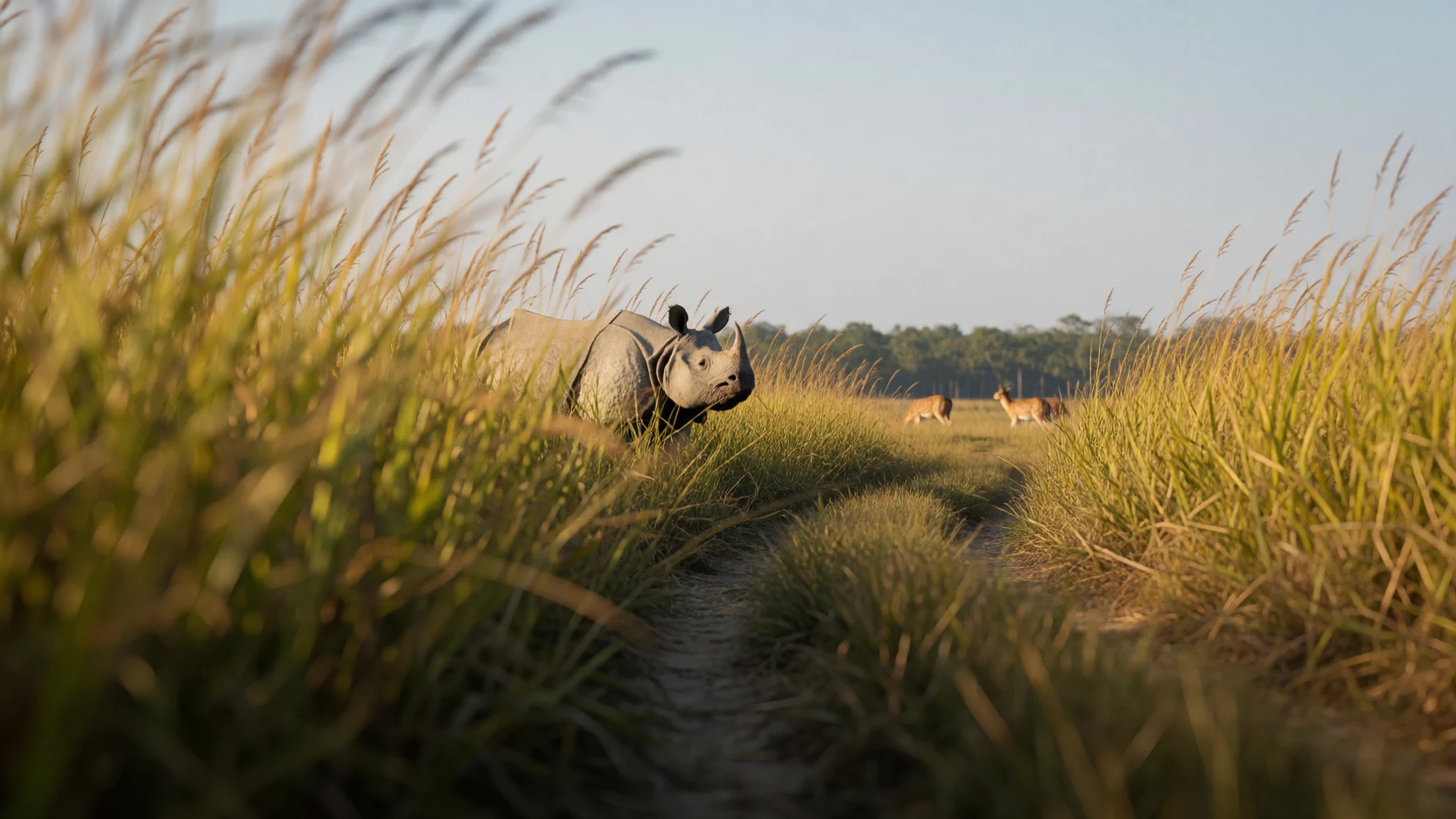
- Babai River valley — Babai River, inside the park
The Babai River valley was once farmland, and about 1500 people lived there before being resettled. Since the fields went quiet, grass and woodland have returned and wildlife has followed. A guided walk or jeep trip here shows how quickly a landscape recovers, and it is a good place to look for deer, elephants and birds.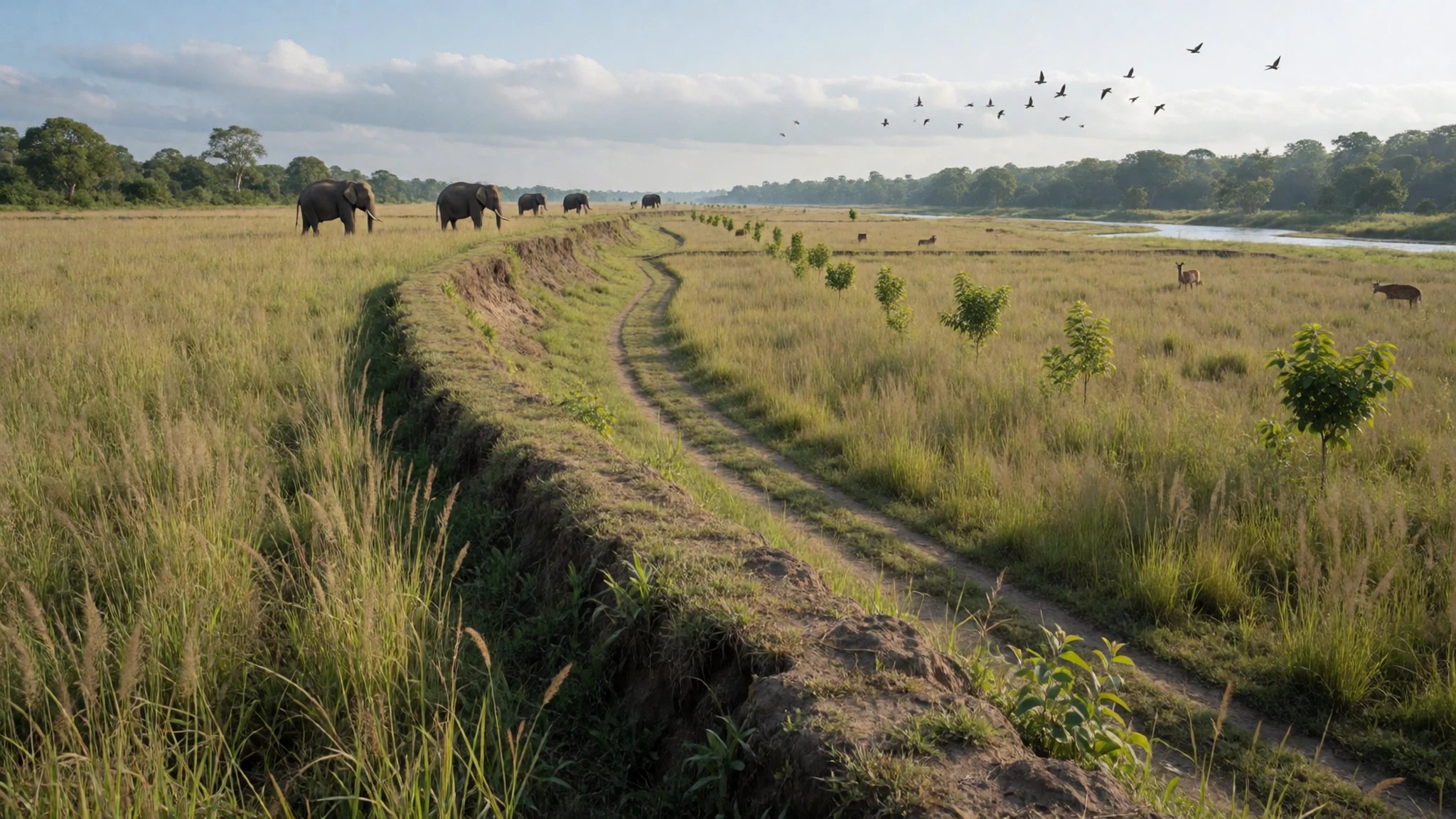
- Village schools along the road — Thakurdwara to Ambassa
Thakurdwara and the road towards the highway junction at Ambassa have a surprising number of schools for such a short stretch. Visitors who stay longer sometimes volunteer, usually by asking at guesthouses and agreeing something locally; English speakers and teachers are welcomed. It works best as a commitment of weeks, not a drop-in photo stop.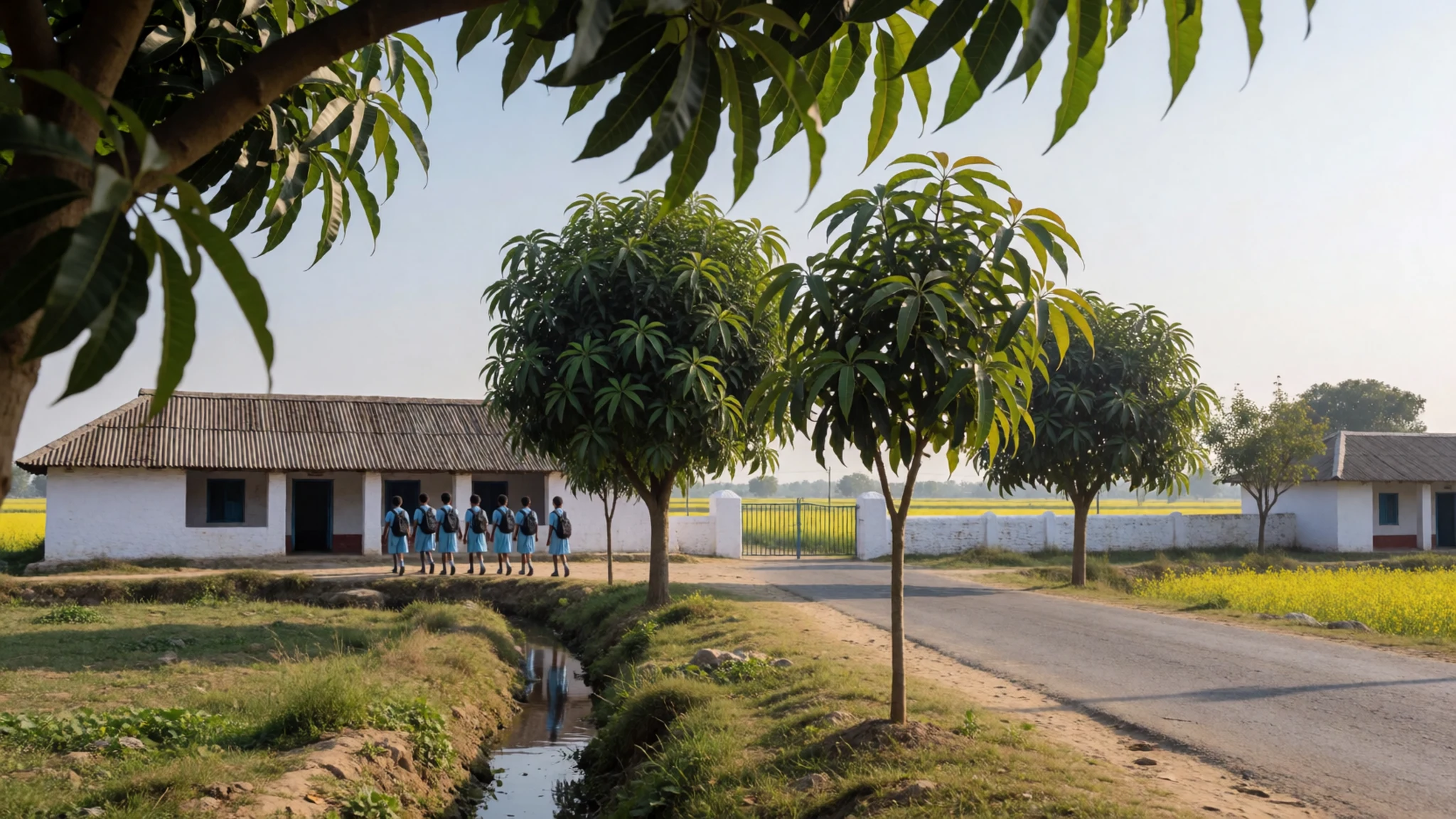
Culture
Bardia is a working landscape as much as a reserve, and the culture around it is that of the western Terai: farming villages, small schools, tea shops and the slow rhythm of the road to the gate. Many of the communities here have lived beside the forest for generations, and the history of the area as Naya Muluk, the 'new country' added to Nepal in 1860, still gives local identity a particular flavour. Daily life revolves around rice, mustard and vegetables, bullock carts and bicycles, and the evenings are spent at tea stalls where news travels quickly. Festivals follow the Nepali calendar and the farming year, and guesthouse hosts are often glad to explain what is being celebrated. Relations between villagers and the park are a live subject. The forest brings visitors and income, but crop-raiding by wild animals and the resettlement of the Babai valley are real concerns, so it is worth listening more than lecturing. Local rice beer (chaang) and rice wine (roxi) are part of social life, usually offered by hosts, and guides and homestay families are the best route into this world. Homestays, where meals are shared and questions are welcome, tend to give a fuller picture than a resort stay. Ask before photographing anyone in a village or at home, and on forest walks keep your voice low and stay close behind your guide.
What to wear
Fashion in Bardia follows the plains of western Nepal rather than the mountains. Traditional men's dress is the daura-suruwal, a long wrap-front cotton shirt with fitted trousers, often worn with a waistcoat and the patterned dhaka topi, a cap woven from dhaka cloth. Women wear the gunyo cholo or a saree, usually in cotton or lighter synthetics in the heat, with glass bangles and, for festivals and weddings, gold or silver jewellery. Communities in the Terai have their own wraps, shawls and embroidery, and these appear most on festival days. Day to day, most people wear what suits the heat and fieldwork: kurtas, shirts and trousers, sarees, lungis, school uniforms and rubber sandals, with the occasional football shirt. Visitors do best in lightweight, long-sleeved cotton in muted greens, khaki or beige, since bright colours and white stand out in the forest and long sleeves help against sun and insects. Bring a wide-brimmed hat, sunglasses and sturdy closed shoes or trainers for forest walks; sandals suit the village but not the grass. Mornings in the cooler months can be chilly on open jeeps, so a light fleece or shawl is worth packing. In villages, shoulders and knees covered is the safe choice for both sexes, and shoes come off at the door of homes and temples.
What to eat
- Dal bhat — Village eateries and guesthouse kitchens in Thakurdwara
Dal bhat, rice with lentil soup, vegetables and pickle, is the staple meal of the Terai. In Thakurdwara it is served at small village eateries and guesthouses, often with seconds offered. It is simple, filling and usually mild, a good meal before a long day in the forest.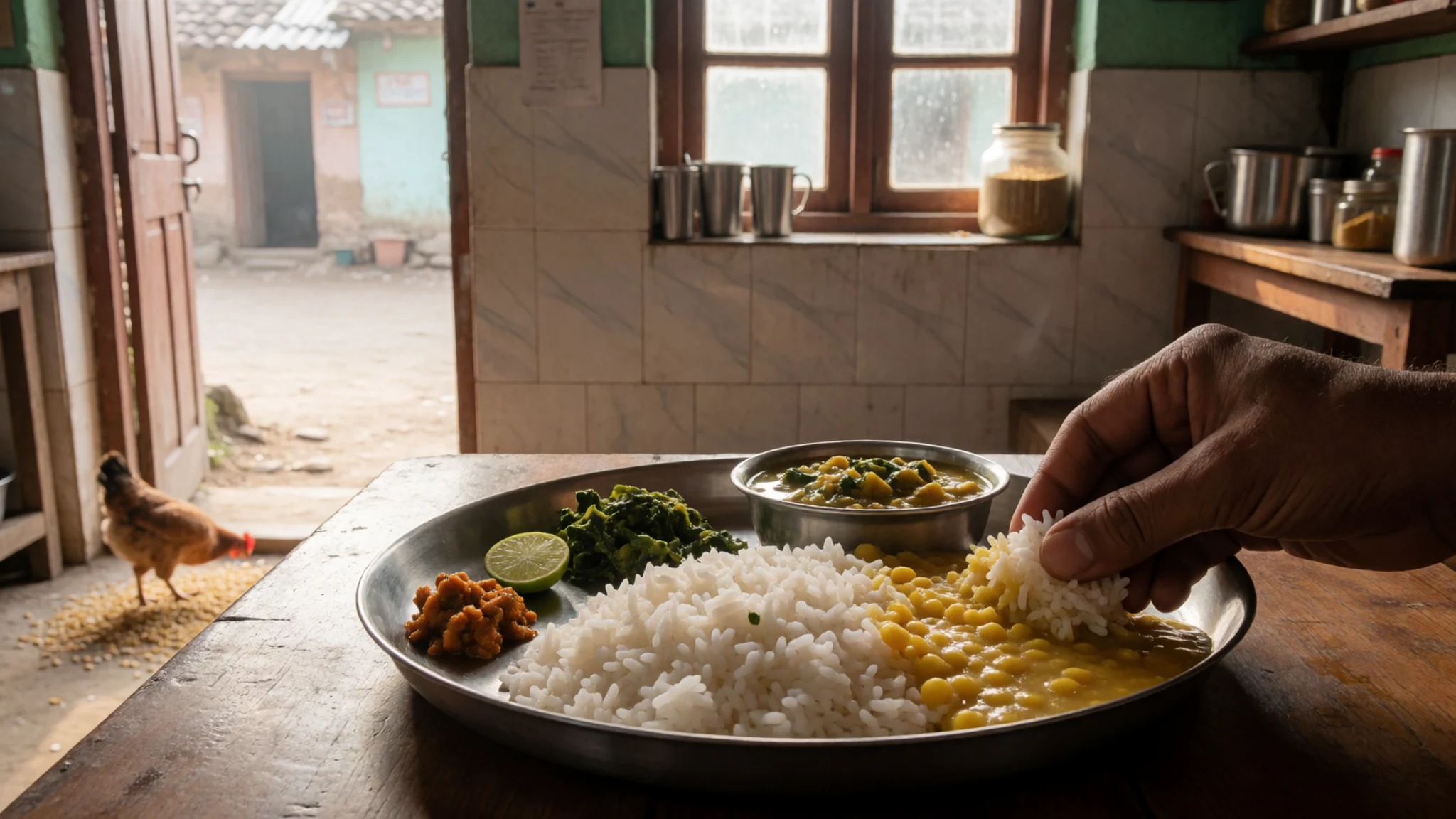
- Chola — Tea shops on the road to the park gate
Chola is a bowl of spiced chickpeas, a common roadside snack in the area and strongly recommended by locals. It is served hot, often with onion and chilli. Look for the tea shop with an outside stove on the road towards the park entrance.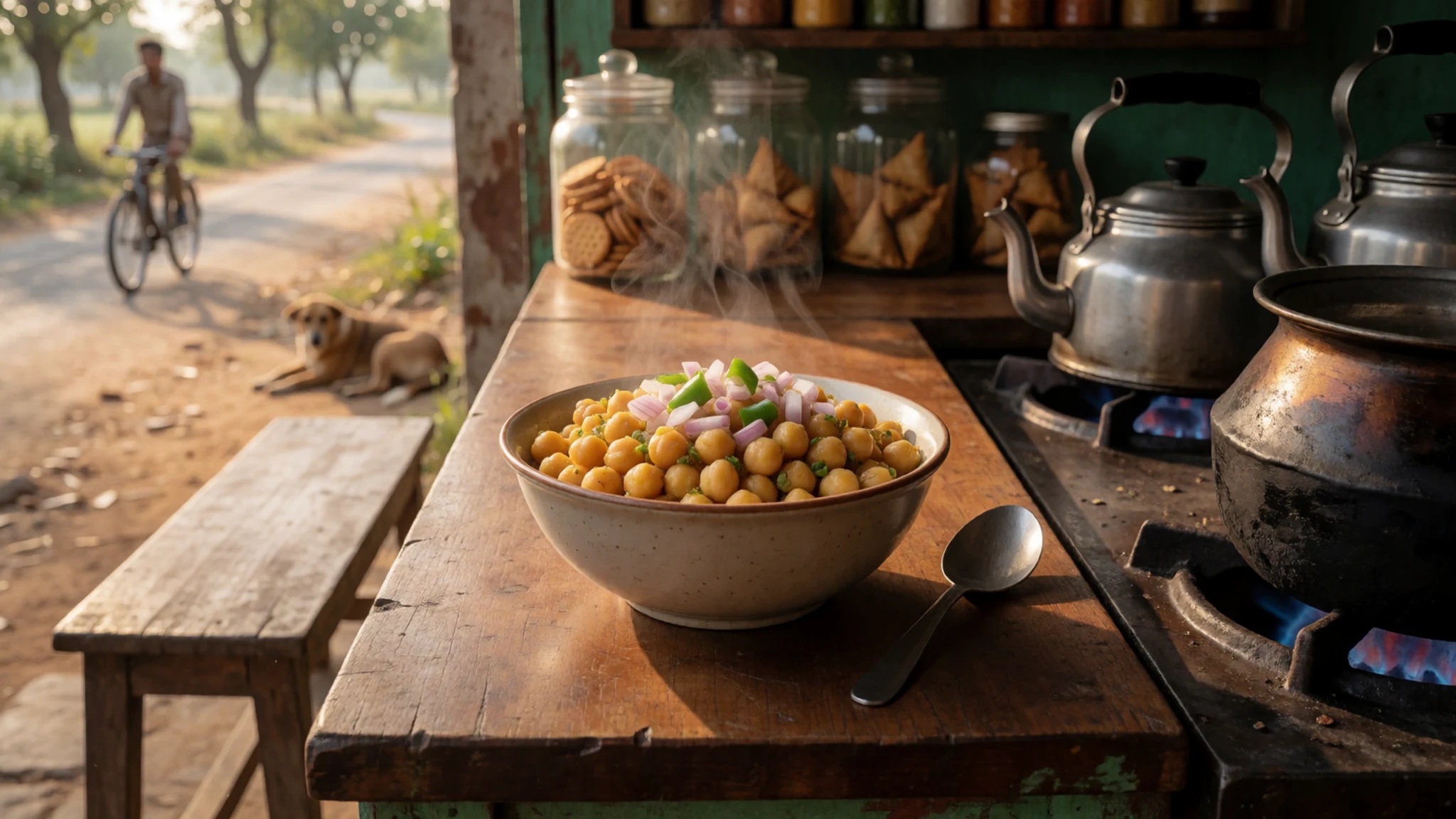
- Chana with tea — Tea shops near the bridge in the village centre
Chana, boiled chickpeas, with a glass of sweet milky tea, is a classic way to pass an hour. The tea shops near the bridge sit close together and are all much alike, so pick one with a seat facing the street and watch village life go by. - Samosas and doughnuts — Tea shops along the road towards the park entrance
Samosas, fried pastries stuffed with spiced potato, and sweet doughnuts are standard tea-shop snacks. They come hot from the pan and make a handy breakfast before an early forest walk. One tea shop by the pharmacy and small bookshop is well liked for both. - Chaang — Homestays and village homes, by invitation
Chaang is a home-brewed rice beer, cloudy, mildly sour and usually served in a steel or clay cup. It is part of local hospitality, especially in homes and homestays. Take it slowly, since strength varies, and accept that declining politely is also fine. - Roxi — Village homes and festival gatherings
Roxi is a clear local rice spirit, distilled at home rather than bottled. It is poured in small measures at gatherings and festivals. It is not for everyone, and a polite sip with the host is enough to be sociable.
Plan it
Best time. October to March, when the weather is clearest and mild enough for long walks. April to June is hot, with temperatures up to 42°C, and July to September is the rainy season, when tracks flood and travel slows.
How long. 2–4
Getting there. Nepalgunj is the usual gateway town for western Nepal; check current flights and buses. From there, local transport runs along the Nepalgunj–Surkhet highway towards the Thakurdwara turn-off, and many lodges can arrange pick-ups. Confirm timings with your lodge before you set out.
Budget. mid
Tips
- Book accommodation ahead in the cooler months, and ask your lodge to arrange guides and permits
- Go out at dawn or late afternoon, when animals are most active and the heat is lower
- Carry cash for tea shops and small purchases, and check what your lodge accepts for cards
- Carry plenty of water and insect repellent, and bring binoculars for birds and distant animals
- Check current entry rules and fees with the park office or your lodge, since they change
Etiquette
- Stay with your guide on forest walks and never approach wildlife, however calm it looks
- Keep noise low and do not feed animals
- Ask before photographing people, and dress modestly in villages
Nearby
Sources
- Wikidata Q808021 (CC0)
- Wikipedia: Bardiya National Park (rev 1383612848) (CC BY-SA 4.0)
- Wikivoyage: Bardiya National Park (rev 5394469) (CC BY-SA 4.0)
- Photo: Bardia National Park gate, Ganesh Paudel (CC BY 3.0)
- Photo: Bardiya, Prabina Karki (CC BY-SA 4.0)
- Photo: South Asia non political, with rivers, DEMIS Mapserver, पाटलिपुत्र (CC BY 3.0)
- Photo: Bardiya National Park main entry gate, Shadow Ayush (CC BY-SA 4.0)
- Photo: Bardiya National Park, Sanoj-photography (CC BY 3.0)
- Photo: Gharials in the Karnali, Wimbex (Public domain)
- Photo: Bengal Tiger in Bardiya National Park, Nirojsedhai (CC BY-SA 4.0)
- Photo: Rhinoceros in Bardiya Nepal, Krish Dulal (CC BY 3.0)


Wildlife
- Gharial (animal)
The gharial is a big, slender crocodile with a long, thin snout made for snapping up fish, and the males carry a lump on the nose like a clay pot. In Bardia, look for it on the sandbanks of the Karnali River, which runs along the park's western edge. The notes give no season or hour. Watch from a respectful distance, stay quiet beside your guide, and never feed it.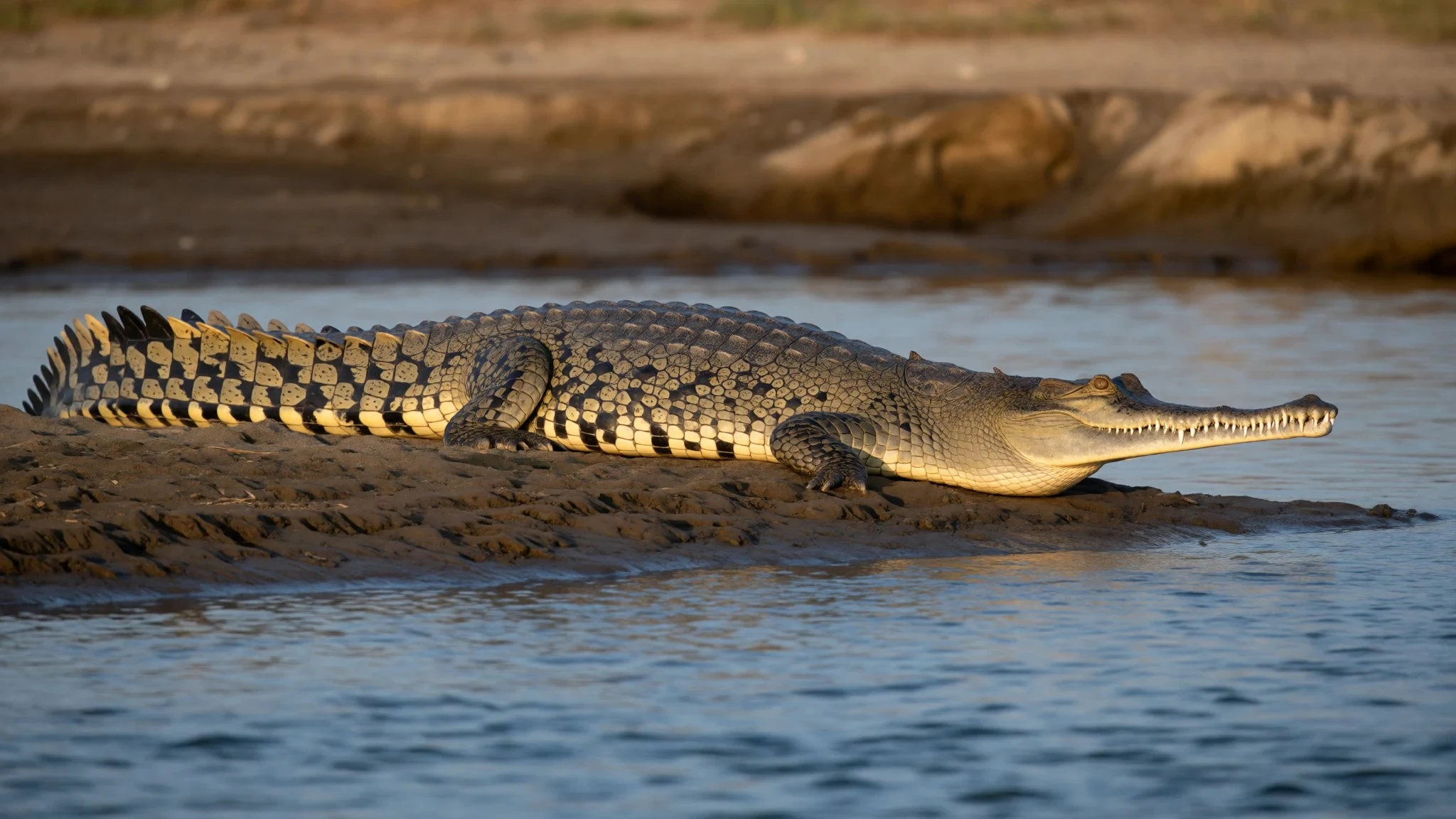
- Indian rhinoceros (animal)
The Indian rhinoceros is a heavy, grey-brown giant with one horn and skin folded like armour, the largest rhino in Asia. In Bardia it lives in the grassland and along the rivers. During the cooler months, look for it wading in water or lost among high grasses. The notes give no time of day. Go with a guide, keep well back and quiet, and never offer it food.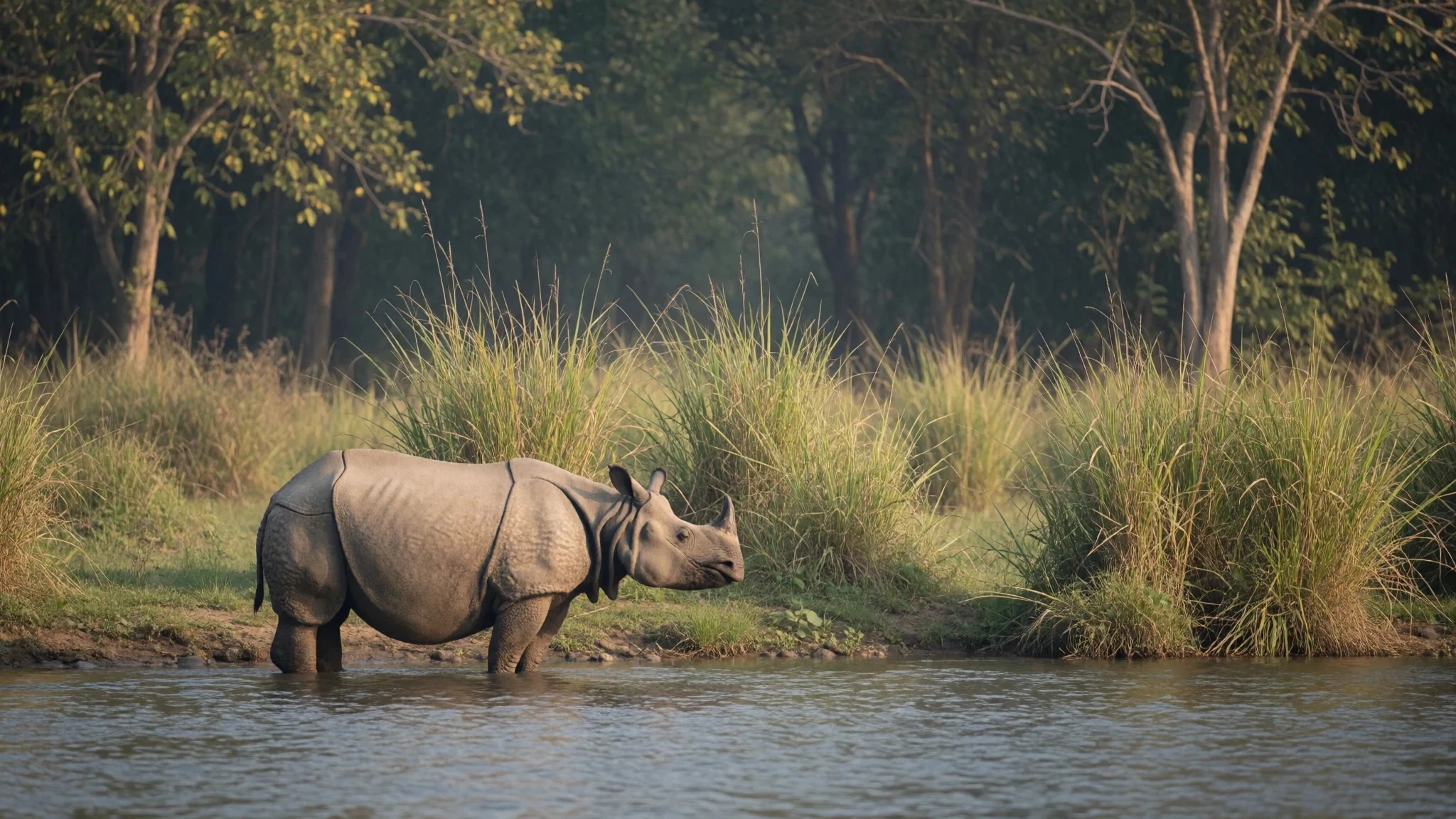
- Indian grey hornbill (bird)
The Indian grey hornbill is a grey bird with a pale belly and a big, curved dark beak topped with a helmet-like casque. It lives mostly in trees and is usually seen with a partner. In Bardia, look up into the canopy. The notes give no season or time of day. Watch quietly from a distance, let your guide lead, and never feed it.