Bandipur
Bandipur, Nepal
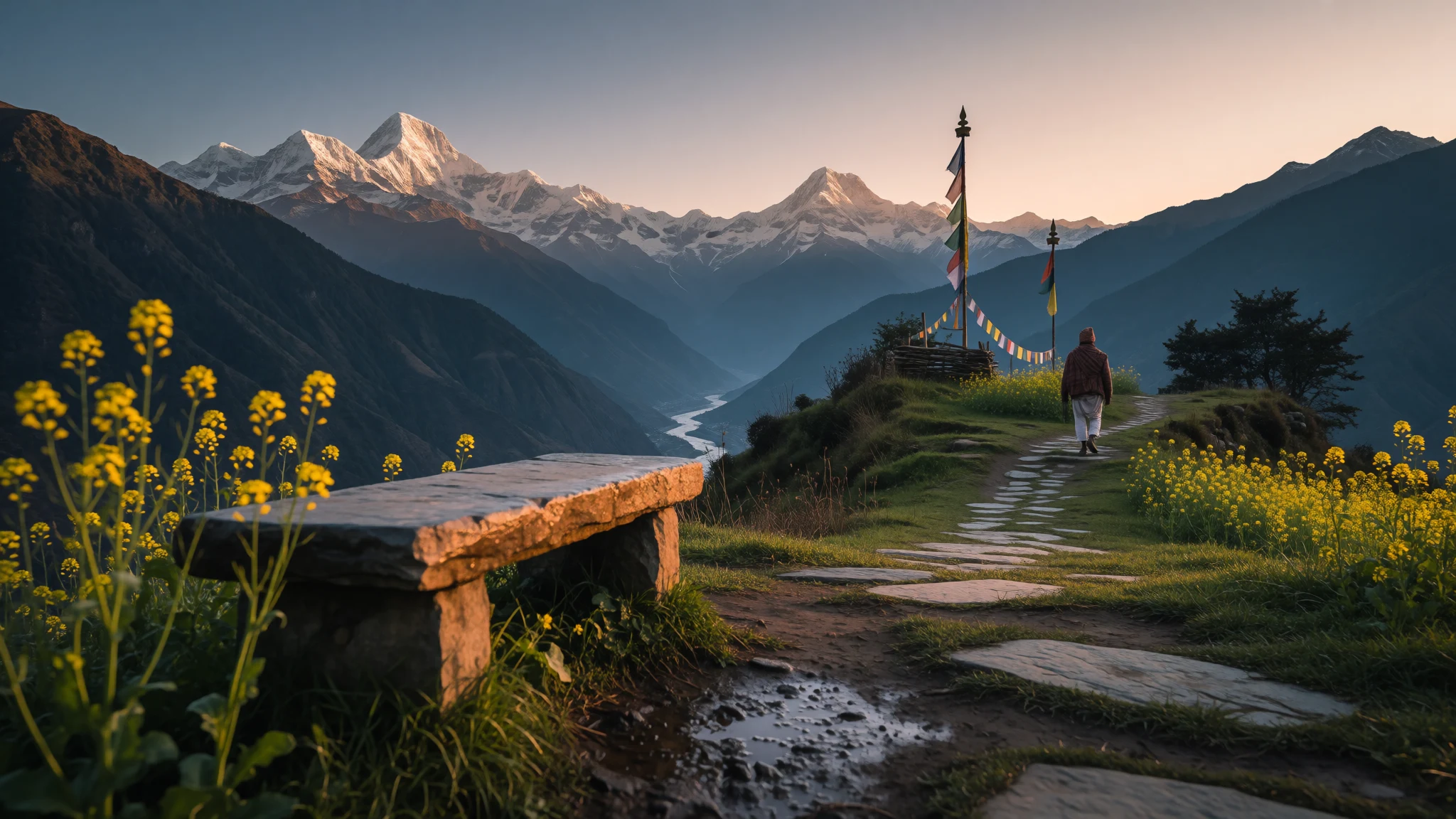
Bandipur is a slate-paved Newar trading town on a ridge above the Marsyangdi valley, with Himalayan views on clear mornings.
The place
Bandipur is a hilltop town in Tanahun District, in Nepal's Gandaki province, set at 1,030 m on a saddle of the Mahabharat range. The municipality has a population of 12,450. The settlement is strung along a single main street, paved in pale slate and lined with tall, shuttered houses. Behind those houses the ground drops away so steeply that back gardens are reached by stairs, and the bazaar itself is barely wider than the street. Far below, the Marsyangdi valley runs along the foot of the slope. On clear mornings the Himalayan range stands along the northern horizon, with Ganesh Himal among the peaks. The town lies roughly between Kathmandu and Pokhara, which makes it a natural night or two off the road linking them, yet it feels far quieter than either city. Its appeal is atmosphere rather than monuments: old Newar merchant houses, a small library, a few temples, short walks to viewpoints and evenings with little traffic noise. It is worth being honest about the limits. Some houses are visibly tired, rooms in the old core tend to be simple, and cloud can hide the mountains for days at a time, especially in the monsoon. The cooler, drier months give far better odds of a view. For anything official, including local notices, the municipality publishes a site at http://bandipurmun.gov.np/en.
Its story
Bandipur owes its shape to trade. After Prithvi Narayan Shah conquered the Kathmandu valley in 1768, Newar merchants from Bhaktapur looked for new footholds, and this ridge suited them: it was free of malaria and sat on a route linking India with Tibet. They arrived with their building styles and customs, and turned what had been a modest Magar village into a town of substantial houses, neoclassical façades and lanes laid with silvery slate. The Rana period was its high point, and the town earned the unusual privilege of running its own library, which still stands. Then the map changed. When the Prithvi Highway was built, engineers routed it along the Marsyangdi valley far below, and the district offices moved to Damauli. Merchants drifted down to Dumre or out to the Terai, and Bandipur emptied into something close to a ghost town. Residents did not accept this quietly. They pressed for a different road alignment, stormed a small garrison during the early democracy protests, and later occupied the administration when the offices were taken away. Officials slipped out overnight, and the palace sent the king in by air to settle matters. None of it reversed the decline. What the slump did leave behind was a largely intact Newari streetscape, though many houses are in poor repair.
What to see
- Main Street bazaar — Old bazaar
Bandipur's main street is the main attraction: a slate-paved strip along the saddle, flanked by tall Newar houses with shuttered windows and wooden balconies. Walk it slowly in the early morning and again at dusk, when shops open, lamps come on and the lanes go quiet. Some façades are well kept, others visibly crumbling.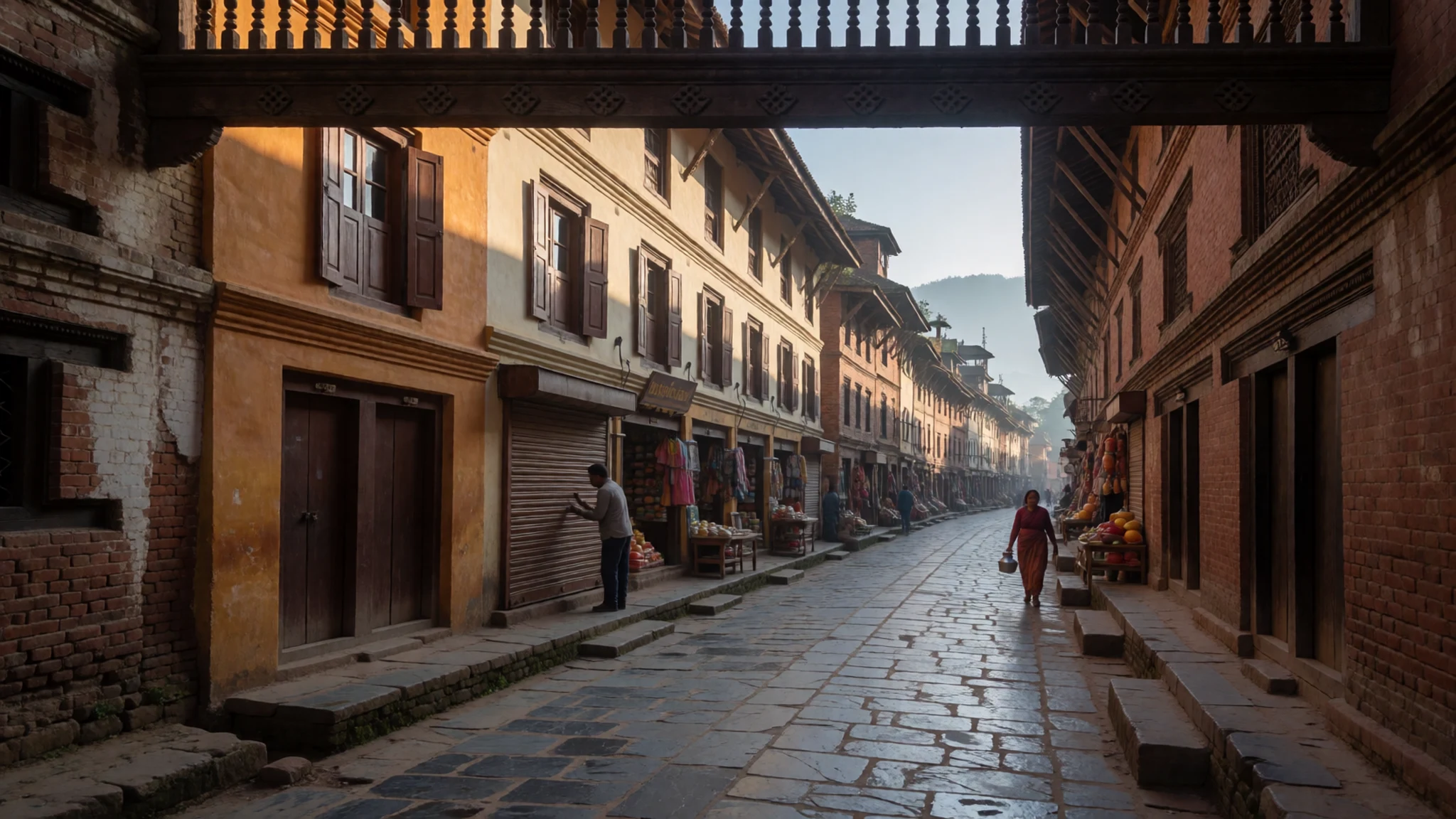
- Tudikhel — North side of town
Tudikhel is a flat, open stretch of ground at the northern end of Bandipur, used for gatherings and the usual spot for mountain views. On a clear morning the Himalayan range lines the horizon, Ganesh Himal among it. Cloud often builds by mid-morning, so go early and carry a warm layer.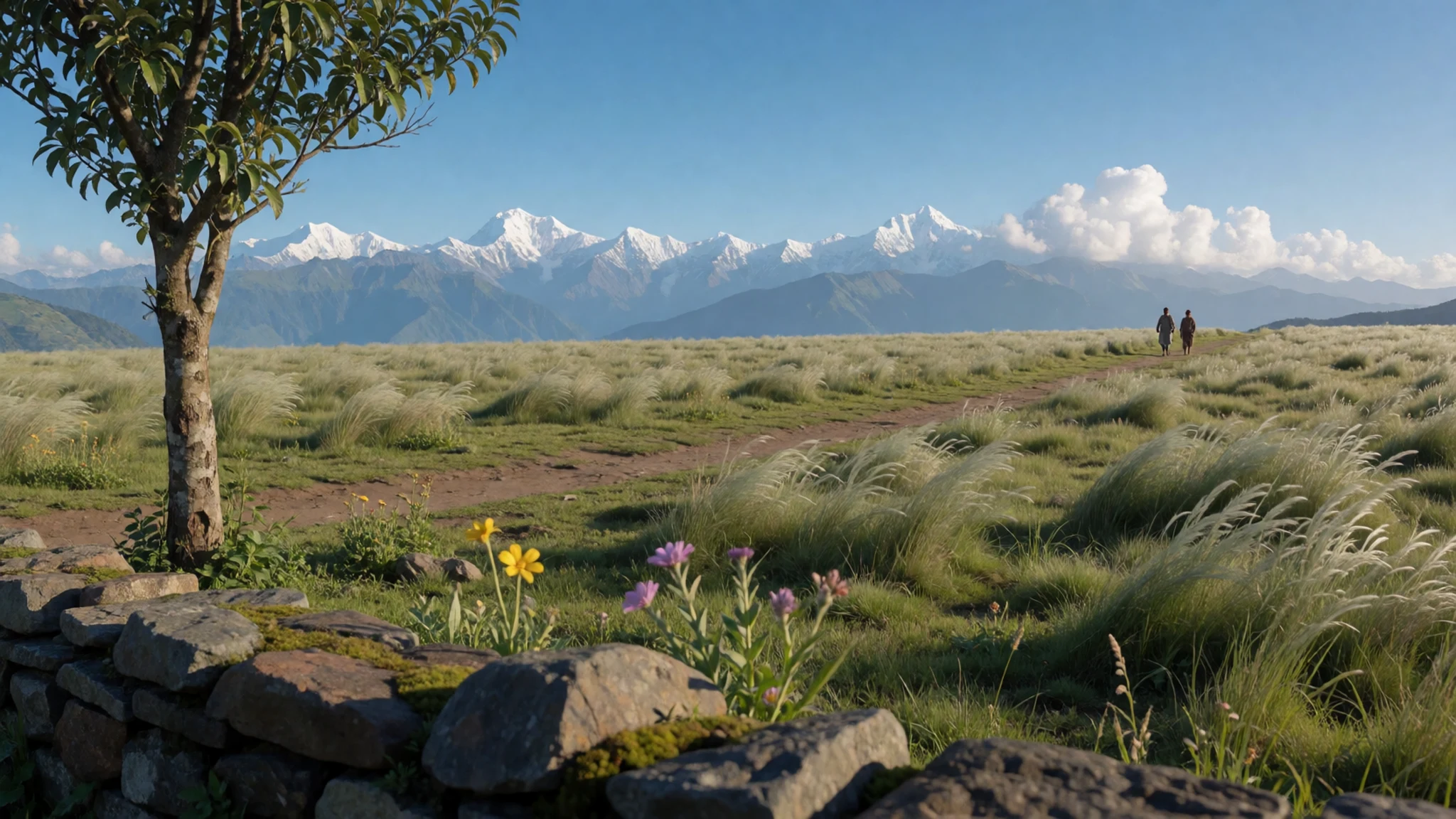
- Gurunche Dada — Hill above the bazaar
Gurunche Dada is a small hill reached by stone steps, a short and manageable climb for anyone who wants a wider view of the ridge and valley. A recent stone-wall walkway links the top to a neighbouring rise and to a dirt jeep track, which gives a different route back down to the main street.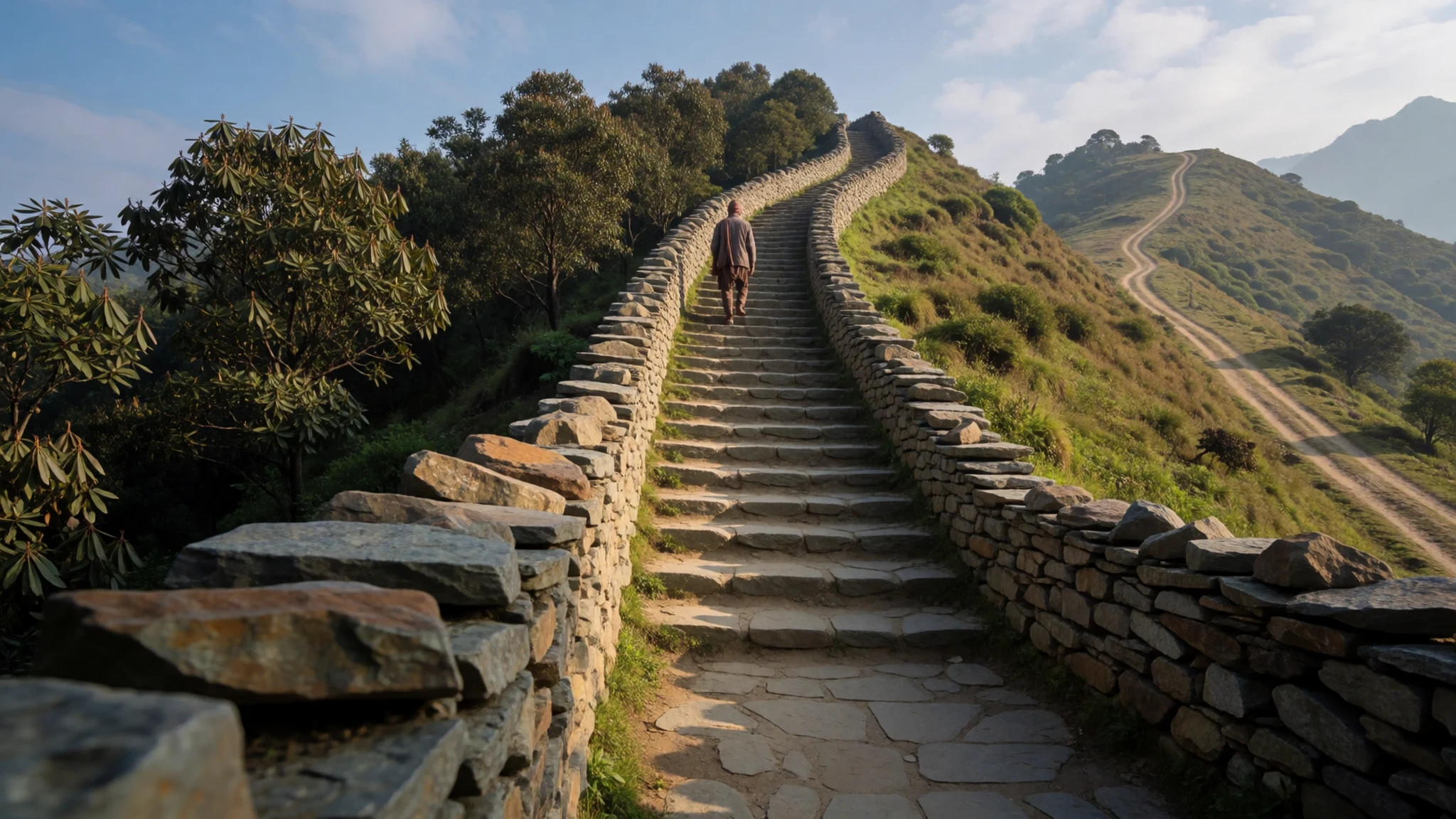
- Khadga Devi temple — Bandipur town
The temple of Khadga Devi holds the sacred sword, and it is the focus of Dashain in Bandipur. Families from the town and surrounding villages gather to worship there, following a tradition tied to local legend. Outside festival time it is a quiet, modest shrine, worth a respectful look rather than a long stop.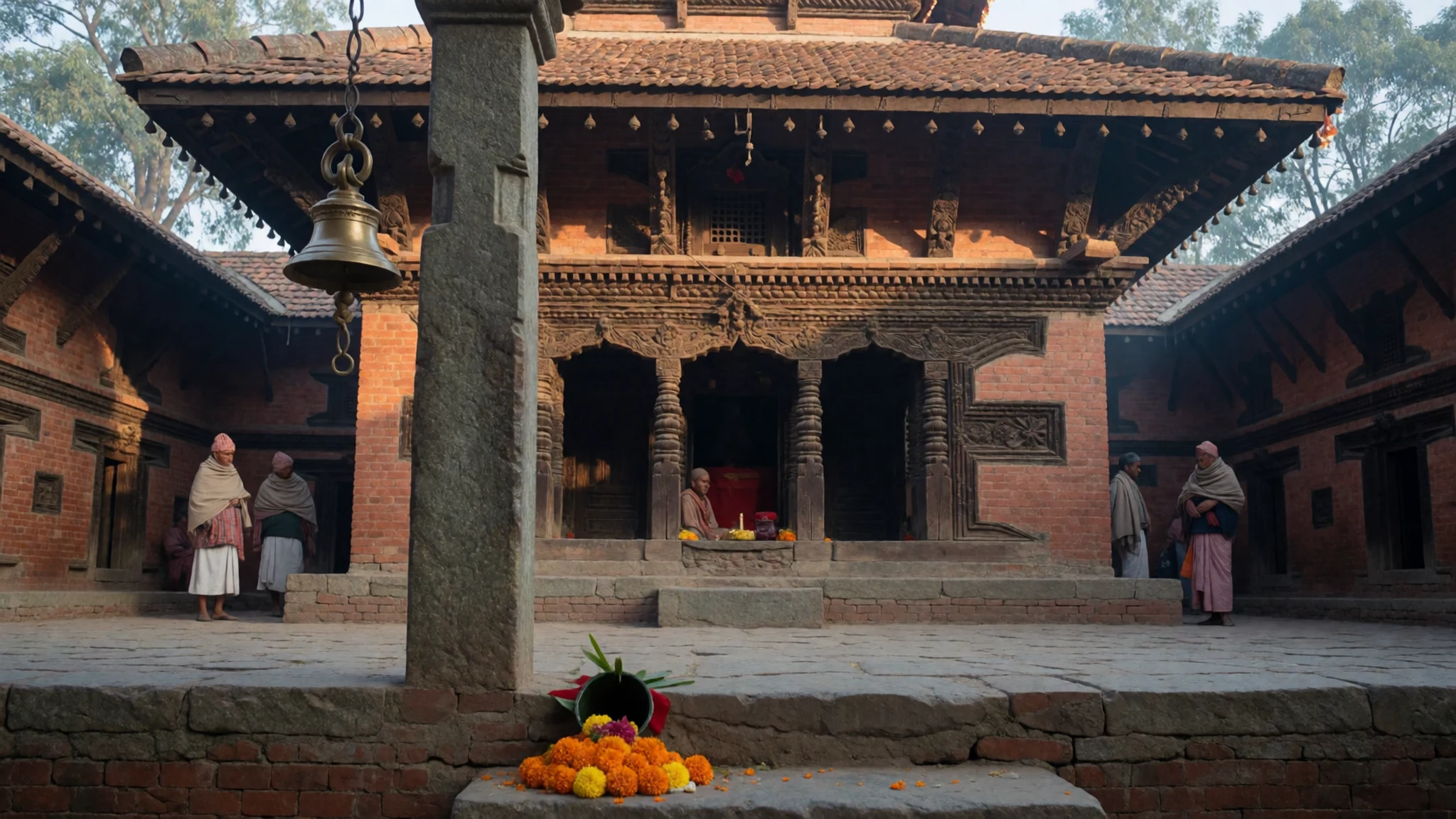
- The old library and merchant houses — Main bazaar
Bandipur was granted the right to keep its own library in the Rana period, and the building still exists, a reminder of how wealthy and self-confident the town once was. Nearby merchant houses show the neoclassical details Newar traders favoured. Many need repair, so look from the street and respect private doors.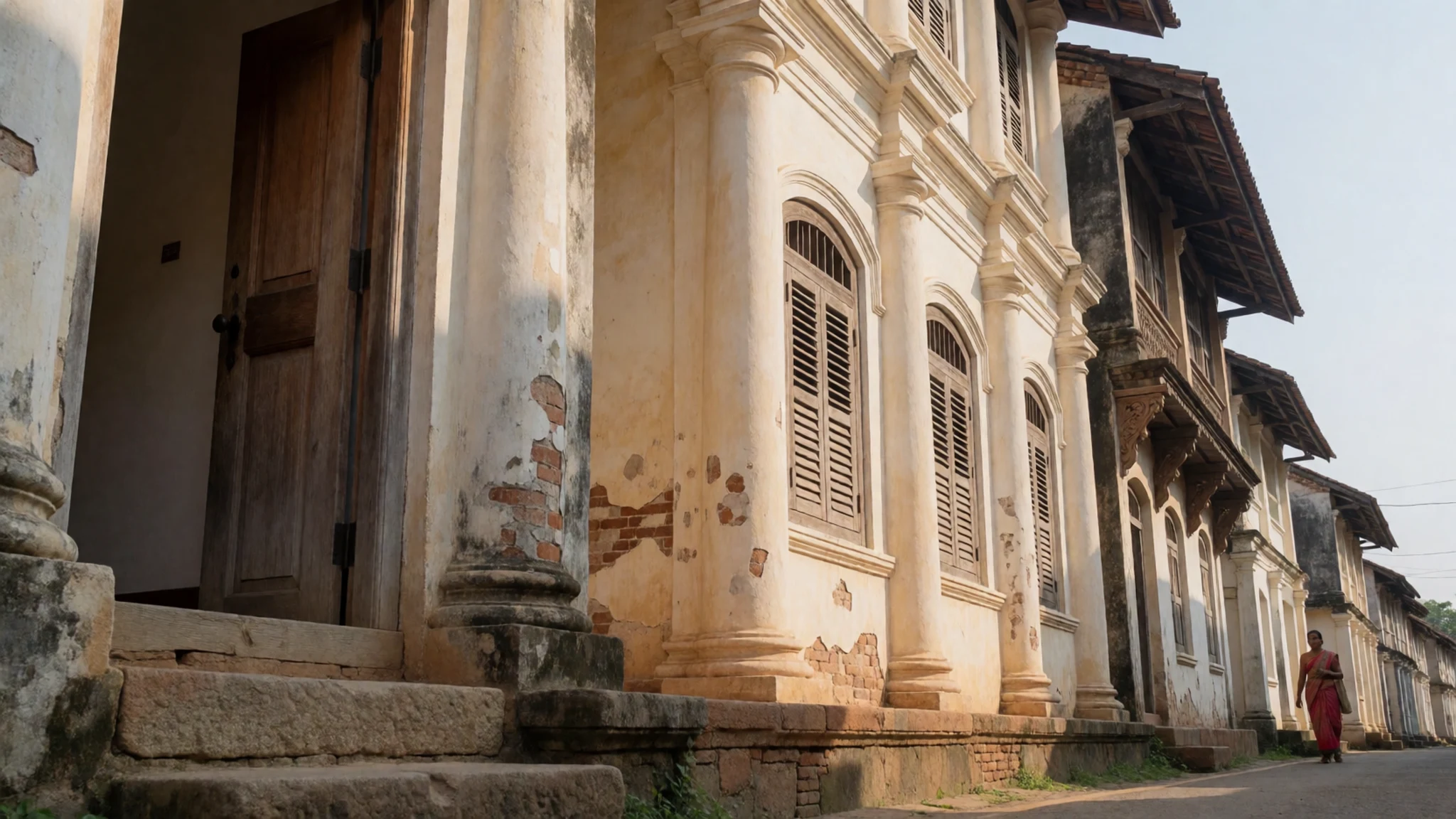
Culture
Bandipur is a Newar town at heart, shaped by merchant families who came from Bhaktapur and carried their architecture, festivals and food with them. Under the Newar layer is an older Magar village, and the town today is a mix of Hindu and Buddhist practice, with shrines tucked beside houses rather than set apart from daily life. The biggest event of the year is Dashain, when families and neighbouring villagers gather at the temple of Khadga Devi to worship the sacred sword. At that time the main street is busy, and shops and eateries may keep different hours from usual. Daily life moves early: people are up at first light, and the bazaar is calmest before the guesthouses stir. Many Nepalis are vegetarian, and dairy such as butter and cheese is common in local cooking, so ask when you order if diet matters. Greeting people with a folded-hands namaste goes down well, and so does patience with a slow meal; kitchens in small places cook to order. The town's revival depends heavily on visitors staying overnight in old houses and eating locally, so a night here does more good than a quick stop. At temples and in private courtyards, remove your shoes before stepping onto any raised threshold and ask before photographing worshippers or anyone doing puja.
What to wear
Bandipur's traditional dress reflects its Newar and Magar roots. Newar women wear the haku patasi, a black sari with a red border, for festivals and family rites, while men wear the daura-suruwal, a wrap-fronted shirt with fitted trousers, topped with the dhaka topi, a cap woven in patterned cotton. Cotton and wool shawls are common, and Magar families have their own woven wraps and shawls. These outfits appear at Dashain, weddings and temple events, but they are rarely worn on an ordinary day. Today most residents wear practical everyday clothes: trousers or kurta suruwal, jeans, shirts, fleeces and sweaters when evenings cool, with schoolchildren in uniform at the local schools. Visitors should dress for a hill town at 1,030 m. Days can be warm, mornings and nights cool, and monsoon months bring heavy rain, so carry layers and a light waterproof. Shoes matter more than clothes: the slate lanes and stone stairs get slippery when wet, so choose a pair with grip, not smooth-soled sandals. For temples and village walks, covered shoulders and knees are respectful and sensible, and loose cotton is comfortable in warm months. A scarf or shawl doubles as a layer and as a cover for a temple visit.
What to eat
- Dal bhat — Eateries along Main Street
Dal bhat is Nepal's everyday meal of rice, lentil soup, vegetable curry and pickle, usually served with refills. In Bandipur it is the sensible lunch after a morning walk. Look for it at the small eateries along Main Street, where vegetarian versions are easy to find.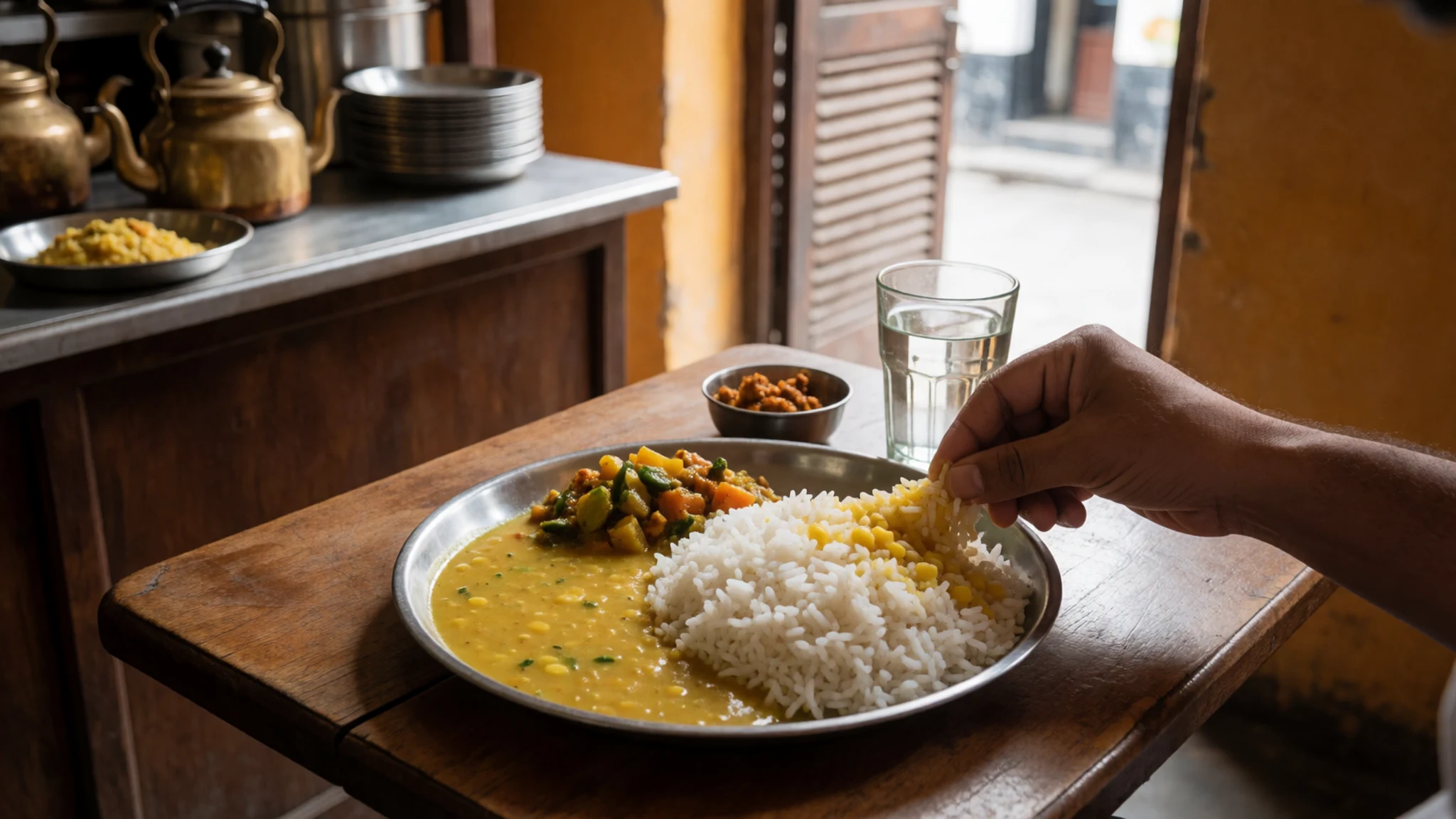
- Momo — Cafés and small eateries in the bazaar
Momo are steamed dumplings, filled with vegetables or meat and served with a spicy tomato dip. They are a standard order in the bazaar and make a good snack after the climb to a viewpoint. Fried versions also appear, and they are best eaten hot.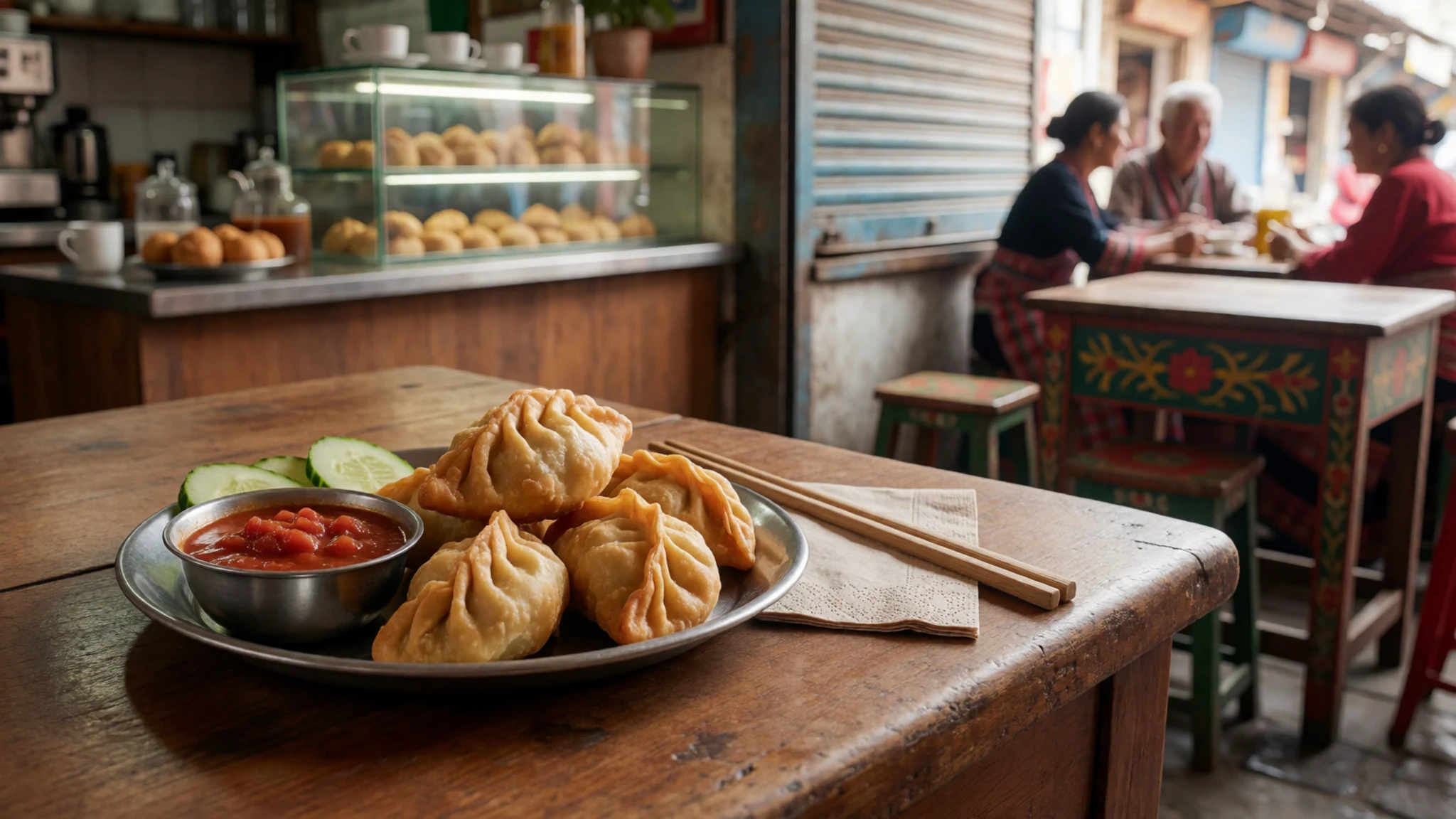
- Chatamari — Newar family-run eateries
Chatamari is a thin Newar rice-flour pancake, often called a Newari pizza, topped with minced meat or vegetables and egg. It suits the town's Newar heritage. Availability varies by season and by kitchen, so ask in advance at the place where you plan to eat. - Samay baji — Newar guesthouses and homestyle kitchens
Samay baji is a Newar plate built around beaten rice, served with items such as spiced vegetables, pickles, egg or grilled meat. It is a feast-style dish more than a quick snack. Ask around for a place that prepares it, as it is not on every menu. - Sel roti — Tea stalls and festival-time stalls in the bazaar
Sel roti is a ring-shaped, slightly sweet rice-flour bread, deep-fried and common at festivals, especially Dashain. It is eaten with tea or alongside curry. Fresh ones are crisp outside and soft within, so buy from a stall that has just fried a batch.
Plan it
Best time. March–April and October–November, when skies are usually clearer and the days comfortable for walking; the monsoon months bring cloud, rain and slippery steps, and mountain views are less reliable.
How long. 1–2
Getting there. Fly to Kathmandu or Pokhara, then take a coach or private car to Dumre Bazar on the Prithvi Highway. From Dumre, a local bus or taxi climbs the access road to the town. A cable car near Dumre also serves the hill, and there are walking routes up from the valley; check the municipality site at http://bandipurmun.gov.np/en for current details.
Budget. low
Tips
- Rise early: views of the Himalayan range are clearest at first light and often cloud over by mid-morning
- Book a room ahead for Dashain and peak autumn weekends, when the old houses fill up
- Carry some cash, as small eateries and shops may not take cards and cash machines can be unreliable
- Bring a light layer: evenings are cool at 1,030 m, and a rain jacket helps in the monsoon
- Wear shoes with grip, as slate lanes and stone stairs become slippery after rain
Etiquette
- Remove shoes before stepping into a temple or a house
- Ask before photographing people, especially during worship
- Dress modestly with shoulders and knees covered at shrines
Nearby
Sources
- Wikidata Q806327 (CC0)
- Wikipedia: Bandipur Rural Municipality (rev 1377752737) (CC BY-SA 4.0)
- Wikivoyage: Bandipur (Nepal) (rev 5403094) (CC BY-SA 4.0)
- Photo 01: Bandipur — Bijay Chaurasia (CC BY-SA 4.0)
- Photo 02: Ganesh Himal from Bandipur — Moonbeaver (CC BY-SA 4.0)
- Photo 03: Early morning Bandipur heights — Eken7 (CC BY-SA 4.0)
- Photo 04: Bandipur — Sandip Pokhrel (CC BY-SA 4.0)
- Photo 05: Bandipur Campus — Rajivkilanashrestha (CC BY-SA 4.0)
- Photo 06: Bhanu Bhakta School — Rajivkilanashrestha (CC BY-SA 4.0)
- Photo 07: Dil Primary School board — Bhattaraitara (CC0 1.0)
- Photo 08: Main Street Panorama from Balcony of Newa Guest House — Adam Jones (CC BY-SA 2.0)


