Ghandruk
Ghandruk, Nepal
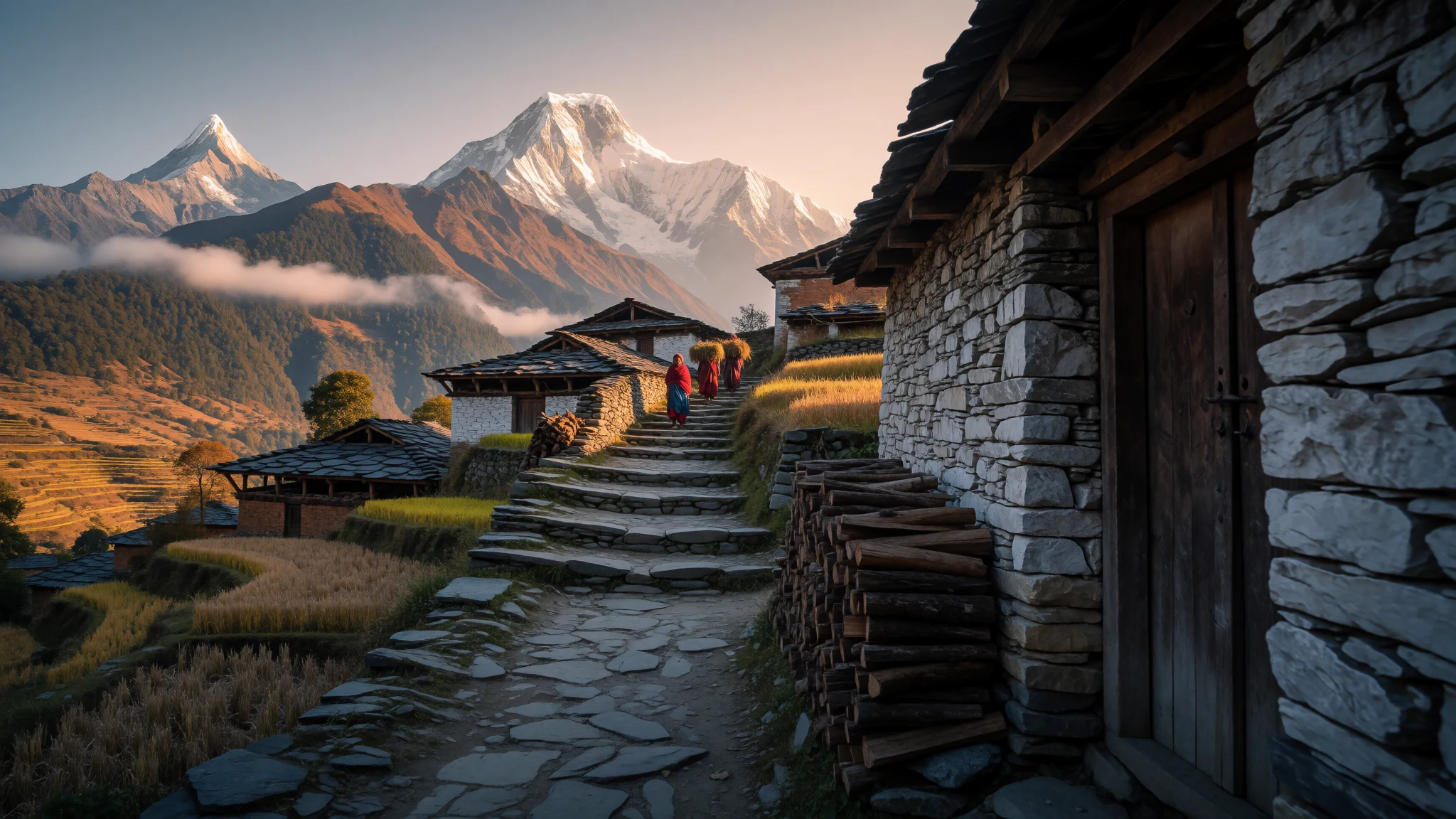
Ghandruk is a working Gurung village of stone houses and stepped lanes, with Annapurna South and Machapuchare on show at sunrise.
The place
Ghandruk is a Gurung village in Kaski District, Gandaki Province, strung along a steep hillside north-west of Pokhara. Wikidata records a population of 4,265, which makes it a settlement of real size rather than a handful of farmhouses. Most residents are Gurung, and the village has the settled feel of a community that has been in place for a long time: stone houses with slate roofs, narrow lanes that climb in steps, and a government school taking children from the youngest ages through to the end of secondary. Farming still matters, but tourism now sits beside it as a main source of income, and many families run a teahouse, guesthouse or homestay. Trekkers pause in Ghandruk along the routes to Annapurna Base Camp and the Annapurna Circuit, and the village serves as the entry point for the Poon Hill trek. The mountains are the other half of the picture. From the upper lanes and guesthouse terraces, Annapurna South, Machapuchare, Gangapurna and Hiunchuli stand over the valley, clearest in the early morning before cloud builds. The village is a cultural stop as much as a trailhead, with a Gurung museum, the Meshram Baraha temple and cultural shows for visitors giving a reason to stay a night rather than pass through. Vehicles reach only the lower part, so everything above is done on foot, which keeps the upper village quiet. Many retired soldiers from the British and Indian Gurkha regiments live here, and their service is part of local identity.
Its story
Ghandruk's story is largely the story of the Gurung people, the main community here, who built the stone-and-slate village that walkers pass through today. Their religious life blends older animist practice with Buddhist and Hindu traditions, and festivals bring music, dance and ritual into the lanes. A second thread is military. Gurung men have long served in the British and Indian Gurkha regiments, and the village is now home to many ex-servicemen. The local museum records that history through photographs and objects, so a visit to Ghandruk is also a way to understand why the name Gurkha is known far beyond Nepal. Trekking added a third thread. As walkers began using the village as a stop on the Annapurna routes, farming households opened teahouses and homestays, and tourism grew into a major source of income alongside the fields. The change shows in the lodges stepping up the slope, yet the older houses remain, and many of them are old. Today Ghandruk sits between these pasts: a farming village, a soldiers' village and a trekking stop. Some families also teach weaving and cooking to guests, which turns a night's stay into a way of passing on skills rather than only selling a bed. The balance is not perfect, and busy trekking seasons can strain a small place, but the village still runs largely on its own terms.
What to see
- Gurung Museum — Upper village
The museum is the best single hour in Ghandruk. Cases hold Gurung household objects, traditional dress and photographs, and the displays also follow the history of Gurkha soldiers from the village. It is small, so go early or late in the day. There is a modest entry charge, so keep some cash handy.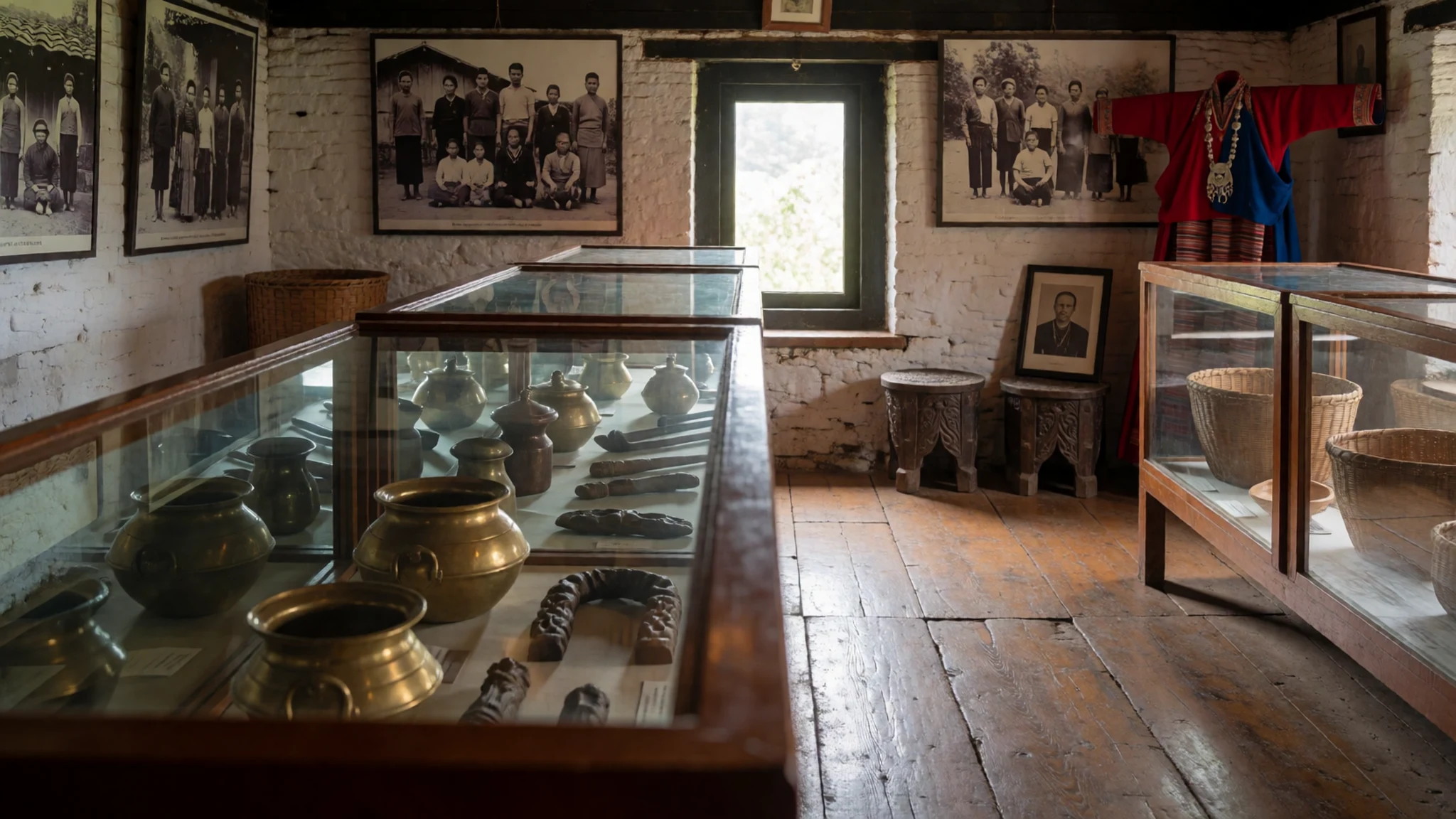
- Old Gurung houses — Lanes through the village
The stone houses with slate roofs are the village's defining sight, and many of them are old. Walk the stepped lanes slowly, look at how the houses cluster around shared paths, and notice the stacked firewood and drying crops. These are lived-in homes, so admire from the lane.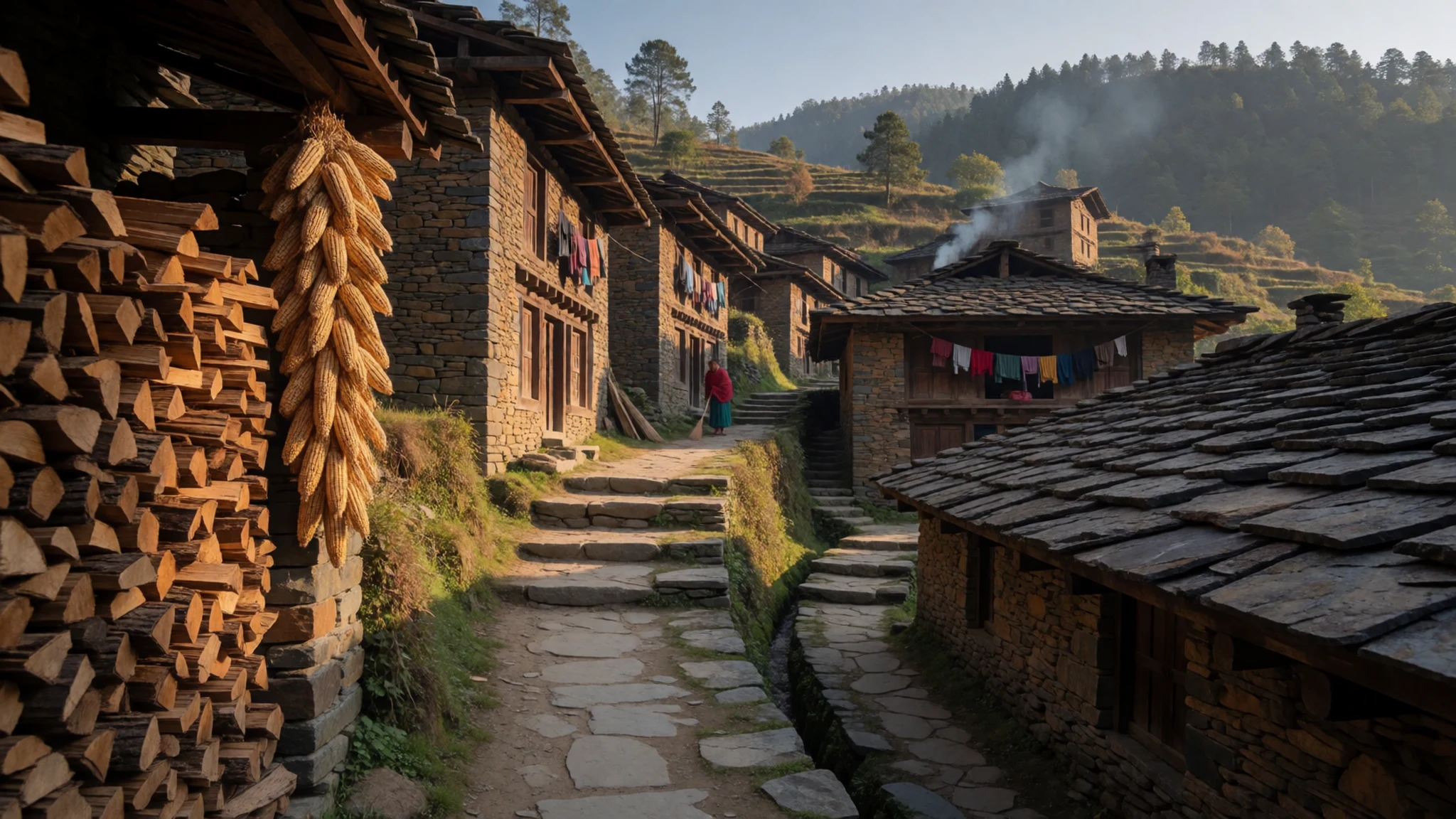
- Annapurna sunrise viewpoints — Upper lanes and guesthouse terraces
Several spots in the village look across to Annapurna South, Hiunchuli and Machapuchare, and sunrise is when the light is best and the cloud is usually still low. Set an alarm, carry a warm layer and a flask of tea, and expect other guests on the same terraces.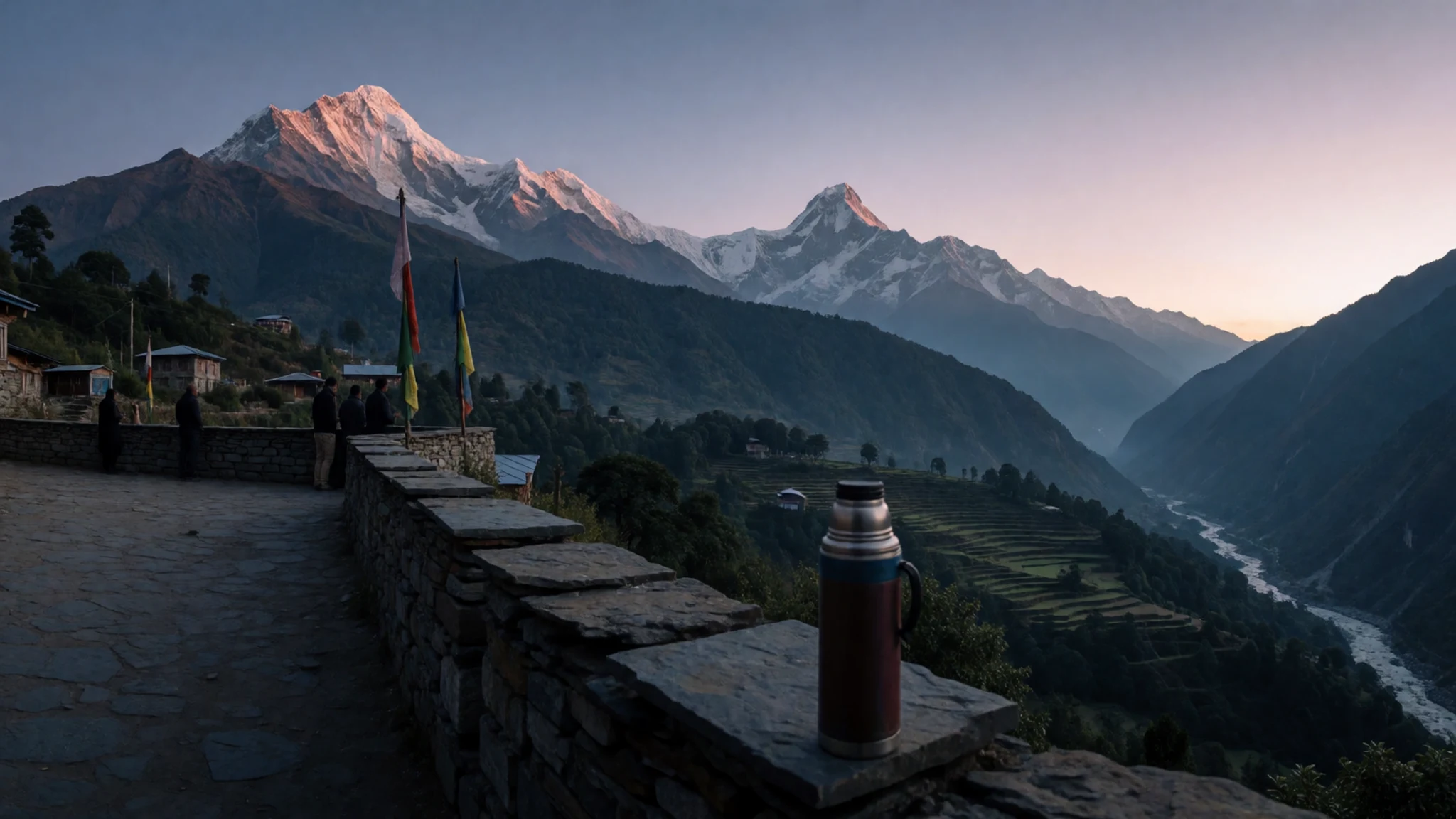
- Meshram Baraha temple — Within the village
The temple is a local place of worship that reflects the blend of belief in Ghandruk, where animist, Buddhist and Hindu practice sit together. It is worth a quiet visit, especially in the cooler hours. Dress modestly, keep voices low, and ask a local before stepping inside any enclosure.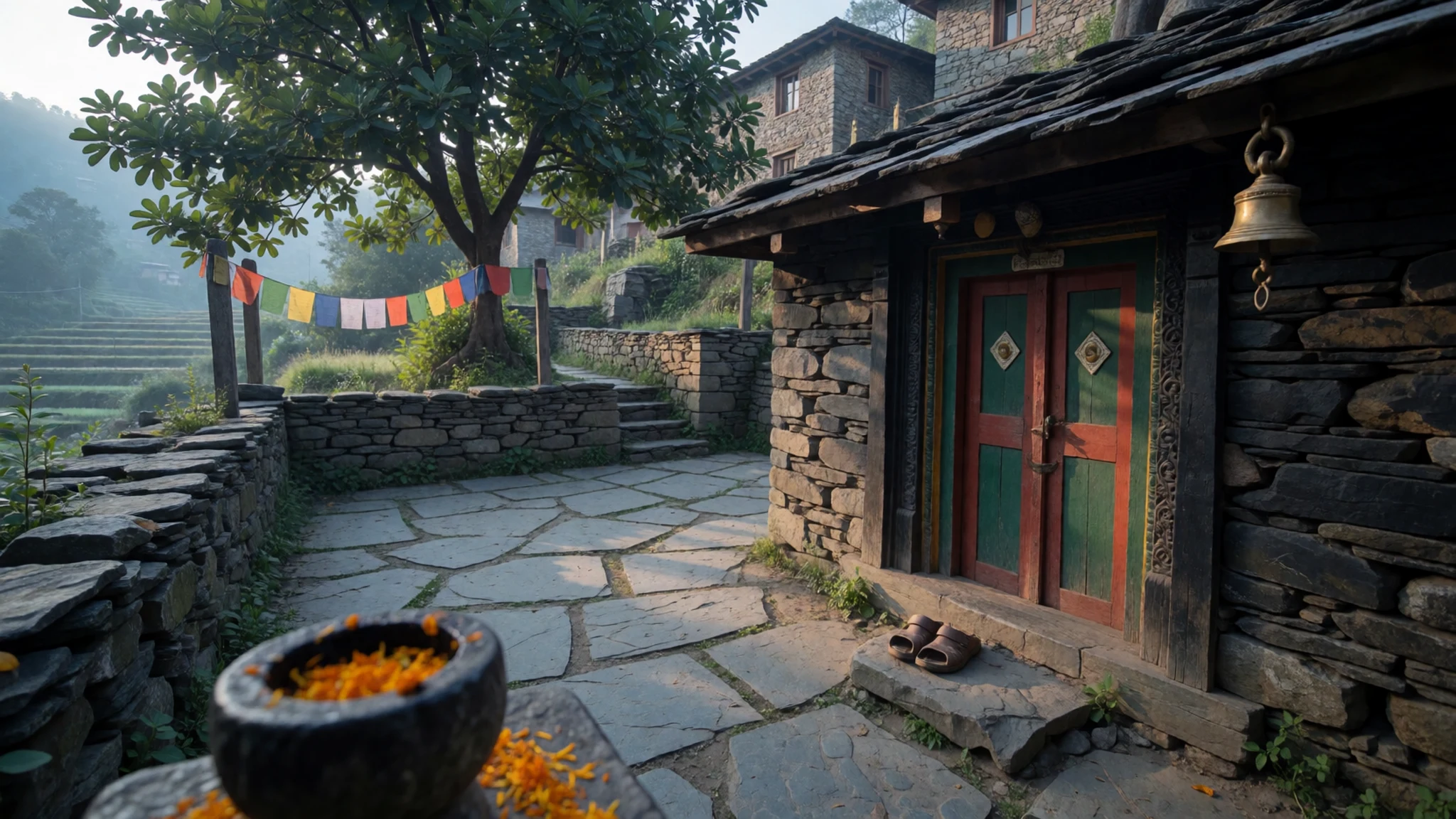
- Walks to Kimche, Landruk and Chhomrong — Trails around Ghandruk
Short walks link Ghandruk with neighbouring villages, and each gives a different angle on the terraced slopes and the river gorge below. Kimche is the easy descent, Landruk involves a river crossing and a steep climb, and Chhomrong leads on towards the Annapurna Sanctuary. Check trail conditions locally, particularly after rain.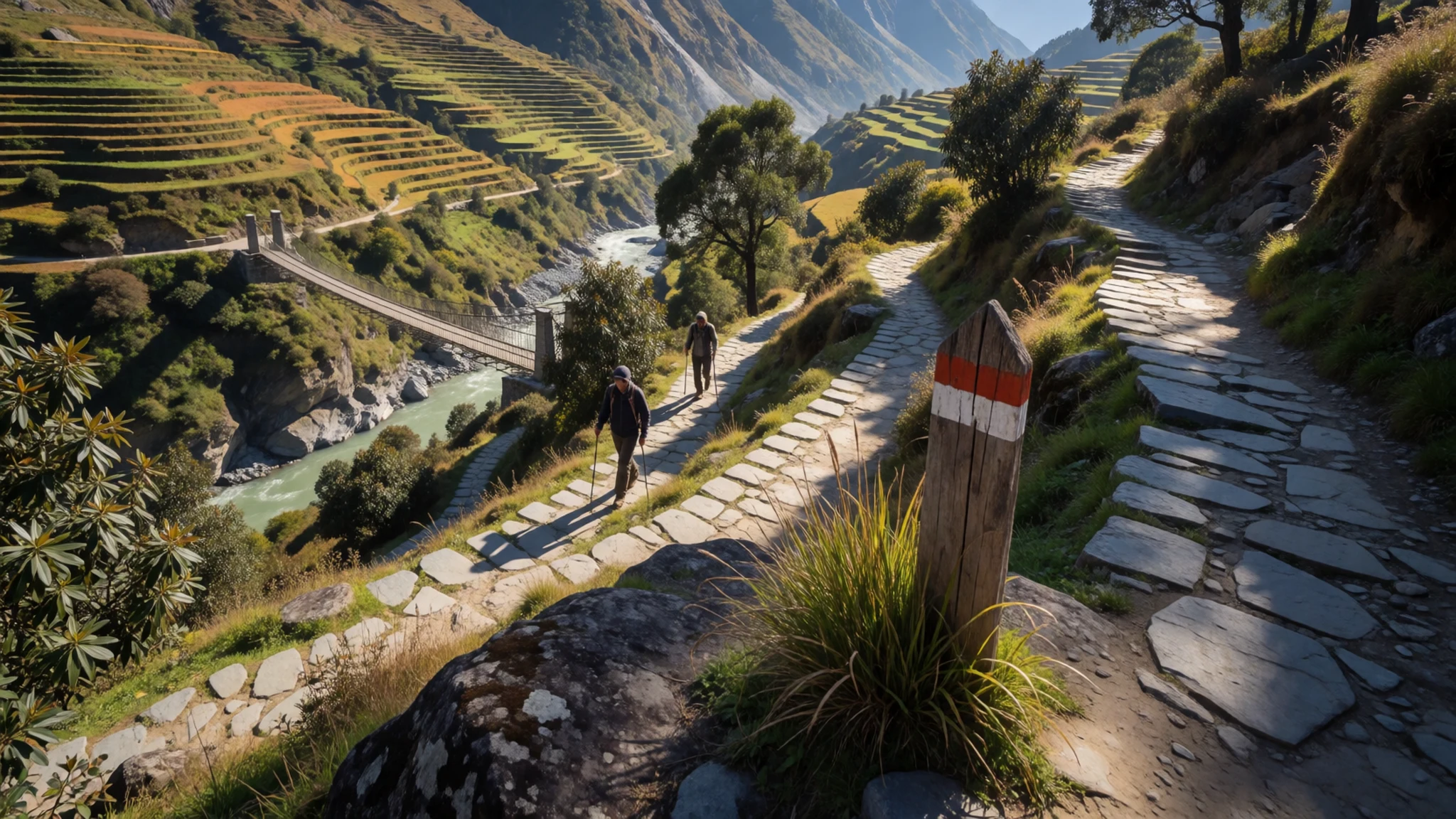
Culture
Ghandruk is a Gurung village, and everyday life here is shaped by Gurung customs, language and family networks. Religious practice blends animist beliefs with Buddhist and Hindu traditions, and at festivals the village fills with music, dance and ritual that visitors are sometimes welcome to watch. The Meshram Baraha temple anchors this spiritual life, while the Gurung Museum explains how clothing, household objects and photographs fit into the community's story. A strong military tradition runs alongside this. Many men from the village have served in the British and Indian Gurkha regiments, and retired soldiers are respected figures, so conversations in teahouses often turn to service abroad and family members posted far away. Homestays are a good way to meet people. Some hosts teach traditional weaving or cooking, and cultural shows for visitors present Gurung music and dance. These are staged for guests, but they are performed by local people who care about the material, so applause and a small tip are appropriate. Greet people with a folded-hands namaste, accept tea or food with your right hand, and be patient: village life moves at the pace of the stepped lanes. Visitors who stay a night rather than rushing through tend to learn the most, and they spend money where it stays in the community. Ask permission before photographing people or entering a house, and remove your shoes when you step into a home or a place of worship.
What to wear
Traditional Gurung dress in Ghandruk is worn mainly at festivals, weddings and cultural shows. Women typically wear a velvet or cotton blouse with a long wrapped cloth at the waist, a sash, and heavy gold-coloured jewellery. Men wear a wrapped cotton shirt tied at the side, a waist cloth and sometimes a cap. Wool and cotton are the common materials, and the Gurung Museum has examples and photographs that show how these garments look and how they were worn. Day to day, people in Ghandruk dress for work and weather. Fleeces, jackets, trousers and sturdy shoes are normal, with a shawl or blanket over the shoulders on cold mornings. Younger people and guesthouse staff wear much the same clothes as people in Pokhara, and Gurkha veterans may wear a regimental tie or badge on special days. Visitors should plan for a mountain village at altitude. Wear layers that can come off quickly, because mornings and evenings are cold and midday sun is strong. Boots or trail shoes with good grip suit the wet stone steps. Carry a rain jacket, sun hat and sunglasses. Dress modestly in the village and at the temple, with shoulders and knees covered, and choose quick-drying fabrics that are easy to wash in a guesthouse.
What to eat
- Dal bhat — Any teahouse or lodge dining room
Rice, lentil soup and vegetable curry, often with pickle and greens, served on a metal plate. It is the standard trekking meal, and many places offer a second helping at no extra charge. Eat it at midday to fuel the climb.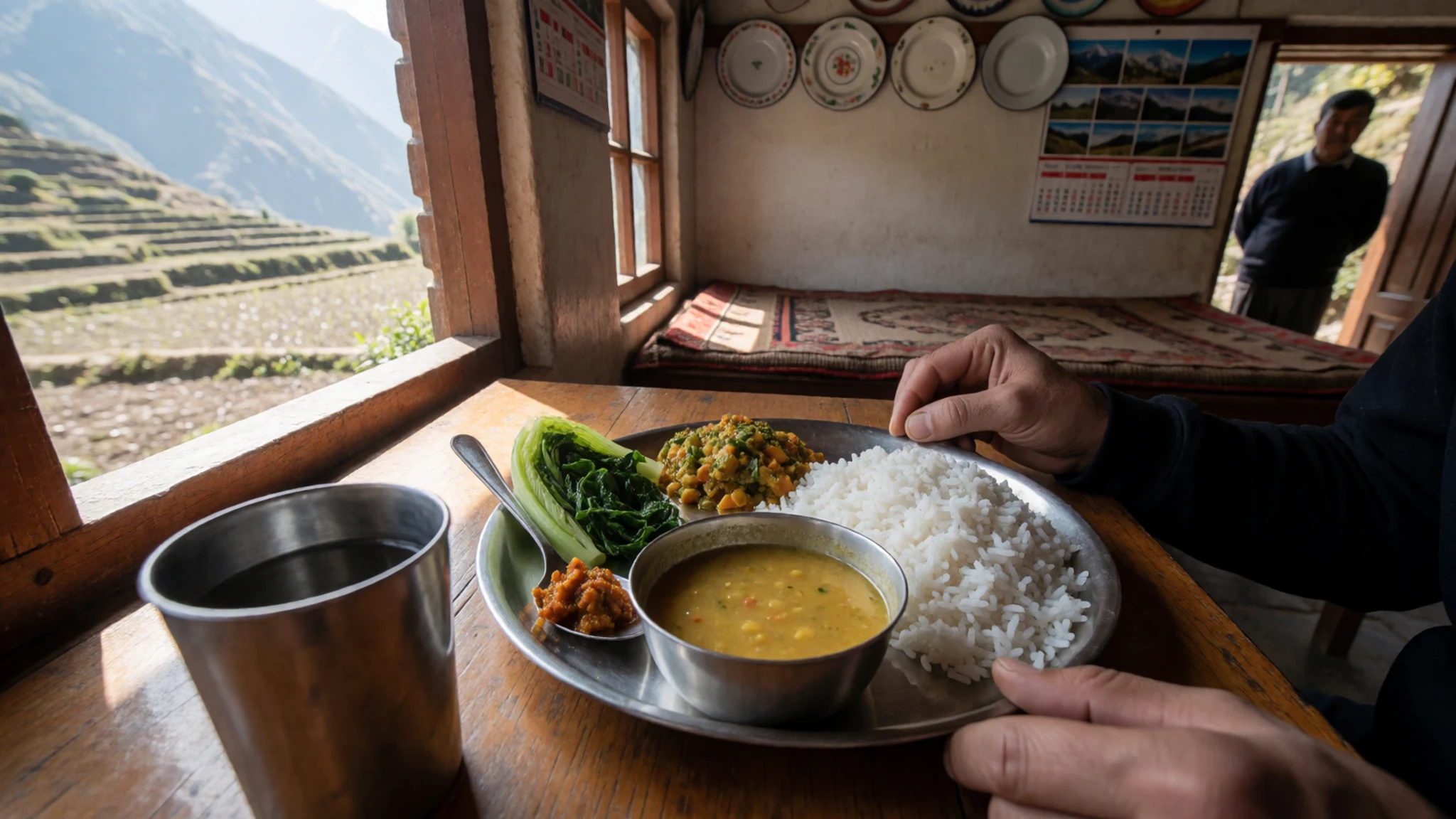
- Momo — Teahouses and small eateries along the main lane
Steamed dumplings filled with vegetables or meat and served with a spicy tomato dip. They are quick to make but take a while to arrive in a busy kitchen. Order them as a snack when you arrive and are waiting for dinner.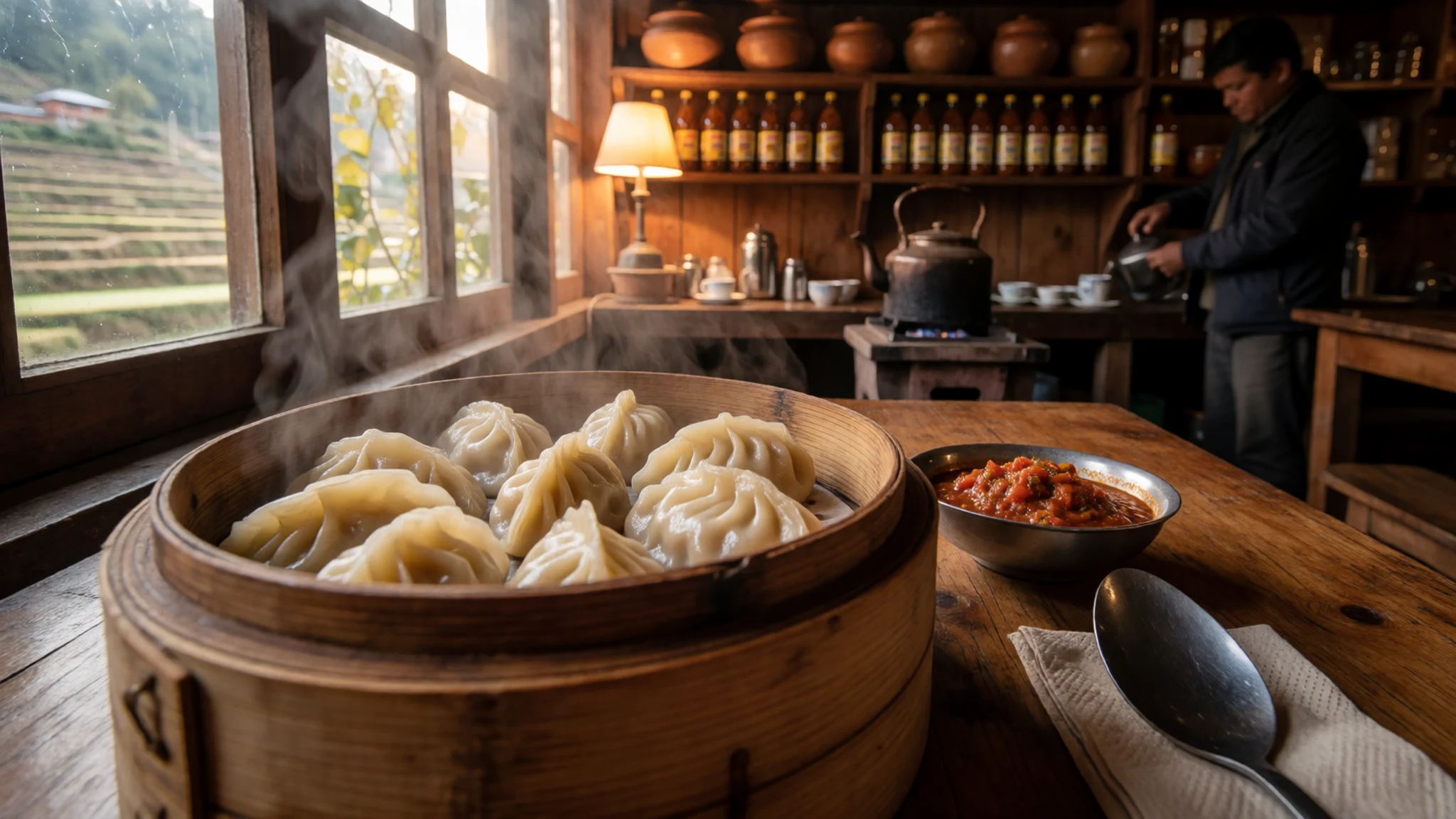
- Noodles — Lodge kitchens
Fried or soup noodles are the easy option after a long walk, usually with vegetables and sometimes egg. They are filling, cheap by trekking standards and found almost everywhere, though choices thin out the higher you go above the village. - Pancakes and omelettes — Teahouse breakfast tables
A typical trekking breakfast, with pancakes served plain or with honey, and omelettes cooked to order with onion and chilli. They go well with milk tea or coffee while the sun reaches the peaks, and they carry you through the morning. - Tongba — Homestays, when available
A warm millet drink sipped through a bamboo straw from a wooden or metal mug and topped up with hot water. It is mildly alcoholic and best taken slowly in the evening. Ask your host whether it is available.
Plan it
Best time. March–April and October–November are the usual windows, with clearer mountain views and milder walking weather. June to August is the monsoon, when cloud often hides the peaks and trails are slippery, and winter nights are cold.
How long. 2–3
Getting there. Fly or travel overland to Pokhara, then take a jeep or bus towards Ghandruk; the journey takes a good part of the day depending on road conditions. Vehicles drop off passengers near the bottom of the village, leaving you to walk the final stretch uphill. Trekkers can also walk up from Nayapul or Kimche on a steady climb.
Budget. low
Tips
- Stay at least one night so you can catch sunrise over Annapurna South and Machapuchare
- Carry some cash, as small teahouses and the museum may not take cards
- Bottled water is available but expensive, so bring a purification system or tablets
- Allow extra time for the stone steps, which are slippery after rain
- Book a bed ahead in March–April and October–November, when lodges fill up
Etiquette
- Ask before photographing people or going into a private house
- Dress modestly and keep your voice low near the temple
- Remove shoes when entering a home or a place of worship
Nearby
Sources
- Wikidata Q3412040 (CC0)
- Wikipedia: Ghandruk (rev 1385485695) (CC BY-SA 4.0)
- Wikivoyage: Ghandruk (rev 5423486) (CC BY-SA 4.0)
- Gerd Eichmann, Village of Ghandruk in Nepal (CC BY-SA 4.0)
- Bijaya2043, Ghandruk HDR6 (CC BY 3.0)
- Bhatta Richa, Ghandruk Sunrise (CC BY 4.0)
- Sudeepacharya076, A view from Ghandruk (CC BY-SA 4.0)
- Utsab Raj Giri, Ghandruk village (CC BY-SA 4.0)
- Ameet Ranjit Photography, Morning View from Ghandruk (CC BY-SA 4.0)
- Bijaya2043, Ghandruk (16) (CC BY 3.0)
- Greg Willis, Annapurna South from Ghandruk (CC BY-SA 2.0)


