Boudhanath
Boudhanath, Nepal
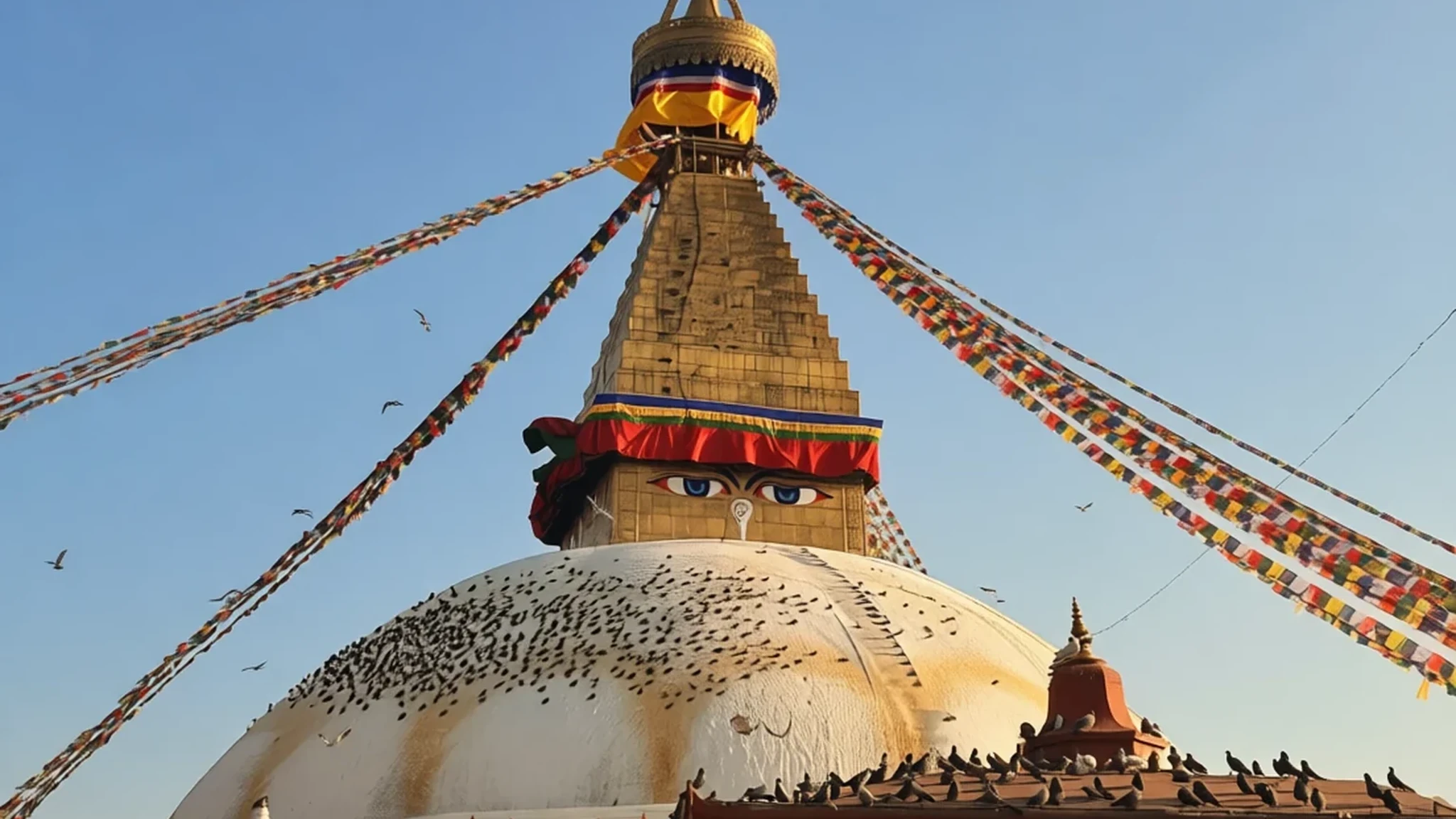
Boudhanath is the great white stupa of Kathmandu, a working Buddhist circle where pilgrims and monks walk clockwise around the dome all day.
The place
Boudhanath sits in Boudha, a neighbourhood on the north-eastern edge of Kathmandu, and its whitewashed dome is the first thing most visitors look for. The stupa is a major spiritual landmark for Nepali and Tibetan Buddhists alike. Its layout is built as a large mandala, a sacred diagram used in meditation, and believers hold that it contains consecrated relics, including bone pieces linked to two earlier Buddhas. Wikipedia describes it as the largest spherical stupa in Nepal, a claim that is easy to accept once you stand at its foot and see how the dome swells above you.
Not long ago this was open country. Rice paddies once surrounded the stupa, and today houses, guesthouses and shops press against its outer ring, so the monument that once rose from fields now sits in a busy neighbourhood. Early in the morning the lanes fill with people carrying prayer wheels, flasks of tea and bundles of butter lamps.
The site is also a waypoint on an old trade route from Tibet. The road enters the valley through Sankhu in the north-east and passes the smaller Charumati Stupa, often called Little Boudhanath, before crossing the Bagmati River towards Patan. That history explains why the area became a hub for monasteries and Tibetan families who settled in the valley.
Its story
The early history of Boudhanath comes mostly through chronicles, and they do not agree. One chronicle credits the Licchavi king Shivadeva with founding the town of Boudha in the late sixth century, while others place the work under King Manadeva, a little earlier. Some local accounts reach further back and say that a stupa was raised on this spot in the fifth century, one of four built by a Licchavi ruler.
A well-known legend ties the stupa to Manadeva's guilt. He is said to have killed his father without knowing it, and the monument was his act of atonement. Nepali tradition also tells of a Licchavi king who, on the advice of astrologers, prepared to sacrifice himself so that water would appear from a spout in his palace courtyard, a site later associated with the Narayanhiti palace. These stories say more about how people imagined the place than about exact events.
What survives today is most likely a structure from the 14th century. Over the centuries it became a focus for Tibetan Buddhist communities in the valley, and monasteries grew up around it. The site was designated a UNESCO World Heritage Site in 1979. Restoration has since reached the upper section of the dome, and the start of that rebuilding was marked by hoisting a new ‘life tree’ spire onto the stupa, a moment still recorded in photographs. Anyone who walks the circle today follows a route that has been in use for centuries.
What to see
- Boudha Stupa — Boudha, Kathmandu
The stupa itself is the reason to come. Its white dome rests on a stepped base, and the tall square tower above it carries painted eyes that look out in every direction. Walk the outer circle slowly at first light, when monks, families and prayer-wheel turners are out, and return at dusk when butter lamps are lit along the wall.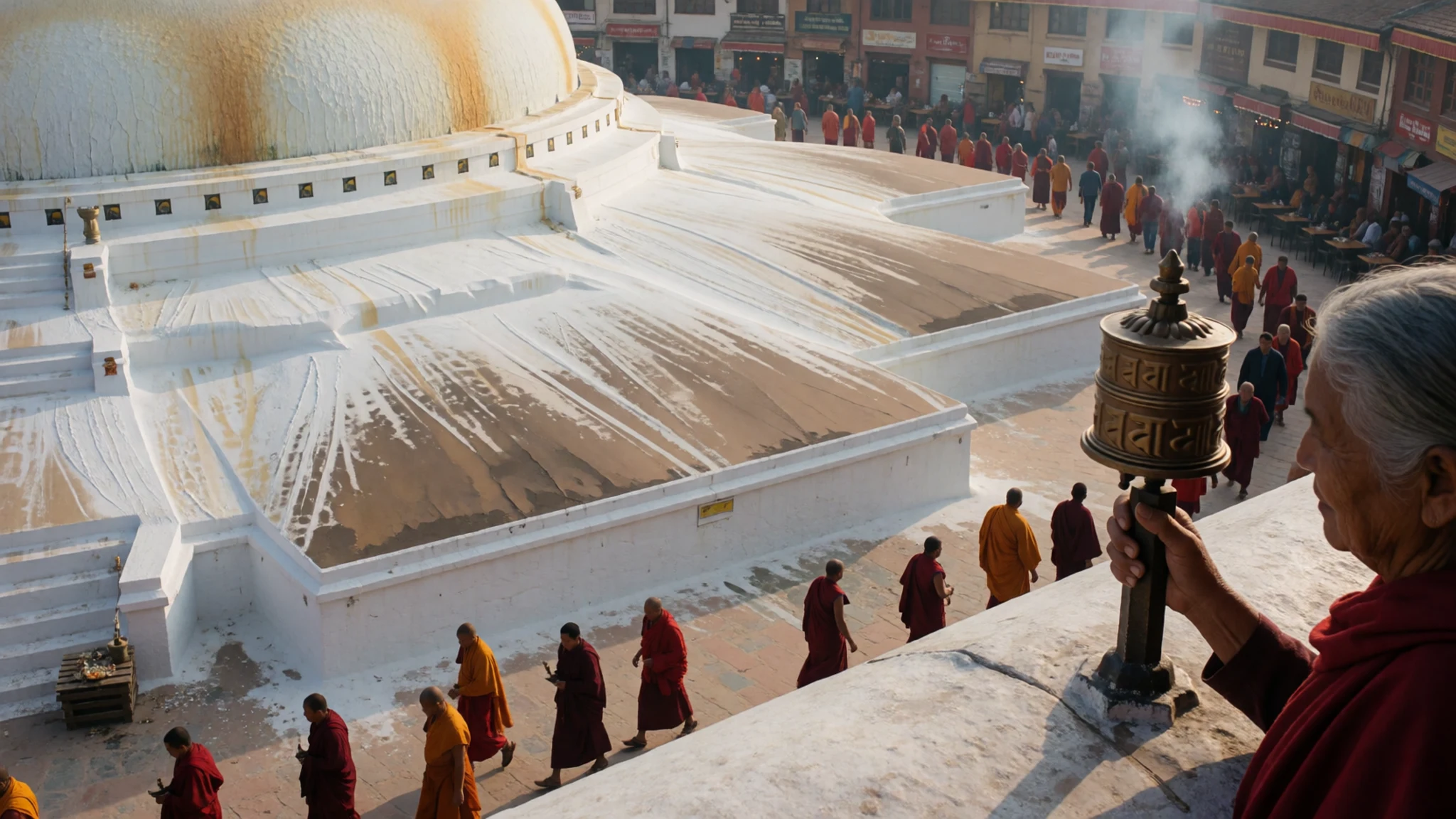
- Pashupatinath Temple — Pashupati, south-west of Boudha
A short taxi ride south-west of the stupa, Pashupatinath is a major Hindu temple dedicated to Shiva in his form as Lord of the Beasts. Only Hindus may enter the inner sanctum, but the wider temple grounds, with their cremation ghats along the river and carved shrines, are open to all visitors. Dress modestly, expect a request for a donation, and keep your camera away from funeral rites.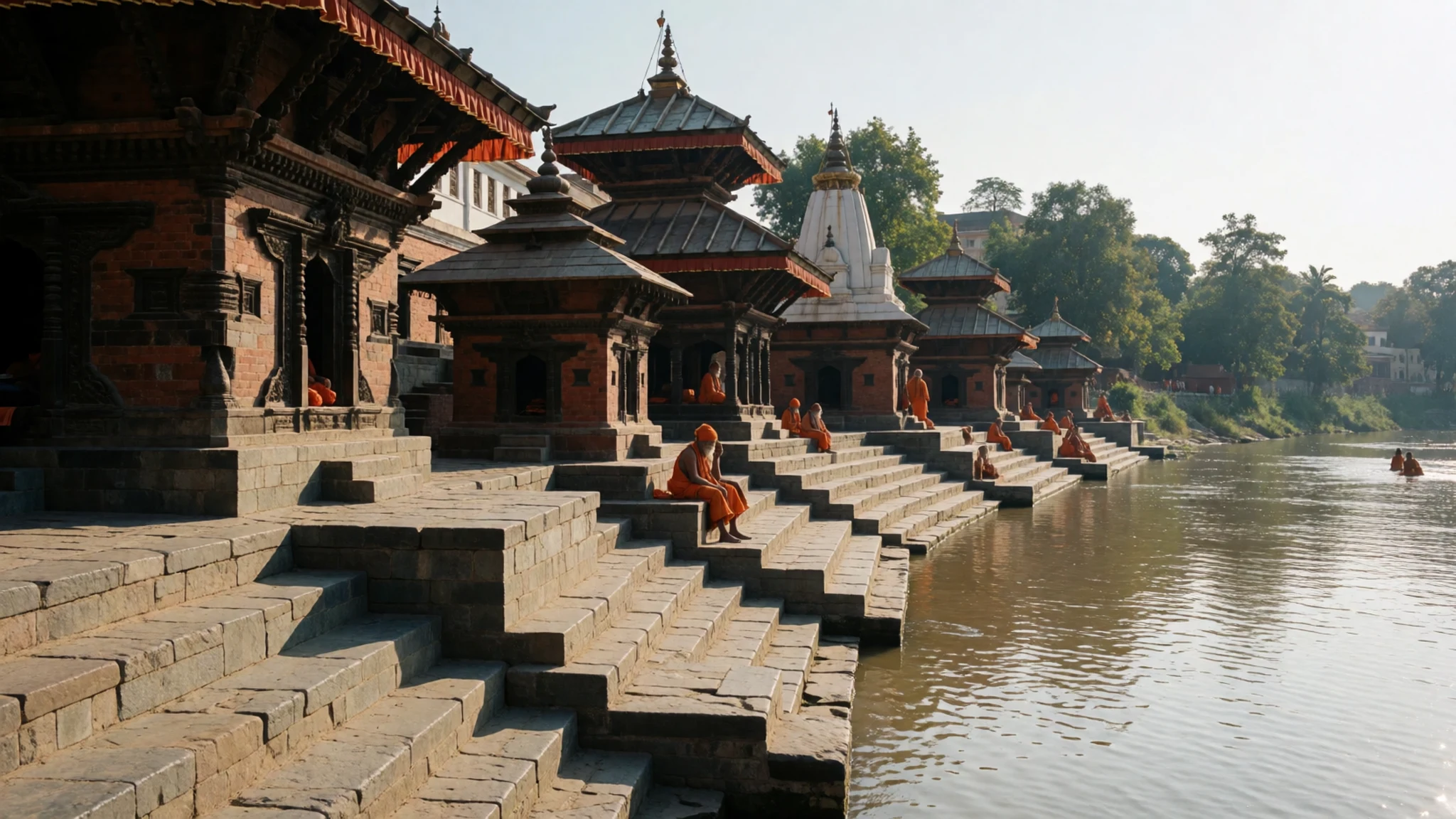
- Charumati Stupa — Chabahil, a short walk from the junction
Charumati Stupa, near Chabahil junction, is often called Little Boudhanath. It is smaller and quieter, and it stands on the old trade route from Tibet, which is the real reason to walk there. Go in the late afternoon when light falls on its dome, and sit in a nearby tea shop to watch the traffic on the main road.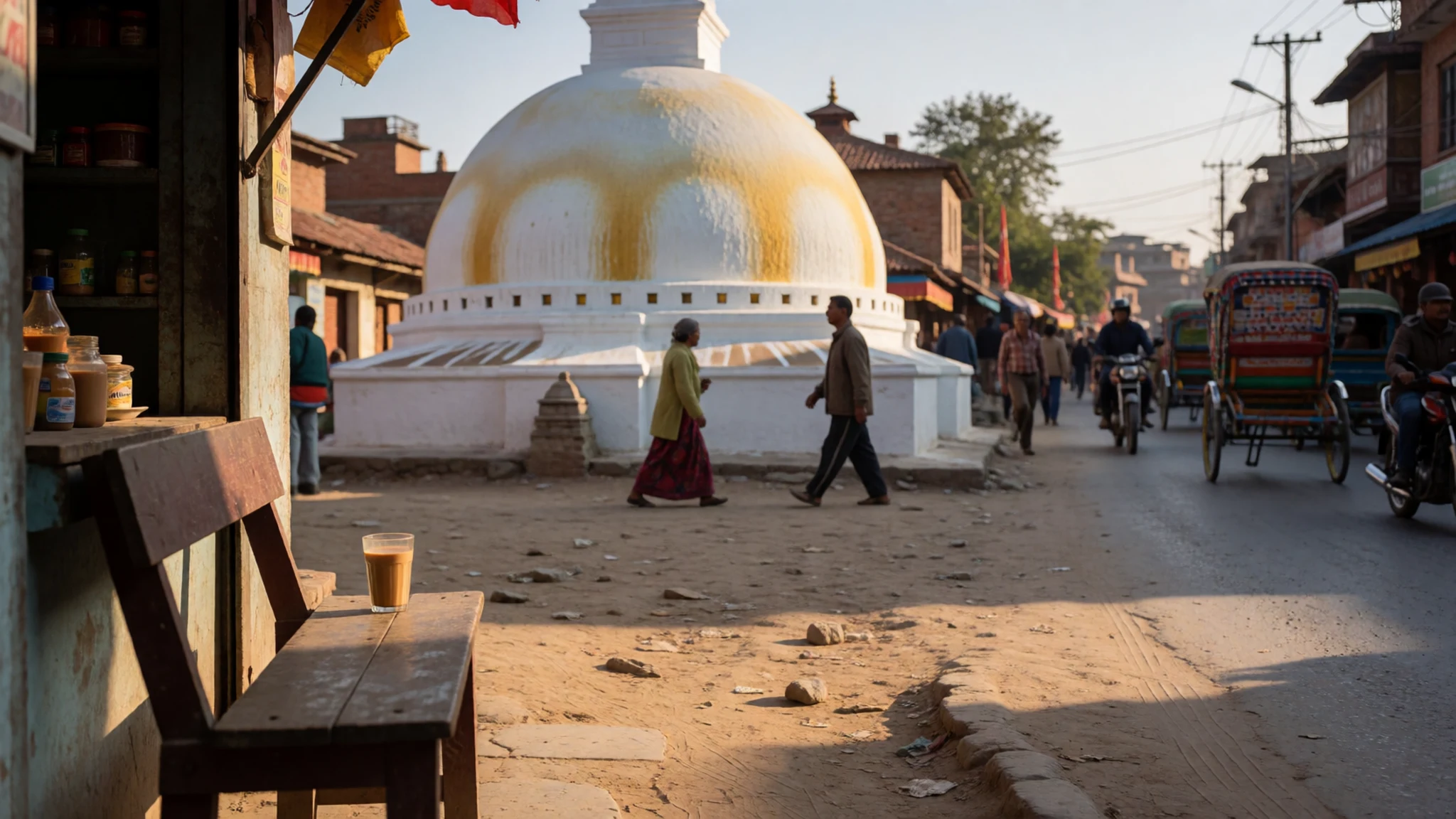
- Guhyeshwari Temple — Guhyeshwari, south of Boudha
Guhyeshwari Temple is one of the Shakti Peethas of Nepal, shrines linked to the goddess Shakti and considered especially auspicious by her devotees. It sits south of the stupa in a dense residential area. Remove your shoes at the threshold, dress modestly, and expect the temple to be busiest on festival days, when crowds spill into the lanes.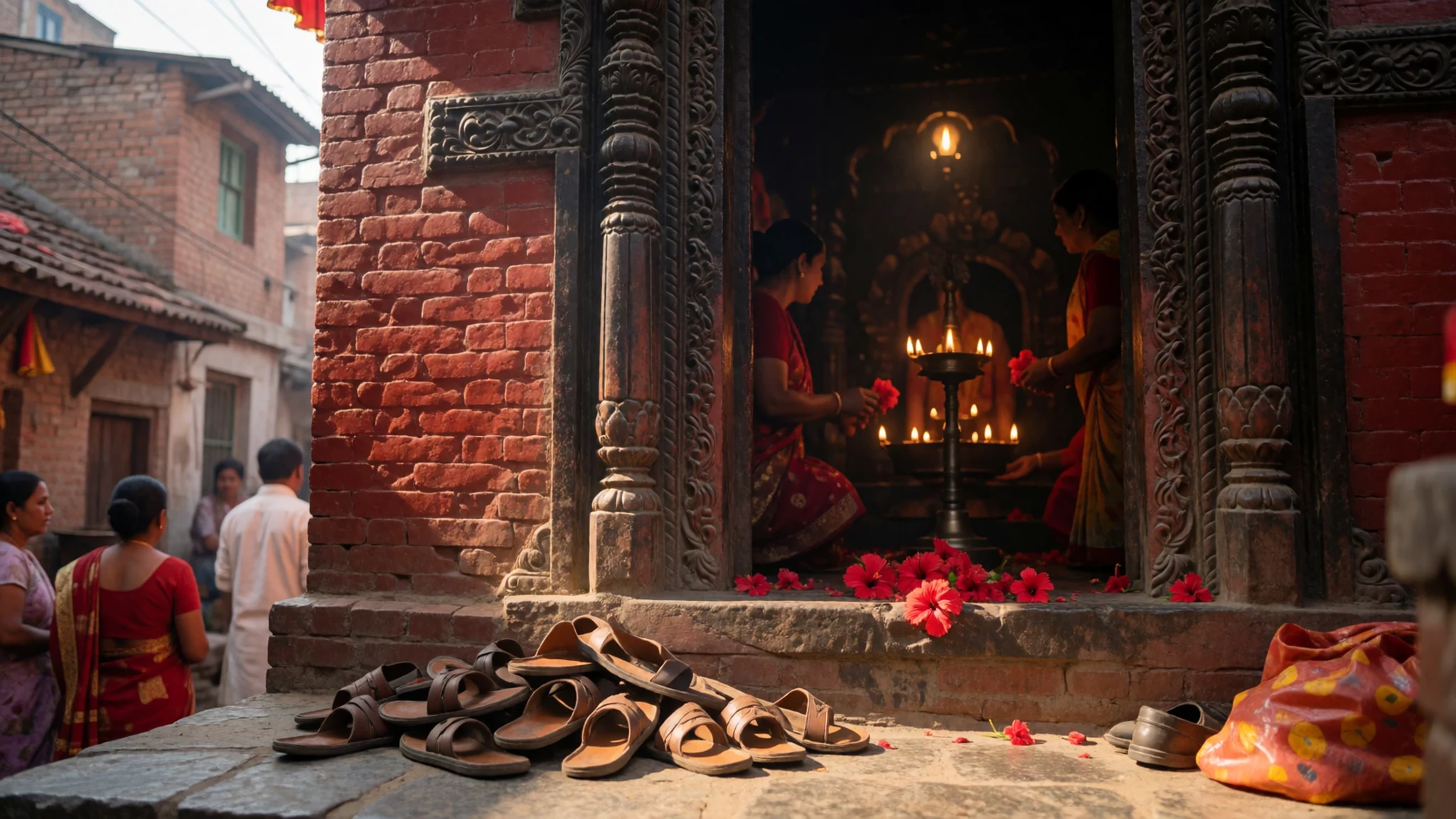
- Khawalung Monastery — Boudha, north of the stupa
Khawalung Monastery is a Tibetan Buddhist monastery close to the stupa, with an elementary school and a training school attached. It is a relatively recent foundation, and its quiet courtyards show the monastic life that surrounds the great dome. Visit in the morning, keep your voice low, and ask before entering prayer halls.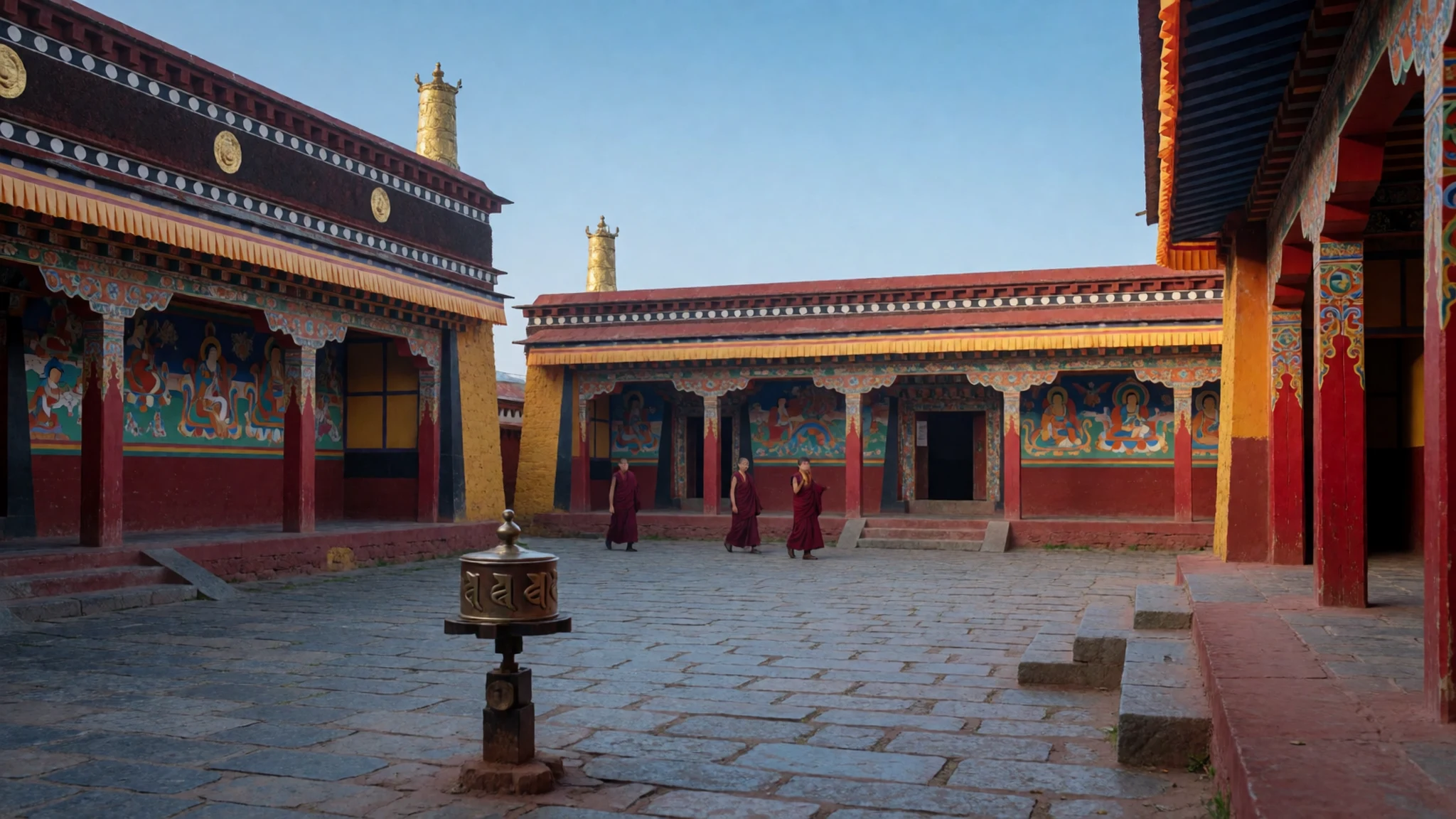
Culture
Boudhanath is a working place of worship before it is a sight, and most of the etiquette follows from that. Pilgrims walk clockwise around the base of the stupa, turning the prayer wheels set into the surrounding walls as they go. Visitors are expected to join that flow rather than cut across it, and to step aside for anyone prostrating or walking slowly with a string of beads.
Many people live and work in the lanes around the dome, and the monasteries here are active homes for monks and nuns. Ask before you photograph people, especially anyone at prayer, and never point a lens into a private room. Inside monastery halls, keep your voice low, do not lean on altars or offering bowls, and remove your shoes at the door.
Tipping is not expected as it is in the UK, though small donations to monasteries and a fair payment for a helpful guide are welcome. Keep your hands off sacred objects unless you are invited to touch them. Walk clockwise around the stupa, and never climb its steps or sit on its walls.
What to wear
Traditional dress around Boudhanath draws on Tibetan and Newar styles. Many older Tibetan women wear the chuba, a long wrap-over robe usually belted at the waist, often in wool or brocade with bright striped borders. Newar women in the valley have traditionally worn a sari-like wrap in dhaka cloth, a handwoven fabric with geometric patterns, and older men may wear the embroidered dhaka topi cap. These garments appear most often at festivals, weddings and religious occasions, when families walk the circle in their best clothes.
In everyday life the look around the stupa is far more mixed. Locals wear jeans, trainers, quilted down jackets and sports shirts, while monks wear maroon and saffron robes. Young people in the cafe streets dress much as they would anywhere else in the world. Wool hats and Tibetan-style jackets appear in the colder months, and many women still wrap a shawl over their shoulders.
For a visitor, the sensible choice is layers. Mornings can be cold and afternoons warm, so a light fleece, a shawl and a windproof jacket work well. Cover shoulders and knees when you enter monasteries or temples, and avoid tight or revealing clothing. Choose shoes that slip on and off easily, since you will remove them often, and pick a pair with grip for uneven stone and dusty lanes.
What to eat
- Momos — Stalls and small eateries on the lanes that lead off the circle
Steamed or fried dumplings filled with minced meat or vegetables, dipped in a sharp tomato chutney. They are the snack most people reach for after a walk around the circle, and they are cheap to eat standing up.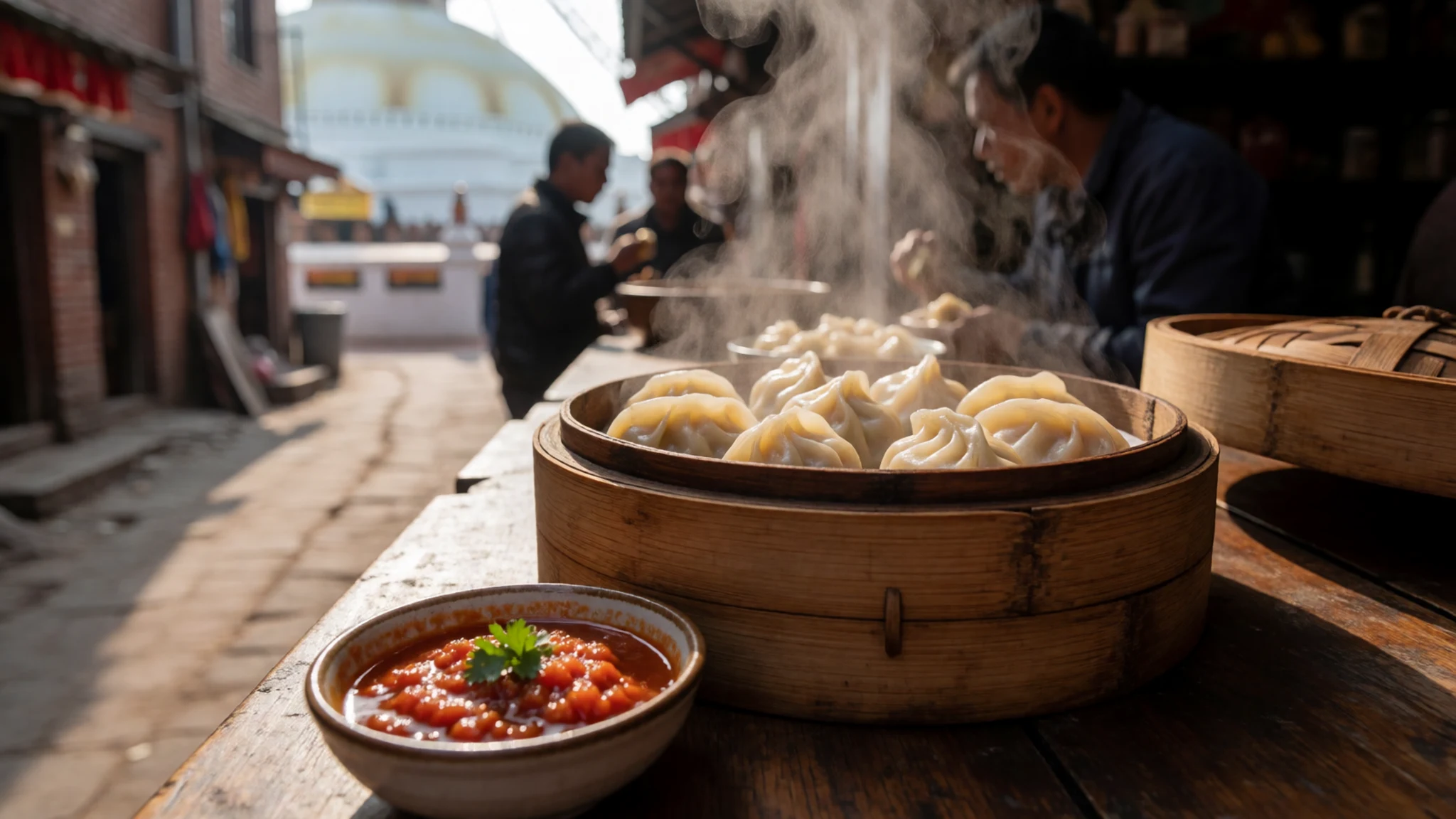
- Thukpa — Tibetan-run eateries on the outer lanes, especially in cold weather
A Tibetan noodle soup with vegetables or meat in a clear, spiced broth. It is hearty and warming, and it suits the cooler mornings and evenings when the stupa is quiet.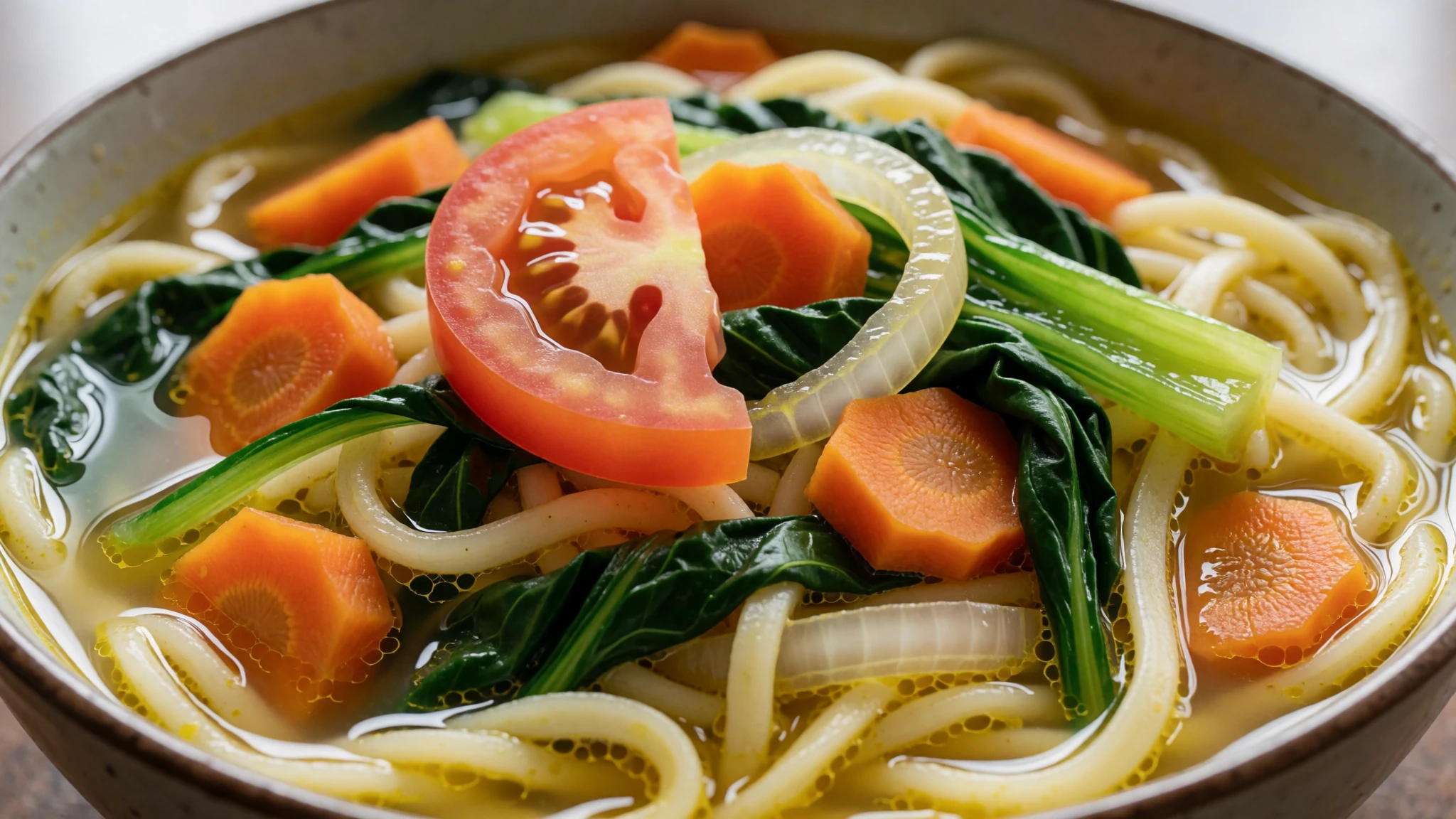
- Dal bhat — Local family restaurants a few streets back from the stupa, away from the cafe strip
A set plate of rice, lentil soup, seasonal vegetable curry and pickle, refilled as often as you like in many Nepali homes. It is the everyday meal of Nepal and a good way to eat simply and well. - Tibetan butter tea — Teahouses and monastery-side cafes, and many guesthouse breakfasts
Tea churned with butter and salt, rich and an acquired taste for many visitors. Locals drink it through the day, and it is worth trying once in a quiet teahouse with a view of the monks walking by. - Clay-oven pizza and smoothie bowls — Rooftop cafes overlooking the stupa, around the circle
Thin pizzas baked in clay ovens, served alongside sourdough breads and smoothie bowls made with local fruit. The rooftop cafes give a clear view of the dome, and they make a relaxed place to rest between walks.
Plan it
Best time. October–November and March–April are the most comfortable, with dry weather and clearer views on good days. June to August is the monsoon, which brings rain and slippery lanes, and winter mornings can be cold.
How long. 1–2
Getting there. Fly into Kathmandu Airport, then take a taxi and ask for the Boudha Stupa Main Gate. Local buses and minibuses run from Chabahil junction, and the walk from there is short.
Budget. low
Tips
- Go in the early morning or late afternoon, when the circle is calmer and pilgrims are out
- Agree a fare before you set off, since haggling can take a long time
- Carry cash in small notes for donations, snacks and small shops
- Bring a water bottle and a sun hat, as the paved ring holds the heat
- Book a room with a rooftop view of the dome, which many guesthouses offer
- Leave time to walk the outer lanes and visit the nearby monasteries
Etiquette
- Walk clockwise around the stupa
- Remove shoes at monastery doors
- Ask before photographing people, especially those at prayer
- Dress modestly inside monasteries and temples
Nearby
Sources
- Wikidata Q889902 (CC0)
- Wikipedia, Boudha Stupa (rev 1382094786) (CC BY-SA 4.0)
- Wikivoyage, Kathmandu/East (rev 5406371) (CC BY-SA 4.0)
- Photo 01 Bouddhanath 2009, Etter Studio (CC BY 2.5)
- Photo 02 Boudhanath stupa, Sumitbhatt222 (CC BY-SA 4.0)
- Photo 03 Boudha Stupa IMG 7804, Harry Paudyal (CC BY-SA 4.0)
- Photo 04 Guru Boudha, Christopher J. Fynn (CC BY-SA 4.0)
- Photo 05 Boudhanath Nepal, neiljs (CC BY 2.5)
- Photo 06 Bouddha nath stupa, Anjie Giri (CC BY-SA 4.0)
- Photo 07 Boudhanath 2015-11-03, Christopher J. Fynn (CC BY-SA 4.0)
- Photo 08 Boudhanath Panorama 2016, Bijay chaurasia (CC BY-SA 4.0)


