Tatacoa Desert
Tatacoa Desert, Colombia
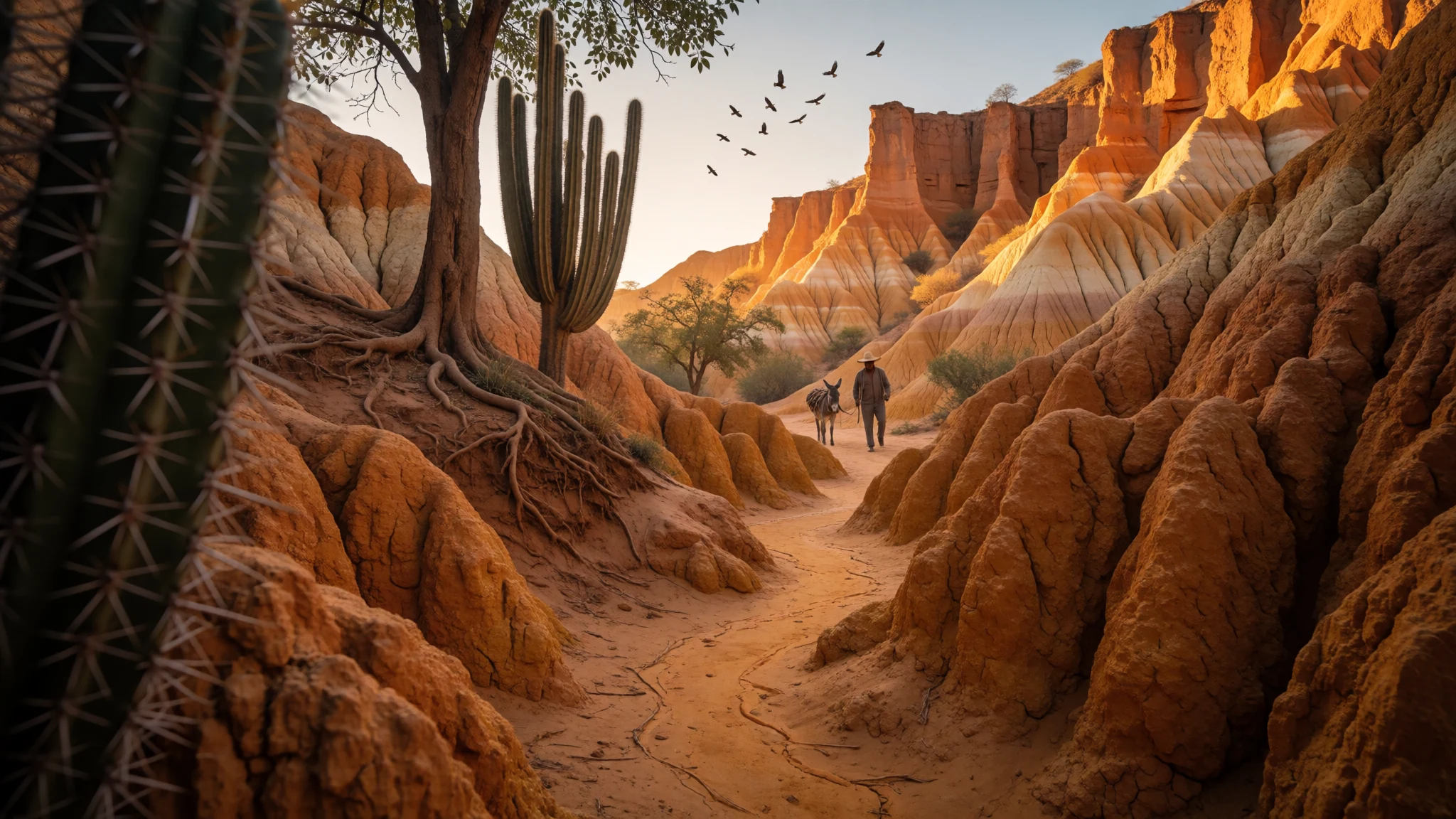
Tatacoa Desert is a dry forest of eroded ochre and grey canyons in Colombia, with fossils, tall cacti and very dark night skies.
The place
Tatacoa Desert lies in the north of Huila department in southern Colombia, at about 429 m above sea level, with the small town of Villavieja as its usual gateway. Neiva, the departmental capital, is the nearest city of any size. Despite the name, this is not a sea of dunes. It is a tropical dry forest, worn by wind and rare downpours into a maze of gullies and canyons cut in soft clay and sandstone. The ground is split by colour. One sector, around the area called Cuzco, glows ochre and orange; another, Los Hoyos, is grey, and both can be seen in a single day. Rain is scarce and arrives in short bursts, so the canyons run with water only briefly. The plants cope with deep and wide-reaching roots, and some cacti grow taller than a person. Wildlife includes snakes, scorpions, spiders, rodents, turtles, eagles and wildcats, although most visitors notice lizards and birds. Heat is the main practical fact: the middle of the day is punishing, and mornings, evenings and nights are far kinder. The area covers more than 330 square kilometres, so distances between sights are real and a vehicle or guide helps. Clear, quiet, dark skies have made it a draw for stargazers, and its fossil beds give it a second reputation among people curious about natural history.
Its story
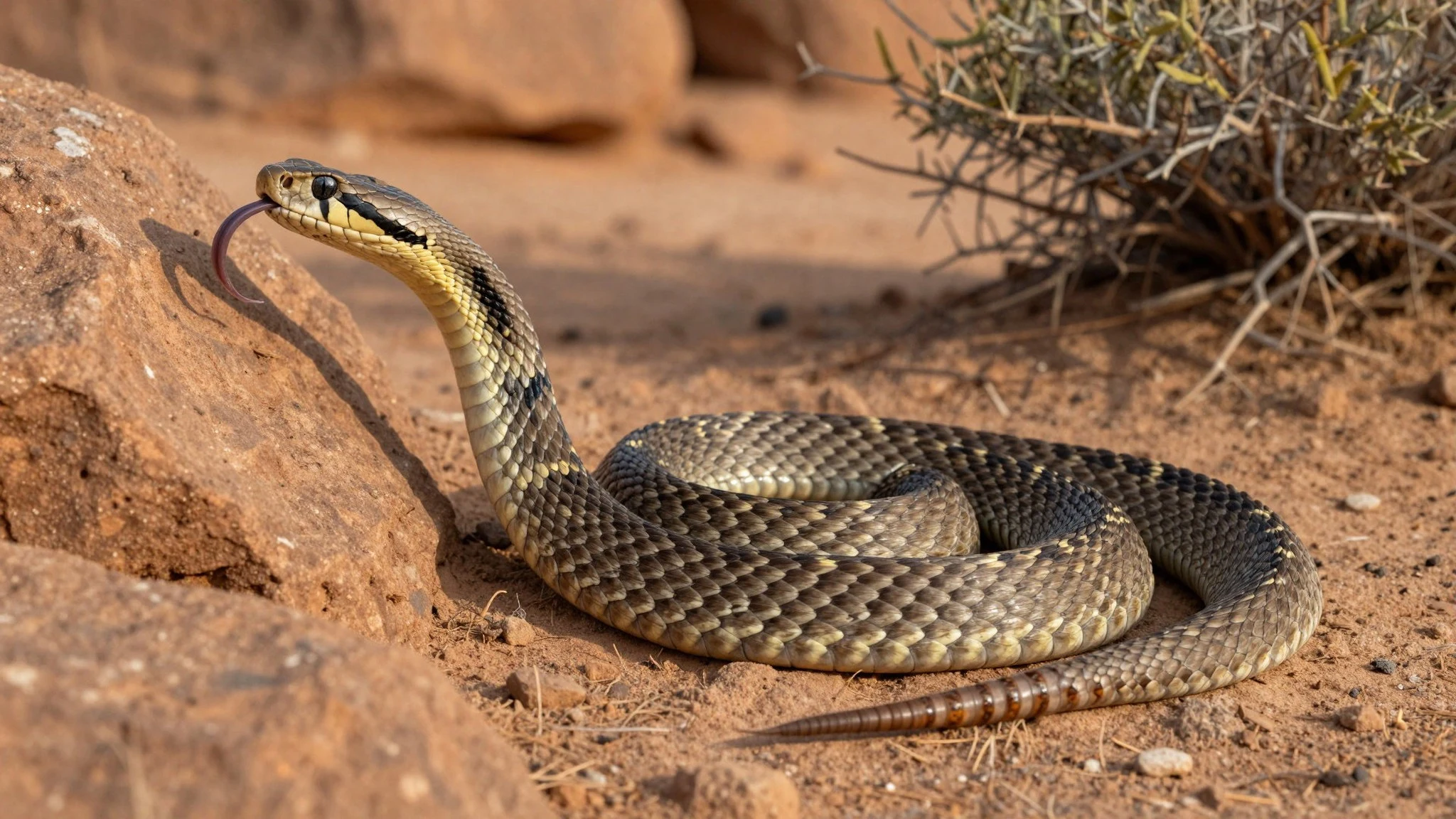
Tatacoa Desert has been changing for a very long time. In the Tertiary Period this part of the upper Magdalena valley was damper and thickly vegetated, home to trees, flowers and animals whose bones still surface in the eroded ground. Over ages the climate dried, the soil was stripped back by weather, and the forest thinned into the sculpted badlands seen today. That slow shift is why palaeontologists have long been interested in the area. When Spanish conquistadors came through in the sixteenth century, Gonzalo Jiménez de Quesada is credited with calling the valley the Valley of Sorrows, a verdict on how hard the heat felt to men used to greener country. The word Tatacoa came from the same colonists and alludes to the rattlesnakes found here. Both labels leave a false impression. The place is a living dry forest with specialised plants and animals, not a lifeless wasteland. In recent decades it has become a destination in its own right, drawing Colombians on weekend trips and a growing number of overseas visitors. Villavieja and the surrounding hamlets now host simple guesthouses, campsites and viewing spots, and the low light pollution has added astronomy to the draw. The tension for the future is how to welcome visitors without trampling fragile ground.
What to see
- Cuzco ochre labyrinth — Cuzco sector, near Villavieja
In Tatacoa Desert, the Cuzco sector is the one on most postcards: rust-orange ridges, narrow gullies and pinnacles of clay that change shade through the day. Walk the marked paths in early morning or late afternoon, when the colours deepen and the heat is manageable.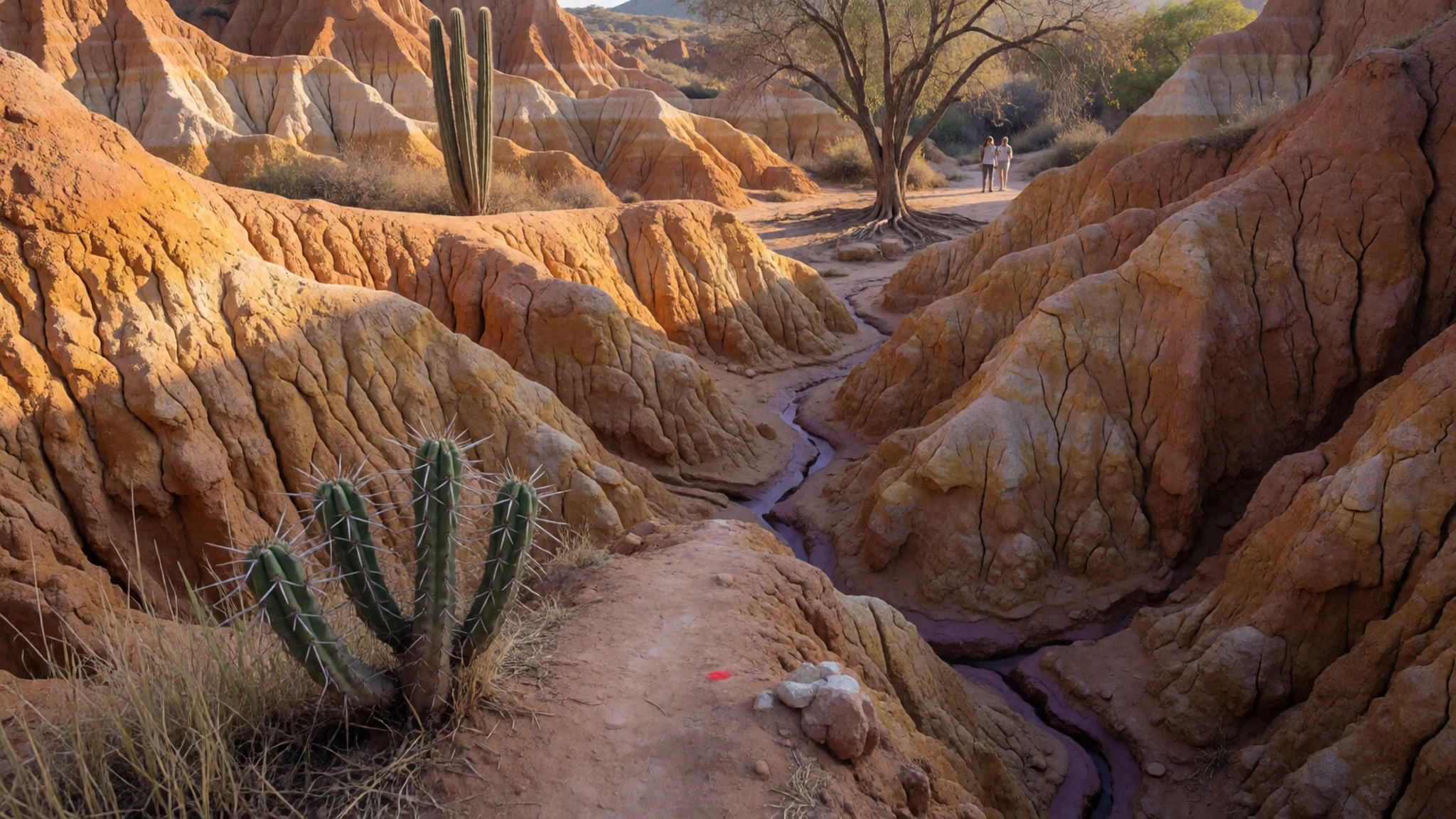
- Los Hoyos grey canyons — Los Hoyos sector
Los Hoyos is the grey half of Tatacoa Desert, a landscape of pale, rounded formations and deep hollows that looks more lunar than tropical. Paths wind down between the walls, and the shade is thin, so carry plenty of water and start early.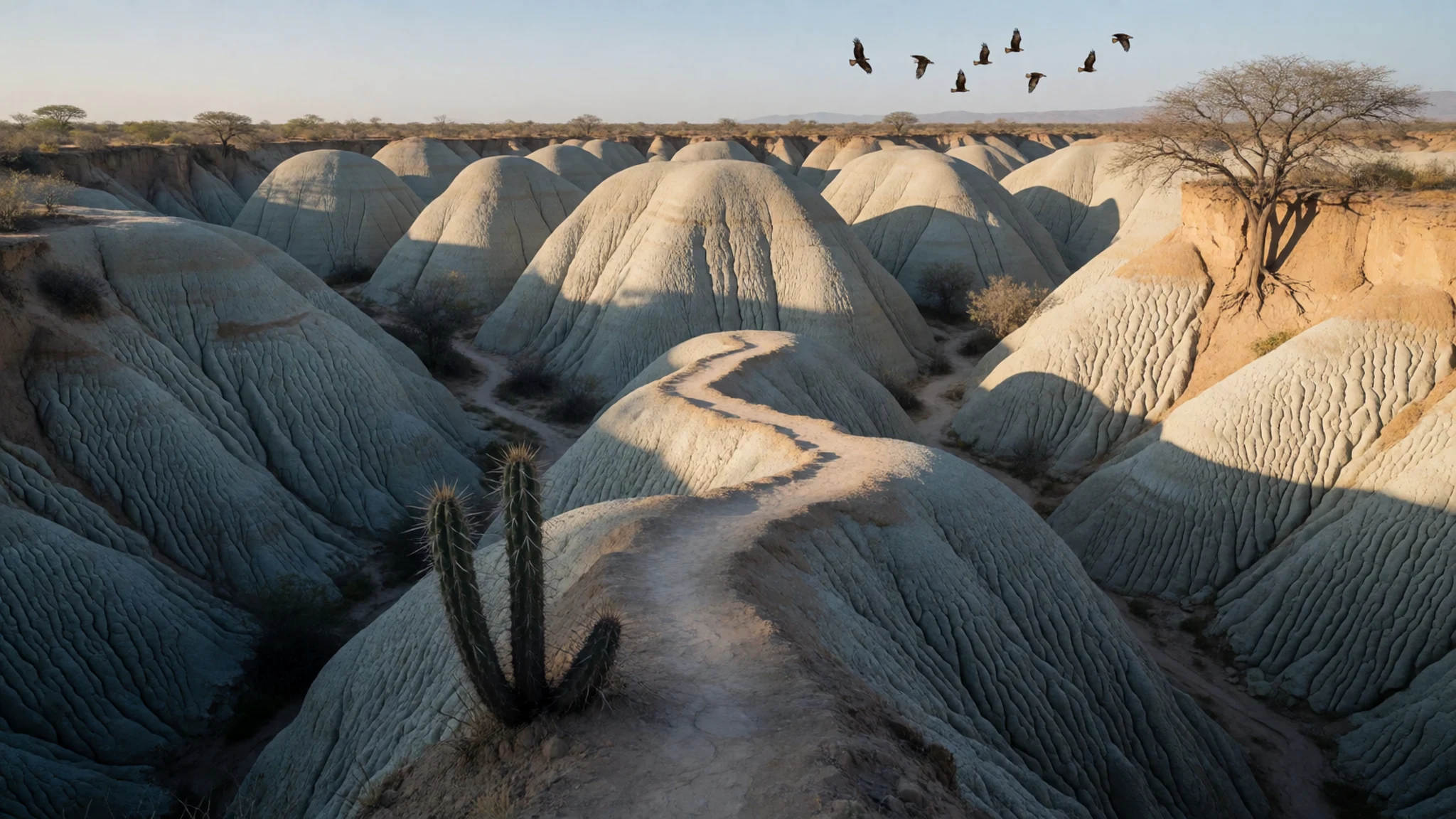
- Night-sky viewing — Around Villavieja and the desert sectors
Tatacoa Desert has little noise or light pollution, which makes its night skies unusually clear. Several local operators and a viewing site run guided sessions with telescopes. Ask your guesthouse for options, check the moon phase, and bring a warm layer for waiting outdoors.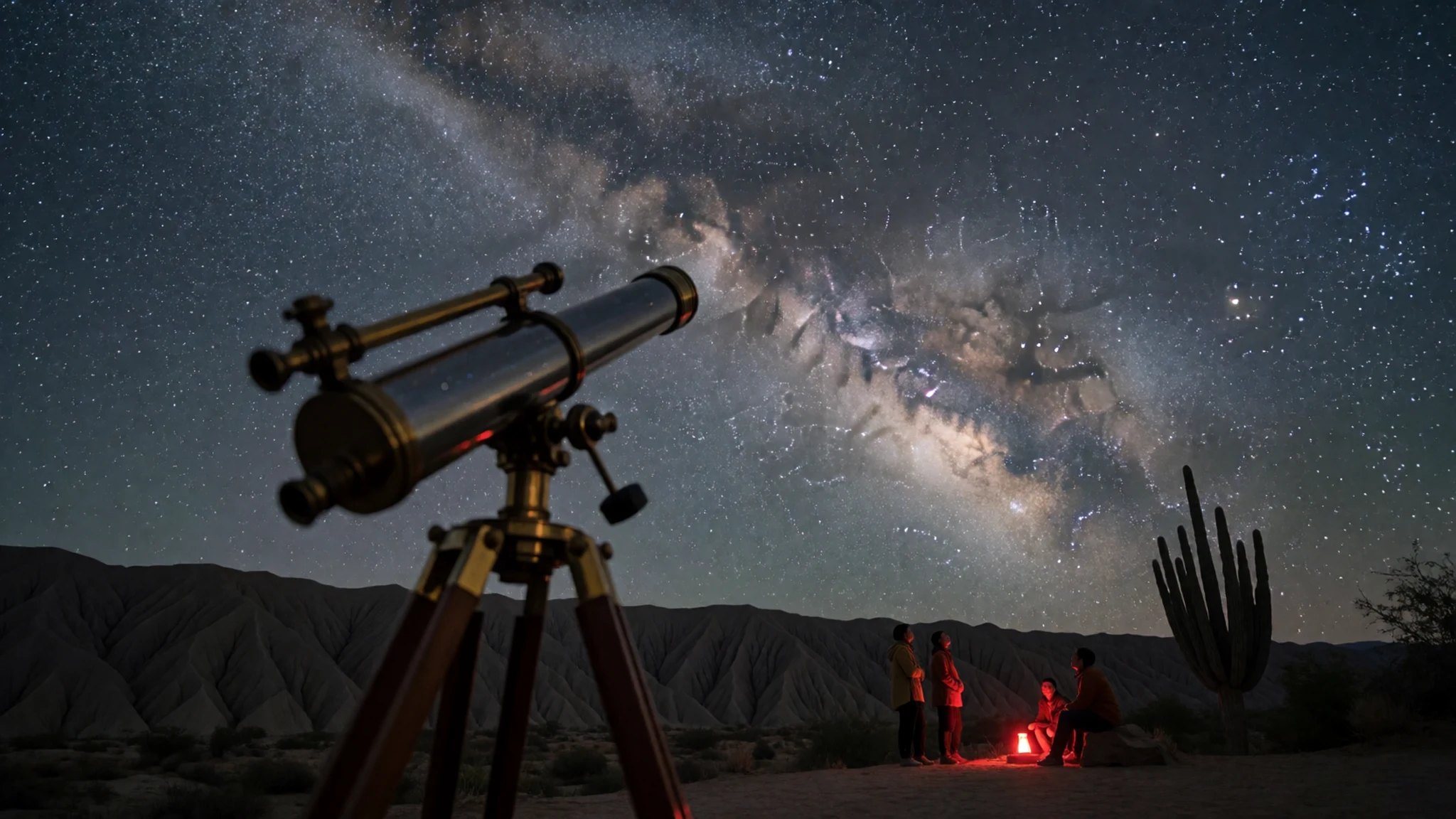
- Cacti and dry-forest trails — Dry-forest paths across the desert
Tatacoa Desert hosts cacti that grow taller than a person, along with thorny shrubs whose roots spread wide and deep. Short walks off the main viewpoints show how plants cope with scant rain. Look for round, spiny melon cacti close to the ground, and stay on the trail.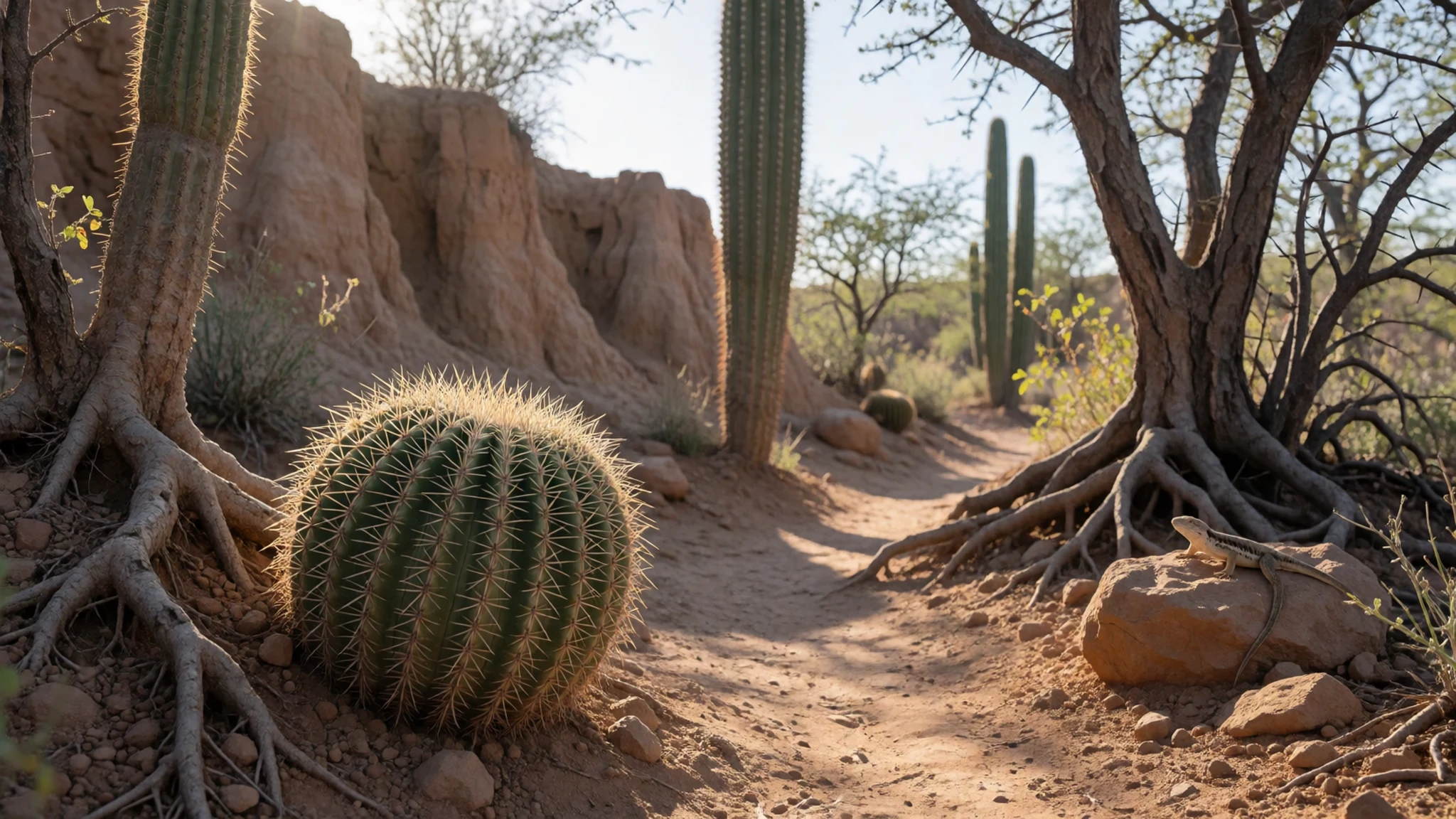
- Villavieja and its fossils — Villavieja, Huila
Villavieja is the small town at the edge of Tatacoa Desert, a practical base with simple lodging, eateries and guides. It also connects the desert to its fossil record, with local displays of finds. Opening times vary, so ask at your lodging before planning a visit.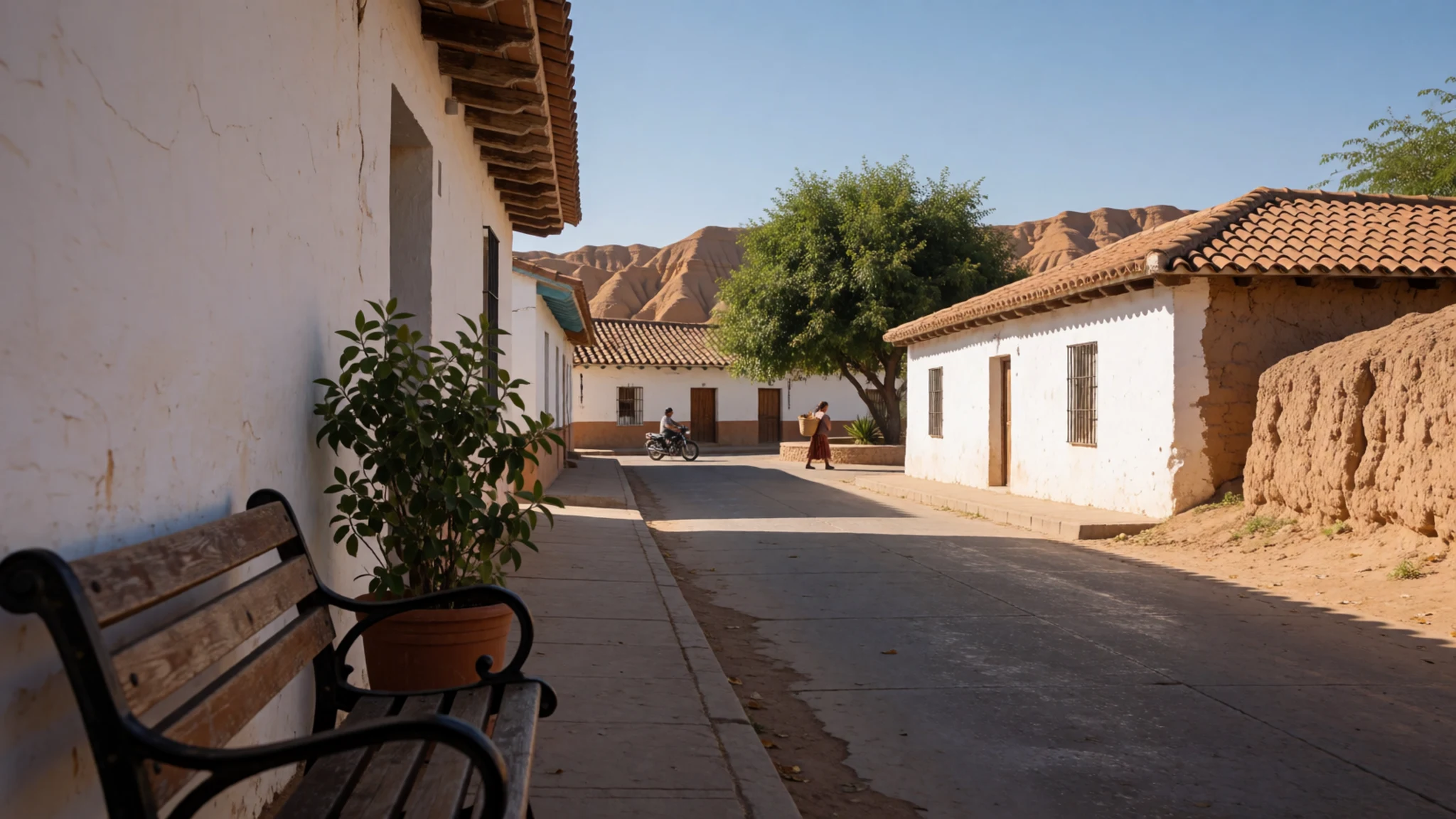
Culture
Tatacoa Desert sits in Huila, a department whose people are proud of their farming, music and cooking, and the culture around the desert is rural, friendly and unhurried. Villavieja and the nearby hamlets live partly from small-scale goat keeping, farming and, more recently, visitors. Many families run basic guesthouses, campsites and open-air eateries, so a stay here is often a conversation with the people who own the place. Huila is also known across Colombia for bambuco, a folk music and dance tradition celebrated in the department's festivals, and for the sanjuanero costume linked to it. Spanish is the working language, and a few polite phrases go a long way: a greeting, a thank-you and a question about the weather will open doors. Evenings are social, with people sitting outside once the heat drops, and the quiet that draws stargazers is part of daily life, not a staged feature. Colombians tend to value courtesy, so a friendly greeting before asking for directions or a table is expected. Scientists and local guides take fossils and fragile ground seriously, because the desert is both a livelihood and a natural archive. Visitors should take every piece of rubbish with them, keep to marked paths, and leave fossils, bones and rocks exactly where they lie.
What to wear
Tatacoa Desert is in Huila, where the best-known traditional dress belongs to the bambuco dance and the June festivities in Neiva. Women wear the sanjuanero dress, a full, brightly embroidered skirt and blouse, often in cotton or light fabric with ribbons and flowers. Men wear a white shirt and trousers, a red neckerchief and a straw hat. These outfits appear at festivals, school performances and folk shows, not on ordinary days. Everyday clothing in Villavieja and the desert hamlets is practical and light: cotton shirts, long trousers or knee-length shorts, wide-brimmed hats or caps, and sturdy sandals or trainers. Farm workers favour long sleeves for sun and thorns, and rubber boots after rain. Dress is relaxed and modest rather than formal. A visitor should plan for strong sun and loose, breathable layers. Choose light-coloured long sleeves and long trousers or a long skirt, a broad-brimmed hat, sunglasses and high-factor sunscreen. Closed shoes with a good grip are best on crumbling clay and thorny paths, because sandals leave toes exposed to scrub and the odd scorpion. Evenings can feel cool in the open, particularly at stargazing sites, so pack a light fleece or jacket. Swimwear is fine at pools attached to guesthouses, but cover up when walking through town.
What to eat
- Cabrito (roast goat) — Eateries in Villavieja and desert hamlets
Goat is the meat most tied to Tatacoa Desert, roasted or stewed and served with rice, potato or cassava. Look for it at open-air eateries in and around Villavieja, where families cook it slowly over a fire.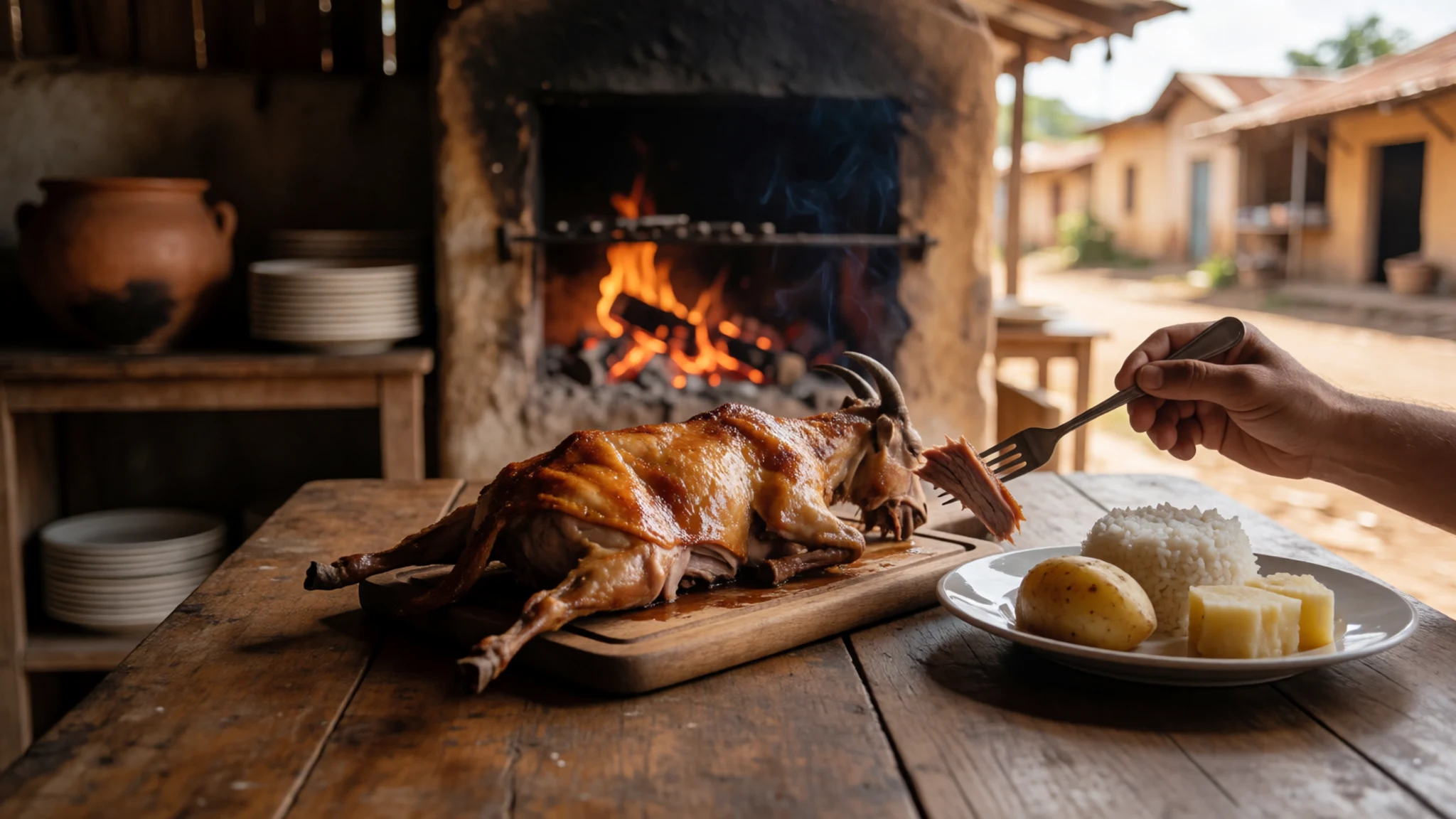
- Asado huilense — Roadside grills and family restaurants around Neiva
A regional roast of pork or beef marinated with local flavourings and served with potato, plantain or cassava. It is a staple of Huila's celebrations and weekend lunches, and many roadside grills in the department sell it.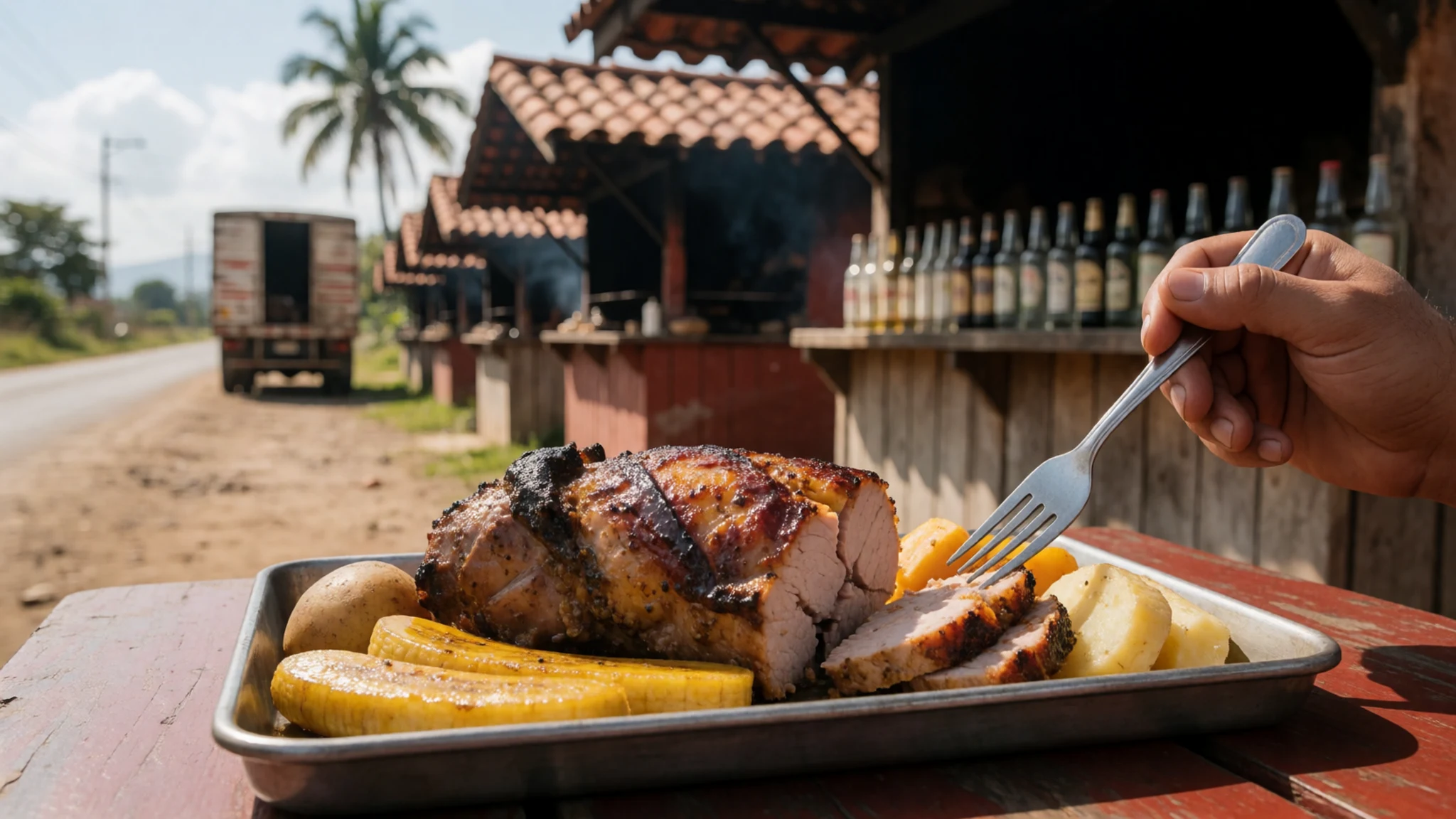
- Tamal huilense — Morning bakeries and market stalls in Neiva
A large tamal of maize dough with meat, vegetables and seasoning, wrapped in banana leaf and steamed. It is a traditional breakfast across Huila, often eaten with hot chocolate or coffee. - Achiras — Roadside shops on the road to Villavieja
Crisp, crumbly little biscuits made from cassava starch, a famous snack of Huila. They are sold in bags and are easy to pack for a long bus ride or a hot walk. - Fresh fruit juices — Juice counters and open-air eateries in town
Tropical fruit blended with water or milk is the best way to cool down in Tatacoa Desert. Expect options such as lulo, passion fruit and mango, depending on season, and always ask for the version made with safe water.
Plan it
Best time. December to February and July to August are usually the drier spells, with clearer skies for stargazing and less risk of muddy paths; the desert is hot all year, so walk at dawn or late afternoon, and check the moon phase if night skies matter.
How long. 1–2
Getting there. Benito Salas Airport (NVA) serves Neiva, the nearest city; from there, take a road transfer, bus or taxi to Villavieja, the gateway town, then a local vehicle, motorbike taxi or guided trip into the desert sectors.
Budget. low
Tips
- Walk the sights early or late; midday heat is severe and shade is scarce
- Carry more water than seems necessary and wear a hat and sunscreen
- Book a night-sky session through your lodging and bring a warm layer
- Carry cash for small eateries, guides and transport, as card machines are rare
- Stay overnight if possible, because the desert looks best at dawn and after dark
Etiquette
- Stay on marked paths and leave fossils, rocks and plants untouched
- Take all rubbish with you and use water sparingly in small guesthouses
- Ask before photographing local people and their animals
Nearby
Sources
- Wikidata Q533861 (CC0)
- Wikipedia: Tatacoa Desert (rev 1362239220) (CC BY-SA 4.0)
- Wikivoyage: Huila (rev 5261276) (CC BY-SA 4.0)
- Photo: Desierto de la Tatacoa, José A. Vaca B. (Public domain)
- Photo: Melocactus curvispinus curvispinus (3) (CC BY 3.0)
- Photo: Tatacoa Desert, Dog Electronic (CC BY-SA 2.5)
- Photo: Mi amor por el cielo, Karol O.D (CC BY-SA 4.0)
- Photo: Las sombras del desierto, Karol O.D (CC BY-SA 4.0)
- Photo: Los arepos, Karol O.D (CC BY-SA 4.0)
- Photo: Los colores del desierto, Karol O.D (CC BY-SA 4.0)
- Photo: Vegetación en la Tatacoa, Karol O.D (CC BY-SA 4.0)


Wildlife
- Rattlesnake (animal)
The tropical rattlesnake is a venomous snake that warns you with a rattle on its tail, so listen and keep back. It lives across much of South America, wider than any of its close relatives, and it is found in Tatacoa, whose very name nods to these snakes. Watch only from a long, safe distance, ideally with a local guide, and stay calm and quiet. Never try to touch, corner or feed it; simply let it go on its way.